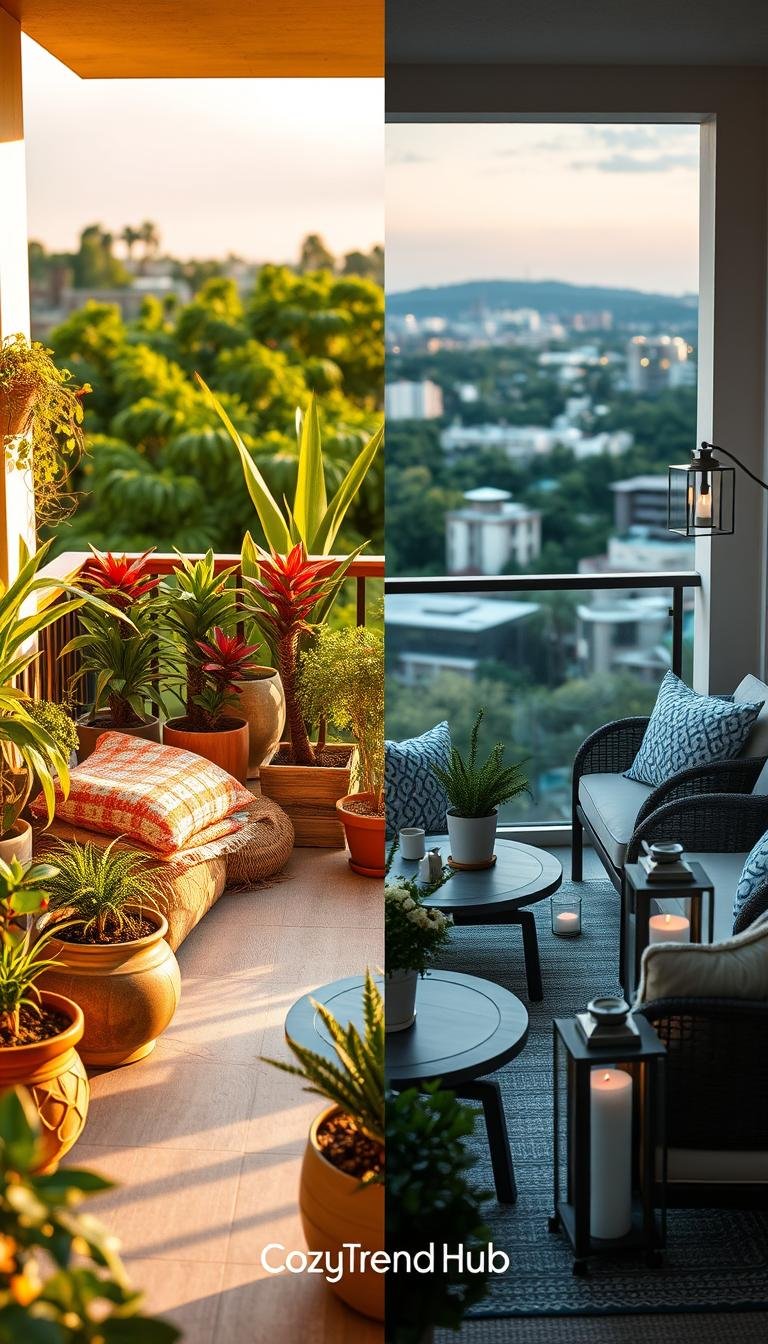
Making a small outdoor space feel useful and cozy is a common challenge. Buyers want comfort and lasting value without wasting money on items that fail in harsh weather or won’t move with them.
This guide lays out 5 budget-friendly picks and 5 higher-end options so readers can jump to the category that fits their timeline and wallet.
The comparison focuses on performance over time—durability, comfort, maintenance, and warranty—rather than just price tags.
Expect renter-friendly suggestions, advice for narrow layouts and limited storage, and a clear rule of thumb: splurge on anchor furniture and save on accents.
Each pick includes quick pros and cons and a “best for” note. Tables and affiliate blocks will help compare options side‑by‑side.
For a practical mix of styles and prices, see a curated combo guide at best balcony decor mix.
Key Takeaways
- Focus on long-term performance, not only the upfront cost.
- Choose durable anchor furniture; buy inexpensive accents to refresh style.
- Renter-friendly pieces and foldable options suit small spaces best.
- Climate and lifestyle should guide material choices.
- Comparison tables and quick pros/cons make checkout decisions easier.
What “Cheap” and “Premium” Balcony Decor Actually Mean in 2026
Understanding what counts as budget and high-end pieces helps buyers match materials to real outdoor problems. This makes it easier to choose items that suit short-term setups or long-term living areas.
Budget materials and what to expect from a 1–3 season lifespan
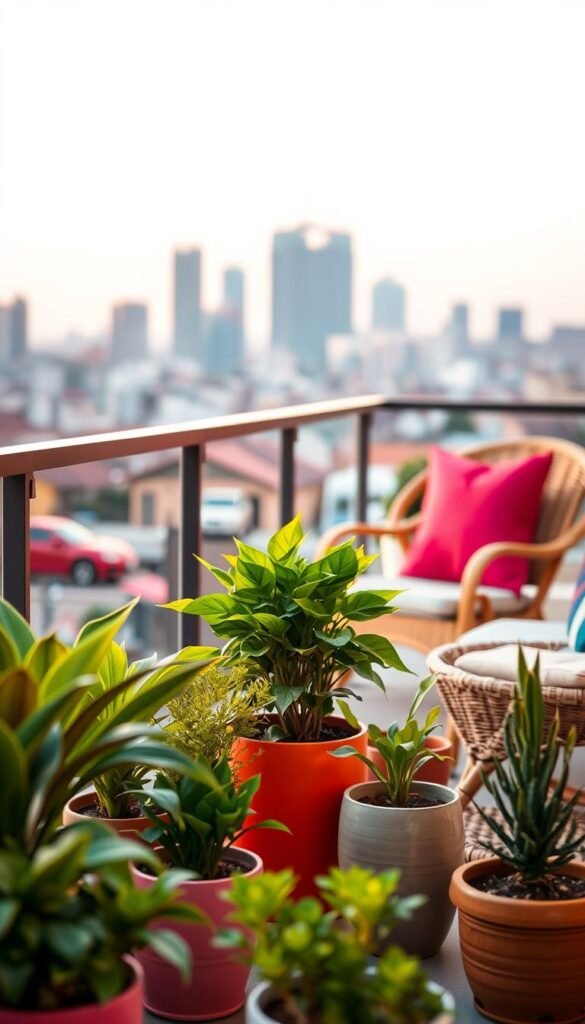
Lower-priced pieces often use plastic, uncoated steel, MDF or plywood with veneers, and polyester fabrics. These parts keep weight down, so they are easy to move. But lighter builds can loosen, fade, rust, or grow mildew faster when left in full sun or wet weather.
Premium materials that hold up in sun, rain, and wind
Higher-tier choices include teak, powder-coated aluminum, stainless steel, all‑weather wicker, and performance fabrics like Sunbrella. These frames and finishes resist UV, moisture, and wobble better. Expect multi-year use and fewer surprises.
Comfort, customization, and warranty support as the real upgrade
- Daily comfort: deeper seats and supportive cushions change how people use a small space.
- Serviceable features: replaceable covers, better hardware, and clear warranties cut long-term hassle.
- Mental model: pay less for items you will store or swap; pay more for items exposed to sun, rain, and wind every day.
| Category | Budget Typical | Higher-tier |
|---|---|---|
| Materials | Plastic, uncoated steel, MDF, polyester | Teak, powder-coated aluminum, stainless, Sunbrella |
| Expected lifespan | 1–3 seasons if left outdoors | 3+ years with minimal fading or rust |
| Real benefits | Lightweight, low upfront cost, easy to replace | Comfort, serviceable cushions, warranties |
Quick Decision Guide for Your Balcony Space and Budget
Deciding between temporary and lasting pieces starts with three questions: lease length, storage access, and weekly use. Answering these narrows the options and makes a clear plan fast.
Best fit for renters and short-term setups
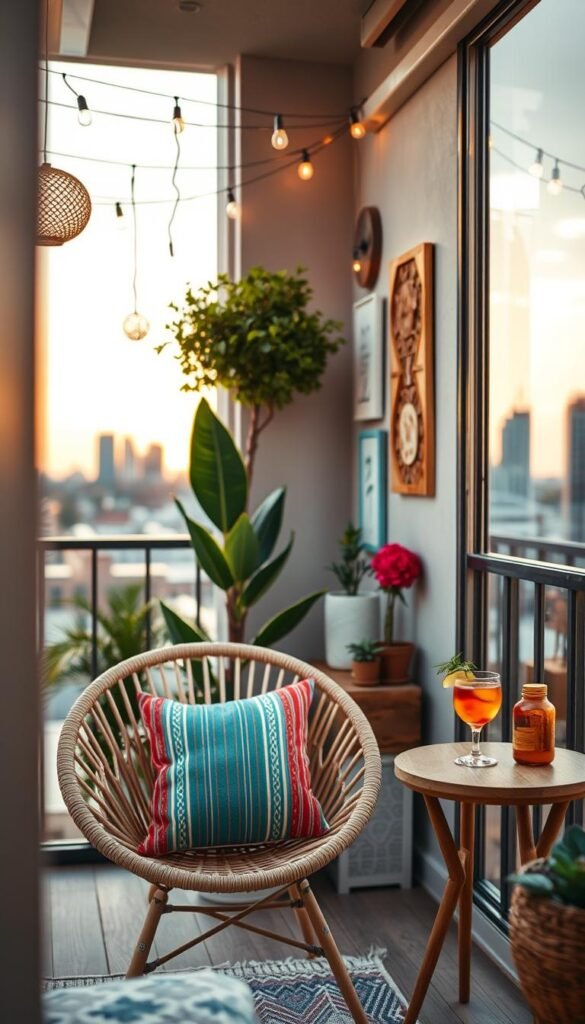
Choose lightweight, foldable items if the lease is under two years or storage is limited. These pieces move easily and avoid wall or floor damage.
- Foldable chairs and tables that stow flat.
- Snap-in floor tiles and roll rugs for temporary comfort.
- Lighting and planters that hang or clip on railings.
Best fit for long-term use and frequent entertaining
Invest in core seating and a stable table. If the space is used several times a week or for dining with guests, depth of seating and a steady surface matter more than ornaments.
„Comfort and stability turn a small outdoor space into a reliable living area.“
Best fit for harsh climates and high sun exposure
When sun, wind, or rain are common, pay attention to materials. UV and moisture degrade fabrics and metal fast; this is where longer-lasting choices save money over time.
Quick flow: choose low-cost if you move often or store items indoors; choose longer-lasting if you plan frequent use, host guests, or face harsh weather.
Budget split suggestion: allocate more budget to anchor pieces (seating, table) and spend less on accents. That approach keeps the outdoor space finished without overspending and makes future updates simple.
Comparison Criteria We Use to Judge Every Pick
A clear set of buying rules makes it faster to judge which pieces will last and which are best kept as short-term options.
Durability versus replacement cost
Look for lifespan, not just price. Premium items cut replacements in sun, wind, and rain. Lower-cost pieces can still win if they store easily and are simple to swap out.
Footprint, foldability, and storage
Measure walkways and door swings. Choose items that fold, stack, or tuck under to keep the space usable.
Comfort: seating and cushions
Prioritize seat height, depth, and cushion thickness. If it isn’t comfortable, it won’t get used—no matter how good it looks.
Maintenance and wet-weather behavior
Note dry time, removable covers, and weekly care. Easy-to-store cushions and quick-dry fabrics lower real-world hassle.
Design impact and living extension
Design should tie the area to indoor rooms. Matching scale, color, and materials makes the outdoor space feel like a true extension home.
- Checklist: lifespan, foldability, comfort, wet-care, visual match.
- Use this list to compare listings before checkout or to review the curated picks such as the best patio picks for renters.
| Criteria | What to check | Quick pro/con |
|---|---|---|
| Durability | Material, finish, warranty | Fewer replacements / higher upfront |
| Storage | Foldable, stackable, light | Easy move / less long-term wear |
| Comfort | Seat depth, cushion fill, fabric | More use / larger footprint |
Where to Splurge vs Where to Save on Balcony Decor
Start by listing the items that will get daily wear; those deserve the biggest share of your budget. Core seating and a stable surface change how an outdoor space gets used every day.
Invest in core pieces that anchor the area
Why it works: A sofa, dining table, or teak bench supports meals, sitting, and storage. These items last longer and improve comfort more than small accents.
Save on accents like lanterns, outdoor rugs, and side tables
Lanterns, an outdoor rug, and small side pieces are easy to swap when style or color changes. They add instant personality without heavy investment.
Smart middle-ground buys that look high-end for less
Choose powder-coated frames, performance-look textiles, and composite finishes. These options look upscale but cost far less than designer furniture.
- Spend ratio suggestion: 60% anchors / 40% accents (adjust for renters).
- Buyer warnings: Don’t overspend on trendy items that won’t survive the climate. Don’t underspend on anything that must be safe and stable.
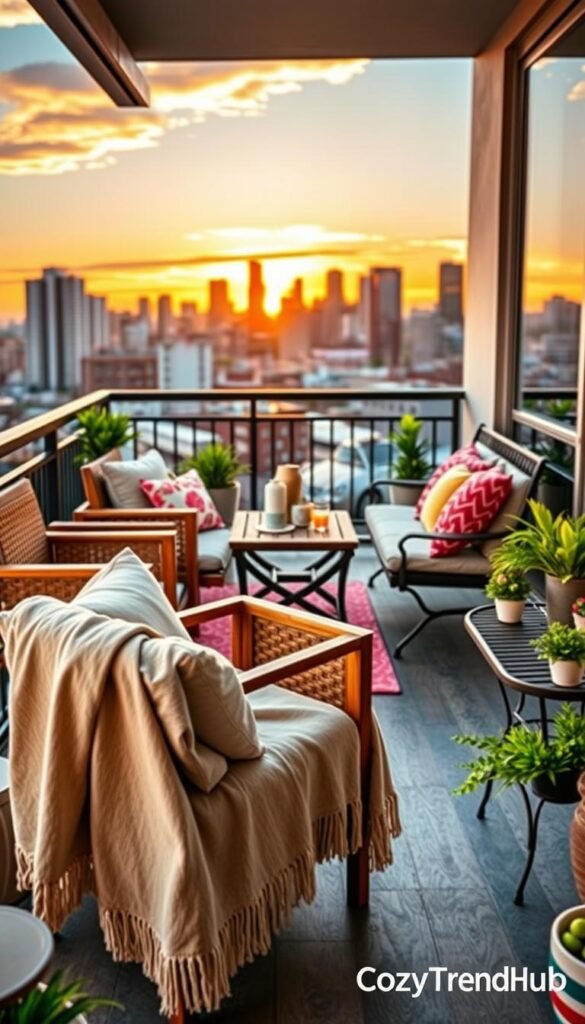
| Category | Spend | Why |
|---|---|---|
| Seating | Higher | Daily comfort, lifespan |
| Table / bar shelf | Higher | Function and stability |
| Rugs / lanterns / side | Lower | Easy to swap, style updates |
| Powder-coated pieces | Middle | Durable look without designer price |
Cheap Picks That Work Best for Renters and Seasonal Use
Renters and seasonal users need solutions that improve a small balcony quickly and leave no trace when it’s time to move. The list below focuses on removable, light, and easy-to-clean items that increase comfort and function without permanent change.
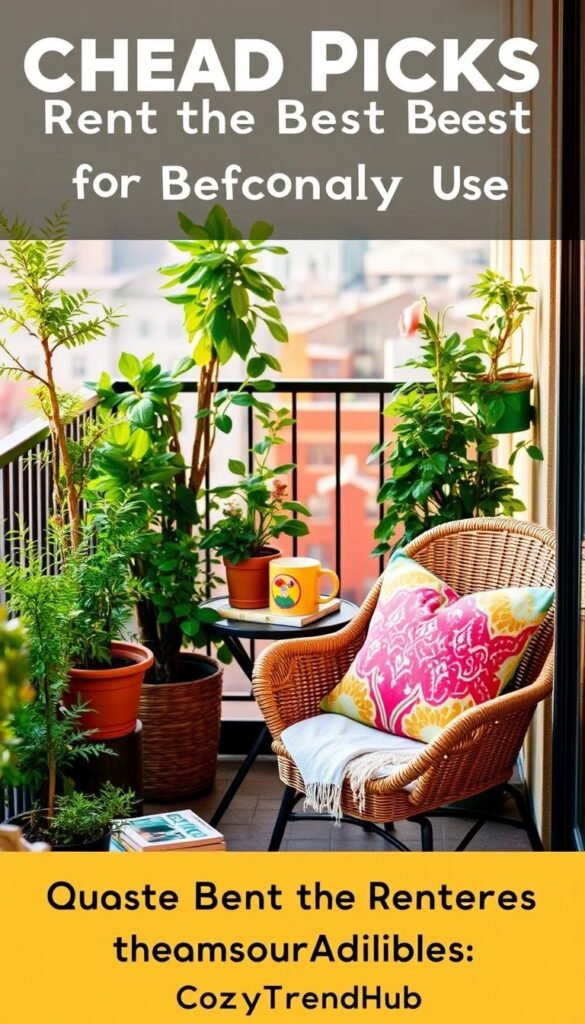
Interlocking deck tiles
Best for: covering bare concrete fast.
These snap-together tiles lift the floor visually and remove cleanly at move-out.
Pros: quick install, non-permanent.
Cons: can trap moisture under poor drainage.
Folding bistro table and chairs
Best for: tiny dining and saving storage space.
Compact folding sets fit narrow layouts and stow on rainy days.
Pros: easy to move, good for occasional dining.
Cons: light frames may wobble in wind.
Polypropylene outdoor rug
Best for: adding color and underfoot comfort.
Outdoor rugs in polypropylene resist stains and dry quickly.
Pros: washable, budget-friendly.
Cons: edges can curl if not secured.
Solar string lights and LED lanterns
Best for: renter-safe lighting with no wiring.
Solar strings and battery LED lanterns create soft mood light and meet many building rules.
Pros: no electrician, safe „candle“ look.
Cons: sun exposure affects run time.
Over-rail planters
Best for: adding plants and color without using floor space.
These planters free the floor for seating and walkways while boosting curb appeal.
Pros: saves floor area, easy swap-out.
Cons: check rail load limits and drainage.
Quick note: cheap doesn’t mean careless. Look for coatings, drainage holes, and replaceable parts when choosing budget listings to avoid early replacement and waste.
Premium Picks That Earn Their Price on Small Balconies
A higher-quality selection pays off when a small outdoor space sees daily use and changing weather. Upgrading key pieces solves comfort, longevity, and privacy problems without cluttering sightlines.
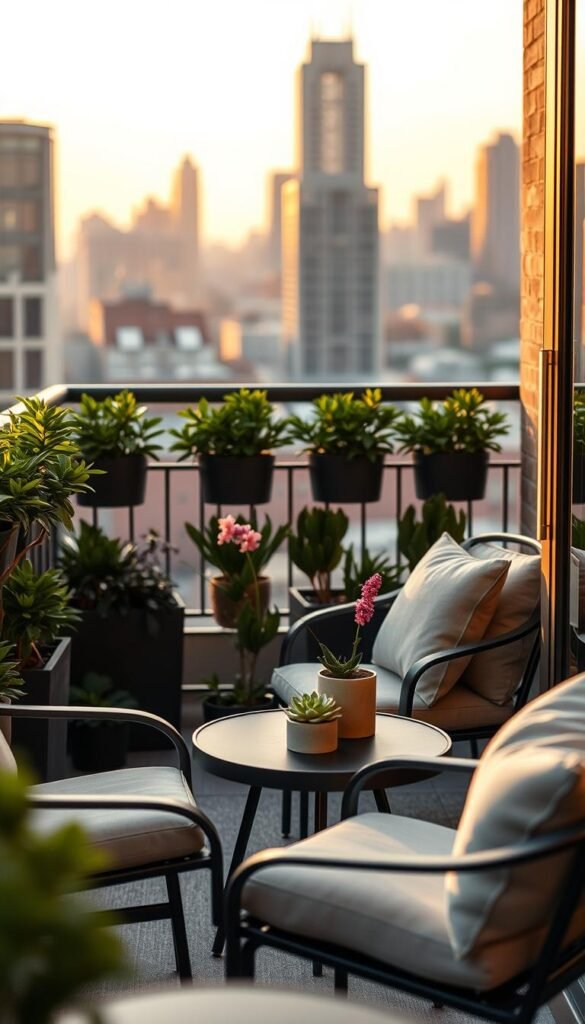
Low-profile modular lounge seating
Why it helps: Reconfigurable modules fit awkward footprints and keep the view open. They make the area feel like an extension of indoor living.
Performance cushions and fabrics
Why it helps: UV- and moisture-resistant cushions resist fading and mildew. That matters for daily use and reduces replacement costs.
Powder-coated aluminum or teak frames
Why it helps: These materials resist corrosion and hold finish longer. They suit buyers who want furniture that lasts years rather than seasons.
Designer privacy solutions
Why it helps: Curtains and structured screens filter sun and add seclusion without making the space feel boxed in.
High-end outdoor rug
Why it helps: A tighter weave and UV-rated fibers keep color longer and stand up to foot traffic on uncovered areas.
- Pros: comfort, fewer replacements, better warranties.
- Cons: higher upfront cost, heavier to move.
- When not worth it: short leases, no storage, or rarely used spaces—then lighter options may be smarter.
Seating and Comfort: Cheap vs Premium Options for Small Balcony Layouts
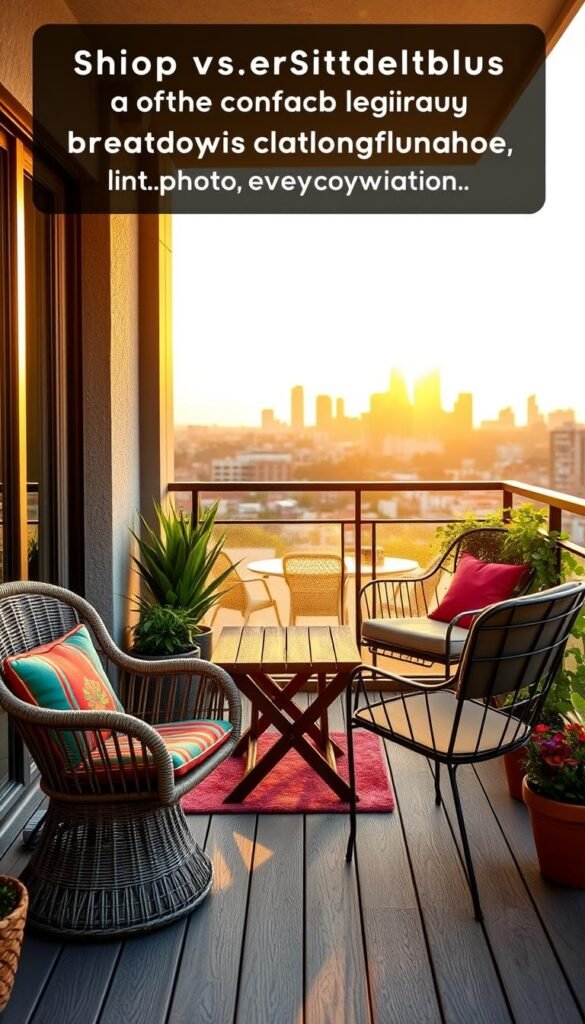
Stackable and folding options that store fast
Stackable or folding chairs save space when storage is limited. They are easy to carry for renters or stair moves.
Buyer note: pick frames that lock solidly to avoid wobble after repeat use.
Bench seating and airy open frames
A single bench can fit long, narrow layouts and reduce visual clutter compared to many separate seats.
Open-frame, low-profile pieces keep sightlines clear and make the space feel larger without losing function.
Deep seating versus basic seating
Deep seating creates a living-room feel for daily lounging. Basic seats work well for quick coffee stops and compact dining.
- Comfort checkpoints: seat depth, back angle, cushion thickness, removable covers.
- Storage tip: lightweight items ease moves; avoid frames that wobble after repeated use.
| Option | Best for | Trade-off |
|---|---|---|
| Folding/stack chairs | Renters, tight storage | Lightweight but can wobble |
| Bench seating | Long narrow space | Less flexible layout |
| Open-frame lounge | Maintain view and look | Often pricier, more comfort |
For budget planning and alternative small solutions, see the patio budget guide to match items to your space and use.
Balcony Tables and Dining: When the Table Is Worth the Upgrade
Start by deciding whether you need a surface for full meals, quick coffee, or a laptop. That single choice guides size, cost, and the best table type for the space.
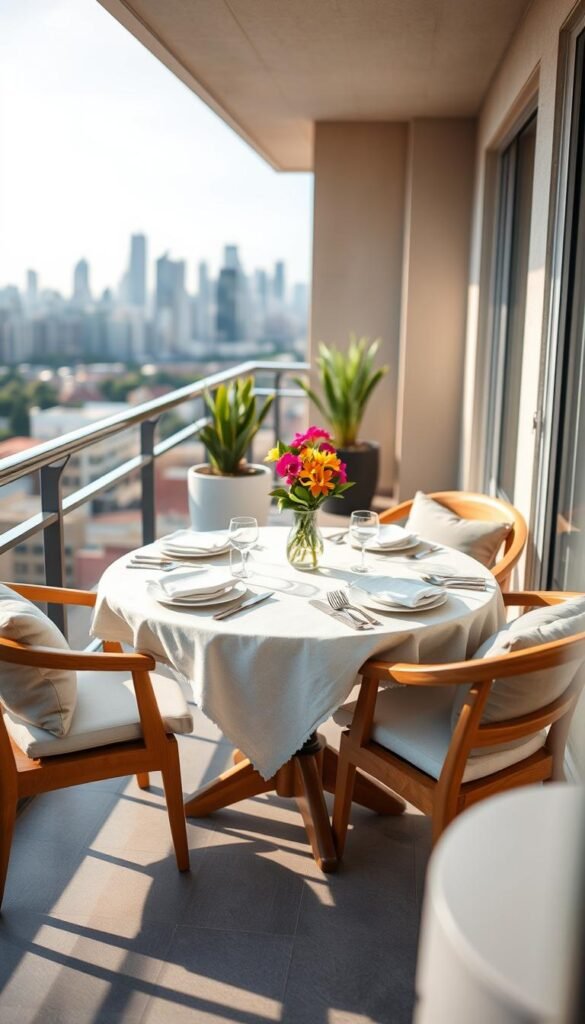
Compact café tables or extendable/fold-leaf designs
Compact café tables save floor area and work well for two. They are affordable and fit tight footprints.
Extendable or fold-leaf tables add versatility. They cost more but serve guests and multiuse dining needs without a permanent footprint.
Stability, chairs, and leg clearance
Stability matters most. Wobble-free tables are safer for food, laptops, and drink use. Look for cross-braced frames and solid glides.
Match chair height to table height and confirm leg clearance. This prevents cramped seating and improves comfort.
Railing-mounted bar shelves for no-floor-space solutions
Railing bars clamp on when there’s no room for a table. They suit coffee, a laptop, or a side tray but aren’t ideal for large meals.
| Decision | Best option | Trade-off |
|---|---|---|
| Solo coffee or laptop | Railing bar | Very compact / limited weight |
| Daily two-person dining | Compact café table | Stable / limited expansion |
| Occasional guests | Extendable table | Versatile / higher cost |
Quick measurement checklist: clear walkway width, door swing, and chair pull-out space before checkout.
Floor and Underfoot: Deck Tiles, Outdoor Tile, and Outdoor Rugs Compared
Underfoot upgrades are one of the fastest ways to change how a small outdoor area is used. Plain concrete feels cold and unfinished, and swapping the surface improves comfort and the overall look of the space quickly.
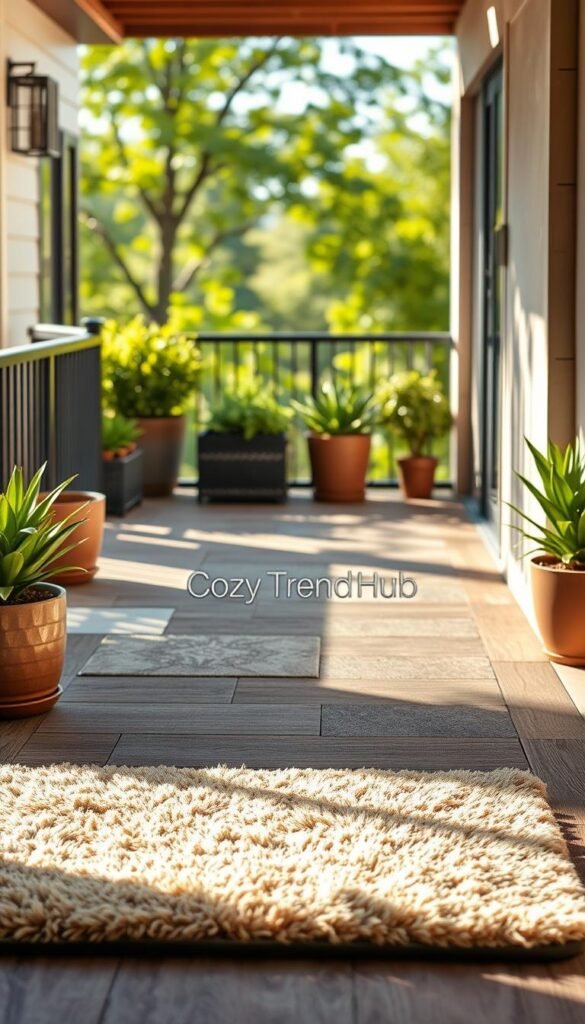
Fast fixes for a bare concrete floor
Interlocking deck tiles snap together without tools. They lift the floor visually and remove cleanly when moving. Pros: renter-friendly, quick install. Cons: can trap moisture if drainage is poor.
Permanent-feeling tile upgrades (and renter cautions)
Outdoor-specific tile gives a near-permanent finish and smooth look. It’s best for long-term users who can install adhesive or mortar. Renters should avoid glued installs to prevent lease violations and removal damage. For guidance on tile choices, see a detailed outdoor tile guide at outdoor tile options.
Outdoor rug features that matter
Polypropylene rugs resist stains and dry quickly. Look for UV resistance for strong sun, a tight weave for durability, and easy-clean materials for spills and pollen. Rugs add warmth without changing the floor permanently.
| Option | Best for | Renter note |
|---|---|---|
| Interlocking deck tiles | Quick install / rental moves | Removeable, no adhesives |
| Outdoor tile | Long-term, polished look | Avoid if lease forbids permanent change |
| Outdoor rugs | Soft underfoot, easy style change | Use non-slip pads and allow airflow |
Drying and drainage: airflow under tiles or rugs prevents mildew smells after rain. Choose raised tiles or quick-dry rugs and lift items to air out after storms.
Best choice by scenario: uncovered space = raised tiles for airflow; covered space = outdoor rug for comfort; pet-friendly = tight-weave polypropylene; frequent entertaining = tile or dense rug for stability and easy cleaning. For a balanced mix of items and layout ideas, see a curated combo guide at best outdoor mix.
Lighting and Lanterns: Cheap vs Premium Ways to Create Cozy Mood Light
Careful light choices can make a small outdoor area feel larger and more inviting after dark. Good fixtures set mood, guide movement, and support evening living without clutter.
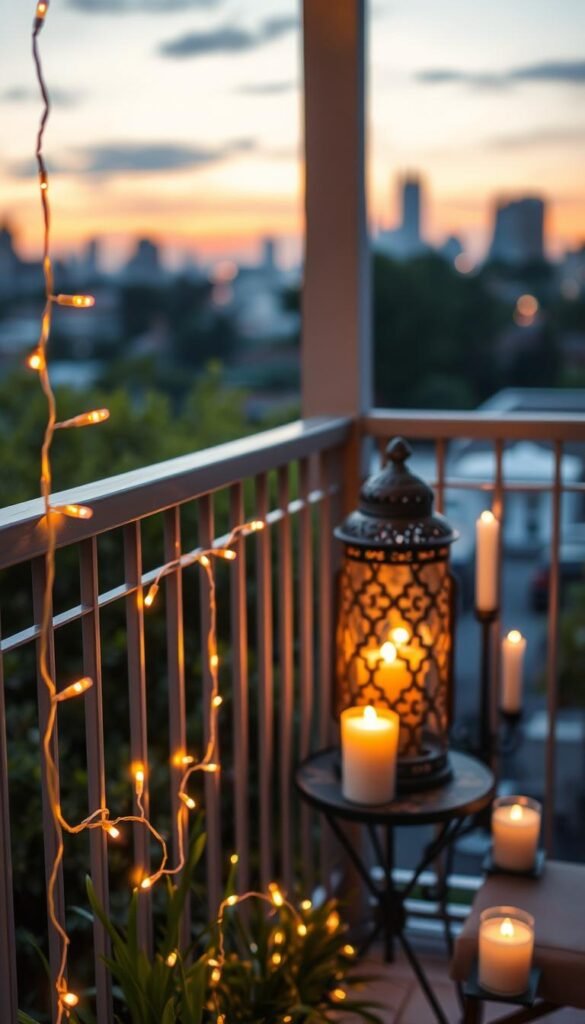
Solar strings and permanent LED options
Solar string lights are renter-friendly and easy to install. They require no wiring and remove cleanly when moving.
Higher-end outdoor-rated fixtures last longer and stand up to weather. Expect better materials, longer warranties, and replaceable bulbs.
Safe ambient light with lanterns and LED candles
Use LED candles inside lanterns for a soft, fire-free glow that meets most building rules. This keeps ambiance without open flame risks.
Placement and reflective tricks to expand the space
Outline railings, corners, and seating zones to create usable light without floor clutter. Fewer, better-placed sources beat many scattered bulbs.
Mirrors or metallic side tables multiply light and improve the night look. Choose a single reflective surface rather than many small shiny pieces.
- Quick buying checks: weather rating, battery type, solar panel placement, and replaceable parts.
- Prefer replaceable batteries and models with spare-bulb support.
| Option | Best for | Trade-off |
|---|---|---|
| Solar string lights | Easy setup, renters | Limited run-time in low sun |
| Outdoor-rated LEDs | Durability, bright zones | Higher cost, wired install |
| LED candle lanterns | Apartment-safe ambiance | Lower task brightness |
Small-space rule: fewer thoughtful sources, placed for tasks and mood, create a calmer evening atmosphere.
For practical picks and detailed installation ideas, see terrace lighting ideas and a buyer’s guide to the best outdoor lighting.
Privacy, Wind, and Sun Protection That Doesn’t Break Lease Rules
Simple shading and screening choices can turn an overlooked open area into an everyday living extension. The core problems are exposure to neighbors, wind that scatters cushions, and sun that fades furniture quickly.
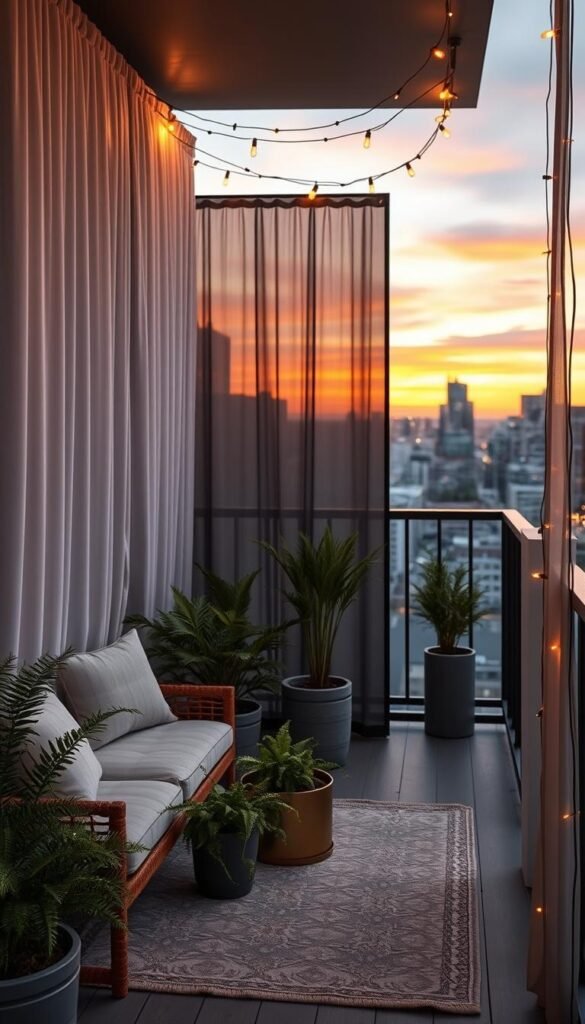
Renter‑safe screens: bamboo slats, roll-up fabric panels, and freestanding frames give instant privacy. Many attach with zip-ties, clamps, or over‑rail hooks so no drilling is needed. Choose treated bamboo or weather-rated fabric for longer wear.
Bamboo and fabric privacy screens for quick coverage
These provide solid visual separation without permanent fasteners. They block sightlines and reduce wind gusts while staying removable.
Curtains that filter light without going blackout
Pick light‑filtering fabric that keeps brightness but reduces the “on display” feeling. A pinstripe or medium‑weight weave is a smart choice—Caitlin Higgins uses pinstripe curtains to keep privacy without shutting out light.
Awnings for shade, privacy, and furniture protection
Awnings are a higher-investment option. They shield seating and cushions from direct sun and light rain, extending the life of outdoor furniture.
Buying and attachment notes: measure rail types, confirm HOA or building rules, and prefer removable mounting hardware. If drilling is allowed, use stainless anchors and document any mounts for move‑out.
- Quick checks: test wind load, verify sun angle, and confirm removable mounts.
- Comfort payoff: more privacy and shade usually means more frequent use of the space and better return on other purchases.
| Problem | Renter‑safe option | When to choose |
|---|---|---|
| Feeling exposed to neighbors | Bamboo screen or fabric panel with clamp hooks | Short leases or no drilling allowed |
| Wind gusts scatter cushions | Freestanding windbreak or weighted screens | High-rise exposure or frequent breezes |
| Sun fades cushions and makes heat | Retractable awning or UV-rated shade cloth | South- or west-facing space with strong sun |
For more renter‑friendly windbreak ideas and product options, see ten practical windbreak options.
Plants and Garden Style: Potted Plants, Vertical Displays, and Railing Planters
Plants are one of the fastest ways to soften hard surfaces, add privacy, and make a small outdoor space feel finished. They change mood, improve air quality, and give a clear focal point without bulky furniture.
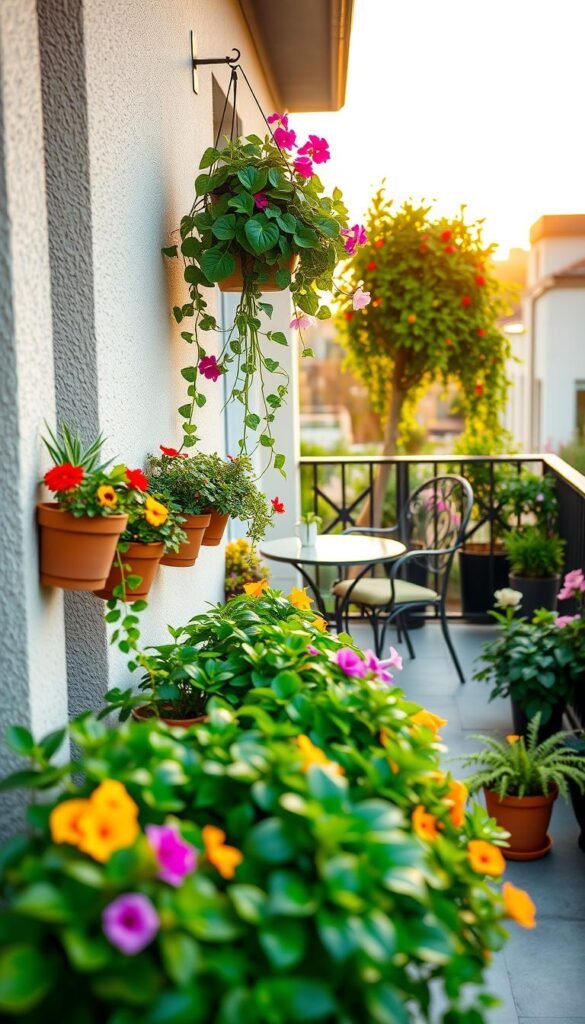
Over-rail planter boxes for instant color on tight spaces
Over-rail planters bring immediate color while keeping the floor free for seating. They are renter-friendly when attached with clamp-style hooks or removable brackets.
Buy checks: confirm drainage holes, use liners if needed, and test the weight when wet so rail fittings handle the load.
Vertical plant stands and wall solutions to free floor area
Vertical stands, hanging pockets, and wall-mounted shelves stack green without shrinking usable floor space. These options suit pots, herbs, and trailing plants that cascade instead of spread.
Tip: place heavier pots low and secure shelves to guard against wind.
Choosing low-maintenance plants by sun exposure
Match plant choices to sunlight to cut failures and frustration. For high sun, pick lavender, sedums, rosemary, and other drought-tolerant varieties. For partial shade, ferns, hostas, and begonias do well.
Care realities: use fast-draining soil, set up a watering routine, and shelter fragile pots from gusts to prevent toppling.
- Why plants help: they add privacy, soften rail lines, and bring living color without permanent changes.
- Practical picks: potted plants in lightweight composite pots, hanging planters, and over‑rail boxes.
- Maintenance checks: drainage, liners, watering access, and hook fit for common U.S. rails.
For creative planter ideas and placement tips, see a guide on getting creative with planters. For seasonal styling that works in apartments, review spring suggestions at best spring decor for apartments.
Storage and Multipurpose Decor for Tiny Outdoor Living Space
Choosing storage that doubles as furniture keeps floor space free and the view clear. Low, long units avoid visual bulk and offer a top surface for drinks, plants, or a serving ledge.
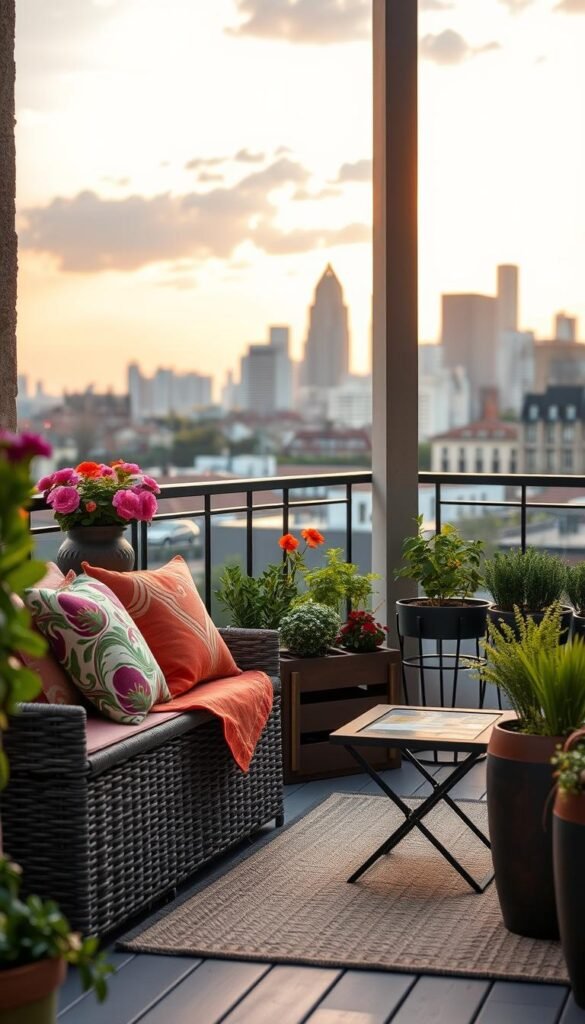
Low-level cabinets and shelves hide cushions, tools, and lanterns while providing a usable counter. They work better than tall cabinets in narrow layouts because they keep sightlines open and offer more usable top space.
Crates, stools, and hidden storage that earn their footprint
Repurpose wooden crates as stackable storage or extra seating. Storage stools act as a side table and a stash spot for small items. Foldable furniture stows easily in-season and frees space when not in use.
- Pros: dual-purpose use, renter-friendly, easy to move.
- Cons: check stability and weight limits; some pieces need cover in heavy rain.
Quick footprint test: keep only pieces that replace another item (a bench that stores cushions, or a chest that serves as a side surface). This avoids gaining clutter while losing usable space.
For more small-space storage ideas and compact furniture options, see a practical guide to maximize your backyard.
Maintenance and Weatherproofing: How to Make Any Price Tier Last Longer
Small, routine actions keep items looking and performing better in sun, rain, and wind.
Protective covers and smart storage go a long way for small apartments. Choose water-repellent covers sized for your furniture and leave a little airflow to avoid trapped moisture.
When space is tight, stack foldable pieces, tuck cushions into under-bed bins, or use vertical shelving. Proper storage cuts replacements and keeps the floor clear for daily use.

Material care basics
Wood: teak, cedar, and redwood resist rot naturally. Seal them once a year to slow graying and reduce cracking.
Faux wicker (polypropylene): hose down, brush dirt from crevices, and let pieces dry fully to prevent grime buildup.
Metal: rinse salt or grime, dry joints, and touch up powder coat or paint to stop rust at stress points.
Common failure points and fixes
- Faded fabric — use UV-resistant covers and rotate cushions to even wear.
- Mildew smells — remove covers, wash cushion shells, and dry in sun when possible.
- Rust or loose hardware — tighten screws seasonally and replace corroded bolts.
- Wobble — tighten, replace worn glides, or retire unstable legs for safety.
„Maintenance is the easiest way to improve ROI whether items are budget or higher-end.“
Quick seasonal checklist (5 minutes each task)
- Tighten screws and check joints.
- Spot-clean cushions and unzip covers for air-dry.
- Inspect drainage under rugs and tiles; lift if water pools.
- Apply sealant to exposed wood or touch-up paint on metal.
- Cover or store lightweight plastic pieces indoors during long storms.
| Issue | Immediate step | When to replace |
|---|---|---|
| Faded cushions | Use UV covers; rotate regularly | Color loss affects comfort/visibility — replace if fabric thins |
| Rust at joints | Clean, dry, and treat with rust inhibitor | Replace if structural legs weaken or holes form |
| Wobble | Tighten hardware; add new glides | Retire chair if repairs don’t restore stability |
Value note: even long-lasting outdoor furniture benefits from these simple steps. For surface protection options like coatings for exposed rail and floor areas, consult a practical guide on the best coating system for your exposed balcony or.
Buying Considerations Before You Checkout
Measure the available space first. Note total floor area, door swing, and a clear 24–30 inch walkway so the setup never feels blocked. A simple floor sketch with dimensions saves returns and awkward reconfigurations later.
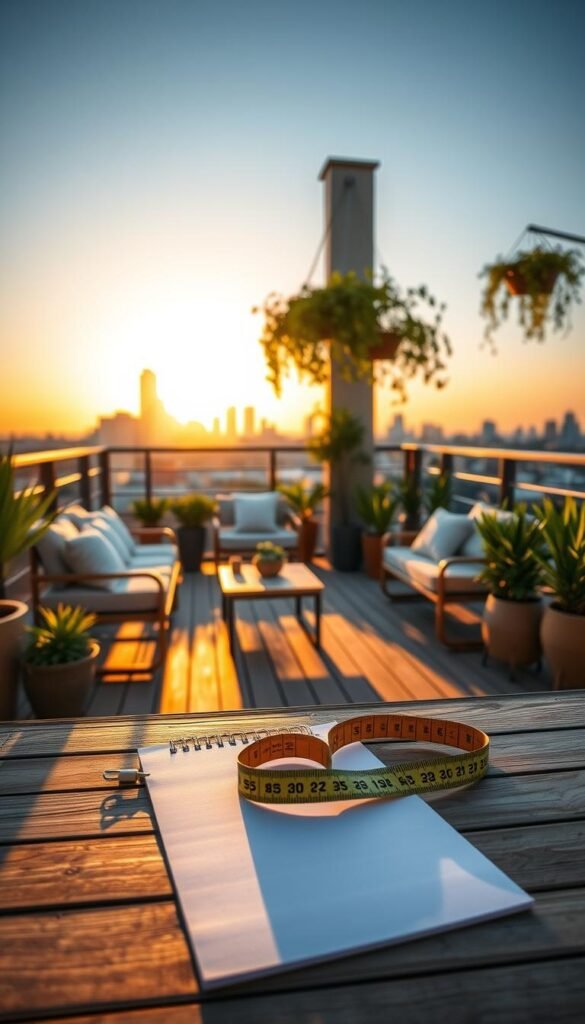
Measure your space and map walkways first
Start with a tape measure and draw a scaled outline. Mark the door arc and any obstacles like vents or planters. Fit the largest item first, then layer seating and small tables around that footprint.
Weight limits, railing rules, and HOA or building restrictions
Check load limits—especially for heavy planters, tiles, or bars that attach to the rail. Confirm HOA rules on screens, awnings, and permanent mounts. Use clamp hooks or removable brackets when drilling isn’t allowed.
What to prioritize for comfort, color scheme, and cohesive design
Prioritize comfort: seating depth and cushion quality shape how the space gets used. Next, choose durable finishes for daily use. Then pick a simple color scheme that ties the outdoor space to adjacent rooms for a seamless visual flow.
When frequent replacement is actually the cheaper choice
For short leases, high exposure to sun or storms, or if tastes change often, plan for planned replacement. Budget-friendly items can be smarter when turnover and climate shorten item lifespan.
„Measure first, check rules second, then buy to match comfort and color—this prevents returns and keeps the space useful.“
Return‑proofing checklist:
- Confirm shipping dimensions and assembly required.
- Check cushion storage needs and available covers/parts.
- Verify rail and floor attachment limits before purchase.
Conclusion
Decide what you want your small outdoor area to do most, then buy to support that use. Measure, confirm building rules, and prioritize core pieces first. That approach reduces returns and improves long‑term value.
Quick recap: splurge on durable seating and a stable table that anchor the space. Save on accents like lighting, rugs, and small side pieces that are easy to swap.
Renter wins: removable deck tiles, folding dining sets, solar lighting, and over‑rail planters keep the unit lease‑friendly. Premium wins include performance cushions, teak or powder‑coated frames, and privacy/shade upgrades for daily comfort.
Next step: measure, pick anchors, then finish with plants, lighting, and smart storage. For styling ideas, see these balcony decorating ideas.