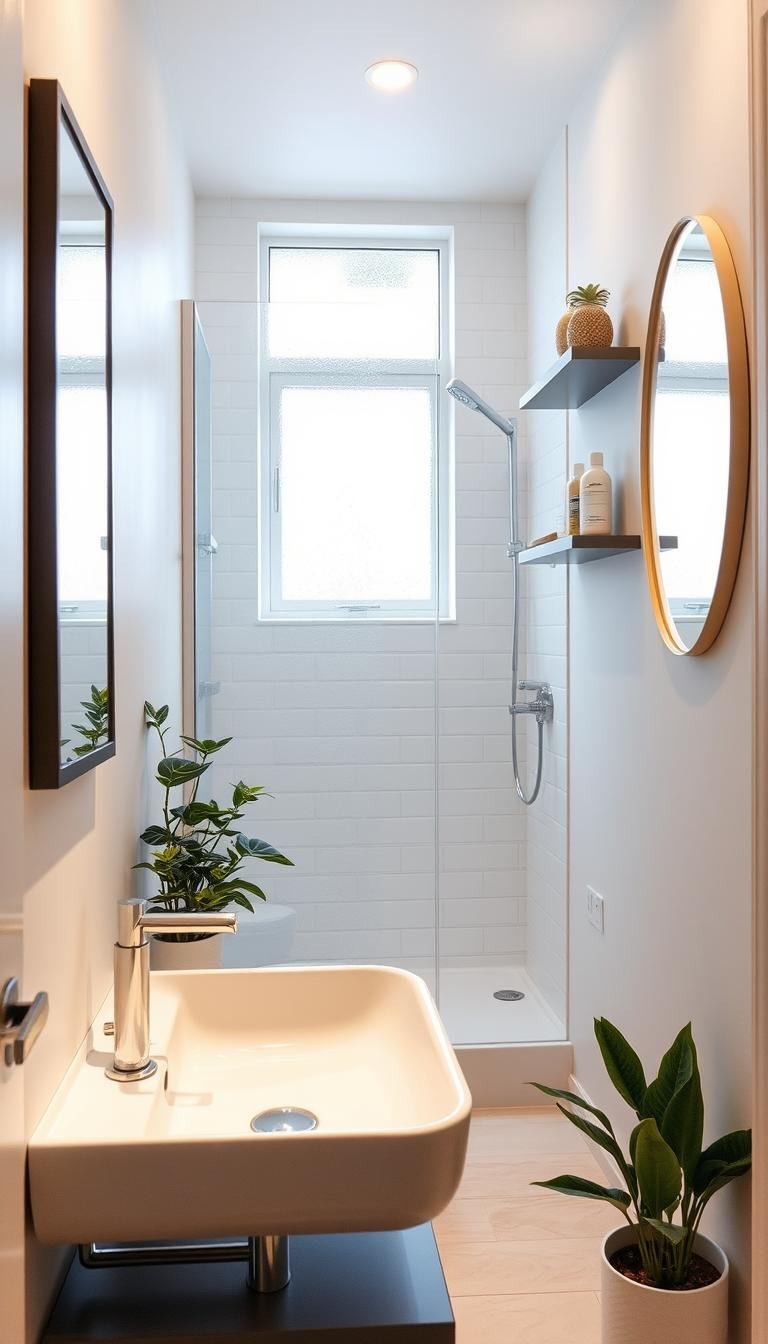
Problem: Tight rooms often suffer from clutter, limited counters, and few closed cabinets. This guide frames clear solutions and buyer intent up front.
Define bathroom small space practically: limited walking clearance, scarce counter area, and not enough closed storage for daily items. The article will compare renter-friendly fixes against remodel-level changes.
Preview: the „5 ideas“ focus on layout and visual tricks — light, mirrors, and sightlines. The „5 space savers“ are buy-now storage and fixture fixes like wall mounts and under-sink organizers.
What to expect: Quick refreshes (adhesive hooks, organizers, lighting) versus remodel options (glass doors, niches, compact fixtures). Each entry lists best use cases, the problem it solves, and what to measure before buying.
Renter priorities are flagged throughout: no-drill and reversible options appear where relevant. The goal is real-life function — less counter clutter, fewer trip hazards, and easier cleaning — not a fragile, photo-only setup.
For curated organizer picks and comparison tables, see a focused roundup of top options best organizers for tight rooms.
Key Takeaways
- Defines practical limits of a compact room and common pain points.
- Five visual layout ideas and five actionable storage savers are compared.
- Notes renter-safe, no-drill choices alongside remodel options.
- Each item shows best-for use case, problem solved, and measurement tips.
- Focuses on lasting function: less clutter, safer floors, easier cleaning.
Small bathroom reality check: the problems you’re actually solving
Pinpoint the exact daily hassles—then match each to a product that solves it. Start with the things people bump into most: too many bottles, towels with nowhere to hang, and crowded counter space that makes morning routines slower.
Crowded counters mean toiletries and grooming items sit out where they get wet or knocked over. The right organizers—wall shelves, slim drawers, and countertop trays—keep daily items reachable without adding floor clutter.
Towel trouble creates friction. One extra hook or a compact towel bar prevents damp piles and speeds up use. Over-door racks and adhesive bars work for renters and quick installs.
Floor crowding makes the room feel tight. Baskets, bulky caddies, and deep freestanding cabinets force sideways shuffling. Lift storage off the floor with wall mounts and over-toilet shelves to clear walking lines.
Visual clutter shrinks perception. When the eye hits a dark corner, tall stacks, or a busy curtain, the room reads smaller. Later sections recommend opening sightlines with glass, mirrors, and fewer visible bottles—try refill dispensers and grouped containers.
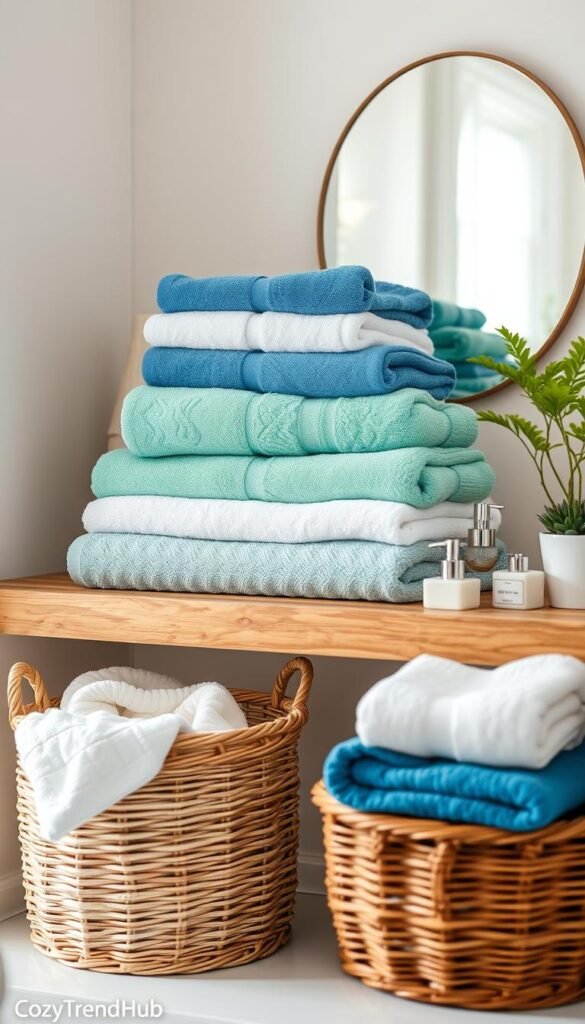
- Top problems: crowded counter, no towel storage, too many bottles.
- Quick fixes buyers prefer: hooks, adhesive organizers, wall dispensers.
- Strategy: open sightlines, lift storage off the floor, reduce bottle count.
For curated product picks that match these needs, see best bathroom storage ideas.
Measure first: small bathroom dimensions and clearance that affect every choice
Start by measuring the room the way a pro would: precise, simple, and focused on movement. Treat anything under ~40 sq. ft. as a compact layout where inches change usability.
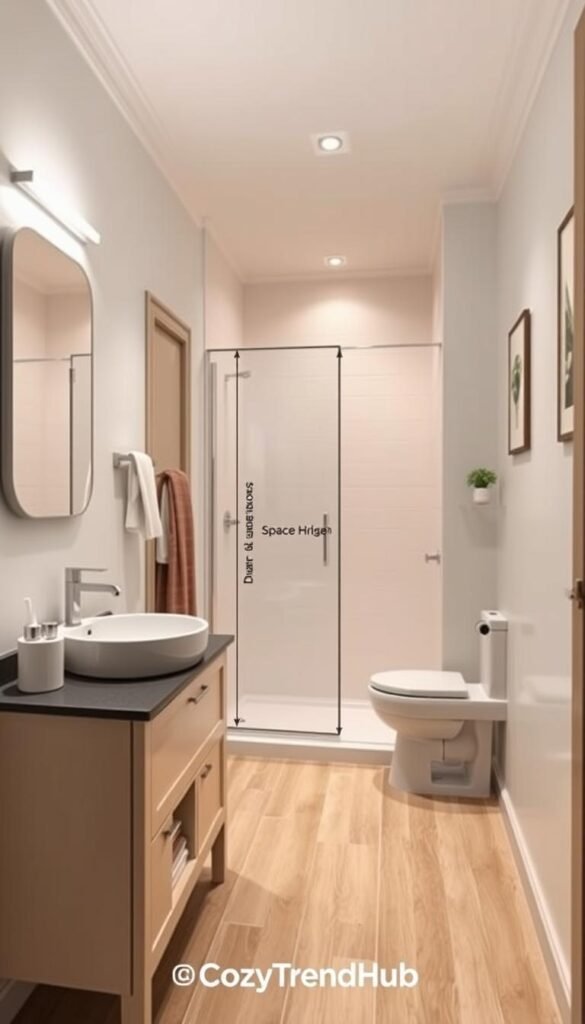
- Room width and length; note ceiling height.
- Mark the door swing path and the tightest walking corridor.
- Measure toilet and vanity projections and clearances in front of drawers.
Why the door and clearances matter
A door that swings inward can block towel racks or a sliding shower option. Leave about 750mm (30 in.) in front of the toilet as a practical clearance target so fixtures stay usable.
„Measure twice, buy once — layout decisions trump purely cosmetic choices.“
| Constraint | Recommended Clearance | Buying Tip |
|---|---|---|
| Toilet front | ~750mm / 30 in. | Choose short-projection models if needed |
| Vanity projection | Keep vanity shallow where corridor is narrow | Select slim-profile or wall-hung units |
| Door swing | Swing path must be clear of racks | Consider pocket or outward swing doors |
No-regrets rule: prioritize vertical storage and slimmer profiles over anything that adds bulk on the floor. Sketch a simple plan, mark pinch points, and let layout guide the final design.
Planning a refresh vs. a remodel in a small bathroom
Deciding between a light refresh and a deeper remodel starts with one question: which daily problem causes the most friction? A focused choice saves money and delivers measurable improvement.
Refresh fixes improve function without moving plumbing. Think organizers, better lighting, mirrors, wall-mounted holders, and towel solutions that clear counters and improve flow.
Remodel covers layout and wet-area work. This includes swapping shower doors, adding niches, replacing vanity or toilet, or adopting a wet-room concept that may need drainage changes and professional planning.
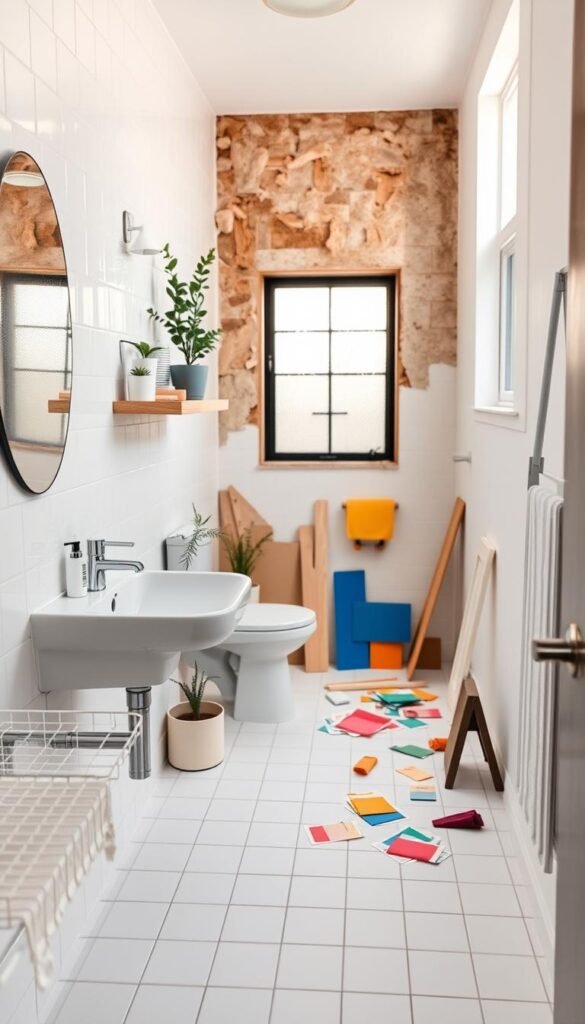
When a remodel makes sense
- Fixture projection blocks movement or causes door collisions.
- Persistent mold or impossible-to-clean corners that affect long-term use.
- Replacing a bulky vanity or installing a compact toilet will free walking lines.
Renter-friendly checklist
- Prefer adhesive or tension mounts over drilled holes.
- Choose removable hooks, suction caddies, and no-damage towel bars.
- Avoid heavy furniture that steals floor clearance; opt for wall-mounted or multi-function pieces.
Practical path: start with the highest-friction zone—sink counter, shower bottles, towel spot—then upgrade only what measurably improves daily routines. For curated organizer picks for apartments and renter solutions, see best bathroom storage for apartments.
Bathroom Idea: Go vertical with smart shelving on the wall
Stacking storage vertically transforms tight layouts without stealing floor room. This approach adds usable storage while keeping the floor clear and walkways safe.
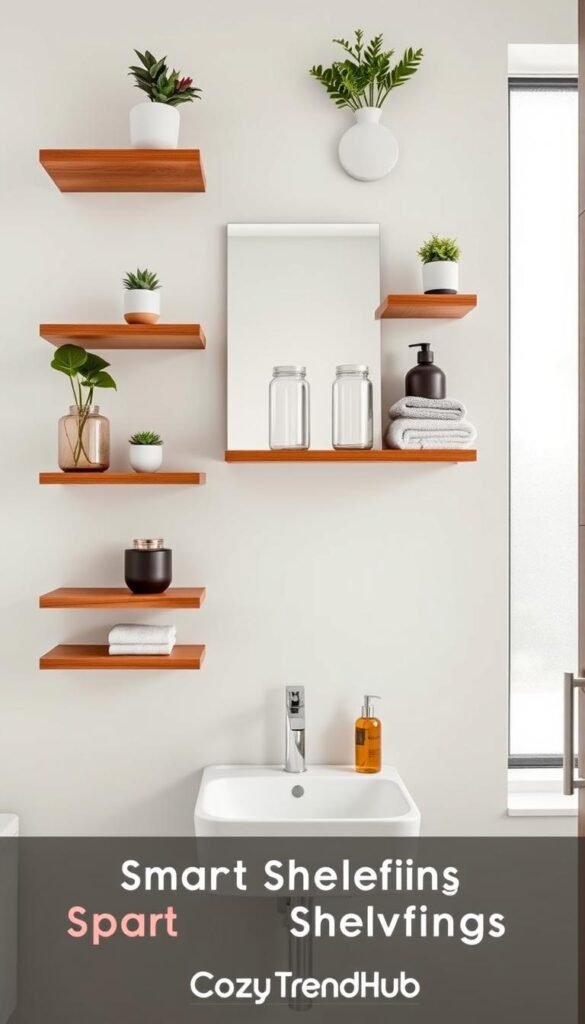
Best for: renters and layouts with zero usable floor area, pedestal sinks, or narrow vanity tops. Floating units and over-toilet etageres work where built-ins aren’t allowed.
Buying considerations
- Shelf depth: 6–10″ is safer in narrow corridors; keep the lowest shelf shallow to avoid head bumps.
- Vertical placement: Leave about 4–6″ between tank top and lowest shelf; allow at least 48–54″ clear height above fixtures for comfort.
- Materials: Choose moisture-resistant finishes—sealed wood, metal, or PVC—to avoid warping and peeling.
- Weight limits: Check bracket specs; store heavy items on reinforced etageres or use metal brackets rated 30+ lbs per point.
Pros and cons
| Type | Install difficulty | Renter-friendly | Capacity | Visual clutter risk |
|---|---|---|---|---|
| Floating shelves | Easy–moderate (anchors needed) | Moderate (removable options available) | Low–medium | Low if styled |
| Over-toilet etagere | Easy (freestanding) | High (no drilling) | Medium–high | Medium |
| Wall-mounted cabinet | Moderate–hard | Low (usually drilled) | High | Low (concealed items) |
Organization rule: keep daily items on the lowest shelf for reachability and store backstock up high in labeled bins. Matching finishes help the setup read cohesive and reduce visual clutter.
Bathroom Idea: Mirror more than the vanity to bounce light
Reflective surfaces do more than show a face—they multiply available light and depth. This solves the common dark-corner problem that makes a windowless powder room feel cramped. A larger mirror extends sightlines and directs fixture light into corners that otherwise read flat and closed-in.
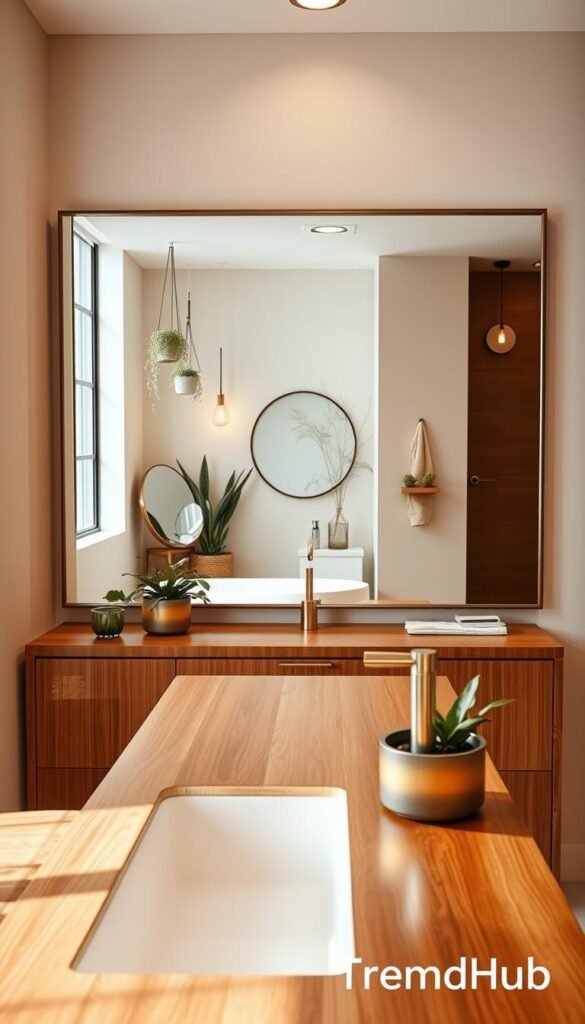
- Flat mirror: Simple and budget-friendly. Best for minimalists who want quick light gain with easy swaps.
- Medicine cabinet: Adds closed storage and clears counters. Good for users who need daily-access organization.
- Mirrored wall section: Gives the biggest visual expansion and is ideal for the darkest layouts that need to make small rooms feel larger.
Selection checklist
Choose width to nearly match the vanity and height so all users see comfortably. Prioritize sealed edges and anti-fog backing to handle humidity. For renters, favor surface-mounted units or lighter framed mirrors; recessed cabinets may need permission.
„Fewer items on the counter means faster weekly wipe-downs and less visual mess.“
For complementary decor that enhances reflected light and keeps the look cohesive, see a curated guide to aesthetic decor for compact rooms.
Bathroom Idea: Use glass to open up the shower area
A clear glass divider can visually merge the shower with the rest of the room. Curtains create a visual block that makes a cramped area feel boxed in. Glass restores sightlines and makes the layout read larger.
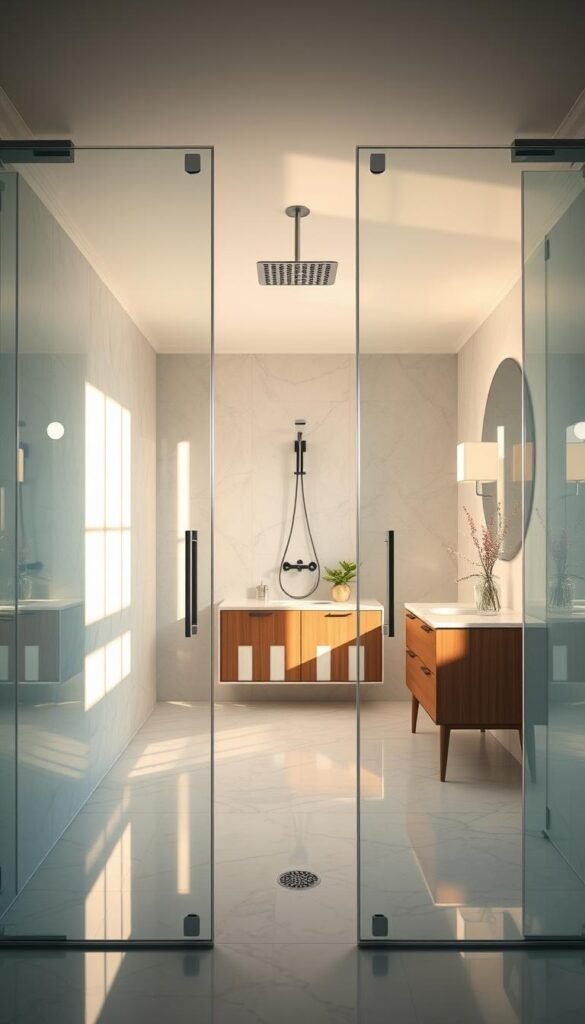
Best for
Ideal for narrow layouts where the shower is the first thing seen from the door and for corner showers that feel boxed in. Renters and owners who want a quick visual upgrade benefit most.
Buying considerations
- Door type: swinging doors need clearance; sliding doors save floor clearance but require track care.
- Cleaning: glass looks open but shows hard-water spots—consider a protective coating or a daily squeegee.
- Hardware finishes: match metal tones to faucets and towel bars to reduce visual noise.
Alternative: doorless layout
A doorless design feels very open but only works with correct slope and drain placement. It needs splash control and proper waterproofing.
„Measure the swing path — a door must not hit the toilet, vanity, or towel bar.“
Bathroom Idea: Choose light-reflecting finishes that make the room feel bigger
„Paint sheen and tile scale do more than look pretty — they solve real visibility and depth problems.“
Finishes change perception. A thoughtful choice of paint and tiles fixes flat lighting and dark corners without costly work. Decide whether to maximize reflectance or introduce controlled depth.
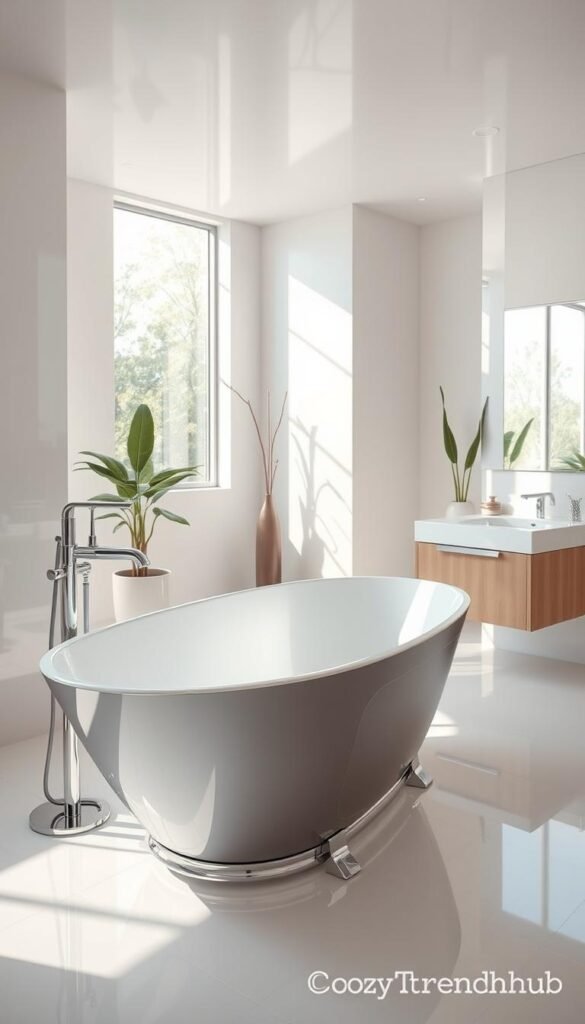
Light and bright palettes for a clean “bigger” look
Light colors reflect available light and open sightlines. Use washable, humidity-resistant paint with a satin or eggshell sheen to balance bounce and durability.
Dark high-gloss paint for depth in windowless rooms
Dark, high-gloss finishes can create visual depth by reflecting limited light back into the room. Choose this only when storage is minimal and the finish can be wiped regularly.
Tile and pattern strategy: small ceramic tiles and bold patterns that scale up the area
Small ceramic tiles fit narrow walls cleanly and cut waste on feature zones. Medium-to-bold patterns work when the rest of the room stays simple—patterns should draw the eye purposefully, not clutter it.
- Buyer considerations: humidity resistance, washable formulas, sheen level affects how much light bounces.
- Maintenance: glossy surfaces show spots and fingerprints; pair them with a realistic cleaning routine.
- Decision rule: pick the finish that improves visibility, reduces dark corners, and supports your storage plan.
Bathroom Idea: Keep the floor visually clear with a pedestal or floating vanity
Replacing a bulky base cabinet with a pedestal or wall-hung unit frees walking lines and sightlines. This reduces trips and makes the room read larger without moving plumbing.
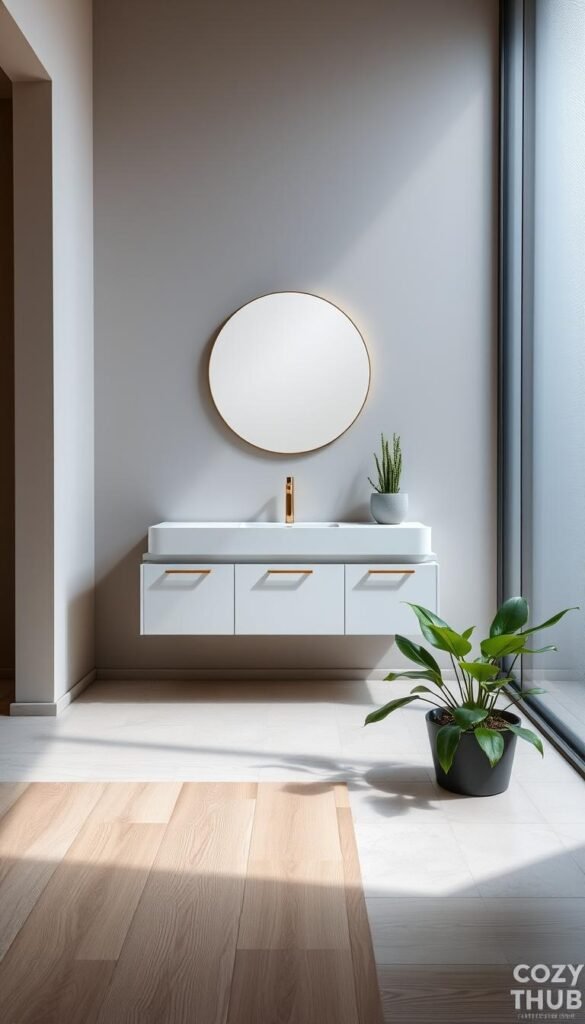
What problem this solves
Bulky vanities and bins on the floor create trip hazards and crowd narrow layouts. Clearer floor areas let people pass the sink and toilet without bumping knees or storage baskets.
Best for
Long, narrow rooms and layouts where users must pass close to fixtures. Owners and renters in small spaces will notice immediate safety and cleaning gains.
Pedestal sink vs. floating vanity
- Pedestal sink: maximizes visual floor area and is easy to install. Con: almost no concealed storage.
- Floating vanity: keeps the floor visible while adding drawers or a cabinet top. Con: requires a load-bearing wall or professional install for secure mounting.
Buying considerations and tradeoffs
- Check vanity depth and projection so doors and drawers clear the walking line.
- Verify wall support and anchors before choosing a wall-hung unit.
- Plan alternative storage: a closed mirror cabinet, a narrow vertical shelf, or over-door racks replace lost under-sink capacity.
Function and safety: More visible floor is faster to mop and easier to keep dry, lowering grime and slip risk. For renters, pedestal sinks and freestanding shallow vanities offer visual lift with minimal wall changes. Owners can invest in a floating vanity for a balance of storage and a clear floor.
„A lifted vanity clears sightlines and reduces trips—practical gains you feel every day.“
Space Saver: Over-the-door and inside-cabinet organizers that add storage fast
A cleverly hung organizer turns an unused door into instant, accessible storage. This is a fast renter-friendly fix that adds capacity without drilling or losing floor room.
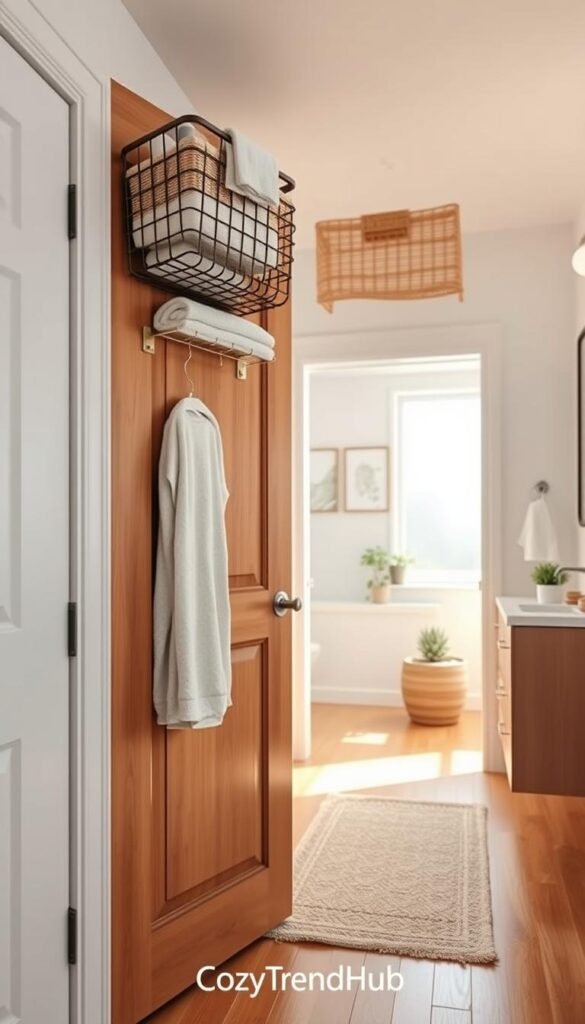
Best for: rentals with tiny vanities, shared sinks where items multiply, and anyone needing a clear counter. These solutions fit behind the door or inside a cabinet and work with minimal change.
Buying considerations
- Measure door thickness and clearance so the unit hangs without jamming the latch.
- Check how far the organizer protrudes; ensure the door still closes quietly.
- Prefer breathable fabrics or slotted trays to avoid trapped moisture and odors.
- Pick products rated for cooled hair tools only; never store hot appliances immediately after use.
Pros and cons
| Type | Capacity | Visual impact | Best use |
|---|---|---|---|
| Over-door pocket organizer | High | Busy | Toiletries, travel bottles, hair brush |
| Slim cabinet-door rack | Medium | Clean | Extra soaps, small bottles, travel kits |
| Hooked tool holder | Low | Minimal | Cool hair tools, brushes |
Maintenance tip: assign each pocket or rack a category so it never becomes a catch-all. That keeps counters clear and makes the organizer a true time-saver.
Space Saver: Under-sink space maximizers that work around plumbing
An under-sink area is one of the quickest places to reclaim usable storage and reduce counter clutter.
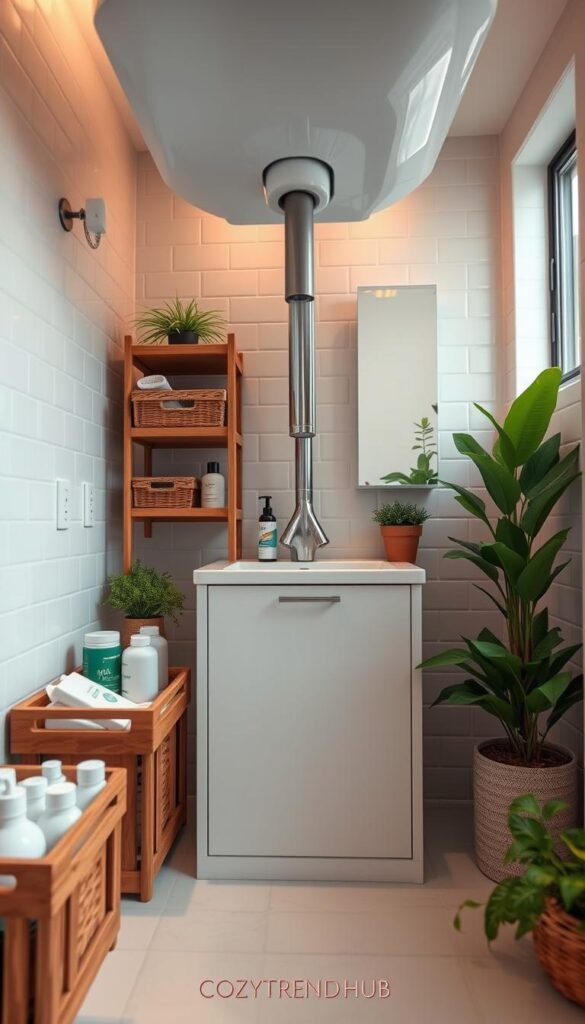
Problem: the cabinet under the sink becomes a hard-to-reach pile where small items vanish behind the P-trap and supply lines. That makes daily routines slower and restocking frustrating.
Who benefits most
People with limited closet options and anyone who dislikes digging through backstock gain the most. Pull-out systems and adjustable shelves make frequently used items easy to reach.
Measure before you buy
- Measure internal width, depth, and height of the cabinet.
- Record exact position and diameter of the P-trap and supply lines.
- Note the distance from the cabinet floor to the sink base so drawers can slide freely.
| Type | Strength | Tradeoff |
|---|---|---|
| Expandable shelves | Adjusts around pipes; quick install | Lower profile; less full-depth access |
| Pull-out drawers | Full access to back items | Needs clearance and a stable base |
| Stacked bins | Simple zones for categories | Requires regular tidying |
Simple system: assign zones for cleaning, first aid, hair, and backups. Limit each zone to one container so the cabinet stays organized.
„One in, one out“ keeps backups from swallowing any new storage gains.
For ready-made options and practical picks, see a roundup of reliable under-cabinet organizers that fit common measurements and plumbing layouts.
Space Saver: Shower storage upgrades that replace bulky caddies
A cramped shower with freestanding caddies often steals elbow room and creates visual clutter. Start by deciding whether a remodel or renter-friendly fix fits the budget and timeline.
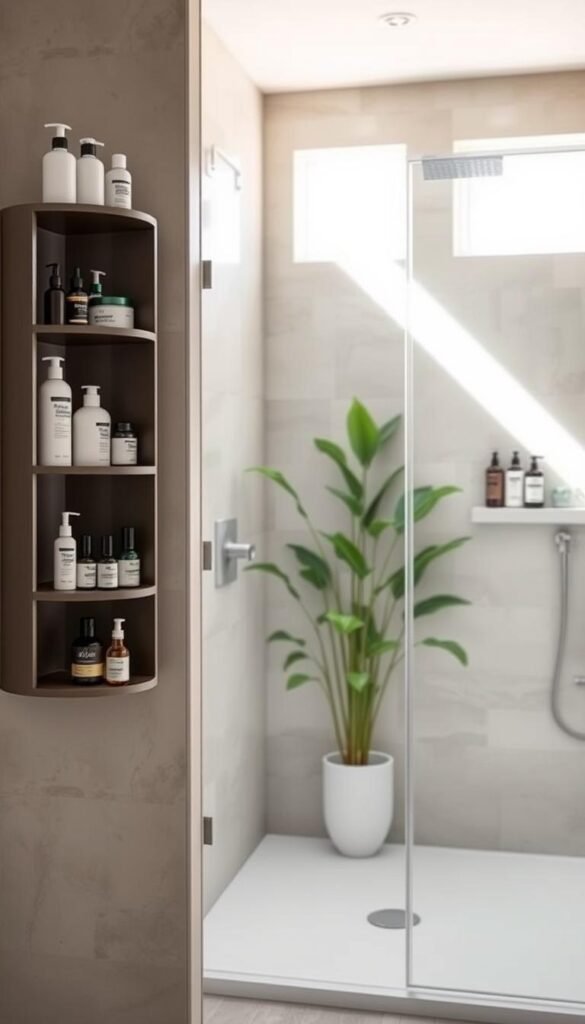
Built-in shower niche (best if remodeling)
Why choose it: a recessed niche keeps products flush with the wall, makes cleaning simpler, and stops bottles from being knocked over.
Buyer tip: plan size for tall shampoo bottles and include a slight slope for drainage.
Corner shelves and suction/adhesive caddies (best for renters)
Advantages: corners reclaim dead areas; adhesive and suction units lift bottles off the tub edge without drilling.
Check before buying: match adhesive type to tile vs. textured surfaces, confirm weight limits, and allow full cure time before loading.
Wall-mounted dispensers to reduce bottle clutter
Benefit: fewer bottles, faster wipe-downs, and a consistent look. Good for households that value reduced visual noise.
Caution: dispensers need regular refilling and cleaning to avoid buildup.
| Option | Best for | Pros | Cons |
|---|---|---|---|
| Built-in niche | Remodels | Flush finish, easy cleaning, holds many items | Needs tile work, higher cost |
| Corner shelf | Renters, quick installs | Uses dead corner, holds tall bottles | May need strong anchors on grout |
| Suction/adhesive caddy | Temporary setups | No drilling, quick to move | Surface-dependent adhesion, lower load limits |
| Wall dispenser | Minimalist users | Reduces bottles, neat appearance | Refill/clean upkeep |
„A simple shelf or a niche beats crowded bottles—pick the option that fits your lease and your long-term use.“
For curated product picks that suit renters or full remodels, see a focused guide to practical storage upgrades and renter-friendly ideas at best home storage ideas for renters and a buyer’s list of upgrades at top storage ideas that upgrade tight.
Space Saver: Compact toilet options and the storage zone above the toilet
Swap a full-depth bowl for a short-projection model to reclaim inches where every step counts. This change improves walking clearance in front of the fixture and frees the wall above for useful storage. It is a buyer-focused move: measure first, then commit.
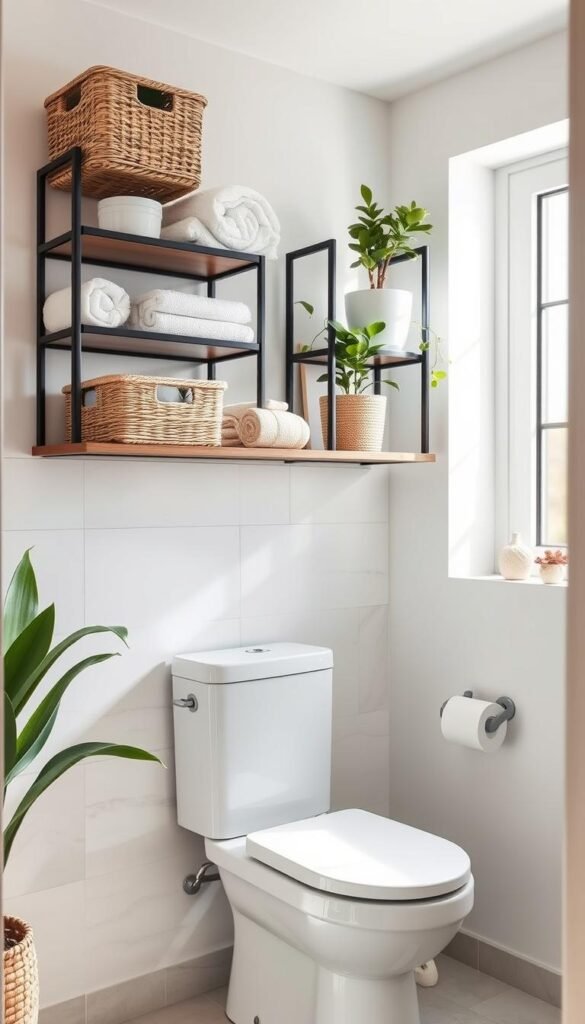
Short-projection toilets
Short-projection toilets reduce how far the bowl extends into the room. That saves valuable knee clearance and can prevent door swing conflicts. Check the rough-in dimension and confirm seat reach feels natural before buying.
Wall-hung vs. back-to-wall
Wall-hung models look lighter and make floor cleaning easier. They need in-wall support and are typically an owner-level install.
Back-to-wall options conceal the cistern and give a neat silhouette without full wall framing. They often fit standard plumbing and are simpler to retrofit.
Over-toilet shelving and planning
Over-toilet shelves are the lower-cost win. Use etageres or narrow cabinets to store extra toilet paper, soap, and a few labeled bins so the sink counter stays clear.
| Option | Best for | When to choose |
|---|---|---|
| Short-projection toilet | Very tight layouts | When inches of front clearance are limited |
| Wall-hung toilet | Owners wanting visual lift | When remodeling and wall support available |
| Back-to-wall toilet | Retrofits | When a clean look is needed without in-wall work |
| Over-toilet shelves | Renters and quick fixes | To add vertical storage without drilling |
Quick checklist: confirm rough-in, test door swing, plan knee clearance, and limit backstock to labeled bins. For compact fixture furniture and smart shelving picks, consider browsing curated options like the over-toilet furniture collection.
Space Saver: Streamline bathroom “extras” with compact, storable essentials
Extras like bulk cleaners and seasonal kits quietly turn tidy shelves into cluttered catch-alls.
Define „extras“: bulk backups, oversized bottles, and rarely used kits that migrate into cabinets and crowd daily essentials.
Best for: rooms that double as laundry areas, homes with one shared closet, or households storing seasonal items like sunscreen and cold remedies.
- Choose compact packaging where it performs the same job—detergent sheets replace bulky jugs and free shelf inches.
- Check shelf life on backups; avoid storing more than the area safely holds.
- Plan overflow: keep excess products in a hall closet or utility cabinet outside the room.
| Issue | Compact fix | Buying tip |
|---|---|---|
| Bulky cleaners | Concentrates or sheets | Compare dose per use |
| Seasonal gear | Labelled bin | Rotate yearly, check dates |
| Laundry backups | Slim packs | Store in laundry closet if available |
Backstock boundary: limit overflow to one labeled bin or one shelf. This keeps daily essentials reachable and the room feeling orderly.
„Keep only what is used within arm’s reach; everything else belongs elsewhere.“
For compact laundry ideas and a practical laundry storage for tight rooms, see curated picks that save shelf room and simplify the way items are stored at home.
Buyer-focused product picks: what to buy for a bathroom small space (comparison-ready)
Practical product comparisons help decide what to buy when inches and daily routines matter. Below are compact, decision-first picks organized by the problems they solve: counter clutter, towel drying, shower bottle overload, and dead‑space gaps.
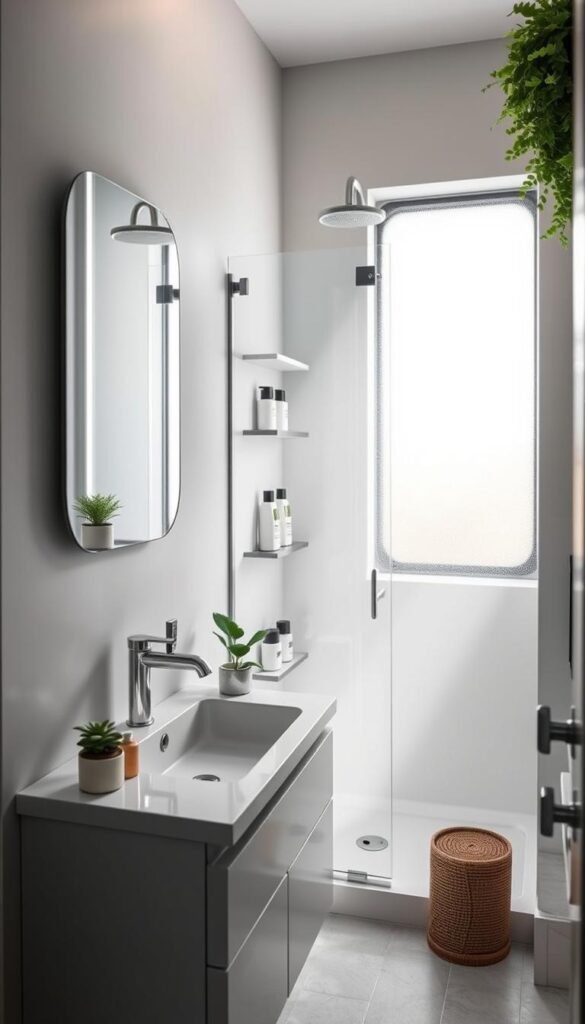
Adhesive wall mounts vs. drilled mounts (toothbrushes, soap, hair tools)
Adhesive mounts are renter-friendly and quick to install. They work best on smooth tile or sealed surfaces and hold light items (5–10 lb).
Drilled mounts support heavier loads (20+ lb) and a permanent look. They need anchors and owner permission for installation.
- Best-for: adhesives for renters; drilled for long-term durability.
- Specs to check: substrate compatibility, weight rating, rust-resistant metal.
Mirror with storage vs. open shelves (everyday access vs. hidden storage)
Mirrored cabinets hide clutter and free counters. They usually offer 2–4″ deep shelving and integrated medicine storage.
Open shelves keep items reachable and force curation. Pick shallow depths (6–8″) to avoid head bumps.
- Best-for: mirrors for households needing hidden daily items; shelves for staged, tidy displays.
- Buying specs: mirror size to match vanity, anti-fog backing, shelf depth, and finish durability.
Rolling slim carts for the toilet gap vs. baskets and labeled bins
Slim rolling carts (4–7″ wide) slide into narrow gaps beside the toilet for mobile access to daily items.
Baskets and bins inside cabinets store overflow and backstock. They save sightlines but reduce instant reach.
- Best-for: carts when access matters; bins when long-term storage is needed.
- Specs: cart wheel size, frame corrosion resistance, bin labels, and stackability.
Towel solutions: hooks, rings, compact bars, and small warmers
Choose by use and clearance. Hooks suit the tightest layouts. Rings work well for hand towels near the sink.
Compact bars (12–18″) fit narrow door returns and shared sinks. Small towel warmers need a plug or hardwire and slightly more room.
- Best-for: hooks for quick drying; bars for shared use; warmers for added comfort where wiring allows.
- Buying specs: material (stainless or powder-coated), projection from the wall, and mounting type for the door or wall.
| Problem | Recommended product | Pros | Key specs |
|---|---|---|---|
| Counter clutter | Mirror cabinet | Hides items, frees countertops | Depth 3–5″, anti-fog, soft-close door |
| Towel placement | Hook / compact bar | Saves room, quick access | Projection 1.5–2.5″, rust-resistant material |
| Toilet gap storage | Slim rolling cart | Mobile, fits 4–7″ gaps | Wheel lock, corrosion-resistant frame |
| Shower bottle overload | Adhesive corner caddy / drilled shelf | Adhesive: no holes; drilled: higher load | Adhesive: surface-dependent; drilled: anchor rating 30+ lb |
„Match the product to measured clearances and daily use. The best pick fits your routine and the room’s exact dimensions.“
Seasonal and small-space routines that keep it organized (without constant effort)
Routines that match how a household lives are the easiest way to keep order all year. A simple system prevents bottles and kit from creeping onto the counter or into the shower ledge.
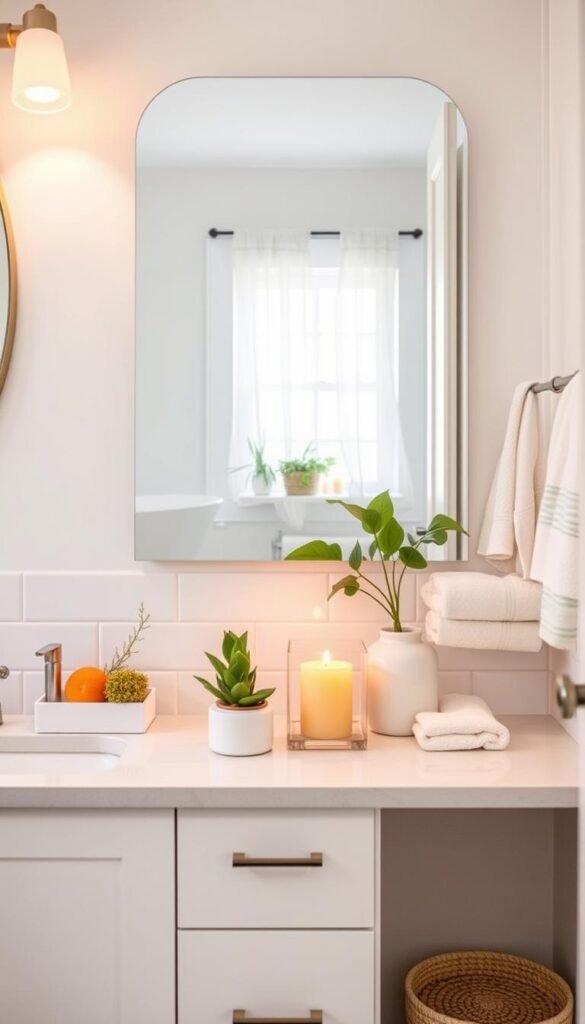
Zone your items
Daily essentials live within arm’s reach—usually the sink and mirror zone. Keep only what is used every day out.
Weekly items go in secondary shelving or a labeled bin. These include occasional cleansers and backup toiletries.
Rare items should sit higher or outside the room, not competing for prime real estate.
Store non-necessary items elsewhere
Guest toiletries, bulk toilet paper, and extras stay in a hall closet or laundry area. Moving backups out prevents overflow and keeps bathrooms functional.
For renter-friendly ideas that expand where items live, see small-space organization hacks.
Reset routine: quick weekly sweep
Spend five minutes weekly: wipe the counter, return stray items to their zones, and do a fast shower sweep to remove bottle creep. Small habits keep the system working for everyone.
| Task | Time | Tool |
|---|---|---|
| Daily tidy | 2 minutes | Labeled tray for daily essentials |
| Weekly reset | 5–10 minutes | Microfiber cloth + small bin for overflow |
| Seasonal swap | 15 minutes | Clear labeled boxes for current-season items |
„A tiny, repeatable routine beats a big annual purge.“
Conclusion
Measure first, pick one pain point, and act. Start by confirming door swing, fixture projection, shelf depth, and clearance before buying to avoid costly returns.
Core takeaway: the room reads larger when sightlines stay open, the floor stays clear, and daily items have assigned places. The five ideas to try at once are vertical wall shelving, wider mirror coverage, a clear glass shower, reflective finishes, and a pedestal or floating vanity. The five savers to adopt are over-door/inside-cabinet organizers, under-sink maximizers, shower storage upgrades, compact toilet plus above-toilet shelving, and tighter backstock habits.
Renter-first note: favor adhesive or reversible installs whenever possible. For curated product picks to get started, see this roundup of best Amazon home finds.
Next step: choose one problem (counter, towels, shower bottles, or under-sink chaos) and make a single, measured swap. The best design is the one that fits the room’s layout and improves daily use over time.