
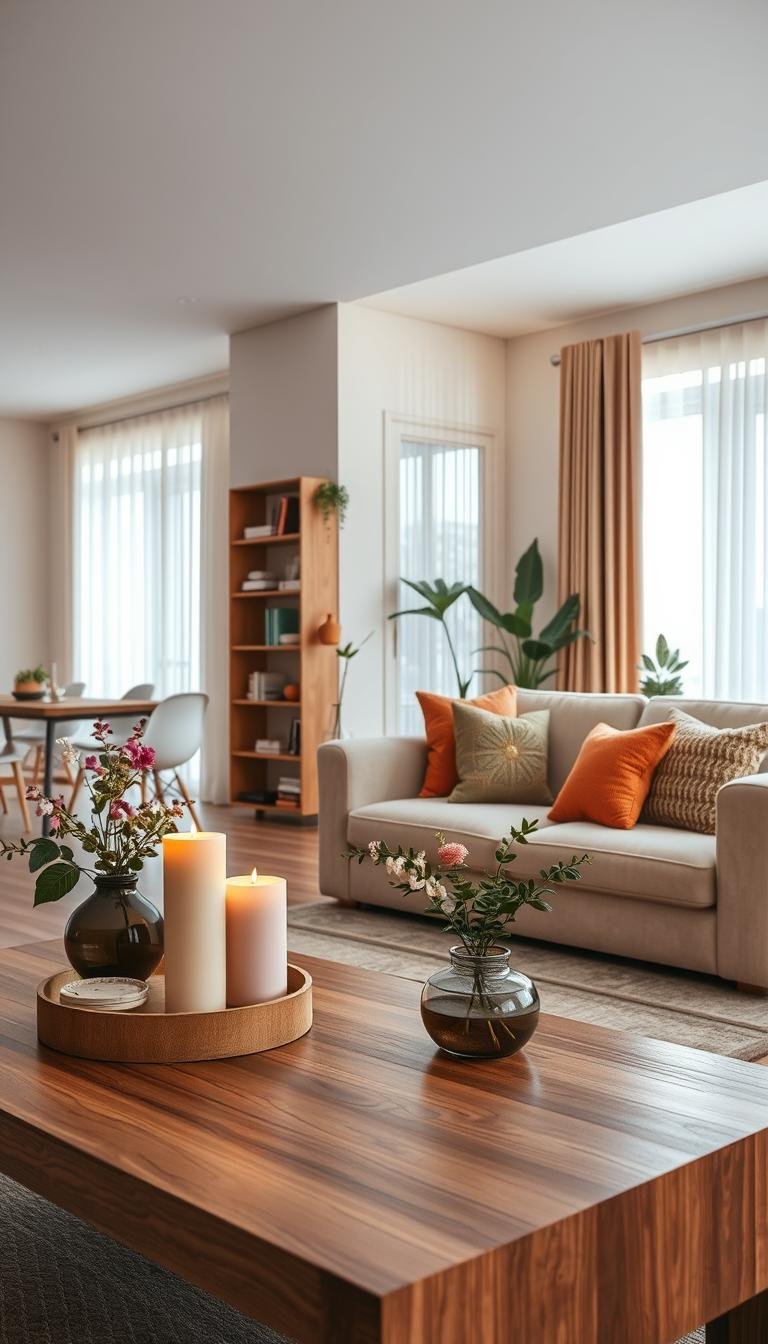
Renters and small-space dwellers often want a quick refresh but face limits on painting, drilling, or buying large furniture. This intro frames that problem and offers a practical, low-risk approach to improve an apartment or compact house.
The guide defines what a balanced set of pieces looks like: items that enhance walls, lighting, softness, and storage without permanent changes. It centers on Scandinavian ideas of minimalism, warmth, and functional form using natural wood tones and clutter-free layouts.
Readers will see ten curated finds with clear buying criteria: installation risk, footprint, maintenance, and style fit. Each pick explains who it suits, the problem it solves, shopping tips, and realistic pros and cons.
The focus stays on scale and multifunction use so a small room keeps visual calm. Seasonal refreshes favor lighting and textiles over large replacements. A style-matching approach helps readers choose a direction — from Japandi to Midcentury Modern — before they shop.
Key Takeaways
- Solutions target renters and small spaces with low-damage upgrades.
- Selections improve walls, lighting, softness, and storage.
- Each item includes who it’s for, shopping tips, and pros/cons.
- Scandinavian principles guide scale and functional warmth.
- Compare installation risk, footprint, maintenance, and style fit.
- Lighting and textiles are the quickest seasonal refreshes.
How to Choose Aesthetic Decor That Actually Works in a Rental
Identify the main problem in a room first, and use that constraint to guide every purchase. Start by asking: is the wall bare, is the light harsh, or is storage overflowing? That single decision narrows options and lowers risk.
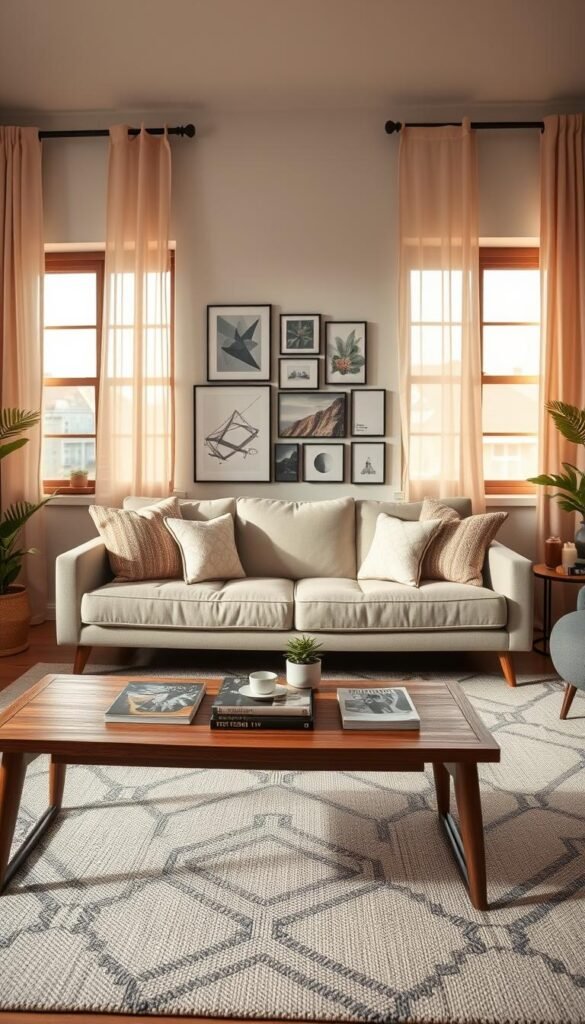
Common problems → solution types
Blank walls → removable wall art or peel-and-stick wallpaper. Harsh overhead light → plug-in lamps or LED strips. Cluttered storage → ottomans or slim shelving that doubles as seating.
Renter-friendly rules of purchase
Prioritize removable adhesives, lightweight materials, and no-drill installs. Note when patching may be needed—some adhesives lift paint.
Small-space sizing and order
Measure usable wall area and walking paths before buying. Shop to scale so items don’t crowd the room. Aim for symmetry and visual order; balanced placement makes tight spaces feel calmer.
Multifunction & seasonal swaps
Choose pieces that add storage + seating or light + wall interest. Rotate textiles and lamps seasonally to change a room’s feel faster than replacing furniture.
- Comparison checklist: install method, footprint, cleaning needs, reversibility.
- Decide the problem first, then pick the smallest, lowest-risk item that delivers the change.
Quick Style Map for 2026: Pick a Look Before You Buy
Pick one guiding style to keep small-space purchases cohesive and intentional. This choice makes shopping faster and prevents pieces from clashing. Below are compact, actionable cues to help a renter or small-home dweller decide.
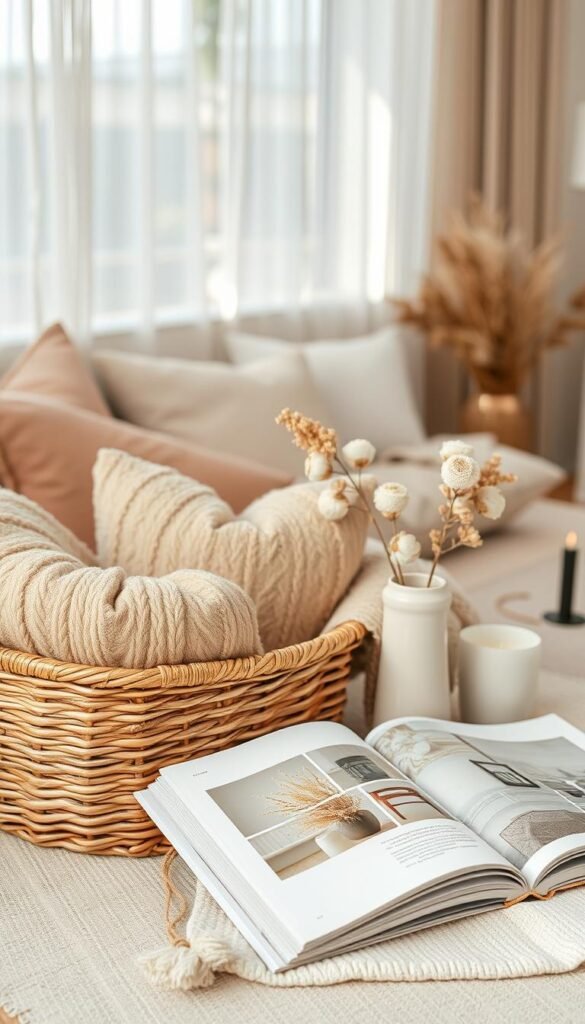
Japandi & Scandinavian
Focus on neutral color, light wood tones, and pared-back shapes. Shop for clean-lined textiles, simple prints, and plug-in paper lanterns. Materials: oak, linen, imperfect ceramics.
Maximalist
Layer color and pattern but keep guardrails: use a tight palette, vary pattern scale, and pick one hero item. Tip: limit bold pieces to one wall or one seating item in small rooms.
Biophilic
Prioritize plant life, recycled materials, and natural fiber textiles. Choose renter-friendly planters and low-light plants. Match wood or rattan finishes across pieces for cohesion.
California Coastal & Mediterranean
Start with a blue-white base, then warm it with wood and terracotta accents. Seek linen curtains, rattan tables, and weathered ceramics for a relaxed look.
Midcentury Modern & Neo-Industrial
Use warm wood and chrome for midcentury or concrete and steel for neo-industrial. Small swaps—side tables, lighting, or a framed print—supply the key material cues.
- Style-to-product map: wallpaper, art, lighting, rugs, storage, tables, seating, textiles, plants, and vintage-look accents—choose versions that match your selected style.
- Match across purchases: finish (warm vs cool), dominant material, and one recurring accent color.
For neutral, renter-friendly bedroom direction, see neutral bedroom ideas to align furniture, textiles, and lighting with a single design style.
Peel-and-Stick Wallpaper That Adds Style Without Losing Your Deposit
Peel-and-stick wallpaper is a renter-friendly way to turn a blank wall into a clear design statement. It solves a common problem: temporary walls that feel unfinished when painting or permanent millwork aren’t allowed.
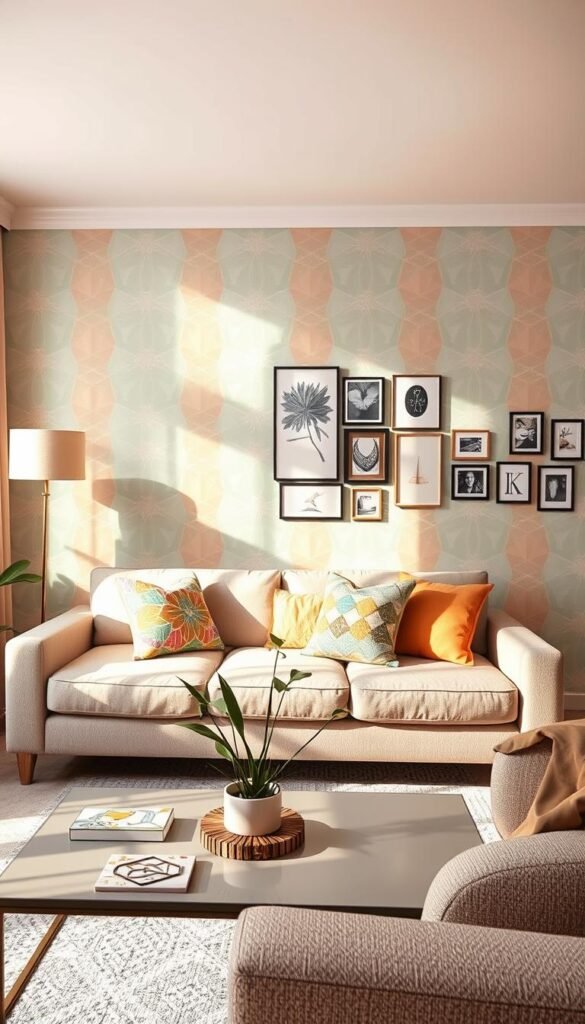
Who benefits most: renters who want a single focal wall, an awkward niche, or the back of shelving to stand out without long-term change. Use it where coverage is manageable and impact is high.
Buying considerations
Finish: choose matte to cut glare; satin can highlight texture but may show seams.
Repeat scale: large mural prints work as a hero in living rooms; small rooms need smaller pattern repeats to avoid overpowering the space.
Removability & wall texture: test a small panel first—textured surfaces and worn paint reduce adhesion and can cause peeling.
Pros and cons
- Pros: dramatic change per dollar, seasonal refreshes are easy, and patterns give an instant style signal.
- Cons: seams can show in harsh light, alignment takes time, and removal can still lift paint—budget time and care for prep and strip-out.
Style pairings and shopping tips
Let mural-like paper lead in a maximalist room while keeping furniture neutral. For Southern Traditional looks, layer prints intentionally. For Palm Beach energy, pick bright coastal prints and woven textures.
„Wallpaper is back in a big way—use it as a hero and keep other finishes calm.“
- What to compare: roll coverage, repeat size, adhesive quality, and return policy.
- Avoid if: your walls are very textured, paint is flaking, or you need a super-shiny finish in a small bedroom.
Removable Wall Art Prints for a Gallery Wall That Looks Curated
A curated set of prints gives a small space a defined look without heavy clutter. Gallery-style art solves the common problem: tiny objects crowd a room while nothing on the wall feels finished.
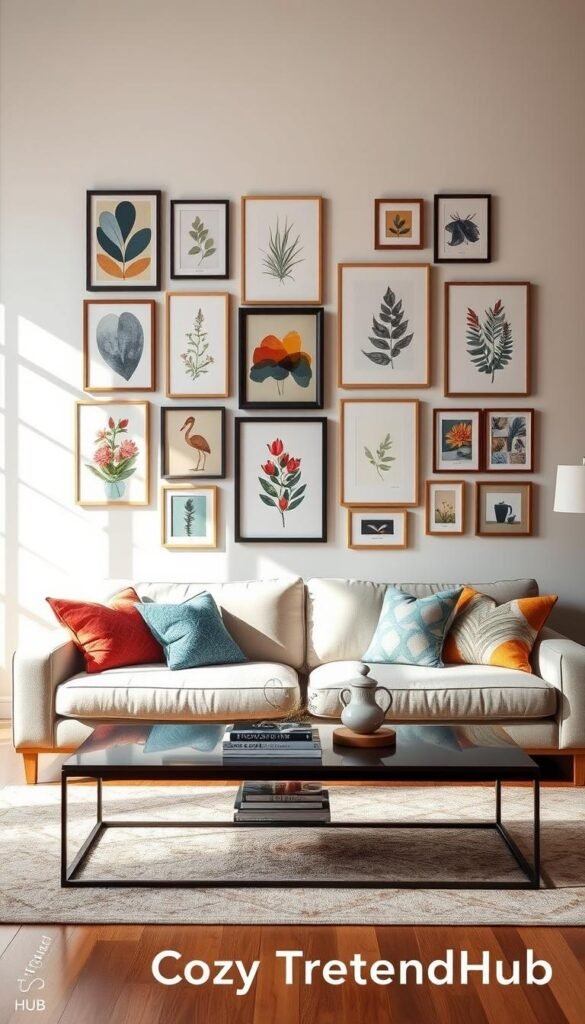
Who this helps: small rooms and renters who need a strong style signal without repainting or drilling.
What to look for
Pick one anchor print, then add 2–5 supporting pieces that repeat at least one palette color. Choose matte finishes to cut glare and frames with similar depth so the set reads as intentional.
Simple planning method
- Measure wall width. One large piece (24–30″) + two medium (12–18″) usually reads calmer than many tiny frames.
- Lay prints on the floor to test balance before hanging.
- Repeat one color across prints to keep cohesion.
Renter-safe mounts: removable strips, poster rails, or lightweight picture-hanging hooks that use small anchors.
„Choose one anchor print, then build around it with supporting pieces that share a color.“
| Set size | Included hardware | Frame material | Layout templates |
|---|---|---|---|
| 3–6 pieces | Removable strips or hooks | Wood, metal, or lightweight MDF | Printable templates or seller guides |
| Single large + 2 medium | Poster rails or hanging clips | Thin metal frames | Grid or salon-style templates |
| Gallery bundle (5–10) | Mixed hardware included | Assorted matching finishes | Step-by-step layout card |
Pros: easy seasonal updates, low install risk, portable between rooms.
Cons: tones and whites can clash if pieces are unplanned; paper quality varies—inspect finishes before buying.
Plug-In Ambient Lighting to Fix Harsh Overhead Lights
When overhead bulbs wash out color, swap in plug-in options that create layered, softer light. This approach avoids hardwiring and gives renters an easy path to warmer, more inviting interiors.
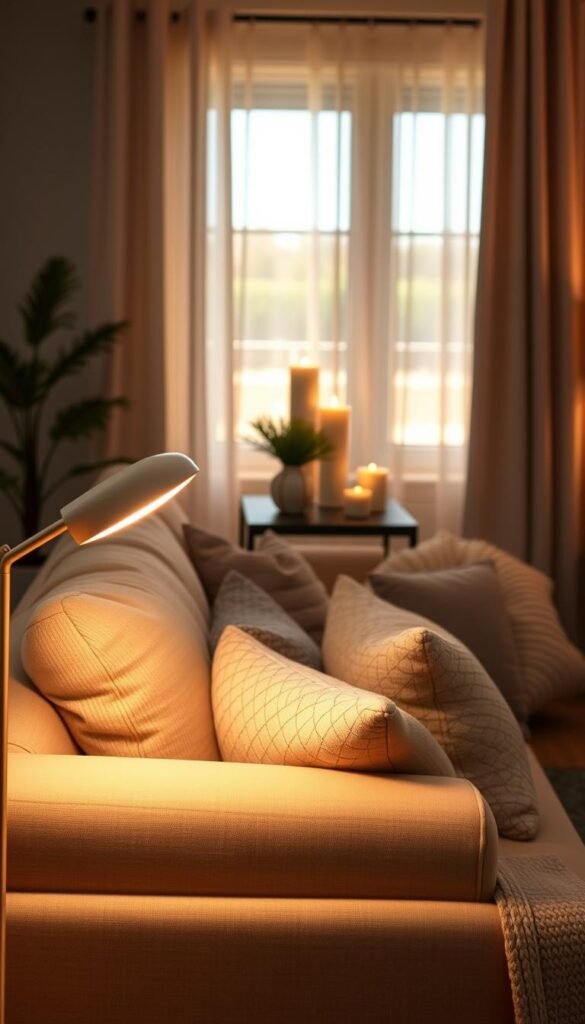
Who benefits
Ideal for: apartments with builder-grade fixtures, north-facing rooms, or spaces with low natural light that look flat under ceiling lamps.
Top buying considerations
- Bulb temperature: 2700–3000K for cozy warmth; list this on product pages.
- Dimming: 0–100% or multi-step dimmers to set mood.
- Shade material: paper, linen, or metal to control glare and style.
- Mounting: plug-in sconces with removable hooks or adhesive hangers for renter-safe installs.
Placement & practical tips
Use two sources at different heights—sconce + table lamp or floor + task lamp—to reduce shadows. Plan outlet proximity and route cords behind furniture. For cord clutter, use paintable cord covers or route cords along baseboards.
Pros and cons
- Pros: immediate mood shift, move-out friendly, and flexible style updates.
- Cons: cord management is the main tradeoff; check cord length and plug orientation before buying.
| Feature | Good range | Notes |
|---|---|---|
| Bulb temp | 2700–3000K | Warm light flatters textiles and skin tones |
| Dimming | 0–100% or stepped | Look for included dimmer or bulb compatibility |
| Cord | 6–12 ft | Longer cords allow flexible placement; check plug orientation |
„A single plug-in sconce can make a room feel finished without electrician time.“
Style cues: paper-lantern silhouettes support Japandi calm; iron-finish plug-in sconces fit Dark Academia and a modern aesthetic. Before purchase, confirm if bulbs are included and review the return policy if color temperature disappoints.
LED Strip Lighting That Looks Intentional, Not Dorm-Room
LED strips often look cheap because the diodes are visible and the colors feel harsh. The fix is simple: hide the source, diffuse the light, and control the output. These small changes make LED elements read as thoughtful lighting, not a temporary hack.
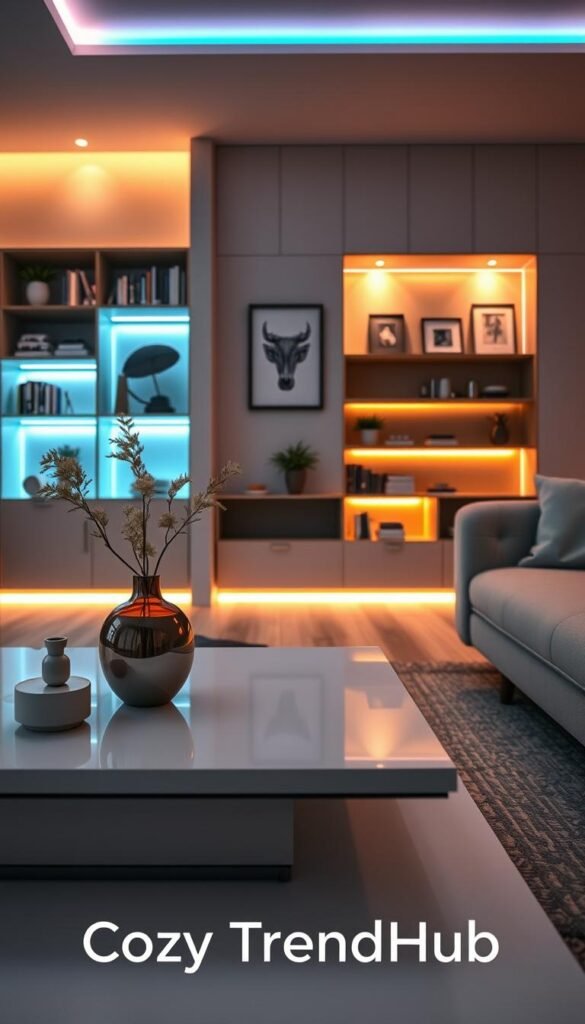
Where to use them
Best for: hidden accent lines under shelves, behind headboards, inside closets, or along a media console back edge. These placements soften edges and add depth without overwhelming a small room.
Key buying considerations
- Diffuser channels: hide hotspots so the light looks continuous rather than dotted.
- Color accuracy: choose high CRI for true whites and a warm range for daily use; reserve saturated hues for occasional accents.
- Smart controls & timers: compare app reliability, voice compatibility, and whether a remote is included. Timers help with routines and bedtime wind-downs.
Installation tips & what to avoid
Use adhesives rated for clean removal and prep surfaces before sticking strips down. Plan cable paths and use minimalist cable organizers to cut visual clutter.
Avoid: visible cords, strips at eye level, and overly bright settings that cause glare in small rooms.
| Compare | What to check | Why it matters |
|---|---|---|
| Length & cut points | Required run and where it can be shortened | Ensures fit without excess cable |
| Diffuser compatibility | Aluminum channel or plastic diffuser option | Makes light read smooth and professional |
| Power & control | Plug, hardwire, battery; app/remote/voice | Matches renter rules and daily use |
| Included connectors | Extra corners and adhesives | Saves time and keeps seams tidy |
For guidance on creating layered, cozy lighting across a room, see cozy lighting options that work with LED strips and plug-in fixtures.
High-Pile or Layerable Rugs That Warm Up a Room and Hide Ugly Floors
A rug can hide scuffed floors, soften footsteps, and anchor furniture so a small room reads as intentional. For renters, rugs solve cold floors, echoing in open plans, and mismatched flooring between rooms without permanent changes.
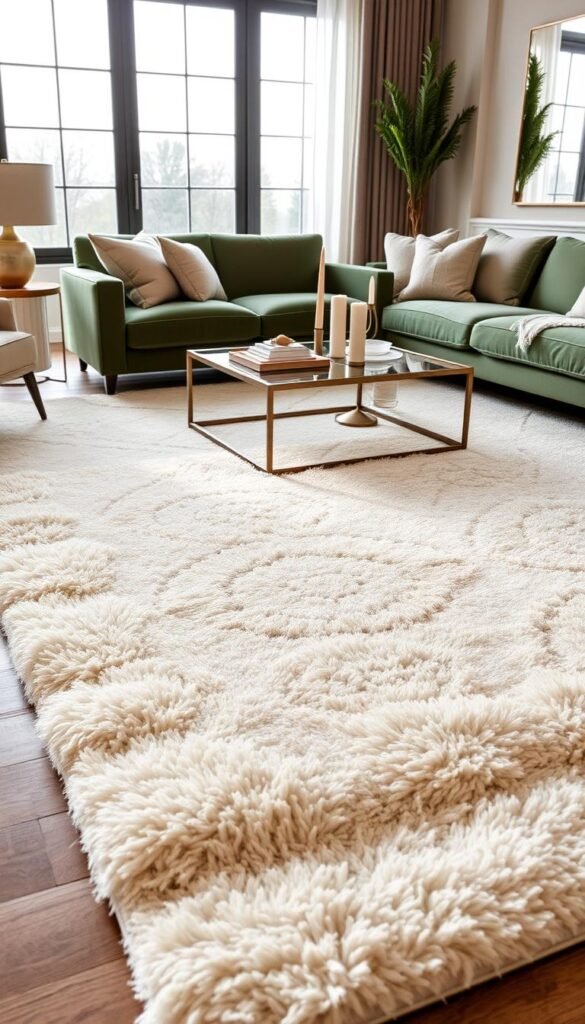
Who this helps
Ideal for cold apartments, open-plan layouts, and any space that needs noise reduction. Use a high-pile for warmth and sound dampening. In high-traffic zones, layer a low-pile base and add a plush top layer.
Materials & elements to prioritize
Wool offers resilience and natural stain resistance. Washable blends work for pets and kids. Always pair with a non-slip pad to protect rental floors and keep rugs in place.
Sizing, care & tradeoffs
Anchor at least the front legs of main furniture on the rug. Too-small rugs make rooms feel chopped. Expect shedding from high-pile; plan weekly vacuuming and spot cleaning, not machine washing for most dense piles.
| Pile height | Fiber | Washability | Pad type |
|---|---|---|---|
| High (1″+) | Wool, shearling | Spot clean | Thick non-slip |
| Medium (¼“–1″) | Wool blends | Some are machine-safe | Thin grip |
| Low (<¼“) | Washable synthetics | Machine or washable | Adhesive grip |
Style cues: Scandinavian rooms favor neutral, plush piles; Alpine Chic uses layered shearling and velvet textures; Maximalist leans on pattern and layered textures. A simple, durable weave also pairs well with farmhouse settings.
For renter-friendly apartment finds and more small-space tips, see apartment finds.
Storage Ottomans and Poufs That Add Seating Without Adding Clutter
When floor space is scarce, choose a single piece that covers seating, storage, and occasional tabletop duties.
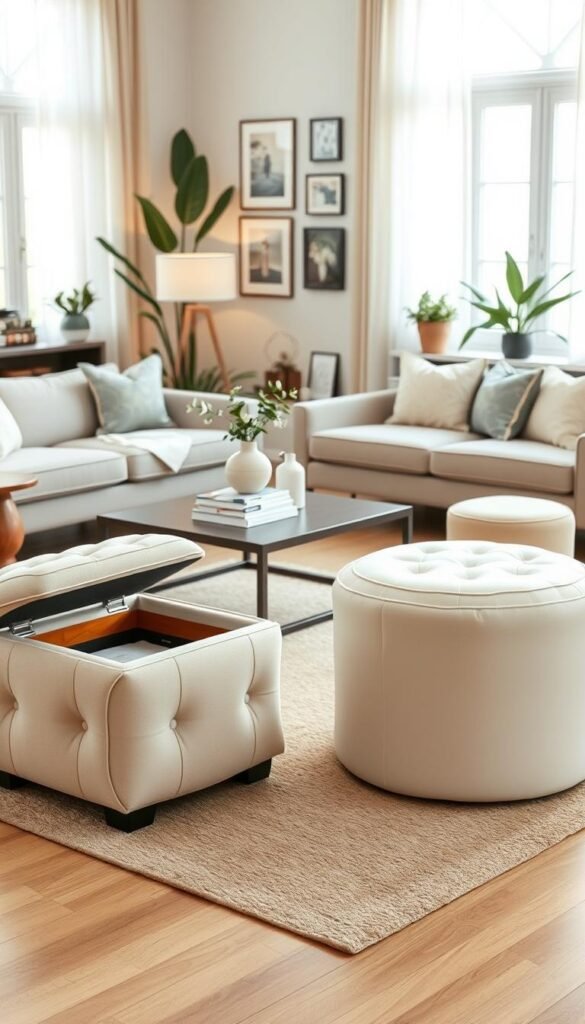
Why they work: Small apartments need extra seats and places to stash blankets, cables, or seasonal items. A storage ottoman or pouf creates a tidy spot and reduces the number of separate furniture pieces.
Who this helps
Studio apartments, shared living rooms, and entryway corners benefit most. Use one piece as a footrest, hidden bin, and occasional seat for guests.
What to measure
- Clearance: Keep 24–30 inches for primary walkways; leave 12–18 inches for narrow paths.
- Lid style: Lift-off lids free interior access; hinged lids are safer for frequent seating.
- Weight capacity: Expect 200–300 lbs for casual seating; check manufacturer specs for regular use.
Shopping considerations & pairing tips
Choose easy-clean upholstery if the piece will double as a table with a serving tray. Confirm the base is stable on rugs and that dimensions match your coffee table footprint if you plan to replace a table.
Style tip: Use a rigid tray to protect upholstery when the ottoman serves as a table. Keep one consistent material or finish across nearby furniture to reduce visual clutter.
„A well-sized storage ottoman can cut visual clutter by combining seating and storage into a single, versatile piece.“
| Dimensions (typical) | Interior volume | Weight rating | Lid mechanism | Upholstery |
|---|---|---|---|---|
| 18–24″ round / 20–36″ square | 8–30 gallons | 200–300 lbs | Lift-off or Hinged with gas-strut | Velvet, faux leather, performance fabric |
| Large bench style (36–48″) | 30–60 gallons | 300–500 lbs | Hinged recommended | Performance textile or leather |
| Small pouf (12–16″) | 2–6 gallons (removable liner) | 150–200 lbs | Removable cover | Knitted, woven, or canvas |
Pros: high multifunction value, easy seasonal rotation, and fast tidy-up for throws and cables.
Cons: bulky silhouettes can block narrow paths; oversized round poufs may crowd tight layouts.
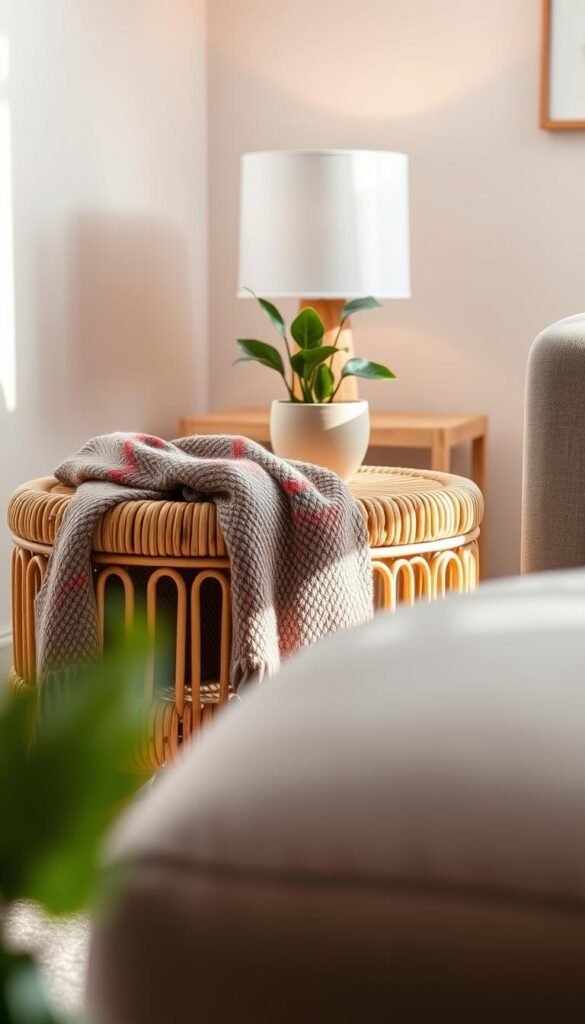
Rattan or Natural-Wood Side Tables for Texture in Small Spaces
Small rooms need surfaces that feel airy, not bulky. A slim wood side table gives a spot for drinks, a lamp, or a laptop without making the room feel crowded.
Best for
California Coastal and Biophilic interiors benefit most. These pieces suit nature-inspired design and rooms that favor neutrals, greens, and soft blues. Anywhere a lighter look helps a room breathe will work.
Buying considerations
- Diameter: pick a width that clears seating paths—18–24″ for compact sofas or bedside use.
- Height: align top with sofa arm or mattress for comfortable use.
- Leg stability: tripod bases or cross-braced legs fare better on rugs and uneven rental floors.
- Finish: sealed surfaces resist water rings from drinks—look for lacquer or oil finishes for daily use.
Durability notes: rattan and some natural woods can show wear and are moisture-sensitive. Use coasters and condition raw finishes occasionally to extend life.
Style tip: match wood tones—light oak, honey, or walnut—to existing floors and furniture so the room reads cohesive.
| Diameter | Height | Max load | Finish type | Ships assembled |
|---|---|---|---|---|
| 18–20″ | 20–24″ | 25–50 lbs | Sealed lacquer or oiled | Often yes |
| 22–24″ | 22–26″ | 50–100 lbs | Sealed veneer or raw rattan | Sometimes no |
| 14–18″ | 16–20″ | 15–30 lbs | Waxed or unfinished (requires care) | Often yes |
„A lightweight wood table can add warmth and texture while keeping a small room feeling open.“
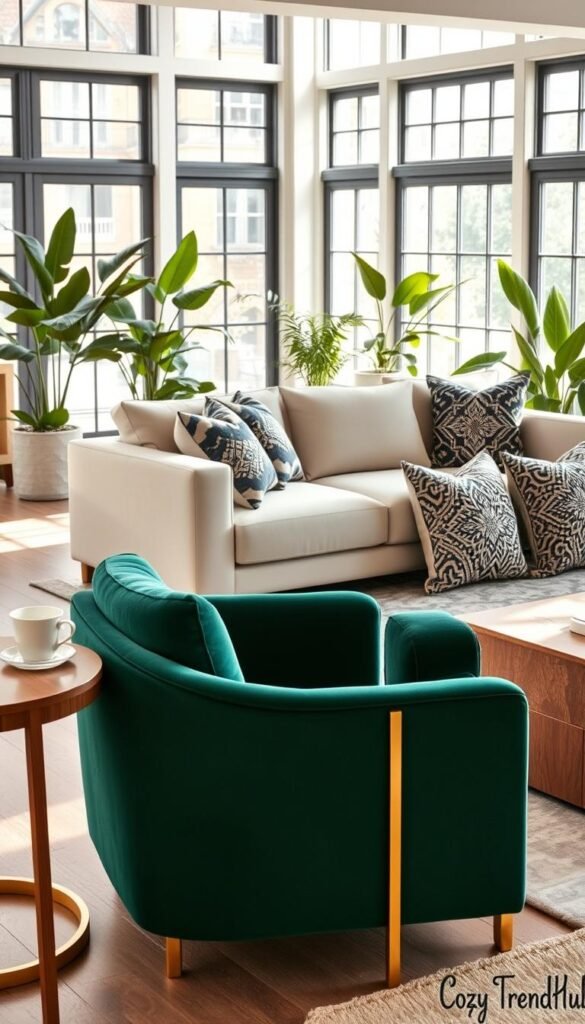
Statement Seating That Defines Your Room’s Design Style
A single carefully chosen seat can set the tone for an entire room. Renters who cannot change floors or paint can use one chair or loveseat to signal a clear design style without permanent work.
Who should prioritize a single anchor piece
Best for: people who can only invest in one big item this year and want the most visual payoff per square foot. An anchor seat guides future purchases like rugs, lighting, and art.
Vibe-based picks
- Bouclé: cozy minimalism—soft texture, neutral palette, forgiving wear.
- Velvet: moody tones and richer traditional style when paired with tailored lines.
- Acrylic: a clean, modern aesthetic that reduces visual weight in small rooms.
What to confirm before ordering
Measure seat depth, back height, and doorway clearance. Delivery failures are common; confirm shipping window and return policy. Ask for swatches and check for performance fabric or removable covers.
Pros and cons at a glance
Pros: instant focal point, clear style signal, and long-term versatility across several furniture pairings.
Cons: delivery logistics, return shipping costs, and fabric care are hidden expenses. Always request cleaning codes and assembly details.
„One statement seat can direct a room’s future furniture choices—choose durability and scale first.“
| Dimensions | Upholstery | Cleaning code | Seat firmness | Shipping/returns |
|---|---|---|---|---|
| Depth 20–24″, Back 30–36″ | Bouclé / Velvet / Acrylic | S / W / X (check tag) | Medium-firm | 7–30 day return window, assembly varies |
| Loveseat: 48–66″ wide | Performance fabric options | Removable cover recommended | Medium | White-glove vs curbside—confirm before purchase |
For styling tips that show how a single furniture piece anchors a living room, see how to style your living room with statement furniture. For guidance on higher-cost purchases and fabric choices, consult advice on investment pieces.
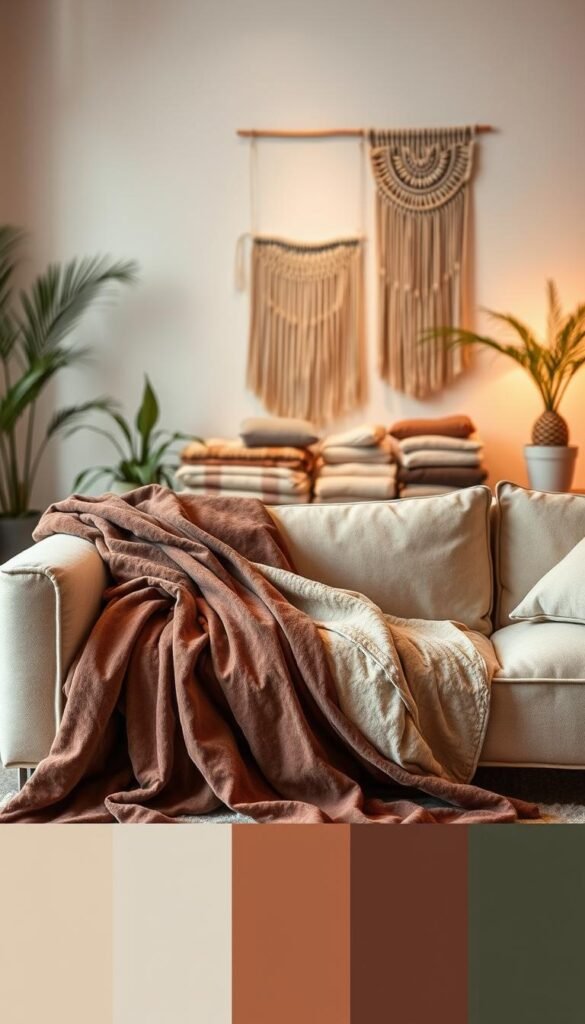
Textile Layers That Make Any Room Look Finished
Textiles are an easy way to warm neutral rooms without repainting. Layered fabrics add visual weight, soften lines, and make interiors feel lived-in while staying renter-friendly.
Best for: renters who want a clear upgrade that packs into a closet when it’s time to move. Pillows, throws, and curtains give large-scale change for limited cost and effort.
Buying considerations
- Curtain length: hang near the ceiling and let panels puddle slightly or hit the floor to visually heighten the room.
- Fabric weight: light-filtering linens read airy; heavier blackout fabrics help bedrooms and TV corners.
- Hardware: choose tension rods or removable brackets for minimal damage.
- Color planning: pick a simple color palette — base + accent + one pattern — so pillows, throws, and curtains read intentional.
Style cues and fabric choices
French Country favors natural linens, muted colors, and subtle toile or floral motifs to add warmth and vintage charm.
Light Academia leans on warm neutrals and airy linen lines for scholarly calm.
For Maximalist rooms, use contrast trims and layered patterns, but keep to a tighter palette so the result feels curated rather than chaotic.
Care, pros & seasonal swaps
- Maintenance: choose washable covers where pets or kids are present; velvet and boucle show lint and may need special care.
- Pros: instant warmth, portable, and easy seasonal rotation.
- Cons: heavy fabrics can overwhelm small rooms; mismatched tones spoil cohesion.
„A simple color palette and correct curtain length make textiles feel deliberate, not accidental.“
Seasonal swap plan: keep two color stories — warm months (light linens, pale colors) and cool months (rich throws, deeper accent tones). Store off-season pieces in vacuum bags to save space and swap pillow covers for a quick refresh.
| Material | Opacity | Washability | Size range | Includes inserts? |
|---|---|---|---|---|
| Linen | Light-filtering | Machine or gentle wash | Panels 48–108″ | Often no |
| Velvet | Medium–opaque | Spot or dry clean | Pillows 16–24″ | Sometimes |
| Performance blends | Varies | Machine washable | Throws 50×60″–90×90″ | Usually yes |
For practical layering tips that show how fabrics work together in a living area, see how to layer fabrics in a living.
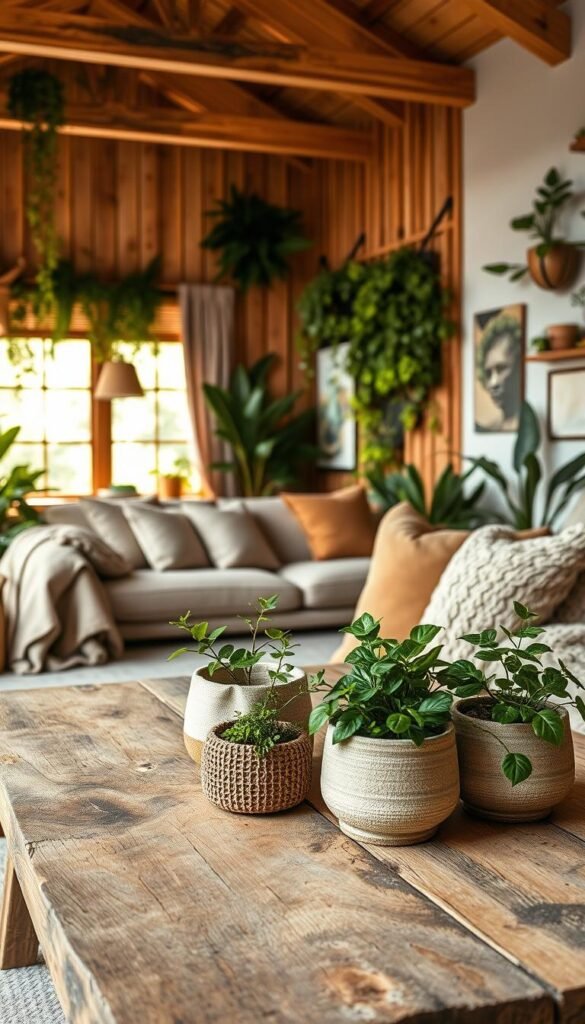
Biophilic Decor Finds That Bring Nature Indoors (Even With Low Light)
Bringing natural textures and resilient plants indoors helps rooms feel less clinical and more lived-in. This approach suits renters who can’t add planters or change windows but still want a stronger connection to nature in their interior design.
Best for
Low-light apartments, busy schedules, and anyone who wants to soften a temporary-feeling space.
What to choose
- Plants: snake plant, ZZ, pothos—low-light tolerant and forgiving of missed waterings.
- Planters: terracotta for warmth and breathability; use saucers to protect floors.
- Textures: jute rugs, rattan trays, and recycled-fiber throws to reinforce the nature theme.
Placement tips
Cluster plants by the brightest window, use mirrors to bounce light deeper into the interior, and place small pots on shelves to add depth without clutter.
Pros and cons
- Pros: improved visual comfort, more texture, and an easy route into biophilic interior design.
- Cons: watering and care are real commitments; match plant choice to routine and room light.
„Choose resilient varieties and keep plants on trays to protect rental finishes.“
| Light requirement | Pot size | Pet safety | Care frequency |
|---|---|---|---|
| Low to medium | 4–8″ | Varies (check species) | 2–3 weeks |
| Medium | 6–12″ | Often safe | 1–2 weeks |
| Bright indirect | 8–14″ | Some toxic | 1 week |
For budget-friendly green ideas, see biophilic design on a budget, and for more small-space plant solutions check small-space finds.
Vintage-Look Accents That Add Character Without the Antique-Store Hassle
You can create a sense of history using modern reproductions and curated vintage-look accents. These pieces give rentals depth without a hunt through markets or heavy restoration work.
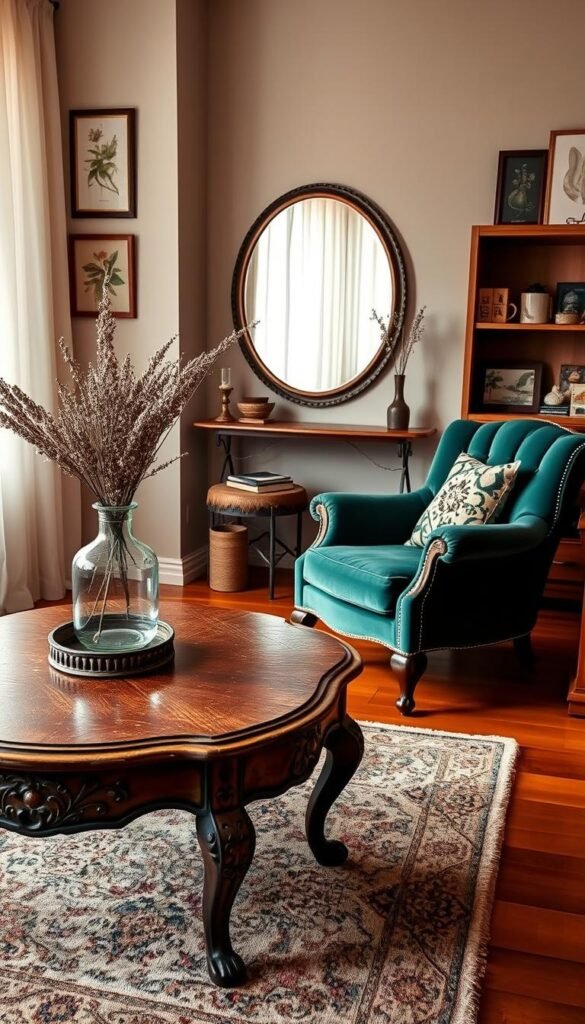
Who benefits: Americana, Traditional, Gustavian, and Transitional rooms that need a gentle patina and classic lines. Start with a mirror or framed art to add history without taking up floor space.
Smart buying and finish guidance
Choose one dominant metal—brass, black, or chrome—and keep it consistent across pulls, lamp bases, and frames. Match wood tones to nearby furniture to avoid visual clutter in small rooms.
Gustavian note
For Gustavian-inspired looks, favor symmetry, slim tapered legs, and soft pastel tones. These elements read classic without heavy ornament.
Quick shopper’s list
- Wall mirror to expand light and space.
- Brass-finish accents for warmth.
- Framed art at controlled scale to avoid crowding.
„A single vintage-look mirror can anchor a room and make it feel older than it is.“
| Material | Size | Weight (for hanging) | Renter-safe hardware |
|---|---|---|---|
| Solid wood frame | 20–30″ | 8–18 lbs | Removable hooks or picture strips |
| Plated brass accents | Small accessories | 1–5 lbs | Adhesive pads or small screws |
| Framed prints (MDF) | 12–24″ | 3–10 lbs | Command strips or lightweight hooks |
Pros: instant character and a layered, collected look with little square-footage impact. Cons: too many finishes or competing tones create a messy result.
For reference on period pieces and reproductions, see a useful vintage style reference and a curated list of vintage-inspired finds to shop responsibly.
Maximalist Decor Pieces That Stay Livable in a Small Space
When done with restraint, maximalism gives small spaces big personality without feeling chaotic.
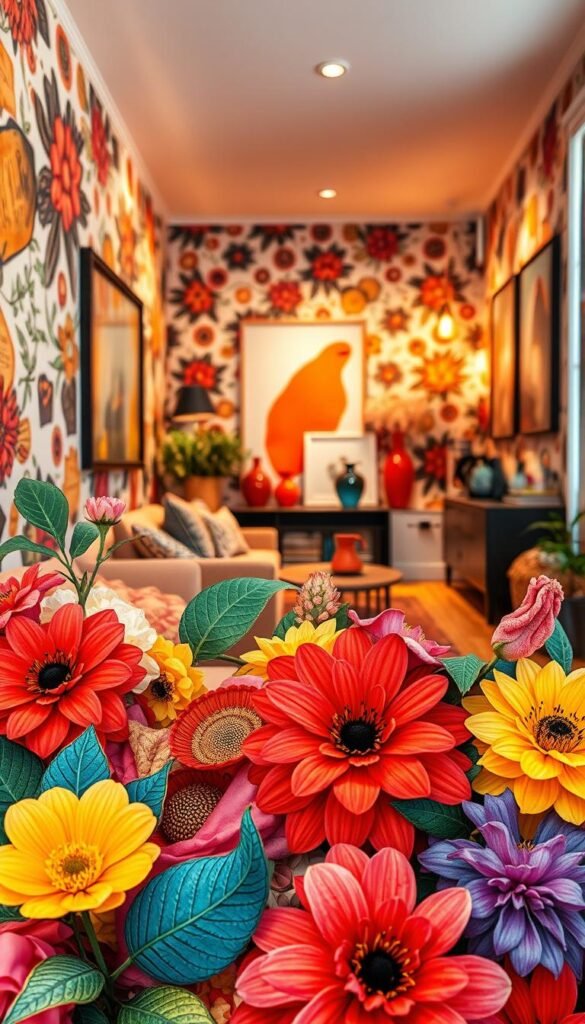
Who this suits
Best for: renters who love bold color and varied patterns but can’t change floors or paint.
How to keep it cohesive
Keep a tight-ish palette, choose one hero pattern, and vary pattern scale so prints don’t compete. Repeat one or two accent colors across textiles and art to tie the room together.
High-impact, renter-friendly options
- Wallpaper: a mural wall creates drama without a full-room commitment.
- Patterned drapes that frame a window and read as intentional art.
- Layered rugs for depth and texture.
- Sculptural lighting that doubles as art and function.
Pros and cons
Pros: unforgettable, highly personal interiors and a strong focal point with one major piece.
Cons: risk of visual noise and decision fatigue if repeats and scale aren’t controlled. Use a quick checklist before buying another patterned item.
| Hero item | Dominant colors | Pattern scale | Installation | Move-out reversal |
|---|---|---|---|---|
| Wallpaper mural | 3–4 colors | Large | Peel-and-stick or temporary paste | Moderate — test first |
| Patterned drapes | Accent color | Medium | Tension rod or removable brackets | Easy |
| Layered rugs | Neutrals + accent | Mixed | None | Easy |
| Sculptural lighting | Finish match | None | Plug-in or adhesive mount | Easy |
For more inspiration on bold approaches adapted for rentals, see maximalist decorating ideas.
Comparison-Ready Checklist for Building Your best aesthetic decor mix
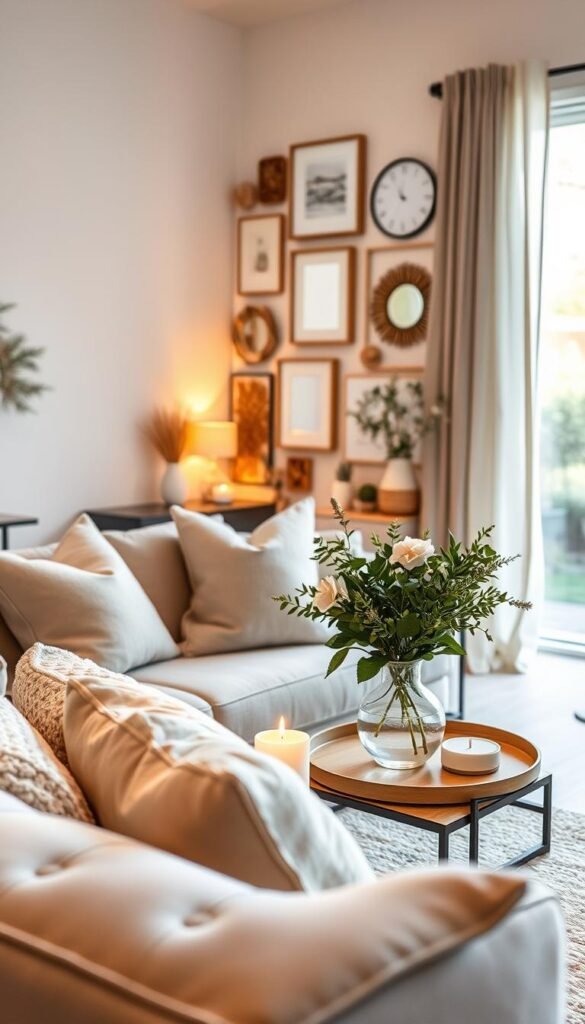
Use a compact decision tool to balance cost, scale, and renter-friendly installation before you click buy.
Budget tiers
Starter upgrades: prints, plug-in lighting, and textiles give quick impact for low cost.
Anchor pieces: statement seating and a quality rug are worth saving for. They change how a room feels long-term and guide future purchases.
Room priorities
- Bedroom: low-glare lighting, blackout curtains, soft throws for calm.
- Living room: one statement piece plus layered rugs and ambient lamps.
- Entryway: slim storage, durable surfaces, and a functional bench or pouf.
Measurement & materials
Measure door widths, wall lengths, outlet placement, and walking paths before ordering. Check fabric washability, pile shedding, moisture sensitivity, and scratch resistance.
Seasonal planning
Rotate throws, swap pillow covers, and tweak bulb temperature to refresh palette without replacing core furniture.
Practical purchasing sequence: fix lighting first, add softness (rug/textiles) second, then walls and accents.
| Item | Best for | Footprint | Install | Care/Notes |
|---|---|---|---|---|
| Plug-in sconce | Small living & bedrooms | Small | Plug-in / removable hook | 2700–3000K bulbs; cord route |
| High-pile rug | Noise reduction, warmth | Medium–large | None (pad recommended) | Vacuum weekly; non-slip pad |
| Statement seat | Living room anchor | Large | Delivered/assembled | Check doorway & fabric care |
Conclusion
A confident home grows from solving real problems, not random shopping. Pick the issue in a room first—walls, light, softness, or storage—and let that guide the way you buy.
Prioritize removable installs, lightweight pieces, and items that pack easily. This protects deposits and saves time at move-out.
Practical next steps: choose a style direction, measure the room, fix lighting, then add rugs and textiles before tackling wall upgrades. Repeat a few materials and colors so the whole home reads cohesive.
Refresh over time: swap textiles and lamps seasonally rather than replacing furniture. Use the comparison checklist and the style map to narrow choices and avoid returns.
Small, careful upgrades can make any space feel intentional and lived-in. For ideas on combining classic and modern, see mix tradition with modern aesthetics.



One Comment