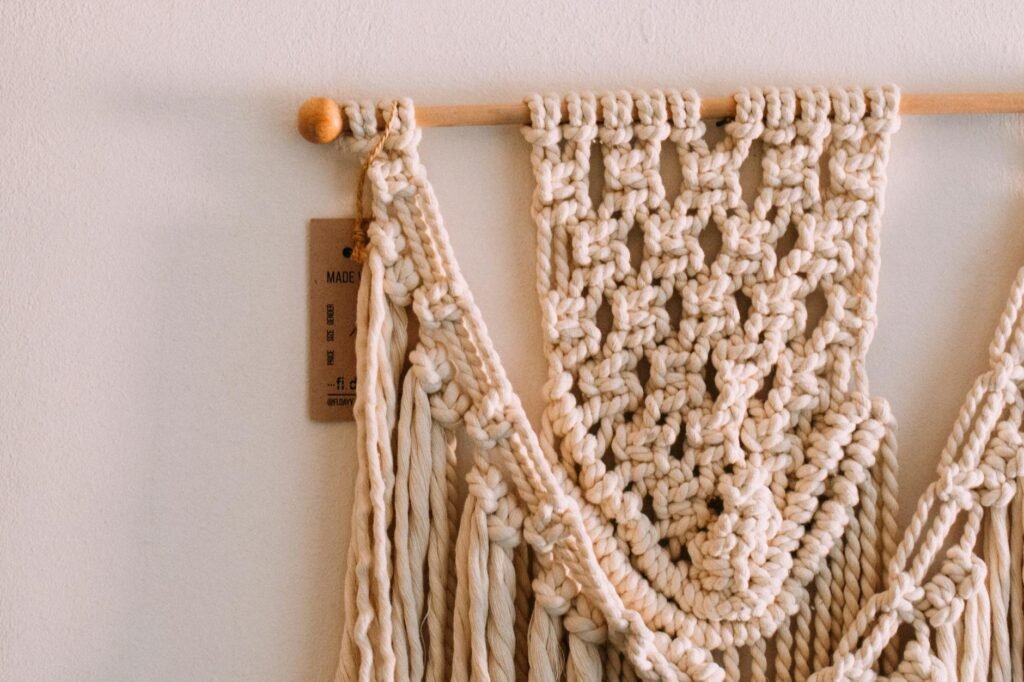
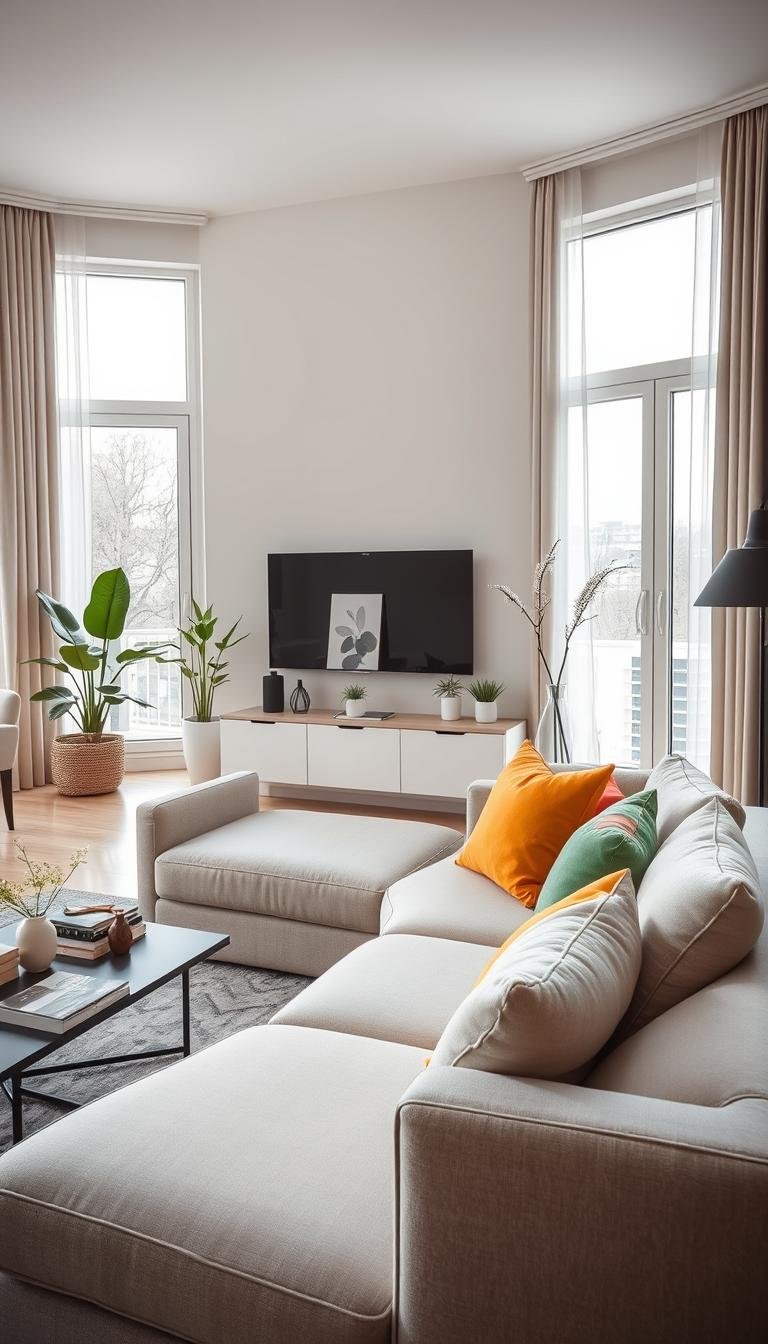
Small spaces and rental limits often block smart styling—but they don’t have to. This guide frames common problems and clear fixes for compact apartments, low-light spaces, and leased homes that restrict permanent changes.
The approach starts with anchors: sofa, rug, and statement art. It uses the 60-30-10 rule to shape color choices and sets simple measurement checkpoints to cut returns. Recommendations focus on sizing, durability, maintenance, and whether pieces improve daily flow.
Readers will get quick category picks plus step-by-step buying guidance, so they can choose confidently without over-filling a space. For renters, the guide favors removable options and modular pieces. For tight budgets, it recommends textile swaps; for dim rooms, layered lighting and mirrors come first.
Each comparison block later will state best-for scenarios, key specs, and practical pros and cons to help decide fast.
Key Takeaways
- Start anchor-first: sofa, rug, art to ground the layout.
- Use the 60-30-10 color split for balanced color flow.
- Prioritize sizing, durability, and ease of maintenance.
- Renters should prefer removable and modular solutions.
- Low-light spaces benefit most from layered lighting and mirrors.
- For quick swaps, focus on textiles for budget-friendly impact.
- See curated picks and buying checks linked for more help: small-space styling guide.
How to pick aesthetic living room decor that actually solves your space problem
Start with a quick diagnostic: what’s the main issue in the living room — too small, too dark, echo-y, bland, or restricted by a lease? Identifying this single point narrows choices and saves returns.
Constraints should guide purchases. Renters pick removable wall art and hooks. Small-space buyers prioritize scaled furniture and clear walkways. Low-light rooms need layered light and reflective surfaces. Tight budgets favor high-impact textiles like throws and pillows.
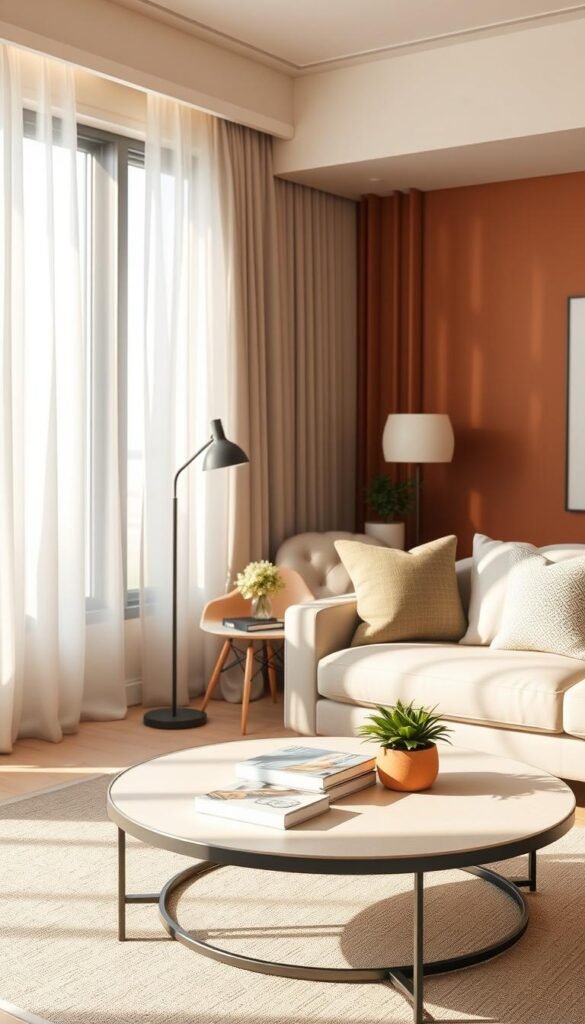
Choose an anchor piece
Decide whether a sofa, rug, or statement art will be the focal point. A neutral sofa works for seasonal changes. A rug defines open plans and hard floors. Statement art anchors simple seating and empty walls.
Use the 60-30-10 color rule
Apply neutrals for 60% (walls, large furniture), a secondary tone for 30% (textiles), and one accent for 10% (accessories). This keeps colors cohesive and gives a clear tone and feel to the space.
What to measure before you buy
- Rug: at least front legs of sofa on rug; common sizes 5’x8′, 8’x10′.
- Lamp height: top of shade ~eye level when seated (40–60″ floor lamps).
- Wall art: leave 6–12″ from ceiling and correct scale to wall width.
- Walkway clearance: 30–36″ for main paths, 18–24″ between coffee table and seating.
Avoid this mistake: buying pieces without measuring or choosing a dominant color first. That often creates a scattered look and more returns.
| Need | Best anchor | Why |
|---|---|---|
| Warmth | Rug | Adds texture and defines zones on hard floors |
| Brightness | Statement art + mirror | Reflects light and gives a focal point |
| Rental flexibility | Removable wall art | No-drill options keep walls intact |
Best picks by category for modern living spaces
Choose one targeted piece to solve a single problem quickly. Below are five quick-scan picks with clear use cases, pros/cons, and buying notes for renters and small layouts.
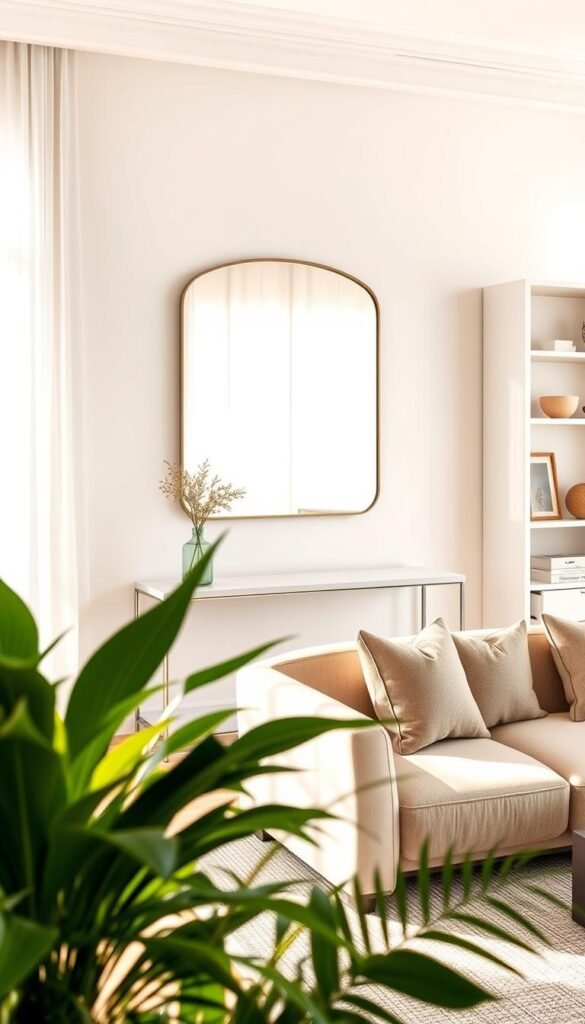
Textured rug — instant warmth
Best for: cold floors and echo-prone modern interiors.
Choose plush for softness or nubby weaves for grip and pattern. Pros: adds warmth, defines zones, improves atmosphere. Cons: needs a pad and regular vacuuming; some piles show wear.
Peel-and-stick gallery set — renter-friendly focal wall
Best for: renters who need a no-drill focal point.
Check weight limits and wall texture before buying. Pros: flexible layouts and easy swaps. Cons: uneven walls may reduce adhesion.
Mirror that boosts natural light — small-space enhancer
Best for: studios and low-light areas.
Place opposite a window to bounce light deeper into the living area and make colors and textures read truer.
Layered lighting kit — cozy evenings
Best for: mood control and flexible task light.
Look for warm color temps and dimmer compatibility. Pros: transforms atmosphere; Cons: requires multiple plugs or wiring planning.
Throw pillows + throw bundle — seasonal refresh
Best for: quick seasonal updates.
Pick washable covers and pet-friendly fabrics. Pros: low cost, high impact; Cons: fills space quickly if overdone.
| Category | Price | Install | Renter-safe | Maintenance | Impact |
|---|---|---|---|---|---|
| Textured rug | $$ | Low | Yes | Medium | High |
| Peel-and-stick gallery | $ | Low | High | Low | Medium |
| Mirror | $$ | Medium | Yes (leaning) | Low | High |
| Layered lighting kit | $$ | Medium | Yes | Low | High |
| Throw pillows + throw | $ | Very Low | Yes | Low | Medium |
Create a modern living room color palette that doesn’t feel “flat”
Color choices set mood quickly; the right mix avoids a flat, one-note effect.
Why palettes go flat: too many similar neutrals, low-contrast textures, or cool lighting. Fix those three and the atmosphere brightens immediately.
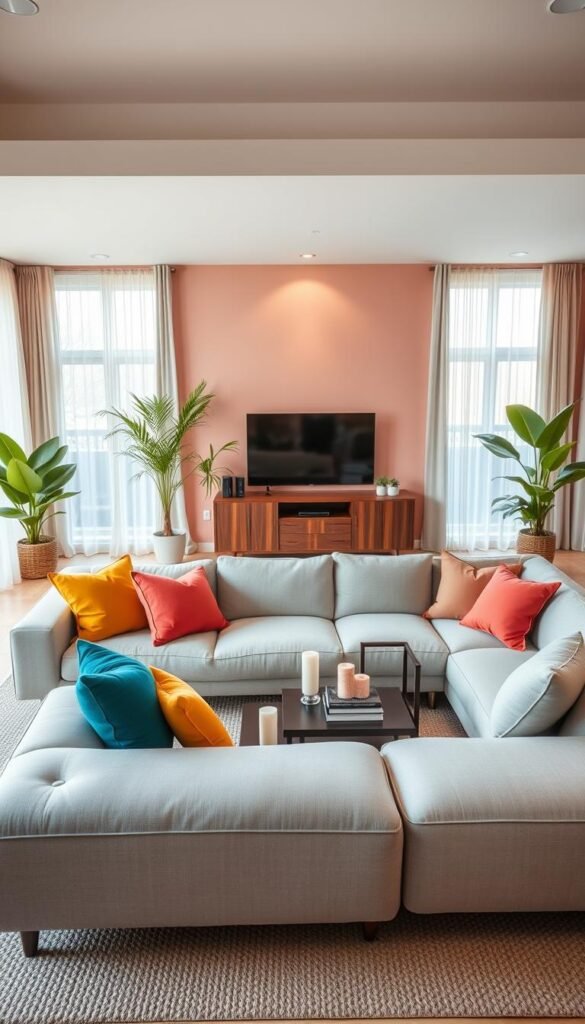
Relaxed and natural
Dominant/secondary/accent: cream / olive / black.
Use cream walls (60%), olive textiles (30%), and black accents (10%). Buy olive throws, durable linen sofas, and black metal frames to hide wear and add definition.
Moody modern
Deep blue / charcoal / warm wood.
Apply deep blue as the dominant in large media areas. Balance with a light rug and warm bulbs to prevent a cave-like tone. Choose charcoal upholstery and wood side tables.
Soft and bright
Warm white / pastels / tan.
Pastels need warm white or cream to feel grown-up. Opt for pastel pillows, a cream rug, and washable slipcovers for small spaces.
High-contrast minimal
White / black / brass.
Black-and-white keeps a sleek look. Add brass hardware or lamps to warm the palette and introduce shine.
| Problem | Palette fit | Quick buys |
|---|---|---|
| Low light | Soft and bright | Sheer curtains, light rug, warm bulbs |
| Pet-friendly | Relaxed and natural | Durable olive textiles, washable covers |
| Rental updates | High-contrast minimal | Pillows, removable hooks, brass accents |
Renter-friendly wall decor that adds character without damage
Blank walls can make a well-furnished space feel unfinished; targeted wall pieces fix that fast.
Gallery wall sets give consistent frames and repeatable spacing. They personalize a living area quickly and work well when the sofa is neutral. Matching finishes and modular layouts make seasonal swaps simple.
Statement artwork serves as one clear focal point. A single larger piece reduces clutter and anchors the room. Measure: artwork width should be about 60–75% of the sofa width for a balanced look.
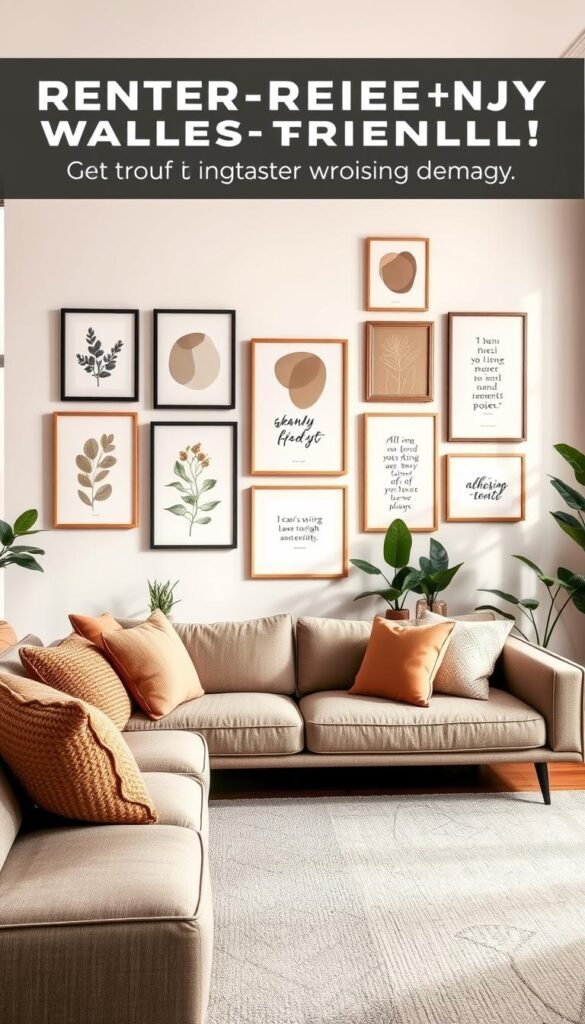
No-drill styling options
- Removable hooks: check weight limits and wall texture before use.
- Leaning frames: safe on consoles and mantels for easy moves.
- Picture ledges: swap pieces without making holes.
„Removable solutions give renters freedom to personalize without risking deposits.“
Pros, cons, and lease checks
| Option | Pros | Cons | What to check |
|---|---|---|---|
| Gallery set | Consistent look; easy swaps | Many small pieces can feel busy | Wall texture; adhesive adhesion |
| Statement art | Strong focal point; less visual clutter | Higher single-item cost | Sofa width relation; hanging hardware rules |
| No-drill hooks/ledges | Lease-safe; reusable | Weight limits; reduced durability on textured walls | Paint type; allowed hole size in lease |
Before installing, confirm paint type, surface finish (orange peel vs smooth), and any lease limits on holes. For more renter-first styling ideas, see a helpful guide on apartment tweaks: apartment styling tips.
Area rugs that define the living room and soften “hard” modern spaces
The right floor layer helps a room feel anchored, warmer, and more intentional. In modern spaces with concrete, tile, or narrow-plank wood, furniture can look like it’s floating. An area rug solves that by creating a clear zone for seating and conversation.
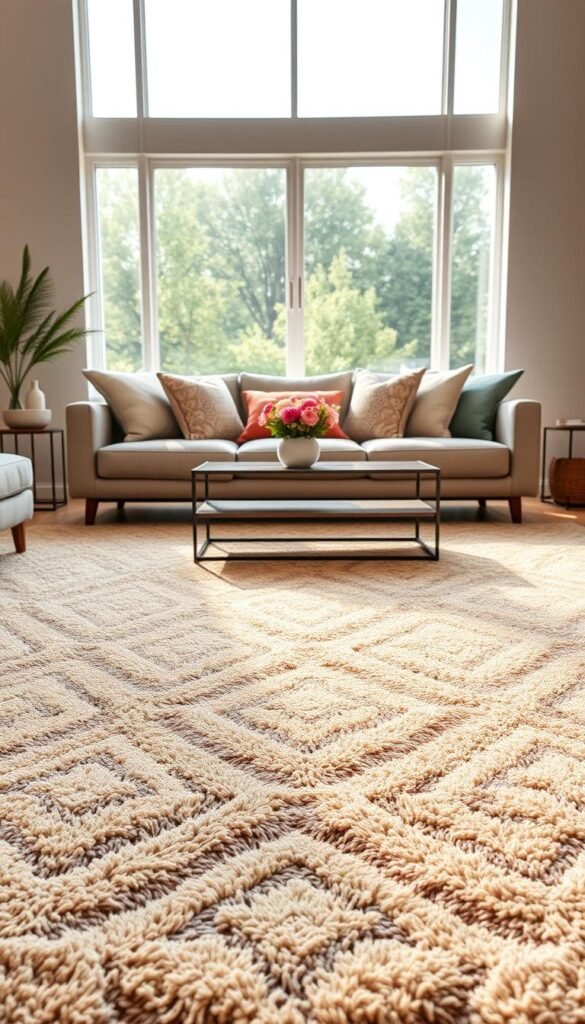
Textures that add practical warmth
Wool blends offer resilience and stain tolerance for high-traffic areas. They resist matting and keep pile bounce over time.
Nubby weaves give casual, lived-in warmth and hide wear. They work well under a coffee table or in rental layouts.
Plush piles provide soft underfoot comfort and reduce echo, but need a thicker pad and more maintenance.
Small-space sizing rules
Keep the front legs of sofas and chairs on the rug to visually expand the space. Avoid tiny „postage-stamp“ pieces that break a space into bits.
Leave a consistent border of bare floor (6–12″) to frame the rug and keep scale balanced in narrow areas.
Pattern vs solid: choosing personality
Patterns hide stains and add visual interest, making them practical for pets and kids. Solid rugs let bold wall art and furniture stand out and keep a calm, cohesive look.
Quick buying checklist
- Stain resistance: synthetic blends or treated wool for households with kids or pets.
- Pad thickness: 4–8mm for stability; thicker for plush piles to prevent furniture wobble.
- Cleaning: spot-cleanable vs washable options; check manufacturer instructions.
„A rug can be the starting point for the whole design—choose color and pattern with your 60-30-10 plan in mind.“
| Need | Recommended texture | Why |
|---|---|---|
| Renters | Light wool blend or low-pile synthetic | Easy to move, durable, and low maintenance |
| High-traffic | Nubby weave | Hides wear and cleans easily |
| Allergy-sensitive | Low pile / flatweave | Less dust trapping; easy vacuuming |
Throw pillows and cozy throws for a seasonal aesthetic refresh
A quick textile refresh can shift how a room looks and feels in an afternoon. Frame pillows and throws as the lowest-commitment way to update a living space without repainting or replacing furniture.
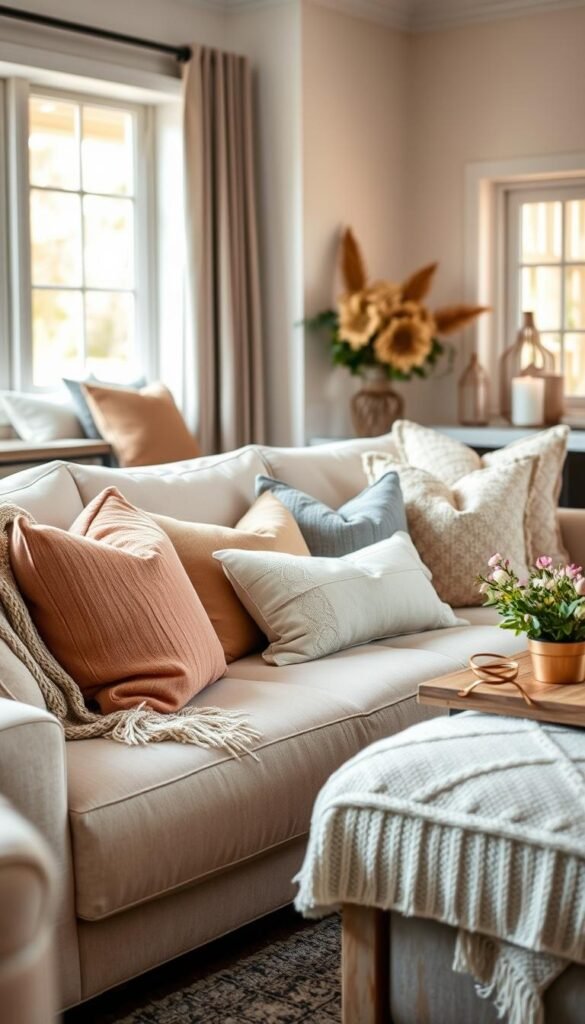
Layer textures for depth
Simple formula: one knit, one velvet, one linen/bouclé mix. This combo adds depth without seeming matchy.
Use a chunky knit for tactile warmth. Add a velvet pillow for visual luxury. Finish with a linen or boucle cushion for casual balance.
Color strategy that ties elements together
Pull two tones from your wall art and one tone from the rug. Repeat those in your throw pillows and a coordinating throw to keep the palette cohesive.
Tip: place the brightest tone closest to the sofa to anchor the seating area.
Pros, cons, and practical guidance
Down inserts offer loft and a plush feel but can trigger allergies. Down-alternative keeps shape and is easier to wash.
Choose removable covers for easy cleaning. For homes with pets, pick tightly woven fabrics that resist snagging and hide hair.
| Item | Pros | Cons |
|---|---|---|
| Down insert | Loftier feel; molds well | Allergies; needs airing |
| Down-alternative | Washable; hypoallergenic | Slightly less luxe feel |
| Cover fabrics | Linen: breathable; Velvet: rich look; Knit: texture | Linen wrinkles; Velvet shows wear; Knit can snag |
Sizing guide: for a standard sofa, use a mix of 18″ and 20–22″ pillows so they complement rather than overpower the seating.
This strategy suits renters, small spaces, and budget decorators who want high impact per dollar. For more neutral textile ideas, see a helpful guide on neutral styling: neutral home decor tips.
Lighting that makes modern living rooms feel warmer and more expensive
Good lighting changes how furniture, textiles, and finishes read in any space. Layered fixtures create depth and offer flexible control of mood and function.
Simple layered plan:
- Floor lamp for corner uplight and task reading.
- Table lamp for mid-level glow near seating or shelves.
- Wall sconce for accents—use plug-in models for renters.
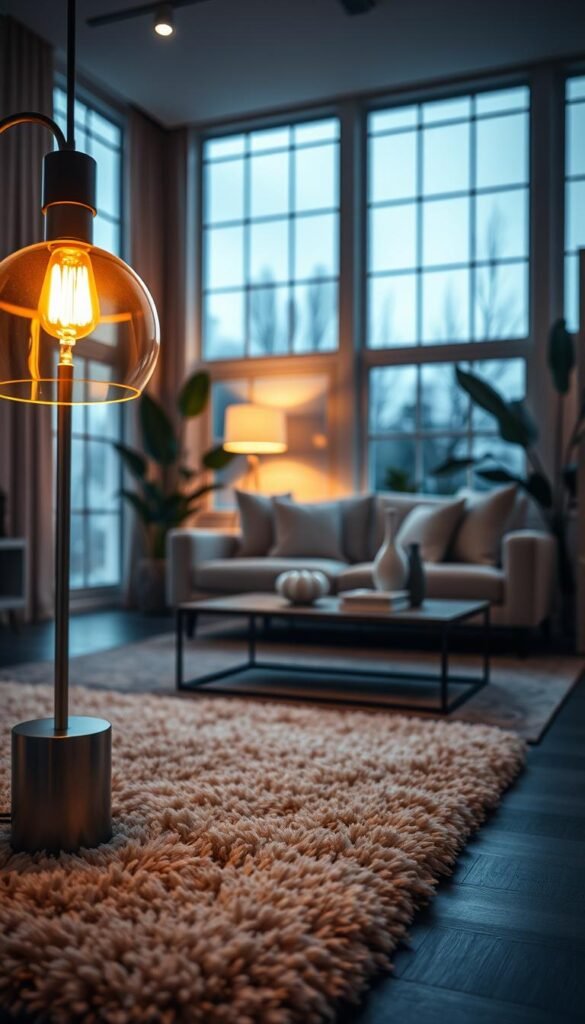
Maximize natural light and reflective surfaces
Use sheers to keep privacy while letting daylight in. Mirrors, glass tables, and metallic accessories bounce light and improve perceived tone.
Small-space and renter-friendly tips
Slim-profile floor lamps fit behind a sofa or in tight corners; choose a wide, stable base to prevent tipping. Plug-in sconces give the sconce look without hardwiring—plan cord paths and use cord covers for safety and neatness.
What to look for when buying
Check lumens (brightness), warm color temperature (2700–3000K), and dimmer compatibility for flexible atmosphere. Prefer models with replaceable bulbs if you want future flexibility.
| Feature | Integrated LED | Standard socket |
|---|---|---|
| Maintenance | Low (long life) | Replace bulbs as needed |
| Flexibility | Limited bulb swaps | High—choose bulbs and tones |
| Cost over time | Lower | Variable |
„Layered lighting fixes cold, single-source setups by creating controllable zones for comfort and function.“
Mirrors and reflective accents that brighten small living rooms
Mirrors expand a compact space by reflecting light and simplifying visual depth.
Why use them? They solve a clear problem: narrow or low-window living layouts that feel dark or crowded. A large mirror reduces visual fragmentation and makes the interior read wider.
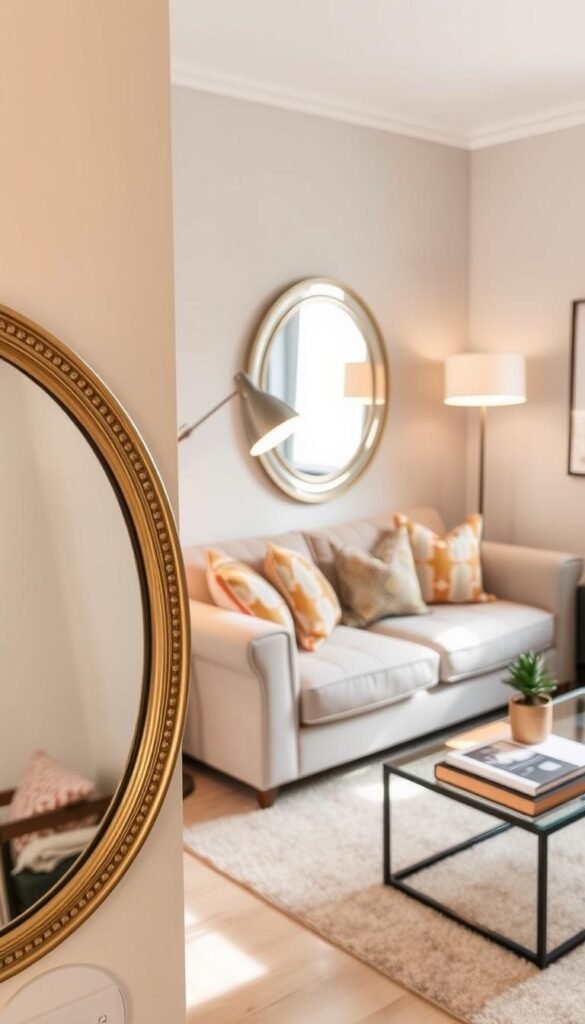
Placement tips to bounce window light and open up the space
Place a mirror opposite or adjacent to a window to push daylight deeper into the space. Avoid reflecting clutter; choose angles that show the room’s best elements.
Frame styles that match modern aesthetics
Black metal frames give crisp contrast and modern definition. Warm wood frames add coziness and complement wood furniture. Organic shapes soften boxy layouts and introduce gentle movement.
Safety and install notes for renters
- Verify mirror weight before adhesive use.
- Check adhesive limits and lease rules; use anchors only if allowed.
- Leaning mirrors work well—secure with anti-tip straps for safety.
„A well-placed mirror is a low-effort upgrade that changes how a small room feels.“
Quick comparison: wall-mounted vs leaning
| Type | Cost | Safety | Flexibility |
|---|---|---|---|
| Wall-mounted | Moderate–High | High if properly anchored | Lower (fixed height) |
| Leaning | Low–Moderate | Moderate with anti-tip strap | High (easy to move) |
| Lightweight adhesive | Low | Variable (wall texture dependent) | Medium (removable but limited) |
Best-for callouts: low-light apartments, narrow spaces needing visual width, and renters who want change without paint. For more compact-space styling ideas, see the aesthetic home decor guide.
Modern coffee table decor that adds interest without clutter
A coffee table can be a curated stage rather than a clutter hotspot. The goal is a surface that works for everyday living and still invites conversation.
Three-item formula: one functional tray, one vertical element (book or box), and one sculptural piece. This keeps interest without crowding usable table area.
Conversation-starter pieces should have a short story—an artisan ceramic bowl or a travel object—but leave space for drinks and remotes.
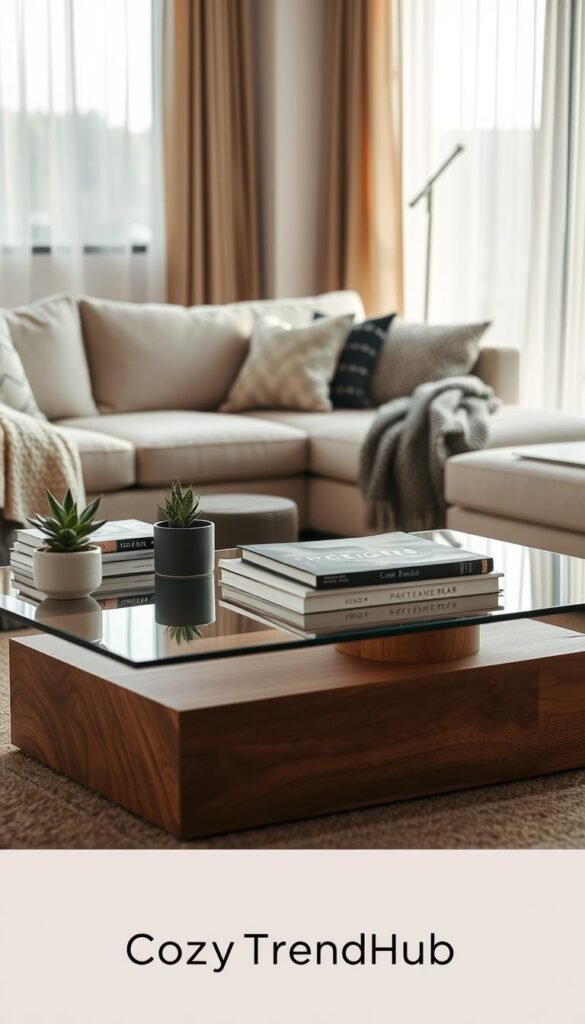
Material mix for balanced texture
Combine wood warmth with glass, ceramic, or stone to add depth. Wood tops pair well with a small stone bowl or a glass vase for contrast.
Buying considerations
- Nesting tables: expand surface when guests arrive and tuck away when not needed.
- Rounded edges: safer in tight walkways and with kids or pets.
- Storage shelves or drawers: hide remotes and reduce surface clutter.
| Use case | Recommended pieces | Why |
|---|---|---|
| Families | Rounded table + tray + lidded bowl | Safe edges, contained clutter |
| Renters | Nesting tables + lightweight accessories | Flexible layout, easy moves |
| Minimalists | Single sculptural object + book | Strong look, low clutter |
„A small edit—one tray, one book, one sculptural piece—keeps the coffee table useful and inviting.“
Organic shapes and curved furniture for a softer modern look
Rounded furniture can change how people move through a tight layout in a single swap. Boxy rooms and straight-line pieces often make a living space feel rigid and cramped. Sharp corners interrupt sightlines and create tight walkways.
When a curvy sofa works: choose a soft-armed, rounded sofa when the sofa is the room anchor and needs to soften the interior. A curvy sofa shifts the overall look immediately and makes seating feel more intimate.
When a round or oval coffee table makes sense: pick a round table in tight plans where corners would snag feet or block a path. Rounded tables improve circulation and reduce the chance of bumps in narrow traffic ways.
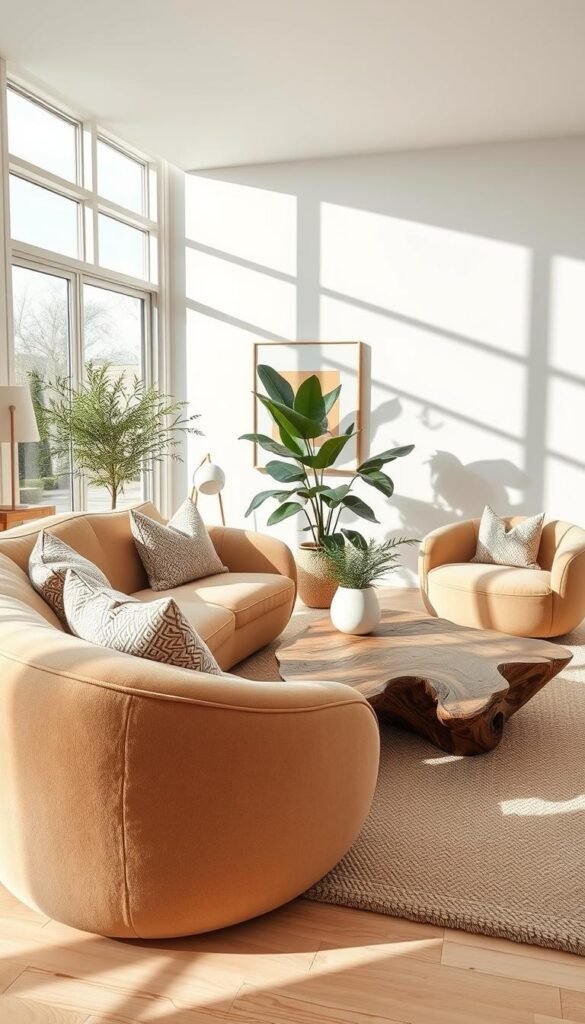
Practical flow guidance
Rounded edges help conversation groups feel more natural. They let people pass behind seating without sharp turns. Use one curvy piece to set a softer style, then repeat that curve in a lamp or rug to unify the design.
Pros and cons
| Pros | Cons |
|---|---|
| Softens harsh angles; adds visual interest; safer in tight traffic | Harder to scale; fewer standard rug layouts; delivery and placement can be trickier |
| Improves flow and conversation grouping | May limit modular arrangements and storage options |
Buyer checklist: what to measure
- Doorway width and elevator turns for delivery.
- Clearance around seating: aim for 18–24″ between table and sofa where possible.
- Rug placement allowances—curved bases may need custom sizing or floating placement.
Tip: verify scale in-plan with tape before ordering. For inspiration on organic modern approaches, see curated organic modern living-room ideas.
„A single sculptural sofa or a blobby cocktail table can shift the way a small interior feels and functions.“
Minimalist decor that still feels cozy (not sterile)
Minimal design succeeds when it removes clutter but keeps a sense of human comfort. The aim is a calm interior that still welcomes use and personality.
Start by decluttering: clear surfaces, discard duplicates, and keep only functional accessories. Remove visual noise first, then assess what the space actually needs.
Declutter first, then add warmth with neutrals and natural materials
Step-by-step plan:
- Empty flat surfaces and sort items into keep, store, donate.
- Return only functional pieces—lamp, a tray, one small plant.
- Add warmth via neutrals, plus natural materials like wood, linen, and wool blends.
Neutral palettes enlarge tight spaces and make the interior feel calm. Natural materials introduce warmth without adding clutter.
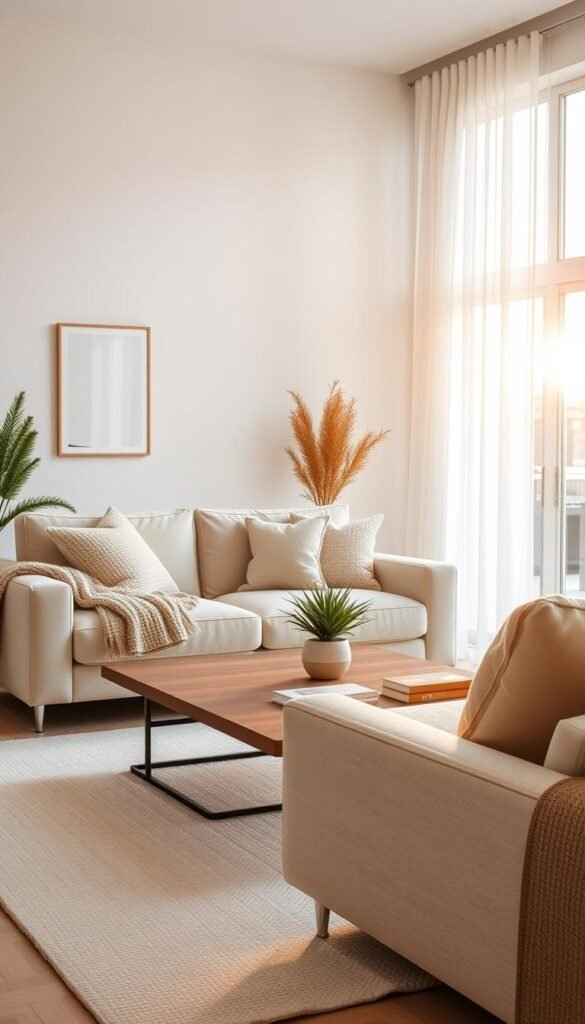
Best minimalist accents: one statement piece, one rug, one lighting upgrade
Follow a simple “rule of three upgrades.” Choose a single statement (art or chair), a rug for underfoot softness, and one lighting upgrade to create layered light. This trio raises the feel without crowding the floorplan.
Common mistake to avoid: matching everything instead of mixing textures
A common pitfall is matching finishes and fabrics too closely. That creates a sterile feel even with few items. Instead, mix textures—smooth wood, nubby wool, soft linen—to build depth.
| Minimalist goal | Renter-friendly pick | Homeowner pick |
|---|---|---|
| Portable warmth | Removable rug + plug-in floor lamp | Wool rug + dimmable hardwired sconce |
| Single focal | Lightweight framed art or accent chair | Larger statement art or designer lounge chair |
| Low commitment | Leaned mirror and slipcovers | Built-in shelving with warm wood finishes |
„Minimalism works when each piece earns its place — function first, then feel.“
For tips on minimalist approaches that stay cozy, see this practical guide on minimalist home updates: minimalist home decor tips.
Eclectic and maximalist decor without visual chaos
Mixing eras and textures gives a space character, yet it needs rules to read coherent. Eclectic schemes work when colors and patterns repeat in measured ways.
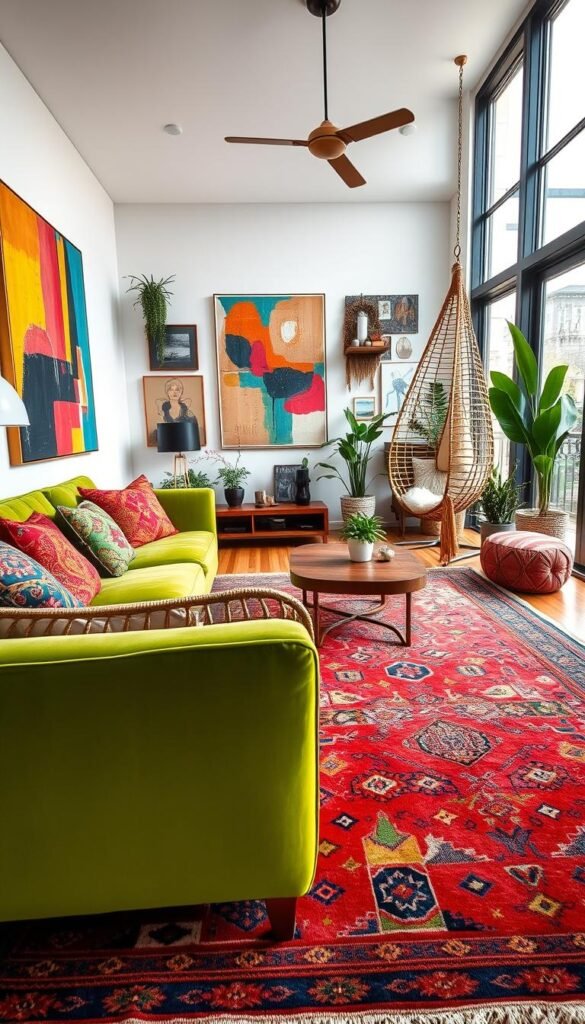
Simple mix-and-match rules
Repeat 2–3 colors across large pieces, textiles, and small accessories to tie the plan together.
Vary pattern scale: pair a large-scale print with a small geometric and a neutral ground. Limit one “hero” pattern so the eye has a resting place.
Where to spend and where to save
Spend on a durable sofa or a statement art piece that anchors the palette. Save on accent tables, lamps, and throw cushions—these are easy to swap.
Renter-friendly maximalism and budget path
Use removable gallery walls, textile layers, and stacked accessories that move easily when renting. Second-hand finds add character and sustainability.
- Check dimensions, odors, and frame condition before buying used.
- Source pieces locally via thrift stores or marketplace listings for unique results under budget.
| Impact tier | Under $50 | $150 | $300 |
|---|---|---|---|
| Maximalist upgrades | Throw pillows, small art | Vintage lamp, medium artwork | Large framed art or refurbished side table |
„Repeating color and varying scale prevents chaos while keeping maximalism lively.“
For deeper inspiration on colorful maximalism and considered layering, see a primer on bold interior approaches: maximalist interior tips and practical minimalist contrast ideas at minimalist living ideas.
Plants and greenery that make the room feel alive (even in rentals)
Plants quietly shift a space from staged to welcoming while connecting the interior to nature. Greenery softens hard edges and adds a natural element that improves the overall atmosphere of a living room.
Low‑light and low‑care options: choose hardy species like snake plant, ZZ, or pothos. When maintenance or travel is a concern, realistic faux plants provide the same visual lift with zero watering.
Small‑space placement: use tall corner plants to fill dead zones, hanging planters to save floor area, and small pots on shelves to add height variation without crowding surfaces.
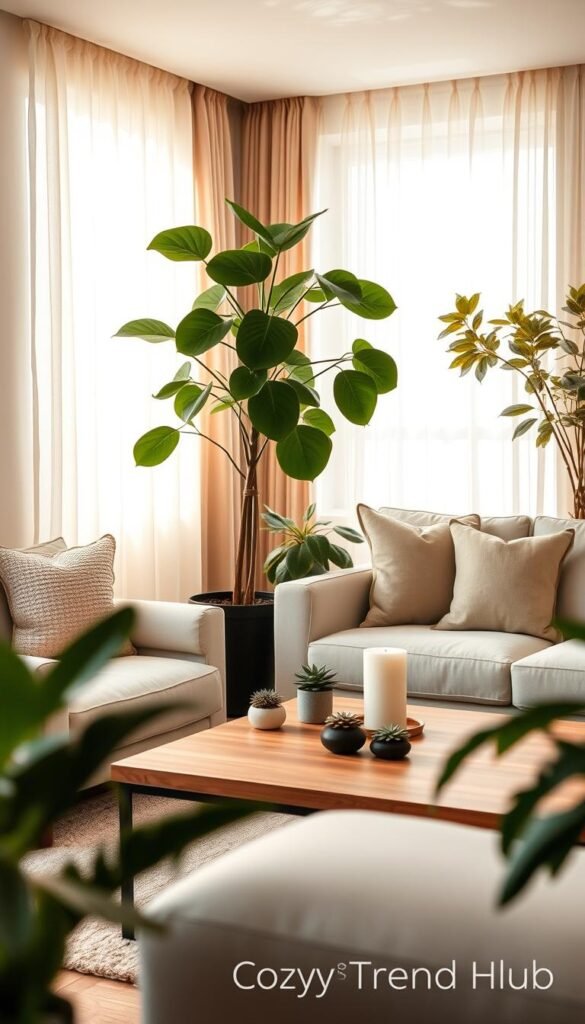
Pros, cons, and rental considerations
- Real plants: improve air and feel, but need watering, drainage, and pest checks.
- Faux plants: no care, but require dusting and can look less natural up close.
- Pet safety: always check toxicity for cats and dogs before buying.
- Rental installs: prefer freestanding stands, tension rods for hanging, or leaning shelves to avoid drilling.
| Choice | Light need | Maintenance | Pet safe |
|---|---|---|---|
| Snake plant | Low | Low | Check (moderate risk) |
| Pothos | Low–med | Low | Not safe |
| Faux tall plant | None | Very low | Safe |
„Greenery is an easy way to make a small space feel lived‑in and calm.“
Comparison tip for buyers: rank options by light level, maintenance tolerance, and pet safety to choose the right pieces and accessories for the home.
Materials and finishes that add warmth: wood tones, metals, and textiles
Start by identifying which finishes dominate the space and where softness is missing. Modern interiors often skew hard—stone counters, metal legs, and cool paint can feel crisp but chilly.
Pair natural wood with black accents and soft whites to create balance. Warm wood tones add depth and a human scale. Black hardware or lamp bases sharpen edges. Soft whites in textiles and walls keep the look fresh.
Use a hard-meets-soft buying strategy: if stone or metal is prominent, add a plush rug and layered throws to restore comfort. Limit metals to one or two finishes—example: black + brass—and repeat them in small accessories for cohesion.
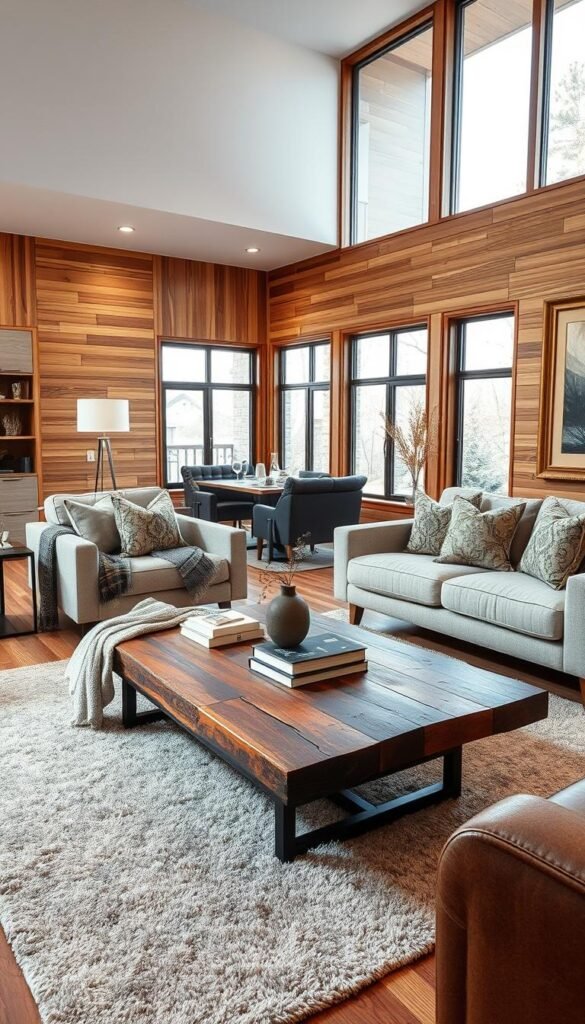
Practical checklist
- Test undertones: warm vs cool before you buy.
- Match wood tones loosely—avoid exact copies.
- Add at least three textures (wood, textile, metal) to prevent flatness.
Quick comparison
| Use case | Materials to choose | Why |
|---|---|---|
| Kids & pets | Durable wood, low-pile rugs, matte metal | Resists wear, easy cleaning |
| Low maintenance | Sealed stone, metal accents, synthetic textiles | Easy care, stain resistant |
| High impact | Rich wood, mixed metals, plush textiles | Comfort and visual depth |
„A calculated mix of warm wood, limited metals, and layered textiles keeps an interior inviting and practical.“
For practical pairings and visual examples, see a curated guide on combining cozy and contemporary finishes: cozy meets contemporary.
Small-space layout and styling that supports everyday living
Clear pathways and purposeful corners turn tight floorplans into usable, calm spaces. This section shows practical choices that keep daily life—TV, guests, work—from feeling cramped.
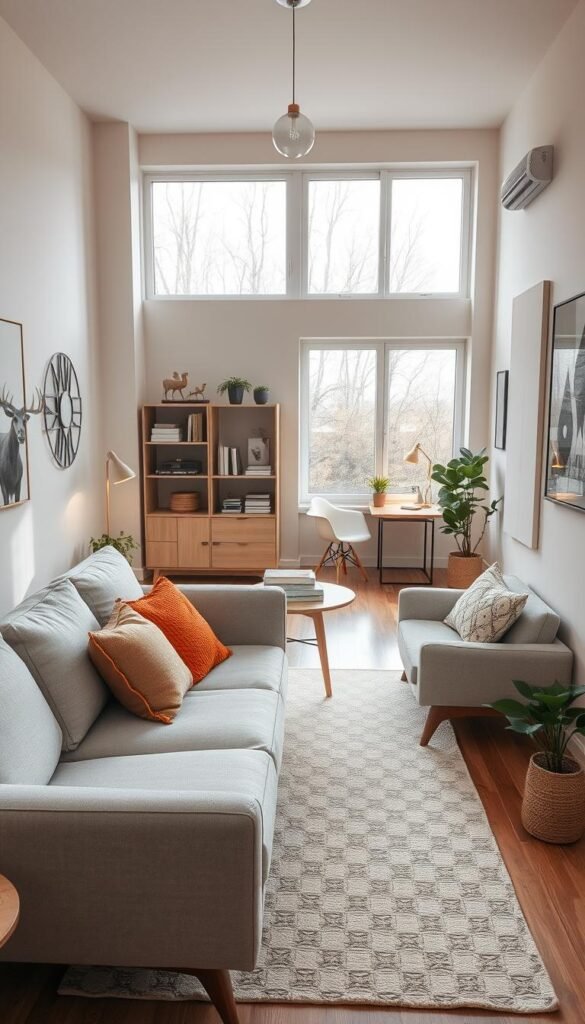
Use corners intentionally
Turn an unused corner into a reading nook, an accent chair spot, or a mini lounge. A slim chair plus a floor lamp and a small side table creates a focused zone without crowding the main area.
Furniture flow basics inspired by Feng Shui
Keep clear walkways: maintain 30–36″ for main paths and 18–24″ between tables and seating. Arrange seating to face each other to improve conversation and comfort. Avoid blocking door swings and sightlines to windows or the TV.
What to prioritize when square footage is tight
Choose multipurpose pieces: storage ottomans, nesting tables, and slim media units. Go vertical with tall shelves or wall-mounted storage to free floor space.
| Need | Studio | One-bedroom |
|---|---|---|
| Multipurpose | Storage ottoman | Nesting tables + daybed |
| Vertical | Wall shelves | Tall bookcase |
| Slim profile | Armless sofa | Low console |
„If a space feels cramped, reduce scale; if it feels cold, add textiles; if it feels dark, add layered lighting and mirrors.“
For layout ideas and renter-friendly hacks, see small living room ideas and practical tips at cozy small-space styling.
Conclusion
Wrap up by tracing a clear decision path from problem to anchor to finish.
Identify the main point—too dark, tight, or restricted by a lease—then pick an anchor piece (sofa, rug, or art) and build outward with color and textures using the 60-30-10 rule.
Prioritize function: clear pathways, comfortable seating, layered lighting, and scaled furniture make a modern living room feel useful and warm without major work.
Renters: choose removable wall options, plug-in lighting, and portable textiles. Small-space tips: mirrors, multipurpose tables, and a correctly sized area rug define the area without crowding.
Measure before you buy and consult the comparison blocks and product tables to match pieces to needs. For more layout and style ideas, see a curated guide on living room ideas and practical picks at cozyTrendHub.