
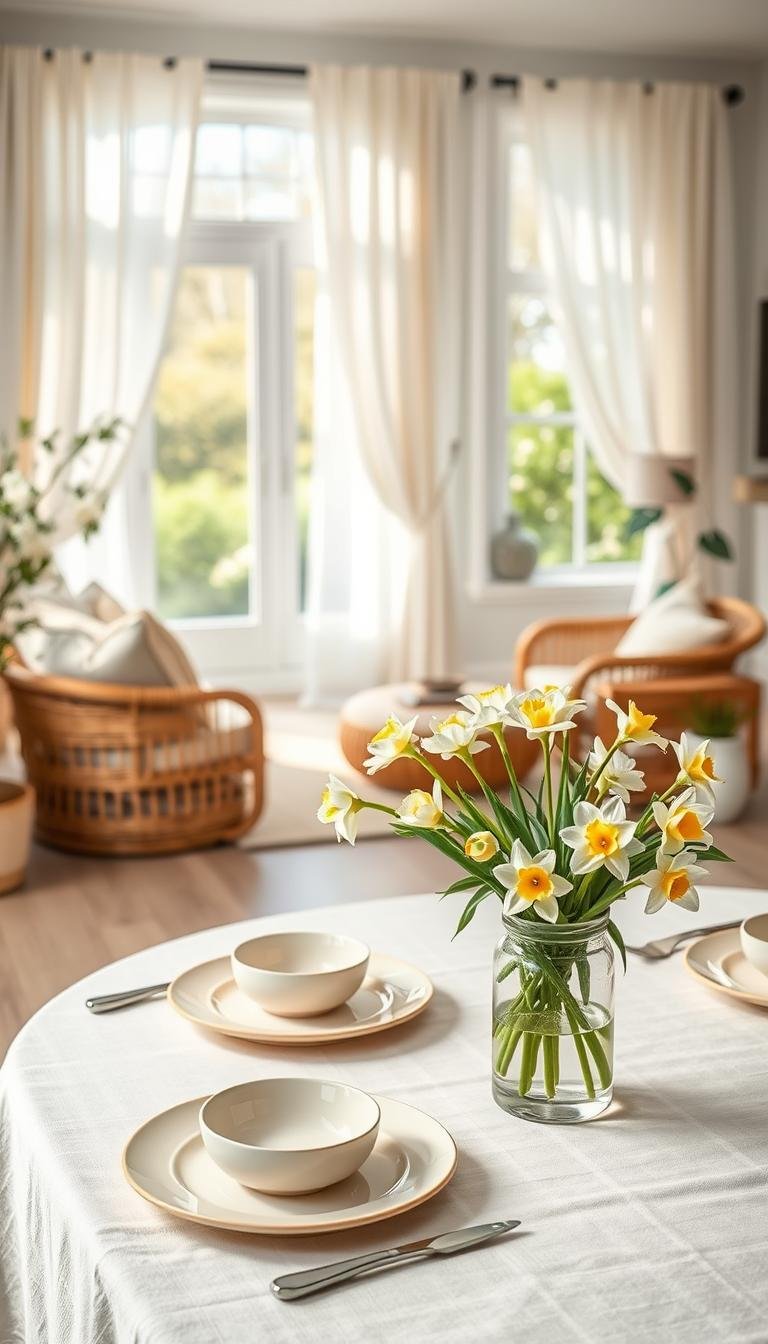
Spring brings fresh looks — and hidden triggers. Many people find that seasonal swaps increase exposure to pollen, dust, pet dander, and scented products once items come indoors.
This introduction frames a practical approach. It suggests washable textiles, smooth glass or metal surfaces, low-pollen plants, and HEPA air purifiers to cut indoor particles without losing seasonal beauty.
The guide makes clear who benefits most: renters, small-space residents, and pet homes. Recommendations focus on removable covers, portable purifiers, and temporary choices that do not require painting or drilling.
Readers will get comparison-ready tips on cleaning effort (wipe vs. wash), allergen-trapping risk (seams and pile), placement near vents or beds, and cost-per-season value. Practical pros and cons follow to support confident buying decisions and sensible gifting ideas.
For quick reference and deeper options, see a related apartment-focused resource at apartment spring styling. The goal is a fresh home that looks seasonal without adding new triggers.
Key Takeaways
- Problem: Seasonal items can bring in pollen, dust, and scents that trigger reactions.
- Solution: Choose washable textiles, smooth materials, low-pollen plants, and air-quality upgrades.
- Who benefits: Renters, small-space dwellers, pet homes, and sensitive people.
- Buying guide focus: Cleaning effort, trapping risk, placement, and cost-per-season.
- Renter-friendly: Emphasize removable, portable, and temporary swaps that are easy to reverse.
Spring decor that won’t trigger allergies: what to avoid indoors
Tiny particles from outside ride on clothes and pets and settle quickly on soft surfaces. Pollen drifts in through open windows and on fabrics. Once inside, it lands in cushions and under rugs and moves with normal air flow.
Dust mites thrive in thick upholstery. Pet dander embeds in fibers. Damp spills or poorly ventilated corners let mold spores grow, raising indoor allergen loads and making reactions worse.
Features that trap allergens
Tufting, deep seams, shag textures, chunky knits, and heavy fringe act like nets for pollen and dust. These pieces are hard to vacuum and even harder to wash.
What to avoid and what to buy instead
Avoid: plush garlands, tufted pillows, scented candles, glitter crafts, and heavy fabric hangings.
Replace with: smooth glass, metal, or ceramic accents and washable textiles with tight weaves. Choose fragrance-free cleaners and craft supplies to protect sensitive eyes and noses.
„When comparing products, prioritize smooth surfaces and tight weaves that you can wipe or launder after a high-pollen day.“
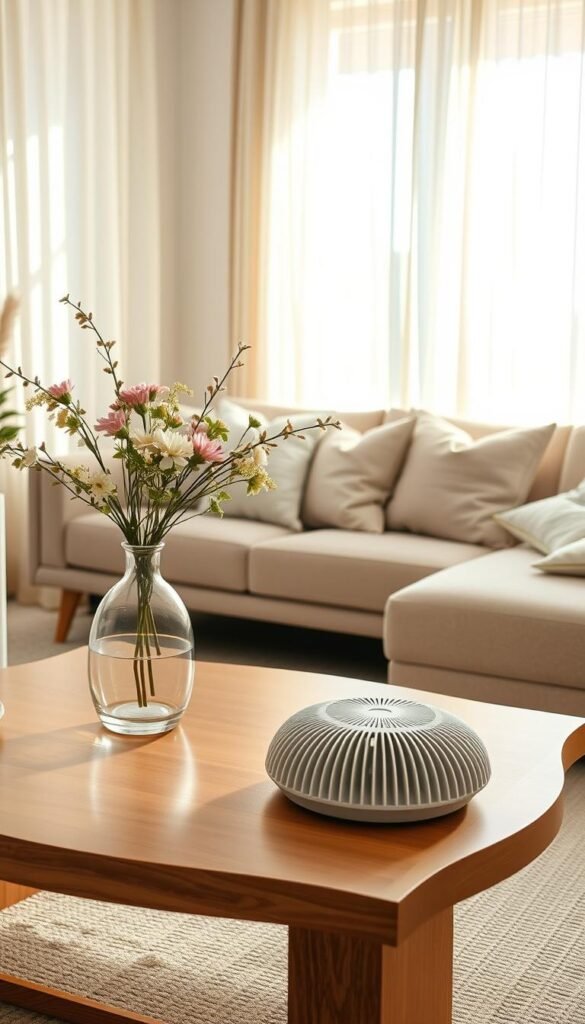
| Allergen risk | Cleaning effort | Best placement | Ideal for |
|---|---|---|---|
| High (shag, tufted) | Pro clean / deep wash | Avoid in bedroom | Not ideal for pets |
| Medium (chunky knit, fringes) | Washable but frequent | Living room with good ventilation | Renters with lidded storage |
| Low (glass/metal/ceramic) | Wipe | Entrances & surfaces | Pets, small spaces |
| Low (tight-weave textiles) | Machine wash | Bedrooms & sofas | People with sensitivities |
For renter-friendly swaps and quick product ideas, see a curated selection at seasonal washable accents.
Best allergy friendly spring decor flowers and arrangements (low-pollen picks)
A simple bouquet can refresh a room, yet certain blooms shed pollen that bothers sensitive noses. Choose blooms that hold pollen in tight centers so airborne particles stay low.
Small spaces and bedrooms: Orchids and tulips work well because their pollen stays contained. Place them off the bedside table to limit overnight exposure. These choices suit renters and compact rooms.
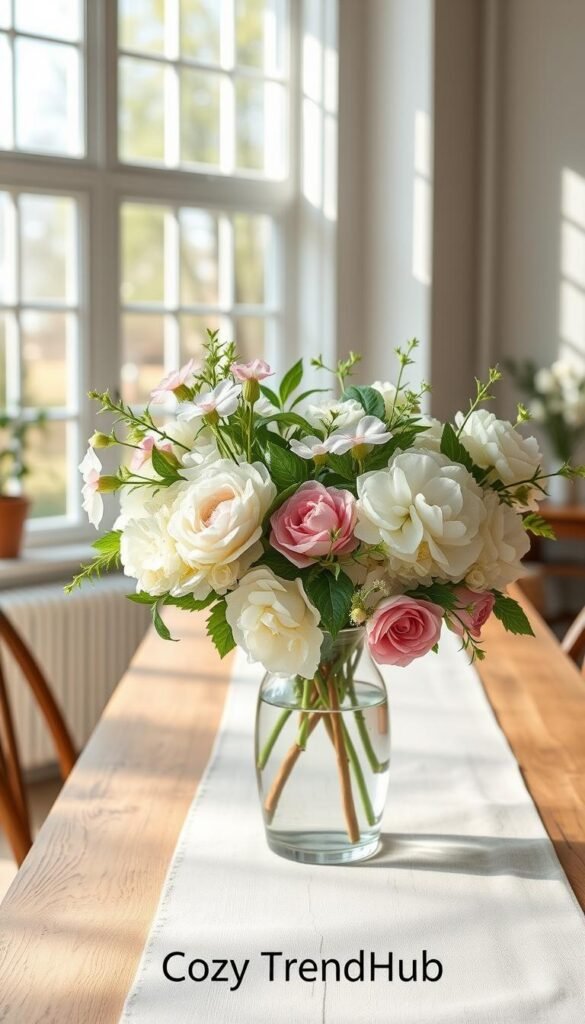
Centerpieces: Hydrangeas and modern roses have tight petals and low airborne pollen. They read full on a dining table, so fewer stems are needed and maintenance stays simple.
Long-lasting bouquets: Carnations and snapdragons last longer and reduce the need to handle blooms often. Fewer trips to replace arrangements means fewer chances for allergic reactions.
Skip list for flare days: daisies, chrysanthemums, baby’s breath, asters, chamomile, and dahlias. Lilies should have stamens removed before bringing them inside.
Florist tips: ask the expert to remove stamens on peonies or lilies, pick tightly packed petals, and keep arrangements away from vents and beds.
| Pollen containment | Scent | Longevity (days) | Maintenance |
|---|---|---|---|
| Orchids / Tulips – High | Low | 7–14 | Change water, trim stems |
| Hydrangeas / Roses – Medium | Low–Medium | 5–10 | Refresh water, remove wilted heads |
| Carnations / Snapdragons – High | Low | 10–21 | Minimal; trim as needed |
For curated, low-pollen arrangement picks and delivery notes, see a short guide to subtle seasonal accents at subtle Easter accents.
Renter-friendly spring greenery: plant options that look fresh without the sneeze factor
B
The simple choice of potted greens gives renters seasonal color without the frequent handling and pollen release of cut blooms.
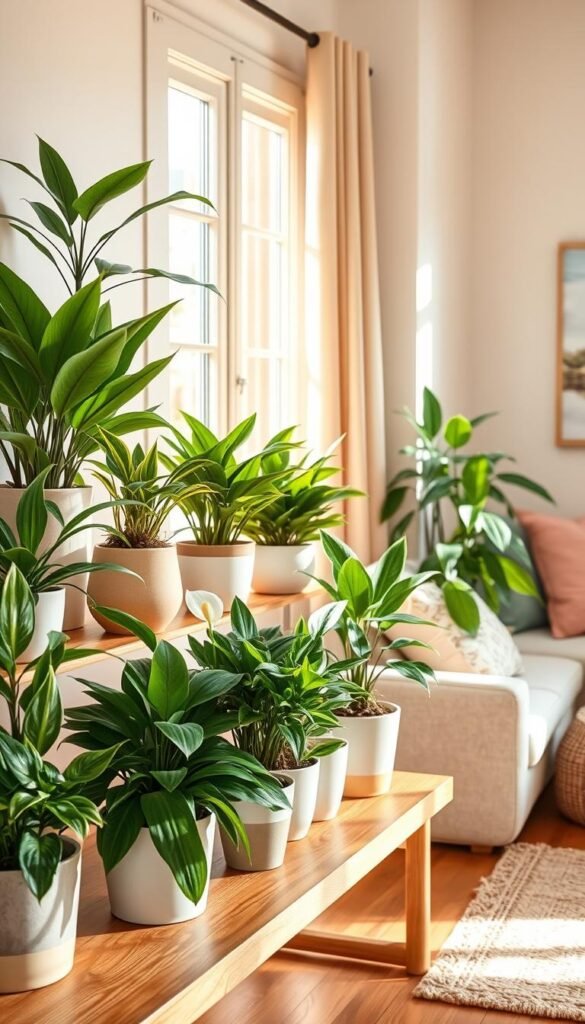
Potted plants work well for small-space styling. They last longer, shed less, and let owners control soil moisture and placement. Choose options that keep a tidy look with minimal maintenance.
Buyer considerations: pick a pot that fits the room and has drainage holes plus a saucer. Avoid oversized planters that retain water and slow growth. A small moisture meter and narrow-spout watering can reduce overwatering.
Water habits matter. Overwatering raises mold growth in soil and trays, which can increase indoor allergens. Empty standing water the same day and follow a simple weekly check-list to keep soil just damp, not soggy.
Placement rules reduce triggers. Keep plants out of cramped, humid corners. Don’t set pots directly under vents where dust can blow into soil. Maintain light air movement to limit stagnant moisture without creating drafts that stir particles into the air.
Quick pros/cons: potted plants — longer life, lower daily pollen, more control. Cut blooms — instant color but more frequent handling and pollen release.
„For tight spaces, non-flowering green options are easier to manage and still give a seasonal lift.“
For homes that stay closed up, a small HEPA unit near the main living area helps reduce airborne particles that can be stirred up during plant care. Simple tools—washable saucers, a narrow-spout can, and a moisture meter—make plant upkeep renter-friendly and low-effort.
Allergy-aware textiles and soft decor that still feel like spring
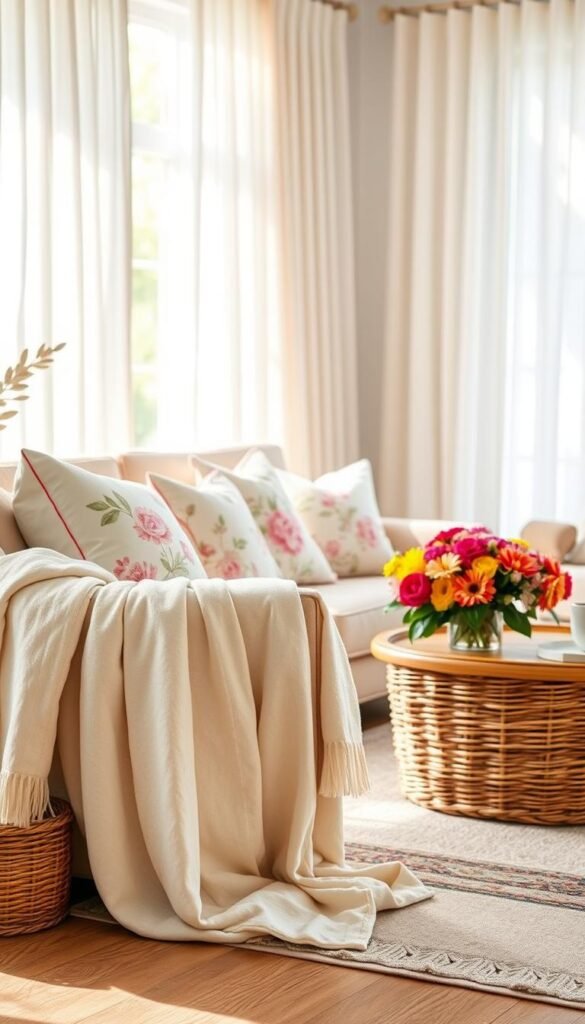
Soft textiles can transform a room into a seasonal retreat, but they also trap tiny particles close to skin and inhalation zones.
Start with washable slipcovers and machine-washable cushion covers. These options let residents set a regular cleaning rhythm and reduce how long allergens stay near faces and hands.
Materials to prioritize
Tightly woven synthetics hold less dust and dry faster than loose natural weaves. That lowers mold risk after washing and cuts pet-hair cling. Use fragrance-free detergent to limit skin reactions.
Quick wins for rentals
Swap pillow covers instead of replacing inserts. Choose easy-clean throws over heavy fabric wall hangings. For guidance on sofa choices that reduce triggers, see couch material options for sufferers.
Buyer checklist
- Zipper quality and full removal
- Wash temperature limits and shrink resistance
- Colorfastness after repeated cycles
- Whether the fabric attracts pet hair
„Prioritize smooth, tightly woven fabrics that can be laundered on a schedule to keep living spaces light and low on irritants.“
| Fabric weave | Washability | Dry time | Pet-hair resistance | Allergen trapping risk | Best for |
|---|---|---|---|---|---|
| Tight synthetic | Machine wash | Fast | High | Low | Renters / pets |
| Loose natural weave | Hand or machine (gentle) | Slow | Medium | High | Decor lovers |
| Plush / shag | Special clean | Slow | High | Very high | Cozy zones only |
| Performance fabric | Machine wash | Fast | Very high | Low | Sensitive skin |
For fabrics tailored to sensitive skin, consult a practical guide on types and care for reactive skin.
Furniture that fights allergens: couch materials and designs that are easy to clean
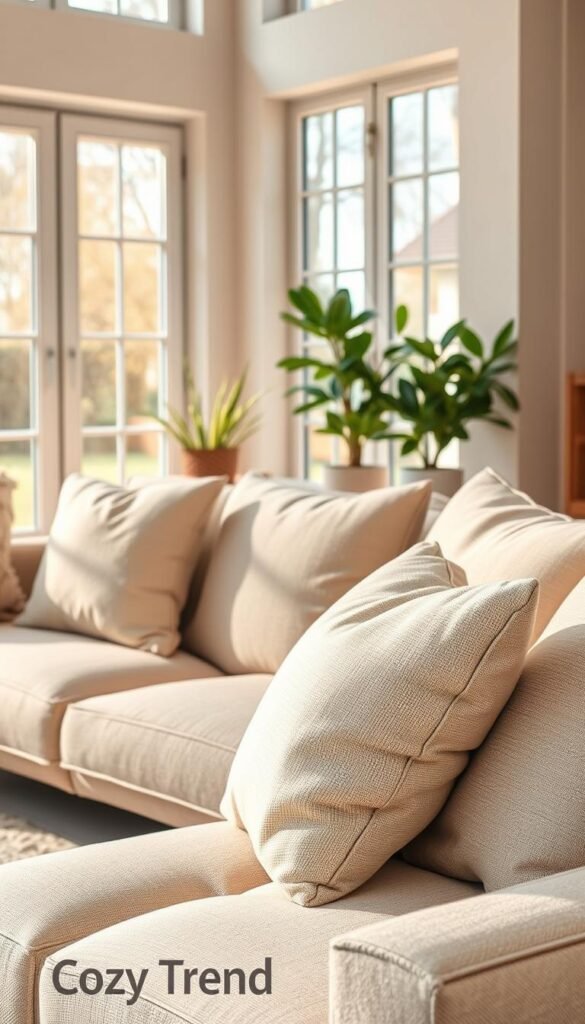
The sofa is a hotspot where indoor particles build up from daily use and airflow. Large cushions, seams, and tufting trap pollen, dust, and pet dander that then circulate during sitting and cleaning.
Why material matters: non‑porous surfaces and tight weaves lower how many allergens settle into fibers. That reduces cleaning time and exposure for sensitive individuals.
Top material options and who they suit
Leather: wipeable and low-porosity. Best for renters or households that rarely wash covers. Pros: simple to clean. Cons: can be warm and pricier.
Microfiber: tight weave that resists particle entry. Best for budget-conscious people with pets who vacuum weekly. Pros: affordable and durable. Cons: may retain oils.
Performance fabrics: look for Oeko‑Tex and PFAS‑free labeling. Best for families needing frequent washes and long wear. Pros: high durability. Cons: check certification for chemical sensitivities.
Design details that reduce buildup
- Removable, washable covers (wash every 1–3 months).
- Raised legs (about 5–6 inches) for easy vacuum access underneath.
- Minimal seams and no deep tufting to cut trapping points.
„If washing is unlikely, prefer a wipeable surface; if you can launder often, choose certified performance textiles.“
| Material type | Cleanability | Seam/tuft risk | Pet-hair resistance | Cost range | Best for |
|---|---|---|---|---|---|
| Leather | Wipe | Low | Medium | $$$ | Renters / quick clean |
| Microfiber | Vacuum / spot clean | Low–Medium | High | $$ | Pet homes / budget |
| Performance fabric (Oeko‑Tex) | Washable | Low | High | $$–$$$ | Families / sensitive individuals |
Placement matters too. Avoid seating directly under vents where air can recirculate trapped allergens into living zones.
For tailored options and tips to reduce allergies with the right customized, consult a practical guide that matches materials and design to individual concerns.
Air-quality decor upgrades for spring: keep allergens from circulating
Air movement can undo careful styling by carrying tiny particles from vents and open windows into rooms.
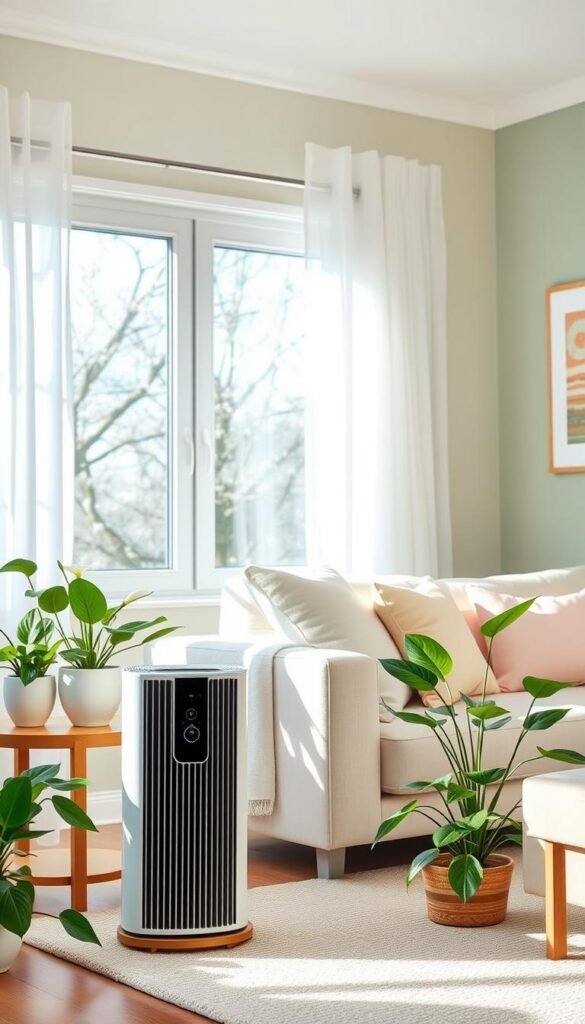
HEPA air purifiers for pollen and dust: what to look for before you buy
Confirm a true HEPA filter and match the unit’s coverage to the room size. Check CADR or square-foot ratings and the noise level if it will run in a bedroom or workspace.
What HEPA does: it reduces airborne pollen, dust, and mold particles that settle on textiles. It supports cleaner surfaces but is not a cure for allergies.
Ventilation strategy for mild days
Open windows briefly at low-pollen times—early morning or late evening—and then close them. Run filtration after airing out to clear what came in.
Keep floral arrangements and dusty textiles away from vents so pollen won’t spread through the air system.
„Place portable units where people spend most time and avoid blocking intake or outlet grills.“
| Option | Pros | Cons | Maintenance |
|---|---|---|---|
| True HEPA purifier | Reduces airborne particles, portable | Ongoing filter cost, noise varies | Replace filters per manufacturer; check monthly during high pollen days |
| Window ventilation | Dilutes indoor contaminants, free | Can bring pollen in if timed poorly | Air out briefly at low-pollen times; close afterward |
| Combined approach | Best balance for a small home or room | Requires routine habits | Run purifier after airing; set calendar reminders |
For renter-friendly options and practical tips, see a short guide to allergy-proof home tips and small-space options for small spaces.
Conclusion
, Wrap up with clear actions: choose low-pollen bouquets or potted greenery, prefer washable covers, and pick smooth, easy-clean surfaces to cut indoor allergies and allergic reactions.
Match the decor choice to the main trigger—pollen, dust, fragrance, or mold—and pick options the household will maintain. Portable, reversible swaps suit renters and small-space living best.
Quick next steps: swap to machine-washable covers, move arrangements away from vents, control moisture to limit mold, and run HEPA filtration when needed.
For window-treatment ideas that reduce dust and pollen, consider hypoallergenic window treatments like these hypoallergenic window treatments.
Gift idea: a small HEPA purifier or a low-pollen bouquet makes a practical, year-round present that helps people prone to reactions. These steps reduce exposure and support comfort, but those with severe allergic reactions should follow medical advice.