
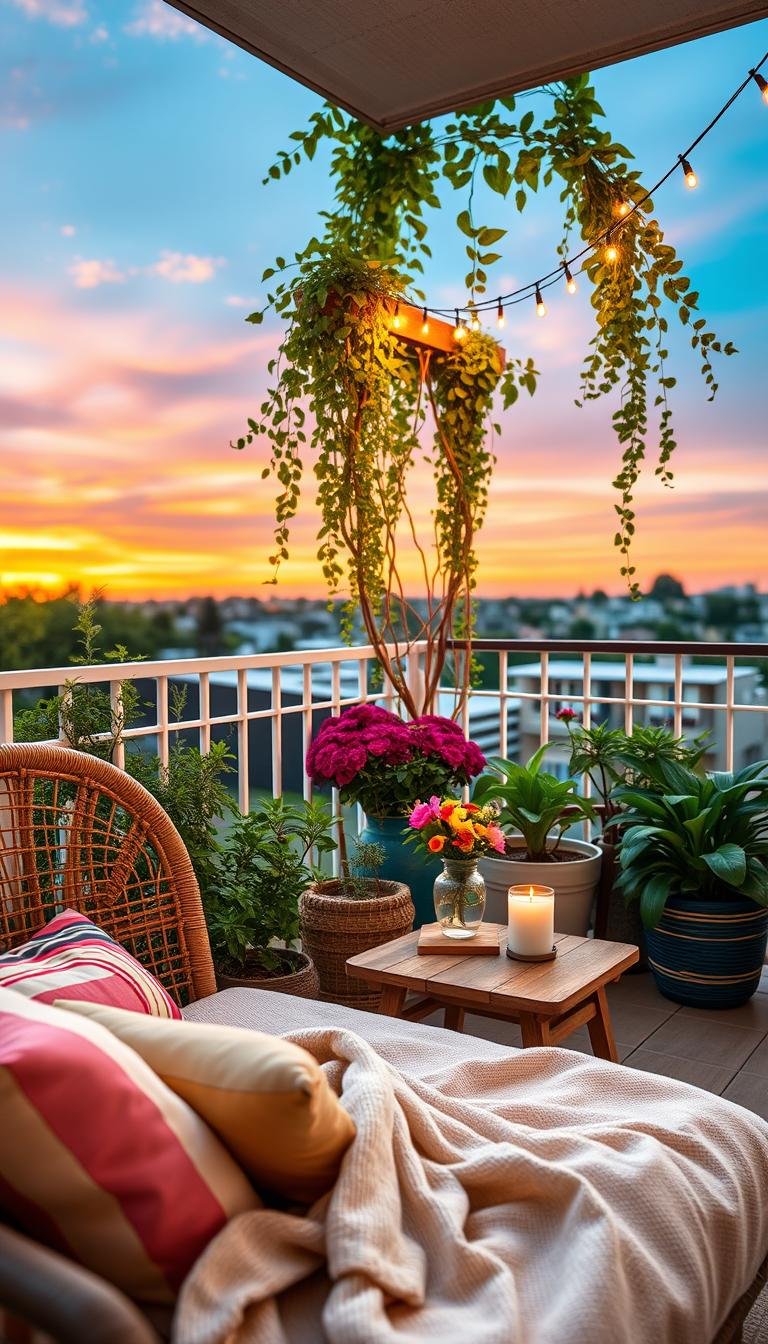
Many small outdoor spaces go unused after sunset. A balcony can feel bare, hot, exposed, or poorly lit. This stops people from dining, lounging, or hosting outdoors.
This guide frames clear solutions. It lists what to buy or add to fix lighting, comfort, privacy, and weather readiness without permanent work. Recommendations focus on renter-friendly and small-space options that you can move or store.
The picks will name best-for scenarios like tiny spaces, entertainers, view-first spots, and pet households. Each suggestion includes quick pros and cons and key specs to compare. Safety notes will cover building rules, weight limits, fire codes, and wind exposure where relevant.
The goal is a finished-feeling outdoor area that supports real use—dining, relaxing, and hosting—rather than inspiration-only styling.
Key Takeaways
- Common problem: balconies often lack shade, light, or privacy at night.
- Solutions focus on renter-safe, portable, and seasonal items.
- Each idea lists pros, cons, and buying specs for quick decisions.
- Safety and building rules are part of the buying lens.
- Designed to turn an unused spot into a usable extension of the home.
Start with your summer-evening balcony goal: dining, lounging, or a view-first setup
Many small outdoor areas fail because they try to do everything. Choose a single primary use for the space—dining, lounging, or a view-first setup—and let that guide every piece you add.
If no room exists for multiple functions, pick a secondary function that can fold away. That prevents clutter and preserves the balcony feel while keeping options open.
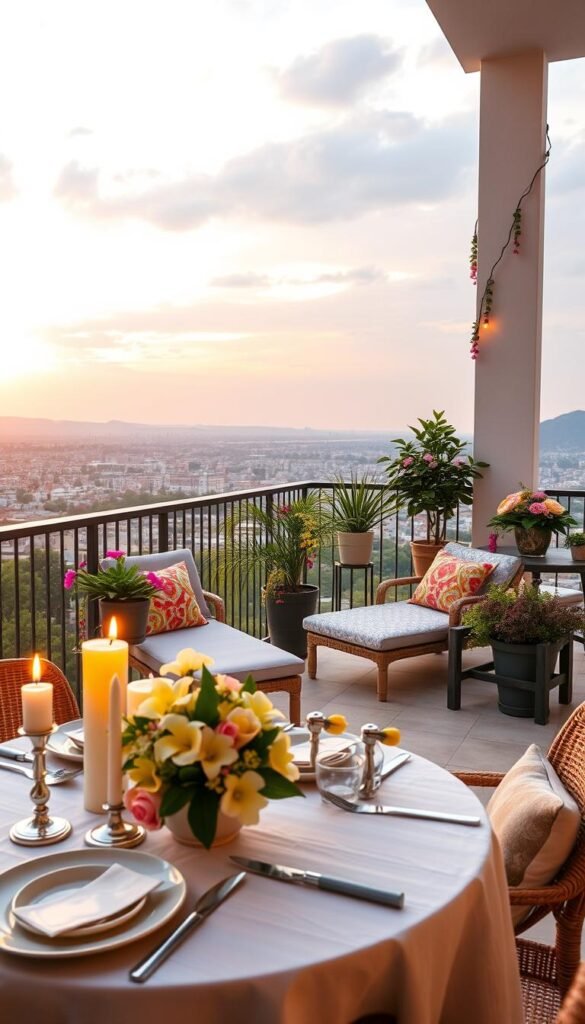
View-first layouts that don’t block the scenery
Face seating toward the views and use low-profile pieces. Avoid tall planters or storage along the rail to keep sightlines clear.
Micro-dining vs. lounge zones for tight square footage
Micro-dining: choose a bistro set, rail-mounted folding table, or stackable chairs that store quickly. These are for people who will actually eat outdoors.
Lounge zone: a compact loveseat or two slim lounge chairs plus a small side table works best for long conversations and reading nights.
| Layout | Typical footprint | Storage | Best use |
|---|---|---|---|
| Micro-dining | 2–4 sq ft table + chair clearance | Fold/stow | Meals |
| Lounge | 4–8 sq ft seating cluster | Store cushions | Conversation/reading |
| View-first | Minimal seating | Portable | Enjoy views |
When to keep it minimal (and what to add so it still feels “finished”)
If the area is a pass-through or has special architecture, keep furniture minimal but add one anchor item—a rug or a light—to make the design intentional.
- Measure door swing, traffic path, and chair pull-out before you buy.
- Prefer renter-friendly pieces that assemble without drilling.
- Compare dimensions and folding options before checkout.
Balcony lighting that actually feels cozy after sunset
A layered lighting plan fixes common issues: indoor bulbs don’t reach the rail, a single bright fixture feels harsh, and outlets may be scarce. Use glow, task, and accent layers so the space reads like a small room instead of a porch.
LED strip lights for clean edge glow
LED strip lights work well under rails or along edges to provide low-glare perimeter light. Look for an outdoor IP65 rating, strong adhesive or mounting clips, and remote or app control.
LED string lights for renter-friendly ambiance
String lights anchor atmosphere with reversible installs. Choose LED bulbs, check cord length, and attach with hooks or zip ties. Warm color temps feel softer on skin and views.
Statement pendants for covered outdoor living
Use a pendant only when a ceiling box exists or an approved install is possible. A focal fixture anchors the room and lifts the look for hosting.
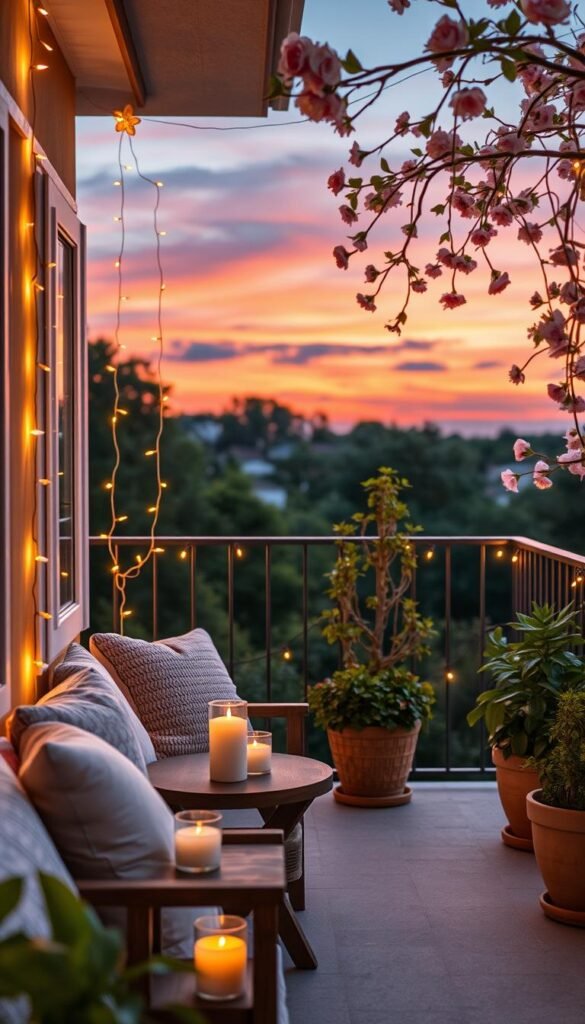
Candles and lanterns for wiring-free warmth
Candles add real flame warmth; opt for wind-resistant lanterns or flameless candles around pets or on windy nights. Always place on stable surfaces away from fabrics.
| Type | Install | Power | Weather |
|---|---|---|---|
| LED strip | Mount under rail | Plug or 12V | IP65 outdoor |
| String lights | Hooks/zip ties | Plug or solar | Outdoor-rated bulbs |
| Pendant | Hardwired | House wiring | Sheltered ceiling |
| Candles/lanterns | Portable | Batteries or flame | Use windproof option |
Quick placement rule: keep bright sources out of sightlines when seated and favor indirect glow around the perimeter.
For a deeper list of practical fixtures and buying notes, see this outdoor lighting guide.
Comfortable seating that fits small spaces and won’t feel like patio punishment
A balcony turns into an evening room when seating matches real needs, not showroom looks.
Solve the comfort barrier: choose by carry weight, footprint, and cushion quality. Heavy metal chairs and rigid stools often stop use. Lightweight pieces invite routine use and easy storage.
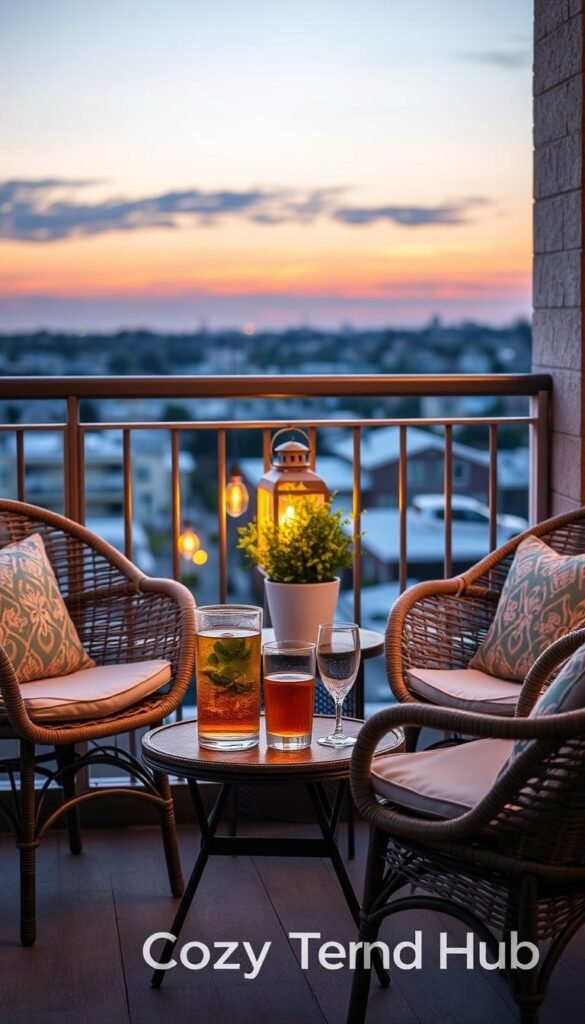
Lightweight poufs and stackable chairs
Ideal for an apartment where items move indoors each night. Compare materials, removable covers, and how many stack vertically. Poufs carry easily and can double as tables.
Outdoor lounge chairs with cushions
Designed for long reads and long talks. Look for seat depth, back angle, quick-dry foam, and UV-resistant fabric. These chairs are comfy but may need covers to avoid trapped moisture.
Sectionals when the footprint allows
Use sectionals only when the space supports circulation and frequent hosting. They create a true lounge area. Otherwise they block paths and feel bulky.
„Choose seating that you will actually sit in every night, not display.“
| Type | Weight | Storage | Cushion care |
|---|---|---|---|
| Poufs | Light (5–12 lb) | Stack or stash indoors | Removable covers recommended |
| Stackable chairs | Medium (8–20 lb) | Vertical storage | Polyblend, quick-dry options |
| Lounge chairs | Medium–heavy (20–40 lb) | Fold or cover | Quick-dry foam, UV fabric |
| Sectionals | Heavy (40+ lb per module) | Seasonal storage | Modular covers advised |
Measuring checklist:
- Max width per piece
- Clearance for a 24–30″ walking path
- Door and stair fit for off-season storage
For quick buying guidance and real product notes, see a short guide to balcony seating options.
Textiles that fix a “cold” balcony fast: outdoor rugs, pillows, and layered textures
Textiles are the fastest way to turn a cold, concrete outdoor area into a welcoming room. Bare floors and hard furniture feel unfinished. Soft rugs and cushions make the area usable without permanent changes.
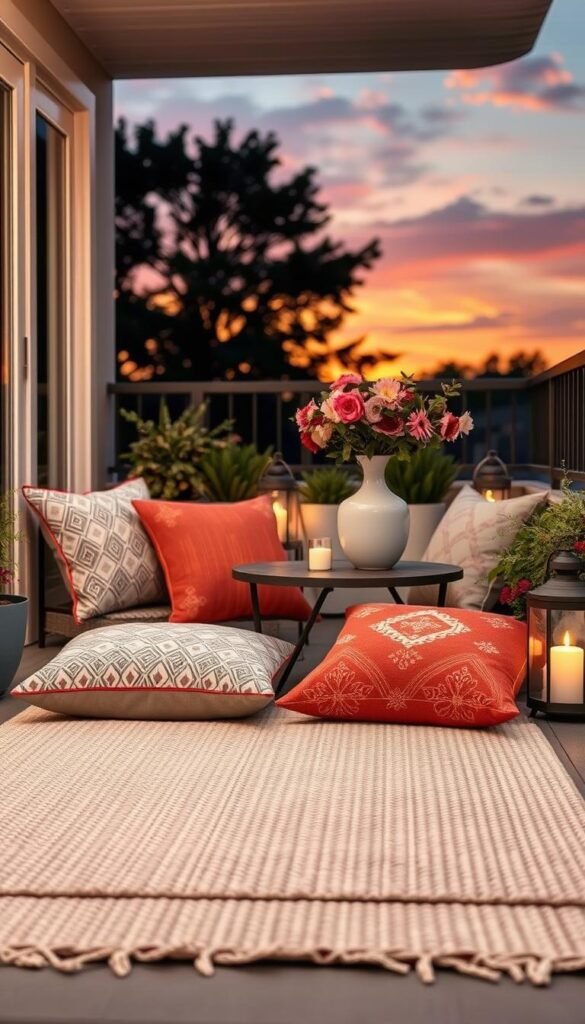
Outdoor rugs to define an area
Rugs hide concrete and anchor seating or dining zones. Choose polypropylene or recycled-plastic weaves for quick drying and easy cleaning. Look for non-slip pads, drainage holes, and sizes that leave a 6–12″ border of exposed floor to frame the furniture.
Layering textures to create a living room feel
Mix woven rugs, knit poufs, and smooth outdoor throws to mimic indoor living room layers. This approach adds depth and makes the space feel intentional while staying weather-ready.
Quick-care fabrics that handle sun and spills
Solution-dyed acrylic and outdoor polyester resist UV fade and mildew. Prioritize removable covers, simple spot-clean instructions, and realistic tradeoffs—light colors show dirt faster but brighten night views.
- Pros: fast upgrade, renter-friendly, portable.
- Cons: heavier rugs trap moisture; light cushions need more washing.
| Spec | What to check | Why it matters |
|---|---|---|
| Rug thickness | Low-profile 3/8″–1/2″ | Drains faster, fits doorways |
| Drying time | Quick-dry material | Prevents mildew |
| Cover care | Removable + machine wash | Easier upkeep |
Color tip: pick a neutral base that reads well day and night, then add one high-saturation pillow that can be swapped seasonally.
For fabric details and outdoor-rated options, see an outdoor fabrics guide and a short list of small-space textile ideas to match the design intent.
Privacy solutions for close neighbors without permanent construction
A close line of neighbors can turn a pleasant outdoor space into a place that never feels private. This section lists renter-friendly ways to add cover without drilling or permanent changes.
Outdoor drapery for a soft privacy layer
Who it fits: covered or partially covered apartments that want a softer look.
Choose outdoor-rated fabric and rust-resistant grommets. Use tension rods or rail clips and add tie-backs to control airflow and view.
Buying notes: check UV resistance, washable covers, and wind rating so curtains don’t tangle or fray.
DIY screens: bamboo, lattice, and quick attachments
Who it fits: renters who want a fast visual barrier. Attach with zip ties, bungee cords, or heavy-duty hooks.
Measure railing height, test for wind load, and avoid materials that trap moisture against metal rails.
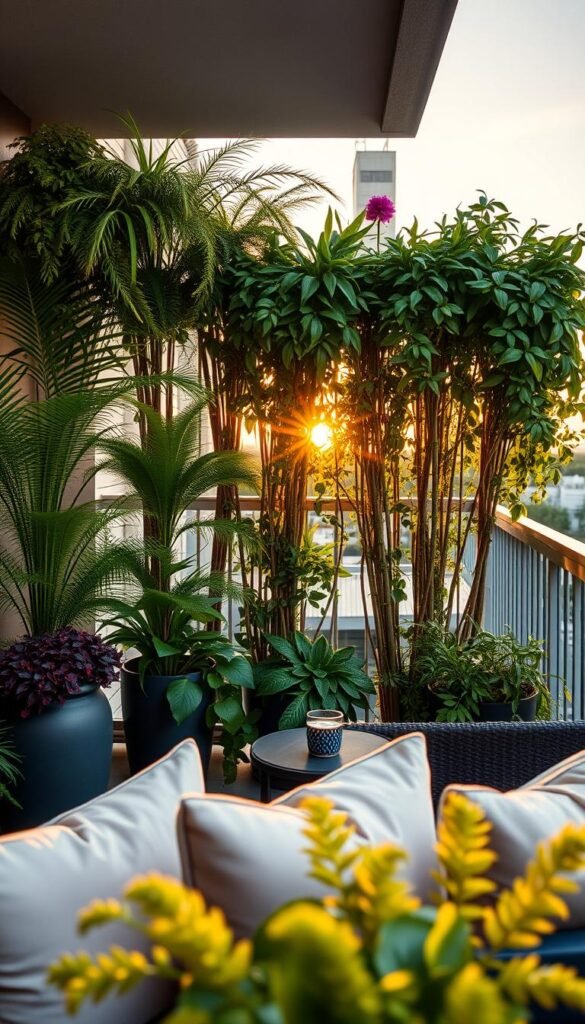
Plant-based privacy with climbers and tall planters
Who it fits: people who want a small garden feel and soft sound buffering.
Use tall planters and fast-climbing vines to build a living screen. Plan sunlight, watering, and seasonal pruning.
| Option | Best for | Attachment | Wind | Maintenance |
|---|---|---|---|---|
| Drapery | Covered patios, intimate design | Tension rod/rail clips | Can flap; use tie-backs | Washable, occasional re-hang |
| DIY screen (bamboo/lattice) | Quick renter barrier | Zip ties, bungee, clamps | Check wind load; secure well | Wipe clean; replace after wear |
| Plant wall | Garden feel, sound buffering | Planters + trellis | Wind tolerant if dense | Water, feed, prune regularly |
Tip: combine a low screen with planters to layer coverage and soften the look. Always measure railing length and check building rules before buying.
Greenery that works on balconies: planters, vines, and small-space gardens
Greenery changes a small outdoor spot from gray and unused into a living, breathing room. Plants add softness, scent, and seasonal color without bulky furniture.
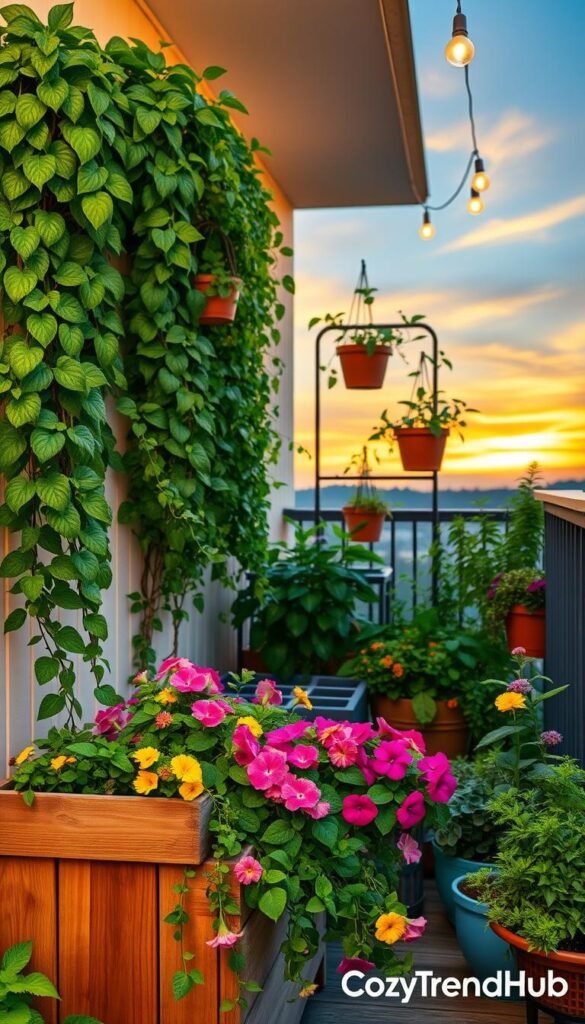
Railing planters and window boxes
Railing planters fit tight footprints and are ideal for renters and cooks who want fresh herbs at hand. Choose clamp-fit boxes with drainage trays and lightweight potting mix to limit weight.
Buying notes: check clamp width, soil weight when wet, and sun needs (full sun vs. partial shade).
Hanging and climbing vines
Hanging vines and trellises free up floor area and can curtain a view for privacy. Use tension rods, lightweight hooks, or zip ties so installations stay renter-friendly.
Care tip: wind dries pots quickly; consider self-watering hangers and secure attachments.
Statement planters that double as decor
A bold planter becomes a focal point and reduces the need for extra accessories. Pick resin or fiberglass if weight is a concern; avoid heavy ceramic on high floors.
„Place taller plants near corners to keep sightlines open and leave a small table area clear.“
| Option | Best for | Key checks |
|---|---|---|
| Window boxes | Herbs/cooks | Clamp fit, drainage tray, sun exposure |
| Climbers | Privacy, lush look | Trellis, wind load, lightweight ties |
| Statement pots | Style + function | Weight, material, drainage |
- Pros: quick visual impact, seasonal swaps, small footprint.
- Cons: extra watering, wind stress, heavier soils add load.
Keep taller pots at edges to preserve the central table area. Regular checks on drainage and rail attachments keep plants and people safe.
Flooring upgrades for bare balconies: turf, deck tiles, and soft foundations
A simple flooring swap often changes how the entire space feels and functions.
The problem: bare concrete is hard, hot in sun, and visually cold. Changing the floor is the fastest way to transform outdoor comfort without structural work.
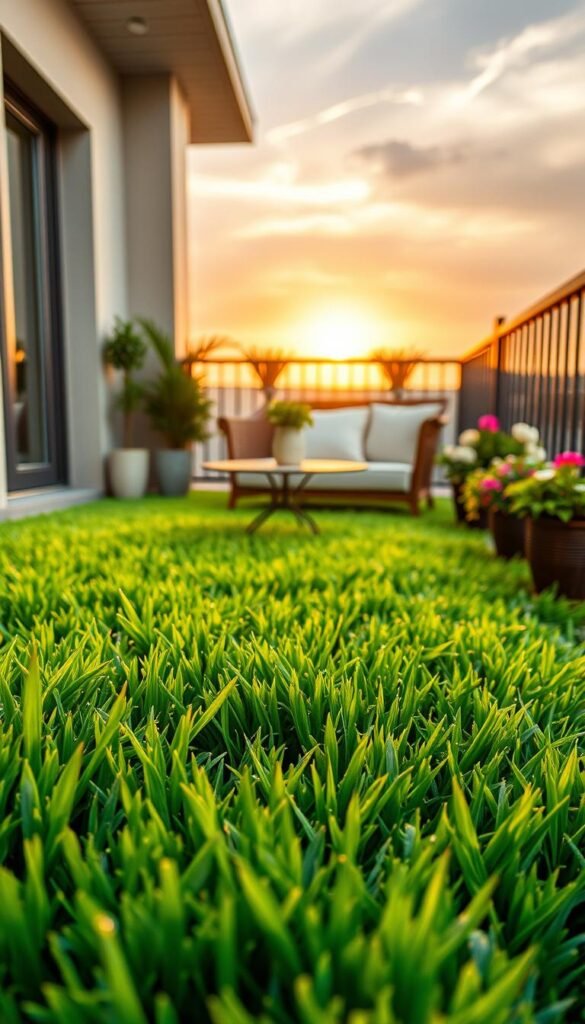
Faux grass for a softer underfoot feel
Faux turf gives a soft foundation and suits pet households that need a designated spot. Look for a backing with drainage holes, UV-stable fibers, and an easy-clean pile. Heat retention and debris trapping are trade-offs; rinse and brush regularly.
Interlocking deck tiles for a wood look
Interlocking tiles create a wood appearance without a remodel. Check tile thickness, built-in drainage channels, and edge pieces for clean cuts. Tiles add weight and need a flat surface; algae can make them slippery if left damp.
„Choose removable systems that avoid glue and keep balcony drains accessible.“
- Install note: pick no-adhesive systems and confirm building rules about covering drains.
- Buying checks: drainage design, UV rating, and per-piece weight for carrying and storage.
| Material | Drainage design | Install time | Removable? |
|---|---|---|---|
| Faux turf (polypropylene) | Perforated backing, surface slope | 30–90 minutes | Yes — roll-up |
| Interlocking wood-look tiles (composite/treated wood) | Channels under tiles, gaps between slats | 1–3 hours | Yes — snap-apart |
| Soft foundation rug (outdoor textile) | Non-slip pad, breathable weave | 10–30 minutes | Yes — fold/store |
For more ideas on turf installation and real product notes, see a short guide to turf ideas that transform outdoor areas.
Renter-friendly shade and cooling for hot summer nights
Hot nights and direct glare can turn an inviting outdoor area into a space people avoid. This section lists nonpermanent ways to cool and shade an apartment terrace so it stays usable at peak time.
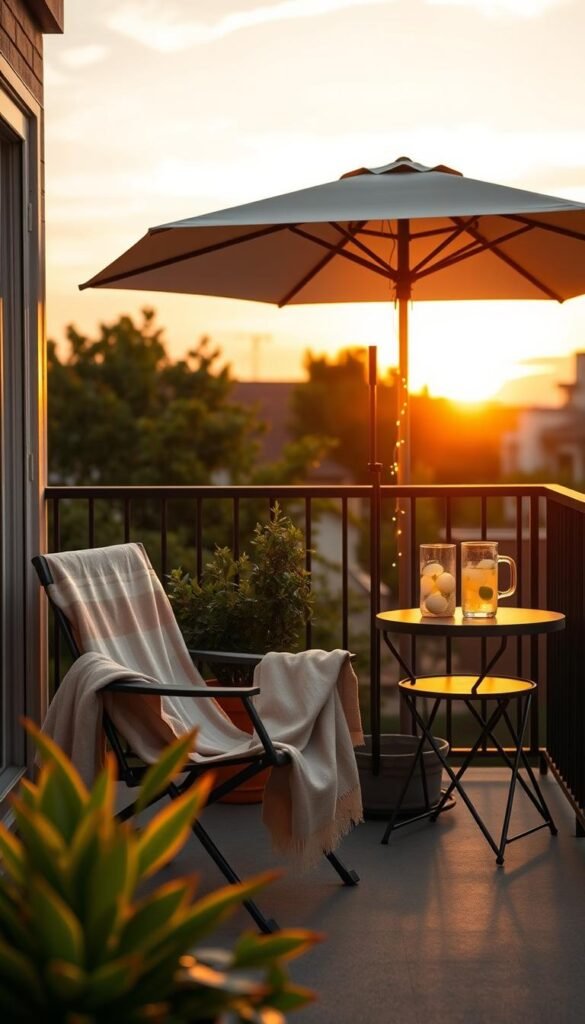
Ceiling fans for covered setups
Ceiling fans work well in covered spaces with electrical access. Choose a fan with a damp- or wet-rating, a blade span suited to small spaces (36″–42″), and a low-noise motor.
Buyer checks: confirm mounting type, required wiring, building approval, and local fire codes before installing. Renters should use landlord sign-off and prefer quick-disconnect brackets when allowed.
Lightweight curtains and canopy options
For apartments without hard wiring, reversible shade is the practical way to cut glare. Compare tension-rod curtains, clip-on panels, and freestanding canopy frames to avoid drilling.
Sheer panels reduce glare and keep the outdoor space airy. Heavier panels raise privacy but can trap heat if they block airflow.
Wind and storage tips: use tie-backs, weighted hems, and anchor points for canopies. Bring cushions and panels inside on storm days to extend life.
| Choice | Best for | Install | Storage |
|---|---|---|---|
| Ceiling fan | Covered, wired decks | Hardwired / bracket | Fixed; remove if needed |
| Tension curtains | Renters, light shade | No-drill rod | Foldable, compact |
| Freestanding canopy | Uncovered, temporary shade | Weighted anchors | Disassembles to case |
Before buying, match coverage size, installation type, and weather rating to the intended use. For more renter-focused options, see this renter-friendly shade solutions.
Warmth for late nights: fire pit tables and compact outdoor “fireplace” looks
Even on warm days, breezy nights can make late-hour gatherings uncomfortable without targeted warmth.
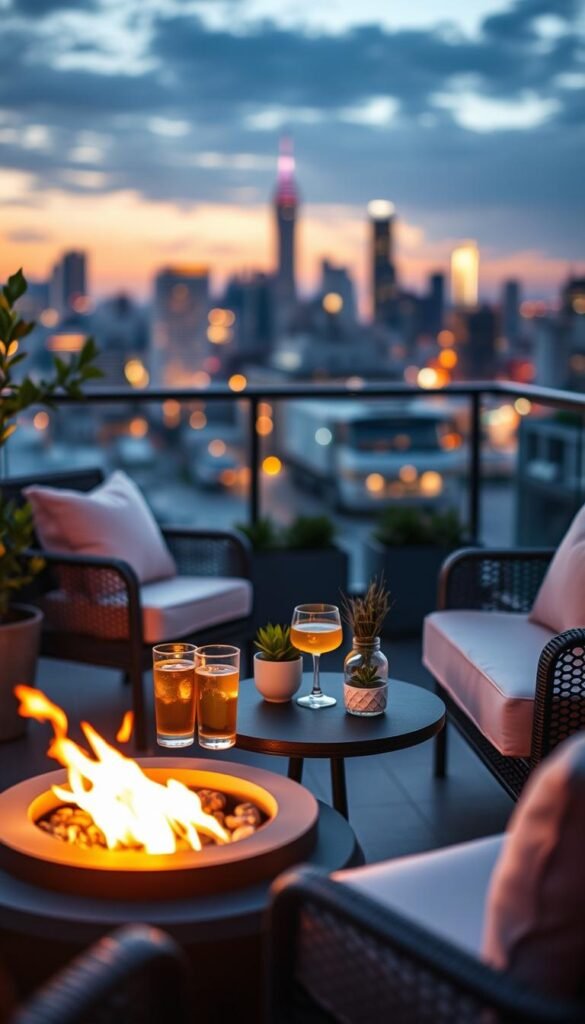
Propane fire pit tables offer real heat and a fireplace-style focal point that extends usable time in small outdoor spaces. Choose a model by comparing BTU output, footprint, where the tank sits, ignition type, and whether a wind guard is included.
Propane options: quick buyer checks
- BTU range: 30,000–60,000 for noticeable warmth on a small patio.
- Footprint and clearance: confirm minimum distance from rails and walls.
- Tank placement: hidden cabinet vs tabletop cartridge affects weight and storage.
- Certifications: CSA/UL listing and clear fuel-storage guidelines.
Who should avoid propane and safe alternatives
Do not use propane units on very small balconies, in apartments with strict fire rules, or where safe fuel storage is impossible. In those cases, consider electric patio heaters or tabletop electric fireplaces where allowed.
„Confirm HOA, landlord rules, local codes, and minimum clearances before purchase.“
Pros: strong warmth and ambiance. Cons: ongoing fuel costs and storage logistics. A compact unit can mimic a fireplace look but still needs careful placement and adherence to rules.
| Feature | Table-top fire feature | Full fire pit table |
|---|---|---|
| Typical footprint | Small (16–24″ dia.) | Medium–large (30–48″ dia.) |
| BTU | 5,000–20,000 | 30,000–60,000 |
| Safety needs | Lower clearance, stable surface | Higher clearance, tank cabinet, wind guard |
For specific models and installation notes, see a curated list of outdoor fire pit ideas to compare units side-by-side.
Entertaining upgrades that make the balcony feel like a destination
A few purposeful surfaces change a tight outdoor spot into a real gathering place. These additions reduce hosting friction so people actually use the space as living extension of the home.
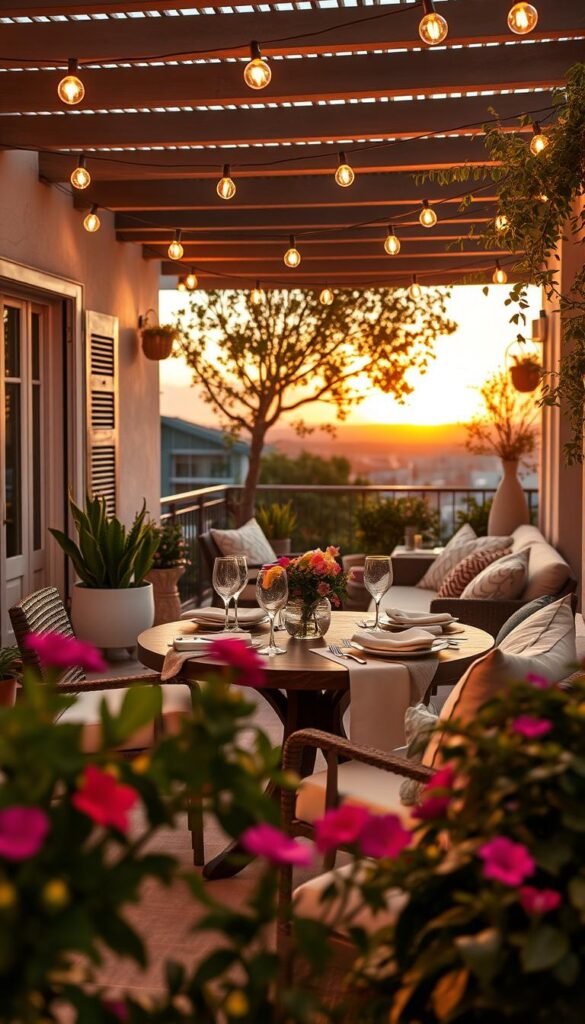
Bar carts with wheels: mobile service made simple
Who it’s for: entertainers who shuttle food and drinks between kitchen and outdoor area.
Selection notes: check wheel-lock quality, handle height, and weather resistance. Choose materials that store indoors if storms are frequent.
Side tables and nesting tables: every drink needs a home
Nesting tables expand when guests arrive and collapse to keep circulation clear. They suit small spaces where a large table would block paths.
Dining choices: bistro vs. full table
Pick a bistro set when the goal is quick meals and minimal footprint. Opt for a full dining table when dinners are regular and there’s room for stable chairs and serving flow.
| Piece | Surface area | Pros | Cons |
|---|---|---|---|
| Bar cart | Small–medium | Mobile, staging area | Needs weather protection |
| Nesting/side tables | Flexible | Expandable, stores compact | Limited surface when nested |
| Bistro set | Small | Easy to move | Can feel cramped for serving |
| Full dining table | Medium–large | Comfortable meals | Requires clearance and sturdier chairs |
Practical rule: measure door swing and allow pull-back space behind chairs before buying. A clear 24–30″ path preserves flow and keeps hosting effortless.
„Make every surface count; small changes can transform outdoor spaces into preferred evening spots.“
Durable materials that survive sun, wind, and surprise summer storms
A well-chosen piece resists sun bleach, dries quickly after storms, and stays put in wind.
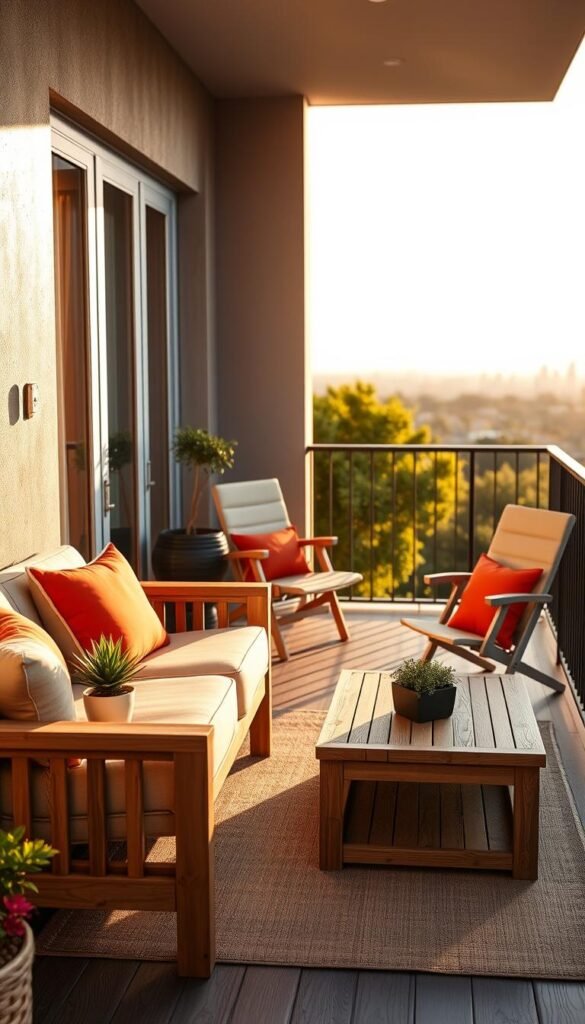
The durability problem: sun fades cushions, storms soak materials, and wind can turn lightweight items into hazards. Pick pieces with clear outdoor ratings and plan storage to extend life.
What “outdoor-rated” really means
Look for powder-coated frames, rust-resistant hardware, and UV-resistant fabrics. Quick-dry cushion construction and removable covers matter. These labels indicate items meant to handle sun and moisture without rapid failure.
How to choose wicker, metal, or wood
Resin wicker gives a soft look and holds up in sun. It is light but usually more weatherproof than natural wicker.
Metal frames offer slim profiles and easy cleaning. Opt for powder-coating to prevent rust in humid or coastal climates.
Wood brings warmth; choose teak or treated hardwood in dry climates. In high humidity or salt air, wood will need more maintenance.
Wind-proofing tips so chairs and accessories don’t become hazards
- Use heavier bases for umbrellas and lanterns.
- Add furniture clips or short tether straps to secure pieces to rails when allowed.
- Store small cushions and loose items in a bin before storms.
- Choose chairs with lower profiles or greater weight when the space has strong gusts.
| Buyer criterion | What to check | Why it matters |
|---|---|---|
| Frame material | Aluminum, steel (powder-coated), resin | Corrosion resistance and weight |
| Cushion fabric | UV rating, quick-dry foam, removable cover | Fade resistance and mold prevention |
| Replacement parts | Available covers and cushions | Extends usable life |
Practical note: durability depends as much on simple upkeep as on material choice. Wipe frames, store cushions in a dry bin, and inspect attachments after storms.
For a concise shopping checklist and product comparisons, see this durable outdoor furniture guide.
Style cohesion: bring your indoor design outside without ruining your furniture
Pulling interior style cues outside makes an apartment feel larger and more purposeful. Small, considered moves connect the indoor and outdoor living areas without replacing big pieces.
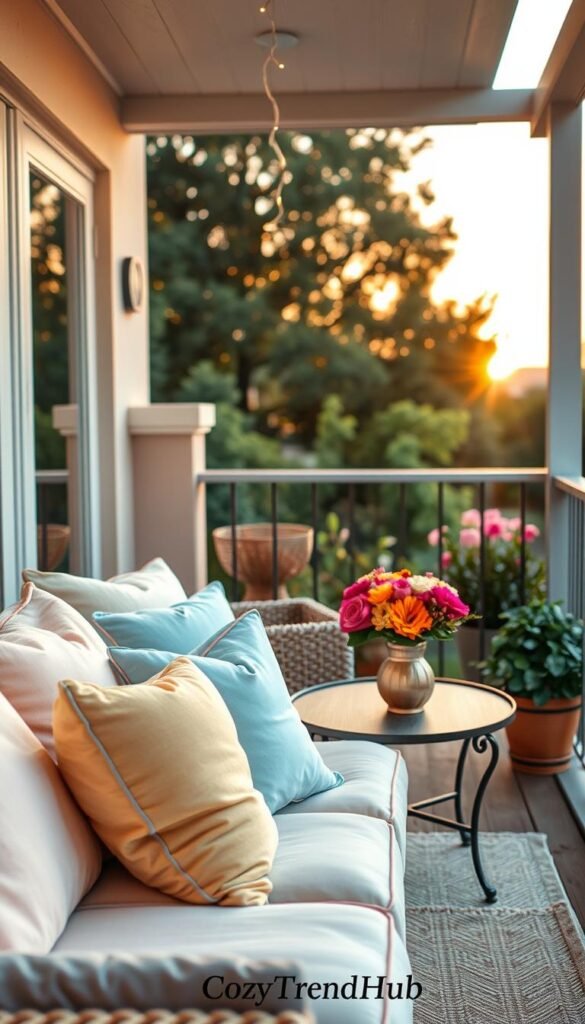
Matching lines, light wood tones, and silhouettes
Choose furniture silhouettes that echo the interior: slim modern frames, simple coastal curves, or classic straight lines. Match scale so the outdoor pieces don’t overpower the doorway.
Light wood look: use composite or resin frames with a light-wood finish to get warm tones safely. If mixing real wood, keep finishes similar to avoid a mismatched look.
Color palette that reads well day and night
Select a neutral base palette and one or two accent colors. Warm string lights and warm bulbs keep those accents readable after dark.
„Swap soft goods seasonally to update the palette without changing heavy furniture.“
| Strategy | Why it works | Buyer tip |
|---|---|---|
| Match silhouettes | Creates visual flow | Pick one dominant shape and repeat it |
| Light wood tones | Adds warmth without heavy maintenance | Choose outdoor-grade finishes or faux-wood frames |
| Swap textiles | Fast refresh, low cost | Buy removable covers in your chosen palette |
Pros: cohesion feels intentional. Cons: matching sets reduce flexibility. Mixing works if scale and palette stay consistent.
For more indoor-to-outdoor tips, see a short guide on spring living room styling.
Balcony railings and edges: design upgrades that keep safety and views
Railings shape how a small outdoor room feels; they can open the scene or make it feel boxed in.
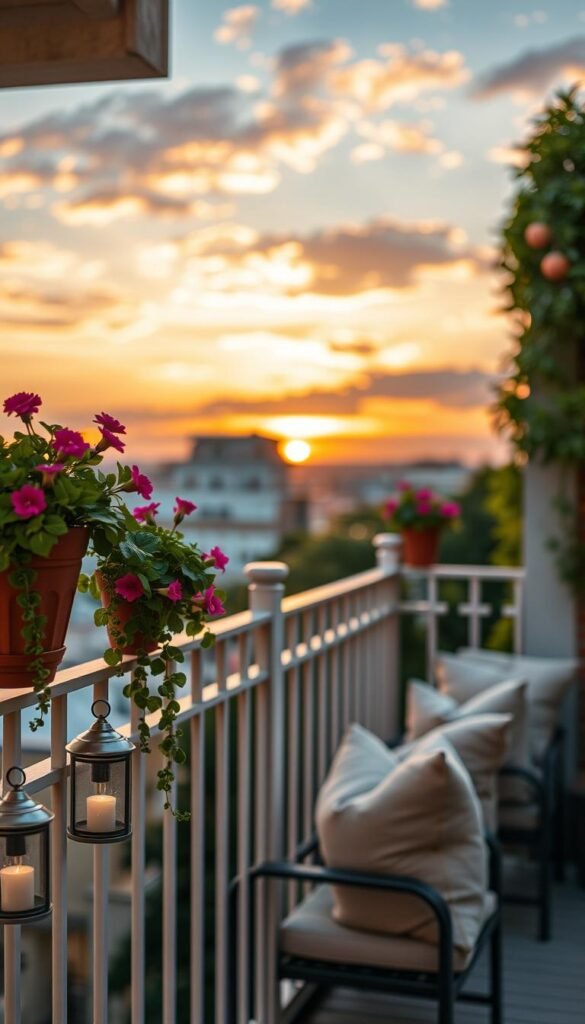
Address the edge problem: a railing can enhance a view or block it. Any change must keep safety codes intact. Measure height, check local rules, and never compromise structural fastenings.
Thin profiles that preserve sightlines
Homeowners and renovators can choose thin aluminum rod railings or cable systems. These options use slimmer profiles so sightlines stay open. A designer often prefers narrow elements because they reduce visual weight and keep the skyline visible.
Reversible tactics for renters
Renters can still improve the edge. Keep tall items away from the rail. Use low planters, rail-mounted herb boxes, and perimeter lighting instead of bulky pieces. These moves protect the view and remain removable.
Rail color tricks without clutter
Painting a rail adds personality with no extra accessories. Use exterior-rated paint, confirm HOA rules, and test a sample swatch. A popular designer pick is Naples Blue (Benjamin Moore) for a bold yet classic finish that frames the scene.
| Upgrade | Who it suits | Pros | Cons |
|---|---|---|---|
| Thin aluminum rods | Homeowner/renovation | Preserves view, low visual weight | Requires permit/contractor |
| Cable railing | House with view focus | Unobstructed sightlines, modern look | Higher install cost |
| Low planters & lighting | Renters, small spaces | Removable, retains view | Limited privacy |
| Painted rail | Owner or approved change | Adds color without clutter | Must match exterior; upkeep |
Safety reminder: always keep code-compliant heights, avoid heavy attachments, and secure any items fastened to the rail. When in doubt, consult a local installer or check this recent guide on aluminum railing trends: thin railing trends.
Bug control without ruining the vibe
Evening insects can turn an otherwise pleasant outdoor sitting area into a nuisance that shortens use. This short guide focuses on practical, renter-friendly options and clear buyer checks so the space stays welcoming at dusk.
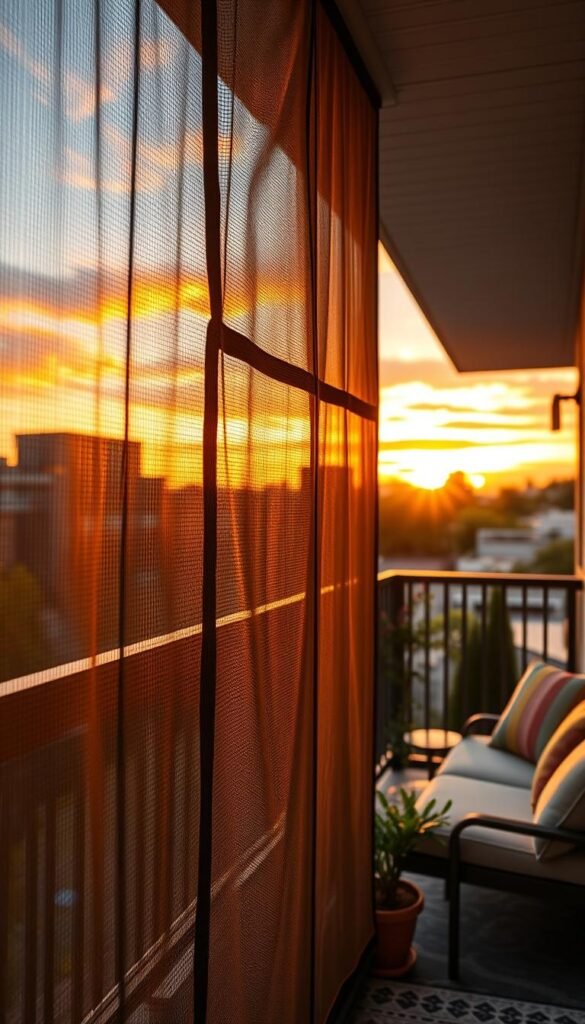
Screened-in choices that actually help
Permanent screens create a physical barrier and work well for homeowners or long-term renters with approval. Tradeoffs: higher cost and professional install, but low ongoing maintenance.
Temporary or magnetic screens suit most renters. They attach with tension rods, magnets, or hook strips and remove each season. Verify building rules before installing.
Placement and light strategy
Use airflow to deter bugs: a ceiling or box fan near the seating can reduce bites without changing the look. Keep dense planters away from the primary sitting area.
Position warm, low-intensity lights away from where people sit. That helps keep insects drawn to edges of the space rather than the main gathering spot.
| Screen type | Install | Maintenance | Storage size |
|---|---|---|---|
| Fixed mesh | Frame + fasten | Occasional wash | None (permanent) |
| Magnetic/zip | Tension rod or magnets | Fold and store | Compact roll |
| Retractable | Bracketed, semi-permanent | Clean track yearly | Built-in cassette |
Quick tip:check local codes, test mounting points, and choose a screen that matches how the apartment will actually be used.
Pet-friendly balcony decor for summer evenings
A quick safety check should come before any pet-friendly styling on a raised outdoor space. Start by identifying fall risks, chew hazards, and escape routes.
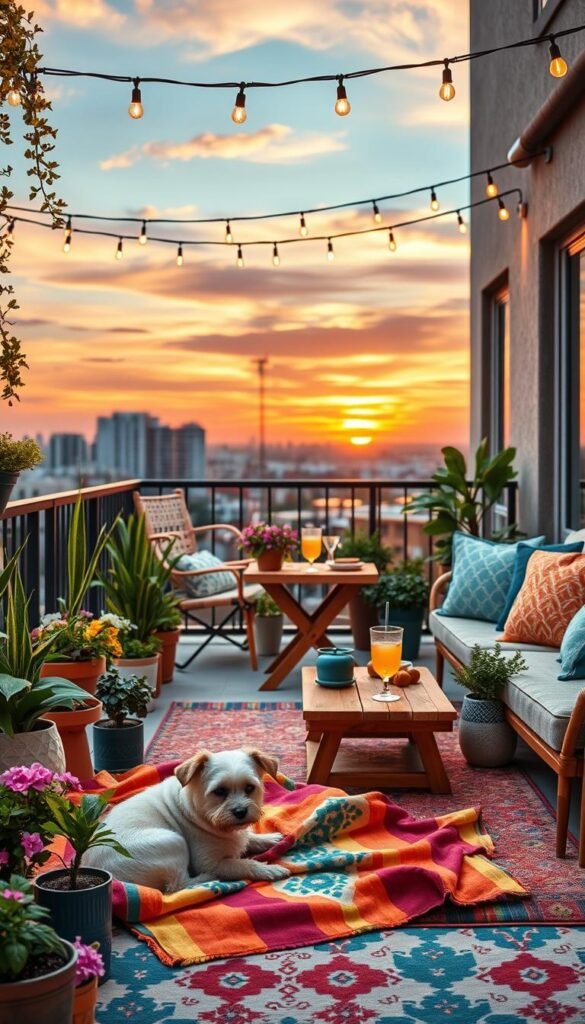
Safety must-haves: screens and barriers to prevent falls
Screens and rail barriers protect cats and small dogs on high floors. Choose chew-resistant mesh, secure attachment methods, and a height that prevents climbing.
Renters should get landlord approval and use tension mounts, rail clips, or magnetic systems that remove easily.
Easy-clean turf and non-toxic plant picks
Artificial turf works as a potty option and soft footing. Pick turf with drainage, a removable top layer, and odor-control backing. Clean weekly and rinse after use.
Verify that any plants placed at pet height are non-toxic. Avoid common poisonous varieties and prefer proven pet-safe plants.
| Option | Who it suits | Maintenance |
|---|---|---|
| Safety screen | Apartments, high floors | Inspect fastenings, replace chew-damaged mesh |
| Potty turf | Busy pet owners | Rinse, disinfect, remove hair weekly |
| Non-toxic plants | Pet households wanting greenery | Water, prune, check for chewing |
Simple setup tip: keep one clear walking lane and a shaded rest spot so pets can use the space safely and comfortably.
How to choose the best balcony decor for summer for your space and budget
A quick decision framework reduces overwhelm: measure door swing and usable floor, note sun/wind/rain exposure, and pick a primary use—dining, lounging, or view-first. This narrows choices and limits returns.
Tiny spaces: foldable furniture, vertical planters, and LED strip lights maximize usable area and store indoors each night. They keep the apartment flexible and easy to maintain.
Entertainers: add a wheeled bar cart, layered lights, extra seating, and at least one table per two guests. Tradeoff: more storage needs and occasional setup time.
Privacy seekers: choose drapery for soft coverage, magnetic or tension screens for renter-friendly installs, and tall greenery as a living buffer. Match the option to wind exposure and lease rules.
All-season use: prioritize durable materials and a regulated propane heat source where allowed. Always confirm clearances, HOA rules, and landlord approvals.
Affiliate-ready criteria: compare overall size, weather rating (wet/damp/UV), item weight and portability, storage footprint, care needs, and install method.
| Scenario | Key pieces | Pros | Cons |
|---|---|---|---|
| Tiny | Folding table, vertical planter, LED strips | Saves space, easy storage | Smaller surfaces, less comfort |
| Entertaining | Bar cart, layered lights, extra seating | Flexible hosting, good flow | Needs storage, heavier setup |
| Privacy | Drapery, screens, tall planters | Quick cover, softer feel | May need wind anchors |
| All-season | Durable frames, quick-dry cushions, propane heater | Extended use, weatherproof | Regulatory checks, fuel/storage |
Conclusion
Focus on the main obstacle first: solve comfort, light, privacy, or heat, then add pieces that support real use.
Start with seating and lights, then layer a rug or new flooring, add privacy and plants, and finish with a table or bar cart for entertaining. These ideas prioritize function over look.
Renters: favor ties, clamps, peel-and-stick lights, and foldable furniture that stores in a closet. This keeps changes reversible and low-risk.
Use simple comparison checks—size, weather rating, weight, and storage needs—so outdoor furniture and accessories fit the apartment and last season after season.
Final check: pull a palette from the interior to make the area feel like an extension of the home. Confirm building rules and plan for wind and storms to keep the space safe and enjoyable.


One Comment