
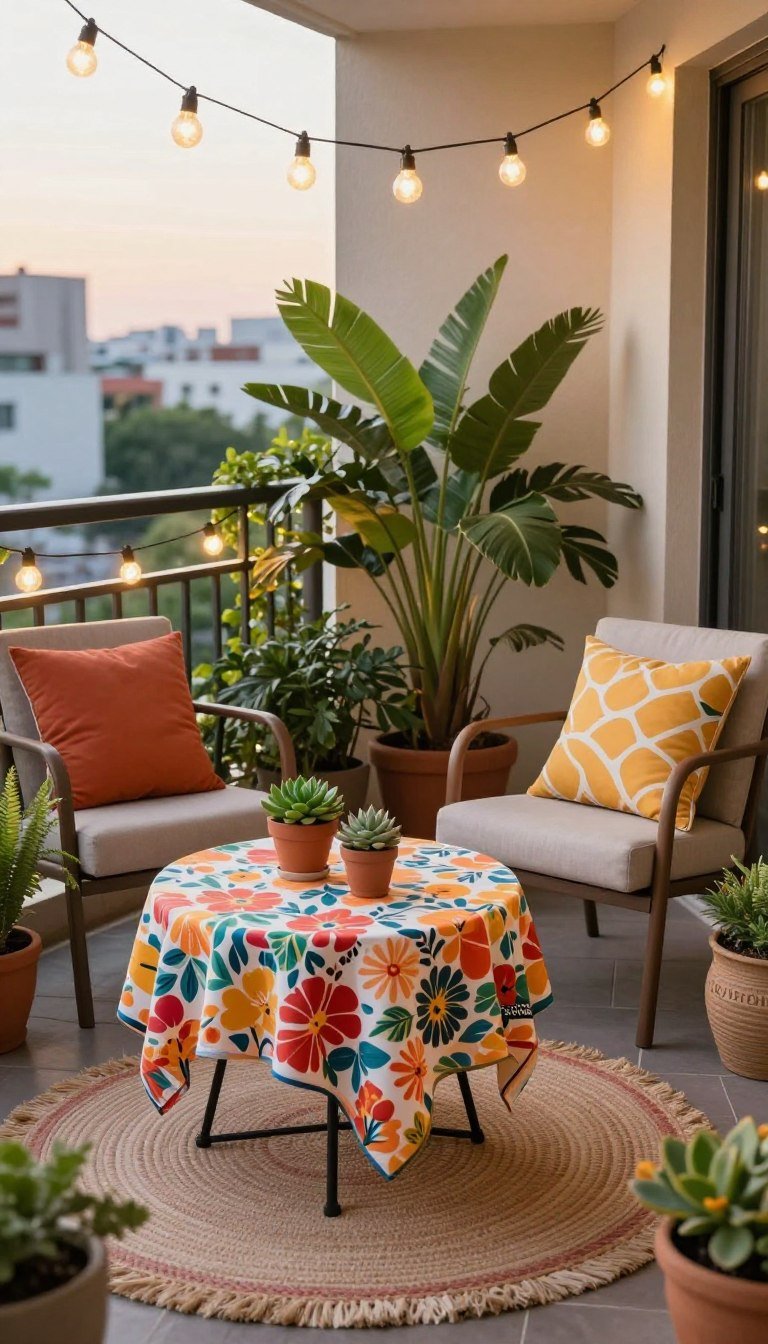
This guide solves a common problem: many renters have small square footage, strict building rules, and hot weather that makes an outdoor space hard to use.
Designers treat a balcony as an extension of the home. Amy Kalikow notes that planning it like another room helps with flow. Morgan Newfield stresses durability so pieces don’t fade or fly away.
This article is decision-focused, not just inspiration. It shows renter-friendly, no-drill options and summer-proof upgrades like UV ratings and quick-dry fabrics. Each category lists key measurements, material notes, and what to check before buying.
Readers can jump to solutions tied to real pain points: seating that fits, shade that works, privacy without drilling. The aim is a space people actually use—morning coffee, sunset reading, or a simple dinner—without overspending or cluttering an apartment.
Key Takeaways
- Focus on function first, then comfort and style.
- Choose removable, freestanding options for renters.
- Look for UV ratings, wind venting, and quick-dry fabrics.
- Each recommendation includes measurements and material notes.
- Design choices should suit heat, wind, bugs, privacy, and storage.
Start With Your Balcony’s Real Constraints: Square Footage, Rules, and Weather
Start by measuring what you actually can use, not just the total square footage the listing gives.
Record width and depth, then draw the door swing arc. Note fixed obstructions like railings, HVAC units, and plan the minimum walking clearance to avoid an obstacle course.

Quick measurement checklist
- Measure total width and depth; write those numbers down.
- Mark the door swing and required walking clearance (24–30 in recommended).
- Map usable space vs. gross square footage; subtract railings and fixed units.
Renter-friendly, no-drill planning
Prioritize freestanding items and reversible fixes. Clamp-on or tension-mounted solutions work when drilling is prohibited.
- Choose freestanding planters and weighted bases instead of drilled attachments.
- Follow building limits: fire egress, railing weight caps, and exterior wall rules.
- Document any changes with photos to protect your deposit.
Covered vs. uncovered: Shopping filters that save time and money
Covered areas can support fabric lighting and even a ceiling fan, as Liz Williams notes. Uncovered spaces need materials rated for sun and rain.
„Outdoor pieces must be durable enough to stand up to elements and time.“ — Morgan Newfield
| Condition | Material Priority | Key Specs | Buyer filter |
|---|---|---|---|
| Covered space | Fabric-friendly, lighter furniture | Quick-dry cushions, ceiling-mounted options | Can add fans; fewer UV concerns |
| Uncovered space | Rust-proof frames, UV-resistant textiles | Powder-coated metal, fade rating, fast-dry foam | Look for vented canopies, heavier bases |
| Windy/exposed | Heavier pieces, secure feet | Weight, grip pads, tie-down options | Prefer vented shades and low-profile furniture |
Practical note: use product specs (UV rating, powder-coated frames, quick-dry foam) as filters when shopping. This helps achieve a buy-once, use-all-season mindset and keeps replacements low.
Best balcony decor ideas for summer that solve the most common small-space problems
Define the main use of the space and buy to that purpose. This stops overbuying and ensures each piece gets used.
Pick one primary use:
- Reading nook: ergonomic chair, task light, small side table.
- Outdoor dining: compact table, weatherproof surfaces, easy-clean seating.
- Lounge spot: low-profile sofa or pouf, soft textiles, flexible shade.
Anchor first, then accessorize. Choose one anchor item—seating, rug, or shade—and add only items that support that anchor. This rule keeps the area functional and tidy.
Priorities by problem:
- Hot: shade and airflow first.
- Windy: heavy, low pieces and secure feet.
- Overlooked: layered privacy that keeps the view.
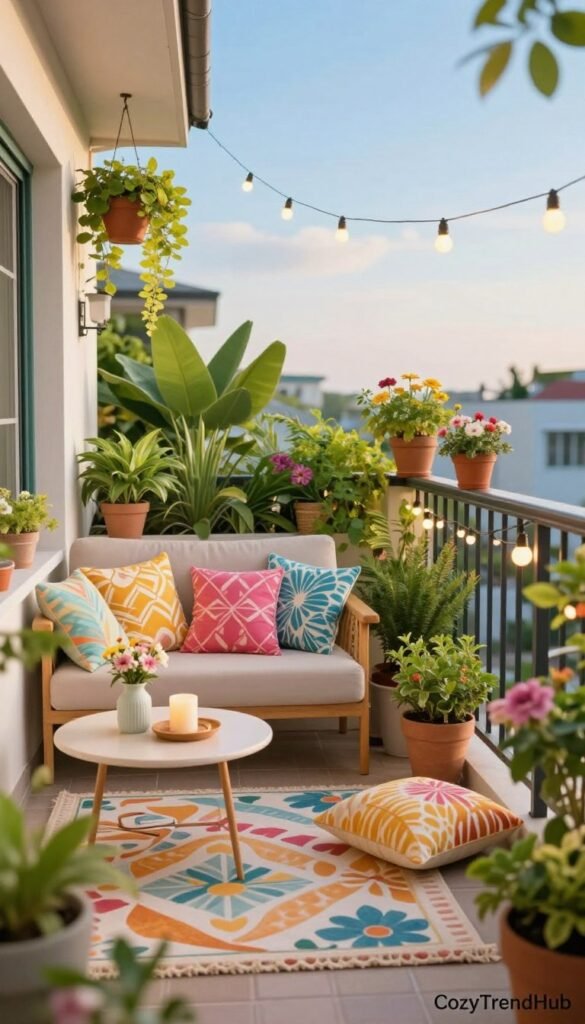
| Primary Use | Anchor Item | Top Buyer Notes |
|---|---|---|
| Reading nook | Ergonomic chair | Look for back support, outdoor-rated fabrics, and a small side table. |
| Outdoor dining | Compact table | Choose table height, wipe-clean finish, and foldable options if space is tight. |
| Lounge spot | Low sofa or rug | Pick quick-dry cushions, low profile to preserve the view, and modular pieces. |
Keep a clear path to the door so the space reads as usable outdoor living, not storage. The right first purchase saves time and prevents costly returns.
Comfortable Seating That Fits: Lightweight Chairs, Poufs, and Compact Lounge Pieces
Choose seating that moves as easily as your routine does. This section helps renters and small-space residents pick furniture that stores, protects cushions, and keeps pathways clear.
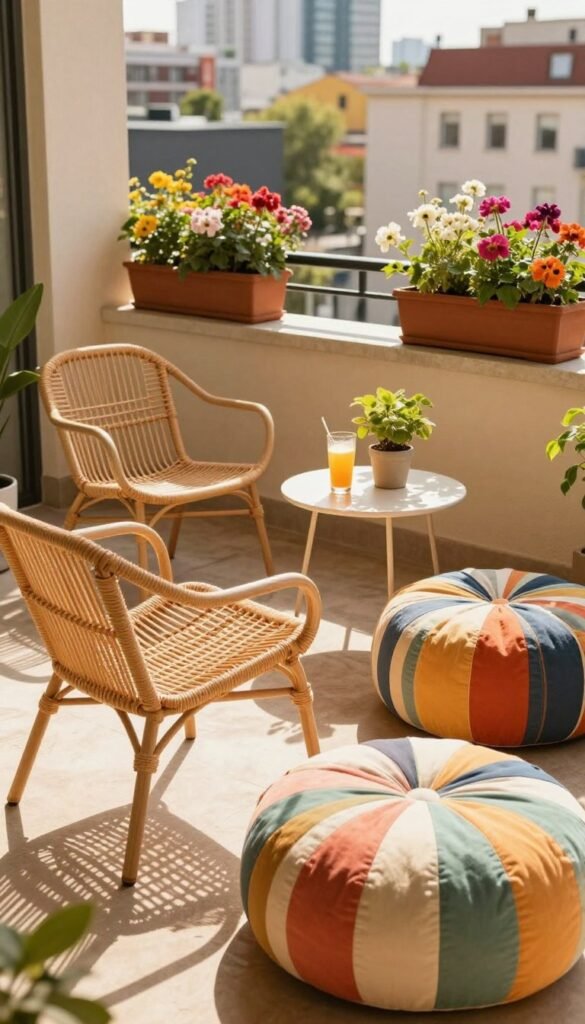
Best for renters who bring cushions inside
Lightweight poufs and carryable chairs work well for quick pack-up routines. Gillian Segal places poufs near the door so cushions come in fast when weather changes.
- Look for integrated handles, low weight, and quick-dry covers.
- Shapes that stack or tuck into a closet save space.
- Pros: fast setup, easy storage. Cons: limited back support.
Best for tiny spaces with narrow walkways
Slim-profile chairs free up a clear path to the door and keep an apartment feeling open. Measure chair depth against the walkway and door swing before buying.
- Check seat depth + legroom against the required 24–30 in clearance.
- Choose stackable or foldable frames if storage is tight.
When oversized seating works — and when it doesn’t
Oversized ottomans or deep lounge chairs can create a cozy one-room vibe when the space is used mainly for lounging. Alexis Vitale notes they succeed only when they don’t block access or table space.
- Works: single-purpose lounging areas. Fails: multiuse spaces with dining or high traffic.
Buying considerations and safety notes
Buyer checklist: seat height for comfort, stackability/foldability, and stable feet that grip smooth surfaces.
- Avoid hanging loads on railings unless explicitly rated and allowed.
- Keep heavy items away from edges in windy buildings.
- Comparison table idea: „Portable,“ „Narrow,“ „Deep lounge“ with dimensions, weight, and maintenance columns for quick affiliate-ready guidance.
Small Balcony Tables That Earn Their Spot (Coffee, Dining, or Side Table)
A small table can solve the daily annoyances that turn a tiny outdoor area into clutter. It gives a secure place to set drinks, hold a phone, and keep plates steady during a meal.
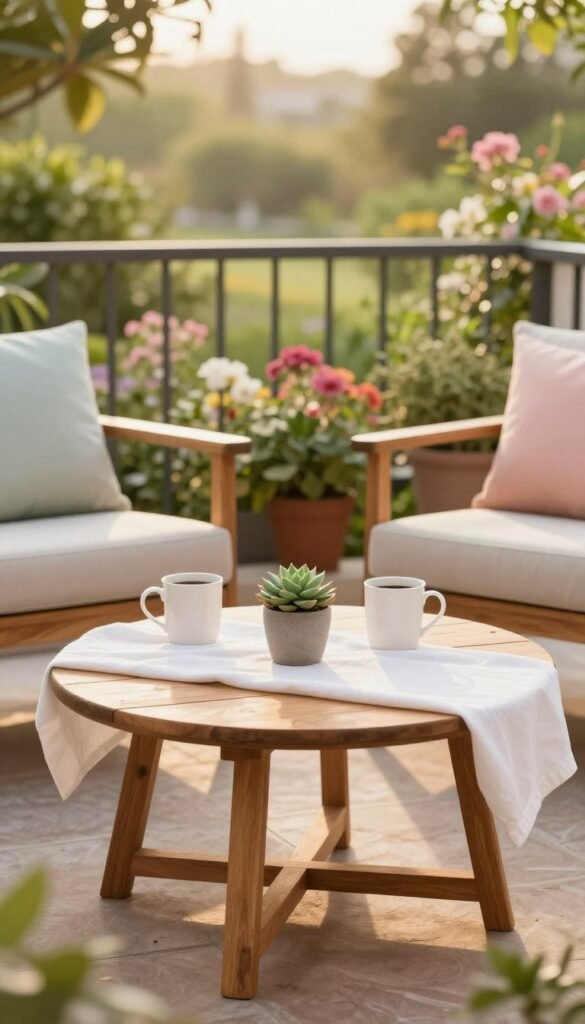
Bistro tables: a true dining spot with a small footprint
Who it’s best for: someone who wants a real dining surface for two without crowding the walk path.
Choose a round bistro top if space is narrow. Measure chair pull-out space and confirm leg clearance. Make sure the table does not block the door.
Side tables: prevent spills and keep items off the floor
Who it’s best for: readers, drinkers, and people who need a stable perch for phones or books.
- Stability: prefer a slightly heavier base in windy spots.
- Cleaning: look for rust-resistant finishes and wipe-clean tops.
- Design note: edge lips or tray tops reduce spill risk at night.
| Style | Pros | Cons |
|---|---|---|
| Bistro | Enables dining; compact footprint | Tight for large plates; needs chair clearance |
| Side table | Flexible place; easy to move | Doesn’t replace a dining surface |
| Folding vs. fixed | Folding saves storage; fixed is sturdier | Folding can be lightweight in wind |
Buying considerations: folding or fixed, rust-resistant finishes, base weight, and edge lips/trays.
Two-surface plan: keep one eating surface and one side surface. This is the easiest way to host a relaxed night outdoors without clutter or spills.
Shade Solutions for Summer Heat: Awnings, Umbrellas, and Covered-Balcony Upgrades
When heat and glare limit use, a well-chosen shade strategy restores comfort and protects fabrics.
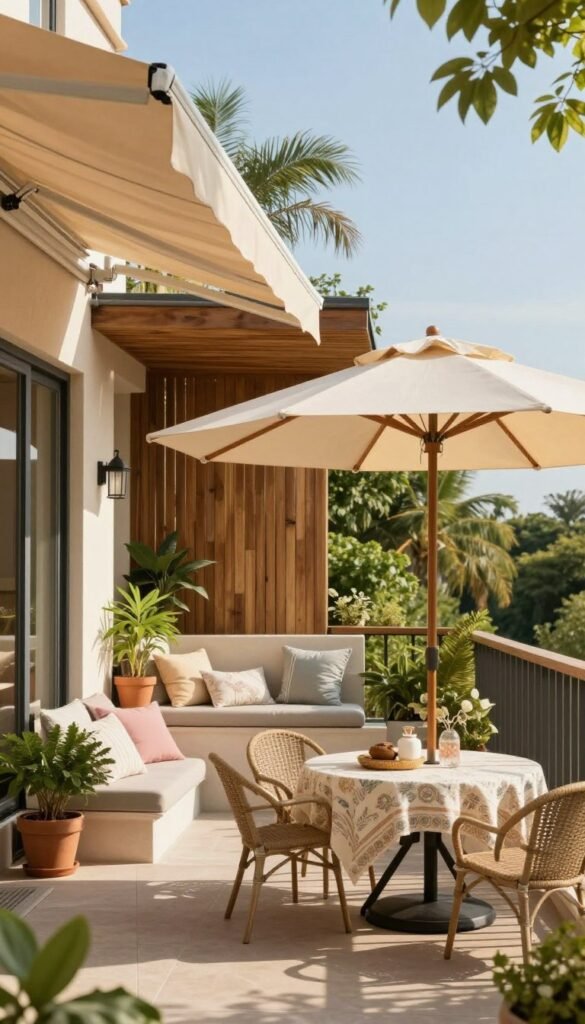
Retractable options for intense afternoon sun
Retractable awnings block direct rays and reduce surface heat. Lucia Silvestri notes they can make an entire outdoor space usable in peak heat.
For renters, look at freestanding frames or landlord-approved mounts. Check canopy size and UV ratings before buying.
Ceiling fans and covered upgrades
On a covered porch, adding a ceiling fan is the highest-impact comfort upgrade. Liz Williams recommends confirming power access, building permission, and a damp rating.
Umbrellas vs mounted shade — quick comparison
- Umbrellas: flexible and movable but heavy bases eat floor area.
- Mounted shades: save footprint but may be restricted in an apartment.
- Key specs: UV fabric rating, wind venting to reduce tipping, and tilt mechanisms to follow changing light.
| Canopy Size | Base Footprint | Vented | Tilt Positions |
|---|---|---|---|
| 6–10 ft | Large (umbrella) / Small (mounted) | Yes/No | Fixed / Multi-angle |
| 8–12 ft (awning) | Minimal floor use | Vented recommended | Retractable + adjustable |
| Small sunshade | Portable base | Not vented | Limited tilt |
Bottom line: shade protects textiles, lowers temp, and extends use through the hottest day. Pick a solution that matches wind conditions, landlord rules, and the intended outdoor living use.
Privacy Without Feeling Boxed In: Drapery, Green Screens, and Strategic Layout
Simple moves can turn a visible outdoor corner into a calm, semi-private retreat. This section outlines renter-friendly methods that add privacy without closing off light or airflow.
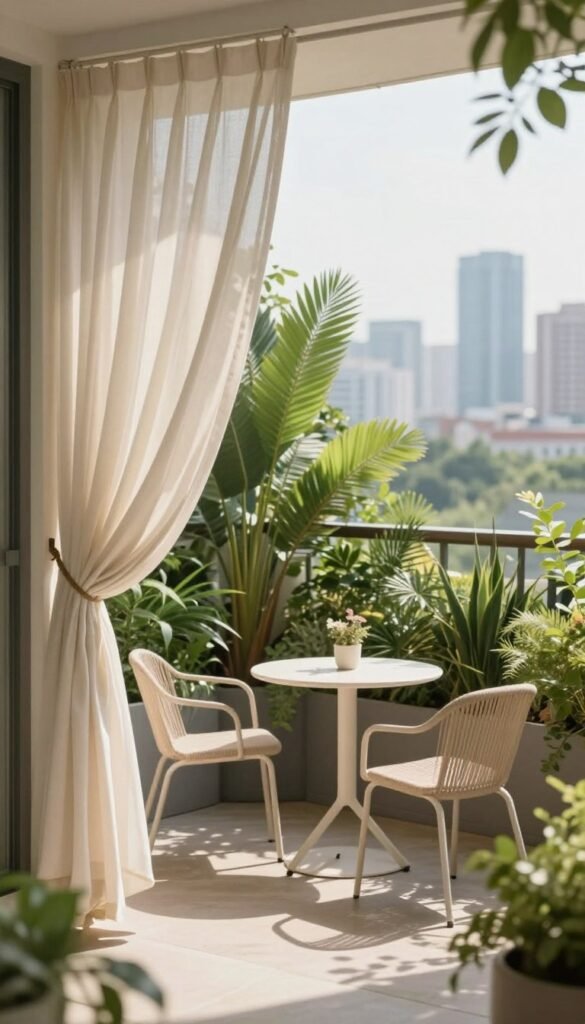
Outdoor drapery to soften views from close neighbors
Sheer, outdoor-rated drapes frame the space and reduce sightlines while keeping air flowing. Curated Nest used lightweight panels to add texture and a softer look without permanent changes.
Pros: adjustable coverage, easy to remove. Cons: can catch wind; use rust-resistant grommets and weighted hems.
The “secret garden” approach with layered foliage
Tall planters and mixed-height plants block views at seated height while letting sunlight dapple through. Studio Peregalli layered greenery to create a private garden feel without darkening the area.
Freestanding screens vs. railing attachments
Freestanding screens are the most renter-friendly and movable. Railing attachments look sleek but may violate building rules.
| Option | Rule-Friendliness | Wind Handling | Maintenance |
|---|---|---|---|
| Sheer drapery | High | Medium (use weights) | Low (wipe-clean fabrics) |
| Tall planters | High | High (heavy bases) | Medium (watering/drainage) |
| Freestanding screen | High | Medium-High (solid base) | Low (periodic cleaning) |
- Select outdoor-rated fabric and rust-proof rods.
- Anchor planters with weight and use saucers for drainage.
- Place tallest element where sightlines are worst and keep low furniture near the railing to preserve openness and style.
Bug-Proof Your Outdoor Space: Screened-In Options and Practical Repellents
When mosquitoes make evenings unusable, a practical screen or repel routine restores the point of an outdoor space. This section helps renters and small-space dwellers choose reliable, low-effort methods to keep bugs out without heavy renovations.
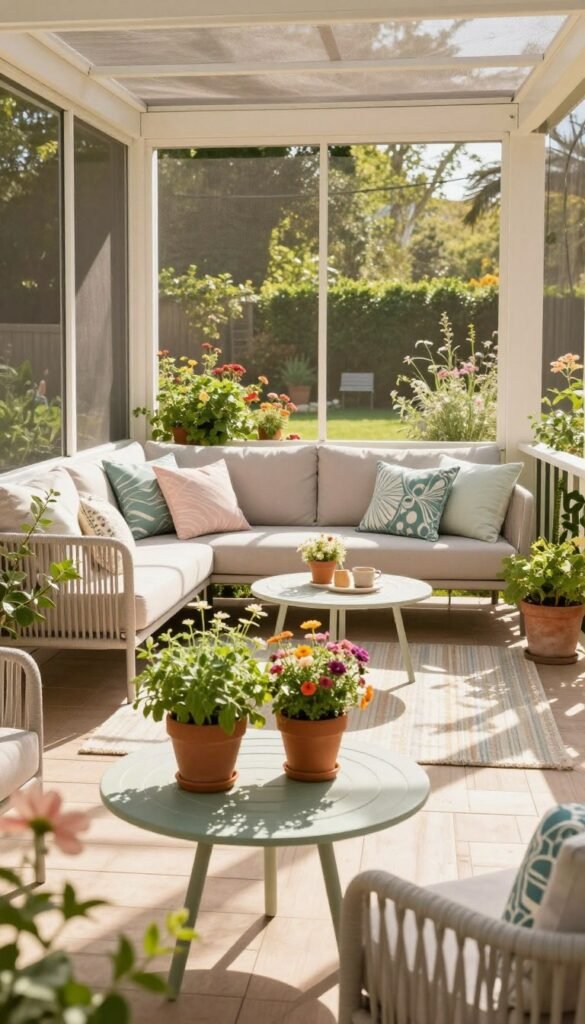
Screening that works in high-bug regions
Who it’s best for: people who face daily mosquito activity and want a consistent solution instead of repeated spraying.
Renter-friendly paths:
- Temporary frame kits that clamp to railings or floor plates without drilling.
- Magnetic screen doors for the entry — quick to attach and remove.
- Tension-mounted panels and roll-up mesh that fit odd shapes and pull down when needed.
Real trade-offs to consider
Screens reduce insect bites but can slightly cut airflow and sightlines. They take more setup time than repellents and may need seasonal storage.
Practical pairing: add a small, quiet fan to keep air moving. The breeze lowers mosquito activity and improves comfort without chemicals.
| Option | Install time | Tools needed | Maintenance notes |
|---|---|---|---|
| Temporary frame kit | 30–90 min | Minimal (wrench/hand tools) | Store panels in off-season; check fasteners |
| Magnetic screen door | 10–30 min | Adhesive or basic clips | Replace magnetic strips yearly if worn |
| Tension-mounted mesh | 15–45 min | No drill; tension rods | Good for odd widths; check mesh for tears |
Buyer checklist
- Mesh density: fine enough to stop mosquitoes but not so tight it blocks breeze.
- Closure: zipper vs. magnetic — pick what suits traffic flow and pets.
- Removability: easy detach for landlord inspections or storage.
- Fit: confirm kit works with railing height and any slope or angled corners.
Final note: screening plus a targeted fan gives a chemical-light, long-term way to make the place feel like usable living space during peak mosquito hours.
Lighting That Makes You Actually Use the Balcony at Night
Layered illumination can make a compact outdoor area feel larger and more inviting after dusk. Good lighting solves the common problem: spaces that are usable by day become unused at night without intentional light.
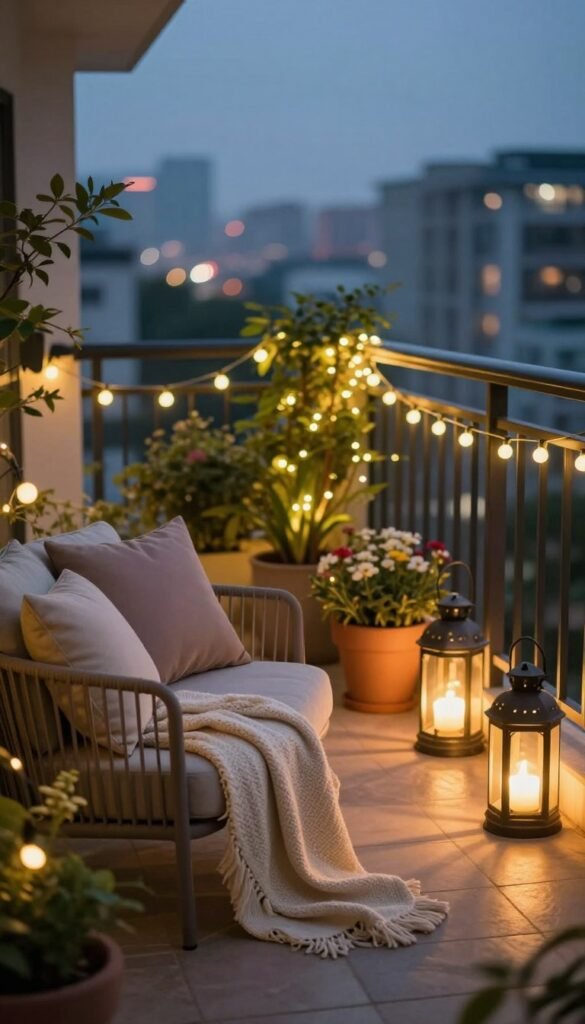
Statement fixtures that set the tone
When to choose a statement fixture: when entertaining or aiming to make the space an extension of interior design. Margaret Donaldson notes a bold outdoor pendant or lantern creates ambiance and anchors an outdoor living spot.
Buying considerations that matter
Ratings: pick wet rated for open exposure, damp rated for covered areas.
Brightness & color: target 300–800 lumens for overhead mood light; 2700–3000K color temp for warm night ambience. Use focused 400–600 lumen task lights for reading.
Power: compare plug-in, hardwired, solar, and battery options. Check cord length and whether bulbs are replaceable.
Lighting a small space without glass glare
Layer one overhead statement light plus one low glow (string lights, wall sconces, or table lamps). This avoids harsh contrast and prevents glare on glass doors.
Aim fixtures away from glass, add diffusers, and keep task lighting below eye level so reflections stay minimal and reading light stays usable.
„A statement light fixture creates ambiance and enhances the atmosphere of outdoor entertaining areas.“ — Margaret Donaldson, MDI Luxury Design
| Model Type | Rating | Lumens | Cord / Power | Replaceable Bulb |
|---|---|---|---|---|
| Hanging Pendant | Wet | 400–700 | Hardwired / Long cord | Yes |
| Wall Sconce | Damp (covered) / Wet (open) | 300–600 | Hardwired / Plug-in | Often yes |
| Solar String / LED | Wet | 50–300 (per strand) | Solar / Battery | No (integrated LEDs) |
| Portable Task Lamp | Damp | 400–600 | Battery / USB | Yes |
Quick setup tips: place the main fixture over seating or a table so light lands where people sit and where outdoor furniture holds food or drinks. Add a low lamp or rope light under railings for subtle glow that guides steps without glare.
Lay a Soft Foundation: Outdoor Rugs, Deck Tiles, and Faux Turf
A soft, intentional floor can change an awkward outdoor spot into a usable room.
Bare concrete heats up, feels hard underfoot, and can make an outdoor space look unfinished. Adding a layered foundation improves comfort, reduces noise, and ties the area to interior style.
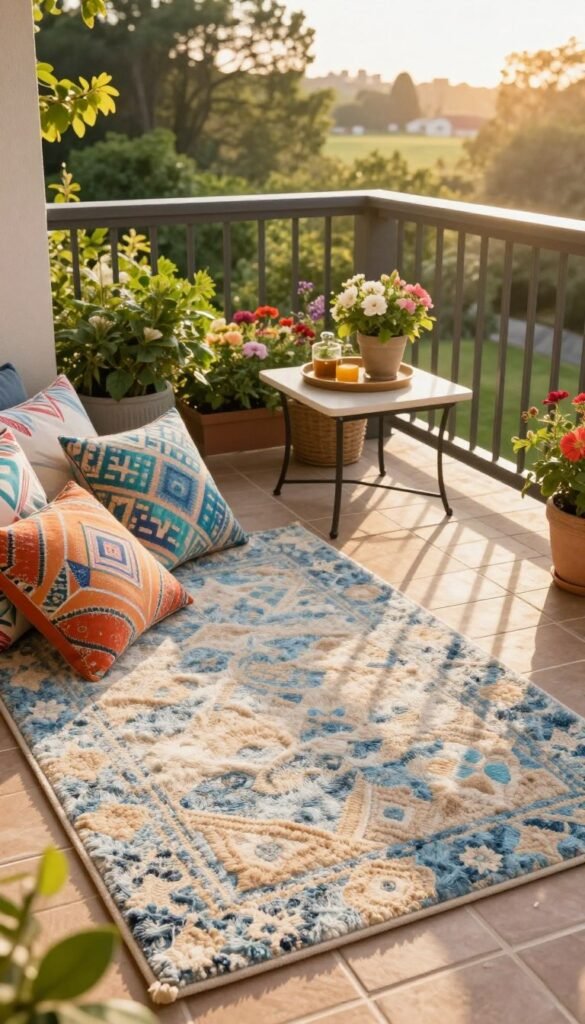
When turf, tiles, or rugs make sense
Faux turf is best for barefoot comfort, kids, or pets and when the owner can manage rinsing and occasional brushing. It can double as play or putting lawn but may retain heat in direct sun.
Deck tiles add traction and drainage. They lift the floor slightly, so check door clearance before installing.
Outdoor rugs add visual warmth and cushion. Choose breathable backing to avoid trapped moisture and mildew.
| Material | Thickness / Drainage | Cleaning | Best for |
|---|---|---|---|
| Faux turf | 0.5–1 in / perforated backing | Rinse weekly; brush to lift fibers | Barefoot comfort, pets, play |
| Deck tiles | 0.5–1 in / spaced slats | Hose and lift for deep clean | Dining zones, traction, quick-dry |
| Outdoor rug | 0.2–0.6 in / breathable weave | Shake, spot clean, dry flat | Visual warmth, soft step, low height |
Buying checklist: UV stability, mold-resistant fibers, breathable backing, and balcony-safe materials that won’t react with coatings. In humid climates, rinse and dry on a sunny day to prevent mildew odors.
Durable Materials That Don’t Fade or Fly Away in Summer Weather
Wind and sun expose the weakest choices fast; durable gear saves money and headaches.
What “outdoor-rated” really means: powder-coated or stainless frames, UV-resistant textiles, and marine-grade hardware that resist rust and color loss. Outdoor furniture labeled with a UV or salt-spray rating lasts longer in direct exposure.
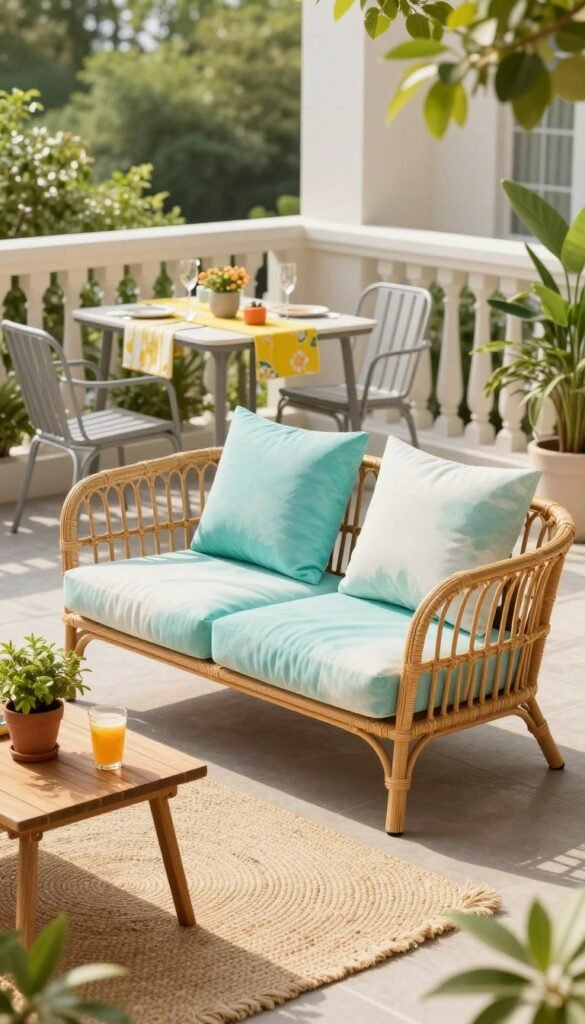
Wind-ready buying checklist
- Weight: heavier bases or filled legs reduce tipping.
- Grip feet: rubber or non-slip pads stop sliding on smooth floors.
- Wider stance: broader leg spread improves stability on uneven decks.
- Secure storage plan: covers, stackable storage, or a spot inside during storms.
Protect cushions and keep tables steady
Pick solution-dyed fabrics over printed covers to limit fading. Seek removable covers and quick-dry foam to prevent mildew and speed up airing between uses.
Check table construction where legs meet tops. Test adjustable feet and look for cross-bracing to cut wobble. Remember the trade-off: heavier items resist wind but take more time to move or store.
| Field | Frame | Fabric | UV notes | Weight / Maintenance |
|---|---|---|---|---|
| Comparison | Powder-coated steel / teak | Solution-dyed acrylic | Rated ≥200 hrs fade resistance | Heavier = less tipping / wipe & cover |
| Portable option | Aluminum (light) | Olefin / quick-dry | Lower fade resistance | Light = anchor or store indoors |
Make the View the Feature: Layout Tricks That Don’t Block Sightlines
Let the sightline guide furniture choices so the outside feels like an intentional living area. Positioning changes how often people use a small spot and what pieces make sense to buy.
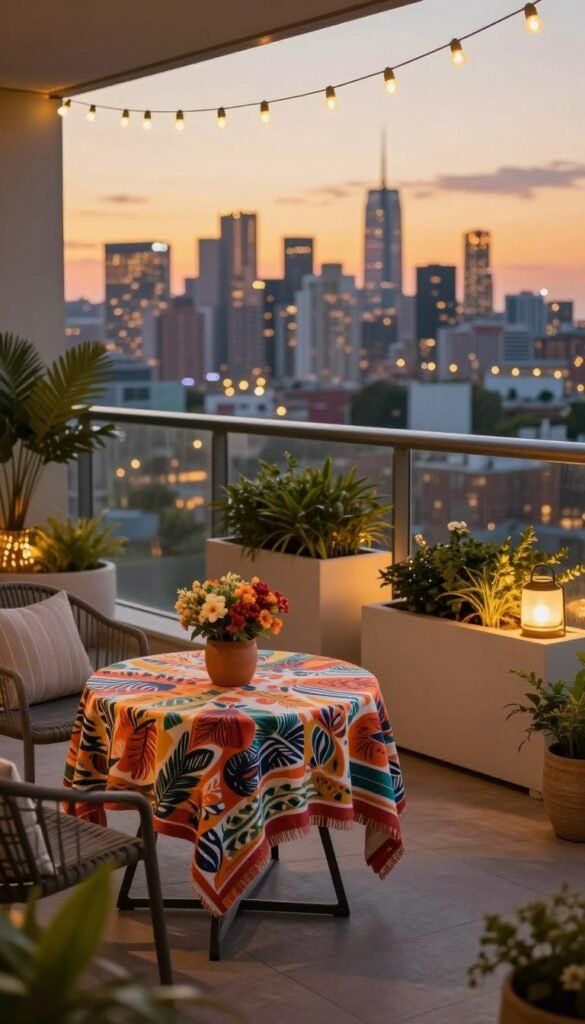
Face the view
Layout rule: orient seating toward the view to create a mini living room. This may mean placing a slim bench or two low chairs along the railing rather than pushing furniture against the wall.
Choose furniture depth with the door swing and walkway in mind. Low-back seats (seat heights 14–18 in; back 20–28 in) preserve sightlines while keeping comfort.
Thin railing approach and renter-friendly alternatives
Owners: a thin railing can keep openness without sacrificing safety when it meets code. Curated Nest and Alvisi Kirimoto show that simpler rail profiles keep historic views unobstructed.
Renters: keep decor below railing height, use transparent or airy materials, and avoid tall solid screens on the view side.
| Option | Seat height | Back height |
|---|---|---|
| Low-profile lounge chair | 14–16 in | 20–24 in |
| Slim bench | 15–18 in | 18–22 in |
| Compact side chair | 16–18 in | 22–28 in |
„Prioritize the view“ as a guiding way to choose pieces and place them so the space functions like a tiny living room without blocking what you came outside to see.
Texture Layering That Feels Cozy, Not Cluttered
A focused set of textiles can make a small space feel like a calm, staycation-ready room. Jen Samson used selective layers to build warmth while keeping the view central.
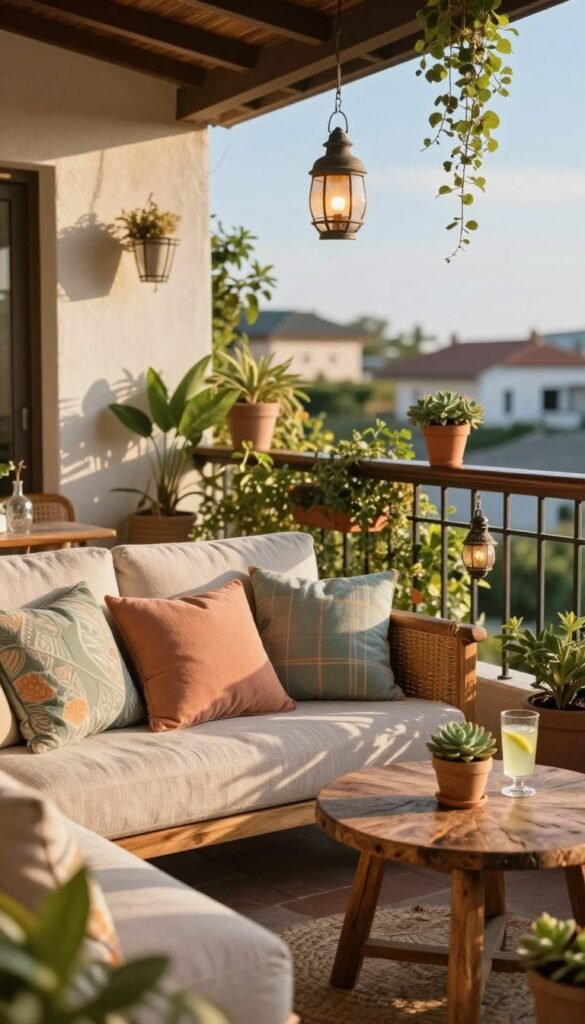
Simple, high-impact layering
Follow the one–two–one rule: one outdoor throw, two durable pillows, one soft floor layer. This limits clutter and keeps seating usable.
What texture solves
Comfort: cushions soften metal or plastic seats. Warmth: a throw extends use into cool evenings. Finish: a rug ties the look together so the area reads like a proper room.
Buying and storage notes
- Choose quick-dry fabrics and mildew-resistant weaves.
- Prefer compressible throws and fold-flat pillows that fit a slim bin.
- Stick to cohesive colors and one strong texture to avoid visual noise and to keep the style intentional.
| Item | Fabric | Drying | Storage |
|---|---|---|---|
| Pillow (2) | Solution-dyed acrylic | 2–4 hrs | Compressible bag |
| Throw (1) | Quick-dry blend | 1–3 hrs | Roll & store |
| Rug (1) | Perforated polypropylene | Hose & dry | Roll up |
Buyer tip: pick fewer pieces with better materials. That keeps the space usable, easy to clean, and visually calm.
Bring Your Indoor Style Outside So It Looks Intentional
A clear visual link between indoor and outdoor pieces makes a small outdoor spot read like an intentional room. Start by picking one or two finishes from inside your home and echoing them in outdoor frames and accents.
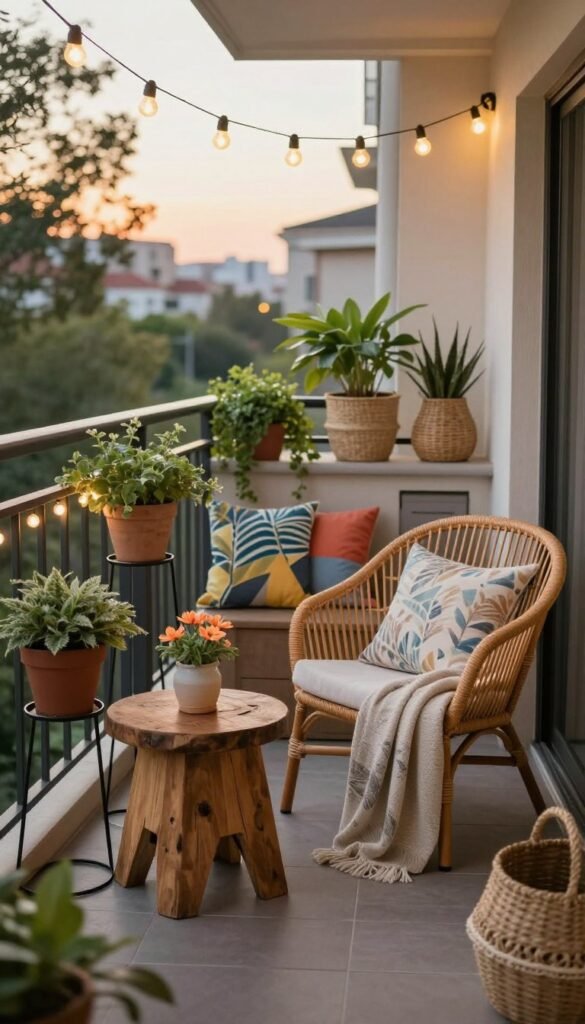
How to match silhouettes and finishes to your interior
Pick a dominant finish—light wood, black metal, or warm neutrals—and match outdoor table legs or chair frames to that finish. Repeating a silhouette, such as rounded mid-century backs or straight, minimalist lines, keeps the space cohesive.
Practical buying guidance: choose outdoor-rated finishes (powder coat, teak-look composite) that match the interior tone. If you want variety, buy a coordinated set for the anchor piece, then mix in one or two contrasting items with similar shapes.
Color palette shortcuts that make it feel like a real room
Use one neutral base and one accent pulled from your living area. Repeat that accent in two or three outdoor items—cushions, a small rug, or a lamp—to tie the view back to the interior palette.
Avoid a „matchy“ trap by varying texture instead of color. Combine matte metal frames with woven seats or a soft quick-dry textile to add depth while keeping the overall design unified.
| Approach | When to choose | Weather-ready finish | Buying tip |
|---|---|---|---|
| Coordinated set | Small spaces needing instant cohesion | Powder-coated frames, solution-dyed fabrics | Anchor with set, add one textured accent |
| Mixed pieces | Layered, curated look | Teak-look composite, stainless hardware | Match silhouettes; vary textures |
| Single-finish pull | Tie to interior element (wood or metal) | UV-resistant wood tone or coated metal | Echo a door or table finish indoors |
Why silhouette matters: repeating curves or straight lines creates rhythm. Even minimal decor will read as intentional when shapes align with interior furniture.
Affiliate-ready blocks: prepare product sets labeled „neutral sets,“ „black-metal bistro looks,“ and „light-wood-look outdoor pieces“ with notes on finishes and weather ratings to guide purchases.
Color and Detail Upgrades That Change the Look Fast (Without Renovating)
Small changes can make a space feel designed without major work. A single color choice or a framed entry shifts how people see and use an outdoor area. These moves suit renters and owners who want quick impact.
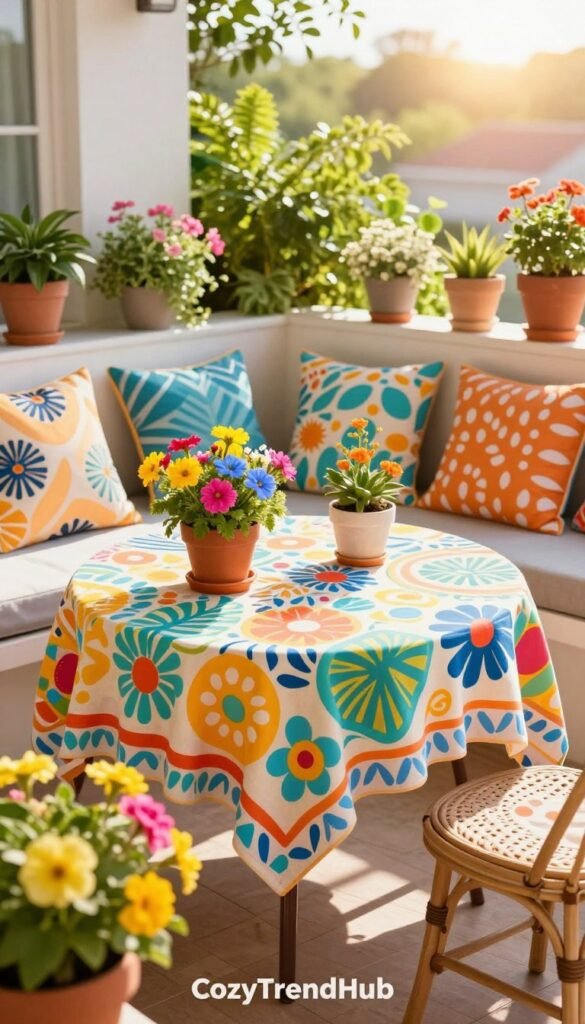
Painting railings as a bold pop
When permission is granted, painting metal railings modernizes an older exterior quickly. Janie Molster used Benjamin Moore’s Naples Blue to make the rail an intentional feature.
- Paint notes: use exterior-grade paint, rust-inhibiting primer, and paint on dry days with mild temps.
- Cure time: allow 24–48 hours before light use and a week for full toughness.
- Pros: durable and low-maintenance. Cons: needs owner permission and prep work.
Emphasizing the entry: frame the doorway like a focal point
Bill Brockschmidt suggests a painted doorframe or coordinated accessories to create a designed approach. When paint isn’t allowed, use removable planters, a bold doormat, or color-forward textiles to mimic the effect.
| Option | Durability | Permission |
|---|---|---|
| Rail paint | High | Often owner-only |
| Removable wrap | Medium | Renter-friendly |
| Planters & textiles | Low-Medium | Allowed |
Affiliate-ready checklist: painter’s tape, rust primer, exterior brushes/rollers, heavy-duty sandpaper, and removable entry accessories such as planters and a weatherproof doormat.
Entertaining-Friendly Add-Ons: Bar Carts, Serving Zones, and Outdoor Lounging
A single movable piece can turn a tiny outdoor spot into an instant serving station.
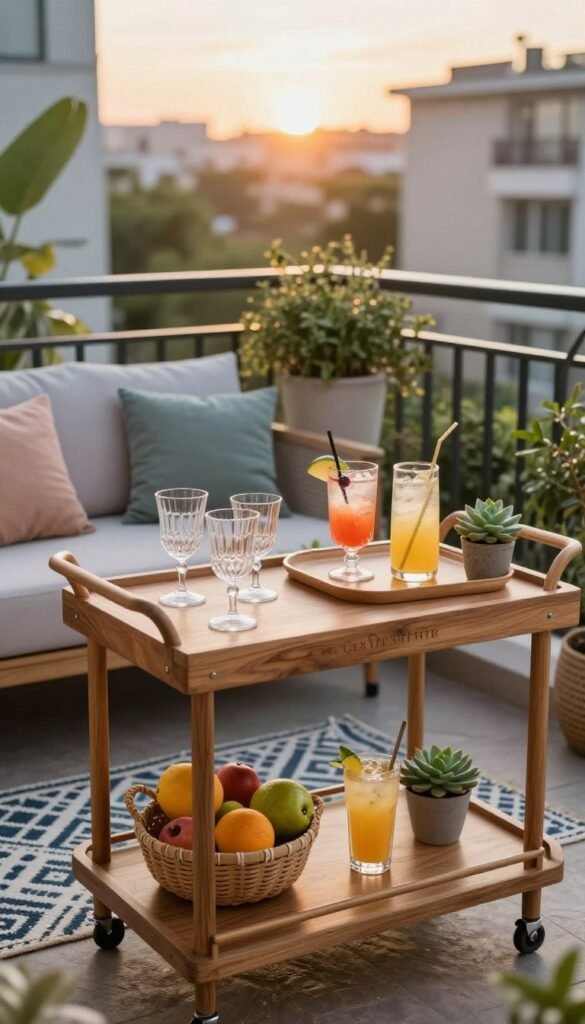
Bar carts with wheels make hosting flexible. Ashley Gilbreath moved a wheeled cart from kitchen to railing for drinks and trays. Harry Heissmann paired a slim console with wicker seating and lanterns to create a cozy entertaining zone without hard installs.
How to build the zone: one movable cart or narrow console plus a stable side table near seating keeps plates and glasses off the floor. Position the cart against the door or wall so it does not block traffic. Use wheel locks on sloped surfaces.
Buying checklist
- Rust resistance: powder-coated steel or stainless frames.
- Shelf lip depth: 1–1.5 in lip to stop sliding glasses.
- Easy-clean surfaces: melamine, sealed wood, or composite tops.
| Type | Width | Material note |
|---|---|---|
| Narrow cart | 12–16 in | Stainless / powder coat |
| Rust-resistant cart | 16–20 in | Marine-grade hardware |
| Budget serving table | Foldable 14–18 in | Coated metal top |
Pros: adds serving surface and storage. Cons: can feel bulky on ultra-narrow spots; choose a folding tray table in that case. Prepare affiliate blocks labeled „narrow cart,“ „rust-resistant cart,“ and „budget serving table“ with dimensions and material notes to guide purchase.
Extend the Season: Fire Pits, Fireplace Looks, and All-Season Comfort
When temperatures drop, a few smart choices turn an outdoor spot into a warm, usable retreat well into the colder months.
Start with safety and rules. Before buying a propane fire pit, confirm building policy, required clearances, fuel storage rules, and whether open flame is allowed. Amelia Strat notes that confirming landlord permission is the first step.
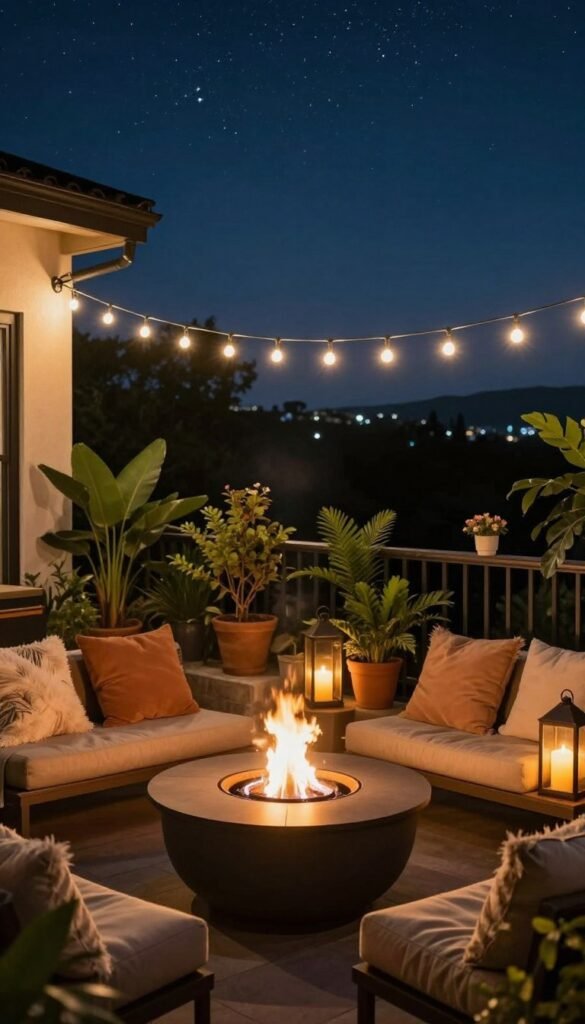
Who should consider a propane fire pit
These setups suit residents with enough floor area and clear permissions. They offer smoke-free warmth and consistent ambiance at night.
Pros / Cons and specs
- Pros: quick heat, no wood smoke, portable.
- Cons: footprint, storage of tanks, active supervision.
- Check: BTUs, footprint (sq ft), CSA/UL certifications, and recommended clearance (typically 36–48 in).
Chair & year-round planning
Pick compact woven or stackable chairs with quick-dry cushions to avoid bulky storage. Christine Vroom used a sleek, faux-fireplace panel to add heat without open flame.
„Plan where items go during storms and winter; anchor or store gas tanks per local code.“
| Heat / BTU | Footprint | Fuel | Cert |
|---|---|---|---|
| 20,000–40,000 | 2–4 sq ft | Propane | CSA / UL |
| 5,000–15,000 | 1–2 sq ft | Electric / Gel | ETL / UL |
| Portable radiant | 1–3 sq ft | Propane | CSA |
Conclusion
A clear plan and one practical purchase turn an unused ledge into a usable outdoor room.
Measure the space, confirm landlord rules, and pick a primary purpose—reading, dining, or lounging. Buy one anchor piece that serves that purpose, then add only what solves comfort: shade, screening, or lighting.
Prioritize durable materials and a preserved view. Choose outdoor furniture with stable feet and quick-dry textiles so items last and pack up easily in an apartment setting.
Try a layout for a week, then adjust to avoid wasted spend. Focused choices make the space feel like an extension of the home and turn this narrow area into a daily-used spot for coffee, a simple meal, or quiet reading.