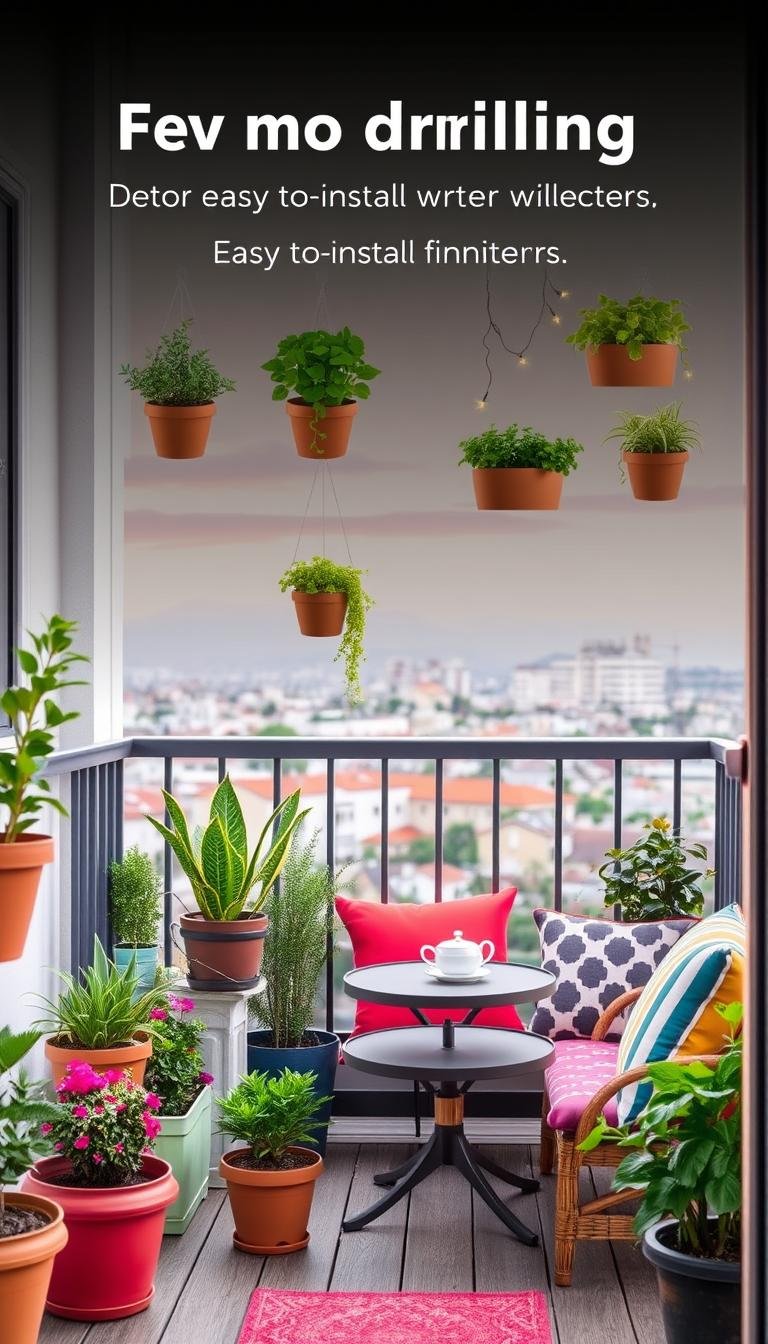
Renters often want a finished outdoor space but face strict lease rules that bar holes in walls, ceilings, or the building facade. Damaging masonry can trigger fees or lost deposits. This intro explains a practical, renter-friendly approach.
The article shows how to make balcony feel intentional using damage-free mounts and freestanding upgrades. It previews product categories that meet buyer intent: privacy, lighting, plants, seating, and shade. Readers will see clear „best for“ notes and tips on what to check before buying.
Decision factors repeat throughout: balcony size, wind and rain exposure, available power, and building rules. The guide compares tiles vs. rugs, solar vs. plug-in lights, plant privacy vs. panels, and foldable vs. fixed furniture footprints.
Seasonal flexibility is central: choose options that store easily or come down fast for storms and winter. For renter-specific wall ideas and safe hanging methods see renter wall decor solutions.
Key Takeaways
- Focus on non-damaging mounts and freestanding pieces for quick setup and clean removal.
- Match products to size, wind, sun, and building rules before buying.
- Compare material trade-offs: tiles vs. rugs and solar vs. plug lighting.
- Prioritize foldable or storable items for seasonal changes and small outdoor space living.
- Expect clear „best for“ notes that guide purchase decisions for privacy, lighting, plants, seating, and shade.
What “No-Drill” Really Means for Renters (and Why It Matters)
Knowing which attachments lease agreements ban helps renters choose the right no-drill solutions. Landlords commonly prohibit holes in exterior walls, ceiling hooks, or any change that alters the building facade. That rule affects what can be attached to railings and what must remain freestanding.
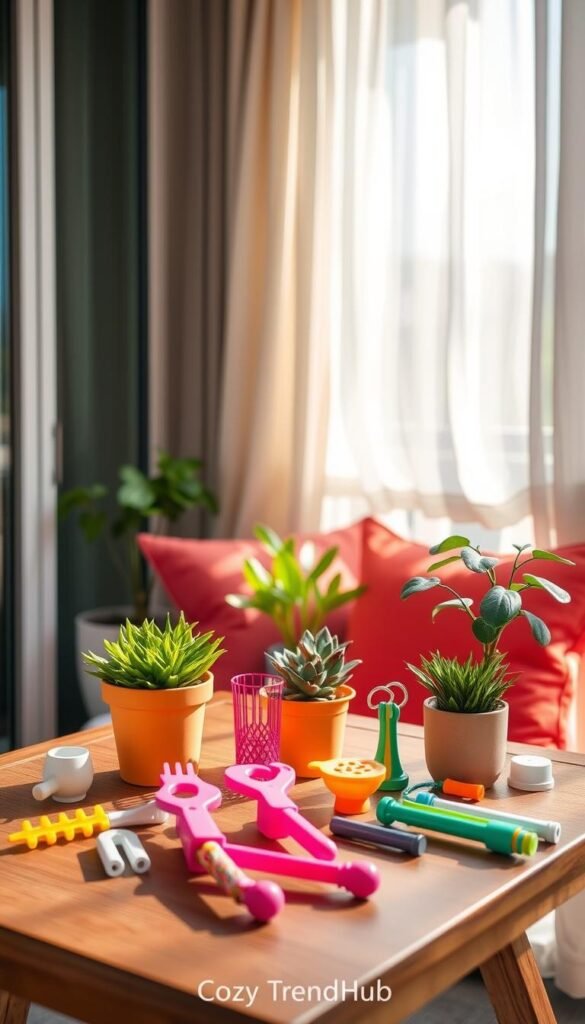
Quick lease-check checklist
- Search for terms about facade changes, railing attachments, and hanging limits.
- Note any explicit bans on ceiling anchors or wall anchors.
- Ask management about temporary mounts and storm storage rules.
Damage-free tool kit and where each works
Core items: tension rods, outdoor-rated adhesive hooks, zip ties, Velcro panels, and telescopic poles. Each has a place depending on surface and exposure.
| Tool | Best surface | Covered vs. exposed | Typical use |
|---|---|---|---|
| Tension rod | Smooth tile or framed alcove | Works in both; protected lasts longer | Hangs privacy panels or lights |
| Adhesive hook (outdoor-rated) | Smooth, non-porous wall | Covered only; fails in heavy rain | Light lanterns, planters |
| Zip ties / coated wire | Railing and mesh | Good for exposed areas | Secure panels, plant supports |
| Telescopic pole | Floor to ceiling friction fit | Better for covered spaces | Vertical frames, netting |
Planning mini-framework for a small balcony
Measure width, depth, and railing height first. Then pick priorities in this way: privacy, seating, plants, lighting. Choosing one or two focus items keeps space efficient and reduces move-out risk.
Why this matters: Following lease terms lowers repair costs at move-out. It also makes seasonal swaps and storage easier for renters who need flexible space solutions. For renter-specific wall solutions, see renter wall options.
Best balcony decor without drilling: Top Renter-Friendly Picks by Problem
Use this problem-driven guide to find renter-safe upgrades that fit size, weather, and lease limits. It is a practical shopping map to match products to common issues and to quick decisions when time is tight.
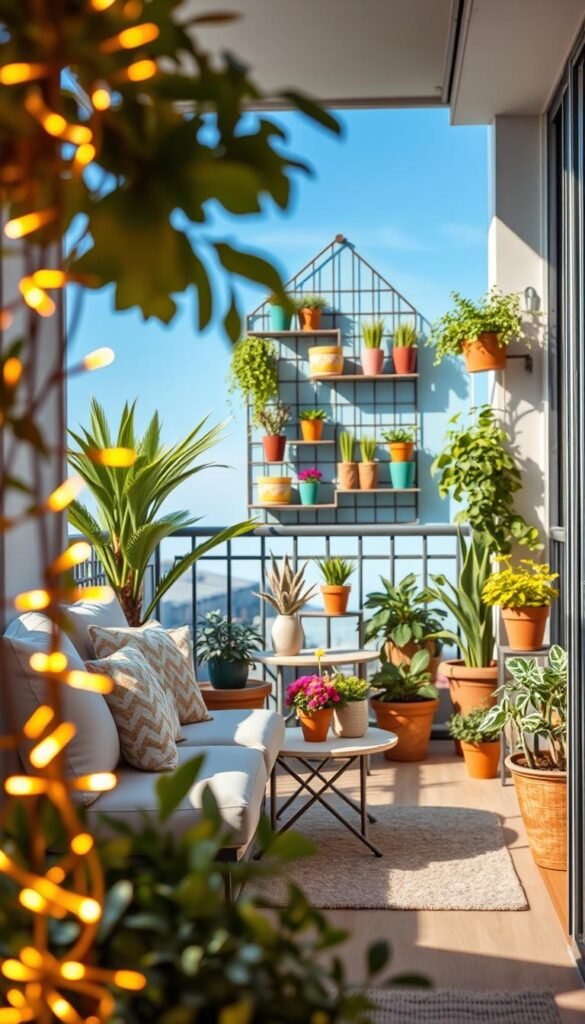
How to use this list for buying
Start by naming the main problem: ugly concrete floor, too much sun, nosy neighbors, no outlets, tiny square footage, or pet safety. Then match product options to exposure and rules.
- Measure first: rail thickness, door swing, and usable wall length for panels.
- Match exposure: choose wind-rated pieces for exposed spaces and water-safe fixes for rainy areas.
- Check storage: pick foldable or stackable items for seasonal refreshes and easy move-out.
Where these ideas shine most
These suggestions suit apartments, condos, short-term rentals, and seasonal updates. They emphasize quick install and clean removal so the home stays deposit-safe.
| Problem | Top solution type | Why it fits | Best fit scenario |
|---|---|---|---|
| Ugly concrete | Interlocking tiles / outdoor rugs | Fast coverage, removable | Tiny space, renters |
| Too much sun | Shade sail / umbrella | Portable shade, anchors only | Open exposures, seasonal use |
| Close neighbors | Freestanding screens / tall plants | No wall holes, visual privacy | Ground-level patios & small terraces |
| No outlets / pet safety | Solar lights / telescopic nets | Low wiring, removable protection | Short-term rentals, pet owners |
Flooring Upgrades Without Damage That Instantly Make a Balcony Feel Finished
A quick flooring swap is often the fastest way to give an outdoor area a finished look renters can remove later. Many concrete slabs look worn or stained and leave a space feeling unfinished.
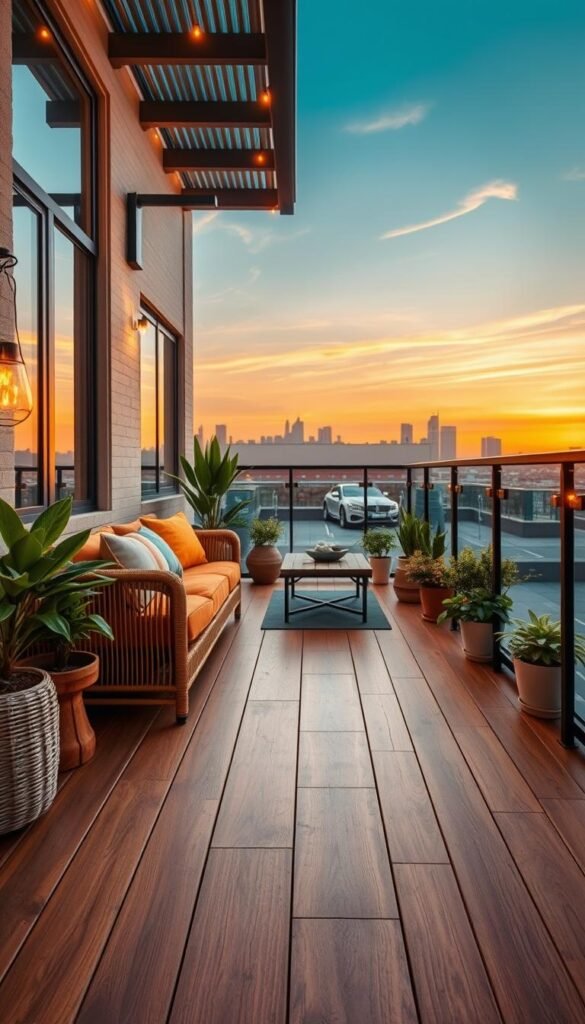
Interlocking deck tiles: quick visual change
Why they work: Wooden interlocking tiles float over the surface. They snap together, define a seating zone, and lift the floor from bare concrete.
Best for: renters who want a fast before/after impact and a product that is easy to lift and store.
Outdoor rugs for small balconies: comfort and color
Why they work: Small outdoor rugs add warmth underfoot and bring in colors that change the mood of the space. Choose polypropylene or PET for weather resistance.
Buying considerations
- Check drainage channels under tiles so water does not pool.
- Pick rugs with quick-dry backing and tested slip resistance for rainy climates.
- Confirm total weight for upper-floor limits and how easy each option is to remove.
Pros and cons: tiles vs. rugs
| Feature | Interlocking tiles | Outdoor rugs | When to choose |
|---|---|---|---|
| Finish look | More structured, deck-like | Softer, textile feel | Tiles for a polished floor; rugs for cozy texture |
| Water handling | Drains better with channels | Needs drying after heavy rain | Tiles suit wet exposures |
| Cost & storage | Higher cost, stays in place | Lower cost, easy to roll and store | Rugs for seasonal swaps |
| Comfort | Firm underfoot | Warmer and softer | Choose rugs for lounging and color |
Season tip: Roll rugs for winter storage; leave well-draining tiles down if they do not trap moisture. For related seasonal styling ideas, see summer porch ideas.
No-Drill Balcony Lighting Ideas for Cozy Nights (String Lights, Lanterns, Pendants)
Even small outdoor spaces can feel inviting at night with renter-safe lighting that needs no permanent anchors.
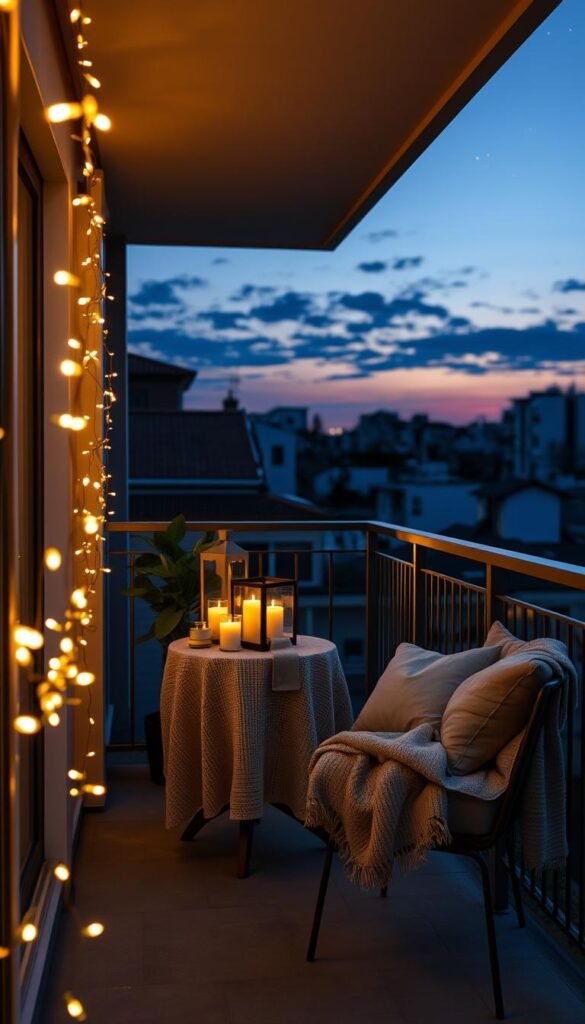
Outdoor-rated string and fairy options
String lights wrap neatly around a railing or slide along adhesive hooks for a continuous run. Use zip ties on metal rails for wind resistance.
Fairy lights work as soft accents in jars or draped on plant stands. They use low power and add delicate glow in tight corners.
Lanterns, candles, and jar lighting
Tabletop lanterns and jar lights are perfect when nothing can be mounted. They provide mood light and are easy to store or swap each season.
Solar vs. plug-in LEDs
Solar lights suit spots with sun and no outlets. Plug-in LEDs give steady brightness for nightly use. Choose LEDs for longevity and lower running cost.
Safety and quick-take precautions
| Item | Use case | Pros | Cons |
|---|---|---|---|
| Outdoor string lights | Ambient runs on rails | Durable, bright | Needs secure ties in wind |
| Fairy lights in jars | Accent lighting | Soft glow, low power | Limited coverage |
| Solar lanterns | No outlet spots | Energy-free night use | Depends on sun exposure |
| Battery/plug LEDs | Consistent nightly use | Reliable brightness | May need cord management |
Quick checklist: confirm outdoor rating, secure cords, avoid high-wind hangs, and plan a fast takedown for storms or heavy rain.
Privacy and Wind Protection That Keeps Your Space Comfortable
Close neighbors and strong gusts create two linked problems that change how a small outdoor area gets used.
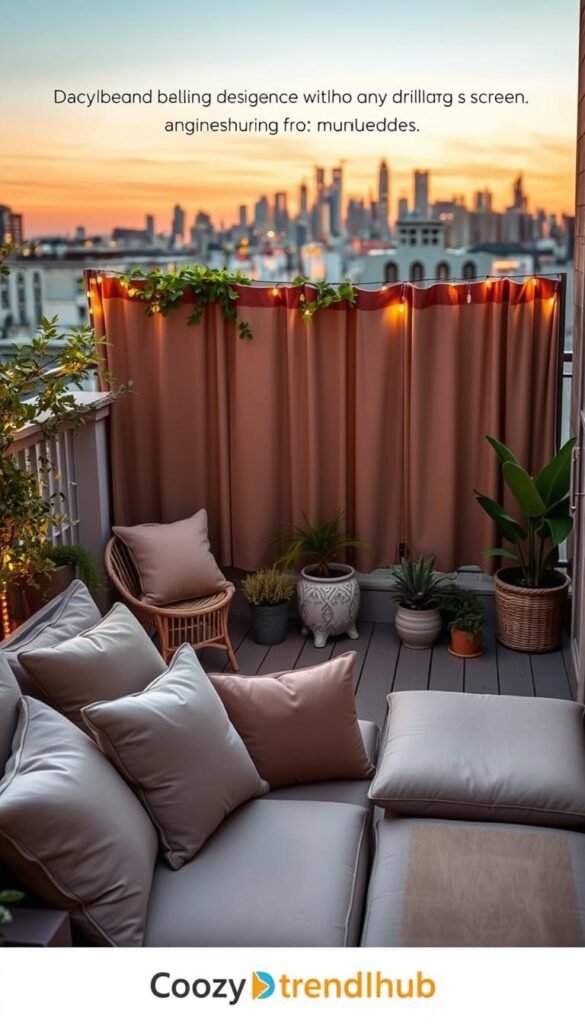
Bamboo roll-ups and fabric panels
Who this suits: renters who want fast, affordable screening.
Roll-up bamboo and outdoor fabric panels attach with zip ties or tension rods. They install quickly and come down fast at move-out.
Pros: low cost, quick privacy. Cons: need secure ties in wind; replace if UV fades.
Plant-based screening
Who this suits: those wanting a mini garden and a natural screen.
Tall potted bamboo or clustered large pots create visual barriers and add greenery. Use heavy pots and saucers to keep stands stable in wind.
Side awnings and clamp shades
Who this suits: spaces that get strong sun or gusts and need shade plus shelter.
Clamp-style shades reduce glare and break wind gusts. Always check UV ratings and plan quick takedown for storms.
Freestanding partition walls
Who this suits: larger areas that need zoning for dining or lounging.
Portable panels offer solid separation and a tidy look. They stay freestanding and lift out at move-out.
„Choose solutions that shed wind and fold away fast.“
Buying checklist
- UV resistance and material ratings
- Airflow design to avoid sail-like pulling
- Total weight and pot stability
- Anchor method and storm takedown speed
| Option | Ideal for | Key pro | Key con |
|---|---|---|---|
| Bamboo roll-up | Quick privacy | Affordable, fast | Fades in sun |
| Tall potted plants | Green screening | Natural, attractive | Needs large pots |
| Clamp awning | Sun and wind control | Adjustable shade | Must stow in storms |
Vertical Plants and Wall Decor Without Holes (Small Balcony, Big Green Impact)
C going up is the quickest way to add plants and keep the space usable.
Floor-standing plant towers, shelves, and trellises offer a layered garden look that saves floor area. Choose towers with a wide, stable base for windy spots. Look for rust-resistant metal or treated wood and tier spacing that fits 4–8″ pots.
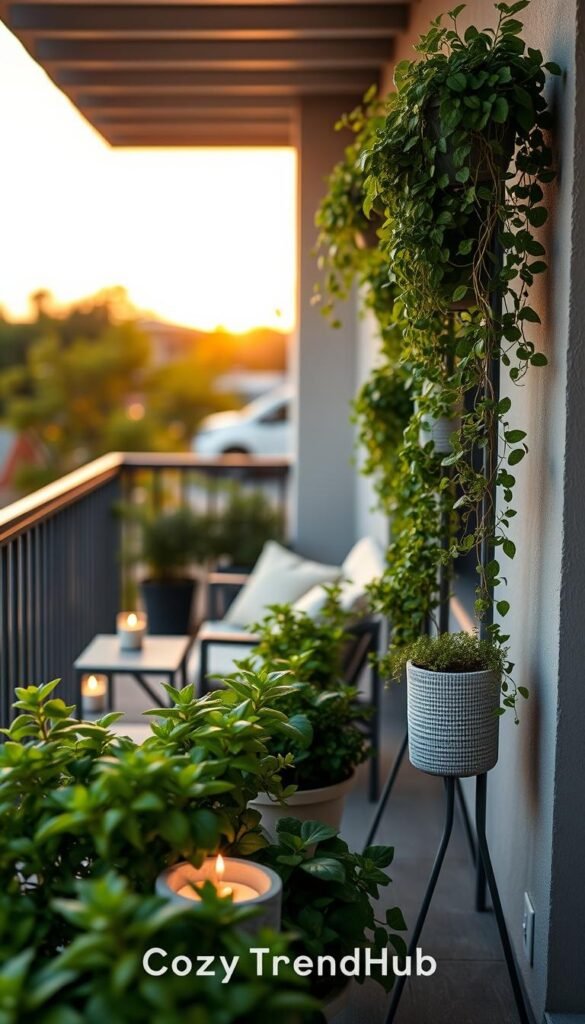
What to buy and who it suits
- Tiny footprint: narrow plant towers with stacked trays — holds more planters while leaving a walkway.
- No holes: freestanding trellises and shelf units — relocate easily at move-out.
- Boho hanging: macrame hanging planters pair with a freestanding frame or strong railing bar; avoid relying on walls for support.
Low-maintenance picks for sunny spots
Succulents and sun-loving herbs tolerate missed watering and heat. Choose hardy greens like rosemary, thyme, and sedum for steady performance.
Care and renter-friendly tips
Protect floors: use saucers, drip trays, or self-watering inserts to catch runoff and prevent stains below. Pick units with built-in drainage trays or add them under each planter.
Quick buying checklist: stable base, rust-proof frame, tier spacing for pot size, and easy-to-remove parts for storage.
For compact planting ideas that fit a modest budget, see a concise guide on patio options patio decor on a budget.
Space-Smart Balcony Furniture That Folds, Stores, and Won’t Wreck Your Deposit
Choosing folding and multiuse pieces keeps a compact balcony functional and deposit-safe. Renters get seating and a table that fold flat or tuck away for storms and move-out day.
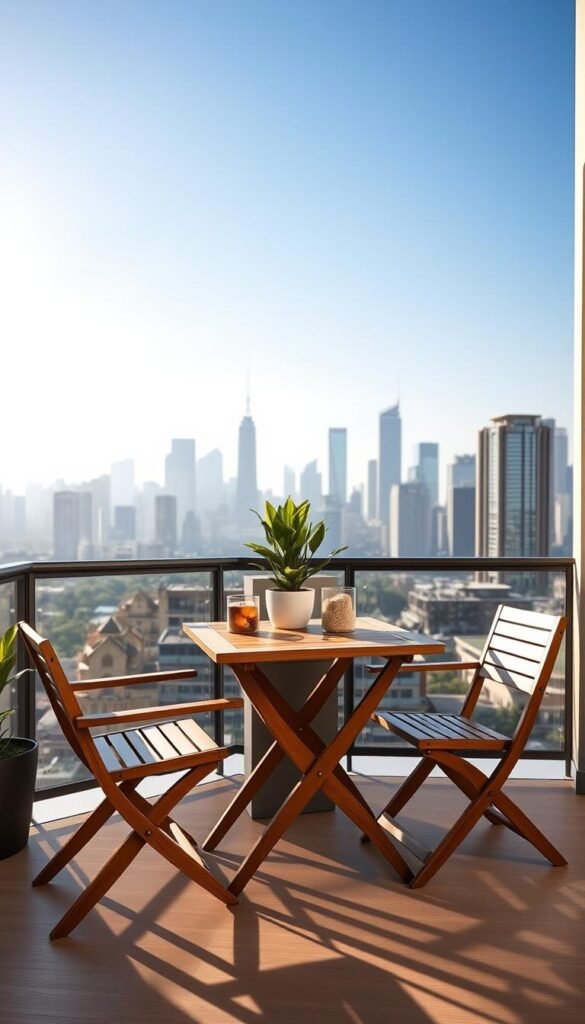
Foldable bistro sets
Best for: tiny outdoor space dining and morning coffee.
They pop up fast and fold flat for storage. Pick metal or treated wood with outdoor paint for weather resistance.
Wood stools and multipurpose pieces
Best for: flexible seating that doubles as a side table or footrest.
Stackable wood stools save floor area. One piece can serve multiple roles through the day.
Storage bench seating
Best for: hiding cushions, tools, and seasonal gear while offering a seat.
Choose benches with quick-drain liners and lightweight lids so they can be carried inside during storms.
Buying considerations
- Measure first: confirm door swing and usable space before choosing a table or chair.
- Weight limits: check patio load ratings for heavier benches or solid wood pieces.
- Materials: rust-resistant hardware, quick-dry fabrics, and sealed wood extend product life.
- Storage: can items fit in a closet or under a bed for winter or severe weather?
| Piece | Primary use | Key pro | Key con |
|---|---|---|---|
| Foldable bistro set | Dining for two | Folds flat, lightweight | Smaller table surface |
| Wood stool / multipurpose | Seating / side table / footrest | Versatile, compact | Less cushion comfort |
| Storage bench | Seating + hidden storage | Keeps cushions dry and tidy | Bulkier footprint |
Comfort vs. footprint: deeper cushions improve comfort but use more space. Slim-profile chairs save walkway room and make daily use easier.
For more layout ideas that pair furniture with plant setups and small tables, see apartment and patio ideas and a curated guide on styling small outdoor zones at curated balcony mixes.
Relaxation Upgrades Without Anchors: Hammocks and Hanging Chairs Using Frames
A freestanding frame can turn a tight outdoor spot into a true lounge nook without ceiling installs. These systems give the same hanging experience but rely on their own supports. They suit renters who need removable options and want a defined place to rest for short time periods.
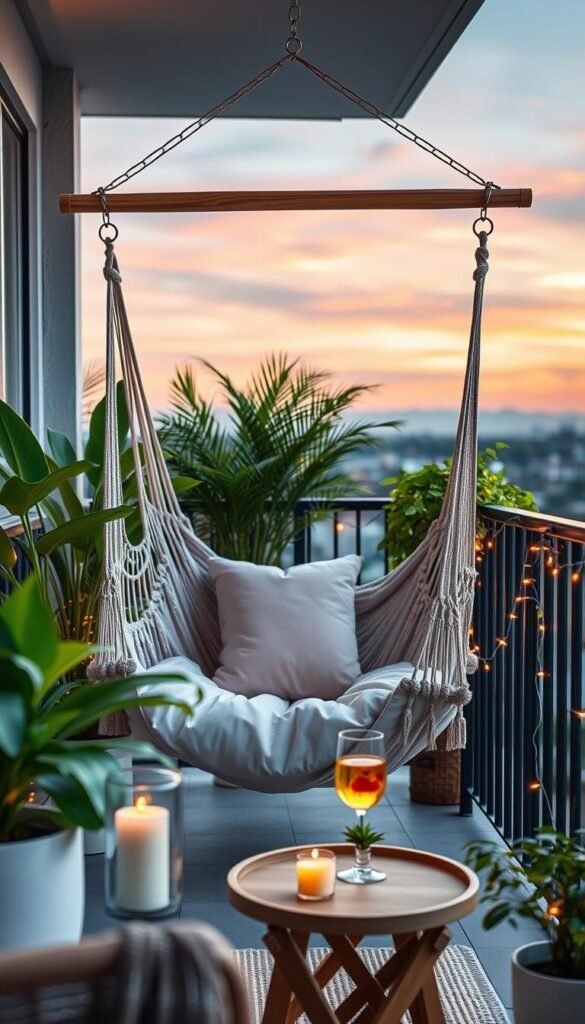
Hammocks with frames
Who they suit: renters who want a nap-ready setup that can be lifted and moved with the sun.
Measure usable space first. Allow roughly 35–45 cm of clearance from the lowest point of the hammock to any floor or obstacle. Choose metal or powder-coated frames for exposed spots and collapsible designs for easy storage.
Hanging chairs with stands
Who they suit: larger terraces that can spare footprint for a reading corner without blocking the path.
Stands work like small furniture pieces and often fold. Confirm stand height and seat depth so the chair clears doors and railings.
Safety checklist
- Measure the intended zone and clearance height before buying.
- Verify load capacity — pick a 25–30% safety margin over expected weight.
- Prioritize wide bases and anti-tip brackets or add discreet tie-downs.
- In high wind, stow the unit or secure with ropes/cable ties to low anchors; treat these items like sails.
| Feature | Hammock frame | Hanging chair stand |
|---|---|---|
| Typical footprint | Medium to large (lengthwise) | Medium (vertical footprint) |
| Weather-suitable material | Powder-coated steel, treated wood | Galvanized steel, aluminum |
| Clearance guidance | 35–45 cm hang clearance | Seat clears obstructions by 20–30 cm |
| Stability tips | Wide base, ground tie-downs | Anti-tip plates, rear weights |
Quick resources: For layout ideas that use frames in tight areas, see a practical guide on creative hammocks for small spaces and seasonal styling inspiration at summer balcony ideas.
Sun Protection Without Drilling: Balcony Umbrellas and Sun Sails That Fit Small Spaces
Too much direct sun can make a small balcony unusable for hours each day. This section outlines renter-friendly shade choices that save floor room and come down fast when weather turns.
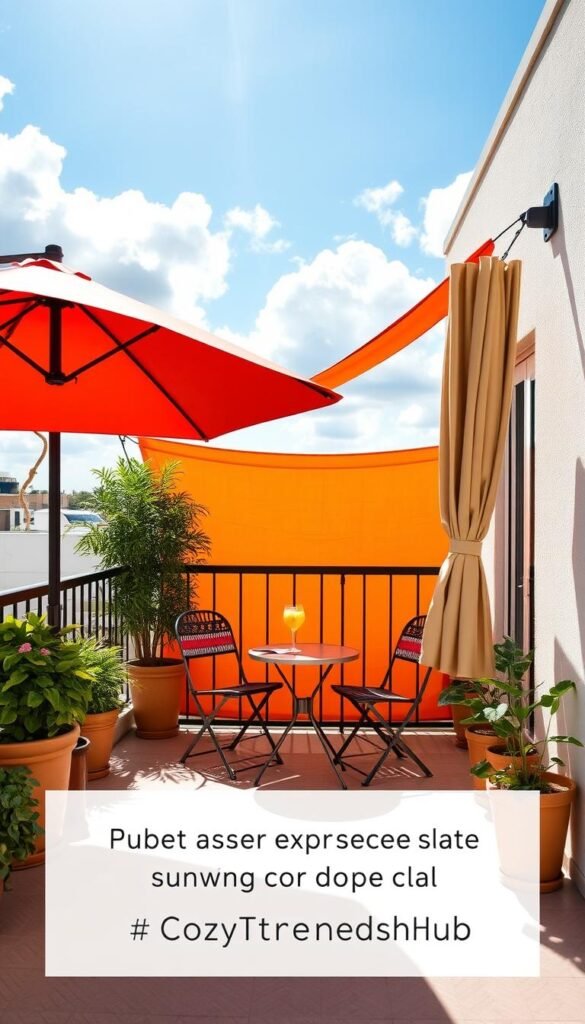
Balcony umbrellas (including railing-mount styles)
Best for: adjustable shade and quick repositioning.
- Railing-mount models free floor space by clamping to a rail instead of using a heavy base.
- Tilt features improve coverage as the sun moves.
- Pros: fast setup, movable, targeted shade for seating areas.
- Cons: clamps must fit rail thickness; remove in strong wind.
Sun sails with rope tie-offs
Best for: broad coverage and a soft, modern look.
- Sails anchor to three or more points with ropes—ideal when permanent hardware is not allowed.
- Pros: large shade footprint, layered atmosphere.
- Cons: needs secure tie points and quick takedown in storms.
Explore quality shade sail options.
Buying considerations and safety
- Map available anchoring points and measure shade zones before buying.
- Check fabric UV rating, water shedding, and seam strength.
- Choose designs that collapse quickly and store easily—do not leave open in high winds.
„Measure and plan shade paths so the chosen solution protects seating without blocking doors.“
Small Add-Ons That Make the Space More Livable (Sound, Serving, and Storage)
A handful of clever accessories improves comfort and function in limited spaces. These low-commitment items solve daily annoyances fast and stay renter-friendly.
Tabletop water fountains
Use case: Masks city noise and adds a calm background sound. Most models are plug-and-play and compact.
Buying tip: Choose a model with a quiet pump and splash guard for small spaces.
Rolling carts
Use case: Serve snacks or stage plants when friends arrive, then roll inside at storm time.
Buying tip: Look for lockable wheels and narrow widths that fit a balcony path.
Comfort layers
Use case: Weatherproof cushions, throw pillows, and blankets extend evenings outdoors and change the look seasonally.
Buying tip: Pick outdoor-rated fabrics and quick-dry fill so cushions last longer.
„Small pieces make the area livable at minimal cost and fuss.“
| Add-on | Primary benefit | Key feature to check |
|---|---|---|
| Tabletop fountain | Sound masking, calm | Quiet pump, splash control |
| Rolling cart | Serving & storage for friends | Locking wheels, compact width |
| Weatherproof cushions | Comfort, seasonal look changes | Outdoor fabric, quick-dry fill |
For more compact solutions and layout ideas, see a practical guide on small-space ideas for balconies and decks at small-space ideas for balconies and decks.
Pet-Safe Balcony Solutions Without Drilling (Cat Nets and Peace of Mind)
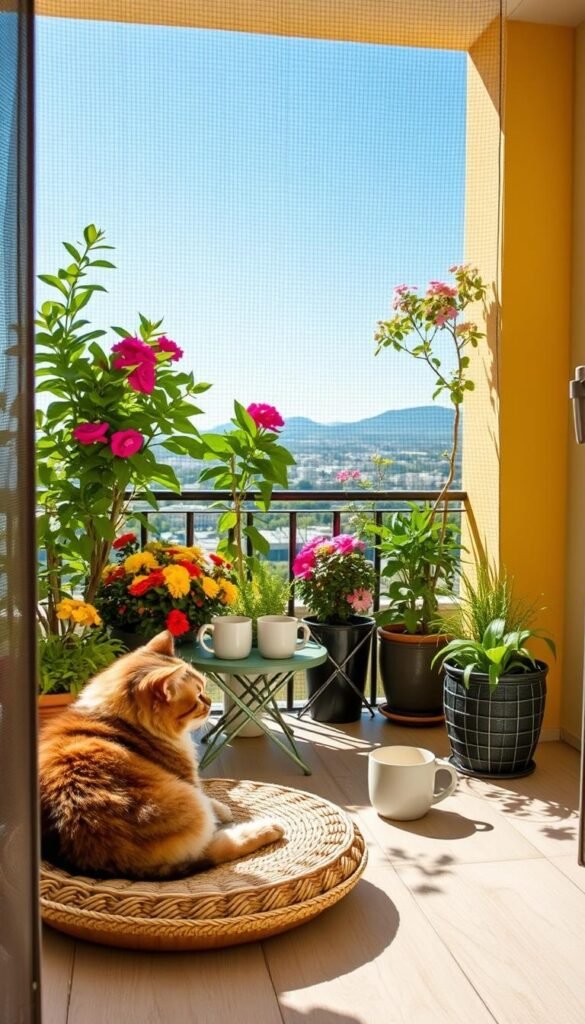
Keeping cats safe on a high ledge starts with a snug net and stable support that does not alter the wall. Renters often look for practical diy ways to let pets enjoy fresh air while staying secure.
Telescopic rods and railing clamps for closed parapets
Who this suits: renters with closed parapet setups and no permission to make holes. Telescopic rods clamp to the railing and hold a mesh barrier that can be removed at move-out.
Install considerations and quick checklist
- Confirm the clamp fits the railing profile and does not slip on curved or thin rails.
- Ensure rods press firmly and sit level; test with gentle weight before finalizing.
- Tension the net so it does not sag; repeated adjustment prevents wear and gaps.
- Eliminate gaps near the wall and corners—this is the most important safety detail.
- Re-check tension after strong wind or heavy rain; small shifts create escape points over time.
Buying considerations: choose nets with high UV resistance, durable mesh, and rust-proof hardware. Pick systems whose components remove quickly and leave no marks.
| Feature | Telescopic rod + clamp | Freestanding frame option | Netting-only solution |
|---|---|---|---|
| Ideal for | Closed parapet with rail | Larger terraces with floor space | Temporary low-risk use under supervision |
| Anchoring | Railing clamp, tensioned rod | Weighted base, bolt-free frame | Tied to rails or furniture |
| Durability | Metal rods, coated clamps | Powder-coated frame | Light mesh; check UV rating |
| Move-out impact | Minimal — clamps remove cleanly | Lift out whole frame | Least hardware; must tie/untie |
Tip: For a real-world safety guide and additional pet-proofing ideas consider a detailed walkthrough on cat-net installs at cat-proof balcony options.
Conclusion
A confident purchase starts by matching lease rules, measuring the space, and naming the main problem to solve. Start with flooring, privacy, seating, or lighting based on daily friction.
Stack renter-friendly layers: a finished floor + comfortable seating + practical lighting + a privacy or shade solution. Compare tiles vs. rugs, solar vs. plug-in lights, panels vs. plant screening, and umbrella vs. sun sail when choosing.
Pick products that suit wind, rain, and sun exposure and that stow quickly for storms. Small changes can transform how a balcony feels while protecting the deposit.
For quick screening options and real-world install tips, see these fast privacy ideas.