
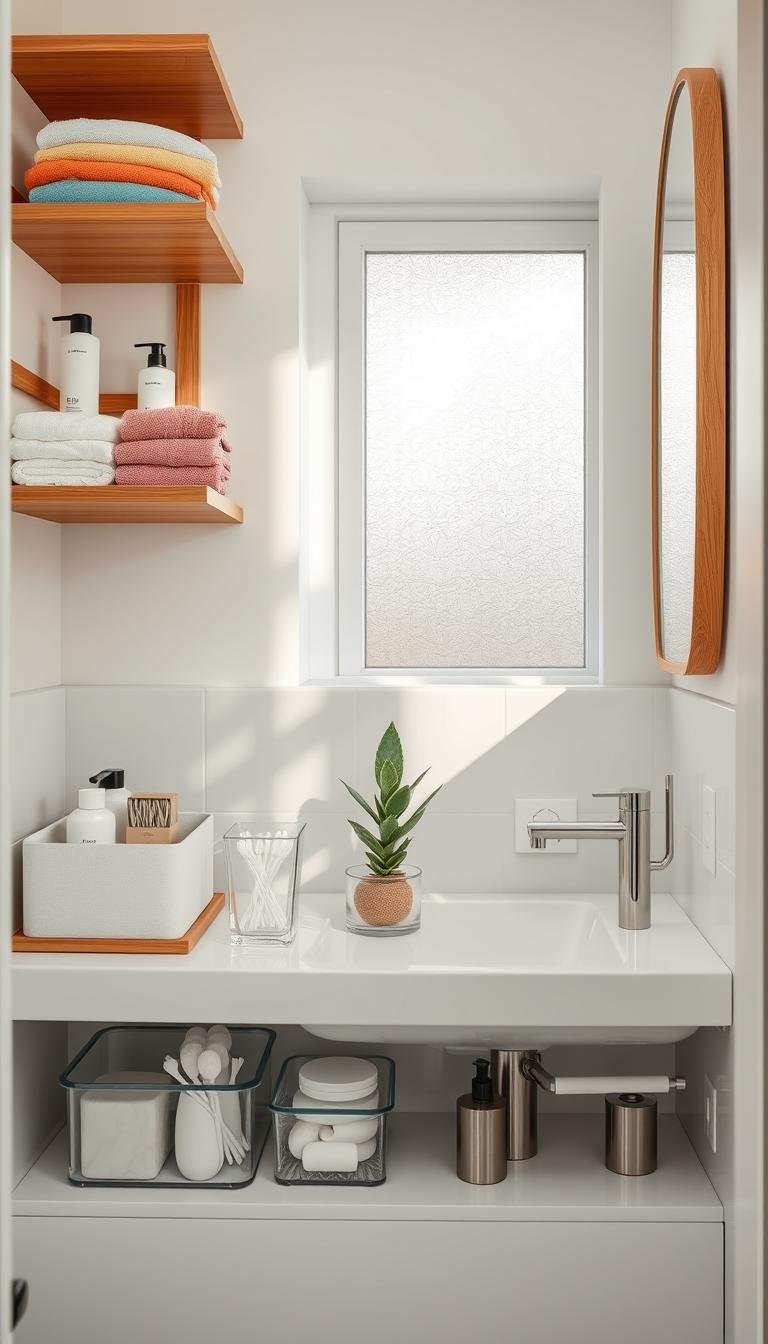
Small bathrooms can feel like a puzzle where every inch matters.
This roundup helps renters and anyone in compact homes find renter-friendly solutions that add real storage without taking floor space.
Vertical shelving, over-the-door racks, and slim under-sink systems turn wasted height into order. Brands like Organized Life and Kate Amore offer simple, maintainable systems that resist humidity and stay neat.
The guide focuses on fit, install type, and ease of upkeep. Readers will see clear comparisons and quick “best for” categories to jump straight to the right solution.
Expect practical picks that solve counter clutter, missing drawers, and shower mess. Organization works best with a bit of routine care and occasional decluttering, not endless effort.
Key Takeaways
- This guide targets renters and small-space residents seeking compact storage.
- Recommendations emphasize easy install, humidity resistance, and maintainability.
- Solutions use vertical space and over-door mounts to save floor area.
- Includes clear comparisons and „best for“ categories for quick decisions.
- Organization needs a little routine upkeep to stay effective.
What “Small Bathroom” Problems These Organizers Actually Solve
The most common constraints are physical: no counter space, missing drawers, no linen closet, and shower items piled on the floor. Naming the real limits first helps readers pick the right fix.
Why buy one type over another? Start with the top one or two constraints you face. That narrows choices and avoids impulse buys that add more clutter.
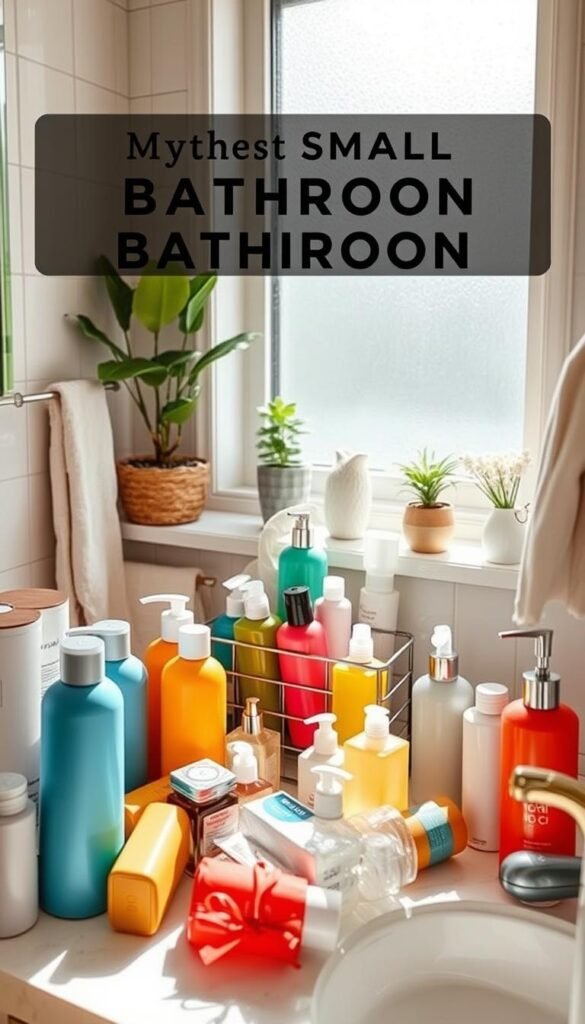
- Zero counter space: wall or over-door storage keeps daily toiletries off the sink and reachable during morning routines.
- No drawers or shallow vanity: trays and small bins create zones and stop the “junk pile” effect inside the vanity.
- No linen closet: slim cabinets or a narrow toilet-adjacent shelf hold toilet paper and spare towels without crowding the room.
- Shower bottle clutter: a hanging caddy or tension pole keeps bottles off the floor, reducing slips and easing cleaning.
„Think in zones: active items at eye level, backups higher or elsewhere.“
Decide what is daily versus backup before buying. That prevents overflow and keeps limited space useful.
How We Chose These Space-Saving Bathroom Organizers
The review focused on how products perform in tight layouts, which mounts suit renters, and which materials resist humidity. Selection criteria are practical so readers can match a purchase to a real room and routine.
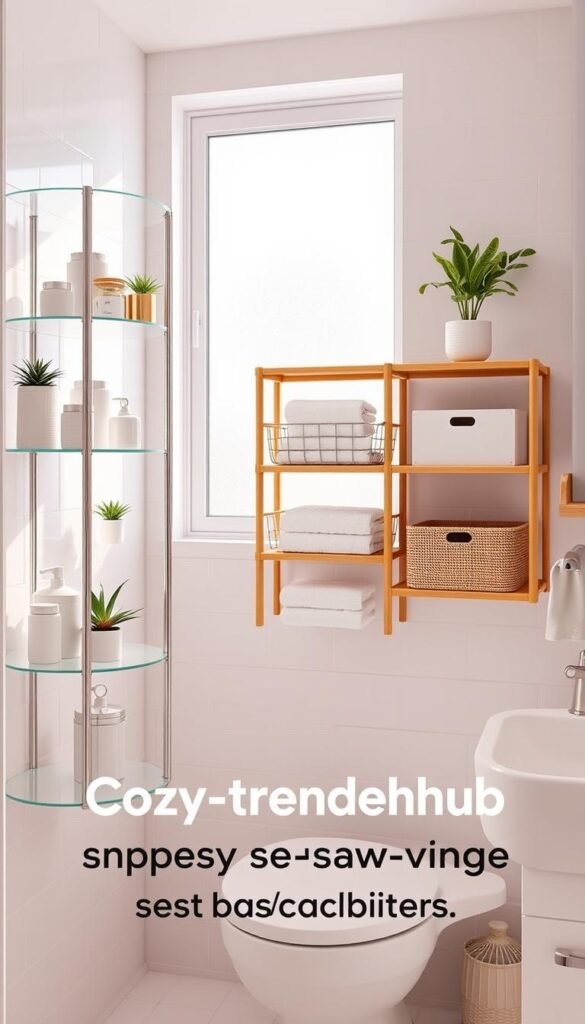
Small-space fit and footprint
Measure first. Over-toilet shelves, behind-the-door racks, and under-sink pull-outs were judged by how much floor space they save and the clearance they need.
Renter-friendly installation
Non-drill options (adhesive, tension, over-the-door) are highlighted when they hold typical loads. Drilled mounts score higher for heavy loads but may not suit renters.
Moisture resistance and easy cleaning
Clear plastic bins and coated metal won points. They wipe clean after spills and resist steam better than fabric or untreated wood.
Visibility vs. hidden storage
Clear containers make it easy to spot what’s low and avoid duplicate buys. Tinted or closed cabinets cut visual clutter but can hide essentials.
- Key criteria: footprint, install method, humidity durability, and cleanability.
- Each product listing includes „best for,“ dimensions, pros/cons, and who should skip it.
„Choose materials and mounts that match both the room and your lease limits.“
Best Bathroom Organizers for Small Bathrooms
Smart storage starts by matching a product to the tight spot it will actually solve. Below is an at-a-glance buyer guide and quick notes that support a comparison table and individual product blocks.
| Type | Best for | Install | Footprint | Key tradeoff |
|---|---|---|---|---|
| Vtopmart 25-Piece Tray | drawer chaos | none | low | needs a closing drawer |
| 2-Tier Under-Sink Pull-Out | under-sink black hole | slide install | low | measure around pipes |
| ClearSpace Plastic Bins | fast category sorting | none | varies | visible clutter if open |
| Floating Shelves (acrylic/painted) | vertical wall use | anchors/holes | vertical | weight limits vary |
Top picks, who they suit, and quick pros/cons
Vtopmart 25-Piece Drawer Organizer Set — Ideal for anyone with shallow vanity drawers who needs zones. Pros: modular layout and visibility. Cons: drawer must close with inserts.
2-Tier Under-Sink Pull-Out — Solves the under-sink “black hole” by bringing items forward. Pros: easy access and uses vertical under-sink space. Cons: check clearance around pipes and garbage disposals.
ClearSpace Clear Plastic Storage Bins — Great for rapid category sorting of hair, skincare, and first aid. Pros: spill-proof and humidity resistant. Cons: clear bins can look busy when cabinets are open.
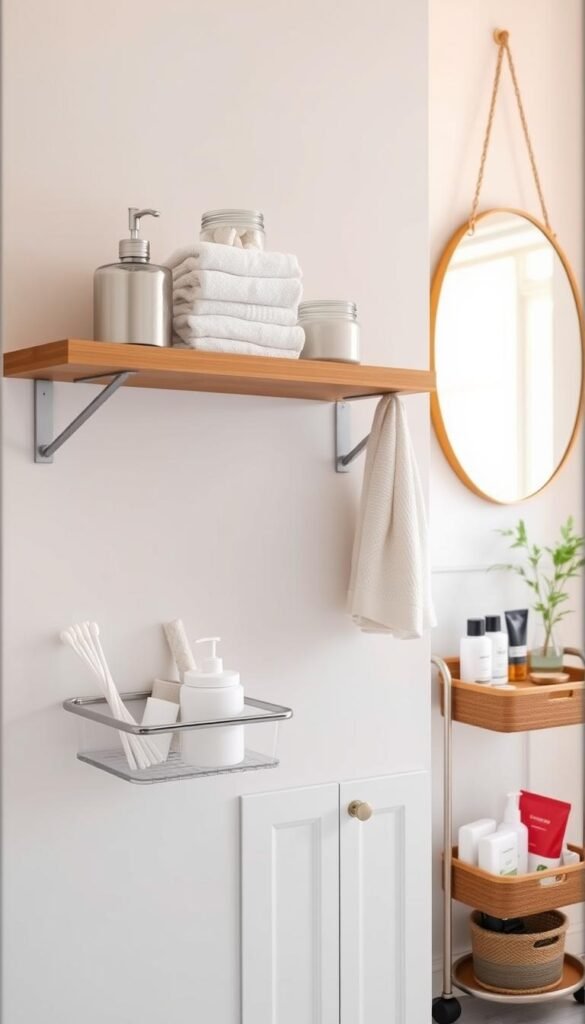
Floating Shelves (acrylic vs painted) — Use blank wall space to store daily items. Acrylic is lightweight and nearly invisible; painted wood holds more weight. Pros: opens space; Cons: renter anchors may be needed.
Slim Toilet Paper Cabinet (Aojezor) — Fits narrow gaps next to the toilet to hold backups. Pros: compact cabinet storage; Cons: limited capacity and stability depends on model.
6-Tier Over-the-Door Organizer — A renter-friendly option that works with pedestal sinks. Pros: no drilling; metal/plastic resists humidity better than fabric. Cons: watch door clearance.
Simplehuman Tension Pole Shower Caddy — Keeps bottles off the tub floor and drains well. Pros: adjustable height and good drainage. Cons: requires sufficient ceiling height.
Wall Hooks & Combination Towel Rack — Best for towel control and quick turnover. Pros: hooks are fast to use; racks hold mixed towel sizes. Cons: heavier racks may need anchors or a drill-free Command alternative.
„Match each piece of storage to a single problem — drawer chaos, an under-sink black hole, or shower clutter.“
Over-the-Toilet Storage That Adds Space Without Eating Floor Space
Adding storage above the toilet often delivers the biggest gain in usable space without shrinking the walking area. This approach uses vertical real estate to free countertops and cabinets below.
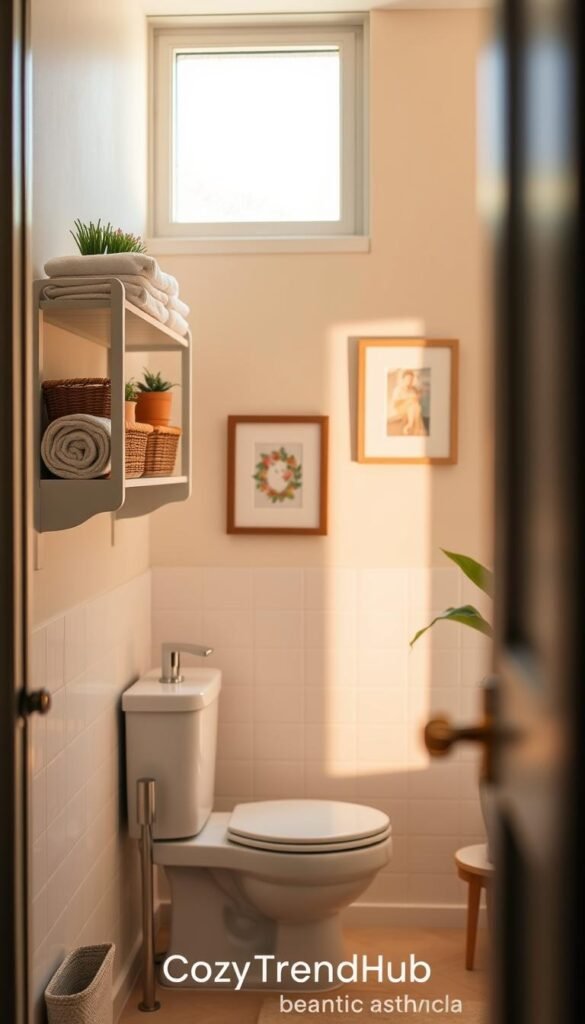
Freestanding units vs wall-mounted options
Freestanding cabinets slide around the toilet base and give multiple shelves in one footprint. They are renter-friendly and require no drilling.
Wall-mounted cabinets create a cleaner look and keep the floor visible. They usually need studs or anchors and may require landlord approval.
Buyer-led checklist before you buy
- Measure toilet tank height and distance to the wall.
- Check baseboard depth and any trim that can block a cabinet back.
- Allow clearance for the lid and for cleaning access.
- Decide what will live here: backup toilet paper, spare towels, and guest supplies work well.
Practical pros and cons
- Freestanding: no holes, easier return on rentals; can wobble on uneven floors and looks bulkier.
- Wall-mounted: frees visual floor space and looks neat; needs secure mounting and may not suit renters.
„Place backups and extras above the toilet; keep daily items within reach elsewhere.“
| Type | Footprint | Stability | Best use |
|---|---|---|---|
| Freestanding cabinet | Small floor base | Depends on floor | Toilet paper, towels |
| Open shelves | Minimal | Moderate | Decor, light supplies |
| Wall cabinet | No floor take | High with proper anchors | Hidden storage, host supplies |
Floating Shelves That Turn Blank Wall Space Into Storage
A few floating shelves can turn unused vertical space into neat zones for daily routines. This solution suits renters who need extra storage without adding bulk. Shelves keep counters clear and put commonly used items where they are easy to reach.
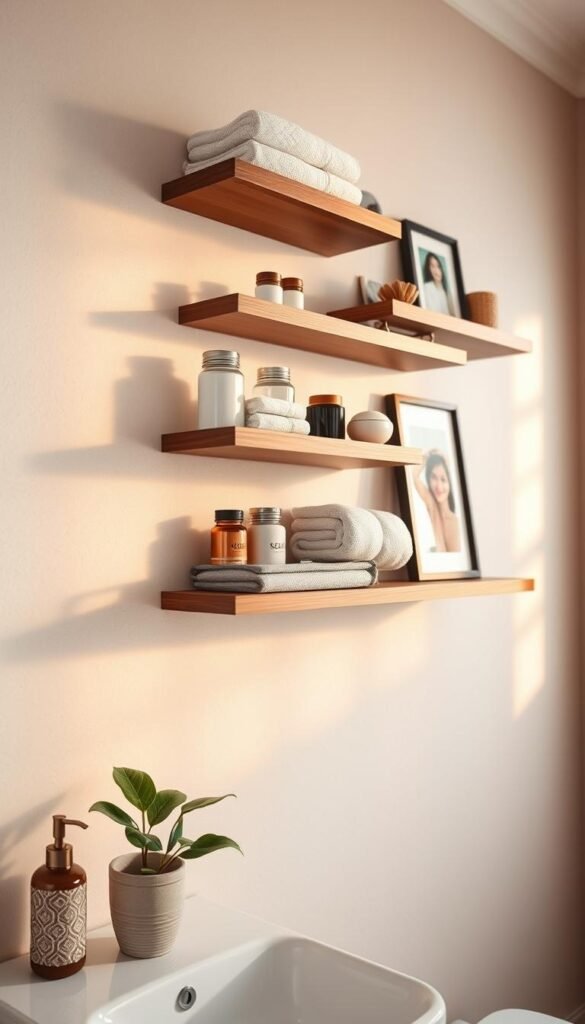
When floating shelves make sense
Choose a shelf when the room has blank wall space but limited cabinets or counter area. Floating units add storage without stealing floor space.
Clear acrylic vs painted/wood
Acrylic is ideal for small bottles like nail polish and perfume. It reads visually light and keeps items visible.
Painted or wood holds folded towels and bulk supplies. It looks finished and carries more weight, but it adds visual mass to a tight room.
Placement and clutter control
Keep daily items at arm level and bulk higher. Avoid mixing many bottle heights on the same shelf.
- Use a “rule of three” or zones: one shelf for skincare, one for hair, one for backups.
- Leave clearance under each shelf so wiping is easy.
- Avoid raw wood in steamy areas; choose wipeable finishes.
„Limit each shelf to a single category so storage stays useful, not messy.“
| Type | Good for | Key tradeoff |
|---|---|---|
| Acrylic | small bottles, perfume | lower weight limit |
| Painted/Wood | towels, bulk supplies | more visual weight |
Over-the-Door Bathroom Organizers for Toiletries, Hair Tools, and Bottles
A well-chosen over-the-door rack keeps styling tools, bottles, and toiletries organized without a drill. This solution reclaims wasted vertical door space and reduces counter clutter.
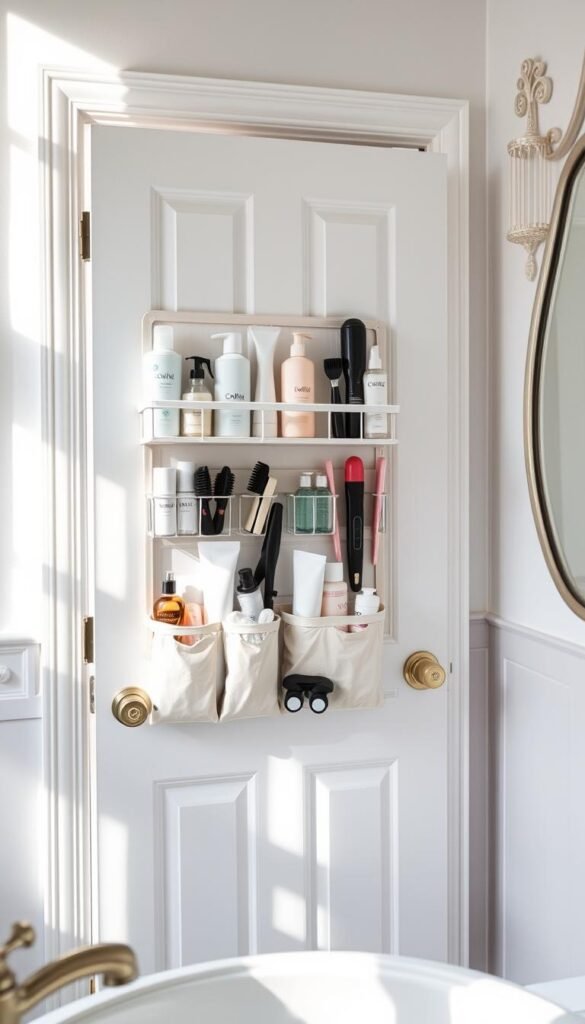
Why metal or plastic outperforms fabric
Metal and coated plastic resist humidity. They wipe clean, won’t sag, and avoid mildew that fabric can trap. That durability matters in wet rooms.
When to pick an over-the-door unit
- Renters who can’t drill and need easy, removable storage.
- Pedestal sinks with zero cabinetry and vanities with shallow drawers.
- Shared spaces where quick access to hair tools and daily toiletries speeds routines.
| Feature | What to check | Tradeoff |
|---|---|---|
| Material | metal or plastic over fabric | sturdier, less mildew |
| Pocket depth | deep pockets for hair tools | adds weight to the door |
| Door clearance | measure thickness and trim | may block closing or hit towel bars |
Tip: Assign tiers by routine—daily styling, tools, and backup bottles—so mornings stay fast and neat.
Under-Sink Organizers That Work Around Plumbing
A smart pull-out system can turn a cramped cabinet into tidy, reachable storage without heavy alteration.
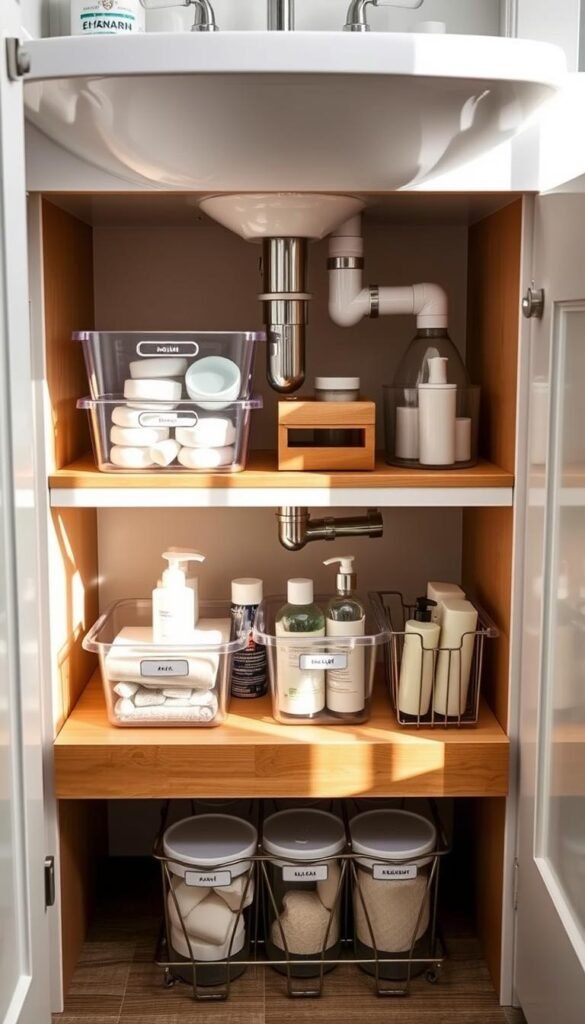
Pull-out drawers that reach the back
Pull-out “drawer” units slide items forward so nothing disappears in the back. Adjustable models can be fitted around the P‑trap and supply lines and act like shallow drawers.
Clear bins on the pull-outs stop the endless excavating that happens in deep spaces. They also make it simple to spot low supplies.
How to size around common U.S. plumbing
Measure from the cabinet floor to the sink bottom and note the P‑trap height. Account for the garbage disposal’s bulk if present.
Leave at least 2–3 inches of clearance behind the trap and 1–2 inches at the sides for supply lines. Many pull-outs offer cutouts or adjustable frames to fit these shapes.
What to store here — and what to move out
Use under-sink storage for cleaning liquids, extra hand soap, sealed backups, and extra razor heads. Put tall bottles where clearance allows.
Keep sensitive items elsewhere: medications, heat-sensitive products, and anything that fares poorly in humid, enclosed spaces.
| Feature | Tip | Pitfall |
|---|---|---|
| Adjustable pull-out | Configure around pipes | May reduce vertical room for tall bottles |
| Clear bins | Group like items by use | Cheap plastic can yellow or crack |
| Material | Choose coated metal or plastic | Uncoated metal may rust |
Measure twice, buy once: accurate fit is non‑negotiable with under-sink systems.
Final note: pull-outs solve access and wasted space while keeping the area tidy. Proper measurement and simple layout choices make these products reliable long-term storage solutions under the sink.
Drawer and Vanity Organizers That Stop Daily Clutter at the Source
A tidy vanity starts by corralling daily products where they belong—inside drawers, not on countertops.
Drawer organization clears the counter by default. When each product has a place, mornings run faster and clutter shrinks without extra effort.
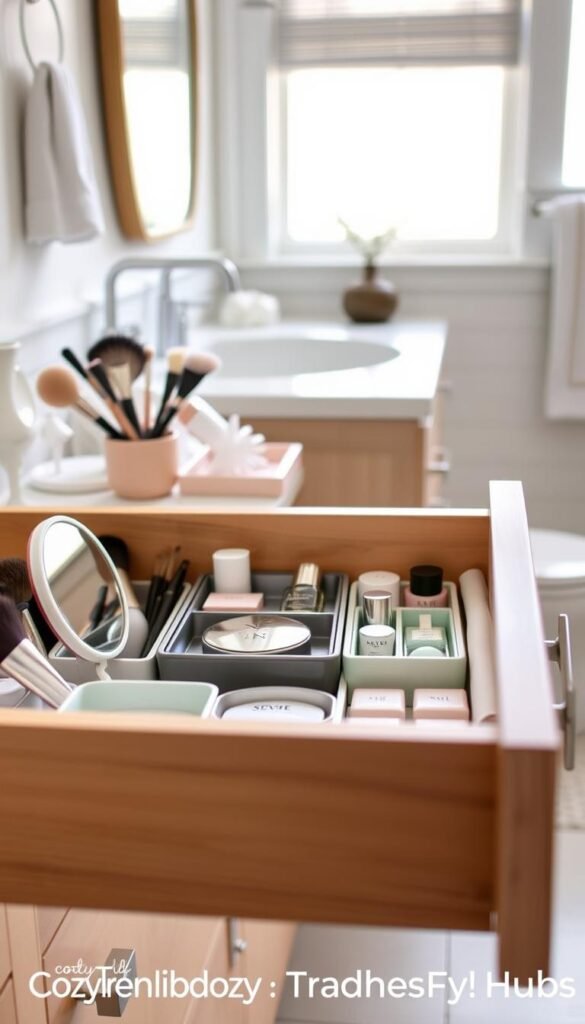
Mix-and-match tray sets to create zones
Use clear tray sets like Vtopmart inserts to make zones for skincare, makeup, and first aid. Zones stop the “junk pile” effect by giving each category a fixed spot.
Small bins to limit sample overflow
Designate one small bin for samples and travel sizes. When that bin fills, remove or use items to keep the count steady. This creates a strict cap on what comes back into drawers.
Simple habits that keep things working
Seasonal reset: every 3–4 months discard empties and expired makeup. This keeps drawers usable and prevents buildup.
Daily micro-habit: spend 60 seconds after wiping the sink to reset one drawer. Small, consistent tidying avoids big cleanups later.
| Solution | What it controls | Who it’s best for |
|---|---|---|
| Mix-and-match tray sets | Zones for makeup, skincare, and tools | People who want quick access and visible order |
| Small sample bin | Caps sample overload | Users with many trial-size items |
| Single-drawer reset habit | Daily clutter prevention | Busy households that need low-effort upkeep |
„Always organize a little so you’re never organizing a lot.“
Clear Bins and Containers That Make Cabinets Easier to Maintain
Durable, clear plastic simplifies cleanups and keeps spills from ruining storage. It resists moisture, wipes clean, and lets people spot what’s low at a glance. That visibility reduces duplicate purchases and rush trips to the store.
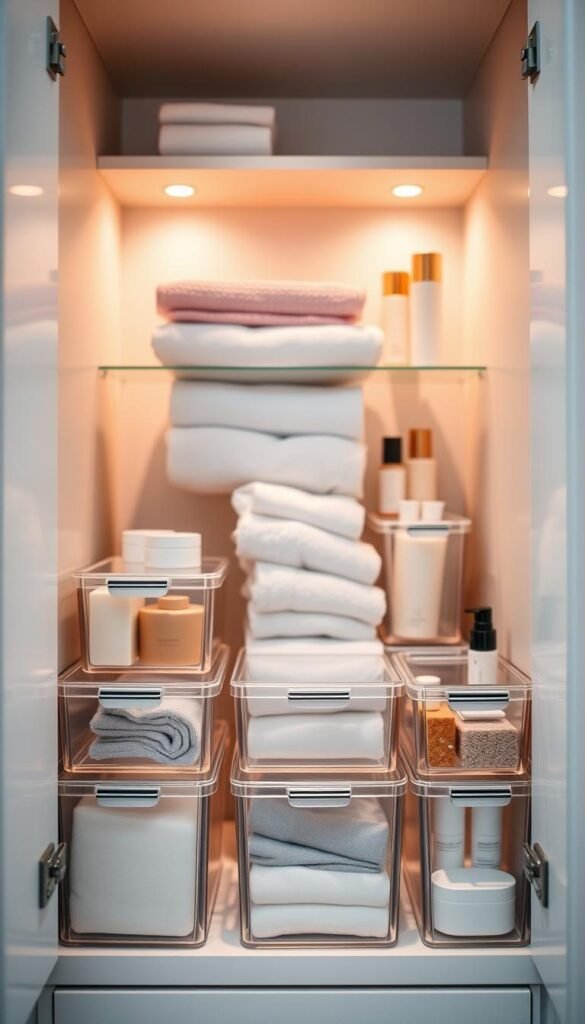
Why clear plastic works in a wet room
Clear plastic won’t warp from a leaked bottle or mildew in humid air. It tolerates wipes, bleach solutions, and quick rinses. That makes it the practical pick when maintenance matters more than matchy decor.
Deep handled bins vs. shallow trays
Deep, handled bins are ideal under the sink. They pull forward, carry spills, and fit around pipes. Use them for cleaners, backup soaps, and tall bottles.
Shallow trays or slim containers belong in drawers or on shallow shelves. They create zones for daily items like makeup, razors, and dental supplies without wasting vertical space.
Practical pros, cons, and labeling tips
- Pros: easy to clean, quick inventory checks, durable against leaks.
- Cons: clear bins can look busy on open shelving; mix sizes for a calmer look.
- Labeling: group by routine—hair, dental, first aid, travel—so maintenance stays simple.
| Bin type | Best placement | Pros | Cleaning notes |
|---|---|---|---|
| Deep handled bin | Under-sink cabinet | Pull-and-carry, fits tall bottles | Wipe or rinse; resists leaks |
| Shallow tray | Drawers & shallow shelves | Creates zones, easy access | Wipe with damp cloth; dry fully |
| Matching small bins | Open shelving or linen shelf | Consistent look, easy swaps | Wipe; store in closed cabinet to reduce visual clutter |
Quick pick rule: choose clear containers and bin depth to match the cabinet layout and daily routine. That small decision makes long-term upkeep a low-effort solution.
Shower Storage That Keeps Bottles Dry and Off the Tub Ledge
Bottles piled on the tub edge make showers cluttered and slippery. They collect drips and often end up on the floor, which is both gross and unsafe.
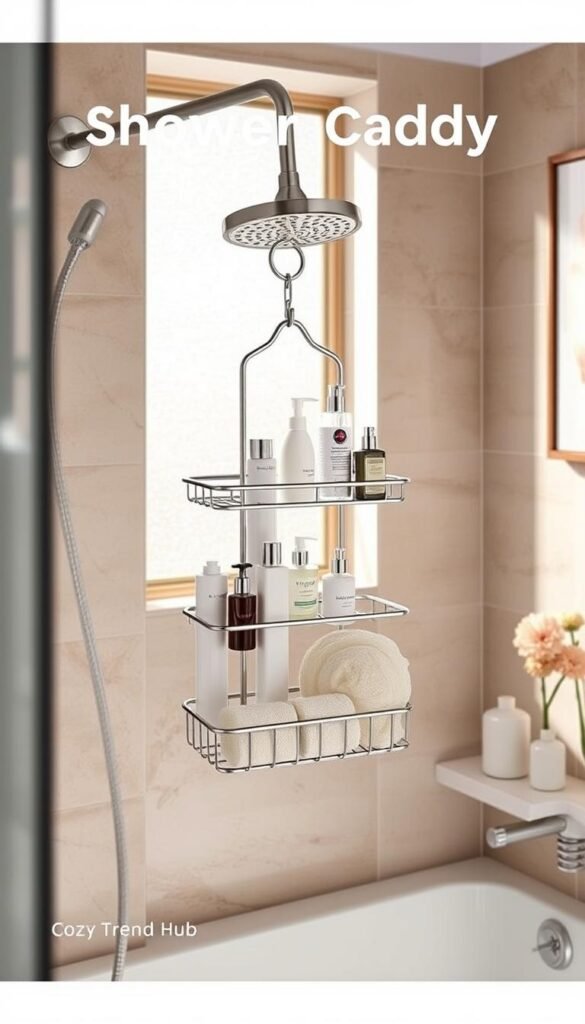
Tension pole caddies for shared showers and lots of products
Tension pole systems like the Simplehuman caddy add vertical storage without drilling. They suit shared shower setups because multiple shelves hold several products while keeping the tub ledge clear.
Drainage and rust resistance: what matters long-term
Good drainage prevents water from pooling around bottle bases so items dry between uses. Choose rust-resistant finishes or stainless steel to avoid corrosion over time.
When a hanging caddy is better than corner shelves
A hanging caddy works when ceiling height is limited, or renters prefer a no-tension, near-showerhead solution. It fits when only a few daily bottles need quick access.
| Solution | Pros | Cons | Fit checks |
|---|---|---|---|
| Tension pole caddy | High capacity, no tile holes | Needs correct tension; can slip | Ceiling height range; adjustable shelf spacing |
| Hanging caddy | Easy access near showerhead | Can swing; limited capacity | Shower arm clearance; hook stability |
| Corner shelf (mounted) | Stable, heavy-duty | May need drilling or strong adhesive | Tile type; adhesive suitability |
„Drainage and rust resistance determine long-term value more than style.“
Toilet-Adjacent Storage for Extra Toilet Paper and Cleaning Supplies
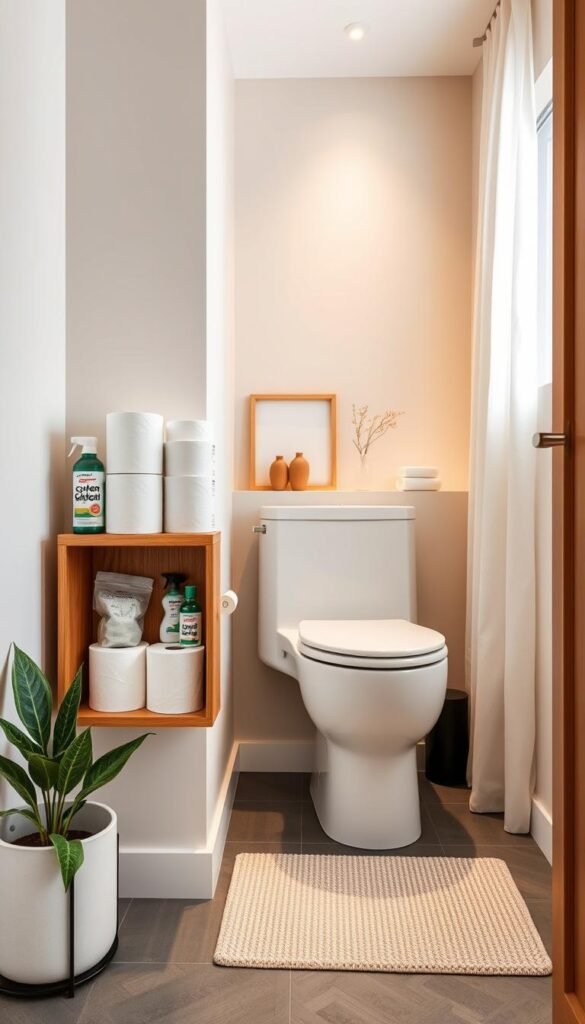
When a home lacks a linen closet, a slim cabinet beside the toilet or vanity provides neat, vertical storage without crowding the floor.
Skinny cabinets that fit in narrow gaps
Choose a narrow unit designed for tight spaces. Brands like Aojezor make models that slide into gaps between the toilet and wall or next to a vanity.
How much backstock to keep without overflow
Keep only a week’s worth of toilet paper on hand in the room. Store bulk packs elsewhere. This prevents visual clutter and frees the cabinet for cleaning sprays and wipes.
- Internal layout: top shelf for wipes and spray; middle for rolls; bottom for brushes or trash bags.
- Measure first: include baseboards and door swing before you buy.
- Tradeoffs: very slim cabinets can wobble; anchor if needed.
| Feature | Fit | Notes |
|---|---|---|
| Aojezor slim cabinet | 6–9″ gap | Good vertical capacity; soft-close doors |
| Open narrow shelf | 4–8″ gap | Easy access; looks lighter but exposes contents |
| Tall slim cabinet | 8–12″ gap | More rolls and supplies; may need wall anchor |
„Limit in-room backup to what you’ll use in a week; store bulk elsewhere to keep small spaces calm.“
Towel Storage Options for Tiny Bathrooms (Without Piling on the Floor)
A simple change to how towels are hung can stop the daily pile-up on the floor.
Identify the real problem: towels are bulky, used daily, and often end up on the floor when there’s no clear spot to dry or store them.
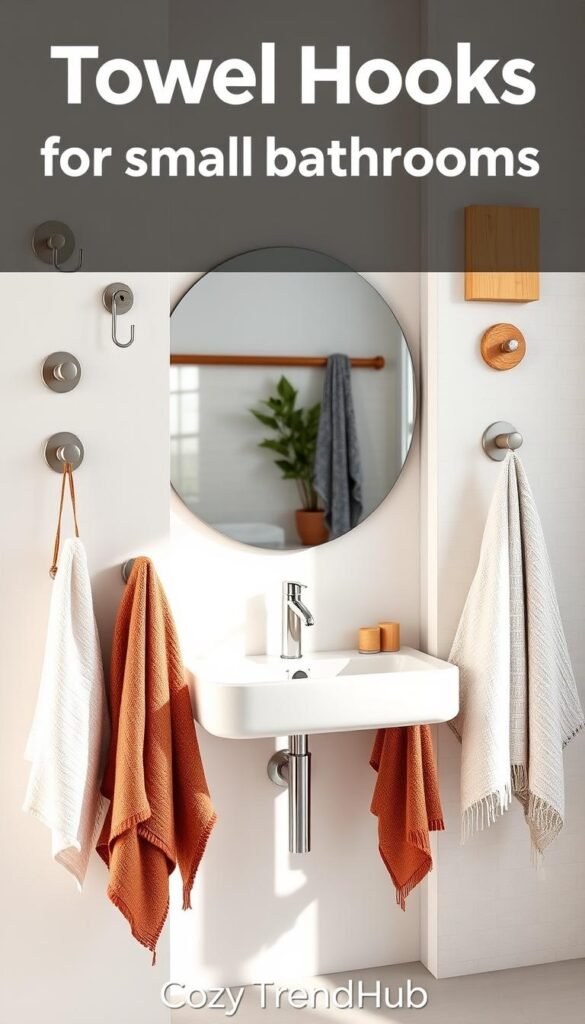
Wall hooks for households with kids or frequent towel changes
Hooks give each person an individual spot. That makes it easier to train kids to hang towels rather than toss them.
Why it works: single hooks dry towels faster and take almost no wall space. Command-style hooks are renter-friendly if loads are light.
Wall-mounted racks with shelf + bar + hooks for mixed towel sizes
A combination rack offers hanging and stacked storage in one footprint. Use the shelf for folded towels and the bar for wet ones.
Best for: households that need both hanging and stacking without adding floor furniture. Drilled racks hold heavier loads. Command-style alternatives suit renters when weight is low.
When to relocate extra towels and keep only “active” towels in-room
Keep only the towels in active rotation in the room. Move extras to a linen or bedroom closet to avoid overflow and floor clutter.
Spacing towels on hooks or the bar helps drying and reduces musty smells. This simple habit cuts laundry and keeps the room usable.
„Limit in-room stock to what’s used in a week; store bulk elsewhere to keep the floor clear.“
| Solution | Best for | Renter note |
|---|---|---|
| Single wall hooks | frequent changes, kids | Command hooks OK for light towels |
| Combination rack (shelf+bar+hooks) | mixed towel sizes | drilled install is sturdier |
| Folded shelf only | compact stacking | use breathable storage; keep extras out of room |
If You Have a Linen Closet, Shelf Dividers Prevent Collapsing Stacks
A linen closet that looks tidy starts with simple dividers that stop stacks from toppling.

Collapsed towel piles make it hard to reach what is needed and create a visual mess that discourages upkeep.
Try acrylic shelf dividers to keep towels and washcloths upright and visible. They are low-effort and wipe clean after spills.
Who benefits
- Households with a linen closet that constantly experiences “avalanches.”
- Shared closets where multiple people access the same shelves and mix items.
- Renters who want a nonpermanent fix that does not alter shelving.
Sizing and fit
| Measure | Tip | Note |
|---|---|---|
| shelf depth | Match divider height to shelf depth | Leaves room for stacked towels |
| shelf thickness | Choose a grip that clamps without damage | Look for rubber feet or protective pads |
| stack width | Place dividers every 10–12 inches | Creates neat columns and easy access |
Tradeoffs: dividers do not add extra storage. They protect existing shelf space and make items easier to find.
„Acrylic dividers keep stacks upright and make replenishing towels less of a chore.“
Make Everyday Bathroom Items Look Intentional (Even in a Small Space)
Choosing clearer groupings makes counters feel cleaner and speeds daily routines. A few well-chosen containers turn scattered products into one easy-to-wipe zone. That lowers visual clutter and helps quick resets after use.

Tinted glass canisters that hide the mess but keep contents obvious
West Elm Color Blocked Glass Canister is a good example. The tint softens what is visible while still letting users identify cotton rounds or Q-tips at a glance. Use these for frequently used bathroom items so cabinets and counters look calmer without removing access.
A tray approach that corrals bottles and simplifies wiping
Place daily bottles on a single wipeable tray to make cleaning fast. One swipe clears water rings and spills. Trays also keep bottles from sliding into the sink rim and make it clear what belongs on the counter.
Small countertop catchalls for Q-tips, jewelry, and hair ties
Mosser Glass Bathing Lady dish works well as a catchall. It holds rings, hair ties, and bar soap so these small items don’t drift across the sink. A dedicated dish reduces morning search time and keeps small things contained.
„The goal is easier daily resets and faster wipe-downs, not a staged display.“
| Solution | Good for | Tradeoff |
|---|---|---|
| Tinted glass canister (West Elm) | cotton, Q-tips, tampons | Looks tidy but can break; pick stable shapes |
| Wipeable tray | daily bottles and pumps | Needs correct size to avoid overloading narrow counters |
| Small catchall dish (Mosser) | rings, hair ties, bar soap | Limited capacity; place near sink edge |
Buyer tradeoffs: glass looks cleaner but is fragile. Choose low, wide pieces on narrow counters to avoid tipping. Prioritize materials that wipe easily and match the user’s daily reach zone. This practical approach makes upkeep simple and keeps the room feeling intentional.
Small-Bathroom-Friendly “Extras” That Still Earn Their Footprint
Few additions should be decorative; they should solve repeat problems. A compact extra earns its place by preventing bigger messes like overflowing trash or laundry piles.
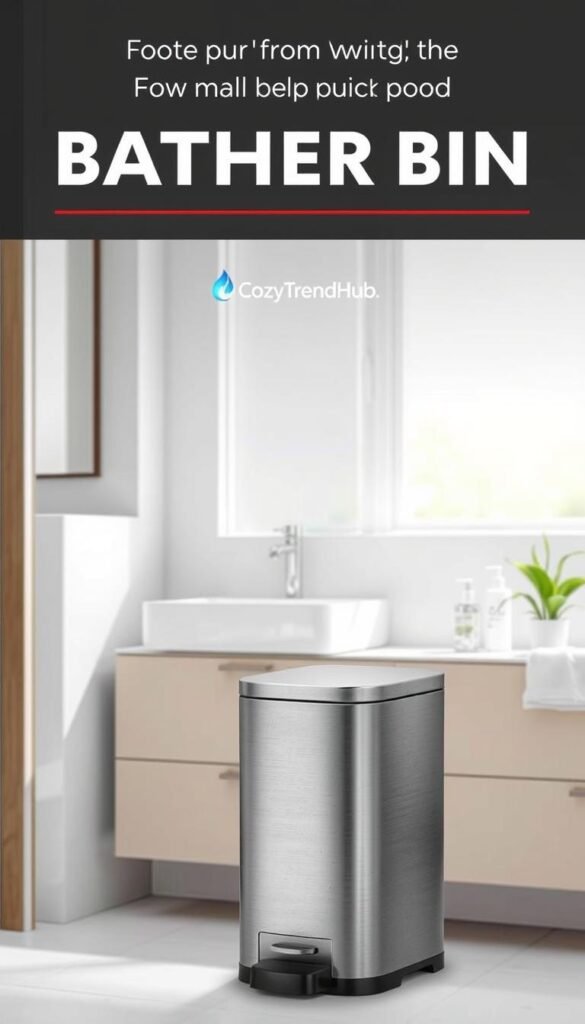
Compact pedal trash cans
Dusen Dusen Pedal Trash Bin offers a powder-coated steel body, a quiet pedal, and an inner pail that fits a grocery bag. It uses little floor space while giving true capacity.
Alternative: Simplehuman 4.5L is slightly wider but still modest and has a reliable lid seal.
Who should buy: anyone who gets countertop trash because the tiny can hides waste and improves hygiene. Buying tips: confirm it fits beside the vanity or toilet and that the inner pail is easy to clean.
Hampers that stop towel and clothing pileups
Only add a hamper if a true corner exists. A narrow hamper keeps dirty towels off the floor and reduces daily clutter.
Skip rule: if it blocks door swing or walking paths, move laundry to a closet and add hooks instead.
| Piece | Footprint | Who it helps |
|---|---|---|
| Dusen Dusen Pedal Bin | Very small | Counterside trash control |
| Simplehuman 4.5L | Small–medium | Higher capacity, tight corners |
| Narrow corner hamper | Slim vertical | Homes with an unused corner |
„Pick only pieces that stop recurring messes and don’t create new obstacles.“
Buying Considerations Before You Add More Storage
Smart purchases start with three checks: door clearance, toilet spacing, and under‑sink plumbing. A short pre‑purchase checklist prevents returns and wasted money in tight rooms.
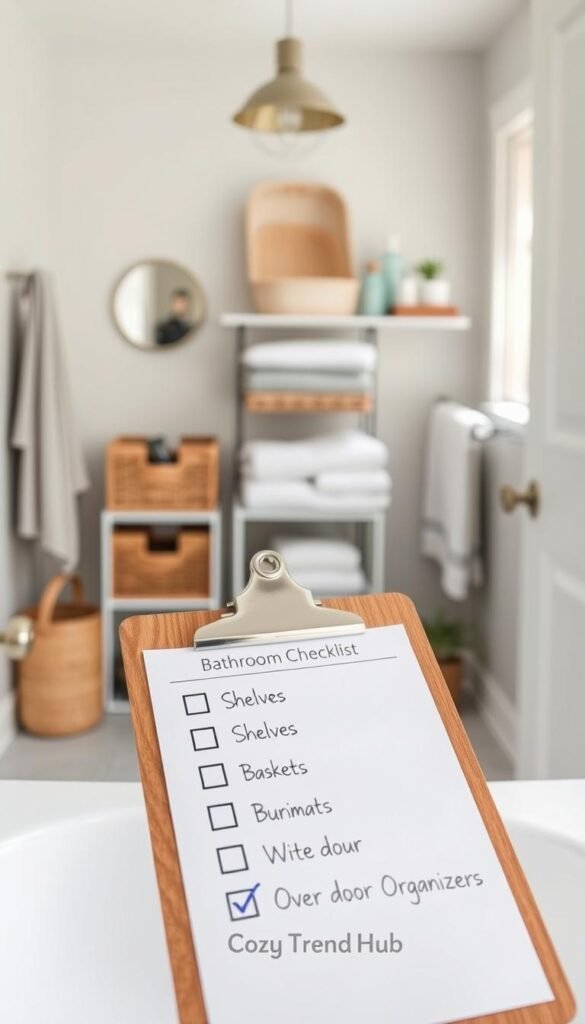
Measure first
Measure door swing, width, and trim so an over‑door unit or wall shelf won’t block movement.
Confirm toilet clearance and the distance to the wall. Note the sink basin and P‑trap layout under the cabinet.
Decide what must stay vs. move out
Keep daily hygiene items in the room; shift bulk paper, seasonal supplies, and rarely used kits elsewhere. This reduces clutter and frees space for the items you reach for every day.
Match storage to routine and materials
Place daily‑use items at reach level and backups in closed cabinets or higher shelves. Choose wipeable, moisture‑resistant materials like clear plastic or coated metal.
Renter note: prefer reversible installs—tension poles, adhesive hooks, and over‑door racks—unless drilling is permitted for high‑load needs.
„Measure, decide, and match: the right fit is the easiest way to keep a small room functional.“
Conclusion
strong. A focused swap—one shelf or one set of bins—often changes how the whole room functions.
Identify the single biggest friction point (sink clutter, shower bottle mess, or no linen closet). Buy the product that solves that exact constraint and matches measured space and routine.
Start with one zone—drawer, under‑sink, or behind the door. Set it up and use it for a few weeks before adding another piece. Renter‑friendly options like over‑the‑door racks, tension poles, and removable hooks usually give the most storage with least commitment.
Keep maintenance realistic: a quick wipe and a seasonal declutter keep cabinets, shelves, and bins working so new products don’t create new clutter. Use the roundup to compare options, then scroll to the category that matches your problem and pick the right way forward.



3 Comments