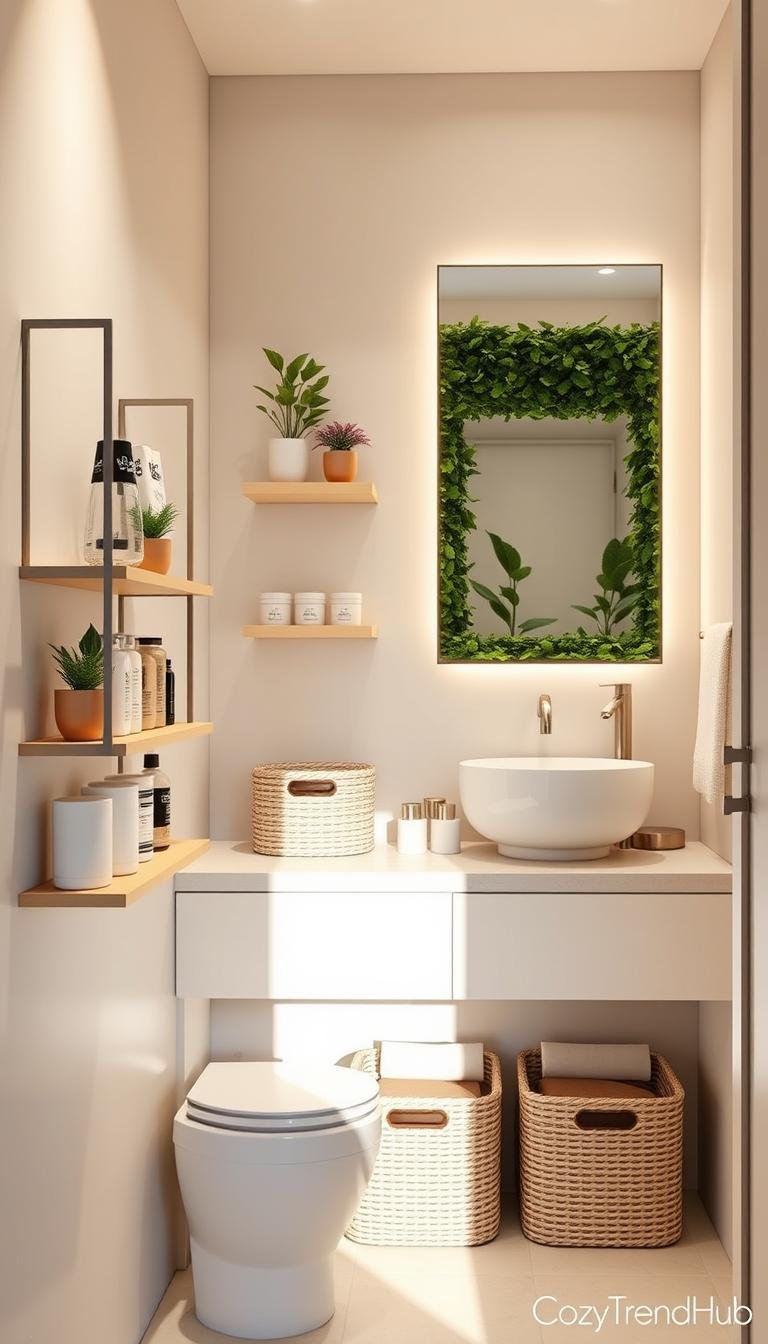
Small baths feel like a puzzle. Limited floor space, few cabinets, and daily items spilling onto counters create constant clutter. This introduction outlines practical, renter-friendly fixes that work in tight layouts.
The guide is organized by where storage is missing: walls, doors, under-sink, freestanding units, and shower or counter spots. Each section says who a pick suits — renters or owners, pedestal sink or vanity, single-user or shared baths — and lists clear pros and cons.
Expectations are set up front: comparison-table fields include installation type, footprint, capacity, moisture resistance, ease of cleaning, and whether a piece hides clutter. Renter realities get attention too, with no-drill options and adhesive limits spelled out.
The working definition of „best“ here favors pieces that are reliable, right-sized, easy to maintain, and compatible with everyday life over showroom styling. Product examples may name West Elm, Pottery Barn, Yamazaki, and mDesign to speed shopping while keeping focus on features.
Key Takeaways
- Small layouts need vertical and wall-based storage to reclaim counters.
- Find solutions by the missing spot: walls, doors, under-sink, freestanding, shower/counter.
- Each pick will note who it suits and the main pros and cons.
- Comparison fields: installation, footprint, capacity, moisture resistance, cleaning, and clutter-hiding.
- Renters should favor no-drill or low-damage options when possible.
- „Best“ means practical fit, ease of care, and real-world reliability over flair.
Start With a Small-Bathroom Game Plan: Purge, Measure, and Prioritize Daily Essentials
A quick plan of purge, measure, and prioritize saves time and prevents returns.
Purge first. Sort items into daily, weekly, backstock, and seasonal groups. Daily: face wash and toothbrush. Weekly: deep conditioner. Backstock: extra razors. Seasonal: sunscreen or winter cream.
Clearing half-empty bottles frees floor and cabinet space. Fewer products mean fewer containers and less visual clutter.
Measure next. Note under-sink width, height, and depth around plumbing. Measure open wall space above the toilet and door clearance for over-the-door organizers.
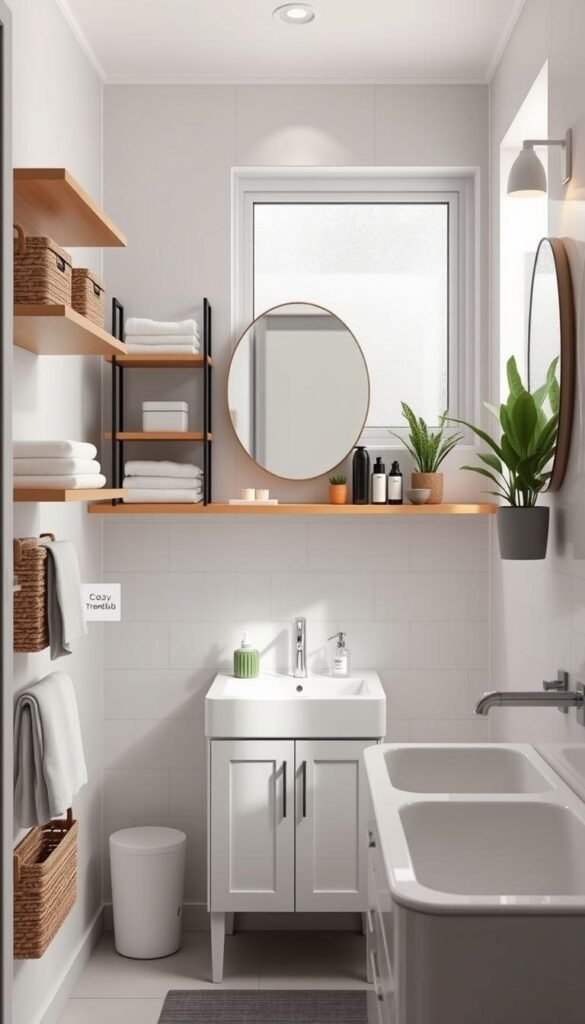
Then map zones to routines: dental zone, skincare zone, shaving zone, shower zone, and towel zone. Keep daily essentials within easy access to speed morning runs.
| Step | What to measure | Quick tip |
|---|---|---|
| Purge | Expired products, half-empty bottles | Donate unopened items; toss expired |
| Measure | Under-sink W×H×D, wall space, door clearance | Record numbers on phone before shopping |
| Prioritize | Daily vs. seasonal placement | Keep bulk items outside the room |
Shared room note: Assign a shelf or bin per person to avoid mixed items. When space is tight, move bulk toilet paper and guest supplies out of the cabinet.
Vertical Storage That Doesn’t Steal Floor Space
When floor area is at a premium, thinking up instead of out reclaims useful room. Vertical solutions increase capacity while keeping walking areas clear. They suit renters and owners who want quick gains without big installs.
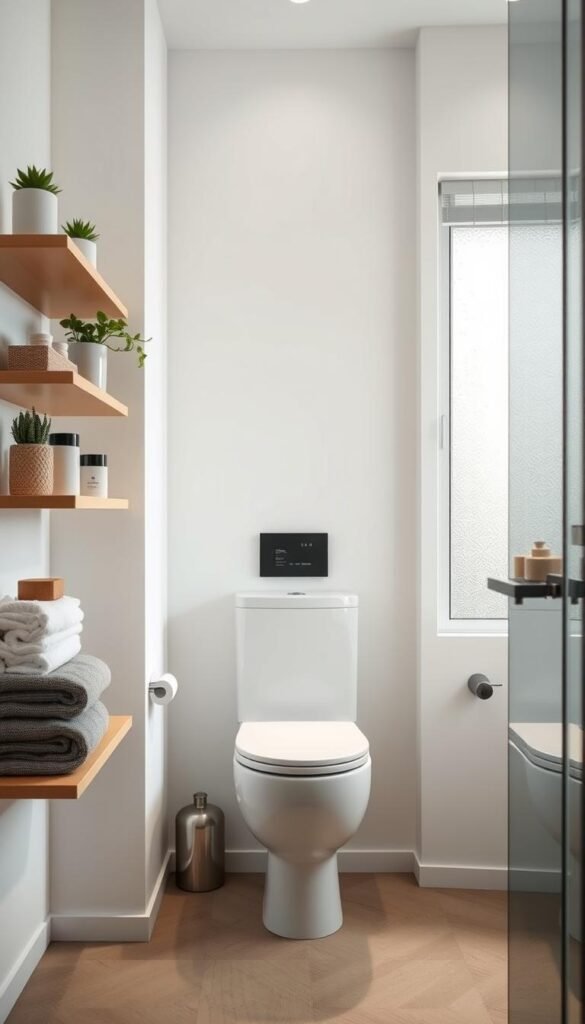
Floating shelves above the toilet or alongside the mirror
What they do: Add visible shelving for daily items. Lower shelves hold everyday products; higher rows store backstock.
Good for: Renters who can anchor into studs or use rated anchors.
Pros/Cons: Quick access and low cost vs. dust and potential visual clutter if items aren’t contained.
Wall cabinets and mirrored medicine cabinets
What they do: Offer closed storage that hides clutter and doubles as a mirror.
Placement: Above the toilet, beside a mirror, or behind a door. Use for meds, grooming tools, and backstock.
Over-the-toilet shelving and étagères
Great no-drill option. Check clearance behind the toilet, stability, and moisture-resistant finish.
Leaning ladder towel racks, hooks, and adhesive mounts
- Leaning ladders: add towel capacity without a linen closet; use non-slip feet or a tether.
- Multi-hook racks: keep towels off the floor; place within reach but away from direct splash.
- Adhesive mounts: clear counter clutter for light items—observe weight limits and cure time.
| Option | Installation | Max Weight | Ideal Placement |
|---|---|---|---|
| Floating shelves | Drill or rated anchors | 20–50 lb per shelf (varies) | Above toilet, beside mirror |
| Wall/medicine cabinets | Drill | 30–70 lb | Above vanity or toilet, behind door |
| Over-toilet étagères | No-drill standing | 10–40 lb per shelf | Clearance above tank |
| Adhesive hooks/mounts | No-drill | 5–15 lb (check label) | Near sink, inside shower on smooth walls |
Best bathroom storage for apartments: Door, Wall, and No-Install Organizers
Door-mounted solutions unlock hidden capacity without taking up precious floor area.
Over-the-door pocket organizers are ideal for hair tools, skincare, and small toiletries. They suit renters who need a no-install option. Check pocket depth, heat-safe slots for blow dryers, and whether the unit bumps the trim.
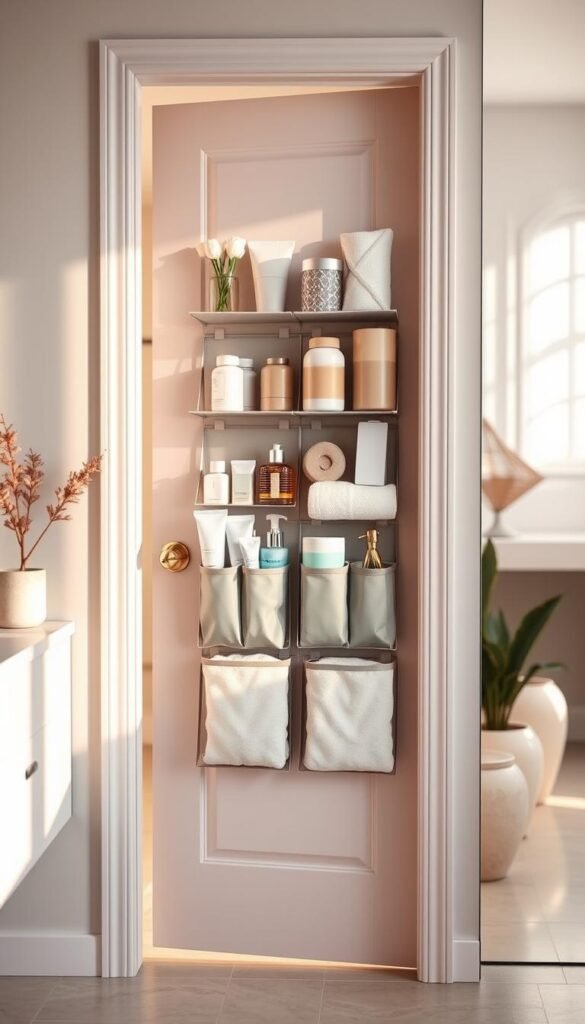
Inside-cabinet-door organizers and hooks
These organizers make use of overlooked vanity space. Put brushes, small sprays, and spare toothbrushes here. Avoid heavy glass bottles that stress hinges.
Magnetic containers
Magnetic containers work well on metal medicine cabinets. They keep bobby pins, tweezers, and nail clippers visible and easy to grab. Note: magnets can slip if overloaded.
- Who each option suits: over-the-door — multitaskers with many toiletries; inside-cabinet — vanity users; magnetic — anyone with a metal wall or cabinet.
- Measure before you buy: door thickness, hinge clearance, and gap to frame to prevent rubbing or failure to close.
| Option | Install | Pros | Cons |
|---|---|---|---|
| Over-the-door pockets | No-drill | Zero floor area, high capacity | Door swing noise, visual clutter when open |
| Cabinet-door hooks/organizers | No-drill/simple screw | Uses hidden space, tidy zones | Limits to light items, hinge stress if overloaded |
| Magnetic containers | No-drill on metal | Great for tiny items, easy visibility | Needs metal surface; limited weight |
Rental checklist: confirm the door still closes, adhesive is removable, the organizer won’t scrape paint, and the chosen area avoids constant water spray.
Cleaning note: switch to slim, consolidated products and containers to reduce clutter and make wipe-downs faster.
Under-Sink Storage Solutions That Work Around Plumbing
Pipes and odd cabinet shapes often steal usable space and hide small items. The right under-sink approach makes that wasted area usable without fighting plumbing.
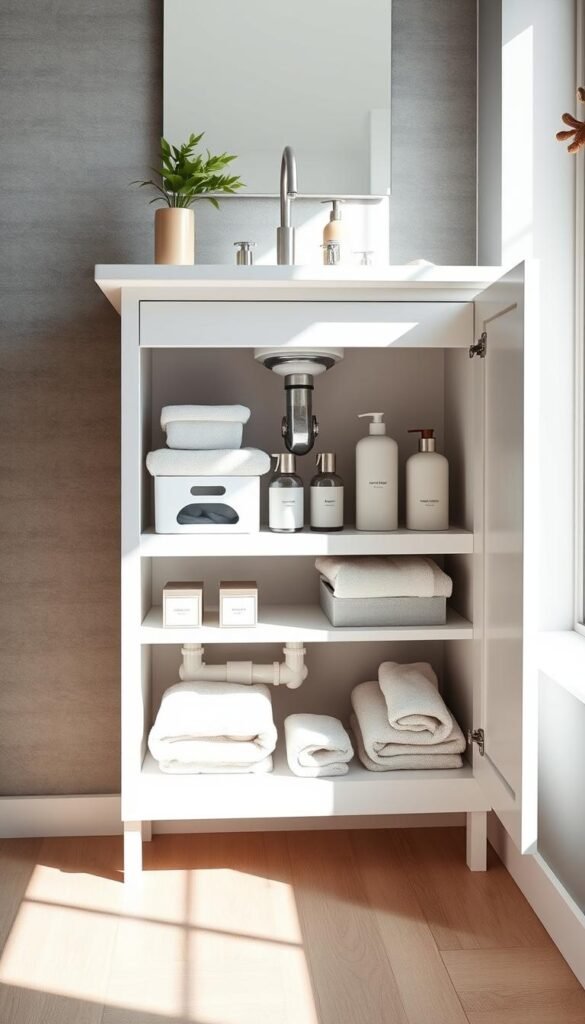
Expandable shelving and pipe-friendly tiers
Expandable under-sink shelving fits around traps and valves. Measure pipe placement, shutoff valve clearance, and shelf height before buying.
Good to check: adjustability, max load per tier, and whether the unit clears plumbing.
Stackable bins and slide-out drawers
Stackable drawers keep backstock and larger items visible. Slide-out trays prevent items from getting lost at the rear of a deep cabinet.
Pros: easier access and neat zones. Cons: need a smooth floor and correct depth to avoid snagging pipes.
Dividers, small containers, and sink skirts
Drawer dividers and labeled containers tame daily toiletries, makeup, and first aid. Small groupings reduce rummaging and speed cleaning.
For pedestal sinks, a washable sink skirt is a renter-friendly way to hide open bins. Choose water-resistant fabric and Velcro attachments.
| Option | Adjustability | Pipe-friendly | Pull-out depth |
|---|---|---|---|
| Expandable shelf | High | Yes | N/A |
| Slide-out drawer | Low–Medium | Depends on fit | Full-extension |
| Stackable bins | Medium | Yes | Shallow–Deep |
Maintenance tip: pick coated metal or wipeable plastic to handle humidity and spills. Keep cleaning supplies in a sealed container to protect the floor and base of the cabinet.
Freestanding Picks for Apartments: Carts, Slim Cabinets, and Double-Duty Pieces
A narrow cart or a slim cabinet can turn wasted space beside the toilet into neat, reachable storage. Freestanding pieces work when walls are off-limits or when a small floor area still exists to use.
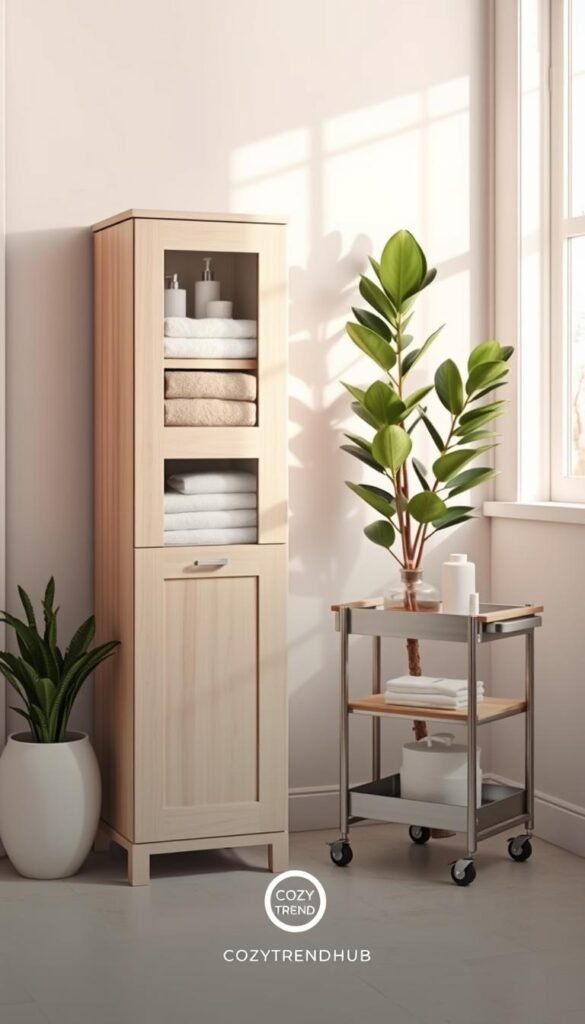
Rolling slim carts
Use in the gap beside the toilet or between cabinets. Measure exact width and check wheel quality. Choose wheels that clear baseboards and lock in place.
Bar carts and tiered utility carts
These move where the user stands. They suit shared rooms and flexible routines. Top tier can hold daily products; lower tiers carry backstock.
Freestanding linen cabinets
Good when no linen closet exists. Closed doors hide towels and toilet paper and reduce visual clutter. Pick rust-resistant finishes and avoid unsealed wood near wet zones.
- Pros: mobility, no drilling, flexible room placement.
- Cons: tipping risk, moisture issues, visible clutter if uncontained.
- Tip: use bins on carts and anti-tip straps where allowed.
| Piece | Footprint (W×D) | Capacity | Assembly |
|---|---|---|---|
| Slim cart | 6–10″ × 12–16″ | 3 tiers | Low |
| Bar/tiered cart | 18–24″ × 12–16″ | 2–3 shelves | Low–Medium |
| Linen cabinet | 18–30″ × 12–16″ | Several shelves, closed | Medium |
Place units to keep a clear walkway and free door swing. Match scale and style to the rest of the room to keep the small spaces feeling calm.
Small Bathroom Counter and Shower Storage That Reduces Visual Clutter
Counters and shower ledges often turn into clutter hotspots that make a small sink area feel cramped.
Use simple containers and matched pieces to calm the scene. A shallow tray groups daily toiletries and keeps the counter tidy. Choose a tray length that fits the counter depth and has a raised lip to catch spills.
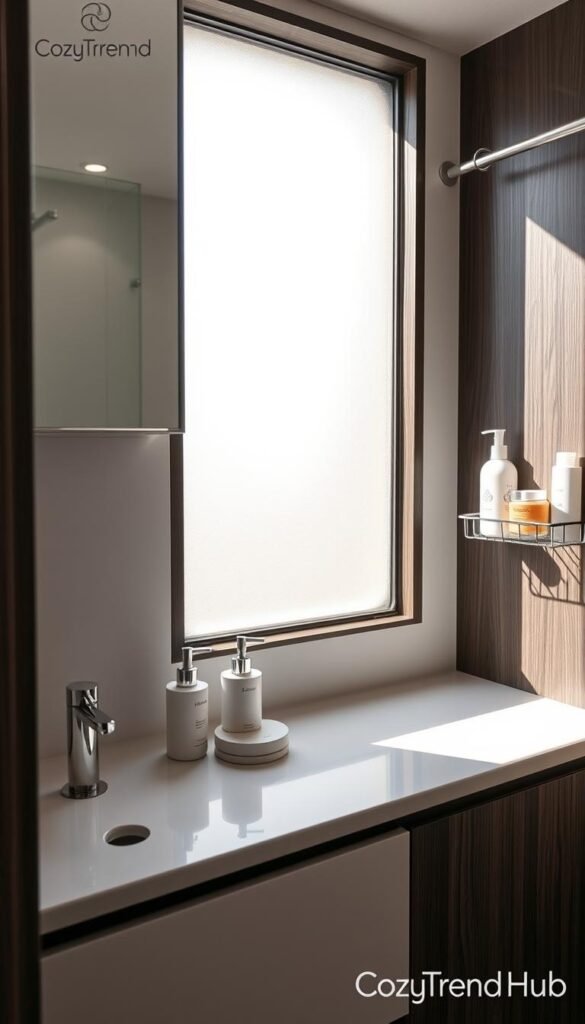
Countertop trays and matching canisters
Who this helps: people with tiny counters who need items visible but neat.
Pro: a matching set creates a cohesive look and hides small items like bobby pins. Con: opaque canisters must be labeled or cleared often.
Wicker and wire baskets
Wire baskets resist moisture and wipe clean. Wicker adds warmth but should be lined or kept dry.
Use baskets for toilet paper backstock, hand towels, and seasonal items. Place them under a console or on a shelf to free the counter.
Shower upgrades and buying checklist
Corner shelves keep bottles upright. Hanging caddies are no-drill but can swing. Wall-mounted dispensers cut down bottle clutter.
- Moisture resistance: rust-proof finishes
- Cleaning ease: smooth surfaces wipe quickly
- Placement: keep items within reach to avoid tipping
Quick reset: once a week wipe surfaces and return items to their containers. This small routine preserves the look and keeps the small bathroom storage working long-term.
Conclusion
Conclusion
A clear decision path pairs the room’s weak spots with simple, renter-friendly fixes. Match the layout (walls, doors, under-sink) to daily routines and what the user needs. Start by purging items and measuring once.
Choose your next purchase by use: messy counters → wall mounts and trays; loose towels → hooks or a ladder; missing supplies → under-sink drawers; no cabinets → a slim freestanding tower. Favor no-drill organizers and check door swing before ordering.
Quick checklist: dimensions, moisture resistance, load rating, open vs. closed options, and ease of cleaning. Do a monthly purge, weekly wipe-downs, and restock without overfilling.
Upgrade one zone at a time. The goal is calm, functional comfort: easy access to everyday items and less visible clutter in small spaces.