
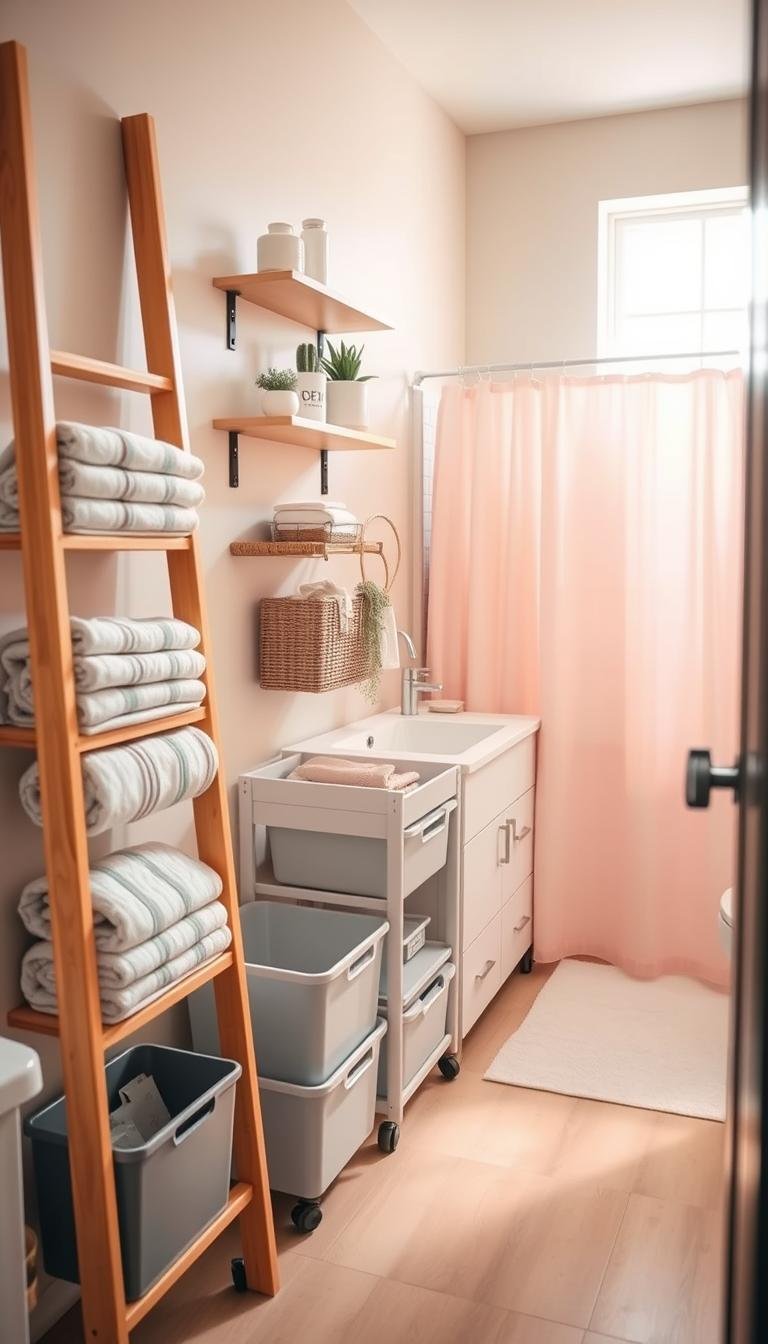
Shared and compact layouts make daily routines harder when towels, toiletries, and tools fight for the same counter and drawer space.
This guide frames small bathrooms like a puzzle and offers clear, buyable fixes. Each entry is tied to a place in the room — wall mounts, over-toilet shelves, door racks, under-sink trays, and shower caddies.
The article previews who will benefit: roommates, families, renters, and users with pedestal sinks. For every solution, readers will see best for notes, quick pros and cons, and what to measure before buying.
Maintainability matters: the recommended systems focus on what a household will actually keep up. Many options are renter-friendly, with adhesive or freestanding choices that avoid drilling.
Key Takeaways
- Small rooms need systems that reduce daily friction and boost organization.
- Solutions are grouped by location for quick comparison and shopping.
- Each idea lists who it suits, the problem solved, and buying measurements.
- Priority is on renter-friendly and no-drill options alongside freestanding pieces.
- Choose setups the household can maintain, not just pin-worthy displays.
Small bathroom storage pain points in shared spaces
In small shared rooms, visible mess is less about quantity and more about where items land when there’s nowhere obvious to put them.
Common clutter patterns: crowded sink edges, mixed personal items, and products that migrate to any open surface. These spots make the counter unreadable and slow down routines.
Limited drawers and shallow cabinets force overflow. When things stack on top of each other, cleaning becomes harder and the room feels chaotic.
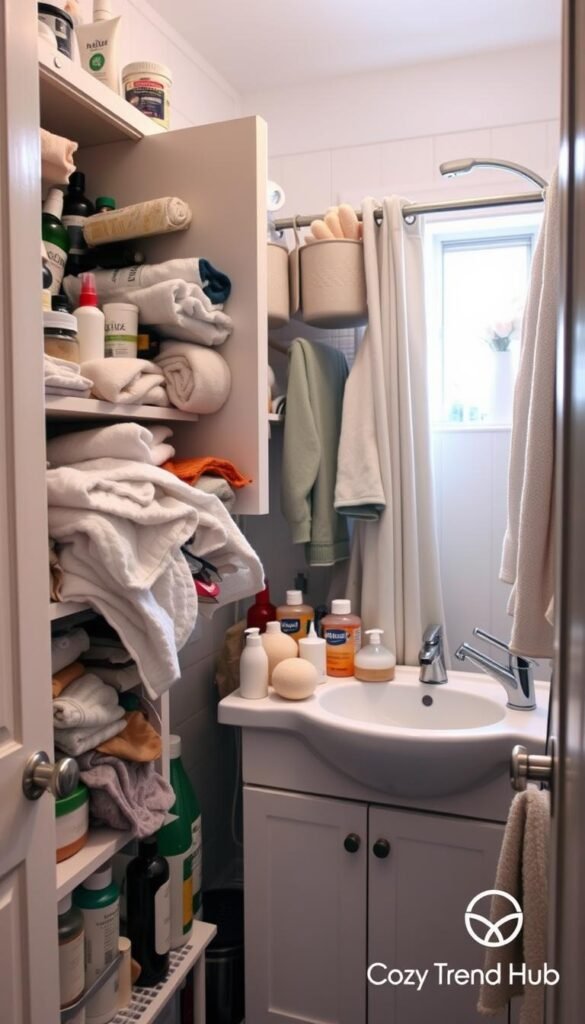
Daily access vs. backup supplies
Daily access items—toothbrushes, skincare, hair tools—need quick reach. Backup items—refills and extra rolls—belong out of sight. Treat them differently when choosing containers.
Make maintenance easier
Maintainability rule: pick systems that make putting away easier than leaving out. Use clear categories and accessible containers so every household member knows where things go.
Decision criteria to use later
- Open vs. closed: visibility versus neatness.
- Vertical vs. floor: use wall and over-toilet surfaces before eating up floor area.
- Renters: prefer adhesive or freestanding mounts if drilling isn’t allowed.
Buyer-intent checklist: measure first, then target wasted areas—wall, behind the toilet, inside the door, or under the sink—before choosing a product.
Best bathroom storage ideas that use vertical wall space
A vertical approach turns empty wall real estate into practical, reachable storage. Positioning items on the wall creates new room without expanding the footprint. That makes this the highest-impact move when floor space is limited.
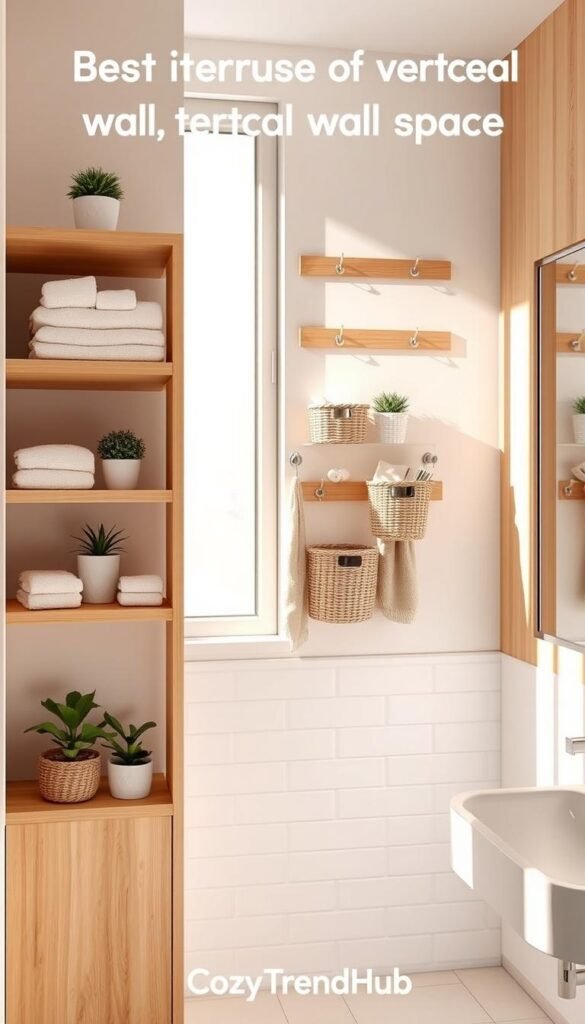
Floating shelves above the toilet or beside the mirror
When to use: no counter room or shallow drawers. Open shelves keep daily picks in plain sight for quick grab-and-go.
Tip: place a small shelf near the mirror for morning essentials and above the toilet for frequently used products.
Wall cabinets and mirrored medicine cabinets
When to use: visual clutter is the main issue. Closed cabinets hide bottles and mismatched containers.
Mirrored cabinets add function and hide mess while giving a cleaner look. Match the cabinet finish to existing hardware—black, chrome, or brass—for cohesive design.
Hanging wall baskets for towels and toiletries
Use breathable baskets when the goal is to keep floors clear. These work well where drawers are full but towels still need a nearby home.
Renter-friendly buying considerations
- Choose adhesive mounts rated for the weight of full bottles; check tile vs. painted drywall compatibility.
- Verify product weight limits and removable hardware to protect walls when moving out.
- Pick finishes that coordinate with fixtures to make the setup feel intentional.
Over-the-toilet storage that adds shelves without remodeling
A slim unit over the toilet can transform wasted vertical real estate into tidy, reachable zones. These solutions reclaim the dead space behind the tank without cutting into floor space or altering walls.
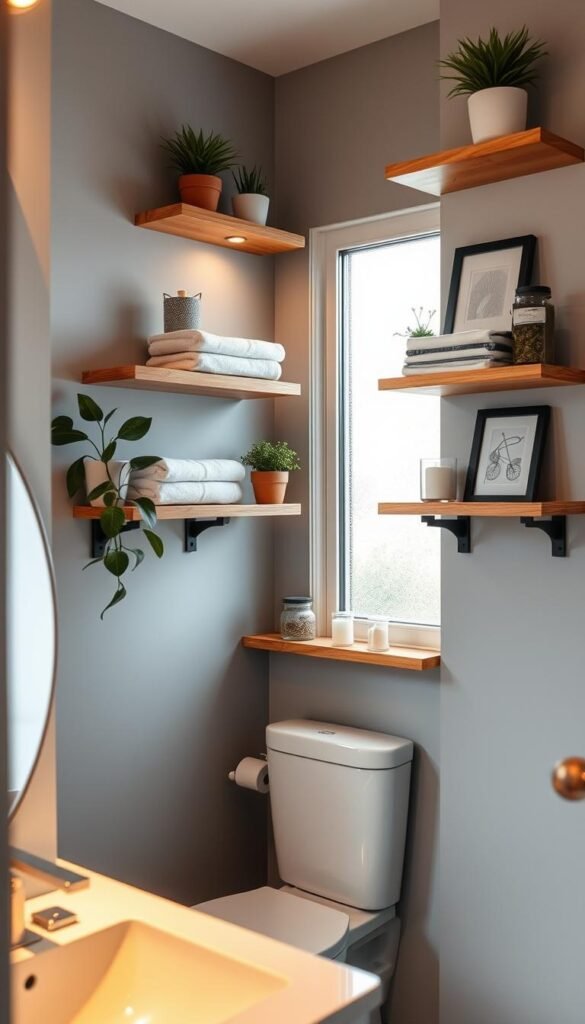
Étagères for open storage when you need quick access
When to choose: rooms with little vanity space and frequent-use items that must be within reach.
What they hold: towels, daily toiletries, and small bottles that should not sit on the sink.
Over-the-toilet cabinet stands for hiding backups and toiletries
When to choose: if overall storage is limited and extras need to stay out of sight.
Closed cabinet units hide products like refills and spare rolls. They reduce visual clutter in shared bathrooms.
Who this is best for: bathrooms with “dead space” behind the toilet
- Identify the gap behind the tank as prime real estate in rentals and small homes.
- Open vs. closed: étagères offer fast access; cabinets keep a calmer look but can invite overstuffing.
Buying checklist: measure toilet height and tank depth, check lid clearance and wall trim, and pick moisture-resistant materials.
| Field | Open tiers | Closed cabinet |
|---|---|---|
| Number of shelves | 2–4 | 1–3 |
| Doors | No | Yes |
| Footprint depth | 12–14 in | 12–16 in |
| Assembly difficulty | Low | Low–Medium |
Tidy tip: use matching bins and labels on open shelves to reduce mix-ups in shared spaces and keep the area orderly.
Over-the-door organizers that eliminate counter clutter
Using the door for pocket storage turns a crowded vanity into an orderly routine station.
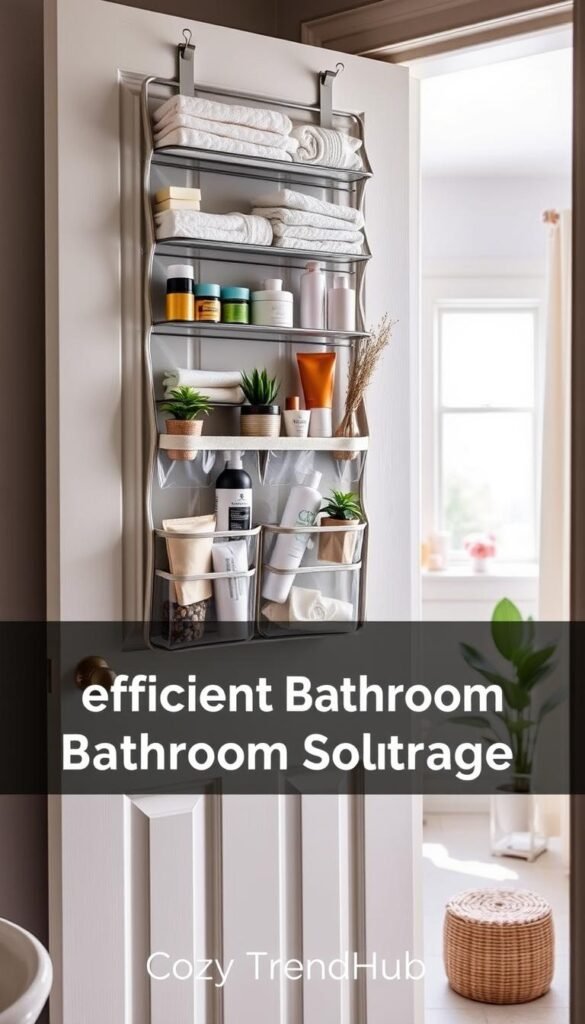
No-install, zero-floor footprint: over-the-door options free sink space instantly. They mount on the hinge or hook over the top and require no drilling, which makes them renter-friendly and fast to set up.
What to store and who benefits
Pocket organizers work well for hair tools, brushes, sprays, skincare, and small bathroom items that crowd counters or drawers. Roommates and families gain personal pockets so each person keeps daily items in one place.
Fit, function, and tradeoffs
- Fit checks: confirm the door still closes and the organizer does not rub the frame.
- Material tips: choose moisture-resistant fabric or plastic and look for heat-safe pockets for styling tools.
- Pros: assigned spots reduce forgetting, speed up routines, and reclaim visible counter space.
- Cons: visible pockets can add visual noise; overloaded pockets may sag or make the door heavy.
Mitigation tips: pick neutral colors, limit pockets to daily-use categories, and keep backups off-site to avoid bulging. Compare pocket size, heat resistance, hook thickness, and washable fabric vs. plastic when choosing a solution.
Renter-friendly wall mounts for daily-use essentials
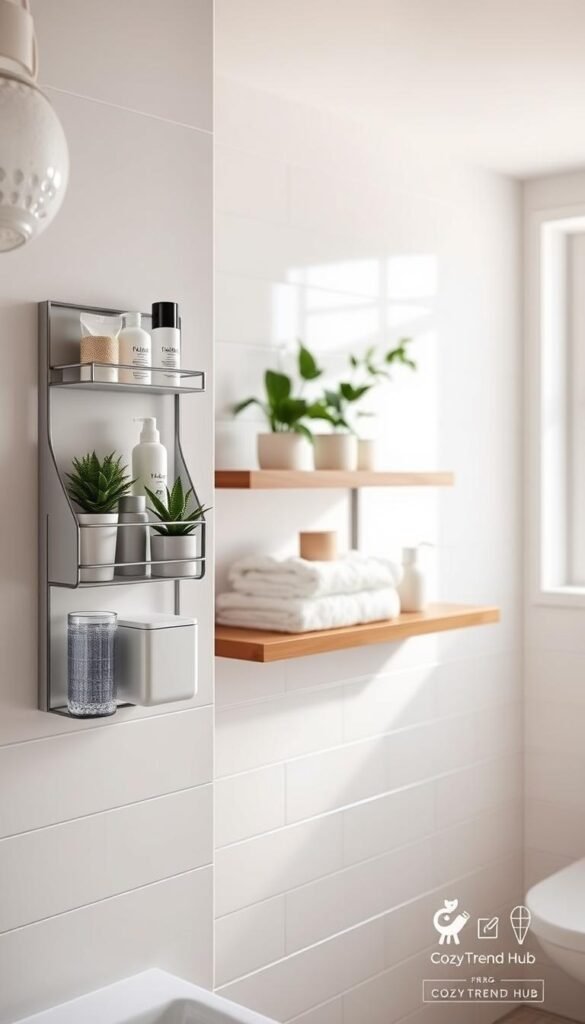
Mounting daily essentials on the wall reclaims sink edge and speeds up shared routines.
Wall-mounted toothbrush holders and soap dispensers
Why use them: they clear the counter and reduce puddles around the sink.
Who benefits: households with shared sinks and tight counter space.
Hair dryer holders and adhesive hooks
Hold styling tools off the vanity and keep cords tidy. Heat-safe holders work for daily hair routines and protect the unit.
- Pros: faster cleanup, fewer wet items, clearer routines.
- Cons: adhesive mounts have weight limits and need clean, dry surfaces; finishes may show residue on removal.
- Buying checklist: check adhesive type, max load, tile compatibility, heat rating, and cord management.
| Mount type | Typical max load | Best use |
|---|---|---|
| Adhesive strip | 5–10 lb | Toothbrush holder, soap dispenser |
| Screw-in bracket | 15–30 lb | Heavier organizers and cabinets |
| Heat-safe hook | 3–8 lb | Hair tool holder with cord loop |
| Magnetic mount | 2–6 lb | Light tools and metal products |
Under-sink organizers that work around plumbing
The space beneath a sink can be a high-capacity zone if shelving and pull-outs are chosen to dodge plumbing. Under-sink areas often become a tangle of tall bottles, loose containers, and cleaning products because pipes force odd shapes.
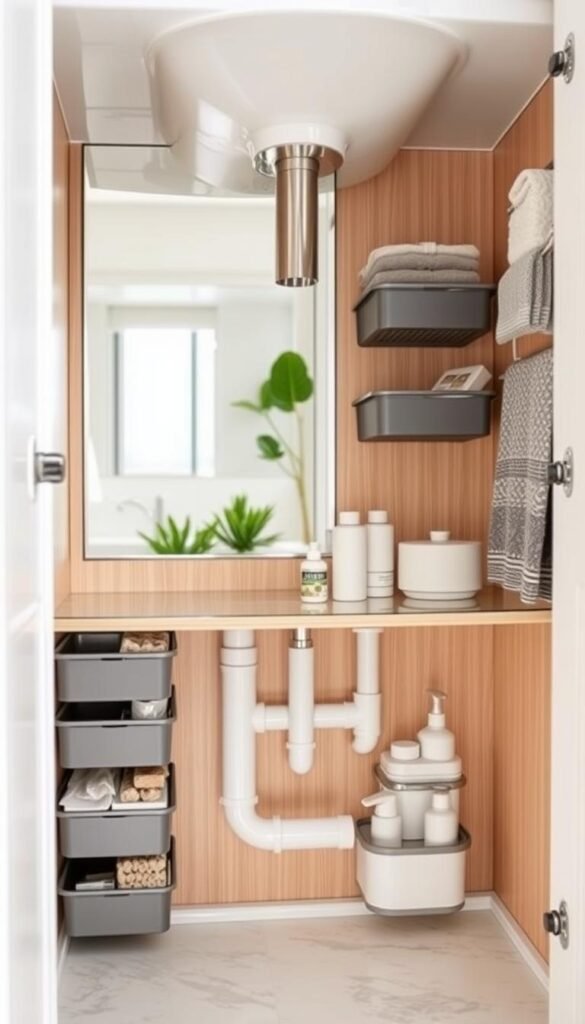
Expandable shelving to reclaim awkward cabinet space
What it solves: uneven interiors and pipes that block standard bins. Expandable shelves create tiers while leaving gaps around the trap and supply lines.
Two-tier slide-out organizers for cleaning products and refills
Why choose them: bottom tier holds taller bottles; top tier keeps sprays and small refills visible. Pull-out rails let you reach the back without kneeling or emptying the cabinet.
Stackable drawers for toiletries you don’t use every day
Use stackable drawers to separate categories: hair items, first aid, and backups. Clear plastic drawers make contents visible and pull forward for easy access.
Pedestal sinks and open vanities: sink skirt workaround
Add a tailored sink skirt to hide bins and create a faux cabinet. This renter-friendly approach hides supplies while keeping the floor area usable.
Buying checklist
- Measure interior width, depth, and max height around pipes.
- Check door swing and hinge placement so drawers clear the frame.
- Confirm pipe clearance and max tier height per product.
- Pick plastic or coated metal that wipes clean and resists moisture.
| Feature | Expandable shelf | Slide-out organizer | Stackable drawers |
|---|---|---|---|
| Max tier height | Adjustable | Top 6–8″, bottom 10–14″ | Varies by bin |
| Width adjust | Yes | Limited | No |
| Best for | Odd-shaped cabinet | Cleaning products & refills | Infrequent toiletries |
Stackable drawers, bins, and lazy Susans for deep bathroom cabinets
Deep shelves often create blind spots where duplicates and expired bottles quietly accumulate. That problem wastes money and time in shared rooms.
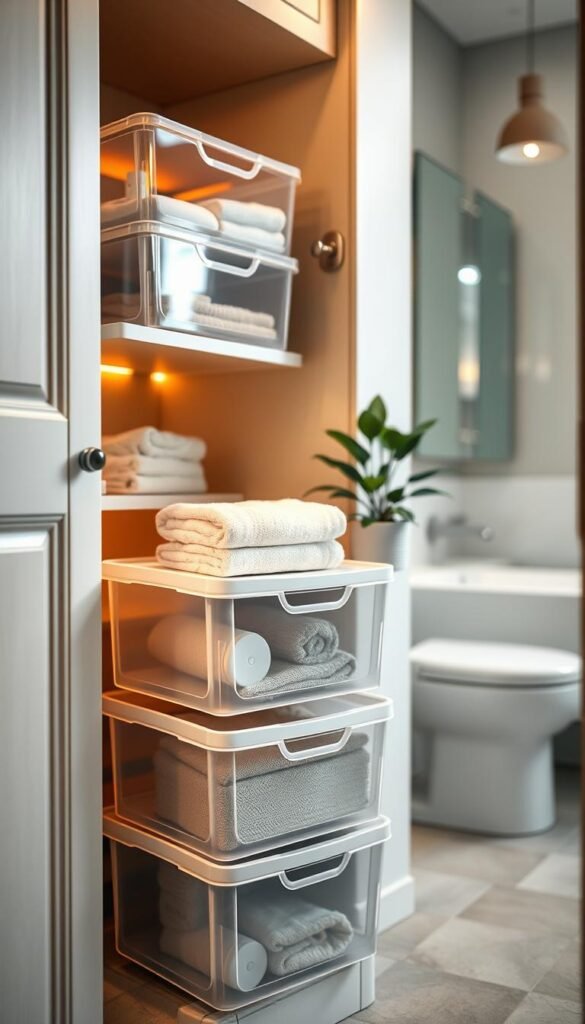
Slide-out drawer organizers for reach and visibility
What they solve: pull-forward drawers bring items to the front so nothing hides at the back.
Who benefits: households with deep cabinet shelves and multiple users.
Clear containers to group like items
Clear plastic containers keep skin care, hair care, first aid, and backups separated and visible.
Advantage: quick inventory checks reduce duplicates and expired items.
Lazy Susans for tall shelves and daily bottles
Turntables make one-handed access simple and stop small items from getting lost behind taller jars.
- Drawers: maximize visibility; may lower vertical clearance.
- Bins: flexible and stackable; require labeling discipline.
- Turntables: great for daily skincare; need stable, roomy shelves.
| Best for | Capacity | Footprint |
|---|---|---|
| Deep cabinets | 3–6 drawers | Full shelf depth |
| Daily skincare | 6–12 bottles | 12–16 in diameter |
| First aid & backups | Stackable bins | Flexible |
Buying checklist: measure shelf depth and height, choose easy-clean plastic, pick non-slip bases, and favor modular sets so organizers adapt as needs change.
Rolling carts and slim towers for tight floor space
When floor cabinets aren’t an option, movable units turn narrow gaps into useful compartments. Portable carts and freestanding towers give renters and small-home owners flexible, no-drill solutions that reclaim lost inches.
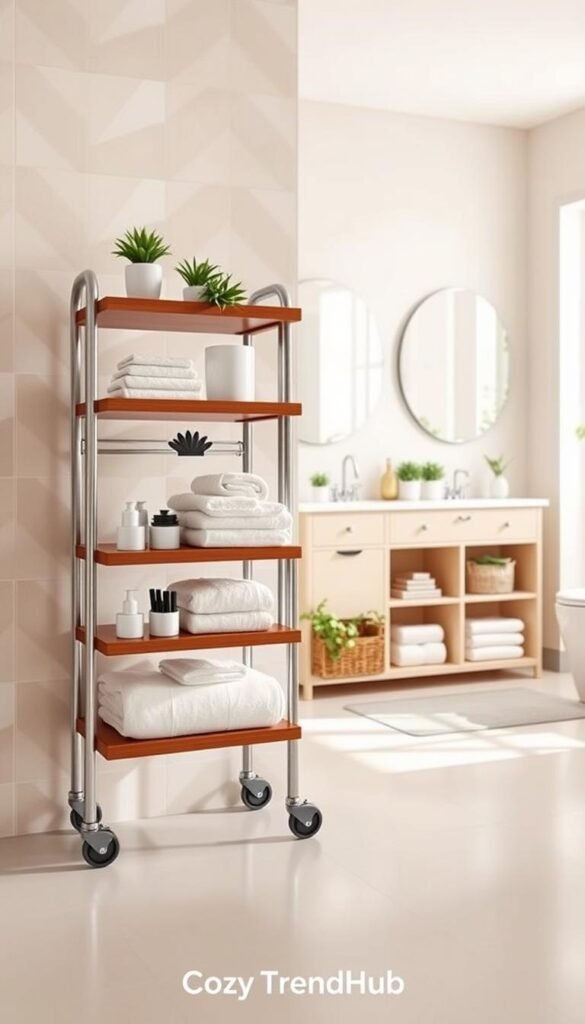
Slim rolling cart for the gap beside the toilet
A narrow rolling cart fits the usual 3–6″ gap between the toilet and wall. It holds daily toiletries, refills, and a few tall bottles without blocking access.
Freestanding drawer towers when there is zero built-in storage
Tall drawer towers create dedicated zones for hair tools, skincare, and cleaning supplies. Drawers keep things contained and easy to sort by person or use.
Who this is for and practical tradeoffs
- Who benefits: renters who can’t drill or rooms with no vanity.
- Pros: movable for cleaning, reassignable to another room, no permanent install.
- Cons: can look bulky if oversized, wheels collect hair, and units need moisture-resistant finishes for long life.
| Feature | Slim cart | Drawer tower |
|---|---|---|
| Width options | 3–6 in | 12–16 in |
| Rolling vs. stationary | Rolling cart | Often stationary |
| Number of pieces | 2–4 shelves | 3–6 drawers |
Buying checklist: measure gap width, test wheel quality, choose wipeable finishes, and prioritize stability for homes with kids or pets.
Countertop organization that keeps shared sinks functional
A single surface organizer can stop scattered bottles and tools from spreading across the vanity.
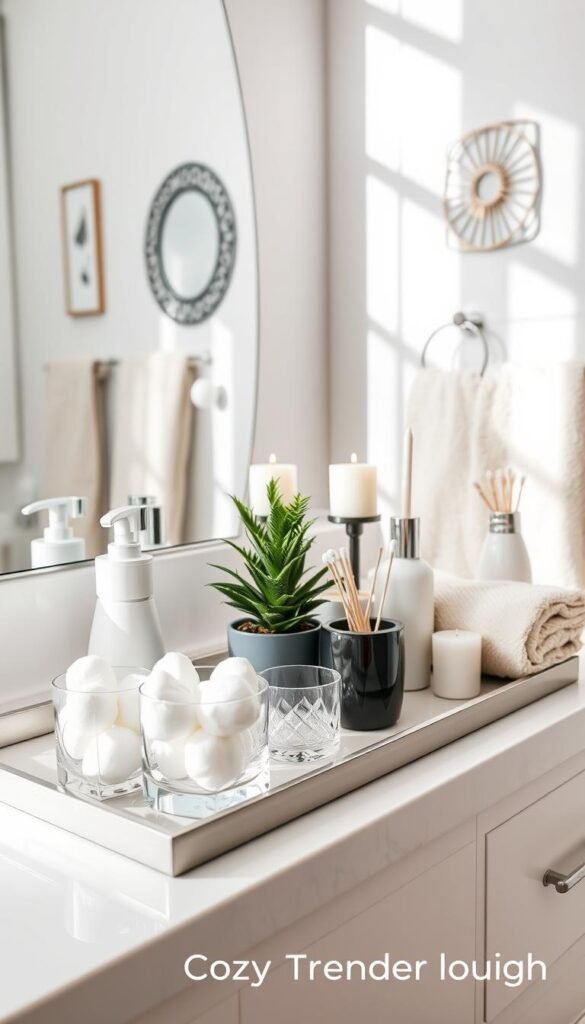
Without clear boundaries, a few items become a permanent spread that blocks the sink and slows cleaning. Shared routines stall when the counter fills with shampoos, perfumes, and styling tools.
Vanity trays to corral bottles, perfumes, and everyday items
Why use a tray: it gathers daily bottles and small items into one movable footprint. Lift the tray, wipe the surface, and replace the whole set in seconds.
Mini canisters for bobby pins, tweezers, and small accessories
Mini lidded canisters keep tiny pieces—like bobby pins and tweezers—from vanishing into drawers. They also protect contents from humidity and make it easy to assign personal spots on a shared vanity.
Pros and cons: easier cleaning vs. reduced usable counter space
Pros: faster cleaning, fewer scattered items, and steadier routines for multiple users.
Cons: trays occupy counter space, so measure usable room beside the sink before choosing size or shape.
- Buying tips: pick easy-clean materials (metal or glazed ceramic), non-slip bases, and low-profile shapes for narrow counters.
- Keep only daily-use items on the tray and move backups to a cabinet or nearby closet.
- Choose lidded canisters for humidity-prone areas and clear options for quick inventory checks.
| Product block | Use case | Recommended size |
|---|---|---|
| Small tray for tight counters | Narrow vanities with little clear surface | 8–10 in long, 3–5 in deep |
| Long tray for bottle rows | Multiple perfume or lotion bottles | 12–18 in long, 3–6 in deep |
| Lidded mini canisters | Bobby pins, tweezers, cotton swabs | 2–4 in diameter, stackable |
Tip: a modest tray plus one lidded canister often provides a tidy solution while leaving enough counter space for daily use.
Inside-cabinet and inside-drawer upgrades for small items
Small pieces and loose items turn drawers into a time drain. A quick morning can stall when everyone digs for a brush, clip, or tube.
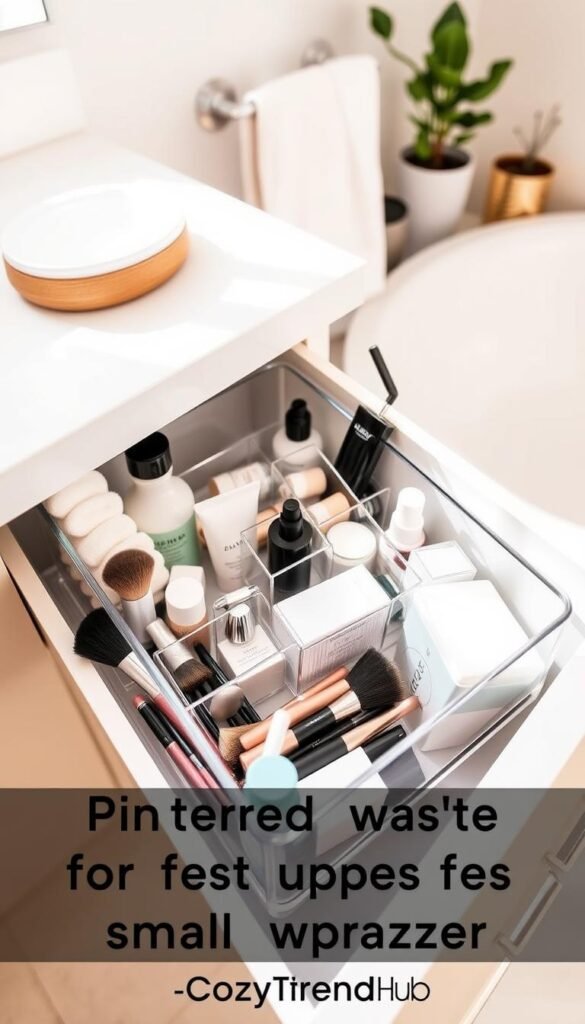
Simple in-cabinet fixes keep counters clear and speed shared routines. Focus on dividers and door-mounted racks to reclaim hidden space.
Drawer dividers for categories like hair, skin care, and makeup
When to use: shared drawers and minimal counter room. Dividers assign spots for hair tools, skincare, and makeup so items return to the same place.
- Pros: less rummaging, fewer duplicate buys, clearer visibility without extra furniture.
- Cons: must match drawer width and depth; fixed dividers can waste space if sizes change.
- Buying tips: measure interior length and depth, prefer adjustable dividers for flexibility.
Cabinet-door hooks and slim racks for tools and frequently used pieces
When to use: for daily tools that benefit from upright access—dryers, brushes, and travel bottles.
- Check door clearance; shallow cabinets may not close with bulky racks.
- Choose rust-resistant materials and compare adhesive options for renters versus screw-in for permanence.
- Note hook load capacity so heavier products don’t pull mounts loose.
Quick decision guide: pick adjustable drawer inserts for mixed items and door hooks for daily tools. These low-cost solutions make shared routines faster and keep the bathroom feeling orderly.
Shower storage solutions that reduce bottle buildup
Showers quickly become a tangle of bottles and knocked-over caddies unless the right fittings are chosen. Clutter on the tub edge invites mildew, makes cleaning harder, and creates snag hazards in shared units.
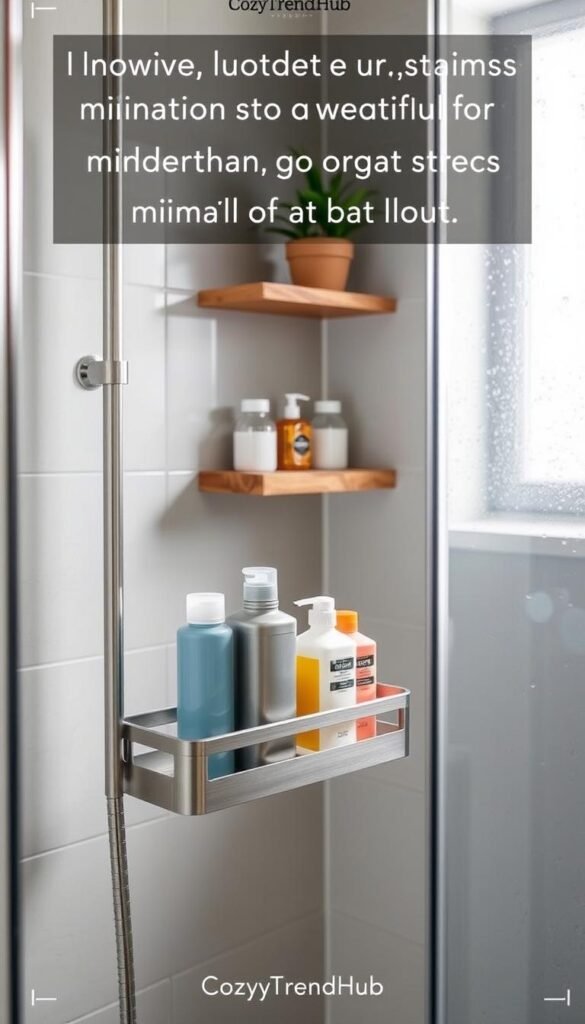
Corner shelves and wall racks
Why choose them: they keep bottles off the floor and free up tub edges for safe footing. Solid wall racks can feel built-in and make surfaces easier to wipe.
Cons: may require drilling or heavy-duty adhesive; check tile, grout, and load limits before installing.
Hanging shower caddies for rentals and shared showers
Hanging caddies mount over the showerhead or hook on the door. They avoid drilling and let each user claim a tier in shared baths.
Tradeoffs: they can sway when bumped and may not hold very large bottles. Pick rust-resistant finishes and anti-sway designs.
Wall-mounted dispensers to simplify routines
Dispensers cut down on loose bottles and speed up daily use. They make cleaning faster and clarify which products are for daily use versus backups.
Buying checklist: drainage slots, rust-proof materials, compatibility with tile or grout, and weight capacity for tall bottles.
| Mounting type | Number of bottles supported | Easiest-to-clean design |
|---|---|---|
| Adhesive wall rack | 3–6 | Open shelf with drainage |
| Hanging caddy | 2–4 | Wire basket with drain holes |
| Wall dispenser | 1–3 (refillable) | Smooth pump surface, removable trays |
Declutter and “zone” your bathroom so storage stays organized
Clearing out unneeded products is the fastest way to free up cabinets and make new organizers actually work.
Evict nonessentials by scanning for expired lotions, near-empty bottles, and duplicate items. Toss or consolidate before buying anything new.
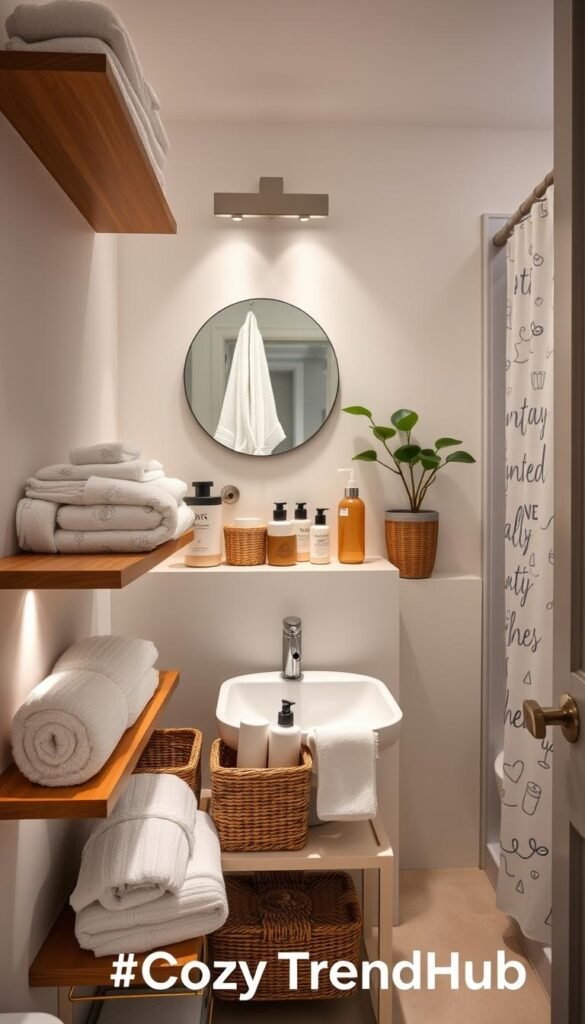
Create clear zones: daily, weekly, backstock
Assign where items live. Keep daily items at eye level for quick reach.
Place weekly-use products on middle shelves and backstock in higher cabinets or a closed drawer.
Seasonal swaps that cut overflow
Rotate sunscreen and summer gear forward in warm months. Move heavier winter moisturizers to backstock when not needed.
Make zones work with simple products
Use matching bins, stackable drawers, and labeled trays so each zone is visible and easy to maintain. This prevents random placement creep.
„A short purge often frees more room than a shopping trip.“
Shared-room tip: labeling zones reduces disputes—everyone knows what stays out and what goes away.
- Start with a purge, then choose bins and shelves that match each zone.
- Rotate seasonals to reduce overflow and simplify routines.
When to store extras outside the bathroom to regain space
Off-site backstock keeps a small bathroom functional. Move bulk items out to create clear counters and faster routines.
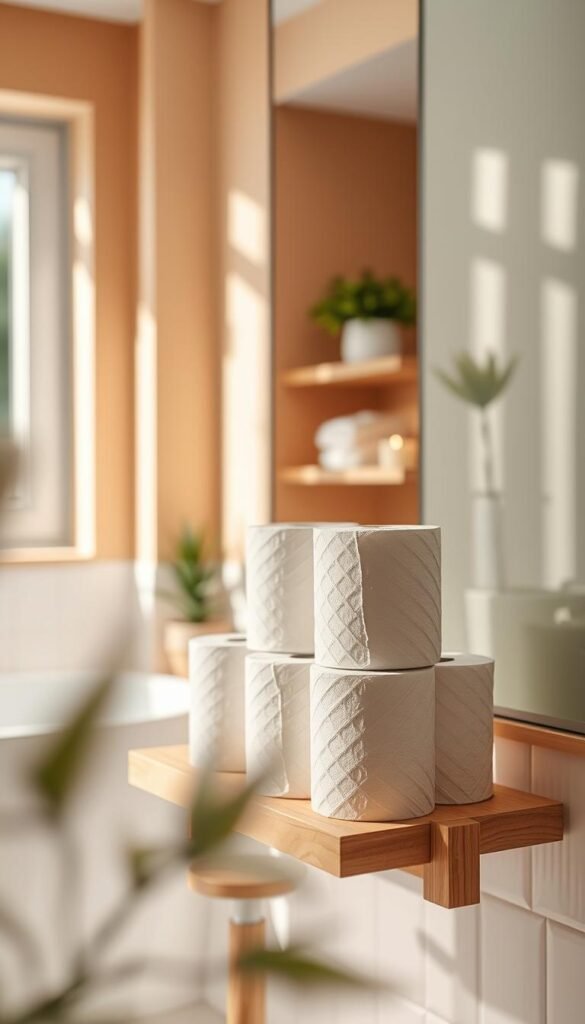
Why relocate bulk supplies: humid, tight rooms fill fast. Large packages and surplus towels often crowd cabinets that should hold daily essentials.
What to move and who this helps
- Relocate bulk toilet paper packages, extra towel piles, and rarely used products that sit for months.
- This works well for homes with a linen closet, hall cabinet, or bedroom closet near the bathroom.
Practical rule and refill routine
One-week rule: keep one to two weeks of essentials in the room. Store the rest outside and swap supplies weekly.
Pairing tip: keep a small refill bin in the bathroom and labeled bins outside. Restock from the labeled bin when counts run low.
| Item | In-bath quantity | External bin |
|---|---|---|
| Toilet paper | 1–2 rolls | Bulk pack (closet) |
| Towel | Spare set | Seasonal stack (linen closet) |
| Rarely used products | None | Storage bin, labeled |
Buyer’s note: choose durable, stackable bins for closet storage and a small, wipeable in-bath container for daily refills. The result is less visible clutter and more usable room without remodeling.
Conclusion
Begin with the area that feels hardest to keep tidy and work outward from there. Reclaim wall space first, then optimize hidden zones under the sink and inside cabinets. Add slim floor pieces only if those moves do not free enough usable room.
Shared households often benefit from clearer categories, more closed storage, and fewer countertop items. Pick renter-friendly mounts when drilling is not an option and favor simple systems that everyone can maintain.
Next steps: measure above the toilet, under-sink depth, and the inside of doors. Decide open vs. closed storage, compare pros and cons, and check fit, weight capacity, humidity resistance, and ease of cleaning before buying.
Implement one change at a time: sink clutter, shower bottle buildup, or under-sink chaos. Keep daily items accessible, store backups in a defined zone, and do seasonal swaps to prevent overflow in the bathroom.



2 Comments