
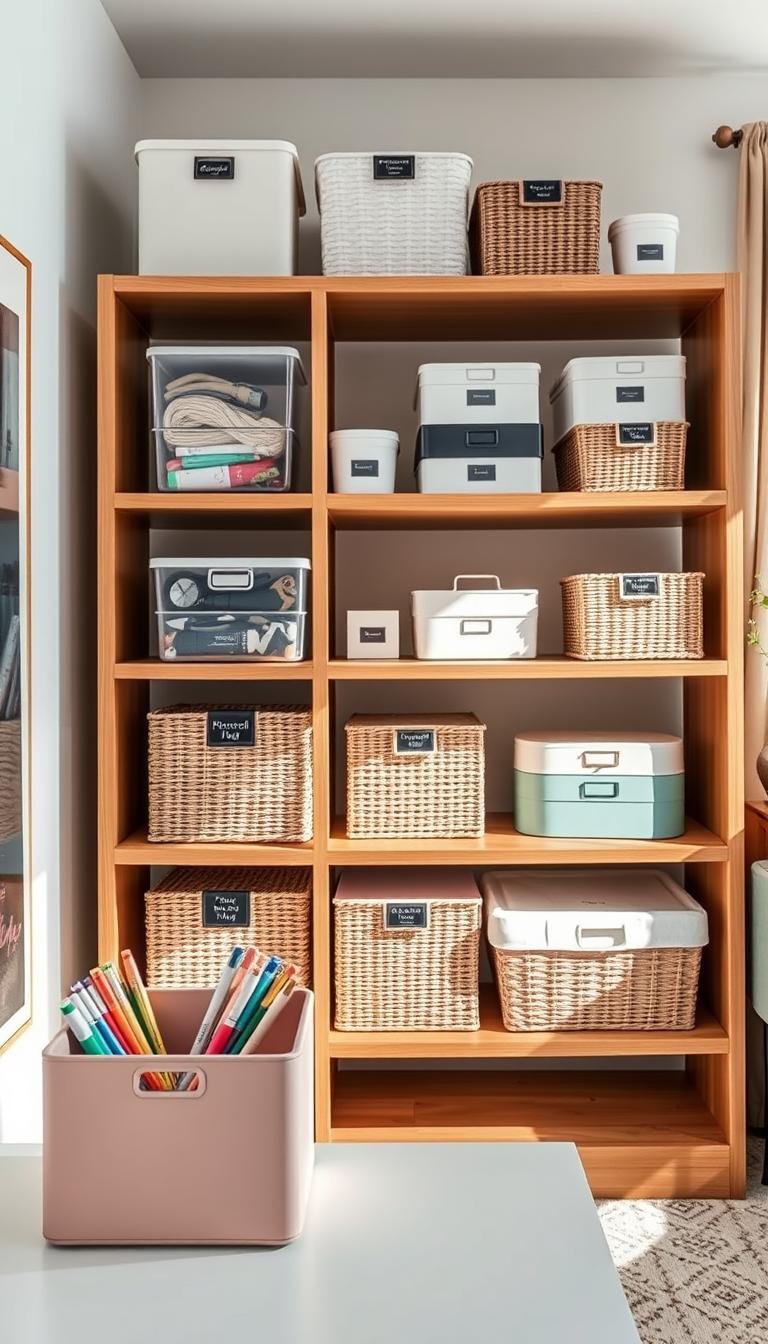
This roundup defines best budget organization products as value-focused items that hold up over time. It is not about the cheapest options. It highlights gear that reduces repeat buys and fits renter-friendly homes.
Pro organizers note that extra bins only mask a bigger issue: too much stuff. This guide solves real problems like lost items in deep cabinets, chaotic under-sink spaces, messy counters, tangled cables, and seasonal overflow.
Readers will see a clear shopping lens: durability, repeat availability, and correct sizing. The post favors matchable sizes so adding pieces later is simple.
Use this list by jumping to the room, scanning the “best for” callouts, and checking the buying considerations. Each category will include practical pros and cons plus the measurements to take first.
Key Takeaways
- Focus on long-term value over lowest price.
- Measure your space before choosing an organizer.
- Choose repeatable sizes to expand later.
- Prioritize renter-friendly, noninvasive installs.
- Look for durable materials to avoid frequent replacements.
Best budget organization products for real-life clutter problems
A smart buying rule: choose items that solve a real clutter problem fast. Focus on durability, repeat availability, and the right fit before aesthetics. This keeps systems useful and expandable over time.

What “budget” should still include
Use a short checklist when evaluating any buy. Pick sturdy materials and lines that are sold consistently.
Confirm the size fits cabinets, drawers, and doors without blocking access. Measure first to save time and returns.
Quick-read shopping rules for renters and small spaces
- Renters: favor adhesive, over-the-door, or no-drill installs. Avoid heavy screw-in systems unless permitted.
- Small spaces: choose vertical storage, stackable bins, and pull-out solutions that improve access without using more floor area.
- Repeat availability: stick with consistent product lines so matching pieces are available later.
| Install type | Size range | Best room/problem match | Quick note |
|---|---|---|---|
| None (stackable) | Small–Large | Pantry, shelves | Easy to expand |
| Adhesive/No-drill | Small–Medium | Bathroom, rental walls | Removable if done right |
| Over-door | Medium | Closet, door storage | Saves floor space |
| Screw-in | Custom sizes | Garage, heavy loads | Best for permanent installs |
Realistic note: no system fixes overstuffing. Set limits on categories and remove items that aren’t used. That preserves the system’s value and lifespan.
Kitchen cabinet and pantry organizers that stop the daily mess
Small changes to cabinet layouts stop frequent hunting and reduce duplicate buys.
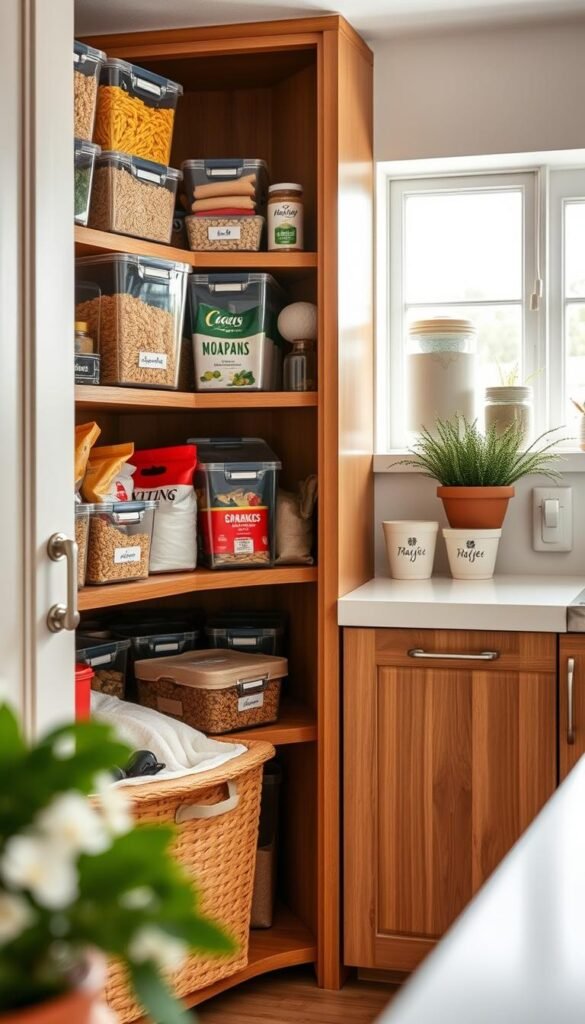
Clear handled plastic bins
Best for: snacks, baking, packets, and meal prep items. Handles let users pull a whole category forward on deep shelves.
Pros: visibility, easy pull-out. Cons: lower capacity for bulk buys. Measure bin width vs shelf width and allow handle clearance.
Expandable canned shelves & tiered spice racks
Best for: hidden labels in small pantries. Brands like Dial Industries and THYGIFTREE add tiered visibility to cut duplicates.
Wrap and foil organizers
Use YouCopia-style trays to stop crushed boxes and free up drawer space. Check cabinet width and roll length compatibility before buying.
Cookware racks, pot lids, and slide-outs
YouCopia racks and adhesive Durmmur lid holders end the lid hunt with vertical dividers. For deep base cabinets, Storking pull-outs bring items to you—measure depth and door clearance first.
Lazy Susans and divided turntables
Best for: sauces, oils, and small bottles. Dividers prevent tipping and mixing categories in tight shelves.
| Class | Best for | Fit notes |
|---|---|---|
| Clear handled bins | Snacks, prep | Bin width & handle clearance |
| Tiered rack/shelf | Cans, spices | Measure shelf depth and height |
| Wrap organizer | Foil/rolls | Cabinet width & roll length |
| Slide-outs/turntables | Deep items, sauces | Door swing and hinge clearance |
Under-sink storage that works around plumbing (and stays renter-friendly)
Under-sink areas often hide awkward plumbing and sticky spills that ruin storage plans.
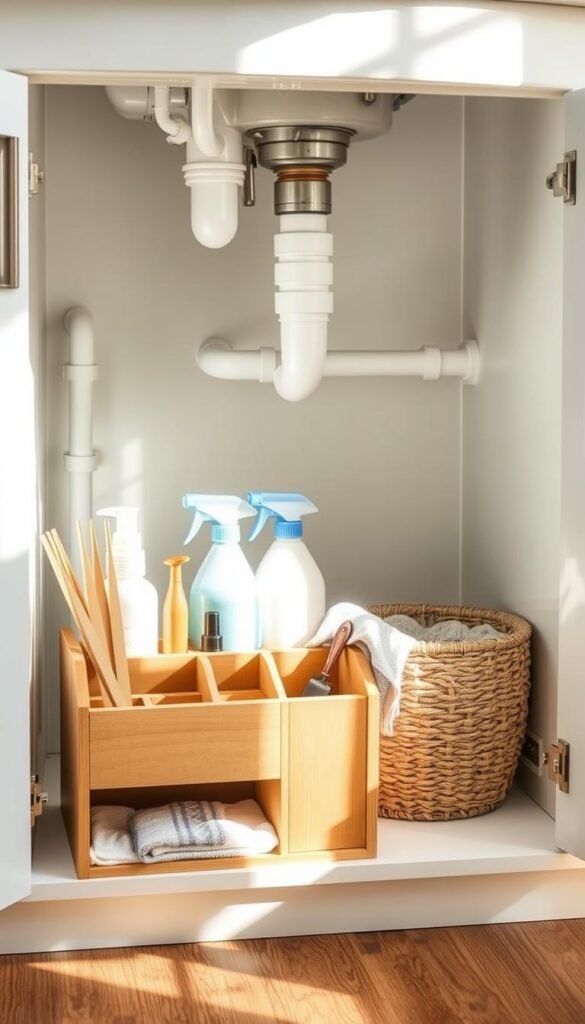
Real problem: the P-trap and supply lines cut usable space. Bottles tip and leaks cause sticky buildup that damages cabinets.
Two-tier pull-out under-sink organizers
Who they help: households that reach for cleaners daily and need quick access without bending.
Why they work: REALINN two-tier pull-outs glide past plumbing and keep spill-prone bottles contained on shallow trays.
Pros: easier access, spill containment. Cons: slightly reduces vertical room behind the top shelf.
Multipurpose tall bins and baskets
Who they help: people with spray bottles, wraps, and tall toiletries that won’t fit shallow trays.
Container Store multi-purpose bins and Sterilite baskets use depth and height to prevent toppling. Group heavy things low and frequent-use items front.
| Solution | Best for | Measure |
|---|---|---|
| Two-tier pull-out | Cleaning supplies | Clearance around P-trap & hinge swing |
| Deep tall bins | Sprays, wraps | Cabinet height and shelf lip depth |
| Freestanding baskets | Misc small things | Door width and base clearance |
- Renter-friendly tip: choose freestanding units and add a drip tray or washable liner to protect the cabinet floor.
- Simple plan: daily items front, backups back, and one locked bin for hazardous cleaners if kids or pets are present.
Budget bathroom organization that prevents buildup, clogs, and counter chaos
A few targeted swaps can stop water pooling, hair clogs, and countertop residue before they become recurring headaches.
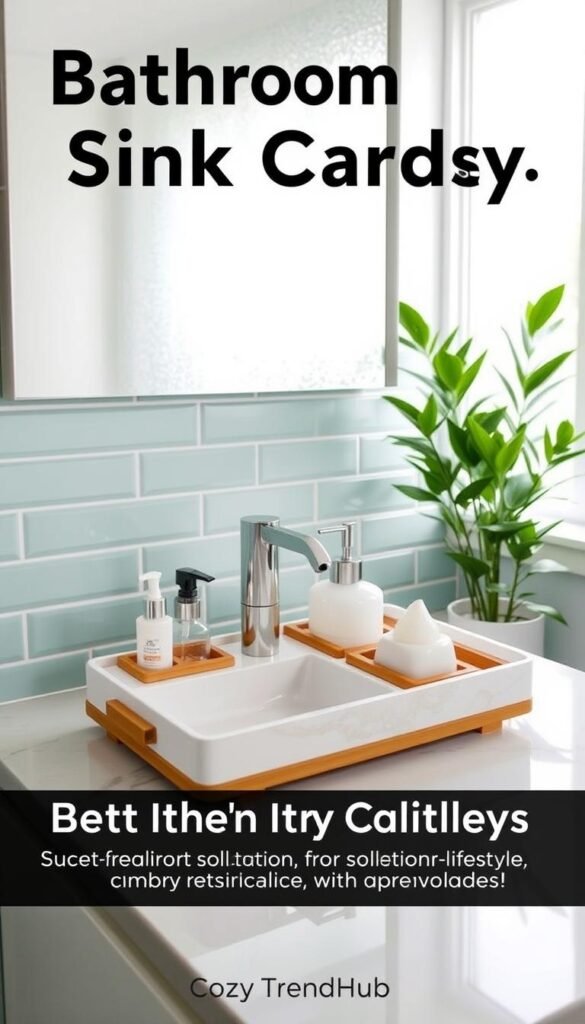
Instant-dry sink caddies (diatomaceous pads)
What problem it fixes: wet toothbrush zones and puddles under razors that invite mold and residue.
Who it helps: shared sinks and busy morning routines. Diatomaceous pads absorb water fast and cut drying time.
Buying note: allow airflow when not in use and rinse the pad weekly to remove toothpaste film.
Adhesive shower shelves and caddies
What problem it fixes: product dives in tiny showers and crowded ledges. Adhesive shelves free up floor and ledge space.
Buying note: prep tile, check adhesive limits, and confirm weight capacity for bottles.
Hair-catcher drain covers
Use TubShroom-style catchers to stop long-hair buildup and avoid slow drains and service calls. Empty often to stay effective.
Cleaning helpers and wall-mounted stations
Pumice scrubbers remove mineral rings. Dissolving toilet cleaning sheets reduce plastic clutter and control dosing—store dry.
Wall-mounted toothbrush stations install without drilling and reclaim counter space with trays and cups for shared baths.
| Install type | Cleaning frequency | Prevents |
|---|---|---|
| Freestanding (diatomaceous pad) | Weekly rinse | Counter puddles |
| Adhesive shelf/caddy | Monthly check | Product clutter |
| Drain hair-catcher | After showers | Clogs |
| Wall-mounted station | Weekly wipe | Counter chaos |
Quick pros/cons: adhesives are renter-friendly but need smooth surfaces. Diatomaceous pads dry quickly but need occasional cleaning. Hair catchers work best with regular emptying.
Closet organizers for small bedrooms and apartments
When closet space is tight, simple swaps can double hanging capacity without adding furniture.

Non-slip velvet and rubberized hangers
Problem: chair piles and slippery tops in a tiny room make mornings slow.
Who this helps: anyone with silky tops, wide-neck shirts, or lightweight jackets that slide off standard hooks.
Buyer notes: check hook strength, shoulder shape, and choose consistent sizing for a uniform look. Durable metal hooks and reinforced shoulders last longer.
Pros: reduces floor clutter and keeps garments visible. Cons: slightly slower to hang and remove than bulky plastic hangers.
Vertical pants and cascading hangers
Vertical hangers and cascading clips multiply rod capacity by stacking pairs downward instead of side-by-side.
Who this helps: renters with limited wall options and anyone short on dresser drawers.
Buyer notes: verify closet rod capacity so it can hold the extra weight without sagging.
Over-the-door pocket organizers and multi-use shoe racks
Who this helps: those who need quick access to leggings, hair tools, and daily accessories.
Look for pocket size, partial transparency, and whether the unit blocks door closure. Confirm door thickness and hook padding to avoid scuffs.
Over-the-door shoe racks can store sandals, refill packs, or craft supplies—treat them as general vertical space savers.
| Problem | Solution | Best for |
|---|---|---|
| Slipping clothes | Velvet hangers | Silky tops |
| Too many pants | Vertical/cascading hangers | Renters |
| No dresser space | Over-the-door pockets | Leggings & accessories |
Quick tips: distribute weight across the door, avoid overloading single hooks, and match hangers for a tidy, expandable system. These simple options preserve limited space and make daily choices faster.
Drawer dividers and modular trays for “junk drawer” hotspots
A cluttered drawer is usually a containment failure, not a storage problem. Mixed categories make small things hard to find. That leads to duplicates and wasted time.
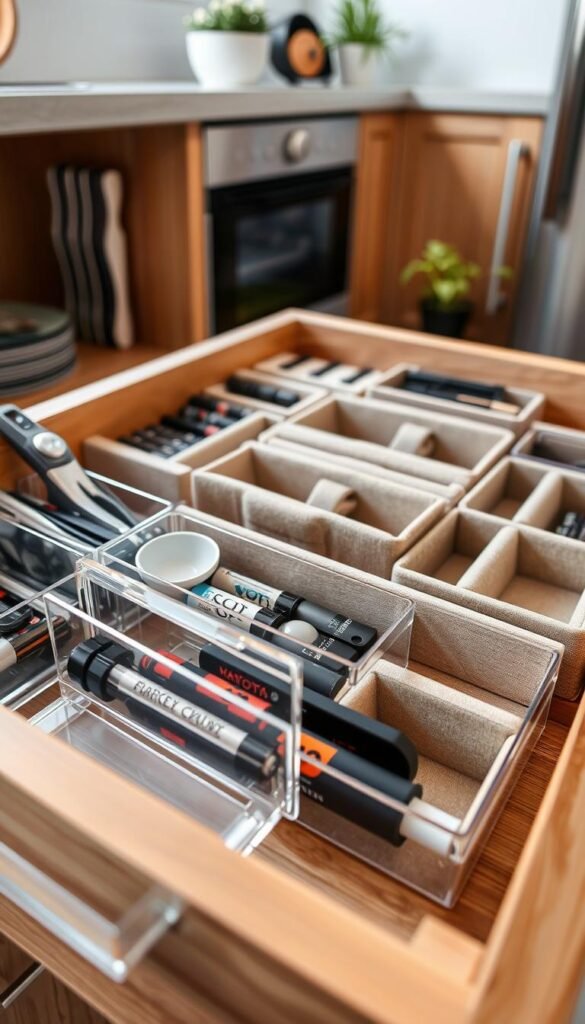
Adjustable dividers for long dresser and kitchen bays
Who this helps: households with wide drawers that hold tees, socks, utensils, or basic tools. SpaceAid and BAMEOS adjustable dividers create lanes that fit changing needs.
Measure first: check interior drawer width and front-to-back depth. Note side wall shape—rounded interiors may block tension-fit dividers. Confirm grip strength if you store heavier items.
Acrylic modular trays for makeup, bath, and desk overflow
Why they work: clear trays (Criusia-style packs) improve visibility so small items don’t disappear. They wipe clean and stack for tidy layers.
Pack advice: buy a multi-pack to cover an entire drawer. Covering the full interior beats half-organized setups that invite relapse.
Quick pros/cons
- Dividers: stable lanes and easy reconfiguring; may not fit rounded drawers.
- Acrylic trays: clear visibility and easy cleaning; can slide—add liners or grip gel.
- Compact cutlery-style organizers: use vertical slots to hold small tools and chargers upright.
Simple keep rule: reserve one small section for true miscellaneous items and force everything else into a category lane. This small habit preserves the system long term.
| Solution | Best for | Fit notes | Maintenance |
|---|---|---|---|
| Adjustable dividers (SpaceAid, BAMEOS) | Long drawers: clothes, utensils | Measure width & depth; avoid rounded interiors | Wipe and reposition as needed |
| Acrylic trays (Criusia-style pack) | Makeup, bathroom smalls, desk items | Pick tray sizes to fill drawer floor | Wipe clean; use grip liner to prevent sliding |
| Compact cutlery organizers | Chargers, pens, small tools | Best for shallow, segmented drawers | Shake out crumbs and wipe monthly |
Fridge and freezer organizers that cut food waste (not just make it pretty)
Visibility beats volume: if you can see items, you use them before they expire.
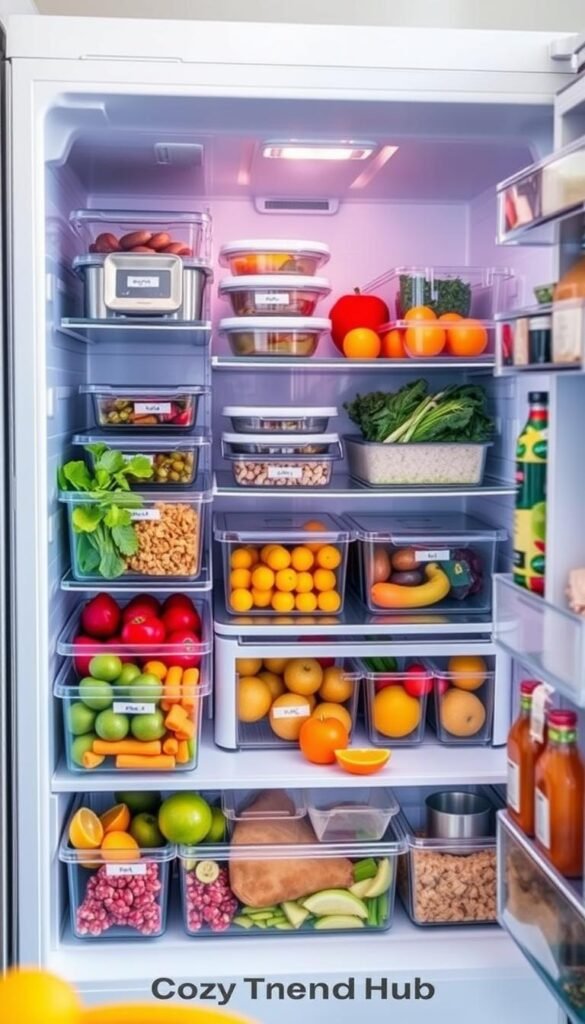
Clear refrigerator bins with lids for snacks, condiments, and eggs
Who this helps: families and meal-prep cooks who need quick access and spill control.
Choose lidded sets with a dedicated egg bin to group similar things and stack safely. Lids contain drips and save time when pulling a whole category forward.
Cleaning: remove bins weekly and wipe with mild soap. Smooth plastic wipes clean and resists stains.
Pros: containment and stackability. Cons: large bins can reduce usable capacity if not sized correctly.
Fridge-safe turntables to stop items from disappearing
Turntables work well for sauces, jars, and small containers that slip to the back. Measure shelf depth and height so the tray spins freely without hitting the door or drawer.
Pros: improves access. Cons: needs a level shelf and room to rotate.
Hanging fridge organizers for baggies and small packs
Pull-out pockets fit snack pouches, cheese sticks, and small packs. They cut rummaging and keep like items together in a tight fridge or a shared freezer shelf.
Wipe liners weekly to prevent sticky buildup and odors.
| Feature | Footprint | Stackability | Lid/Handle | Best for |
|---|---|---|---|---|
| Clear lidded bins | Medium–Large | Yes | Yes | Snack shelf, condiment shelf |
| Turntable (iDesign) | Small–Medium | No | No | Sauces, jars, back-of-shelf items |
| Hanging pull-out | Small | No | No | Baggies, snack pouches, deli overflow |
Cord and cable management products for safer, cleaner rooms
Loose cords create daily friction: they trip people, hide chargers, and make troubleshooting longer than it should be.
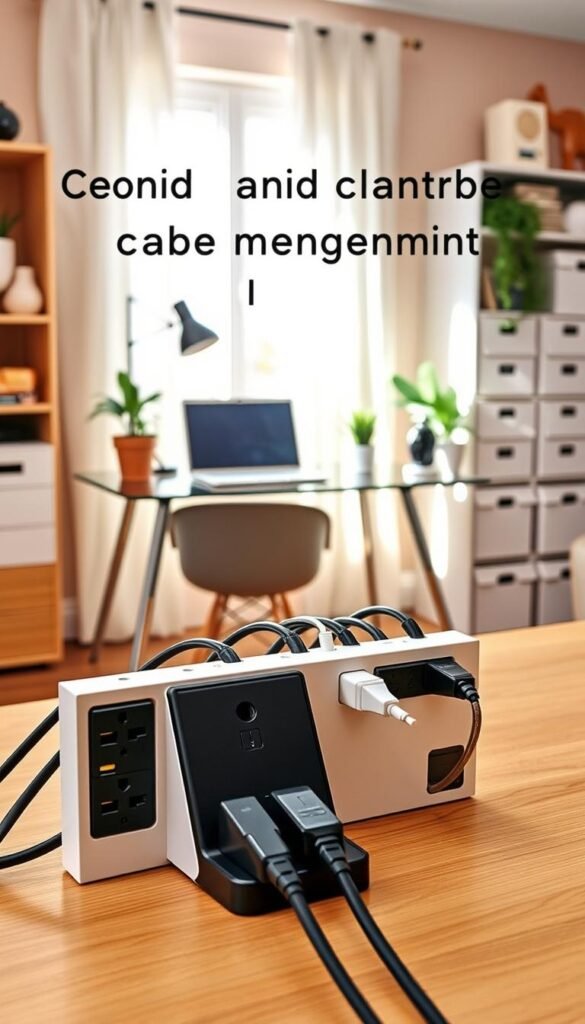
Cable management boxes to hide power strips
Who this helps: living rooms, nurseries, and shared spaces where kids or pets can access strips.
Buying notes: pick a box long and tall enough for bulky adapters and allow vent space to avoid heat build-up.
Cord clips and desk organizers
Best for: desks, counters, and nightstands. Notched channels keep charging cables accessible and reduce bend stress.
Pros/cons: clips are simple and renter-friendly, but adhesives need a clean surface to stick.
Cable labels and nylon tags
Best for: home office and media centers. Color tags speed troubleshooting and cut accidental unplugging.
Heavy-duty wraps for garage and utility gear
Best for: extension cords, hoses, and tools. Buy multiple wrap sizes so small cords and long hoses coil neatly.
| Solution | Capacity (# cords) | Install method | Best rooms |
|---|---|---|---|
| Cable box | 1–6 | Freestanding | Living room, nursery |
| Cord clips/organizer | 1–4 | Adhesive or clip-on | Desk, nightstand |
| Cable labels/tags | Unlimited | Wrap-on/loop | Office, media center |
| Heavy-duty wraps | 1–3 per wrap | Wrap or Velcro | Garage, utility |
Quick tip: match capacity and install type to the space. One small, well-chosen item often solves the common cord problems and boosts room safety.
Work-from-home and office organizers for papers, cords, and desktop clutter
A tidy desk reduces decision friction and keeps focus on work, not on hunting for papers or chargers. This section pairs compact solutions with clear buying notes so shared spaces stay usable during calls and quick handoffs.

Monitor risers with drawers to reclaim desk space
Best for: small desks where keyboard, notebook, and chargers compete for room.
Buying notes: check monitor base width, riser height, and single drawer clearance so the keyboard slides under when not in use.
Pros: raises screen to reduce neck strain and adds hidden catch-all space. Cons: risers must be stable; avoid lightweight models under large monitors.
Desktop file systems and hanging folders for mail and documents
Best for: paper-heavy households handling mail, school forms, or receipts.
Use Pendaflex or Smead hanging folders inside a shallow desktop file to keep loose stacks from growing. Pair the file with a weekly 10-minute sort routine to keep piles from returning.
Magazine racks and vertical sorters for active projects
Best for: ongoing projects and current reads. Amazon Basics vertical sorters work well for a simple lane system: To Do, Waiting, To File, To Shred.
Buying note: choose a footprint that fits the desk edge so lanes are reachable without shifting work materials.
Frame office storage as friction reduction: fewer piles, less lost mail, and faster access during the day. Small investments in the right pieces speed workflow and keep shared desks orderly.
| Item | Footprint | Capacity (letters/folders) | Best-for workflows |
|---|---|---|---|
| Monitor riser with drawer | Medium (desktop width) | 2–4 small items | Mostly digital + some paper; reclaims surface space |
| Pendaflex/Smead desktop file | Small–Medium | 8–20 hanging folders | Paper-heavy households; mail and receipts |
| Amazon Basics vertical sorter | Narrow | 4–8 magazines/folders | Active project lanes and current reads |
Garage and utility storage that holds up to real weight
Garages often become a catchall for awkward, heavy items that nobody wants to move until they break or tip.
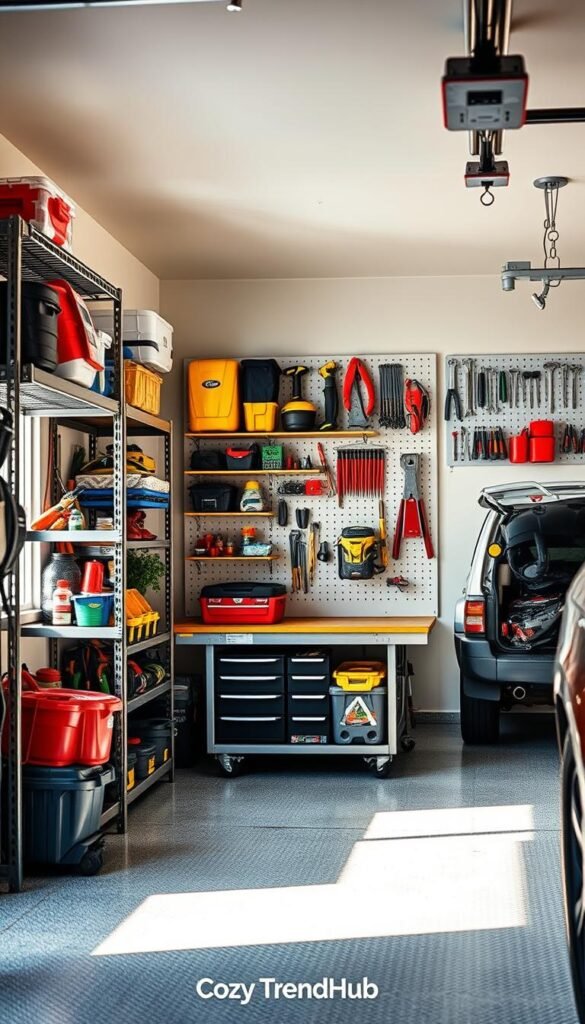
Durability matters: choose systems rated for real loads and sized for the items you own. A cheap tote or flimsy rack invites sagging and spilled contents.
Stackable lidded totes for seasonal gear and kids’ outdoor toys
Sterilite-style stackable totes in 25, 32, and 64 qt sizes strike a balance between capacity and liftability. Use 25–32 qt for heavy items so bins stay manageable when stacked.
Buying note: prefer clear bodies for visibility, strong snap latches, and flat, reinforced lids that truly support stack weight.
Heavy-duty wire shelving: fixed or rolling
Amazon Basics heavy-duty wire shelves work for paint cans, bulk paper goods, and tool cases. Check the stated per-shelf weight rating and choose rolling units if you need mobility.
Pros/cons: wire shelves ventilate and resist moisture but can snag small parts—add liners or small bins for loose items.
Wall-mount bin systems for small parts and hardware
Wall-mounted bins keep screws, nails, and craft items visible and reduce duplicate buys. Confirm per-bin capacity and that your wall can accept anchors before installing.
| Item | Size/Range | Capacity / Notes | Install type |
|---|---|---|---|
| Stackable lidded totes | 25 / 32 / 64 qt | Liftable stacks; clear vs opaque; strong latches | Freestanding |
| Wire shelving (Amazon Basics) | Single–multi-tier | High per-shelf rating; rolling or fixed options | Freestanding with casters or fixed |
| Wall-mount bin system | Multiple small bins | Per-bin weight rating; visible storage reduces duplicates | Wall-mounted (anchor required) |
Simple buying checklist: measure the item footprint, confirm shelf and tote ratings, and match install type to your garage walls and floor. That keeps heavy gear safe and accessible for years.
Laundry and linens: space-saving storage for bulky items
Saving floor space and keeping machines fresh are the two simple goals for small-room laundry setups. This section covers portable carrying options and a low-effort cleaning routine that reduces musty smells in front-load washers.
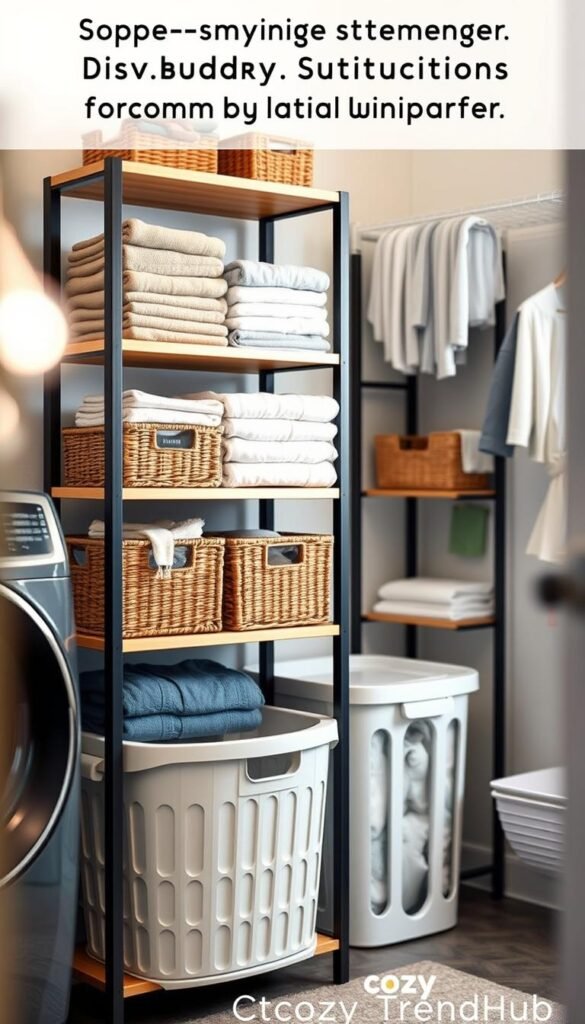
Collapsible laundry baskets
Who they help: apartments, dorms, and shared laundry rooms where a rigid hamper trades space for bulk.
Why they work: these carriers pack flat between uses, fit in closets or trunks, and double as toy or travel pack bins when needed.
Buying considerations: check handle comfort, whether the basket stays upright when full, and material that wipes clean.
Pros: portable, space-saving, multipurpose. Cons: less rigid support than hard hampers and may sag with heavy loads.
Washing machine cleaner tablets
Who they help: front-load owners and anyone noticing a musty smell from the drum or gasket.
Run one tablet through a cleaning cycle to target the drum, pump, valve, and filter. Many tablets work with HE and standard machines.
Pros: easy to use and effective at reducing mildew. Cons: not a one-time fix—regular use is required to keep odors away.
- Reality check: baskets take up floor space; washers develop mildew without maintenance.
- Simple cadence: run a cleaner tablet monthly and wipe the gasket after one high-humidity load to save time and prevent odors.
Seasonal and travel storage: vacuum and compression bags that actually help
Bulky winter bedding and heavy coats often make closets hard to use and hide everyday items.

Vacuum storage bags for comforters and off-season bedding
Best for: comforters, pillows, and coats that won’t be worn for months.
Buying notes: pick a bag size that fits your shelf or tote when compressed. Check valve compatibility, seal quality, and material thickness so stacked packs resist punctures.
Compression packing bags for travel and small closets
Best for: carry-ons, dorm moves, and tiny closets where every inch matters.
Some bags compress by vacuum; others work by rolling and pressing. Travel styles are reusable and increase suitcase capacity but can wrinkle fabrics and add weight if overstuffed.
| Solution | Use | Quick tip |
|---|---|---|
| Vacuum bags | Seasonal textiles | Measure post-compression space |
| Compression packing | Travel & small closet fills | Roll to avoid wrinkles |
| Lidded tote storage | Protected long-term | Label by season and room |
Pros/cons: vacuum options free major space but can re-expand if seals fail; compression options are travel-friendly. For a simple seasonal workflow, label contents, store compressed sets in lidded totes, and confirm compressed size fits the intended closet or shelf.
Renter-friendly wall and door storage that won’t wreck surfaces
When drilling is off the table, adhesive and over-door fixes save space. Renters face limited closets, few permitted anchors, and a need to protect painted walls.
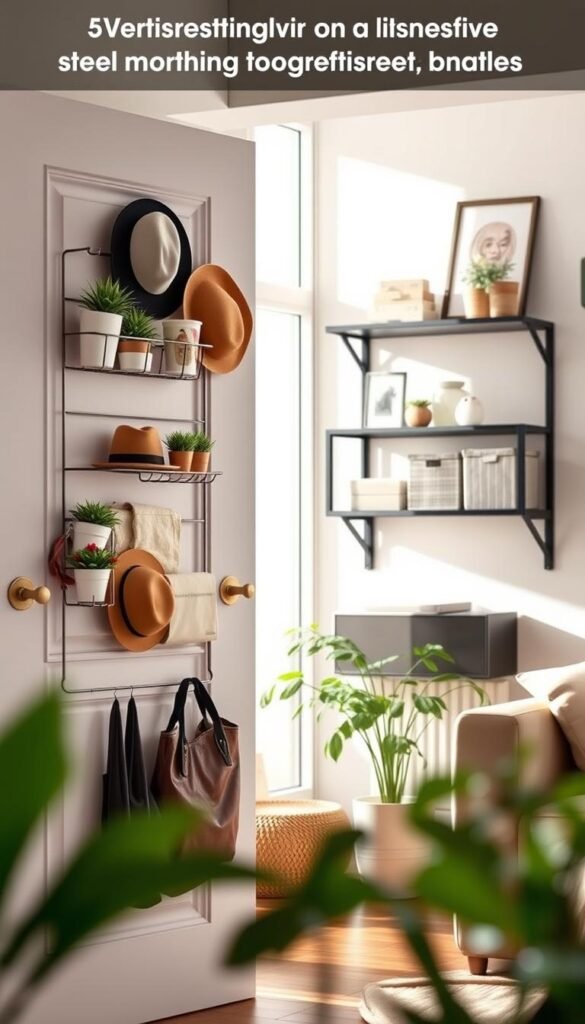
Quick renter problem: no drill rules and tight square footage mean storage must be removable and surface-safe. Two common, low-impact options fit that need.
Adhesive broom and mop holders
Who they help: households where cleaning tools tip in corners or lean against walls. These holders secure multiple handles with no screws.
Buying notes: prep smooth surfaces, follow cure time on the tape, and space grips so handles don’t overlap. Check weight limits—most hold 6–10 lbs per clamp.
Pros: no tools, quick install. Cons: weak on textured walls and limited by adhesive capacity.
Stick-on wall pockets for beds, bunks, and micro living
Who they help: people with no nightstand, bunk setups, or van-life interiors who need a place for a phone, remote, or glasses.
Buying notes: choose pockets rated for the device weight and check clean-surface bonding. Limit contents to daily essentials to avoid mini clutter zones.
- Placement strategy: install at point-of-use—by the door for brooms, near the sink for small tools, and beside the bed for night essentials.
- Surface protection: use is safest on painted drywall, tile, or glass; avoid rough plaster and peel-prone wallpaper.
| Feature | Surface requirements | Weight capacity | Removability | Best room locations |
|---|---|---|---|---|
| Adhesive holders | Smooth painted wall, tile | 6–10 lbs per clamp | Clean removal if peeled slowly | Utility, kitchen, closet |
| Stick-on pockets | Glass, tile, smooth drywall | 1–3 lbs | Residue-free options available | Bedroom, bunk, van |
Small upgrades that prevent mess in high-traffic areas
Fixing one small friction point often prevents dozens of tiny messes across the home each week. These renter-friendly swaps require no drilling and stop repeat cleanups in the busiest spots.
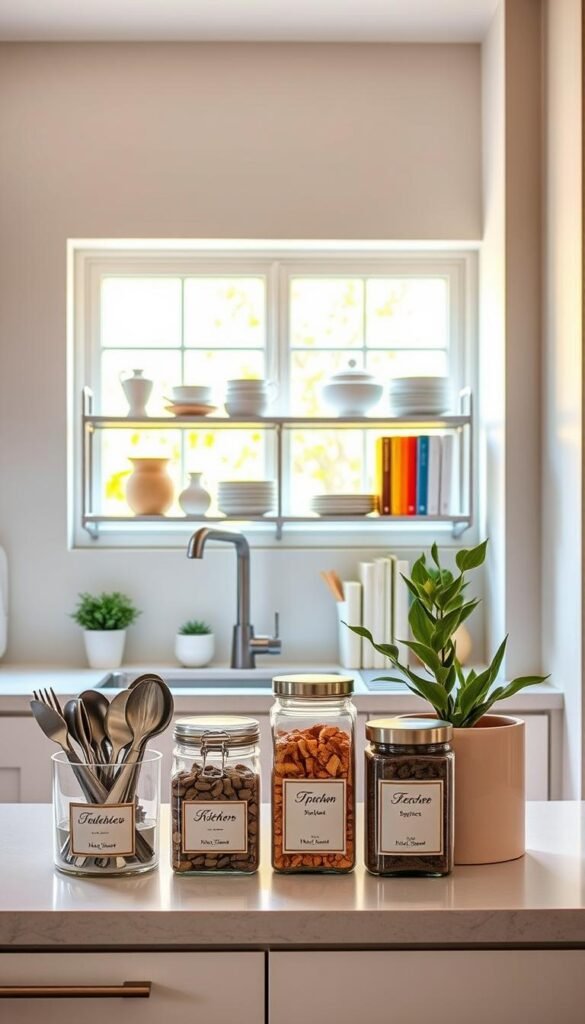
Magnetic stove-top shelves
Who they help: small kitchens and limited counters where spices and oils crowd work space.
Why they work: a StoveShelf-style magnetic shelf stores frequently used items above the stove without installation. It keeps things within reach and clears the counter for prep.
Buying notes: check stove material for magnet compatibility, magnet strength, and ease of cleaning—grease builds up near heat.
Detergent spout measuring cups
Who they help: anyone tired of sticky jugs and over-poured soap.
Why they work: a spout cup snaps onto the jug to meter liquid and reduce spills. Confirm spout shape fit and rinse the cup occasionally to avoid residue.
Bag hooks for tables and rails
Who they help: commuters, parents, and travelers who want bags off public floors.
Buying notes: check table thickness grip and hinge design. Pros: hygiene and quick access. Cons: some hooks slip on very thin or very thick surfaces.
| Item | Best-for | Quick note |
|---|---|---|
| Magnetic shelf | kitchen counters | Check stove compatibility |
| Spout cup | laundry shelf | Match jug spout |
| Bag hook | everyday carry | Verify table grip |
Car and trunk organizers for commuting, kids, and pets
Loose items in a car often roll, tip, or hide under seats, turning short trips into scavenger hunts.

Trunk storage totes with pockets
Who they help: commuters, parents, and frequent shoppers. A trunk tote with multiple pockets separates small gear from bulky bags.
Buying notes: look for a non-slip base, foldable sides, and a fit that leaves spare-tire access clear. Choose pockets sized for wipes, tools, and a stain remover pen for on-the-go messes.
Seat-back barrier nets
Who they help: pet owners and drivers who carry passenger items or ride-share. Nets clip to headrests and create a simple buffer to keep pets in the rear and bags upright.
Install notes: pick adjustable clips that fit varied headrest posts. Confirm the net won’t block rear vents or interfere with center consoles.
Practical tips:
- Create an emergency kit lane inside the tote with a first-aid kit, flashlight, and poncho.
- Monthly purge loose items so the tote doesn’t become a catch-all.
- Check tension on nets; they must be snug to avoid sagging during sudden stops.
| Solution | Best-for | Key features | Quick pro / con |
|---|---|---|---|
| Trunk tote with pockets | Commuters, parents | Non-slip base, foldable, pockets | Containment / can become catch-all |
| Seat-back barrier net | Pet owners, rideshare | Headrest clips, adjustable tension | Improves safety / may block vents if poorly placed |
| On-the-go stain pen | Families, travelers | Compact, quick-clean | Handy for spills / single-use limits |
Bottom line: choose a tote and net that match the car’s trunk depth and seat setup. A simple design paired with a small emergency pack keeps trips smoother and safer.
Labels, liners, and “stays-put” helpers that make organization last
Labels and anti-slip aids are the quiet helpers that keep an organized space working.
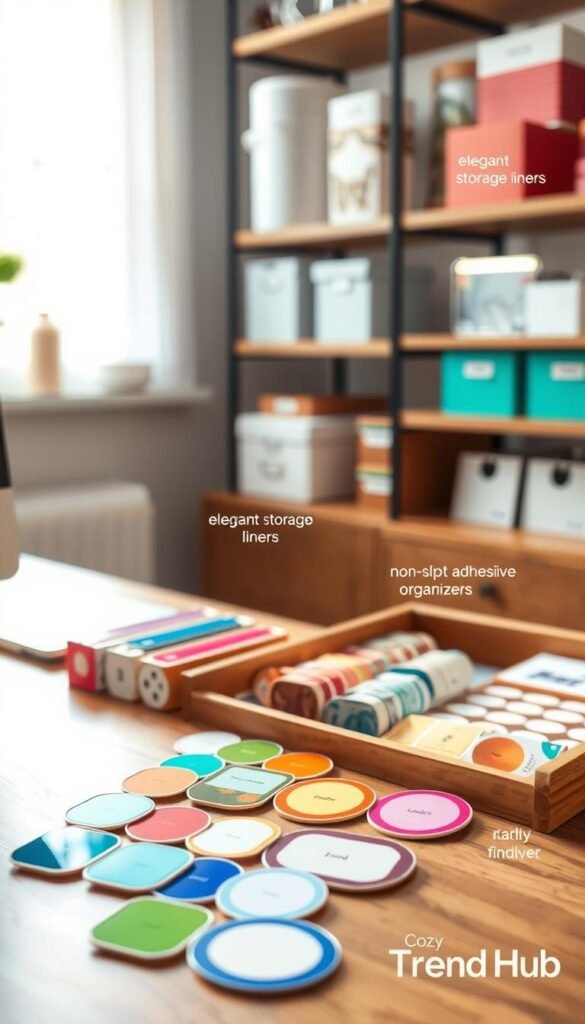
Adhesive pouches and clip-on tags
What they fix: category drift in garages, basements, and kids’ zones. Smart Store adhesive label pouches swap out easily when categories change.
Clip-on metal bin labels suit handled baskets and bins where tape peels. Choose readable sizes and test a washable marker or chalk option.
Durable label makers and laminated tape
Who benefits: pantry, garage, and outdoor bins. A Brother P-touch with laminated tape stands up to moisture and heavy handling.
Linings, gels, and grippers
Cut-to-fit shelf liners stop scuffs and catch small leaks. Quakehold! museum gel keeps small jars and decor from sliding and removes cleanly for renters.
Rug gripper pads work on hard floors and under pet beds, but avoid delicate string or yarn rugs to prevent damage.
| Item | Best-for | Renter note |
|---|---|---|
| Adhesive label pouches (Smart Store) | Garages, changing categories | Swap without residue if surface prepped |
| Clip-on metal labels | Baskets & handled bins | Reusable; pick large, readable plates |
| Brother P-touch + laminated tape | Pantry, outdoor bins | Water-resistant; good for heavy use |
| Shelf liners / museum gel | Shelves, trays, cabinets | Cut liners to fit; gel removes cleanly |
| Rug gripper pads | Hard floors, pet zones | Avoid on delicate textile rugs |
Quick pros/cons: labels need updates as contents change. Liners can trap moisture if spills aren’t wiped. Gels and grippers must match surface type.
How to choose durable budget organizers (so you don’t rebuy next year)
A quick measuring habit prevents costly returns and keeps systems useful for years.
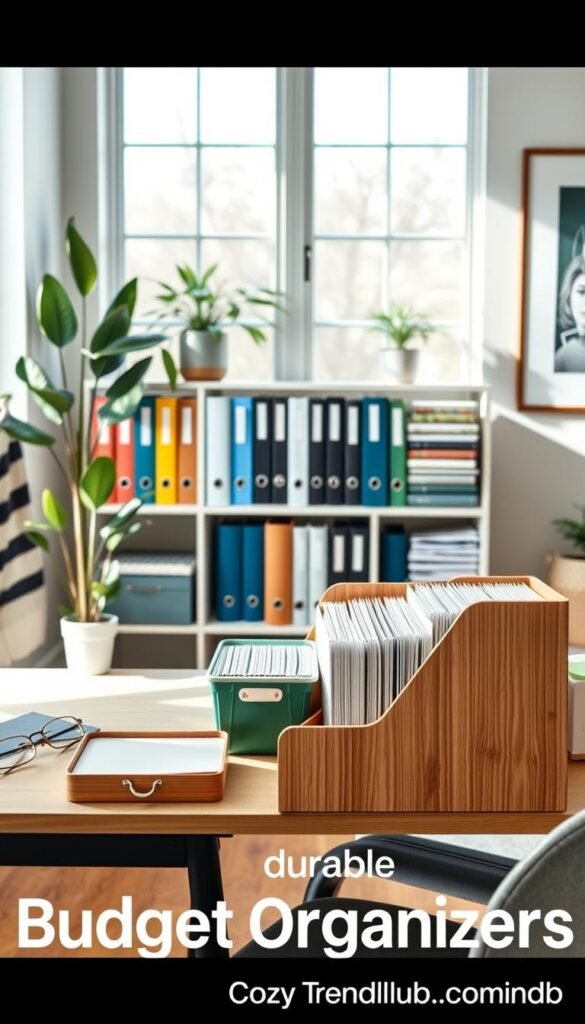
Measure first
Measure cabinet depth, door hinge clearance, drawer height, shelf lip height, and the tallest item that must stand upright.
Write each dimension on your shopping note so the chosen size fits the real space.
Material reality check
Look for thicker plastic that resists flexing and seams that are welded, not glued. Choose rust-resistant metal for humid spots and test adhesive limits on a similar surface.
Check the product return policy before you commit.
Match product to the problem
Decide if the main need is access (pull-outs/turntables), visibility (clear tiers), containment (lids/dividers), or safety (cable boxes, child locks).
Comparison criteria to shop faster
| Size range | Capacity / weight | Install type | Best-for room |
|---|---|---|---|
| Small–Large | Low–High | Freestanding / Adhesive / Screw-in | Kitchen, bath, closet |
- Renter rule: prefer freestanding, adhesive, or over-door options; drill only if long-term.
- Quick pro/con: lids aid containment but reduce usable height; pull-outs add access but cost more.
Final note: choose the system that fits your space and habits, not the one with the most pieces. Good organization and the right product choices stop the rebuy cycle.
Conclusion
Pick a single problem area, measure, and add an organizer that actually fits the space. Small, targeted swaps last longer than a pile of mismatched products.
Start by measuring cabinet, drawer, or sink clearance. Choose a clear storage type for visibility—kitchen and pantry upgrades, under-sink pull-outs, or one drawer system offer the fastest wins.
Renters should favor no-drill installs, over-door racks, and stackable bins that move with the household. Stick with one bin line and repeat sizes so expanding stays simple.
Use the comparison tables to shortlist 2–3 options per area. Then pick by fit, durability, and how the item supports daily organizing habits. Real change comes from matched design and steady upkeep, not one big buy.

5 Comments