
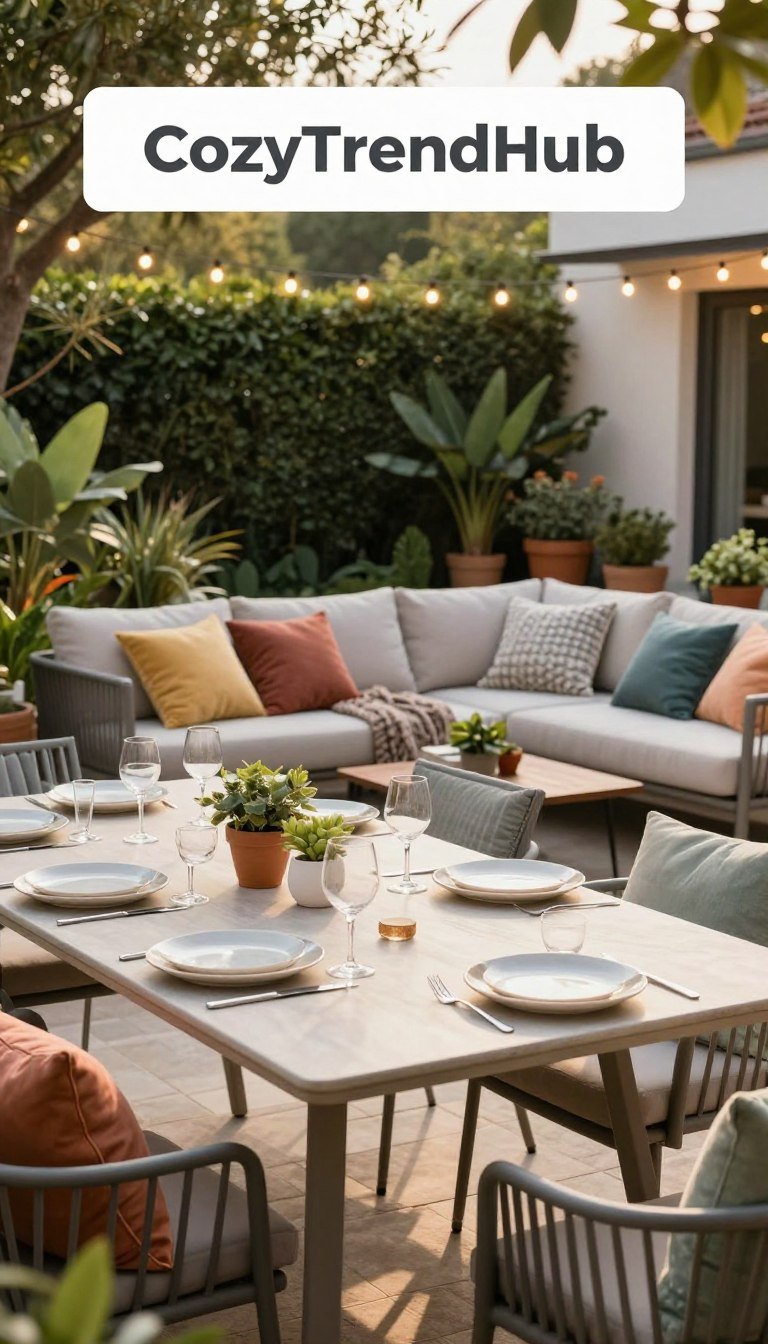
Many patios and decks feel unfinished, yet full makeovers often cost $5,000 or more. That leads to wasted purchases and items that do not fit the space. This guide starts with the problem and offers simple, renter-friendly solutions.
The focus is on targeted upgrades that change how an outdoor space feels without permanent changes. Readers will learn what to buy and what to DIY. The approach favors removable, weather-appropriate items for varied U.S. climates.
This short guide previews practical categories: lighting, floor coverings, thrifted furniture, paint refreshes, compact seating, textiles, privacy and shade, plants, and small hardscaping accents. Each section will note who benefits most—renters, small patios, or seasonal users.
Expect clear pros and cons, quick comparisons, and buying tips so readers can choose between options like string lights versus LED candles or modular seating versus a bistro set. The goal is fewer, better pieces that make the area look intentional and comfortable.
Key Takeaways
- Focus on targeted swaps that change the feel without a full remodel.
- Choose removable, weatherproof items for flexibility and renters.
- Prioritize lighting, textiles, and compact seating for big impact.
- Compare similar options to match function and space limits.
- Plan first: measure, pick a palette, then buy seasonal accents.
Start With a Plan So You Don’t Waste Money on the Wrong Patio Decor
Start by measuring the space and sketching how people will move through it. A quick tape-measure check of the usable footprint and door swings stops ill-fitting purchases.
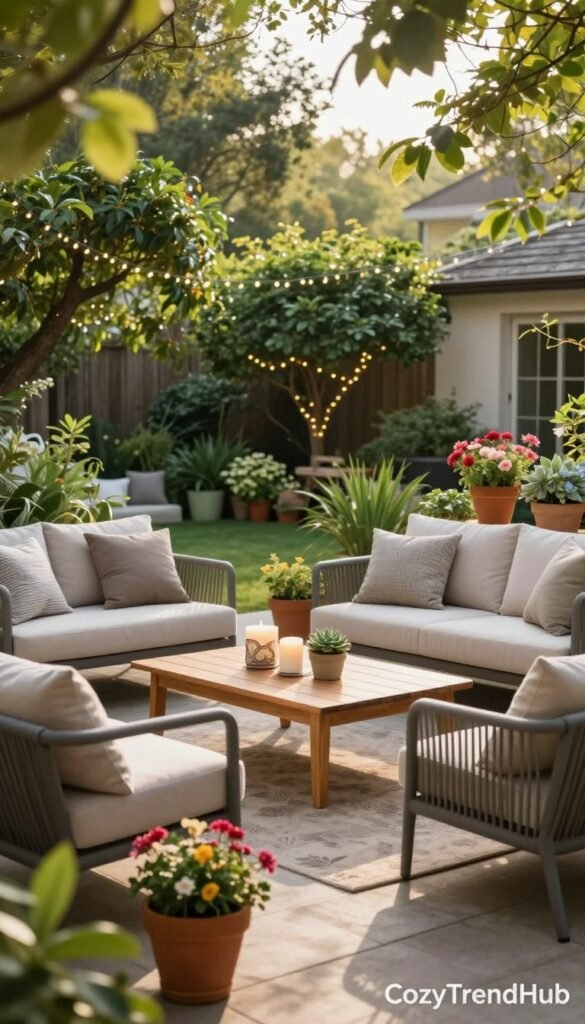
Map zones and set priorities
Sketch two to three zones: lounge, dining, and a plant corner sized to real use. Zoning turns a small patio into an outdoor room and keeps walkways clear.
Choose pieces that do double duty
Prioritize multiuse items such as a storage bench, nesting side tables, or stools that tuck away. These save floor space and serve guests without extra buys.
Seasonal spending and renter rules
Invest in weather-tough basics once, then swap low-cost pillows and tabletop accents each season to refresh the look on a modest budget. Renters should favor removable anchors, ties, and modular pieces that move easily to a new outdoor space.
Before you buy
- Dimensions and door clearance
- Material suitability and cleaning effort
- Storage needs and whether an item does two things
Quick tip: Measure, map, then buy — this simple workflow prevents wasted spending and creates a cohesive design you can live with.
Lighting That Instantly Upgrades Your Outdoor Space on a Budget
Layered lighting makes a small outdoor space feel finished after dark. Use an overhead source plus tabletop glow to solve the „it feels flat at night“ problem.
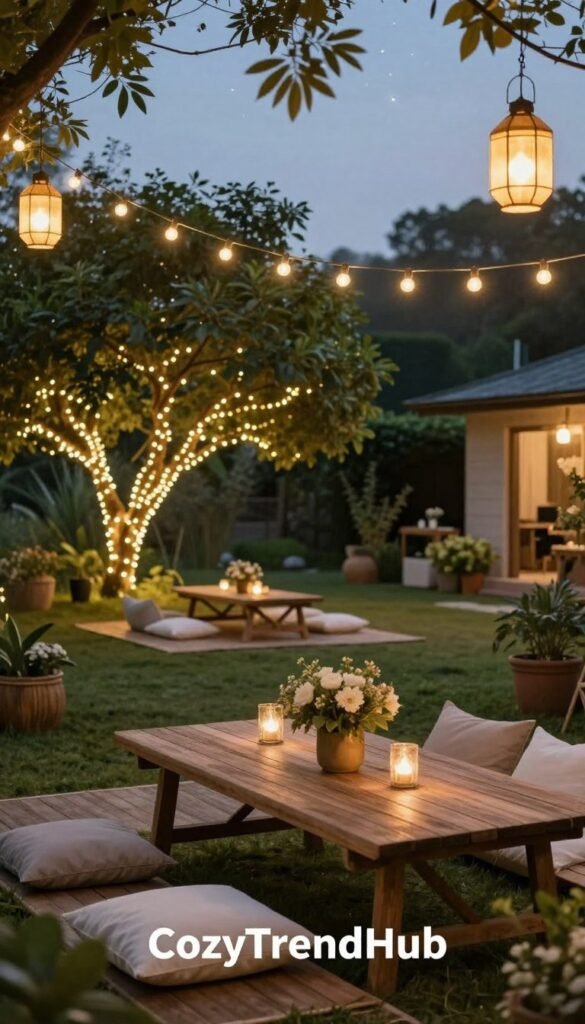
Bulb string lights
Who it helps: renters and small decks or patios with railings or pergolas.
String lights add warm ambient light along rails, pergola edges, or balcony ceilings. Choose shatter-resistant bulbs and a wet-location rating if exposed to sun or rain.
Flameless LED pillar candles
Who it helps: households that want a cozy table glow with no flame, wax, or wind issues.
Group LED candles in lanterns or on a table for low-maintenance mood light. Pick battery or solar models to avoid outlet limits.
DIY chandelier-style cluster
Repurpose a thrifted or vintage nonworking chandelier. Add LED candles and trailing greenery for height and a designer focal point that is renter-friendly.
Shopping and renter tips
- Look for: wet-location rating, cord length, timer/remote, and shatter resistance.
- Attachment: removable hooks, cable ties, tension rods, or railing clips to protect deposits.
| Feature | String lights | LED candles |
|---|---|---|
| Coverage area | Wide: overhead and perimeter | Localized: tables and lanterns |
| Brightness | Adjustable with bulb choice | Soft, low to medium glow |
| Maintenance | Replace bulbs; check cords | Replace batteries occasionally |
| Safety | Low risk if rated for wet use | No open flame; wind-proof |
| Flexibility | High: seasonal swaps and layout changes | High: portable table items |
Tip: Match power type—solar, battery, or plug-in—to available outlets and sun exposure to keep items working reliably.
Outdoor Rugs and Floor Coverings That Make Cheap Patios Look Finished
Changing what’s underfoot is the fastest way to give a small space a finished look.
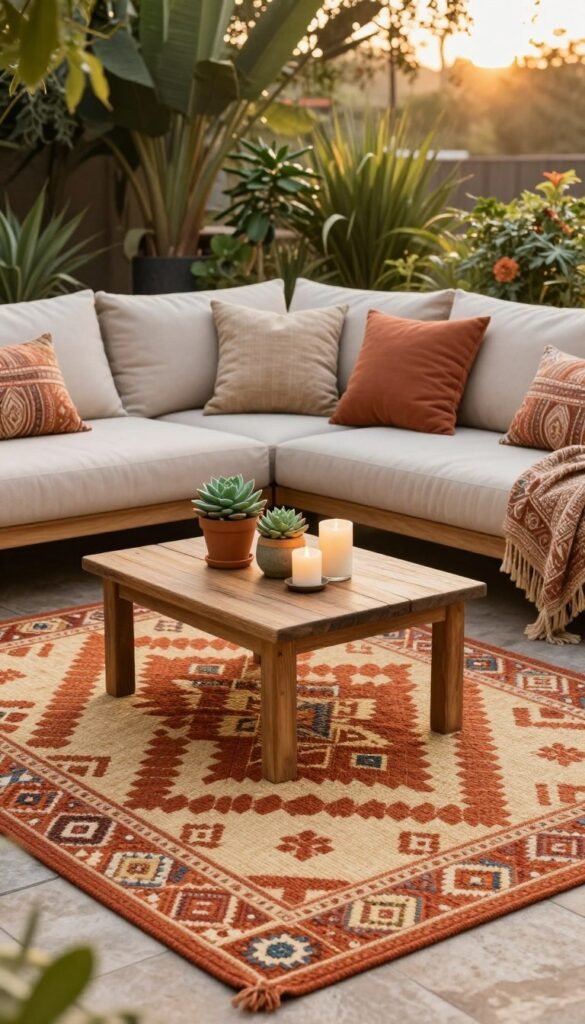
Outdoor area rug to anchor seating
Who it helps: small patios and renters who need a nonpermanent fix.
An outdoor rug defines a seating area and makes the patio read like a room. Place the front legs of chairs on the rug so the group feels anchored.
Peel-and-stick vinyl tiles for covered patios
Who it helps: renters or anyone wanting a tile look without a long remodel.
Use peel-and-stick on covered porches only. It mimics tile, is reversible, and often installs in a day. Ensure the surface is clean and level before you lay tiles.
Painted or stenciled concrete for patterned hardscape
Who it helps: homeowners or long-term renters with permission to modify.
A good diy paint and stencil job can mimic patterned tile at far lower cost. Prep, primer, and a sealer are essential for durability and to maintain the look.
„Anchor seating with an area rug first; then layer options like tiles or paint where permanence is appropriate.“
Buying and safety considerations
- Drainage & mildew: pick breathable rugs or tiles that let water pass.
- UV resistance: choose fade-rated materials for sunny exposures.
- Slip resistance: textured surfaces or non-slip backing reduce risk when wet.
- Cleaning: hose-off materials are easier to maintain and store seasonally.
Sizing tips: avoid tiny pieces that „float.“ Aim for an area that fits under main furniture legs and keeps a clear walkway so the space feels larger.
Seasonal note: choose coverings that are easy to roll up, store, or withstand weather so the patio stays usable year-round on a modest budget.
Thrifted and Vintage Finds That Look High-End (Without Paying Retail)
A few well-sourced vintage pieces create a layered, collected look that reads like design intent. This approach suits shoppers who want a curated style and can do light cleanup or repairs.
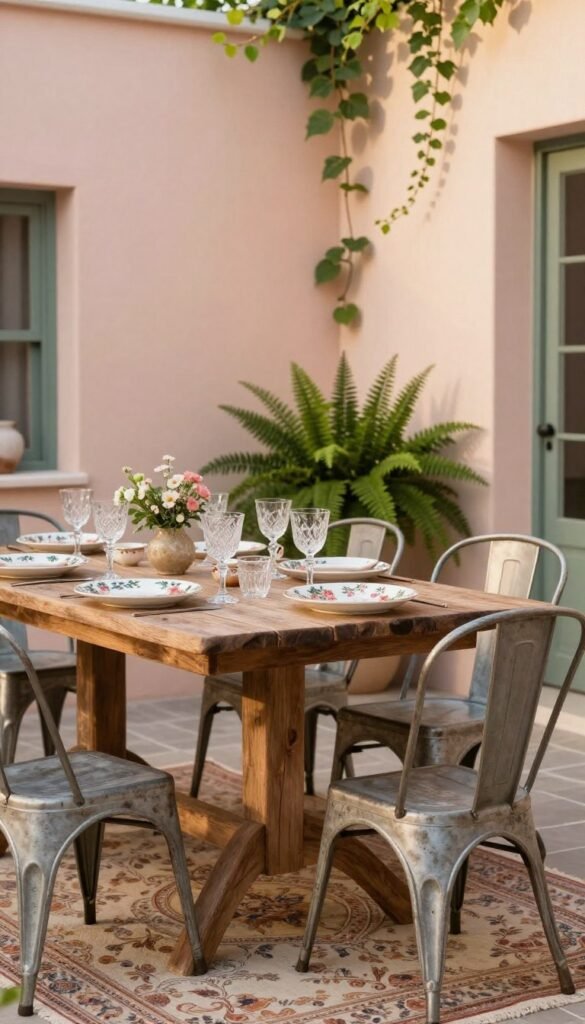
Who benefits most
Best for: people who enjoy treasure-hunting and want a cohesive view without paying retail. Thrift shoppers often find coordinated used patio sets that make a small space feel finished faster than mixing random pieces.
What to look for and inspect
- Check metal for rust-through and cracked welds.
- Test joints for wobble and bent legs.
- Smell fabric for mildew; probe wicker for UV brittleness.
- Confirm materials are suitable for exterior use or plan sealing.
Vintage rattan and used sets
Choose vintage rattan for narrow patios—older pieces are often lighter in scale and add texture without overwhelming the space.
Used patio furniture sets give a polished, matched look and reduce scale mismatch in tight layouts.
| Feature | Used sets | Vintage rattan |
|---|---|---|
| Scale | Matched, compact | Visually light, modest |
| Cleanup | Clean cushions, touch-up paint | Wash, replace cushions |
| Character | Uniform look | Patina and texture |
True-cost note: plan for a cleaner, rust converter, touch-up paint, replacement feet caps, or new cushion covers so the final look stays premium.
Quick buying tip: favor sealed wood, resin wicker, or powder-coated metal and keep a protective cover if storage is limited.
Make Old Outdoor Furniture Look New With Paint and Simple Repairs
With a little paint and simple repairs, old chairs and a scratched table can look intentional again. This approach saves time and keeps usable pieces in service instead of replacing them.
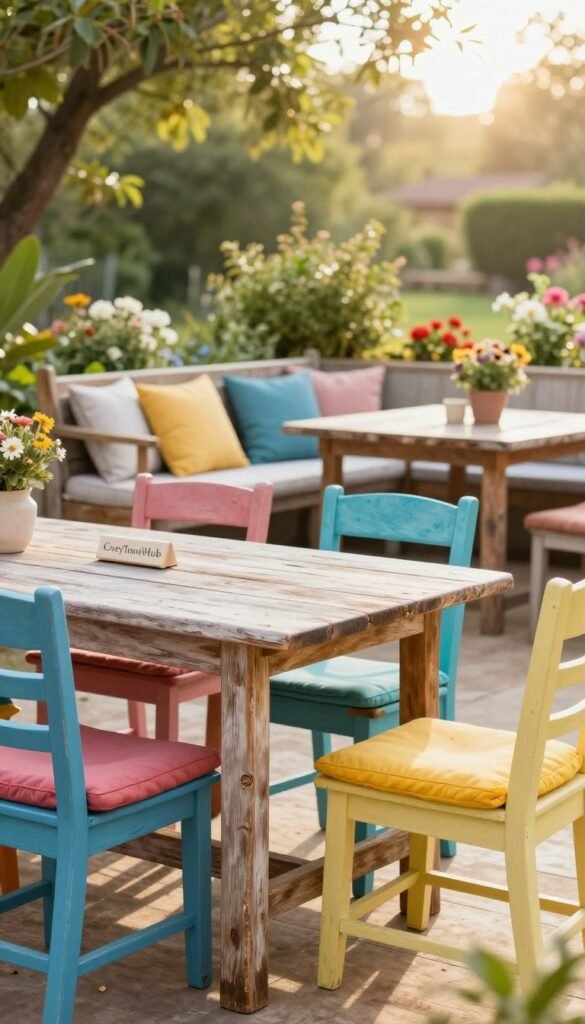
Spray-paint refresh for metal frames
Who it helps: renters and homeowners wanting a fast, visible change.
When the frame is solid but the finish is faded or rusty, a spray paint refresh works well for metal chairs and a metal patio table. Clean, remove loose rust, sand lightly, prime if needed, then spray in thin coats. Allow adequate cure time before use.
Re-strap, tighten, and clean to extend life
Tighten bolts, replace missing hardware, and swap worn straps or slings. Clean cushions and frames with a mild detergent so textiles last longer. These small fixes often restore comfort and stability.
Weekend DIY workflow and fit
- Day 1: deep clean, remove rust, sand, and assemble supplies.
- Day 2: prime (if needed), spray in thin coats, and let cure.
- Final: reattach cushions, tighten hardware, and enjoy.
„A short DIY session can revive a set, saving money and giving a cohesive look across a small space.“
Pros: low cost, high visual impact, fast time to finish. Cons: prep takes effort, weather limits application, and touch-ups may be needed over time.
Buying considerations
- Use exterior-rated spray paint and a rust-resistant primer.
- Pick a finish sheen to match style: matte for modern, satin for classic.
- Keep extra hardware and strap kits on hand for quick repairs.
Small-Space Seating That Works Harder (and Costs Less)
Smart seating turns cramped areas into flexible living spots without crowding the layout.
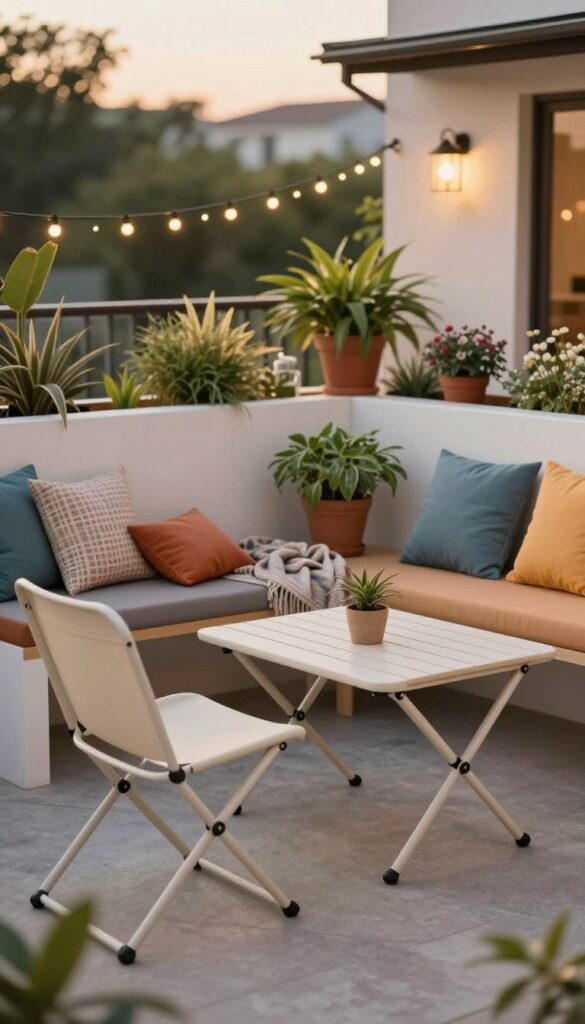
Flexible seating—stools, poufs, and light chairs—solves the „not enough seats“ problem. These pieces stack, tuck under tables, or double as footrests. They are ideal for occasional entertaining and roll away for clear walkways.
Movable bench and storage options
A narrow movable bench shifts from dining side to lounge side as needed. Benches with built-in storage hide throws, remotes, and seasonal items. Families and seasonal decorators benefit most from this dual use.
Layout guidance and shopping tips
- Keep one clear walking lane from the house to the seating area so the space feels intentional.
- Choose lightweight, weather-resistant furniture that nests or stacks.
- Match seat height to tables and test chair comfort before buying.
| Feature | Modular seating | Bistro set |
|---|---|---|
| Flexibility | High: reconfigure pieces | Low: fixed layout |
| Use case | Lounge, hosting | Meals, tight patios |
| Storage | Often no | Compact and easy to store |
Quick take: pick stools and a movable bench for flexible ways to seat guests. Choose modular when lounging matters; pick a bistro set if daily dining is the priority. These small choices improve the look and function of a small patio or deck on a modest budget.
Textiles That Make Outdoor Furniture Feel Premium, Not Plastic
Textiles turn rigid seating into an inviting place to linger and chat.
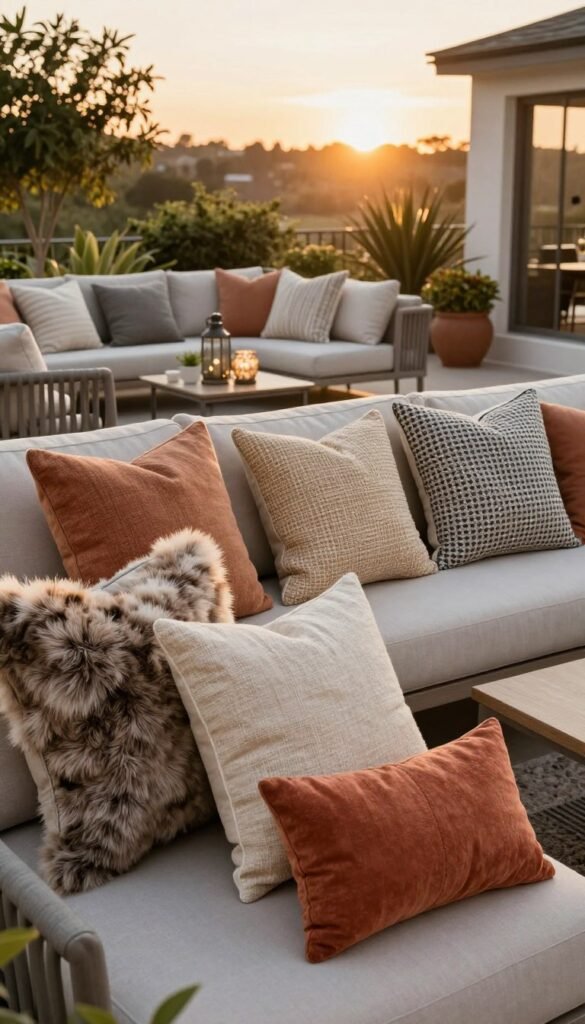
Seat cushions to soften metal or wood seating
Seat cushions are the top comfort upgrade for metal or wood furniture. A slim pad changes how long people want to sit and raises perceived quality for a small spend.
Outdoor pillows to add color and pattern
Outdoor pillows refresh style quickly. They add color, tie a palette together, and give a designed look without replacing chairs. Renters and seasonal refreshers benefit most.
DIY pillow covers to reuse inserts and save money
diy pillow covers let readers reuse inserts and pick exact fabrics. Sewing takes a little time but cuts cost and creates custom scale and pattern choices.
- Buy for: fade resistance, quick-dry fills, and washable, removable covers.
- Also check: UV ratings for sun exposure and fabric weight for durability.
- Easy styling: pick a tight palette, mix textures, limit patterns so the small patio keeps a premium look.
Pros: DIY saves money and customizes fit. Cons: it takes time and needs true outdoor fabrics to prevent mildew.
Privacy and Shade Solutions for Renters and Small Patios
A small amount of screening can turn a visible patio into a private, usable retreat.
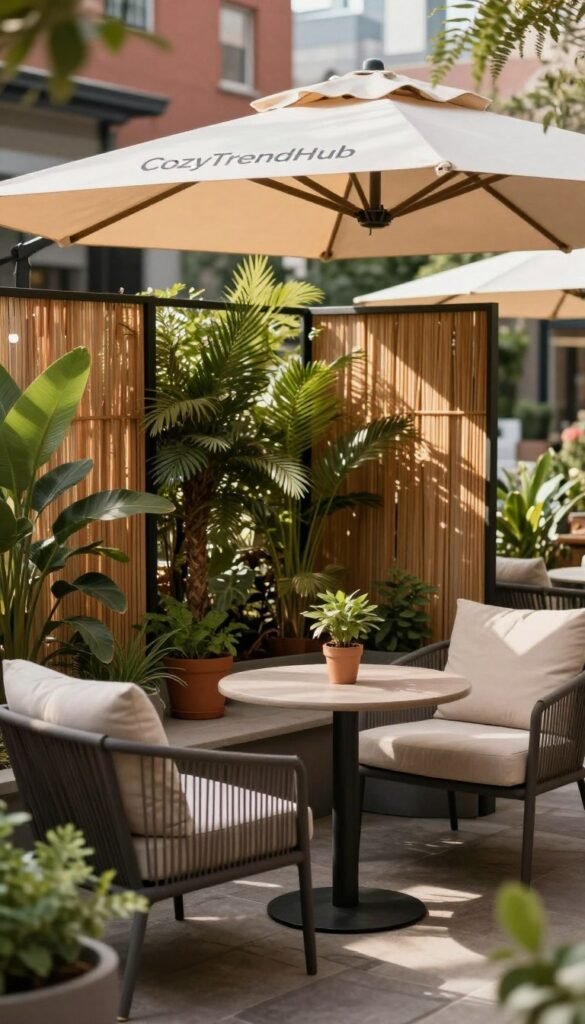
Bamboo panels for close neighbors
Who it helps: balconies and narrow decks next to other units.
Bamboo rolls attach with zip ties or bungee cords and install in minutes. They tame sightlines and pair well with string lights and trailing plants for a softer look.
Wood trellis add-ons
Lightweight trellis panels mount to railing posts or lean against a rail. They support vines for a small garden feel and are easy to remove at move-out.
Pop-up canopies and tents
Use case: south-facing patios and high-heat zones.
Pop-ups give generous shade without permanent posts. Look for wind ratings, weighted bases, and quick-release feet to protect your deposit.
DIY curtains from sheets or yardage
Hang fabric on a tension rod or rope for targeted sun control and a softer look. Choose UV-resistant fabric if possible and secure edges in wind-prone areas.
- Solve: no privacy and too much sun so people use the space more.
- Look for: stability, rust-resistant hardware, and deposit-safe attachments.
- Layout tip: create one private seating spot first to contain costs and test what works.
„Start small: one screened spot makes the whole deck feel more inviting.“
Greenery That Looks Lush Without Buying Expensive Plants Every Season
Smart plant choices stretch a small garden’s impact so a deck feels lush without constant replacements.
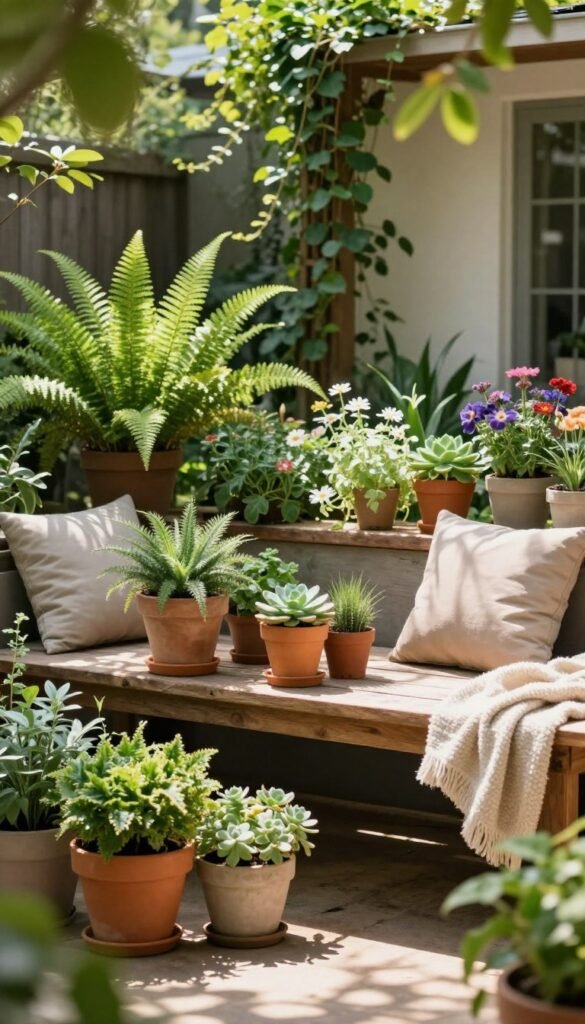
Perennials for year-over-year color
Who it helps: homeowners or long-term renters. Perennials return each season, cutting repeat spend and filling the garden reliably.
Annuals in matching containers for fast impact
Seasonal flowers give bright color quickly. Group them in matching pots to read as a single, intentional vignette—perfect for seasonal decorators who want high impact without high cost.
Divide to expand without rebuying
Split mature clumps to create more plants from what already grows. This multiplies coverage and solves empty corners without new purchases.
Mini container collections for tiny spaces
Succulents or small cactus grouped in a tight area create a strong focal point. They suit small spaces and need less fuss than many large pots.
What to buy for long-lasting success
- Quality potting soil for healthy roots
- Drainage trays and pot risers to protect the deck
- Good pots that match for a cohesive look
Tip: cluster pots by height in one area to reduce clutter and keep walkways clear.
Vertical and Hanging Planters That Save Floor Space
When floor space is tight, moving plants up frees room for seating and makes the area feel intentional.
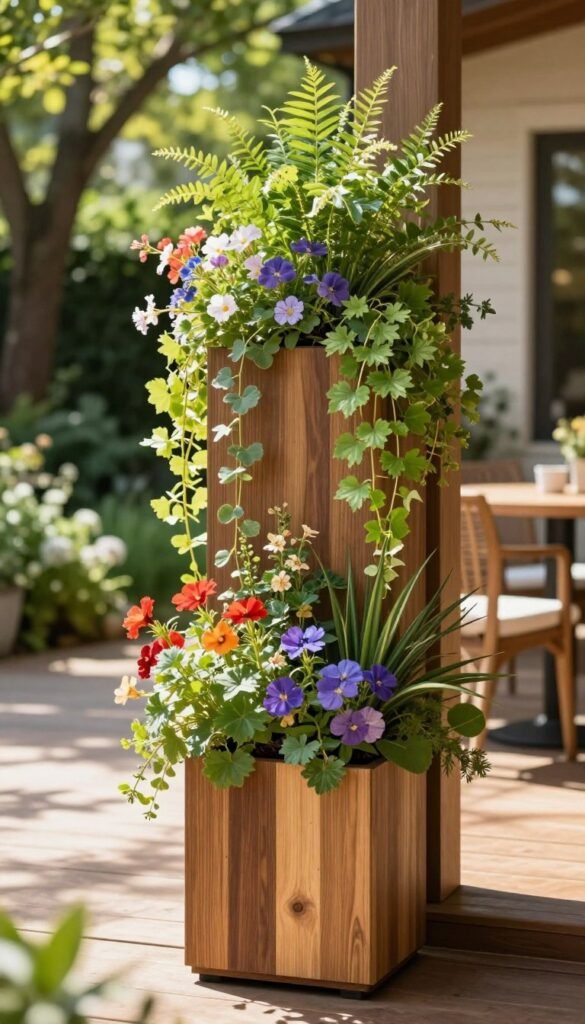
Hanging baskets for small patios
Who it helps: renters and tiny patios that fill up fast. Hanging baskets add softness without using walking or seating space.
Vertical gardens from simple boxes
Use found wood or shallow boxes to build a removable wall planter. This diy solution becomes a focal point and can move with the tenant.
Stacked hanging planter boxes
Hang stacked boxes from porch beams or a pergola to add height and extra privacy. Stacking increases coverage while leaving the floor clear.
- Solve the “no floor space for plants” problem by going up.
- Buying/DIY notes: drill drainage holes, add trays, and check hook or railing weight limits.
- Use rust-proof fasteners and confirm load ratings before hanging many items.
Styling and care: repeat the same finish, keep plant types cohesive, and balance heights to avoid clutter. Vertical planters dry faster; plan watering access and pick plants that match the light.
„Vertical planting clears circulation, adds privacy, and makes a small garden feel intentional.“
This approach keeps the patio usable and brings greenery into the home without stealing usable floor area.
Trellises, Arbors, and “Height Tricks” That Add a Designer Look Fast
Use height to solve a lack of privacy, a missing focal point, or a monotonous garden edge. Tall pieces bring depth so a small patio or yard reads as a cohesive area and not a scatter of items.
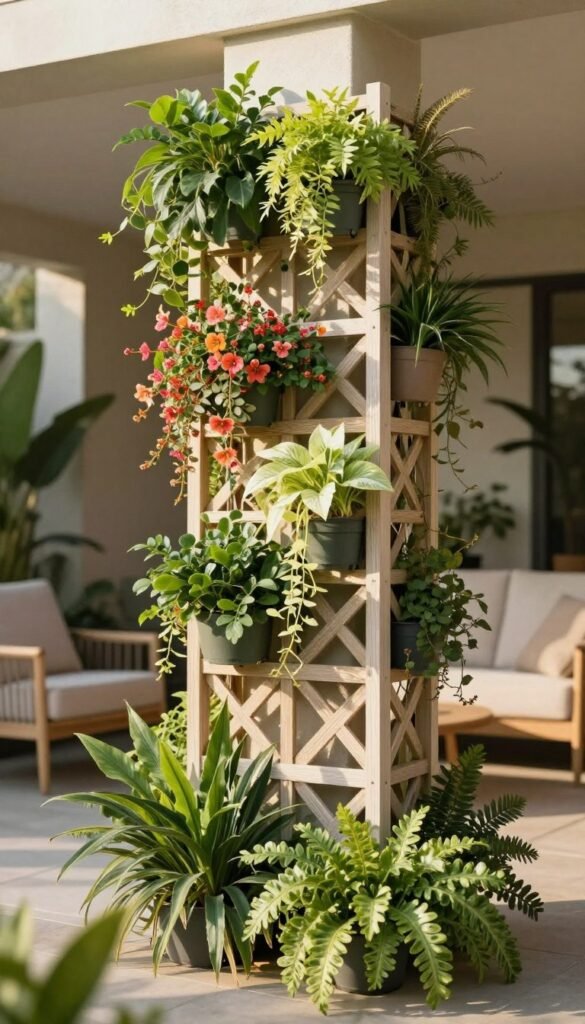
Painted trellis for a pop behind greenery and flowers
Who it helps: renters and homeowners who want color contrast without large installs.
Attach a lightweight trellis or mount one permanently and use a single coat of weather-rated paint to make plants and flowers stand out. Effort: low to moderate. Expect touch-ups over time.
Thrifted arbors and ladders to define movement
Who it helps: shoppers who like vintage or thrift finds and want instant architectural structure.
Old arbors or ladders frame an entry, guide circulation, and create a picture window of the seating space. Check for rot, loose joints, and footprint fit before buying.
Espalier-trained trees for a living fence in tight spots
Who it helps: homeowners with limited garden room seeking a pared-down living screen.
Espalier is a slow, intentional technique that gives a fence-like look without hardscape. Effort: ongoing pruning and support ties; growth is gradual, not instant.
- Buying checks: stability, rot or rust, and size vs. clearance.
- Placement tip: put height at the back of seating to create a room effect and improve privacy without closing in the space.
- Maintenance reality: painted surfaces need touch-ups; living screens need seasonal pruning and ties.
Budget-Friendly Outdoor Decor That Creates a Focal Point
A single intentional focal point can turn a scattered patio into a composed, welcoming space.
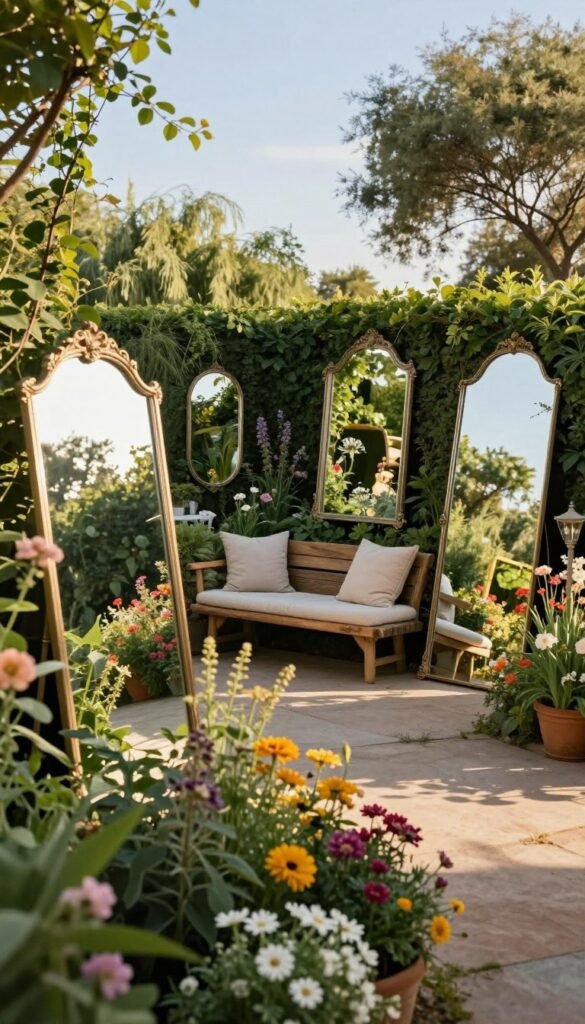
Garden mirrors to bounce light and widen a small space
Who benefits: renters and small balconies with a blank wall.
Hang a weather-rated mirror to reflect available light and make the area feel larger. Position it so it catches indirect sun or string lights without reflecting glare into neighbors‘ windows.
Safety note: choose outdoor-rated frames or place mirrors under an overhang to protect them from the elements.
Fresh flowers in Mason jars or simple glassware
Who benefits: hosts who want an elevated table look without special vases.
Group seasonal flowers in clear jars for casual charm that reads like intentional decor. Swap stems each season to refresh color and scent with little cost.
„One statement item plus two supporting accents keeps the look calm: mirror + planter + small lantern.“
| Feature | Garden mirror | Mason jar flowers | Small lantern |
|---|---|---|---|
| Primary effect | Visually expands space | Adds color and scent | Provides table lights |
| Best placement | Blank wall or end of narrow patio | Dining table or console | By seating or planter group |
| Longevity | Long-term piece | Seasonal swap | Seasonal or year-round with weather rating |
Affordable Fire and Water Features for Cozy, “Resort” Vibes
A single flame or the sound of running water quickly rewrites how a seating area feels at night. Add one controlled element and the patio becomes a clear gathering spot and a small oasis.
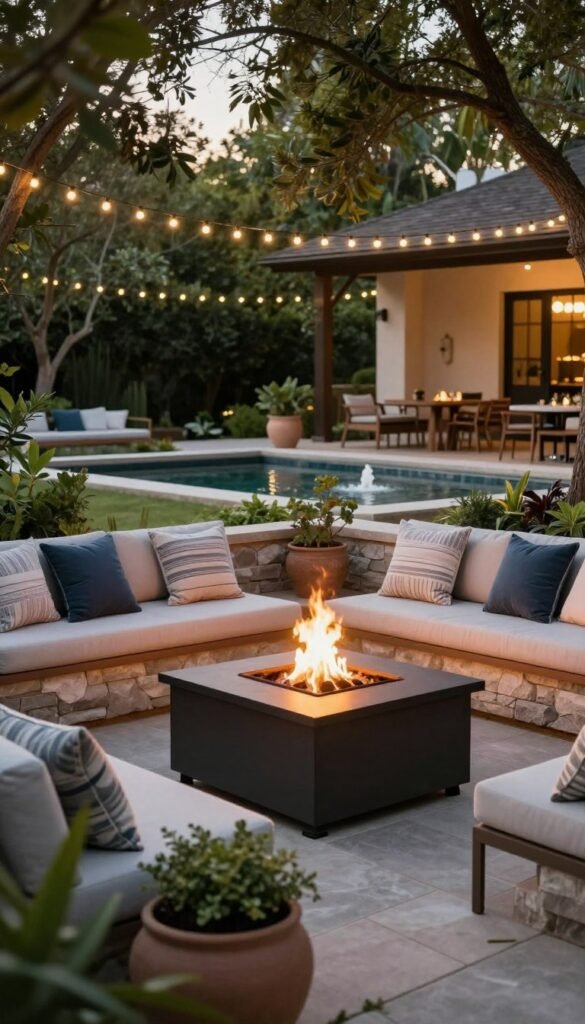
DIY paver fire pit for weekend builds
Who it suits: homeowners who want a lasting feature and can follow local rules.
Simple angled pavers, gravel base, and a fire-safe liner make a weekend diy project. Allow clearance from structures and use a noncombustible surface under the pit.
Portable fire pits for small patios
Who it suits: renters and small-space hosts who need flexibility.
Choose folding steel or propane models that store easily. Confirm building and HOA rules before lighting; many units allow temporary use only.
Tabletop fountains and bucket water features
Who it suits: people wanting to mask road noise and create a low-maintenance oasis.
Small table fountains and plug-in bucket features add continuous sound without big installs. Expect occasional cleaning and a power source or solar option.
Safety and buying considerations
- Check city, county, and HOA fire rules and permits.
- Use noncombustible surfaces and keep a clear perimeter from plants and fabrics.
- Place features away from heavy foot traffic and door swings.
- Tip: pick one standout feature first, then add lower-cost accents to stretch a modest budget and save time.
„Fire delivers warmth and a social focal point; water soothes noise—both need rule checks and sensible placement.“
| Feature | Best for | Pros | Cons |
|---|---|---|---|
| Paver fire pit | Homeown ers | Durable, warm focal point | Requires permits, permanent |
| Portable fire pit | Renters / small patios | Flexible, storable | Lower heat, rule limits |
| Tabletop water | Noise masking | Soothing, compact | Needs power/cleaning |
Easy, Premium-Looking Patio Tables and Outdoor Entertaining Setups
Well-placed tables create flow, keep drinks off laps, and make a patio feel organized. This section shows three low-cost setups that add serving space and a more intentional look without a full remodel.
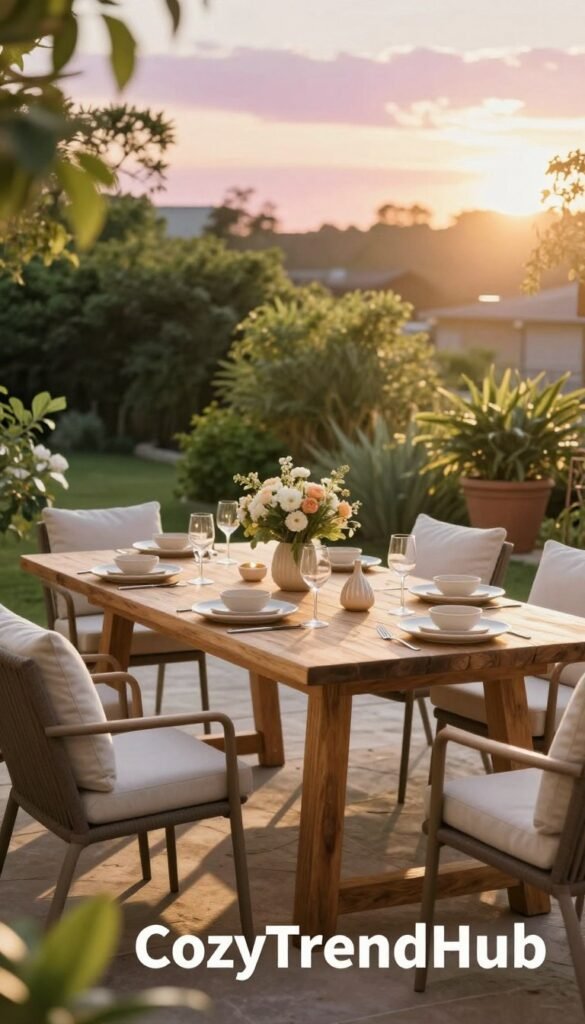
DIY outdoor bar with concrete blocks and decking
Stack concrete blocks as a stable base and top with leftover decking or plywood. Configure height for serving and add hooks for towels or utensils.
Who it helps: hosts who want a dedicated serving station without building an outdoor kitchen.
Simple side tables: stone slab + scrap lumber
Place a small stone slab on a trimmed lumber base for a steady side surface. It works well next to seating for a coffee or book and takes little floor space.
Who it helps: small spaces that need a solid place for drinks and a lamp.
Table linens that upgrade a basic table fast
Use wipeable tablecloths and runners to hide wear and add softness. Secure edges with clips or weighted trays so wind does not lift the cloth.
Practical notes: stability, weather, and layout
- Level bases on uneven ground; use pavers or shims for stability.
- Choose heavy tops or secure lightweight pieces against wind.
- Place serving surfaces near seating but clear of main walkways.
- Setup checklist: concrete blocks, decking board or stone slab, wipeable linens, outdoor-safe trays, and storage bins for linens between uses.
- Consider weatherproof sealers and felt feet to protect the deck or table top.
„One steady table often solves the ’nowhere to set food‘ problem and makes hosting feel easier.“
| Setup | Use | Stability |
|---|---|---|
| Concrete block bar | Serving station | High when levelled |
| Stone slab side table | Coffee & drinks | Very steady |
| Linens & trays | Instant design lift | Depends on wind protection |
Hardscaping on a Budget: Gravel, Leftover Stone, and Smart Layout Choices
A focused hardscape strategy can transform a muddy or uneven patio into a usable living area without a full remodel. Small changes—gravel, a few large pavers, or stacked leftover stone—solve drainage and comfort problems and make the space feel intentional.
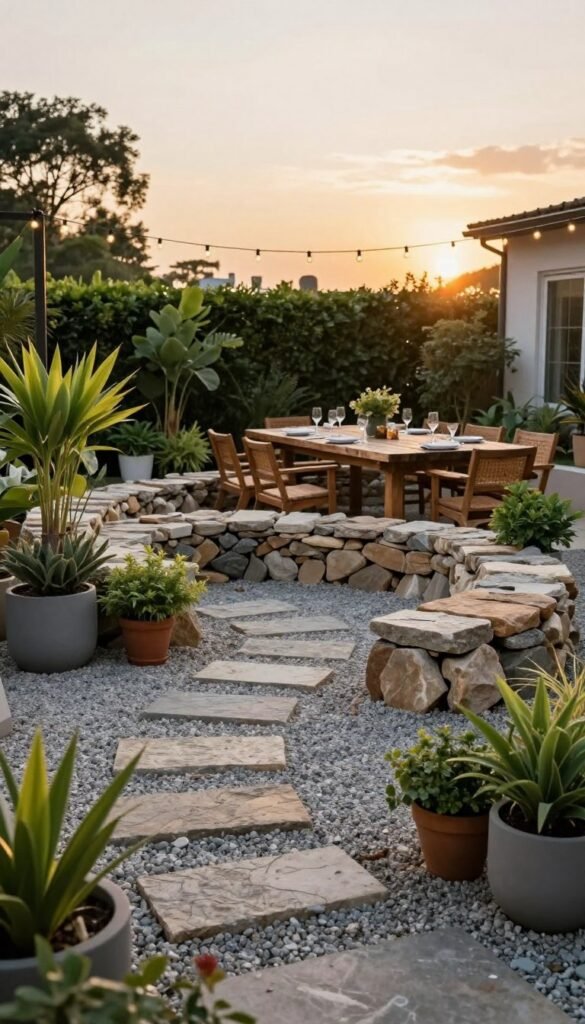
Pea gravel: a low-cost, well-draining surface
Who it suits: homeowners and long-term renters (with permission) who need quick coverage for odd-shaped areas.
Pea gravel drains well, hides uneven ground, and installs fast. It’s cheap per ton but can migrate, so expect some maintenance and edging to keep it contained.
Oversized pavers for a modern look with fewer pieces
Who it suits: anyone wanting a clean, modern look while reducing material costs.
Large pavers cover more area with fewer units, which cuts time and sometimes freight fees. Proper leveling and joint spacing matter for comfort underfoot and chair stability.
Leftover stone for edging and dry-stacked accents
Who it suits: shoppers able to transport materials who want character without full pallets.
Landscape yards sell cut-offs and returns at steep discounts. Use them for edging, low walls, or a dry-stacked firewood nook—watch for trip points and secure placement.
Buying considerations and quick layout rule
- Use a woven weed barrier under gravel or pavers to cut maintenance.
- Level and compact the base to prevent shifting and uneven chairs.
- Think comfort: add a small paved footprint where people sit; leave loose materials where traffic is light.
„Hardscape only the functional footprint—seating and one clear walkway—to save money and keep the area usable.“
How to Choose the Best Budget Outdoor Decor for Your Space and Lifestyle
Small patios improve fastest when purchases follow a simple rule: invest in what gets daily use. This decision framework helps readers cut choices and build a coherent look over time.
Best for renters
Prioritize removable items. Pick rugs, string lights, pop-up shade, and screens that attach without drilling. These protect deposits and move easily to a new home.
Best for small spaces
Choose fewer, better pieces and use vertical planters and narrow benches. Zone the space for dining or lounging so circulation stays clear.
Best for seasonal use
Invest in all-weather basics that stay outside. Rotate quick accents like pillows and candles each season to refresh the style with low cost and low time.
Where to invest vs. where to save
- Invest: seating comfort, a durable rug, or one standout feature that sees daily use.
- Save: toss-on pillows, tabletop accents, and seasonal lamps that are easy to swap.
Buying timeline and quick checklist
- Start: seating + layered light.
- Next: privacy and greenery.
- Later: surface upgrades or a standout feature.
Checklist: measurements, material rating, storage plan, and the main problem being solved (comfort, privacy, lighting, clutter).
„Buy one high-use piece first, then finish with affordable accents to stretch a modest budget.“
Conclusion
A clear plan and one smart upgrade can turn a small patio into a usable, calm oasis.
Start with the highest-ROI moves: map the space, add layered lights, anchor the floor, and upgrade seating comfort. Then bring in privacy and greenery to complete the look.
Renters: choose removable screens, rugs, string lights, and pop-up shade so the area improves without risking a deposit.
Small-space owners: use vertical plants, slim benches, and one investment piece (a durable rug or a vintage side table) to keep the deck functional and uncluttered.
Work in seasons: keep durable basics year-round and refresh color and pillows each summer. Use the pros/cons and buying checks in earlier sections to pick items that match climate, time, and real use.



3 Comments