
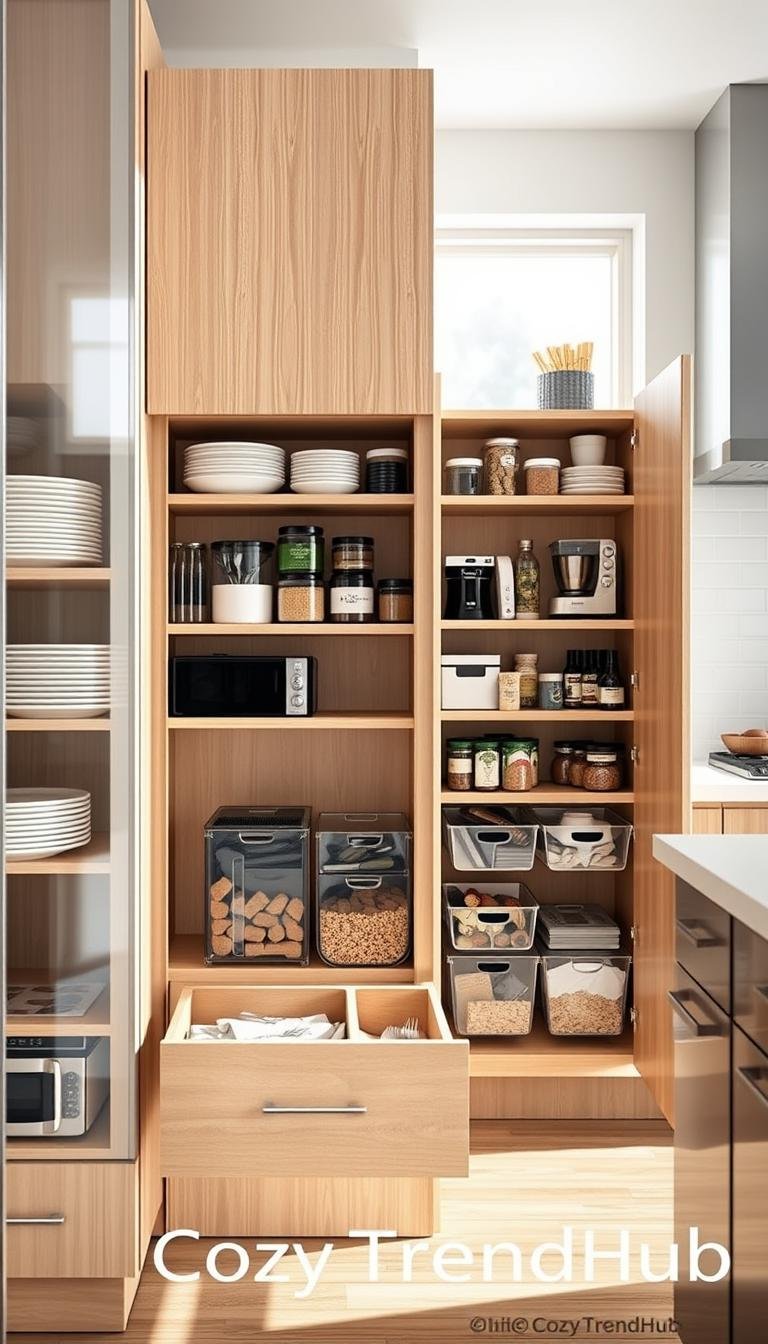
Clutter in the kitchen steals minutes and hides usable storage. This guide starts with a clear problem: crowded shelves and deep drawers slow cooking and lead to duplicate buys.
The team tested real products in homes and spoke with pro organizers Sarah Schier and Sarah Dunn. Their advice: measure first, declutter before buying, and favor visibility and access.
This piece defines what „organizers“ means here — racks, pull-outs, risers, dividers and under-sink systems — and shows how to match a solution to a specific cabinet problem like depth, corners, low shelves, pan stacks or plumbing obstacles.
Expect product details tested to help confident shopping: dimensions, weight capacity and installation type. Renters and small-space dwellers will find no-drill, freestanding and stackable options highlighted.
Practical outcomes guide recommendations: faster meal prep, fewer scratches, and less re-buying of items already owned.
Key Takeaways
- Measure cabinets and clear clutter before shopping.
- Choose solutions that match the exact storage problem.
- Look for dimensions, weight limits, and installation type.
- Renters should favor no-drill and freestanding pieces.
- Better access saves time and prevents duplicate purchases.
Quick picks by problem: the organizer that fixes your biggest kitchen cabinet headache
Find the right solution fast by matching your most common storage snag to a proven setup. Below is a short decision map to jump to the style that will restore order and easy access to everyday cookware and pantry items.
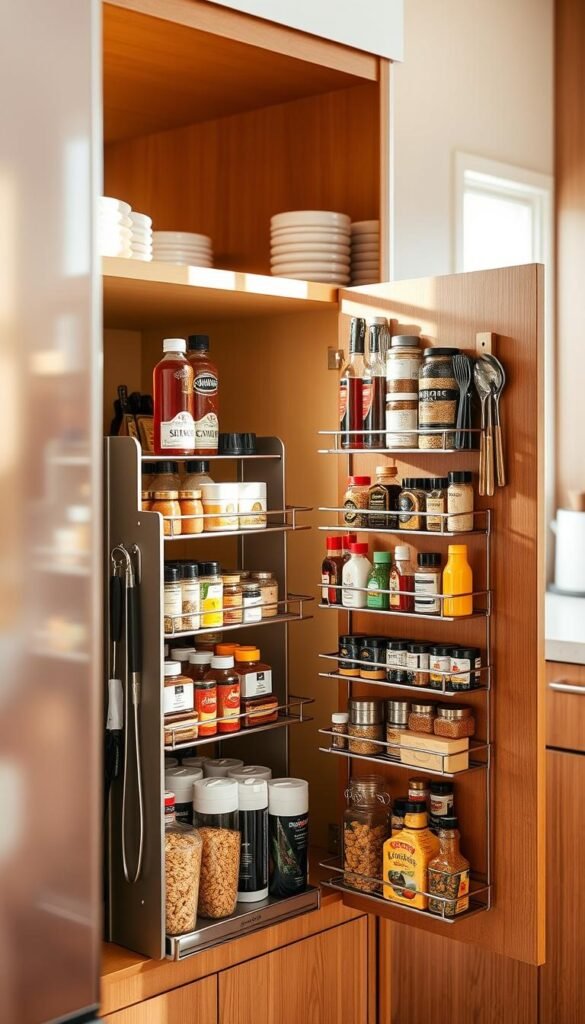
Can’t find the right pan or lid without unstacking everything
Use an expandable pan rack or a vertical rack to stop unstacking and to reduce scratches. Food & Wine testing highlights these as simple fixes that make pans and lids visible and fast to grab.
Deep base cabinets where items disappear in the back
Roll-out trays and pull-out shelves bring pots and heavy items forward. CliqStudios and Toulmin recommend sliding solutions to cut bending and digging.
Not enough shelf height for dishes, cups, and pantry goods
Stackable shelves and risers create a second level for plates, cups, and light pantry goods. These freestanding pieces are renter-friendly and cheap to change as needs shift.
Corner cabinets that waste space and hide items
Install a lazy susan or a corner pull-out to make spices and small boxes reachable. These choices boost visibility without major reconstruction.
Under-sink clutter from cleaning supplies and leak-prone storage
Pull-out caddies plus a sink base liner or towel bar help work around plumbing and protect against leaks. This mix keeps cleaning items tidy and accessible.
- If pans tangle: expandable pan or vertical rack (renter: freestanding).
- If items hide: roll-out tray or pull-out shelf (homeowner: screw-in glide).
- If shelf is short: stackable shelves/risers (renter-friendly).
- If corner is wasted: lazy susan or corner pull-out.
- If under sink is messy: pull-out caddy + liner.
| Problem | Quick solution | Renter-friendly | Homeowner option |
|---|---|---|---|
| Pan/lid chaos | Expandable pan rack / vertical rack | Freestanding rack | Mounted vertical divider |
| Deep base storage | Roll-out tray / pull-out shelf | Slide-in tray | Screw-mounted drawer glide |
| Low shelf height | Stackable shelf / riser | Lightweight riser | Custom shelf insert |
| Corner reach | Lazy susan / corner pull-out | Turntable | Hardware pull-out |
Note: Pros Schier and Dunn advise decluttering before buying. Choosing the right tool saves time, reduces duplicates, and makes daily cooking flow smoother.
Comparison table setup: what to measure before you buy cabinet organizers
Measure twice before buying: accurate cabinet dimensions stop most returns and misfits. Start with interior width, depth, and usable height. Then note hinge swing and door clearance so inserts slide and doors close.
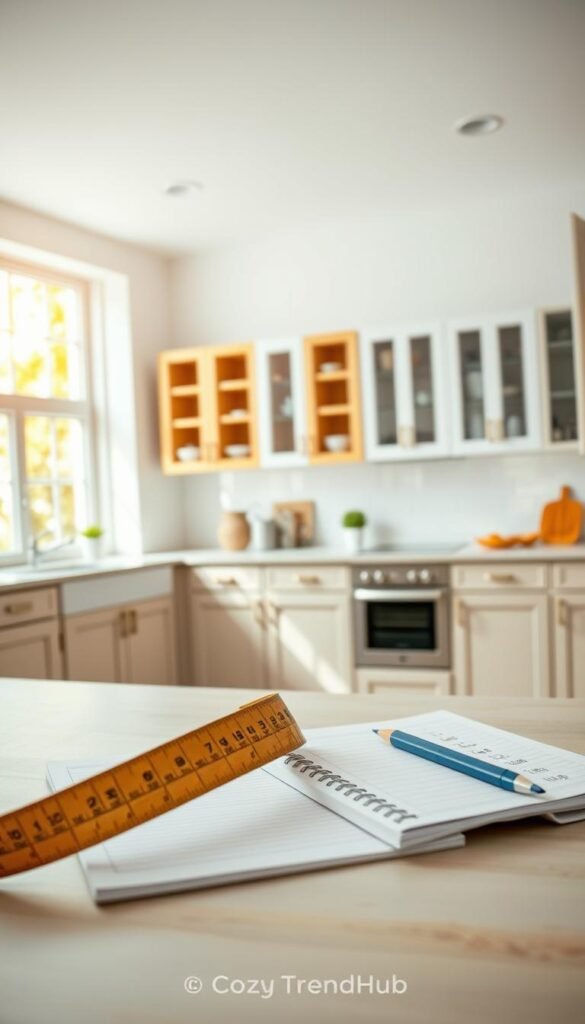
What to measure
- Interior width: measure between side walls at top and bottom.
- Interior depth: measure from back panel to front face minus door thickness.
- Height and clearance: include shelf-to-shelf space and hinge/device intrusion.
Why deep vs. shallow matters
Deep base cabinets need full-extension glide math and rear clearance. Shallow uppers have less depth but may need height inserts. Measure the usable interior, not the opening.
Weight and access choices
Match weight capacity to use: light goods (spices, snacks) under ~20 lbs; medium (pots, pans) 20–50 lbs; heavy (cast iron, small appliances) 50+ lbs. Stationary racks are simple and often renter-friendly. Sliding systems give better access but usually require screws or guides.
Renter-friendly checklist
- No-drill shelves and risers
- Freestanding dividers and removable liners
- Slide-in trays when screw-in pull-outs are not allowed
Material tradeoffs: metal holds weight and lasts. Plastic works around moisture and is lightweight. Wood looks neat but suits light-duty shelf inserts.
| Measure | Install type | Material | Weight rating |
|---|---|---|---|
| Width, depth, height, hinge clearance | No-drill / freestanding | Plastic | Light (≤20 lbs) |
| Full-extension depth + frame opening | Screw-in / glide | Metal | Medium–heavy (20–100+ lbs) |
| Shelf spacing & top clearance | Stackable inserts | Wood | Light–medium (≤40 lbs) |
Quick buying tip: check hinge intrusion, measure the interior not the face, and match weight rating to items to cut returns and misfits.
Best cabinet organizers for kitchen: tested-style solutions for pans, lids, and bakeware
This roundup focuses on real solutions that cut search time and prevent scratched cookware.
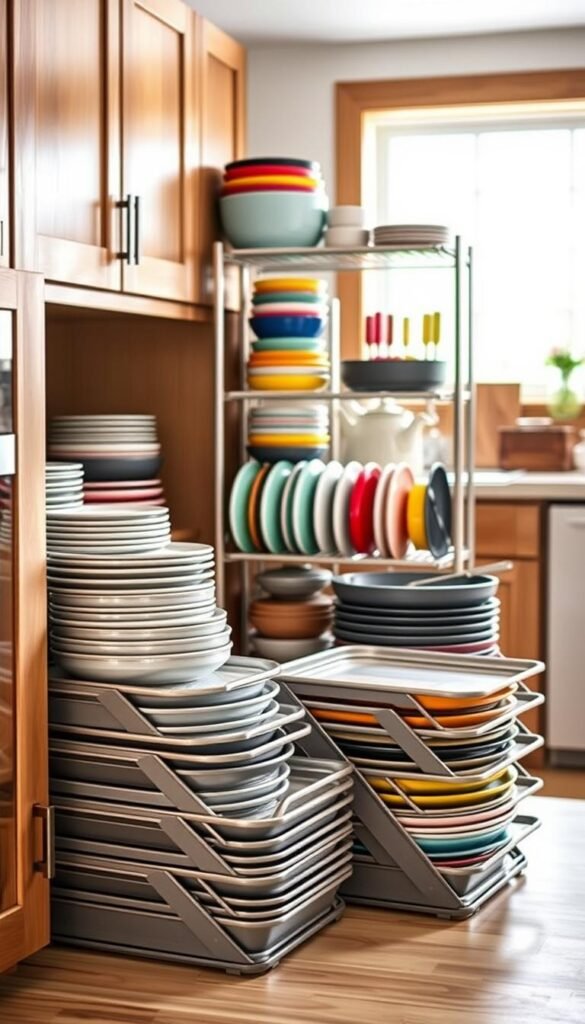
Expandable pan organizers
Who it’s best for: households with mixed sets and changing needs.
Why it helps: adjustable slots grow or shrink to match pan sizes and different cabinet widths. Food & Wine testing shows these reduce stacking and speed access.
Vertical pot and pan racks
Who it’s best for: cooks with heavy pots and frequent use.
Why it helps: separate tiers protect surfaces and let users grab items without unstacking. Check cabinet height and handle clearance before buying.
Adjustable dividers and tray solutions
Adjustable dividers hold baking sheets, cutting boards, and cookbooks upright. Tray dividers are ideal when frequent baking calls for true vertical storage. CliqStudios notes built-in dividers beat freestanding racks for heavy, often-used sheets.
Deep drawer strategies
Pull-out drawers with sturdy dividers cut re-stacking of bulky cookware. Toulmin recommends this setup to save bending and to make pots and pans instantly visible.
- Quick buying notes: measure height, allow handle space, and prioritize stability for heavy items.
Best expandable pan organizer for adjustable storage in small cabinets
Small spaces demand flexible gear that adapts to shifting cookware and limited shelf width.
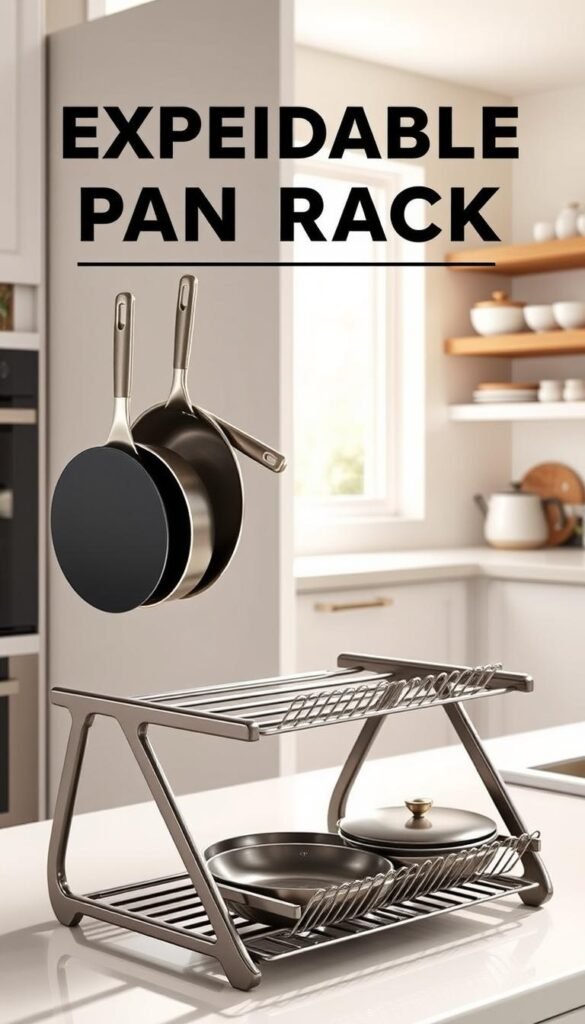
Featured pick: Simple Houseware Expandable Pan Organizer. It targets stacked pans and lids that rub, clatter, and hide useful items.
Who it’s suited to
Best for mixed cookware sizes and changing storage needs in small kitchens. Renters will like the freestanding setup because it needs no drilling.
Key specs & practical notes
- Dimensions: 9.5 x 12–22 x 8.5 inches.
- Materials: powder-coated metal dividers + plastic base.
- Features: extendable body with nine adjustable dividers to match pans, lids, and other items.
Pros and cons
Pros: feels stable in testing, sturdy metal dividers, good value, and flexible width that compresses for tight shelves.
Cons: not ideal for very wide or oddly shaped pieces; placement and divider spacing matter.
„Adjust divider spacing around handles and knobs before loading to prevent jamming.“
Buying tip: measure cabinet depth and height, then plan divider gaps so handles and lid knobs clear when in use.
Best vertical rack for heavy pots and pans when stacking causes scratches
Heavy cookware often scars itself when stacked, making daily cooking slower and messier. A vertical approach gives each pan its own slot and removes the need to lift multiple pieces.
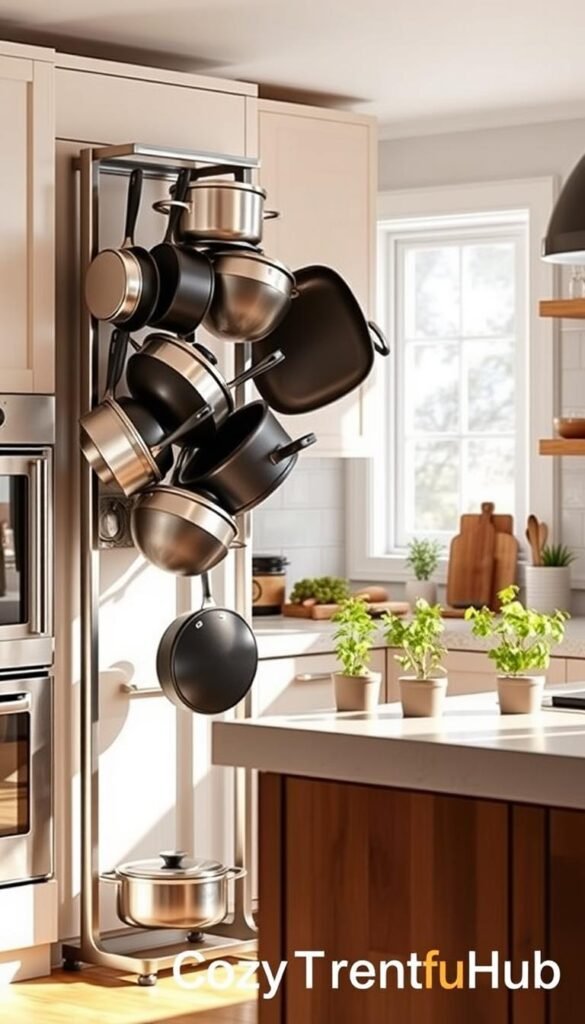
Recommended pick: the Cuisinel vertical rack. It suits households that use cast iron and heavier pots and pans and need quick grab-and-go access.
- Problem: heavy pots and pans scratch and are hard to pull from the bottom of piles.
- Specs: 5-tier vertical design, alloy steel, holds up to 50 lb; dimensions 8 × 12.2 × 10.5 inches.
- Why it helps: separate tiers protect surfaces and speed cooking tasks by making items visible and reachable.
Pros: high weight support, tested durability with cast iron, and less wear on nonstick surfaces.
Cons: cabinet height can block use; tier spacing is fixed so taller pots may not fit in lower slots. A common workaround is placing the rack horizontally in a shallow shelf, though that reduces vertical grabbing ease.
„In testing, the alloy steel rack held heavy cast iron with no warping and cut surface scratches compared to stacks.“
Buy if: you store heavy cookware and need stable, tiered storage. Skip if: cabinet height is too short or you need adjustable tier spacing.
Best pull-out cabinet organizers for deep cabinets and hard-to-reach storage space
Deep drawers often become a dead zone where pots and jars vanish and backs ache from bending.
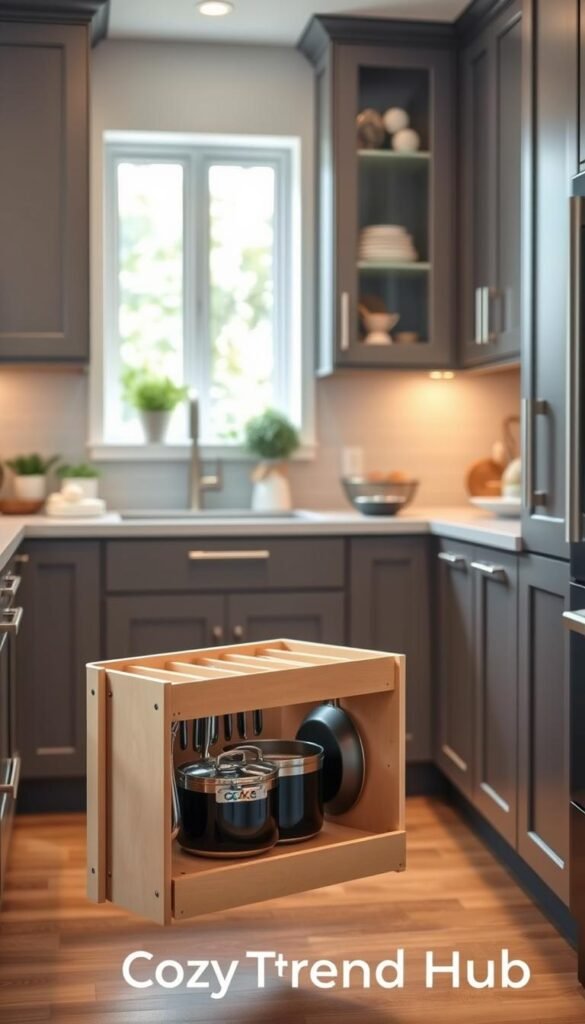
Two-tier pull-out shelves for bulky cookware and small appliances
Why it helps: Two-tier pull-outs lift heavy items forward so users do not dig into the back. The Rev-A-Shelf 2-tier wire unit has a chrome finish and holds up to 50 lb per shelf.
Sizes run to fit common openings (example: 18 x 8.75 x 19 inches). Assembly can be tricky, but the shelf turns deep storage into usable drawers.
Single sliding drawers for sheet pans, pizza pans, and tall items
Single sliding drawers fit flat bakeware and tall lids. A tested example measures 21 x 11 x 4 inches and fits half sheet pans easily.
Measure for full-extension so the drawer clears hinges and gives easy access to pizza pans and trays.
Roll-out trays to reduce bending and digging
Roll-out trays convert base space into a mini pantry. CliqStudios and Toulmin note these are a smart safety move for aging in place.
Soft-close glides add comfort and keep daily pantry reach simple and safe.
Buying considerations and installation reality
- Measure interior width, depth for full-extension slides, and hinge clearance.
- Prioritize glide quality so drawers run smooth under load.
- Many pull-outs are screw-in for stability; renters can use freestanding bins or slide-in trays as an alternative option.
| Need | Recommended pull-out | Why it works |
|---|---|---|
| Heavy appliances and pots | Two-tier pull-out (Rev-A-Shelf) | 50 lb per shelf; raises items to accessible height |
| Flat bakeware | Single sliding drawer (21 x 11 x 4 in) | Fits sheet pans and pizza pans; full-extension matters |
| Mixed pantry goods | Roll-out trays | Creates visible pantry space; aids aging-in-place |
Which pull-out is right: heavy appliances = two-tier; flat bakeware = single drawer; mixed pantry goods = roll-out trays. This simple way turns deep cabinets into reliable storage that supports daily use and safer access at home.
Best stackable shelves for dishes, cups, and pantry shelves that feel too short
Short vertical inserts make wasted shelf air useful without any permanent changes. Renters and small-space households often need a low-effort way to double usable surface without drilling or hardware.
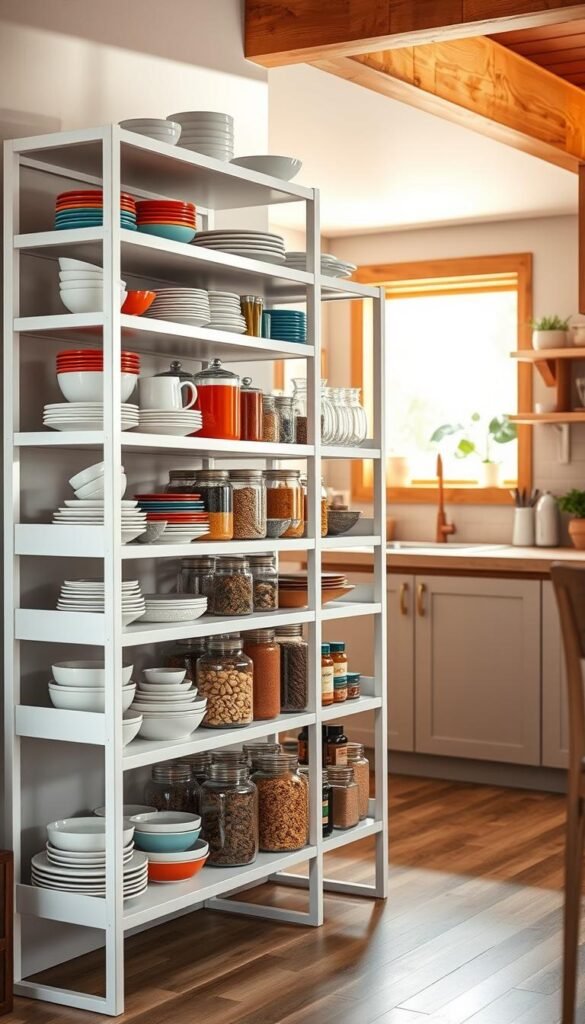
Who this helps
Best for: renters, small homes, and seasonal needs where extra dishes and food arrive temporarily. Stackable shelf inserts slide into place on existing shelves or countertops and require zero installation.
Pros and cons
- Pros: effectively doubles shelf capacity for light-to-medium items, flexible placement, and easy to move between pantry, shelf, and countertop.
- Cons: lower weight limits—many tested models cap near 33 lb—and cabinet height can restrict top-level use for tall cups or pitchers.
Practical tips and loading guidance
Keep heavier dishes on the lower shelf and lighter cups, snacks, or food containers on top. Avoid loading dense food cans on upper levels to stay within weight limits and keep shelves stable.
Cleaning note: plastic or coated surfaces help with pantry spills and moisture-prone areas. Wipe inserts regularly and remove to dry if a leak occurs.
„Use risers or shelf inserts to double your vertical space.“
Quick measuring tip: measure internal shelf height, add the riser height plus item height, and confirm the fit before buying multiples. This avoids awkward top-shelf gaps and wasted space.
Corner cabinet and pantry solutions that improve visibility and easy access
A corner often becomes a black hole where jars and gadgets vanish unless storage is rethought.
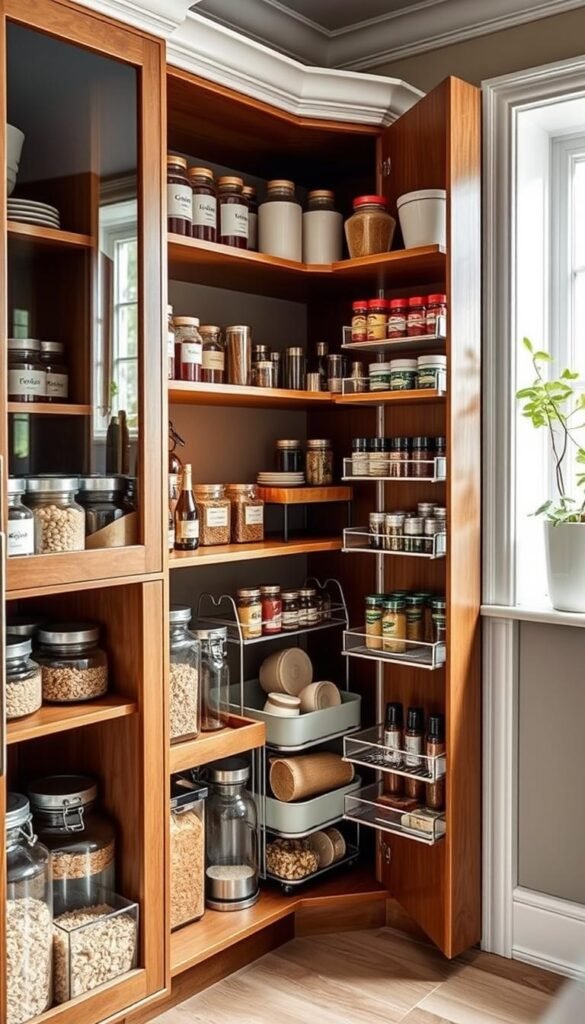
Why corners fail: shallow sight lines and awkward reach bury food and small tools. That leads to wasted purchases and cluttered shelves.
Lazy Susans: rotate spices and small condiments
What they do: rotate items into view so spices, condiments, and small jars are easy to scan.
Who benefits: cooks who reach for spices often and want quick visual checks. CliqStudios and Toulmin note turntables stop backstock from hiding.
Pull-out pantry shelves: everything comes forward
Why it helps: pull-out shelves bring mixed pantry items to the opening. This reduces forgotten food at the rear and makes heavier goods safer to retrieve.
Where to store appliances vs. dry goods
Decision rule: small frequent-use items = lazy susans; mixed or heavy boxes and cans = pull-out shelves.
- Store less-used appliances in corner bays if they are bulky and rarely needed.
- Keep dry goods and frequently cooked staples in the most visible spots.
- Group and label categories so corners stay tidy over time.
| Solution | Best for | Drawback |
|---|---|---|
| Lazy susans | Spices, small jars, condiments | May need clearance from door swing |
| Pull-out pantry shelves | Heavy boxes, cans, mixed pantry items | Often requires drilling or hardware |
| Open shelving or bins | Bulky, infrequent-use appliances | Less protected from dust |
„Organize by category and function-first flow to keep corners from reverting to chaos.“
Measure interior corner clearance and confirm door swing before buying. These changes improve visibility and access, cut duplicate buys, and make daily cooking flow smoother.
Under-sink cabinet organizers for cleaning supplies, leaks, and awkward plumbing
A well-planned under-sink setup turns awkward piping into a tidy, reachable cleaning station.
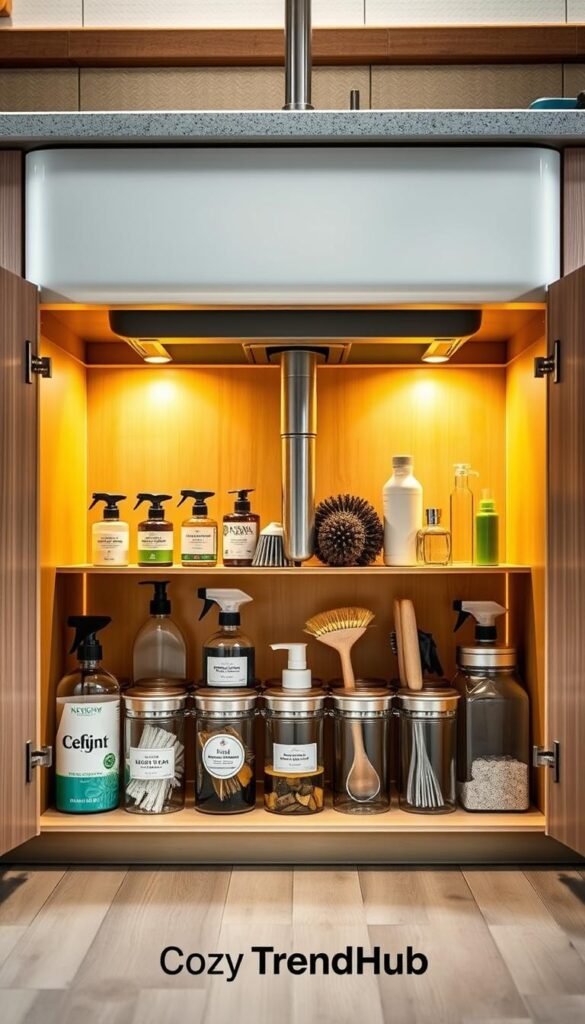
Pull-out trays and caddies to create a cleaning zone
Pull-out trays and wire caddies bring sprays, brushes, and pods forward. They keep items visible and separate around pipes.
Why it helps: quick access speeds dishwashing and stops bottles from toppling into the back.
Protective liners and towel bars
Sink base liners catch drips and make wipe-downs fast. A towel bar keeps cloths off the floor and out of pooling water.
Small-home practicality and maintenance
In small homes the sink area becomes the main place for cleaning goods. A zoned under-sink setup reduces countertop clutter and centralizes supplies.
Monthly: check for leaks, wipe the liner, and toss empty bottles to keep the system working.
| Feature | What it solves | Material note |
|---|---|---|
| Tilt-out tray / pull-out caddy | Makes supplies reachable around plumbing | Wire or plastic; choose rust-resistant finishes |
| Sink base liner | Catches leaks and eases cleaning | Rubber or PVC, easy to remove |
| Towel bar | Keeps cloths dry and off the cabinet floor | Stainless or coated metal |
| Labeling & containment | Keeps chemicals organized and safe | Use small bins and clear labels |
„A super sink base uses tilt-outs, pull-outs, a liner, and a towel bar to make every inch work and limit leak damage.“
Conclusion
Measure first: clear the shelf, take quick dimensions, and note hinge clearance before shopping. That one step cuts returns and saves time.
Match the fix to the problem: pan racks or dividers for tangled pots and pans; roll-outs or drawers for deep storage; risers and stackable shelves to use vertical space; pull-outs and liners under the sink to protect against leaks.
Shopping sequence: declutter → measure → pick the category → confirm install type → buy what fits. Renters should choose freestanding, stackable, and no-drill options. Homeowners can opt for roll-out trays, mounted pull-outs, and heavy-duty drawer systems.
Organize by work zones—prep, cooking, cleaning—and label groups so silverware, dishes, spices and food return to the right place. The quickest gains come from better visibility and easy access, not adding more boxes than the space can support.

3 Comments