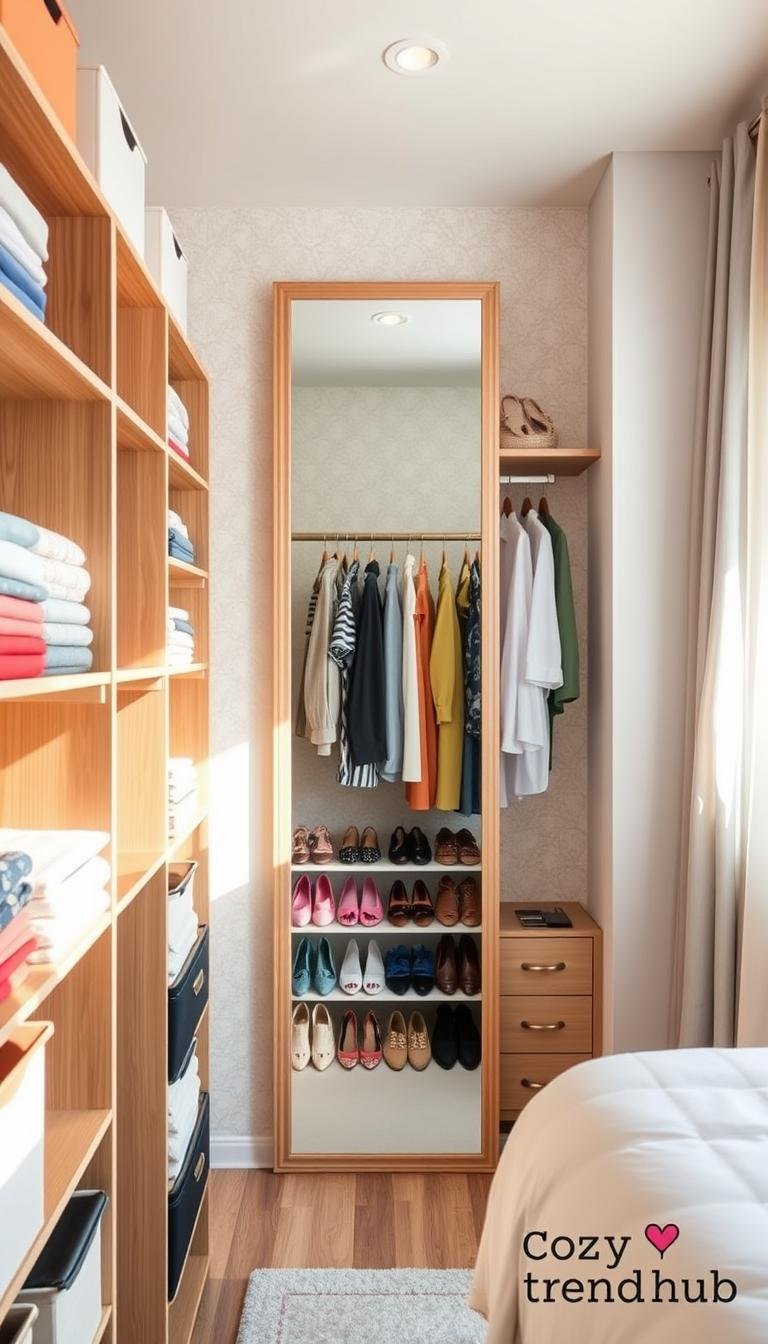
Small wardrobes often feel full yet fail to serve. In many homes, clothing hides behind poor sorting and wasted vertical room. One study links household clutter to higher cortisol in women, which shows why a calm storage system matters.
The article targets renters and small-space residents. It favors renter-friendly, nonpermanent upgrades. The first step is editing: remove what is unused before buying any tools.
Next comes a simple flow: reset → zones → products. Reset clears items. Zones group by type and color to keep things visible. Products like bins, slim hangers, and shelving systems are suggested only after sorting.
This guide promises practical trade-offs for each option. Every recommendation notes who it suits — reach-in wardrobes, heavy sweater stacks, or accessory overload — plus pros, cons, and what to measure to avoid returns.
Key Takeaways
- Start by editing to reduce clutter before buying anything.
- Use zones and clear categories so clothes stay visible and easy to reach.
- Focus on renter-friendly, nonpermanent upgrades.
- Each product suggestion lists pros, cons, and measuring tips.
- The goal is function and calm, not a Pinterest-perfect setup.
Start With a Closet Reset That Actually Creates Space
Begin by treating your storage like an ecosystem: remove what doesn’t belong before buying tools. A focused reset solves the common problem that „no space“ really signals too many items for the available area.
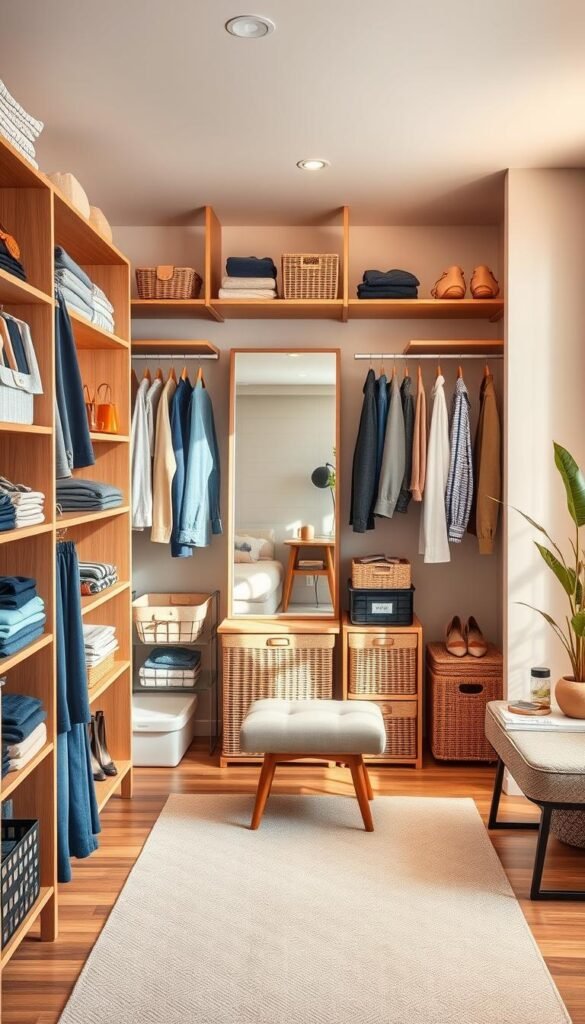
Use the “big rocks, pebbles, sand” approach
Work top-down. First clear floors and large piles (big rocks). Next sort shirts, pants, and seasonal groups (pebbles). Finish with socks, belts, and small accessories (sand).
Set up a simple staging zone
Place one donation bag, one trash/recycle bag, and a basket for things that belong elsewhere. This keeps decision-making moving and avoids frequent trips across the home.
Apply a clear decision rule
Use the 90-day wear check with seasonal exceptions: if you didn’t wear it in the last 90 days, consider donating or selling it. This rule reduces indecision and saves time.
Finish with keep/donate/recycle piles
Do not buy storage until piles are set. Bins that arrive before editing often become hiding places for unused stuff. End the reset with a quick checkpoint so the space works in daily life and frees your mind for the next phase.
Map Your Closet Into Zones So Everything Has a Home
Divide the storage into clear zones that match daily routines. This reduces the „organized once, messy again“ problem by making the system mirror how people actually dress.
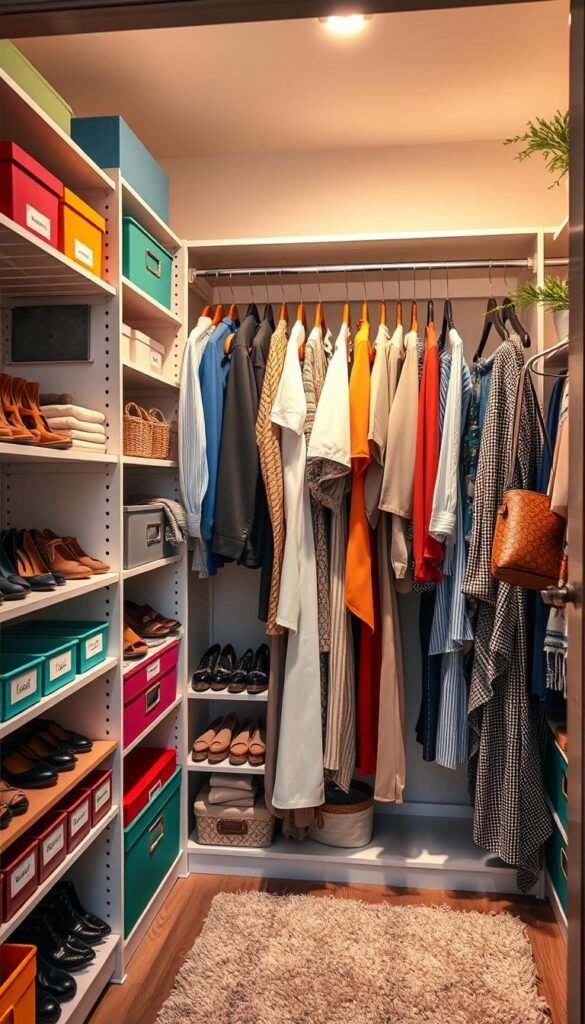
Group by type, then run a quick color pass
Start with type-first sorting: tops with tops, pants with pants, dresses, outerwear, shoes, and accessories. After types are set, do a fast color pass to speed outfit building and cut rummaging.
Place items by access
Keep everyday pieces at eye level so they are simple to grab. Put special-occasion or backup pieces on the top shelf and off-season items low or in bins.
Create a small drop zone
Use a basket as a catch-all for tried-on rejects. This quick solution prevents floor piles and keeps the space usable between resets.
Product notes: shelf dividers help sweater stacks, hooks hold bags, and a hanging organizer or clear bins work well for shoes and small items. These simple tools make it easy to maintain and safely organize closet systems inside a small wardrobe.
Best closet organization ideas for maximizing hanging space
A packed rod usually signals a mismatch between hanger choice and garment types. Small swaps can free inches of room without drilling or permanent changes.
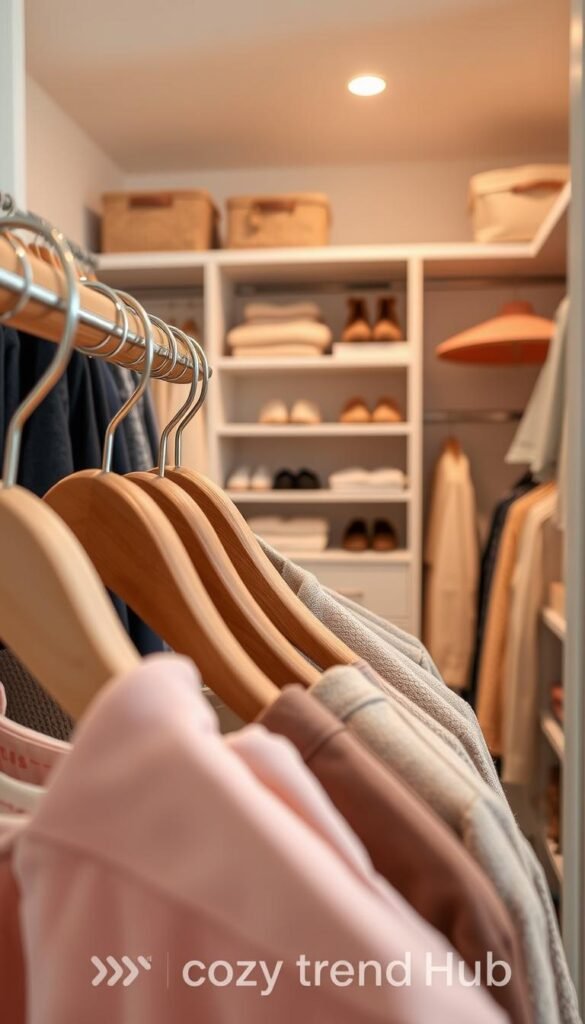
Swap bulky hangers for slim, non-slip velvet hangers
Who this helps: renters and anyone with a full rod who wants more capacity fast.
Pros: slim velvet hangers add space, grip slippery blouses, and work on any existing rack.
Cons: some flocking may shed; check reviews for low-shed picks like Amazon Basics Slim Velvet Hangers.
Choose the right hanger style for pants
Clip hangers save space and make on/off easy. Bar-style hangers look tidy but thinner bars can create crease lines.
Container Store chrome pant hangers with PVC coating balance grip and a clean look. Choose based on whether crease risk or ease matters more.
Standardize hanger direction and buying considerations
- Point all hooks the same way for a calmer visual line.
- Compare durability, flocking shed, hook rotation, bar thickness, and rod compatibility before you buy.
- For a non-velvet premium option, consider PVC-coated Mawa space-saving hangers for long-term use.
Quick takeaway: Pick slim, non-slip hangers for maximum hanging capacity and match pant styles to garment weight. These are renter-friendly upgrades that improve daily access without tools.
Use a Simple Hang vs Fold Rule to Prevent Wrinkles and Stretching
A clear hang-versus-fold rule removes guesswork and protects garments from common damage. This rule saves time and reduces last-minute ironing.
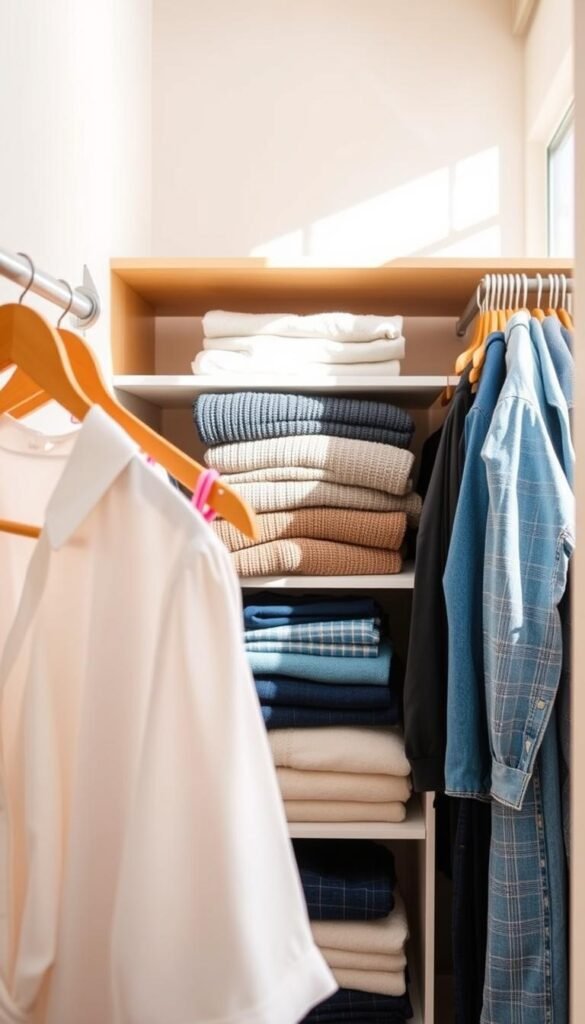
Quick rule: hang pieces that wrinkle easily and fold heavier or stable fabrics to preserve shape. Corey Pence of The Container Store recommends hanging dresses, blouses, skirts, and slacks. These often need prime hanging space and slim hangers work well.
Hang: wrinkle-prone and workwear
- Dresses and blouses (prevent creases).
- Skirts and slacks (use the right bar to avoid creasing).
Fold: heavy or stable pieces
- Denim, T-shirts, athleisure—fold to save rod space.
- Sweaters—fold to avoid stretched shoulders.
Storage tie-ins: folded items stay visible in bins, drawer organizers, or clear drawers to avoid getting lost. Hung pieces pair best with slim hangers or double-hang setups to maximize space.
„Hang wrinkle-prone pieces; fold heavy knits and denim.“
Exceptions matter: delicate slip tops need grippy hangers and some pants crease on thin bars. Follow this simple way and you’ll better organize closet space and save everyday time.
Double Your Hanging Capacity With a Second Rod or Adjustable Bar
An extra tier of hanging transforms short garments into usable storage without costly installs. This approach is most effective for shirts, folded pants, and kids’ items that don’t need full-length clearance.
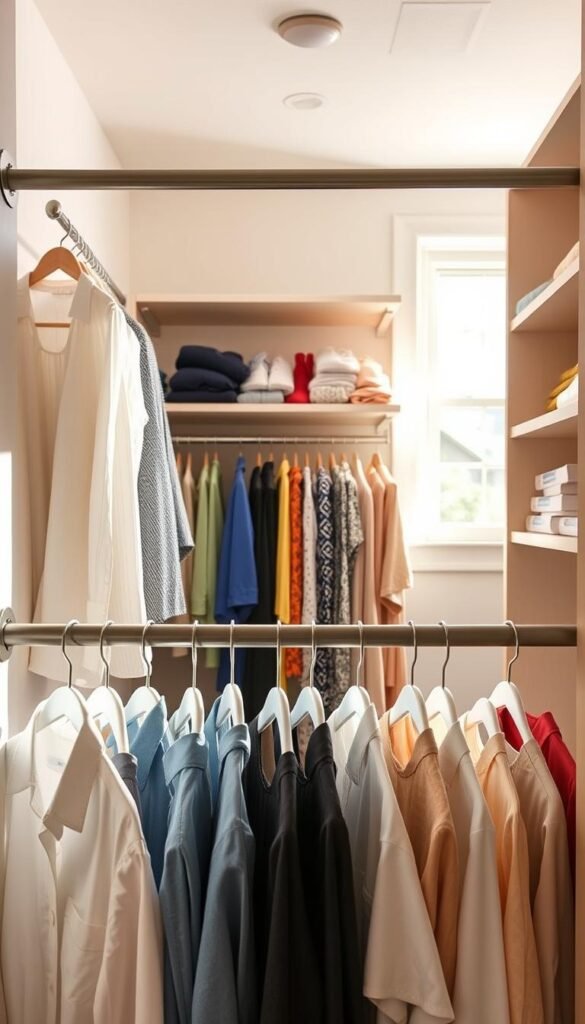
When a second tier helps
Use it for: short tops, cropped jackets, children’s clothing, and pants folded over a bar. It doubles lower-half capacity and frees the top shelf for bins.
Renter-friendly options
- Tension rods or adjustable closet bars—no drilling required.
- Freestanding garment racks for flexible placement inside a room.
- Quick-install two-tier hangers when a full rod isn’t possible.
Tradeoffs and measurements
Measure vertical distance for two tiers: leave room for hangers and at least 4–6 inches of floor clearance for shoes. Note that two rows can crowd sleeves, make scanning outfits harder, and reduce airflow in humid apartments.
| Use case | Good fit | Skip if |
|---|---|---|
| Many short tops | Shared wardrobes, families | Mostly long coats or dresses |
| Kids’ garments | Easy access, separate zone | Very shallow reach-in closets |
| Rental-friendly upgrade | Tension rods, freestanding racks | Limited vertical clearance |
Quick takeaway: For renters and small-space dwellers, an adjustable second rod is a practical solution to double hanging capacity. Skip this method when long garments dominate or the reach-in is too shallow to use two rows comfortably.
Make Folded Clothes Visible With File-Folding and Rolling
Make folded garments easy to scan so nothing stays buried at the back of a shelf.
File-folding lines shirts and tees upright so each piece is visible at a glance. This method works best for tees, workout wear, pajamas, and thin knits. It saves space and prevents a single top from burying a whole stack.
Rolling compresses lightweight items and fits odd-shaped pieces into gaps. Use it for quick packing or when shelves are shallow. Rolling is fast but needs consistent sizing to keep rows neat.
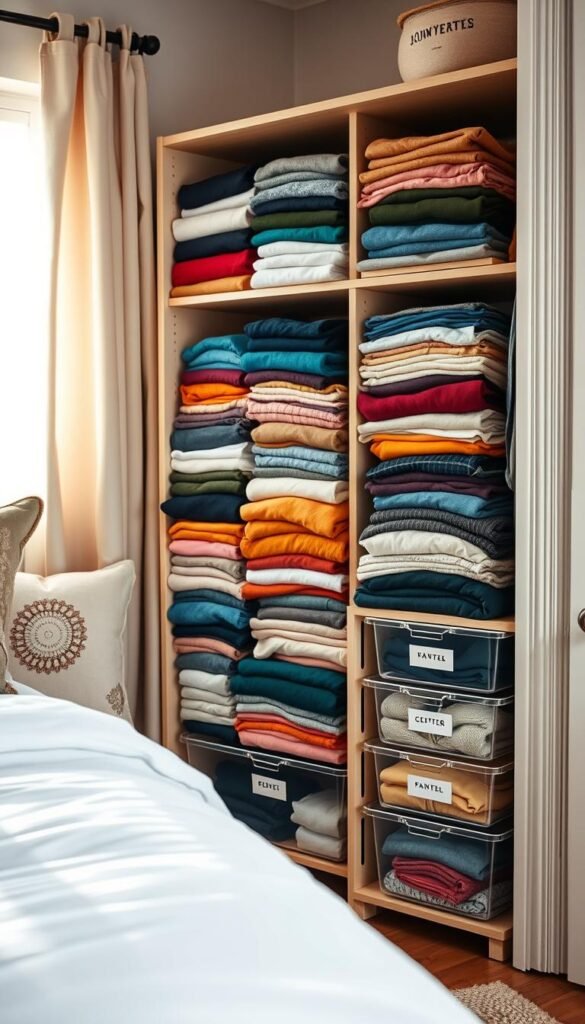
Bins vs drawers: a renter-friendly swap
When there are no built-ins, use bins on shelves as open drawers. Labeled bins keep each person’s section separate in a shared wardrobe. They mimic drawer function while staying removable for laundry or seasonal swaps.
| Method | Best for | Tradeoffs |
|---|---|---|
| File-fold | Tees, thin knits, workout wear | Needs uniform folds; visual inventory |
| Roll | Small tees, pajamas, travel | Can shift; needs snug rows |
| Bins (shelf as drawer) | No built-ins, deep shelves, shared spaces | Overstuffing reduces drawer space; limit fill to keep access |
Quick tips: keep folding sizes consistent, limit bin fill to one layer if possible, and label sections so items stay where they belong. These small shifts make storage more visible and cut morning search time.
Stop Shelf Avalanches With Shelf Dividers
Tall dividers turn messy piles into neat, scan-ready sections.
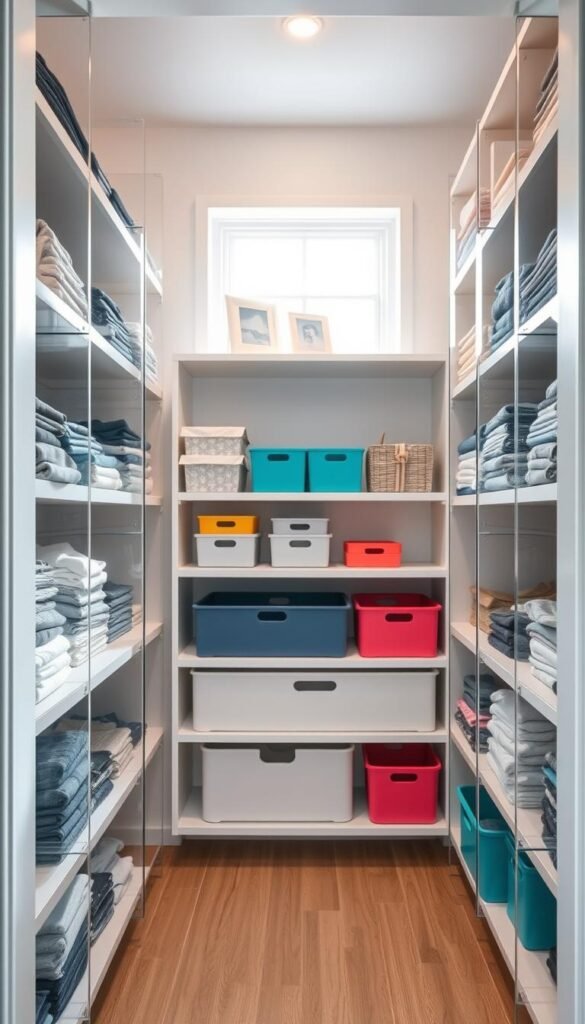
Dividers keep sweaters, linens, and bags from slumping sideways. Taller dividers work better for bulky knits and tote bags because they block lateral movement through the full stack height.
What to measure before you buy
Measure shelf thickness, depth, and expected stack height. Lynk Tall Shelf Dividers (Wirecutter pick) fit shelves up to 0.75 inch thick and use coated heavy-gauge steel for slim stability.
Who benefits most
- Anyone with open shelves and no built-in drawers.
- People with heavy sweaters or a collection of purses and tote bags.
- Renters who prefer clamp-on, no-drill options.
Pros and cons
Pros: stable support, slim profile, renter-friendly clamp or slot styles.
Cons: can scuff painted shelves if removed carelessly; avoid over-tightening clamps.
| Feature | Why it matters | Quick tip |
|---|---|---|
| Divider height | Keeps tall stacks upright | Keep stacks below divider top |
| Shelf thickness fit | Ensures secure clamp or slot mount | Confirm ≤0.75″ if using Lynk-style dividers |
| Material & coating | Stability and shelf protection | Choose coated steel; remove gently to avoid chips |
Use rule: separate items by type, keep each stack shorter than the divider, and check shelf fit before checkout. Small prep prevents returns and keeps shelves tidy for daily use.
Create Stackable Shelf “Drawers” With Clear Open Bins
Stackable bins turn deep shelves into tidy, slide-out drawers without permanent fixes. They stop piles from collapsing and make daily access simple for renters and small-space residents.
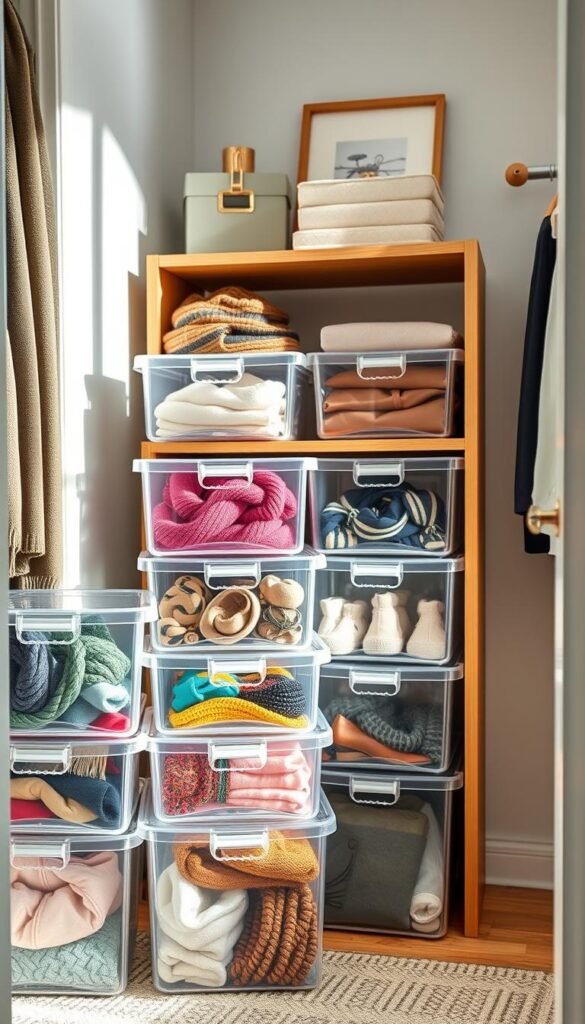
How they work: open-front or open-top boxes act like shallow drawers. Users can stack vertically and still reach the lower layer without unmounting anything. The Container Store Clearline Open Bin is a solid pick: transparent, stackable, sold with optional lids, and gentle on knits per Wirecutter tests.
Clear vs opaque
Clear bins speed visual inventory and cut duplicate buying. Opaque bins hide visual clutter but need labels and discipline.
Buying considerations
- Match modular sizing to shelf width for neat stacks.
- Choose lids if dust is a concern; leave tops open for frequent items.
- Look for smooth rims and snag-free edges to protect sweaters.
Who benefits: deep shelves, spaces without built-in drawers, and seasonal storage zones. Note the tradeoffs: overfilled clear bins show mess, and tall stacks can be hard to reach—consider a small step stool for higher shelves.
Light Your Closet So You Stop Wasting Time Searching
Poor lighting turns a quick outfit grab into a slow, frustrating search. That wasted time often leads to digging that erodes any tidy system.
Battery-powered, motion-sensor strips are a renter-friendly solution. They need no wiring, reposition easily, and reduce the need to touch a switch. Wirecutter recommends the MCGOR 10-inch under-cabinet set: adhesive or magnetic mounting, four brightness levels, manual or motion mode, and USB‑C charging. Expect a slight motion lag and an auto-off that may shorten as the battery ages.
| Feature | What to check | Real-world note |
|---|---|---|
| Brightness levels | Adjustable (4 levels) | Lower levels save battery in small space |
| Mounting | Adhesive vs magnetic | Magnetic is easy to move; adhesive may fail in humidity |
| Charging | USB‑C recharge | Fast and renter-friendly; keep a charging routine |
Placement matters: mount strips above the rod for hanging sections, under shelves for folded areas, and in corners to cut shadows. Put one near the top shelf if high storage is used less often.
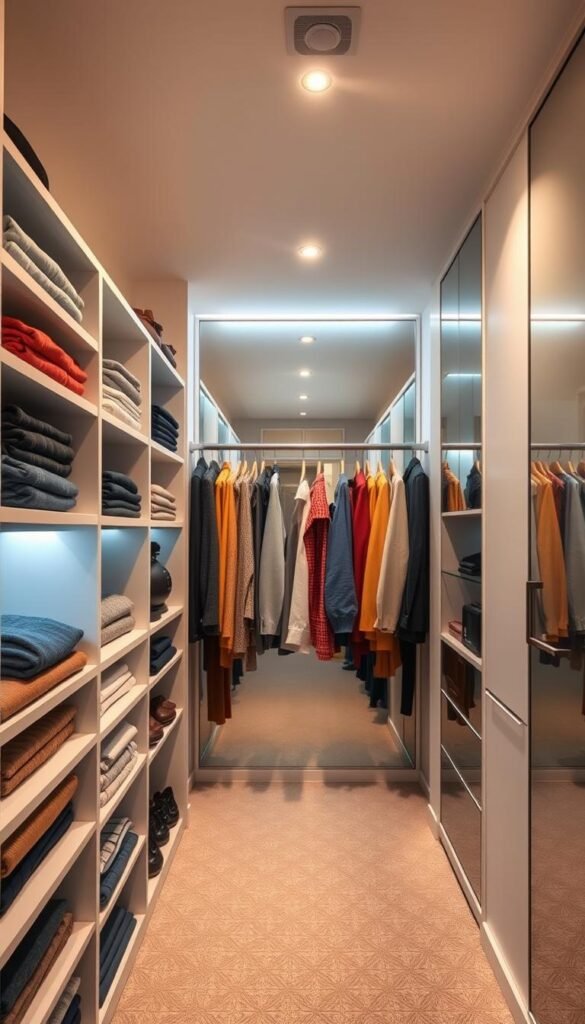
Be realistic: adhesive can lose grip and frequent triggers drain batteries. Place sensors to light the zone you reach most and set a weekly charging habit to save time and help the system keep you organized. These small changes help maintain and better organize closet systems without permanent installs.
Use Wall and Door Space With Hooks and Over-the-Door Organizers
Doors and narrow wall strips can become quick-access hubs for grab-and-go items. This expands storage without taking floor space and works well for renters who cannot make permanent changes.
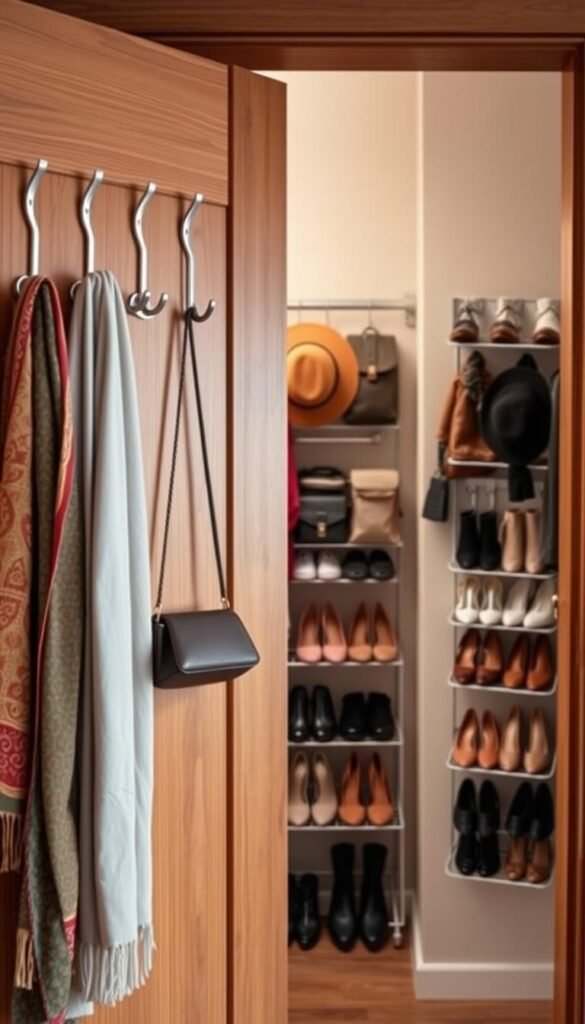
High-impact items to hang
Hang: backpacks, purses, hats, scarves, belts, and umbrellas. These items often end up on the floor when no dedicated spot exists.
Renter-friendly mounting options
Use over-the-door organizers or removable adhesive hooks to avoid holes. Over-the-door organizers add pockets for shoes or small goods. Adhesive hooks work on painted walls and metal doors when weight is light.
Who benefits and tradeoffs
Renters with shallow shelves, shared wardrobes, and families needing quick exits gain most. Pros: fast install, flexible placement, and visible storage. Cons: hooks can snag delicate accessories and heavy bags can pull adhesive off walls. Over-the-door units may stop doors from closing in tight frames.
| Solution | When to use | Key considerations |
|---|---|---|
| Adhesive hooks | Light bags, hats, scarves | Check weight limit; peel cleanly |
| Over-the-door organizer | Shoes, belts, umbrellas | Measure door clearance; pocket size matters |
| Wall-mounted hook strip | Entryway grab-and-go station | Choose depth to keep bags from sliding |
Buying checklist: confirm weight capacity for bags, hook depth to avoid sliding, and pocket sizes for belts and scarves. These small choices create easy ways to keep a tidy home and reduce floor clutter.
Shoe Storage Ideas That Keep Pairs Together and Floors Clear
A clear shoe system keeps pairs paired and the floor usable. This section tackles the common problem of shoes taking over the floor and suggests renter-friendly fixes that keep items visible and accessible.
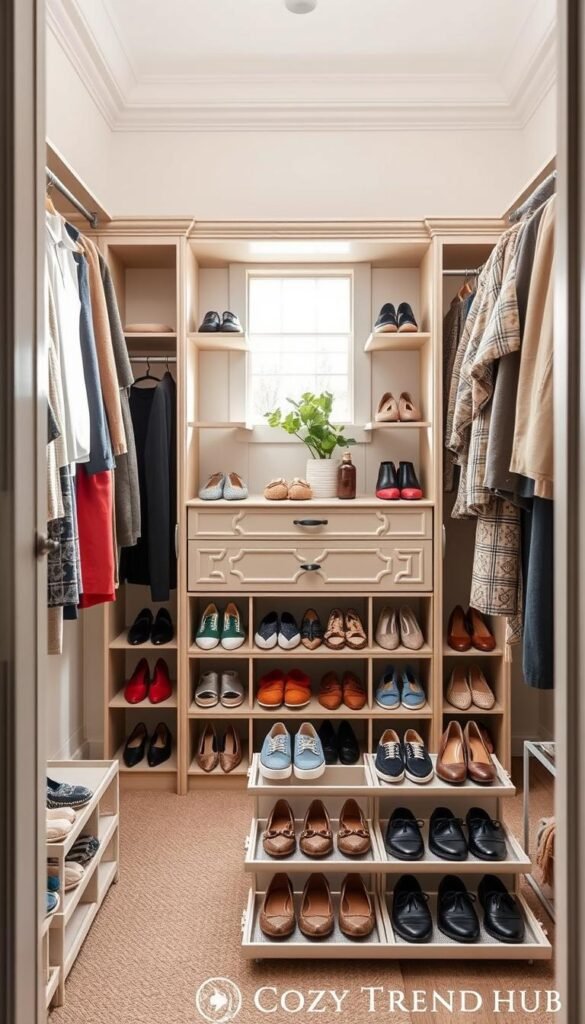
Shelves vs hanging organizers for small spaces
Shoe shelves store pairs front-to-back for quick visibility. They suit people who rotate shoes often and need fast selection each morning.
Hanging organizers save floor area in narrow reach-ins. They work well in apartments where vertical space matters but note that pockets can hide color and style at a glance.
Boot care that prevents slouching
Store boots upright using stabilizing inserts like a pool noodle or a rolled magazine to keep shafts shaped without wasting shelf height. Some users lay boots flat in drawers when depth allows.
Buying considerations
- Compare capacity per square foot when choosing a rack or shelves.
- Check pocket size for bulky sneakers and stability on carpeted floors.
- Prioritize how quickly a pair can be grabbed on busy mornings.
„Keep pairs together, choose for visibility, and set a weekly reset habit to prevent shelf dust and floor piles.“
| Solution | Who it fits | Tradeoff |
|---|---|---|
| Shoe shelves | Frequent rotation, visual selection | Can show dust; needs weekly tidy |
| Hanging organizers | Small apartments, narrow floors | Pockets reduce visual scanning |
| Boot inserts | Tall-boot owners | Take minor space; preserve shape |
Drawer Dividers and Trays for Underwear, Socks, and Small Items
A tidy drawer turns small daily items into easy decisions, not morning chores. Clear compartments stop socks and undergarments from becoming a mixed jumble.
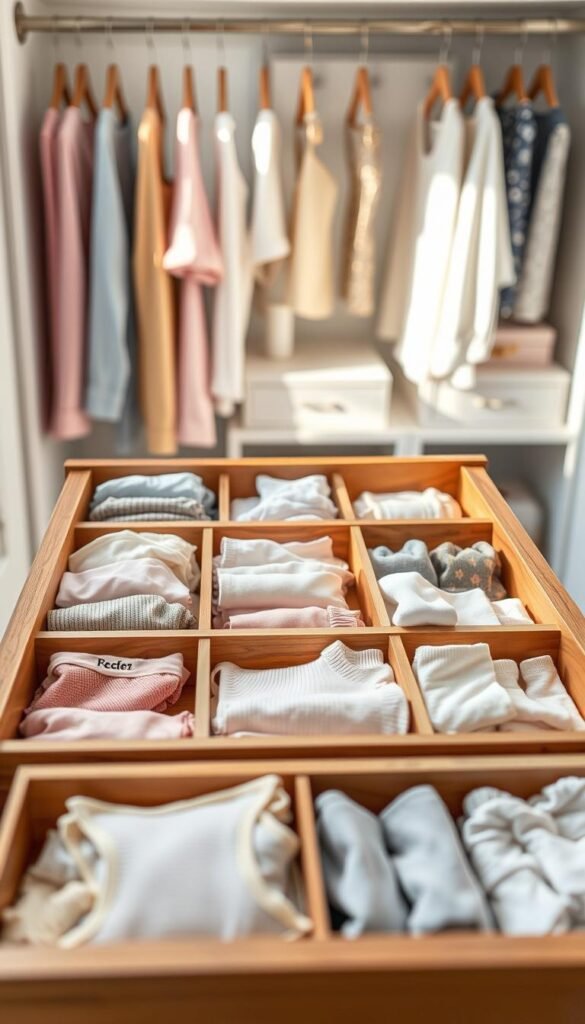
Why compartments beat stacking for quick grab-and-go
Compartments keep each category visible. That reduces rummaging and prevents folded piles from collapsing when one item is pulled out.
Where they work best
Dresser drawers suit everyday basics. Built-in closet drawers are ideal when available. For rentals, shelf bins act like removable drawers and deliver similar benefits.
What to measure and buy
- Measure internal width, depth, and usable height before purchase.
- Pick divider height to match folded stack height and tray depth for bras.
- Choose sturdy materials—bamboo trays clean easily; adjustable dividers add flexibility.
Pros vs cons: trays are stable and easy to remove for washing. Adjustable dividers adapt to changing needs but can shift if overloaded.
| Use case | Good fit | Tradeoff |
|---|---|---|
| Socks & underwear | Shallow trays | Limit layers |
| Bras & tights | Deeper trays or inserts | Takes more drawer space |
| Rental shelves | Clear bins as drawers | Less permanent, needs labels |
Simple system: socks, underwear, bras, tights, workout accessories. Use consistent trays and organizers so restocking after laundry stays quick and the overall organization endures.
Accessories That Cause Chaos: Simple Systems for Jewelry, Belts, and Bags
Small accessories often hide in plain sight, turning quick mornings into a scavenger hunt. Targeted systems cut search time and protect delicate pieces. Keep visibility high and tangles low with shallow trays and segmented trays.
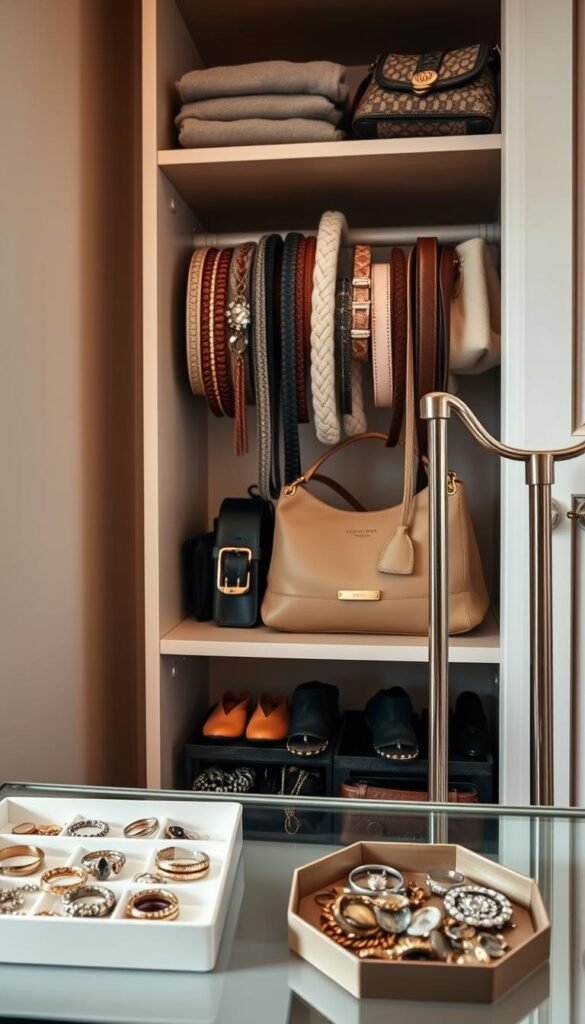
Tangle-free jewelry storage
Use velvet-lined or clear acrylic trays with small compartments. These reduce knots and keep pairs together. Pros: fast access and easy visual inventory. Cons: open trays collect dust; lids trade visibility for protection.
Belts and scarves: hang, roll, or compartmentalize
Hang frequent-use pieces on wall hooks for grab-and-go. Roll scarves into drawer organizers when space is tight. Compartment trays work for color-based sorting.
Purse storage that keeps shape
Store bags upright with acrylic separators or use upright supports inside each bag. Avoid piling—stacking distorts straps and forms.
- Buyer tips: check compartment size and liner material to avoid snags.
- Choose removable hooks and lightweight organizers for renter-friendly installs.
- Match protection (closed) vs visibility (clear) to daily routine.
„Keep accessories visible and protected to save time and prolong the life of things.“
Seasonal Rotation That Frees Up Space Without Losing Track of What You Own
For many small homes, a six-month swap keeps daily zones uncluttered and surfaces items that might otherwise be forgotten. This rhythm creates usable space, cuts impulse shopping, and forces a quick edit twice a year.
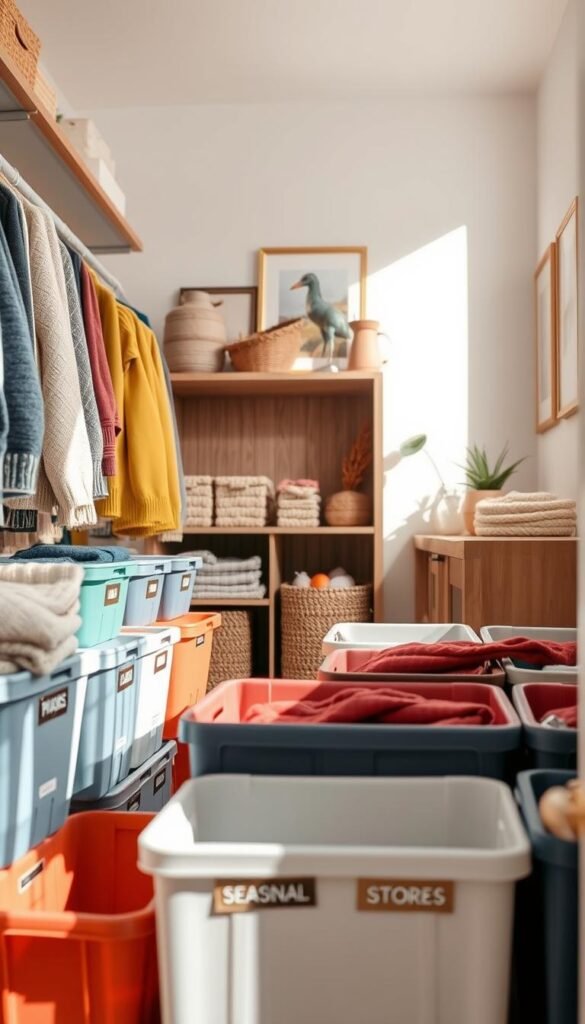
Why a six-month cycle helps
Who benefits: renters, people with limited hanging room, and seasonal wardrobes in temperate US climates.
Swapping twice a year makes the wardrobe feel fresh and reveals pieces to repair, donate, or sell. It also keeps everyday areas lean so getting dressed is faster.
Bins vs vacuum bags: which to use
| Method | Good for | Tradeoffs |
|---|---|---|
| Labeled bins | Neat stacking; easy inventory | Takes more space; visible contents if clear |
| Vacuum bags | Bulky sweaters, winter coats, boots | Compresses items; can flatten delicate shapes |
Where to store seasonal items in small homes
Use under-bed boxes, high shelves, or a secondary hall store of boxes in a closet you visit less. Clear bins work well on high shelves so you can quickly scan contents.
Quick protection tips
- Turn sequined or snag-prone pieces inside out before packing.
- Do not overstuff bags or boxes; leave light breathing room to avoid creases.
- Keep tall boots supported with inserts so shafts don’t slump.
Note: rotation only works if items are labeled and tracked. A simple system of labeled boxes and a seasonal checklist prevents items from getting lost until the next swap.
Build Your Closet Shopping List Based on Your Biggest Pain Point
Match one targeted purchase to the pain point you face most each morning. This turns the article’s tips into a short, practical buy list that fixes real problems fast.
If you’re short on hanging space
Start with slim hangers like Amazon Basics Slim Velvet Hangers to free rod room. Add a renter-friendly second rod or tension bar only after you measure vertical clearance.
If shelves are a mess
Use shelf dividers (check fit ≤0.75″ thickness) to stop avalanches, then add clear stackable bins such as The Container Store Clearline Open Bin for modular categories.
If you can’t see anything
Motion-sensor lighting (MCGOR 10-inch, magnetic or adhesive) plus clear organizers makes items visible and reduces digging.
If accessories take over
Choose wall hooks for daily bags, shallow trays for jewelry, and over-the-door organizers where hanging hardware is limited.
How to measure before buying
- Rod diameter and usable vertical height for a second tier.
- Shelf thickness (note 0.75″ divider fit), width, and depth for bins.
- Door clearance for over-the-door units and hook depth for bags.
| Problem | First buy | Who it fits |
|---|---|---|
| Full rod | Slim hangers | Renters, shared wardrobes |
| Messy shelves | Shelf dividers + clear bins | Deep shelves, seasonal stashes |
| Poor visibility | Motion lights + clear organizers | Low-light apartments |
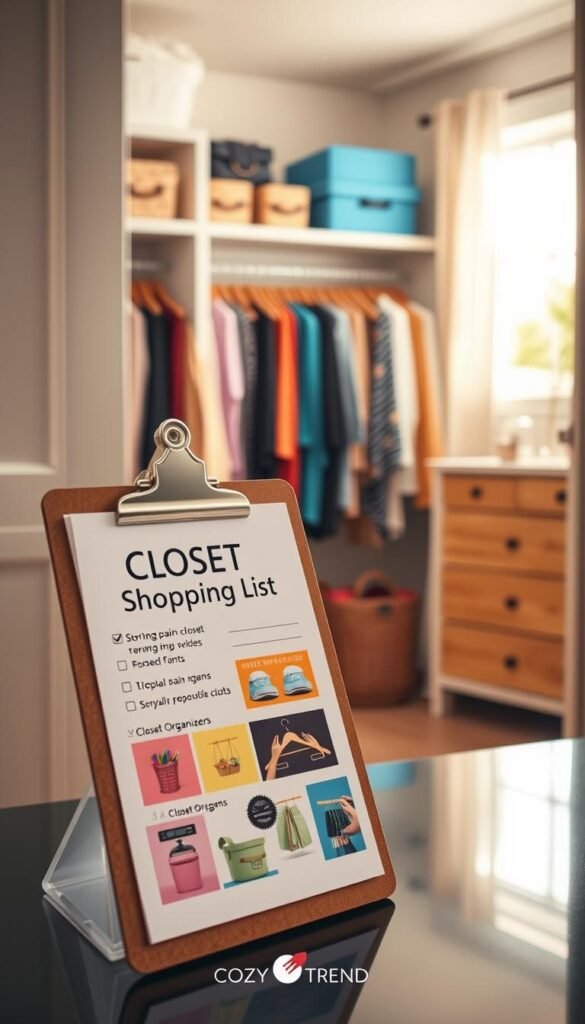
Quick tips: make sure purchases match counts — number of sweaters, dresses, and daily bags — so storage fits actual items, not an idealized view.
Conclusion
Treating storage as ongoing care, rather than a one-off fix, makes a real difference over time.
Make sure, start with a reset, map zones, then buy only items that solve a clear bottleneck. This simple path frees space for clothes, shoes, and daily items without overbuying.
Keep a catch-all basket for quick corral work and run a two-minute weekly tidy. Do a seasonal store swap so off-season gear stays out of the way and the top shelves stay usable.
For practical follow-through, use the buyer checklist in Section 16. Choose one problem area—hangers, shelves, lighting, or accessories—and fix it first. Small, steady steps keep the closet neat and your mind calm.