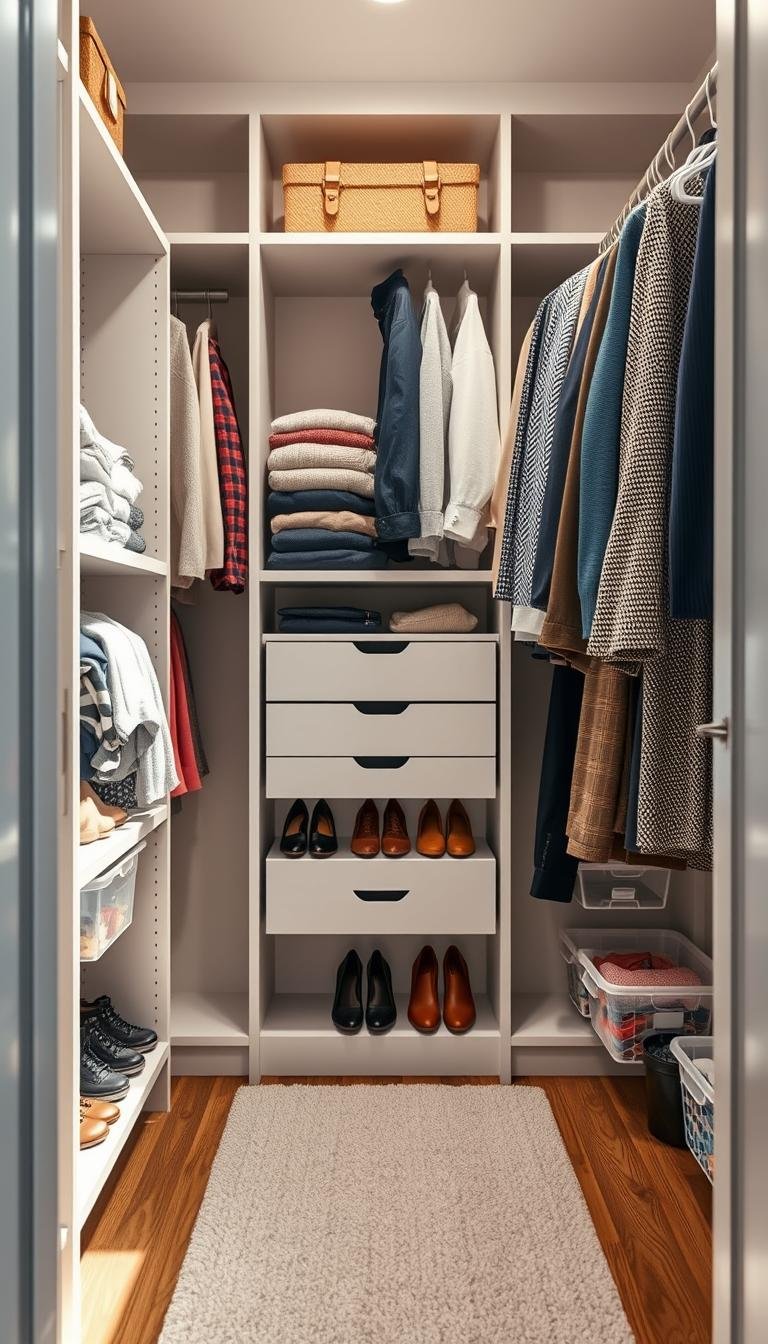
Small closets demand practical choices, not just styling. This guide frames common problems — tight width, shallow depth, limited vertical reach — and shows how the right system solves them for renters and small-space homes.
Tests and hands-on installs (21 hours across six systems) informed these picks. The team evaluated installation, design, durability, and value to help buyers pick with confidence.
Readers will find quick comparison picks first, then measuring rules, full product breakouts with pros and cons, and add-ons that improve any setup.
The recommendations favor small footprints, adjustable configuration, realistic installation effort, and clear value for U.S. apartments and houses.
Expectations: choose by closet dimensions, wardrobe mix (hanging vs folded vs drawers), and whether drilling is allowed. Embrace a „no regrets“ mindset: pick upgrades that travel with you, support seasonal swaps, and keep a functional, breathable space.
Key Takeaways
- Define a small closet by tight width, shallow depth, and low vertical reach.
- Common issues: short hanging length, unstable shelves, shoes on the floor, poor visibility, renter limits.
- Guide layout: quick picks → measuring rules → detailed reviews with pros/cons → add-ons.
- Priorities: compact footprint, adjustability, easy install, and solid value for U.S. homes.
- Choose based on dimensions, wardrobe mix, and drilling permission.
- Focus on upgrades that remain useful through moves and seasonal changes.
Quick Picks for Small Closets in the US
Choose a system based on the single problem you need to solve. Below are concise recommendations to speed buying decisions and planning. Each pick names the situation it solves, a quick pros/cons note, and what to measure before you buy.
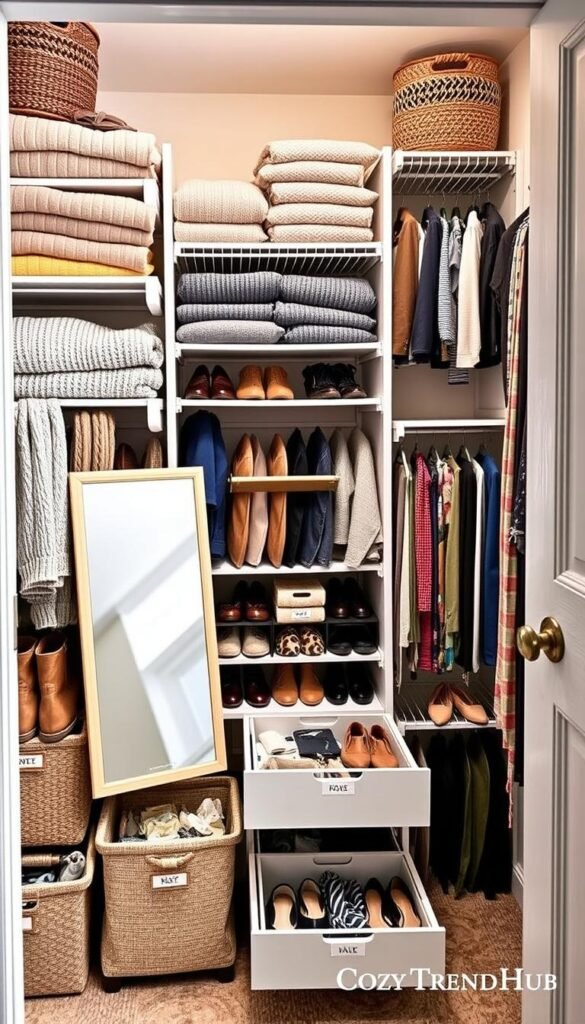
The Container Store Elfa Classic 4-Foot Starter Kit — best for a ~4-foot span
Why pick it: wall-mounted, sturdy epoxy steel, and ventilated shelves rated ~100 lbs per linear foot. Typical install: ~2 hours for a 52-inch span.
Pros: High load, flexible layout. Cons: Requires drilling. Measure: wall span and stud locations.
Amazon Basics adjustable rack + shelves — best budget freestanding option
Why pick it: no drilling, assembly in ~30 minutes, and very high total capacity (up to ~1,299 lbs).
Pros: Renters like it; heavy loads OK. Cons: Utilitarian look; black only. Measure: floor footprint and door clearance.
IKEA Boaxel modular wardrobe combination — best for changing needs
Why pick it: modular panels, easy to reconfigure for kids or moves. Note: hardware may need separate purchase.
Pros: Flexible and lightweight. Cons: Hardware not included; plan for extra parts. Measure: vertical space and desired shelf spacing.
Wayfair system with drawers — best when folded clothes dominate
Why pick it: replaces a dresser with stacked drawers and shelves; good for sweaters, denim, and athleisure.
Pros: Lots of drawer space. Cons: Longer install (~5 hours) and occasional damaged pieces. Measure: depth for drawer clearance and clearance for full-extension glides.
Lowe’s wood/MDF system — best for a built-in look
Why pick it: more finished appearance for bedrooms; MDF shelves rated ~25 lbs.
Pros: Polished design. Cons: Longer install (≈6 hours), may need a saw. Measure: wall width and plan for precise cuts.
Mini comparison snapshot
| Type | Install time | Adjustability | Favours |
|---|---|---|---|
| Mounted (Elfa) | ~2 hrs | High | Hanging + shelves |
| Freestanding (Amazon Basics) | ~30 mins | Medium | Heavy loads |
| Modular (IKEA Boaxel) | Varies | High | Growing/changing wardrobes |
| Drawer system (Wayfair) | ~5 hrs | Medium | Folded clothes |
| Wood/MDF (Lowe’s) | ~6 hrs | Low–Medium | Built-in look |
Quick measuring tip: measure width, depth, and ceiling height before clicking through. Small differences in inches change what fits and how many shelves or drawers will work.
What Problem Are You Solving in a Small Closet?
Start by naming the single, real problem your small space creates — that focus directs every storage decision. Clear diagnosis keeps purchases practical and prevents repeating the same mess after installation.
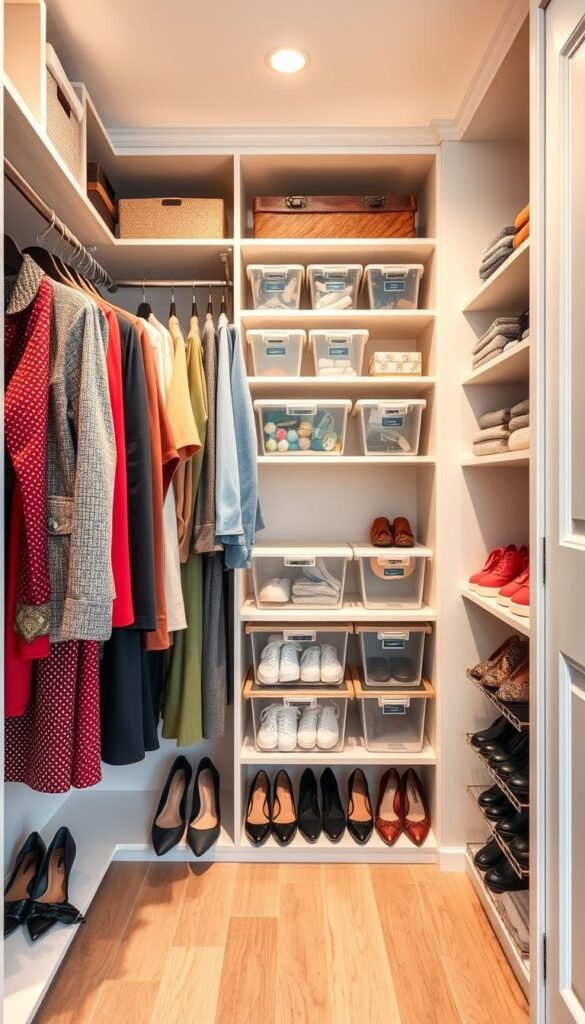
You’re out of hanging space for dresses, coats, and workwear
Solution: add a second hanging level or reposition a single hanging rod to split long and short garments.
Result: more usable hanging length for coats and shirts without widening the footprint.
Tip: hang wrinkle-prone items—dresses, blouses, slacks—and fold heavier clothes.
Your shelves turn into unstable stacks of sweaters and jeans
Solution: swap wire shelving for flat shelves, add shelf dividers, or use a drawer module.
Result: fewer collapsing piles and faster access to folded clothes and items.
Shoes and accessories end up on the floor
Solution: reserve a bottom tiered rack, low-profile shelf, or baskets to corral shoe pairs and small things.
Result: clear floor space and simpler visual sorting when grabbing footwear.
You can’t see what you own because the closet is dark
Solution: motion LED strips and clear bins keep items visible.
Result: less time hunting for pieces and fewer duplicate purchases.
You need renter-friendly storage that won’t damage walls
Solution: choose freestanding units, tension rods, or removable hardware with low-damage anchors.
Result: solid function that leaves fewer marks when moving out.
| Failure Mode | Practical Fix | Measurable Outcome |
|---|---|---|
| Not enough hanging | Second rod / optimized rod height | +30–50% usable hanging length |
| Collapsing folded stacks | Flat shelves, shelf dividers, drawers | Stable stacks, easier retrieval |
| Shoe clutter | Tiered shelves, baskets, bottom racks | Floor cleared; pairs visible |
| Poor visibility | Motion lights, clear bins | Faster selection; fewer duplicate items |
Each product review that follows maps back to one or more of these failure modes so buyers can match solutions to their exact need. For a quick round-up of practical options, see this small-space guide.
How to Measure Your Closet So Organizers Actually Fit
Measure carefully before you buy so a system fits the actual space and avoids returns. A quick tape-and-notepad session prevents surprises and saves time during install.
Width: match common kit spans
Measure wall-to-wall in inches at three heights. Many kits target a ~52-inch or 4-foot span; if your opening is slightly narrower or wider, note the range before choosing a unit.
Depth: avoid hangers and bins that block doors
Check depth from door to back wall. A typical hanger needs clearance, so measure hanger depth and common bin depth. Shallow shelf systems work better for sliding doors and tight reach.
Vertical planning and wardrobe mapping
Measure total height and divide by zones. Put daily items at eye level, seasonal boxes high, and heavy pieces low for safety.
Inventory clothing piles and count pieces to estimate how many shelf or drawer zones you need. Measure linear length for hanging rods to size a second rod or combined solution.
Breathing room and a quick checklist
- Width (inches) — min/max range for kits
- Depth (inches) — hanger and bin clearance
- Height — zones for daily, seasonal, heavy items
- Rod length and number — linear feet needed
- Drawer vs shelf mix — based on wrinkle risk and item pieces
Keep in mind that 10–15% extra space prevents overstuffing. Use this checklist near purchase links to match exact width range, preferred configuration, and installation limits.
Best Closet Organizers for Small Closets: Top Systems Worth Buying
Comparison centers on four buyer priorities: installation, durability, customization, and value. These criteria guided hands-on tests and practical advice from professional organizers.
Why these criteria matter: small spaces need efficient design more than extra capacity. A clear layout creates zones and reduces clutter. That prevents overfilling and keeps daily items easy to find.
Wall-mounted vs freestanding:
- Wall-mounted: frees floor space and gives stable rails for heavy loads. Anchoring matters; follow manufacturer guidance.
- Freestanding: renter-friendly and drill-free. Easier to move, but check tip-resistance and add anchors if needed.
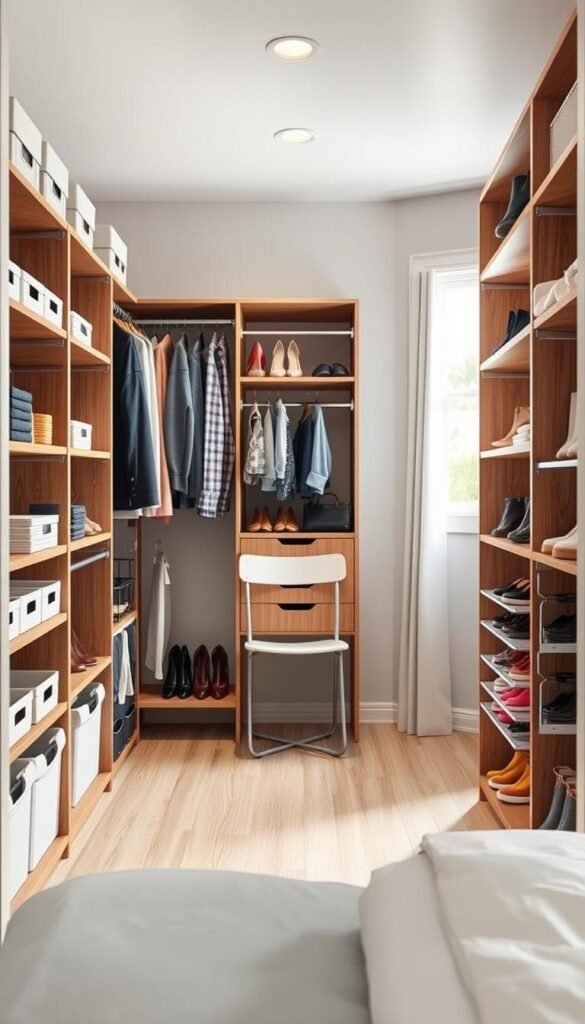
Expect trade-offs: wire or metal systems favor strength and airflow. Wood and MDF offer a built-in look but have weight and moisture limits. Testing emphasized simple flat shelves plus a mix of drawers, shelves, and hanging rods as a practical balance.
| Criteria | What to check | Why it matters |
|---|---|---|
| Installation | Time, tools, drilling | Sets realistic effort and renter limits |
| Durability | Load rating, materials | Prevents sagging and failures under clothes |
| Customization | Adjustable shelves/rods | Adapts to changing wardrobes |
| Value | Parts, warranty, lifespan | Lower total cost across moves and seasons |
How the next sections read: each product entry will show who it’s for, why it helps, key specs, and practical pros and cons for quick decisions.
The Container Store Elfa Classic Starter Kit for small closets
A compact rail-and-shelf system like the Elfa Classic turns a narrow 4-foot opening into layered, usable zones.
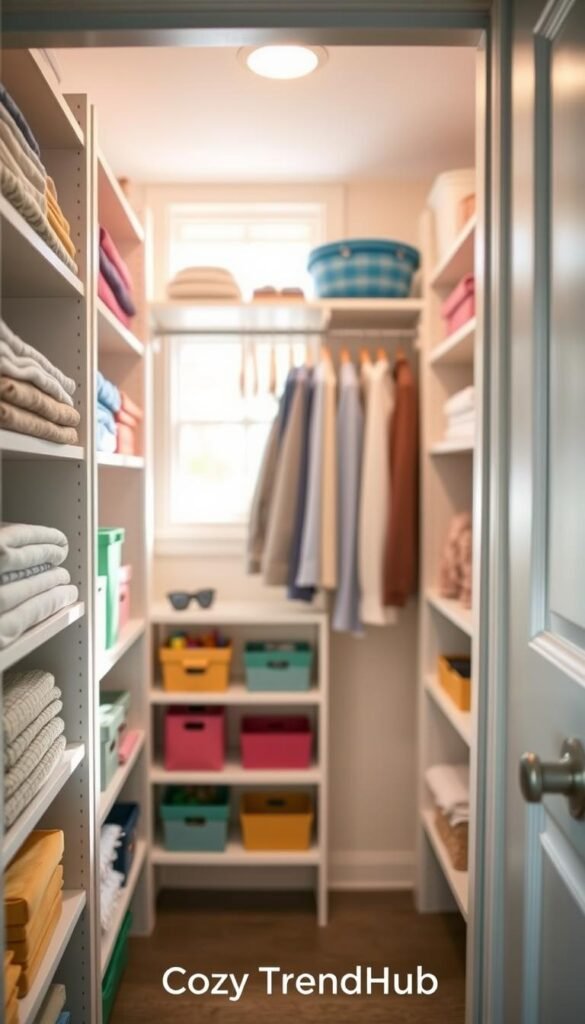
Who should buy: someone with a ~4-foot closet who wants a wall-mounted solution that stays stable and uses vertical space efficiently. The kit suits mixed wardrobes that need both hanging and flat shelf storage without a large footprint.
Why it solves the problem
The rail-based design clears the floor for shoes and bins. Adjustable shelves and rods let users split long and short hanging, and add drawer or shelf modules as needs change. Real installs took about two hours with basic tools; online instructions help with alignment.
Pros, cons, and key specs
- Material: epoxy steel with ventilated shelves.
- Shelf rating: 100 lbs per linear foot.
- Dimensions: 50 x 84 x 17 in; designed for ~52 inches wide openings.
- Kit includes: multiple hanging rods, rod holders, and shelves.
- Pros: sturdy feel, high load rating, flexible configurations, add-on options in the same product family.
- Cons: higher price for metal, requires accurate wall-mounting, occasional shipping damage (one chipped bin in testing).
| Feature | Spec | Why it matters |
|---|---|---|
| Material | Epoxy steel | Durable, resists sagging |
| Shelf rating | 100 lbs / linear ft | Supports heavy folded stacks |
| Installed width | ~52 in (kit fits ~50 x 84 x 17 in) | Targets common small openings |
Amazon Basics freestanding closet organizer rack and shelves
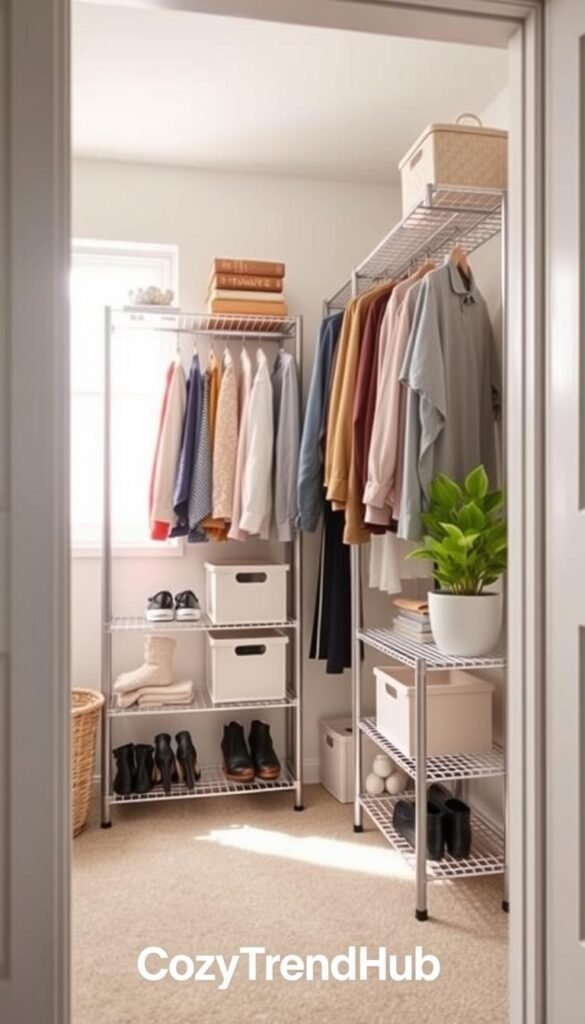
When wall anchors are off-limits, a sturdy freestanding unit gives near-instant capacity without marks on drywall. The Amazon Basics alloy-steel rack is a renter-friendly option that favors heavy loads and quick setup over a polished finish.
Who this fits
This unit works for renters and small-space dwellers who need fast assembly and serious weight capacity without drilling. It holds bulky bins and winter coats and supports heavy folded clothes without wall mounting.
Why freestanding can be the right no-drill answer
Freestanding systems move with the tenant and can be shifted if measurements are slightly off. Adjustable foot plates level the rack on uneven floors. That flexibility reduces returns and makes the solution travel-ready.
Pros, cons, and key specs
- Pros: up to 1,299 lbs total capacity; adjustable rods and shelves; stable leveling feet; ~30-minute assembly for one person.
- Cons: utilitarian black finish only; less refined than built-ins; no integrated drawers or trim.
- Key specs: dimensions 14 x 80 x 72 in; alloy steel/plastic; rod and shelf adjustability; ideal for heavy clothes and storage bins.
Tip: For renter-friendly ideas that pair well with freestanding units, see practical renter storage ideas and choose products that travel easily between spaces.
Lowe’s wood and MDF closet system for a built-in look
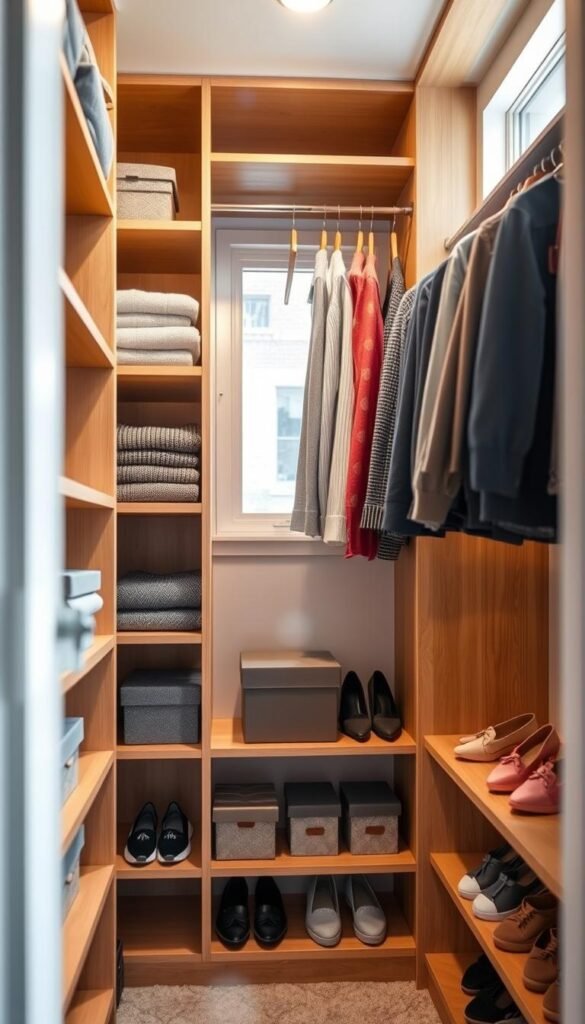
For homeowners who want a built-in look, a wood-and-MDF system blends furniture styling with practical storage. It pairs a finished design with functional pieces that reduce visible clutter and lift the feel of a room.
Who this fits
This option suits someone upgrading a bedroom who wants drawers for small items and a tidy visual profile. The drawer modules hide accessories and make daily access neater.
What to keep in mind
- Install reality: plan ~6 hours. Expect stud-finding, careful alignment, and possible trimming with a saw for a precise fit.
- Tools: stud finder, screwdriver, ratchet set, and a saw for occasional cuts.
- Materials and size: wood + MDF construction; dimensions 96 x 76 x 16 in; includes tower, extendable rod, shelves, drawer kit, and shoe shelf.
- Capacity: shelf rating ~25 lbs — good for clothing and lighter pieces, not dense or heavy tools.
- Durability notes: drawers offer smooth, soft-close glides, but MDF can dent and may off-gas an initial glue odor.
Design wins matter in daily use: soft-close drawers feel premium, and color options help match the room palette. But the trade-off is a longer install and occasional trimming to fit the opening.
Measure carefully so the tower placement does not reduce access in a tight room. For homes seeking a furniture-like update, this system balances visual design and everyday function when installed with realistic expectations.
IKEA Boaxel modular wardrobe combination for small spaces
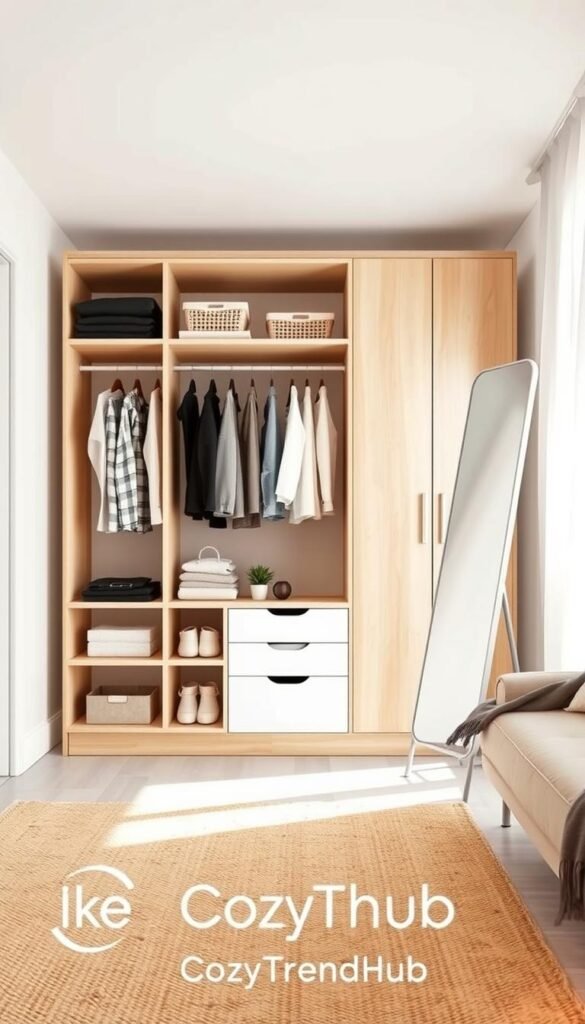
A modular wardrobe system makes it easy to reshape a small space as needs change. The Boaxel line uses configurable shelves, baskets, and a single rod to create zones for hanging, folded pieces, and shoes.
Who it suits
Good for: families with growing kids, renters who move often, and anyone who expects their wardrobe to evolve. In narrow openings the 16 x 49 x 79 in footprint fits shallow spaces while keeping reach manageable.
Pros, cons, and key specs
- Modularity: move shelves and baskets to match seasonal needs—this reduces long-term clutter and makes the layout portable.
- Install: expect about three hours. Directions can be terse; take time aligning rails and brackets for a secure mount.
- Hidden costs: IKEA sells the frame and pieces; screws, anchors, and extra brackets are not included. Plan for those additional pieces at checkout.
- Shelf depth: shelves are deep enough for larger shoes and storage containers, so a basket or clear container fits neatly and keeps items visible.
- Dimensions: 16 x 49 x 79 in — works in narrow openings but measure door swing and reach before buying.
Practical outcome: With a few baskets and matching containers the system can replace a dresser and free floor space. For renters, components disassemble easily for moves and restore a neutral wall when removed.
Wayfair closet system with drawers for folded clothes
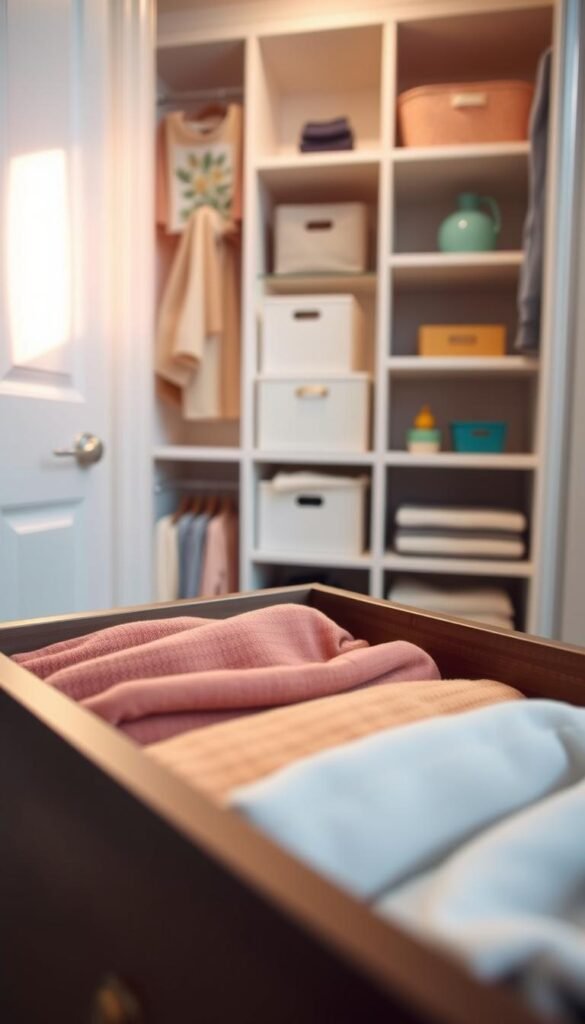
When sweaters and denim dominate a wardrobe, prioritizing pull-out storage and flat shelf space pays off. This Wayfair product centers on folded items and aims to replace a small bedroom dresser while freeing floor space.
Who this suits
Ideal buyer: someone with many sweaters, denim, and casual pieces who wants drawers instead of a freestanding dresser. The system includes ten shelves (three for shoe use), three drawers, and four hanging rods for mixed storage.
Why drawers matter
Drawers keep small clothing and accessories contained. That reduces visible piles on open shelves and speeds daily selection.
Install reality and risks
Installation took about five hours for two people. Cutting panels may be required in tight openings. Expect possible shipping dents, stripped screws, and laminate chipping during trimming.
| Spec | Detail | Note |
|---|---|---|
| Dimensions | 14 x 121 x 72 in | Measure door swing |
| Material | Manufactured wood | Durability varies |
| Capacity | Not listed | Buyer caution |
„Drawers and flat shelves make a real difference for folded wardrobes.“
Skip this option if renting and you cannot risk wall damage, or if you need a one-hour install. Otherwise, it’s a highly configurable product for foldable clothes.
Buying Guide: Materials That Work Best in Small Closets
Material choice controls durability, appearance, and how things stack over time. Use these rules to match a system to daily use and seasonal needs. Keep decisions practical: think load, moisture, and how neat folded items stay.
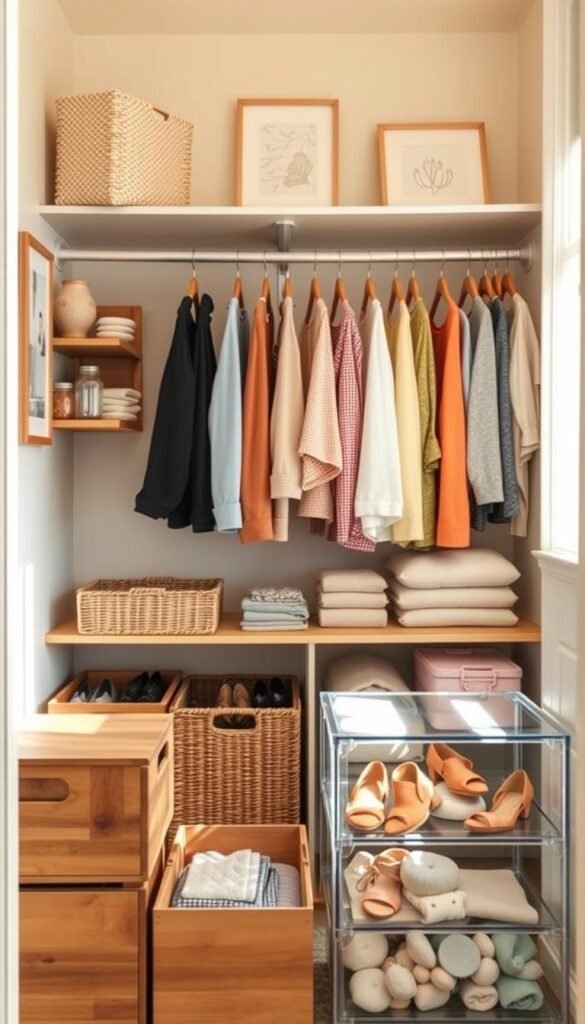
Metal, wood, and MDF — clear decision rules
Metal is the go-to for strength and long life. It holds heavy loads and resists sagging. Metal works well where strength matters more than a furniture look.
Wood gives a polished design and strong performance. It costs more but looks built-in and ages well. Choose wood when appearance and durability matter.
MDF saves money but needs care. It is fine for light folded items but swells with moisture. Avoid MDF for basements or very humid spots.
Why flat shelf surfaces matter
Flat shelves keep stacks stable and reduce snagging. Wire or coated wire lets small items slip and can catch fabrics. Wire does help airflow, but it compromises tidy folded storage.
Humidity, airflow, and seasonal storage
In humid climates, prioritize airflow and breathable storage. Use ventilated metal or add a container with desiccant for off-season clothes. For dry homes, lidded plastic or clear container bins protect against dust.
Pairing rules for containers:
- Clear plastic bins for visibility and stackability.
- Lidded containers for dust and pest protection.
- Shallow, stackable shapes to fit narrow depths and keep items reachable.
| Material | Best use case | Watch-outs |
|---|---|---|
| Metal | Heavy storage, airflow, long-term durability | Less furniture-like finish; can be cold to the touch |
| Wood | Built-in look, daily wear, aesthetic homes | Higher cost; heavier install |
| MDF | Budget builds, light folded items | Moisture-sensitive; lower load capacity |
For practical comparisons and installation tips, consult a hands-on review like the Wirecutter guide to align material choice with real-world products and layouts.
Buying Guide: Configuration Rules That Prevent Small-Closet Clutter
A rules-based layout turns a tight space into a predictable, usable zone for daily dressing.
Default winning layout: one hanging zone for shirts and jackets, a stacked shelf area for folded items, and at least one drawer bank for small pieces. This mix—drawers, shelves, and hanging poles—handles most wardrobes without wasted vertical space.
The most useful mix for most people: drawers + shelves + hanging poles
Why it works: drawers hide small items, shelves keep stacks visible, and hanging preserves shape for delicate pieces. Aim for 60% folded/flat space if sweaters and jeans dominate; increase hanging if many dresses exist.
Short-hang vs long-hang planning for coats and dresses
Split vertical height into short-hang and long-hang zones. Short-hang doubles usable rod capacity for shirts and pants. Reserve a single long-hang run for coats and dresses so long garments don’t block shelf access.
Shoe storage: tiered shelves vs bottom racks vs baskets
Use tiered shelves for visible daily pairs, low racks for two or three go-to shoes, and baskets for seasonal or bulky boots. That keeps floors clear and speeds outfit choice.
Accessory zones that save shelf space
Install slim hooks, a narrow rack, or small bins for belts, scarves, hats, and purse straps. These dedicated spots prevent accessories from eating shelf space and cut clutter.
For renter-friendly solutions, favor removable hooks, freestanding add-ons, and minimal drilling. See compact ideas at small closet ideas.
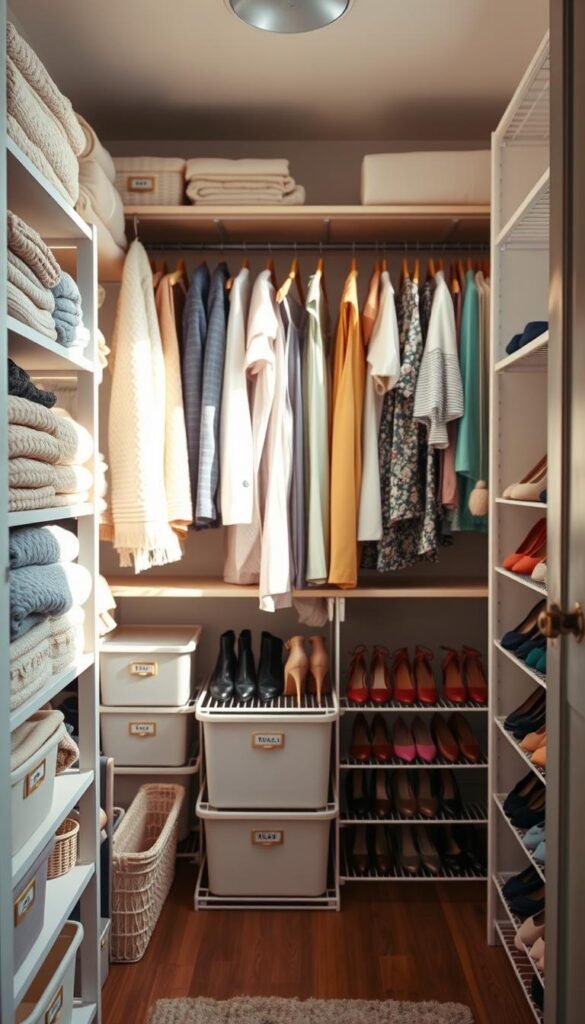
| Need | Config rule | Outcome |
|---|---|---|
| Many folded clothes | More shelves + one drawer bank | Stable stacks; fast retrieval |
| Mixed lengths | Short-hang + long-hang split | More hanging capacity; no blocked shelves |
| Limited floor space | Tiered shoe shelves or wall hooks | Clear floor; visible shoes |
Buying Guide: Weight Capacity, Tools, and Installation Reality Check
Confirming shelf and rod capacity up front avoids the common regret of underbuilt storage. In small spaces, weight concentrates over short spans, so capacity matters more than it seems.
Minimum capacity targets to keep in mind
Look for shelves rated at least 30–40 lbs per linear foot for folded clothes. Hanging rods should support 30+ lbs per foot. Utility areas and heavy winter coats need nearer 50 lbs per shelf.
What typically slows installs down
Installs often stall when rails and studs don’t line up, or when shelves and rods need trimming. Unclear instructions add a bit more time—expect extra planning with some modular kits.
Tools reality checklist
- Drill and bits
- Level and tape measure
- Stud finder
- Saw for trimming panels or rods
Freestanding vs wall-mounted: stability trade-offs
Freestanding units protect walls and are renter-friendly but can shift if overloaded. Wall-mounted systems are more stable under load but require patching when removed.
Pick the simplest system that fixes your main constraint, then add a drawer or shelf later rather than overbuilding from the start.
Small-Space Add-Ons That Make Any Closet System Work Better
Small add-ons often deliver the fastest wins in a tight wardrobe by fixing visibility, stacking, and space efficiency without a full remodel. These renter-friendly pieces cut daily friction and extend an existing setup’s usefulness.
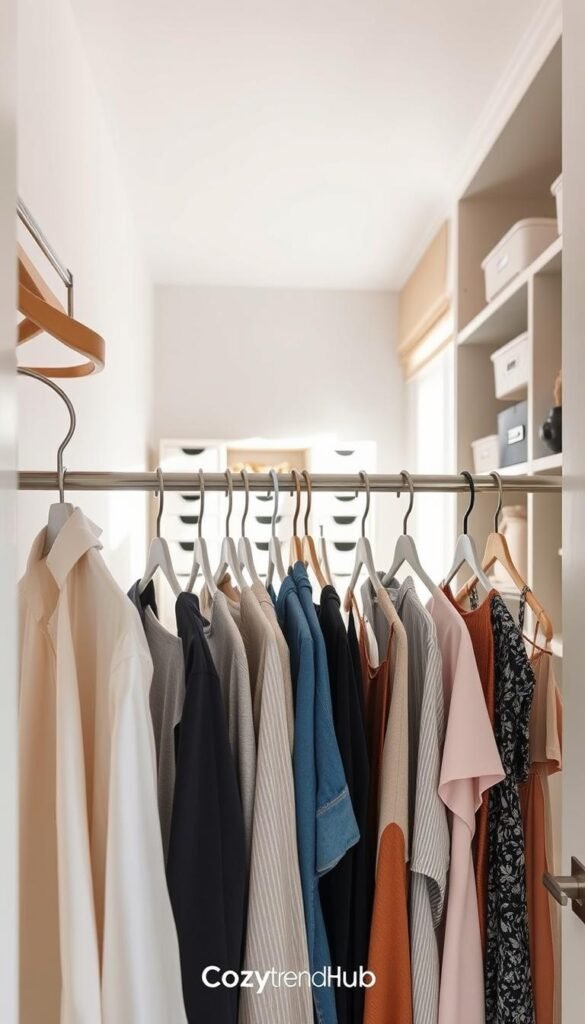
Slim velvet hangers (Amazon Basics)
What it fixes: increases hanging capacity and stops garments from slipping.
- Why it helps: uniform slim hangers free inches of rod space and create a neat line of shirts and jackets.
- Buyer note: works on most rods; watch for heavy coats that need sturdier hangers.
Shelf dividers (Lynk tall)
What it fixes: collapsing piles and mixed categories on narrow shelves.
- Why it helps: coated steel dividers hold stacks steady and fit shelves up to 0.75″ thick.
- Buyer note: ideal for folded sweaters and bags; measure shelf thickness before ordering.
Clear stackable bins (Container Store Clearline)
What it fixes: hidden or lost folded items and seasonal rotation friction.
- Why it helps: transparent plastic bins stack, show contents, and reduce rummaging through piles.
- Buyer note: lids sold separately for dust protection; use shallow sizes for tight depths.
Stick-on lighting (MCGOR under-cabinet)
What it fixes: dark shelves and hard-to-find items.
- Why it helps: motion mode and adjustable brightness make selection faster; USB-C recharge avoids battery waste.
- Buyer note: adhesive or magnets suit renters; expect a slight motion lag and shorter run time as battery ages.
Quick takeaway: These add-ons often beat a full rebuild in cost and time. For more small-space tips and practical setups, see a concise guide on small-closet ideas and product comparisons at small-space guides.
Renter-Friendly Closet Organization Strategies (No Regrets Upgrades)
Renters can gain big function with low-risk upgrades that move easily between homes.
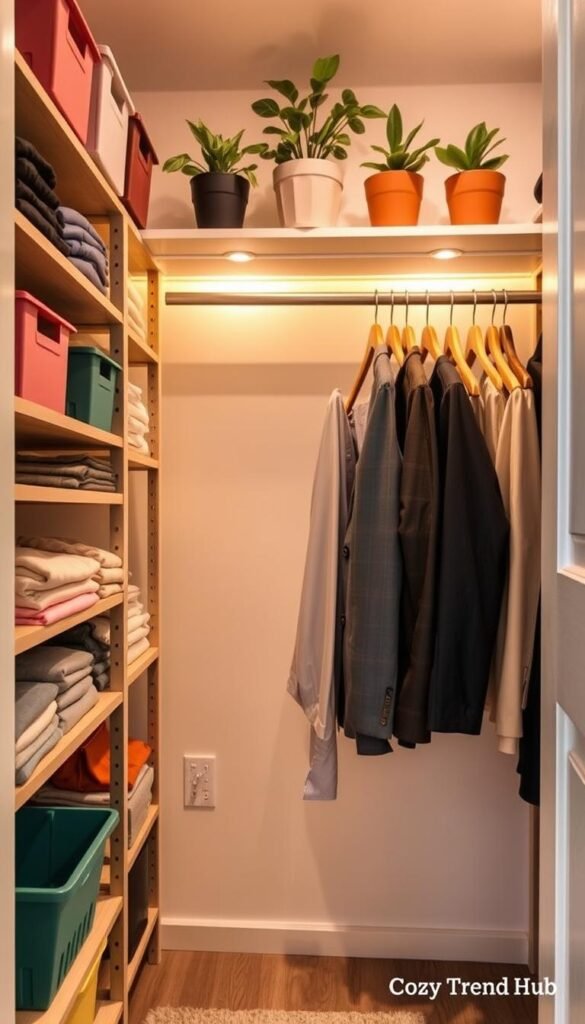
Start with freestanding and removable pieces
Begin with a freestanding rack and clear containers before considering wall mounts. These items add capacity and travel with the tenant.
Slim hangers and shelf dividers compress bulk and keep clothes tidy without hardware changes.
If mounting is necessary, minimize long-term damage
Use a stud finder, pick the right anchors, and plan a removal/patching step. Keep spare paint or a small repair kit for touch-ups.
Pro tip: mark fastener locations and keep original hardware so removal restores the wall more easily.
Make visibility the organizing habit
Match hangers and orient them the same way to speed selection. Clear containers show contents and stop piles from shifting.
Include a monthly quick reset: clear shoes from the floor and swap seasonal containers to prevent clutter creep.
| Upgrade | Renter-safe | Why it helps |
|---|---|---|
| Freestanding rack | Yes | Adds hanging & shelf space; no drilling |
| Slim hangers | Yes | Frees rod space; uniform look for faster selection |
| Clear container | Yes | Improves visibility; stacks across layouts |
Seasonal Closet Setup for Small Closets
A short, repeatable rotation keeps daily items at eye level and off-season pieces out of the way.
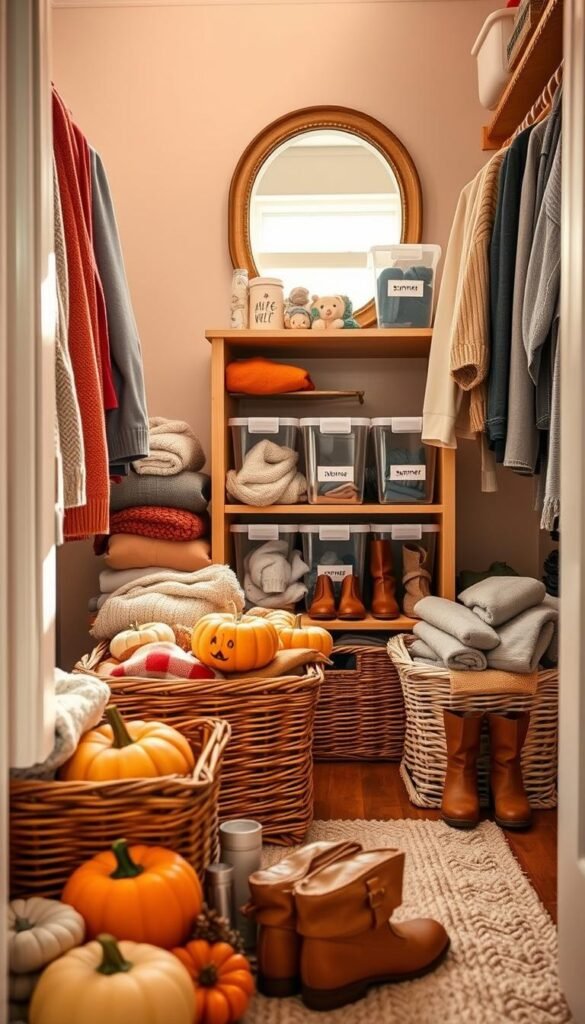
Rotate bulky winter coats and boots without losing daily access
Keep current-season clothes at mid-level reach. Move heavy coats to a higher shelf or a labeled container when warm weather arrives.
Reserve a consistent bottom zone for boots so shoes are easy to grab. Stackable boot trays or a low shoe rack make boots accessible without crowding the floor.
Use bins and shelf dividers to split “in-season” vs “off-season” items
Create a two-bin system: one labeled „in-season“ and one „off-season.“ Clear bins show contents quickly and prevent mixed piles.
Use shelf dividers to stop shallow stacks from sliding. Dividers keep seasonal sweaters and bulky items neat on narrow shelves.
Create a small “drop zone” for outdoor gear and cleaning supplies
Dedicate a lower corner as a drop zone for daily outerwear and small gear. A hooked rail and a small bin collect masks, gloves, and pet leashes for grab-and-go use.
Pro tip: testing showed an Elfa-style rail works well as a renter-friendly drop zone for cleaning supplies and outdoor gear without wasting floor space.
- Rotate: move off-season items to top shelves monthly.
- Protect: allow airflow; avoid packing fabrics tightly to reduce moisture risk.
- Label: keep two clear bins for quick swaps and tidy homes.
For step-by-step small-space rotation ideas, see a practical guide on small closet rotation.
Conclusion
Final decisions hinge on simple facts: measure width, depth, and height, note your wardrobe mix, and decide how much mounting you will accept. Use those basics to pick the best closet organizers for your needs.
Quick recap: Elfa fits a ~4-foot wall for durable, configurable storage. Amazon Basics suits no-drill budgets. IKEA Boaxel offers modular flexibility. Wayfair gives drawer-heavy setups for folded clothes. Lowe’s delivers a furniture-like built-in look.
Match a product to the single bottleneck you want solved — hanging length, folded stacks, shoe clutter, or visibility. Then take a small next step: measure, list top clothing categories, and choose a system.
Pro tip: add slim hangers, shelf dividers, clear bins, or stick-on lights for the fastest day-to-day gains. For planning help, see closet organizing systems.