
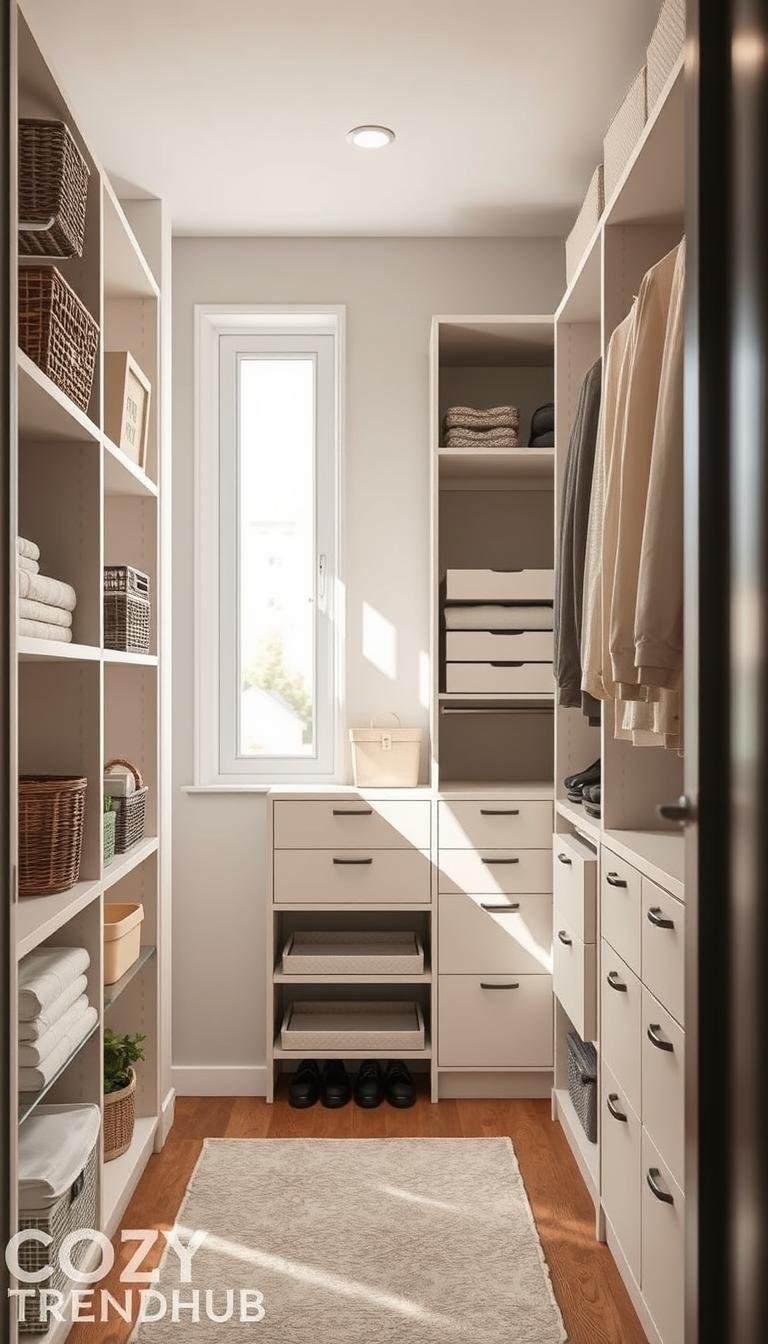
Small and narrow closets often feel unusable. They lack clear zones for hanging, folded items, shoes, and accessories. That creates daily „digging time“ and wasted space.
This guide aims to fix that. It highlights practical products that maximize vertical space, fit tight footprints, and work in rentals without a remodel.
The roundup explains how to measure and spot the main bottleneck, then how to pick the right organizer type and keep it working. Picks focus on modular components, slim hangers, and stackable containment—changes that deliver the most impact fast.
Suggestions are practical and paced: real product picks, clear pros and cons, and buying considerations tied to typical U.S. dimensions, baseboards, and door swing. Readers will see categories like hanging space, folded stacks, shoes, accessories, renter-friendly options, and seasonal overflow. Recommendations favor fit, adjustability, and value over trendy looks.
Key Takeaways
- Identify the main bottleneck before shopping—measure height, depth, and door swing.
- Choose modular and adjustable options to boost vertical storage and organization.
- Look for slim hangers and stackable bins to reduce digging time.
- Many effective solutions are renter-friendly and avoid permanent changes.
- Product picks include pros/cons and what each setup is best suited to hold.
Why narrow storage gets messy fast — and what actually fixes it
A tight wardrobe becomes chaotic when a handful of predictable bottlenecks go unmanaged.
The real trouble spots are simple: limited rod length squeezes hanging clothes, the floor becomes a dumping ground, and small accessories vanish into the pile.
The practical fix follows first principles: separate things into clear categories — hang, fold, shoes, accessories — then give each category a contained home.
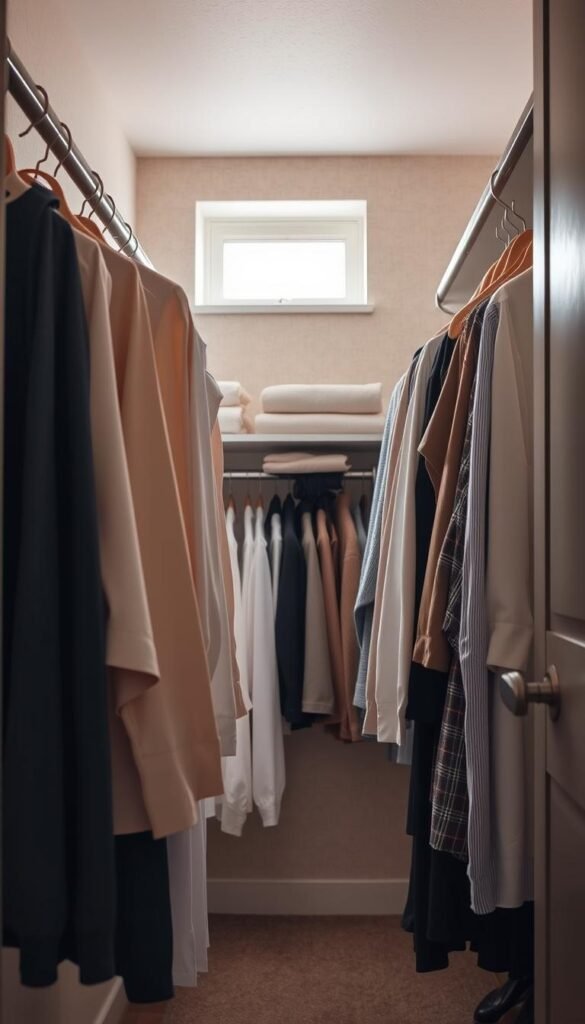
The problem-solution checklist
- Hanging density: use slim hangers to add usable hanging space without crowding.
- Folded piles: towers or stackable bins keep folded items upright and visible.
- Shoes and floor mess: vertical shoe racks reclaim floor area and reduce piles.
- Missing accessories: back-of-door hooks or clear micro-bins keep accessories in view.
Access matters. Even good storage fails if items are out of sight or reach. Prioritize daily-use pieces at eye level and move overflow to labeled bins above.
Renter-friendly tip: try no-drill, removable systems first. Later sections will compare depth, door swing, stability, and load limits so readers can pick the right solution in a confident way.
Measure First: How to Assess a Small Closet So You Don’t Buy the Wrong Organizer
Start by measuring every dimension so the new system fits the space, not the other way around. Accurate numbers prevent returns and awkward installs.

Closet width, depth, and height: the three numbers that decide everything
Record width, depth, and ceiling height with a tape measure. Then note the usable depth after accounting for hangers and door clearance. These three figures should guide every product choice.
Don’t forget baseboards, door clearance, outlets, and light switches
Check baseboards and trim so units sit flush. Mark outlet and switch locations that must remain accessible. In older apartments, thick baseboards and floor molding are common “gotchas.”
Quick wardrobe inventory that predicts your ideal storage mix
- Count hanging items vs folded piles and shoes.
- Map vertical space: top shelf for seasonal boxes, mid-level for daily wear.
- Decision rule: if most garments wrinkle, favor rods; if knits and denim dominate, favor shelves and drawers.
Fit-first buying is the fastest path to a system that stays organized. Always compare product dimensions to your three key measurements before checkout.
Buying Criteria That Matter in a Narrow Closet
Prioritizing depth and vertical use stops new systems from blocking doors or walkways. Start with measurements, then test potential profiles against that usable depth. If an item extends into the path it reduces usable space more than any storage it adds.
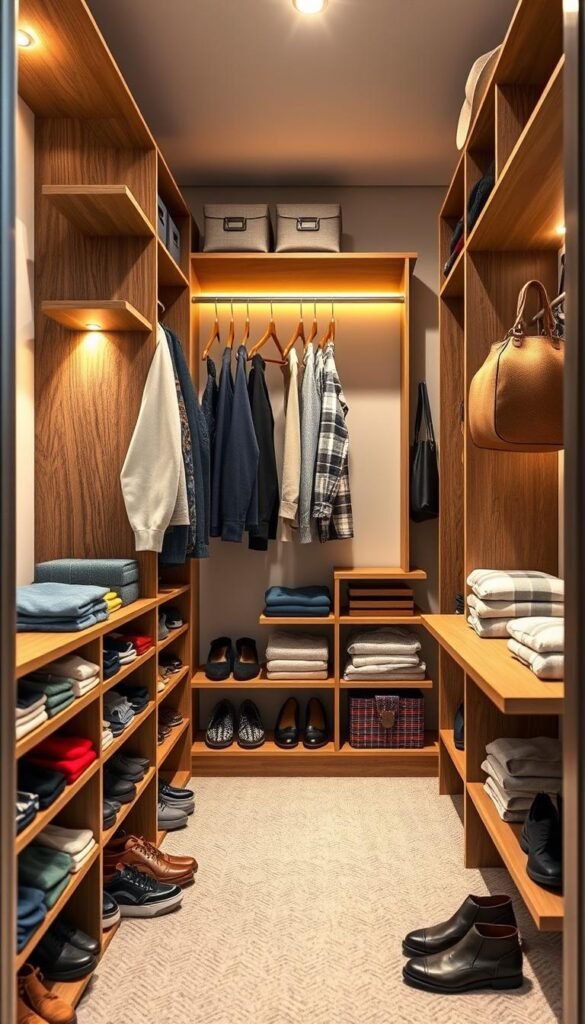
Key fit and function rules
- Depth first: pick slim profiles and shallow shelves so doors and hangers move freely.
- Use vertical space: tall towers and double rods gain capacity without widening the footprint.
- Containment order: decide between open shelves, drawers, or cubbies based on daily access and aesthetics.
Comparing containment options
Drawers hide clutter and suit small items. Shelves give faster access to folded pieces. Cubbies are ideal for bags and rolled items but need dividers to stop slumping.
Stability, materials, and longevity
Tall, narrow systems must have solid bases and clear load limits for denim stacks, coats, and heavier bags. Favor smooth, wipeable surfaces and sturdy hardware.
| Criterion | What to look for | Why it matters |
|---|---|---|
| Depth fit | Slim shelves/towers (10–14″ ideal) | Prevents obstruction of door swing and keeps walk path clear |
| Vertical space | Adjustable rods and stackable shelves | Adds capacity without widening footprint |
| Containment type | Drawers, open shelves, cubbies with dividers | Matches access needs and keeps items visible or out of sight |
| Stability & load | Anchoring options; published load limits | Prevents tipping and supports heavy garments and bags |
| Materials & finish | Light colors, wipeable panels, durable hardware | Makes tight space feel brighter and holds up to daily use |
How picks will be judged later: fit in narrow spaces, renter-friendly install, expandability, and practical value. These criteria guide comparison, help build affiliate blocks, and keep recommendations useful rather than trendy.
Best Closet Organizers for Small Closets: Quick Comparison by Problem
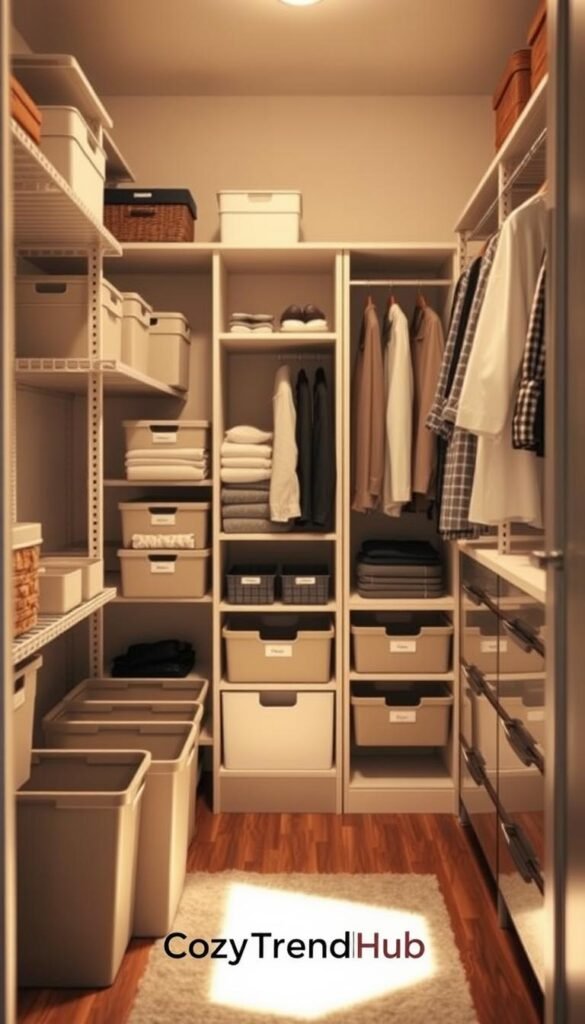
A clear matrix helps match common wardrobe problems to the right storage solution quickly. Below is a compact guide designed for quick affiliate blocks and fast buying decisions. Each row states the problem, the recommended system type, and who should choose it.
| Problem | Organizer type | Best for |
|---|---|---|
| Need more hanging without remodeling | Double-hang rod or slim velvet hangers | Choose this if you mostly have tops and short garments; avoid if long coats dominate. |
| Folded piles keep collapsing | Shelf dividers or stackable bins/drawers | Best for knitwear and denim stacks that need stability and visibility. |
| Shoes clutter the floor | Tiered shoe rack or over-the-door shoe organizer | Best for narrow footprints; pick a door unit when floor space is near zero. |
| Accessories get lost | Hooks, door-mounted pockets, clear micro-bins | Choose this if you need quick access to belts, scarves, and bags. |
| Can’t drill or alter walls | Non-drill towers, tension rods, over-the-door systems | Best for renters; check removable mounting limits and weight ratings. |
| Seasonal overflow and rotating wardrobes | Top-shelf clear bins and modular add-ons | Choose this if you swap items seasonally and need labeled, stackable storage. |
Quick tips: “adding hanging space” usually means double-hanging or slimmer hangers, not a wall rebuild. For folded clothes, use dividers plus clear bins to stop slumping and make grabs fast.
„Choose solutions that match your three measurements and door swing to avoid returns.“
Best Modular Closet Systems for Small Closets (Adjustable Shelves, Drawers, and Rods)
Modular systems turn a jumble of mismatched bins into a coordinated storage plan that grows with needs.
Who this is best for:
Who this suits
Someone who wants a unified closet rather than a patchwork of pieces will benefit most. This buyer prefers a system that looks cohesive and handles daily wear without frequent swaps.
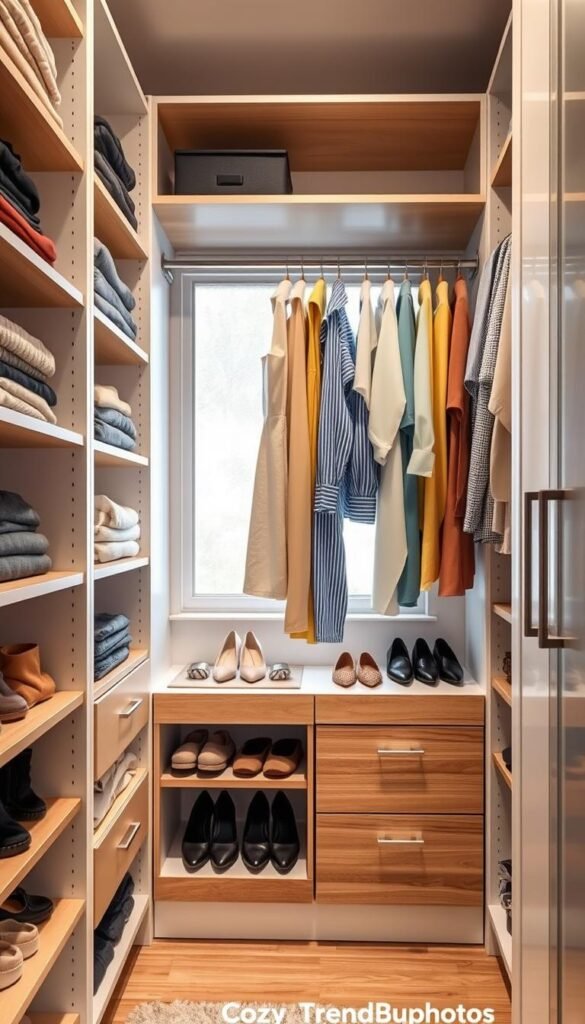
Why modular matters
Mix-and-match units let users start with a 25W x 16D module and add towers, drawers, or rods later. Brands like Bestar offer adjustable shelves, drawer options, and rod placements that combine into a full system. Some units include doors or LED lighting and come with North American assembly and delivery options.
Buying considerations
- Choose slim depths (16″ or similar) so doors and hangers clear easily.
- Plan rod height and drawer clearance before ordering.
- Check whether wall anchors or drilling are required—renters may prefer tension or no-drill brackets.
Pros and cons
- Pros: stable, adjustable shelves and drawers, clean look, long-term value.
- Cons: higher cost than bins, assembly and anchoring often needed, depth must match the room.
Shopping tip: solve the biggest bottleneck first—add a rod module if hanging space is tight, or a drawer tower if folded stacks collapse. Expand the system over time to avoid duplicate purchases.
Best Narrow Closet Tower Organizers for Vertical Space (Shelves + Drawers in One Footprint)
A narrow tower can turn wasted vertical space into neat, stackable storage that stays accessible.
This solution is ideal when folded items—sweaters, tees, and denim—outnumber hanging pieces in a wardrobe. A slim tower adds predictable shelves and a drawer without widening the footprint.
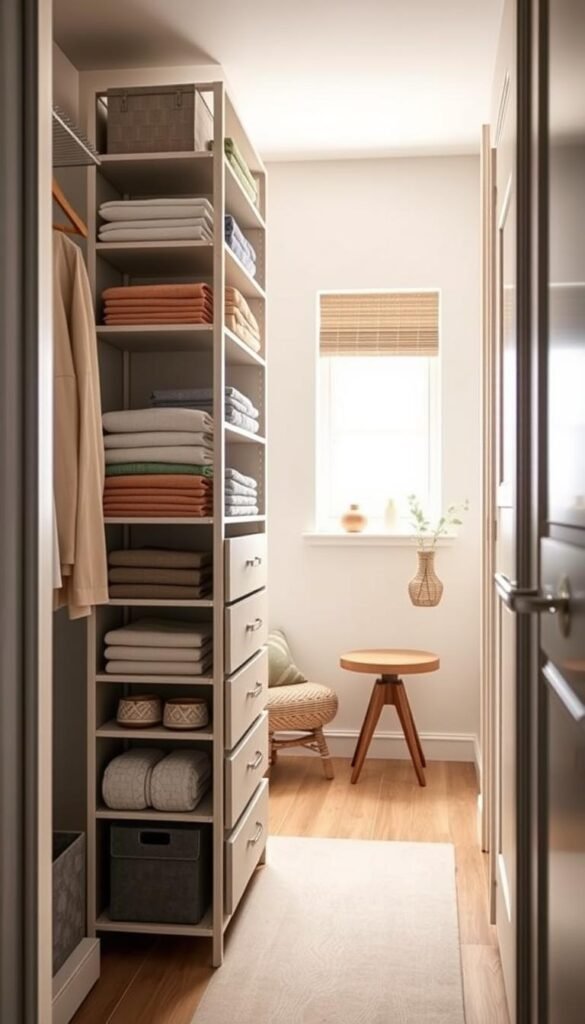
Who this suits
Good fit: anyone with many folded clothes and limited rod length. The tower keeps stacks upright and visible.
What to look for
- Slim depth: confirm usable space so the unit won’t block hangers or doors.
- Adjustable shelves: move shelf heights to fit jeans, sweaters, and tees.
- Drawer action: test that the drawer pulls out smoothly in a tight opening.
- Stability: solid back panels or anchors to handle heavy denim stacks.
Common mistake: picking a tower that extends too far forward and reduces door clearance. That choice can make the reach-in area feel cramped and cut off access.
„Place the tower on one side, keep hanging space on the other, and use shoe bins below for easy reach.“
Pros: faster organization, better visibility, and a small footprint. Cons: check clearance carefully and expect some assembly time.
Quick buyer note: this is often the single most effective upgrade when folded stacks are the main problem—measure first, then buy to fit.
Best Double-Hanging Solutions for Short Items (Shirts, Blouses, Kids’ Clothes)
A smart double-hang setup turns wasted vertical clearance into two usable rows of shirts and kids‘ garments.
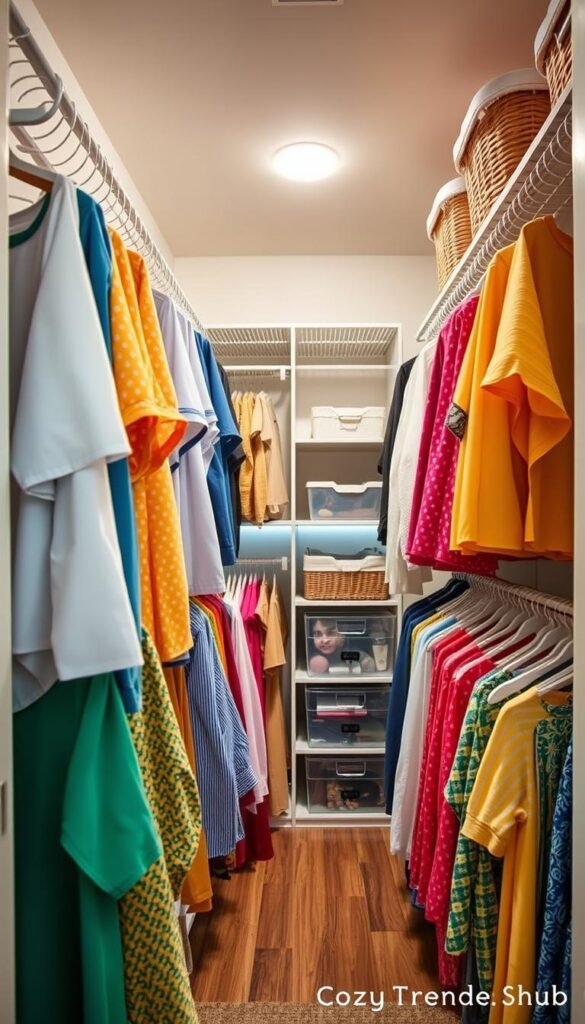
The problem: short garments leave empty space beneath a single rod. That unused zone cuts capacity and creates piles on the floor.
What double-hanging means
Double-hang solutions add a second rod or use adjustable systems to split the area into upper and lower hanging zones. This converts one tall strip of wall into two practical rails.
Who should pick this way
Ideal users have many shirts, blouses, kids‘ clothes, or short jackets that do not need full-length clearance. It boosts hanging capacity without widening the footprint.
When this backfires
Avoid double-hang if long dresses, full-length coats, or bulky winter layers dominate. Those items need uninterrupted height and will crowd dual rods.
- Measure shortest and longest garments to set rod heights.
- Use adjustable rods to swap seasons—more long-hang in winter.
- Renters should favor tension rods or removable brackets and note weight limits.
| Consideration | What to check | Why it matters |
|---|---|---|
| Rod height | Measure hanging lengths | Prevents scraping and maximizes usable space |
| System type | Tension vs. fixed | Removable options suit renters; fixed offers more load capacity |
| Wardrobe mix | Percent short vs. long | Determines whether double-hang is a helpful solution |
„Double-hanging is a quick, high-impact way to reclaim vertical space when most garments are short.“
Best Slim Velvet Hangers for Maximizing Hanging Space
Swapping wide hangers for slim profiles is the quickest way to increase usable rod capacity without altering hardware. This change fits more garments on the same rail and cuts visual clutter.

Top pick profile: Amazon Basics slim, non-slip velvet hangers
Best for: budget-minded shoppers who need reliable grip on everyday shirts.
Why it works: Wirecutter testing notes these hangers are affordable, sturdy, and shed less flocking than many rivals. They keep garments from sliding and free up rod space.
Upgrade pick profile: Mawa space-saving hangers
Best for: someone who wants a premium, durable option.
Why it works: Mawa uses a PVC-coated steel rod that grips without velvet. These hangers are thin and long-lasting, ideal when durability matters.
Buyer notes and quick trade-offs
- Look at hook rotation and shoulder notches for straps and layered pieces.
- Velvet can attract lint and may shed slightly over time.
- Thin profiles can crease soft knits if packed too tightly.
- Uniform hangers create calmer visual lines and improve closet organization.
„Replace the most-used section first—work shirts or daily layers—if upgrading in stages.“
Simple rule: swap one section, test the grip, then finish the rail. The fastest capacity win is a single, considered hanger change.
Best Shelf Dividers for Stacks That Won’t Stay Put
When stacks merge, finding a specific sweater or pair of jeans takes too long. Folded piles slide into one another and eat usable shelf space in a tight closet.
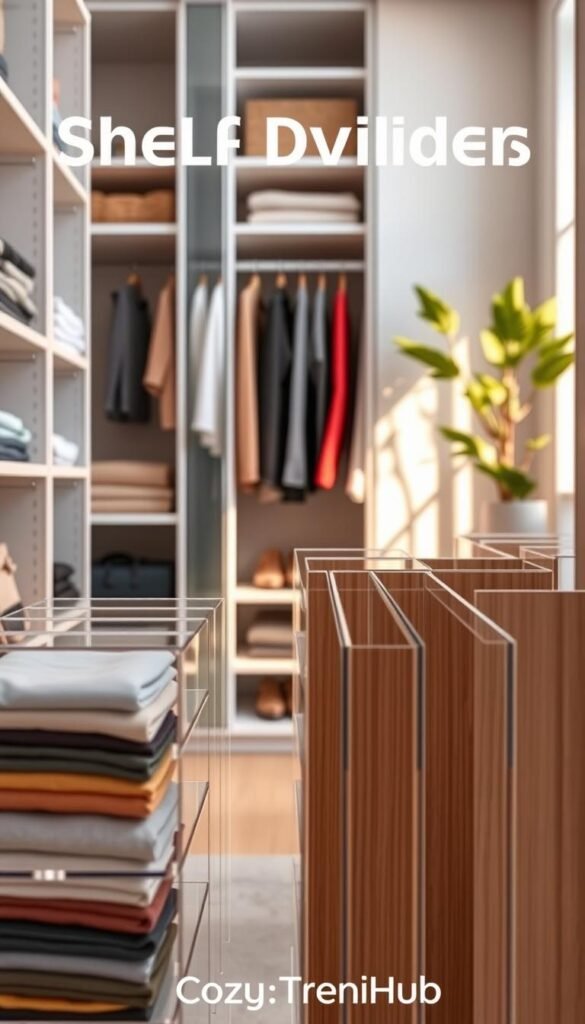
Why dividers work: shelf dividers contain stacks without hiding them behind drawers. They keep categories visible and stop toppling. This is a low-effort fix that preserves the full shelf depth.
Top pick profile
Lynk Tall Shelf Dividers are coated heavy-gauge steel, slim, and stable. They clamp without installation and fit shelves up to 0.75″ thick. Wirecutter testing notes their durability and slim profile.
Who should use them
- Sweaters, denim, and linens that need upright support.
- Bags that slump and lose shape on open shelves.
- Anyone who wants containment without drawer depth.
Buying considerations & watch-outs
- Choose taller dividers for heavy stacks.
- Pick a coated finish to reduce snags on delicate clothes.
- Check clamp compatibility—very thick shelves may not fit.
- Move dividers slowly on painted shelves to avoid chipping.
Quick layout tip: use dividers to make micro-zones (work tees vs gym tees) so similar items stay grouped and easy to grab.
Best Stackable Clear Bins and Drawers for Small Items You Lose
A stackable, transparent system turns hidden bits into easy-to-grab categories. Clear, modular bins make tiny things visible and cut the time spent digging.
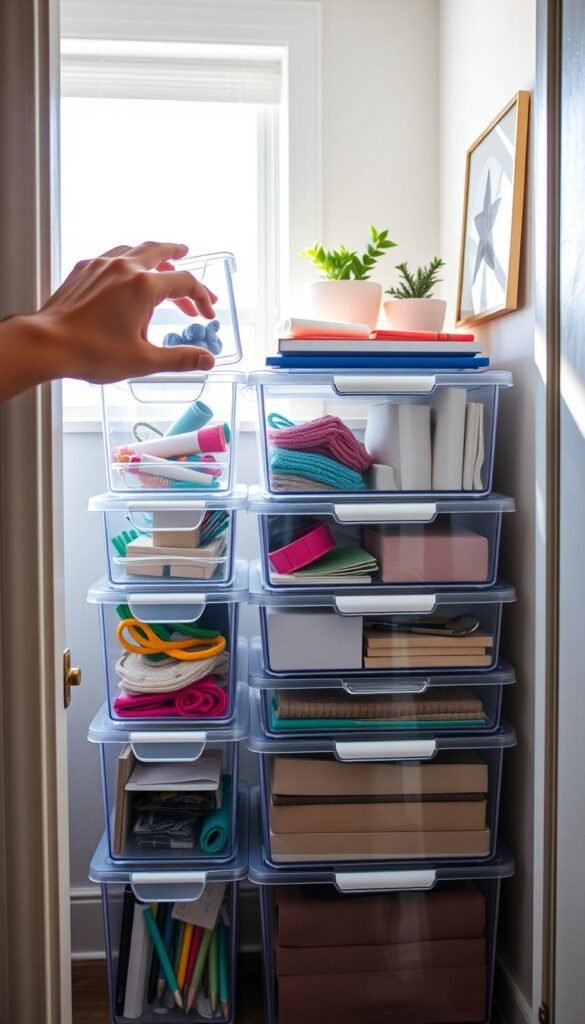
Top pick profile: The Container Store Clearline Open Bin is clear, sold individually, and stacks to a custom height. Wirecutter notes its durability and that it resists cracking in regular use.
Where these work best
Use them on top shelves, inside closet towers, or as quick micro drawers on the floor where full furniture won’t fit. Clear sides show contents at a glance and stop small items from vanishing.
Buying considerations
- Measure shelf depth and available height before you buy.
- Check stack stability when bins are fully loaded.
- Prioritize clear walls so contents are visible from multiple angles.
Pros: simple category containment, fast grab-and-go access, helps keep long-term order.
Cons: can look busy if overfilled; very tall stacks reduce reach in tight space.
Practical tip: label each bin (gym socks, scarves, tech items) so the system remains a tidy, repeatable routine.
Best Shoe Organizers for Narrow Closets (Floor, Shelf, and Door Options)
Shoes often claim the floor and turn a tight reach-in into a daily obstacle course. This short guide compares floor, shelf, and door solutions and points to renter-friendly choices that save usable space.
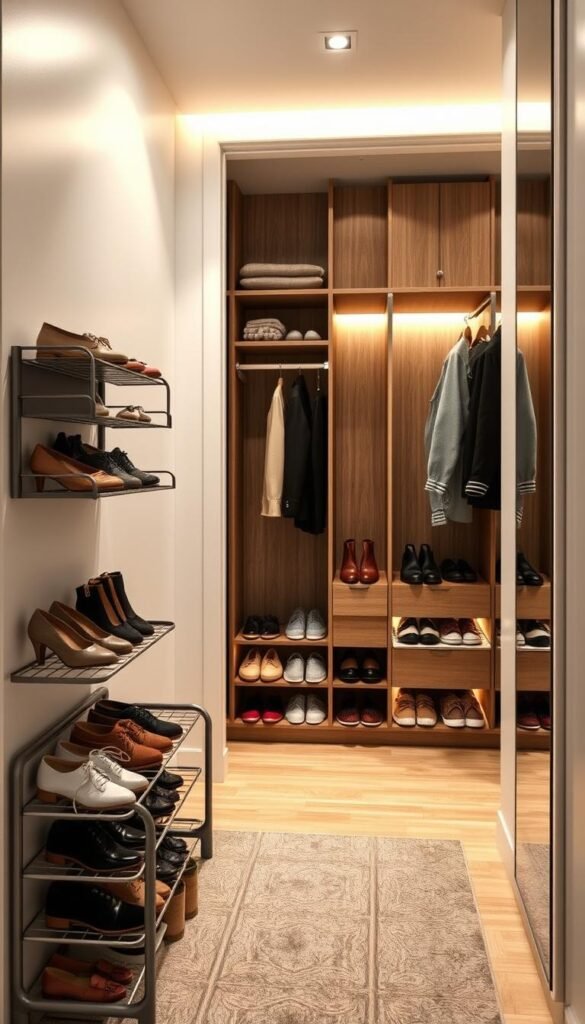
Tiered shoe racks for vertical storage with minimal floor footprint
Good for: sneakers, flats, and casual pairs that stack well.
Tiered shoe racks add rows without broadening the footprint. They keep pairs visible and free lower bins and hanging rails.
Over-the-door shoe storage when floor space is zero
Good for: very tight setups or renters who cannot drill.
Door pockets or hanging shelves reclaim vertical door area and clear the floor. Check clearance so the door closes and nothing rubs against hanging clothes.
Choosing the right format for boots vs. sneakers vs. heels
Boots need taller compartments or a single boot box. Heels work best on shallow shelves or stable pocketed racks. Sneakers fit most tiered racks.
- Quick buyer tip: count pairs and keep daily shoes at reachable levels; move occasional pairs to top shelves or clear bins.
- Renter note: favor over-the-door and freestanding racks over wall-mounted shelves to avoid damage.
„Prioritize visibility and access—clearly stored shoes cut morning search time.“
Best Over-the-Door and Wall-Friendly Accessories for Renters
When drilling isn’t allowed, door- and wall-friendly accessories deliver high impact with low risk. Renters can add storage that is removable, low-damage, and easy to reposition.
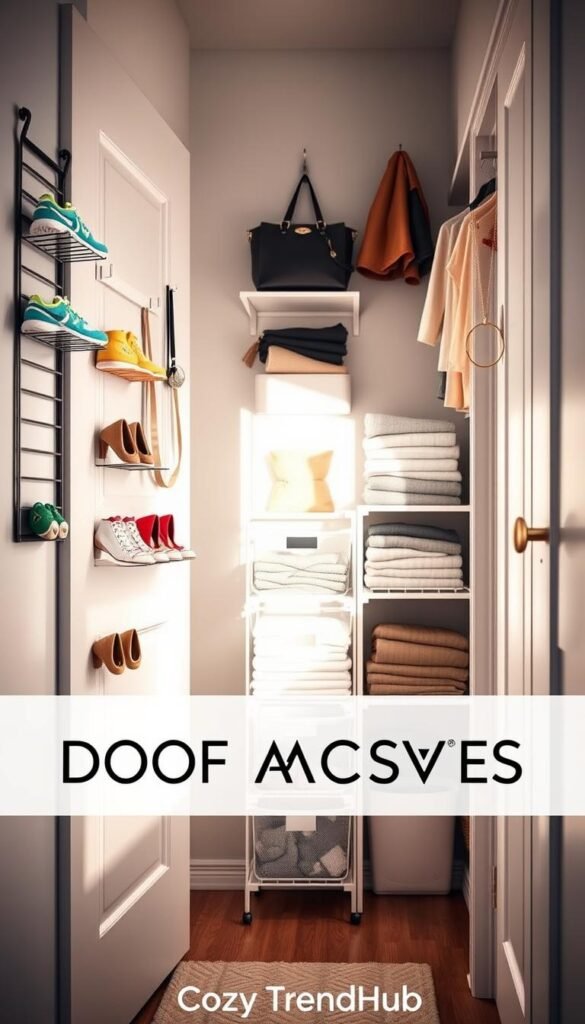
Back-of-door hooks for bags, robes, belts, and scarves
What they hold: everyday bags, robes, belts, and scarves that otherwise crowd shelves and rods.
Best use: lightweight to medium-weight items. Reserve heavier leather or camera bags for a sturdier shelf or wall hook.
Damage-free mounting and weight limits
- Identify door thickness before buying; many hangers suit 1.25″–1.75″ doors.
- Look for padded hooks to prevent scuffs and protect paint.
- Adhesive, removable hooks often rate 3–5 lbs; over-the-door metal hangers handle 10–25 lbs on each hook.
- Avoid overloading: excess weight can warp the door or loosen hardware.
- Surface prep matters: clean with alcohol before applying adhesive to reach rated capacity.
Quick setup tip: place everyday items at hand height and use upper hooks for occasional pieces. This keeps the most-used items visible and reduces morning search time.
„Over-the-door solutions add access with minimal impact — ideal when permanent changes aren’t an option.“
Lighting Upgrades That Make a Small Closet Feel Bigger (and Work Better)
Dim, uneven light makes a tight wardrobe feel smaller and adds minutes to every morning. Good lighting reduces search time and helps people return items to the right place.
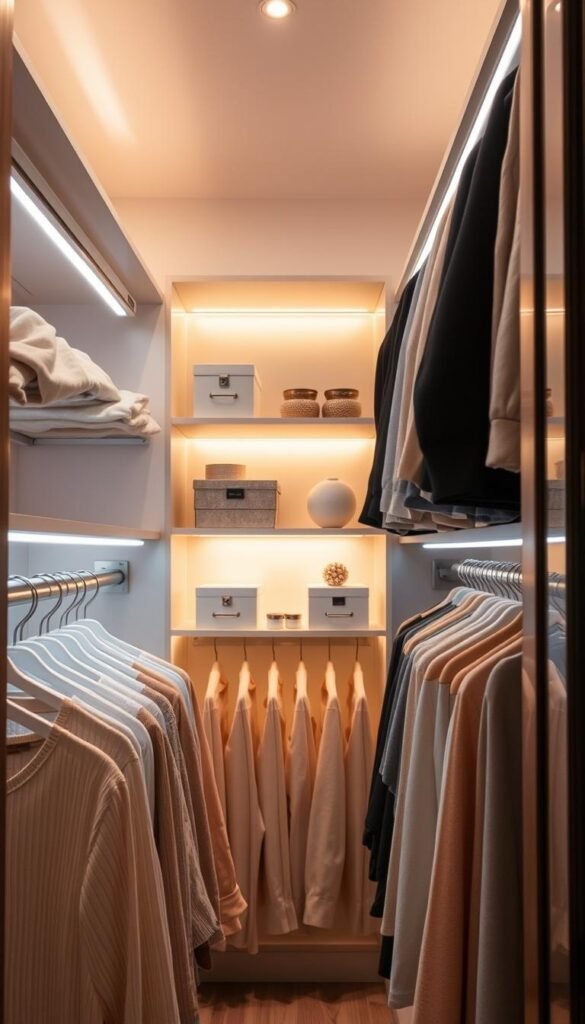
Top pick profile
The Wirecutter-recommended MCGOR 10-inch rechargeable motion-activated light is a practical choice. It offers adhesive or magnetic mounting, four brightness levels, on/off/auto modes, and USB-C charging with detachable modules.
What to look for
- Brightness levels: four settings let users match shelf, rod, and shoe areas without glare.
- Motion responsiveness: a slight 1–2 second lag is normal; check reviews if instant-on is critical.
- Run time & charging: auto-off is ~30 seconds and can shorten as battery ages—plan a charging routine.
- Mounting style: magnetic ends make removal easy for charging; adhesive keeps lights firmly in place.
Why it matters
Strategic placement — one light near the rod and one over shelves or shoes — evens illumination and cuts digging time. Better visibility means items are easier to find and more likely to be put back, supporting long-term organization.
„Lighting is a low-cost, renter-friendly upgrade that improves every storage choice already made.“
Small-Space Setup Plans That Match Real Life
This set of layouts gives clear, plug-and-play ideas that fit common routines without custom cabinetry. Each plan ties to specific product types so readers can act quickly and save time each day.
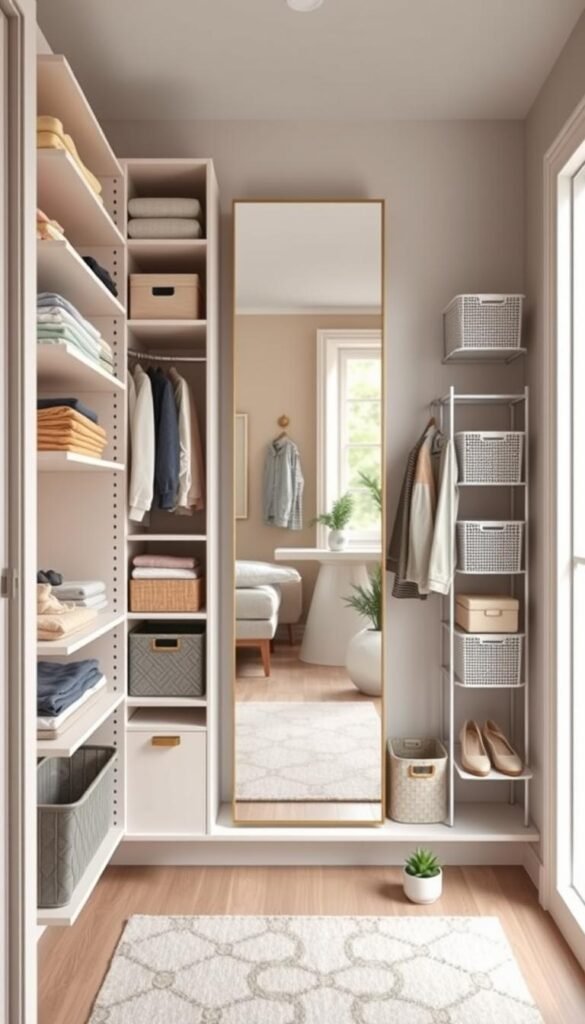
Workwear-first layout for faster weekday mornings
Place daily shirts and jackets at eye level and face them to the front of the rod. Use slim hangers to increase capacity.
Add a small drawer or clear bin zone beneath the rod for socks, belts, and ties to cut prep time.
Shared layout for couples and roommates
Split vertical space: one side of the rod and one set of shelves per person. Use labeled bins and shelf dividers to prevent category creep.
Tip: assign top-shelf bins for seasonal overflow and keep daily items within reach.
Kids’ layout that prioritizes reach and quick resets
Install a lower rod and open bins at child height. Visible zones help kids put items back and reduce mess.
Door hooks and small bins hold accessories while lighting improves visibility so resets take less time.
Seasonal swap plan for coats, boots, and off-season bins
Define a winter zone for coats and boots near the door. Move off-season pieces to labeled top-shelf bins.
Store occasional shoes higher or in door storage, and keep daily pairs at the front bottom so mornings go faster.
„Access first: the easier it is to put things back, the longer the system stays organized.“
Installation and Fit Tips for Closet Systems in Tight Spaces
A solid install prevents sagging shelves, wobbly rods, and safety risks in compact reach-ins. A careful approach protects the unit, the items it holds, and the room itself.
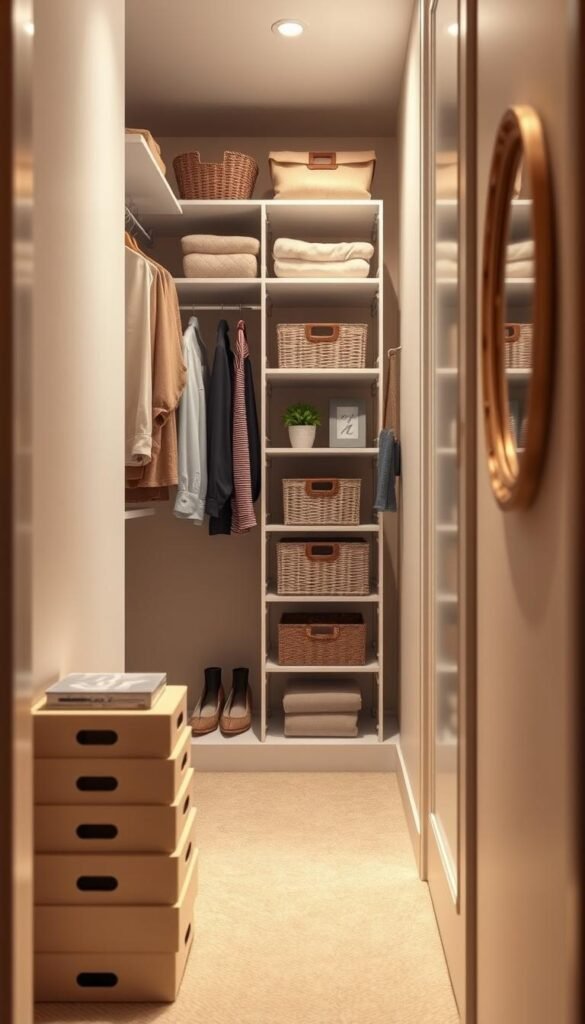
Studs vs. anchors: getting secure support without sagging shelves
Mount into studs when possible. Screws in studs offer the strongest hold for heavy loads like denim stacks or coat rows.
When studs miss your bracket location, use rated drywall anchors sized to the load. Toggle or molly anchors work well for medium loads; heavy items need anchoring to structure or professional backing.
Pre-install checklist
- Empty the closet and clean surfaces so hardware seats flat.
- Sort and count parts; match screws to instructions before starting.
- Assemble large components outside the reach-in to save cramped work time.
- Dry-fit shelves and rails and confirm door clearance and drawer swing.
- Mark level lines and re-check with a spirit level before final fastening.
When to hire help
Call a pro if systems are very heavy, walls are uneven, or the project threatens wiring or plumbing. A technician ensures anchors anchor into safe backing and reduces risk of future damage.
| Issue | DIY option | Pro recommended |
|---|---|---|
| Stud access | Use screws into studs | Yes, if repeats of heavy loads or odd stud layout |
| Drywall only | Use toggle or molly anchors | No, unless loads exceed anchor ratings |
| Renter limits | Freestanding, tension rods, over-the-door | Hire to install removable backing if approved |
| Uneven walls | Shim shelves; dry-fit first | Yes — a pro will ensure level and stable results |
Safety notes: confirm published load limits before loading shelves and racks. Overloading leads to fast failure and possible injury.
„A stable install protects value and keeps daily access smooth.“
Price, Value, and What “Worth It” Looks Like in Closet Organization Today
A focused upgrade often delivers more daily benefit than a full system overhaul. Shoppers should match spend to the most pressing problem in their reach-in before buying a large kit.
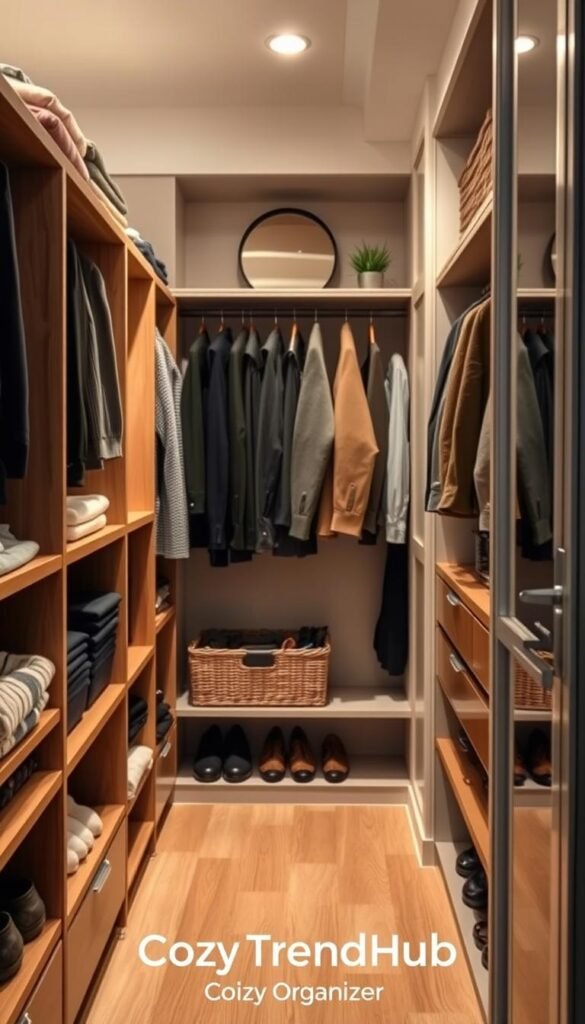
Why demand is rising
The market is expanding as more people live in tighter homes. Analysts expect the closet organizers market to grow from USD 4.03B (2025) toward USD 8.53B by 2035. That growth reflects higher demand for efficient storage and smarter use of vertical space.
Price tiers and what changes
Budget: hangers, shelf dividers, and clear bins. These fix the most common bottlenecks cheaply.
Midrange: narrow towers and tiered racks. Expect better materials and smoother hardware.
Premium: modular systems with drawers, doors, and lighting. Costs range from a few hundred dollars (a 25W x 16D modular double-hang at about $278.99) to multi-thousand-dollar setups with full panels and custom fit.
How to avoid overspending
- Rule: buy the component that resolves your main bottleneck first—rod crowding, collapsing stacks, shoe sprawl, or lost items.
- Measure twice and pick modular pieces that expand later.
- Value = fit + longevity: prioritizing dimensions and durable hardware saves replacement costs.
„Targeted upgrades usually outperform a single expensive kit in a narrow space.“
Conclusion
Begin with a measured problem, then add a targeted solution that fits the numbers. Measure width, depth, and door swing. Identify the main bottleneck and pick the organizer that fixes that issue.
High-impact upgrades are simple: swap to slim hangers to free rod space, add shelf dividers for stable stacks, use clear bins for small items, and choose a narrow shoe solution to clear the floor.
Renters can use over-the-door and removable options to gain meaningful storage without drilling. Put daily pieces at eye level and label top bins for seasonal overflow.
Buying order to follow: hangers → containment (dividers/bins) → shoes → accessories → lighting → modular system if needed. Start by solving one problem this week. Expand only if the space still feels constrained.

2 Comments