
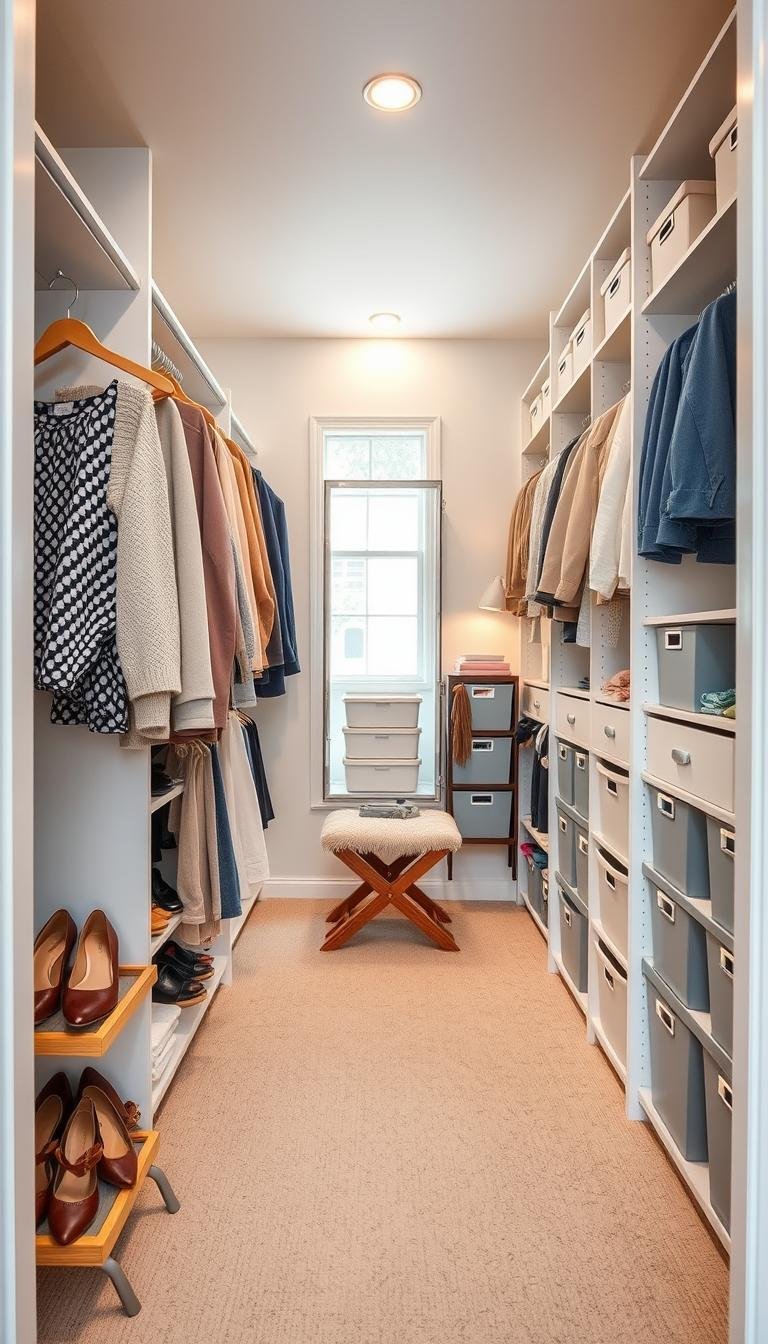
Most closets fail because the layout does not match what people actually own. Clothes pile up or disappear on low shelves. Daily routines get harder when shoes, accessories, and seasonal items have no clear place.
This guide helps readers choose the best closet storage mix by matching systems and add-ons to space limits, lease rules, and daily habits. It explains how hanging space, shelves, drawers, and small-item control work together in real homes.
Expect a clear decision guide, a quick comparison snapshot, and detailed picks with pros, cons, and buying notes. Note the installation reality: some kits install in under an hour, while others take a morning and comfort with a level and drill.
The roundup favors renter-friendly and small-space options, including freestanding units and slim kits that need minimal drilling. Each product entry will list “best for,” key pros and cons, and practical buying tips to help readers act with confidence.
Key Takeaways
- Most problems come from a poor match between items and layout.
- This guide shows how to pair systems and add-ons with real constraints.
- “Storage mix” means hanging, shelving, drawers, and small-item control.
- Installation time varies; plan around tools and leveling needs.
- Renter and small-space options are highlighted for easy upgrades.
How to Choose a Closet Storage Mix That Actually Fits Your Space</h2>
The right plan starts with a quick diagnosis of what frustrates you most. Is the rod overcrowded? Do folded stacks topple? Are small items floating with no home?
Pain-point checklist:
- Overcrowded rod or not enough hanging space
- Insufficient shelves for folded clothes and jeans
- Too many small items with no drawers or bins
Translate each pain into a purchase. If hanging is tight, add another rod or slim hangers. If folded piles fall, add shelves or shelf dividers. If small items clutter, choose drawers or clear bins.
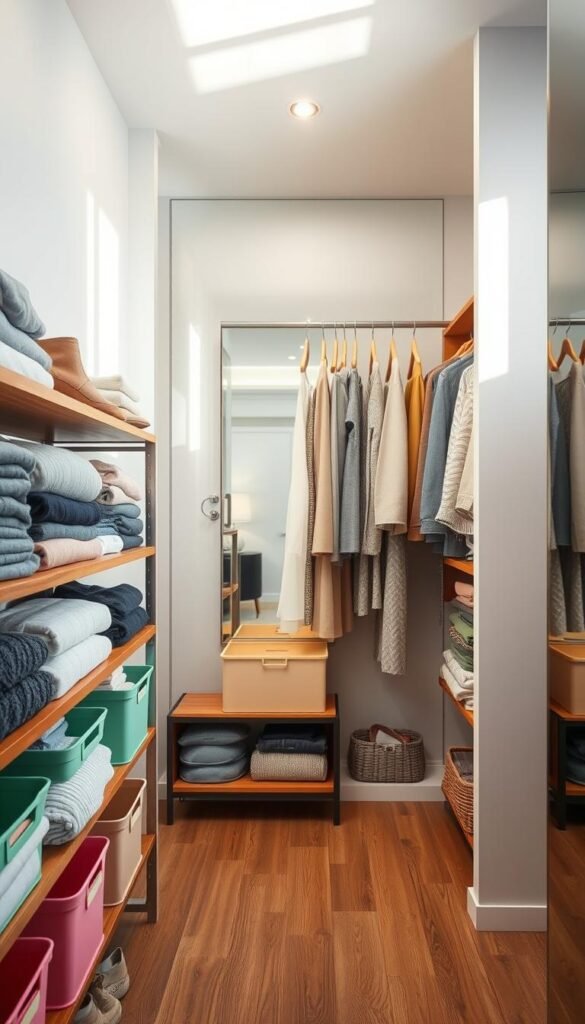
Clothing rules to follow: Hang wrinkle-prone pieces—dresses, blouses, slacks. Fold denim, sweaters, tees, and athleisure for faster access and neater stacks.
Tie accessories to the right solution: hooks and racks for belts and scarves, small bins for hair items, and shallow drawers for daily essentials. For seasonal planning, keep current-season basics at eye level and store off-season coats or boots in labeled boxes up high.
Practical buyer tip: Most households do best with one dependable system plus targeted add-ons—hangers, dividers, bins, and lighting—rather than chasing a single perfect product. For more ideas on organizing a small space and renter-friendly options, see closet organization ideas.
Measure Your Inside Closet Before You Buy Anything</h2>
Start with numbers: accurate inside measurements steer product choice and installation plans.
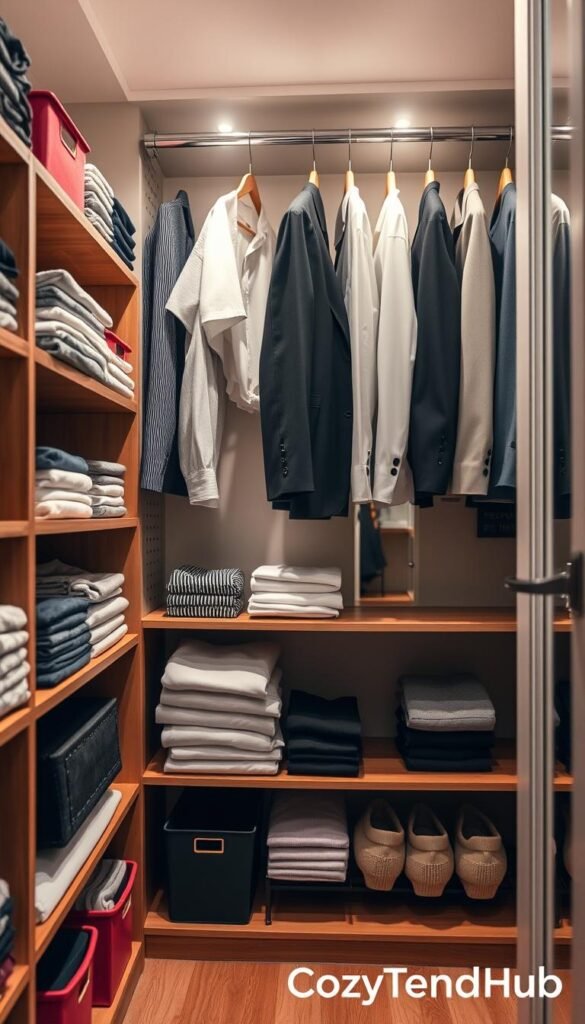
What to capture: record the inside closet width, usable height, and depth. Note baseboards or trim that reduce usable space. Measure from finished floor to beam or ceiling when height affects tall towers.
Reach-in versus walk-in layouts
Reach-in closets need linear solutions that maximize hanging and shelf runs. Walk-ins can support boutique-style folded sections and islands where a room allows more circulation.
Depth, width, and door clearance
Check how far doors swing or slide. Doors affect drawer pull-out space and rod placement. Measure door swing arc and mark where drawers or hangers would collide.
Wall type and stud spacing
For renters, check stud spacing, drywall condition, and lease rules about anchors. Make sure anchors are allowed before drilling. Keep in mind that hitting studs and leveling the top track often determines long-term sturdiness.
- Measure twice and note kit min/max widths.
- Factor side clearance for vertical towers.
- Match measurements to product depth limits and rod spans.
- Fit-risk checklist: re-measure, confirm wall anchors, and plan door clearance.
Comparison Snapshot: Wall-Mounted vs Freestanding Closet Systems</h2>
C. A quick comparison clarifies tradeoffs: capacity, install effort, renter-friendliness, and everyday usability.
Wall-mounted kits
Pros: High capacity for hanging and shelves, a built‑in look, and cleaner lines for bedrooms with long-term plans.
Cons: Requires drilling, precise leveling, and longer install time. Not ideal for strict leases.
Freestanding units
Pros: Moveable, renter-friendly, and fast to set up. Good when reconfiguration or portability matters.
Cons: Lower overall capacity and fewer continuous hanging runs than wall systems.
Wire vs solid shelving
Wire can ventilate but may mark folded sweaters and let small items slip. Solid shelf panels support neat stacks, boxes, and display.
Drawers vs bins
Drawers give closed protection for socks, tees, and small accessories. Bins are a flexible option for seasonal sorting and easy access.
Practical note: Plan shelf spacing for shoe height (sneakers vs boots) and box dimensions before buying to avoid wasted space.
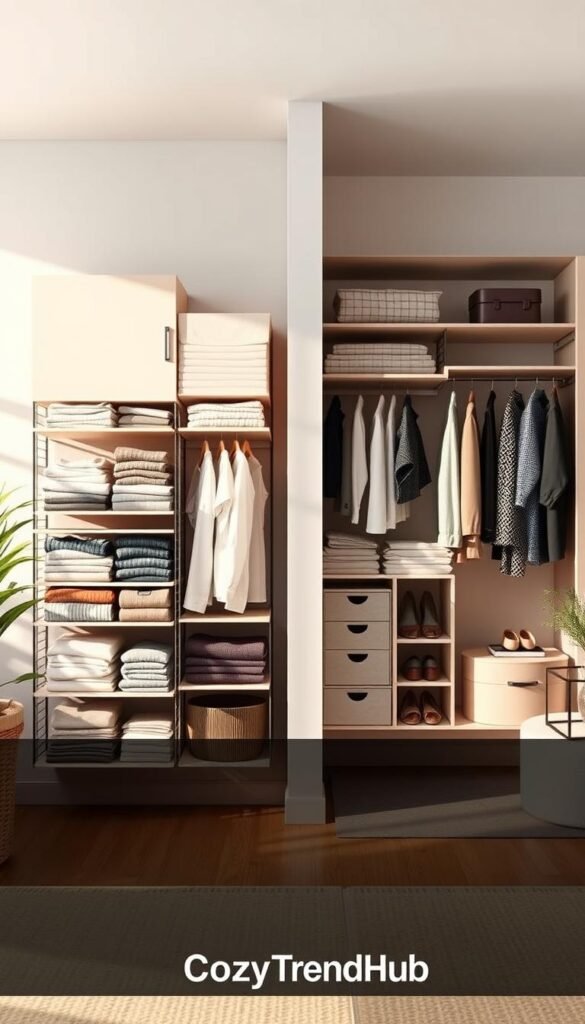
Best Overall Wall-Mounted System: ClosetMaid SuiteSymphony Closet System</h2>
For most bedrooms, a single wall-mounted kit that combines hanging, shelves, and drawers solves day-to-day clutter.
Who this is for: shoppers who want one dependable kit that covers shirts, shoes, and small items without a custom design. It suits renters who can drill and homeowners who prefer a clean installed look.
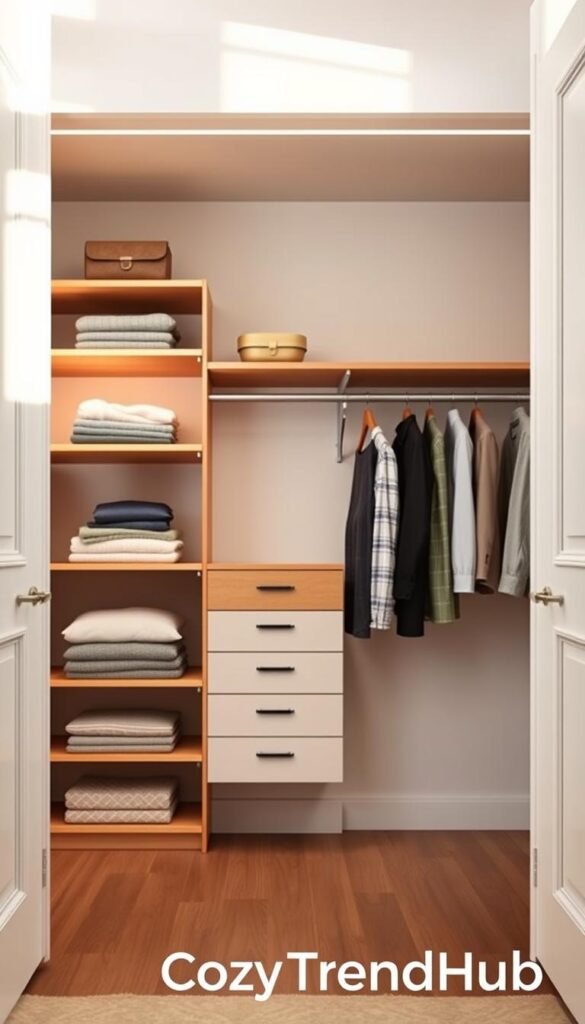
Why choose it
Default pick: the SuiteSymphony ships with labeled parts and panels that speed install. Drawers glide smoothly for socks and T-shirts, and the overall design looks tidy in doorless setups.
Pros and cons
- Pros: polished finish, clear part labeling, smooth drawer action.
- Cons: shelves can feel thin; avoid stacking very heavy things on one shelf.
Buying notes & install reality
Plan a solid 2–4 hour block for leveling and drilling. Decide rod quantity for long versus short hanging. Set shelf heights for shoes and boxes, and choose the number of drawers based on daily use.
For more small-space and renter-friendly ideas, see small-space laundry storage options.
Best Customizable Setup: IKEA Aurdal Closet System</h2>
When walls, angles, or odd widths get in the way, a flexible system that can be planned online makes the project workable.
Who this is for: Shoppers with irregular openings, split walls, or tall ceilings who need a tailored design without a full custom build. The Aurdal frames let users map parts to the actual space before they buy.
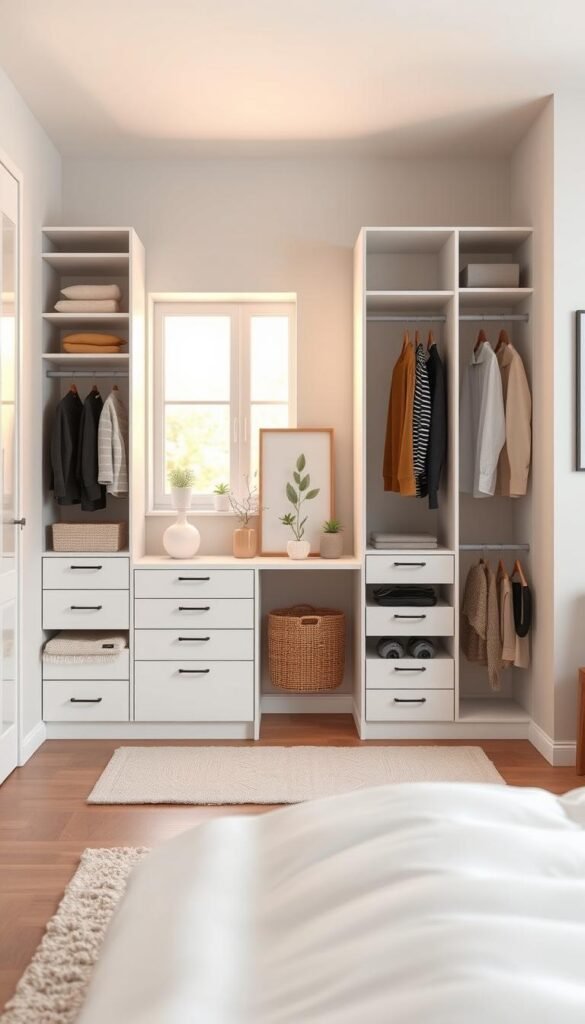
Key advantages: The web-based planner and expandable frames simplify fitting weird widths. Pieces—shelves, rods, and drawers—snap into a repeatable grid so future additions are straightforward.
Real assembly and fit notes: Expect about four hours for a typical install. Leveling the wall bracket is crucial; a missed level causes gaps and misaligned panels. Have a drill, level, and screwdriver on hand.
- Drawers are shallow—good for socks and small items, not thick sweaters.
- Start by specifying frames, then place rods where daily hanging is needed.
- Plan extra shelf space if you fold bulky items rather than rely on drawers.
Buying guidance: Treat the planner as a trial run. Order core frames first, set rod locations, and add drawer pieces for small-item control. This option offers long-term flexibility as wardrobes or seasons change.
Best for Walk-In Closets: ClosetMaid Impressions Wood Closet System</h2>
A roomy interior makes it possible to build a boutique-style layout that speeds daily decisions.
The ClosetMaid Impressions wood system uses wall-mounted frames, adjustable shelves, and smooth-glide drawers to turn a walk-in closet into a tidy, shop-like room. Visible folded stacks reduce time spent searching for jeans, sweaters, and everyday basics.
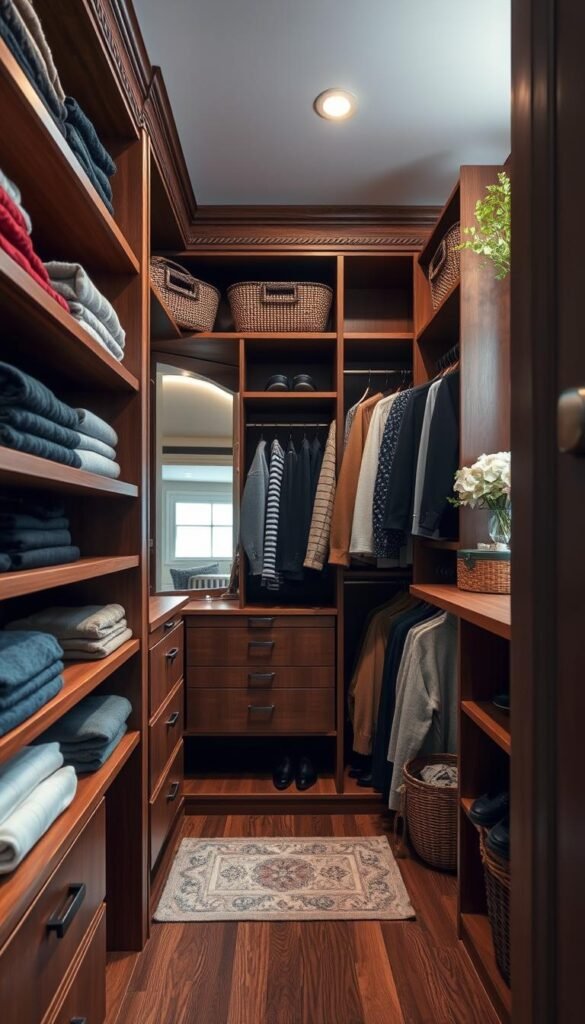
Who it works for
Best for boutique-style folded storage: homeowners who want accessible shelves and drawers that feel deliberate rather than improvised.
Pros and cons
- Pros: trim pieces give a built-in design; drawers glide smoothly for frequent use.
- Cons: instructions can be frustrating—plan a focused install session. Also, check panels on arrival; subtle finish variations show in bright light.
Quick shopping notes
Keep in mind this system rewards patience at install. Choose it when appearance matters and the room can handle a wall-mounted layout. For shoppers who value visible folded storage and reliable drawer action, it’s a strong practical option.
Best Modular Wire Option: Rubbermaid Configurations Closet Kit</h2>
When frequent reconfiguration matters, a snap-in metal system makes changes simple and fast. Rubbermaid Configurations fits households that shift needs over time—kids growing out of sizes, seasonal gear, or changing routines.
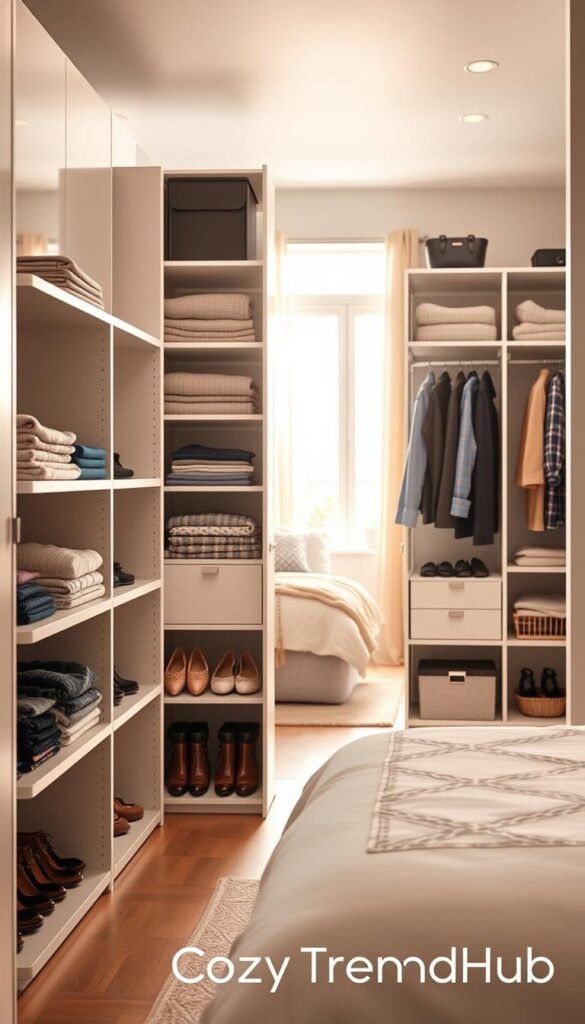
Why it works: The wall-mounted metal racks and rods snap together and adjust without replacing major pieces. That modular flexibility lets users trade a shelf for more hanging space in minutes.
Who it’s for
Ideal for people who re-think shelf height or swap hanging and folded zones often. It suits renters who can drill and homeowners who want a long-term, adaptable solution.
Pros and cons
- Pros: durable metal, clear instructions, snap-in components, quick install with basic tools—about an hour with a drill and level.
- Cons: wire shelves can leave indents on folded clothes and allow small items to slip through; liners or bins may be needed.
Buying notes
Plan shelf spacing around shoe and box heights. Reserve lower shelves for shoe storage and taller boots, mid shelves for stackable boxes, and eye-level zones for daily accessories.
Practical tip: Add clear bins or shelf liners for delicate clothes and small items to keep the system useful for mixed storage needs over seasons.
Best Freestanding Closet System for Renters: Rebrilliant Olivie Closet System</h2>
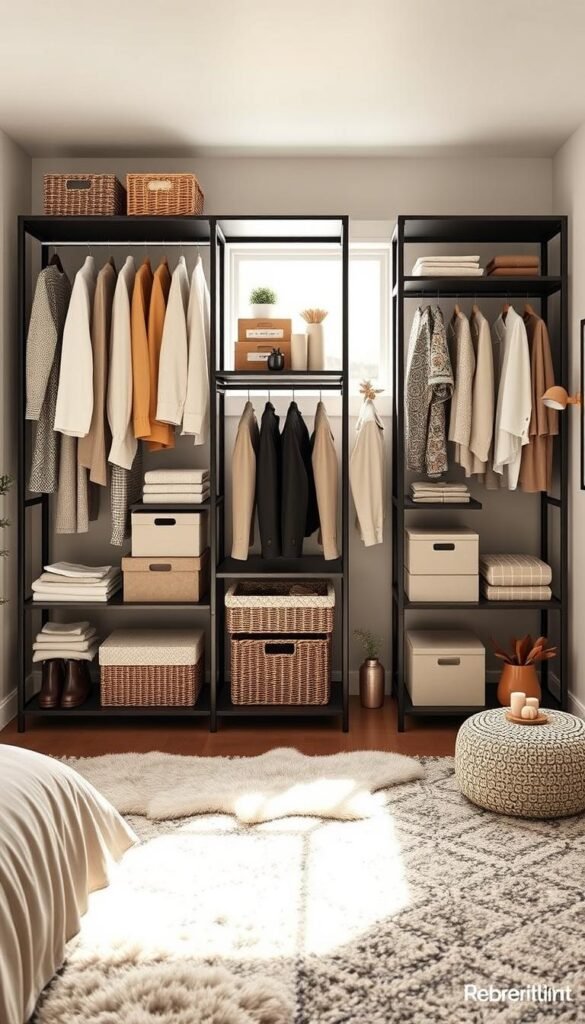
When lease rules block wall installs, a moveable furniture-style system solves daily access and display needs. The Rebrilliant Olivie is a freestanding manufactured-wood unit with solid shelves and a hanging rod that suits apartments and temporary homes.
Who this is for
Ideal for renters who want reliable shelving for handbags, folded clothes, and baskets without drilling. It works well where a visible, tidy wardrobe matters and the tenant needs a nonpermanent option.
Quick pros & cons
- Pros: sturdy closed shelves, display-friendly contemporary look, assembles in under an hour.
- Cons: no drawers—small items need bins or baskets; fixed shelf height limits long-term flexibility.
How to use it well
Practical way: pair slim hangers with labeled baskets to create zones fast. Reserve lower shelves for boots or heavy items and use shallow bins for socks and accessories to avoid visual clutter.
Buying note: This option is a fast, renter-friendly product for people who value solid shelves and a neat display over full modular flexibility or built-in drawers.
Best for Small Closets: Easy Track Closet Kit</h2>
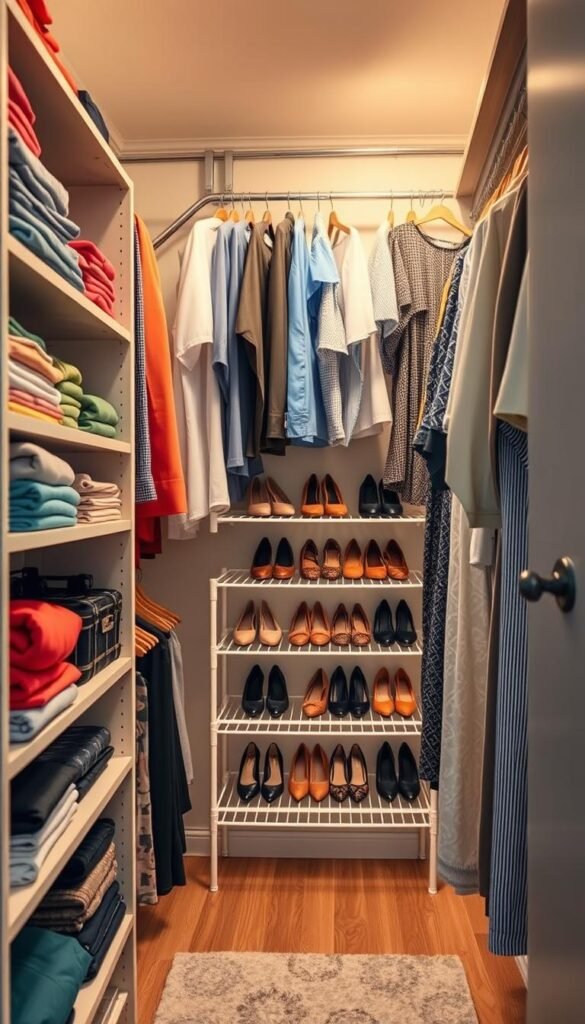
Narrow wardrobes demand a system that adds order without swallowing precious inches. The Easy Track kit is a wall-mounted composite-wood system about 25 inches wide that brings shelves, hanging rods, and soft-close drawers to tight spaces.
Who should choose it
This option suits people with limited width who still want drawers plus shelf and hanging zones. It works when a single rod or wire shelf isn’t enough and a compact, finished look is preferred.
Pros
- Slim footprint: designed for narrow interiors and tight door swings.
- Soft-close drawers: reduce noise and keep small things contained.
- Everyday usability: once installed, drawers and shelves make daily routines faster.
Cons
- Instructions can be vague; expect extra time to interpret steps.
- Particleboard panels may show chips or finish wear on arrival—inspect parts before assembly.
Installation reality & planning notes
Installation may require two people and additional tools beyond the box. Make sure to measure inside width, depth, and door clearance so drawer pulls won’t collide.
Quick buyer tip: confirm drawer clearance and check boards on delivery. For a larger walk-in option, compare a modular u-shaped system here: modular u-shaped walk-in system.
Best for Reach-In Closets: The Container Store Elfa Closet System</h2>
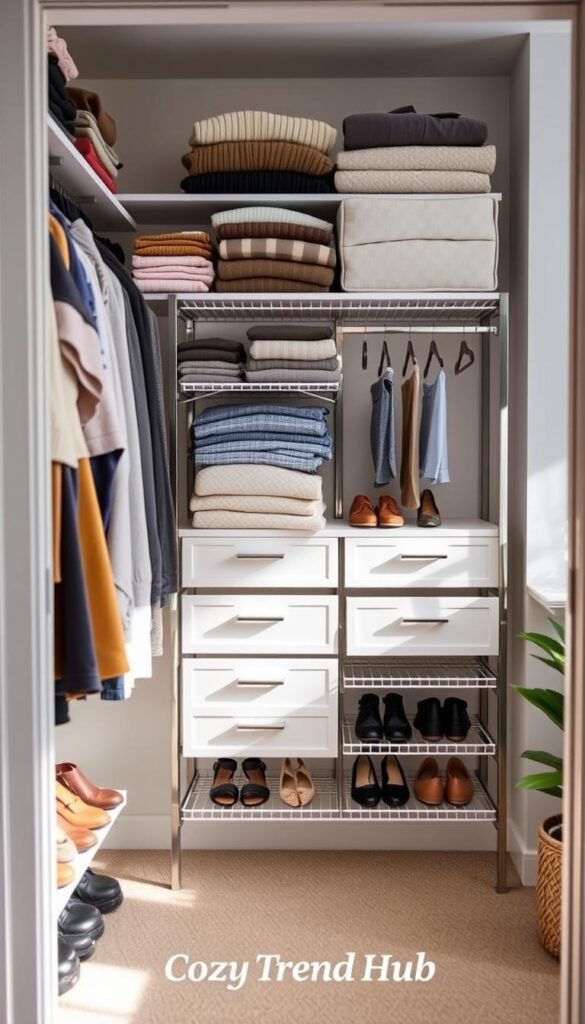
Reach-in wardrobes often need long, strong hanging runs plus modular pieces to stop piles from forming. The Container Store Elfa system targets that exact problem with a steel, wall-mounted framework designed for high hanging capacity and adaptable shelving.
Who it suits
Good fit: large wardrobes where durability and adjustability matter. Shoppers with many shirts, dresses, and seasonal boxes will value the linear hanging runs and expandable pieces.
Practical pros
- Sleek steel build: contemporary look and long-term durability.
- Adjustable shelves: move panels to match shoe storage or folded stacks.
- Mesh drawers: a tighter weave than typical wire drawers, better for small items and breathability.
Cons to keep in mind
Consider the downsides: the system sits in a premium price tier. Some buyers report missing pieces or the need to consult online instructions. Drawers can wobble or slide off rails when overloaded.
Buying notes
Budget for add-ons—extra drawers, shelves, and dedicated shoe storage pieces add cost. Plan the number of hanging rods and drawer modules before checkout to avoid surprise purchases.
Installation tips
Wall-mount tracks require accurate leveling and secure anchors. If drilling feels daunting, hire a pro or recruit a handy friend to ensure a stable, long-lasting install.
Best for Apartments and Temporary Spaces: Brightroom Wire Closet System</h2>
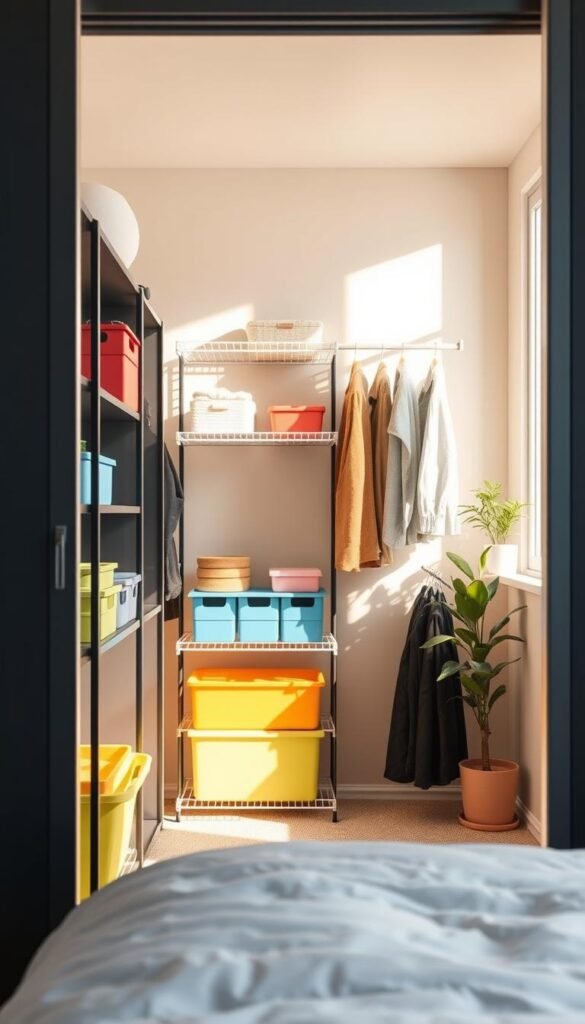
A tool-free shelving unit can transform a cramped rental into usable wardrobe space in under an hour. The Brightroom wire system is freestanding steel with leveling feet and an adjustable rod, so it works where drilling is not allowed.
Who this helps
Good for renters and short-term stays: it provides a no-drill option that still holds shirts, pants, and seasonal coats. Adjustable shelf heights fit folded items and taller boots.
Key advantages
- Tool-free assembly: most installs take under 45 minutes of real time.
- Flexible rod length: adjusts to different widths and clothing types.
- Freestanding and stable: leveling feet handle uneven floors; add light brackets only if permitted.
Cons and fixes
Wire shelf surfaces can leave indents and let small items slip through. Use slim liners or clear bins to protect folded clothes and keep small items contained.
„A freestanding steel rack delivers quick, renter-friendly results with room to reconfigure as needs change.“
| Feature | Why it matters | Quick tip |
|---|---|---|
| Tool-free setup | Fast install for temporary living | Ready in one evening |
| Adjustable rod | Fits varied widths and hanging loads | Set short for shirts, long for dresses |
| Wire shelves | Lightweight and breathable | Add liners for delicate clothes |
Best Space-Saving Hangers to Gain Hanging Space Fast</h2>
Slim hangers are the quickest low-cost fix when a jammed rod makes daily dressing slow. They increase capacity without a bigger system and work well when a full upgrade isn’t possible.
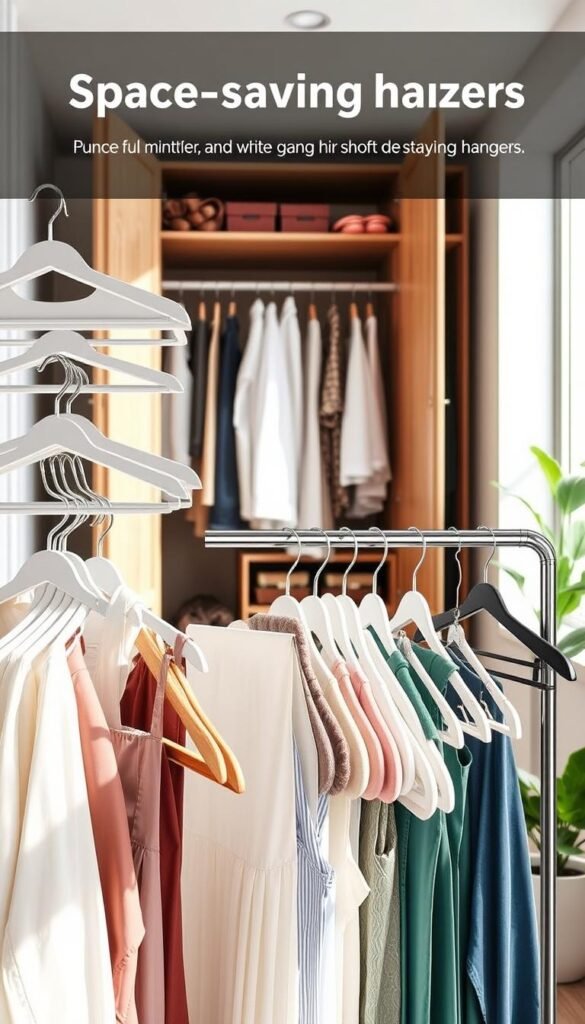
Amazon Basics Slim Velvet Hangers
Who this suits: budget-focused shoppers who need more rod room now.
These velvet hangers are thin, nonslip, and sturdy. They let users hang more clothes per rod and reduce slipping for blouses, dresses, and slacks.
Mawa Space-Saving Hangers
Who this suits: buyers who want a cleaner, premium look without velvet.
Mawa hangers use a steel rod with a PVC coating. They grip well and look tidy, though they cost more than basic velvet options.
Pant hangers and tradeoffs
Thin-bar pant hangers save space but can crease trousers. Test one pair first and avoid leaving delicate fabrics hanging long-term.
- Quick organizing tip: unify hanger types and face them the same way to scan the wardrobe faster.
- Slim hangers often free room that can be repurposed for shelves or bins—helpful when planning a balanced small-closet organizers.
Best Shelf and Drawer Add-Ons for Folded Clothes, Sweaters, and Small Items</h2>
A few targeted accessories will turn unstable stacks and scattered small items into an orderly system. These finishing pieces help folded piles stay visible and make daily routines faster.

Lynk Tall Shelf Dividers
Why they work: Heavy-gauge steel dividers slip onto a shelf without drilling and hold sweaters, linens, and bags upright. They fit boards up to 0.75″ thick and are slim enough not to waste shelf depth.
Care note: remove dividers carefully from painted surfaces to avoid chipping.
The Container Store Clearline Open Bin
Quick advantage: Clearline bins stack, keep categories visible, and stop toppling piles. Lids sell separately and the clear sides make it easy to scan tees, gym gear, or scarves.
For shoppers assembling a long-term system, the budget organization products guide shows similar add-ons that stretch a setup further.
When drawers win versus shelves
Use drawers for socks, tees, accessories, and catch-all items that otherwise migrate across shelves. Drawers hide small clutter and make daily grabbing faster.
Shelves suit jeans, handbags, boxes, and seasonal piles that stay folded and need quick access. Add dividers or clear bins to keep stacks stable and visible.
Final tip: view dividers and bins as the finishing touches that turn a system into lasting organization—pair them with a modular unit like a modular u-shaped system to complete the plan.
Lighting and Visibility Upgrades That Save Time Every Day</h2>
A simple light upgrade can cut the time spent searching and make daily choices quicker. Poor lighting makes a closet feel smaller and wastes time, especially in the morning or in dark corners.
Practical upgrade: the MCGOR 10-inch under-cabinet light is a no-wiring solution that fits small spaces. It runs on batteries, mounts with adhesive or magnets, and charges via USB‑C.
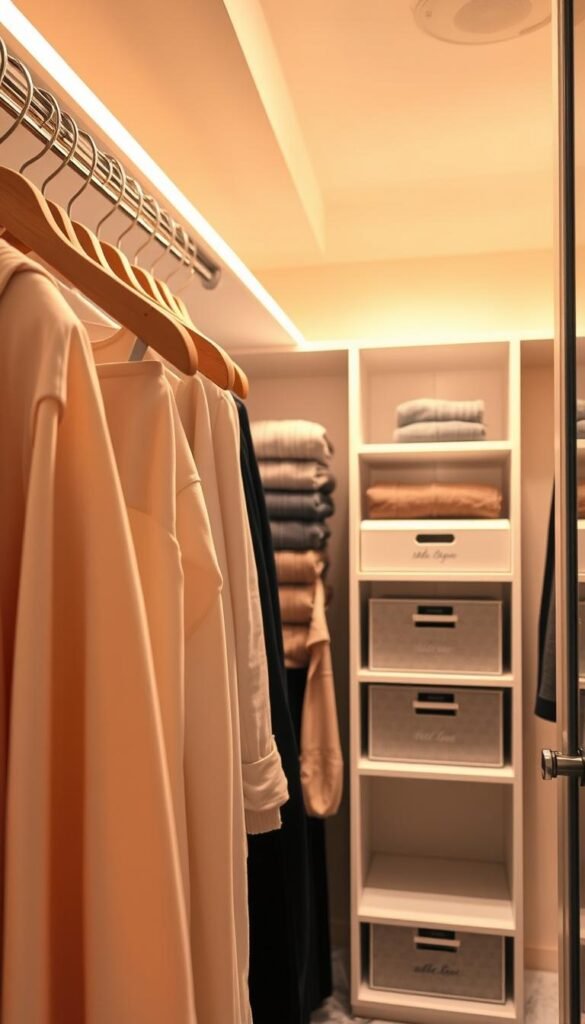
Why MCGOR works for quick wins
Motion activation: an auto mode senses movement (about a 1–2 second lag) and turns off after roughly 30 seconds. That behavior is handy for brief lookups, but expect shorter run-time as the battery weakens.
Adjustable brightness: four levels let users pick a setting that washes a shelf or a rod without glare.
Placement tips to reduce shadows
- Mount lights under each shelf run to wash the folded stacks evenly.
- Place one light just above the rod so hanging clothes are clear at eye level.
- Add a unit at the back corner to reduce deep-shadow zones and speed outfit decisions.
„Good task lighting turns an opaque space into a visible, usable zone that saves time every day.“
Design benefit: better visibility makes it easier to return items and keep things tidy. Pair lights with clear bins or dividers so the improved sightlines actually translate to faster choices. For more organization tips, see closet organization ideas.
Renter-Friendly Closet Organization That Won’t Damage Walls</h2>
Renters often need practical solutions that protect walls while still making wardrobes usable. The goal is reversible, low-impact upgrades that speed daily routines without calling for repairs at move-out.
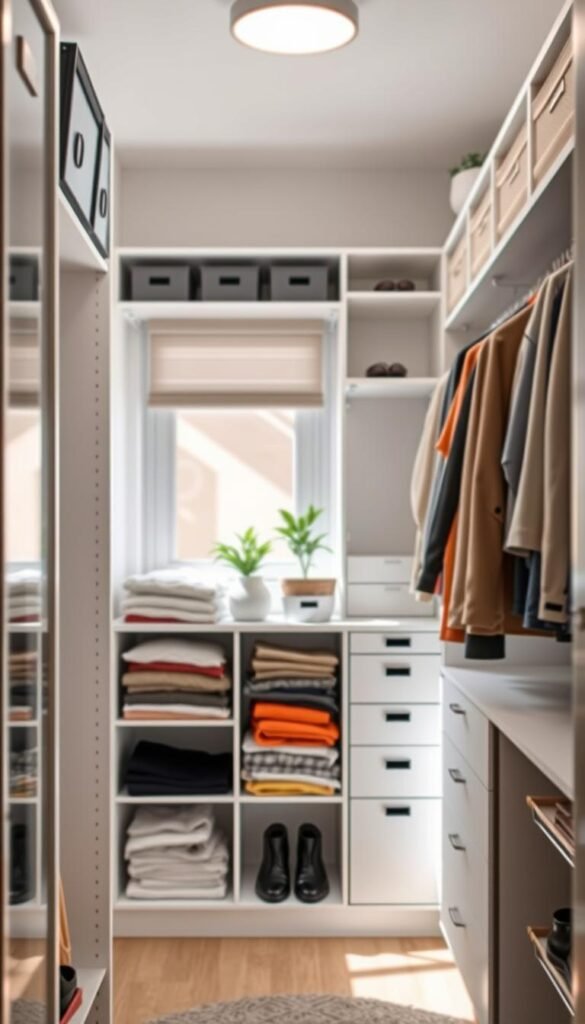
Freestanding first: when a non-drill approach wins
Freestanding units are the safest option for strict leases or unknown drywall. They move room-to-room and usually require no anchors. For an apartment that changes, this is the most flexible way to add zones for hanging, folded items, and boxes.
If you must anchor: minimize holes and keep hardware
When safety requires anchoring, aim for a minimal-hole approach. Anchor into studs when possible. Use the smallest hardware that still meets load needs and keep all brackets, screws, and anchors in a sealed bag for move-out repair.
Wire shelving workarounds
Wire shelves can mark delicate fabrics and let small items fall. Add thin shelf liners and clear bins to protect clothing and corral accessories. Label bins and create zones so things stay tidy during busy weeks.
For patrol-ready cleaning and quick upkeep tips, see cleaning tools for messy people. These routines keep closet organization practical and reversible.
Buying Considerations to Get the Best Closet Storage Mix for Your Budget</h2>
A purchase plan should begin with the single question: what do you reach for most each day? Start by listing dominant items—long dresses, bulky coats, everyday tees, and shoes. That list shapes priorities and prevents wasted spending.
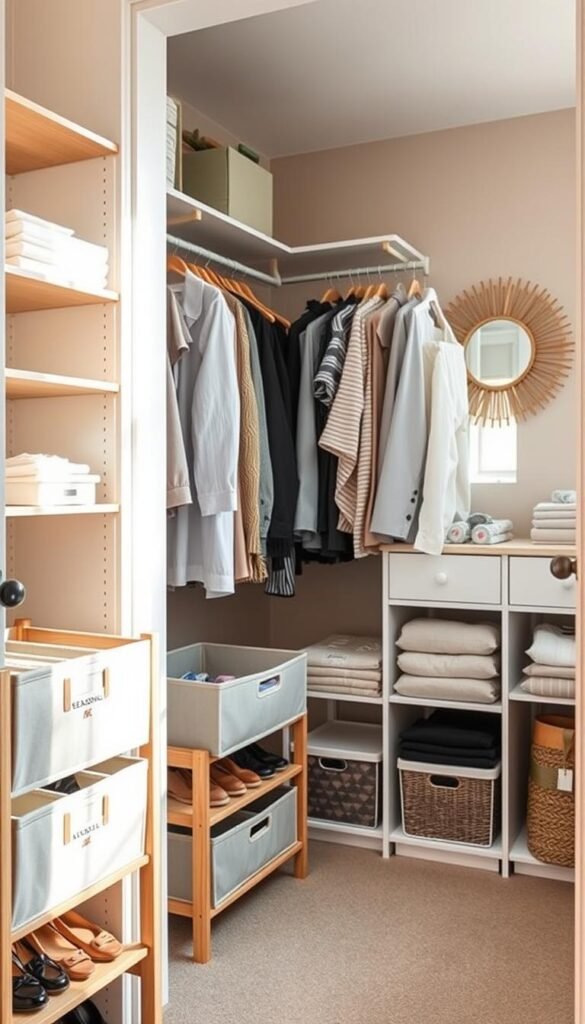
Decide what you’ll store
Long dresses need uninterrupted hanging. Bulky coats require a strong rod and taller clearance. Shoes do best on dedicated shoe racks or low shelves. Accessories and small items belong in dividers, bins, or shallow drawers.
Capacity vs flexibility
Wall-mounted and modular systems usually offer higher capacity and the most flexibility. Fixed designs can look cleaner and cost less, but they limit future changes.
Tools, time, and skill level
Some installs finish in under an hour; others need four-plus hours and a drill. Match the kit to available tools, the installer’s skill, and the time you can commit.
Quality checks on arrival
Open boxes before you start. Count pieces, confirm brackets, and inspect boards for chips or mismatched finish. Fix issues now to avoid a mid-install delay.
Build your “mix”
Choose one primary system, then add high-impact pieces: slim hangers, shelf dividers, clear bins, targeted racks for shoes, and a small light. This keeps the budget focused and results reliable.
„Measure the inside closet width, depth, and height first—accurate numbers prevent fit problems and wasted returns.“
Buyer guide (quick): on a tight budget, pick a freestanding unit plus slim hangers and bins. For longer-term value, invest in a modular wall system and add lighting and dividers. Renters can find practical ideas at home storage ideas for renters. This comparison-ready approach helps readers choose by budget, tools, and daily needs without rereading the full guide.
Conclusion</h2>
Solve the daily friction in minutes by matching systems to routines, not trends.
Measure the inside dimensions, decide on wall-mounted versus freestanding based on lease and load, then add one or two targeted upgrades to fix your biggest pain. Lighting and small-item bins often deliver the largest daily gains.
Quick rules of thumb: renters should favor freestanding units; tight spaces benefit from slim systems and hangers; high-volume wardrobes do better with modular wall solutions. Keep visibility and ease of use front of mind—those traits keep any system useful over seasons and moves.
Pick one product from the roundup, add a simple upgrade, and test the workflow. For additional ideas, see closet-organizing ideas. Better organization saves time and keeps the space working year after year.