
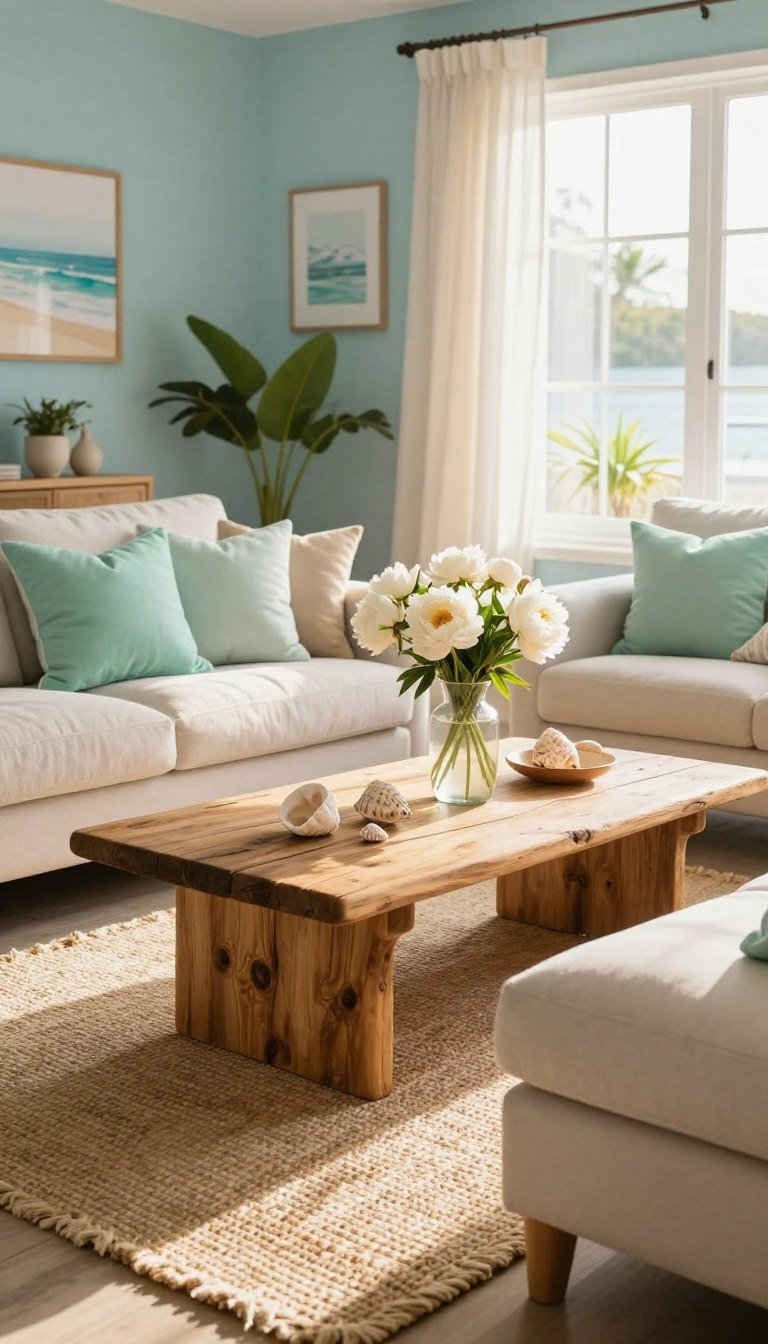
Problem: Many renters and small-home owners want a relaxed coastal refresh without repainting or permanent changes.
The guide offers renter-safe updates that fit tight spaces and storage limits. It focuses on a neutral base layered with blues and natural textures like woven lighting, baskets, and rugs. Selective natural accents such as shells, driftwood, and agate add interest without clutter.
This listicle covers key categories: color, textiles, lighting, wall art, natural accents, and tabletop styling. Each pick shows who it is ideal for, what problem it solves, what to measure before buying, and quick pros and cons.
Coastal chic is presented as elevated and relaxed rather than nautical. That helps readers avoid literal themes that can feel kitschy.
Small-space tips prioritize dual-purpose pieces like storage baskets and trays, plus swap-in textiles for seasonal impact. The guide also includes U.S. shopping notes (local markets, HomeGoods, flea finds, and Amazon) and a splurge-versus-seasonal decision filter.
Key Takeaways
- Focus on a neutral base with layered blues and natural texture for a calm look.
- Choose renter-friendly swaps: pillows, linens, art, and small accents.
- Each recommendation lists who it suits, measurements to check, and quick pros/cons.
- Prioritize dual-purpose pieces for tight spaces and easy storage.
- Compare splurge versus seasonal buys and shop U.S. marketplaces for value.
What makes a relaxed coastal refresh feel intentional
Light layers and a few well-chosen accents create a calming house vibe without heavy work. This approach avoids a literal theme and keeps the space airy and refined.
Coastal chic vs. nautical: a quick comparison
| Coastal chic | Nautical | When to choose |
|---|---|---|
| Light backdrop, refined textures, curated natural accents | High-contrast navy/red, maritime icons, themed signage | Chic for everyday living; nautical for themed rooms or cottages |
| Subtle stripes, woven fibers, glass and linen | Bold stripes, anchors, flags | Pick chic for longevity; pick nautical for seasonal fun |
The calm formula
Light backdrop + layered blues + natural fibers makes purchases feel cohesive. Use textiles, art, and small accents to add beach and ocean cues without repainting.
Storage and seasonal rules
- Touches, not themes: one or two natural accents per surface keeps rooms curated.
- Choose pillow covers, lightweight throws, and small tabletop items that fit one bin.
- Wrap shells in tissue and label bins for easy rotation.
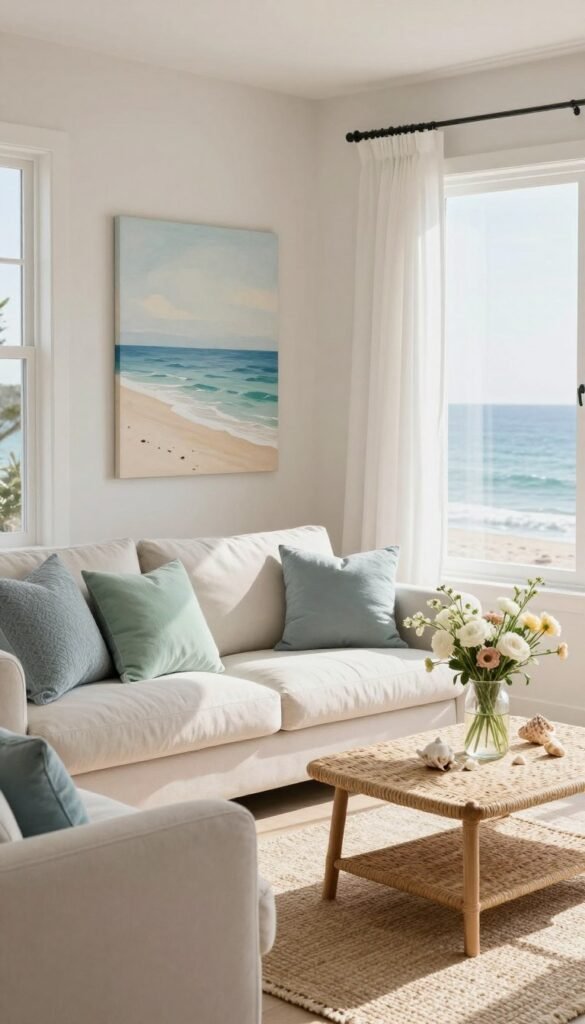
Quick buyer checklist: measure storage, set a seasonal budget, and pick 2–3 repeat materials (woven, linen, glass) to unify the look and guide future purchases.
How to choose coastal pieces for renters and small spaces
Renters and small-space dwellers can refresh a room without permanent changes by choosing removables that look intentional. Focus on pieces that add texture, storage, or light so each buy pulls double duty.
Damage-free upgrades
Removable hooks, peel-and-stick, and swap-in textiles are the quickest way to alter walls and surfaces without tools. Peel-and-stick wallpaper or faux grasscloth adds texture; order samples and check surface type and humidity before installing.
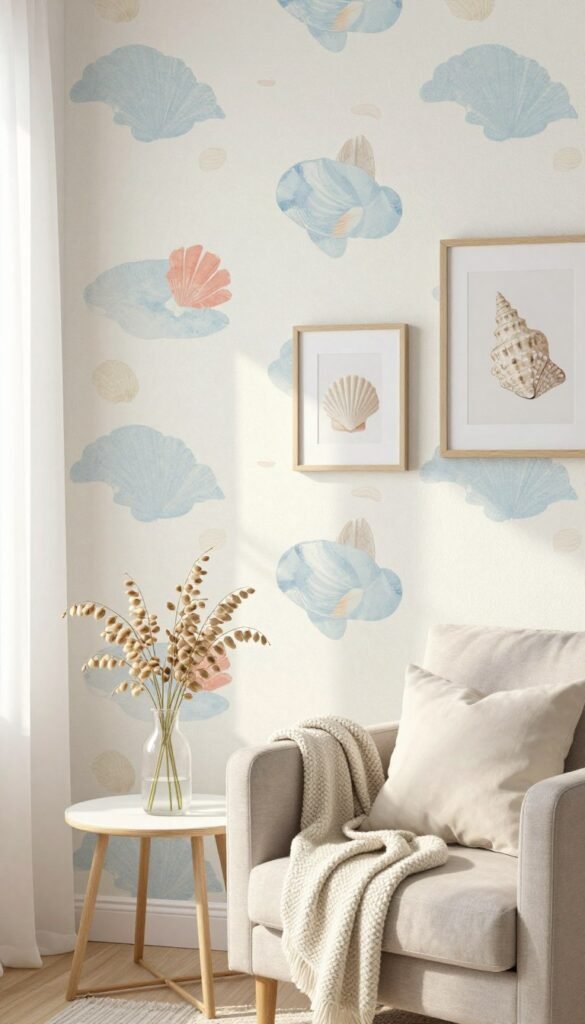
Small-space rule and dual-purpose picks
Every item should add storage, improve light, or replace an existing accessory. Choose lidded woven boxes, trays that corral clutter, baskets for throws, and plug-in lamps for dark corners.
When to go faux
Faux grasscloth and realistic faux hydrangeas or eucalyptus give texture and greenery with no upkeep. Use faux stems in tall vases where real flowers would wilt.
- Buyer checklist for peel-and-stick: surface type, removal expectations, humidity tolerance, order samples.
- Layout tip: prioritize vertical wall art and one statement texture per room to avoid clutter.
| Choice | Pros | Cons |
|---|---|---|
| Peel-and-stick wallpaper | Easy install, renter-safe, fast impact | Variable removal; not for all surfaces |
| Faux florals | Low maintenance, reusable, weatherproof | Can look fake if low quality |
| Plug-in lighting | Adds light, no hardwiring, portable | Requires outlet access; cord management |
best coastal summer decor that works in any room
Choose one blue focal item and two supporting textures to transform a space quickly. This method limits clutter and keeps changes renter-friendly.
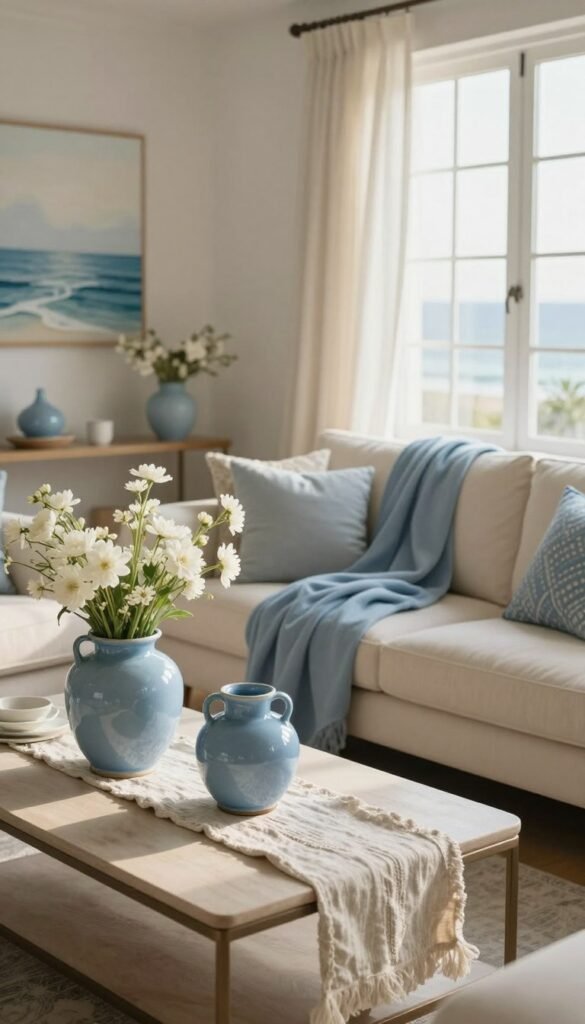
Blue accents that create calm without repainting
Swap in a rug, throw, or set of pillows to fix a stale room. A single blue focal piece refreshes color and ties small items together.
Neutral foundations that make blues and whites look intentional
Start with white or cream linens, light wood, and simple ceramics. These bases make blue white accents feel cohesive and easy to layer.
Natural elements used sparingly for a curated look
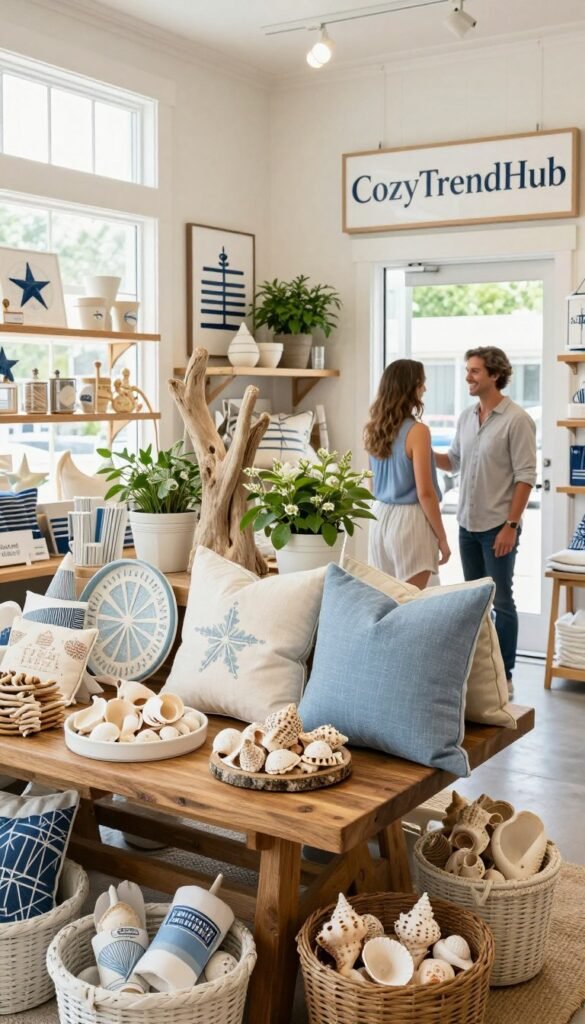
Rule: one sculptural object per surface — a bowl of shells, a piece of driftwood, or a small coral accent. This avoids theme overload and keeps spaces tidy.
| Item | Problem it solves | Where it works |
|---|---|---|
| Blue rug or runner | Makes dark floors feel brighter | Living, entry, hallway |
| Woven throw or basket | Adds texture and storage | Bedroom, living, dining |
| Statement bowl of shells | Gives natural interest without clutter | Console, coffee table, shelf |
Quick notes: renters pick portable accents; small spaces use fewer, larger pieces; choose colorfast textiles and durable materials for seasonal rotation.
Blue and white color palette essentials for a coastal look
Match blue tones to your room’s natural and artificial light to avoid costly returns and unhappy colors.
Soft blues read warmer under warm bulbs and in shaded rooms. Choose pale ocean shades for north-facing spaces and dim apartments.
Navy works well as an accent in bright, sunlit rooms. Use it sparingly so it adds depth without closing the space.
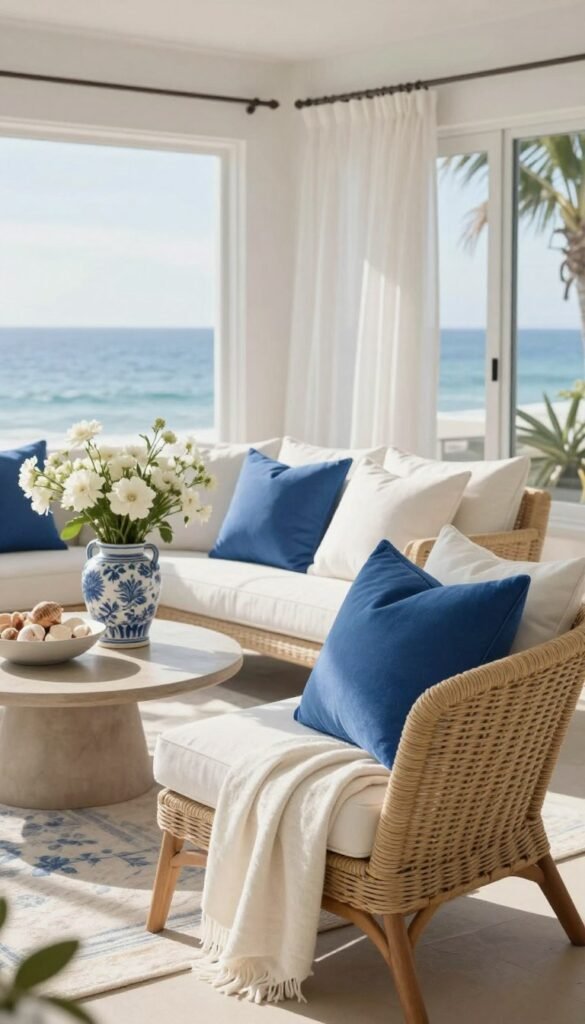
Where to use blue-and-white patterns for the most impact
Low-cost swaps give big results: pillow covers, a small rug, curtains, or one framed print. These items test colors without a long-term commitment.
Quick buying guide and pairings
- Lighting check: warm bulbs lean toward softer blues; cool bulbs can handle saturated navy.
- Small rooms: pick one hero pattern and keep the rest solids to avoid visual noise.
- Pairings that work: blues with greens for calm, coral for a preppy pop, and sand tones to ground the palette.
- Look for colorfast, washable fabrics and removable covers to keep replacements easy.
| Choice | When to pick | Buying notes |
|---|---|---|
| Soft blue textiles | Dim rooms, warm bulbs | Choose colorfast, sample swatches |
| Navy accents | Bright rooms, high-contrast needs | Use in small doses; match undertones |
| Blue-and-white pattern | Pillows, rugs, curtains | One hero pattern; repeat undertone in solids |
Palette formula: 70% neutral, 20% blue white, 10% accent color. This keeps purchases focused and reduces costly mismatches.
Rattan, wicker, bamboo, and woven textures that instantly add coastal decor
A few well-placed woven elements can shift a flat room into a layered, inviting space.
Rattan, wicker, bamboo, and cane add warmth and practical storage without remodeling. They create small vignettes that read intentional on a coffee table or shelf. Use trays to corral remotes, slim baskets for entryway drop zones, and lidded boxes to hide small clutter on open shelving.
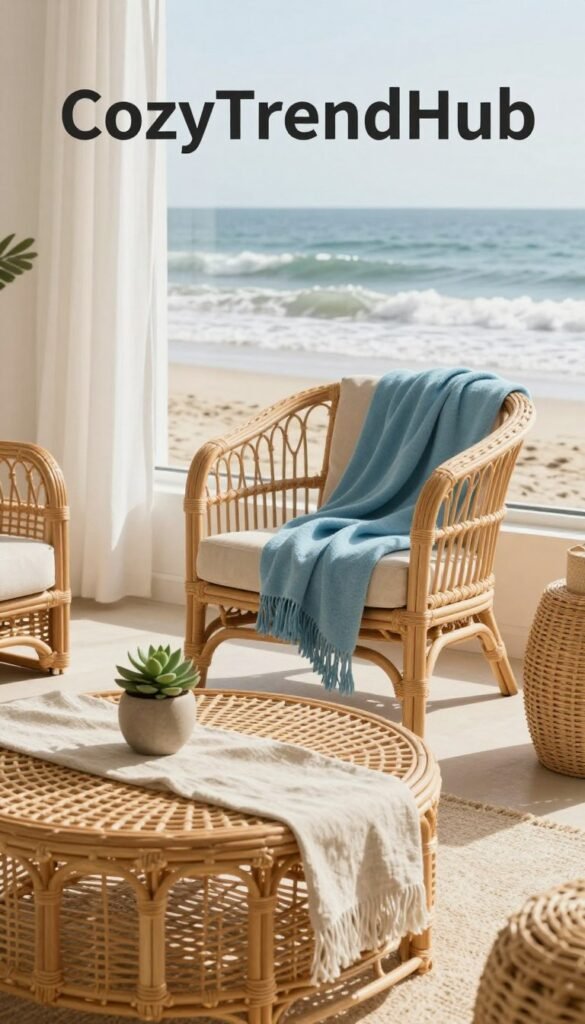
Best woven picks for small spaces: trays, baskets, and decorative boxes
- Rattan trays — ideal on a coffee table for vignettes and serving; lightweight and easy to move.
- Slim baskets — fit narrow hallways and add stash space for throws or shoes.
- Decorative boxes — hide chargers, keys, and cords on open shelving in rentals.
Jute and sisal textures: when they’re practical and when to skip
Jute and sisal offer organic texture and pair well with wood and linen. They work best in low-moisture, low-pet-shedding homes. Skip them in spill-prone kitchens or busy pet households; they can trap dirt and shed.
| Material | Pros | Cons |
|---|---|---|
| Rattan | Lightweight, durable, classic look | Sensitive to moisture; needs gentle cleaning |
| Bamboo | Sturdy, eco-friendly, clean lines | Can split if thin weave; check rigidity |
| Seagrass / Jute | Textured warmth, affordable | Sheds, hard to wash, not for wet areas |
Quick buying guide: check weave tightness, structural rigidity, and handles if the piece moves often. Repeat a single woven texture in two to three places for a curated home design that feels cohesive.
Rugs and runners for a beachy feel (even in rentals)
A well-chosen rug can redefine traffic paths and add a subtle beach mood without painting floors. Rugs are the fastest way to create zones in a small room and to introduce a blue white color accent that ties furniture to wood floors.
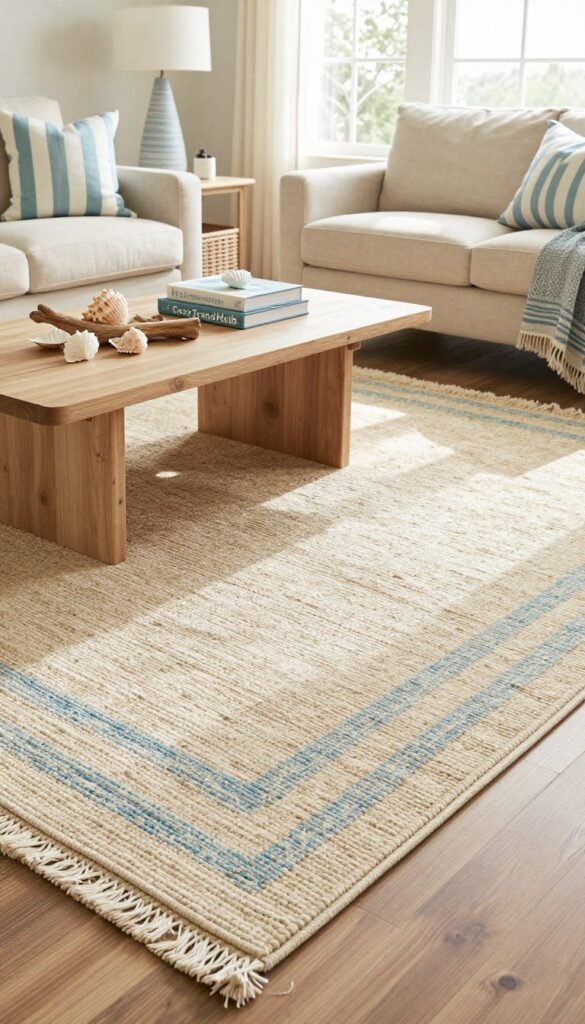
Why stripes work and where to use them
Striped rugs read preppy and beach-adjacent without feeling themed. They add visual length in hallways and crisp pattern in kitchens and entries.
Buying considerations shoppers can use now
- Pile height: choose low pile for doors and narrow runners so doors clear easily.
- Washability: washable flatweaves suit homes with kids or pets — they launder faster and resist stains.
- Slip resistance: always pair with a rug pad for safety in rentals and to protect wood floors.
- Size tip: leave a 2–4″ border of visible flooring so the rug reads intentional, not wall-to-wall.
Quick comparison: jute/sisal vs washable flatweaves
Jute / sisal — warm texture and natural look underfoot. They shed and dislike moisture. Better in dry rooms without heavy spills.
Washable flatweaves — easy cleaning, low maintenance, and suitable for high-traffic kitchens and entryways. They lack the textured feel of natural fiber but win on practicality.
| Material | Price range | Care | Feel underfoot | Best rooms |
|---|---|---|---|---|
| Jute | $$ | Spot clean; dry areas | Textured, firm | Living, bedroom |
| Sisal | $$ | Vacuum; avoid moisture | Coarse, natural | Hall, living |
| Washable flatweave | $–$$ | Machine or hose wash | Smooth, soft | Kitchen, entry, kids’ rooms |
| Indoor/outdoor | $–$$ | Hose off; quick dry | Durable, slightly plastic | Entry, mudroom, patio |
Best for: washable flatweaves for families and pets, low-pile runners for narrow spaces, and indoor/outdoor options for messy entryways. Use stripes to hint at a beach mood and tie color choices back to your room’s palette.
Pillows, throws, and linens for quick seasonal swaps
A small shift in textiles—new pillow covers and a thin throw—can change a room’s mood overnight. These items solve the seasonal refresh problem with minimal storage and no permanent work.
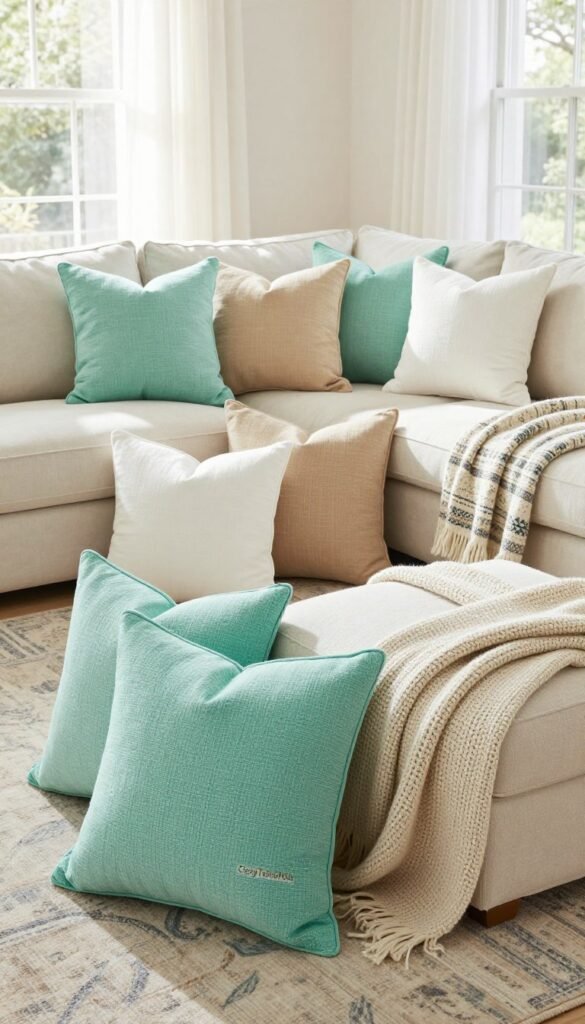
Materials to choose for warm months
Cotton is breathable and budget-friendly. It suits couches and beds in sunny rooms.
Linen blends add relaxed texture and soften with use—ideal for a lived-in style.
Performance fabric resists stains and wipes clean, so it’s practical for pets, kids, and high-traffic living areas.
Patterns that read light and layered
- Stripes for subtle shape and length.
- Batik-style prints for a relaxed, artisanal feel.
- Soft geometrics and scaled florals that coordinate with blues and neutral color palettes.
How many pillows is enough?
For a small sofa: 2–3 pillows (one anchor + one smaller accent). For a twin or full bed: 2–4 total, keeping bulk low to avoid crowding.
Inserts vs. reusing what you own
Reusing inserts saves money and storage. Buying new inserts gives fuller shape; choose an insert 1–2″ smaller than the cover for a plump look.
Cost tradeoff: replace inserts if covers are thin or misshapen; reuse if they still fill covers well.
- Best for: performance covers for homes with pets/kids; linen blends for a relaxed chic look; removable covers for seasonal rotation.
- Mini checklist: zipper quality, wash instructions, fabric weight, and color coordination with existing home furnishings.
Wall decor and art that brings coastal vibes without permanent changes
A single art group can turn a bland wall into a calm, intentional focal point. Use sea studies and muted beach scenes to add mood without kitsch. Keep tones soft and avoid literal signage for an elevated look.
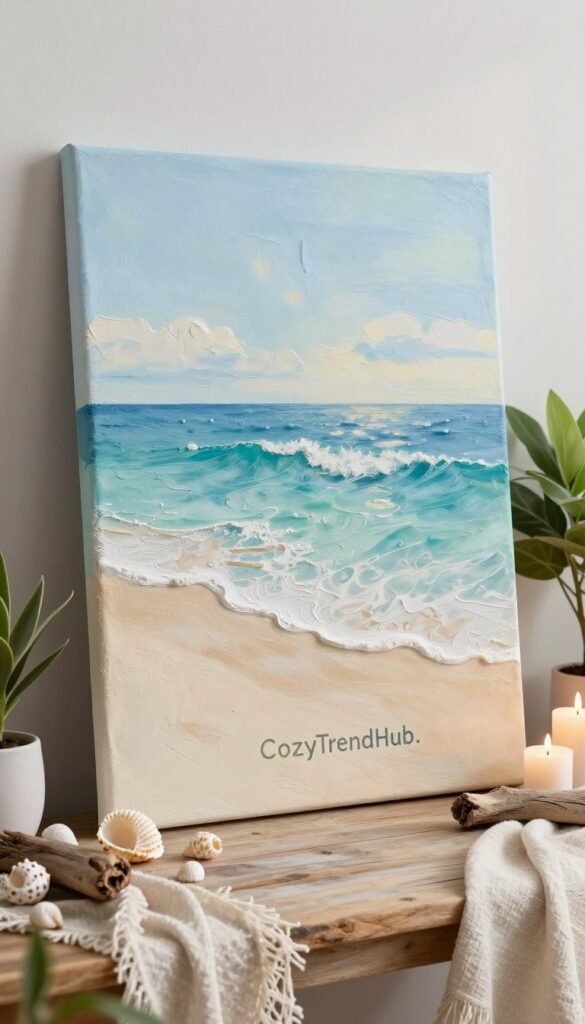
What elevated sea-inspired art looks like
Soft landscapes, coral studies, and natural-history sea prints work best. Pick pieces with muted blues, sand tones, and warm neutrals. These read refined and fit most home styles.
Renter-safe hanging and display tips
- Use removable hooks and lightweight frames to limit holes.
- Lean smaller prints on shelves or a console to avoid new anchors.
- Plan layouts with furniture width: center art to the sofa or console for balance.
Budget swap system and buying notes
Keep a few neutral frames and rotate printable art for seasonal changes. Etsy prints and downloadable files cut cost and save storage.
Buying considerations: choose non-glare glazing for bright rooms, prefer light-wood, white, or brass frames, and size art to roughly two-thirds to full width of the furniture below.
| Solution | Why it helps | Quick tip |
|---|---|---|
| Removable hooks/strips | Renter-safe, minimal holes | Match weight rating to frame |
| Printable art | Affordable swaps, easy storage | Print on heavyweight paper for quality |
| Leaning prints | No new holes, flexible layout | Layer two sizes for depth |
Affiliate block idea: “Best coastal art prints,” “Best frames for renters,” and “Best removable hanging supplies” make easy product groupings for readers and links.
Natural elements like shells, driftwood, coral, and agate (how to style them tastefully)
Curating a few larger organic pieces lets natural touches read intentional instead of cluttered. Use small groups rather than many tiny objects so each piece has visual breathing room.

Display methods that look intentional
Place one bowl of shells on a coffee table or a single branch of driftwood on a console. A clear glass jar with a tight color range creates a calm vignette.
Buying considerations and sourcing
Choose responsibly: avoid real coral from questionable sources. Opt for ethically collected shells or high-quality faux agate when durability matters. Real pieces add texture; faux options save storage headaches.
Storage and common mistakes
- Wrap fragile shells in tissue and label bins for off-season storage.
- Edit down: one statement object plus negative space beats many small souvenirs.
- Store small collections together so surfaces stay uncluttered year-round.
| Do | Don’t |
|---|---|
| One statement shell bowl + empty space | Scatter many tiny beach items on every shelf |
| Use a single driftwood piece as focal art | Stack multiple small trinkets that read busy |
| Store fragile items wrapped and grouped | Leave fragile shells loose in open bins |
Table and console styling essentials for a coastal summer refresh
Simple, layered touches make a console feel edited and ready for hosting without extra furniture.
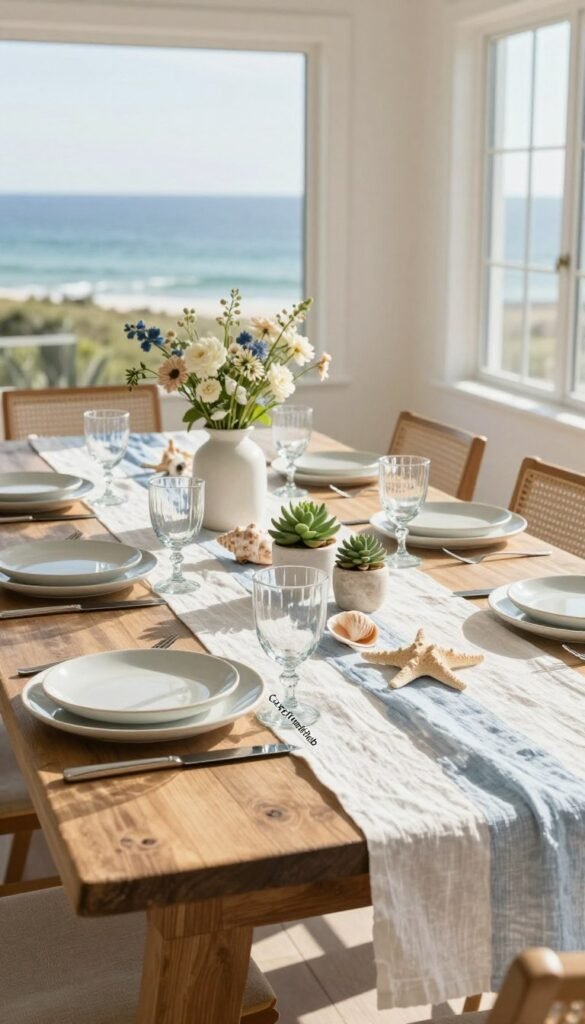
Start by organizing: use a woven tray as an anchor to corral keys, remotes, or napkins. This keeps the surface functional and stops clutter from spreading.
Woven trays, lanterns, and glass accents for instant light
Place one hurricane lantern and a small glass vase to reflect available light. The combination brightens a narrow table and creates an airy look without swapping furniture.
Blue-and-white bowls that also work as serveware
Blue white porcelain pieces serve double duty: display on a console by day, hold snacks for guests by night. Pick one or two sizes to save storage space.
Melamine vs. ceramic — practical pros and cons
Choose melamine for durability and kid-friendly hosting. Choose ceramic when a slightly elevated look matters more than weight.
- Melamine: lightweight, shatterproof, dishwasher-safe; can scratch and read less formal.
- Ceramic: heavier, more refined finish, better color depth; fragile and needs careful handling.
| Choice | Durability | Care | Looks |
|---|---|---|---|
| Woven tray (rattan/sea grass) | Moderate | Spot clean; avoid soaking | Textured, warm wood tones |
| Hurricane lantern (glass) | High | Wipe glass; replace candles safely | Brightens and reflects light |
| Melamine plates/bowls | Very high | Dishwasher-safe; low breakage | Casual, practical for family use |
| Ceramic serve bowls | Moderate | Hand or dishwasher per label; fragile | Elevated, classic porcelain look |
Quick callouts: families with kids lean melamine; renters favor portable trays and multi-use pieces; small-space hosts choose blue-and-white bowls for storage-friendly style. Style surfaces by organizing first, then add two simple accents to keep the look calm and useful.
Lighting and reflective accents that make rooms feel airy
A focused lighting plan and a few reflective accents can make a dim apartment feel airy without major rewiring. Renters get big returns by prioritizing portable fixtures and mirrors instead of extra accessories.
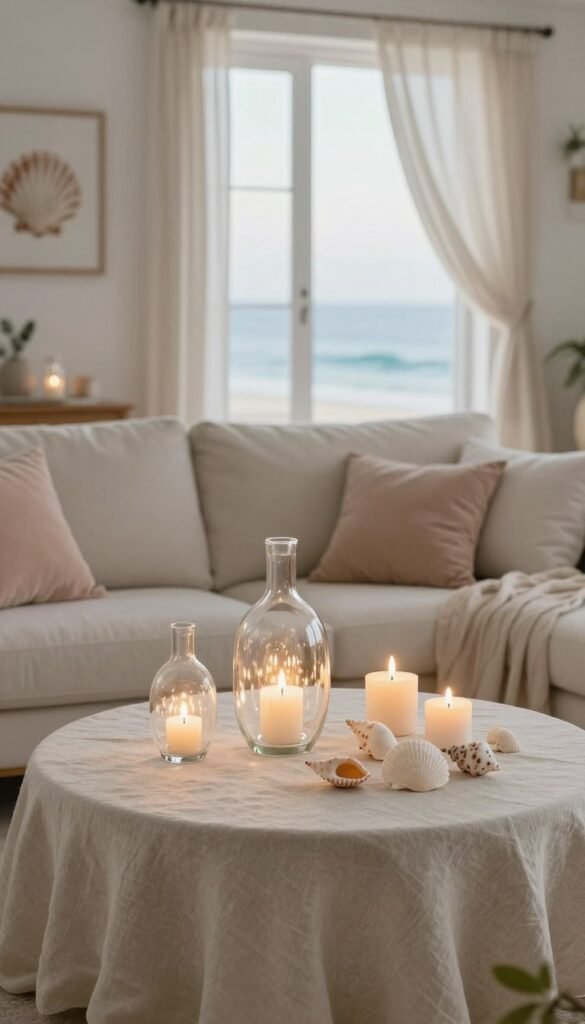
Woven pendants and lamps: where they have the biggest impact
Woven pendants bring texture—rattan or woven wood shades add warmth and a laid-back look. Use them over a small dining table, entryway, or above a living room seating nook where overhead light is harsh.
Table and floor lamps work for layered light. Place a floor lamp beside a sofa to create a reading corner. A low, wide table lamp can anchor a console without crowding the surface.
Mirrors and glass details to bounce light in darker apartments
Mirrors amplify natural and artificial light. Hang a mirror across from a window to reflect daylight, or place a framed mirror near a lamp to double its effect.
Glass accents—clear vases or a polished brass tray—also help the room feel larger by catching and scattering light.
Buying considerations: plug-in options, bulb temperature, and shade opacity
Renters should favor plug-in pendants and sconces to avoid hardwiring. Plan cord routes and use cord covers or simple clips so the installation looks tidy and reversible.
Bulb temperature matters: choose warm-white (2700–3000K) for cozy tones that keep blues and whites from looking gray. For layered lighting, mix ambient (warm-white) with a brighter task bulb in reading lamps.
Woven shades add texture but cut brightness. If a shade reduces light, compensate with higher-lumen bulbs or add a secondary lamp to keep the space bright.
| Fixture | Best rooms | Pros | Install difficulty |
|---|---|---|---|
| Table lamp | Living, bedroom | Portable, low cost | Easy |
| Floor lamp | Living, nook | Tall fill light, directional | Easy–Moderate |
| Plug-in sconce | Hall, bed wall | Wall light without patching | Easy (cord management) |
| Pendant (plug-in) | Dining, entry | Statement, texture (rattan/wood) | Moderate (hanging hardware) |
Quick callout: solve a dark apartment by combining one overhead woven piece with two task lamps and a mirror. This approach changes light levels and improves the perceived size of the space without permanent changes to the home.
Greenery and summer florals that look coastal (fresh or faux)
A simple vase of leafy branches gives a room structure and a light, lived-in feel. Greenery solves the “something’s missing” problem by adding softness and a subtle beach nod without permanent changes.
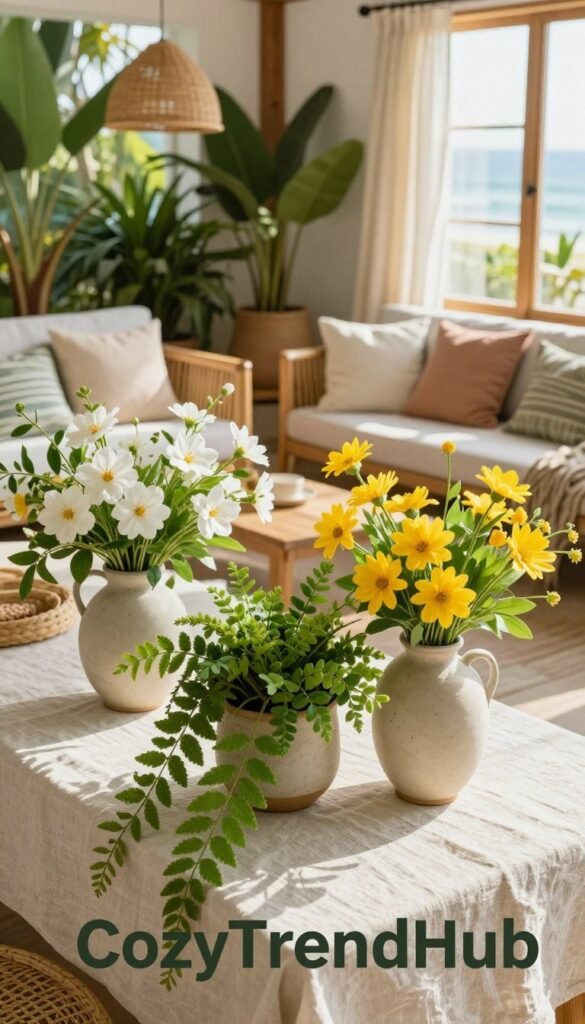
Hydrangeas and eucalyptus: an easy shortcut
Hydrangeas read lush and seasonal. Eucalyptus adds height and a relaxed scent.
Place them on an entry console, kitchen island, or dining table for immediate impact.
Faux stems that don’t look fake
Choose stems with varied tones, textured stems, and wired branches for shaping.
Avoid uniformly bright petals and thin, glossy plastic stems that reveal low quality.
Vase choices and care
White ceramics offer clean simplicity. Blue-and-white pitchers give a classic nod. Recycled glass feels airy and beach-adjacent.
„Mix fresh and faux where it makes sense—fresh for scent and tables, faux for tall, low-maintenance arrangements.“
| Choice | When to pick | Care / Tip |
|---|---|---|
| Fresh hydrangeas | Short events, fragrant rooms | Change water every 2 days; trim stems |
| Faux eucalyptus | Tall arrangements, travel months | Store flat in a long box; dust lightly |
| Recycled glass vase | Airy, bright spaces | Rinse to remove cloudy residue |
Affiliate ideas: “Hydrangea stems (faux),” “Eucalyptus bundles,” and “Coastal vases.”
Where to shop affordable coastal decor in the United States
A targeted buy list and quick negotiation tactics turn flea finds and online listings into confident, budget-friendly purchases.
Facebook Marketplace: quick tactics
- Search terms: use “wicker,” “rattan,” “console table,” “slipcovered chair,” and “vintage tray.”
- Filters: set a tight driving radius and sort by newest to move fast on good posts.
- Must-ask before pickup: exact dimensions, smoke/pet history, any damage, and whether help is needed to load.
- Safety & payment: bring someone, use cash or Venmo, and be ready to walk away if details don’t match the photos.
HomeGoods: what to buy and skip
HomeGoods is ideal for large art, lamps, pillows, trays, dishes, and bedding—inventory turns weekly, so check often.
Skip wobbly furniture and overly themed signs that read literal; favor sturdy textiles and framed art that can anchor a room.
Sales strategy: splurge vs. seasonal
Splurge on high-use, durable pieces: a quality rug, core seating, or a statement light that will live in the home for years.
Save on seasonal items: small accents, pillows, and tabletop pieces that store easily and rotate each post or season.
Flea markets & consignment
Look for unique, collected character—baskets, books, blue-and-white vessels, and one-off art. These pieces add a curated look that feels personal.
Bring measurements and a bit of cash; haggle politely and inspect for sturdiness before buying.
Amazon guardrails
- Filter by materials (linen, cotton, glass, woven styles) and read recent, photo-rich reviews.
- Avoid low-detail listings that lean on “beach” buzzwords but show poor-quality images.
Quick takeaway: use Marketplace and flea finds for singular character pieces, HomeGoods for art and textiles, and Amazon for basics—then apply a simple rule: splurge on long-use investments, keep the rest as a small bit of seasonal refresh.
Conclusion
Finish the refresh with a simple, repeatable system that keeps purchases focused and low-effort.
Recap the core solution: start with a light foundation, layer one blue tone, add woven texture, and limit natural accents so the look reads curated rather than themed.
For tight spaces, choose fewer, higher-impact pieces. Favor dual-purpose storage, trays, and textiles that fold into one bin for off-season storage.
Renters should stick to swap-in linens, removable wall solutions, plug-in lighting, and art that leans or uses removable hooks. These changes are reversible and low-risk.
Next steps: pick a palette, choose one texture category, update one piece of art, then add a single tabletop vignette.
Budget wisely: invest in one durable anchor (lighting or a washable rug) and use small, affordable bits for seasonal updates.
Buy with confidence: measure first, prioritize washability and storage, and choose items that will transition beyond the season to get long-term value for the home and room design.