Many homes feel hotter than the forecast suggests. Sun-facing windows, heat-soaked walls, and dark surfaces can raise the “feels like” temperature in living spaces. This section frames clear, renter-friendly solutions that aim to reduce that real-world heat without major renovations.
Cooling decor here means items that add shade, boost airflow, or reduce absorbed heat while still looking intentional. The guide separates quick, portable picks (shading screens, fans, breezy textiles) from higher-impact installs (retractable awnings, louvered roofs) and finishing touches (water features, plants, low-heat lighting).
Each recommendation notes who it suits, the problem it solves, key specs to compare, and real tradeoffs like wind, storage, cords, and upkeep. Readers get practical advice for apartments, small patios, sun rooms, and backyard setups used on weekends.
Think in layers: shade + air movement + cooler surfaces. Layered choices work together and avoid redundant buys. Most options store or move easily, which helps renters and short-term users keep comfort without permanence.
Key Takeaways
- Homes often feel hotter than the weather report due to sun exposure and retained heat.
- Functional decor can add shade, improve airflow, or lower surface heat while still looking intentional.
- Start with renter-friendly, portable picks, then consider higher-impact upgrades and finishing touches.
- Each item is framed by who it suits, what problem it fixes, specs to compare, and tradeoffs.
- Layer shade, air movement, and cooler surfaces for the best perceived relief.
- Most solutions are seasonal, easy to store, and suitable for small spaces.
What “cooling decor” really means when temperatures spike
When temperatures spike, “cooling decor” means making smart choices that cut solar gain, boost airflow, and lower surface heat without major construction.
Why patios and sun-facing rooms run hotter
Hidden heat comes from radiant surfaces. Concrete, tile, and stone can hit 120°F+ and keep radiating warmth after sunset.
- Direct sun and dark materials absorb energy; metal or dark seating can reach ~110–130°F.
- Poor cross-ventilation traps warm air and raises the felt temperature inside rooms and outdoor areas.
- Glare and stored heat make a space feel hotter than the reported outdoor temperatures.
How to layer shade, air movement, and evaporative options
Effective relief comes from layers. Start with the biggest impact, then add targeted pieces.
- Shade: block solar gain first.
- Air movement: fans and placement that create cross-breezes improve comfort by aiding evaporation.
- Surface choices: light-colored textiles or reflective finishes and, in dry climates, misting or evaporative tools (can lower air ~10–20°F).
Quick renter-friendly checks before you buy
- Measure usable footprint and confirm where a product can be anchored or weighted.
- Verify outlet locations and plan cord routing for fans or lights.
- If considering misting or fountains, check water access, drainage, and slip hazards.
- Confirm storage for off-season gear so items stay usable year to year.
Next sections break down choices aimed at each heat driver—sun, stagnant air, dry heat, heat soak, and night comfort—so readers can compare like items side-by-side.
Best cooling decor for summer that adds shade without permanent changes
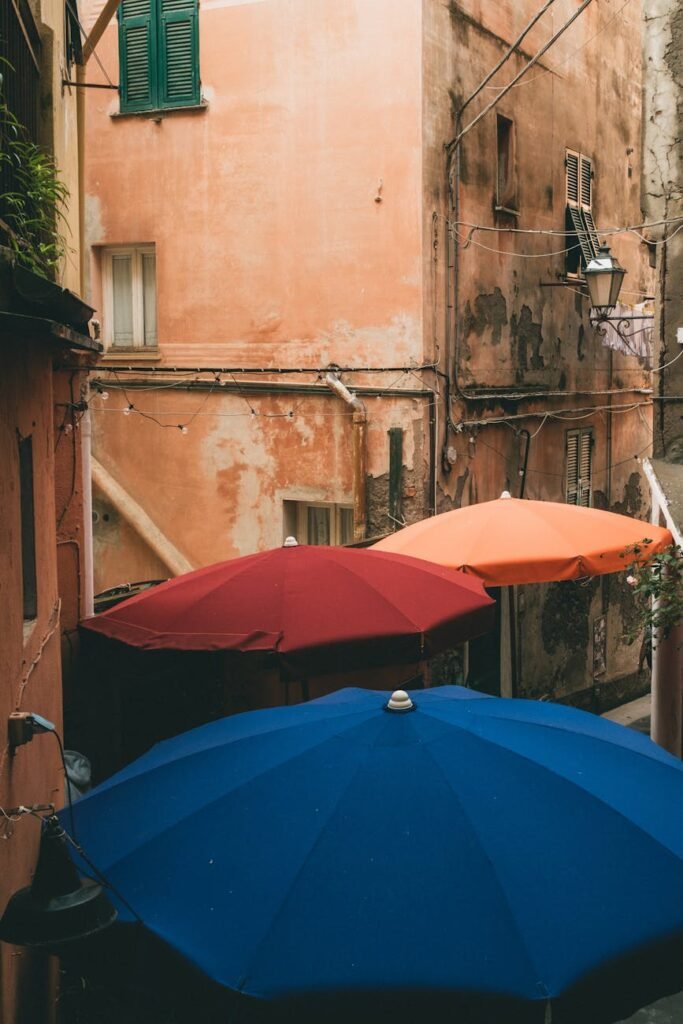
Portable shade can turn a sun-scorched patio into a usable seating area in minutes. Pop-up canopies and tilt umbrellas give quick, renter-friendly relief and define a cool spot for guests.
Pop-up canopies: when to choose them
Use a pop-up canopy to create a shaded „room“ in a small yard or patio during temporary entertaining. They suit renters who can’t fasten permanent brackets and groups that need defined seating areas.
Tilt umbrellas: when they work better
Tilt umbrellas fit tighter footprints and are easy to reposition as the sun moves. They target a table or lounge chair and usually need a weighted base rather than ground anchors.
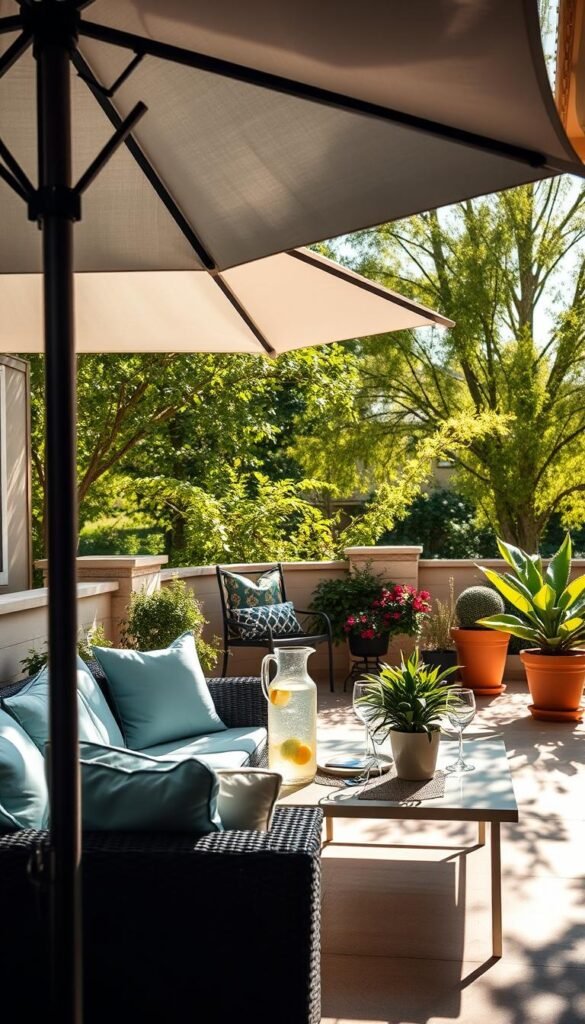
Buying considerations — compare fabric UV rating, vented tops, frame material, footprint, weight base, and packed storage length. Check if replacement covers are available.
Pros & cons
- Pros: fast setup, portability, renter-friendly, keeps guests comfortable longer.
- Cons: wind limits, wear-and-tear, must store during storms or off-season.
Retractable awnings and louvered roofs for all-day sun control
Persistent sunlight heats surfaces and makes outdoor spaces uncomfortable. Retractable awnings and motorized louvered roofs attack that heat by changing how much light and air reach seating and walls.
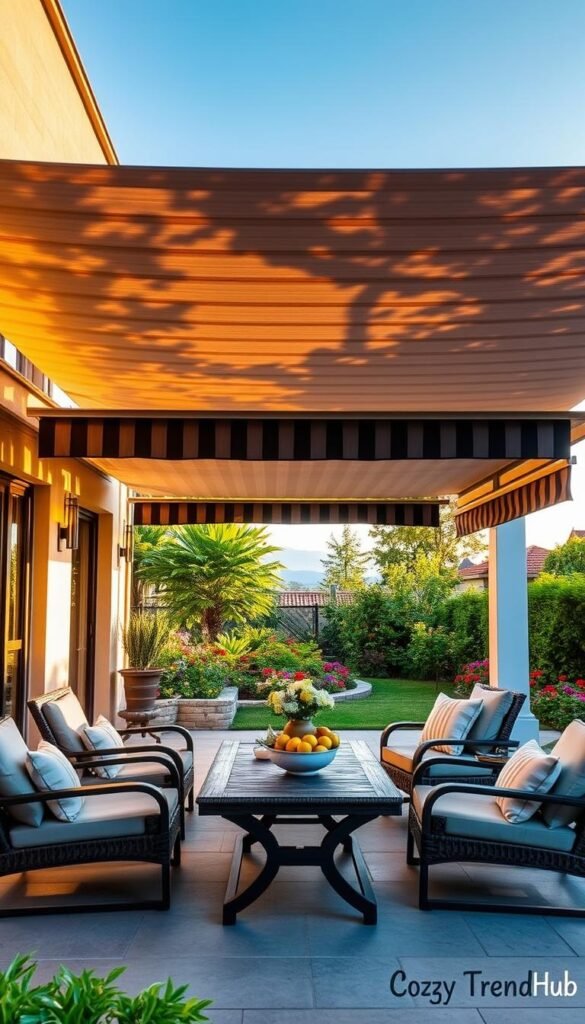
Retractable awnings: adjustable shade and lower surface temperatures
How they help: Pull-out fabric gives variable coverage, follows sun angle, and can block up to 99% of UV rays. Properly installed units can cut surface temperatures beneath them by about 20°F.
Motorized louvered roofs: filtered light, ventilation, and rain protection
Louvered systems let homeowners control airflow and light. Partially open louvers filter sunlight while letting heat escape. Fully closed, they shed rain and protect furnishings.
Smart features and installation notes
- Smart features: wind sensors, remote/app controls, voice options, and add-on shade screens for low-angle sun.
- Installation: secure mounting, possible permits or HOA checks, electrical supply for motors, and pros vs DIY decisions.
| Feature | Retractable Awning | Louvered Roof | Why it matters |
|---|---|---|---|
| Shade control | Variable fabric coverage | Adjustable louvers | Manage sun angle and glare |
| Weather protection | Limited in heavy rain | Closed louvers shed rain | Protects furnishings and extends use |
| Automation | Remote/app; wind sensors | Motorized with sensors | Hands-off adjustments and safety |
| Impact on temps | Can lower surface temp ~20°F | Improves ventilation and filtered light | Reduces heat load and stays usable |
Who this suits: Homeowners who want a set-and-forget solution that works across long hours each day. Compare models by coverage size, UV claims, automation, and screen compatibility before buying.
For lighting ideas that pair well with shaded areas, see outdoor lighting suggestions.
Cooling fans that double as decor for better airflow day and night
A well-placed fan turns still, sticky air into a gentle breeze that makes a shaded spot feel livable at any hour. Air movement speeds evaporation from skin and improves perceived temperature without changing the thermostat.
Outdoor-rated ceiling fans with integrated LED lighting
Covered patios and screened porches: choose an outdoor-rated ceiling fan with integrated LED light to move air and add usable lighting at night. These fixtures cut clutter by combining two functions into one durable unit.
Look for wet- or damp-rated listings, multiple speed settings, and dimmable LEDs so the fixture suits evening use and low-glare needs.
Standing, box, and oscillating fans for renter-friendly airflow
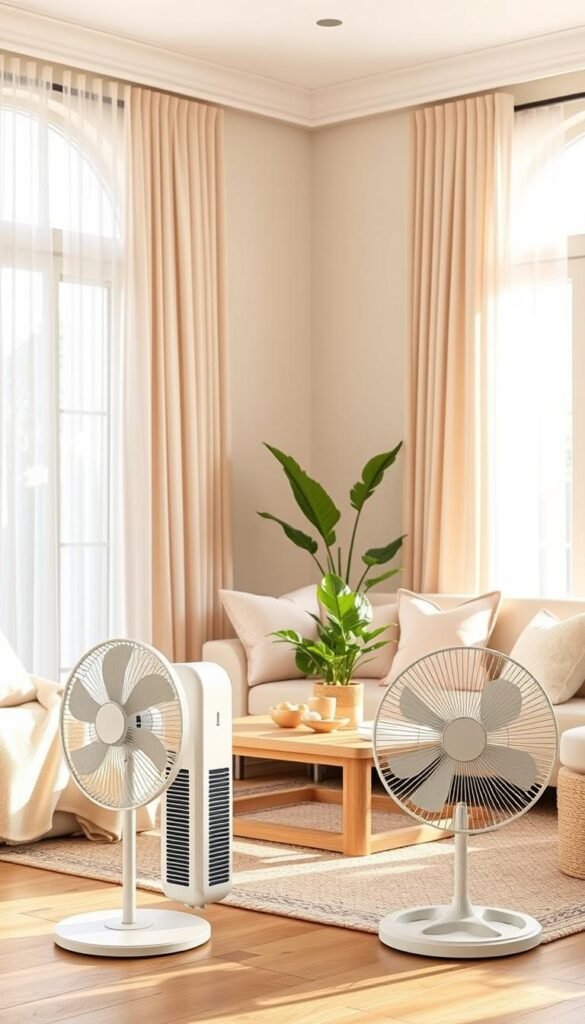
Portable units give instant relief without installation. A tall standing fan or a compact box fan can move air between rooms, onto balconies, or into seating zones.
Renter tip: favor fans with longer cords, anti-tip bases, and multiple speed controls so they work safely in varied areas.
Placement tips to create cross-breezes
- Position two fans to face each other across a seating zone to make a cross-breeze.
- Aim airflow at people, not empty corners, to get the most comfort from lower speeds.
- Route cords along walls and under rugs to avoid trip hazards and protect outlets.
Who this suits and quick pros/cons
Ideal for apartments, screened porches, and small spaces that trap heat. Portable fans fit renters; ceiling fans suit homeowners with covered areas.
- Pros: instant comfort, flexibility, and LED-lit night use.
- Cons: cord management, noise at high speeds, and the need to choose outdoor-rated models for exposed spots.
Quick buy checklist: airflow power, noise level, weather rating, cord length, and stability. These choices make a cool comfortable space without major changes and help a household keep cool during a cool summer evening.
Misting fans and evaporative cooling decor for instant relief in dry heat
In dry climates, introducing evaporative mist can drop felt temperatures enough to keep guests comfortable. This approach helps when shade and fans still leave the air feeling heavy during peak heat hours in a backyard seating zone.
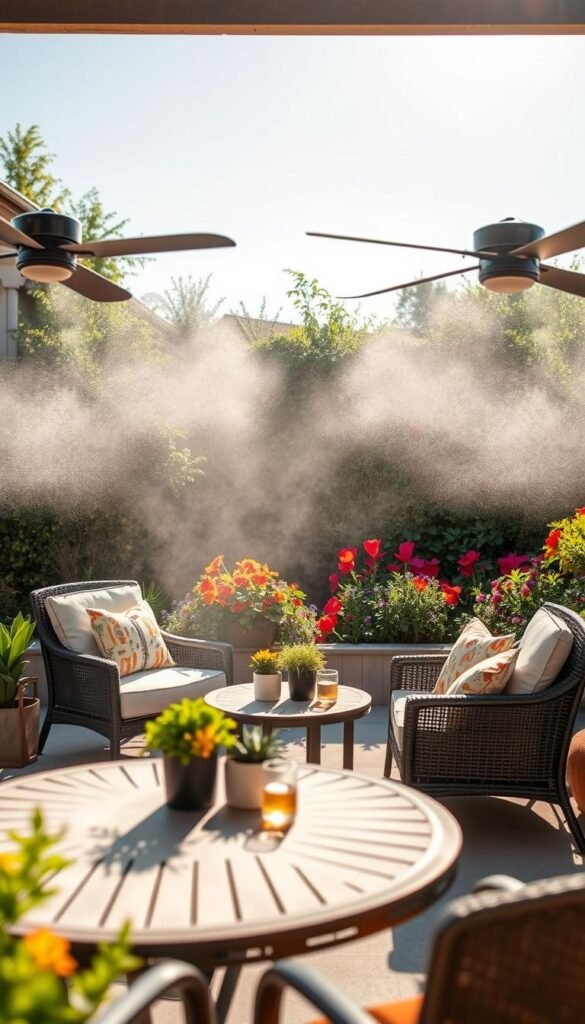
Freestanding misting fans and portable systems
Freestanding misting fans combine a fan with a water tank so they run without a hose. Some models claim 30+ hours on low settings. They work best aimed across seating to boost evaporation, not to soak one person or furniture.
Perimeter nozzles and evaporative pads
Perimeter misting nozzles or evaporative pads cool a defined patio area and pair well with shade structures. When installed around edges, they create a light, even mist that lowers local temperatures by about 10–20°F in dry conditions.
Safety, maintenance, and buyer checks
- Drainage: plan runoff to avoid pooling and slip hazards.
- Electrical safety: protect cords and connectors from water.
- Cleaning: flush lines and clean tanks to prevent mineral buildup and mold.
- Check tank capacity, refill frequency, mist output control, and coverage area before buying.
„Regular flushing and nozzle cleaning extend service life and keep mist fine rather than droplet-heavy.“
| System type | Portability | Run time / coverage | Notes |
|---|---|---|---|
| Freestanding misting fan | High (tank) | 10–30+ hours; spot-focused | Good for renters; refill as needed |
| Perimeter nozzles | Medium (fixed hoses) | Continuous with supply; patio-wide | Best with shade structures |
| Evaporative pad system | Low (installed) | Area cooling; steady output | Works well in dry, low-humidity areas |
Pros: more noticeable relief than airflow alone; suits backyard entertaining and larger groups. Cons: less effective in humid weather, needs upkeep and water management.
For practical setup tips, see how to cool your patio.
Cool-to-the-touch textiles and surfaces that reduce heat soak
Simple textile swaps and lighter finishes can cut the amount of retained heat where people sit and walk. These changes focus on what touches skin and feet, so they improve perceived comfort even when ambient air stays the same.
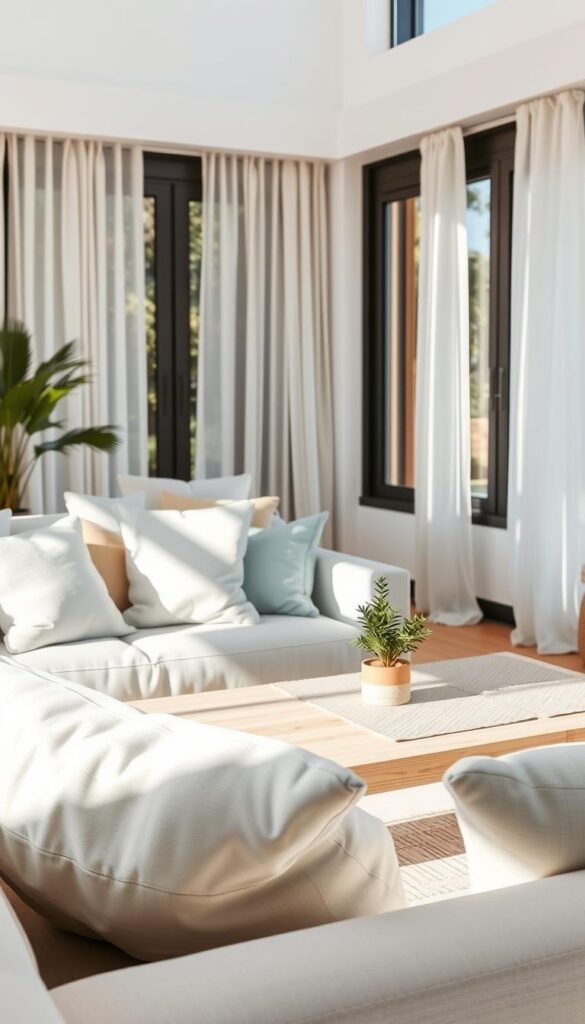
Light-colored outdoor rugs to keep feet cooler and reduce glare
Problem: hot decking and concrete hold heat and make bare feet uncomfortable. A pale, low-pile outdoor rug reflects more sunlight and lowers underfoot heat and glare.
Buying considerations: UV resistance, pile height, washability, and mildew resistance. Choose synthetic weaves that dry quickly and stack for winter storage.
Breathable, light fabrics for cushions, throws, and seating comfort
Swap heavy upholstery for breathable fabric blends. Linen-like weaves and open weaves let air reach skin so seating feels cooler to the touch.
Specs to compare: fabric weave, UV rating, water repellency, and quick-dry labels. Look for removable covers that wash easily and resist mildew.
Reflective paint and lighter finishes to reduce heat absorption on surfaces
Painted railings, small tables, and plant pots soak less heat when finished in lighter tones or reflective coatings. This is renter-friendly when applied to removable pieces or using paints allowed in leases.
„A simple palette change can make hard surfaces feel notably cooler and improve overall seating comfort.“
| Item | Problem solved | Key specs |
|---|---|---|
| Light outdoor rug | Hot feet, glare | UV-resistant yarn, low pile, washable |
| Breathable cushion covers | Heat-soaked seating | Open weave, quick-dry, removable |
| Reflective/light finish | Heated furniture surfaces | Light tone, reflective paint, removable pieces |
Who benefits: Renters and budget-focused homeowners who want measurable comfort gains with small purchases and easy seasonal storage.
These textiles and finishes won’t replace shade structures, but they improve daily comfort at the points people use most. For fabric science and reflective options, see reflective fabric guides and fabric choices for seating.
Water, greenery, and lighting decor that makes evenings more comfortable
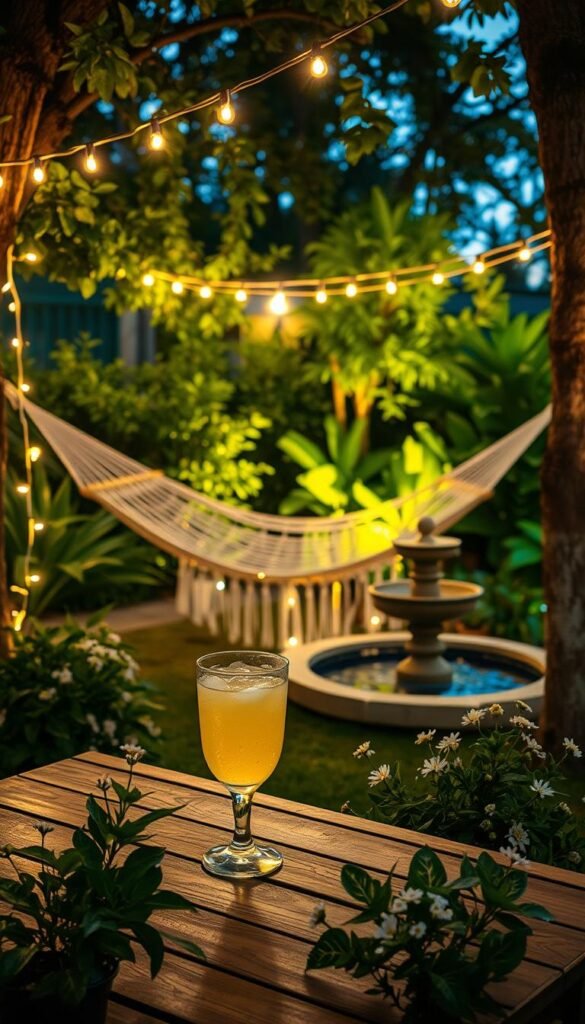
After a hot day, small changes to water features, plantings, and lights can lengthen usable evening hours. The aim is to lower perceived heat and add safe, low-heat illumination so guests stay longer and feel comfortable.
Water features that cool the eye and the air
Visual calm: fountains and small ponds provide a cooling cue and a mild evaporative effect. They suit patios and backyard nooks where a soft soundscape helps guests unwind.
Maintenance: keep water clean, use mosquito-safe pumps, and place units away from electrical outlets and high-traffic paths.
Vertical gardens and green shade walls
Living walls add privacy, block reflective fences, and cool nearby air through transpiration. Choose modular kits for renters and position them to shade hot walls.
LED outdoor lighting for low-heat evening ambiance
LEDs give strong ambiance without raising local temperatures. Use low-voltage string lights, step lights, and fan-integrated LEDs to light pathways and seating safely.
Wind-permeable privacy screens and guest comfort add-ons
Breathable screens cut sun glare while preserving airflow on tight patios. They work well where neighbors are close and airflow matters.
Stock cooling towels and pocket misters near drink stations when hosting larger groups—easy, practical favors that help guests cool off fast.
„Plan gatherings later in the day and keep seating away from grills to avoid adding unnecessary heat.“
| Feature | What to compare | Why it matters |
|---|---|---|
| Fountain | pump noise level, spill risk | Comfort and safety near seating |
| Living wall | plant density, irrigation needs | Cooling effect and upkeep |
| LED lighting | lumen output, color temperature | Ambiance and visibility without heat |
| Privacy screen | material breathability, UV rating | Shade while keeping airflow |
For inspiration on layout and seating that pairs with these elements, see backyard escapes and compact balcony options at balcony guides.
Conclusion
Conclusion
Pinpoint the main way heat arrives: direct sun, trapped air, dry heat, or heat-soaked surfaces. Then match the solution to that driver.
If direct sun is the issue, start with shade; if still air limits comfort, add fans. If dry heat hits hardest, try misting; if surfaces burn, swap to lighter textiles and finishes.
Renters should favor pop-up shade, portable fans, cooling rugs, breathable cushions, and removable screens that store easily. Homeowners may step up to retractable awnings or louvered roofs paired with lighting and screens for longer day use.
Layer shade + air movement + surface upgrades rather than relying on one item. Plan seating and airflow aimed at guests, add small misters or towels at peak time, and check wind stability, outdoor ratings, and drainage so the solution stays safe and low-stress.
See guides on energy-efficient window coverings, read about local cool spaces and heat advice, and get evening layout tips at table and evening ideas.