
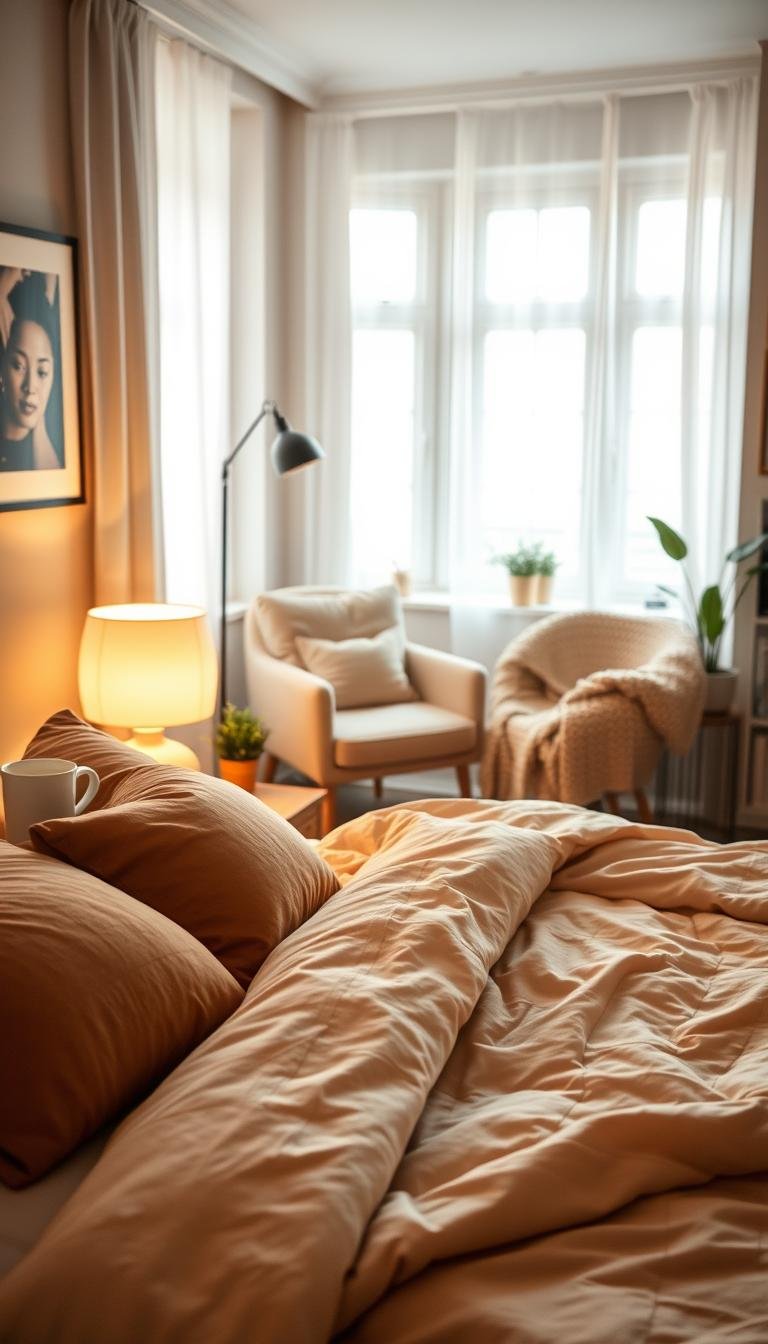
This guide starts with a clear goal: create a sleep-first room that solves rest problems, not just adds a nice look. It shows how a layout-first reset and simple swaps can improve sleep quickly. Readers will learn practical shopping points, product comparisons, and renter-friendly options.
The approach is simple: reduce clutter, choose an easy layout, prioritize a comfy bed, add ambient, layered lighting, and use light-blocking window treatments. The guide emphasizes darkness, comfort, warmth, then style so purchases fix real issues.
Advice suits U.S. readers who rent, live in small spaces, or swap textiles by season. Each category will note “best for” use cases, what to compare, and quick pros and cons to cut decision fatigue. Major levers to change now are bedding feel, window light control, and warm layered lighting.
Before shopping: try a layout-first reset so money goes to items that actually improve rest.
Key Takeaways
- Focus on sleep-first solutions: darkness, comfort, warmth, then style.
- Start with a layout reset to avoid costly, ineffective purchases.
- Quick levers: bedding feel, window light control, and layered lighting.
- Recommendations include pros/cons, comparisons, and renter-friendly picks.
- Guide is tailored for renters, small-space dwellers, and seasonal decorators in the U.S.
What “Cozy” Actually Means for Sleep Quality (Not Just a Look)
Comfort for sleep starts with fixing what actually wakes you up at night. A sleep-supporting room controls light, keeps a stable temperature, lowers visual clutter, and lets people move around safely after dark.
Common problems are simple: rooms that are too bright, too cluttered, too cold, or too noisy. Match each issue to a practical solution:
- Too bright → light-blocking shades or layered curtains.
- Too cluttered → smarter storage and nightstands that hide cords.
- Too cold → layered bedding, rugs, and warmth underfoot near the bed.
- Too noisy → soft textiles and targeted lighting to reduce agitation.
Sleep-first essentials to prioritize are a comfy bed, ambient lighting that dims, and window treatments that stop leaks. These elements fix sleep, not just style.
„A room can look calm but still wake you if glare, cluttered pathways, or cold floors interrupt rest.“
Quick mini-audit to try tonight:
- Where does light leak in?
- Do feet meet cold floors when you get up?
- Are cords or piles blocking walkways?
Later comparison tables will use clear criteria—comfort, care, and renter-friendliness—so readers can pick products that solve the specific issue they want to fix.
Quick Reset: Declutter and Fix Your Bedroom Layout First
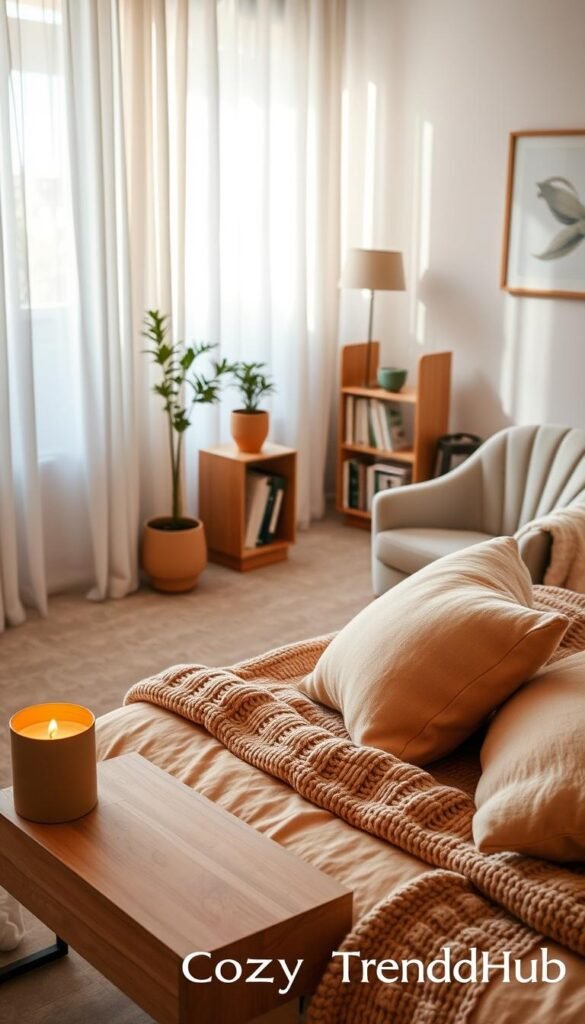
Start by clearing pathways so moving at night feels natural and safe. A quick reset is a low-cost way to make space function better for sleep and daily life.
Keep only essentials for easy movement
Start small: clear nightstand surfaces, remove floor piles, and hide cords.
Declutter checklist focused on sleep:
- Clear the nightstand of non-essentials.
- Pick up clothes and remove floor piles.
- Limit visual noise near the bed (empty frames, stacks, and excess pillows).
Small-space decision rules that work every time
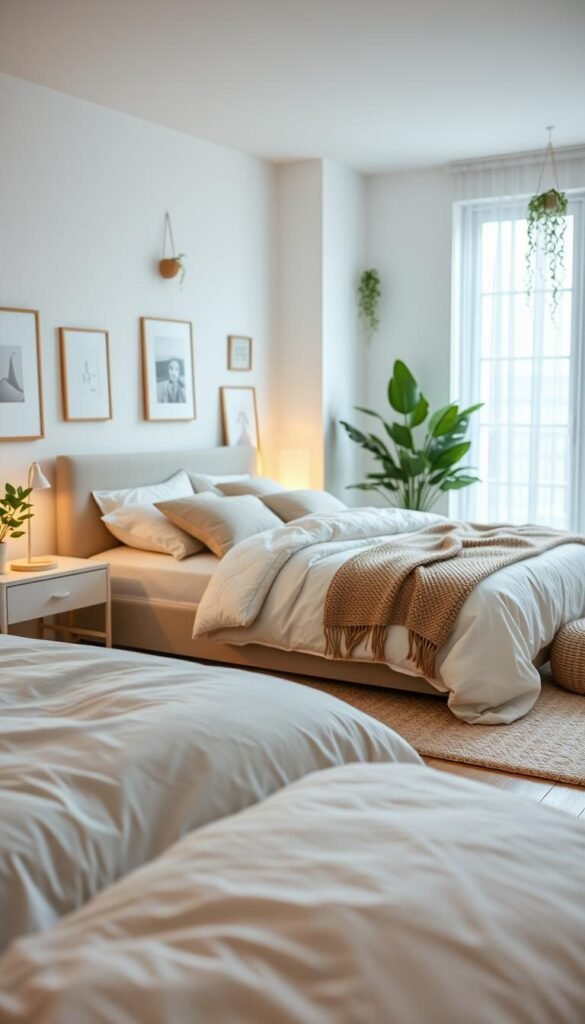
Clear paths reduce stress and nighttime stumbles. This is critical in a small bedroom or shared room.
Layout rules to follow:
- Keep a clear pathway to the bed and the door.
- Avoid blocking closet doors or drawers.
- Reroute cords so they do not cross walking areas.
For purchases, choose fewer, higher-impact items—think better curtains, one good rug, or upgraded bedding—instead of many small accents. Use a „one in, one out“ rule for decor to prevent re-cluttering.
„Once the room is easy to move through, shoppers can spot which upgrades truly improve comfort—light control, warmth, or texture.“
Best cozy bedroom decor for a Relaxing Sleep Sanctuary
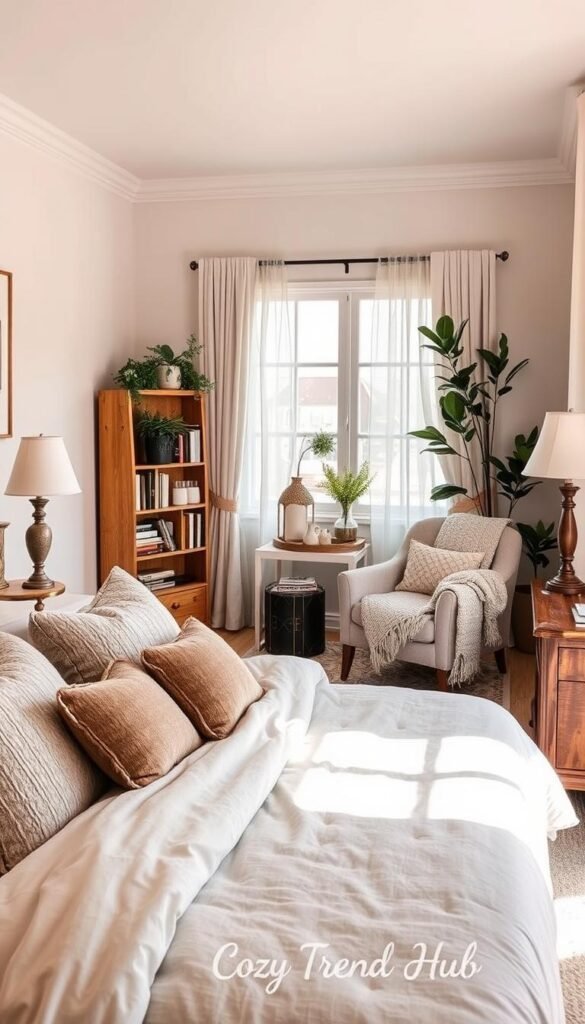
Use a problem-first shopping list to fix the sleep issues that actually interrupt nights. This section groups items by common problems so readers can jump to the right fix fast.
How to use the list
Organized by problem: too bright, too cold, too bare, too cluttered. Each entry focuses on essentials first: a comfy bed, ambient lighting, and light-blocking window treatments.
Renter vs. homeowner options
Renters: choose no-drill shades, plug-in lamps, removable wallpaper, and freestanding headboards.
Homeowners: add hard-mounted blackout rods, built-in shelving, or paint for longer-term changes.
Small-room rules and seasonal swaps
Keep floors clear, use multifunctional furniture, and limit visual accents. For seasons, swap lighter covers for heavier throws and store off-season textiles in bins.
| Category | Compare | Renter-Friendliness | Quick Use |
|---|---|---|---|
| Bedding & Throws | Price, care, warmth | High (covers and throws) | Layer for year-round comfort |
| Window Treatments | Light control, install type, cost | Medium (no-drill options) | Block leaks for better sleep |
| Lighting | Bulb warmth, dimming, plug type | High (plug-in choices) | Create warm ambient glow |
| Small Furniture | Size, function, visual impact | High (freestanding, modular) | Keep pathways open |
Preview: later product blocks will use a simple format: “Best for,” “Why it helps,” “What to look for,” and quick pros/cons to speed decisions and support comparison tables and affiliate blocks.
Cozy Bedding That Feels Like a Warm Cocoon
Good bedding starts with materials that match your body heat and sleep habits. Define „cozy“ as a soft hand-feel, clear temperature regulation, and layers that adjust without overheating.

Hot sleepers: breathable sheet choices
Who it helps: people who wake from night sweats or trap heat.
- Choose lightweight, natural fibers like percale or linen-blend sheets for airflow.
- A thin quilt or lightweight cover is a better layer than heavy comforters for ventilation.
Cold sleepers: simple layering strategy
Who it helps: those who feel chilly on cool nights.
- Start with breathable sheets, add an insulating mid-layer, then a comforter and a single throw.
- Swap the mid-layer seasonally to keep the bed warm without overheating.
Guest room upgrades: universal textures and neutral hues
For a guest room, pick neutral colors and easy-care fabrics. Aim for soft textures that appeal to most visitors and wash between stays.
Buying considerations and quick checklist
- How the fabric feels against sensitive skin.
- Washability, shrink resistance, and pill testing.
- Durability and whether the fabric traps heat.
- Compare care instructions and size options.
| Material | Pros | Cons |
|---|---|---|
| Linen | Breathable, long-lasting, cool over time | Wrinkles easily; higher price |
| Cotton | Soft feel, easy care, widely available | Varies by weave; some trap heat |
| Microfiber | Affordable, smooth feel, low-maintenance | Can trap heat; may pill over time |
Layered Textures That Instantly Make a Room Feel Cozy
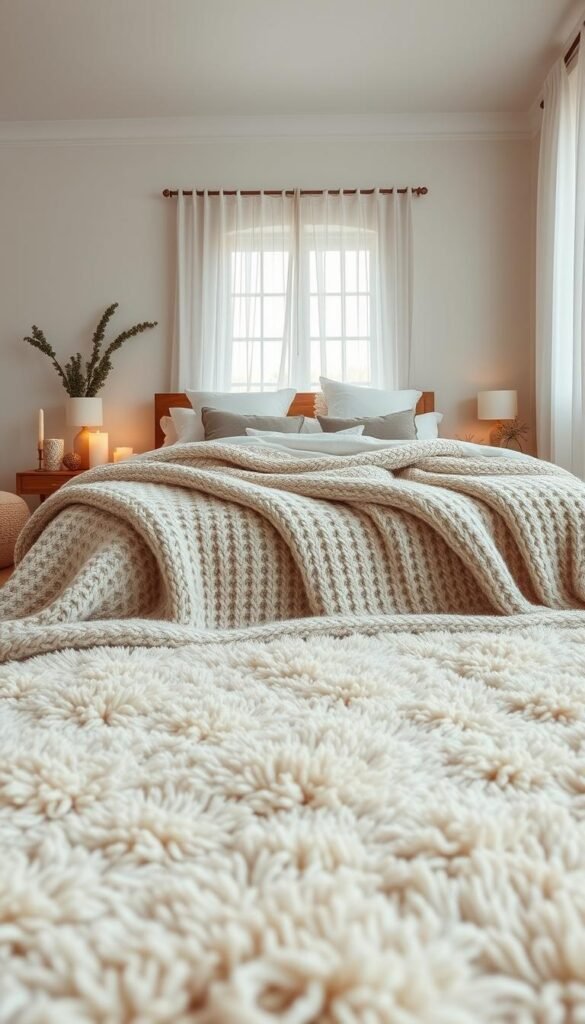
Texture is the fastest upgrade to make a room feel complete and inviting without crowding floor space. Small textile swaps add warmth and depth while keeping the layout clear. This helps renters and small-room owners get a richer look with minimal cost and effort.
Throw blanket choices by problem
- Chunky knits: add real warmth for cold nights and create a tactile focal point. Good when the bed feels flat.
- Faux fur: offers a plush, soft surface for people who find some fabrics scratchy. Watch for shedding with pets.
- Lightweight throws: work year-round and prevent overheating while still adding visual depth.
Pillows and covers: how to mix without excess
Limit pillows to a functional number and focus on covers for variety. A practical mix: velvet for richness, boucle for texture, and a woven fabric for contrast.
Repeat 2–3 textures across the bed to create cohesion. This keeps the bed easy to make and avoids cluttered visuals.
Minimalist texture rules and care tradeoffs
- Stick to 2–3 textures and a calm palette to avoid visual noise.
- Plush fabrics feel luxurious but may need spot-cleaning or extra lint care.
- Woven and linen blends resist piling and are easier to wash.
| Factor | Chunky knit | Faux fur | Lightweight throw |
|---|---|---|---|
| Fabric feel | Thick, tactile | Soft, plush | Airy, smooth |
| Heat retention | High | Medium | Low |
| Pet hair friendliness | Traps hair | Shows hair | Better |
| Care | Spot or gentle wash | Spot clean, brush | Machine wash |
„Add depth with texture, not more furniture—one throw and a couple of smart pillows go a long way.“
Renter-Friendly Window Treatments for a Darker, Sleepier Bedroom
Blocking stray light is a high-impact, low-cost step that helps many sleepers get longer, deeper rest. This matters most for people near streetlights, shift workers, and light-sensitive sleepers in city apartments.
Light-control setup:
Blackout shades plus layered curtains
Install blackout shades first to seal most light. Add thick curtains in a heavy fabric like velvet for extra darkness and insulation. This combo reduces edge leaks and softens the room’s look.
Renter-safe installs
Tension rods work well for narrow windows and avoid screws. Adhesive hooks suit light curtains and short-term stays. Renter-friendly brackets give a sturdier hold if the landlord allows small anchors.
Buying considerations and quick fixes
Choose curtains that hang 4–6 inches past the window edge to block side light. Pick lined panels or thermal backings for better darkness and to keep the air near the window more stable.
| Option | Darkness | Install | Removability | Care |
|---|---|---|---|---|
| Blackout shade | High | No-drill or small screws | Easy | Wipe or spot clean |
| Velvet curtains | High | Tension rod or hooks | Easy | Dry clean or gentle wash |
| Light-filter curtain | Low | Adhesive hooks | Very easy | Machine wash |
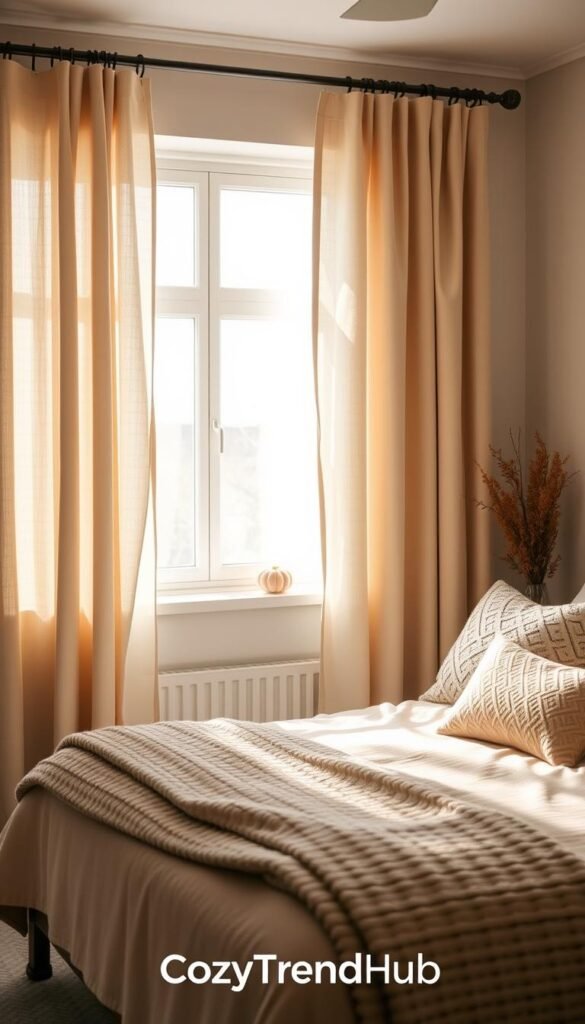
„Start with shades, then layer curtains to stop leaks—this is the quickest way to a darker, calmer room.“
Ambient Lighting Ideas That Create a Warm Glow at Night
Swapping harsh overhead bulbs for warm, dim layers can change how the room feels at night. Ambient lighting is an essential element for sleep-first spaces. It reduces alertness and helps winding down.
Reading in bed: bedside lamps vs. wall sconces
Bedside lamps are simple to place and give focused light for reading without hardwiring. They sit on a nightstand and usually offer plugs and dimmers.
Wall sconces free up table space and provide cleaner sightlines. Choose adjustable shades to control glare and limit partner disturbance.
Small spaces and renters
Plug-in sconces and swing-arm lights add function without wiring. Tension mounts, adhesive hooks, and plug covers keep installs renter-friendly.
Buying considerations checklist
- Bulb warmth: 2200–2700K for a warm feel.
- Dimming: choose bulbs and fixtures that work with dimmers.
- Shade design: opaque or angled shades reduce glare.
- Switch placement: easy reach from bed for convenience.
| Option | Coverage | Glare control | Renter-friendly |
|---|---|---|---|
| Overhead | High (whole room) | Low unless diffused | High (simple swap) |
| Bedside lamp | Targeted (reading) | Medium (with shade) | High (no install) |
| Wall sconce / swing-arm | Targeted, flexible | High (adjustable) | Medium (plug-in or easy mount) |
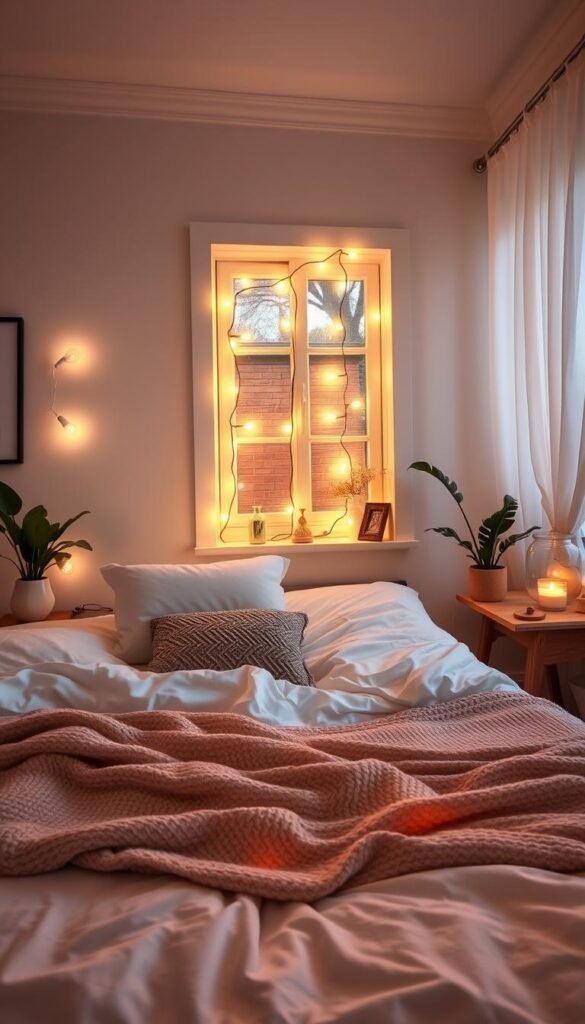
„Layered light supports wind-down routines better than a single bright fixture.“
Bedroom Rugs That Warm Up Your Space (Without Overcrowding It)
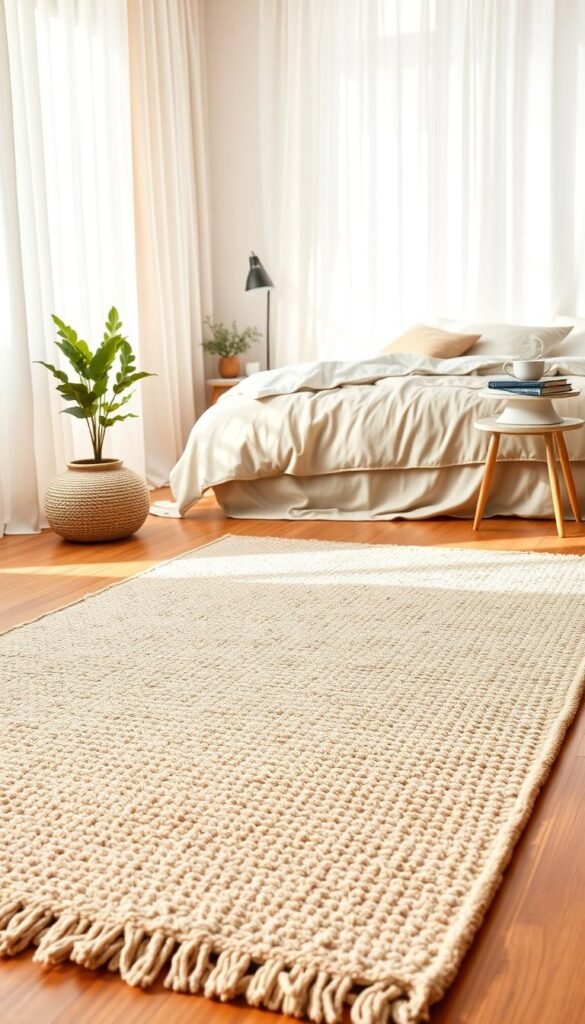
Rugs can anchor a layout, add softness underfoot, and control sound without crowding the space.
They solve three common problems: cold floors in the morning, echo in apartments, and a room that still looks unfinished.
Practical rug choices for apartments
Low-pile rugs work well for rentals. They vacuum easily, trap less dust, and spot-clean faster. Low-pile options keep the floor even and reduce tripping risk.
Cozy feel vs. everyday practicality
Plush piles feel luxurious underfoot but can trap hair and need more care. Flatweaves handle spills, pets, and frequent cleaning better. Choose based on how much maintenance the space allows.
Buying considerations: size, placement, and pads
Pick a rug size so furniture sits partly on the rug or the rug bridges the front legs of the bed. Avoid tiny rugs that create a tripping edge.
Always use a non-slip pad on hard floors. Pads prevent curling, reduce noise, and keep the rug from shifting during night-time movement.
| Option | Use case | Care | Trade-off |
|---|---|---|---|
| Large area rug | Creates a cohesive look; ties room together | Vacuum regularly; occasional deep clean | Higher cost; needs correct size |
| Runner / bedside rug | Budget-friendly; targets bedside warmth | Easy to lift and clean | Less cohesive; may shift without pad |
| Plush pile | Comfort underfoot; warm feel | Frequent vacuum; spot care | Shows pet hair; traps dust |
| Flatweave | Durable, low maintenance | Machine or shake clean | Less plush underfoot |
Calming Bedroom Color Palettes Inspired by Nature
When color borrows from nature, a room often reads as calmer and less busy. This helps the space support sleep and reduces visual stimulation at night.
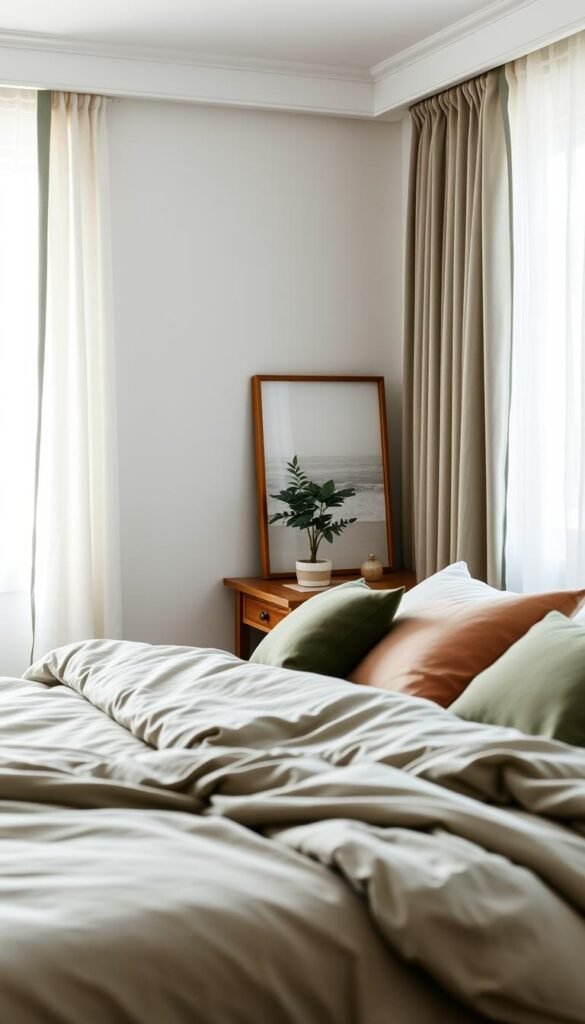
Soothing palette guide
Blues and aquatic hues feel cool and soothing. They help lower alertness and work well where a restful, airy look is the aim.
Botanical greens feel nurturing and grounded. Use muted olives or sage rather than neon tones for a calm effect.
Earth-toned beige and brown add warmth and a sense of stability. Sandy neutrals read inviting and reduce visual clutter.
Match color to your light
Bright rooms can handle deeper, richer saturation. A saturated blue or green stays lively without feeling heavy in direct sun.
Dim rooms benefit from warmer neutrals to avoid a flat or cold feel. Test warm-beige swatches under natural and artificial light.
Guest-room guidance and quick checklist
For a guest room, choose nature-inspired neutrals to appeal to most visitors and to make bedding coordination simple.
- Test paint swatches at morning and evening light.
- View swatches under warm bulbs to judge night-time feel.
- Pick one wall color and one trim/ceiling neutral to keep the room open.
| Room size / light | Recommended hues | Why it helps |
|---|---|---|
| Small / cool light | Warm beige, soft sand | Adds warmth; prevents flatness |
| Large / bright light | Deeper blue, muted green | Retains richness; still restful |
| Guest room / mixed light | Soft neutral greens or sandy tones | Universally appealing; easy to style |
„Pick nature-based colors that work with your room’s light — test swatches in different conditions before committing.“
Dark and Cozy Bedroom Paint Choices for a Cocoon-Like Feel
A deep wall color can make a room feel like a private retreat without changing furniture.
Dark paint helps light-sensitive sleepers, people who want a cocoon-like feel, and rooms near bright streetlights. It reduces visual distraction at night and can lower perceived glare.
Recommended shade families: deep blue, muted green, charcoal gray, warm brown, or near-black tones. Note that undertones shift under warm bulbs—blues can read teal, and greens may lean olive.
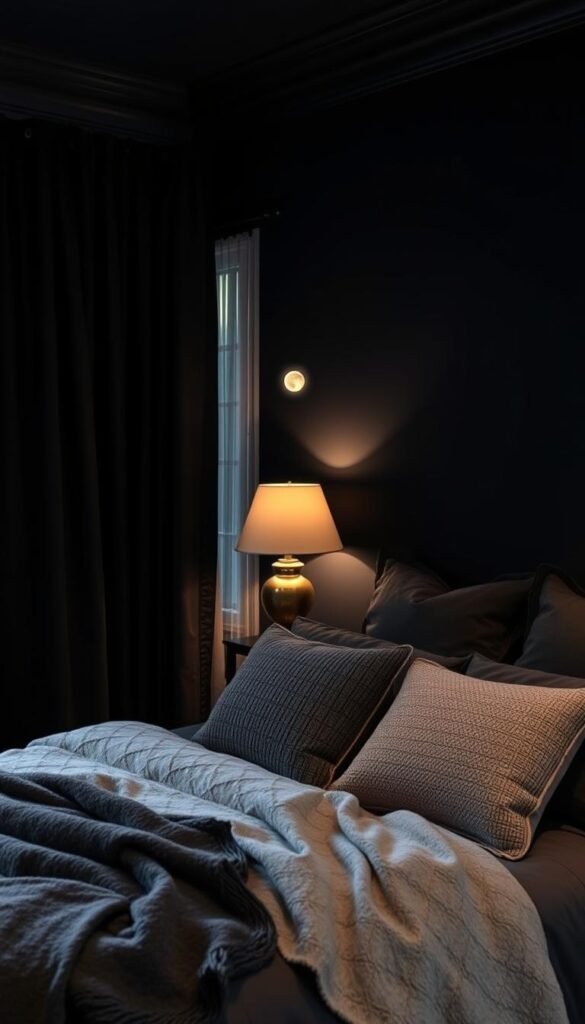
How to avoid a cave effect
Pair dark walls with lighter bedding and reflective accents to keep the room from feeling closed in.
Layer warm ambient lighting and add a few polished or light-reflecting surfaces. These steps keep the look intentional while preserving a restful feel.
Buying considerations: paint finish and durability
- Finish: an eggshell or satin sheen balances washability with low reflectivity.
- Durability: choose a formulation that resists scuffs and cleans without changing color.
- Start small: test on one wall or paint a headboard shape first before committing to all-over color.
| Shade family | Room size | Maintenance | Visual effect |
|---|---|---|---|
| Deep blue | Medium to large | Medium (shows dust less) | Calming, lowers alertness |
| Muted green | Small to medium | Medium (undertones vary) | Grounded, nurturing feel |
| Charcoal gray / black | Large preferred | Higher (shows scuffs) | Highly dramatic; can feel cocooning |
| Warm brown | Small to large | Low to medium | Stable, warming look |
Wallpaper and Accent Walls That Add Coziness Without Clutter
An accent wall can refresh a bedroom without adding more furniture or surface items that create clutter. A single patterned wall gives the room a clear focal point while leaving walkways and surfaces free for sleep-supporting function.
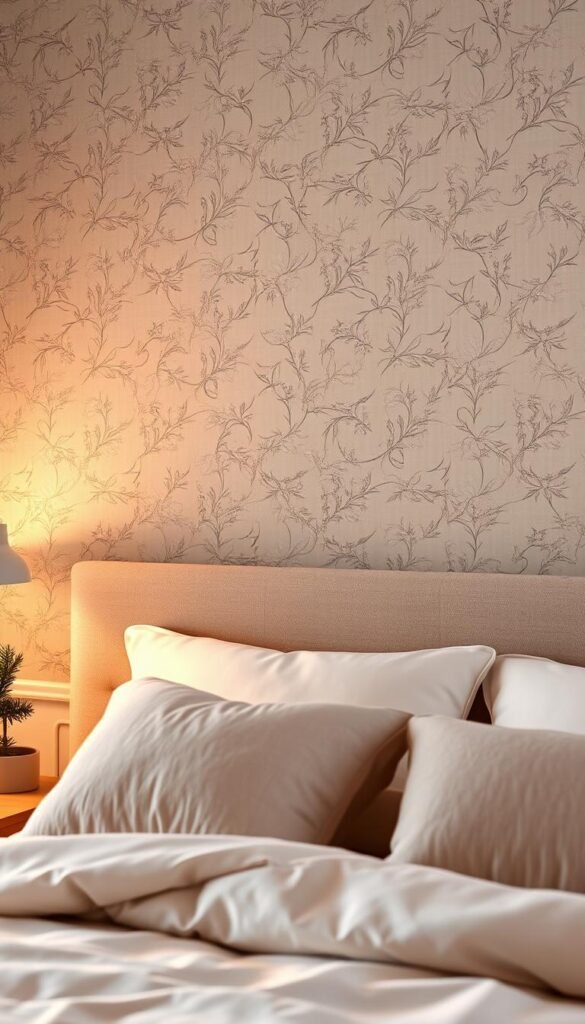
Renters: peel-and-stick wallpaper is the easiest route. Look for removability claims, sample swatches, and notes about wall texture compatibility. Choose prints that advertise clean removal and test a small patch first if the landlord requires it.
Placement that anchors the bed
Placing wallpaper behind the headboard visually anchors the bed and creates a focal point without interrupting traffic paths. This keeps the change impactful but non-intrusive.
Pattern rules for small spaces
- Scale: pick small- to medium-scale prints so patterns don’t overwhelm the room size.
- Contrast: limit contrast to one strong accent color plus neutrals to avoid visual clutter.
- Color control: use two main colors in the pattern to make the space feel calm and cohesive.
Pros and cons
| Option | Impact | Flexibility | Care |
|---|---|---|---|
| Bold wallpaper | High visual change without floor clutter | Lower — can limit future looks | Wipeable options vary |
| Solid paint | Moderate — subtle anchor | High — easy to touch up or repaint | Typically easy to maintain |
Buying considerations
Compare roll coverage, pattern repeat, wipeability, and installation time. Check if the wallpaper needs tools or a simple smoothing tool. Prioritize removable adhesive for rentals and choose a pattern repeat that fits your wall size so you avoid awkward seams.
„A single accent wall can transform a small space without adding physical clutter or reducing usable floor area.“
Headboard Upgrades That Improve Comfort and Style
A well-chosen headboard solves practical problems while refining the room’s look. It makes sitting up in bed for reading more comfortable, protects the wall from scuffs, and visually finishes the bed area. For renters and small-space dwellers, the right headboard offers function without permanent changes.
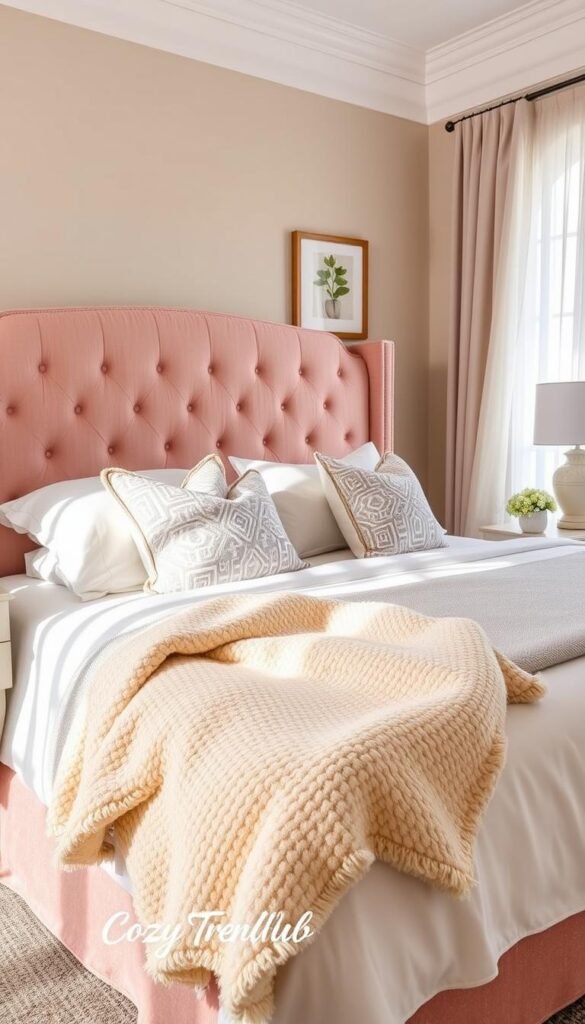
Upholstered options for comfort
Upholstered and tufted headboards provide a soft backrest for reading and lounging. Choose performance fabrics if spills or pets are likely; they clean more easily than delicate weaves.
Low-profile choices for small rooms
Low-profile shapes add softness without making the space feel shorter. A slim, cushioned panel keeps visual height and keeps the room open.
Buying considerations and renter-friendly installs
- Height: pick a headboard height that complements mattress thickness so pillows sit comfortably.
- Attachment: frame-mounted or free-standing headboards avoid wall holes. Wall-mounted units give a sleeker look but need secure anchors.
- Stability: check that any frame bracket or feet lock firmly to prevent shifting during use.
| Feature | Comfort level | Footprint | Install difficulty | Maintenance |
|---|---|---|---|---|
| Upholstered / tufted | High | Medium | Low (frame) / Medium (wall) | Spot clean; performance fabrics easier |
| Low-profile panel | Medium | Low | Low (freestanding) | Simple vacuum or wipe |
| Wall-mounted wood | Low–Medium | Low | High (requires anchors) | Wipe; durable |
Renter-friendly guidance: prefer free-standing or frame-mounted headboards when possible. If wall mounting is chosen, use manufacturer-recommended anchors and document any holes to simplify move-out repairs.
Nightstands and Bedside Essentials That Reduce Stress
Nighttime stress often starts at the bedside, where clutter and tangled cords interrupt simple routines. Clear surfaces and smart storage calm the senses and keep walkways safe.
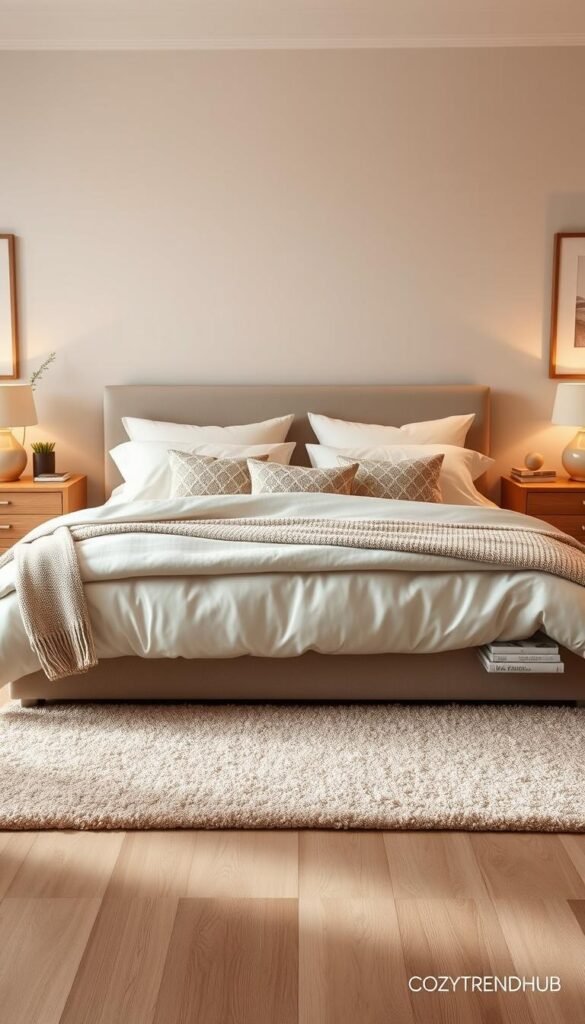
Nightstands with drawers for clutter-prone sleepers
Problem: chargers, remotes, and loose change spill onto the floor and into pathways.
Solution: choose nightstands with drawers and built-in cable control to hide cords and small items. Drawers keep the surface clear and reduce late-night searching.
Floating shelves for tiny rooms
Floating shelves act as compact nightstands while keeping the floor open. They work well for renters if weight limits are observed. Use adhesive anchors or tension-fit brackets when drilling is not allowed.
What to keep within reach
- Reading light control: easy switch or dimmer.
- Water bottle or glass.
- Tissues and a small tray for glasses and watch.
- A designated spot for phone chargers and one pen or notebook.
Seating note: a small chair can help with dressing or reading, but only if it has a clear purpose. Otherwise it becomes a clothes catch.
| Option | Storage capacity | Footprint | Cord management | Install |
|---|---|---|---|---|
| Drawer nightstand | High | Medium | Good (hidden) | Freestanding |
| Floating shelf | Low | Small | Fair (use clips) | Wall-mounted / renter options |
| Small table with tray | Medium | Small–Medium | Depends (add cable clips) | Freestanding |
„Clear walkways and reduced clutter improve nighttime comfort and make wind-down routines faster.“
Cozy Bedroom Style Paths That Match Your Vibe (And What to Buy)
Pick a signature direction that matches upkeep tolerance and square footage. Choose items that solve sleep needs first, then add pieces that define the look. Below are six style paths with purchase-focused suggestions and renter-friendly notes.
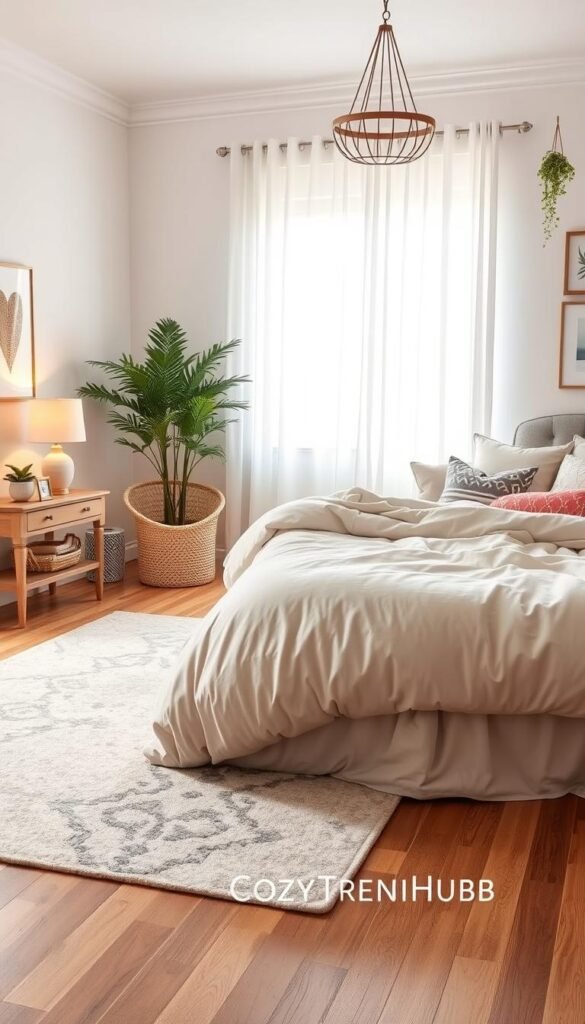
Scandinavian calm
What to buy: neutral bedding, a raw-wood nightstand, warm plug-in lamps, and one chunky knit throw.
Small-space tip: pick slim-profile wood pieces and light linens to keep the room airy.
Farmhouse warmth
What to buy: distressed-wood nightstand, woven baskets, layered quilts, and textured pillows.
Renter note: freestanding furniture and removable hooks give the same charm without holes.
Boho comfort
What to buy: earthy-hue sheets, a patterned rug, rattan accent chair, and a few plants.
Keep pattern mixing controlled: limit patterns to two scales to avoid visual clutter.
Modern minimalist
What to buy: high-quality textured bedding, a simple low rug, and clean-lined lighting.
Maintenance: fewer pieces mean less upkeep—choose durable fabrics that wash well.
Coastal airy & Industrial cozy
- Coastal: white or sand bedding, linen covers, natural-fiber rugs, light wood accents.
- Industrial: matte-black fixtures, moody wall tone, softened by warm throws and rugs.
Choose a path by how much cleaning, color change, and floor space you can commit to—then buy 3–5 high-impact items to set the tone.
Seasonal Cozy Bedroom Decor Swaps for Year-Round Comfort
Seasonal comfort is less about new furniture and more about which fabrics and light you use. The same bedroom setup can feel too hot in summer or too cold in winter even when it looks finished.

Fall and winter swaps
Swap in heavier throws and richer hues for a cocooning feel. Use warmer bulbs (2200–2700K) to soften the air and lower perceived chill.
- Textiles: thicker throws, wool-blend pillow covers.
- Light: bulb multipacks with warm tones for bedside and ambient lamps.
- Color: add a deep accent pillow or throw for layered hue without painting.
Spring and summer swaps
Choose breathable bedding and lighter textures to keep the air moving. Swap heavy throws for airy layers and light-filtering window panels.
- Percale or linen blends for sheets.
- Light throws and washable pillow covers for easy rotation.
- Airy curtain layers to let breeze and soft light in.
Small-space storage and smart buys
Rotate covers and throws, not furniture. Use under-bed bins, vacuum bags, and vertical shelves to store seasonal textiles in a tight space.
Small change, big impact: extra duvet cover sets, seasonal pillow covers, and one adaptable throw transform the room affordably.
„Rotate textiles and light first—these options deliver the most seasonal comfort with the least cost.“
How to Choose the Right Cozy Decor for Your Space and Budget
A simple decision order helps stretch a tight budget and fixes sleep problems first.

Build a „sleep stack“: darkness, comfort, warmth, then style
The sleep stack puts light control first because darkness directly affects sleep length.
Next comes comfort: a mattress and bedding that match sleep needs. Then add warmth with layered textiles and a rug. Style should be last so purchases solve problems, not add clutter.
What to prioritize first
Order: bedding → window treatments → lighting → rug.
This roadmap compounds comfort: proper sheets and a good pillow improve sleep immediately. Light-blocking shades reduce wake-ups. Warm, dim light supports wind-down routines.
Comparison criteria for quick tables
| Criteria | Why it matters | Measure |
|---|---|---|
| Price | Fits tight budgets | Low / Medium / High |
| Renter‑friendliness | Avoids landlord issues | No‑drill / Minimal tools |
| Care & durability | Keeps items usable long-term | Machine wash / Spot clean / Durable |
Common mistakes that waste money
- Over-accessorizing with extras that add clutter.
- Ignoring light control—street and edge leaks matter most.
- Picking scratchy textures that never get used.
Quick picks by use case
Small space: slim nightstand, low-pile rug, multifunction lighting to keep pathways clear.
Guest room: neutral, easy‑wash bedding and a simple shade for dependable sleep for any guest room occupant.
Kids: durable, machine-wash textiles and washable covers for spills.
Couples: layered bedding for temperature control and separate bedside dimmers to avoid disruption.
„Choose items that solve a real problem first—rental rules, room size, and sensitivities will shape smarter purchases.“
Conclusion
A restful bedroom starts with simple, practical actions. Clear pathways and a quick declutter first. Then focus on one high‑impact upgrade: better bedding or light control.
Use problem-first choices: fix the things that wake you, not the items that only change the look. Pick products by care, durability, and renter-friendliness so purchases work in real life.
One great rug, a single lighting upgrade, and bedding that matches sleep needs can make a room feel calm and useful. Return to this guide for ideas and photos when seasons or budgets change. Treat these notes as inspiration and a shopping checklist to help decisions stay practical and lasting.