
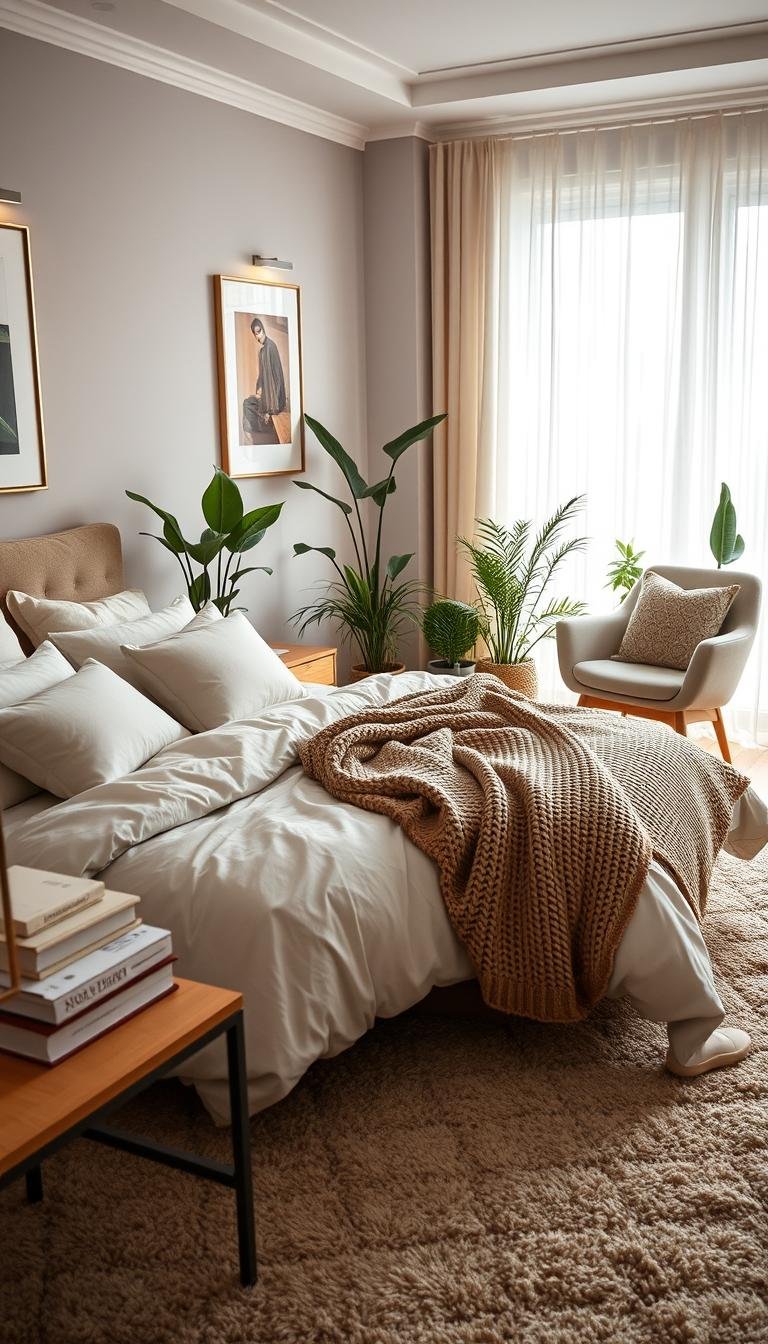
Many bedrooms look fine by day but feel stressful at night. Clutter, harsh lighting, and light leakage can disrupt rest. This introduction outlines practical, buyer-focused upgrades that improve comfort without a full remodel.
The guide starts with layout and a sleep-first setup. It moves on to lighting, window treatments, bedding layers, rugs, color, and style priorities. Each recommendation is chosen for practical usefulness, value, and how it fits apartments or small spaces.
Expect realistic gains: better rest comes from reducing visual noise, blocking stray light, and adding comfortable layers. This is not a medical solution, but a set of actionable product comparisons and renter-friendly ideas that help a room feel calm.
Key Takeaways
- Identify night stressors: clutter, glare, and light leaks.
- Focus on layout and sleep essentials before accents.
- Choose no-drill, small-space friendly upgrades.
- Products judged on usefulness, value, and reliability.
- Expect improved comfort, not a medical cure.
Start With the Sleep Setup That Makes the Space Feel Calm
Clutter, awkward furniture, and poor sightlines are common culprits that keep the mind alert at bedtime. A quick reset can make space feel calmer without spending money.
Declutter sprint: clear nightstand tops, dresser surfaces, and floor piles. Put loose items in a laundry basket for sorting later. This immediate action helps the room read as restful at a glance.
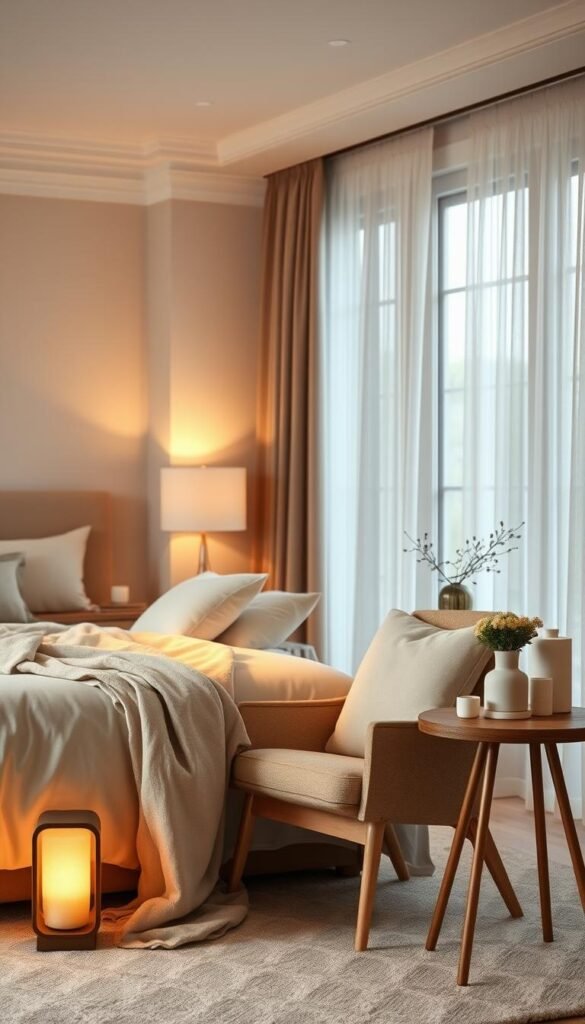
Quick fixes and layout tips
Use closed storage in high-impact zones: under-bed bins, lidded baskets, and a storage ottoman. Measure under-bed clearance and ottoman width before ordering to ensure a proper fit.
- Keep a clear walking path from bed to door and to the bathroom.
- Avoid cords across pathways; use cord clips or short extension cords.
- Choose narrow nightstands or wall-mounted shelves for a small bedroom to make space feel larger.
„Clear surfaces calm the mind—visual simplicity supports better sleep.“
Essentials-first buying guide
Prioritize: a comfortable bed, practical lighting, and light-blocking curtains or shades before adding accents. Preserve natural light by using lighter daytime layers so daylight supports circadian rhythm while you still plan for darkness at night.
| Product Category | Why it helps | What to compare |
|---|---|---|
| Closed storage | Reduces visual noise and hides clutter | Dimensions, load capacity, lid/seal type |
| Lighting (lamps, sconces) | Creates ambient glow; safer navigation | Bulb warmth, dimmable options, plug-in vs hardwire |
| Window treatments | Blocks stray light and controls daylight | Opacity, installation (no-drill options), length |
For small-room styling ideas and product picks, see a practical guide to arranging compact spaces at small-space styling.
Ambient Lighting That Supports Wind-Down (Not Overhead Glare)
A thoughtful mix of low-level lights reduces glare and creates a restful atmosphere. Overhead bulbs often feel harsh and keep the mind alert. Layered lighting lets light fall gradually as evening progresses.
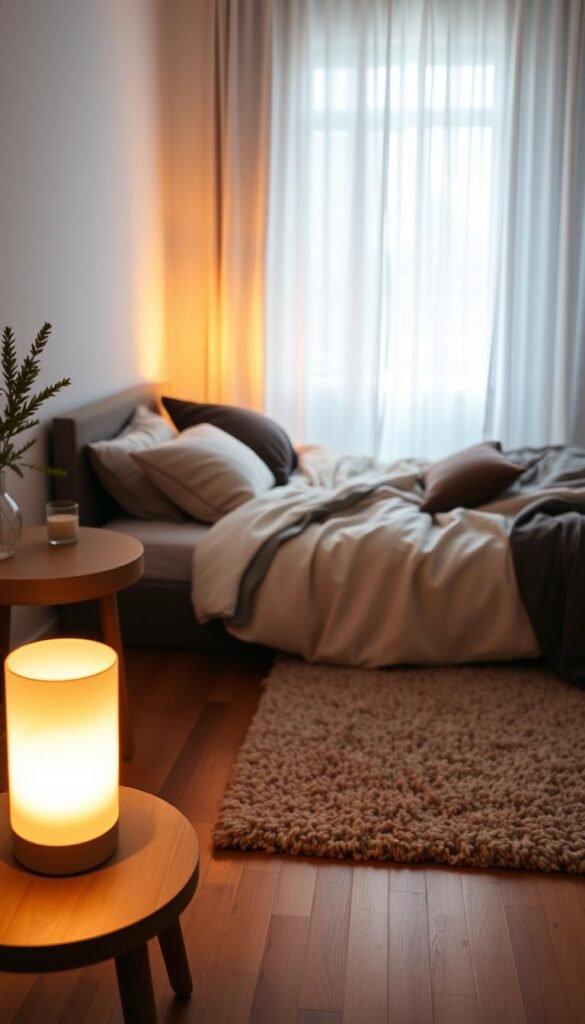
Renters: plug-in wall sconces for a warm glow
Why it helps: plug-in sconces free up nightstand space and give a soft glow without hardwiring. Many mount with adhesive or small screws, so they suit rented rooms.
Readers: table lamps with soft shades
Table lamps focus light where it’s needed. Fabric shades diffuse harsh beams and cut glare. This reduces eye strain while keeping overall light low.
Flexibility: dimmable bulbs and smart plugs
Use dimmable bulbs plus timers or smart plugs to automate evening routines. Gradual dimming supports melatonin release and a calmer atmosphere.
Seasonal add-on: tasteful fairy lights
Fairy lights add gentle, low-level light for winter evenings. Place them away from the bed and out of walkways for safety and neatness.
| Feature | What to check | Notes |
|---|---|---|
| Color temperature | Warm (2700–3000K) | Promotes relaxation |
| Lumens | Lower output for ambient use | 50–400 lm per source |
| Shade material | Fabric vs glass | Fabric diffuses more softly |
- Pros/cons: sconces save surface space but need planned placement; lamps are simple but use tabletop area; floor lights fill corners but can clutter small rooms.
- Cable tip: use cord clips or covers so pathways stay safe at night.
Light-Blocking Curtains and Blackout Shades for Deeper Sleep
Light travelling through gaps at the window can undo a carefully built evening routine. Streetlights, early sunrises, and shift work schedules make targeted window treatments a practical first buy.
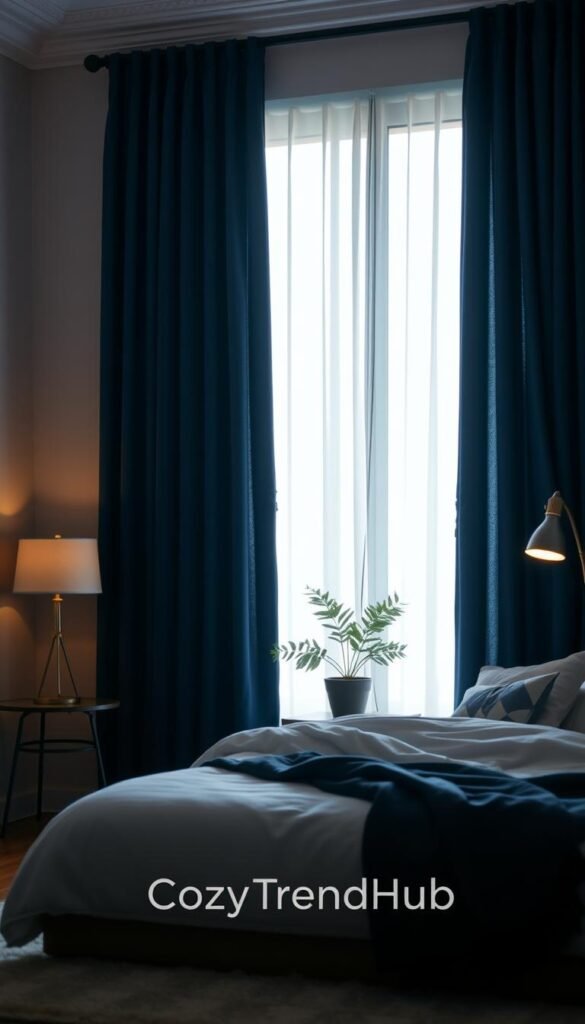
Who benefits: shift workers, light-sensitive sleepers, city apartments facing a lit wall, and parents with early-morning households. These groups often need a tighter light seal to maintain consistent sleep times.
Heavy fabric vs layered systems
Velvet and other thick curtains add darkness and thermal insulation. They improve the visual look and help reduce drafts.
Layered curtain + blackout shade usually gives the best light block. A shade fits close to glass while a fabric panel adds texture and warmth.
Trade-offs: velvet looks rich but can be heavier to clean. Layered solutions cost more but adapt across seasons and light levels.
Renter-friendly installation and measuring tips
Use tension rods, no-drill brackets, or removable hooks when a lease forbids hardware. Place rods high and wide so panels overlap the frame and cut light leaks.
Measure window width, add 20–30% extra panel width for fullness, and pick a length that either skims the floor or puddles slightly to minimize gaps.
| What to compare | Why it matters | Notes |
|---|---|---|
| Opacity / blackout rating | Determines light block | Look for tested blackout claims |
| Insulation / thermal lining | Reduces drafts and noise | Helpful in older windows |
| Header style | Ease of install and look | Grommet vs back-tab affects hang and fullness |
| Fabric weight | Durability and drape | Heavier = better seal; lighter layers add versatility |
Design balance: dark treatments can feel heavy. Offset a deep window palette with lighter bedding, wall accents, or mirrors so the room looks open while staying visually restful.
For specific product options and renter-friendly picks, see a focused guide on window treatments.
Best Cozy Bedroom Decor: Sleep-Friendly Bedding Layers That Feel Like a Cocoon
The right mix of sheets, mid-layers, and a top blanket makes it simple to control warmth without overheating.
Many sleepers struggle because bedding is either too light or too heavy. A modular system lets users add or remove layers at night. That prevents tossing covers on and off.

Brushed cotton sheets for warmth without overheating
Brushed cotton traps air for gentle warmth while staying breathable. It suits cool nights and those who dislike slick synthetics.
Quilts, quilt toppers, and eiderdowns for winter layering
Quilts fit guest rooms and drafty houses. Thick quilt toppers add weight without a full duvet. Eiderdowns give warmth for deep cold but need more care.
Throws and blankets: wool vs faux fur vs chunky knit
Wool lasts and insulates. Faux fur gives softness and visual warmth. Chunky knit adds texture but may require gentle washing.
Best for hot sleepers: breathable layers and lightweight textiles
Use lightweight breathable textiles and thinner mid-layers. Keep heavy blankets folded nearby for quick reach instead of piling them on all night.
„A modular bedding plan saves money and adjusts to changing nights.“
| Type | Who it’s best for | GSM/Weave | Care / Allergens |
|---|---|---|---|
| Brushed cotton sheets | Cool sleepers wanting soft texture | 150–300 GSM, flannel/brushed weave | Machine wash; low allergen |
| Quilt / topper | Drafty rooms, guest beds | 300–600 GSM, stitched | Machine or spot clean; synthetic fills for hypoallergenic |
| Eiderdown | Cold climates, those who like weight | Down fill power 600+ | Dry clean or large washer; not ideal for allergies |
| Throws / blankets | Layering and decor accents | Varies: wool 400–600 GSM; knits lower | Follow label; wool may require special care |
Quick pros/cons: Luxury textiles feel plush but often need special washing. Budget options cost less but may flatten sooner.
Keep extra blankets folded by the bed so adjustments are easy and low-light friendly. This small habit supports better rest and a calm look at night.
Rugs and Underfoot Texture to Make the Room Feel Cozy Instantly
A rug can change how a room reads the moment you step onto cold flooring.
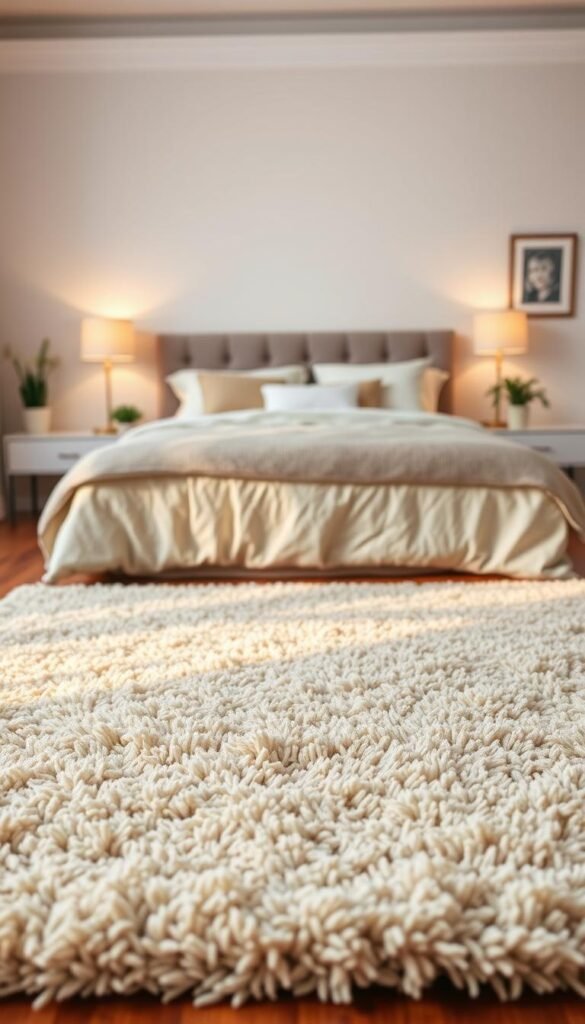
Cold floors make a bedroom feel less inviting, especially on winter mornings or in older apartments. Plush rugs or layered runners add warmth underfoot and soften footsteps in shared buildings.
Plush options for cold floors
Choose a high-pile rug or a layered runner by the bed and along the walking path. These give immediate touch comfort and reduce echo.
Apartment-first guidance
Pick low-pile rugs for rentals. They vacuum easily, trap less dust, and fit better under doors. Always add a rug pad to prevent slipping and protect floors.
| What to compare | Why it matters | Buy specs |
|---|---|---|
| Pile height | Comfort vs cleaning | Low (≤6mm) to high (20–30mm) |
| Backing | Grip and floor safety | Non-slip pad recommended |
| Shedding / stain | Maintenance | Low-shed fibers; stain-treated |
| Dimensions | Fit and flow in small spaces | Bedside runner or 5×8 for mid-size rooms |
- Place rugs where feet land first rather than buying an oversized piece that crowds the space.
- Vacuum weekly, spot-clean, and rotate in tight rooms to extend life.
Tie one good rug into the overall interior to add texture without clutter. A single, well-chosen piece makes the room feel settled and functional.
Calming Color Palette Ideas Using Blues, Greens, and Warm Neutrals
Choose a restrained palette to reduce visual noise and help the room feel settled at night. Nature-inspired tones—sky blues, sage greens, and sandy neutrals—create a quiet backdrop that supports rest.
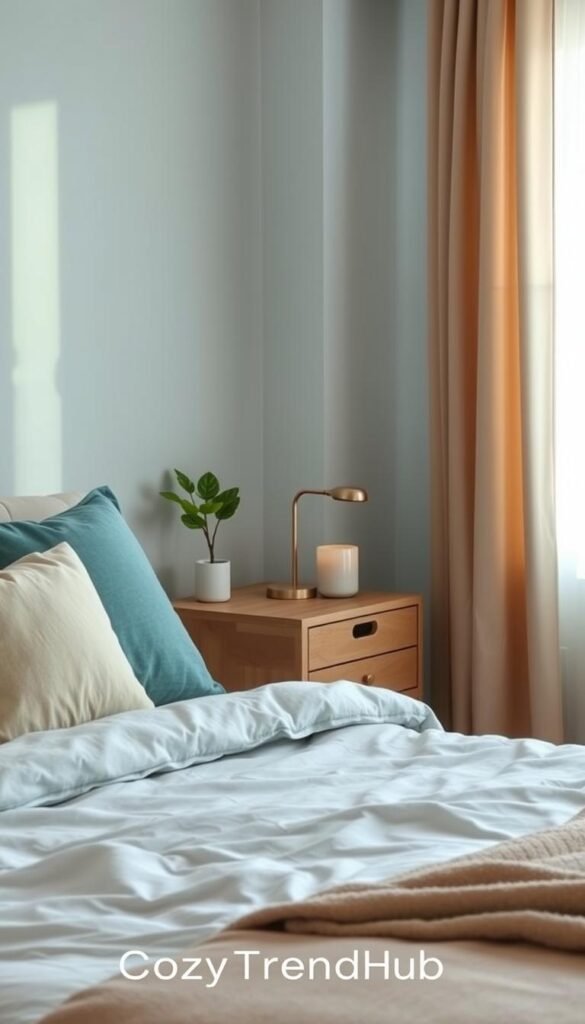
How to pick undertones that won’t clash
Mismatched undertones make a tidy room feel busy. Test bedding and wood near a swatch in daylight and under a lamp. If bedding reads warm, pair it with warm sand or warm sage; cool bedding pairs better with sky blue or cool gray-green.
Small-room strategy and renter-friendly swaps
In a small bedroom use lighter neutrals to reflect natural light and open sightlines. For renters, change textiles—throws, pillow covers, curtains—to adjust the palette without painting.
Seasonal switch without repainting
Introduce warmer touches in winter through wool throws and richer pillow covers. Order fabric swatches or small paint samples to test how tones shift across the day before buying.
„A limited, nature-based palette makes choices easier and keeps the focus on rest.“
| Problem | Quick fix | Why it works |
|---|---|---|
| Clashing undertones | Compare swatches in room light | Makes textiles and wood feel unified |
| Small bedroom feels tight | Use light neutrals + reflective accents | Expands perceived space and boosts natural light |
| Seasonal chill | Swap in warm textiles | Adds visual warmth without repainting |
Dark, Cocoon-Like Walls That Help You Sleep (Without Feeling Like a Cave)
A deep paint tone can tame visual clutter and signal the brain that it’s time to rest. Dark wall colors — when balanced — create an enveloping feel that supports wind-down without making the room feel unusable.
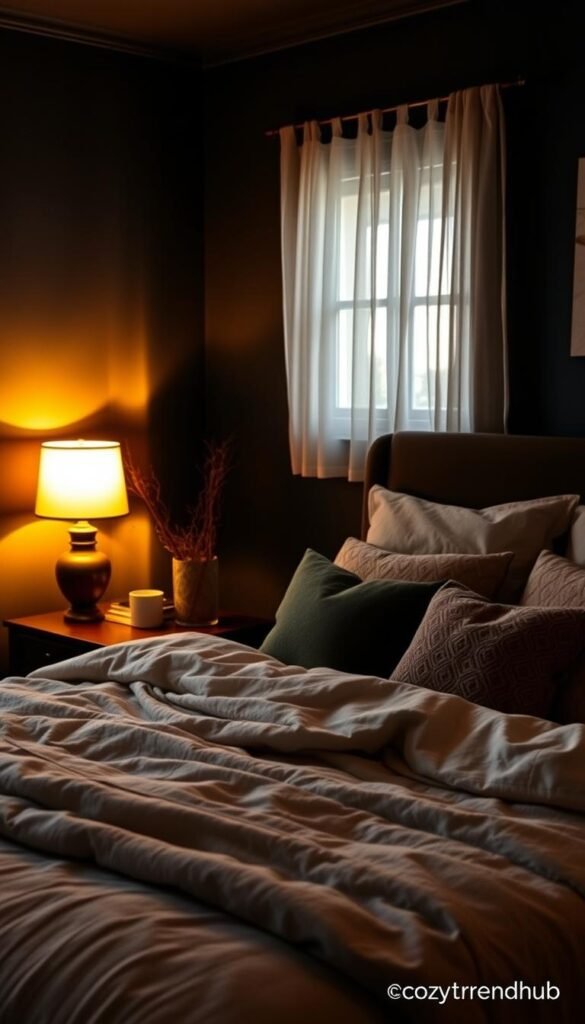
Who benefits and how to approach it
Dark walls suit light-sensitive sleepers, rooms with too much streetlight spill, and spaces that already get strong daylight. They work well in a north-facing space that needs evening calm.
Tip: If a full paint job isn’t possible, pick one accent wall or try a removable wall covering to get the effect without permanent changes.
Color families and undertone guidance
Deep blue, forest green, charcoal gray, warm brown, and near-black are solid choices. Pay attention to undertones: cool blues and grays read different under morning light than green or brown tones.
Balance the look
Use lighter bedding to lift the bed visually. Add reflective accents — mirrors, brass lamp bases, or small metallic frames — to bounce light and prevent the space from feeling cave-like.
„Dark paint can calm the senses if lighting and textiles are planned first.“
Lighting and buying considerations
Plan layered lighting before you paint. Dark walls need ambient sources, task lamps, and a soft bedside glow to avoid harsh contrast.
| Consideration | Why it matters | Practical tip |
|---|---|---|
| Sheen level | Matte hides flaws but shows scuffs; eggshell cleans easier | Choose matte for a soft look; eggshell for durability in high-traffic rooms |
| Sample testing | Color reads differently under day and night light | Paint 12″ swatches and view them at dawn and after dark |
| Lighting conditions | Natural and artificial light change the wall tone | Assess how morning sunlight and bedside lighting alter the shade before buying |
- Renter-friendly: single accent wall or peel-and-stick covering.
- Outcome: a cocoon-like feel that supports sleep while keeping the room practical and inviting.
Patterned Wallpaper and Accent Walls for Personality Without Clutter
A patterned accent can give a room instant personality without adding surfaces to clean or more furniture to arrange.

This approach suits rooms that feel generic, have mismatched hand-me-downs, or belong to renters who cannot replace major pieces. A single accent wall changes the mood while keeping the rest of the room calm.
Renter-friendly options and install tips
Peel-and-stick wallpaper is the practical choice for many. Check wall texture compatibility, test a small panel, and read removal notes so there are no surprises at move-out.
Pattern scale and mixing rules
Use scale to control visual weight: small repeats read busy in tiny rooms; larger motifs feel calmer on one surface. Pick one hero pattern for the wall and pair it with simpler bedding.
Rule of thumb: apply a 60-30-10 balance across patterns and colors so personality stays contained and the space supports sleep.
| Buying point | Why it matters | Practical check |
|---|---|---|
| Roll coverage | Rooms need full panels without odd seams | Calculate square footage + waste |
| Pattern repeat | Match lines during install | Note vertical repeat inches |
| Cleanability | Longevity in everyday use | Wipeable finish preferred |
| Repositionable | Easier DIY install | Look for demo-friendly backing |
For practical product picks and more bedroom ideas, focus on roll specs and repositionable materials so the room gains personality while staying restful.
Bed Nook and Cozy Corner Decor for Small Bedroom Comfort
In tight spaces a defined sleep nook can turn a cramped area into a restful zone.
Problem: small layouts often leave a single bed feeling exposed. That makes the room read as cluttered and unfocused.

Who benefits
This approach helps studio apartments, kids’ rooms, guest rooms, and any small room where zoning improves function. A framed sleep area gives privacy without building walls.
Box bed and curtain solutions
A box bed or a simple curtain track creates an enveloping feel and adds warmth, especially in drafty corners. Use removable tracks or ceiling tension systems for renter-friendly installs.
Shelving and storage
Vertical shelving beside the bed keeps books and a spare blanket at arm’s reach. Open shelves add access; closed bins hide visual clutter.
| Consideration | Why it matters | Quick tip |
|---|---|---|
| Curtain hardware | Mount method affects damage to walls | Choose no-drill or tension options |
| Nook depth | Clearance for linens and movement | Allow 12–18″ behind mattress |
| Airflow | Prevents stuffiness | Leave one side partially open at night |
Layout tip: keep the entry side open so movement at night is easy. Avoid pinch points near the door.
Wrap-up: a measured nook reduces visual noise and keeps sleep items handy. For more inspiration see cozy corner ideas.
Seasonal Cozy Upgrades for Winter Without Redecorating the Whole Room
Small textile changes and a lighting tweak can shift a room from drafty to inviting in a single afternoon. These moves save time and avoid a full redesign while making nights warmer and calmer during winter.
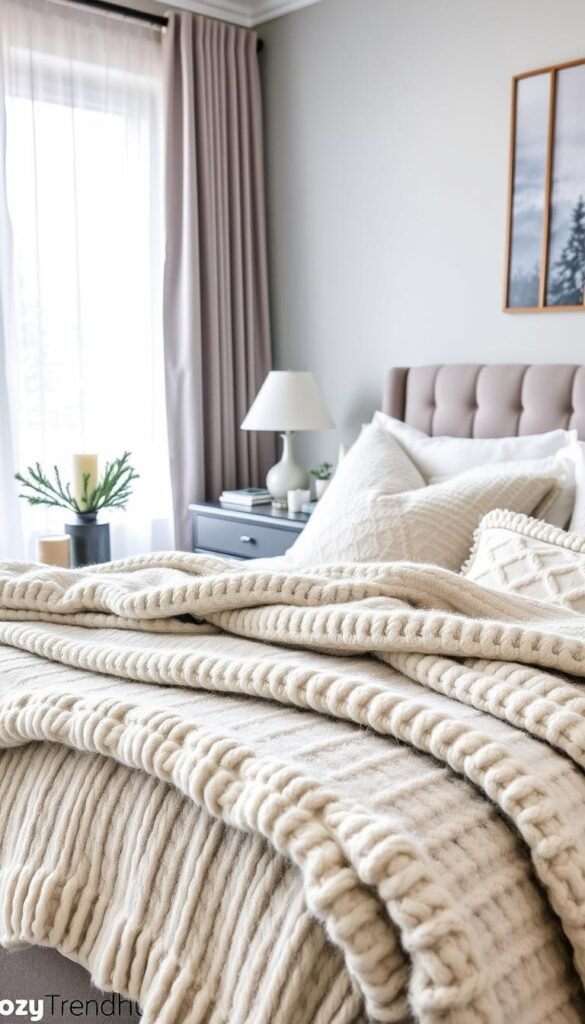
Layering checklist: quilts, wool blankets, and extra pillows
- Quilt or topper: add a stitched topper for targeted warmth and easier washing.
- Wool blanket: natural insulation that breathes; fold at the foot of the bed for quick access.
- Extra pillows: 1–2 supportive pillows for reading and added insulation near the head area.
- Quick tip: use breathable cotton or linen sheets under heavy layers to avoid overheating.
Warm-up swap: textiles and accessories in richer tones
Swap throws, pillow covers, and a single rug in richer tones to warm the visual field without painting. This changes the mood fast and stays renter-friendly.
| Swap | Why it helps | Buy note |
|---|---|---|
| Wool throw | Adds warmth and texture | Choose washable or foldable for small spaces |
| Heavier pillow covers | Warmer feel without extra bed bulk | Swap covers seasonally to keep the bed neat |
| Small rug | Warms the step zone | Pick low-pile for rentals and easy cleaning |
Lighting tweak: add another lamp instead of using overhead light
A second lamp or a plug-in sconce gives layered lighting that soothes. Avoid harsh overhead bulbs and use warm bulbs for evening time.
Practical pick: a bedside lamp with a dimmer or a timer makes winding down easier and saves time each night.
„Add one targeted layer and one low lamp—those two moves often deliver the biggest winter comfort gains.“
What to avoid: overheating your bed with too many heavy layers
Too many heavy blankets can trap heat and disrupt sleep. Aim for breathable layering: lighter base sheets, a quilt or topper, then one wool blanket as needed.
Small-space tactic: store off-season bedding in labeled under-bed bags so swaps take minutes. For more seasonal guidance and time-saving tips, see winter warmth ideas.
Candles and Scented Touches for a Relaxing Night Routine
A small sensory cue like a soft scent or low flicker can tell the mind it’s time to unwind. Scented touches and a warm glow add ritual without big changes.

Who benefits and who should skip them
Good for: people who use fragrance as part of wind-down and want simple, low-cost bedroom ideas that add atmosphere.
Skip or limit: those with asthma, migraines, or fragrance sensitivities. Consider fragrance-free alternatives or very light essential-oil blends.
Winter scent guide and safer alternatives
Seasonal choices—pine, orange, cinnamon, clove—offer a warm, seasonal touch without extra textiles. For rentals, dorms, or homes with kids and pets, choose flameless candles or LED options to avoid open flames.
Buying considerations
| Feature | What to check | Why it matters |
|---|---|---|
| Throw strength | Small vs large room | Controls how far scent travels |
| Burn time | Hours per ounce | Longer burn saves replacement |
| Wax type | Soy, beeswax, paraffin | Clean burn and scent profile |
| Sensitivity | Fragrance-free or low-PPM options | Prevents headaches and irritation |
Usage tip: Light candles early in the evening for a gentle cue, then extinguish before sleep. The aim is a calming touch that supports routine, not an overpowering scent that lingers.
Further reading: explore practical notes on bedroom candles for more tips and product guidance.
SAD Lamps and Natural-Light Helpers for Dark Seasons
When daylight shrinks, a targeted lamp can bring a more natural wake-up cue to a dark apartment. This is a practical supplement for short days, not a medical cure.
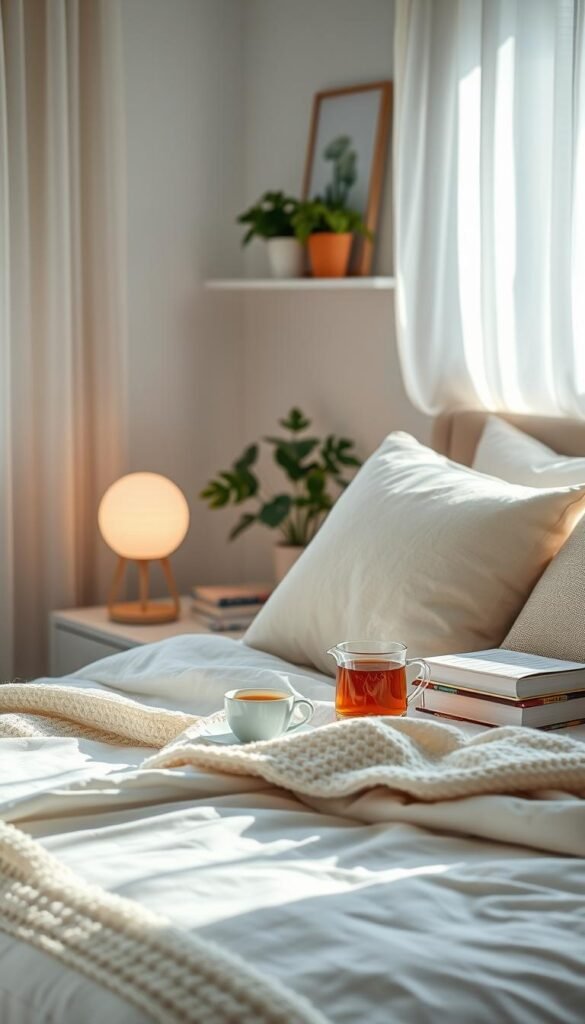
Who benefits: people with early sunsets, residents of north-facing units, and anyone whose morning routine suffers from weak light. Short, regular exposure can make mornings feel more alert and structured.
Where to place it
Set the lamp on a dresser, desk, or breakfast spot where it shines toward the face at a slight angle. Use it in the morning only; avoid using strong light near bedtime so wind-down cues remain effective.
Simple morning routine
Consistent timing: 20–30 minutes each morning while having coffee or getting ready. Keep sessions at the same time daily to build a reliable cue.
„Use the lamp as a morning habit—short, steady doses help it fit real life without disrupting sleep.“
What to compare before buying
| Feature | Why it matters | Practical spec to check |
|---|---|---|
| Brightness | Determines effectiveness as a natural-light substitute | Look for 2,500–10,000 lux at recommended distance |
| Size / footprint | Fits small rooms and dresser space | Measure depth and base stability for a tight room |
| Timer and controls | Builds routine and prevents overuse | Programmable timer or auto-off at 20–30 minutes |
| Practical extras | Ease of seasonal storage and daily use | Cord length, non-slip base, and compact storage case |
- Practical note: choose a lamp with clear lux specs and a stable base for dresser placement.
- For product guidance and lab-tested recommendations see a trusted review of light therapy lamps at light therapy lamp reviews.
Storage and Shelving That Reduces Clutter (and Keeps Coziness)
Clutter raises visual noise, and visual noise makes it harder for a room to feel calm at night. A clear storage plan cuts that noise and lets calm elements—soft light, warm textiles, and tidy surfaces—do their work.
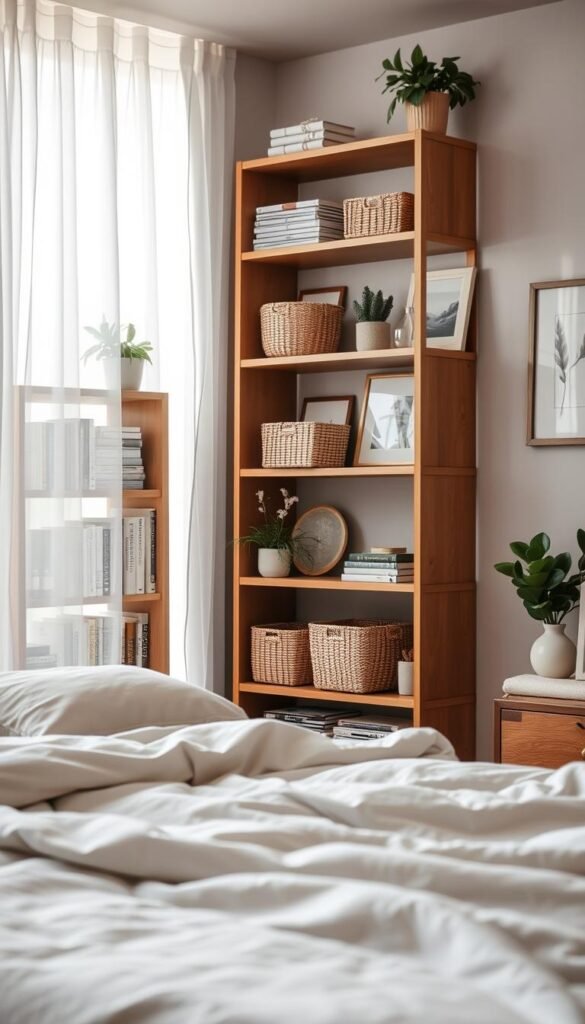
Small-space winners: vertical shelving and closed storage
Use wall height: tall, narrow shelving frees floor area and creates storage without crowding the space. Choose units with closed doors or baskets on lower shelves to hide everyday items.
Nightstand setup: essentials only
Keep the top surface minimal: a lamp/charging spot, a glass of water, one book, and a small catchall. This reduces visual noise and makes the bedside feel intentional.
Under-bed and behind-door tricks for apartments
Measure before you buy. Under-bed bins and over-door racks maximize hidden storage when closet space is tight. Label containers so swapping items is fast and low-effort.
Buying considerations and safety
Check weight limits, materials, and mounting style before purchasing. For renter-friendly installs, prefer tension poles, adhesive systems, or minimal-drill brackets. Never overload floating shelves; keep heavier items low to reduce risk.
| Feature | Why it matters | What to check |
|---|---|---|
| Shelf weight limit | Prevents sagging and accidents | Max load per shelf (lbs) |
| Mounting type | Lease-friendly install options | Adhesive, tension, keyhole, or bracketed |
| Material & finish | Durability and interior fit | Solid wood, MDF, metal; scratch resistance |
| Dimensions & depth | Fits narrow rooms and pathways | Height, width, depth; measure clearance |
Quick idea: pair one vertical shelving unit with a closed storage bench. The combination hides clutter, supports soft textures, and helps the room feel restful.
For minimal shelving ideas and small-space planning, see a practical guide on minimalist room solutions and simple styling tips at minimal interior ideas.
Style Picks That Still Prioritize Sleep: Minimalist, Scandinavian, and Rustic Cozy
Pick a look that answers your sleep issues: fewer distractions, softer light, warmer textures. Each approach below ties a visual style to a practical sleep fix so purchases help rest, not just the room’s appearance.
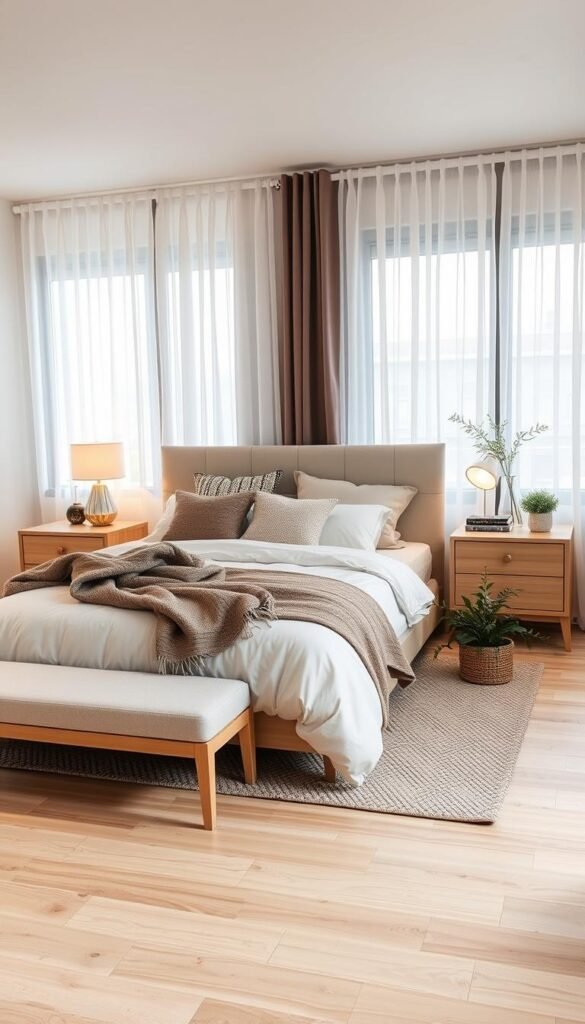
Minimalist: calm through less
Who it’s for: small spaces and sleepers who feel overwhelmed by stuff.
Buy: one quality lamp with dimming, closed storage, simple linens.
Skip: extra surfaces, many small accessories, open shelving that collects clutter.
- Shopping list: dimmable bedside lamp, under-bed bins, low-pattern sheets.
Scandinavian hygge layers: light woods and soft textiles
Solve cold or harsh lighting with layered textiles and warm, plug-in lighting. The look uses light wood, textured throws, and soft lamps for warmth without crowding the room.
Buy: plug-in wall sconces, wool or brushed throws, pale wood bedside table.
Skip: heavy patterned prints that make the space feel busy.
See more scandi ideas at Scandinavian bliss.
- Shopping list: plug-in sconce, textured throw, low-pile rug.
Rustic warmth: natural materials with modern lighting
Fix a room that feels cold by adding natural textures—woven baskets, a reclaimed wood headboard—paired with clean, modern lighting to avoid heaviness.
Buy: woven throw, wood nightstand, a simple warm-toned lamp.
Skip: bulky antique fixtures that block light or crowd a small room.
- Shopping list: woven blanket, slim wood nightstand, modern LED lamp (warm 2700K).
Sleep-first filter: prioritize darkness, quiet, comfort, and easy cleaning before decorative extras.
How to Choose What to Buy First (Comparison-Table Ready)
Focus on what alters sleep cues—light and warmth—before investing in big visual changes. This simple rule helps shoppers prioritize purchases that improve rest most quickly.
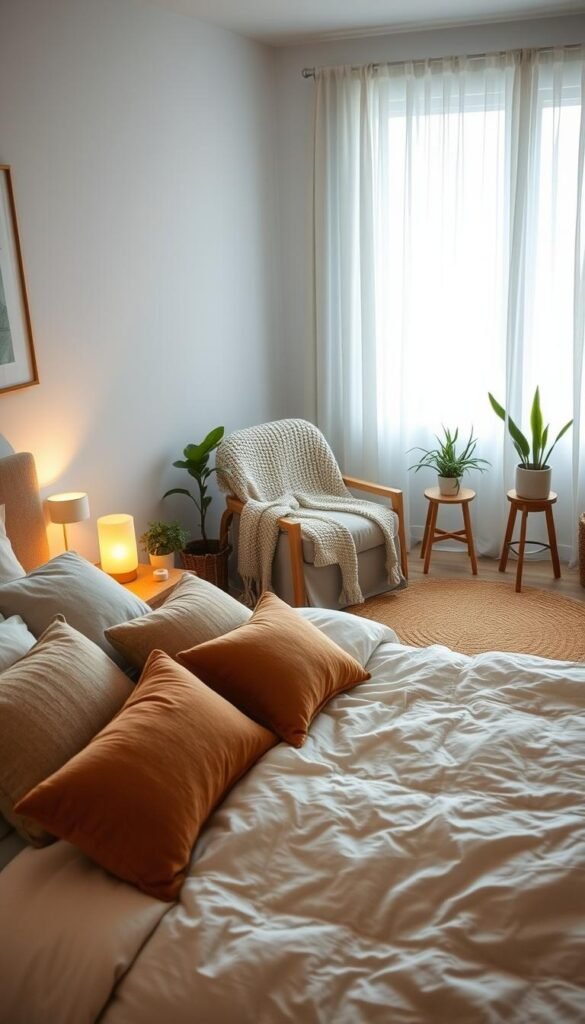
Priority buying order
- 1. Light control: blackout curtains or shades and ambient lighting. These reduce light leaks and set a wind-down cue.
- 2. Comfort upgrades: sheets, bedding layers, and throws for thermal comfort and quick seasonal swaps.
- 3. Room feel: rugs, paint, and wallpaper to change visual weight once sleep basics are solved.
Renter and small-space checklist
Do this first: measure window width, bed size, walking paths, and outlet locations. That prevents returns and cramped layouts.
Renter-friendly items: no-drill hardware, plug-in lamps, removable wallpaper, and lightweight rugs that move easily.
Quick pros / cons for comparison tables
| Category | Cost | Install difficulty | Reversibility |
|---|---|---|---|
| Blackout curtains / shades | Moderate | Low–moderate | High (easy returns, removable) |
| Sheets & bedding | Low–moderate | Very low | High |
| Rugs / paint / wallpaper | Varies | Moderate–high | Paint = low; removable wallpaper = high |
Affiliate block guide (specs to list)
Include: dimensions or coverage, materials and GSM/fabric weight, care instructions, install method, included hardware, and power source for lamps and ambient lighting.
Decision rules: if the room is bright at night, buy curtains/shades first; if it feels cold, buy bedding or a rug first; if it feels generic, save wallpaper or paint until later.
Mix upgrades one category at a time—lighting, then window treatments, then bedding—and evaluate results before moving on. For layout and bed sizing tips see primary bedroom ideas.
Conclusion</H2:
Focus on a few practical swaps that directly support sleep: cut visual noise, block stray light, and fine-tune bedding layers.
Quick recap: reduce clutter to make the room read calmer, install light control for consistent darkness, and add modular bedding so warmth is easy to manage.
For renters and small-space dwellers, choose reversible, compact options. Many upgrades use no-drill hardware, plug-in lighting, and removable textiles.
Next steps: pick one lighting upgrade, one light-blocking solution, and one bedding change to test first. Measure openings, check install notes, and compare materials and care.
One change at a time prevents clutter and helps you evaluate results. Prioritize what supports sleep now, then add a single personality touch when basics work. Learn more at the CozyTrendHub about page.



One Comment