
Empty corners can make a room feel unfinished. They interrupt flow and leave usable space wasted, especially in small apartments and rentals.
This guide frames the problem and delivers practical, buyer-focused fixes. It previews key categories readers will compare: seating, lighting, plants, storage, wall art, and multipurpose setups. Each idea is shown with what it solves, who it suits, key measurements, renter-friendly notes, and quick pros and cons.
Who this guide helps: renters who avoid wall damage, small-space dwellers who need clear walkways, and anyone who wants a reading nook without rearranging the living room.
Practical standard for comfort: prioritize a seat that supports reading, usable surfaces, warm light, and texture while avoiding clutter that steals floor space. Seasonal flexibility is built in so corners can convert for holidays or short-term needs.
The tone stays neutral and trustworthy. Recommendations focus on function, realistic budgets, and easy-to-undo upgrades rather than permanent remodels.
Key Takeaways
- Empty corners can make a home look incomplete; small fixes restore balance.
- Guide covers seating, lighting, plants, storage, wall art, and multipurpose ideas.
- Each entry lists who it fits, measurements, renter notes, and quick pros/cons.
- Cozy equals comfort, surfaces, warm light, and texture without clutter.
- Seasonal adaptability and easy-to-reverse changes are prioritized.
What makes a corner feel cozy (and not cluttered)
Empty angles can feel like problem spots unless you decide one clear purpose for them. A quick plan prevents random purchases that make a space look busier instead of more useful.
Start with the problem
The unfinished corner often reads as visual noise. Random objects crowd the floor and compete with walkways. That creates friction in small rooms and along shared walls.
Choose a primary purpose
Pick one function first: reading nook, extra storage, or ambient lighting. Buy only the pieces that support that purpose. This decision tree stops overbuying and keeps the footprint tight.
Soften hard lines and manage visual weight
Round accent tables, curved chairs, baskets, and textiles calm sharp angles. Lighter-looking furniture—open bases, slim legs, or glass surfaces—adds function with less bulk.
- Color and texture: Dark blue or saturated paint can read cocooning when balanced with warm wood and rugs.
- Texture rule: One rug or throw plus one basket finishes a spot without many small items.
- Compare before buying: Evaluate each item by function, footprint, and renter-friendliness.
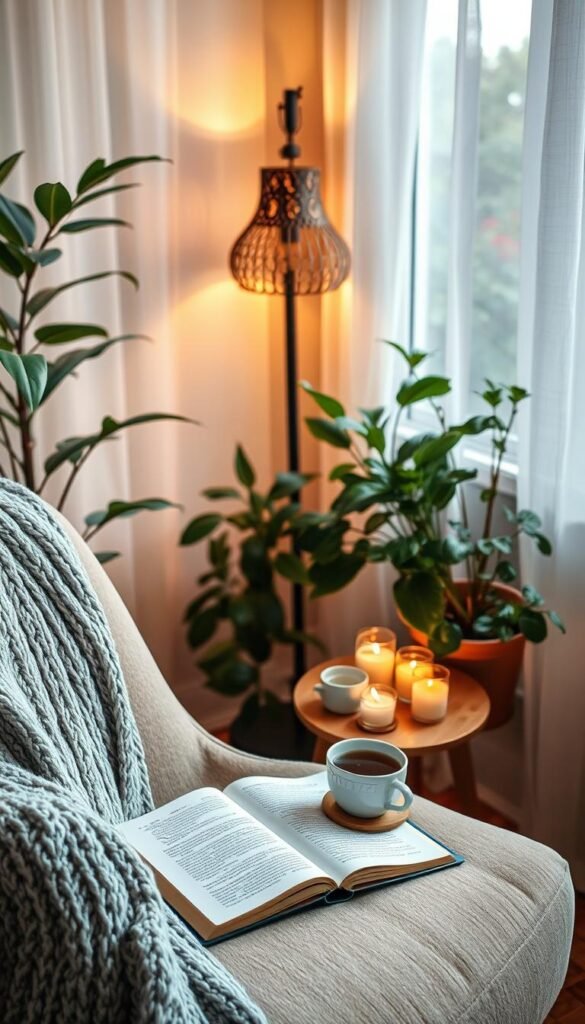
Measure your room and pick a layout that works in small spaces
A few quick measurements turn guesswork into confident furniture choices. Start with the basics and limit returns by matching dimensions to real clearances.
Quick measuring checklist
- Wall-to-wall corner width — note both walls for angled corners.
- Distance to nearby door swings and traffic paths.
- Available floor depth from the corner into the room.
Minimum clearances to avoid surprises
Chair footprint: allow the chair plus 18″ to pull it out. This keeps a walking way open.
Side table: choose a top no wider than the chair seat and keep a 6–8″ reach from the armrest.
Floor lamp: pick a slim base and a shade height of 48–60″ so light clears the seated eye without a bulky base taking floor space.
Layout tips for a functional reading nook
Angle the chair slightly toward the room so the view feels welcoming. Place the table on the dominant hand side for easy reach.
When floor area is tight, use vertical solutions: tall plants, ladder shelves, or a narrow bookcase add storage without widening the floor footprint.
Float-friendly rule: pull the chair 8–12″ from the corner so it doesn’t look jammed but still preserves circulation.
Renter practicality: pick lightweight pieces that move easily between rooms. Avoid oversized table bases that block a small space.
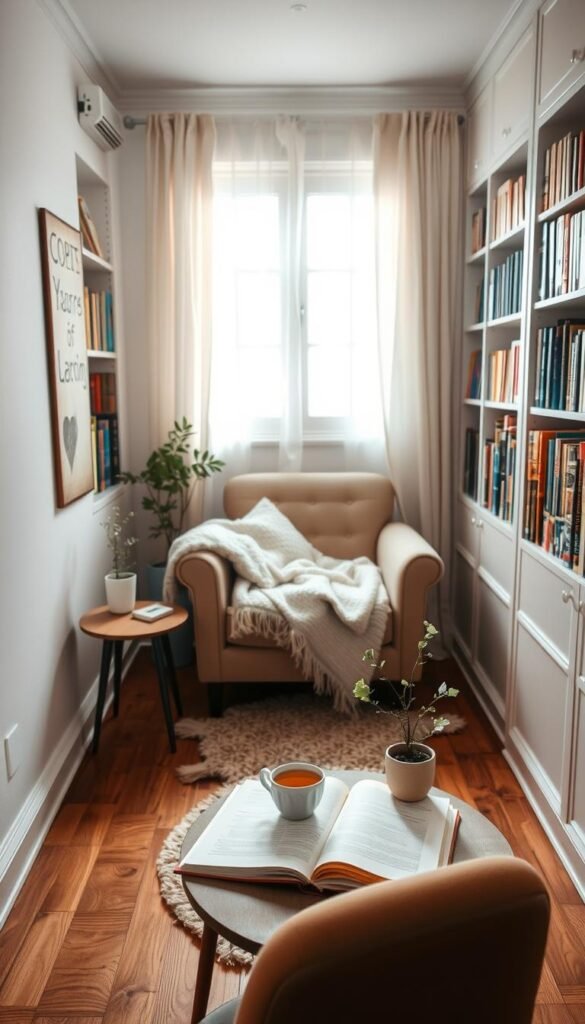
Renter-friendly cozy corner upgrades that won’t risk your security deposit
Simple lean-in pieces and wireless lights create a finished look that’s easy to reverse. These solutions add height, texture, and warm light without anchors or big holes.
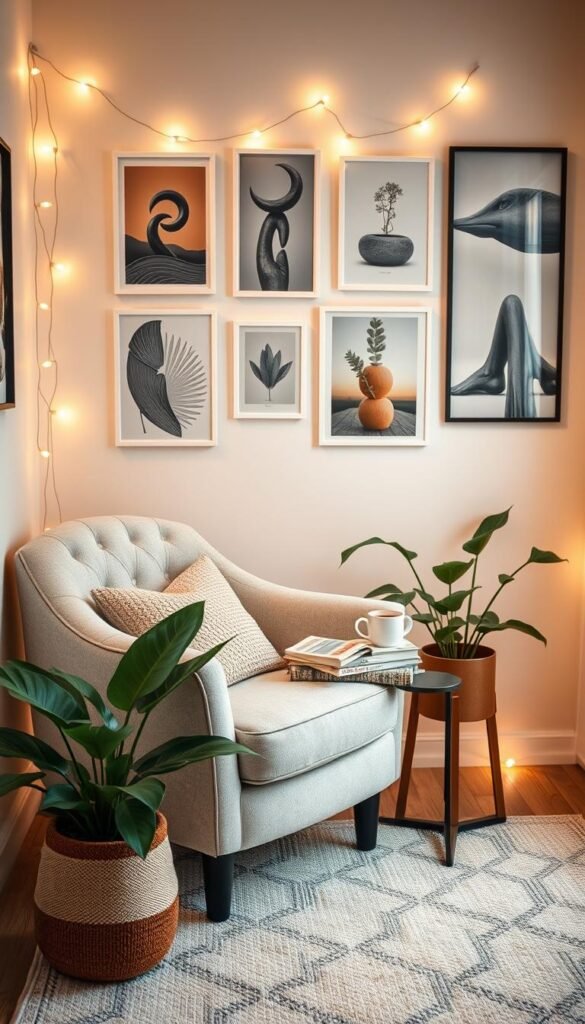
Lean-in pieces that read intentional
Who it helps: renters who can’t mount hardware or need quick impact.
- Blanket ladders lean against the wall to add texture and storage.
- Floor-length mirrors bounce light and make a small space feel larger.
- Art easels display one piece of art or even a small TV when mounting isn’t possible.
Wireless lighting and damage-minimizing walls options
Battery-operated wall sconces and portable lamps work when there’s no outlet nearby. They give usable light and low-install risk.
Gallery wall alternatives: removable strips, lightweight frames, and a tight layout to avoid extra holes.
- Quick pros/cons of no-drill fixes: no major damage but expect battery upkeep and occasional recharging.
- Affiliate cue: compare battery life, brightness, shade direction, and warm light quality before buying.
Renter-friendly home styling can still create a focal point. One mirror, one lamp, and one art easel are an easy example of finished design and practical corner ideas.
Best cozy corner decor that instantly adds seating
A single seat instantly turns an unused angle into a purposeful spot for reading or company.
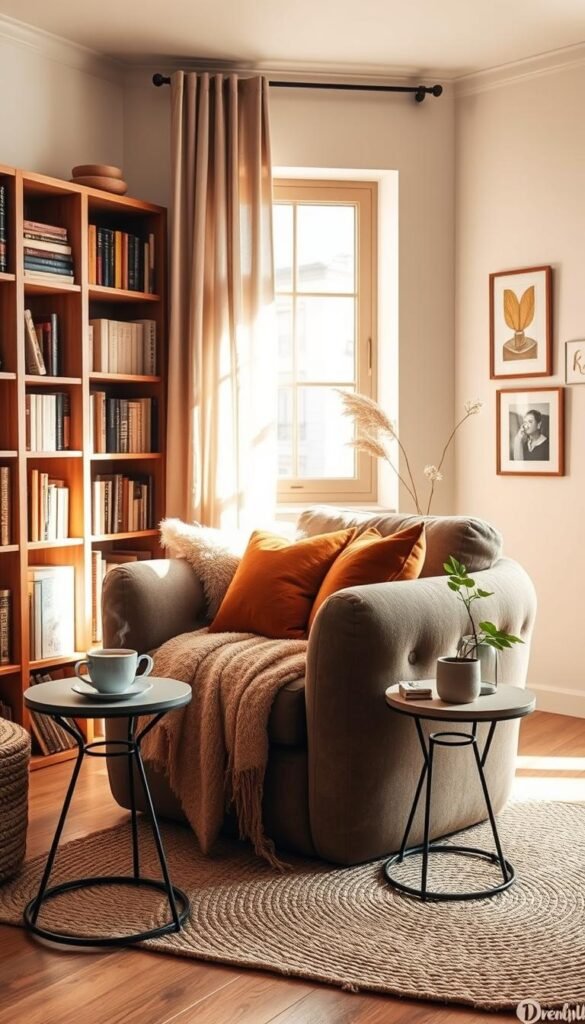
Cozy accent chair corners for reading and extra guests
Who it suits: readers and hosts who need occasional extra seating without rearranging the main living room.
What it solves: no comfortable place to sit for a quick read or a visiting friend.
Compare: seat depth, back support, fabric cleanability, and arm presence for long reading sessions.
Pros: doubles as a statement piece and guest seat. Cons: comfort varies with style; some models need cushions for long use.
Swivel chairs for flexible living room corners and bedroom nooks
Who it suits: those who want flexible sightlines for TV or conversation in a small living room or a tucked bedroom nook.
What it solves: fixed seating that blocks view changes or forces rearrangement.
Compare: base diameter, swivel smoothness, and upholstery durability when kids or pets use it.
Pros: versatile angles for family talk and TV. Cons: larger base can take more floor space.
Ottomans and poufs for extra seating plus hidden storage
Who it suits: apartments and busy family rooms that need compact, multipurpose pieces.
What it solves: lack of seating and visible clutter like throws or games.
Compare: internal storage volume, top firmness for sitting, and fabric cleanability for spills.
Pros: tucks away, adds storage, and is light to move. Cons: may not support long reading sessions upright.
| Seating Type | Best For | Key Comparison Points | Quick Pros / Cons |
|---|---|---|---|
| Accent chair | Reading, occasional guests | Seat depth; back support; fabric care | Pro: stylish + comfortable. Con: comfort varies by model. |
| Swivel chair | Living room & bedroom flexibility | Base footprint; swivel quality; upholstery | Pro: versatile angles. Con: larger base footprint. |
| Ottoman / pouf | Compact apartments, family spaces | Storage capacity; firmness; cleanability | Pro: storage + seating. Con: limited back support. |
Position seating as the fastest fix for a dead zone. A chair, swivel, or ottoman solves the no-seat problem in less time than a full layout change. For buyers, focus on comfort, footprint, durability, and cleaning when building product cards. This helps create the best cozy corner decor setup that works for readers, families, and small spaces.
Layered lighting ideas for a warm, relaxing corner glow
Layered lighting turns a dim alcove into a warm, usable part of the room. It fixes dark angles and avoids harsh overhead glare that flattens a living space.
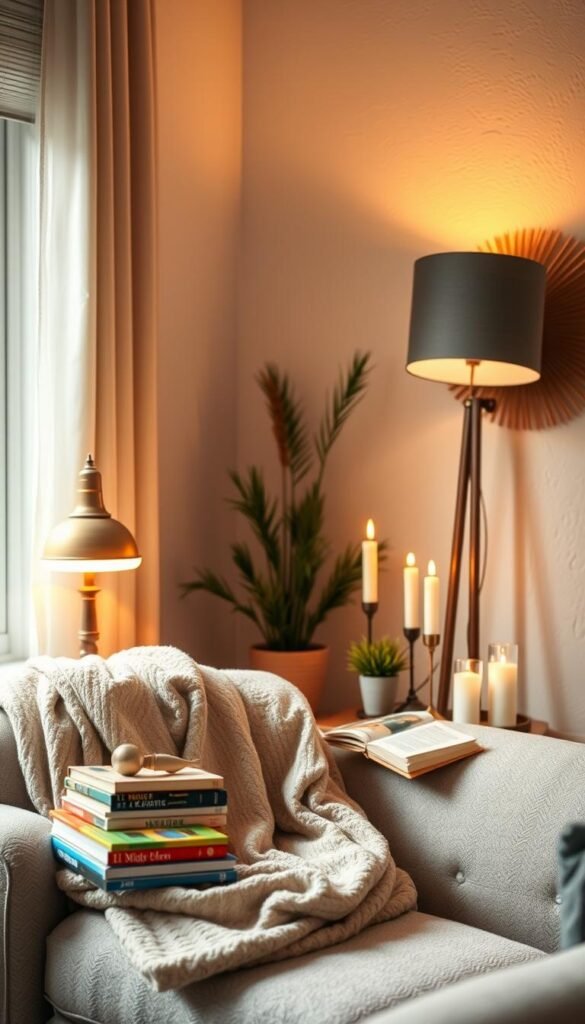
Plan one ambient source, one task lamp, and one accent light to control brightness and mood. A floor lamp sets general warmth. A directional reading lamp gives focused light. A picture light or sconce highlights a wall feature.
Floor lamps that create ambience without ceiling glare
Who it suits: living rooms and bedrooms that need soft, general light without rewiring.
Compare: base diameter (trip risk), shade height for a seated reader, and bulb type for warm ambience.
Directional lighting to highlight wall art and make spaces feel designed
Aim a narrow beam at art or textured paint to draw the eye. Fewer angled ceiling lights can boost this effect, as Claire Sa advises.
Wireless wall sconces for warm light in rentals
Wireless sconces offer easy install and a neat accent when outlets are far. Consider battery life versus convenience.
| Type | Best For | Key Comparison Points | Pros / Cons |
|---|---|---|---|
| Floor lamp | Ambient light in living rooms | Base size; shade height; bulb warmth | Pro: easy install. Con: uses floor space. |
| Task/directional lamp | Reading and focused work | Beam direction; glare control; bulb brightness | Pro: focused light. Con: can create hotspots. |
| Wireless wall sconce | Rentals; accent lighting | Power source; battery life; mounting method | Pro: no hardwire. Con: maintenance required. |
Quick buyer note: choose lighting that matches the intended use—reading, relaxing, or balancing a room’s look—then compare brightness, warmth, and power before you buy.
Use faux or real plants to fill empty corners without adding clutter
Plants bring life and height to an unused angle while keeping the footprint minimal. One tall piece can visually finish a nook without many small items. That keeps the space clean and easy to maintain.
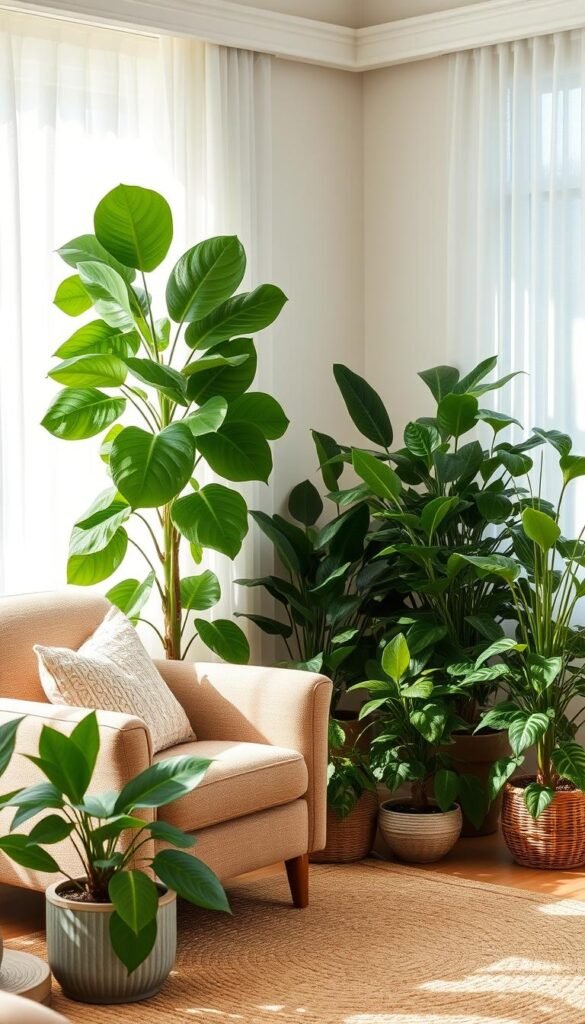
Faux fiddle‑leaf figs and faux olive trees for year‑round greenery
Faux options like a fiddle‑leaf fig or olive tree deliver green for years without watering. They work in low light and during travel seasons. Use a rattan basket or weighted planter to make them read intentional.
When tall faux plants beat real ones
Choose faux if a living room corners lacks sunlight, if maintenance is a problem, or if pieces move often. Real large‑leaf plants need bright light and regular care to support reading time near them.
Planter and hanging styling tricks
Build up a planter bottom (foam or an upside‑down pot) so the canopy sits at eye level. Add a warm basket or a textured planter to improve scale and color balance.
Hanging plants for tight floor plans
- Use ceiling or wall holders to free floor space — options noted by Robyn’s French Nest and The Inspired Room work well.
- One tall plant equals a low‑clutter focal point, but note: tall plants may affect nearby furniture placement.
Quick pros/cons: faux = low upkeep, dusting needed; real = living air benefits, needs light and water.
Pedestals and plant stands for narrow corners that need height
A tall pedestal or slim plant stand can finish a narrow corner without crowding the floor. It adds height and a focal point while keeping the base small.
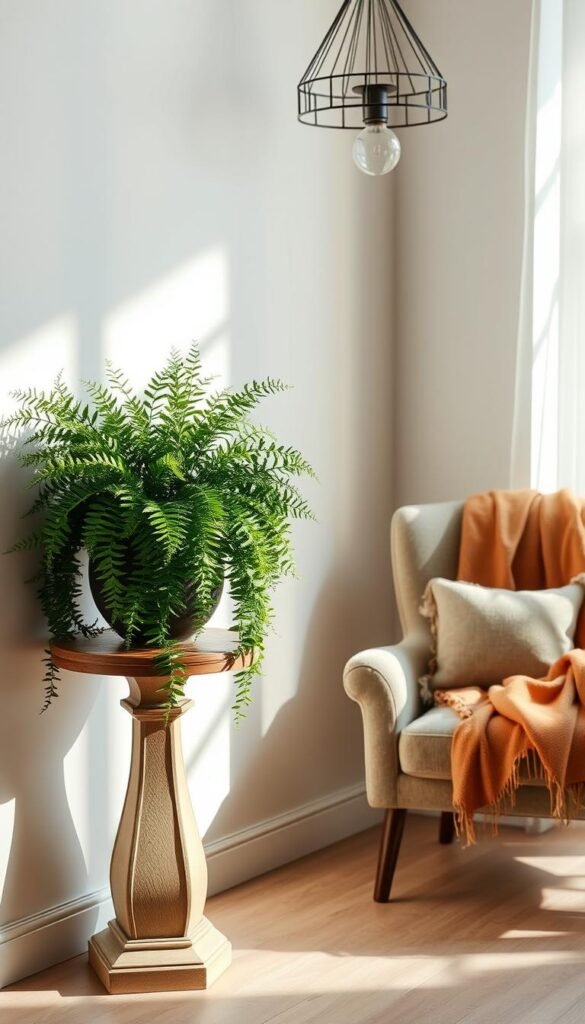
Why this idea works: a single round pedestal table reads light and soft. It fits next to a chair or under a sconce and makes the place look intentional.
What to measure
- Base width — ensures the stand won’t block traffic.
- Top diameter — limits what fits on the table.
- Total height — match to ceiling height and nearby furniture.
Buyer checklist & styling tips
Material: metal for slimness, wood for warmth. Stability: check weight capacity if pets or kids are present.
| Feature | Why it matters | Quick note |
|---|---|---|
| Base width | Controls floor footprint | Keep under 12″ for tight spaces |
| Top diameter | Limits display items | 14–18″ fits one plant or object |
| Height | Sets visual scale | 24–36″ works with chairs and wall art |
Pros: big visual payoff with minimal floor use. Cons: small surface and can tip if too top-heavy.
Pair a pedestal with wall art or a small sconce to complete the look. One well-chosen plant or sculpture is usually enough to make the way a corner reads feel finished.
Decorative ladders that double as seasonal blanket storage
A leaning ladder brings vertical interest and a ready place for throws without drilling into walls. It fills height and keeps blankets reachable for reading or TV time.
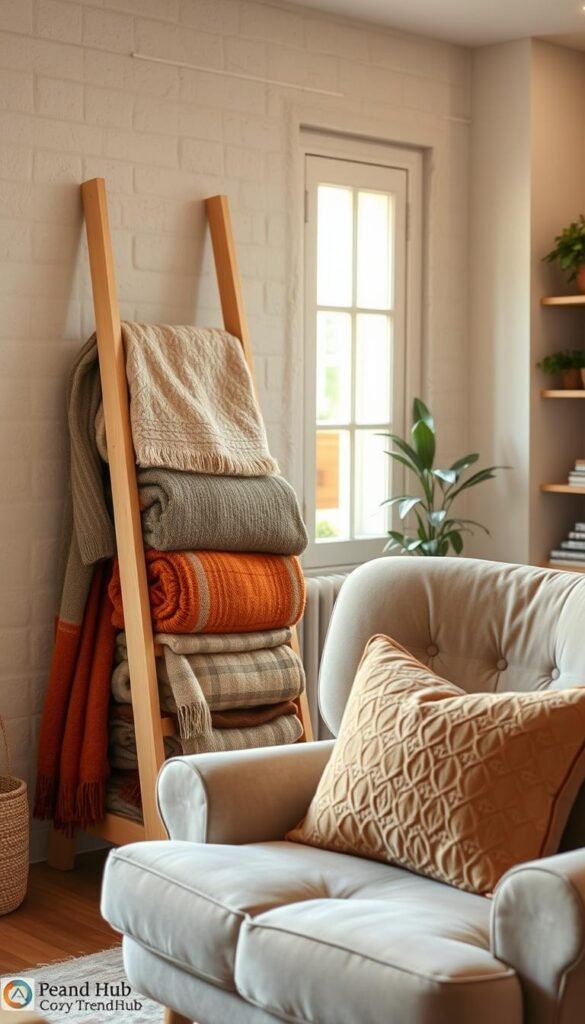
Who this works for
Best for small living rooms that need texture and a practical place for throws. Renters benefit because it requires no hardware and moves easily between living areas.
How to style without overfilling
Limit to 1–3 throws. Vary weight and weave, and keep colors within the room palette so the ladder reads calm, not cluttered.
Buying checklist
- Height: choose a ladder that clears baseboards and sits 6–12″ from the ceiling.
- Rung spacing: wider gaps work for bulky quilts; tighter spacing holds lightweight throws.
- Finish: warm wood adds texture; black metal adds contrast.
„One lightweight throw can soften hard lines while staying functional.“
| Feature | Why it matters | Quick tip |
|---|---|---|
| Height | Matches ceiling scale | 6–12″ below ceiling for balance |
| Rung spacing | Determines how throws drape | 10–14″ spacing for quilts; 6–10″ for thin throws |
| Finish | Sets visual tone | Wood for warmth, metal for modern contrast |
Pros: minimal footprint, seasonal swaps are quick. Cons: needs stable lean and looks messy if overloaded.
Place a ladder beside a sofa end or near a reading nook chair to keep it useful. This simple piece adds texture and function to small living spaces without permanent change.
Bookshelves and ladder shelves for functional cozy corner storage
A slim bookcase or ladder shelf solves clutter by adding vertical storage without crowding the room.
Who it helps: apartments and family room setups that need display plus practical shelving. These units stop corners from becoming dumping zones and give one clear place for items.
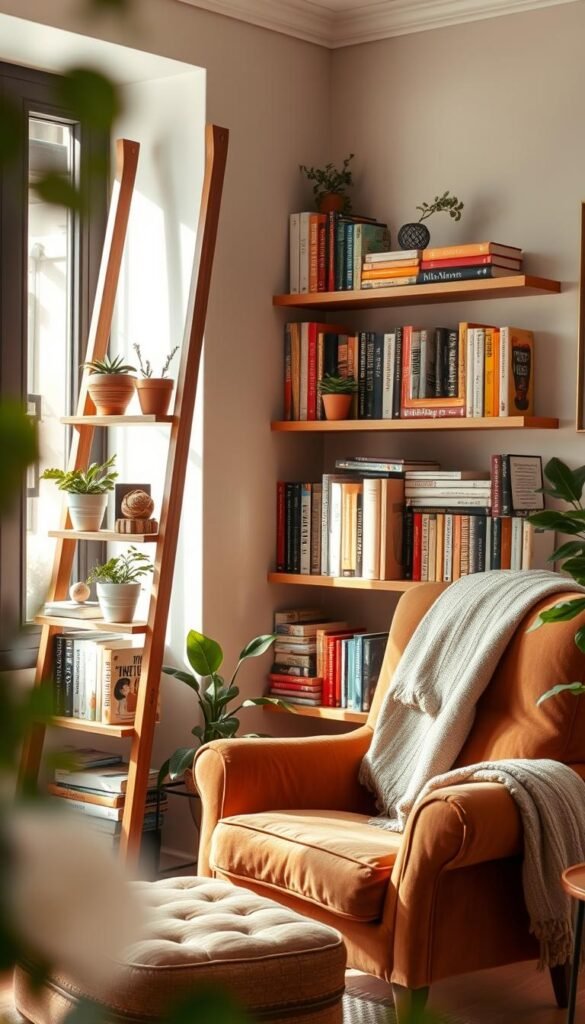
Styling formula and quick buyer prompts
Styling: heavier books low, a small plant mid, frames leaned or stood, and one seasonal piece for rotation.
- Core problem: no storage = cluttered corners.
- Use cases: vertical storage for tight space; mixed display and necessity for family room use.
- Product prompts: footprint width, shelf depth for baskets, total height, and anchoring needs.
| Feature | Why it matters | Best option | Quick note |
|---|---|---|---|
| Footprint width | Keeps floor traffic clear | 12–30″ wide | Pick narrow if floor space is tight |
| Shelf depth | Holds baskets or books | 10–14″ for books; 14–18″ for baskets | Deeper shelves add visual weight |
| Open vs closed | Shows items or hides mess | Open for light feel; closed for tidy look | Mix both for balance |
| Assembly & anchoring | Safety and ease of setup | Flat-pack or secondhand options | Anchor tall units in family rooms |
Buyer note: open shelves look lighter but reveal clutter; baskets on lower shelves can act like a cabinet substitute. Well-styled shelving adds function and warmth to rooms without permanent changes to the home.
Corner cabinets and sideboards to hide mess fast
Closed storage turns a busy nook into an instantly tidy part of the room. A single cabinet or sideboard hides toys, cords, paperwork, and seasonal items so the space looks calmer right away.
Who this helps: families and shared households that want a neat look without constant tidying. Closed doors stop small piles from becoming visual clutter and make quick cleanups effortless.
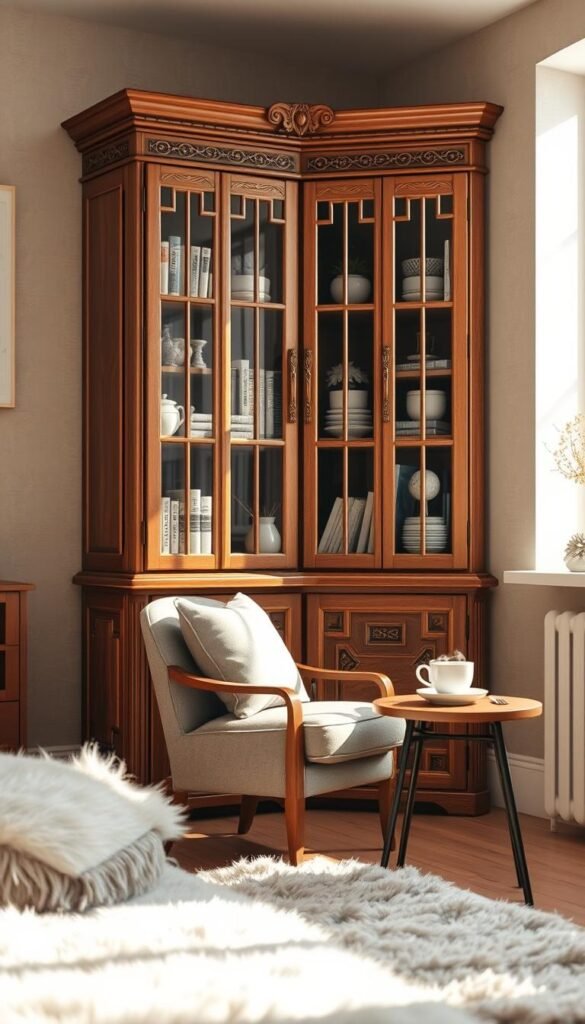
Styles that add texture and interest
Rattan-front doors and arched silhouettes give warmth and soft lines in a compact piece. These elements add texture and shape without loud color shifts.
Compare options before you buy
Think about tall cabinets to maximize vertical storage or low sideboards that double as a console with wall art above. Evaluate door style, capacity, durability, assembly, and how easy surfaces are to wipe clean.
| Type | Who it serves | Key features to compare | Quick pros / cons |
|---|---|---|---|
| Tall cabinet | Large households | Shelves, doors, anchor needs | Pro: lots of storage. Con: visual weight, needs anchoring. |
| Sideboard / console | Living rooms and entryways | Top surface, drawer space, height | Pro: styling surface. Con: less vertical capacity. |
| Rattan-front cabinet | Rooms needing warmth | Material care, weave durability | Pro: texture and airiness. Con: can show dust. |
Calm top-styling rules
Limit the top to one lamp or plant, one tray for remotes, and one framed piece. This keeps the look intentional and avoids a crowded surface.
Quick buyer note: cabinets are an effective fast fix to hide mess. They suit families who need tidy, kid-friendly storage, but expect more assembly and visual weight than a small table.
Baskets, texture, and soft goods to make a corner feel finished
Stacked baskets add storage and instant texture without changing furniture. They solve the common problem of a small area that needs „something“ but risks looking cluttered.
Where they work: keep throw blankets by a reading seat, stash spare pillows in a living room, or store handbags near an entry. One stack can handle real items and still look intentional.
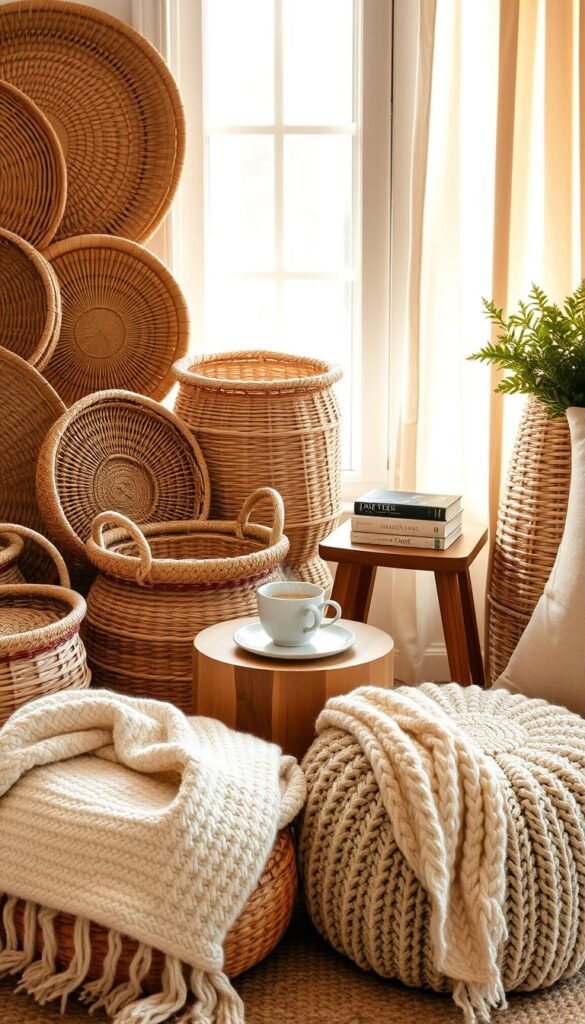
Stacking and buyer guidance
Start with a sturdy, lidded basket as the base. Limit stacks to two or three for stability and calm visuals. Expect patience when hunting true vintage sizes; a new vintage-style base often saves time.
Compare options: vintage vs. vintage-style new, lined vs. unlined, and lidded vs. open. Lids hide clutter; liners cut dust. Choose size to fit the room and the items you plan to store.
| Feature | When to choose | Quick note |
|---|---|---|
| True vintage | Authentic patina and unique look | May need cleaning; sizes vary |
| New vintage-style | Consistent sizing and durability | Good base for stacking |
| Lidded & lined | Hide items and reduce dust | Better for seasonal storage |
„One simple stack, a throw, and a small pillow finishes a space without overcrowding.“
Pros: quick tidy-up, adds warmth, budget-friendly. Cons: can collect dust and wobble if poorly sized.
Round accent and side tables that make a reading nook usable
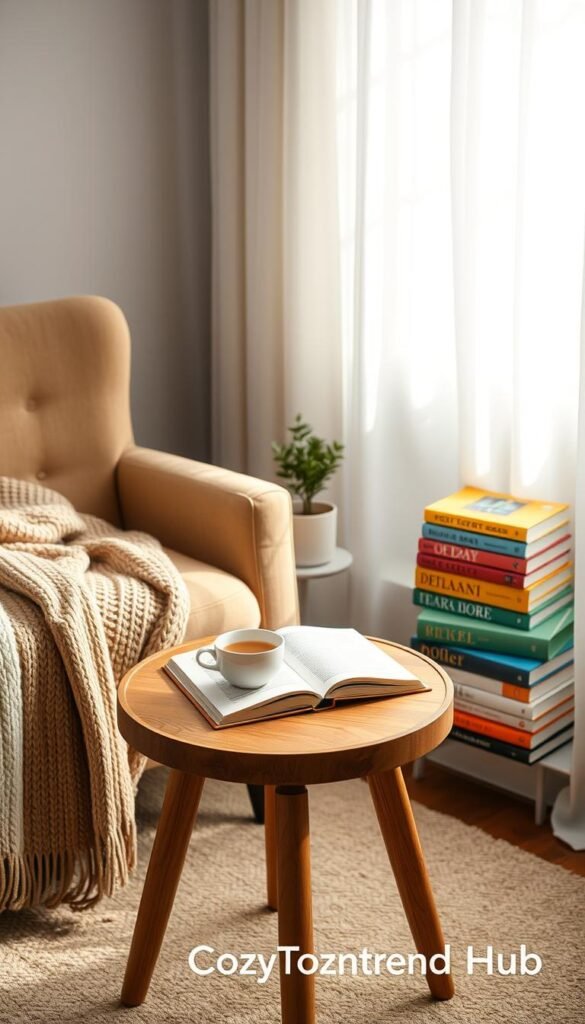
A small round table often makes a chair feel complete by giving a clear place to set a drink, a lamp, or a book. A chair alone leaves no stable drop zone and invites spills or clutter on the floor.
What this solves: a reliable surface for essentials and a place to stage small decor or a candle without crowding the seat.
Sizing, stability, and style notes
Height: match the table top to the chair arm for easy reach (within 1–2 inches).
Top diameter: 14–20″ fits a mug plus a paperback. Larger tops add utility but increase visual weight in a small room.
Base: choose a pedestal or single-column base to save floor space and avoid tripping paths near the chair.
Real-life usability
- Pulls out to become a game or puzzle surface when guests arrive.
- Works as a lamp landing when paired with reading light for evening use.
- Pedestal styles keep sightlines open and simplify cleaning under the table.
| Feature | Why it matters | Quick buyer tip |
|---|---|---|
| Top diameter | Holds essentials | 14–20″ for a mug + book |
| Base footprint | Clears traffic | Keep under 12″ if floor space is tight |
| Material | Durability and look | Metal or wood pedestal for balance |
Pros: efficient function per square foot and easy styling. Cons: smaller surface than a full end table, so choose size carefully for your reading nook.
Wall decor ideas that turn corner walls into a focal point
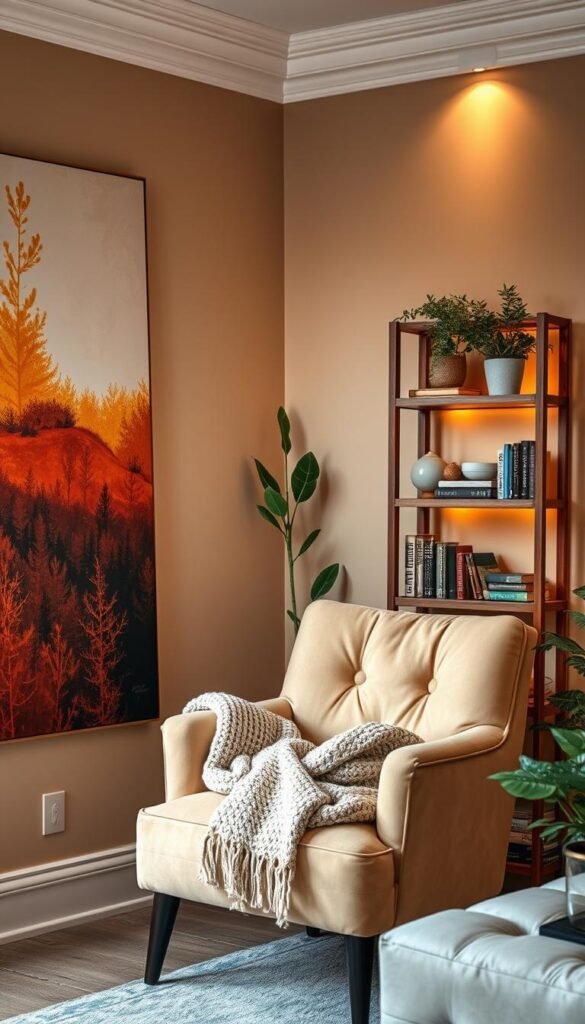
Empty angles can still look unfinished even with a chair or table nearby. Adding wall elements balances the view and ties the seating area to the room.
Gallery walls and renter-aware hanging
Gallery layouts give big impact for little cost. Start with lightweight frames and map the layout on kraft paper before hanging. Use removable hooks and picture strips to avoid damage.
Curated art sets for cohesive looks
Curated art sets ensure matching scale and palette. They reduce mismatched frames and make the wall feel intentional even on a budget.
Mirrors to bounce light and expand rooms
A floor-length mirror near a window or lamp reflects light and makes walls feel farther apart. Place it on a slim base so the mirror clears the floor and fits behind furniture.
Architectural salvage and easels
Salvage pieces—corbels, panels, or small columns—add texture without using floor area. An easel is a renter-friendly example that can hold art or a TV and moves seasonally.
„Lightweight frames and mapped layouts give the highest impact with the least risk.“
| Option | Damage risk | Best use | Notes |
|---|---|---|---|
| Mounted art | Higher (anchors) | Large, heavy pieces | Choose studs or proper anchors |
| Gallery (removable) | Low | Light frames, renter walls | Map layout and use picture strips |
| Floor mirror | Low | Bounce light in small rooms | Lean slightly or use floor stand |
| Easel / salvage | None to low | Seasonal displays or texture | Moveable and no-drill solution |
Quick pros/cons: wall pieces give big visual payoff with a small floor footprint, but heavier items need safe mounting and careful placement for stability.
Multi-purpose corner setups for entertaining and everyday routines
Turn an idle nook into a flexible hub that supports hosting, morning rituals, and short work sessions.
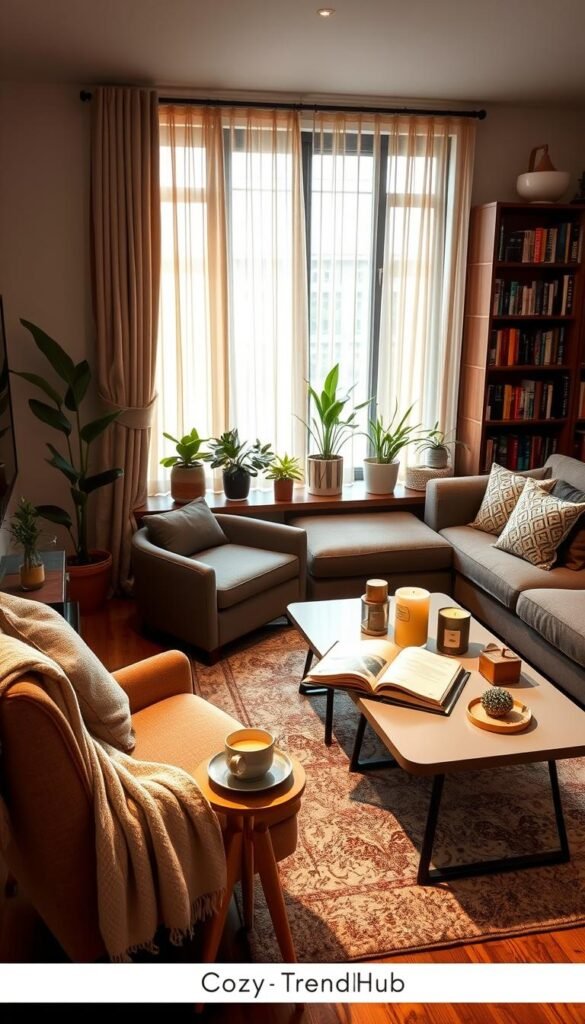
Why this works: a multi-purpose arrangement earns its floor space by solving daily needs in one place. It keeps a living room useful without adding clutter. Pieces should be mobile, renter-friendly, and easy to reconfigure for holidays or seasonal use.
Bar cart: a movable station for drinks, plants, or supplies
Ideal for renters and hosts who need a wheeled serving area. It can hold glassware, bottles, or act as a plant display when not in use. Choose carts with good wheel quality, a raised tray lip for spill control, and stable shelving that fits bottles and mugs.
Coffee station: free kitchen space and a daily ritual
Use a compact cabinet or shelf for the machine, mugs, and beans. Prioritize cord management and a flat surface that resists heat. This setup keeps the kitchen clear and makes a living ritual feel intentional.
Small desks: a living room work zone that hides away
Pick a narrow or corner desk that matches traffic patterns. Look for cable clips, shallow drawers, and light visual weight so the room still reads open when the desk is idle.
| Setup | Key Comparison | Seasonal Use | Pros / Cons |
|---|---|---|---|
| Bar cart | Wheel quality; tray lip height; shelf spacing | Rolls away for a tree or display | Pro: mobile; Con: can shift if overloaded |
| Coffee station | Cord management; surface heat rating; storage for mugs | Becomes a holiday drink station | Pro: frees kitchen; Con: needs daily upkeep |
| Small desk | Footprint; drawer/storage; cable clips | Easy to swap with a seasonal piece | Pro: work-ready; Con: risk of clutter |
Quick buyer tip: choose mobile pieces so a single space can shift roles in a room as needs change. Multi-purpose setups maximize function but require regular editing to avoid becoming a clutter hub.
Buying guide and comparison criteria for affiliate product blocks
Clear comparison criteria turn a browsing session into a confident purchase. This short guide lists measurable fields that affiliate product cards should show. Use it as a template to compare tradeoffs quickly.
Best for small spaces: footprint, height, and visual weight
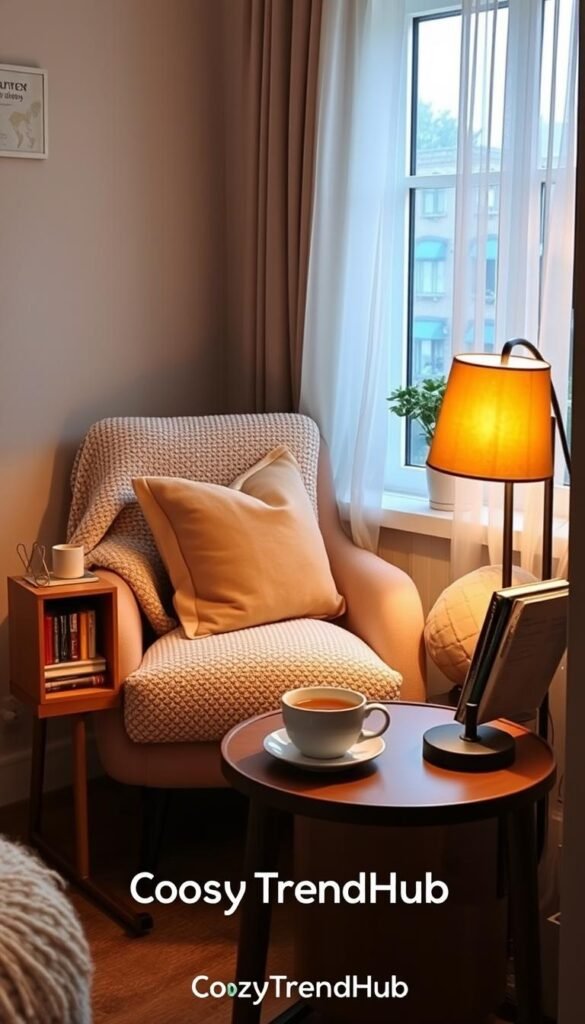
What to list: dimensions, footprint shape, total height, and whether the form reads open or bulky. Note clearances needed for doors and walkways.
Best for rentals: moveable vs mount-required pieces
Flag whether installation needs anchors, how many holes it leaves, and how easily the item moves during lease turnover.
Best for reading, low light, and seasonal flexibility
Reading: seat depth, arm height, lamp shade height, and glare control (bulb warmth and direction).
Low light: faux plant realism, pot stability, and materials that dust clean easily.
Seasonal: weight, wheels or foldability, and how fast the spot converts to a tree or display area.
Standard pros and cons to include on every product card
Always list durability, expected assembly time and complexity, cleaning needs by material, and safety notes like tip risk.
| Field | Why it matters | Quick metric | Pros / Cons |
|---|---|---|---|
| Dimensions & footprint | Keeps traffic clear | WxD x Height (inches) | Pro: fits space. Con: may limit function. |
| Mounting needs | Lease-friendly check | Moveable / Anchors required | Pro: renter-safe. Con: less permanent. |
| Reading performance | Comfort & light control | Seat depth; shade height | Pro: focused use. Con: may add visual weight. |
| Seasonal & care | Flexibility and upkeep | Weight; wheels; cleaning method | Pro: multi-use. Con: storage when not used. |
Conclusion
Decide the corner’s job first, then buy pieces that solve that single need for the room.
Choose seating, storage, lighting, or a small routine station and limit purchases to what supports it. Renters and small-space dwellers can rely on lean-in pieces, wireless light, and moveable furniture to finish a living room or bedroom without holes in the walls.
Starter combos to try: a chair + round table + floor lamp for a reading nook; tall plants + basket + sconce for low-clutter warmth; cabinet + mirror + lamp for hidden storage and style.
Control clutter with closed storage or contained baskets. Measure floor clearance, watch visual weight, and pick durable materials that clean easily.
Next step: shortlist 2–3 pieces using the comparison criteria, then buy based on the problem the room needs solved first.