
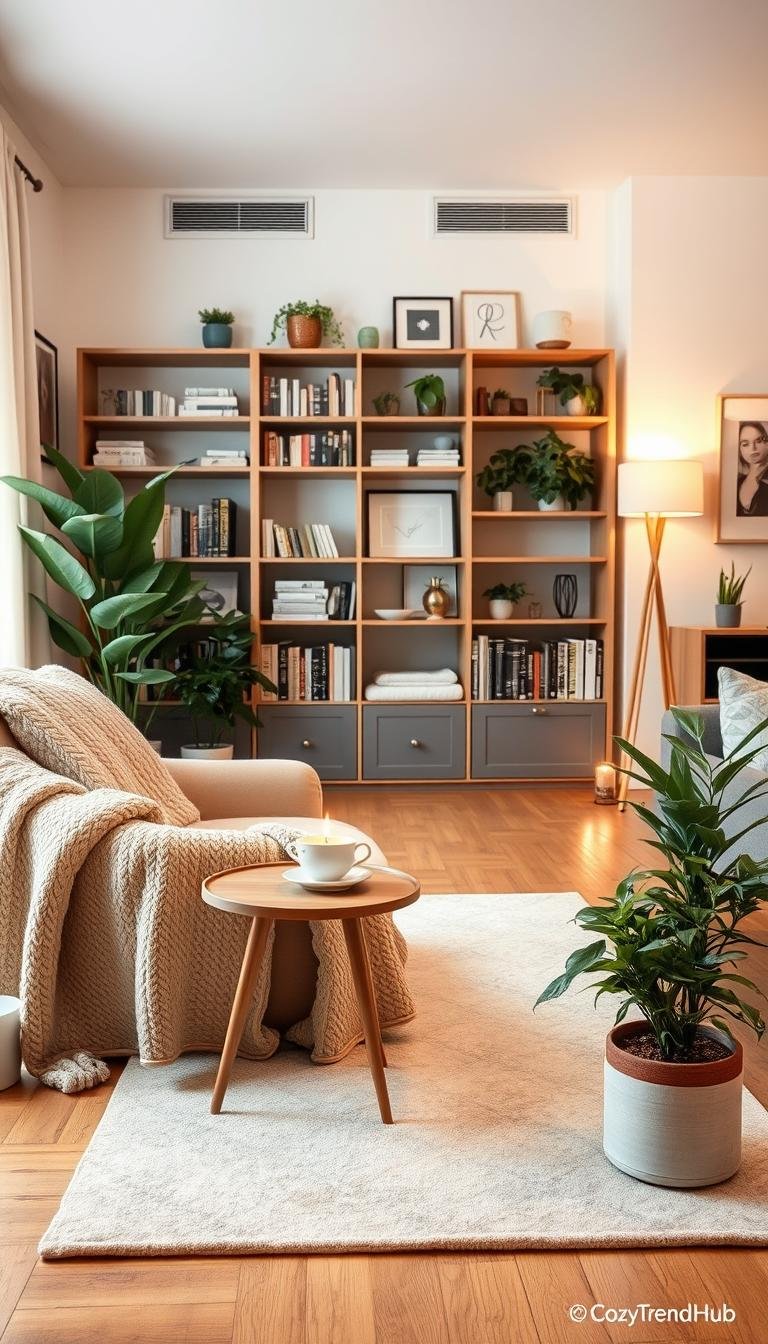
Many rentals feel cold and unfinished because paint, molding, or flooring changes aren’t allowed. Renters need fast, removable fixes that add personality without risking a deposit.
This guide focuses on the best cozy decor for apartments that brings visible warmth with simple, non-permanent upgrades. It shows practical pros and cons, who each tip suits, and what to check before buying. Suggestions favor removable, patchable, and easy-to-store items that support seasonal swaps and clean move-outs.
Expect clear buyer notes on cleaning, pet hair, cord management, trip risk, and delivery limits. Quick wins are ordered to help prioritize spend: textiles, lighting, walls, then one hero piece.
Key Takeaways
- Renters should choose removable, patchable items to protect deposits.
- Start with textiles, then add lighting, wall treatments, and a single standout piece.
- Each suggestion lists who it suits and practical buying checks.
- Recommendations cover cleaning, pets, cords, and delivery constraints.
- Product comparisons (rugs, plug-in sconces) will support confident choices.
How to Choose Cozy Decor That Works in a Small Apartment (Without Losing Your Deposit)
Identify what feels off in a rental—cold light, blank surfaces, and noisy rooms—before shopping. Pinpointing issues makes buying focused and avoids impulse purchases.
What a warmer, softer approach solves
Warmer light replaces harsh overhead bulbs and makes the entire space feel inviting. Soft textiles cut echo and add tactile warmth.
Intentional storage tames clutter so a small space reads as calm instead of cramped.
Renter-safe checklist
- Use removable adhesives and picture hooks that leave tiny holes.
- Choose washable textiles and patchable wall fixes to protect your deposit.
- Prefer foldable or stackable storage that stows easily when moving.
- Verify delivery paths and box size before ordering large pieces.
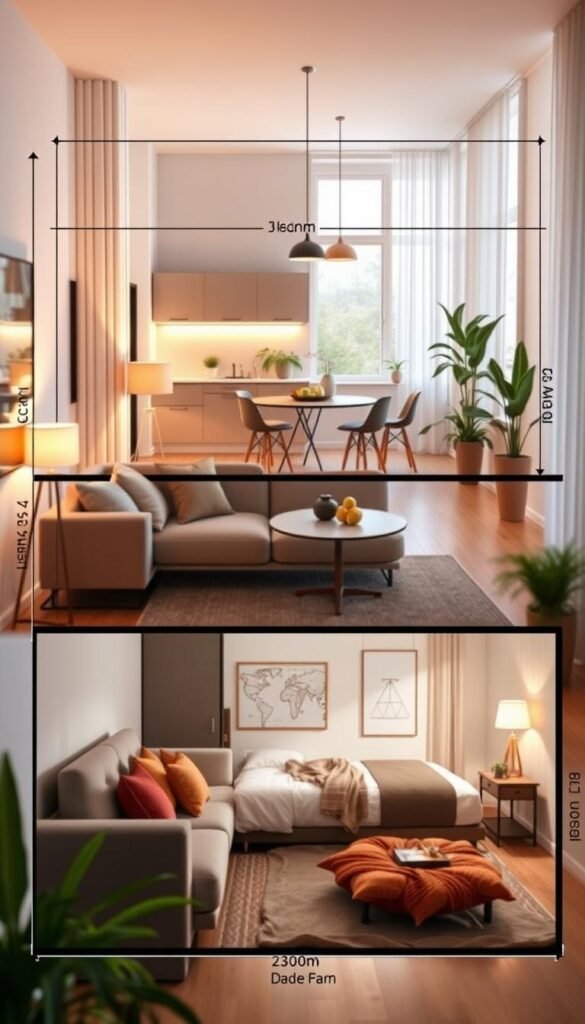
Quick measurement plan
Rug: pick a size that anchors seating without blocking walkways.
Sofa: measure to keep at least a 30″ path through the room.
Coffee table: allow 14–18″ clearance from the sofa edge.
Bed: map its footprint in a studio so circulation stays clear.
Budget approach
Start with affordable accessories—pillows, throws, and lamp swaps—to change the look cheaply. Then add one anchor item that carries the room’s style.
Next point: set up comparison tables (renter-safe wall options and small-space furniture dimensions) to make future decorating decisions faster and clearer.
Best Cozy Decor for Apartments That Delivers the Biggest Visual Change Fast
In rentals, small swaps can shift a whole room’s mood fast—here’s a ranked plan to do that.
Ranked quick-win plan:
- Textiles first: pillows, throws, and rugs anchor the living room instantly.
- Lighting second: swap bulbs and add plug-in fixtures to fix harsh light.
- Walls third: removable displays and floating shelves give a finished look.
- One hero piece: a sofa, coffee table, or statement chair sets the room’s style.
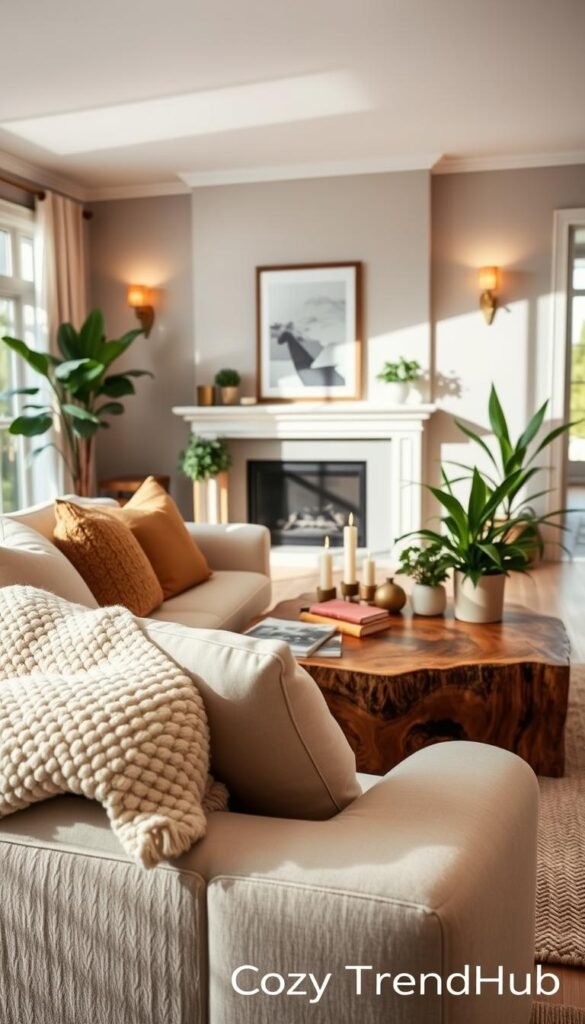
Why this order works
Textiles cover tired surfaces and add texture without tools. They hide worn floors and bland sofas and can be stored or swapped seasonally.
Next, layered light changes evening mood instantly. Warm bulbs and a plug-in lamp or sconce improve function and atmosphere with little installation.
Temporary wall solutions create a focal point. Use removable grids, gallery layouts, or floating shelves to display rotating items without paint.
Quick pros, cons, and buying criteria
- Textiles — Pros: fast, low cost; Cons: can collect pet hair. Buying check: washable covers and size (rug vs. runners).
- Lighting — Pros: high impact at night; Cons: cord management. Buying check: lumen level, bulb warmth, and plug length.
- Wall options — Pros: finished look; Cons: careful removal. Buying check: adhesive strength and weight limit of shelves.
- Hero piece — Pros: defines style; Cons: delivery hassle. Buying check: cost vs. impact vs. move-friendly score and entry clearance.
„Upgrade two of the four categories first to see a major change in one weekend.“
Start small: pick textiles plus one lighting upgrade. That combo delivers a visible transformation with low risk to a lease.
Throw Pillows and Cozy Throws for Sofas, Beds, and Daybeds
Layered pillows and a soft throw can transform a sofa or bed in minutes without tools. This is a renter-friendly swap that adds warmth, comfort, and quick style with no drilling or special hooks.

Who benefits and why
Best fit: renters who want fast change without work. These pieces hide worn upholstery and make a bedroom or living area feel settled right away.
Buy vs. DIY
Buying covers plus inserts makes seasonal swaps simple. Inexpensive covers are widely available online. DIY covers use thrifted shirts or fabric remnants for a custom look.
Practical pros and cons
- Pros: extra comfort, instant texture, and easy color swaps.
- Cons: some textures trap pet hair; excess pillows need storage.
Buying considerations
| Feature | Recommendation | When to choose | Notes |
|---|---|---|---|
| Insert size | Match cover size (+1–2″ for full look) | Standard sofas and beds | Plump inserts read upscale |
| Fabric textures | Velvet, linen-look, knit | Choose based on wear and pets | Knits add softness, velvet attracts lint |
| Washability | Machine-washable covers | Homes with pets or kids | Check care label before buying |
| Style swaps | Buy covers separately from forms | Seasonal color changes | Makes updates cheaper and lighter to store |
Styling tip: repeat one or two colors across pillows and throws to keep the room calm and intentional. This reduces visual noise and ties a small space together.
„Pillow cover set + insert bundle + washable throw“ — ideal for pet homes and regular laundering.
Affiliate idea: a small kit with a cover set, standard insert, and a washable throw covers the basic things renters want to change quickly and affordably.
Area Rugs and Layered Rugs to Add Warmth and Hide Ugly Floors
A well-placed rug can turn worn flooring into a pulled-together living area in minutes. Rugs solve rental problems without changing anything permanent.
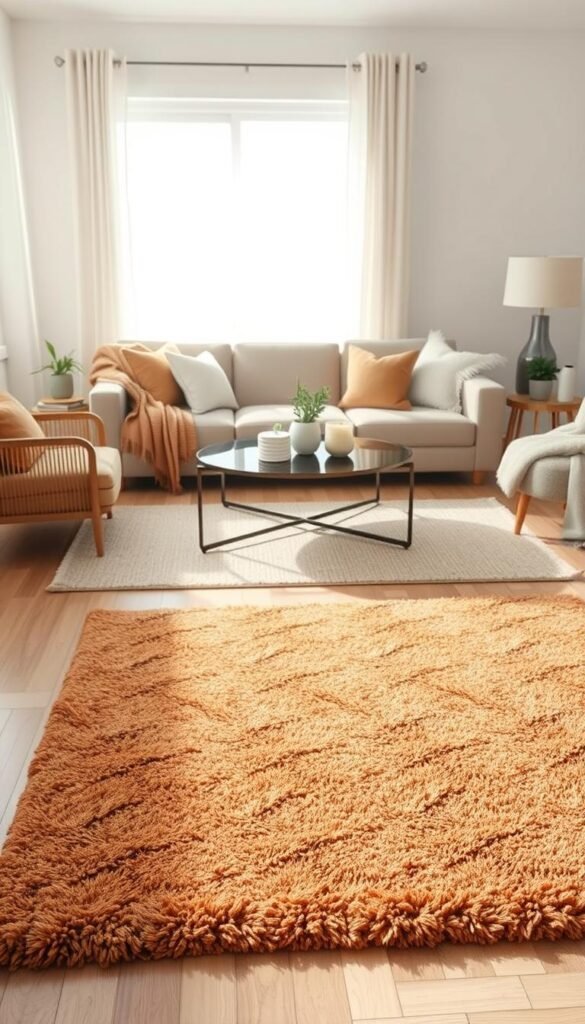
Best for: units with dated carpet, cold hard floor surfaces, or noisy neighbors below. A large area anchor muffles steps and adds visual warmth.
Studio zoning and layering tips
To make space feel intentional in a studio, place the front legs of seating on the rug to define a living room zone. This simple rule visually separates functions without walls.
Layering works well: start with a neutral large rug as a base and top with a smaller patterned piece. This camouflages stains and gives style without an expensive statement rug.
Pros, cons, and renter-aware trade-offs
- Pros: softer underfoot, better acoustics, hides uneven or stained floor surfaces, and easy to remove at move-out.
- Cons: edges can be a trip risk, extra cleaning, and rugs may shift without a proper pad.
Buying considerations
Focus on three practical checks: rug pad type (non-slip and breathable), pile height (doors and chair movement), and stain resistance for pets and spills.
| Item | Why it matters | When to choose | Quick pick |
|---|---|---|---|
| Rug pad | Prevents slipping, extends rug life | High-traffic areas, layered rug setups | Thin rubber with felt layer |
| Pile height | Affects door clearance and vacuuming | Homes with rolling chairs or low-clearance doors | Low to medium pile (0.25–0.5″) |
| Stain resistance | Makes maintenance easier with pets or kids | High-traffic living rooms and entryways | Olefin or treated wool blends |
| Size & layering | Defines zones and balances proportions | Studios and small living rooms | Large neutral base + 4’×6′ patterned top |
„A rug can both quiet a room and frame a seating area without a single nail.“
Affiliate idea: a kit with a washable rug option + rug pad + stain spray labeled by use (studio, pets, high-traffic) helps renters choose quickly and confidently.
Lighting That Makes an Apartment Feel Warm Instead of Harsh
Lighting choices change how a room feels the moment you switch a bulb.
Start simple: swap cool, bright bulbs for warm, soft LED bulbs (2700–3000K). This is the highest-return move in a small apartment and takes minutes.
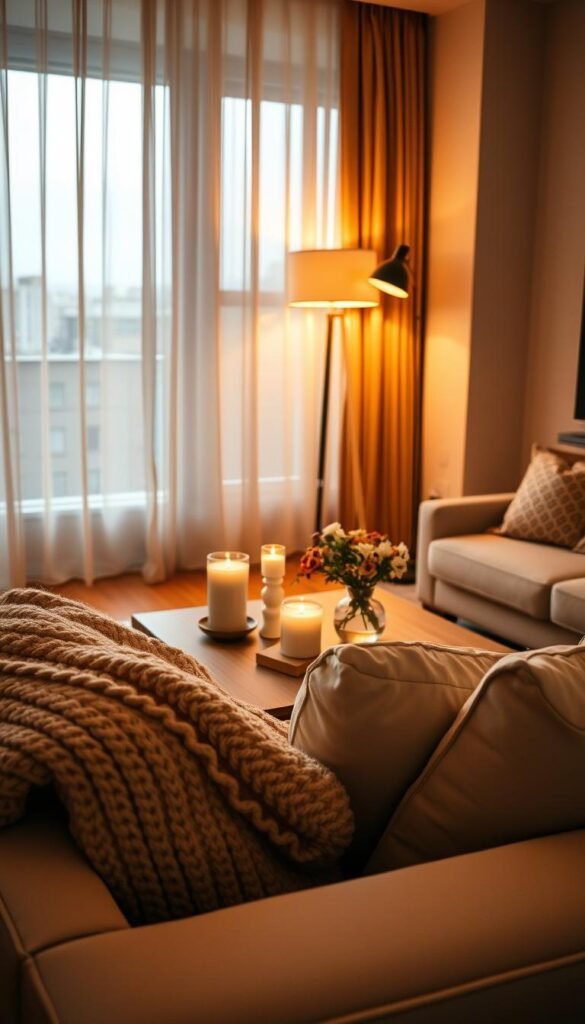
Layered plan for better light
Combine overheads with table lamps and a floor lamp to create depth. Put a floor lamp in dark corners to lift shadows. Use table lamps on side tables to add ambient glow near seating.
Renter-friendly plug-ins
Choose plug-in sconces or pendants where hardwiring isn’t allowed. They look built-in but install with a single outlet and a cable cover if needed.
Task light tips
Undercabinet plug-in strips improve kitchen work areas and make counters feel larger. Pick dimmable options to keep brightness in check.
Pros, cons, and safety
- Pros: adjustable mood, clearer task light, polished living room style.
- Cons: cord management can clutter a space; high-lumen bulbs may overwhelm a small room.
- Safety: confirm shade heat limits and check landlord rules before altering fixtures.
| Use | Lumens (range) | Color Temp (K) | Cord-hiding difficulty |
|---|---|---|---|
| Ambient living | 800–1600 | 2700–3000 | Medium |
| Task (reading, kitchen) | 400–800 | 3000–3500 | Low |
| Accent (sconces) | 200–600 | 2700–3000 | High |
„Start with one bulb swap and one lamp; you’ll see the room change in an evening.“
Renter-Friendly Wall Decor That Doesn’t Require Paint or Nails
Temporary wall solutions let renters display art and personality while keeping every surface intact. These approaches work when paint and nails are off the table but a room still needs a finished look.
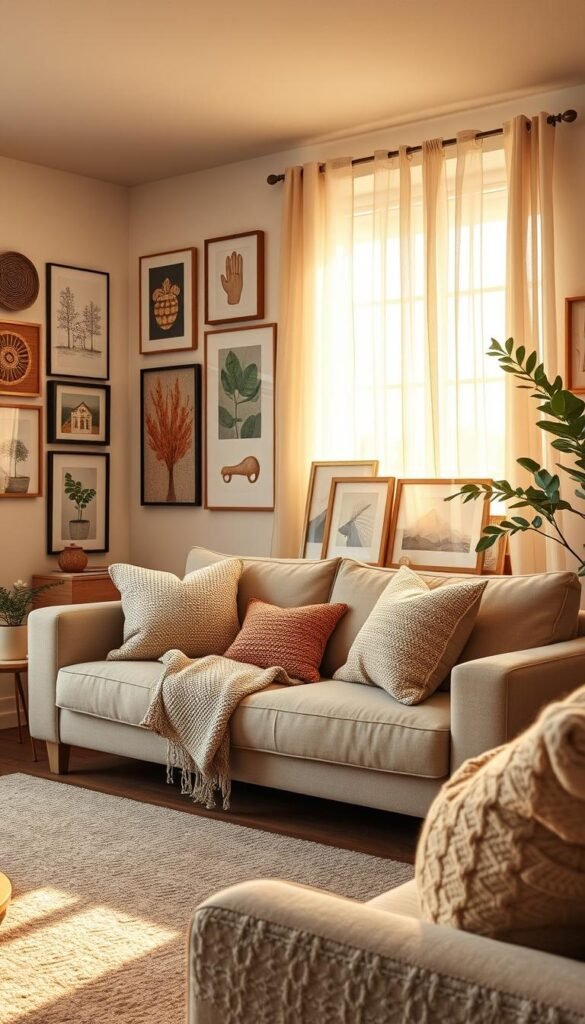
Washi tape print grids
Washi tape creates tidy print grids that read intentional. Use equal spacing and a level to align rows. Bold-color tape can act as a narrow frame, or choose neutral tape to keep prints central.
Why it fits: quick to update, removable, and great for seasonal swaps. It does not need tools and leaves minimal residue if removed carefully.
Gallery wall around the TV
Framing a TV with mixed prints turns a screen into a living room focal point. Arrange frames with the TV centered, then balance weight on either side to free up console surfaces.
Frame and mat tricks that reduce visual clutter
Use larger mats inside frames to add breathing room. A wider mat makes small or busy art feel calm and cohesive when mixed with other pieces.
- Who benefits: renters who want high impact without tools and small spaces that use walls instead of bulky furniture.
- Limits: adhesives vary by wall texture; tape won’t hold heavy frames and strong glue can peel paint.
| Weight class | Recommended hanging | Removal note |
|---|---|---|
| Light (prints, paper) | Washi tape grid or removable putty | Usually clean removal on smooth walls |
| Medium (small frames) | Removable hooks (low-hold) or heavy-duty washi with backing | Test a small spot; avoid over-tension |
| Heavy (large frames, mirrors) | Command strips rated by pounds or anchored shelf | Follow weight limits; remove slowly to protect paint |
„Large mats and consistent spacing make mixed art feel intentional rather than cluttered.“
Floating Shelves and Wall-Mounted Storage for Small Space Display
When floor space is tight, smart wall storage frees room without heavy furniture. Floating shelves give vertical storage that keeps the floor clear and the room feeling open.
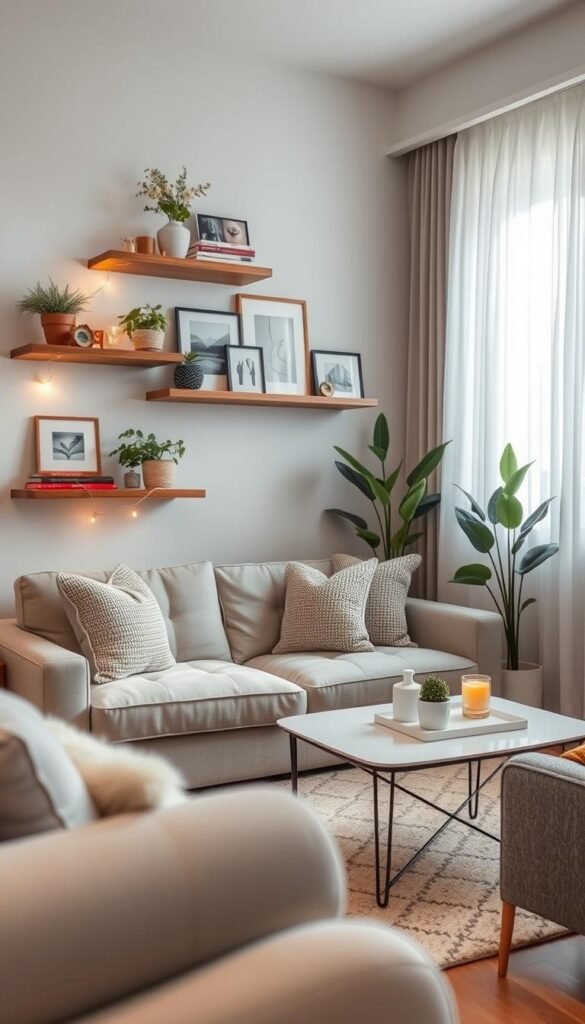
Best fit
Ideal for a tight living room that needs display and function. Renters who want to show books, plants, and small pieces while avoiding bulky furniture benefit most.
Material choices
Warm wood suits traditional design. Metal or stainless steel reads modern. Painted shelves match a color scheme. MDF offers a budget option that looks clean when painted.
Pros and cons
- Pros: quick restyling, rotating seasonal displays, better use of awkward wall areas.
- Cons: install limits in rentals, weight capacity issues, need to find studs or use proper anchors.
Renter-safe planning
Confirm lease rules and keep patch supplies for move-out. Avoid overloading shelves and use adhesive anchors only when allowed.
„Staggered shelves create a rotating display and save precious floor space.“
| Depth / Length | Weight Rating | Installation Difficulty |
|---|---|---|
| 8″–10″ / 24″–48″ | 15–40 lbs | Low–Medium |
| 10″–12″ / 36″–60″ | 30–80 lbs | Medium–High |
| 6″ / small ledges | 5–15 lbs | Low |
Affiliate idea: a shelf set plus decorative baskets and small frames makes a ready-to-style display that hides clutter and finishes a wall in minutes.
Windows and Draperies That Add Softness, Privacy, and a Finished Look
A row of drapery panels along a blank wall reads like a built-in feature and softens a room instantly. Drapes cover harsh, minimal window treatments and stop a wall from feeling unfinished.
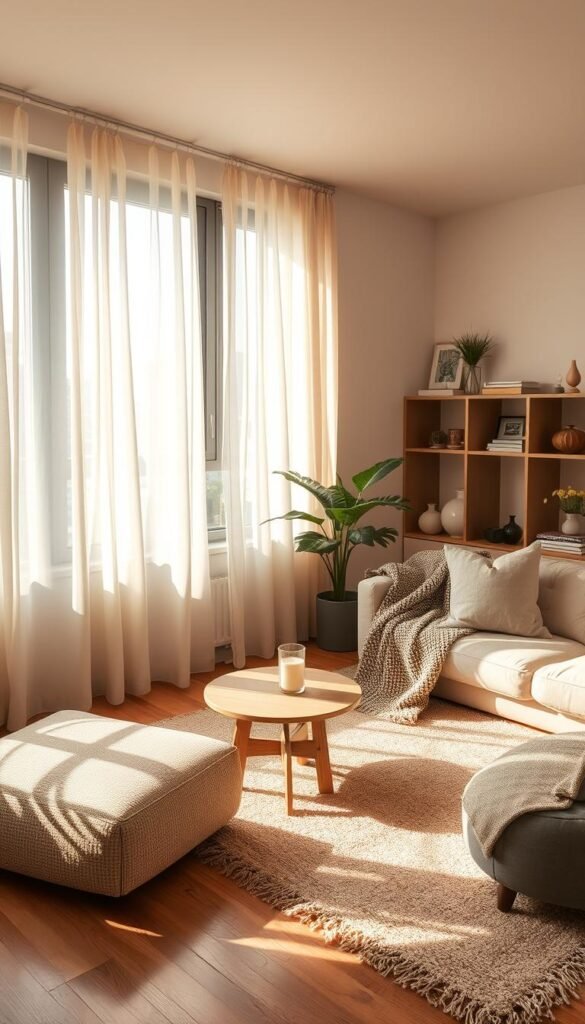
Using several panels to warm a wall
Hanging multiple panels across a long wall creates the illusion of extra windows. This adds warmth and personality without paint or wallpaper. In a studio, it visually expands the space and defines a seating or sleeping area.
DIY no-sew curtains in a weekend
A no-sew path uses iron-on hem tape and clip rings to finish ready-made fabric. It’s a quick way to update dull windows on a budget. Finish with a light steam to remove wrinkles and keep panels looking polished.
Use curtains as room dividers
Install a ceiling-mounted rod or tension pole to separate a bedroom nook in a shared layout. This improves privacy while keeping the floorplan flexible.
- Hanging tips: use damage-minimizing hooks, tension rods, or removable ceiling tracks.
- Color advice: pick panels that tie into the main palette to avoid visual clutter in a small space.
- Pros: finished look, better light control, softer acoustics; Cons: dust collects and long panels need careful measuring.
„Curtains act as both treatment and tool—softening walls and shaping shared spaces.“
Mirrors to Make Small Spaces Feel Brighter and More Open
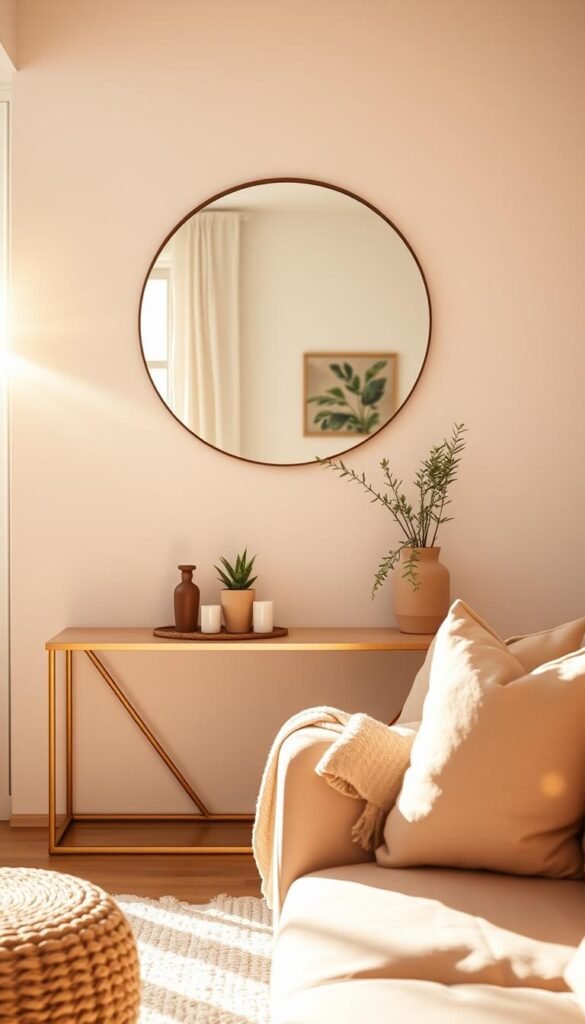
Reflective surfaces extend sightlines and bring more light into compact rentals. A mirror is a low-effort upgrade that makes a room feel larger without painting or furniture swaps.
Where to place mirrors
Rule: hang a mirror opposite a window to bounce natural light deeper into the space.
Angle mirrors to reflect the best view and avoid catching clutter. Full-length pieces also widen sightlines in narrow hallways and living rooms.
Who benefits and thrift tips
This is ideal for anyone in a small apartment who can’t change windows. Thrifted or vintage frames add character without high cost. Check the glass for chips and test that the frame holds the mirror solidly.
Pros, cons, and buying checks
- Pros: brighter feel, visually larger room, instant decor upgrade.
- Cons: glare at some angles, frequent fingerprints, and safety risks if not anchored.
- Buying checks: size vs. wall, weight and mounting method allowed by lease, avoid placing where it will reflect clutter.
„A well-placed mirror can double the perceived size of a small space while staying completely removable.“
| Type | Impact | Install | When to choose |
|---|---|---|---|
| Full-length | High — stretches vertical sightlines | Medium — floor lean or anchored | Narrow halls or behind doors |
| Oversized wall mirror | Very high — large brightness gain | High — requires secure mounting | Living room main wall |
| Grouped small mirrors | Medium — decorative, flexible | Low–Medium — many small mounts | Gallery feel, budget frames |
Cozy Seating That Does Double Duty in Apartments
Seating in a small home must earn its keep—every piece should offer function and style.
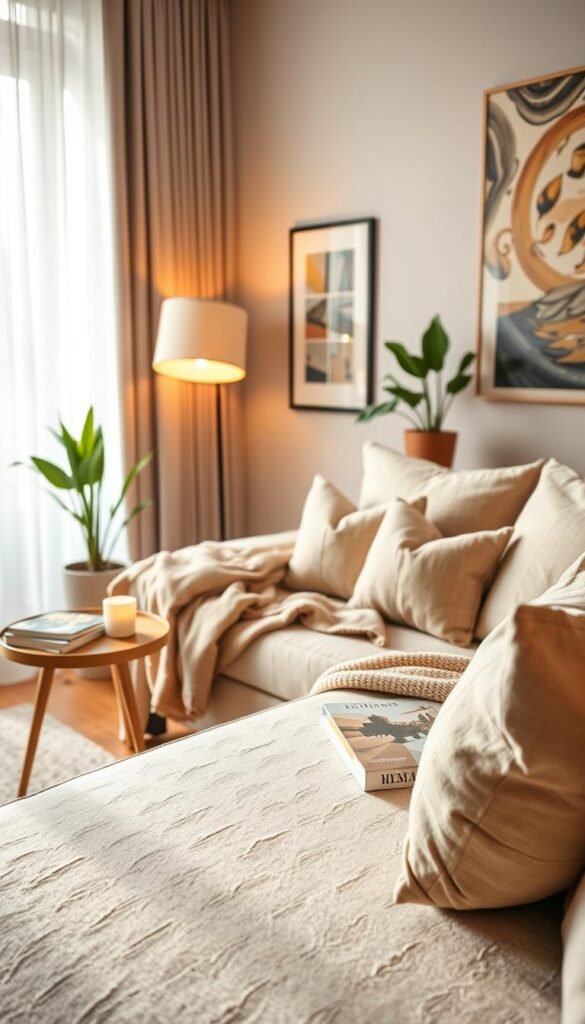
Daybeds as sofa-by-day and guest bed-by-night
A daybed acts as a sofa in the living room and a short-stay bed when guests arrive. Add lots of pillows for back support and keep a large linen storage basket nearby for quick changeovers.
Oversized comfort vs. scaled pieces
Oversized seating scores on comfort but can block traffic and make a small room feel crowded.
Scaled furniture preserves flow and keeps sightlines open. Choose based on circulation and how many people use the space daily.
Buying considerations
Seat depth: 20–24″ works well for both sitting and sleeping. Performance fabric: choose spill-resistant weaves if pets or kids are common.
Delivery constraints: confirm door widths, stair access, and return policy before ordering large furniture pieces.
„A daybed plus a pillow set and a linen basket turns one footprint into two useful pieces.“
Affiliate idea: daybed + pillow set + linen storage basket. Recommend polyester-blend covers for easy cleaning and a medium-firm mattress for versatile sleep and daytime comfort.
Small Space Tables and Flexible Pieces That Move Anywhere
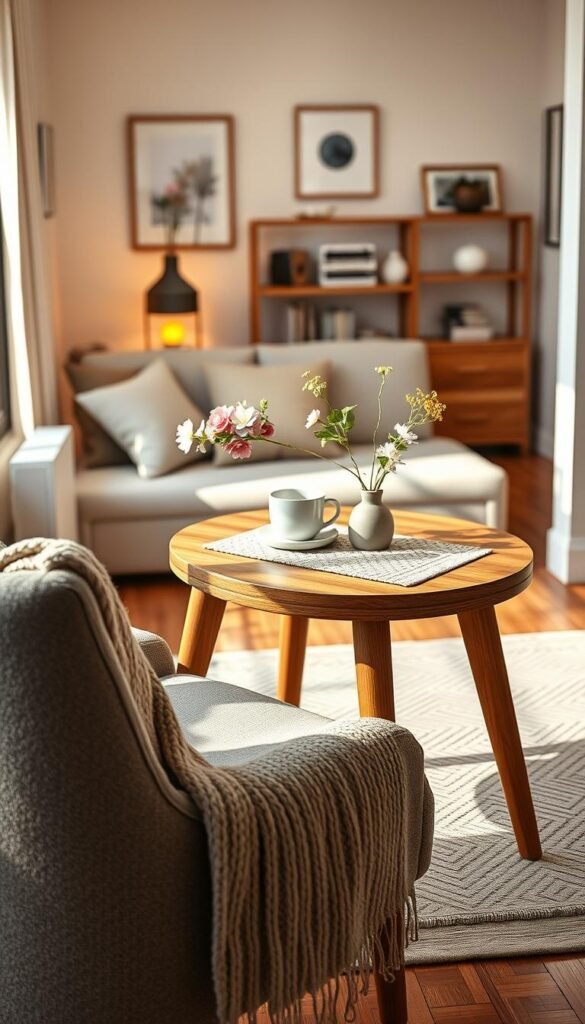
Small, movable tables solve layout puzzles when one piece must play many roles in a tight living area. They let a renter change function quickly between a living room and a dining spot without adding clutter.
Garden stools as flexible surfaces
Garden stools work as a coffee table or bedside table. They are lightweight to carry up stairs and easy to stash when not in use. Choose glazed ceramic or sturdy metal for wipe-clean surfaces.
Ottomans that double as seats and tables
An ottoman adds spare seating and, with a tray, becomes a stable surface for drinks or a laptop. Look for wide bases and washable covers if pets or kids use the space.
Glass-top and clear seating to open dining areas
Glass-top tables and clear chairs visually free the floor and reduce visual weight in a compact dining zone. Tempered glass resists scratches better, but it shows smudges more easily.
Pros, cons, and buying checklist
- Pros: mobility, multi-use value, quick rearranging for entertaining.
- Cons: stability varies, glass needs maintenance, and some styles aren’t pet-friendly.
- Buying checks: base width for stability, protective pads for the floor, scratch resistance, and weight capacity.
| Use | Typical footprint | Pros | Cons |
|---|---|---|---|
| Coffee table | 24″–36″ diameter | Centerpiece, surface for trays | May block traffic |
| Garden stool | 12″–16″ wide | Lightweight, movable | Less stable for heavy trays |
| Ottoman | 18″×24″ | Seating + table with tray | Needs sturdy base, can stain |
| Glass dining table | 30″–36″ round | Opens visual space | Shows smudges, scratch risk |
„One flexible piece can solve seating and surface needs across a small apartment.“
Smart Storage That Looks Like Decor (So Your Apartment Feels Calmer)
A clear storage plan turns scattered piles into calm surfaces and makes a small space feel settled.
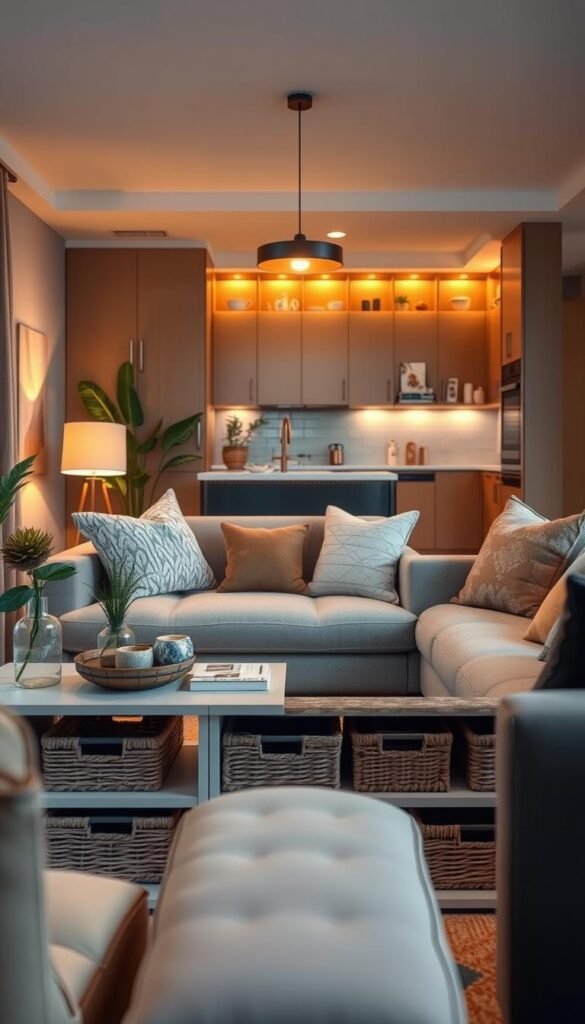
Multifunctional bookcases work as mixed-category storage. Upper shelves hold display items and plants. Lower shelves hide bins with everyday things like dishes or linens. This keeps a living room or bedroom tidy and styled.
Industrial metal shelving for minuscule kitchens
Open metal shelves add vertical storage in tiny kitchen footprints. Use matching baskets to corral staples. The result is functional storage that reads as intentional design.
Baskets, hampers, and behind-door add-ons
Baskets stop clutter from landing on chairs. Hampers double as linen bins. Over-the-door hooks and clip-on pockets keep small items off counters.
Skirted table trick
A simple table with a skirt hides bins and boxes in a bedroom or living room. It reads like a finished piece while keeping things out of sight.
Pros: calmer visuals, easier cleaning, and defined homes for daily items. Cons: open shelves can feel busy and deep units may block walkways.
| Piece | Best-for | Depth (in) | Notes |
|---|---|---|---|
| Multifunctional bookcase | Living room, bedroom | 10–14 | Upper display + lower bins; adjustable shelves ideal |
| Industrial metal shelving | Kitchen, pantry | 12–18 | Use uniform baskets to reduce visual noise |
| Skirted table | Bedroom, living room | 16–20 | Hides bulky storage; choose washable skirt fabric |
„Limit colors and materials on open shelves to keep visual noise low.“
Entryway and Dropzone Ideas for Apartments Without a True Foyer
A small entry setup can stop daily clutter from creeping across sofas and tables. This approach creates a repeatable landing spot that keeps essentials tidy and visible.
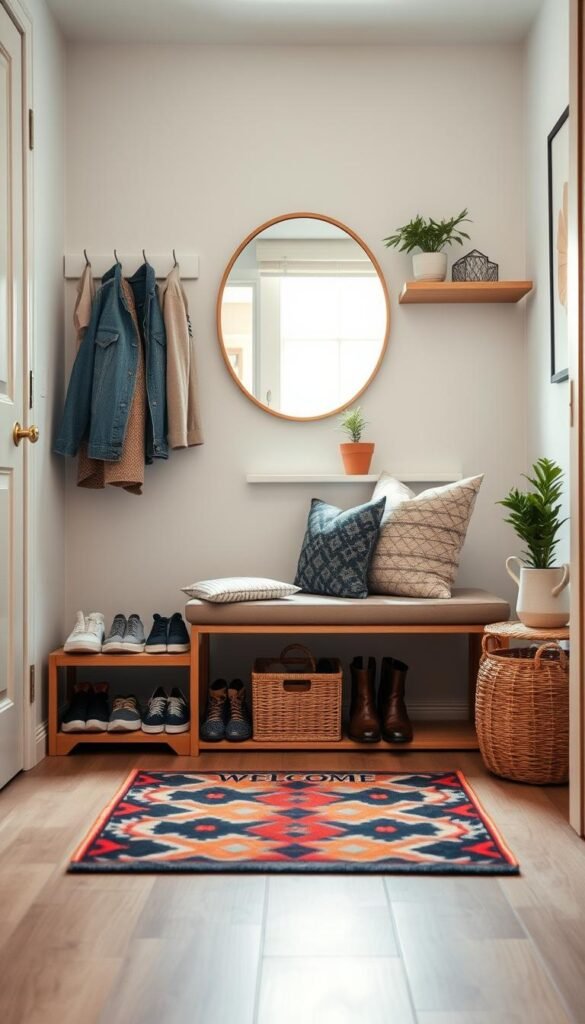
Adhesive hooks and wall-mounted shelves
Mount a row of adhesive hooks at shoulder height for jackets, bags, and hats. Add a narrow wall shelf above the hooks for keys, sunglasses, and a grab-and-go tray.
Renter-friendly tip: choose adhesive hooks rated by weight and follow surface prep instructions to reduce failure.
Mirror + basket combo
Hang a mirror to catch last-minute checks and bounce light into the room. Place a lidded or tall basket beneath hooks to hold umbrellas, dog leashes, and incoming mail.
Keep a weekly sorting rule: empty the basket twice a week to avoid it becoming a permanent catch-all.
Who this setup helps
This plan suits a small apartment where the front door opens directly into the main living area and every surface counts. It’s aimed at renters who need quick wins without drilling.
- Solve the pattern: prevents keys and bags from landing on sofas.
- Pros: faster mornings and a neater first impression.
- Cons: adhesives can fail under excess load; baskets may fill up if not managed.
| Item | Buying consideration | Suggested spec |
|---|---|---|
| Adhesive hooks | Weight capacity | 4–10 lbs per hook depending on use |
| Narrow wall shelf | Depth to avoid obstruction | 6–8″ depth, 8–12″ length |
| Basket | Height and lid | 12–16″ tall or lidded to hide clutter |
„A small, intentional dropzone keeps a home tidy without permanent changes.“
Affiliate kit idea: adhesive hook set + narrow shelf + entry mirror + lidded basket — a simple bundle that creates a functional entry look in minutes.
Kitchen and Bathroom Cozy Upgrades That Are Lease-Friendly
A few careful changes to shelving, tile, and vanity storage upgrade daily routines without renovation.
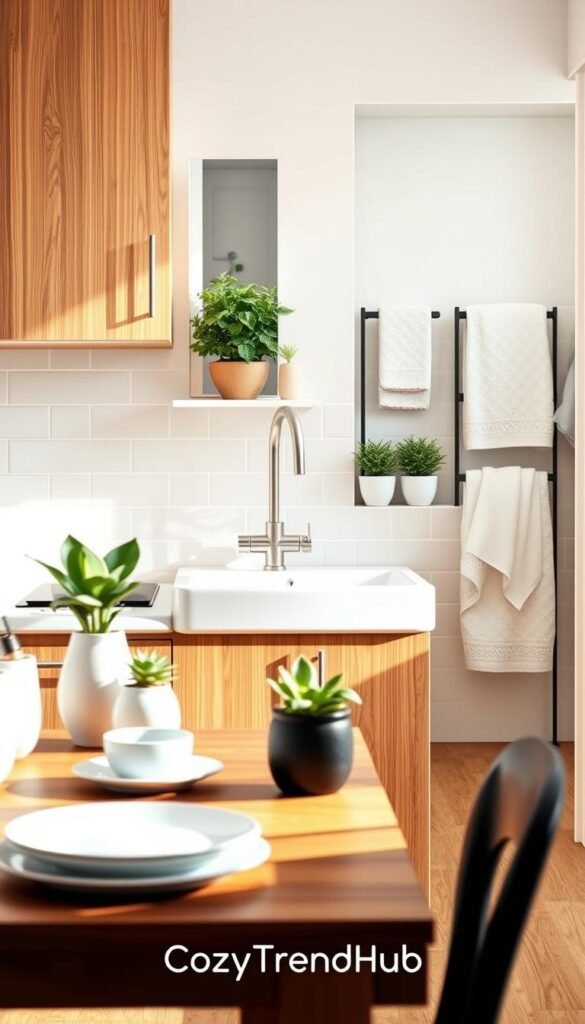
Peel-and-stick tiles target dated finishes without committing to full retiling. Apply a small zone above a sink or along a backsplash to control cost. Choose moisture-resistant vinyl with a strong adhesive and test a corner before covering a whole run.
Vertical shelf styling that keeps open shelving tidy
Group like items and stack similar containers to reduce visual clutter. Keep daily items on lower shelves and move lesser-used things higher.
Buying check: match jar sizes and choose uniform labels so open shelving reads intentional, not chaotic.
Vanity organizers and pull-outs to use existing storage better
Slide-out trays and stackable bins unlock deep cabinets. They make under-sink plumbing usable without drilling or altering the unit.
Consider: measured depth, moisture-safe materials, and whether handles clear cabinet doors.
Slender tables or chairs to add counter space near a pedestal sink
A narrow table or sturdy chair beside a pedestal sink creates a landing spot for toiletries. Pick a slim profile that does not block the floor path.
„Small, reversible updates deliver big daily benefits while protecting a lease.“
| Upgrade | Solves | Buying considerations | Removal notes |
|---|---|---|---|
| Peel-and-stick tiles | Dated backsplash and small stains | Moisture rating, adhesive strength, pattern repeat | Heat thin edges before peeling; residue removes with adhesive remover |
| Open-shelf styling | Cluttered shelves, visual noise | Container size, label uniformity, shelf depth | All items removable; no wall changes needed |
| Vanity pull-outs | Wasted vertical space under sink | Clearance, weight capacity, water resistance | Non-permanent; lifts out or unscrews in minutes |
| Slender table/chair | No counter at pedestal sinks | Footprint, stability, wipe-clean surface | Moveable — just carry out at move-out |
Pros: visible refresh, improved function, and easy removal. Cons: peel-and-stick needs clean walls and careful removal; open shelves require careful styling.
Color and Texture Strategies That Make a Room Feel Warm and Designed
Small spaces read as calm when color and textures are chosen with a plan. A clear system prevents randomness and helps a studio or living room look intentional without heavy changes.

Consistent palette across a studio
Pick one neutral base (warm white, soft taupe, or greige) and repeat it across floors, textiles, and large furniture. This simple rule ties zones together so a studio feels like a single, coherent space.
Two-color approach with a punch color
Use a neutral base plus one punch color. Place the punch color in three spots—pillows, a curtain panel, and a small art piece—to guide the eye and create movement without clutter.
Layering textures
Combine plush rugs, knitted throws, and mixed materials such as wood and metal to add depth. Textures make a room feel warmer and more lived-in than extra patterns do.
When dark tones work best
Dark walls or a large dark sofa create a cocoon-like feel in bright, sunlit rooms. In lower-light spaces, balance dark tones with warm bulbs and light textiles so the room does not feel closed-in.
Greenery and natural elements
Plants and woven baskets break up hard finishes and add life. Choose low-maintenance greenery and repeat natural finishes to soften edges and improve the overall feel.
| Light level | Base neutrals | Punch color | Texture focus |
|---|---|---|---|
| Bright rooms | warm white, sand | deep teal | plush rug + wood |
| Low-light rooms | soft greige, warm gray | muted rust | knit throw + brass accents |
| Studio zoning | single neutral repeated | one punch spot | layered rugs + plants |
„A two-color system and layered textures solve randomness and make small spaces feel deliberate.“
Buying checks:
- Prioritize washable textiles and repeatable finishes.
- Avoid more than two competing patterns; keep the punch color consistent.
- Choose plants that suit window light and maintenance ability.
Seasonal Cozy Decor Swaps That Don’t Take Up Closet Space
Smart seasonal swaps refresh a room while keeping closets clear and move-out simple.
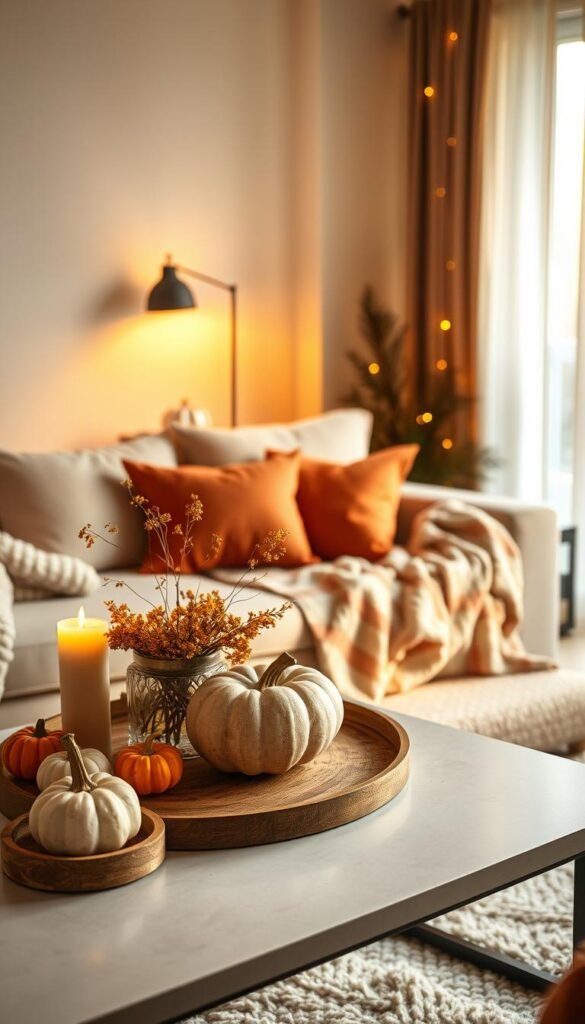
Fall and winter
Checklist: heavier throws, warm LED bulbs (2700K), and deeper accent tones on small items.
Choose washable throws and dense pillow inserts that compress into a bin when not in use.
Spring and summer
Checklist: lighter pillow covers, breathable linens, and brighter accents in small doses.
Swap covers and a lamp shade rather than large furniture to shift the mood quickly.
Storage plan
Adopt one labeled bin per season. Limit each bin to a defined volume so items stay compact.
Tip: prioritize washable essentials that can be laundered before storage.
„Keep a neutral anchor piece year-round and change covers, throws, and one accent to update the room.“
| Swap | Impact | Storage footprint |
|---|---|---|
| Textiles | High | Low (compressed bin) |
| Lighting | Medium | Very low (bulbs, shades) |
| Art & accents | Low–Medium | Low (flat storage) |
Conclusion
Close with steps that turn small, reversible choices into a cohesive, lived-in home.
Start small, then expand. Focus on removable, repairable items that pack easily and protect a deposit. Prioritize textiles to add warmth, swap lighting to set mood, use renter-safe wall solutions to finish a room, then pick one focal furniture piece to define style.
Shop with real constraints in mind: pets, cleaning needs, delivery access, and storage. Measure doors and keep original packaging when possible.
Next step: choose one room, upgrade two categories, then reassess. Calm comes from repeated palette choices and less clutter, not more items.



One Comment