
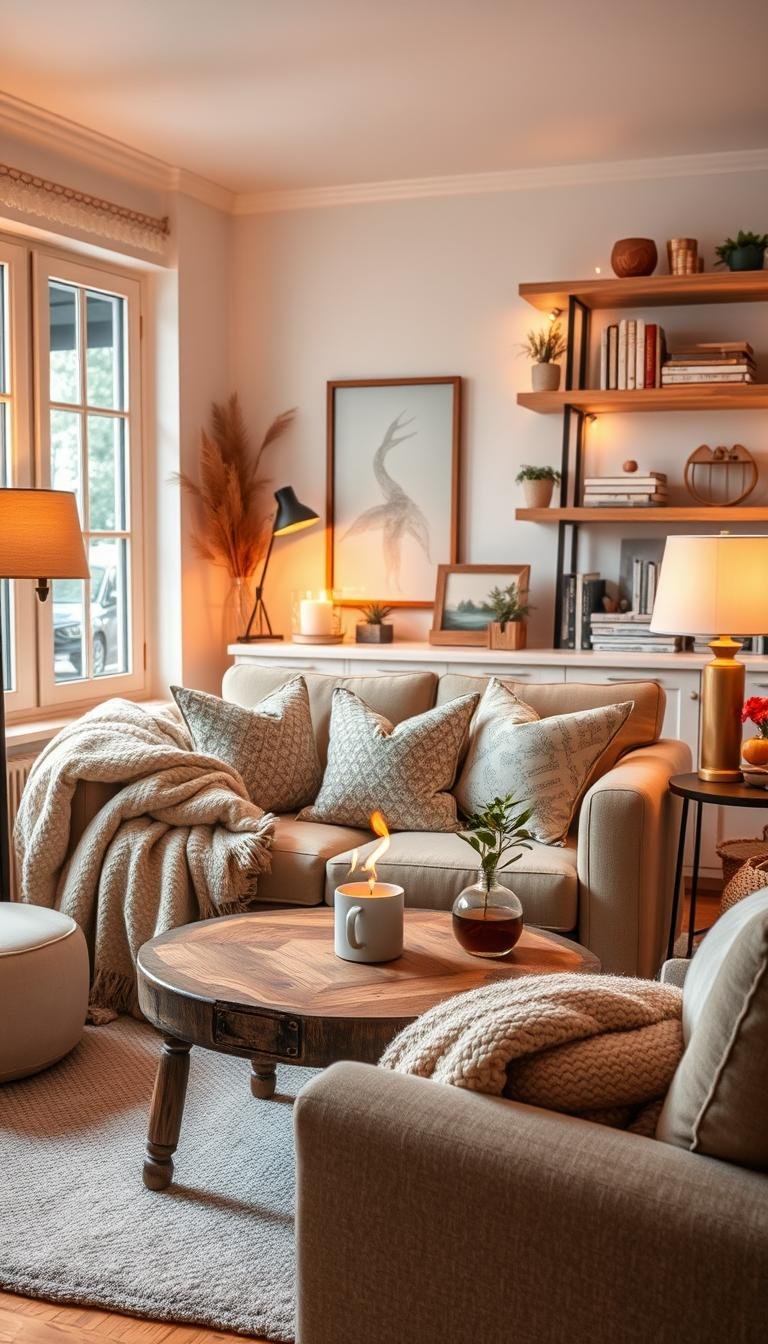
This guide solves a common problem: how to make a compact room feel inviting without crowding it.
Designers like Ellie Christopher stress scale and proportion, layered textures, and reflective surfaces to bounce light. Anne McDonald highlights paint, art, and rugs—she favors layered rugs in tight footprints. These principles shape renter-friendly, seasonal options that work in any home.
The approach favors smarter buying over more stuff. The guide previews exact product categories: seating, textiles, rugs, window treatments, lighting, mirrors, wall treatments, paint, storage, and “invisible” furniture. Each entry will note who benefits (renters, pet owners, families, hosts), what problem it solves, and what to measure before purchase.
Readers will learn key specs, ideal materials, common mistakes that shrink rooms, and a clear way to layer changes: start with seating and light, add textiles and rugs, then expand visually and add storage. Recommendations tie to designer-backed principles and seasonal swaps for quick warmth.
Key Takeaways
- Comfort in compact rooms comes from scale, light, and texture—not excess items.
- Design sections cover specific product categories and buying measurements.
- Advice is renter-friendly and notes fall/winter swaps versus year-round picks.
- Every recommendation lists who it suits and the problem it solves.
- Follow the sequence: seating + light → textiles + rug → mirrors + curtains → storage.
What “Cozy” Means in a Small Space (and Why It Often Feels Hard)
A compact room often feels uneasy when scale, light, and clutter work against comfort. This section translates that feeling into clear, fixable conditions so readers can act with confidence.
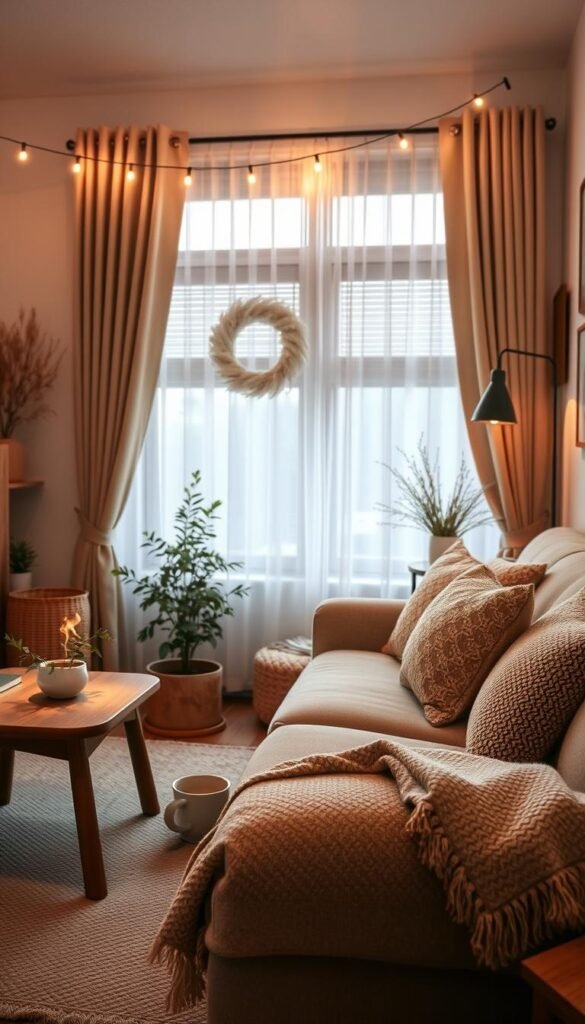
Common problems that shrink a living room
Too many small items create visual noise. Surfaces piled with objects make the room feel busy and smaller.
Furniture that blocks pathways interrupts flow and reduces usable space. Harsh, cool lighting reads antiseptic and makes a living room feel unwelcoming.
The practical formula for a warm room feel
Measureable outcomes: soft, touchable textiles; layered warm light at seating height; and a layout that supports conversation without crowding.
Layering is the magic: one well-sized sofa, a rug, throws, and mixed lamps beat many tiny accessories.
A renter-friendly, low-commitment mindset
- Prioritize options that hang, plug in, or peel-and-stick.
- Avoid permanent changes that require construction or long-term permits.
- This approach helps renters, students, and anyone seeking a quick living room refresh without a full redesign.
Next step: Use the buying framework ahead to select pieces that solve each problem—one at a time—so the room gains comfort without crowding.
Quick Buying Framework for Small-Space Comfort
Treat every purchase as a spatial decision: measure, weigh, and place before you buy. This routine keeps the room functional and prevents needless clutter.
Three-step buying checklist
- Right size: check overall dimensions and walkway clearance.
- Right visual weight: choose low-profile or transparent furniture to keep sightlines open.
- Right placement/installation: prefer no-drill or adhesive options when renting.
Scale matters in purchase decisions. A large, low-profile sofa can improve flow more than several small seats by reducing gaps and traffic breaks. Follow a purpose-first rule: pick pieces that double as storage, sleep surface, or extra seating.
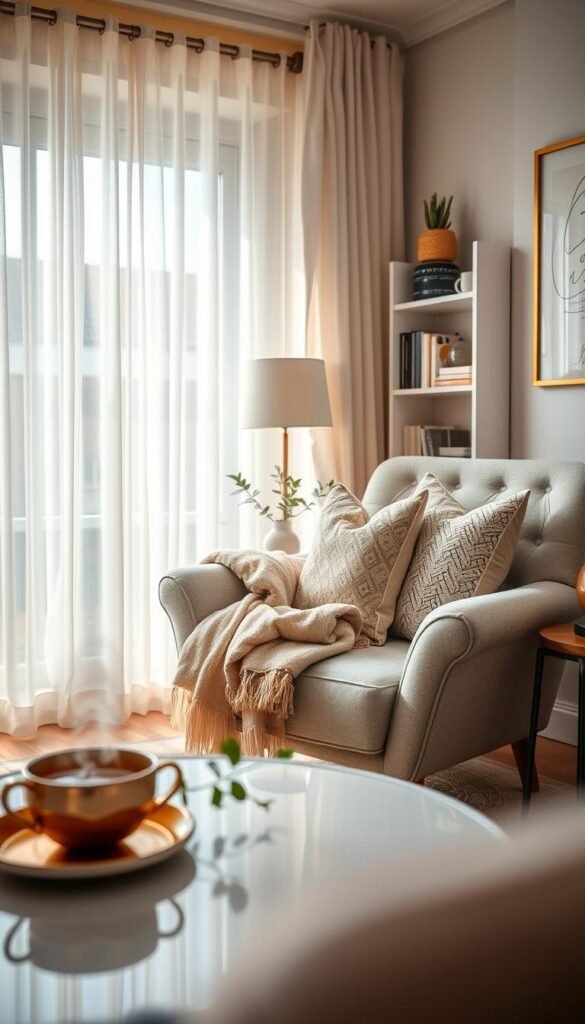
Light and vertical strategy
When light is limited, use mirrors, metallic accents, and glass or acrylic instead of only adding lamps. Amanda Khouri notes lucite removes visual weight. Spacejoy recommends decorating upward: tall curtains, wall shelves, and over-window storage free the floor.
| Item | Dimensions | Materials/Finish | Install Type |
|---|---|---|---|
| Wall mirror | 30×40 in | Glass/metal frame | Adhesive hook / no-drill |
| Lucite table | 20×20 in | Acrylic/clear | Freestanding |
| Storage ottoman | 36×18 in | Upholstered/washable | Freestanding |
Quick measurement cues: walkway clearance (30–36 in), coffee table reach (14–18 in), and available wall width for art or mirrors. Ellie Christopher’s rule applies: every piece should serve a purpose.
Curved and Low-Profile Seating That Makes a Small Living Room Feel Softer
Choosing the right sofa shape changes how people move and gather in a tight living room. Curved sofas and rounded edges reduce sharp sightlines. House Beautiful and AD note that arcs make a room feel more inviting without adding bulk.
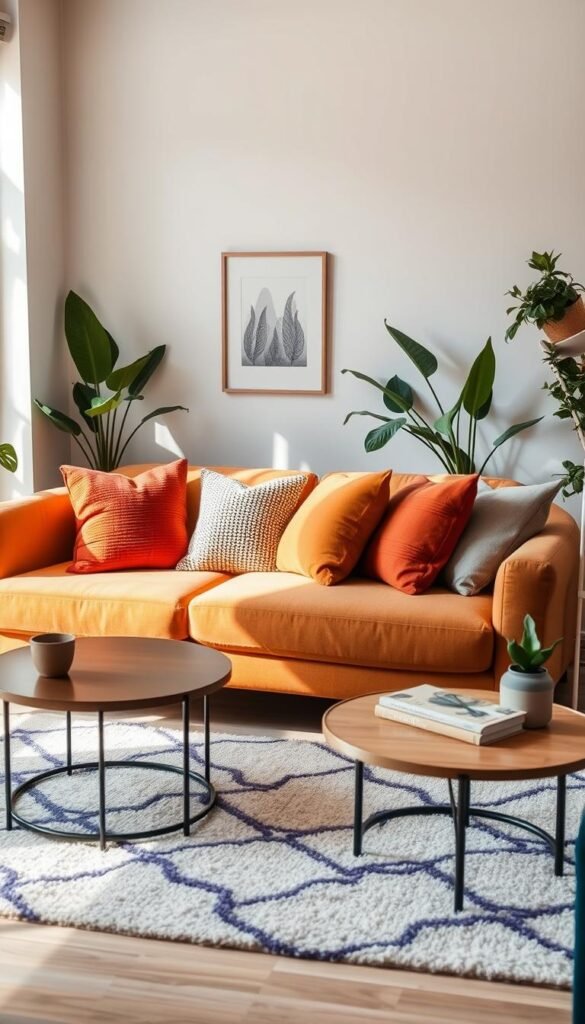
When to pick a curved sofa
Who benefits: anyone who wants a softer look and fewer bumped shins.
Advantages: fewer hard corners, smooth traffic flow, and a single piece that reads as intentional.
Oversize sectional strategy
An oversize sectional anchors a living layout. It works well for households that host or binge-watch. One anchor piece can replace several chairs and simplify placement.
Check before buying: door and hallway widths, modular delivery options, and chaise orientation versus traffic.
Low-back and open furniture
Low-back sectionals and open frames keep sightlines clear in open-plan apartments. Pierce Jordan highlights how this preserves a sense of spaciousness while still offering seating.
Pairs of small chairs or poufs
Peter Dunham recommends matching pairs for balance. Small chairs or poufs are flexible, easy to move, and renter-friendly. They tuck under a table or slide away when not in use.
| Seating Type | Best Use | Pros | Cons |
|---|---|---|---|
| Curved sofa | Conversation zones; softened aesthetic | Reduces boxy lines; single anchor piece | May limit wall placement; upholstery choices matter with pets |
| Oversize sectional | Families, hosting, long lounging | More seating, fewer pieces; cohesive layout | Delivery/door fit issues; can dominate room |
| Low-back sofa | Open-plan living; sightline preservation | Feels lighter; keeps room airy | Less head support; may need extra pillows |
| Small chairs / poufs | Renters; flexible seating | Portable; doubles as footrest or side table | Less comfy for long seating; multiple pieces can clutter |
Quick buying tips: measure doorways, prefer modular delivery, and choose durable upholstery if pets or kids are present. Match seating to the room’s main problem: hard angles or too many separate items.
Textiles That Instantly Add Warmth Without Taking Up Floor Space
Textiles are the fastest way to warm a room while keeping square footage open. They solve drafty layouts and a flat, antiseptic look by adding texture, depth, and soft edges.
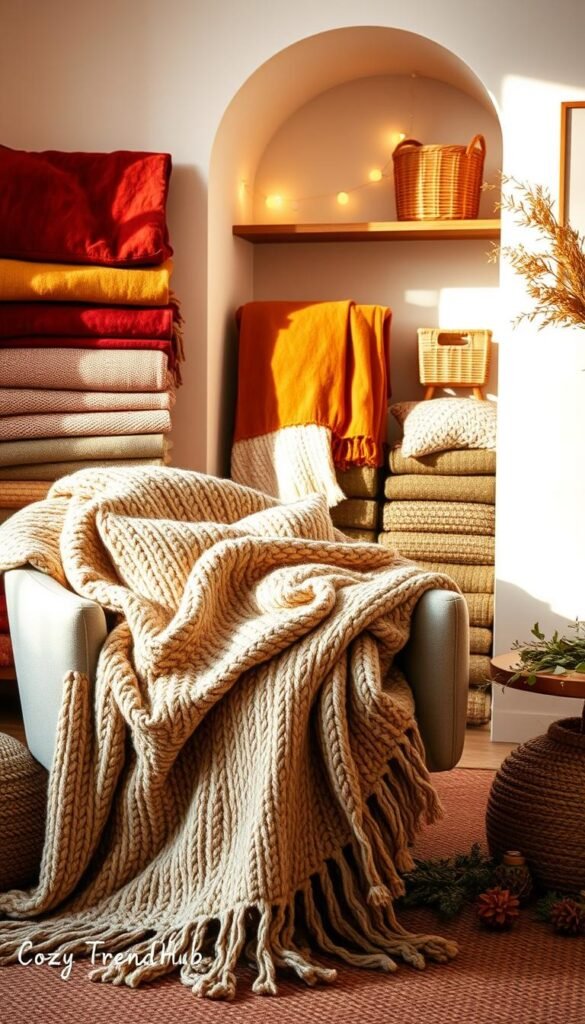
Throws and blankets: plush layers for seasonal comfort
Why they help: throws add insulation and visual warmth without needing storage changes. Choose heavyweight woven throws for chilly months and lightweight cotton for AC seasons.
Buyer tips: pick washable blends when pets or kids are present. Roll or store blankets in baskets to reduce clutter.
Pillows and bold textiles: adding depth without adding clutter
Limit the palette to two main colors and a single statement pattern. Use inserts that hold shape to keep daily comfort and a tidy appearance.
One patterned pillow acts as an accent; surrounding cushions should be calmer to avoid visual noise.
Mixing finishes: matte + shine for subtle contrast
Pair matte linens or cotton with a touch of velvet or metallic thread. This balances texture while staying unified in design.
- Natural fibers breathe but may wrinkle.
- Performance fabrics clean easily and resist stains.
- Faux fur warms quickly but traps dust; store seasonally.
Quick advantage: textiles refresh a room without paint or drilling and pack away between seasons. They are a renter-friendly route to a warmer color story and layered decor.
Area Rugs That Ground the Room and Maximize Comfort Underfoot
Placing the right rug ties furniture together and helps a floor read as a single surface. A too-small rug will make a seating group look chopped and make the whole room feel smaller.
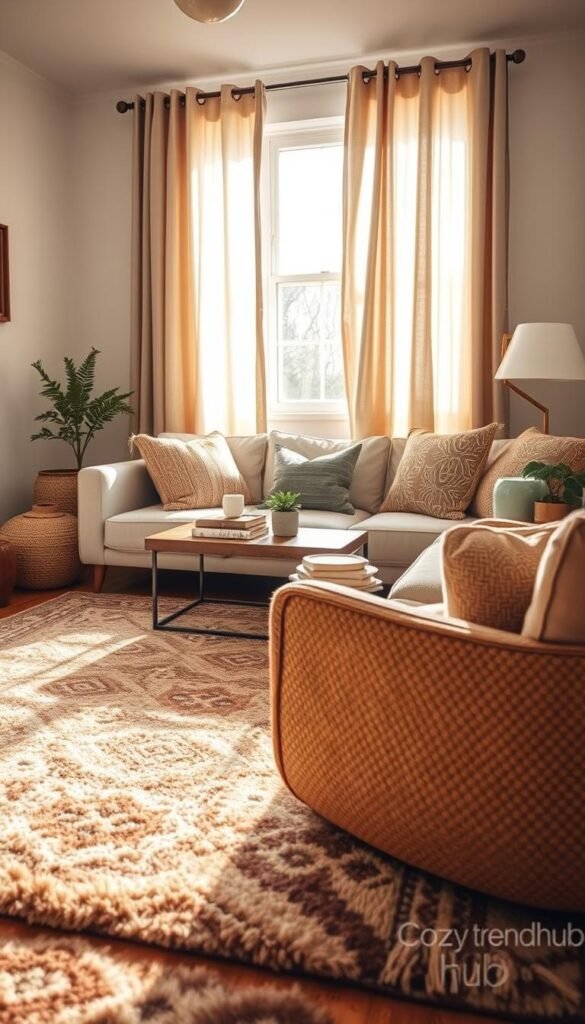
Right-size rules and measurements
Follow the Spacejoy rule: aim to have the front legs of the sofa and chairs sit on the rug so seating reads as one zone.
Common sizes: 8×10 ft for a living area that holds a sofa and two chairs; 5×8 ft for smaller seating nooks. Keep 14–18 in of coffee table reach from sofa edge to rug edge.
Pile, pad, and cleanability
- Low-pile: durable and easier to clean; ideal near dining or high-traffic areas.
- Plush: softer underfoot in reading corners but can trap dust and show wear.
- Use a rug pad to add softness, stop slipping on a hard floor, and protect finish.
Layering and practical trade-offs
Layer a neutral jute or flatweave base with a smaller patterned topper to add depth and personality without crowding the layout.
Cons to note: thick pile may block doors or make furniture wobble. Light shades show stains, and some natural fibers shed.
| Type | Best Area Use | Pile Height | Care |
|---|---|---|---|
| Flatweave (jute) | Base layer, high traffic | Low | Spot clean, vacuum |
| Wool | Main seating zone | Medium | Professional clean or gentle shampoo |
| Plush/ shag | Reading nook | High | Frequent vacuum, spot care |
Renter-friendly advantage: rugs hide worn floors and define a living area without permanent changes. Choose size, pile, and pad intentionally to preserve both comfort and room feel.
Curtains and Shades That Make the Room Feel Taller and Less “Cave-Like”
Well-placed panels and patterned shades can flip a low, shadowy room into one that reads brighter and taller.
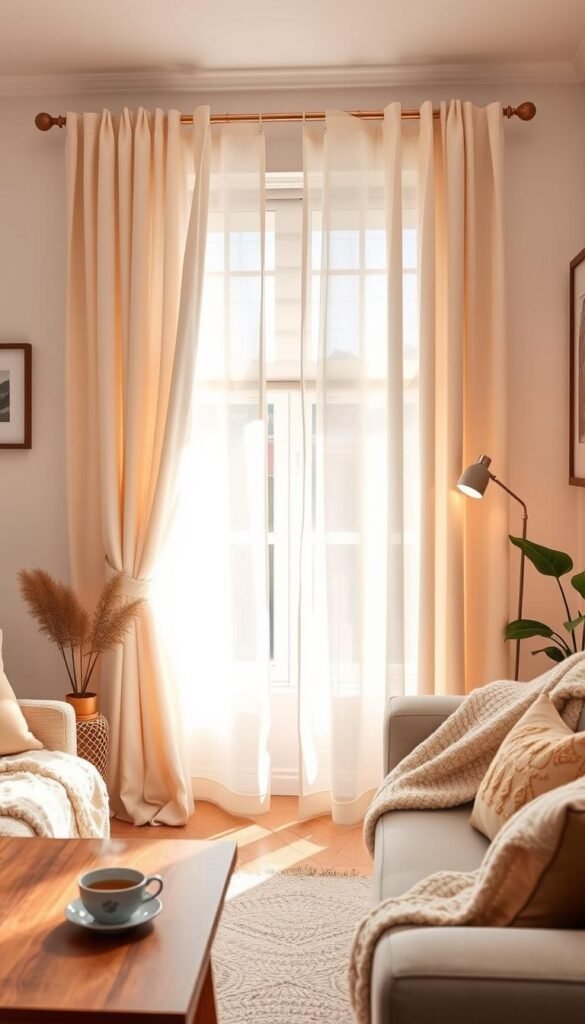
High-hang method: mount rods just under the ceiling or crown trim and extend the rod 6–12 inches past the window on each side. This opens the wall and lifts the eye.
Hanging panels and who they help
Curtains soften sound and add vertical lines. They work well when privacy and a warmer light are priorities.
Roman shades with pattern
Patterned Roman shades keep the room bright while adding visual interest. They suit those who prefer a tailored look without all-white treatments.
- Measurements: rod height, return width, finished length (kiss = 1/2″ above floor; hover = 1″–2″; puddle = 4″+).
- Panel length: measure from rod to floor; common sizes 84″, 96″.
- Rod width: window width + 12–24″ total to allow full light when open.
„Hang panels high and wide to make windows look larger and let more light into the room.“
| Option | Best use | Install |
|---|---|---|
| Light-filtering curtains | Brighten living rooms | No-drill brackets / tension rod |
| Blackout curtains | Bedrooms, street-facing rooms | No-drill brackets; heavier rod advised |
| Patterned Roman shades | Tailored look, controlled light | Inside or outside mount; patchable screws |
Renter notes: use tension rods where possible, choose no-drill hardware, and keep patch kits handy for small holes.
Warm Lighting That Solves the “Harsh and Flat” Small-Room Problem
A single bright ceiling light often removes depth, leaving a living area that looks washed out. Good lighting fixes that by adding layers and direction instead of just brightness.
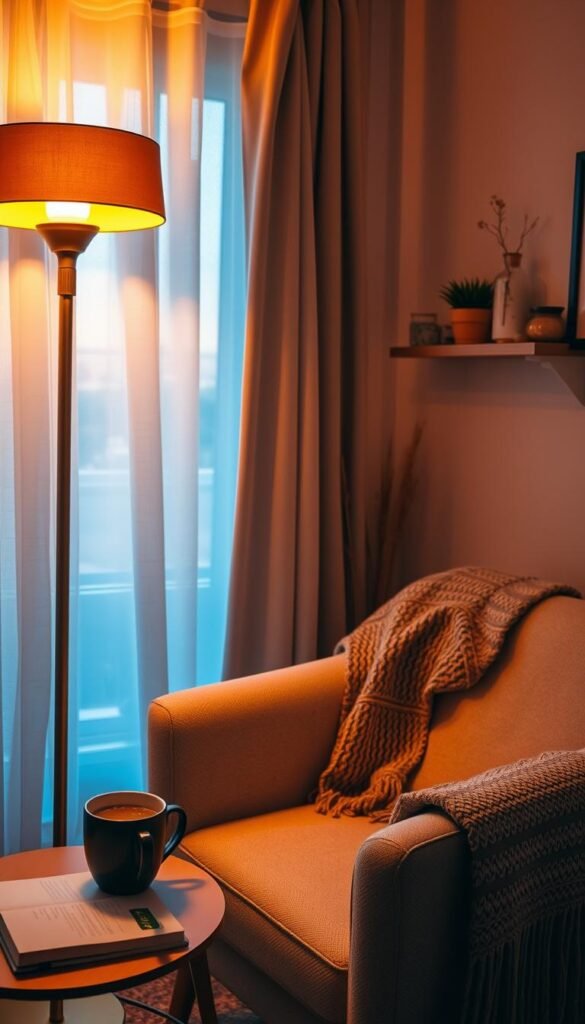
Choosing bulbs and soft overhead options
Pick warm color temperatures (2700–3000K). These read as inviting and avoid the cool blue tone AD warns feels clinical. Use dimmable LEDs so overhead fixtures stay soft at night.
Statement pendants and layered fixtures
A single pendant can make an impact. Check ceiling height and fixture scale before you buy. For renters, choose a plug-in pendant or get landlord approval for hardwiring.
Task lamps, table lamps, and placement rules
Layer three types: soft overhead, a dedicated reading lamp at chair height, and a low ambient lamp on a side table. Place lamps near seating but not in walkways. Switches should be reachable from sofas.
- Bulb guidance: 2700–3000K; CRI 90+ if color matters for textiles.
- Table and coffee table tips: narrow side tables can hold a lamp without crowding; a coffee table lamp should be low-profile.
- Pros/cons: warm bulbs feel inviting but can seem dim if fixture wattage is low. Plug-in sconces save space but show cords; pendants may need permission in rentals.
| Fixture | Use | Renters |
|---|---|---|
| Warm overhead | General ambient | Dimmable LED bulb |
| Reading lamp | Task at chair | Plug-in floor or clamp |
| Plug-in pendant | Statement overhead | Easy install, no drill |
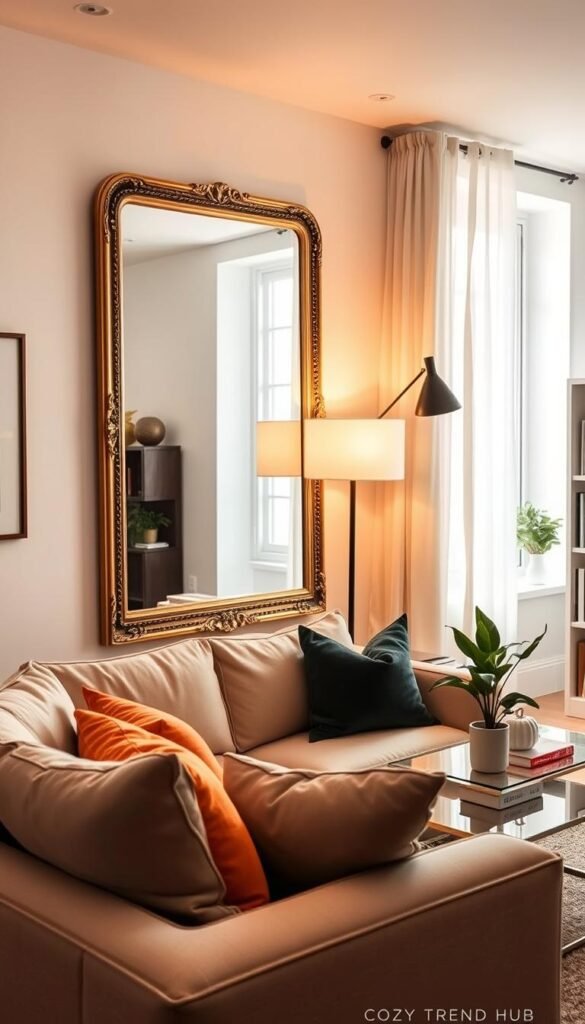
Mirrors and Reflective Decor That Make Space Feel Bigger and Brighter
Mirrors and reflective surfaces act like quiet partners that double available light and help a room read as more open. Use them to make space feel brighter without repainting or rearranging major furniture.
Where mirrors and reflectors work best
Place a mirror opposite a window to bounce daylight across the room. Near a lamp, a mirror amplifies warm light at night and reduces dark corners.
Sizing, mounting, and renter-friendly tips
One large mirror often beats several small pieces. A single pane reduces visual clutter and expands a wall’s perceived depth.
- Lean a tall mirror on a console if drilling is not an option.
- Use removable hooks for mid-weight pieces; hire a pro for heavy mounting and safety anchors.
- Safety note: anchor large pieces to studs or use wall straps.
Comparing reflective furniture choices
Mirrored coffee tables add light and a glam reflection. A metallic side table gives a subtler glow. A glass top table keeps visual weight low next to a sofa.
„Reflective surfaces bounce light and simplify what the eye reads as open area.“
| Item | Effect | Renters |
|---|---|---|
| Mirrored coffee table | High reflectivity; brightens center | Freestanding; easy swap |
| Metallic side table | Subtle sheen; warm or cool tone | Lightweight; minimal install |
| Glass top table | Less visual weight; transparent surface | Stable, freestanding |
Pros/cons: mirrors show fingerprints and can feel busy with many patterns. Metallics may skew warm or cool depending on bulb color. Choose finishes that match the room’s design aim.
Best for dim apartments, north-facing rooms, or anyone who wants the room to space feel larger without repainting. These moves help the whole space look brighter and more open.
Wall Decor That Adds Personality Without Eating Square Footage
Walls offer a chance to add personality without taking up a single inch of floor.
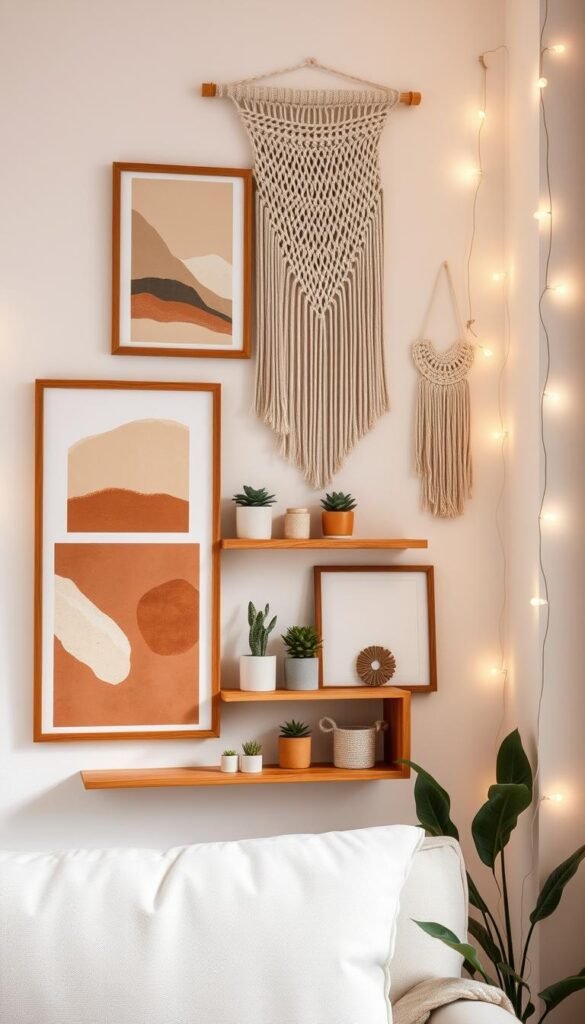
Oversized art makes one clear focal point. Choose a lightweight frame, confirm the wall width over the sofa, and keep the palette tied to the room. This single piece reduces the need for many small objects and reads clean and intentional.
Gallery approach
Collectors should use tight spacing, consistent frame finishes, and a cohesive color story. Spacejoy recommends keeping gaps small so walls feel curated, not cluttered. Use removable hooks within weight limits for renter-friendly hanging.
Design motif trick
Repeat a line or pattern—channeled upholstery, geometric rug, and a framed print—to make the room feel intentional. Small repeats connect separate items and strengthen the overall design.
- Pros/Cons: Oversized art is fast and clean but can cost more. Gallery walls are flexible but need planning. Adhesive hooks save drilling but have weight limits.
- Placement checklist: center at eye level, align edges with furniture, and leave balanced margins on each side.
„One well-scaled artwork anchors a room and simplifies every other choice.“
| Approach | Best fit | Trade-offs |
|---|---|---|
| Oversized art | Minimalists, quick impact | Higher cost; simple install |
| Gallery wall | Collectors, varied budget | Requires layout planning |
| Motif repeat | Those wanting cohesion | Needs consistent elements |
Wallpaper and Murals for Maximum Cozy Impact With Minimal Commitment
A single patterned wall can introduce rhythm and scale without crowding the floor.
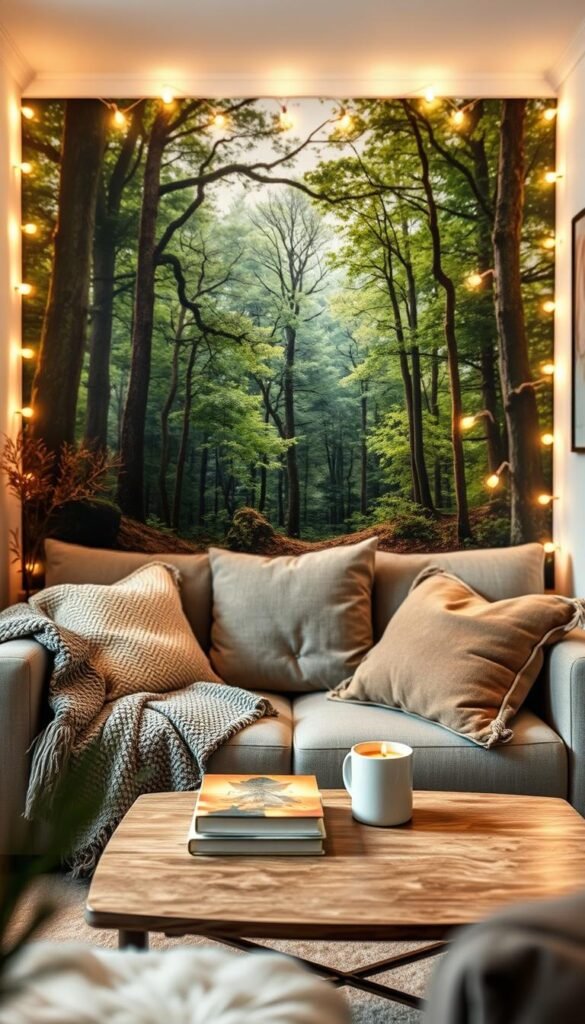
When wallpaper is worth it: pick a mural or bold pattern when paint leaves the room flat or a focal point is needed. Small rooms typically cost less to cover, so taking a bolder design move is lower risk and more budget-friendly.
Peel-and-stick and renter-friendly choices
Peel-and-stick options let renters and seasonal decorators change colors and mood with no damage. Order a sample first. Test adhesion on a hidden area, since textured walls reduce sticking power.
Pattern scale and geometry guidance
Larger motifs often feel calmer than many tiny repeats. Vertical geometry can heighten a room; horizontal lines can widen it. Choose scale to match ceiling height and furniture size.
- Solve flat walls: murals add depth without furniture.
- Buy extra: order extra panels for pattern match and repairs.
- Use sparingly: consider one accent wall to avoid visual fatigue.
| Choice | Best effect | Notes |
|---|---|---|
| Mural with depth | Creates perceived distance | Low cost on small walls; test sample |
| Large-scale geometric | Adds rhythm and structure | Calmer than tiny repeats; suits modern design |
| Peel-and-stick print | Seasonal color swaps | Removable; adhesion varies on texture |
Realistic pros/cons: removable papers refresh a room quickly but can vary in quality. Bold patterns may tire the eye if overused. When unsure, anchor a single wall and keep the rest of the palette simple to let the new surface read intentional and finished.
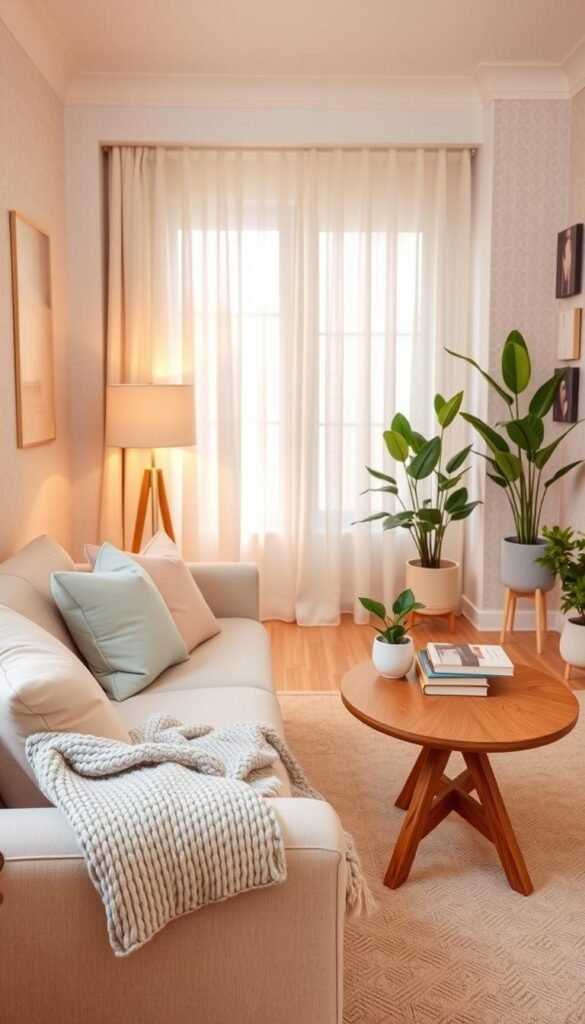
Color Strategies That Create a Cozy Room Feel Without Darkening the Space
Color choices shape how a room reads: airy and open, or wrapped and intimate.
Layered neutrals as an airy base
Warm whites, taupes, and sandy beiges make a light, flexible backdrop. Pair them with textured textiles and warm bulbs to keep an inviting room feel.
Relaxing hues and color-drenching
Deep greens or blue-greys can envelop a seating area when used across walls and ceiling. Use satin or soft sheen to reflect natural light and avoid a flat, heavy look.
Accent moves with low risk
Try bold trim, a painted ceiling, or one pop chair to add personality without full commitment. These moves are high-impact and reversible.
„A hint of sheen on walls or the ceiling helps distribute light and lifts darker tones.“
| Strategy | Effect | Renter-friendly option |
|---|---|---|
| Layered neutrals | Airy, flexible base | Removable paint samples, washable textiles |
| Color-drenching | Enveloping, calming | Peel-and-stick panels or removable wallpaper |
| Accent trim / ceiling | Defines zones; adds character | Temporary trim paint or fabric-wrapped trim |
Pros/cons: darker colors hide scuffs but need more light; bold trim reads immediate but demands careful lines; painted ceilings add drama but require neat edges.
Vertical Storage and Shelving That Clears the Floor and Reduces Clutter
Rising storage draws the eye upward and frees valuable floor area so a room moves and breathes.
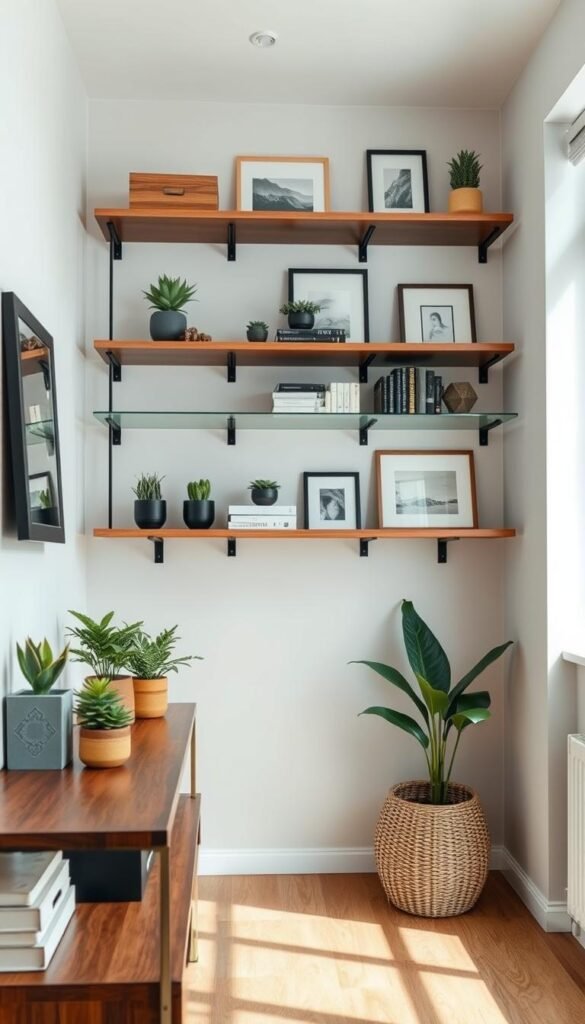
Above-window bookshelves make use of often-forgotten space. They suit readers and collectors who need extra shelves without crowding primary walls. Confirm clearance for curtains and allow an inch or two of gap so panels still hang freely.
Installation and safety basics
Check anchors: use stud mounts when possible. For drywall, pick rated anchors and respect weight limits to avoid overloading wall fasteners.
Tip: measure shelf load per linear foot and use anti-tip hardware on tall units.
Built-in vs. modular shelving
Built-ins look finished and hide mess. Modular units are renter-friendly and easier to move if the room layout changes.
Styling with restraint
- Limit items per shelf to avoid visual clutter.
- Group objects by color or material and leave negative space.
- Mix closed and open storage: closed bins hide mess; open shelves keep the room airy.
„Vertical shelving frees the floor and improves traffic flow while keeping daily items contained.“
| Approach | Pros | Cons | Best-for |
|---|---|---|---|
| Above-window shelves | Uses unused wall height; adds storage | Watch curtain clearance; reach may be high | Readers, collectors |
| Built-ins | Seamless, hides clutter | Permanent; needs build/permission | Long-term renters, homeowners |
| Modular units | Moveable; renter-friendly | May look less finished | Frequent movers, apartments |
Hidden Storage Decor That Keeps Small Spaces Cozy, Not Chaotic
Hidden storage turns daily clutter into tidy, usable zones without adding another bulky cabinet. This keeps a living area calm and makes quick cleanups normal instead of a chore.
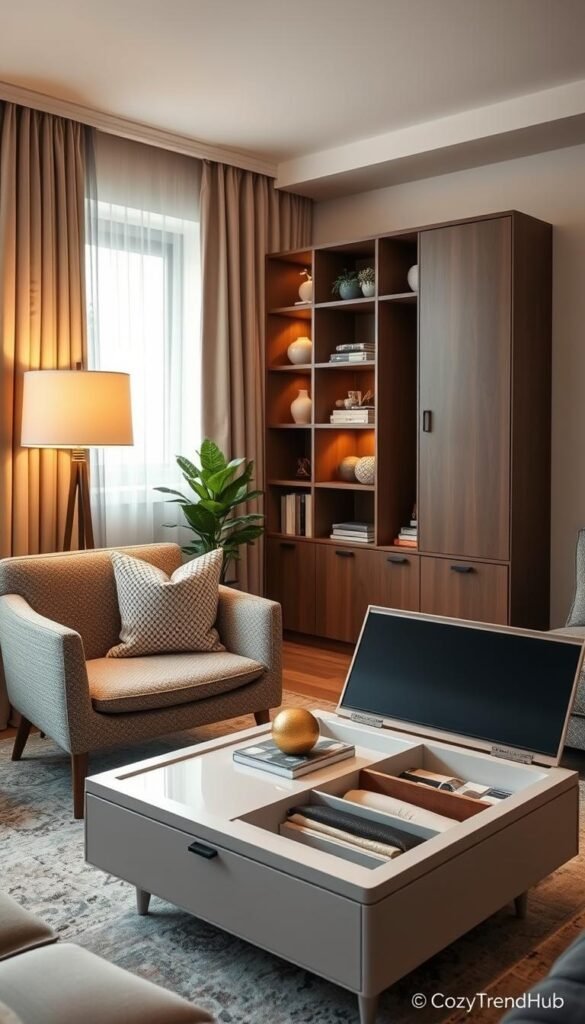
Quick solutions: storage ottomans act as a footrest, extra seat, and a lidded bin. Baskets offer soft storage for throws and toys and warm a room visually. Low coffee table shelves or baskets tucked underneath keep chargers and remotes within reach.
Buying checklist
- Weight capacity — confirm it can be sat on safely (200–400 lbs typical).
- Hinge and lid safety — look for soft-close or stay-open mechanisms.
- Read visual bulk — choose low profiles or open bases so a table doesn’t dominate sightlines.
Compare common options
| Type | Typical capacity | Pros | Cons |
|---|---|---|---|
| Storage ottoman | 200–400 lbs | Multi-use surface; hides items | Can be heavy; may trap junk |
| Woven basket | 20–50 lbs | Lightweight; breathable; portable | Items visible if overfilled |
| Under-table shelf | 30–100 lbs | Close to seating; uses wasted space | May reduce legroom under a table |
Layout tip: place storage near seating so tidying takes two minutes, not twenty. Use a low coffee table with an open shelf to stack books or corral chargers, following House Beautiful’s stacking trick to keep surfaces neat.
„Hidden storage and built-ins stop clutter spirals before they start.“
“Invisible” Furniture for Tight Layouts, Like Lucite Coffee Tables and Slim Accent Pieces
Transparent and slim-lined furniture keeps sightlines open while still giving surface area. This approach helps a seating group read as one, without adding visual bulk.
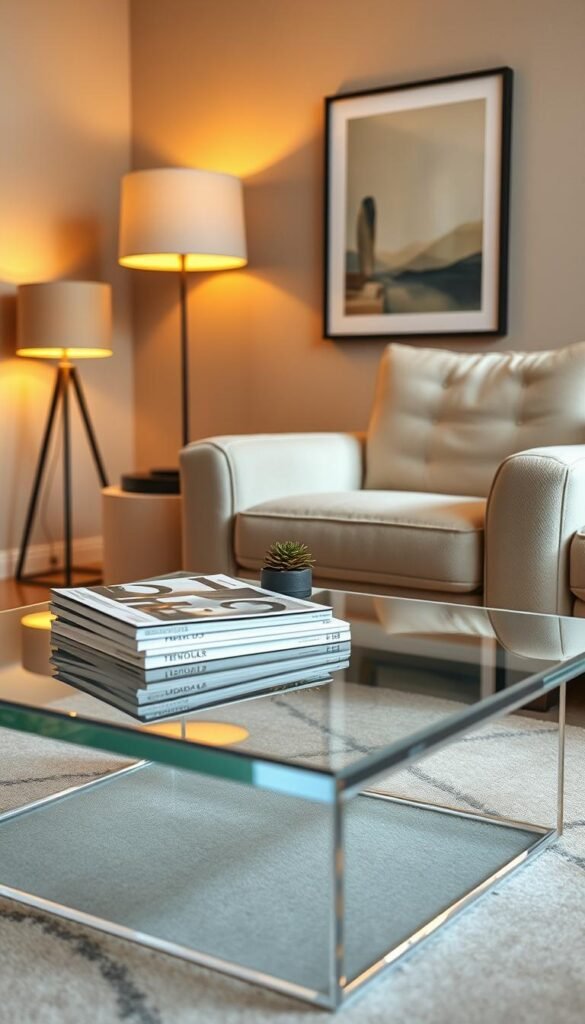
How acrylic and glass reduce visual heaviness
Acrylic and glass let the floor plane show through. That makes a room feel less blocked by a central surface next to a sofa or sectional.
Lucite often „disappears“ the way AD describes. It tricks the eye into seeing more continuous space.
Low accent tables and slender consoles
Choose low, narrow tables that keep walkways clear. Slim consoles work behind a sofa or along a corridor to add a landing without crowding circulation.
Who benefits: renters, small apartment dwellers, or any household with one dominant upholstered piece.
Trade-offs and care
Be honest: lucite shows fingerprints and can scratch; glass can chip. Lighter-looking pieces still need stable bases to avoid wobble.
Care tips: use felt pads, a microfiber cloth, and mild cleaner. Prefer tempered glass when safety matters or pick thicker acrylic for durability.
| Piece | Typical depth | Key pro | Maintenance |
|---|---|---|---|
| Lucite coffee table | 18–28 in | Lowest visual weight | Microfiber wipe; avoid abrasive cleaners |
| Glass top table | 16–26 in | Transparent surface; sturdy when tempered | Tempered glass; watch edges |
| Slim console | 8–12 in | Fits narrow walkways | Felt feet; tight anchoring recommended |
„A lighter-looking table keeps the seating area airy while still giving a usable surface.“
Renter-Friendly Fireplace Vibes for Seasonal Coziness
A renter can create a warm fireplace moment without cutting drywall or running gas lines. This approach keeps changes reversible and focused on mood rather than structure.
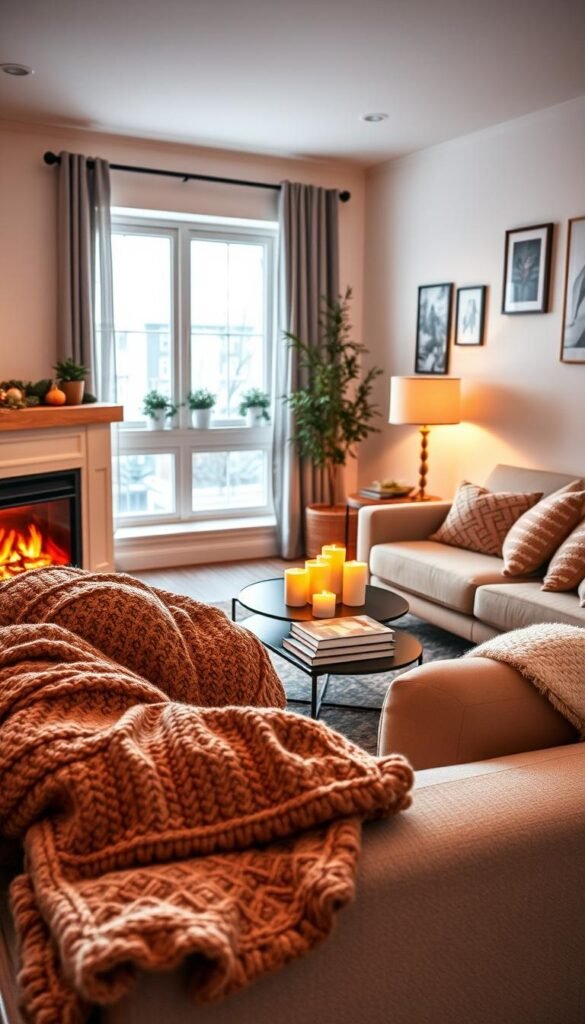
Creating a focal point without construction
Style a faux mantel with peel-and-stick tile or wallpaper around the surround. These reversible options add texture and draw the eye without permanent work.
Use a single mirror or piece of art above the mantel to anchor the area. Keep mantel items few to avoid visual clutter.
Electric inserts and buyer guidance
Choose a compact electric unit sized to the wall cavity and the living room footprint. Prioritize units with safety certifications and an appropriate heat output for a small living room.
Note: electric inserts need outlet access and should not be the sole heat source in very cold weather.
Conversation-first layout tips
Arrange seating to face one another around the faux hearth. Amanda Jacobs recommends this setup to foster connection and make the room feel intentionally inviting.
Use low tables and lantern-like lamps to support the focal moment without blocking sightlines.
- Pros: quick install, renter-friendly, seasonal impact.
- Cons: peel-and-stick can fail on textured walls; electric units need power and may not heat a whole room.
„A staged hearth gives a small living room a defined, warm moment without remodeling.“
Best cozy decor for small spaces you can add in a weekend
A focused weekend refresh can transform how a compact living room feels without major purchases.
Fast comfort upgrades
- Day 1 — Comfort: one plush throw, two pillow covers, a warm bulb set, and a right-size rug (front legs of seating on the rug).
- Who benefits: cold-floor homes, rooms with harsh overhead light, echo-prone living areas.
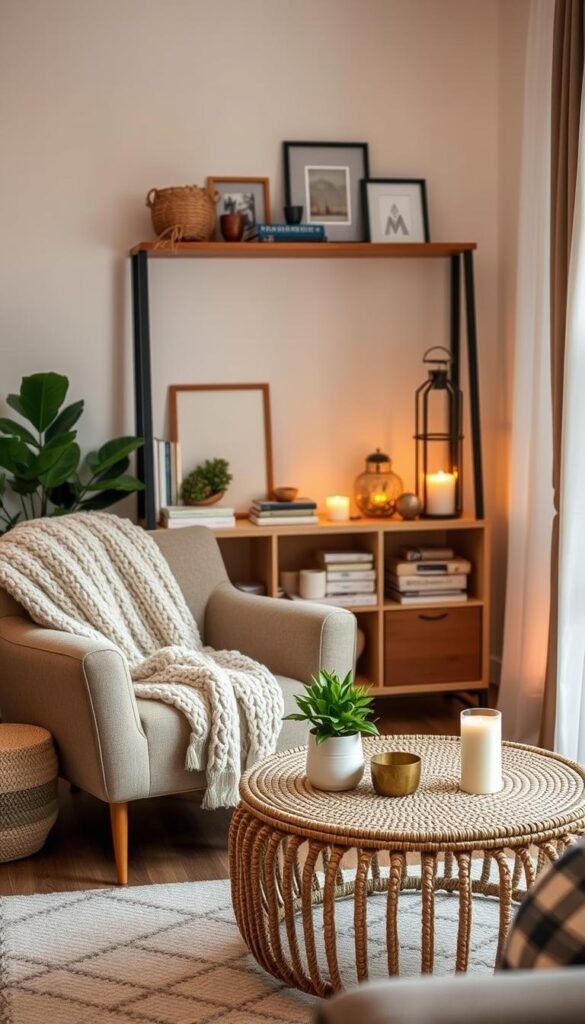
Fast space upgrades
- Place one mirror opposite a window or near a lamp. Add a wall-mounted shelf or hook rail to clear surfaces.
Fast personality upgrades
- Pick one oversized art print or a tight mini gallery wall. Make one controlled color move: trim, ceiling, or an accent chair.
Quick measurement checklist (screenshotable)
- Rug dimensions: room and seating footprint.
- Sofa depth and seat height.
- Coffee table clearance: 14–18 in from sofa.
- Curtain length and rod width; walkway spacing: 30–36 in.
| Buy | Pros | Cons |
|---|---|---|
| Large rug | Unifies room | Higher cost |
| Peel-and-stick wallpaper | Renter-friendly | Needs smooth walls |
| Lucite table | Low visual weight | Shows smudges |
„Avoid undersized rugs, low-hung curtains, cool bulbs, and too many small items.“
Conclusion
A clear plan that starts with seating and light helps a compact living room work every day. Focus on one anchor piece of furniture, then support it with low-visual-weight tables, a right-size rug, and warm light.
Do this next: size the rug, swap bulbs to warm tones, add a few textiles, then use mirrors or curtains to lift walls and brighten the area. These moves solve scale and clutter while improving flow.
Renters gain freedom with reversible updates—peel-and-stick, plug-in fixtures, removable hooks, and moveable storage. Before buying, measure twice, confirm delivery paths, and map placement so walkways stay open.
Simple filter: will the piece add comfort, cut clutter, or improve scale and light? If not, skip it. This approach keeps the room intentional and easier to live in.



3 Comments