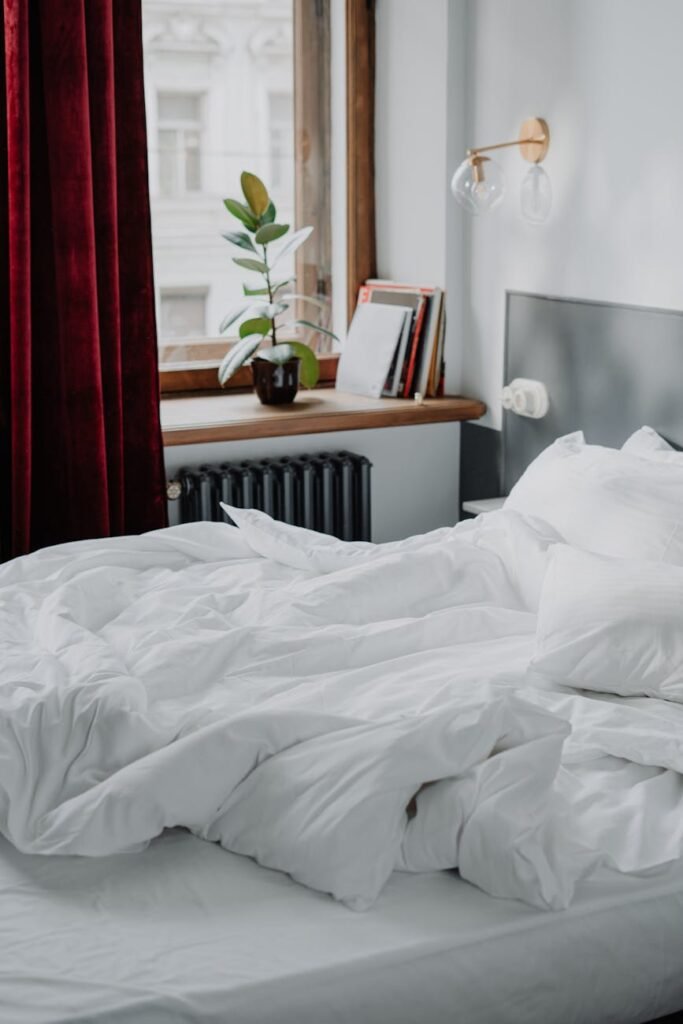
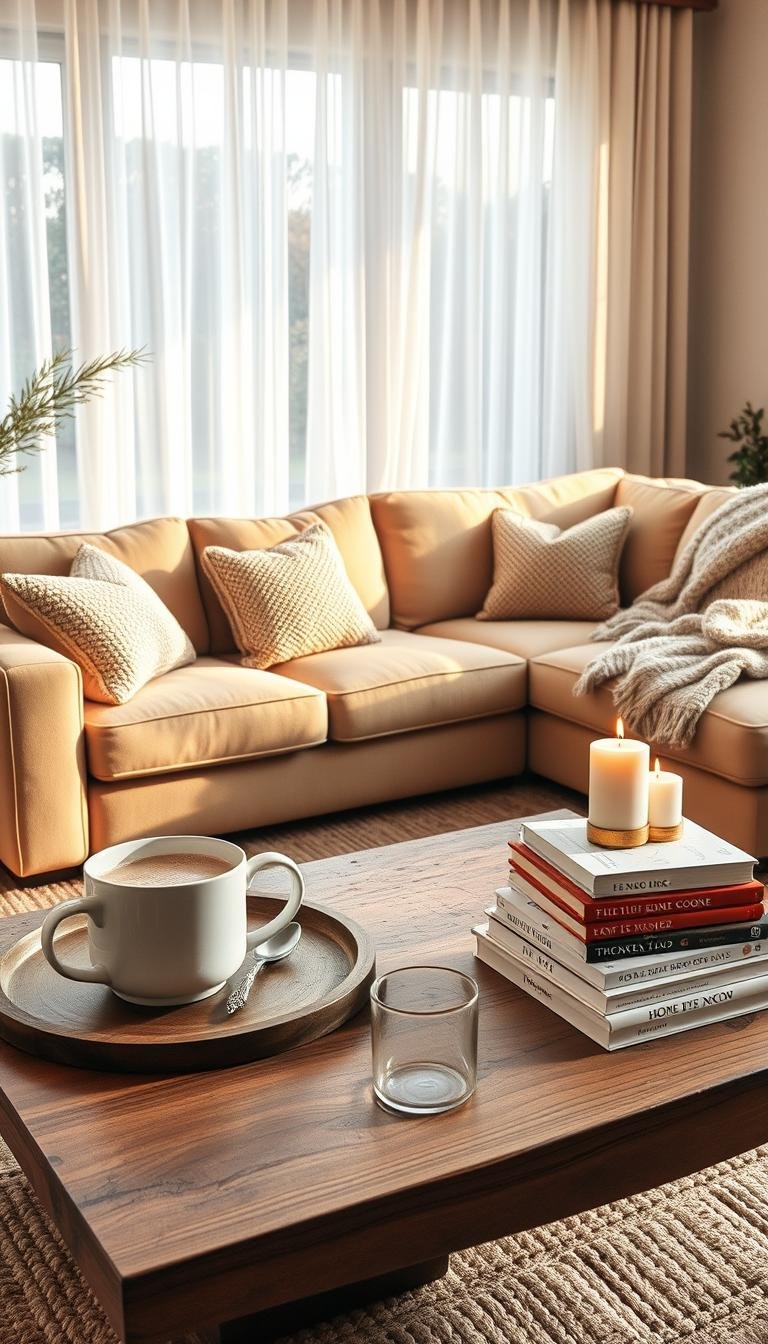
Many rooms look finished but still feel cold. Softness, layered light, and natural materials make a space feel warmer without a remodel. This guide opens with a clear problem and a practical promise: ten product categories that change how a room feels fast.
The list focuses on renter-friendly, small-space, and seasonal strategies. Each pick is framed as a practical fix: what to buy, why it works, and the tradeoffs to expect. Emphasis stays on items that add warmth quickly — textured textiles, layered lighting, and natural wood accents.
Readers will learn how to create an intentional home approach that avoids clutter. Recommendations support real-life use: price ranges, pet-friendly choices, and low-light options. The article favors a few high-impact pieces over lots of small objects to make a room feel welcoming and useful every day.
Key Takeaways
- Identify warmth gaps: softness, light, texture, and natural materials.
- Choose items that work in rentals and small spaces.
- Prioritize layered lighting and tactile textiles for fast impact.
- Each category includes use cases, price tiers, and tradeoffs.
- A focused set of pieces improves feel more than many small accents.
Why your home feels cold and how cozy decor fixes it
A room that looks finished can still feel cold when key tactile and light elements are missing. A clean, minimalist look often reads as distant without soft layers and warm illumination.
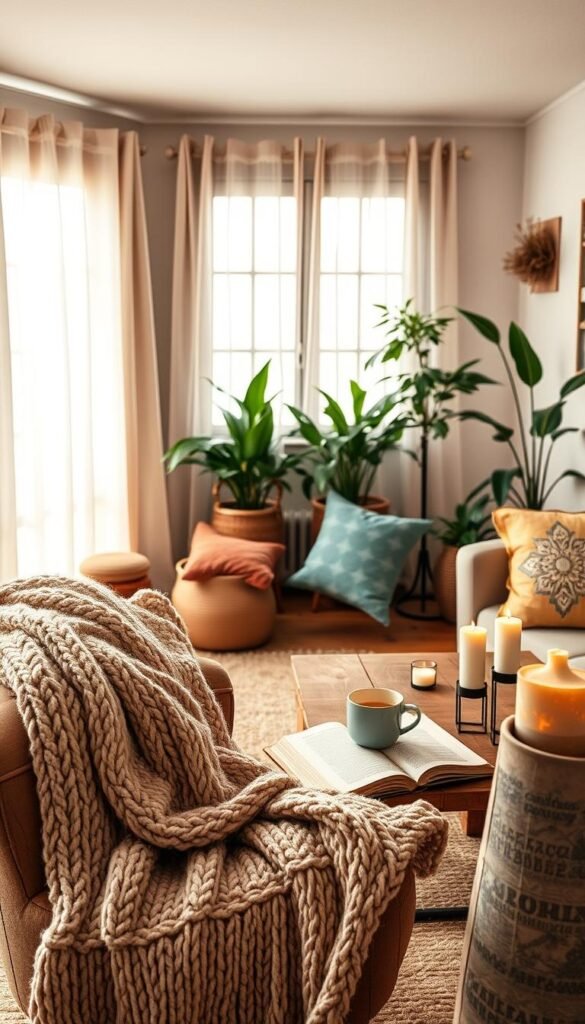
The comfort equation: texture + warm light + natural materials + intentional contrast. These elements flip a sterile space into one that invites use.
Common culprits and renter-friendly fixes
Flat, smooth surfaces — sleek sofas, bare floors, minimal textiles — make a room look sterile. Add pillows, a rug, and a throw to introduce texture and break that effect.
Harsh overhead lighting makes a space feel clinical. Swap in floor and table lamps or plug-in sconces to layer light without rewiring.
Empty corners and under-styled zones read unfinished. Plants, tall lamps, or vertical shelves fill spaces without cluttering surfaces.
| Culprit | How it affects the room | Renter-friendly fix |
|---|---|---|
| Flat textures | Feels sterile and hotel-like | Pillows, throws, small rugs |
| Harsh overhead light | Makes colors cold and walls stark | Floor/table lamps, dimmable bulbs |
| Empty corners | Space reads unfinished | Plants, vertical art, narrow shelving |
Quick diagnostic checklist before buying: note lighting gaps, missing soft surfaces, and empty areas. Address those first to keep the room purposeful rather than cluttered.
Next: How to build an intentional palette and use a dominant-style rule so the final look feels cohesive and works day to day.
How to build the best cozy decor mix without clutter
Decide on a primary style that matches existing furniture to avoid costly swaps later. Use a roughly 70/30 rule: about 70% dominant style and 30% secondary style for contrast. This keeps an open floor plan from feeling scattered.
Choose warm undertones over cool gray where possible. Greige, warm whites, and soft neutrals make a room feel softer. Test commitment with textiles first—pillows, throws, or rugs—before painting or buying large pieces.
Apply a simple texture plan: one plush textile, one woven or natural element, and one grounding material such as wood, leather, or metal. This prevents a museum-like room and adds layered comfort.
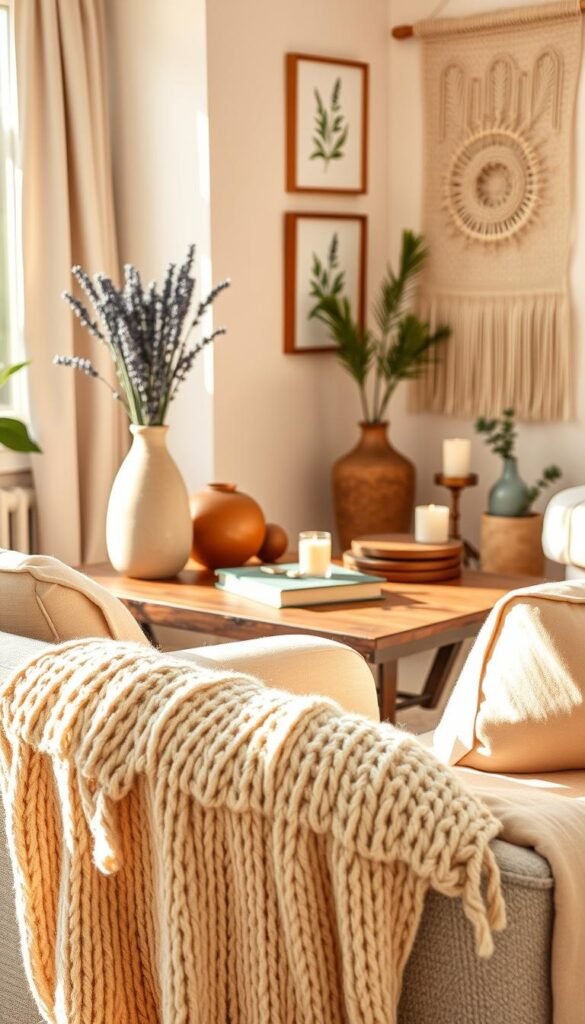
Practical vignette strategy
Assign 1–2 surfaces for seasonal swaps: mantel, coffee table, or console. Use this swap-friendly formula as an example: tray + candle + small greenery + one personal object. Rotate items each season to refresh without adding clutter.
Prioritize purchases that solve specific comfort problems first. For renter-friendly guidance and neutral tones advice, see a helpful reference neutral tones guide.
Layered lighting that changes a space instantly
Layered lamps and soft candlelight shift a room’s mood faster than a coat of paint. Swap a single overhead bulb for a set of low, warm sources to soften shadows and make a living room feel lived-in.
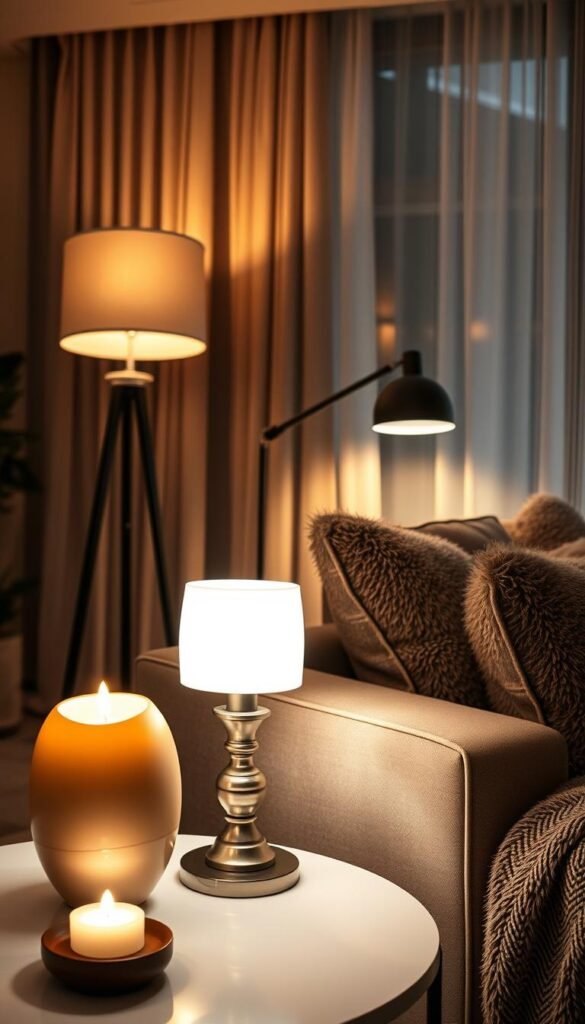
Who this helps
Renters, dorm residents, and owners of older apartments benefit most. No rewiring is needed—table and floor lamps plus candles create a warmer look without permanent changes.
Buying checklist
- Bulb tone: choose warm color temperature (2700K–3000K).
- Dimmable: use dimmable bulbs and compatible dimmers for flexible mood control.
- Shade and height: pick shade opacity and lamp height to avoid glare near seating.
- Finishes: brass, warm gold, or bronze reflect light softly off furniture and accents.
Small-space plan and tradeoffs
One floor lamp in a corner plus a table lamp by seating covers most living rooms. Add candles or flameless options for seconds of soft glow.
| Solution | Pros | Cons |
|---|---|---|
| Floor lamp | High reach; fills corners | Takes small footprint; needs outlet |
| Table lamp | Task light near seating | Uses surface space |
| Candles / LED | Calming glow, portable | Fire risk or battery upkeep |
Affiliate picks: Best dimmable table lamp; Best slim floor lamp; Top flameless candles for apartments.
Texture upgrades you can feel: throw blankets and velvet, wool, and canvas pillows
A simple pillow and throw strategy makes a couch feel lived-in in minutes. Modern seating can look sleek yet emotionally distant. Soft textiles fix that quickly without replacing a sofa.
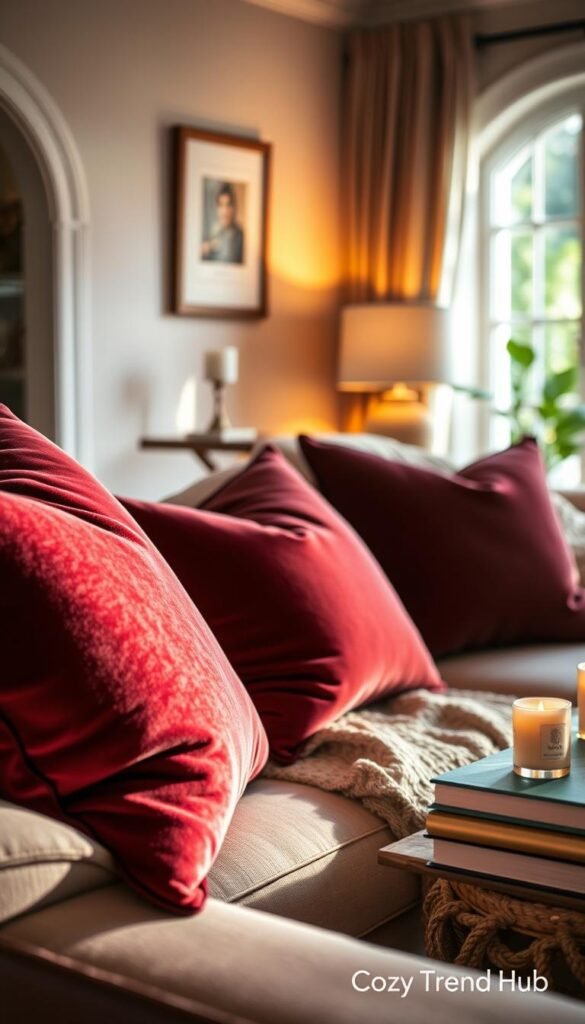
Who benefits and why
Minimalist or contemporary sofas, leather couches, and small apartments gain the most. Pillows and throws add touchable warmth and change how a space feels for living and guests.
How to layer for a low-chaos look
- Start with two pillow textures (wool + canvas).
- Add one solid anchor pillow in velvet for depth and color.
- Finish with one throw that has a visible knit or weave to add tactile contrast.
Buying and maintenance realities
Choose removable covers with quality zippers and plump inserts. Pick pet-friendly fabrics that resist fur and snagging. For seasonal style, use lightweight linen in summer and wool or velvet in cooler months.
Pros and cons
- Pros: Instant cozy inviting vibe, budget-friendly, easy to rotate and store.
- Cons: Requires periodic fluffing, throws can slide off, and off-season storage takes a little time.
Quick purchase slots for affiliates: “Best washable velvet pillow covers,” “Best chunky knit throw,” and “Best pet-friendly performance fabric pillows.” This approach is a fast, practical way to warm a living room without major work.
Area rugs that warm the floor and define space
Open layouts often leave seating floating; an area rug instantly grounds furniture and invites use.
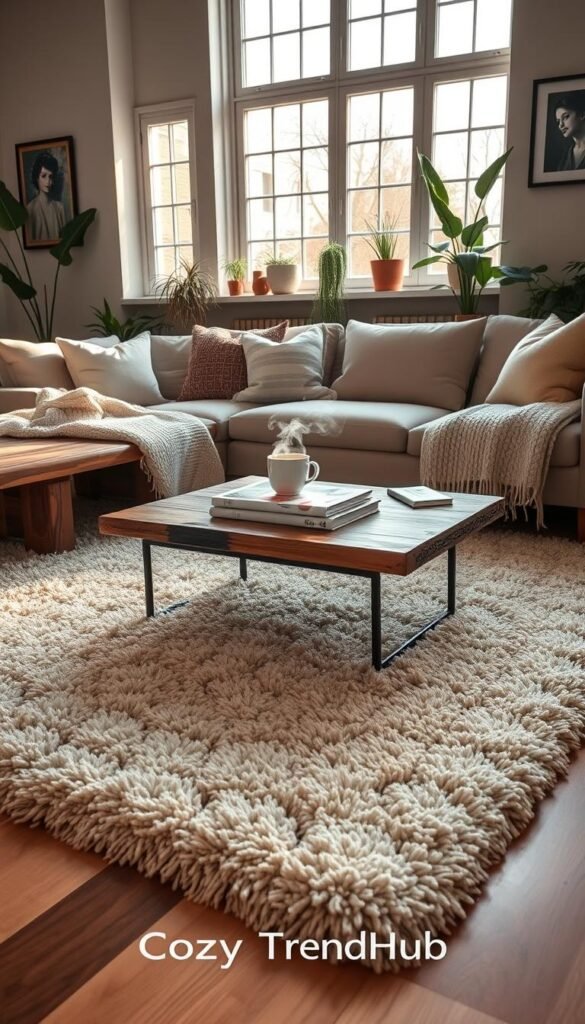
Why it matters: Hard floors feel cold underfoot and make an open living room feel unfinished. A rug adds warmth, acoustic softness, and a clear zone for seating.
Who it helps
Ideal for open-plan living/dining combos, apartments with tile or wood floor, and areas where seating feels detached from the rest of the space.
Sizing and layering tips
- Sizing: Too-small rugs shrink a living room. Aim for either front-legs-on the rug or all-legs-on depending on furniture layout.
- Layering: Use a durable base rug and add a softer top layer for winter texture and seasonal rotation.
- Contrast & textures: Darker patterns anchor the zone; light natural fibers keep it airy.
Buying considerations
Choose pile height for use: low for high traffic and easy cleaning, plush for warmth. Add a non-slip rug pad safe for rentals to protect floors and hold the rug in place.
| Use case | Material / pile | Practical note |
|---|---|---|
| Washable living room rug | Low-pile synthetic | Machine-cleanable for spills and pets |
| Low-pile for pets | Flatweave wool or indoor/outdoor | Hair-resistant, easy vacuum |
| Rug pad for rentals | Non-marking felt + grip | Protects floor finish and prevents slipping |
Pros: big comfort and zoning impact; warmer walking paths. Cons: higher cost and maintenance—start with the main seating area and add runners if budget is tight.
For tailored small-space picks and renter-friendly advice, see a short guide on small spaces.
Natural materials that add warmth: wood, rattan, and leather accents
Wood and woven accents add depth to white walls without heavy visual weight. Bright neutrals and blank walls can feel sharp. Natural materials introduce subtle color and texture that soften tones and ground a room.
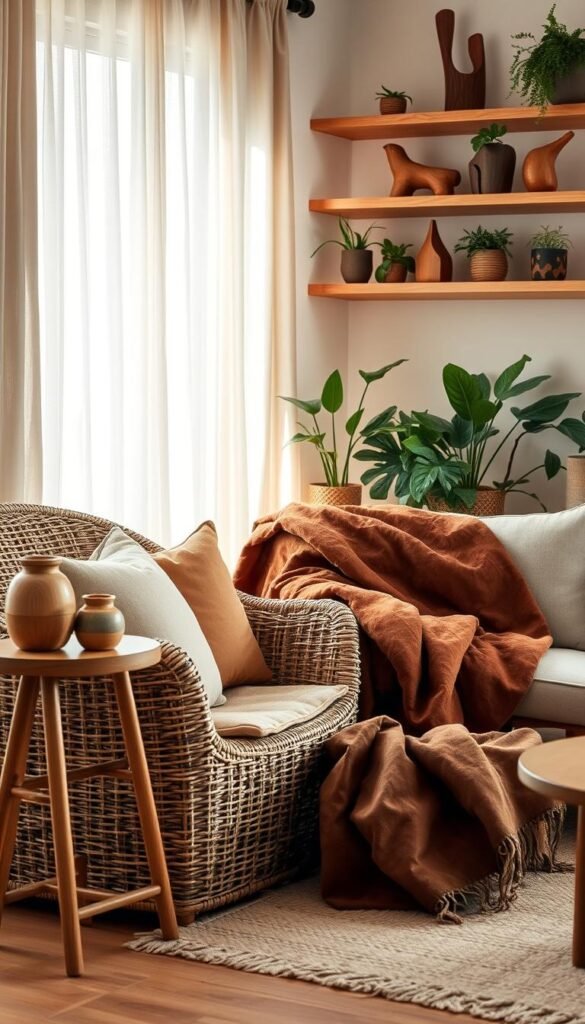
Best for
Minimal rooms, rental white-box apartments, and spaces with lots of flat painted surfaces. These materials work when painting or built-ins aren’t an option.
Where to add them in small spaces
- Place a wood coffee table or narrow side table to anchor seating.
- Use trays and woven baskets to corral items and add purposeful texture.
- Leather accents—like a small pouf or strap-handled basket—add warmth without visual clutter.
Buying considerations
Choose finish warmth (honey or oak vs. gray-washed). Pick matte or low-sheen surfaces to read softer. When mixing wood tones, repeat an undertone at least twice (for example, the same warm wood in a table and a tray) so pieces feel intentional.
| Placement | Example piece | Renter-friendly note |
|---|---|---|
| Seating area | Small wood coffee table | Freestanding; no assembly required |
| Storage | Woven basket | Lightweight; moves easily for cleaning |
| Surfaces | Wood tray | Protects surfaces and ties tones together |
Pros: timeless, durable, warms a room across seasons. Cons: unplanned mixes can look accidental; check existing floors or cabinets first.
For neutral walls and tone guidance, see a short reference on neutral tones for apartments.
Plants and foliage for instant “alive” energy (real, faux, or dried)
Greenery introduces organic shape that balances furniture and warms an empty corner. A few well-placed plants change how a room reads without major effort.
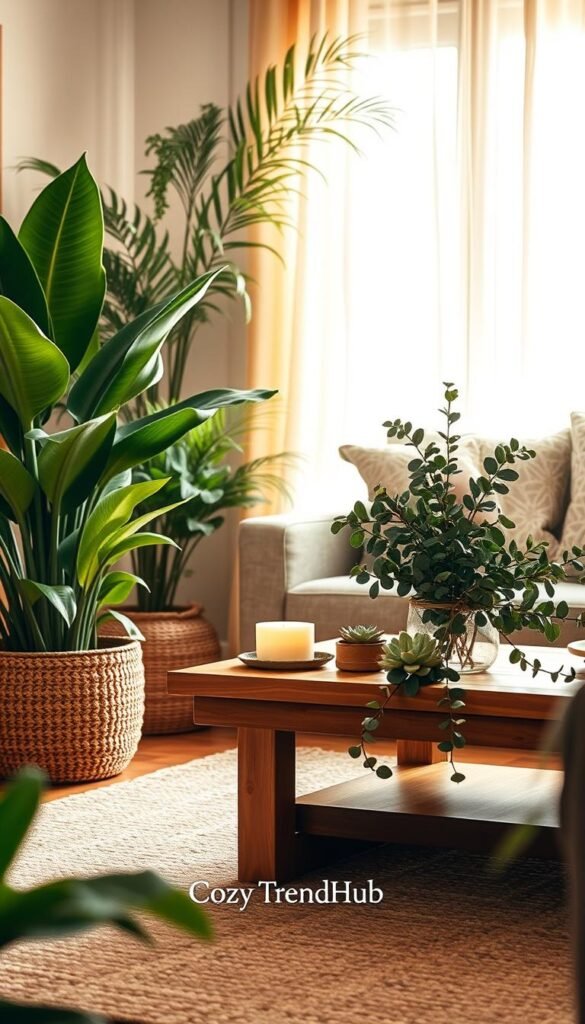
Why this helps and who it suits
Problem: empty vertical areas and blank corners make a space feel unfinished.
Why plants work: greenery adds life, soft visual movement, and natural texture that balances straight lines.
Options and low-light choices
Real plants reward care with growth and cleaner air. Faux options are ideal for low-light rooms or busy households. Dried branches suit minimal routines and seasonal vignettes.
| Option | Best use | Buying notes |
|---|---|---|
| Real | Living rooms with light | Match height to furniture; choose ceramic pot; protect floor |
| Faux | Dark rooms or rentals | Invest in high-quality materials and scale over quantity |
| Dried | Low-maintenance accents | Use textured planters; swap seasonally for fresh interest |
Practical tips and tradeoffs
Pick a tall plant to anchor a sofa corner or a short cluster for a console. Keep watering routines realistic—don’t buy high-care species if time is tight.
Pros: big warmth per dollar, portable, and versatile. Cons: real plants need care; low-quality faux can look fake.
For starter recommendations and plant care, see an indoor plant guide. For ideas in small spaces, check this small spaces reference.
Window texture that cozies fast: curtains layered over blinds
Layering soft panels over blinds gives a window instant texture and a more finished appearance.
Bare blinds often make incoming light feel harsh and reveal drafty edges. Hanging curtains over blinds softens glare, adds privacy, and helps insulate the room.

Who this helps: renters, bedrooms, and living areas with bright sun or thin windows. Use renter-friendly rods and clip rings to avoid drilling.
„A simple curtain layer changes a window from functional to intentional.“
Buying considerations
- Rod placement: mount wider and higher to make windows look larger.
- Curtain length: floor-grazing panels read tailored; shorter panels feel casual.
- Compare materials: linen for airy softness; heavier weaves for warmth and light filtering.
| Need | Recommended option | Renter note |
|---|---|---|
| Soften glare | Sheer linen-look panels | Use tension or no-drill rods |
| Insulation | Thermal or heavyweight weave | Hangs over existing blinds; removable |
| Small rooms | Light colors, slim headers | Avoid floor crowding; choose grommet or tab-top |
Pros: quick visual upgrade, improved comfort near windows, easy seasonal swaps. Cons: adds visual bulk in tight space, needs laundering or dusting.
For practical setup and renter-first tips, see a concise guide with room-focused advice: 9 tips to create a cozy modern.
Wall accents that add depth without crowding: meaningful art, mirrors, and macramé
A single statement object often does more for a room’s character than a crowded gallery of small frames.

Too many small pieces can make walls feel cluttered in a small space. Choose one large print, a mirror, or a textured macramé to create depth and calm.
Who benefits
Best for: renters, minimalist interiors, and homes with limited floor area. One piece sets the tone without filling every wall.
How to create a focal point
Measure the sofa width. Pick art about two-thirds the sofa width and center it. Leave negative space around the piece so the eye rests.
Buying and hanging tips
- Frame finishes: wood warms, black grounds, brass softens the style.
- Avoid glass glare by choosing non-reflective glazing or a mirror placed to bounce light.
- Use removable picture hooks or strips for renter-friendly hanging.
„Choose fewer pieces with room to breathe; the space will feel intentional.“
| Solution | Pros | Cons |
|---|---|---|
| Oversized framed print | High visual impact; anchors seating | Wrong scale can overwhelm |
| Lightweight mirror | Bounces light and enlarges room | Needs careful placement to avoid glare |
| Textured macramé | Adds tactile warmth without color | May collect dust in high-traffic areas |
Coordinate the wall piece with nearby chairs and side tables so the element reads intentional, not random. For guidance on layout and proportions, see this living room wall art guide.
Affiliate picks: „Best oversized framed print,“ „Best lightweight mirror for renters,“ and „Best modern macramé wall hanging.“
Contrast and muted color accents to keep cozy from turning bland
A few dark accents anchor light furniture and make a living room feel composed. Neutral walls can read flat when everything is the same soft tone. Small, deliberate contrast brings shape and purpose without major changes.
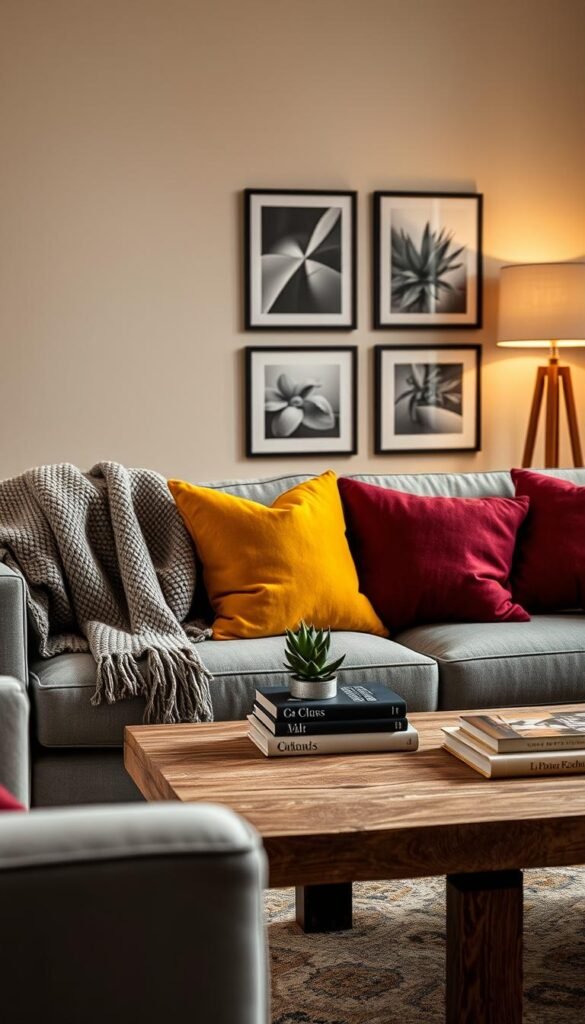
Using black or dark accents to ground light walls
Problem: all-neutral rooms risk looking washed out or unfinished.
Introduce black or deep hardware, picture frames, and a dark-framed mirror to add instant definition. These small points create structural contrast that reads modern and intentional.
Muted blues and earthy greens that feel modern
Choose muted blues and olive or sage greens for a calm, current palette. These colors read warm when paired with wood and warm-leaning neutral tones.
Start with textiles—pillows, throws, and one art piece—to test a color before painting.
Buying considerations and renter-friendly commitments
- Favor matte finishes for a softer look that won’t glare.
- Check undertones—avoid cool gray if a warm feel is the goal.
- Test with textiles first; swap or store them easily in rentals.
| Pros | Cons |
|---|---|
| Quick definition and modern balance; low-commitment updates | Too much dark can feel heavy without layered lighting |
| Easy to repeat small accents around the room for cohesion | Overuse can overpower a small space; limit to a few points |
Placement ideas: a dark-framed mirror above a console, matching black picture frames, a matte vase on the coffee table, or dark lighting hardware near seating. Pair these with warm lamps and reflective surfaces so a cozy space never reads heavy.
For neutral tones guidance and renter-focused picks, see a practical neutral tones reference and a short guide on neutral bedrooms at neutral bedroom guide.
Practical cozy upgrades for real life: storage ottomans, trays, and seasonal vignettes
Smart furniture choices let a living area look intentional without constant effort. Clutter makes a room feel stressful, and stress reads as not inviting, even with good lighting and textiles.
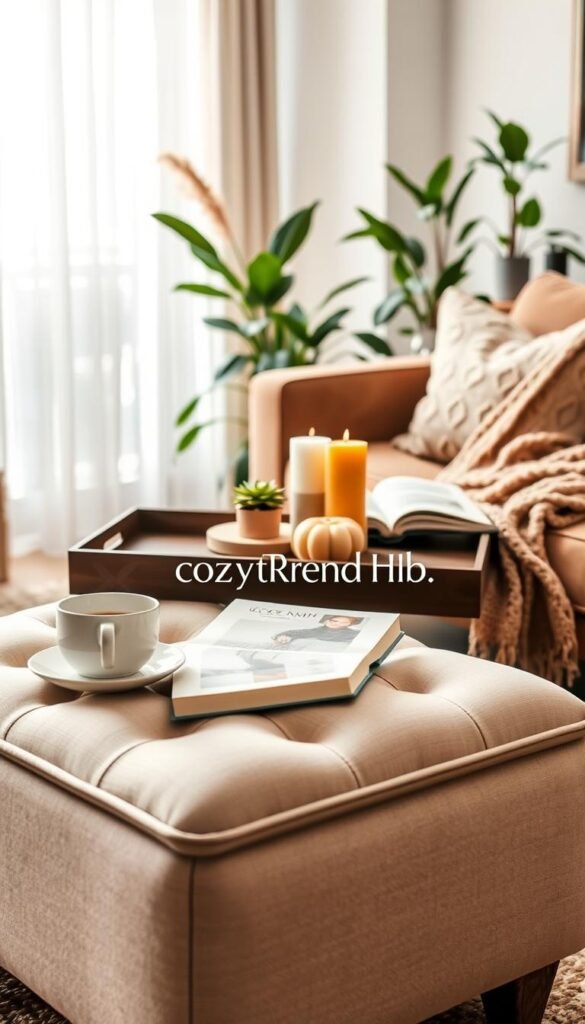
Who this helps
Busy households, small apartments, and families who want warmth with low upkeep will gain the most. Choose pieces that hide items and double as seating or surface space.
How to style a clearable coffee table vignette
Use a tray to group essentials so the surface clears in one move. A durable tray + candle (or flameless) + small greenery + one personal item makes a simple, repeatable example.
„Group items so a coffee surface can be cleared in seconds.“
Buying considerations
- Hidden compartments or closed drawers for toys and remotes.
- Soft-close hinges, interior capacity, and easy-clean upholstery.
- Scratch-resistant tray finishes and stable feet for floor protection.
| Solution | Function | Notes |
|---|---|---|
| Storage ottoman | Seating + hidden storage | Choose washable fabric and secure hinge |
| Decorative tray on coffee table | Groups items for fast clear-up | Pick non-slip base and durable finish |
| Lift-top coffee table | Surface + concealed storage | Check weight capacity and mechanism warranty |
Pros: less visual clutter, faster cleanup, easy seasonal swaps. Cons: can look over-styled if too many accessories; limit to one vignette zone per room.
For practical product ideas and a furniture-forward approach to a coffee table ottoman, see this coffee table ottoman ideas.
Conclusion
Focus on a few high‑impact elements and the whole home will read warmer and more intentional.
Summary: a warmer home comes from layered light, tactile textiles, natural wood accents, and measured contrast. Choose items that solve daily use—lighting that creates mood, one major soft surface (rug or large throw), and a functional wood or storage piece to finish the look.
Three-step buying order: start with layered lighting; add one soft surface (rug or textiles) for touch and sound; finish with warmth—wood, plants, or window panels for texture and insulation.
Renter-friendly note: most choices are plug-in, freestanding, or temporary. Use removable rods, rugs with pads, and mobile planters so changes feel reversible.
Small-space checklist: keep clear paths, pick multi-use furniture, and limit styling to one or two swap-friendly vignettes. Compare by needs—pets, washable fabrics, low light, budget, and room size—before buying.
Rotate seasonally: swap pillow covers and throws, change candle scents, and update a tray vignette to refresh the look without adding clutter. For quick practical guidance, see these top tips for making your home feel.
Next steps: Shop layered lighting, shop washable textiles, shop rugs by size, shop storage ottomans — and choose pieces that improve usability first so the living room truly becomes a restful, useful room.