
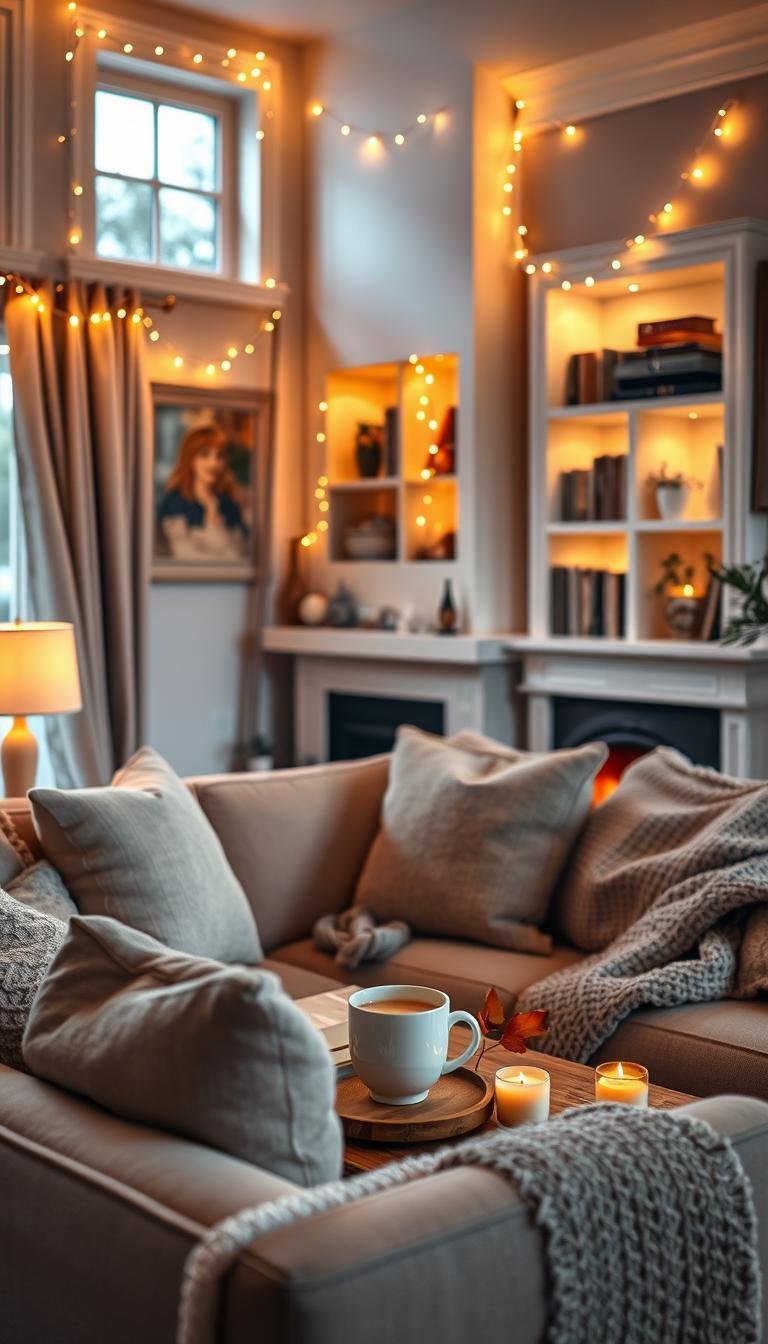
Many rooms feel stark once daylight fades. Overhead fixtures can be too direct and too bright. That makes evenings less comfortable and reduces the chance to relax or read.
Cozy lighting here means softer brightness, warmer color around 2700K, and several light sources to cut glare. Layered lights create a gentle glow and a calmer atmosphere without a full redesign.
This guide focuses on renter-friendly and small-space solutions. It covers table lamps, floor lamps, LED strips and rope, plug-in sconces, paper pendants, and smart bulbs with dimmers. Each entry shows „Best for,“ „Problem solved,“ „What to look for,“ plus quick pros and cons to aid comparison.
Shorter days increase the need for adjustable, layered light for winding down, hosting, or reading. A simple start: swap to warm bulbs and add one secondary lamp. That single change often improves the feel of a room immediately.
Key Takeaways
- Overhead lights can feel harsh; add softer sources to reduce glare.
- Aim for warm white (~2700K) to mimic candlelight tones.
- Pick plug-in or clip-on options when drilling isn’t possible.
- Layer three types of lights: ambient, task, and accent.
- Comparison boxes list „Best for,“ „Problem solved,“ and buying tips.
What Makes Lighting Feel Cozy (and Why Overhead Lights Often Don’t)
A single ceiling fixture often flattens a room and makes evenings feel clinical. Overhead lights throw top-down beams that exaggerate shadows and create glare. That top-heavy approach reduces depth and comfort.
Layered lighting fixes the problem by combining three roles: ambient, task, and accent. Ambient lighting sets the base glow. Task lighting supports activities like reading. Accent light adds depth and highlights surfaces.
Layered lighting basics
Practical picks: a floor lamp supplies ambient lighting, a reading lamp gives focused task lighting, and an LED strip behind a TV provides accent light. These choices are renter-friendly and simple to place.
Warm light vs. cool light
Choose warm white bulbs in the 2700K–3000K range for a softer evening tone. Warm light reads as relaxing. Cool tones feel sharper and suit work zones.
How shades soften brightness
Linen and rice paper shades scatter the beam and lower hotspots. Frosted glass reduces glare and keeps a view from feeling harsh. A quick rule: avoid bare bulbs in direct sight.
Decision cue: if a room feels harsh, try diffusion + warmer bulbs + more than one source. That trio usually restores a pleasant environment fast.
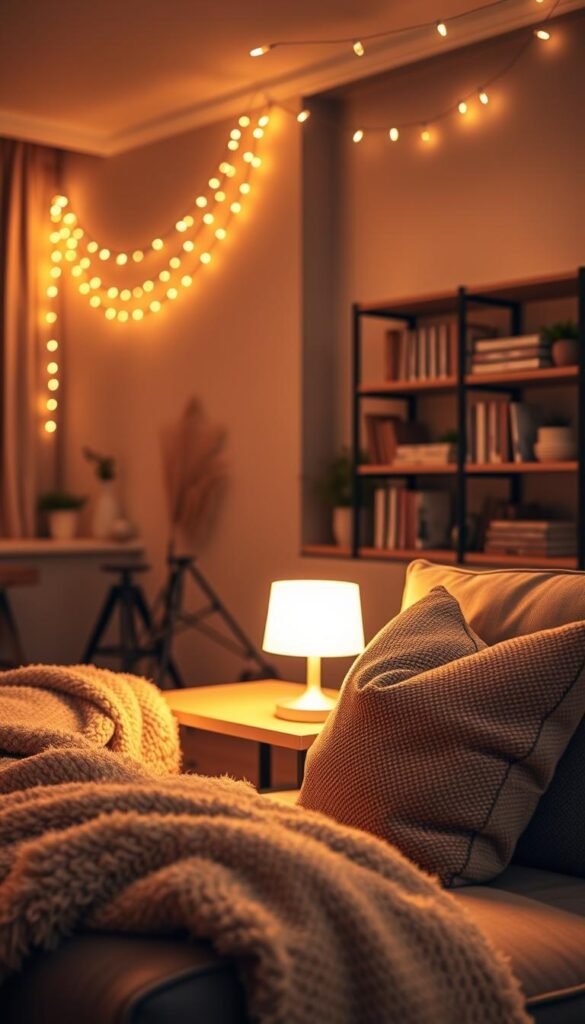
Quick Buying Guide for the Best Cozy Lighting for Home
A few strategic choices—bulb temperature, dimming, and placement—solve most room glow problems.
Pick the right color temperature
Choose warm white near 2700K for a living room and bedrooms. That temperature reads warm at night and stays pleasant in day use.
Choose dimmable options
Dimmable bulbs let one fixture shift from task bright to soft evening light. Verify the bulb type and dimmer compatibility before buying.
Cordless vs. plug-in
Cordless models add flexible placement when outlets are scarce. Plug-in lamps often deliver higher output and continuous run time. Pick the style that matches your space and routine.
Renter-friendly checklist & placement tips
- No hardwiring; use plug-in or battery models.
- Removable adhesives or hooks to avoid wall damage.
- Aim light at walls or ceilings to reduce glare and fill corners.
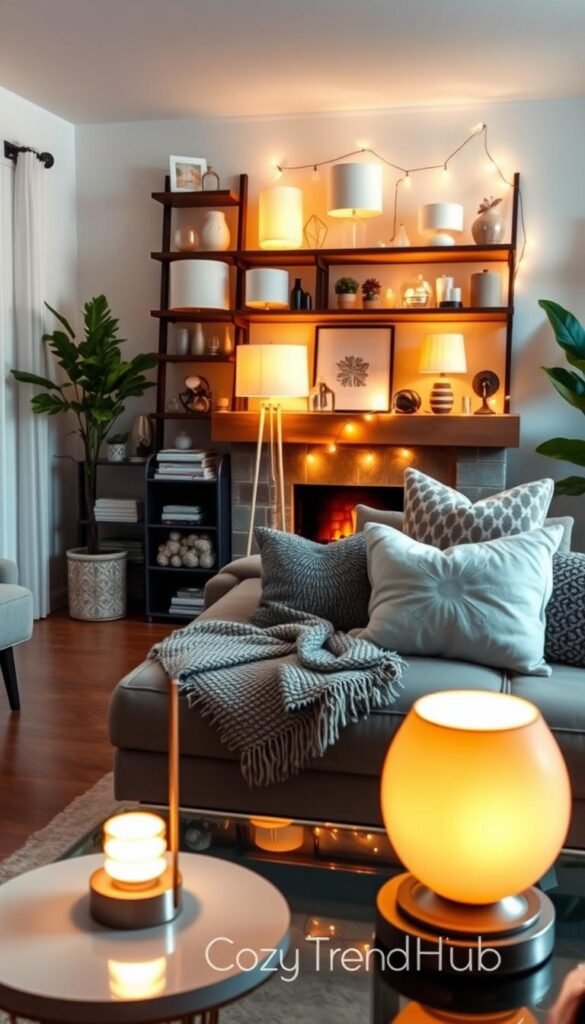
| Option | When to pick | Key spec |
|---|---|---|
| Cordless lamps | No nearby outlets, flexible layout | Battery runtime, USB charging |
| Plug-in lamps | Long evening use, brighter rooms | Continuous power, higher lumen output |
| Dimmable bulbs (LED) | Shift from day to night without changing fixtures | 2700K recommended, check dimmer compatibility |
Table Lamps That Add Instant Warmth Without Taking Up Much Space
A small table lamp can change the feel of an evening without rearranging furniture. These compact fixtures layer task and ambient light so a room feels calmer at night. They work well in apartments where hardwiring isn’t an option.
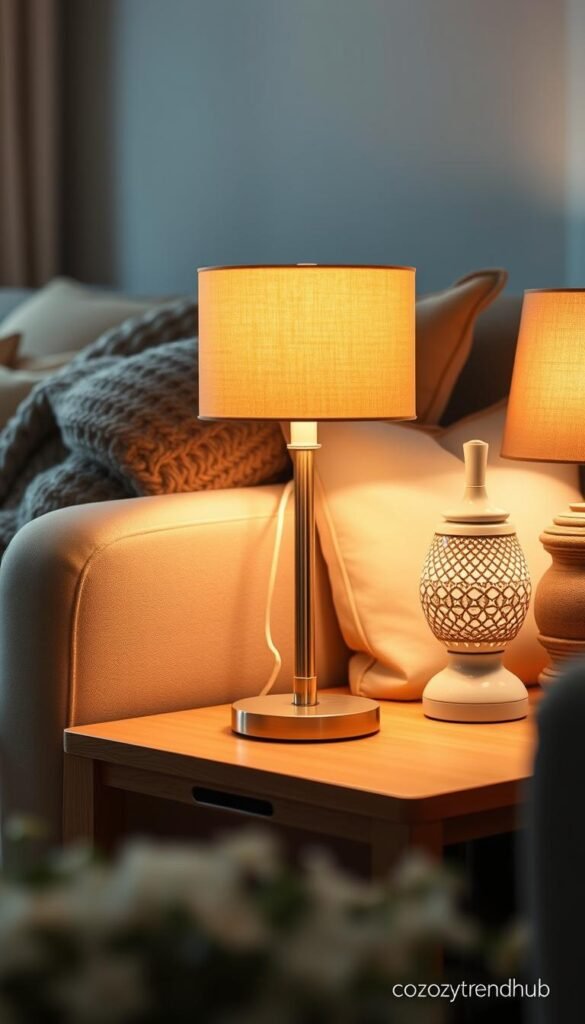
Who this suits
Ideal for people with tight layouts: renters, students, and anyone with limited floor space. Use on side tables, nightstands, desks, or shelves to create an instant ambient glow.
What problem it solves
Table lamps replace an all-or-nothing overhead switch. They deliver a soft glow that reduces glare and makes bedtime routines easier without brightening the whole room.
Buying checklist
- Shade shape: pick a diffuser to cut hotspots; avoid bare bulbs in eye line.
- Stable base: narrow surfaces need low center of gravity.
- Bulb compatibility: use warm bulbs and confirm dimmer support if day-to-night control matters.
Quick pairing and pros/cons
Pair a table lamp with candles or flameless alternatives for layered, soft glow during seasonal evenings.
| Pros | Cons |
|---|---|
| Easy to move; renter-friendly; quick mood upgrade; works on multipurpose tables. | Limited room coverage; can create hotspots if shade is too open; needs surface space. |
Floor Lamps for Cozy Corners and Better Ambient Lighting
Dark corners shrink a room; a well-placed floor lamp restores scale and warmth.
A floor lamp brightens a living room corner without new ceiling work. It adds ambient light that can be bounced off walls to reduce harsh hotspots and improve overall atmosphere.
Arc styles reach over seating with a small base near the wall. Tripod designs feel stable but can take more floor space. Choose the shape that fits your layout.
- What to check: footprint, shade diffusion, and height relative to seating.
- Cord plan: pick a longer cord, run it along baseboards, and use a flat cord cover to keep lines tidy and safe.
Floor lamps offer a big impact and flexible placement. Downsides include taken floor space and cord management in tight rooms. For those aiming to warm a larger room, a single well-chosen lamp often gives the most immediate payoff.
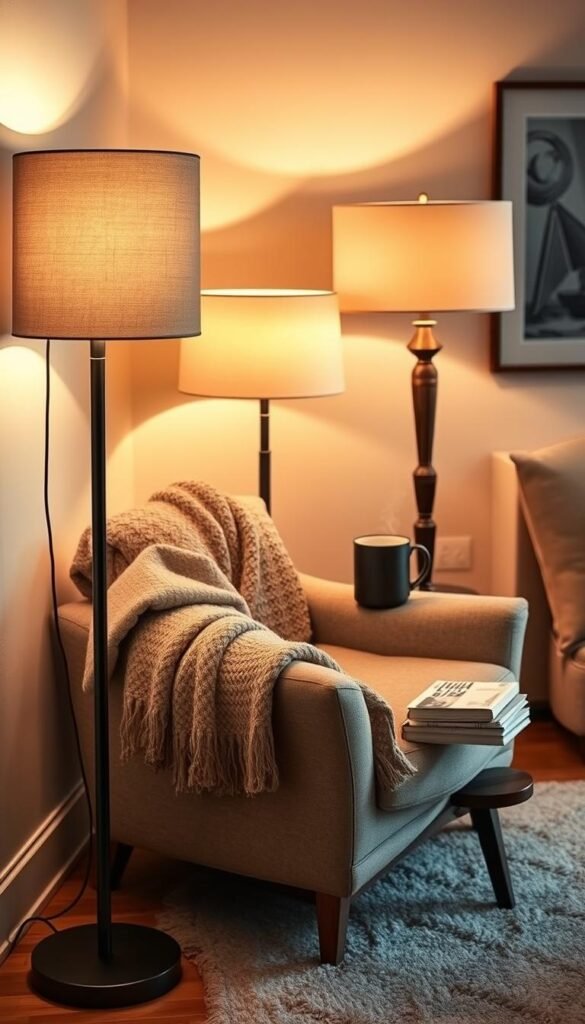
| Style | Strength | Small-space note |
|---|---|---|
| Arc floor lamp | Overhead reach, good spread | Smaller base near wall, ideal behind sofa |
| Tripod floor lamp | Stable, design-forward | Needs more floor area but adds visual interest |
| Tower/column lamp | Even ambient glow, low profile | Narrow footprint, strong for corners |
LED Strips and Rope Lighting for a Soft, Indirect Ambient Glow
When surface space is scarce, slim led strips turn narrow gaps into a soft, useful ambient glow.
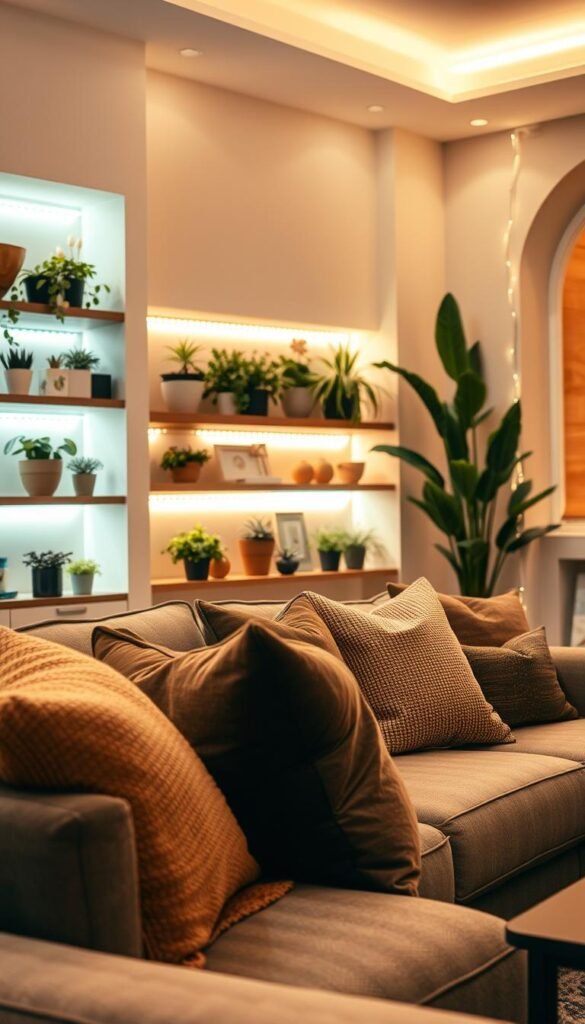
Best placements
Behind TVs to cut harsh contrast, under cabinets to wash counters, and behind headboards for a hotel-like feel. These lights keep surfaces clear and add depth without furniture.
Problem solved
They layer indirect light where lamps won’t fit. A hidden strip creates bounce off ceilings and walls so a room reads calmer and less glare-prone.
Installation & renter-friendly removal
Most led tape is cut-to-length at marked points and uses peel-and-stick backing. Clean surfaces, confirm cut marks, and plan cable routing before sticking.
„Test adhesive on a small spot first and warm the tape gently when removing to reduce residue.“
What to look for
Pick strips with warm white modes, true dimming (no flicker), and optional color settings to shift the mood seasonally. Check power type and controller quality to avoid uneven brightness.
| Placement | Benefit | Key check |
|---|---|---|
| Behind TV | Reduces eye strain, softer contrast | Adhesive strength; warm white option |
| Under shelves / cabinets | Even wash without clutter | Cut marks, dimming support |
| Headboard backlight | Layered hotel-like glow | Controller range; removable mounts |
Pros: fast setup, flexible sizing, strong value, modern ambient lighting in tight rooms and small home spaces.
Cons: visible hotspots if exposed, adhesive varies, and cheap kits can show uneven brightness or short lifespan.
Plug-In Wall Sconces When You Need Light but Have Zero Table Space
When there’s no room for a nightstand, a wall-mounted plug-in sconce fills the gap without fuss. These fixtures free surfaces while giving usable task light for reading or bedtime routines.
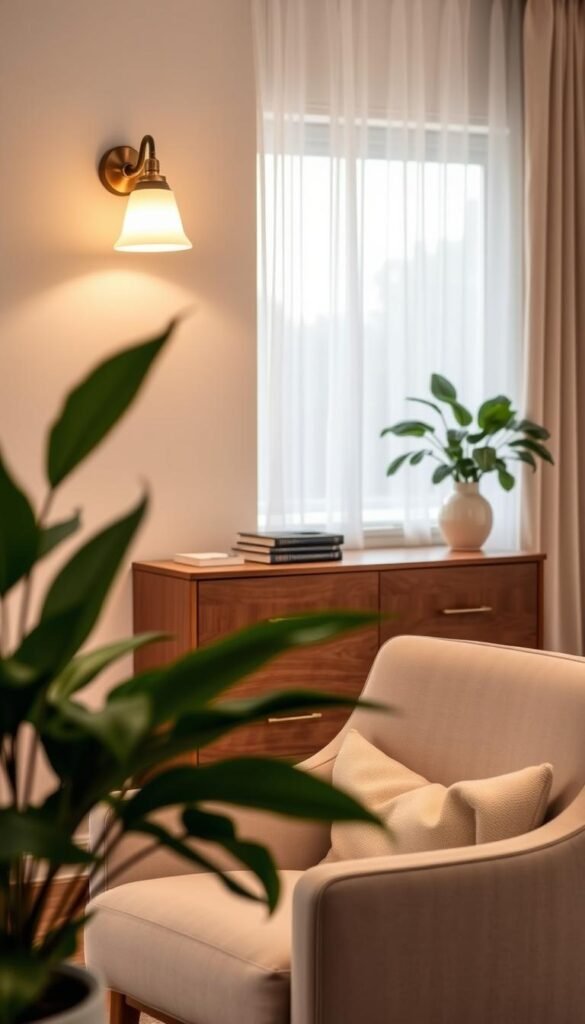
Who this suits
Ideal for narrow hallways, small bedrooms, and anyone who needs bedside lighting ideas but lacks tabletop space. They work where floor lamps would block walkways or look crowded.
Why renters like them
Plug-in sconces avoid hardwiring and are simple to remove. Most use adhesive hooks or small screws that leave minimal marks and let renters keep a layered look without renovations.
What to look for
Buying checklist: check cord length to reach outlets, switch placement for easy access, and adjustable shades or heads to control glare. Aim the beam down and slightly away from eyes to keep brightness gentle while preserving task performance.
| Advantage | Trade-off | Tip |
|---|---|---|
| Clears nightstands and reduces clutter | Visible cord and mounting care required | Use flat cord covers and gentle anchors |
| Provides focused reading light | Less full-room coverage than a floor lamp | Pair with a strip or small lamp for layers |
Quick pros/cons: space-saving and functional versus cord visibility and the need for careful placement to avoid glare. Choose models with diffusers to boost comfort and keep a calm visual profile.
Pendant Lights and Paper Lanterns for a Gentle Overhead Glow (Without the Harshness)
Pendant fixtures can light an entire table, yet many designs leave faces washed in harsh white. When an overhead source is needed in a dining area, choose fixtures that spread and soften the beam.
Best for:
Dining areas and living spaces where a single fixture must serve meals and gatherings without feeling clinical.
Paper lantern pendants:
Paper lanterns act as built-in diffusers. The thin material scatters output and reduces hotspots, so the overall environment gains a warm, even glow instead of sharp beams.
What to look for:
- Confirm dimmable compatibility and switch type.
- Match bulb output to table size; avoid overly bright bulbs that glare at eye level.
- Pick a shade diameter that covers the table but stays below eye line for comfort.
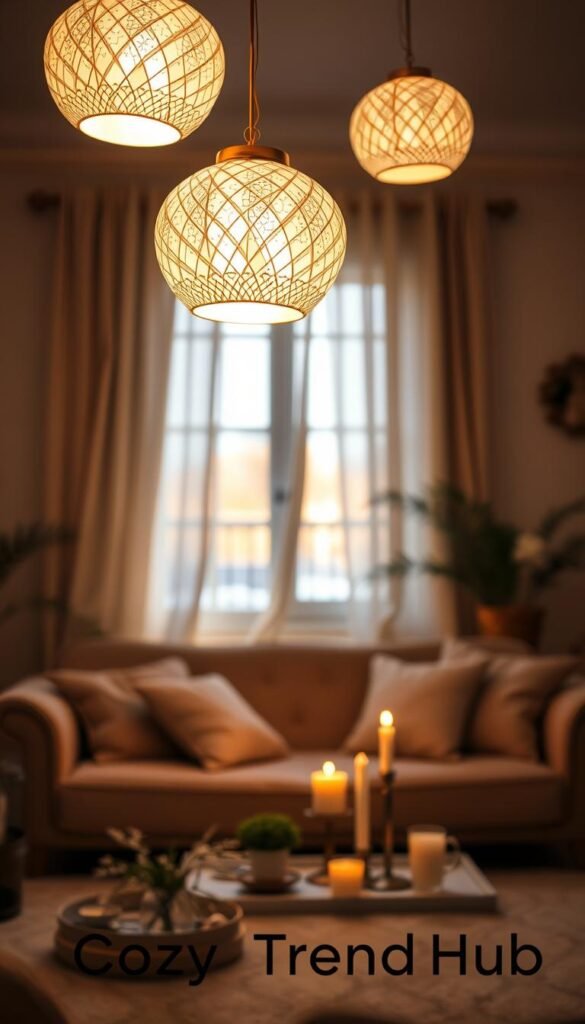
| Pros | Cons |
|---|---|
| Broad room coverage; suits shared activities; replaces many small lamps. | Installation limits in rentals; possible landlord rules; risk of cool bulbs if not checked. |
Renter-friendly workarounds: use plug-in swag kits or lightweight shades, then layer with a table lamp if a hardwired fixture isn’t allowed.
Smart Bulbs and Dimmer Switches to Control Mood, Brightness, and Timing
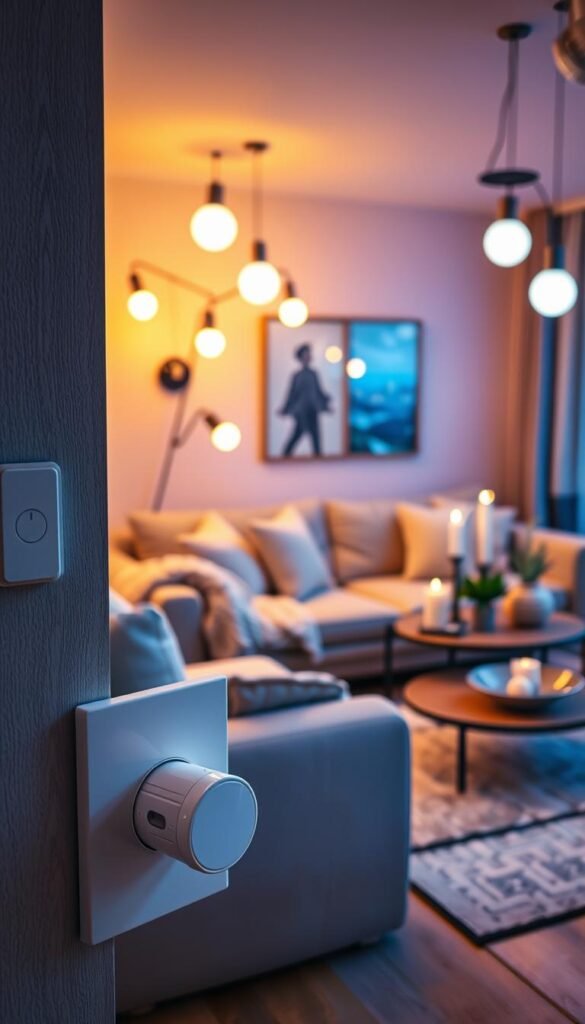
One smart bulb can change how a room feels across the day. Swap a standard bulb for a smart LED and gain instant control over mood and brightness without any wiring. This approach works well in rentals and small apartments.
Best for
Anyone who wants one setup that shifts from daytime clarity to evening comfort. A single smart lamp can serve reading, relaxing, and hosting by switching modes.
Problem solved
Too-bright overhead fixtures often feel fixed and harsh at night. Smart bulbs and plug-in dimmers let users tune output and schedule changes without replacing fixtures.
What to look for
- Warm range: support near 2700K–3000K for softer evenings.
- Smooth dimming: no flicker and wide range down to low output.
- Controls: reliable app and voice support plus local schedules.
- Compatibility: check base size, enclosed fixture rating, and dimmer compatibility.
Pros and cons
Pros: adaptable mood settings, precise control over brightness, fewer purchases when one lamp covers many needs, and schedule features that ease evening routines and time-based dimming.
Cons: higher upfront cost, occasional app complexity, and some systems need stable Wi‑Fi for full function.
| Feature | Why it matters | Small-space tip |
|---|---|---|
| Warm white modes | Makes evenings feel gentler | Use one smart bulb in a key lamp rather than several fixtures |
| True dimming | Prevents flicker at low settings | Avoid incompatible mechanical dimmer switches |
| Schedules & timers | Gradual changes support routines | Set a sunset scene to lower brightness at night |
Conclusion
The quickest upgrade is changing to warm bulbs and a dimmer, then adding an indirect accent light.
Decision path: set bulb color and dimming first. Next pick a fixture that fits the space—table, floor, wall, strip, or a diffusing pendant.
What to buy first: warm bulbs, one dimmable lamp, and one indirect accent source. Choose plug-in or peel-and-stick options when permanence is limited.
Finish with a diffusing shade and candles or flameless alternatives to add low-level atmosphere without clutter.
Confidence note: the ideal setup matches the room’s function, available space, and how much control is needed over brightness.



2 Comments