
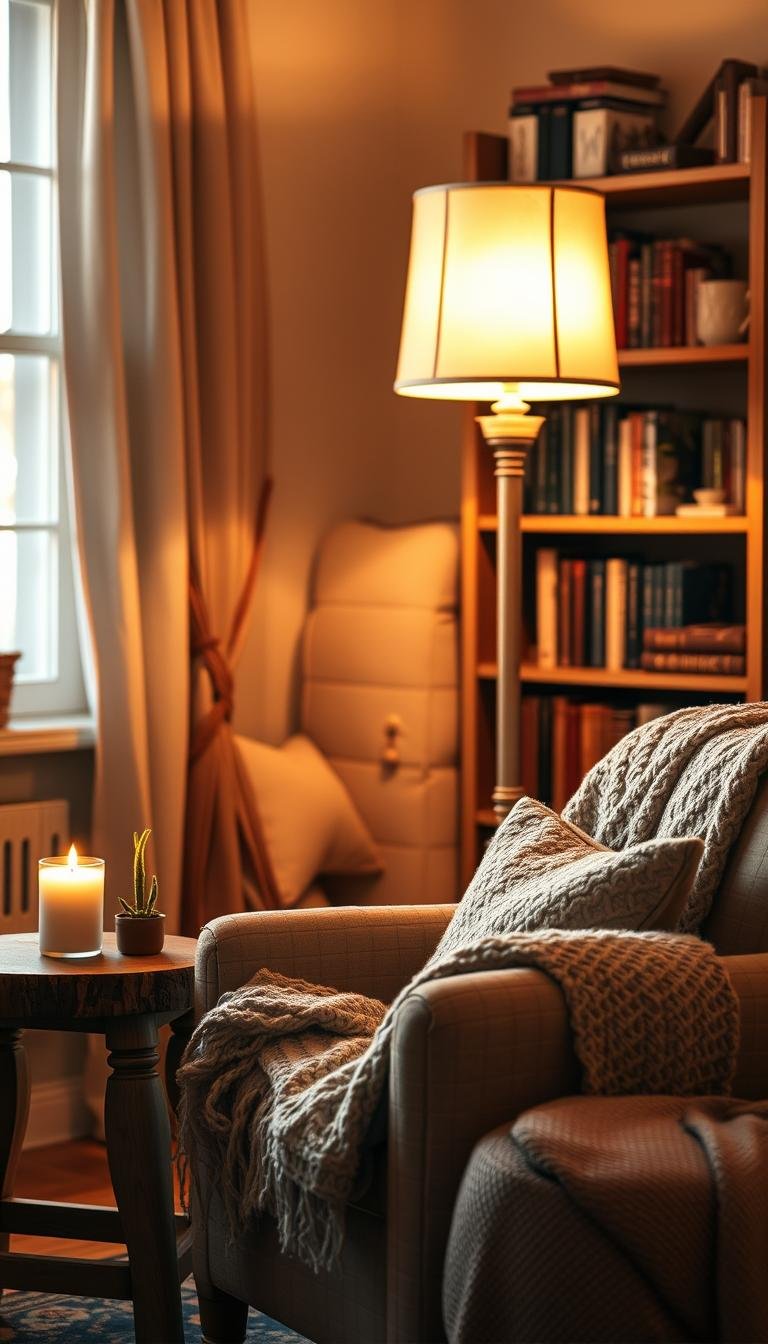
Many rooms feel wrong after sunset. A single overhead fixture can create harsh glare, deep shadows, or a cold atmosphere. That problem often leaves people frustrated with decor that looked promising in daylight.
The solution is simple and practical. Use a mix of overhead, task, and accent light to add depth and a warm glow. Choose bulbs with a warmer temperature, add shades to soften glare, and layer sources so spaces stay functional.
Renters need not be left out. Plug-in lamps, battery sconces, and stick-on fixtures let tenants improve mood lighting without rewiring. This guide shows room-by-room ideas and quick picks by budget and size.
Readers will get clear comparisons: „best cozy lighting for home“ picks, pros and cons, and what to buy first—bulbs, dimmers, lamps, sconces, or pendants. The aim is realistic: comfort that supports reading, cooking, and night paths, not just decor.
Key Takeaways
- One overhead source often causes glare and coldness; layering fixes that.
- Warm bulb color plus diffusers create a relaxed atmosphere and soft glow.
- Room-by-room recommendations help prioritize purchases by need.
- Renters can use plug-in and no-hardwire options to improve mood lighting.
- Each category includes practical pros/cons to simplify buying decisions.
How to Choose Cozy Lighting That Actually Works in Real Homes
Start by matching simple fixes to everyday lighting frustrations. Common problems include glare from a single overhead fixture, corners that feel too dark, or one bright bulb that spoils evening mood. Match each pain point to a quick solution before buying anything.
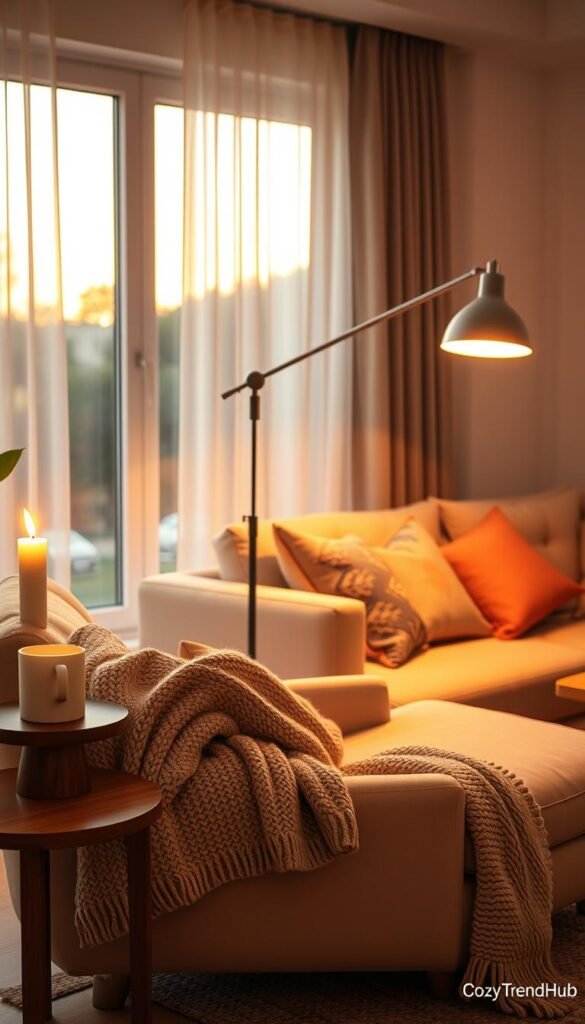
Layer ambient, task, and accent lighting
Think of three roles: ambient fills the room, task supports activities like reading and cooking, and accent adds depth. A basic starter plan: one ambient source, one task lamp, and one accent point per main room.
Bulbs, dimmers, and covered shades
Pick warm white bulbs (2700K–3000K). This is a high-impact, low-cost swap that increases comfort quickly without changing fixtures. Add dimmers to tame brightness and set mood for movies or meals.
Avoid exposed bulbs when aiming for softness. Covered shades or diffusers reduce glare and harsh shadows and make faces look better at night.
Renter-friendly checklist and buy-time constraints
- Plug-in sconces and floor lamps that need no wiring.
- Peel-and-stick puck lights and adhesive cord covers for neat runs.
- Smart bulbs that dim via app to replace wired dimmers.
Before buying, measure outlet placement, cord routes, ceiling height, and check lease rules about swapping fixtures. These small checks avoid wasted purchases.
„One ambient + one task + one accent“ is a simple rule that solves most day-to-night needs.
Quick comparison prompt: In the next section, choose your first purchase based on room size, budget, and vibe to get the most immediate impact. See recommended picks here.
Best cozy lighting for home: Quick Picks by Room Size, Budget, and Vibe
Quick picks help readers scan options fast. Use the grid below to match room size, renter limits, and the mood goal. Each pick names who it suits and the problem it fixes.
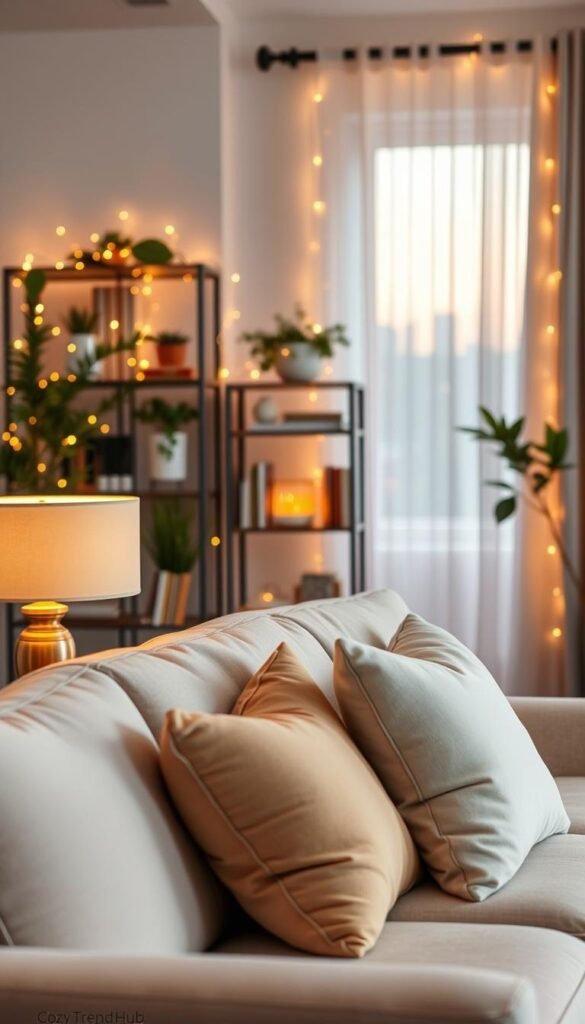
Quick decision grid
- Room size: small / medium / large
- Constraints: renter / no hardwire
- Goal: fall ambiance / kid-friendly / better reading light
Best for small spaces and studios
Who: studio dwellers and tiny apartments.
Problem solved: small space glare and crowded floorspace.
- Pick slim-profile floor lamps, compact table lamps, or plug-in sconces.
- First purchase: one slim floor lamp for the darkest corner.
- Affiliate slots: Top pick, Upgrade pick, Budget pick.
Best for renters who can’t swap hardwired fixtures
Who: people in rentals with lease limits.
Problem solved: need mood control without rewiring.
- Choose plug-in pendants, plug-in sconces, and smart bulbs/dimmer plugs.
- First purchase: warm bulbs + a dimmer plug to change mood instantly.
Best for seasonal fall ambiance with minimal effort
Who: seasonal decorators and weekend refreshers.
Problem solved: low-effort warm effect and richer color tone.
- Swap to 2700K bulbs, add lantern-style accents and small table lamps.
- First purchase: a set of warm bulbs and one lantern accent.
Best for families: cozy without dark corners
Who: families juggling safety and evening routines.
Problem solved: shadowy corners and trip hazards.
- Layer ambient, task, and accent lights; pick stable bases and durable shades.
- First purchase: a tall lamp to light a main traffic path.
Placement tip: light corners first, add a reading light near seating, and keep cords out of traffic paths.
Warm Bulbs and Color Temperature for a Cozy Atmosphere
Color temperature changes how a room feels more than many people expect. It affects wall color, skin tones, wood, and textiles in simple, visible ways.
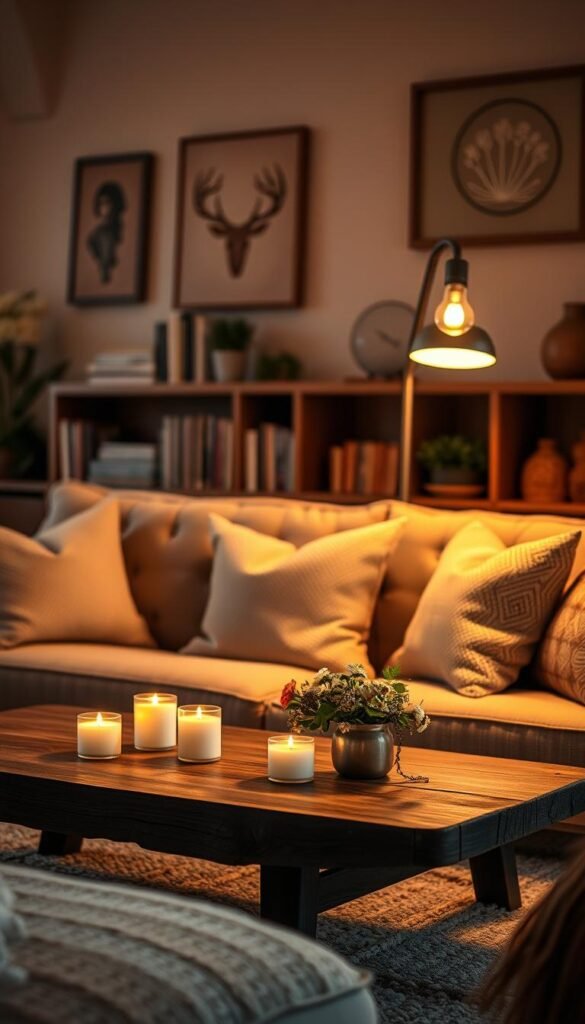
The sweet spot for comfort: 2700K to 3000K
Designers commonly recommend 2700K–3000K. That range gives a warm glow without looking yellow or washed out. Choose ~2700K when a golden, relaxed feel matters. Pick ~3000K where a touch more clarity helps, such as some kitchens or bathrooms.
Warm white vs soft white: where each looks best
Warm white (~2700K) reads more golden and flatters wood and fabrics. It works well in living rooms and bedrooms. Soft white (~3000K) keeps still a gentle atmosphere while improving contrast for tasks.
Brightness basics: avoiding harsh, high-watt glare
Too-bright bulbs create glare and flatten a space, especially with exposed fixtures. Use lower lumen bulbs for ambient mood and higher lumen where tasks require focus. Then add a dimmer to reduce brightness at night.
- Buyer checklist: Kelvin 2700–3000K, dimmable rating, correct bulb shape/base, and a shade or diffuser.
- Match bulbs within the same sightline to prevent patchy color in open plans.
If a room feels cold, lower the Kelvin. If it feels dingy, add a lamp before bumping up brightness.
For a short guide to small-space decor that pairs well with these bulb choices, see this small-space decor guide.
Table Lamps for a Warm Glow on Nightstands, Consoles, and Kitchen Counters
A well-placed table lamp can soften bright overheads and make evening routines feel calmer. Table lamps add a layer of gentle light that keeps the room usable without harsh glare.
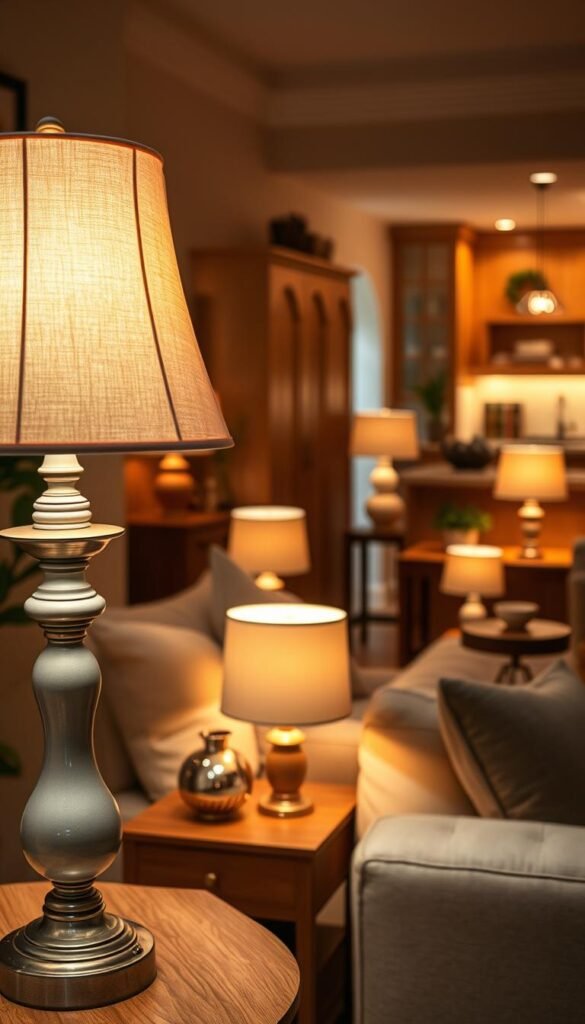
Who benefits most
Renters and small-space dwellers gain instant ambiance with no wiring changes. A plug-in table lamp moves from desk to nightstand as needs change.
Where a lamp works surprisingly well
Try a lamp on an entry console for a welcoming glow. Put one on a kitchen counter after dishes to replace bright overheads with a softer pool of light.
Use a lamp on a bookshelf or nightstand to create reading spots without lighting the whole room.
What to look for
Pick shades that diffuse light gently—linen, cotton fabric, or frosted glass. These materials reduce glare compared to exposed bulbs.
Match lamp height to the table so the bulb sits below eye level when seated.
Pros and cons at a glance
- Pros: affordable, portable, immediate mood improvement, great for small-space layering.
- Cons: limited reach in larger rooms; may need a floor lamp or dimmed overhead to avoid dark corners.
| Comparison Field | Why it matters | What to check | Good pick details |
|---|---|---|---|
| Cord length | Determines placement flexibility | Measure plug distance from outlet | 6–10 ft for counters and consoles |
| Dimmable compatibility | Controls mood and brightness | Look for dimmable bulbs and switches | Smart bulbs or inline dimmer plugs |
| Shade opacity | Affects glow and glare reduction | Choose medium opacity for soft diffusion | Linen or frosted glass shades |
| Footprint | Fits narrow tables and crowded surfaces | Check base diameter and cord routing | Narrow base, small footprint for consoles |
„A lamp in the right place can make a room feel layered and usable without rewiring.“
Floor Lamps That Light Up Corners and Create Lounge-Ready Mood Lighting
Placing a floor lamp in a dark corner changes how a room feels and works. A floor lamp activates dead zones and makes a living room feel larger and more intentional.
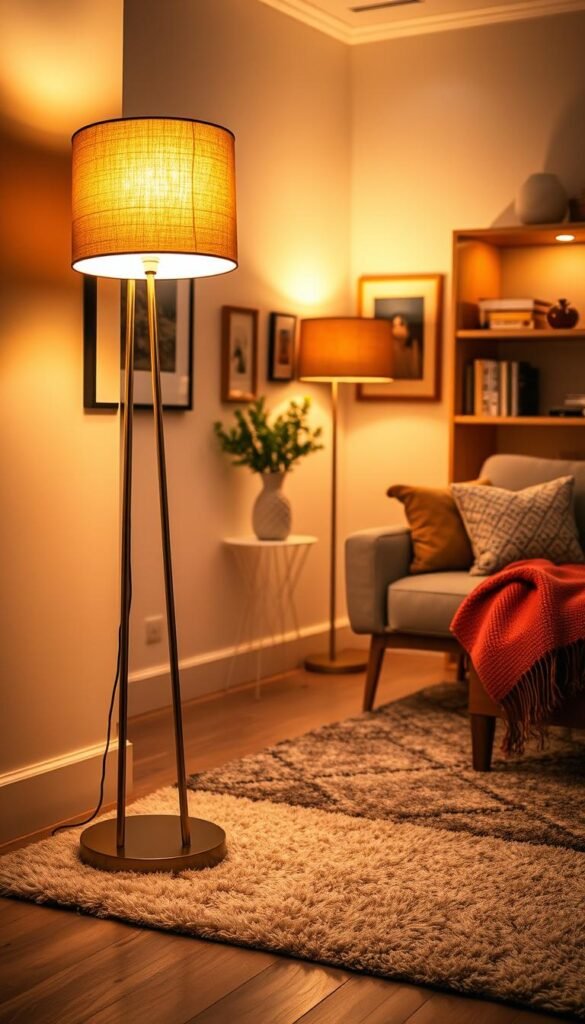
Where they help most
Best for: dark corners, reading chairs, and small living rooms.
Position a floor lamp behind or beside seating to create a pool of light for reading without glare on screens. Arc styles reach over seats while slim profiles fit narrow spaces.
Shade and style
Fabric shades give soft, diffused glow that suits bedrooms and nurseries. Choose linen or cotton to reduce harsh beams and warm skin tones.
Pros and cons
- Pros: strong ambient effect, activates corners, balances open plans, renter-friendly plug options.
- Cons: footprint and tip risk—kids and pets raise stability concerns; some styles need a larger base.
Buying considerations
Compare height against seating so the bulb sits just above eye level when seated. Check base diameter and weight for stability. Note shade direction (up, down, or both) to control spill and mood.
| Feature | Why it matters | What to check |
|---|---|---|
| Height | Affects reading glare and ambient spread | 40–60 inches for reading chairs; arc styles often reach 65–72 inches |
| Base stability | Prevents tipping around kids and pets | Weighted base or 12–16 in diameter; low center of gravity |
| Shade type | Controls diffusion and warmth | Fabric shades with medium opacity; choose top-down diffusion for ambient glow |
| Cord management | Safety and neat appearance | Inline switch or cord cover; plan route away from walkways |
„Light corners first; pair a floor lamp with warm bulbs to keep the room inviting.“
Placement mini-checklist:
- Keep walkways clear and avoid cords across traffic paths.
- Place lamp behind seating to reduce screen glare.
- Choose a weighted base in family rooms for extra stability.
Wall Sconces That Save Space and Add Cozy Accent Lighting
Wall sconces reclaim tight surfaces and add layered glow without taking floor space. They suit bedrooms, narrow halls, and small alcoves where a table won’t fit.
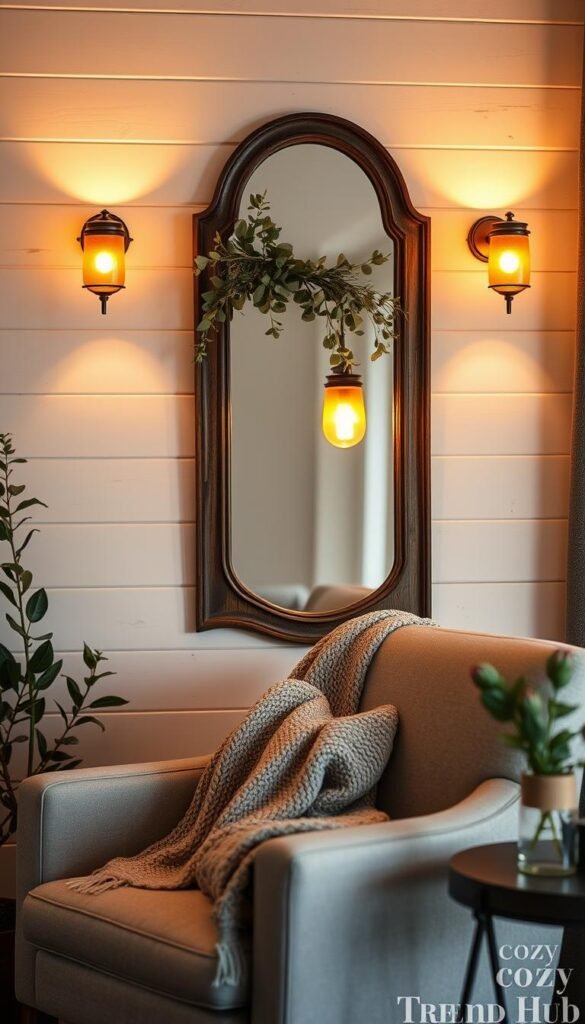
Best for bedrooms, hallways, and alcoves
Who benefits: anyone with tiny nightstands, narrow corridors, or compact dining nooks. A sconce adds targeted light without crowding surfaces.
Plug-in vs hardwired: renter guidance
Plug-in options work well for renters. They install fast and move later. Hardwired fixtures suit long-term owners who plan a remodel.
Bedside swap and practical gains
Swap a table lamp for a bedside sconce to free chargers, books, and water glass space. Mount the sconce so the bulb sits just above eye level when seated.
- Pros: space-saving, clean look, hotel-like bedside setup.
- Cons: placement limits, cord routing, less flexible after mount.
| Feature | Why it matters | What to check |
|---|---|---|
| Swing-arm vs fixed | Adjusts reach and reading angle | Choose swing-arm for reading; fixed for steady accent |
| Shade/diffuser | Controls glare and warmth | Frosted glass or fabric shades |
| Switch & cord | Ease of use and tidy finish | Inline switch, cord length, or hardwire option |
For renter-ready plug-in models, see the plug-in sconces collection.
Pendant Lighting for Dining Rooms, Bathrooms, and Bedside Alternatives
Pendants turn flat overhead glare into focused pools that invite conversation and calm.
Best for intimate dining and dramatic, shadow-friendly mood
Pendants concentrate light where it matters. A lower pendant creates a warm pool above the table. This softens faces and helps conversation feel private without darkening the rest of the room.
Height matters: hang for clear sightlines
Measure before ordering. A practical rule: hang fixtures 30–36 inches above a standard table. In taller rooms add 2–3 inches per foot of ceiling height to keep sightlines clear.
Bathroom and tub placement
When code allows, a pendant over a tub adds a spa-like touch and reduces harsh vanity glare. Use damp-rated fixtures and keep bulbs diffused to avoid shine on wet finishes. For more bathroom ideas see bathroom pendant options.
Bedroom alternative to clear nightstand clutter
Swap a table lamp for a hanging pendant to free surface space. Choose a low-glare shade so the fixture reads like bedside task light and not a harsh overhead source.
Buying considerations
- Dimmable compatibility: prioritize dimmable bulbs and a compatible dimmer switch.
- Covered diffusers: frosted glass or fabric shades reduce glare and soften the mood.
- Renter note: swag-style plug-in pendants offer an easy workaround to hardwired fixtures.
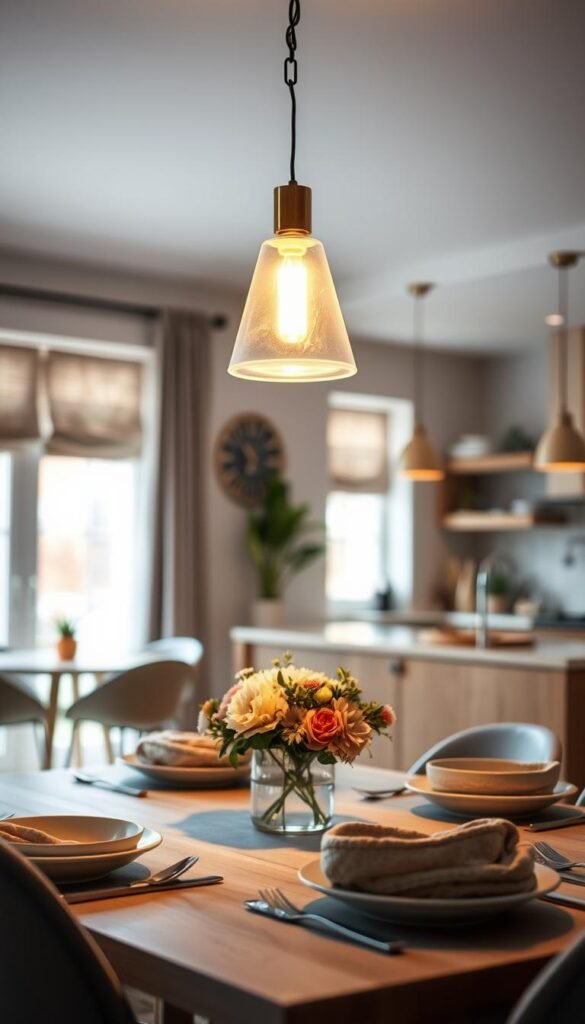
„Dimmers and diffusers together turn a pendant from a fixture into a mood tool.“
| Comparison Field | Why it matters | What to check | Quick guidance |
|---|---|---|---|
| Shade material | Controls warmth and diffusion | Frosted glass or fabric | Choose fabric for softer spill |
| Diffuser presence | Reduces glare | Look for integrated diffusers | Essential over tables and tubs |
| Max lumen/watt | Affects pool strength | Use lower lumens for ambience | 500–1200 lm per fixture typical |
| Cord length / canopy | Installation flexibility | Measure drop and canopy size | Swag pendants for renters |
Cozy Overhead Lighting Without the Harshness
Overhead fixtures serve function, but used alone they can strip away the warm atmosphere a living room needs. The goal is to keep overhead lighting useful while letting other layers create comfort.
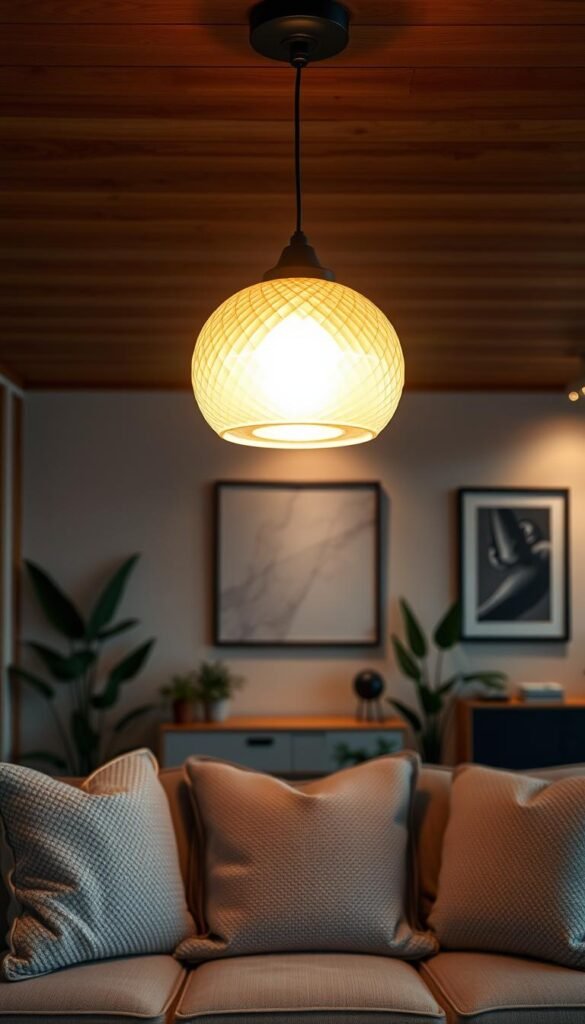
Chandeliers as a warm focal point
In a living room a chandelier can anchor the area and add a soft focal glow. Choose dimmable bulbs and pair the fixture with a compatible dimmer so the chandelier drops in brightness for evening use.
Recessed lighting as subtle ambient fill
Downlights work well in lower-ceiling rooms where a hanging fixture would overwhelm. Use warmer, diffused LED downlights and stagger placement to avoid sharp pools and heavy shadows.
Balanced plan: put the overhead on a dimmer, then add at least two lamps at different heights to prevent a bright ceiling and dark corners.
Evening setting tip: dim overheads to 20–40% and let lamps carry mood while keeping paths softly lit.
| Best for | Ceiling height | Install complexity | Glare risk / Dimming quality |
|---|---|---|---|
| Chandeliers | 8’–10’+ | Moderate | Medium / Excellent if LED-rated dimmer |
| Recessed | 7’–9′ | Higher (cut-ins) | Low / Good with diffused trims |
| Overhead + lamps | Any | Low | Controlled / Best with dimmer + lamps |
Buying notes: verify dimmer compatibility (LED-rated), pick downlight vs diffused bulbs by task, and choose trim styles that cut direct glare.
For practical setup tips and a room-by-room checklist, see a short guide to ambient living room swaps and small-space decor suggestions at ambient living room tips and this small-space decor guide.
Seasonal and Outdoor Cozy Lights for Patios, Porches, and Fireplace Moments
Seasonal light choices can turn a cluttered display into a single, intentional focal point. This approach helps renters and small-space decorators make fast impact with low-commitment swaps.
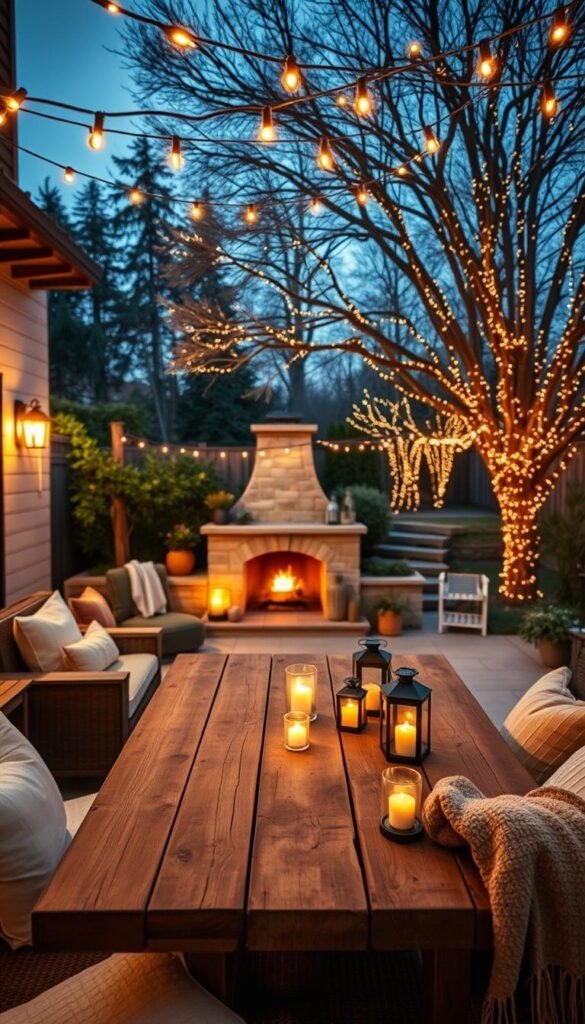
Lanterns on patios for a welcoming dusk glow
Lanterns create a warm glow at dusk with minimal setup. Pick metal or glass styles rated for outdoor use. Battery or solar models offer easy timers and moveable placement.
Non-working fireplace: candelabra-style warmth
A large candelabra or grouped pillar candles adds visual warmth to a decorative fireplace. Place on a stable tray and use LED candles with timers for safety in rentals.
Seasonal styling that feels intentional, not cluttered
Anchor seasonal decor with one or two warm sources—a porch lantern plus a nearby table lamp keeps pumpkins and throws focused. Use 2700K bulbs to avoid a cool, holiday-like tone.
| Goal | Option | Pros | Cons |
|---|---|---|---|
| Entry warmth | Battery lantern | Fast install, timer | Battery upkeep |
| Fireplace look | Candelabra or LED pillars | Safe, renter-friendly | May need tray for stability |
| Seasonal anchor | Lantern + lamp | Clears visual clutter | Requires outlet or charged batteries |
„One or two focused glow points make seasonal decor read as style, not excess.“
Buying notes: compare battery vs plug-in, check weather rating, use timers and dimming where possible, and prioritize stable placement away from walkways.
More porch inspiration: deck lighting ideas and summer outdoor lighting.
Conclusion
Small swaps — warmer bulbs, one lamp, and a dimmer — deliver big comfort gains.
Start by switching to 2700K–3000K bulbs. Add a single lamp in the darkest corner, then put overhead fixtures on a dimmer. This three-step plan fixes glare and deep shadows quickly.
Layer light across the room with ambient, task, and accent sources. Use lamps at varying heights and diffused shades to prevent hotspots and create depth.
Quick buyer checklist: Kelvin range, dimmable rating, shade diffusion, footprint, stability, and outlet placement. Renters should prioritize plug-in sconces and floor or table lamps; small spaces need slim profiles; families value sturdy bases and even coverage.
For a quick review of fixture roles and examples to shop, see the indoor fixture guide at indoor lighting fixtures.
Remember: a few well-chosen lights usually outperform a full overhaul when the goal is everyday relaxation and practical living-room function.