
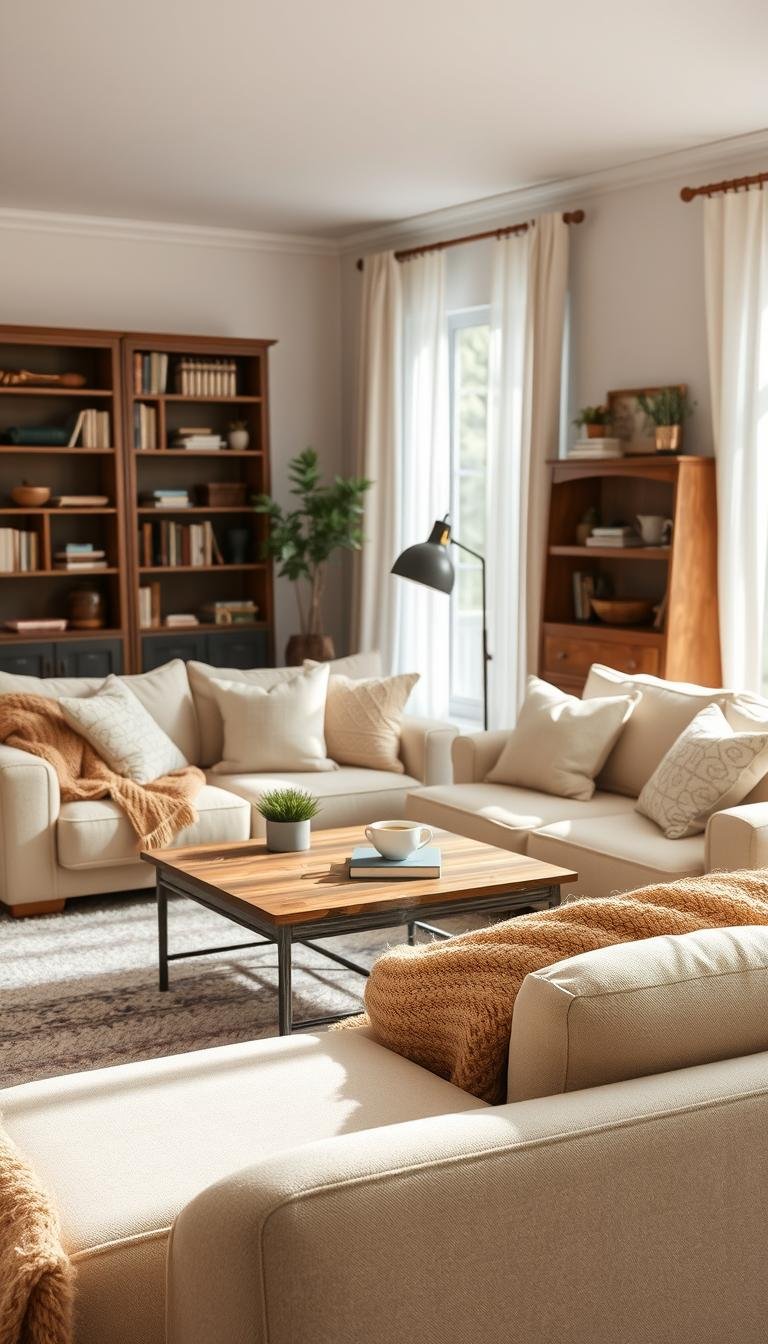
This guide shows how to make a living room feel warm and usable, not just staged for photos. It frames common problems and gives clear solutions for renters, small spaces, families, and pet owners.
Readers will see the systems that create comfort: layered lighting, soft textiles, smart layout, hard and soft surfaces, tidy storage, wall art, natural elements, and color choices. Recommendations are organized by category with “best for” notes and quick pros and cons to speed buying decisions.
The focus is practical: more warmth comes from layered light, texture, and intent, not piles of stuff. Many upgrades are renter-friendly and swap-ready for seasonal changes. Evaluation favors usefulness, value, reliability, and real-life fit.
Key Takeaways
- Clear problem-solution approach for making any room feel warm and comfortable.
- Recommendations grouped by category with “best for” notes and pros/cons.
- Primary systems: lighting, textiles, layout, surfaces, storage, wall art, nature, color.
- Renter and small-space friendly options are removable and low-damage.
- Seasonal swaps (throws, bulbs, curtains) keep outcomes flexible year-round.
- Selection criteria: usefulness, value, reliability, and real-life suitability.
What “Cozy” Really Means in a Living Room (and What Usually Goes Wrong)
Small adjustments to light, floor warmth, and layout have the biggest impact on how a room performs. This section diagnoses common pain points and pairs each with a practical buying fix readers can use today.
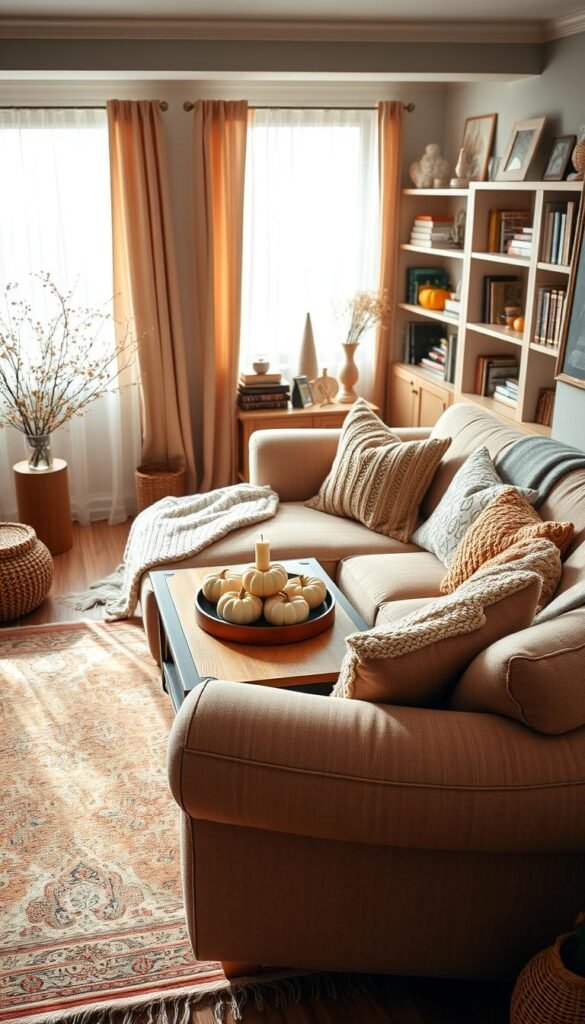
Common problems that make a space feel cold
- Cool bulbs or a single harsh overhead fixture — fix: swap to warm bulbs and add table lamps.
- No area rug on hard floors — fix: an appropriately sized rug to add warmth underfoot.
- Seating pushed to walls and too much distance between people — fix: add a side table or reposition furniture to create an inward-facing group.
- Too many hard surfaces that echo and visible clutter — fix: introduce textiles and a covered storage basket.
Clear goals and the upgrade order
Define comfort as function: warmth underfoot, softer sound, easy conversation, and flattering light for faces.
Prioritize changes: lighting first, then rug, then textiles, then layout tools and storage. Create “cozy zones” by pairing a seating cluster with a rug, layered light, and a surface for drinks. These targeted fixes beat adding more objects that only increase visual noise.
For compact design ideas, see minimalist living room ideas to balance form and function.
Quick Buying Guide for Cozy Living Room Decor That Actually Feels Warm
Focus on fixes that change daily use—light, layout, and texture—before adding stuff. Start with the highest-impact swap: remove reliance on a single harsh ceiling fixture and add layered lamps and warm bulbs.
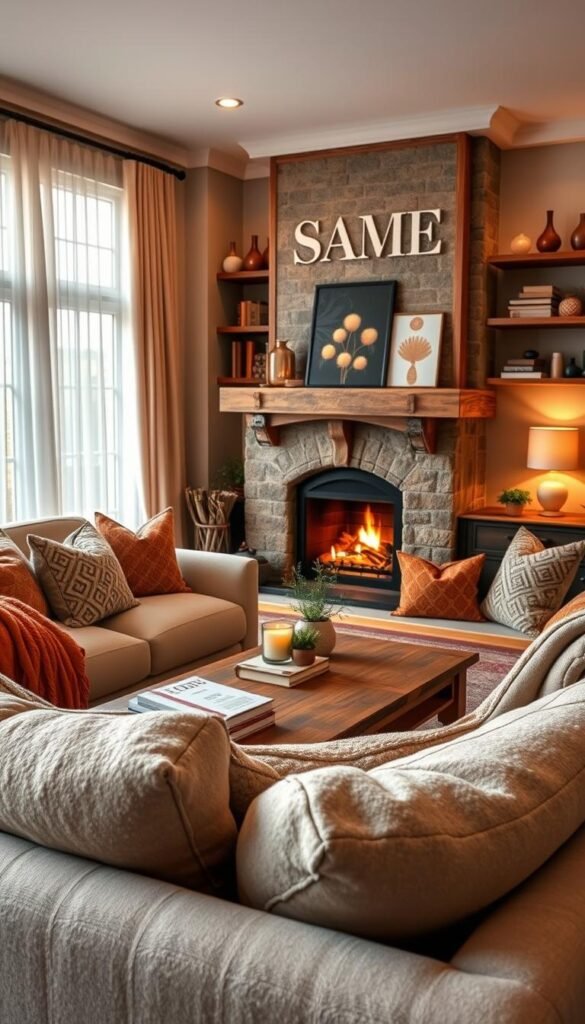
Fast buying roadmap
- Replace cool overhead bulbs with warm (2700–3000K) options. Add one table lamp near seating and one floor lamp for darker corners.
- Texture hierarchy: pick a properly sized rug first, then pillow covers and throws, then curtains to reduce echo and add softness.
- Measure before you buy: rug size to fit front legs of seating, lamp height relative to eye level, and at least 30–36″ walking clearance around seating.
Color and materials that read warm
Choose a palette with warm undertones that match existing flooring and natural light direction. Test samples on walls and textiles at different times of day to confirm the effect.
Renter- and small-space checklist
- Prioritize plug-in lamps, removable hooks, and peel-and-stick options.
- Fewer, larger anchors work best in tight spaces: one good rug and two lamps often beat many small accents.
- Spend on a rug pad and stable lamps; save on pillow covers and seasonal throws that can move with you.
Before clicking product links, run this quick compatibility check: confirm measurements, bulb type, and whether installation is low-damage. For compact solutions, see small-space ideas.
Best Cozy Living Room Decor: Top Picks by Category
Start with the area that causes the most daily friction and pick one category to change first. This keeps upgrades useful and budget-friendly.
How to navigate the list: choose the category that solves your biggest discomfort—glare, cold floor, missing surfaces, or clutter. Then compare options using the standard fields below.
Comparison fields for each product block
- Best for: user type or space (renters, house owners, small spaces).
- Key specs: size, weight, power type, material.
- What to measure: clearance, lamp height, rug coverage.
- Pros / Cons: quick tradeoffs for everyday use.
- Upkeep notes: cleaning, bulb type, seasonal care.
Lenses: renter vs homeowner vs small spaces
Renters should favor plug-in lighting, peel-and-stick anchors, and lightweight tables that move easily.
Homeowners can consider hardwired sconces and heavier furniture investments.
Small spaces benefit from nesting tables, storage ottomans, and slim-profile chairs to save space while keeping seating for connection.
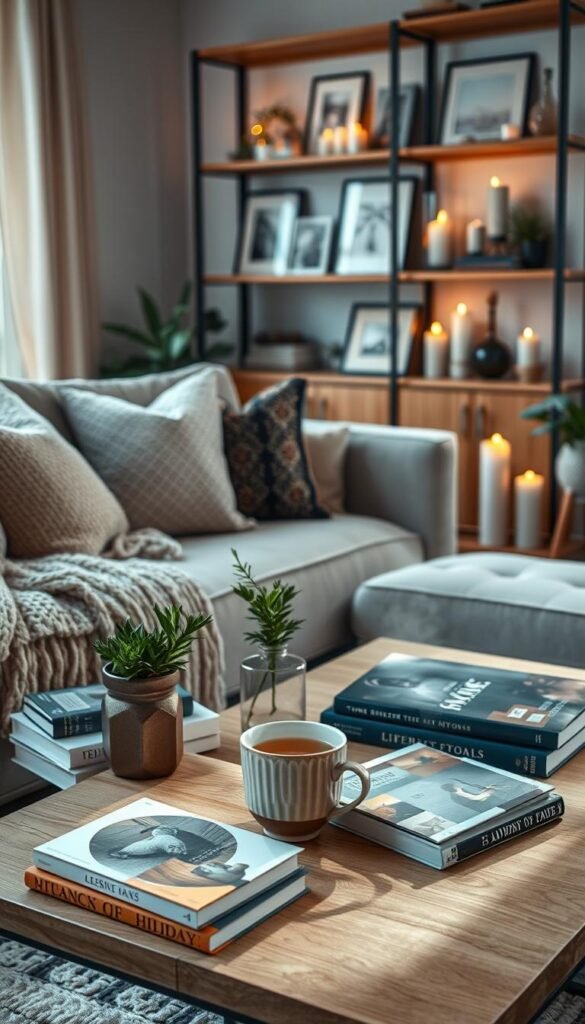
| Category | Quick pick | Why it matters |
|---|---|---|
| Lighting | Table & floor lamps | Controls glare and adds warmth for faces |
| Rugs & textiles | Area rug, throws | Warms underfoot and reduces echo |
| Tables & storage | Nesting tables, ottomans | Surfaces for drinks and tidy storage |
Phased buying tip: buy by priority—lighting first, rug second, then seating and tables—so the space becomes functional at each step. For more about the site and method, see About CozyTrendHub.
Warm, Diffused Lighting Picks That Instantly Make a Room Feel Cozier
Soft, layered light turns a stark space into one that invites people to stay. Designers note that a single bright overhead fixture often creates glare and a clinical atmosphere.
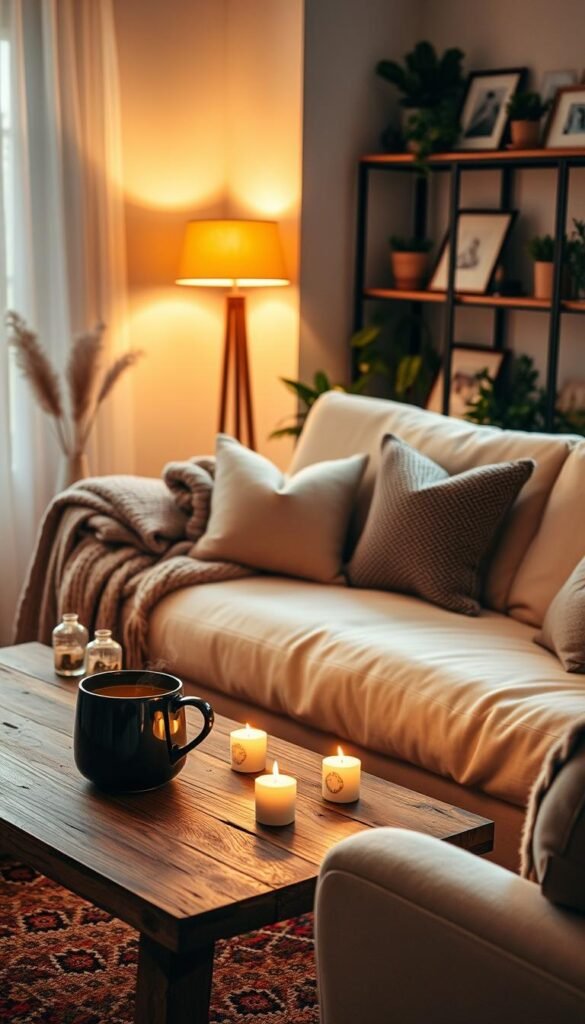
Targeted table light near the sofa and chairs
Place a table lamp next to seating to create small pools of light for reading and conversation. Aim for the bulb center at seated eye level so faces are lit without glare.
Floor lamps for dark corners and to replace ceiling use
Use a floor lamp to add vertical light and reduce reliance on the ceiling fixture at night. Choose a stable base for tight paths and a slim profile for small places.
Plug-in sconces and bulb choices
Plug-in wall sconces are renter-friendly and deliver wall-wash light without hardwiring. Tidy cords with covers or baseboard clips to keep walls neat.
Bulb rule: pick warm white (2700–3000K) for a comfortable room feel; avoid cool light that reads harsh.
What to measure and pros/cons
- Measure shade diameter vs side table surface and lamp height to seated eye level.
- Pros: dimmability, glare control, targeted warmth.
- Cons: visible cords, heat from higher-watt bulbs, and added plugs required.
For shopping guidance and renter-friendly picks, see this lighting guide.
Rugs That Add Warmth Underfoot and “Ground” the Seating Area
A well-chosen rug can instantly warm a floor and anchor seating so the area feels intentional.
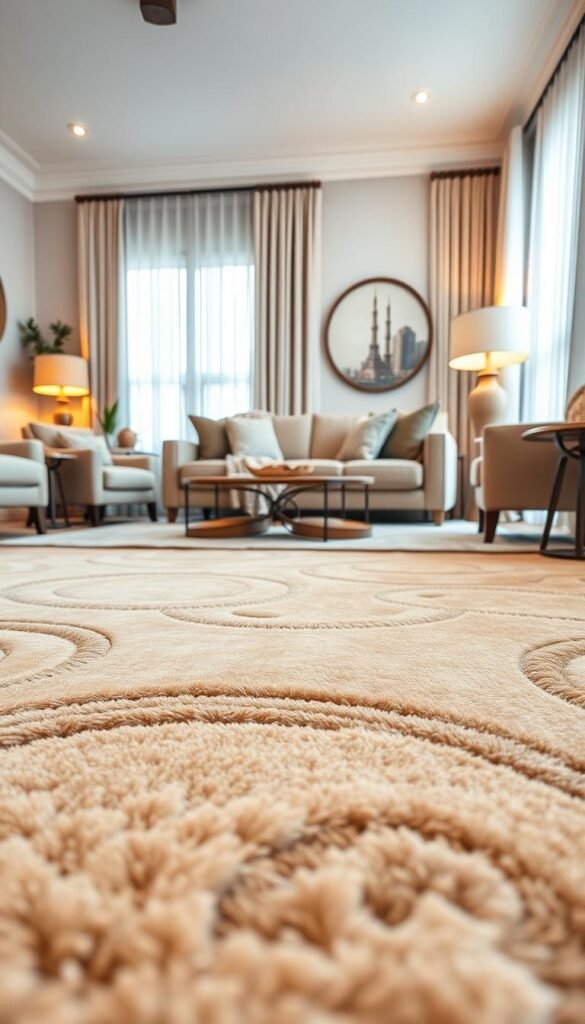
Area rug sizing
A practical rule: fit at least the front legs of all seating on the area piece. This visually unifies the layout and stops furniture from seeming to float.
Cozy textures and materials
High pile delivers soft underfoot comfort. Wool blends balance warmth with resilience. Plush constructions maximize comfort but may shed more.
Small-space tactics
Layer smaller rugs to add softness without buying a giant piece. Use runners to warm key floor paths and keep traffic flowing in tight space.
- Cleaning reality: expect some shedding, vacuum gently, and choose colors/pile that hide stains.
- Family & pets: low pile lasts longer and resists snagging; consider synthetic blends for easier care.
- Rug pads: add comfort and safety; size pads slightly smaller than the rug so edges sit flat.
| Feature | Softness | Maintenance | Longevity |
|---|---|---|---|
| High pile | High | More vacuuming | Medium |
| Wool blend | Medium | Moderate care | High |
| Low pile/synthetic | Low | Easy clean | High |
Summary: pick the rug that balances softness, upkeep, and durability for the specific living room and household needs.
Throw Pillows and Blankets for Layered Texture (Without Visual Clutter)
Layered pillows and blankets turn a flat seating area into one people actually want to use. This fixes sofas that look styled but feel scratchy, shallow, or uninviting for daily use.
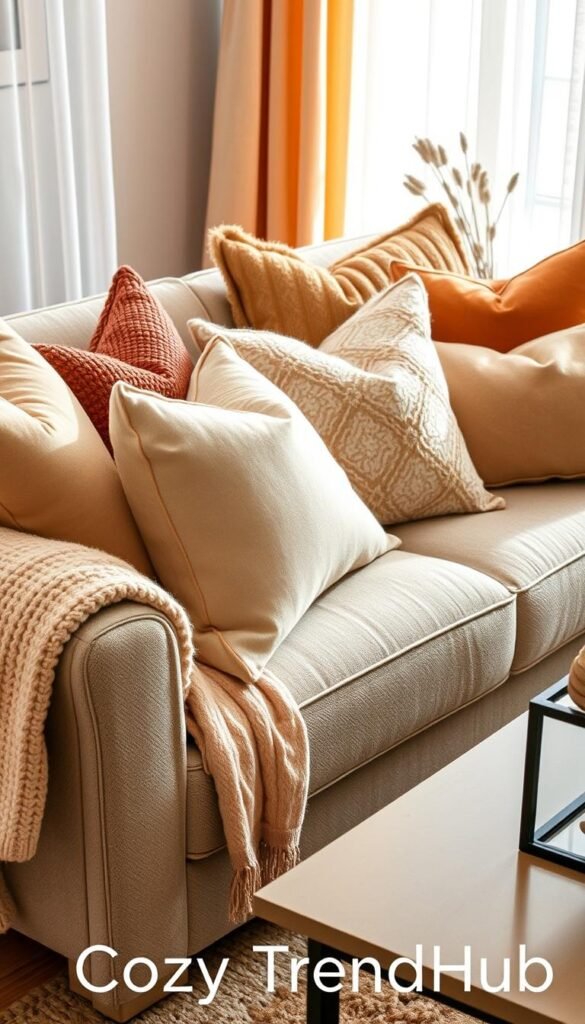
Simple material guide: velvet for soft depth; wool for warmth; knits for tactile texture; woven blends for everyday durability. Choose a single dominant fiber and one accent fiber for variety.
- Small-sofa rule: two standard pillows plus one 18″ accent keeps a sofa comfortable, not crowded. Mix one large, one medium, one small for balance.
- Seasonal swaps: lightweight linen or cotton throws in summer; heavier wool or layered blankets in winter. Store extras in a basket when not needed.
- Practical buys: use removable covers to change looks and simplify cleaning. Quality inserts matter for loft and support.
One character piece—a vintage pillow or textured throw—adds warmth without over-decorating. Keep a tight color story and vary textures more than patterns to avoid visual clutter.
- Pros: warmth, tactile variety, easy swaps.
- Cons: shedding (wool), pilling (knits), heat retention, care needs—check labels before buying.
Conversation-Friendly Seating Layout Tools That Make People Linger
Good seating layout solves two problems at once: comfort for bodies and ease for conversation. Designers recommend inward-facing groups—U-shape or a semicircle—to encourage longer, relaxed chats.
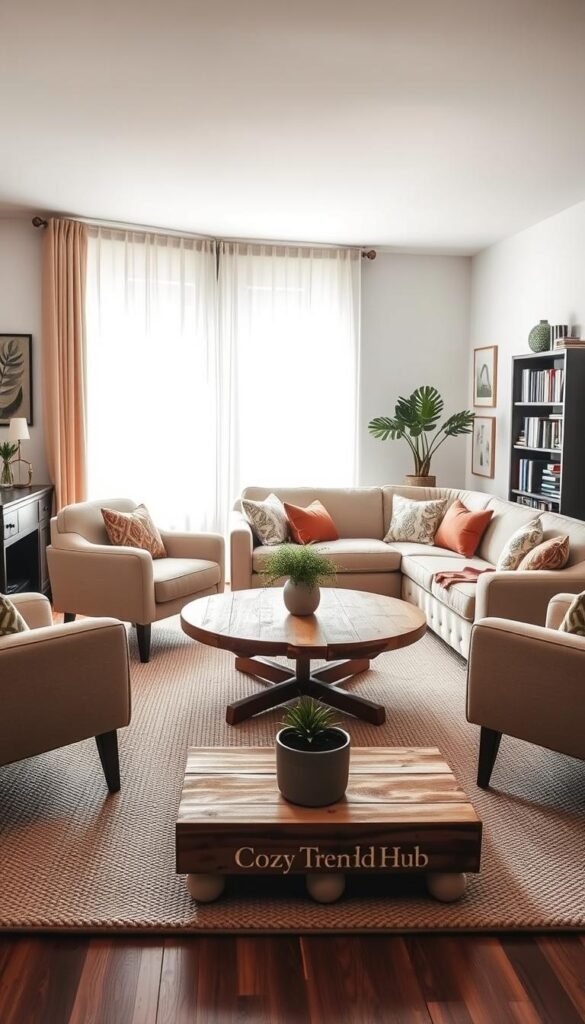
Why inward-facing works: a U-shape or semicircle pulls chairs and sofa toward a shared center. That creates a clear social place and a warmer room feel.
- Distance rule: keep major seats within about eight feet so people can hear comfortably without leaning in.
- Float don’t hug: pull furniture a few inches off walls to make the furniture layout feel intentional.
- Flexible extras: poufs, stools, and ottomans add short-term seating and tuck away when not used.
Small-space tip: choose armless chairs and low-profile tables. Keep 30–36″ clear paths for walking.
„Arrange seating for people first; everything else follows.“
| Issue | Tool | Quick tradeoff |
|---|---|---|
| Seats too far apart | U-shape or semicircle | Better connection, needs rug sizing |
| Limited seats | Poufs, stools, ottomans | Flexible but may clutter if not stored |
| Awkward flow | Float furniture 6–12″ from walls | Feels designed, needs cord and rug planning |
Test before buying: mark intended footprints with painter’s tape and check knee-to-table clearance. This simple trial saves mistakes and makes the final layout feel purposeful.
Coffee Table and Side Table Essentials for Real-Life Cozy Living
A nearby surface turns a quick visit into a comfortable stay. When every seat has somewhere to set a drink, phone, or book, people relax and stay longer.
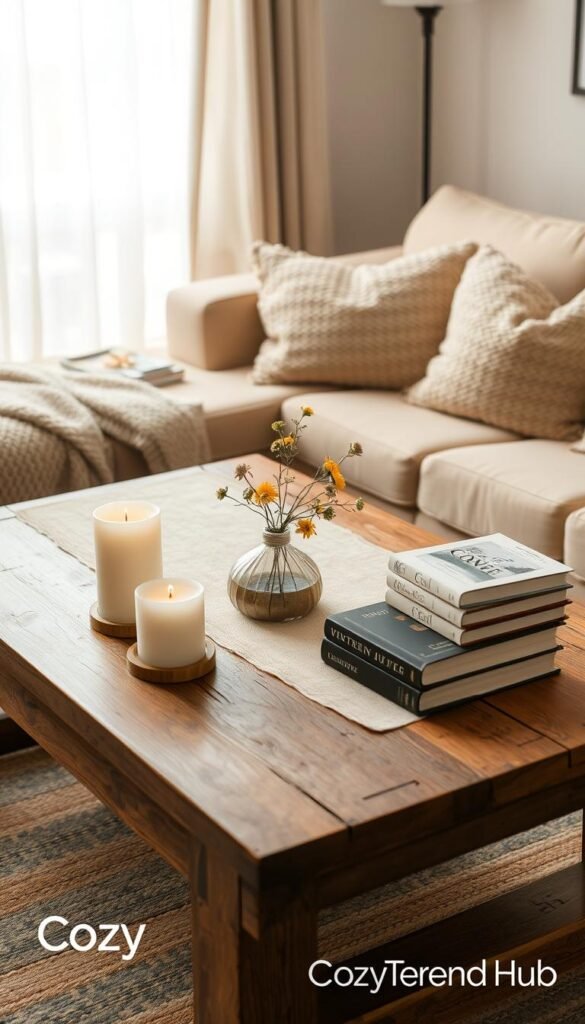
Every seat needs a surface
Rule: provide a reachable surface for each seat using side tables, C-tables, or an ottoman that doubles as a coffee table.
Why it matters: small surfaces prevent juggling cups and reduce spills. Drawers or shelves keep coasters and remotes tidy.
Round vs rectangular for flow
Round tables ease traffic in tight layouts and remove sharp corners. Rectangular tables work better for long sofas and for holding multiple items.
Sizing, storage, and material tradeoffs
- Clearance: keep 14–18″ from sofa seat to table and 30–36″ for walk paths.
- Storage: drawers hide remotes and books; lower shelves store baskets and trays.
- Materials: wood reads warm and hides wear; glass looks airy but shows fingerprints. Metal is durable but can feel cold to the touch.
- Renters: choose lightweight pieces that move easily and don’t need anchoring.
| Need | Shape | Pro | Con |
|---|---|---|---|
| Small traffic areas | Round | Better flow, safer corners | Less surface area |
| Long sofa | Rectangular | More usable surface | Can block path if oversized |
| Clutter control | Drawer/shelf table | Hidden storage for books and remotes | Often heavier |
„A central table supports conversation layouts; side tables make each seat practical.“
Think of the table selection as a comfort and function upgrade. For compact solutions and sizing ideas, see small-space ideas.
Storage Decor That Keeps a Cozy Living Room Uncluttered
Clutter quietly erodes comfort; smart storage restores the pause that makes a room restful.
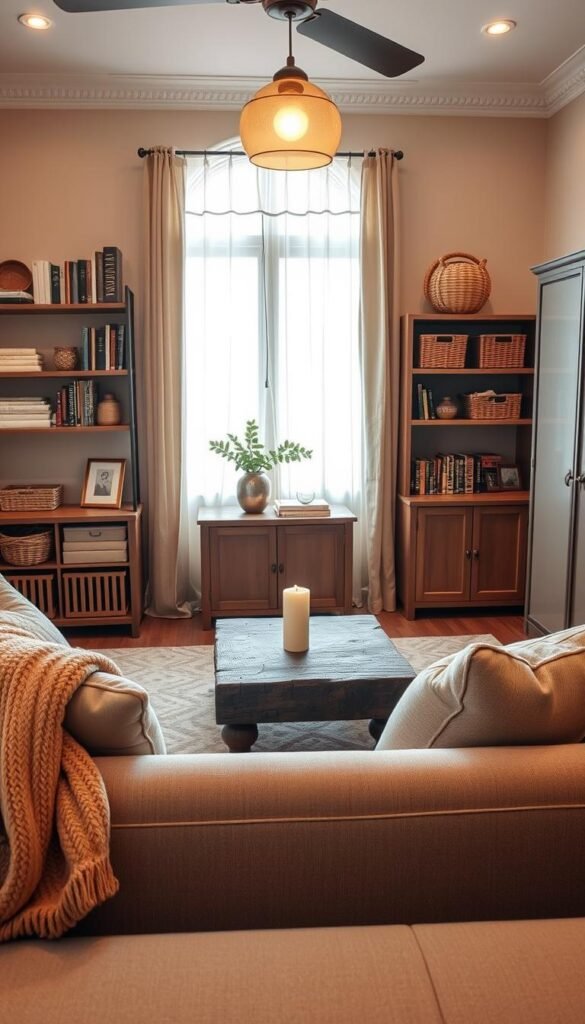
Why tidy matters: visual noise makes a room feel smaller and more stressful. Clear surfaces allow the eye to rest and keep a home ready for everyday use.
Multipurpose heroes
Choose a storage ottoman with a sturdy lid and rated weight capacity to double as extra seating. Covered baskets hide throws, games, and cords quickly. Both act as furniture and fast cleanup tools.
Stylish shelf styling
Leave negative space on shelves. Group items in odd numbers and keep daily books and remotes on the lower shelves for easy reach.
Open vs closed storage: pros and cons
| Type | Pro | Con |
|---|---|---|
| Open | Feels lighter; shows personality | Requires regular tidying |
| Closed | Hides mess; neat appearance | Can feel bulky if oversized |
Renter-friendly tip: favor freestanding units and baskets to avoid wall damage and to move easily. Add a small „drop zone“ near seating for remotes and coasters so surfaces stay clear.
Buying notes: check basket handles, lid fit, and how accessible items will be. Choose storage that supports real routines, not perfect styling.
Wall Decor That Adds Warmth Without Making It Busy
A well-planned wall treatment can change how light and scale work in a small living area. Walls that are empty feel unfinished and echoey. Too many small pieces make a space feel noisy.
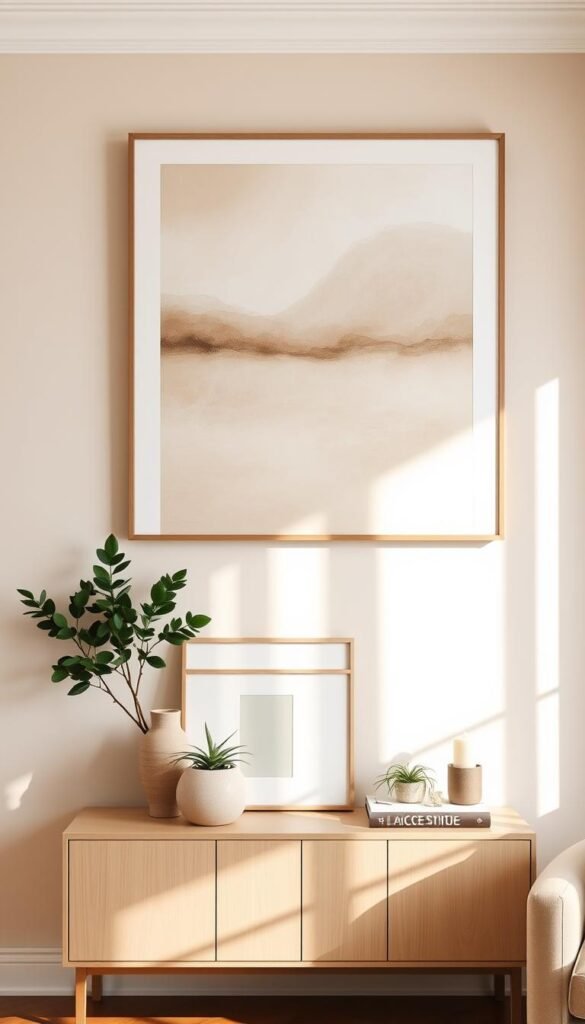
Gallery walls for personality and a lived-in feel
What it solves: blankness and lack of character. A curated gallery with consistent spacing and a limited palette reads calm and intentional.
- Choose fewer, larger pieces or a cohesive set to avoid visual clutter.
- Lay the arrangement on the floor first to test scale and alignment.
Mirrors to bounce natural light and enlarge a small room
Function first: position a mirror opposite or adjacent to a window to reflect light and open the space. Mirrors make a small living room feel bigger, but they also show smudges and reflections.
Renter-friendly hanging and damage-free tips
Use removable hooks, lightweight frames, and picture strips rated for the frame weight. Plan placements with paper templates before you mount anything.
| Option | Pro | Con |
|---|---|---|
| Gallery wall | Adds character | Planning time |
| Mirror | Boosts light | Shows reflections |
| Removable hooks | Lease-safe | Weight limits |
For gallery wall ideas, see gallery wall inspiration for layouts and spacing guides.
Natural and Earthy Elements That Make a Room Feel Calm and Cozy
Small doses of warm wood and rattan change how a space reads without adding clutter. Natural elements visually warm hard lines and add texture to modern apartments.
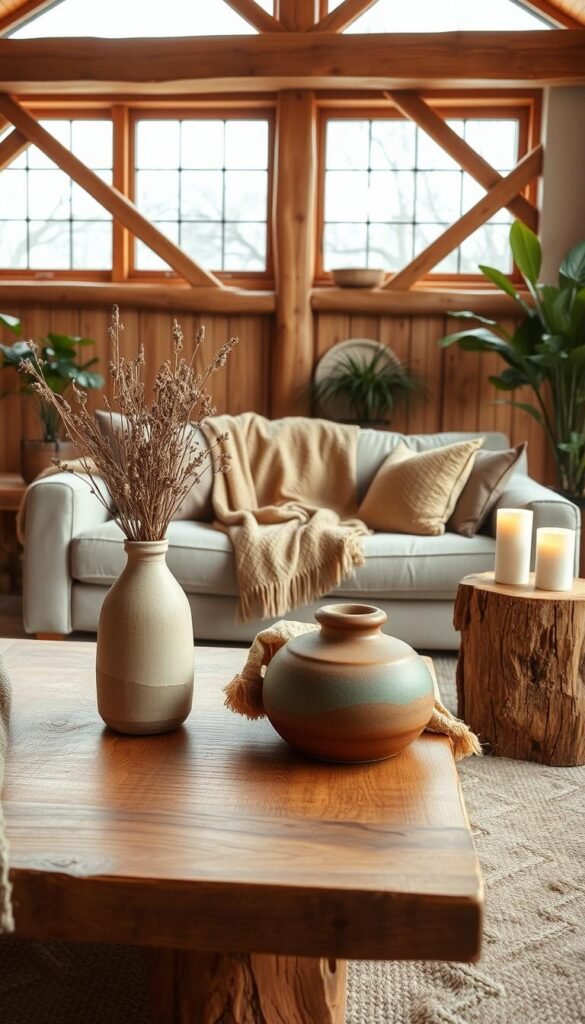
Warm woods, rattan, and organic shapes
Introduce wood through a side table, tray, or lamp base to add subtle warmth. Rattan touches—like a basket or lamp shade—bring texture without overwhelming the layout.
Design tip: favor rounded silhouettes and curved furniture edges to soften sight lines and make the space feel gentler.
Greenery and low-maintenance plant picks
Pick plants that match the light you have. Snake plant and ZZ are low-care choices for low light. Pothos and spider plant tolerate varied light and are easy to propagate.
- Placement: large plant in an empty corner, small plant on a side table, avoid blocking paths.
- Care: choose pots with drainage, use saucers to protect floors, and size plants so they don’t overcrowd the area.
„Bring one natural element at a time and live with it for a week before adding more.“
Pros/Cons: plants add life but require routine care. Natural materials add warmth but need occasional dusting and conditioning.
| Element | Why it helps | Best for |
|---|---|---|
| Warm wood table | Warms surfaces; anchors seating | Small spaces, renters |
| Rattan basket | Adds texture; hides clutter | Low maintenance, easy move |
| Snake plant | Air interest; low light tolerant | Low light, low care |
For more ideas on mixing natural elements into a compact layout, see this designer roundup.
Color Choices That Create a Cozy Living Room (From Neutrals to Dark Tones)
Hue and undertone decide whether a space reads warm or washed out in real light.
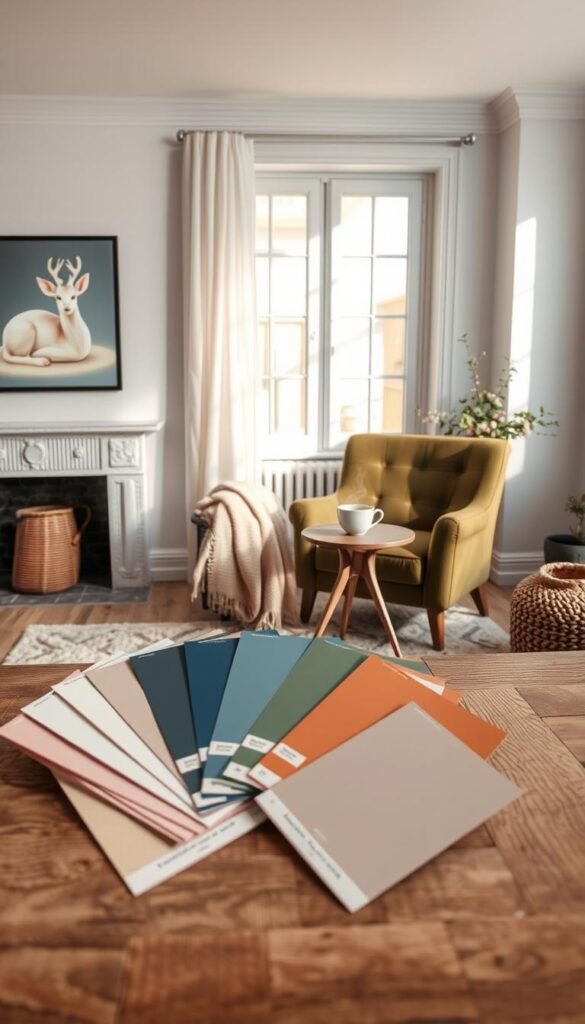
Soft neutrals for a minimalist warm feel
Soft neutrals—creamy whites, warm beiges, and muted greiges—make a small space feel calm and open.
Pair these with layered textiles and warm lighting to add depth without clutter.
Deep blues and dark tones for a cocoon effect
Dark shades create a snug, cocoon-like atmosphere when balanced with reflectives and layered lamps.
Avoid gloom by adding brass or light wood accents and at least two light sources to prevent flat shadows.
Monochrome vs mixing trends
A monochromatic palette reads peaceful and cohesive. Mixing palettes adds personality if kept within a controlled range of undertones.
Buying considerations and renter options
Test swatches in daytime and after lights are on. Check undertones against flooring and upholstery before committing.
Renters can use peel-and-stick panels, removable wallpaper, and textiles to test color without paint.
| Choice | Pro | Con |
|---|---|---|
| Light neutral | Brightens space; shows palette accurately | Shows marks more |
| Dark tone | Hides scuffs; creates depth | Can shrink space if underlit |
| Removable options | Lease-safe; easy to try | May lack durability |
„Always live with a swatch on the wall for 48 hours before painting.“
Quick decision guide: If natural light is limited, favor warm neutrals and layered lamps. If the space has good light and the goal is intimacy, test a dark accent wall or textiles first.
Renter-Friendly Cozy Upgrades That Don’t Break the Lease
Simple swaps—textiles, plug-in lamps, and curated secondhand finds—deliver big warmth with zero damage.
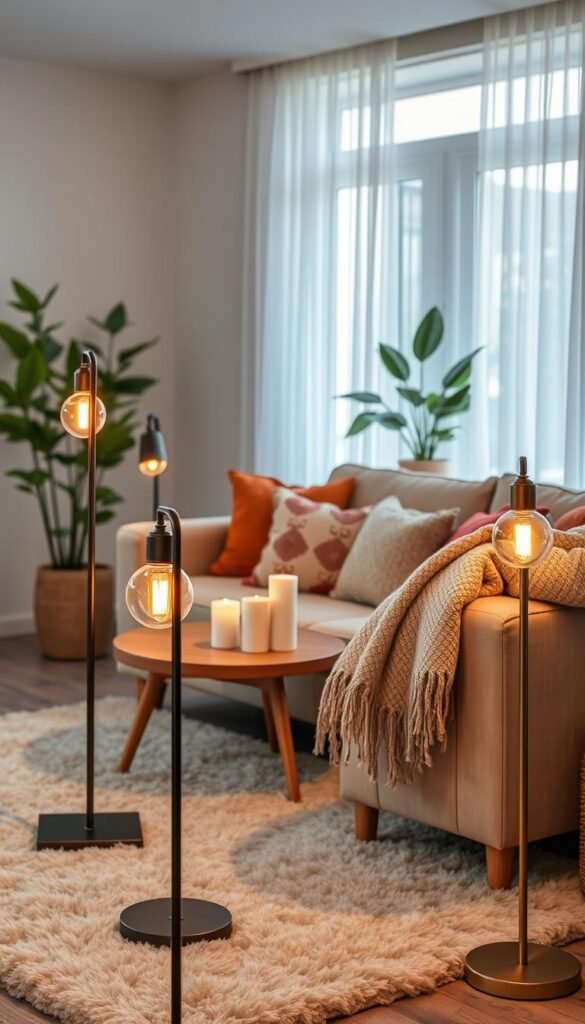
Plug-in lighting, removable hooks, and peel-and-stick fixes
Plug-in lamps and sconces add layered light without hardwiring. Use removable hooks and picture strips to hang art and mirrors without nails.
Peel-and-stick wallpaper and tiles can warm walls for a season; test a small patch and follow removal instructions to protect paint.
Textile-first upgrades that pack up easily
Start with a rug, pad, curtains, pillow covers, and a washable throw. These items change how a room feels overnight and move with the tenant.
Invest in a quality rug pad and one sturdy lamp; save on accent fabrics that rotate by season.
Secondhand sourcing for character and budget wins
Look local: flea markets, thrift, and marketplace listings yield solid furniture and vintage finds at low cost. Always measure doorways and check condition before pickup.
| Upgrade | Why it helps | Pros | Cons |
|---|---|---|---|
| Plug-in lamps | Layered light without wiring | Easy install, renter-safe | Visible cords |
| Peel-and-stick | Quick wall warmth | Removable, low-cost | Varies by adhesive |
| Secondhand furnishings | Adds vintage character | Eco-friendly, cheap | Time to hunt; inspect condition |
For renter tips and practical hacks, see renter design hacks. Small, reversible changes can make a house feel like home without risking a lease.
Small-Space Cozy Living Room Ideas That Don’t Feel Cramped
A small footprint can feel intentional when scale and light work together.
Start by resisting the impulse to fill every gap. Too many pieces compete in limited space and create clutter. Instead, choose a single statement sofa and a couple of versatile items that serve multiple roles.
Scale matters: choosing a statement sofa without overcrowding
Pick proportions over size. Prioritize seat depth and a narrow arm profile so the sofa remains comfortable without blocking sightlines.
Before buying, tape out the sofa footprint on the floor. Confirm 30–36″ walk paths and measure door and hallway clearance.
Zone the room with rugs and lighting instead of extra furniture
Use a rug to anchor a seating area and layered light to define a reading or conversation corner. These cues create separate uses without adding more furniture.
- Choose a rug that fits at least the front legs of seating to visually unite the cluster.
- Place a table lamp or floor lamp to mark a task zone; use a dimmer for mood control.
- Favor a storage ottoman or nesting side tables over many small pieces to keep floor space open.
| Choice | Why it helps | Tradeoff |
|---|---|---|
| Bigger sofa | More lounging comfort | Can dominate a small room |
| Compact sofa + ottoman | Flexible seating and storage | Less deep lounging |
| Rug + layered light | Defines zones without extra furniture | Requires careful sizing and plug planning |
„Tape and test: a physical footprint avoids costly returns.“
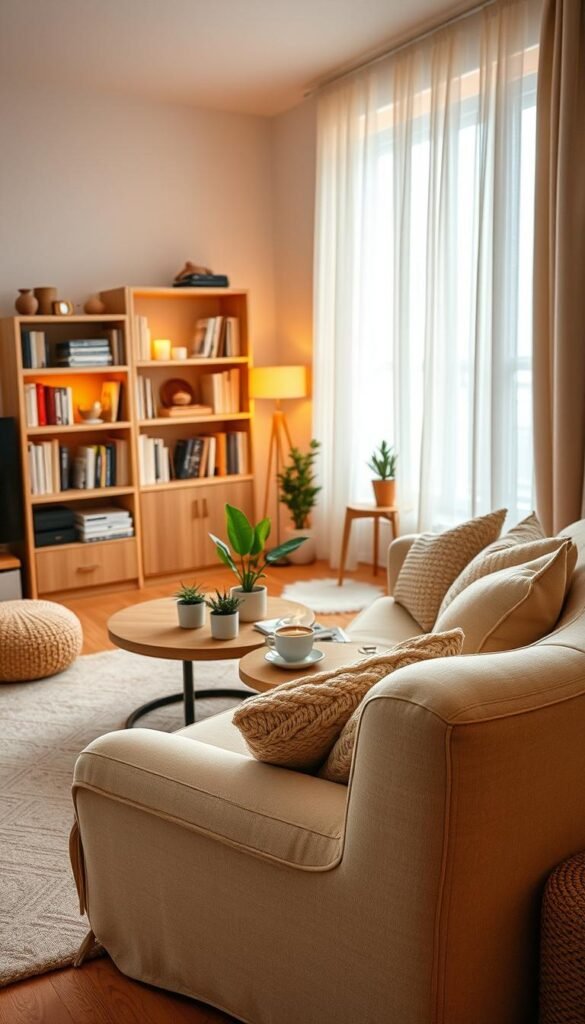
- Trace sofa footprint and aisles with tape.
- Confirm sofa depth, arm width, and clearance through doors.
- Choose one multifunctional piece (storage ottoman or nesting tables).
- Anchor seating with a properly sized rug and one layered lamp per zone.
- Keep sightlines open; leave some floor visible to breathe.
Cozy Style Shortcuts: Choose a Look That Matches Your Home and Budget
Deciding on a single design direction speeds up buying and helps each purchase feel purposeful. Use a style as a shortcut so materials and colors repeat across the space.
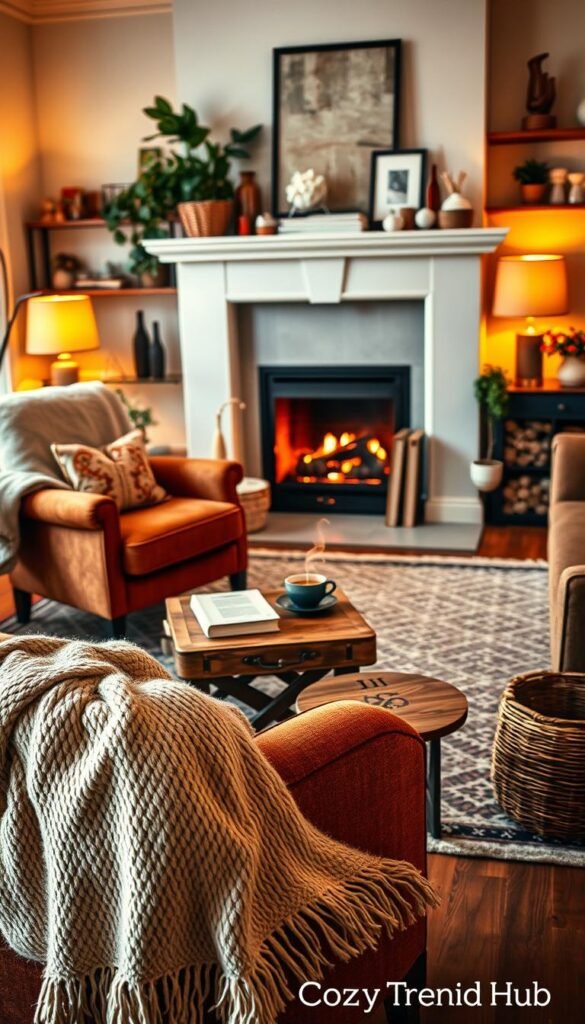
Scandinavian and Japandi: clean, calm, texture-forward
Favor calm neutrals, light wood, and minimal clutter. Add texture with woven rugs and soft throws to bring warmth without heavy pattern.
Boho and eclectic: layered patterns with intentional restraint
Mix patterns and found pieces, but repeat two or three colors and one or two materials to avoid chaos. Curate rather than collect.
Farmhouse, cottage, rustic, and traditional: warmth through materials
Choose warm woods, woven baskets, and comfortable upholstery. Classic silhouettes and tactile fabrics make the space feel lived-in and durable.
Budget guidance: invest in a rug, sofa, and good lamps. Thrift frames, baskets, and small tables.
How a designer simplifies choices: repeat finishes, limit the palette, and put comfort and function first.
| Style | Signature materials | Typical colors | Best for |
|---|---|---|---|
| Scandinavian / Japandi | Light oak, linen, wool | Warm neutrals | Minimalist households |
| Boho / Eclectic | Rattan, kilim, mixed textiles | Muted jewel accents | Collectors and renters |
| Farmhouse / Cottage / Rustic | Reclaimed wood, woven fibers | Warm earth tones | Families, traditional tastes |
„Repeat a finish and two colors across the space — it makes buying decisions simple and the result calm.“
Seasonal Cozy Decor Swaps for a Warm Home Year-Round
Rotate a few key pieces with the seasons to match warmth, textures, and daylight rather than chasing trends. This keeps the space functional and prevents clutter from accumulating over repeated redecorating.
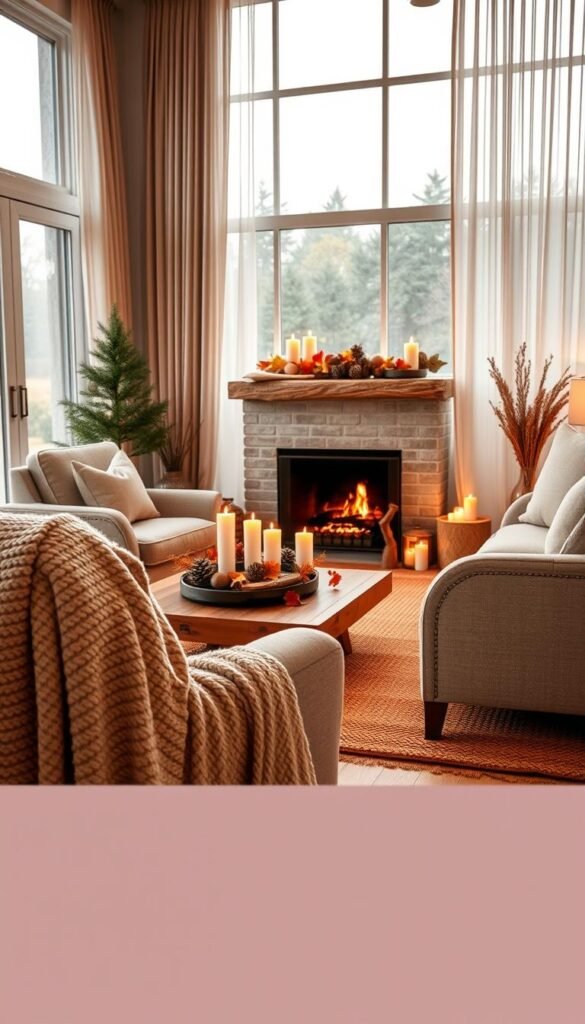
Fall & winter swaps
Swap in heavier throws, richer colors, and layered light for evenings. Add one lamp near seating and warmer bulbs to boost atmosphere.
Spring & summer swaps
Trade bulky textiles for breathable fabrics and lighter curtains. Maximize natural light during the day and remove heavy accents that trap heat.
What to store vs what to keep out
Store: bulky blankets, extra pillow inserts, and seasonal tabletop pieces in labeled bins.
Keep out: core neutrals, one throw per seat, and everyday baskets for quick access.
- Small swap list: two pillow covers, one throw per seat, one seasonal tabletop accent, and a lamp or warmer bulb for evenings.
- Best for: small spaces — limit bins; renters — focus on soft goods; families — choose washable textiles.
| Swap Type | Why it helps | Pro | Con |
|---|---|---|---|
| Heavier throw / wool blend | Adds warmth and tactile textures | Instant comfort; layered look | Bulky to store |
| Breathable linen covers | Reduces heat and brightens palette | Lightweight and washable | Less insulating at night |
| Lamp + warmer bulbs | Improves evening light without rewiring | Boosts mood and function | Requires outlet planning; visible cords |
Practical storage tips: Tuck bins on a closet shelf, use an ottoman with lift storage, or keep covered baskets under a console. This keeps seasonal pieces usable and prevents the place from feeling overstuffed.
Quick callout: For winter styling ideas that focus on texture and warmth, see warm winter styling.
„Seasonal swaps refresh a room cheaply, but a storage plan keeps the result tidy and long-lasting.“
Conclusion
Tackle one problem at a time and the whole space will start to feel more welcoming.
High-impact fixes are simple: warm, layered lighting and a properly sized rug change how a room reads and how people use it. Comfort + connection is the working definition—soft light, textured textiles, inward-facing seating, and reachable surfaces make a cozy living room that invites time together.
When ready to buy, follow this order: bulbs/lamps → rug → pillows/throws → tables/surfaces → storage → wall art and natural elements. Renters and small-space households can use plug-in lighting, peel-and-stick, and lightweight pieces to make living upgrades lease-safe.
Measure before you shop: rug dimensions, lamp height, side-table reach, and seating distance. Pick a tight palette and repeat materials so the room feels warm without clutter. Choose one problem this week—glare, cold floors, no surfaces, or clutter—and shop that category first. For more practical guidance, see creating a cozy and inviting living.



2 Comments