
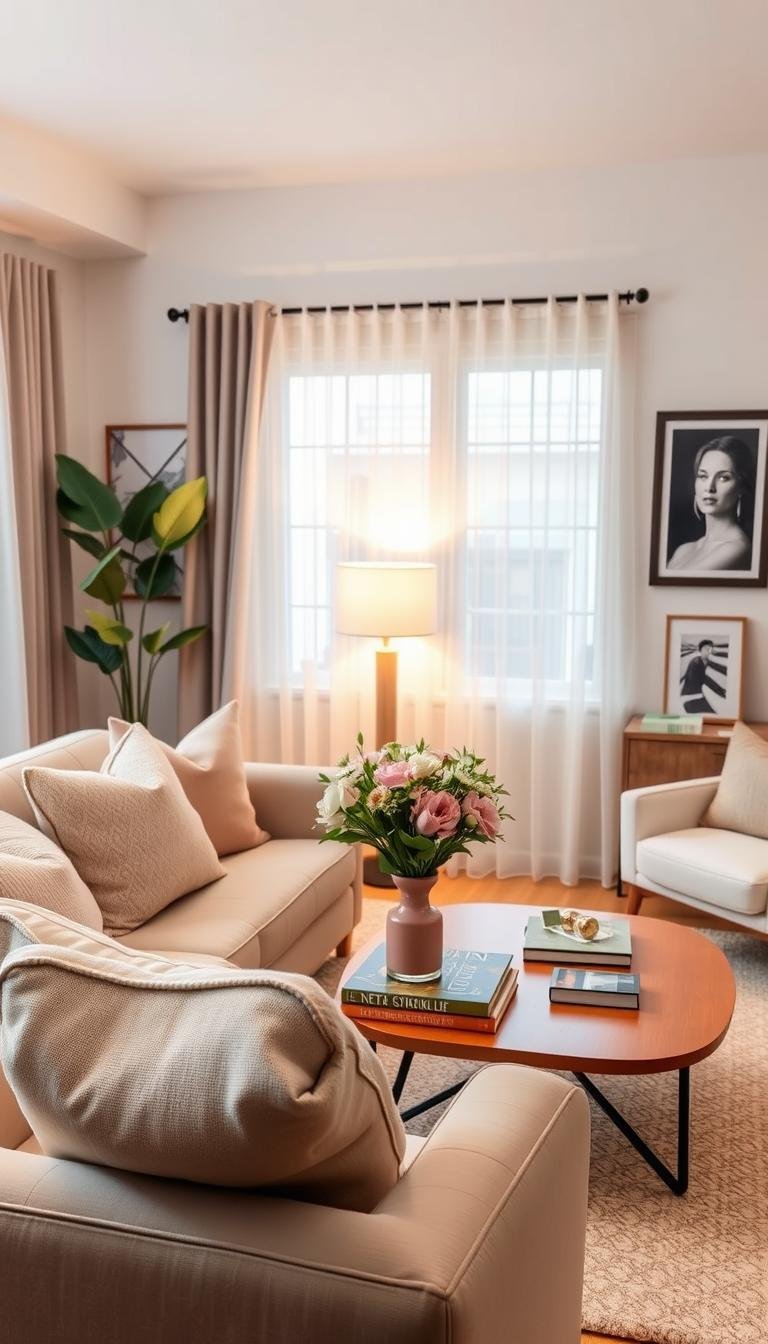
What to buy first when a new home feels unfinished is a common question. A place can be technically set up yet still echo, lack privacy, or show clutter. That gap between functional and comfortable is the core problem this guide solves.
This introduction sets a realistic goal: make the space livable and calm fast, not perfect at once. Experts note a few high-payoff swaps—window coverings, entry mats, a bathroom refresh, layered lighting, and correctly sized rugs—that restore comfort in little time.
Each following section focuses on one practical category. Readers will see who benefits most (renters, small-space residents, families), what to buy now versus later, and renter-friendly options that avoid damage.
How to use this guide: pick two or three upgrades for the first week, then add more over the next month as routines emerge. Seasonal notes and measuring tips are included so choices work year-round.
For specific questions or help picking items, reach out via contact.
Key Takeaways
- Prioritize comfort and function over perfection to regain calm quickly.
- Start with window coverings, a doormat, layered lights, a bathroom refresh, and a rug.
- Choose removable, no-drill options for rentals to protect deposits.
- Pick 2–3 upgrades the first week, then layer more across a month.
- Consider seasonal textiles and daylight shifts when buying lighting and fabrics.
- Each section shows who benefits most, buying tradeoffs, and measuring tips.
What to buy first after you move so your new home feels livable fast
Prioritizing a few high-impact buys makes new rooms feel settled fast. Start with items that fix privacy, light, and comfort on day one.
First-week shopping list
- Temporary window shades or stick-on paper for privacy.
- A doormat and entry tray to stop dirt and corral keys.
- A shower curtain, fresh towels, and an upgraded toilet seat for a cleaner bathroom feel.
- One or two lamps plus warm bulbs to layer light.
- A rug that defines a room and a throw or pillow for comfort.
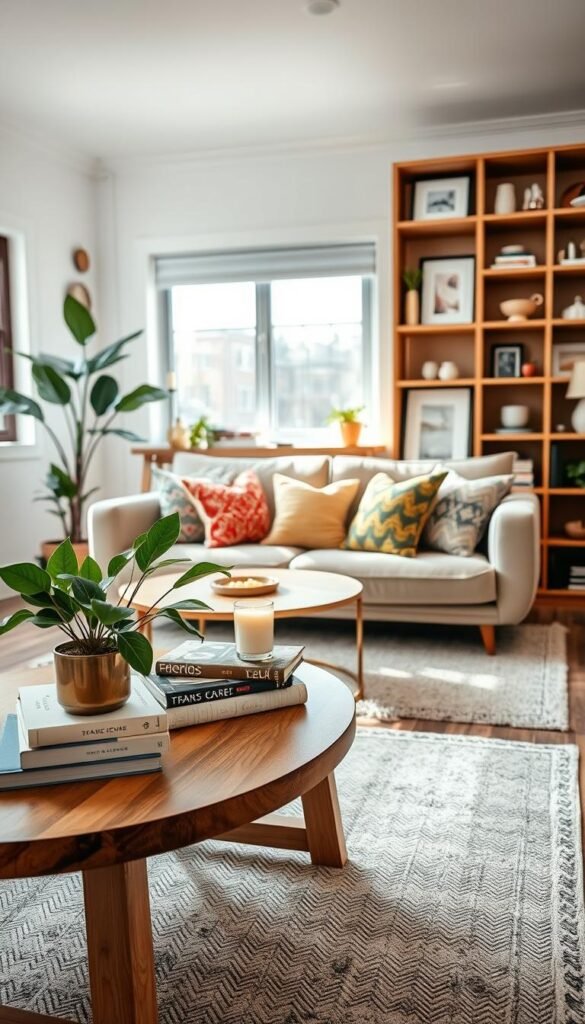
How to choose — ask: Does this improve sleep, cleanliness, organization, or lighting? If yes, it’s a first-week win.
Renter-safe and small-space picks
Use removable hooks, tension rods, leaning mirrors, and floor lamps to avoid holes. Pick furniture that doubles as storage: ottomans, nesting tables, baskets, and trays.
| Buy now | Buy later | Who benefits |
|---|---|---|
| Temporary shades, lamps, rugs | Permanent curtains, large art | Renters, small apartments, WFH people |
| Entry mat, bathroom swaps | Custom shelving, big furniture | Families, long-term residents |
Quick pros/cons: Quick wins are fast and affordable but temporary. Major upgrades need measurements and routine-tested choices; consider handyperson services for complex installs.
Temporary window coverings for privacy, security, and better sleep
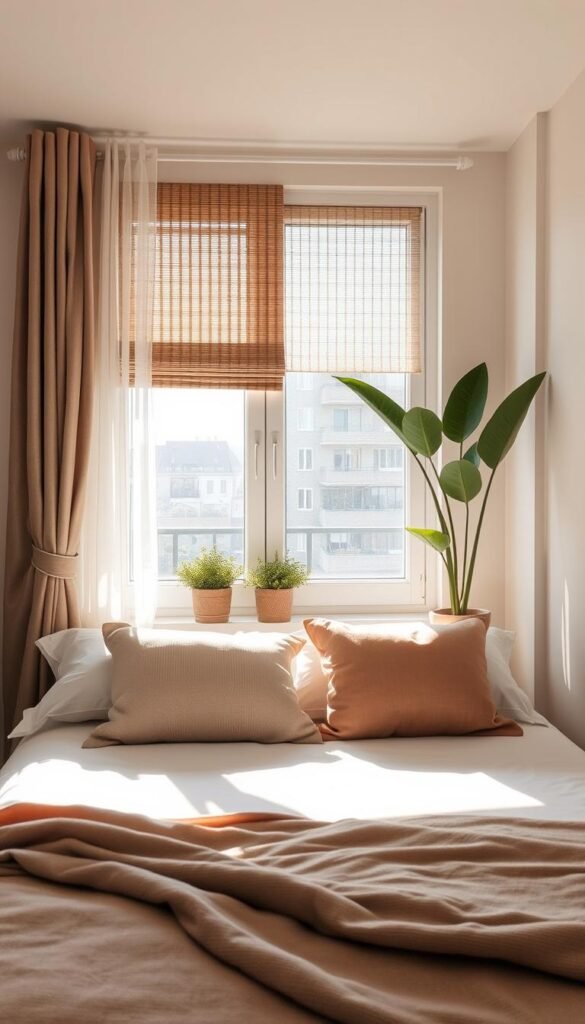
Covering windows right away fixes privacy gaps and helps the room feel secure. Heather Jackson advises getting basic window coverings up first for security, privacy, and sleep. Simple options work fast and cost little while the final layout takes shape.
Renters: stick-on paper shades and no-drill choices
Quick options: stick-on paper shades, tension-rod curtains, and no-drill blinds. Paper shades stick to frames and often cost under $10 each. Tension rods add fabric softness without tools. No-drill blinds mount with brackets that avoid hardware in many cases.
What to measure before you click “buy”
- Decide inside vs outside mount and measure glass width and height.
- Measure the frame width and add overlap to block gaps at the edges.
- Measure each window separately; sizes can vary by a fraction and that matters.
When to upgrade
Live with the room for a short time before committing. Note curtain length once furniture is placed and wall art is planned. If paint work is scheduled, keep temporary shades until after paint to avoid redoing installs.
| Option | Pros | Cons |
|---|---|---|
| Stick-on paper shades | Cheap, instant privacy, renter-safe | Less durable, limited style |
| Tension-rod curtains | Soft look, easy to swap, no holes | Can gap, not ideal for full blackout |
| No-drill blinds | Professional look, removable options | Higher cost, some models still need careful fit |
Quick pick guidance: paper shades for immediate privacy on move-in day; tension rods for renters who want fabric; temporary blackout layers for light-sensitive sleepers. Include a “what’s in the box” checklist when ordering: brackets, clips, and instruction sheet to ensure a smooth install.
Entryway essentials that instantly make your place feel put-together
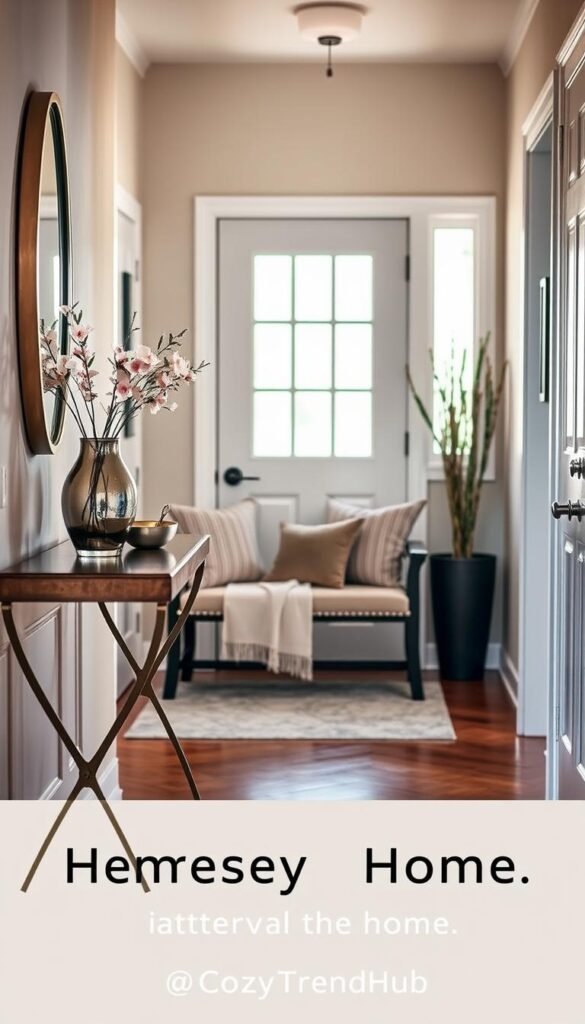
The area by the door shapes a visitor’s first impression and sets daily rhythms for the household.
Solve the problem: the entry is where clutter and dirt start. Tackle it first to keep the whole home tidy and calm.
Doormats that improve the first impression and reduce tracked-in dirt
Select a mat sized to the doorway and low enough for door clearance. Choose scrubby fibers for muddy shoes or a thinner profile for tight apartment thresholds.
Who benefits: busy households and family homes should pick heavy-duty mats; renters often prefer low-profile options that won’t snag doors.
Hooks, baskets, and a landing spot for keys, mail, and bags
Add a slim console table or wall shelf and a small tray for keys and the wallet. This minimal furniture gives a high daily payoff with a tiny footprint.
Use adhesive hooks for light bags, over-the-door hooks, or a freestanding rack for heavier coats. Note weight limits and the wall surface before installing.
Outdoor lighting and a simple planter for a safer, warmer welcome
Check bulb warmth and consider motion sensors for safety. Renters should contact building management before major changes.
A hardy planter adds curb appeal with little upkeep. Pick region-appropriate plants to keep care simple.
Quick comparison
| Item | Pros | Cons |
|---|---|---|
| Heavy scrub mat | Stops dirt, durable for family traffic | Thicker; may need door clearance check |
| Low-profile mat | Works in apartments, won’t snag doors | Less aggressive at removing mud |
| Adhesive hooks | Renter-safe, easy install | Limited weight capacity |
| Freestanding rack | Holds heavy coats and bags | Needs floor space |
| Motion-sensor light | Improves safety, energy efficient | May require management approval for rentals |
Bathroom mini refresh that makes the whole house feel cleaner
A small bathroom swap can make the whole home feel cleaner and more intentional.
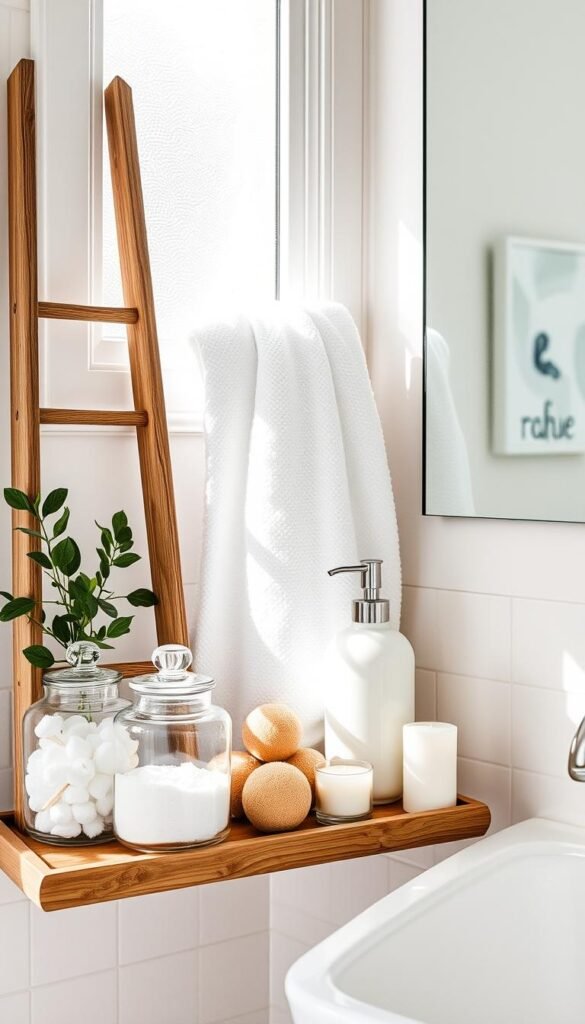
A bathroom that feels temporary can make the entire home seem less settled. Christy McDonald recommends three quick swaps that give an immediate lift: a new shower curtain, fresh hand towels, and a toilet seat.
Quick swaps with big impact
- Shower curtain: Replace mildew or dated patterns; check length and whether a liner is needed.
- Hand towels: Choose quick-dry, high-absorbency towels for daily comfort and guests.
- Toilet seat: Match shape (round vs. elongated) and pick hinge style—standard or soft-close.
Who it helps and renter notes
These items help renters, small households, and anyone wanting fast wins. All swaps are reversible; pack original fixtures to return at move-out.
Showerhead upgrade: pros and cons
Pros: better spray, improved comfort, and the perception of higher quality daily. Cons: check lease rules and keep the old head to reinstall.
| Item | Quick buyer checklist | Good for |
|---|---|---|
| Towel set (budget) | Absorbency, weight, quick-dry fibers | Renters, guests, tight laundry routines |
| Quick-dry towel | Microfiber or blends, low shrinkage | Small homes, frequent use |
| Showerhead (low-pressure) | Flow rate, aerating spray, standard thread size | Low water pressure homes |
Note: Thread size is usually standard; bring a wrench and plumber’s tape for a speedy swap. For more simple upgrades and shopping ideas, see this short guide on simple home upgrades.
Layered lighting that fixes harsh overheads and makes rooms feel cozy
Layered lighting turns a harsh overhead into a calm, usable space for daytime tasks and evening relaxing.
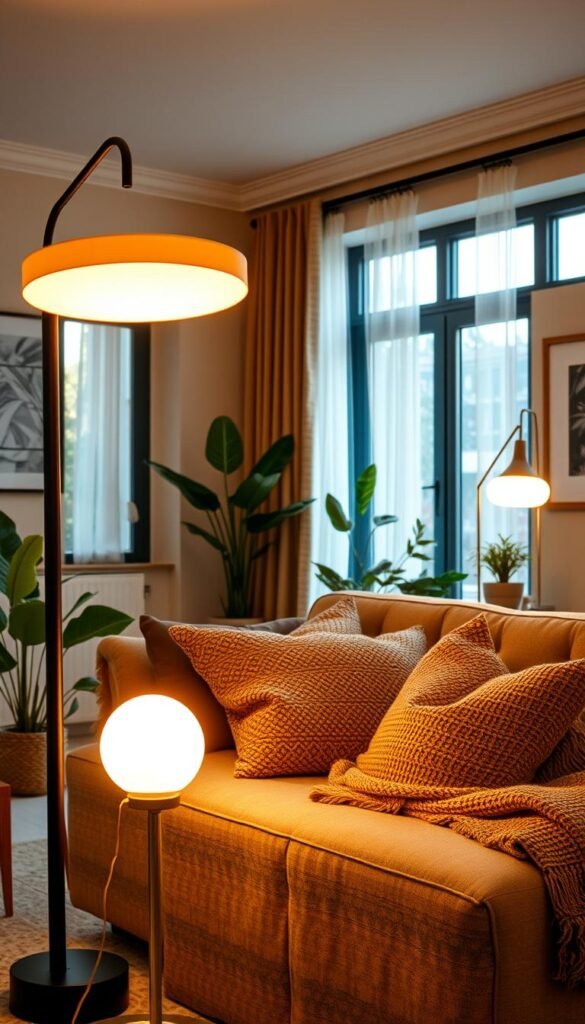
The problem: single ceiling fixtures can cast glare and deepen shadows. That makes a room feel flat and can strain eyes while reading or working.
Floor, table, or wall — which to choose
- Floor lamps: save surfaces and lift light into corners of a living room or studio.
- Table lamps: add focused warmth on nightstands and desks for reading or WFH tasks.
- Plug-in wall lights: free up floor space; renters can use no-drill mounts or cord covers.
Bulbs, placement, and practical specs
Pick warm bulbs (2700–3000K) for relaxing zones and higher lumens for task spots. Use two to three light sources per main room. Place task lights near seating or a desk and angle them to avoid glare on screens.
Dimmers and safety
Renters: choose smart bulbs or plug-in dimmer modules. Owners or long-term stays can install hardwired dimmers—hire an electrician if unsure. When wiring feels risky, call a licensed pro for safe, reliable results.
| Type | Pros | Cons |
|---|---|---|
| Floor lamp | Bright corner light, no table needed | Needs floor space |
| Table lamp | Localized light, decorative | Uses surface space |
| Plug-in wall light | Height without floor use, renter-friendly | May need cord management |
Practical pick: choose consistent bulb tones across the home and add one accent plus one task light per room for flexible interior design.
Area rugs that warm up a room and define your layout
A correctly sized rug can make a room feel intentional and stop furniture from looking like it’s floating.
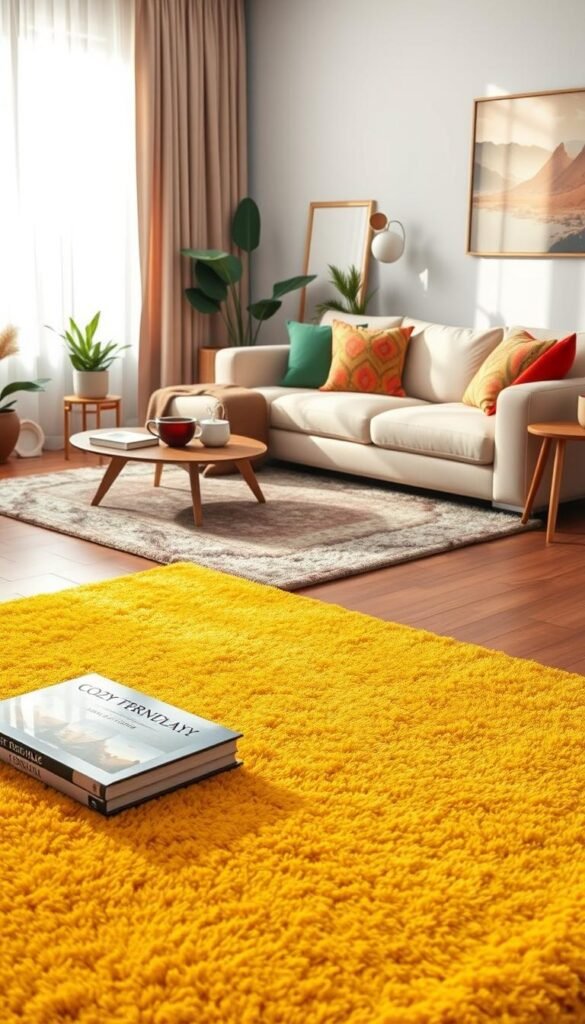
The problem: a rug that is too small shrinks the visual field and breaks flow. The right rug anchors seating, clarifies zones, and hides flooring you may not love.
Rug sizing without guesswork: outline with painter’s tape
Trace the rug footprint with painter’s tape on the floor. Live with that outline for a day to check walkways and clearance.
Measure tip: match the tape outline to common sizes (5’x8′, 8’x10′, 9’x12′) before buying.
Living room rules: front legs on the rug for a grounded feel
Aim for at least the front legs of sofas and chairs to sit on the rug. This visually links furniture pieces and makes seating feel grouped.
For very small rooms, a smaller rug can work if all furniture touches at least one edge.
Dining room rules: add extra rug space for chair scooching
Allow about two extra feet beyond the table on all sides so chairs stay on the rug when pulled out. This prevents wobble and protects the floor from chair legs.
Don’t skip rug pads: comfort, slip prevention, and protecting the floor
Use a pad sized slightly smaller than the rug to prevent shifting.
Choose low-profile pads for door clearance and grippy pads for hardwood. Pads add cushion and extend rug life.
Material notes: low-pile fibers suit pets and easy vacuuming. Washable pieces work well in entry or high-traffic areas. Wool offers comfort but needs more care.
„Rugs define areas and can redirect attention from flooring you don’t like.“ — Bed Threads
| Category | Quick pros | Cons & size suggestions |
|---|---|---|
| Best for pets | Low-pile, durable, easy-clean | Less plush; try 6’x9′ for small living room seating |
| Best washable | Machine or easy-spot clean; good for entries | Thin; use pad for cushion; 5’x8′ fits many rooms |
| Budget living room | Affordable, wide sizes, versatile styles | Lower fiber quality; 8’x10′ anchors most sofas |
Renter-friendly benefit: rugs plus pads protect floors and update a space without permanent changes. For shopping ideas and matching living room looks, see this short guide on cozy living room styling.
Best decor after moving in: soft furnishings that add comfort immediately
Simple soft furnishings cut echo and make seating feel designed rather than temporary.

The problem: new rooms often sound hard and look unfinished. Soft goods—throws, pillows, and quality sheets—stop that instantly without tools or permanent changes.
Throw blankets and pillows to reduce echo and invite use
Throws and pillows are quick, renter-friendly ways to make seating feel intentional. They are ideal for renters and small-space residents who need instant coziness without large purchases.
Buying notes: match throw size to use (couch vs bed), check washability, and choose fabric weight for the season.
Linen sheets for year-round comfort
Choose linen sheets for breathability and durability. They stay cool on hot nights and trap warmth layered with a duvet in cooler months.
Care tip: linen softens over time. Follow wash instructions and expect a better feel after a few cycles.
Seasonal picks and practical styling
Muslin or lightweight cotton suits hot, humid climates. Heavyweight wool or dense blends add real warmth for winter days.
Limit throw colors to one or two neutrals across the main rooms to reduce visual clutter while unpacking.
Who benefits: renters, small households, bedroom refreshes, and anyone wanting a fast, quality difference by day or night.
| Item | Who it’s for | What to check |
|---|---|---|
| Lightweight throw (muslin/cotton) | Hot climates, summer use, small apartments | Breathability, machine wash, size for couch |
| Warm throw (wool or heavy blend) | Cold climates, layered living rooms, winter nights | Weight, care instructions, hypoallergenic options |
| Linen sheet set | Bedroom refresh, year-round use, sleepers who overheat | Thread count not key; look for European flax, pre-washed finish |
Quick pros/cons: cotton is easy-care but less insulating; wool warms well but needs special care; blends balance comfort and washability.
For a compact guide to quick soft-furnishing choices, see this short list on settling into a new home.
Mirrors that bounce light and make a small space feel bigger
A well-placed mirror can make a small room feel airy and twice its visual size. Full-length glass does more than check outfits; it redirects natural light and creates depth for a tighter bedroom or closet.
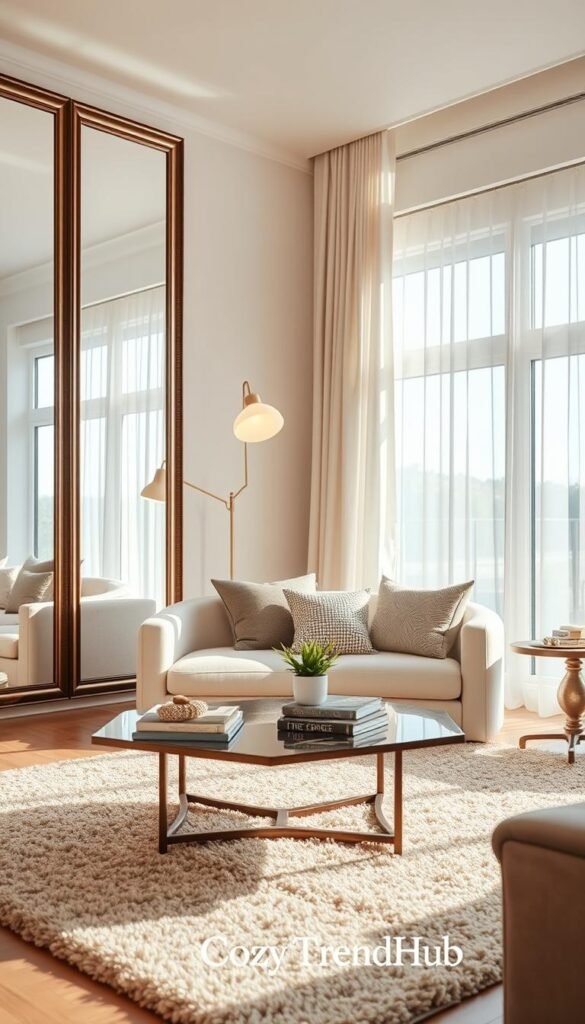
Full-length options for bedrooms and tight closets
Who benefits: bedrooms with cramped closets, small apartments with low light, and anyone who needs a quick outfit check.
Placement tip: face the mirror opposite or beside a window to maximize reflected light. Avoid sightlines that show clutter; mirrors that reflect a tidy wall keep the space calm.
No-drill and leaning mirrors for renters
Renters should use leaning mirrors, over-the-door models, or lightweight wall mirrors with removable hooks. These choices require no permanent holes and are easy to relocate.
| Type | Pros | Cons |
|---|---|---|
| Full-length framed | Large reflection, strong impact on perceived space | Needs wall or floor space; may require anchoring |
| Leaning mirror | No-drill install, strong visual height, flexible placement | Requires floor clearance; needs anti-tip strap for safety |
| Over-the-door mirror | Saves floor space, instant outfit checks | Limited width; may not bounce much light |
| Lightweight wall mirror + removable hooks | Low profile, renter-safe, easy swap | Smaller glass area; less dramatic light boost |
Safety notes: use anti-tip straps for tall mirrors if there are kids or pets. Ensure leaning mirrors sit flush against the floor and don’t block walkways.
Frame and size: thin frames suit narrow walls; larger glass gives the biggest light return but needs more floor or wall space. Balance impact with available footprint.
For compact mirror ideas and modern wall-mounted choices, see this short list on modern wall mirrors that open up small.
Artwork and wall decor that adds personality without rushing decisions
A single wall with the right piece can set the tone for an entire room. Take time to test scale and placement before you hammer nails or make permanent choices.
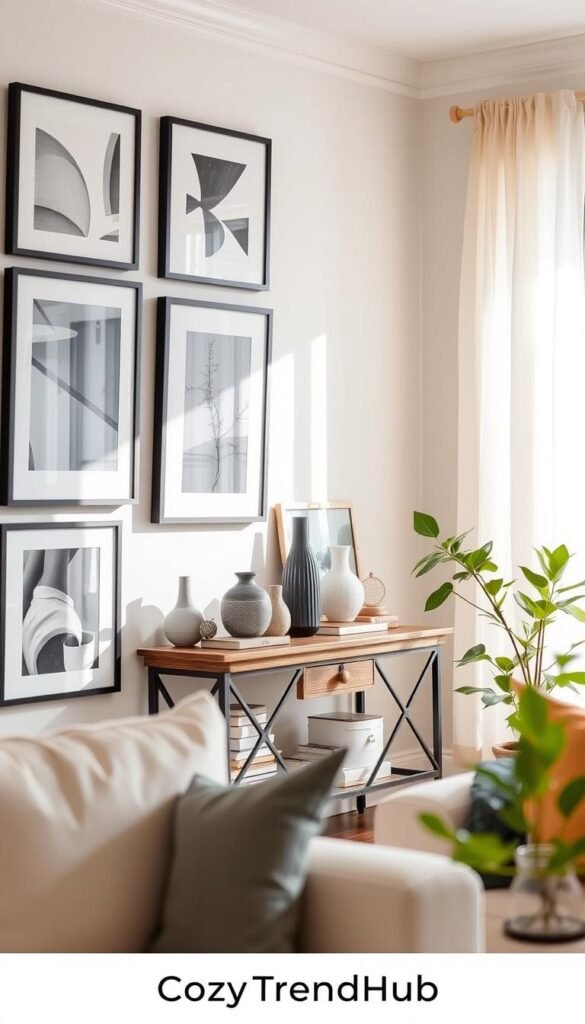
The “live with it first” method:
- Stage framed pieces and prints on the floor where you might hang them.
- Move them as you use the room for a few weeks to check sightlines and glare.
- Set a calendar reminder for about one month to review and commit.
Rental-safe hanging and quick comparisons
Removable strips work for lightweight frames and keep walls intact but have weight limits on textured surfaces. Removable hooks hold more weight on drywall but check pack limits. Lightweight frames reduce damage risk and make swaps fast.
| Product block | Use case | Pros | Cons |
|---|---|---|---|
| Removable strips | Small prints and photos | Easy to remove, no patching | Weight limits; not ideal for textured paint |
| Removable hooks | Medium frames and shallow mirrors | Stronger hold; renter-friendly | May leave minor marks on some surfaces |
| Lightweight frames | Gallery-style grouping | Low weight; easy rearrange | Less premium finish; limited depth |
| Poster rails | Unframed prints and maps | No-glass glare; affordable | Less protective than framed glass |
Choosing pieces without overfilling walls
Prioritize one anchor piece per main wall and repeat a color or motif across rooms for cohesion. Leave breathing space around each group to keep the interior calm.
Paint coordination note: delay final hanging until paint or wallpaper is done to avoid rehanging and patching.
Quick measurement and buying checklist
- Frame width vs wall width: aim for 50–75% of the wall span for an anchor piece.
- Viewing height: center art at about 57–60 inches from the floor.
- Check for glare if pieces sit opposite windows or bright lamps.
Who this helps: indecisive decorators, renters who want minimal wall damage, and anyone blending old pieces with a new layout. For tips on matching art to personal taste, see this guide on how to pick wall art that matches your personal.
Plants and natural elements that make a new house feel alive
A single pot or tray of green life can change how a new room feels overnight. Start with one or two easy-care choices and watch the mood shift.

Beginner-friendly picks
For beginners: choose forgiving species such as snake plant, pothos, or ZZ plant. These tolerate variable light and missed waterings.
Where they thrive
Place plants on sills, stands, or open shelves where light is brightest. Rotate pots when leaves look pale or scorched rather than assuming the plant is failing.
Kitchen upgrade idea
Mount a simple glass shelf across a sunny kitchen window above the sink to hold herbs or small pots. It saves counter space and creates an easy cooking-to-plant loop.
„Plants add instant life and soften hard edges in a new home.“ — design pros
Small-space and renter-friendly tips
Use vertical stands, wall shelves, or grouped trays to keep floors clear. Pick lightweight planters with saucers and check drainage to protect surfaces.
| Product block | Use case | Key notes |
|---|---|---|
| Beginner plant kits | New plant owners | Includes soil, pot, care card |
| Plant stands for small spaces | Apartments, narrow corners | Vertical layers, metal or wood |
| Window shelf hardware | Kitchen windows, renters check rules | Lightweight glass + removable anchors |
Buying checklist: drainage holes, saucers, lightweight pots for rearranging, and a simple care card. Artificial plants offer low upkeep but lack the subtle air and texture of live greenery.
For practical tips on houseplants and placement, see this short guide on houseplants tips.
Storage that doubles as decor to control post-move clutter
Start with storage that looks intentional so daily items stop dominating sightlines and surfaces.
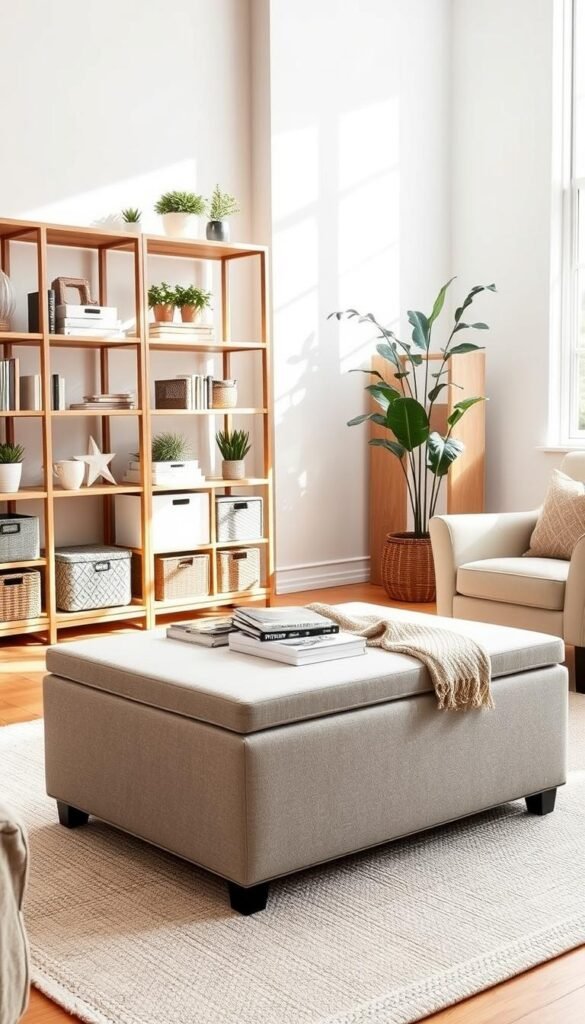
Post-move clutter often lands on counters, tables, and floors. That makes a room feel chaotic even when large furniture is set.
Baskets and trays that make surfaces look intentional
Quick fixes: a low tray corrals keys, wallets, and remotes. Woven baskets hide odd-shaped things like throws or shoes.
Why it works: grouped pieces reduce visual chaos and give each item a clear home. Choose neutral materials for a cohesive look.
Open shelving vs. closed storage for small rooms
Open shelving keeps things visible and airy but shows clutter fast. Closed units hide mess but can feel bulky in tight space.
Rule of thumb: mix both. Use open shelves for curated items and closed bins for everyday clutter.
Declutter as you unpack: keep favorites, donate the rest
Group like items and pause before storing. Keep favorites and set duplicates aside to donate. This reduces how much storage you must buy.
If overwhelm grows, consider professional unpacking services or set a 30–60 minute daily timer for sorting.
„Group things by use, not by box—clients report it cuts repeat decluttering after move day.“
| Solution | Good for | Pros | Cons |
|---|---|---|---|
| Woven baskets & trays | Surfaces and entry table | Decorative, hides loose items | Limited weight capacity |
| Freestanding shelving | Renters, small apartments | Stackable, no-drill, vertical space | Shows clutter if not styled |
| Lidded bins / ottoman | Homes with kids or pets | Hides mess, doubles as furniture | Can feel bulky in tiny rooms |
Buying criteria: measure wall and floor footprint, choose materials suited to humidity (metal or plastic for bathroom, glass jars for kitchen staples), and pick stackable pieces where possible.
For small-space pantry styling and jar ideas, see a short guide on storage ideas for small spaces.
Conclusion
A simple sequence—privacy, entry, bath, light—keeps the place usable while you refine style.
Start with temporary window coverings for sleep and privacy. Add an entry mat and a small landing tray to stop clutter fast. Swap a shower curtain, towels, and a toilet seat to make the bathroom feel cleaner that same weekend.
High-payoff first: layered lamps and a correctly sized rug make each room feel intentional without a big spend. Renters should pick no-drill fixtures and keep original hardware for move-out.
Delay permanent curtains, large wall art, and major paint choices until routines and sightlines are clear. Measure windows, rugs, and storage footprints before ordering to avoid do-overs.
Simple timeline: essentials the first weekend, layout tweaks in month one, personal styling later. Pick two categories to shop today and add one upgrade per room over time to keep the home calm and workable.
For quick styling ideas and practical examples, see this quick styling ideas and the neutral mix guide for colour and texture tips.