
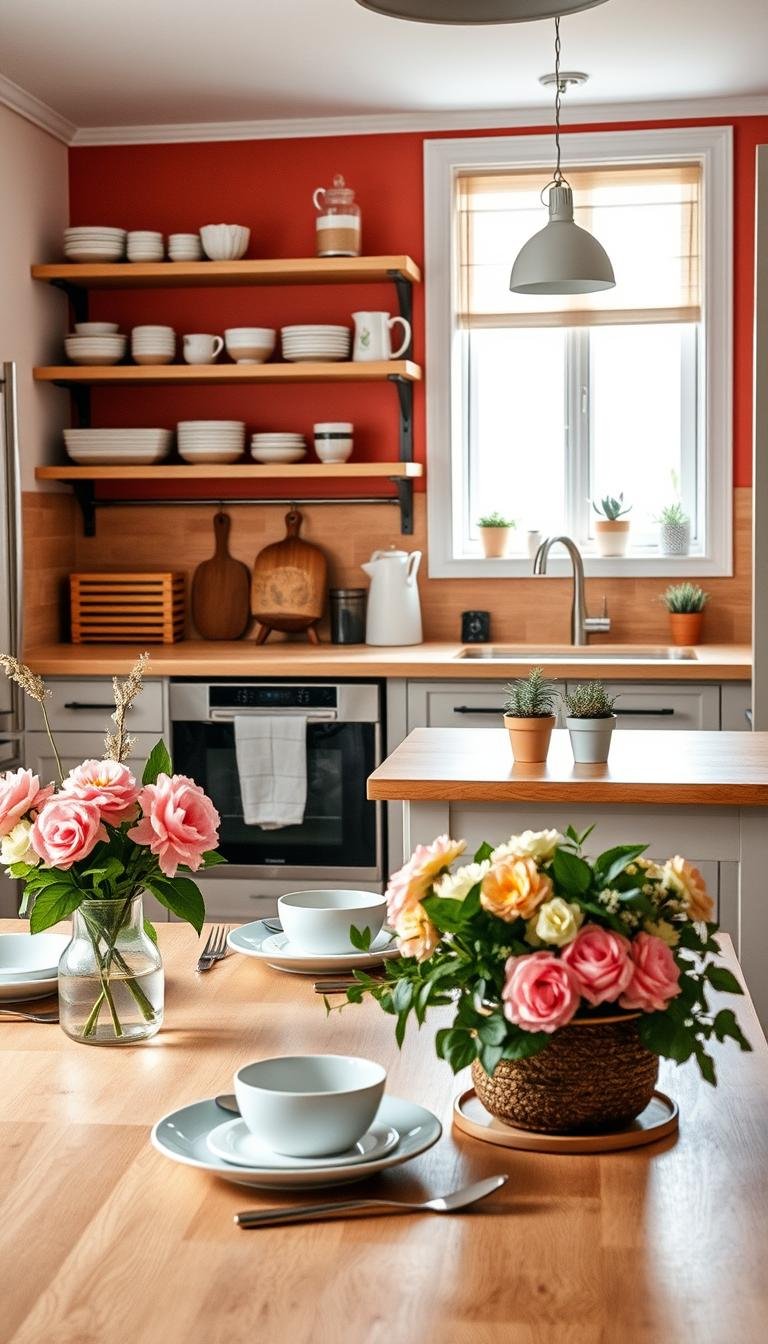
Many rental kitchens feel bland or dated. Old cabinets, scuffed floors, and weak lighting make cooking spaces look tired. Renters need fixes that improve the look without risking a deposit.
Renter-friendly decor means removable adhesives, freestanding items, and swaps that box up easily and move to the next home. The article defines clear criteria readers can use before buying: removability, footprint, cleanability, and landlord approval.
This listicle previews product categories and practical ideas: hardware swaps, textiles, rugs, freestanding lighting, and storage that add style and function. Each item notes what it solves and what to compare — materials, size, install method, washability, and storage impact.
The guide also sets honest tradeoffs. It shows what’s quick versus what truly upgrades function. It offers a buy-first roadmap by renter type: tiny-space renters (lighting + storage), budget renters (hardware + textiles), and seasonal decorators (swap textiles + tabletop accents).
Key Takeaways
- Focus on reversible changes that leave no damage.
- Prioritize small-footprint upgrades that improve function.
- Compare materials, size, and washability before buying.
- Choose freestanding lighting and rugs to warm a space fast.
- Keep originals and ask landlords when needed.
Rental kitchen rules that shape what decor actually works
Start with a clear rulebook: what you can change, what you must leave, and when to ask permission. Most leases require the unit be returned as found, which affects drilling, painting, and replacing permanent fixtures.
What “leave it as you found it” means
Common no-go items include drilling new holes in walls, swapping out cabinet doors, applying wallpaper, and painting without approval. Avoid purchases that require permanent changes unless the landlord agrees.
Renter-safe materials guide
- Adhesives: Use removable strips on painted drywall, but skip them on fresh paint or porous tile.
- Suction & magnetic: Ideal for smooth tile or metal surfaces and never require drilling.
- Laminate cabinets: Test adhesives on an inside panel to check for residue risk.
When to ask the landlord first
Always get sign-off for light fixture swaps (electrical), painting, or changes to countertops and hard finishes. Some owners require licensed installers or a written approval to protect safety and value.
Hardware swap policy and quick measuring checklist
Policy: notify the landlord, select pulls that match existing hole spacing, and store original knobs and pulls labeled in a bag for move-out.
| Measure | Why it matters | Quick target |
|---|---|---|
| Rug/runner size | Clearances at doors and walking paths | Leave 12–18″ clearance at cabinets |
| Cart width | Ensure 30–36″ walkways | Allow door swing and pass-by |
| Shelf depth | Fits inside cabinets without blocking doors | Match cupboard depth minus 1″ |
| Pull center-to-center | Avoid new holes in drawers or doors | Measure existing spacing precisely |
Pros/cons and risk reduction
- Asking permission can delay projects but protects the deposit.
- Measuring prevents returns and extra holes.
- Matching hole spacing limits options but saves time and repairs.
Every purchase should earn its space by adding storage, counter area, or better light. For renter-friendly wall ideas, see wall art ideas.
Best options that change the look fast without renovations
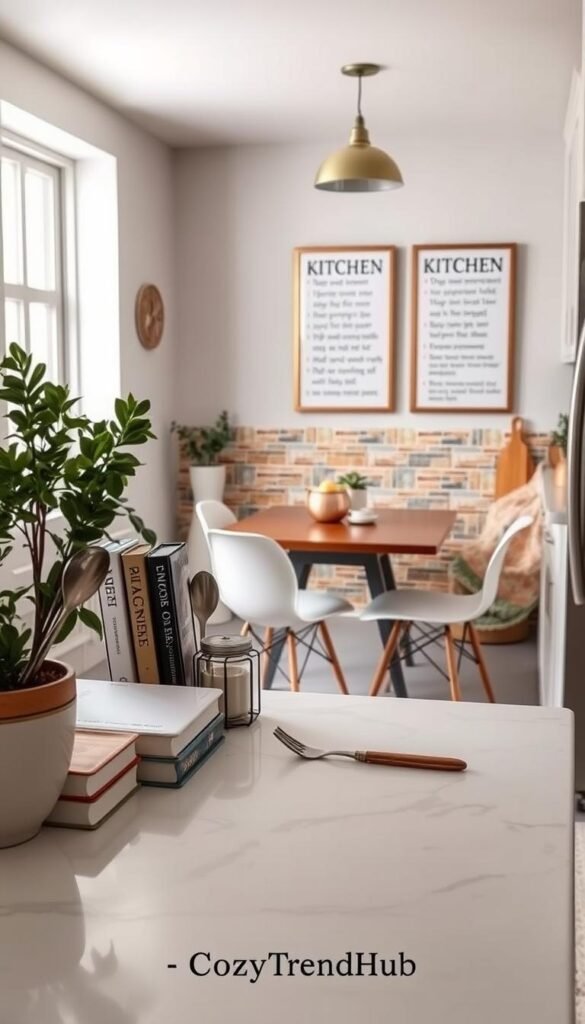
Small, reversible updates often give the biggest lift to tired kitchens. Start with visible surfaces, then add hardware and color accents. These moves are low risk and easy to undo at move-out.
Degrease and brighten cabinets
Solution: Equal parts warm water and white vinegar cleans grease off cabinets and brightens finish. Use a non-scratch cloth and test inside a door first.
Who it helps: Renters who can’t paint but need a quick refresh.
Pros: low cost, immediate payoff. Cons: won’t fix peeling or deep scratches; needs repeat cleaning.
Swap knobs and drawer pulls
Changing hardware adds instant personality. Match hole spacing or choose spacer plates. Keep originals in a labeled bag to save the deposit.
Buying notes: compare material (brass, stainless, ceramic), weight, and finish durability.
Hide dated appliances with magnets
Removable refrigerator or photo magnets mask old appliance colors. Measure fronts before ordering and expect edges to trap grime.
Pros: reversible and customizable. Cons: can be costly for full coverage.
Add color with moveable accessories
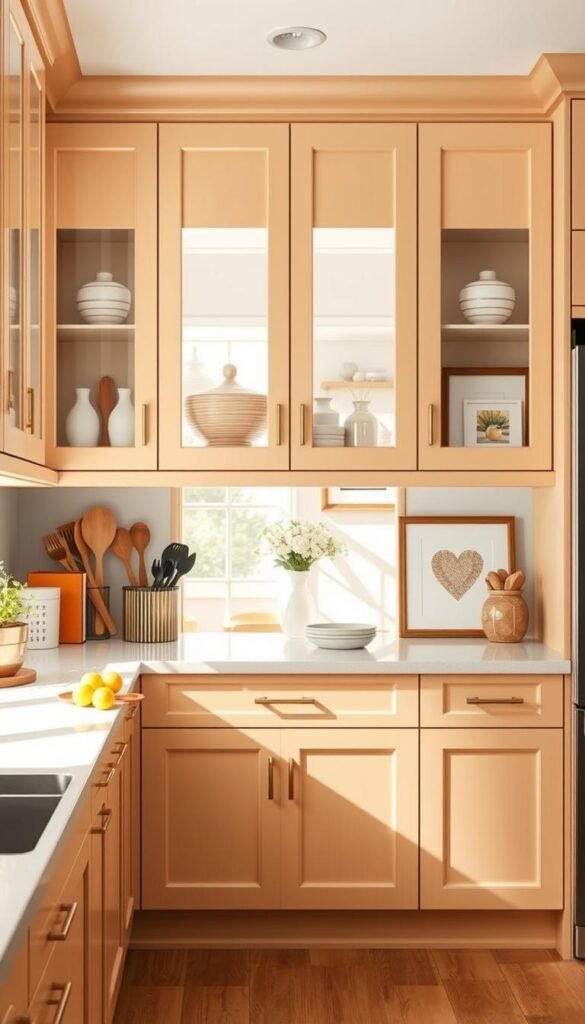
Coordinated towels, countertop containers, a spoon rest, a teapot, a utensil crock, and a favorite cutting board act as functional decor. These items earn their spot by aiding food prep and cutting clutter.
| Upgrade | Best for | Pros | Cons / Buy notes |
|---|---|---|---|
| Vinegar cleaner | Anyone with greasy cabinets | Cheap, brightens finish | Test first; use soft cloths |
| New hardware | Builder-grade cabinet owners | High impact, reversible | Match hole spacing; save originals |
| Photo magnets | Owners of dated appliances | Customizable, removable | Measure panels; watch grime at edges |
| Accessory sets | Small kitchens needing color | Functional, portable | Choose cohesive materials and sizes |
For more simple home updates that travel with you, see simple home updates.
Lighting upgrades for rentals with harsh LEDs or “dreaded spotlights”
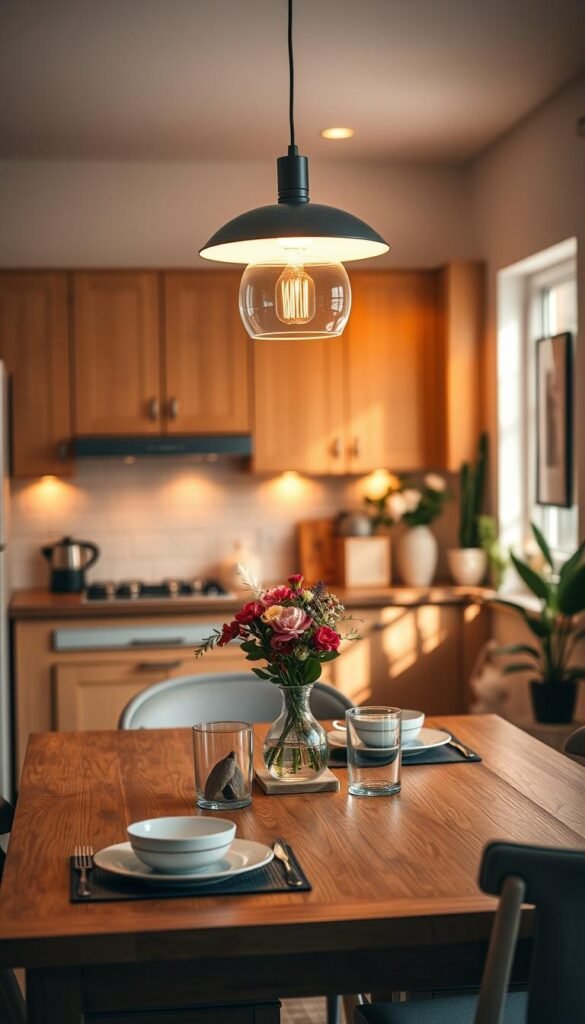
When ceiling spotlights dominate, layering portable lamps brings back warmth without rewiring. Renters often face cold, bright overhead LEDs that make the room feel clinical in the evening.
Layer freestanding lighting: Place a floor lamp near a breakfast nook and a small table lamp on open shelving. Designers recommend mixed heights to add depth and a softer glow.
Clip-on and magnetic diffusers to soften glare
Clip-on shades and magnetic diffusers fit many spotlights and reduce harsh glare instantly. Check spotlight diameter and magnet type before buying to confirm compatibility.
When swapping a ceiling fixture makes sense
Swapping is worth it if the renter has permission and plans to stay a long time. Photograph wiring, label screws, and box the original fixture. Reinstall it before move-out to protect the deposit and the landlord relationship.
| Issue | Solution | Buy notes |
|---|---|---|
| Harsh white LEDs | Floor + table lamps with warm bulbs | Look for 2700–3000K bulbs; stable base |
| Bright spotlights | Clip-on or magnetic diffusers | Match spotlight size and magnet strength |
| Ugly ceiling fixture | Temporary swap with landlord OK | Photograph wiring; label parts; box original |
Simple tips: Use warm bulbs in task lamps, keep diffusers for ambience, and always plan a reinstall. The right lighting keeps the space usable for cooking tasks and makes the house feel welcoming at any time.
For more on choosing cozy lamps and bulbs, see cozy lighting tips.
Textiles that make a rental kitchen feel cozy without taking up space
Textiles are the quickest cozy lever. A short runner or a few well-chosen fabrics change the kitchen feel without altering floors or fixtures. They add color and texture while staying portable.
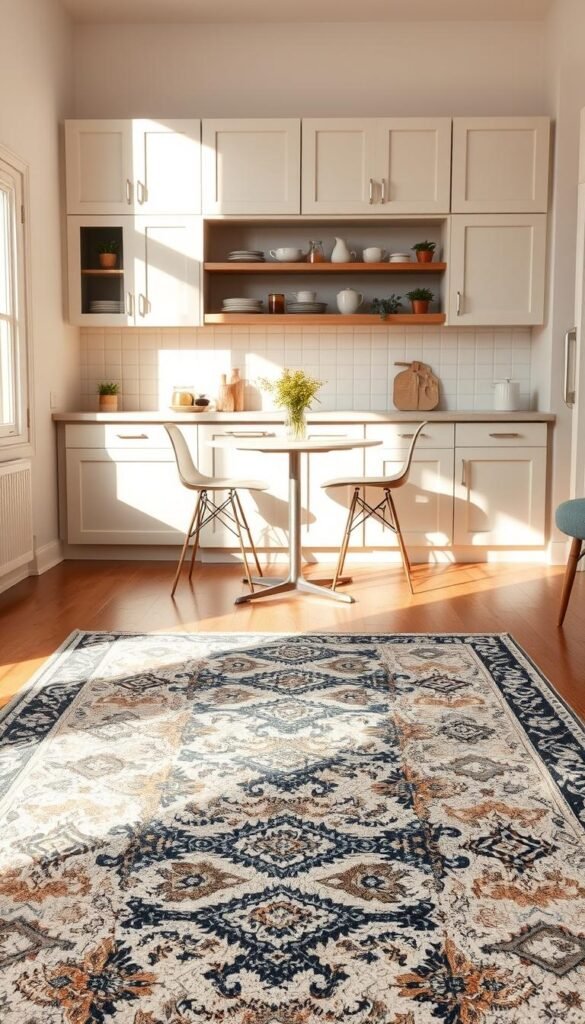
Washable runners and low-pile rugs
Use washable runners to mask scuffed wood, linoleum, or stained tile. Low-pile rugs work near sinks and stoves because they dry fast and lie flat.
Best for: high-traffic paths, pet owners, and heavy cooking zones. Measure galley vs. U-shaped layouts before buying.
Choosing a rug that can handle tough use
Compare materials: seagrass or jute looks elevated but needs careful cleaning. Synthetic washable rugs resist stains and often go in the washer.
„Place rugs where you stand most — at the sink or stove — not to cover the whole floor.“
| Item | Pros | Cons / Care |
|---|---|---|
| Jute / seagrass | Natural look; durable | Harder to deep-clean; avoid wet spots |
| Low-pile washable | Machine cleanable; slip options | May show wear faster in heavy zones |
| Synthetic runner | Stain resistant; affordable | Can feel less textured than natural fibers |
Window dressings and simple fabric touches
Curtains add softness and finish a room more than blinds. Blinds win near messy cooking since they wipe clean easily.
Small touches — dish towels, a table cloth, or cupboard curtains — add texture with little space impact. Keep fabric away from open flames and plan regular washing.
Want more apartment-friendly textile ideas? See a short guide at cozy apartment options.
Wall and backsplash decor that’s renter-friendly and easy to remove
Empty wall space often makes even a tidy kitchen look unfinished. Small, renter-safe touches add personality without drilling or long-term changes.
Oversized art versus grouped frames
Oversized pieces create drama with one item. They suit narrow walls and save time choosing multiple prints.
Grouped frames add character and fill awkward zones. Pick wipeable frames near cooking to keep the look clean.
Leaning frames and countertop vignettes
Lean prints against the backsplash to avoid holes. Pair a framed print with a cutting board and utensil pot to make a functional vignette.
Watch clutter: tight vignettes can trap dust and grease if crowded.
Hooks, rails, and small shelves that add storage
Choose removable strips or tension rails when drilling is not allowed. These systems work well for mugs, tea towels, and utensils.
- Buying tips: check load ratings and heat resistance.
- Avoid overloading to prevent visual clutter and adhesive failure.
- Consider freestanding shelves if walls must stay untouched.
| Solution | Who it helps | Buy notes |
|---|---|---|
| Oversized art | Small spaces needing drama | Measure wall height; choose light frames |
| Leaning vignette | Non-drillers; indecisive decorators | Keep prep zones clear; wipe surfaces |
| Removable hooks/rails | Limited cabinet space | Check weight limit; test on hidden paint |
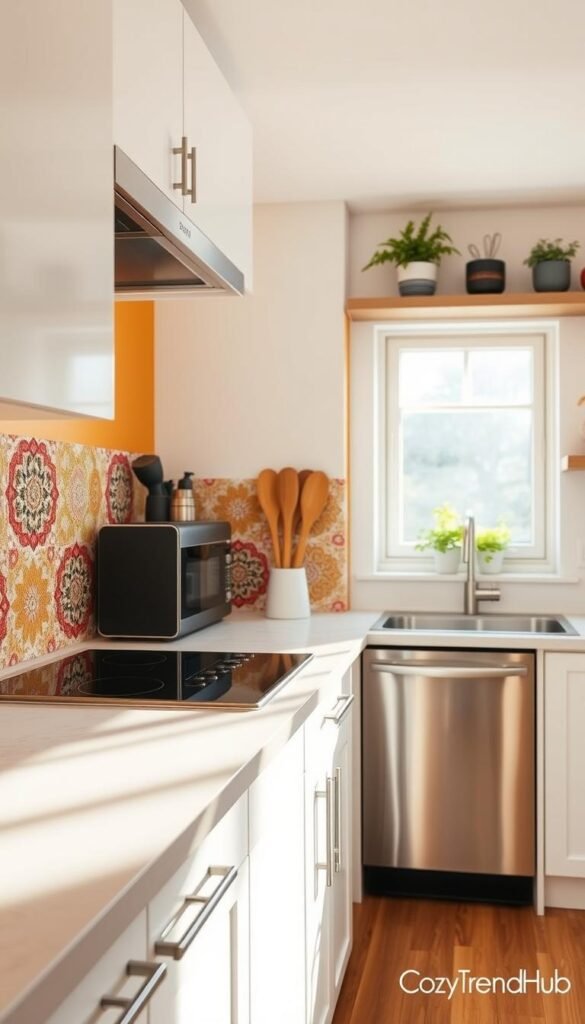
Affiliate picks: rental kitchen makeover — art sets; renter backsplash ideas — peel-and-stick wallpaper; renter wall decor — hooks and shelves.
Small-space storage decor that creates counter space in a rental kitchen
Crowded countertops and shallow cabinets make a small kitchen feel tight. This section shows storage that also functions as decor — pieces that free counter space and keep daily things handy.
Stackable shelves inside cabinets: Double the vertical room by adding risers or adjustable stackers. Best for renters who cannot remodel but need extra shelf area.
- Buying checks: shelf height, non-slip feet, load capacity, rust-resistant finish.
- Pros: inexpensive, hides clutter, uses unused vertical space.
- Cons: fits only if cabinet doors close; measure cabinet depth and door swing.
Freestanding shelving units: Use an empty corner to gain open storage without drilling. Best for homes that allow freestanding furniture.
- Pros: movable, high capacity, doubles as display.
- Cons: can crowd a small plan if oversized; pick narrow units and light materials.
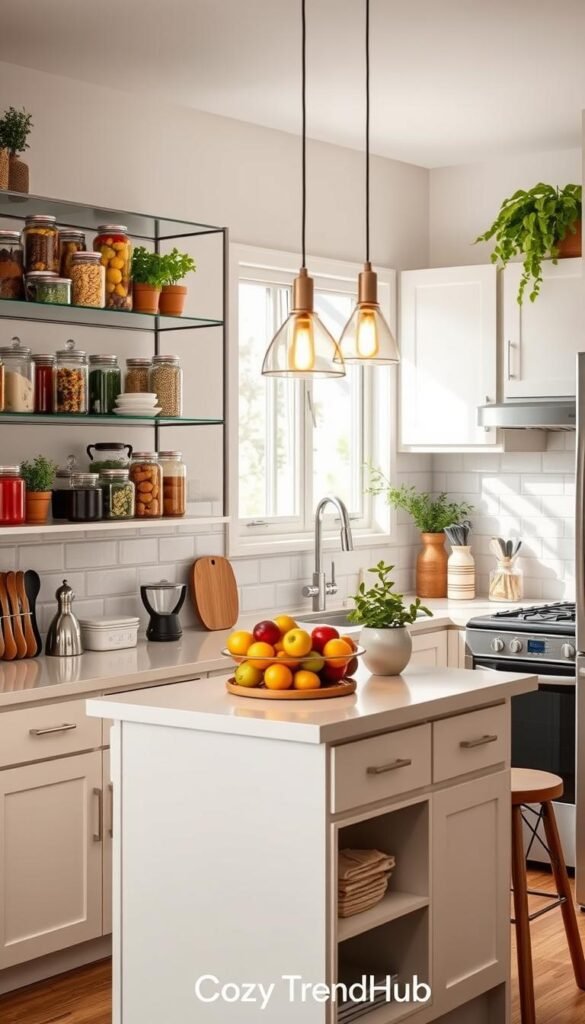
Rolling carts and slim side tables: Treat them as portable prep stations that add counter and storage. Measure aisle width to keep a 30–36″ walkway and choose locking wheels and wipeable tops.
Hide bulky appliances: Create put-away zones on a shelf or inside a lower cabinet. Decluttering clears countertops but reduces instant access.
- Tradeoff: storing an appliance keeps counters clean but slows use. Prioritize daily items on the counter.
Decant pantry staples into uniform containers: Use airtight jars in matching sizes to make food storage look intentional and save shelf space.
- Buying considerations: seal quality, stackability, container volumes (500 mL, 1 L, 2 L), and label type.
- Pros: easier portioning, cleaner cabinet visuals; cons: initial cost and transfer time.
| Solution | Best for | Buy checks |
|---|---|---|
| Stackable shelf | Small cabinets | Depth, feet, rust resistance |
| Freestanding unit | Empty corners | Width, weight, finish |
| Rolling cart | No island spaces | Wheel locks, surface, height |
| Uniform containers | Pantry smoothing | Seal, size, labels |
Ready to compare options? See practical small-space ideas at small kitchen ideas, product tests at Wirecutter’s recommendations, and container guides at pantry storage for small spaces.
Finishing touches and seasonal updates that won’t annoy your landlord
Layered accents let a kitchen feel warm and personal with minimal risk. These are the personality pieces that never touch permanent surfaces. They add color, light, and texture while staying fully portable.
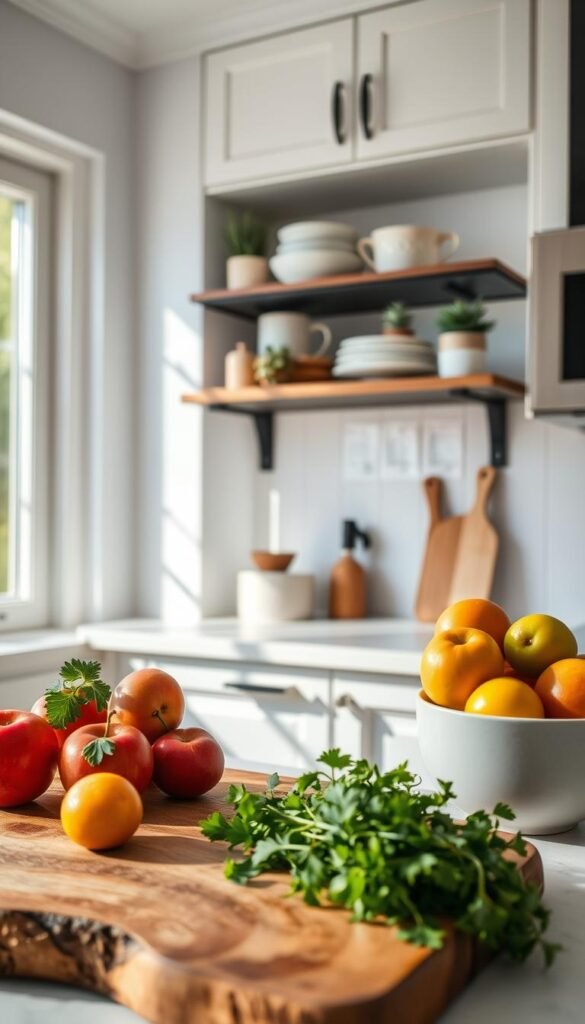
Plants and herbs that survive real cooking conditions
Who it helps: renters who want living color and a little fresh herb access at a table or windowsill.
Choose hardy options that tolerate humidity and heat swings. Good picks include pothos, snake plant, and rosemary. Place pots away from direct splatter and intense oven heat.
Pros: natural color and air comfort. Cons: steam can harm some plants; choose easy-care types and wipeable pots.
Candles and subtle scent solutions
Who it helps: cooks who want the kitchen feel to warm at night and neutralize strong food smells.
Use low-scent soy candles or flameless diffusers near the table, not near towels or curtains. Track burn time and keep lids or covers for storage.
Safety: never leave candles unattended; opt for battery-operated candles in small homes.
Seasonal swaps that do the most with the least
Rotate one rug, a set of towels, and a small table centerpiece each season. A new runner or folded textiles gives instant color without changing floors.
Buyer tips: pick foldable textiles, compact vases, and washable rugs that store flat. These travel to the next home easily.
| Finish | Who it fits | Quick checks |
|---|---|---|
| Kitchen-tough plants | Low-maintenance plant owners | Light level, humidity tolerance, wipeable pot |
| Soy or flameless candles | Evening bakers and hosts | Burn time, scent strength, safety placement |
| Seasonal textiles | Minimalists who like change | Washability, foldability, storage footprint |
For inspiration on easy, renter-friendly seasonal swaps, see a short guide on small changes at 10 easy ways to pep up a rented.
Conclusion
Finish by focusing on a few reversible moves that change how the kitchen feels and functions.
Start with a deep clean of kitchen cabinets, then swap hardware and add a washable rug. Layer freestanding lighting, hide bulky appliances, and add storage pieces that free counter space.
Quick recap: tiny-space renters prioritize storage and decluttering; owners of dated units choose magnets and colorful accessories; those stuck with harsh light add lamps and diffusers. Keep originals, photograph conditions, and ask the landlord before any wiring, paint, or new holes.
Before buying, measure, confirm the install method, check washability, and verify portability. A simple bundle—one hardware set, one washable rug, one table lamp, and one container set—creates a cohesive upgrade without overbuying.
Realistic note: these moves won’t fix damaged counters, but they will improve function and the overall kitchen feel. For compact project ideas and a quick shopping starter, see a short guide to rental kitchen upgrades and an inspiration mix at outdoor mix.
With these reversible, small-space priorities, renters can make a kitchen personal and practical today while protecting their deposit and future moves.