
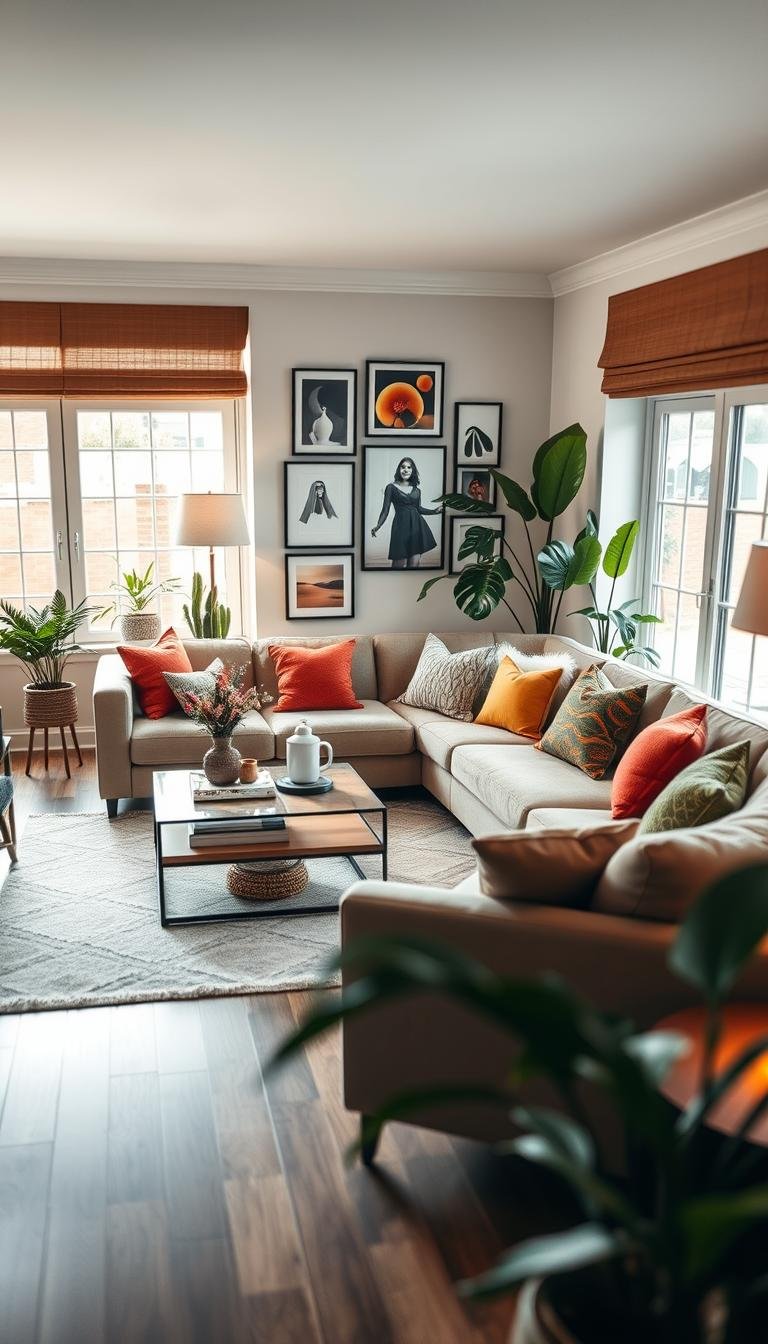
Shared spaces often stall over style. Multiple tastes, tight square footage, and rental rules can turn small choices into daily friction. This introduction frames clear, renter-friendly solutions that reduce conflict and improve function.
The guide maps common roommate pain points—clutter, oversized furniture, blank walls, and harsh light—to easy-to-buy, easy-to-live-with solutions. It favors neutral big pieces with personal accents, a simple budget plan, and seasonal swaps that respect sentimental items.
What follows: align priorities, plan layout, pick color and texture, then shop by category: seating, tables, storage, wall options, and lighting. Each recommendation includes pros, cons, and buying criteria like size, weight, materials, cleanability, modularity, and move-out friendliness.
Key Takeaways
- Open communication and defined must-haves cut decorating tension.
- Neutral core furniture + personal small accents keep the room balanced.
- Choose renter-safe fixes: damage-free hanging and flexible layouts.
- Use comparison criteria to match purchases to real needs.
- Plan a shared budget and rotate seasonal pieces to refresh the space.
Start With Roommate Alignment: Style, Needs, and Non-Negotiables
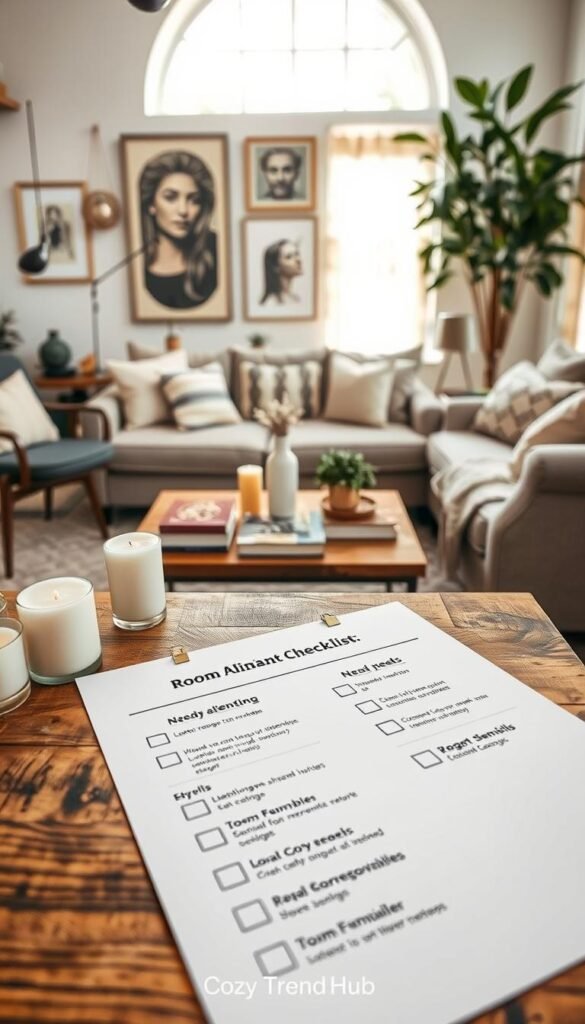
Begin with a focused chat to list what each person needs and won’t give up. This short meeting prevents the common mistake of buying first and arguing later.
„Agree on must-haves, set a budget, and choose a neutral base so personal pieces can shine.“
Have the “must-haves vs. deal-breakers” conversation
Use a simple checklist: daily needs, non-negotiables, and nice-to-haves. Mark practical must-haves (stain-resistant fabric, pet-friendly finishes) separately from aesthetic preferences.
Set a shared budget and cost-split rules
Split big items as shared purchases (sofa, rug) and leave throws, prints, and small accents as personal buys.
Choose a unified theme and respect sentimental items
Pick neutral tones for major pieces and let each person add small items that show character. Agree on how many sentimental pieces live in common areas and where they sit.
- Pros of a shared cart: cohesive scheme, fewer mismatches.
- Cons: needs fronting money and clear ownership rules.
- Best for: roommates who want a polished, rental-friendly home.
Next purchases to consider: an anchor rug, matching hardware, and a limited textile palette to tie the room together.
Plan the Layout for Shared Spaces Without Making It Feel Crowded
Lay out the room with one clear focal point, then test seating arrangements that keep traffic moving and every person feeling included.
Pick a focal point (TV, window, or fireplace) and place seating so sightlines are fair. This reduces daily friction over the “best seat.”
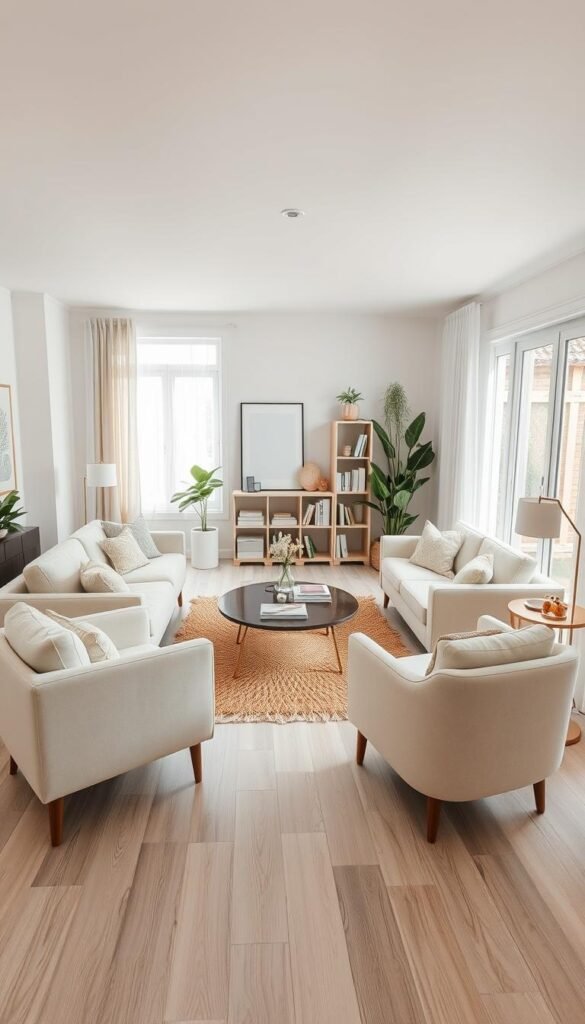
Use floating furniture to define areas
Floating furniture works well in open or walk-through living space. Leave a consistent path behind or beside seating to protect flow. This tactic suits open plan flats and rooms with a central walkway.
Balance visual weight and scale
Choose leggy pieces, lighter woods, and calm fabrics so more floor shows. Measure wall-to-wall, note door swings, and pick a sofa depth that preserves legroom and table reach.
| Layout Helper | Footprint | Storage | Renter-friendly |
|---|---|---|---|
| Area rug (8×10) | Medium | None | High |
| Console behind sofa | Small | Surface | Medium |
| Armless accent chairs | Small | None | High |
Quick trade-offs: wall-hugging can free floor in narrow rooms. Floating improves function when a walkway must remain clear.
Shopping tip: compare dimensions and clearance first, then style. See a useful guide on a neutral mix neutral mix.
Use Color, Texture, and a Simple Scheme to Blend Different Styles
A simple color scheme and layered textures can make different tastes feel deliberate, not accidental.
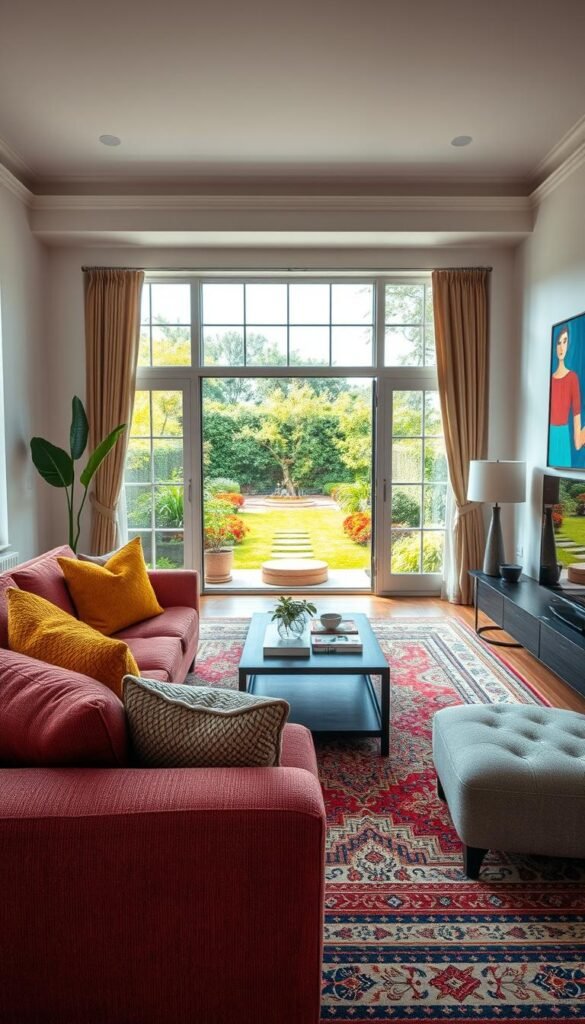
Use complementary colors to separate functional areas without cutting the room in half. Pick one neutral base. Then assign each person an accent color for their seating or desk zone. This keeps the overall scheme calm while making zones clear.
Mix patterns and textures by repeating one or two unifying elements. Repeat a metal finish, a wood tone, or a base neutral across pillows, lamps, and shelving. This rule ties varied pieces together and reduces visual clash.
Make bold shades renter-friendly through pillows, throws, and art instead of paint. Swapable soft goods let roommates test strong shades without a permanent change. Lamps and rugs show color quickly and cheaply.
Buying tips: check fabric performance and undertones, sample textiles in actual light, and prefer washable covers for high-use seating. Consider how lamp light can warm or cool shades before committing.
| Choice | Pros | Cons | Buying considerations |
|---|---|---|---|
| Solids & neutrals | Calm, flexible | Can feel bland | Check undertones; test in room light |
| Busy patterns | Adds energy | Can shrink small areas | Limit to pillows or one rug; match scale to furniture |
| Bold shades (accents) | Big impact, renter-friendly | May clash if overused | Use in throws, art, lamps; each roommate picks one color |
| Mixed textures | Depth and warmth | Too many textures can feel messy | Repeat 1–2 elements (metal, wood) to unify |
Quick idea: each person picks an accent color while keeping the shared neutral base. This two-person plan keeps design balanced and makes purchasing choices easier.
Learn how to layer wall pieces and a neutral anchor in a practical mix at a neutral mix guide.
Best Decor for Shared Living Rooms That’s Renter-Friendly and Easy to Change
Pick a few neutral foundation pieces that make changeable accents feel intentional. This approach reduces clashes and keeps the room flexible under strict lease rules.
Anchor pieces set the tone without permanent changes. Area rugs, full-length curtains, and neutral sofas create a calm base. These pieces stay when movers leave and simplify future choices.
Damage-free wall options
Removable hooks, adhesive strips, and peel-and-stick panels let roommates rotate art without holes. Use peel options on small sections rather than covering full walls to avoid strong commitments.
Small seasonal „swap set“
A compact bin with pillow covers, a throw, and a tabletop accent updates the area each season. It’s low-cost and easy to store, and it keeps the interior feeling fresh without replacing big pieces.
- Who it’s best for: strict leases—focus on anchors that don’t alter paint; frequent movers—choose light, packable items.
- Pros: high impact, reversible, renter-friendly.
- Cons: anchors cost more up front; swaps need storage and a shared plan to avoid clutter.
| Solution | Impact | Cost | Buying considerations |
|---|---|---|---|
| Area rug (neutral) | Defines area, reduces arguments over style | Medium–High | Rug pad thickness vs. door clearance; stain resistance |
| Full-length curtains | Adds height and warmth | Low–Medium | Length for visual height; machine-washable fabrics |
| Peel-and-stick wall accents | Quick style change, reversible | Low | Apply to small sections; check adhesive weight limits |
| Seasonal swap set | Fast refresh with low commitment | Low | Choose interchangeable colors; store in labeled bin |
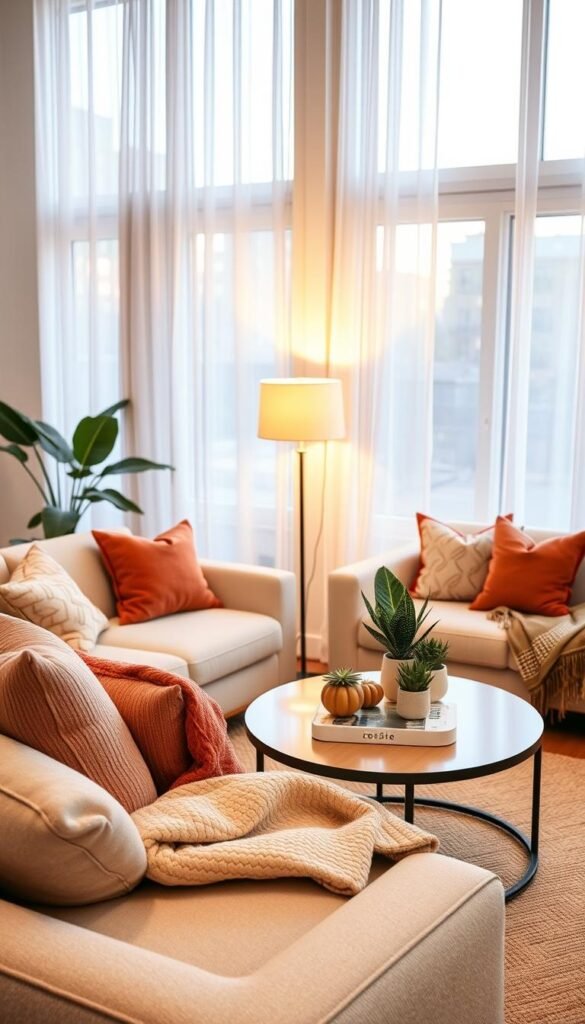
Affiliate-ready blocks: suggest neutral area rugs, damage-free hanging kits, and seasonal pillow cover sets. These items guide purchases with strong buyer intent and clear buying notes.
Seating That Works for Roommates, Guests, and Small Living Rooms
Choose seating that fits real floor measurements and roommate routines to avoid a cramped, awkward setup.
Loveseat vs. compact sofa: a slim-armed loveseat keeps a narrow room feeling open. It suits small apartments and single-door entryways. Pair it with a chaise or an armless chair to add lounge space without heavy visual weight.
Compact sectional and modular pieces: use a small L-shaped sofa when hosts need more seats. Modular units let roommates rearrange modules for movie nights or cleaning. Modules also ease ownership questions—each person can claim a piece.
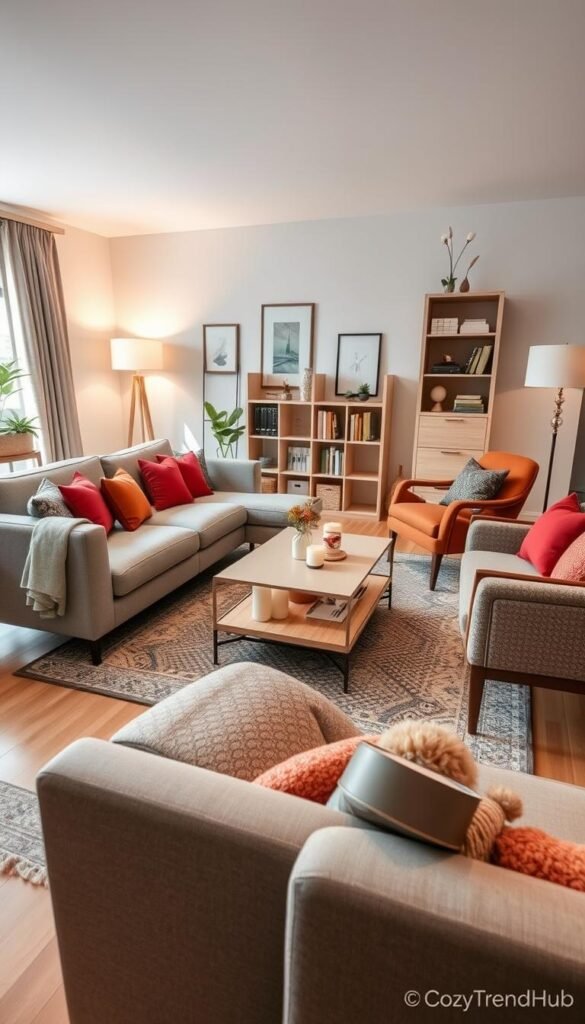
Extra chairs like armless accent seats or lightweight slipper chairs add spots without shrinking the floor. Look for leggy frames and slim profiles to keep sightlines open.
| Option | Best for | Pros | Cons |
|---|---|---|---|
| Loveseat | Small apartments | Light visual weight; saves space | Limits seating for guests |
| Compact sectional | Frequent hosts | More seats; cozy layout | Can block flow if oversized |
| Modular sofa | Flexible households | Reconfigurable; conflict-reducing | Higher cost; multiple pieces to store |
Fabric and care: performance textiles and darker neutrals hide wear and pet hair. Lighter upholstery brightens interiors but needs removable covers. Choose seat depth and leg height for comfort and easy floor cleaning.
Tables and Surfaces: Coffee Tables, Side Tables, and Flexible Options
When floor space is limited, choosing flexible tables and ottomans makes hosting and daily life much easier.
Surfaces should support drinks, remotes, laptops, and takeout without adding clutter. Nesting tables expand surface area for guests and tuck away to preserve floor flow. They reduce trip hazards and add staggered storage spots.
Ottomans double as a coffee surface and extra seating. Choose models with a flat top and a tray to hold drinks safely. Storage ottomans hide throws and games, which keeps the room tidy between use.
- Shopping criteria: footprint, height vs. sofa seat, stability, storage, and ease of cleaning.
- Safety & flow: rounded corners, wipeable finishes, and leg clearance keep pathways open and make cleaning simple.
- Material trade-offs: glass reads light but shows prints; wood is durable but wants coasters; upholstered tops add comfort and need stain protection.
| Piece | Best for | Pros | Cons |
|---|---|---|---|
| Nesting tables | Small-space entertaining | Expandable, compact | Smaller surface when nested |
| Storage ottoman | Hosts and families | Seating + hidden storage | Heavier to move |
| Leggy coffee table | Open-feeling rooms | Airy look, easy to clean under | Less surface area vs chunky pieces |
Shared rule: pick one main coffee surface and one or two movable tables so people can work or snack without fighting over a single spot. See coordinated options at coffee and end tables.
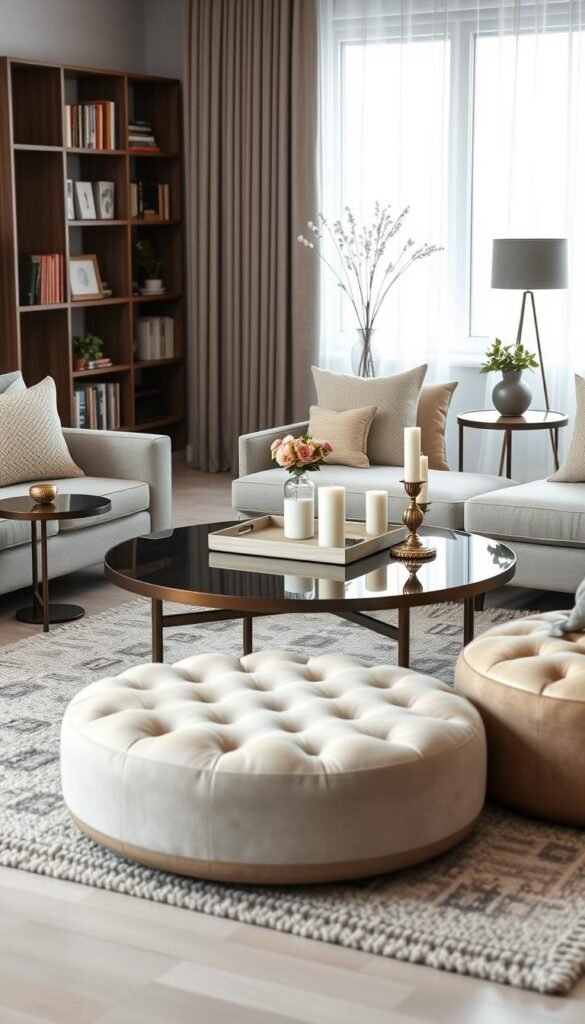
Shared Storage Solutions That Prevent Clutter Fights
Treat storage as a fairness system: clear zones, hidden compartments, and vertical shelves keep the peace. This approach turns storage into an agreed rule, not a guessing game.
Hidden storage reduces visual noise and makes a small living room feel larger. Look for ottomans and benches with internal compartments and coffee tables with lower shelves or drawers.
Vertical choices that save floor space
Tall bookcases and wall-mounted shelves store more without shrinking walkways. Anchor tall pieces with anti-tip hardware and check weight limits before loading them.
Equal bins and labeled zones
Assign equal-size baskets or bins to each person and label them. This simple rule prevents mystery piles and speeds tidy-up time before guests arrive.
„Equal bins make cleanup quick and clearly show who owns what.“
- Who it’s best for: WFH people who need gear stowed, hobbyists with tools, and busy households that want fast tidying.
- Pros of hidden storage: calmer look, less visual clutter, extra seating options.
- Cons of open shelving: shows mess and needs regular editing.
Open shelving vs. closed storage
Open shelves display favorites but demand upkeep. Closed cabinets hide mess fast but may feel heavy in a small room.
| Solution | Pros | Cons |
|---|---|---|
| Storage ottoman | Seating + hidden space | Check hinge strength and lid weight limit |
| Wall shelves | Preserves floor space | Observe mounting weight; deeper shelves can cause head bumps |
| Labeled basket set | Fair zones, fast tidy | Choose sizes that fit shelf cubes and fit under consoles |
Buying considerations: shelf depth, weight limits for wall anchors, anti-tip fittings, and bin sizing that matches shelf openings. For renter-friendly tips and storage ideas see a practical guide on shared organization and broader options at home organization ideas.
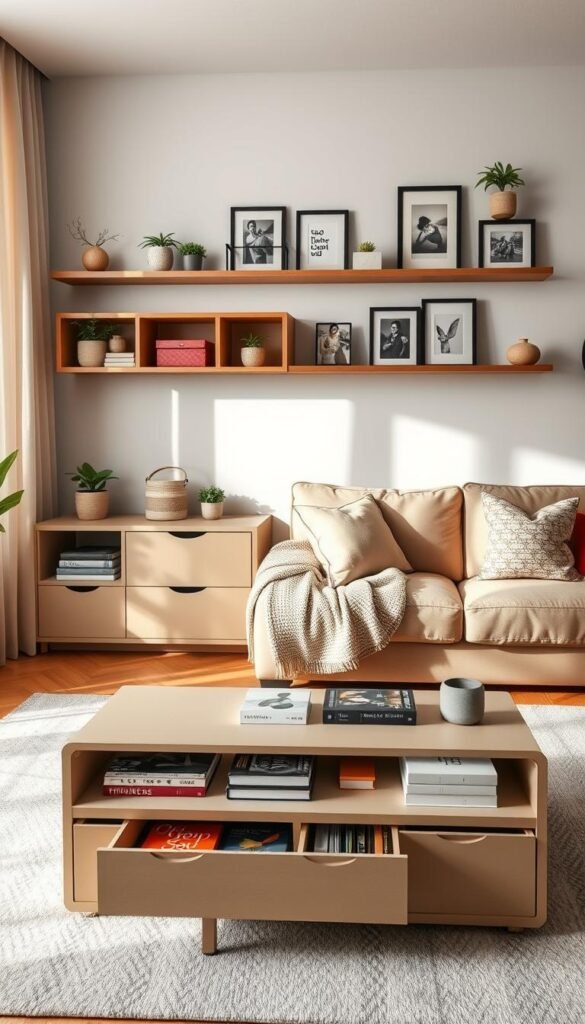
Wall Decor and Art Everyone Can Live With
A thoughtful approach to wall treatment helps roommates share one place without erasing individual taste. Start with a short plan: agree on one unifying rule, pick mirror locations that boost natural light, and set clear personal spots so each person can display a favorite piece.
Collaborate on a gallery wall that mixes styles without looking chaotic
Simple unifiers keep mixed prints cohesive. Match frames, use a consistent mat color, or limit the palette to two tones. This makes varied artwork read as a single composition rather than a random cluster.
Who it’s best for: roommates who both own meaningful prints and want to show them. If tastes clash, choose one larger statement piece instead.
- Pros: adds character and balance; highlights personal items.
- Cons: many small frames can feel busy; requires a layout plan.
- Buying considerations: frame sizes, consistent matting, and damage-free hanging systems rated by weight.
Use mirrors to boost natural light and make the living room feel bigger
Place a mirror opposite or adjacent to a window to bounce natural light deeper into the room. Mirrors also increase perceived depth, which helps narrow or low-ceiling spaces feel airier.
Best for: low-light apartments or darker room corners that need an instant lift.
| Solution | Pros | Cons | Buying notes |
|---|---|---|---|
| Gallery wall | Personal, flexible | Needs balance | Agree on one unifying rule; use damage-free hooks |
| Single large piece | Fast compromise | Less personal variety | Choose scale to wall width; centered at eye level |
| Large mirror | Bounces natural light, widens room | Shows reflections/glare | Check weight rating; avoid direct TV reflection |
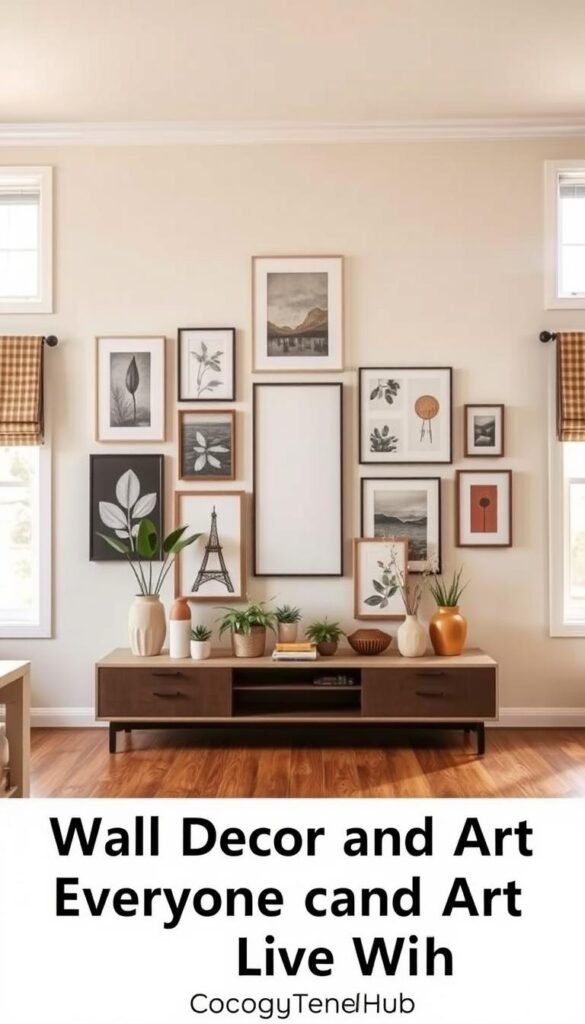
„Give each roommate a designated place on the wall plan. Shared areas stay cohesive; personal spots stay personal.“
Quick tips: map the layout on paper, use level guides when hanging, and pick adhesive systems that match wall material. For gallery wall inspiration see a gallery wall guide at gallery wall inspiration and renter-friendly ideas at small-space styling tips.
Lighting and Natural Light: Make the Room Feel Bigger and More Livable
Treat lighting as furniture: mix tall and low fixtures so every activity has a proper light source. A layered approach prevents one harsh overhead and gives the room depth.
Layer fixtures for function and mood
Floor lamps add ambient fill and raise the overall glow. They are ideal when there is no ceiling fixture.
Table lamps create focused task light for reading or remote work near seating.
Wall sconces and pendants free surfaces in tight rooms and add even coverage. Plug-in sconces suit renters who can’t hardwire.
Maximize daylight with window choices
Sheer or lightweight curtains let daylight in while preserving privacy. Lighter fabrics reflect more light and make a small living room feel airier.
Buying considerations: bulbs and shades
| Item | Pros | Cons |
|---|---|---|
| Warm bulbs (2700–3000K) | Cozy, softens neutrals | Can mute cool tones |
| Cool bulbs (3500–4100K) | Crisp, good for task areas | May make colors look harsh |
| Fabric shades | Soft, diffused light | Shows dust; needs cleaning |
| Metal/opaque shades | Direct light, less glare | Can reduce overall brightness |
Quick rules: aim for layered sources (2–3 fixtures) in rooms without overheads. Work-from-home setups need a clear task lamp near seating. Test bulbs in the room before buying many.
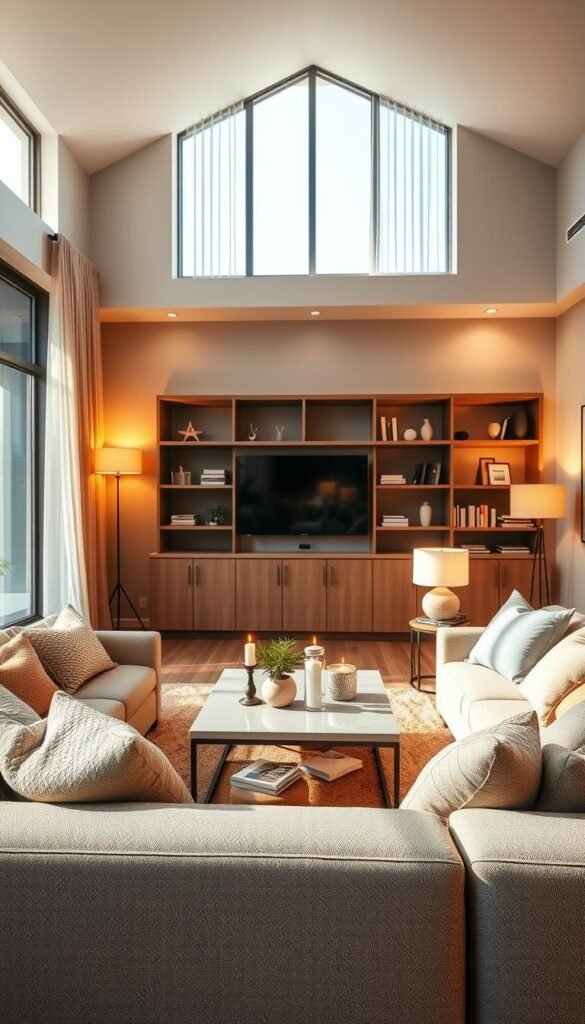
„Layered light makes a small room feel larger and helps roommates share the same area without fighting over glare or dimness.“
Affiliate-ready idea blocks: floor lamps with small footprints, plug-in wall sconces for renters, and sheer curtain sets—select by height, lumen output, and bulb compatibility. For broader styling tips see a practical guide at living room lighting moves and cozy accent ideas at cozy lighting options.
Conclusion
Good communication, practical furniture, and simple routines keep a shared room useful and calm.
Start purchases with seating scaled to measurements. Next add an anchor rug, then layer lighting and storage. Finish with wall art and a small set of seasonal textiles. This order helps confident buying and avoids costly returns.
Quick checklist: measure walkways, compare visual weight, choose wipeable finishes, and prefer modular or multifunctional pieces.
Keep storage zones fair, edit surfaces weekly, and rotate a few small accents each season to keep the interior fresh. For tips on planning flow between areas see a guide to decorating connecting rooms, and consult practical furniture layout ideas when testing arrangements.
Final note: prioritize comfort, cleanliness, and fairness. That approach builds a home where each person can enjoy the space and express small elements of personal style without redoing the whole interior.