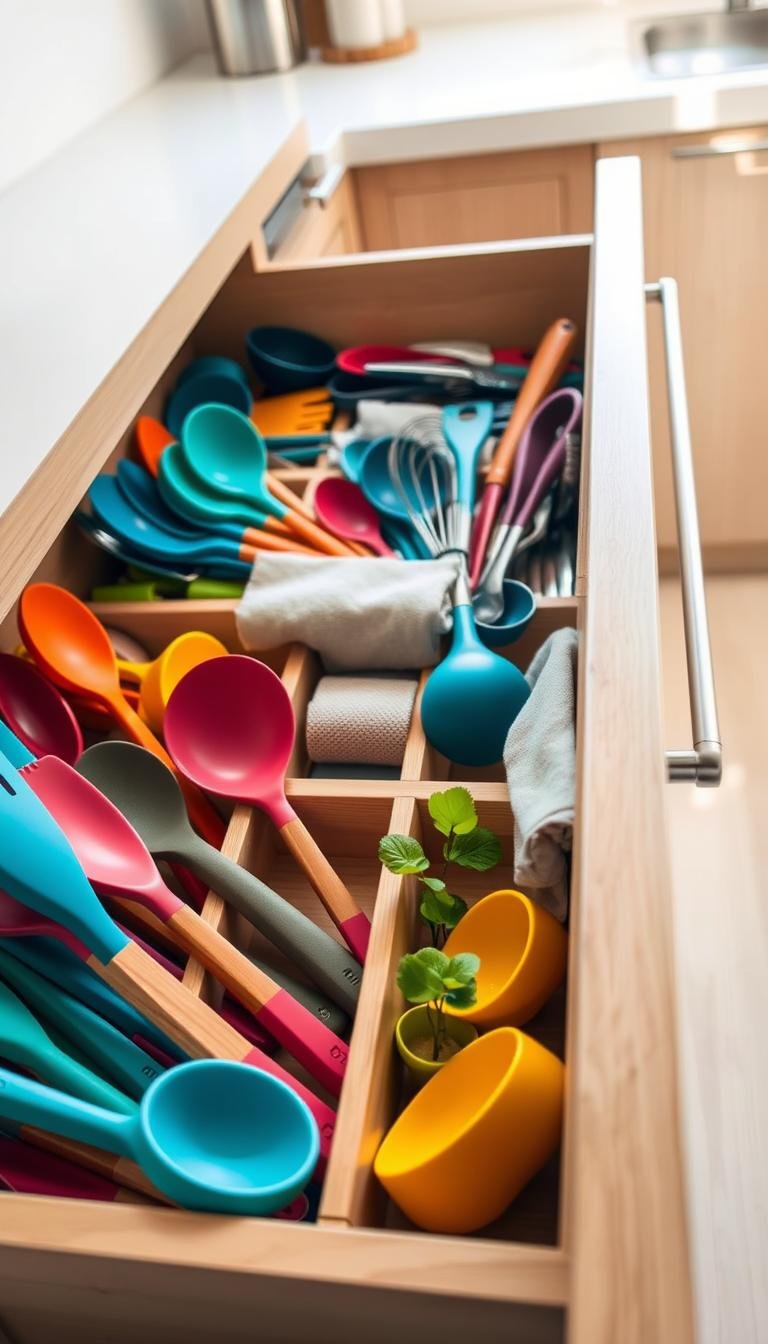
Cluttered drawers slow cooking and cleanup. Small, mismatched tools hide in corners and waste time. This roundup frames the problem and offers practical, measurement-driven solutions that work in rentals and tight spaces.
The selection emphasizes real fit, compartment usefulness, and easy cleaning over looks alone. Recommendations include tested options like the OXO Good Grips Expandable Drawer Organizer, praised for removable parts and a non-skid base, though it can misfit in shallow kitchen drawer setups.
Readers will find a quick comparison by material and layout, then targeted picks for small drawers, deep drawers, knives, spices, and pan lids. Each pick notes expandability ranges, long compartments, and how items shift if trays don’t lock.
Shopping is made simple: measure drawer width and depth first. Avoid the common mistake of buying expandable inserts without checking notch sizing and clearance. This guide supports side-by-side product blocks and clear pros and cons to speed confident buying decisions.
Key Takeaways
- Measure drawers before buying; depth and notches matter.
- Prioritize long compartments and non-slip features.
- Choose pieces that are renter-friendly and easy to remove.
- Expect trade-offs: expandability vs. exact fit in shallow drawers.
- Comparisons focus on fit, cleaning, and real-life usefulness.
Why Kitchen Drawers Get Messy and What a Drawer Organizer Actually Fixes
Daily cooking slows when utensils, tools, and random supplies fight for space. That friction shows up as lost minutes, noisy rummaging, and items hidden at the back of a drawer.
The everyday pain points
Mixed utensils and office supplies create jams. Long serving tools sit diagonally and block closure. Small items disappear under forks and measuring spoons.
What “function-first” organization looks like
Function-first means arranging storage by how people cook. Keep daily tools near the stove, seasonal gadgets in less-used drawers, and writing tools out of sight.
When drawers beat countertops
Moving knives and spices into drawers reclaims prep space and reduces stove clutter. In-drawer knife solutions lower cut risk by holding blades steady.
- Problems mapped to solutions: long compartments stop serving tools from sliding; divided trays stop mixed piles; angled spice inserts keep labels visible.
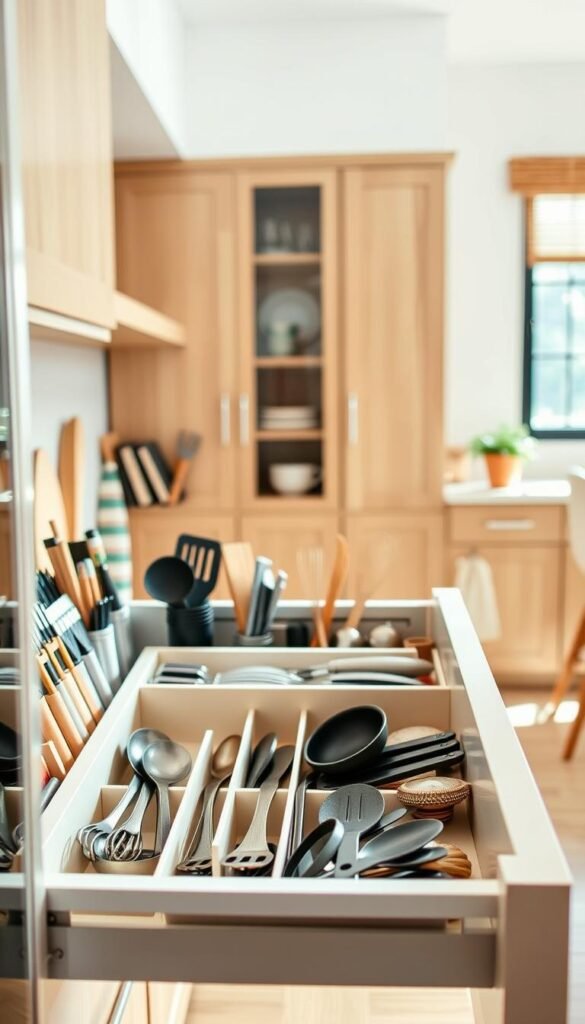
How to Choose Kitchen Drawer Organizers That Fit Your Space and Your Habits
A reliable fit begins with three simple measurements: width, depth, and clearance. Start by measuring the internal width side-to-side, the front-to-back depth, and the height including handles or tall tools. These three numbers prevent buying inserts that block closure.
Make sure the drawer still closes when the insert and items are in place. Raised racks or angled spice rows can add height and stop a drawer from shutting. Clearance matters as much as width and depth.
Practical selection checklist
- Internal width (side-to-side), depth (front-to-back), height/clearance.
- Plan for one full-length compartment for spatulas and serving tools.
- Prefer varied compartment sizes over many tiny pockets.
Adjustability and material tradeoffs
Expandable trays change total width but may use step-based notches. Modular bins let users reconfigure layout. Fixed inserts require a near-exact fit.
Materials: plastic wipes clean fast; bamboo looks built-in but needs gentle care; metal holds shape and works well for angled racks and lids.
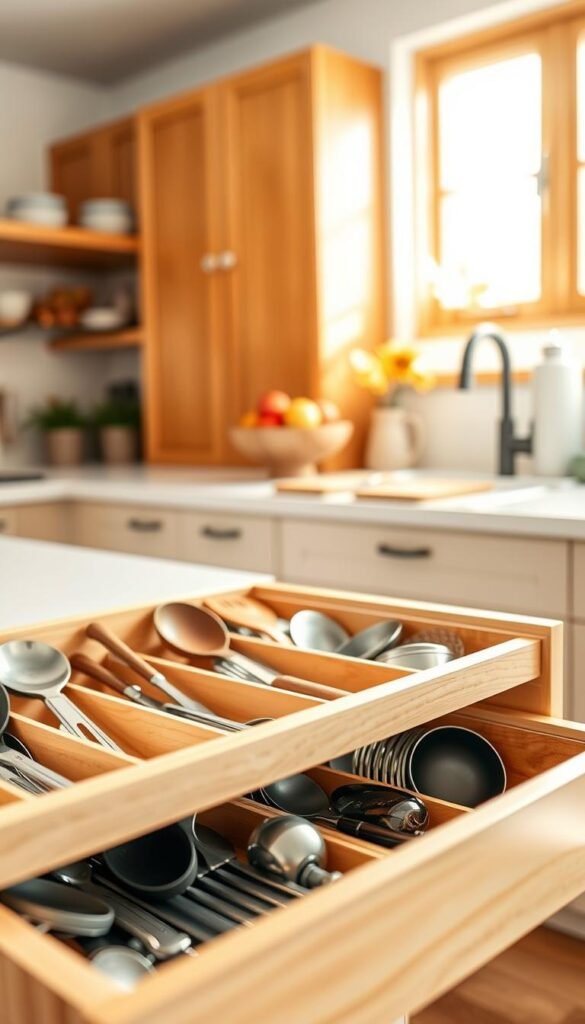
| Type | Real adjustability | Care | Renter-friendly |
|---|---|---|---|
| Expandable tray | Width adjusts, watch notch steps | Wipe clean | Usually removable |
| Modular bins | Layout flexible, uses multiples | Wipe or hand wash parts | No tools, easy to lift out |
| Fixed insert | Only fits matching size | Depends on material | Less forgiving on fit |
Where to Place Organizers for Faster Cooking and Easier Cleanup
Place organizers where they save the most steps during meal prep and cleanup. This simple move reduces trips across the room and keeps counters clear.
„A well-placed tray can cut reach time and remove clutter at once.“
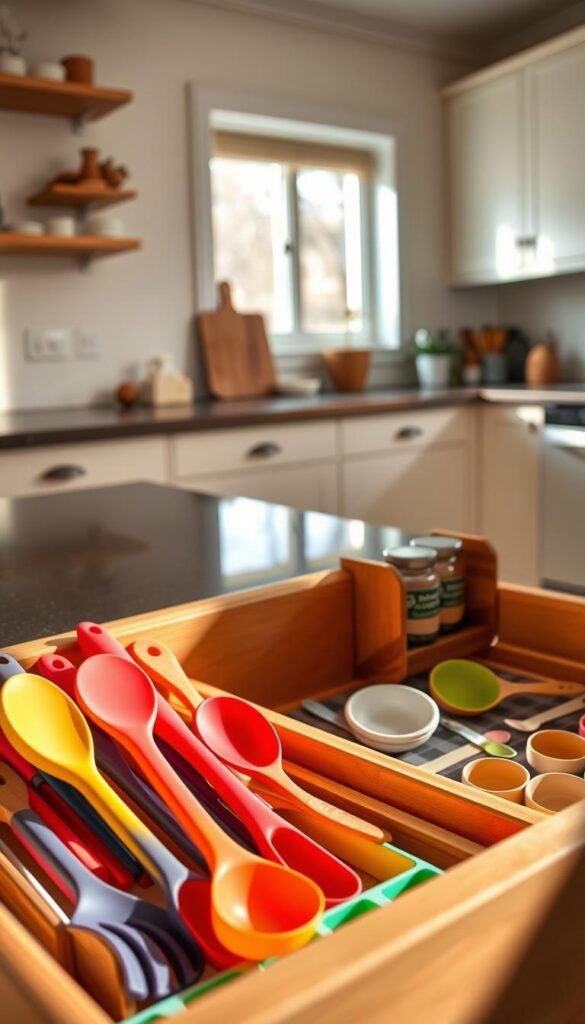
Zone your space
Create three zones: a cook zone at the stove for spatulas and tongs, a prep zone near the main counter for measuring spoons and peelers, and a serve zone closer to the dining path for silverware.
Keep non-kitchen stuff out
Think outside the kitchen. Move batteries, manuals, and wrapping supplies to where they are used. Let the kitchen hold only kitchen-adjacent items.
Renter-friendly and small-space tips
Use removable inserts so zoning can change without drilling cabinets. Lightweight, modular pieces make it easy to test one layout before committing.
Manage heavy pull-outs
Deep pull-out drawers tempt users to stack plates and bowls. Avoid overloading; heavy loads make a drawer hard to open and hurt daily upkeep.
- Use dividers to stop stacks from sliding.
- Keep the heaviest cookware on lower shelves, not a single pull-out.
- Don’t fill one drawer to capacity—spread weight across two drawers.
Placement matters as much as product choice. Specialized storage like spice racks, knife docks, and pan/lid racks often win over one tray that tries to do everything.
Quick Comparison: Best Materials and Layouts for Kitchen Drawer Organization
Materials set the tone: warm wood, wipe-clean plastic, or tough steel each solve different needs. Use this short guide to match care routines and layout priorities before shopping.
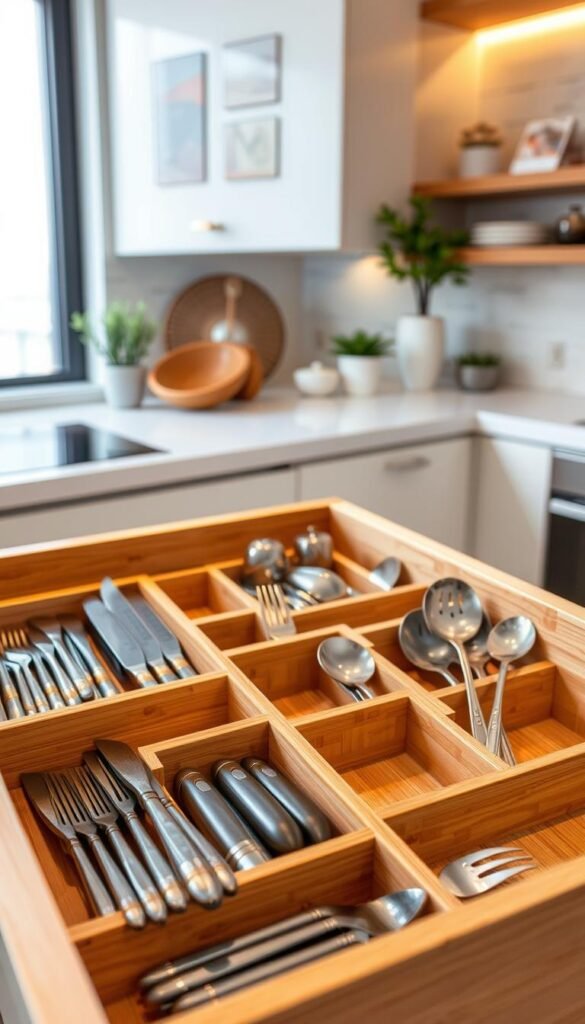
Bamboo: warmer look, gentler care
Pros: a built-in aesthetic that blends with cabinets and feels less utilitarian.
Cons: porous wood needs wipe-dry care; soaking risks warping unless sealed.
Plastic: fast cleanup, renter-friendly
Pros: water beads off, stains resist, and many models include non-slip pads.
Cons: cheaper plastic can flex; choose sturdy construction and feet that stop shifting.
Steel: specialized and durable
Pros: ideal for angled spice racks and pan/lid storage; wipes clean and holds shape.
Cons: raised designs add height and can slide without stabilization; check drawer depth.
| Material | Cleaning | Durability | Use case |
|---|---|---|---|
| Bamboo | Wipe and dry | Moderate (sealing helps) | Warm look, general storage |
| Plastic | Quick wipe; stain resistant | High if rigid | Busy homes, renters |
| Steel | Easy wipe | Very high | Spices, lids, heavy use |
Layout tip: the most useful trays mix cutlery slots with at least one long section for spatulas and whisks. Material matters, but layout solves daily use.
Best Overall Expandable Kitchen Drawer Organizer for Most Homes
A single flexible insert can simplify several drawers and cut daily rummaging.
Top pick:
OXO Good Grips Expandable Organizing Insert
This plastic drawer organizer works as a repeatable starting point across multiple openings. It expands roughly two inches and measures 16.35 x 18.05 x 2.49 inches. Removable sections let users reconfigure compartments to fit mixed utensils and small jars.
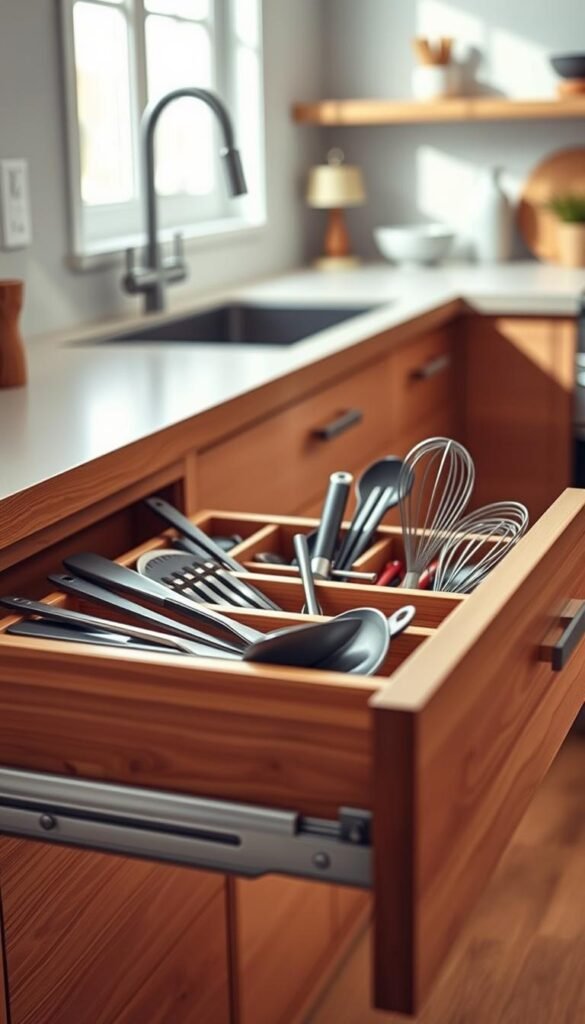
Who should pick this model
It is ideal for renters and anyone building a consistent multi-drawer system. The non-skid base cuts sliding and keeps forks, spatulas, and longer tools from remixing when you open a drawer.
Standout features, pros, and cons
- Standout: removable components and adjustable sections.
- Pros: sturdy plastic feel, up to six compartments, versatile use beyond cutlery.
- Cons: can be too large in shallow openings; expandability uses notch steps that may not match every width.
Measure before buying
Make sure to record the internal width at the narrowest point, the front-to-back depth, and height clearance for tall utensils. Expandable does not guarantee a perfect fit; check notch positions on listings.
| Attribute | Detail | Why it matters |
|---|---|---|
| Dimensions | 16.35 x 18.05 x 2.49 in | Quick match against your internal measurements |
| Material | Plastic | Easy wipe-clean and renter-friendly |
| Expandability | ~2 inches, notch-based | Fits many but not all openings; test against width |
| Best use | Mixed cutlery and long tools | Creates a repeatable storage solution across drawers |
Best Bamboo Drawer Organizer for a Custom, Built-In Look
A natural wood insert can make an ordinary drawer feel finished and organized. The Pipishell Bamboo Expandable Drawer Organizer blends a warm, built-in look with usable storage for longer utensils.
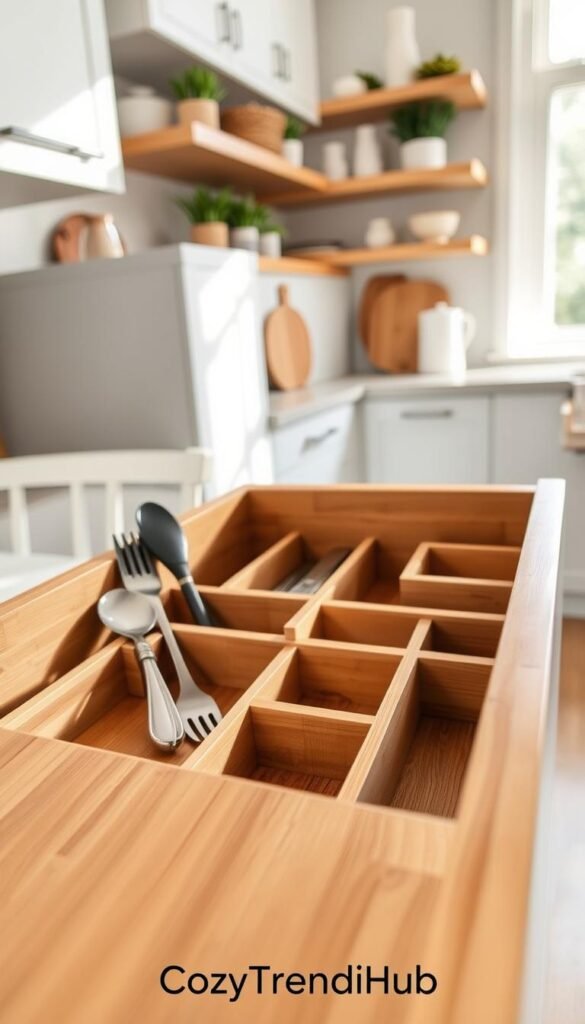
Top pick: Pipishell Bamboo Expandable Drawer Organizer
Who it suits: households that use serving utensils like wooden spoons, spatulas, and whisks and want a tray that looks intentional.
Standout features
- Expandable leaves fill wide openings without extra trim.
- Waterproof coating reduces worry compared with unsealed bamboo and makes wiping simple.
- Multiple longer compartments hold serving tools neatly along the length of a drawer.
Tradeoffs and fit tips
The elevated expand design makes primary compartments slightly shallower. Bulky tools may sit higher than in a flat tray.
Stability guidance: expanded sides may not lock. Test for shifting and add non-slip liners if the drawer slides hard.
| Dimensions | Care | Material |
|---|---|---|
| 16.73 x 12.99 x 1.89 in | Wipe; hand-wash spots | bamboo |
Buy if: you want a wood look with real long sections and easy wipe care; measure width and depth before installing.
Best Plastic Kitchen Drawer Organizer for Easy Cleaning and Daily Use
When spills and crumbs are everyday facts, a no-fuss plastic tray saves time each week.
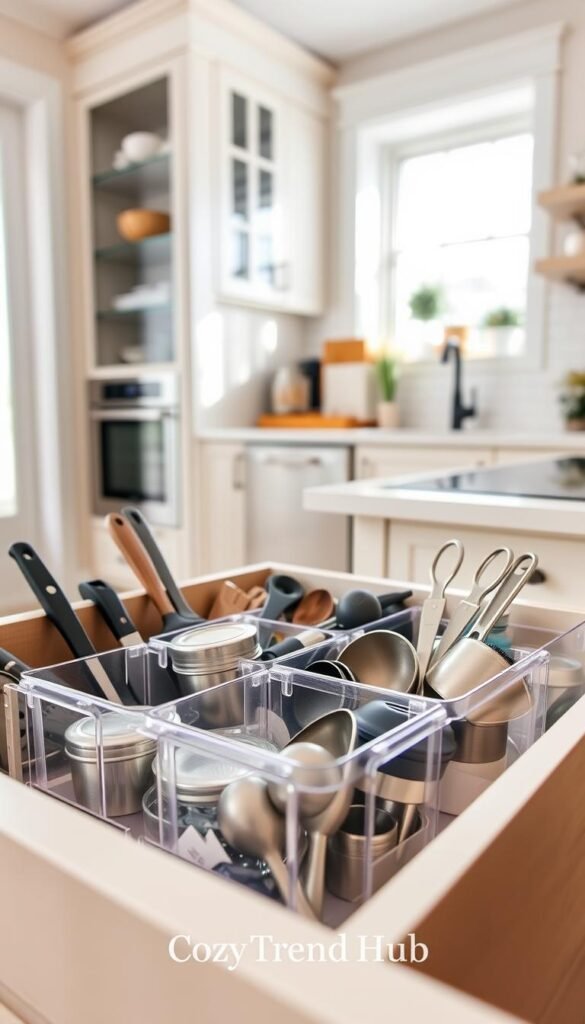
Top pick: Madesmart Plastic Drawer Organizer (1.8 x 12.9 x 16 inches). This plastic insert is stain-resistant and wipes clean with minimal effort.
Who benefits: busy households with kids, frequent cooking, or fast turnover that need quick wipe-downs and low-maintenance storage.
Why it works
- Non-slip pads and a soft-grip lining reduce shifting and rattling of silverware.
- One long compartment holds spatulas and serving tools alongside multiple small slots.
- Plastic resists odors and moisture, so the tray stays hygienic without special care.
Real-world limitation: the long compartment is somewhat narrow and may not fit bulky tools like balloon whisks. Buyers should measure tool widths before assuming a perfect fit.
| Attribute | Detail | Why it matters |
|---|---|---|
| Dimensions | 1.8 x 12.9 x 16 in | Quickly compare to internal drawer size |
| Material | Plastic | Fast wipe-clean and stain resistance |
| Features | Non-slip pads, soft-grip lining, long compartment | Stability and quieter use |
Practical pairing tip: use this as the daily flatware tray and add a slim long-tool option if bulky utensils are common. Do a quick fit check of internal width and depth so the tray sits flat and the drawer closes smoothly.
Best Organizer for Deep Drawers That Need Taller Compartments
Deep drawers can hide tools and turn usable storage into a messy pile if trays are too shallow. The Umilife Deep Bamboo Drawer Organizer targets that exact problem by using vertical space instead of forcing items to stack.
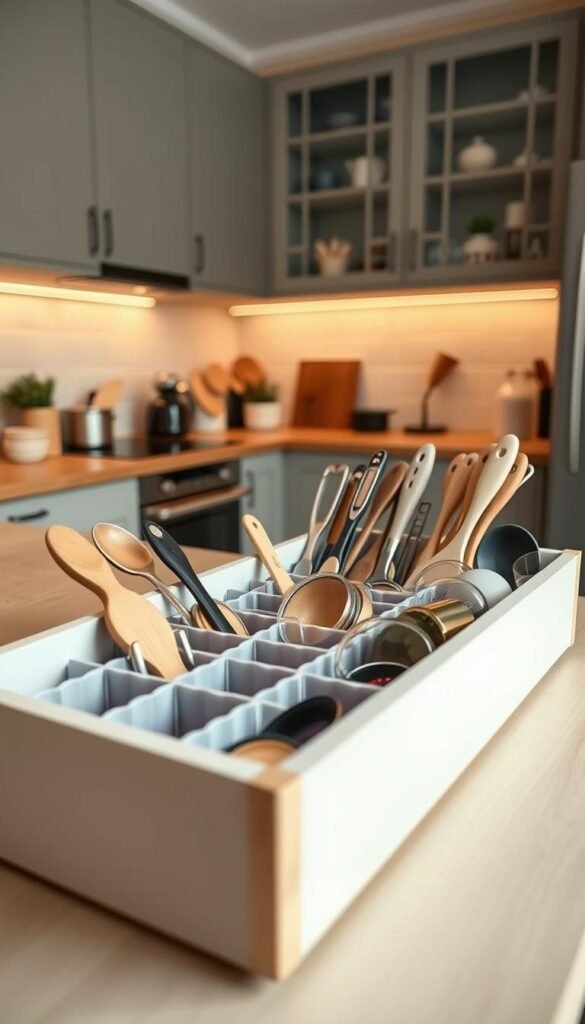
Top pick: Umilife Deep Bamboo Drawer Organizer
Who it’s for: households with large batches of cutlery and everyday tools in modern pull-out drawers. It suits kitchens that need more height than typical trays provide.
What makes it different
The unit measures 17 x 13 x 2.5 inches and uses about 2.5-inch deep compartments. Taller walls help utensils and tools stand upright. That reduces pileups and makes items visible without digging.
Watch-outs and stability tips
Long slots may leave room where silverware can slide. Group similar items or add small bins to cut movement.
- Use a non-slip liner to prevent shifting.
- Place frequently used items toward the front.
- Wipe and dry fully to protect the bamboo over years of use.
| Attribute | Detail | Why it matters |
|---|---|---|
| Dimensions | 17 x 13 x 2.5 in | Matches deep pull-outs and tall utensils |
| Material | Bamboo | Durable look; needs dry wiping to avoid warping |
| Best use | Large cutlery sets and long tools | Vertical containment improves access and visibility |
Summary: Choose this organizer when drawer depth is the main constraint and taller walls improve stability more than many tiny compartments do.
Best In-Drawer Knife Organizer to Replace a Countertop Knife Block
A slim in-drawer knife tray returns usable counter area while keeping sharp edges out of the way.
Why it helps: Countertop block models take valuable prep surface and sit where spills or accidental bumps happen. Moving knives into a secure tray clears counters and reduces tip-and-cut risks in small spaces.
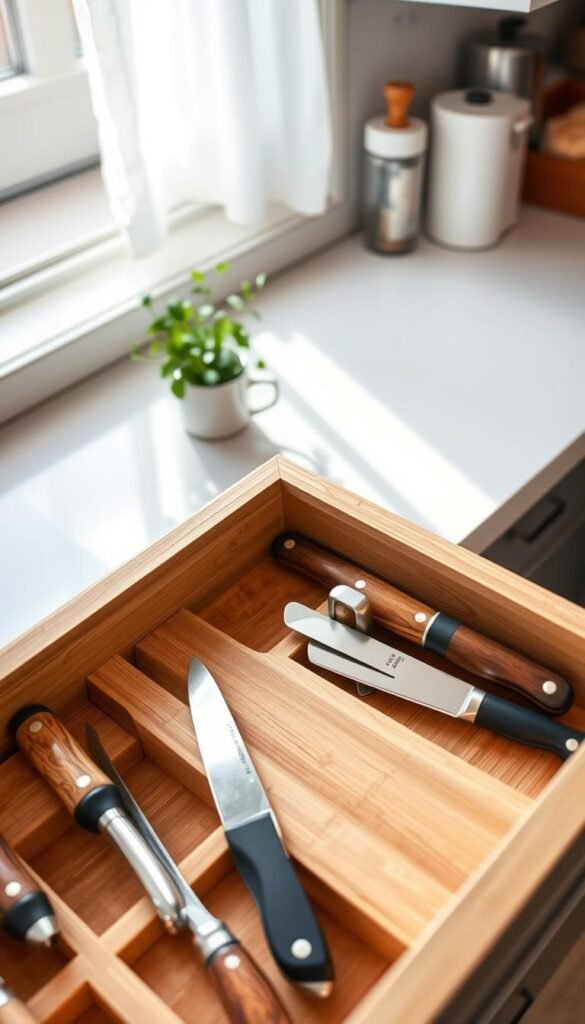
Pick for slim openings
Compact BPA-free plastic tray (16.22 x 5.55 x 2.32 in) fits narrow drawers beside the stove. It disassembles for cleaning and holds up to nine knives.
Tradeoff: in larger drawers the small tray can slide. Use a non-slip liner or a snug fit to stabilize it.
Pick for larger collections
KnifeDock-style in-drawer storage uses thin cork dividers to protect blades and fingers. Dimensions are 15 x 6 x 2.7 in and it wipes clean. Not every slot may work with wide handles, so count usable slots conservatively.
Buying and safety considerations
- Measure front-to-back depth so long blades fit without forcing the drawer closed.
- Check handle clearance and drawer height before buying.
- Store each blade the same way to build safe muscle memory during busy prep.
| Model | Dimensions | Holds | Stabilization |
|---|---|---|---|
| Compact BPA-free plastic | 16.22 x 5.55 x 2.32 in | Up to 9 knives | Use liner or snug fit |
| KnifeDock-style with cork | 15 x 6 x 2.7 in | Multiple knives; depends on handle width | Wipe clean; test usable slots |
Best Bamboo Drawer Dividers for Large Utensils and Custom Sections
When a single fixed tray can’t match bulky tools, adjustable dividers turn wasted width into useful lanes.

Expandable bamboo drawer dividers stretch up to about 22 inches and create custom-width lanes without a full tray bottom. They suit wide openings where fixed inserts leave odd gaps or force long spatulas, tongs, and whisks into crowded pockets.
Why use them: dividers let users space sections to match actual utensil widths and seasonal gear. That tailored layout feels built-in and saves counter space by keeping tools accessible.
Pros, cons, and care
- Pros: flexible layout, renter-friendly (no drilling), quick reconfiguration to match changing needs.
- Cons: extendable parts can be flimsier than solid trays; avoid over-tensioning and test with heavier tools to confirm stability.
- Care tip: sealed bamboo wipes clean easily. Do not soak; wipe with a damp cloth and dry fully to prevent warping.
| Feature | Detail | Why it matters |
|---|---|---|
| Expandability | Up to ~22 in | Fits wide interiors without a full tray |
| Best use | Wide drawers with long utensils like spatulas and tongs | Creates tailored lanes, reduces shifting |
| Sizing tip | Measure depth and width; aim for a snug fit | Snug tension cuts movement and keeps sections square |
Best Drawer Organizer for Small Drawers and Narrow Spaces
When width is the limiting factor, a careful insert can turn wasted space into quick access. Narrow openings often become catch-alls where utensils and slim tools pile up and get lost.
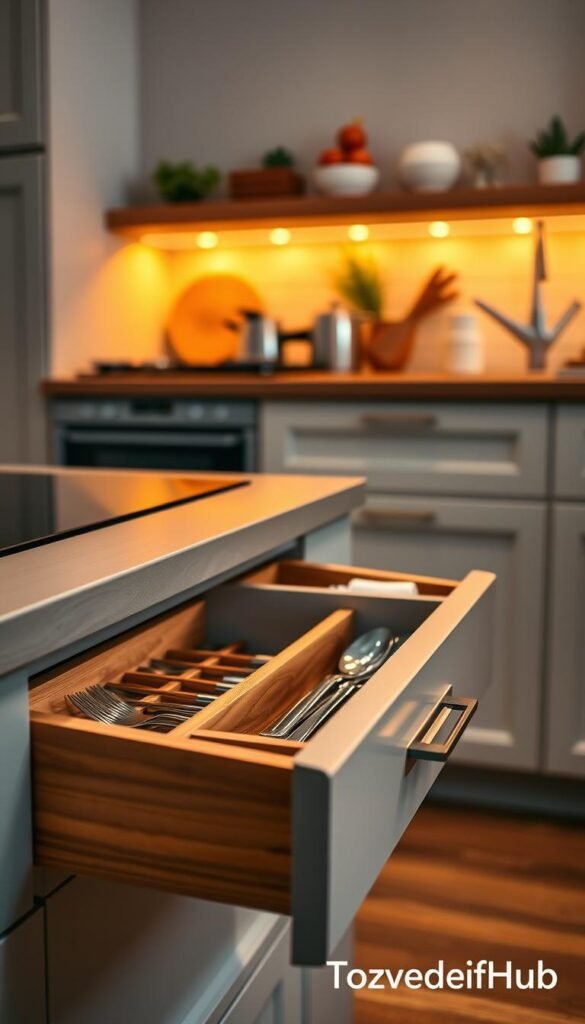
Top pick: smaller expandable OXO model
Who it helps: tight layouts beside the stove or oven that need room for tongs, thermometers, and long spoons without a wide tray.
Real-life gains
- Turns a „too narrow“ slot into a neat home for long, narrow ones like tongs and foil cutters.
- Non-slip feet and adjustable slots keep items from shifting when the drawer opens.
- Removable parts make cleaning and move-out simple—good for renters.
Fit and use tips
Measure width and depth carefully. Confirm the insert expands to a stable position instead of floating. Prioritize at least one long channel so tools sit flat and don’t jam diagonally.
Buying takeaway: This is a targeted solution for small drawers and narrow spaces. It solves a common size problem without taking up more room than the drawer allows.
Best Spice Drawer Organizer for Full Visibility Without a Crowded Counter
Countertop spice towers claim convenience but often steal prep space and block sightlines during cooking. An in-drawer solution keeps labeled jars visible and frees valuable counter real estate.

Top pick: expandable in-drawer spice rack
Who benefits: small pantries, seasonal cooks, and renters who avoid wall mounts. The expandable rack adjusts roughly 13 to 26 inches and can hold up to 64 jars when fully staged.
Fit check and setup
Make sure the drawer has about 3 inches of clearance. Angled tiers improve label visibility but raise bottle height, so measure depth and lid heights before installing.
- Visibility tip: use labeled lids or matching bottles to speed grabs.
- Heat note: tucked spices stay out of direct stove heat and keep food flavors longer.
- Downside: expanded racks can slide when the drawer moves; add a non-slip liner, snug expansion, or simple renter-friendly brackets to stabilize.
Buying takeaway: choose this when clear access and compact storage beat countertop clutter and the chosen drawer has enough clearance for angled tiers.
Best Organizer for Pans and Lids in Deep Drawers or Base Cabinets
When lids clatter and pans jam, a simple metal rack with movable dividers restores order and protects cookware. This alloy-steel unit resembles a dishwasher rack and adds clear lanes so pans sit upright instead of stacked.
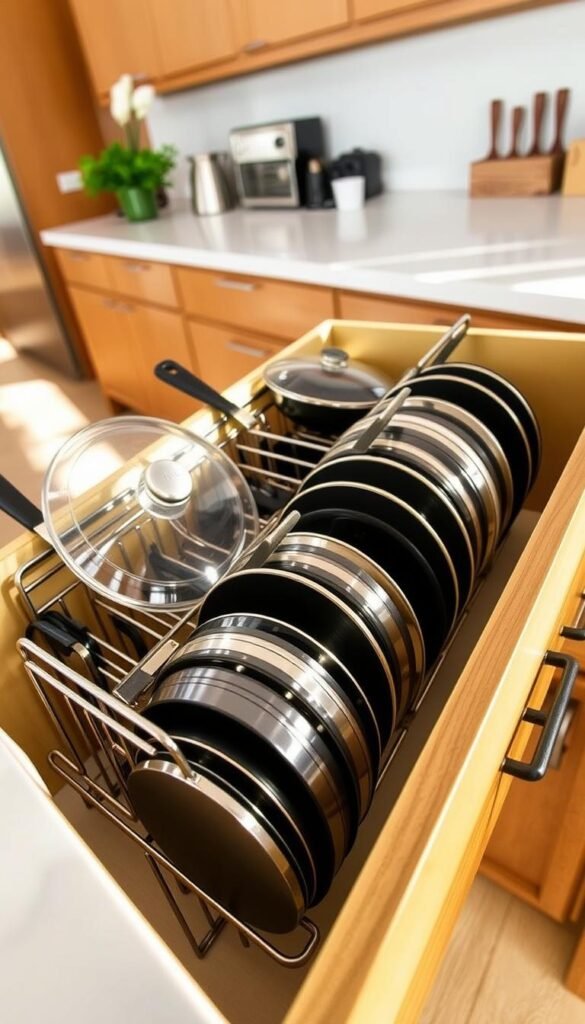
Top pick: adjustable metal rack with movable dividers
Details: 7.87 x 17.7 x 6.89 inches, seven movable dividers, sturdy alloy steel.
Who it helps
This solves the common problem of stacked pans and loose lids that cause noise, scratches, and frustration in deep cabinets or a wide drawer. It is ideal when the priority is quick access and safe storage.
How it works and tradeoffs
- Movable dividers form slots for pans and lids, cutting clatter and tangles.
- Dividers reposition to match different pan sizes and lid shapes.
- It takes meaningful footprint; it improves access more than it shrinks total storage.
Critical note: confirm depth and height clearance so tall lids don’t prevent the drawer from closing; otherwise plan to place it in a base cabinet.
Placement tip: keep the rack near the cooktop so heavy cookware travels one short path from stove to storage.
The best drawer organizers for kitchen: What to Buy Based on Your Drawer Problem
Match the single worst-performing drawer to the right material and layout before redoing the whole kitchen. This quick map links common problems to practical solutions so readers can buy with confidence.
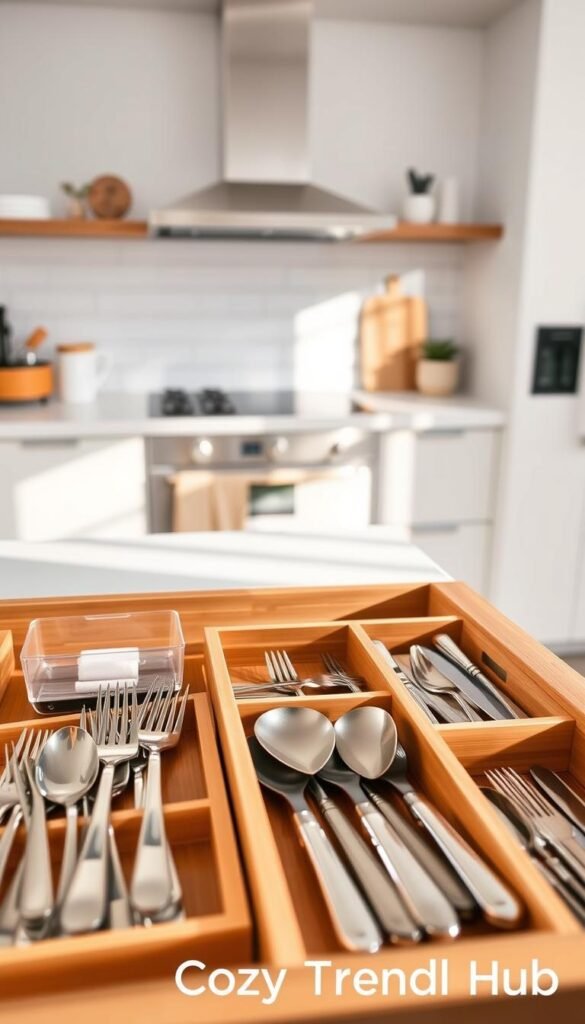
If you’re dealing with mixed clutter
Solution: modular or expandable trays with varied compartments.
Choose layouts that separate cutlery, gadgets, and small tools. Removable pieces let users reconfigure and clean without tools.
If you need maximum capacity
Solution: deeper units with tall walls to stop stacking and keep items visible.
Taller sections use vertical storage and reduce digging. Add a non-slip liner to prevent shifting in deep pull-outs.
If you’re organizing long tools
Solution: at least one full-length compartment so spatulas and tongs lie flat.
A long channel prevents diagonal jams that slow cooking and can block drawer closure.
If you want a custom look
Solution: a bamboo drawer organizer or bamboo drawer dividers.
Bamboo offers a built-in aesthetic and tailored lanes. Wipe gently and dry fully to protect the finish.
If easy maintenance matters most
Solution: rigid plastic trays that wipe clean and resist stains.
Plastic works well in high-traffic homes and is renter-friendly when combined with non-slip feet.
Decision shortcut: Identify the worst drawer, measure it, and buy one targeted insert. Scale up only after it proves the layout works.
Buying and Setup Tips That Prevent Returns and Re-Organizing Later
A bit of measurement and a few non-slip fixes save time and money over years. Start with a quick plan and a clear goal: fit, stability, and easy care.
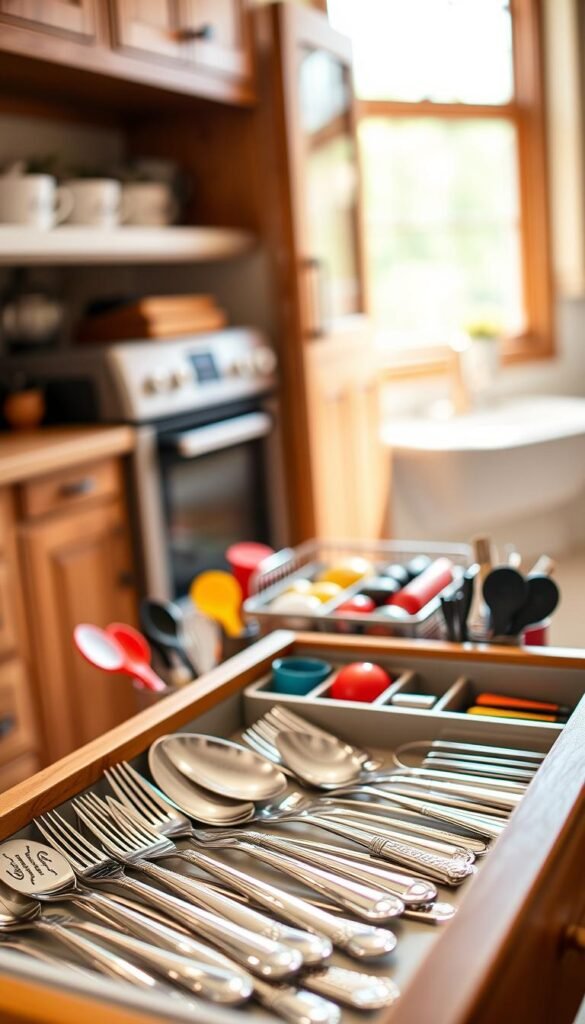
Know how expandable ranges actually work
Don’t buy by the max number alone. Many expandable units use stepped notches. Measure your internal width at the narrowest point and compare it to each notch position before choosing.
Tip: note the functional sizes shown in product photos and the step increments, not just the advertised range.
Stop sliding: snug-fit checklist and fixes
Measure width, depth, and height clearance so the tray sits flat and the drawer closes. Aim for an end-to-end fit where possible.
Prioritize non-slip feet or pads. If the insert still drifts, add a non-slip liner underneath or pair two inserts so they brace one another.
Renter-friendly stabilization and flexible systems
Use removable, no-damage stops or adhesive pads that peel off cleanly. These keep inserts from shifting without drilling.
Buy multiples of the same modular piece to create a repeatable layout across drawers. That builds muscle memory and cuts future reorganizing.
Cleaning reality: plastic vs. bamboo
Plastic wipes clean fastest and resists stains and odors. For heavy-use drawers, plastic is the low-effort option.
Bamboo needs gentle wiping and full drying. Over years, condition bamboo occasionally with mineral oil or a wax conditioner to protect the finish.
#1 return-prevention rule: verify real notch positions, measure the narrowest internal width, and confirm height clearance before ordering.
Final setup order: empty the drawer, sort items by frequency, place the organizer first, then load items by zone (front = daily, back = occasional). This sequence reduces trial-and-error and keeps things stable.
| Issue | Quick fix | Renter-friendly? | Care note |
|---|---|---|---|
| Sliding insert | Non-slip pads or liner; brace with adjacent insert | Yes | Check pads yearly |
| Poor fit (notch mismatch) | Choose model with matching notch or a modular set | Yes | Measure narrowest width first |
| Frequent cleaning need | Pick rigid plastic; removable sections help | Yes | Plastic: wipe clean; Bamboo: wipe and dry |
| Seasonal overflow | Keep spare divider or small bin to slot in | Yes | Store spares dry between uses |
Conclusion
Start small: fix one frustrating opening, then expand the system. Measure width, depth, and clearance before ordering. That single step avoids returns and poor fits.
Prioritize function—choose varied compartments with at least one long section so spatulas and tongs lie flat. Match material to care needs: plastic wipes clean fastest; bamboo requires gentle drying and occasional oiling.
Place tools near where they are used and move non-kitchen items out so storage stays focused and simple to maintain. Use removable, non-slip solutions when renting.
Final nudge: pick one organizer that solves the most frustrating problem today, test it, then add matching pieces if the layout proves itself.