
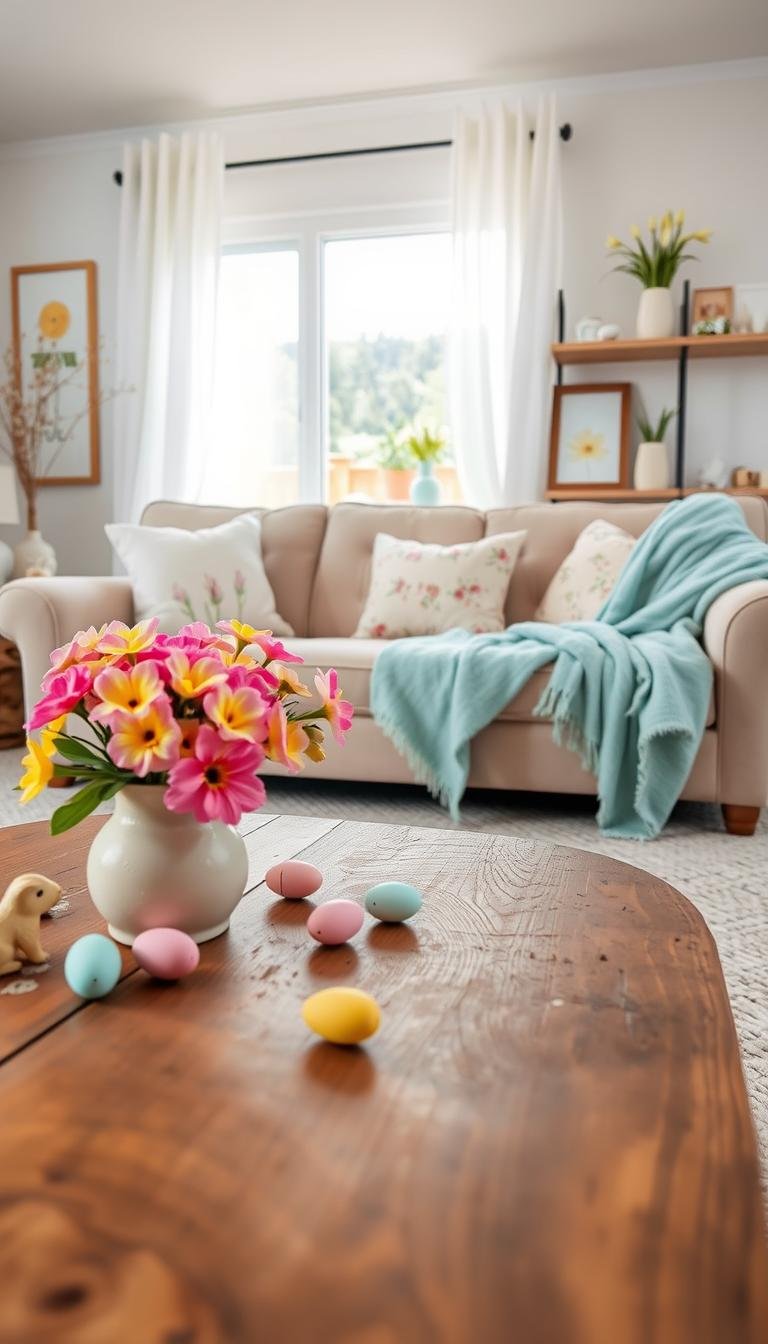
Planning spring styling for a small home? Many people want seasonal cheer but lack storage and worry about bulky, bunny-heavy pieces that overstay the season.
This guide offers a flexible spring-to-Easter approach that suits renters and tight footprints. It focuses on light neutrals, soft pastels, and low-commitment swaps like textiles and small vignettes. Each idea shows what to buy, what to skip, pros and cons, and simple storage or upkeep notes.
Think one anchor piece plus a few repeatable elements (eggs, greenery, woven texture) and 1–2 holiday pops rather than a full-theme takeover. Renters will find removable hooks, flameless candles, fold-flat or nestable items, and lightweight choices emphasized.
The article supports quick shopping and comparison blocks so readers can build a plan in one sitting. For trend context and minimalist approaches, see a concise roundup at spring styling trends and ideas for pared-back accents at minimalist table styling.
Key Takeaways
- Prioritize spring-ready neutrals first, add holiday accents closer to the date.
- Use one focal piece plus repeatable elements to reduce storage and visual clutter.
- Choose renter-friendly items: removable hooks, flameless candles, and fold-flat pieces.
- Each idea includes shopping guidance, pros/cons, and storage tips for quick decisions.
- Favor durable, multiuse materials like glass, linen, paper, and rattan.
- Keep the palette narrow: one accent color, a neutral base, and natural textures.
What to prioritize for Easter decor in 2026 (small-space, renter-friendly, and seasonal)
Start with a season-ready base that reads like spring, then add short-run holiday touches only where they matter. A light, neutral foundation keeps the home usable for weeks. Layering prevents storage bloat and visual fatigue.
Spring-first, Easter-later layering
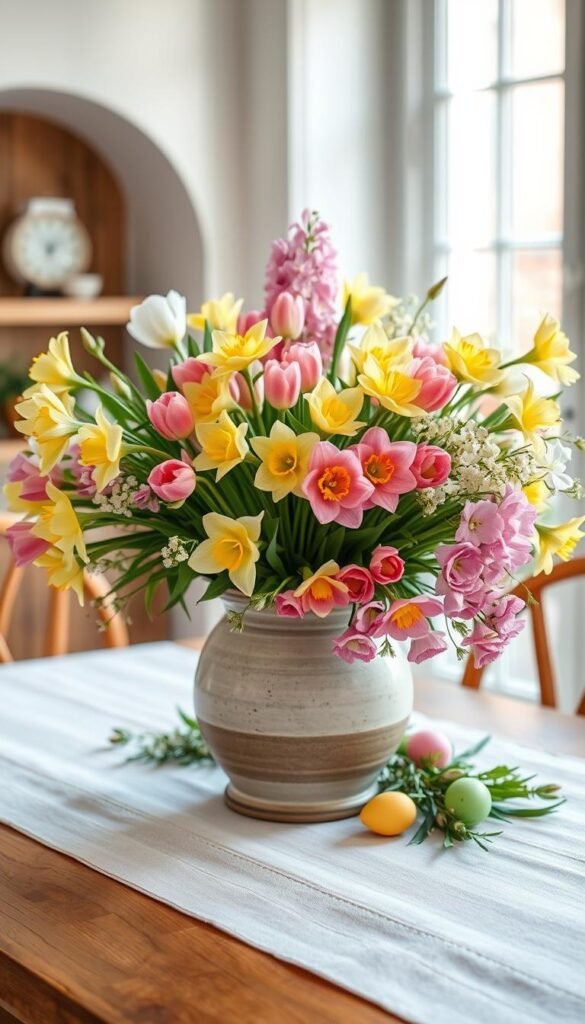
Make most purchases for spring: linen throws, pale cushion covers, and a neutral vase with fresh or faux stems. Add one small holiday accent for the week—one ceramic bunny or a pastel runner—then pack it away.
Light neutrals and soft pastels
Pick 2–3 colors for a cohesive look (example: cream + pale blue-gray + soft green). Neutral vases and woven textures serve year-round. A single pastel pillow or a small pastel bowl signals the season without full commitment.
Low-commitment swaps
- Priority stack: (1) spring base that stays up, (2) short-window holiday accents, (3) one holiday pop per area.
- Small-space rule: choose items that live on a table, shelf, or wall and store flat or nest.
- Avoid oversized porch props, heavy breakables, and anything needing permanent mounting.
For buying comparisons on materials and storage-friendly options consult the Easter decorations guide. Upcoming sections compare fresh vs faux flowers, ceramic vs resin vs wood, and fold-flat storage ideas.
How to choose the best easter decor mix for 2026
Begin with a single anchor for each area and add lightweight accents that create a linked look across rooms.
Pick your anchor pieces
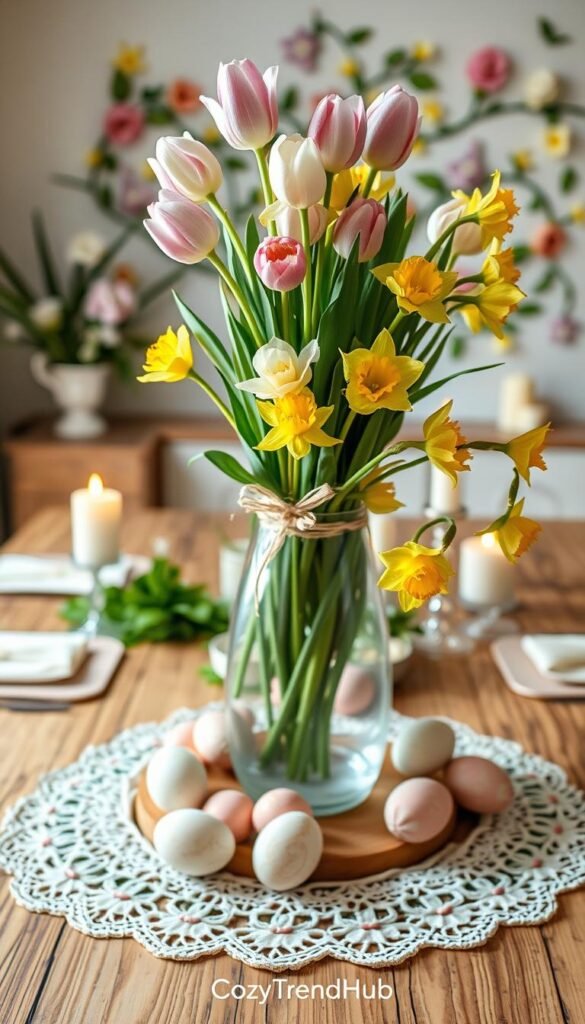
One anchor per main spot: front door wreath, a low table centerpiece, or a runner for the dining table. A wreath fixes curb appeal without floor clutter. A runner gives a seasonal table look without a tall arrangement.
Repeatable elements
Choose 2–3 small items—speckled eggs, greenery stems, and a rattan basket or tray. These are affordable, easy to store, and can be moved between shelves, counters, and the coffee table for cohesion.
Buy vs. DIY
DIY is smart when it saves money or creates reusable pieces, such as decoupage egg projects. Buying works when realism and durability matter, like high-quality faux tulips or battery-operated candles.
Renter-friendly checklist
- Removable hooks and door-safe hangers
- Flameless, battery-operated candles
- Lightweight, unbreakable accents for high-traffic rooms
- Fold-flat baskets and nestable trays for compact storage
| Choice | When to Buy | When to DIY |
|---|---|---|
| Faux flowers (centerpiece) | Long-term reuse; realistic look | Not recommended unless crafting skills are high |
| Speckled eggs | Hard-wearing, uniform set | Decoupage or paint to customize color and pattern |
| Wreath | Pre-made for polish and durability | DIY if saving money or matching a specific theme |
| Runner / table layer | Buy for ready fit and fabric quality | DIY from fabric scraps for a unique look |
Use this simple formula: one anchor per place, then repeat elements across the home to keep the look unified and storage small. For trend context and quick shopping, see a short roundup of seasonal options at stunning decoration trends.
Comparison-ready buying guide for Easter decorations (materials, upkeep, storage)
Smart shopping for seasonal accents starts with clear tradeoffs: cost, durability, and space required. This short guide gives a repeatable framework shoppers can apply to any item: cost per season, storage volume, breakability, and setup time.
Real vs. faux flowers: cost, longevity, and realism checks
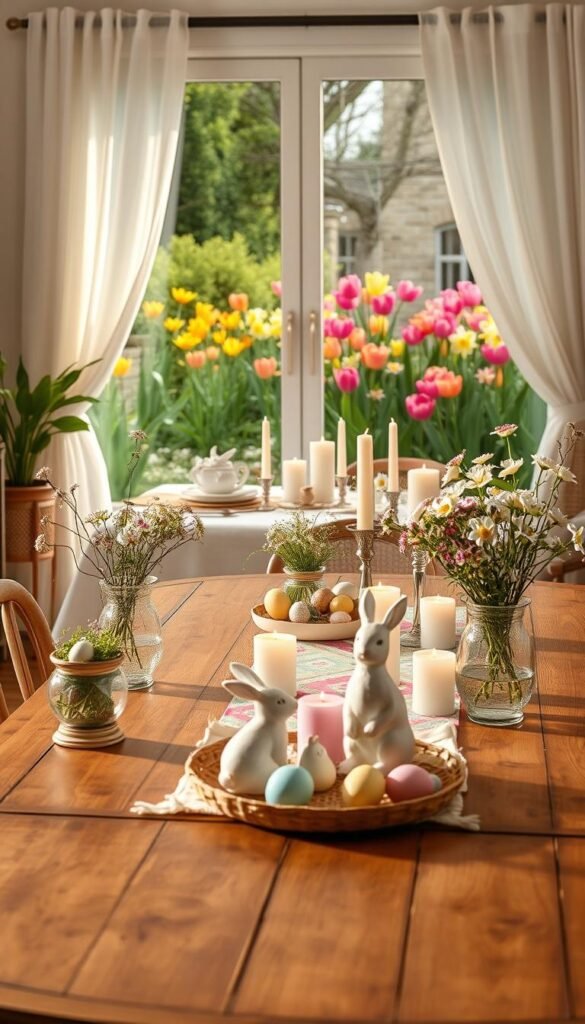
Fresh flowers deliver scent and natural variation but add ongoing cost and arranging time. Fresh flowers work well in a small vase or bud-vase display corralled on a tray.
Faux flowers save weekly errands and can reuse across seasons. Look for realism cues when shopping: petal thickness, subtle color gradients, realistic stem finish, and bendability at joints.
Decision point: pick fresh when scent and short-term impact matter; pick faux when low upkeep and reuse matter.
Ceramic vs. resin vs. wood: durability and spring vibe
Ceramic reads polished but chips easily and adds weight—consider for stable tables. Resin is lighter and resists bumps, ideal for high-traffic rooms. Wood feels warm and natural but may dent or fade outdoors.
| Material | Durability | Weight | Storage footprint |
|---|---|---|---|
| Ceramic | Medium (breakable) | Heavy | Wrap and box |
| Resin | High (impact-resistant) | Light | Nestable or bin |
| Wood | Medium (can dent) | Light–medium | Flat or padded |
Fold-flat and nestable options for apartments and dorms
Prioritize pieces that serve dual purposes. Fold-flat wreaths, nestable bowls, and trays that double as organizers shrink your storage needs. Keep a single bin for holiday items so one closet can hold multiple pieces.
Apartment reality: if storage is one closet, buy baskets or trays that function year-round rather than single-use figurines. For buying comparisons and sourcing ideas, see a short guide on seasonal purchasing and a roundup for table styling at table decoration tips.
Affiliate-ready attributes to note: dimensions, weight, wipe-clean vs hand-wash, UV resistance, and estimated storage volume. Use these fields when building product blocks to compare cost, upkeep, and renter-friendliness.
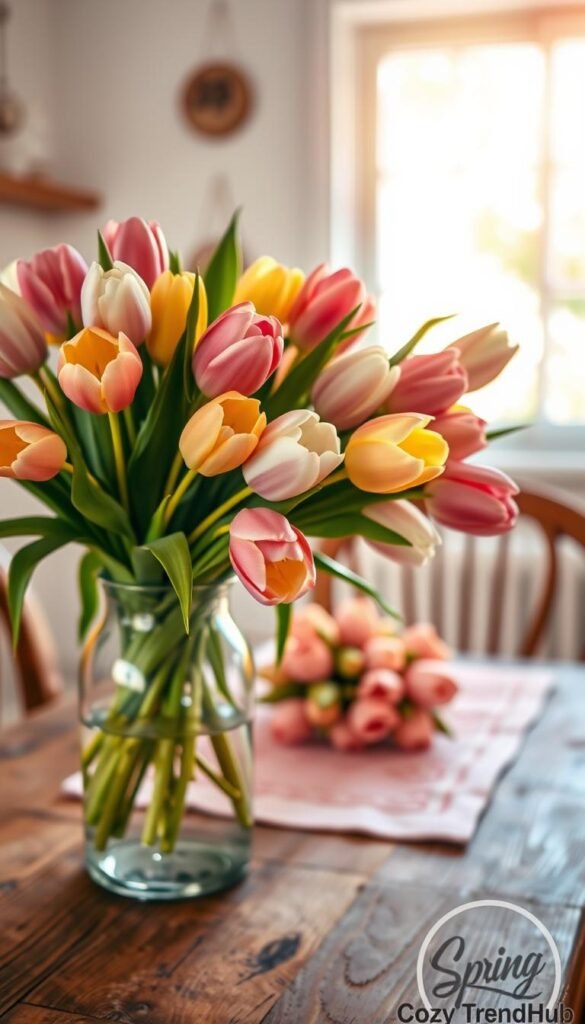
Fresh or faux tulips in a simple vase for an instant spring refresh
A single simple vase of tulips can change a room from plain to spring-ready in minutes. This approach suits busy renters and small-space stylers who want a quick, low-storage update.
Best for: coffee tables, kitchen islands, and entryway vignettes. Keep height low on a coffee table, pick an easy-to-wipe vessel for islands, and choose a slim profile for narrow entryway places.
What to buy: realistic faux tulips, a neutral vase, and optional greenery stems. Neutral or vintage vessels improve realism and remain useful after the season.
| Option | Longevity | Care |
|---|---|---|
| Fresh tulips | Short (1–2 weeks) | Change water, trim stems, cool spot |
| Faux tulips | Years | Occasional dusting, store upright |
| Vase | Reusable | Choose neutral tone, stable base |
Buyer checklist: natural stem color, slight petal variation, and just enough stems to look full without crowding a small table. Keep the arrangement simple—tulips plus a touch of greenery—so it reads as spring flowers first, holiday accents second.
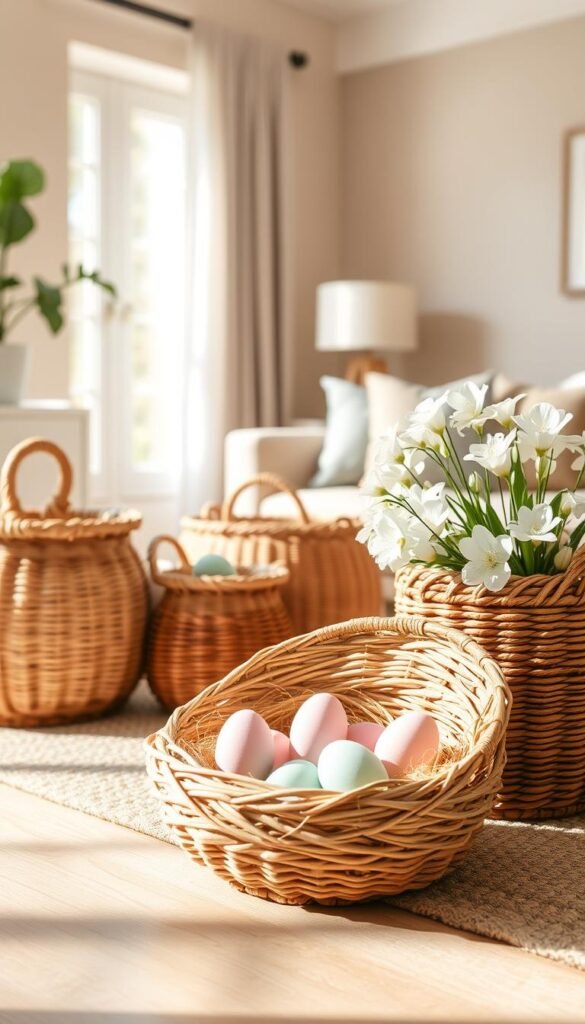
Woven baskets and rattan trays to add texture without taking up space
Rattan and basket pieces add quiet warmth while solving everyday clutter in small homes. They bring a natural spring touch without seasonal symbols.
Why this works for renters
Zero-install pieces move between room and shelf. They organize remotes, mail, candles, or seasonal eggs and earn their place by hiding clutter.
What to buy and sizing tips
- Lidded baskets for open-plan living—hide extras and textiles.
- Shallow rattan trays to create a contained display on small surfaces.
- Basket planters to warm a corner without bulky stands.
Pick sizes that slide into existing shelving or tuck under a console. Choose shallow trays that nest flat and baskets that stack to save space.
Durability and upkeep
Look for tighter weaves to avoid snagging and neutral tones that complement multiple styles. Use wipe-clean liners for planters and dry-brush dusting for trays.
| Function | Recommended feature | Why it helps |
|---|---|---|
| Hide clutter | Lidded basket (medium) | Keeps mail and textiles out of sight; nests for storage |
| Surface styling | Shallow tray (small) | Corral candles and small items; stores flat |
| Corner warmth | Basket planter (large) | Adds natural texture without stand; works year-round |
For shoppers wanting ready-made trays and boxes that pair function with style, consider this curated collection at rattan trays and baskets.
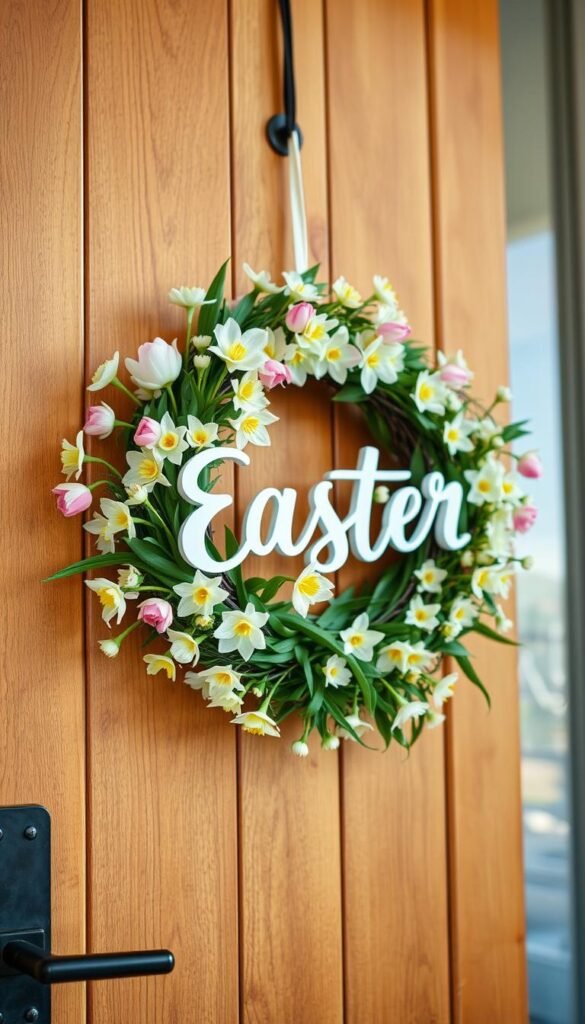
Spring wreath on the front door that reads “Easter” without being too themed
A front-door wreath refreshes curb appeal without taking up a single shelf or table. It’s a zero-square-foot seasonal update that keeps indoor surfaces uncluttered.
Who benefits and what it solves
Renters, busy households, and small homes gain a clear focal point outside the door. A wreath gives a gentle seasonal touch without adding indoor storage or tabletop clutter.
What to buy
- Faux floral wreaths for low upkeep and easy reuse.
- Living succulent wreath forms for natural texture and light maintenance.
- Opt for spring greens and subtle blooms so the look reads seasonal without shouting holiday themes.
Quick comparison
| Type | Upkeep | Storage |
|---|---|---|
| Faux wreath | Dust occasionally; no watering | Box or shelf; compact if flat |
| Live wreath | Water, may shed, occasional drip | Noisy if kept long; needs airflow |
Renter-safe hanging
Use over-the-door hangers matched to door thickness or removable hooks rated for outdoor use. Avoid adhesives on painted surfaces.
For DIY options and styling cues, see creative wreath ideas at DIY wreath ideas.
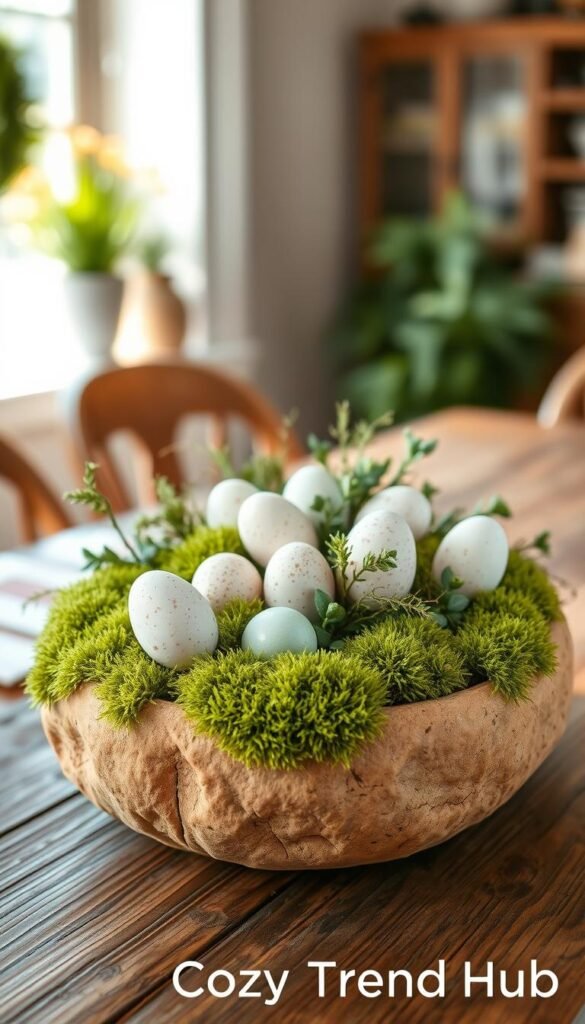
Dough bowl centerpiece with moss, speckled eggs, and greenery
A long, low dough bowl anchors a dining table without blocking conversation or workspace. This contained arrangement works well on consoles, open shelving, and family tables where sightlines and surface function matter.
Fill a bowl with faux or natural moss, a handful of speckled eggs, sprigs of greenery, and one flameless candle for safe glow. The tray format corrals materials into one movable unit for easy cleaning and quick table resets.
What this solves and who it suits
Small homes need a centerpiece that looks finished but stays low-profile. A dough bowl keeps everything contained so it won’t scatter, block views, or take over a room.
What to buy (U.S. table and console sizing)
- Low dough bowl or shallow tray (18–30″ length for dining tables).
- Faux moss for low mess or a small bundle of real moss for short displays.
- Speckled eggs—choose unbreakable options if kids or pets will be nearby.
- Battery-operated candle for safe, reusable light.
Buying considerations
Scale: Leave at least 10–12 inches open on each side of the bowl for place settings or daily use.
Mess control: Faux moss reduces shedding but check quality; store loose bits in a sealed bag when not in use.
Kid/pet safety: Avoid tiny loose pieces on low tables; pick resin or wooden eggs instead of fragile ceramic.
| Feature | Pro | Con |
|---|---|---|
| Faux moss | Low upkeep, reusable | Can shed if cheap |
| Real moss | Authentic spring look | Dries and crumbs quickly |
| Unbreakable eggs | Kid/pet-friendly | Less vintage texture |
Storage note: Nest eggs inside the bowl, bag moss flat, and tuck the candle aside to shrink bin space. For a quick shopping reference on table styling options, consider this spring table guide at spring table decor ideas.
Natural-dyed eggs and simple egg displays in bowls or glass hurricanes
Natural dyeing is a hands-on way for families to create seasonal color that doubles as a simple table centerpiece.
What to buy
- White eggs for soft pastel results and brown eggs for deeper, richer color.
- Natural dye ingredients: beets, onion skins, turmeric, and white vinegar.
- A shallow bowl or a clear glass hurricane to make a tidy, contained display.
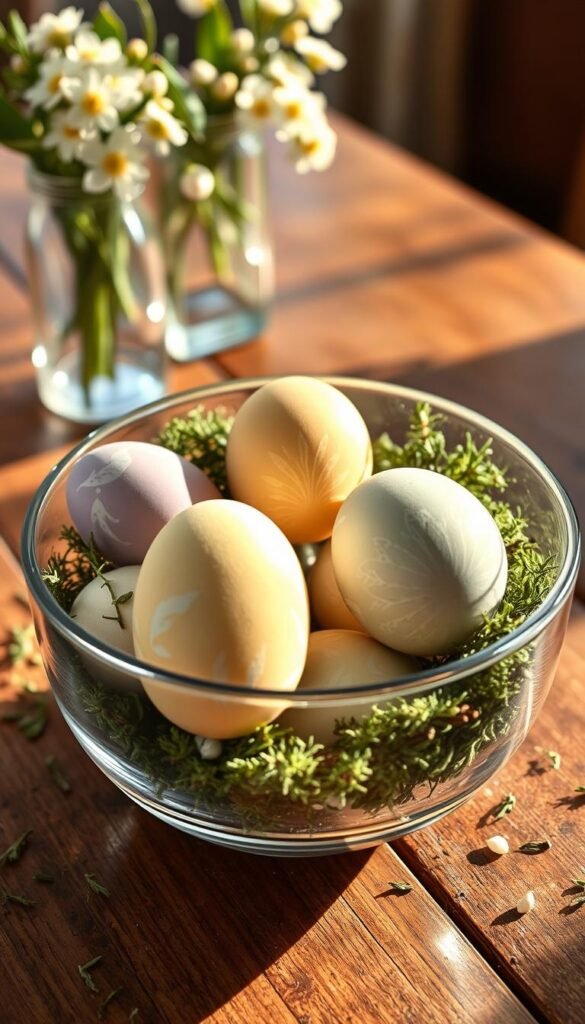
Small-space setup and color notes
Use a shallow bowl on the counter, a compact centerpiece on a side table, or a single hurricane for vertical impact. Pick two to three dye colors that match the home’s spring palette so the arrangement feels intentional, not random.
Pros, cons, and care
Pro: Real eggs offer natural variation, depth, and texture that faux options rarely match.
Con: These are perishable; plan for a short display window of a few days and follow food-safety handling.
Cleanup is simple: photograph the arrangement for next year, compost or cook the dyed eggs, and store the chosen bowls for reuse. For quick, budget-friendly product ideas and related purchases, see a curated selection at affordable seasonal picks.
Decoupage or chinoiserie-style eggs for reusable, clutter-free Easter accents
Decoupage eggs offer a tidy, long-lasting alternative for seasonal accents in compact homes. They avoid dye stains and perishable pieces while delivering a polished look for small rooms.
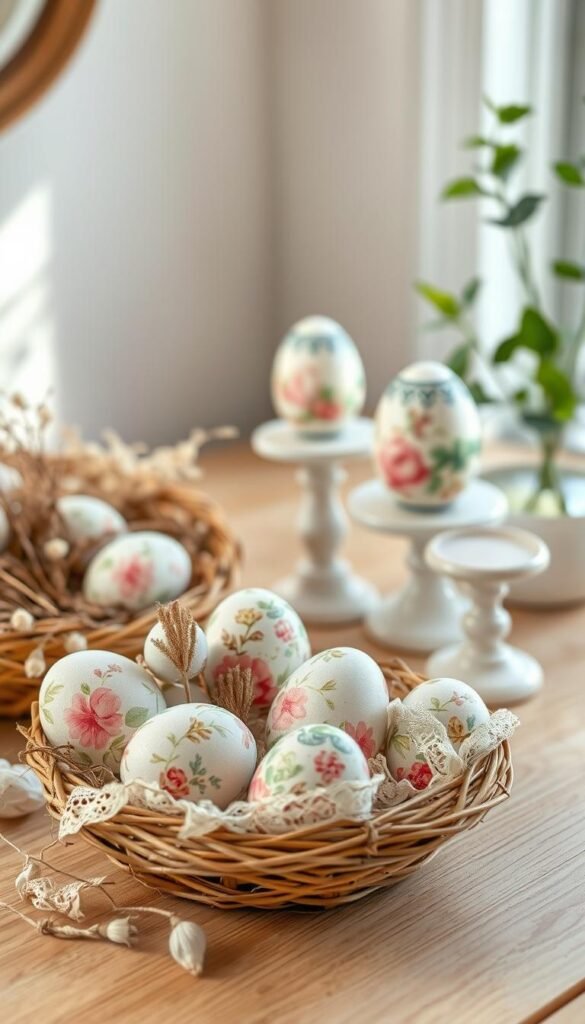
Who this suits and what it solves
Small spaces benefit: decoupage keeps a spring theme without mess or limited display time. These decorations pack flat and last for years.
What to buy
- Plastic or wooden eggs for durability and light weight
- Mod Podge and a foam brush for smooth application
- Patterned napkins (use the top ply) or small fabric scraps
- Fine scissors and a small sanding block for edges
Chinoiserie option and color coordination
Blue-and-white patterns read vintage and classic next to neutral textiles. Pair a few patterned eggs with solid or speckled eggs so the display feels curated, not busy.
Buying considerations and storage
Choose a matte finish for a softer modern style or glossy for wipe-clean durability. Pick egg sizes that fit your bowl or tray. Store items in a divided container by color family to prevent scuffs and speed next-season styling.
Easter egg tree using pussy willow or branches (a vertical focal point)
A tall branch arrangement makes big impact with a tiny footprint. It suits apartments that lack table space and want a clear seasonal update.
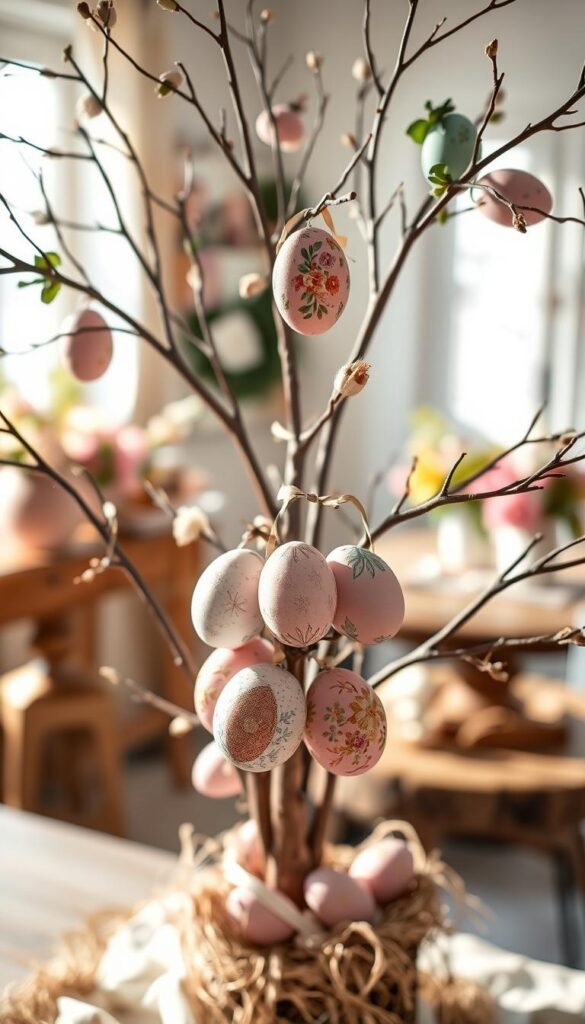
Who benefits and where to place it
Ideal for small homes: put the arrangement on a corner console, entryway table, or dining sideboard where vertical pieces won’t block traffic. The tree provides height when surfaces are scarce.
What to buy
- Tall, stable vase with a wide base or filler for weight.
- Sturdy branches — pussy willow works well for buds and texture.
- Ribbon and lightweight hanging eggs (plastic, resin, or blown shells).
- Small loops or threads for easy hanging.
Pros, cons, and styling tips
Pro: a high-value focal point that gives a spring look with few items.
Con: tipping risk around kids or pets. Mitigate by using a heavier base, vase filler, or wall support. Keep ribbons short to avoid snagging.
Keep ribbons and eggs within the home’s spring palette so the display reads elevated, not craft-store. This solution adds height and a seasonal touch without taking over the room.
Palm-forward table centerpiece for a modern Easter table
Hosts can get height and drama without blocking sightlines or hogging surface area.
Who this suits: People hosting a meal in a small dining place who want a striking table focal point that stays low at the base. This approach keeps the tabletop usable for plates and conversation.
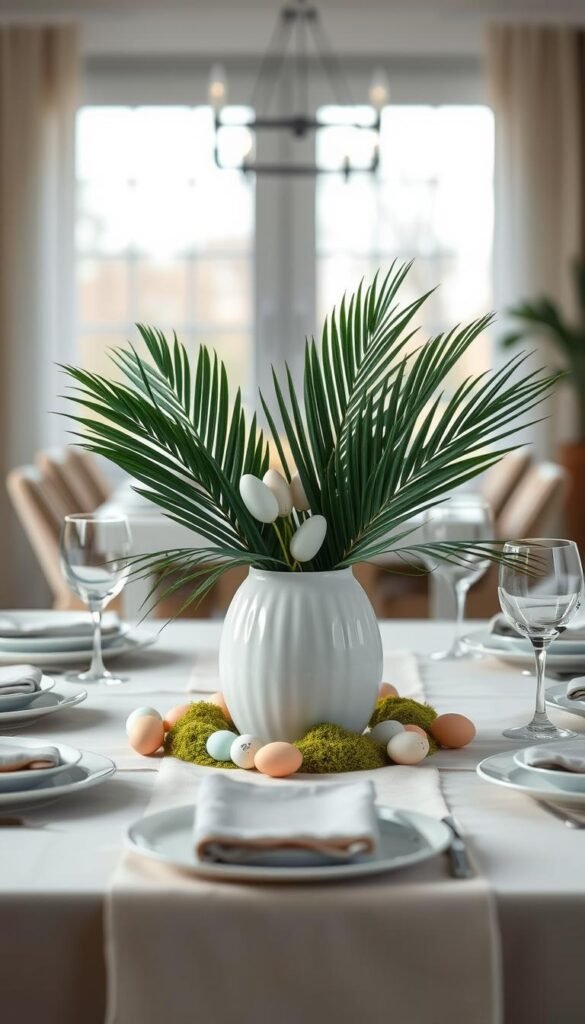
What to buy
- Palm fans (3 medium-sized)
- Low, wide-mouth vase or shallow bowl
- Florist foam or a waterproof floral pin frog for stability
- A small selection of spring flowers: Queen Anne’s lace, peonies, ranunculus, hellebores
How to build the arrangement
- Soak and secure florist foam inside the vase for a stable base.
- Place three palm fans at varied angles to create height and structure.
- Add midsize blooms around the base to fill the silhouette without widening it.
- Finish with lighter stems for movement; trim stems low so the centerpiece doesn’t block views across the table.
Styling and practical notes
Why palms work: They provide vertical impact while the low vase keeps the footprint compact. The result is a modern look that reads high-end without stealing tabletop space.
“A tall element with a low base keeps the table open for guests and place settings.”
| Feature | Why it helps | Care |
|---|---|---|
| Palm fans | Add height without increasing base footprint | Reusable if kept dry; wipe clean |
| Florist foam | Keeps stems secure and predictable | Soak for fresh flowers; remove before storage |
| Spring flowers | Provide color, texture, and movement | Change water daily; trim stems for longevity |
Maintenance: If using fresh flowers, check water daily and keep the arrangement narrow so it fits place settings. For transport, secure the foam and wrap the vase to avoid tipping.
Cabbage vase floral centerpiece for a “wow” look that’s still practical
A bold cabbage vase creates an instant table focal point with very little fuss.
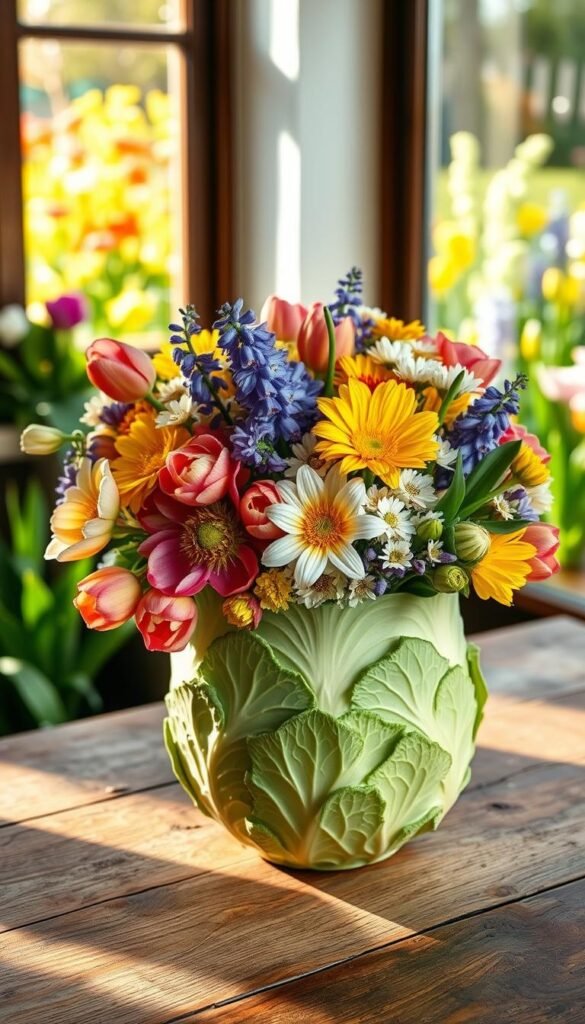
Who it helps: Brunch hosts who want a conversation piece without specialty tools. This approach gives a photogenic centerpiece without buying another vessel.
What to buy
- One firm cabbage (large head)
- Small glass jar that fits inside the cabbage
- Spring blooms: tulips, ranunculus, or peonies
Carve a cavity in the cabbage to snugly hold the jar. Fill the jar with water, set it inside, and arrange the flowers. The cabbage reads fresh and sculptural while the jar keeps stems hydrated.
Practical notes and safety
Use a sharp knife with care and prep close to event time. Place the cabbage on a plate or tray to protect the table and catch any drips. Swap wilting stems quickly for a fresh look.
| Feature | Pro | Con |
|---|---|---|
| Visual impact | High and photogenic | Short display window |
| Cost & storage | Budget-friendly, no extra container to store | Requires prep and a sharp knife |
Why try it: The technique is an easy Easter idea that creates a beautiful Easter look in one place on the table without long-term storage needs.
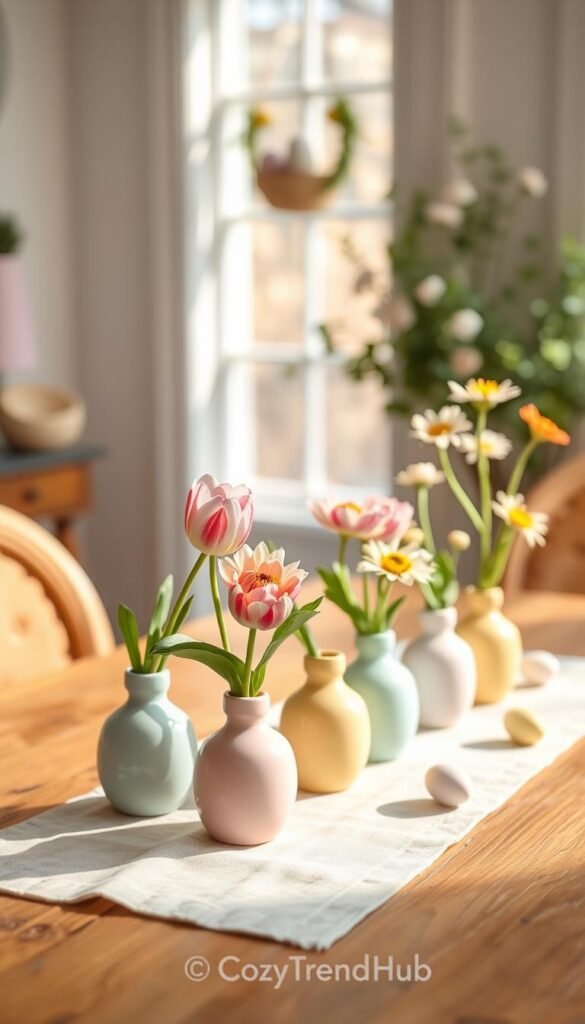
Mini bud vases and single stems for easy Easter table decor in small rooms
A lineup of bud vases gives a spring touch without stealing the table’s function.
Best for: narrow tables, round tables, and open-plan spaces where tall pieces block sightlines and conversation.
What to buy
- Mixed mini vases or repurposed jars (vary shapes, keep tone similar).
- One shallow tray to corral the group and keep the display tidy.
- One consistent bloom—tulip or ranunculus—to repeat across vessels for cohesion.
Why this works
Short stems sit about 2 inches above the rim and keep the view clear across the room.
Distributing low arrangements across the table creates a unified look without a single tall centerpiece. This approach adapts to any table shape and scales for extra guests.
“Small vases let a table feel seasonal and usable at the same time.”
| Problem | Solution | Storage |
|---|---|---|
| Tall items block sightlines | Clustered bud vases | Vases nest; tray stores vertically |
| Chaotic color | Repeat one bloom type | Keep extras in one box |
| Limited table space | Use narrow tray on center or side | Tray stands on shelf |
For more small-room strategies and shopping ideas, see this small-space spring guide.
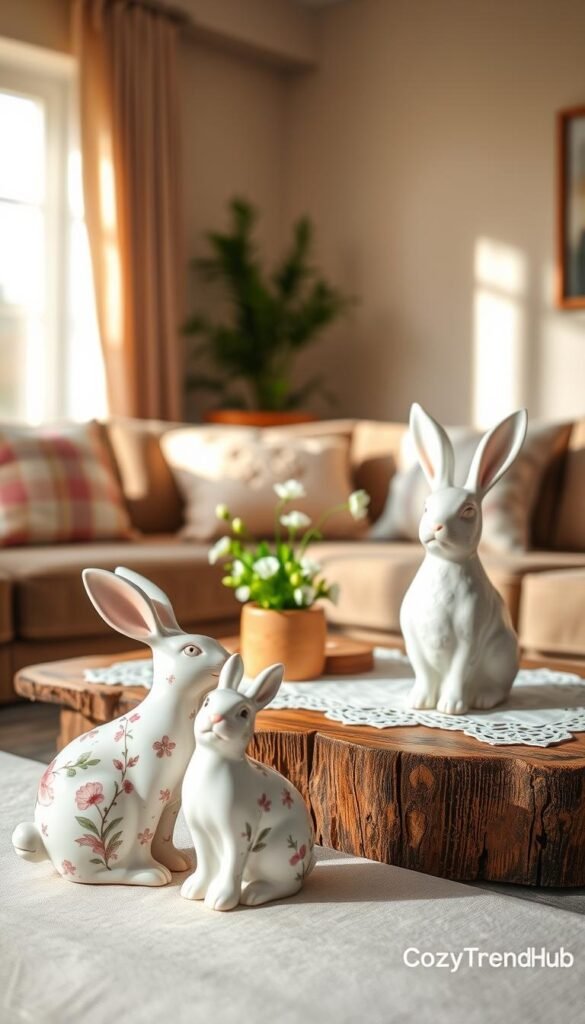
Ceramic bunnies used sparingly as “holiday pops” (not the whole theme)
A modest ceramic accent gives spring personality while keeping surfaces calm and usable.
Many homes face the same problem: bunny decorations are widely available, but in a small home they can make spaces feel cluttered and overly themed.
Best for small homes and renters
Ideal choice: people who love bunnies but don’t want a full bunny takeover. Use one or two pieces to create a deliberate highlight rather than a repeating motif.
What to buy
- Pick one or two neutral ceramic bunnies in simple silhouettes.
- Choose matte or lightly glazed finishes for a subtle, modern look.
- Buy sizes that fit on a bowl or tray so the group stays contained.
Where to place them
Place a single bunny on a console tray, a bookshelf vignette, or beside a spring vase on the table.
Keeping them clustered on a small tray prevents visual scatter and makes storage easy.
Pros and cons
| Feature | Pro | Con |
|---|---|---|
| Neutral ceramic | Timeless, reusable in spring and beyond | Can feel bland if too small or plain |
| Cluster on a tray | Keeps display tidy and portable | Requires a dedicated spot to avoid looking accidental |
| Limited quantity | Prevents over-theming in the home | May disappoint collectors wanting a fuller look |
Small-space rule: limit bunny items to one main area of the home. Rely on eggs, flowers, and greenery elsewhere to create a cohesive spring look without repetition.
For apartment-friendly ideas and placement tips, see a short guide on apartment spring styling.
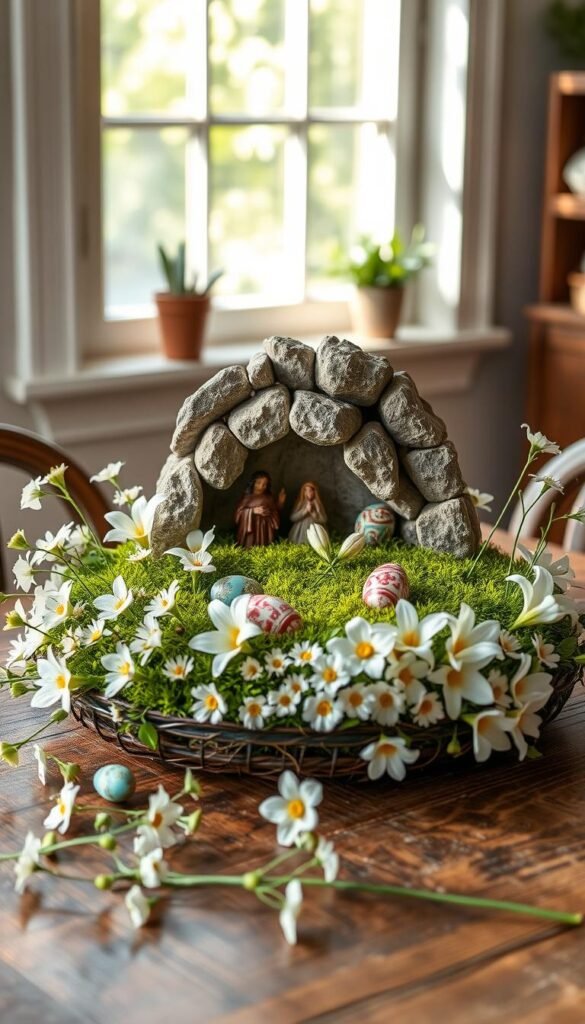
Resurrection Garden centerpiece for meaning-focused Easter decor
A Resurrection Garden offers a quiet, intentional centerpiece that centers family ritual as much as seasonal style. It works well in small homes where the tabletop needs to stay usable.
Who this suits
Best for: families who want a faith-based focal point and a gentle way to mark the season.
What to buy
- One shallow bowl or vintage planter (dough bowls work well)
- Live or faux moss (choose faux to cut upkeep)
- Small stones, one larger centerpiece stone, and a few natural elements (twigs, small blooms)
Sizing, kids, and display notes
Choose a footprint that leaves usable table space. For daily dining, pick a bowl under 14 inches so plates still fit around it.
Invite kids by using larger stones and nonbreakable pieces. Avoid tiny fragile miniatures and set a contained work area to limit mess.
Display length depends on materials: live moss needs occasional misting; faux moss can stay through the season with minimal care.
Storage and reuse
Pack stones and reusable elements in a small bin. The bowl returns to everyday use after the season, so the project saves storage and stays meaningful.
Conclusion
A small, repeatable formula makes decorating a rental or tiny room fast and low-stress.
Build a spring base that stays up through the season, then add short-run Easter accents for the week. Choose one anchor — a wreath or a table moment — and two repeatable elements like eggs, greenery, or a woven basket to tie rooms together.
Next steps: pick the main place (front door, coffee table, or dining table), measure the spot, select a color direction, and decide fresh vs. faux. Favor items that store flat, nest, or serve year-round, such as trays, vases, and vintage-inspired pieces.
Final tip: repeat the same colors and materials across rooms and limit holiday pops to one or two so the result feels intentional and calm.



One Comment