
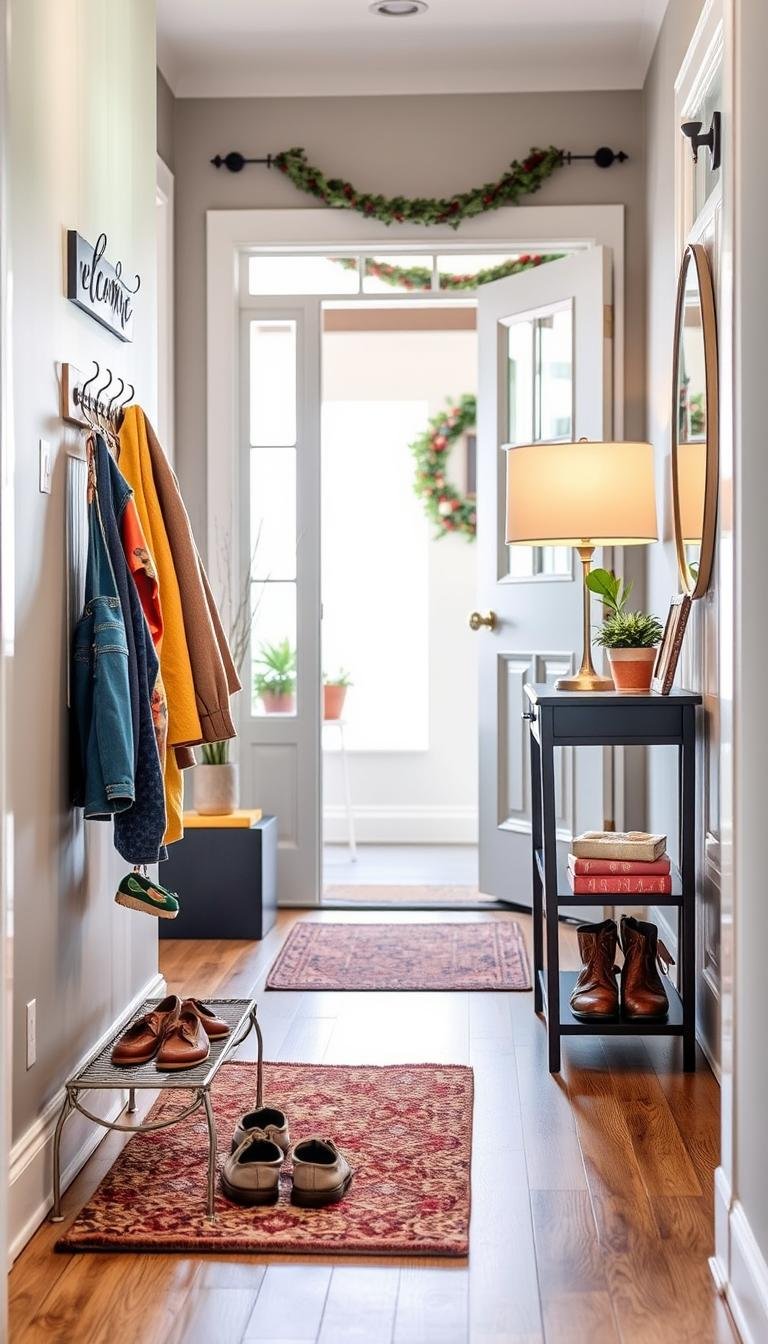
High-traffic entryways often become clutter magnets. Families and renters drop shoes, coats, bags, and mail near the door because it feels easier than dealing with them immediately.
That daily pile can cause delays and stress when leaving. This section frames the problem and outlines straightforward solutions that make putting things away easier than dropping them.
The guide compares practical categories: hooks, shoe storage, command centers, benches, and closet upgrades. Each product block will show who it’s best for, pros and cons, and what to compare — capacity, footprint, install method, and durability.
Recommendations favor renter-friendly and small-space choices. The core principle is simple: design the space so decisions are fast and maintenance feels natural.
Key Takeaways
- High-traffic entry areas collect the most clutter and waste time.
- Solutions focus on making “put away” easier than “drop.”
- Sections compare hooks, shoe storage, benches, closets, and command centers.
- Priority given to renter-safe and small-footprint options.
- Each option includes clear pros/cons and buying considerations.
Why busy entryways get cluttered (and how the right setup saves time every day)
Small stacks of shoes and mail at the door add up to real time lost every day. People drop things where they first set foot because hands are full and the nearest flat surface feels easiest.
The usual culprits are obvious: shoes on the floor, coats tossed on chairs, bags slumped by the threshold, and mail piles that grow fast. These spots become the default „drop zone“ because they require no extra steps.
The fix is simple: make putting items away easier than leaving them. One-hand hooks, visible open bins, and clearly assigned spots cut the number of steps needed to store things. That behavior rule increases follow-through even on rushed mornings.
This guide then focuses on repeatable systems, not décor. It will show targeted solutions for shoes, coats, bags, and mail, plus renter-friendly options like adhesive hooks and over-the-door organizers so readers can act without renovations.
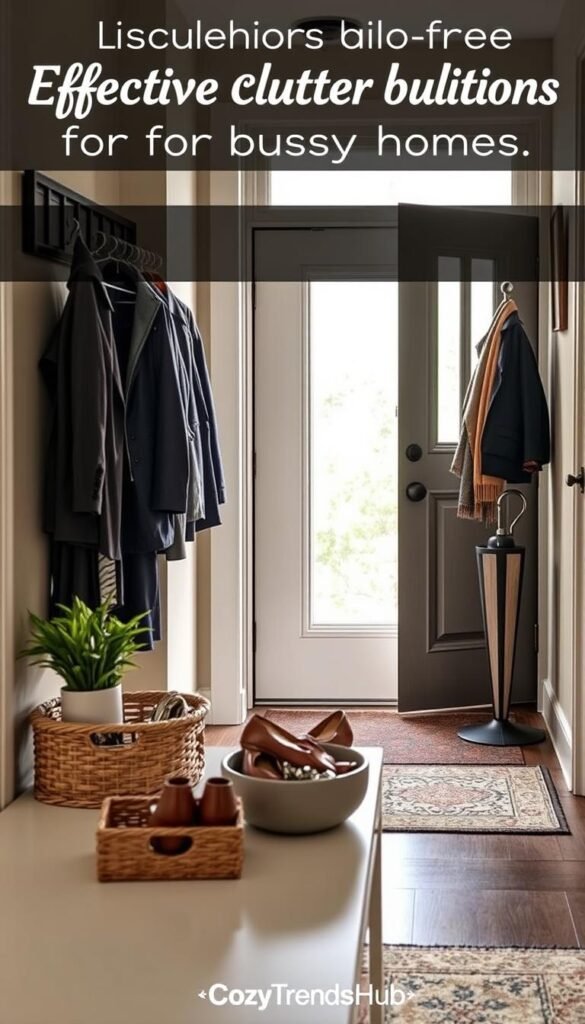
- Why it happens: first surface reached, hands full.
- Daily cost: wasted minutes hunting keys or one shoe.
- Behavioral rule: reduce steps—store with one motion.
Set up your entryway for real life: zones, limits, and the space you actually have
Designing three purpose-built zones makes decisions at the door nearly automatic. This small framework helps a household sort coats, shoes, mail, and gear without extra thinking.
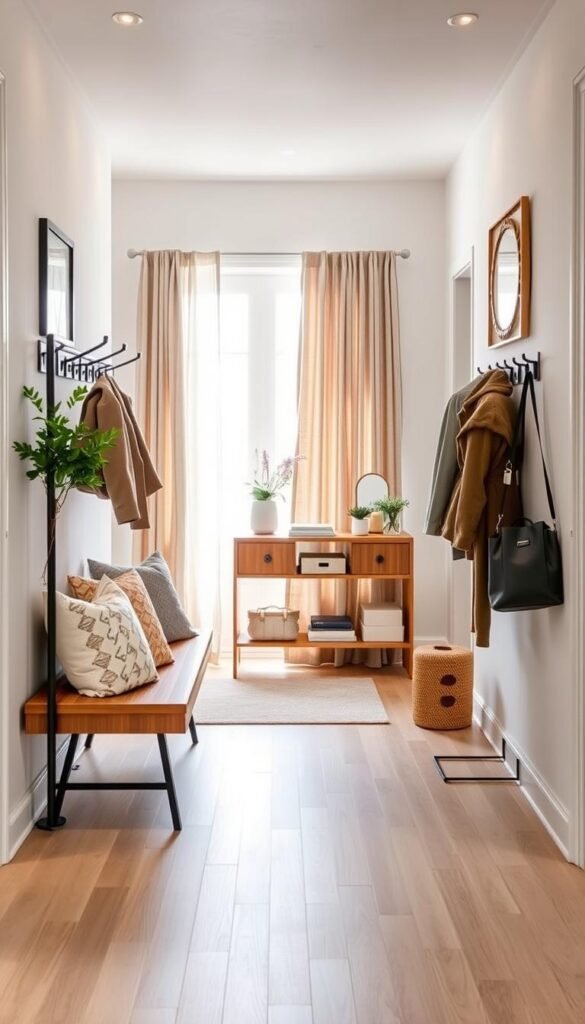
Create three functional zones
Outerwear storage: a rack or hooks for daily coats and a slim shoe solution nearby. Limit each person to one hook and a few shoes to keep the area tidy.
Grab-and-go: a wall pocket or small console for keys, mail, and quick notes. This spot reduces scatter and speeds departures.
Seating: a compact bench with under-seat baskets or a small chair so shoes can be put on off the floor.
Set simple limits to prevent overflow
One hook per person and a fixed shoe count make excess visible. If a family spot overflows, it’s a signal to rotate seasonal items out. Seasonal rotation keeps closets functional and daily storage lean.
Small-space rule: go vertical and clear the floor
Use wall shelves, peg rails, and hanging baskets to free the floor. Measure walkway clearance and door swing before choosing a bench or cabinet so traffic flows safely.
| Zone | Product types | Constraints | What to compare |
|---|---|---|---|
| Outerwear | Hooks, peg rails, narrow cabinets | Weight rating, wall type for renters | Capacity, install method, footprint |
| Grab-and-go | Wall organizers, small consoles | Depth for narrow space | Drawer space, ease of access, cleanability |
| Seating | Bench with storage, stool | Door swing, walkway clearance | Storage type, seat height, footprint |
Tip: map each zone to a product category—hooks for coats, shoe baskets, a command center, and a bench with storage—to make purchase comparisons quick and practical.
Best entryway organization ideas that work in small spaces and rentals
A compact, renter-friendly setup makes daily pickups feel effortless and fast. This short menu highlights practical, low-drill solutions that solve coats, shoes, and mail without eating floor space.
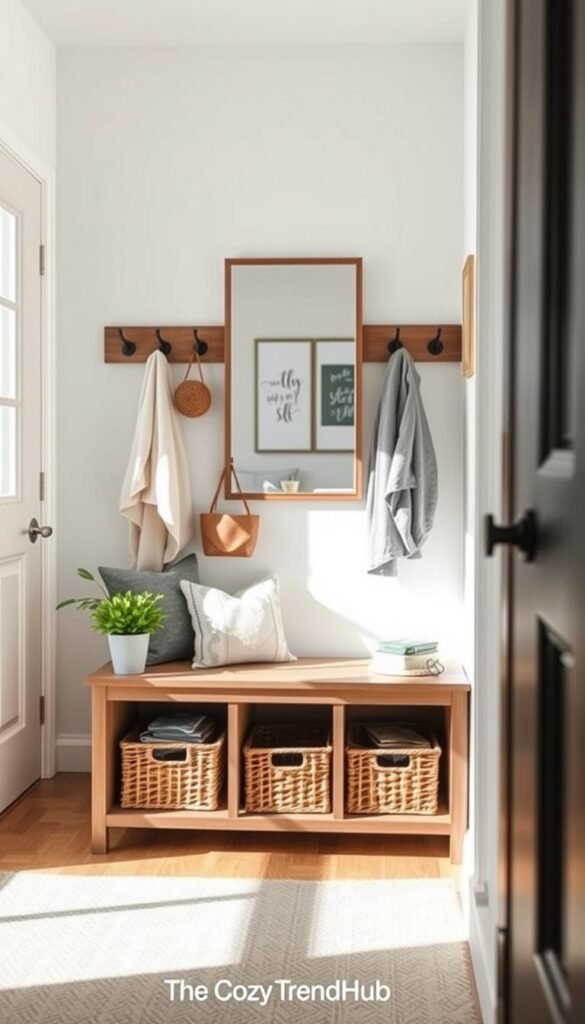
Wall-mounted hooks and peg rails for coats, jackets, and everyday bags
Who it’s for: busy households that need one-hand drop-off.
Why it works: hooks enable fast action and reduce steps coming and going.
Renter notes: choose adhesive hangers or removable rail systems with clear weight limits. Pros: instant access. Cons: open display can look busy.
Over-the-door organizers for shoes and accessories
Who it’s for: those with narrow halls or limited floor space.
Why it works: keeps shoe pairs and small items off the floor and visible.
Renter notes: use over-the-door hangers that don’t require drilling. Pros: no wall damage; cons: limited capacity per door.
Narrow shoe cabinets that hide clutter
Who it’s for: people who prefer a calm visual look in tight space.
Why it works: vertical storage hides shoe clutter and uses slim footprints (example: IKEA HEMNES).
Renter notes: freestanding units avoid wall anchors. Pros: tidy appearance; cons: requires bending to open drawers.
Open baskets that “corral” shoes fast
Who it’s for: families with kids who need simple habits.
Why it works: unlidded baskets let kids drop shoes quickly and trainers stay contained.
Renter notes: lightweight baskets are portable for seasonal rotation. Pros: fastest access; cons: looks busier than closed storage.
Command center wall organizers for keys, mail, and quick reminders
Who it’s for: households that struggle with missing keys and paper piles.
Why it works: a small wall organizer with in/out trays and a calendar stops daily clutter and centralizes must-check items.
Renter notes: use removable adhesive strips or slim pegboard that won’t damage paint. Pros: clears counter clutter; cons: needs daily upkeep.
Coats, backpacks, and bags: hook systems that people will actually use
A quick hook beats a slow hanger when mornings are rushed and hands are full. Hooks let a coat or bag be stowed with one motion. That single change cuts the steps between door and storage and reduces the pile-up on chairs and floors.
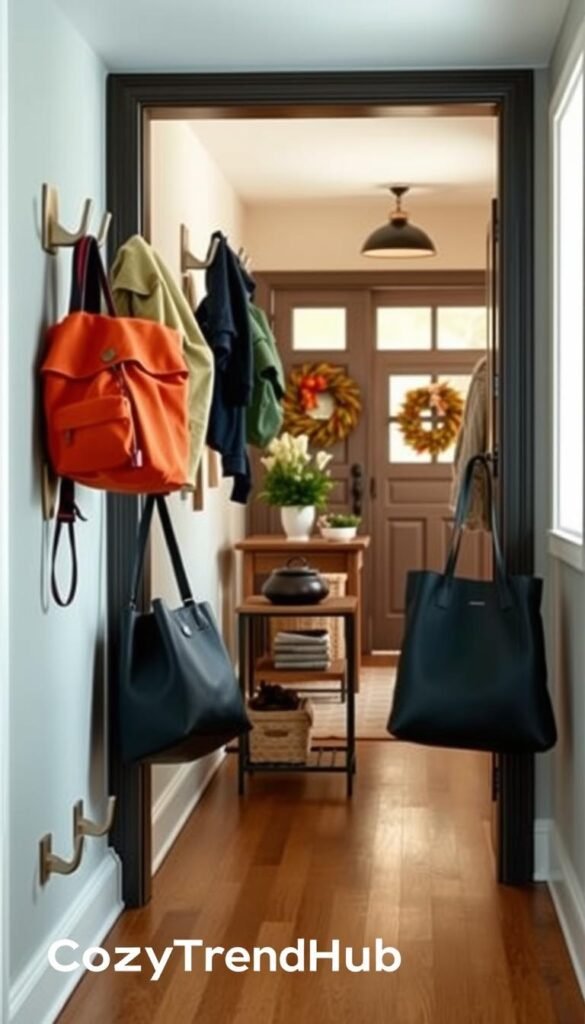
Why hooks work for busy households
One-hand drop-off is the core benefit. Hangers need free hands and time; hooks do not. For a family juggling kids and school gear, hooks speed the routine and raise compliance.
Assigning hooks and keeping limits
Give each person one hook and add a single guest hook. Keep only the daily-worn coat on that hook. Extra coats stay in a closet. That rule prevents slow creep from turning a neat wall into a heap.
Kids’ height hooks and practical placement
Mount a lower row for kids so they can hang backpacks and activity bags themselves. Place hooks near the grab-and-go zone so traffic flow stays smooth and the system actually gets used.
Buying considerations and renter-friendly installs
- Weight rating: choose hooks rated for heavy backpacks and jackets.
- Spacing: leave room between hooks to avoid tangles and visual clutter.
- Materials: smooth finishes wipe clean and resist scuffs.
- Install method: use removable systems or adhesive hangers for renters, or anchor into studs when drilling is allowed to protect the wall.
Quick pros/cons: Hooks are faster than hangers and support one-motion habits. They can look busy if spacing or limits are ignored. Choose a clear layout and durable hardware to keep the wall tidy and functional as a long-term organizer solution for small spaces.
Shoe storage that keeps the floor clear (even with kids and muddy seasons)
When shoes spill across the floor, the whole space seems smaller and slower.
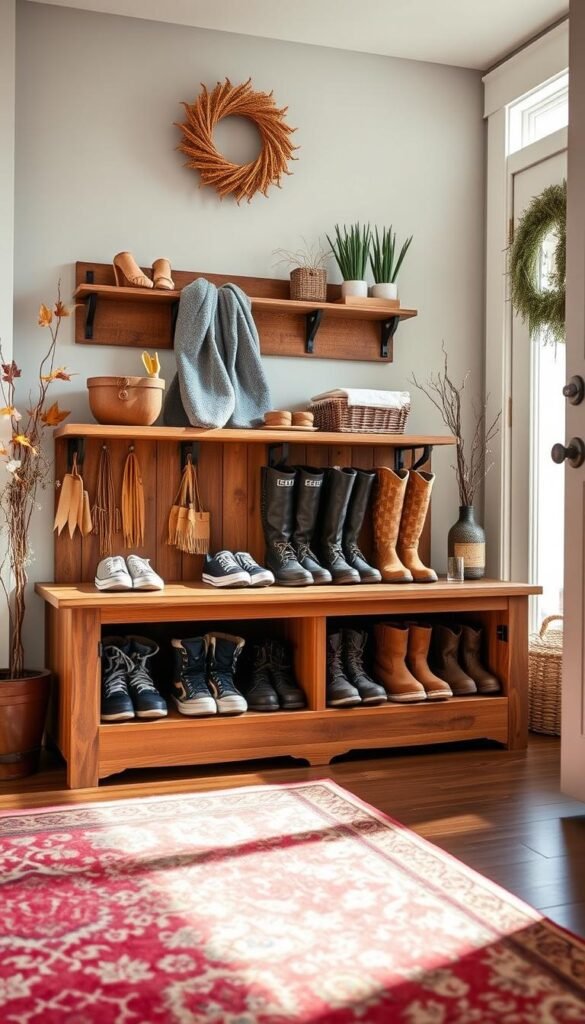
Basket-per-person shoe “parking” makes daily drops simple. Each person gets one labeled basket so kids can toss footwear without pairing. Unlidded baskets act as a fast corral and cut the step of matching shoes.
Vertical and slim solutions for narrow halls
Vertical shoe racks and slim organizers stack pairs upward to save walkway space. They increase capacity while keeping the floor clear. Narrow cabinets hide clutter when a calm look is needed.
Open racks vs. hidden cabinets
Open: quick access and airflow; good for daily swaps and wet seasons.
Closed: tidier visual line but can trap moisture and require more handling.
| Type | Capacity (pairs) | Footprint (inches depth) | Airflow & Cleanability |
|---|---|---|---|
| Unlidded baskets | 4–8 | 12–16 | High airflow; machine-washable liners or wipeable |
| Vertical rack | 8–16 | 8–12 | Good airflow; metal/plastic easy to wipe |
| Narrow cabinet | 6–12 | 10–14 | Low airflow; removable trays recommended |
| Boot tray / mat | 2–6 | 14–20 | Contains drips; rubber wipe-clean surface |
Buying tips: check capacity per pair count, depth for your walkway, tip resistance, and wipe-clean surfaces. For winter, choose taller trays or washable liners to handle boots and slush.
Maintenance: limit the entryway to current-season pairs and rotate extras to closet storage. That simple rule keeps systems usable and prevents overflow.
Entryway closet organization upgrades without a renovation
A shallow closet can act like a pressure valve, catching the overflow from hooks and baskets before clutter reaches the hall. With a few renter-friendly tweaks, that small space becomes a reliable drop zone for daily gear.
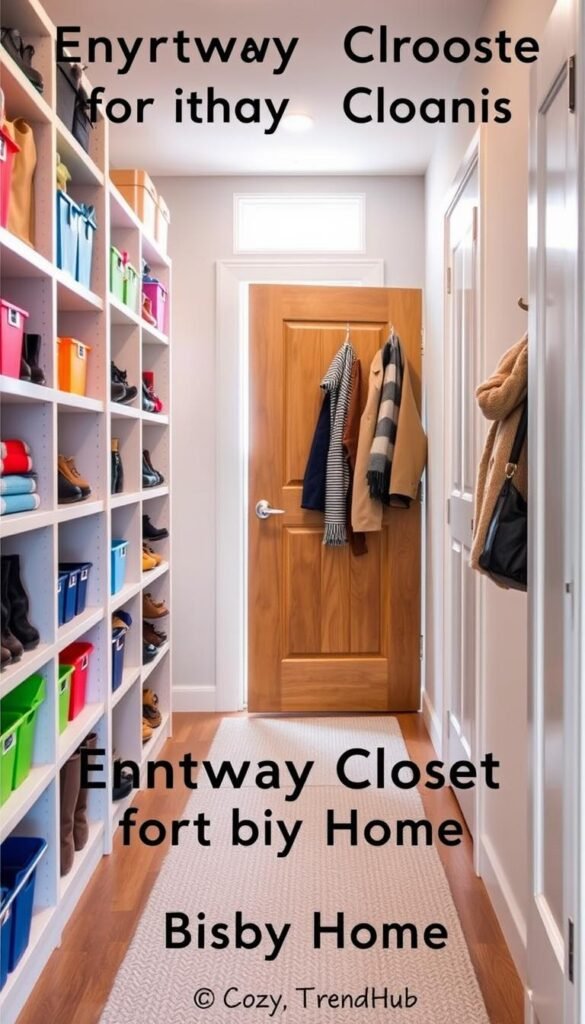
Maximize the vertical space
Add a second rail, an extra shelf, or a tiered shoe rack to use the full height. Tiered racks lift shoes off the floor and free the lower area for boots or bins.
Corral small items with baskets
Place labeled baskets on a shelf for gloves, scarves, and hats. Labels help families find things fast and stop the habit of dumping loose items into the room.
Uniform hangers and seasonal rotation
Matching hangers make coats and jackets sit evenly and slide neatly. Keep daily-use coats up front and rotate the rest to a storage box in another room.
Buying and maintenance tips
- Compare shelf material strength and rack stability for heavier items.
- Check basket sizes to fit your shelf depth and label clearly.
- Favor tension-mounted shelves or freestanding racks if drilling is not allowed.
- Do a weekly quick check to keep the system usable and prevent overflow.
Mail, keys, and “where did I put that?” solutions for the grab-and-go zone
A simple landing zone stops the last-minute scramble before the door. Place a clear spot for mail and keys so daily departures are calm and predictable. The right setup keeps papers from spreading and reduces the time spent hunting for small essentials.
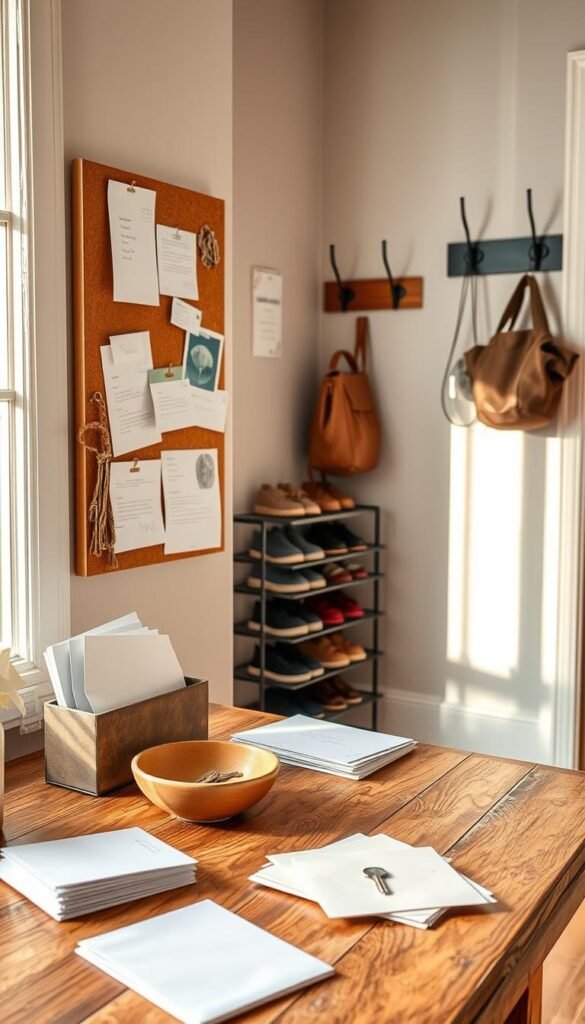
Wall mail organizers and in/out trays
Who this helps: households that get frequent paperwork — school forms, bills, and subscriptions.
Wall-mounted holders or a narrow shelf with labeled in/out trays create a default process. An in/out box system prevents piles from migrating across surfaces.
- Why it works: visible sorting cuts decision time and keeps mail contained.
- Renter-friendly: choose removable mounts or slim pegboard to avoid drilling.
Console tables with drawers for small essentials
A compact console table with at least one drawer hides sunglasses, wallets, and sanitizer while keeping them within reach. This furniture works well when there is a bit of space near the door.
Add drawer organizers to separate keys, coins, and charging cables so people stop digging when they leave.
Buying considerations and quick comparison
Compare depth for narrow halls, number and size of drawers, and wipe-clean finishes for high-touch zones. Favor surfaces that resist dirt and scratches.
| Type | Depth (in) | Why choose it |
|---|---|---|
| Wall shelf + trays | 6–10 | Minimal footprint; great for small spaces and renters |
| Console table with drawers | 10–16 | Hides items; stores keys and small essentials neatly |
| Narrow shelf unit | 8–12 | Offers open staging and a single shelf for mail |
„A simple in/out box stopped paper piles from spreading into the rest of the home.“
What to store: keys, sunglasses, wallets, small chargers, and a quick mask or hand gel. These items become reliable when the landing spot feels natural to use.
Entryway benches and seating that double as storage (without eating up your space)
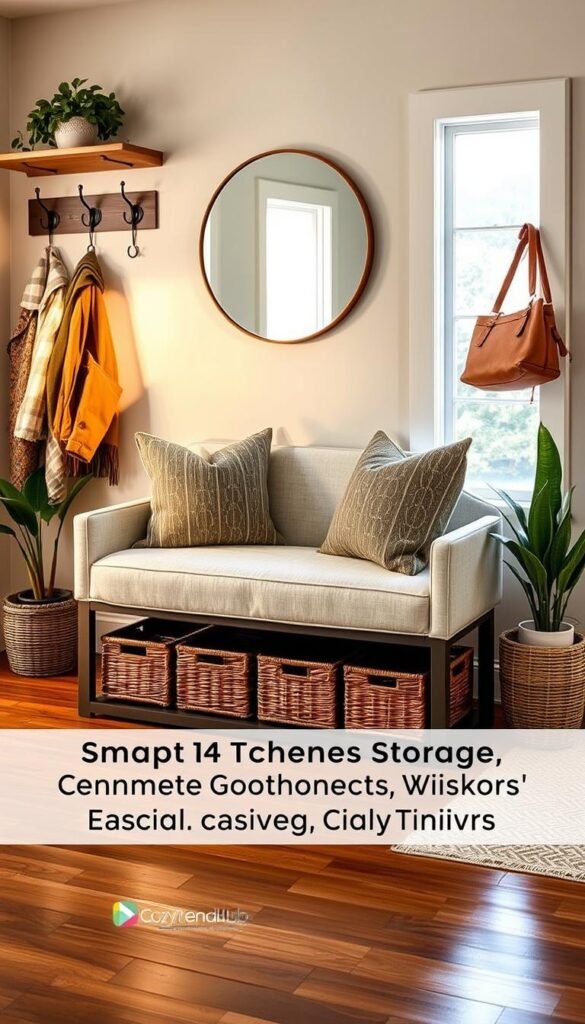
A simple seat at the door turns rushed shoe changes into a calm routine. A bench provides both a place to sit and a practical storage option for daily footwear and seasonal gear.
Who this helps
Best for: boot-on/boot-off households and households in winter-heavy climates where bulky footwear changes are frequent.
Storage bench vs. open bench with baskets underneath
Storage bench: hides clutter and creates a calm visual line. Good for those who prefer tidy furniture that blends with decor.
Open bench + baskets: offers faster access. Baskets corral shoes and let wet items air out more easily.
Pros and cons
- Hidden storage: cleaner look but can become a dumping bin without rules.
- Open storage: quick access; needs consistent limits to avoid overflow.
- Small stools/chairs: work when space is tight and still reduce shoes on the floor.
Buying considerations and small-space guidance
Choose a narrow-depth bench to preserve walkway clearance and avoid blocking door swing. Check weight capacity, wipeable finishes, and ventilation if damp items will be stored.
Pair the seat with a washable mat or tray to protect the floor. For renters, prefer freestanding pieces or anchored options that use minimal drilling.
| Type | Quick advantage | When to choose |
|---|---|---|
| Hidden-lid bench | Calmer visual line | Households valuing tidy surfaces |
| Open bench + baskets | Fast daily access | Busy families needing speed |
| Small stool | Minimal footprint | Very narrow halls or renters |
Takeaway: match the bench type to household behavior. Fast-access systems suit busy families; closed storage fits those who need visual calm. The right seat is a small but powerful solution that keeps items off the floor and makes departures simpler.
Seasonal and specialty storage: hats, gloves, umbrellas, and sports gear
Seasonal clutter tends to arrive in waves, with winter hats and wet gloves overwhelming a tidy landing fast.
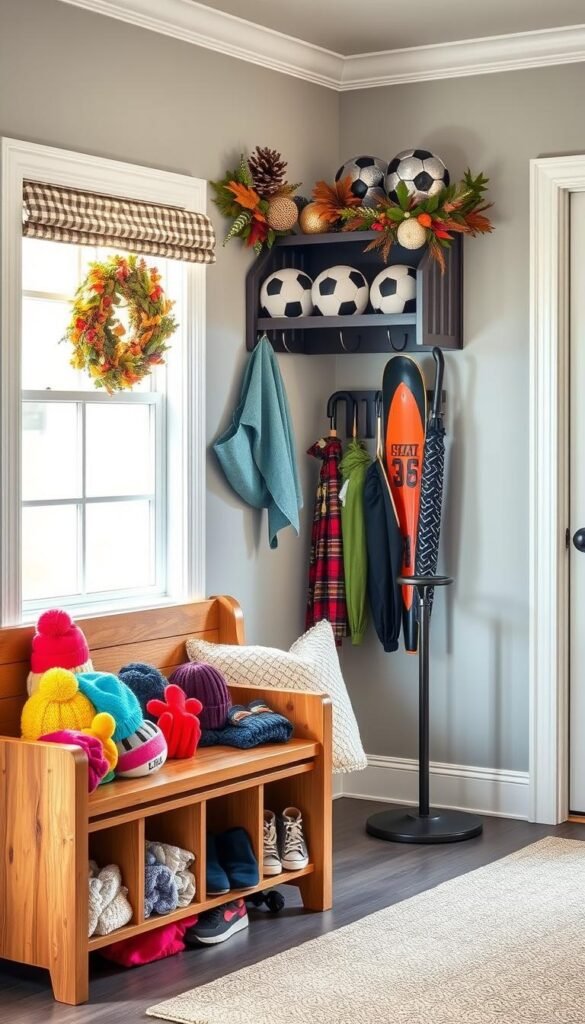
Keep winter accessories within reach. Use low bins, shallow drawers, or hanging organizers so kids can access gloves and hats without help. When storage is easy to reach, small items stop ending up across the room or on chairs.
Activity-bag stations that contain gear
Assign one bag per sport and hang each on a kids-height hook. Clear labeling and a single hook per bag make it simple to grab and return gear. This cuts the spread of balls, cleats, and water bottles into the rest of the house.
Quick maintenance habit: a weekly reset
A short end-of-day sweep or a weekly reset returns stray items to their spots. This routine takes little time and prevents a single season from becoming a long-term mess.
| Organizer | Placement | When to choose |
|---|---|---|
| Wipeable bins | Lower shelf or closet floor | Wet gloves, hats, and boots |
| Hanging pockets | Back of closet door | Small items with limited shelf space |
| Sturdy hooks | Kids-height wall or pegboard | Activity bags and heavier bags |
Buyer guidance: pick wipeable bins for wet gear, sturdy hooks for heavy bags, and containers sized to actual equipment. These choices help keep things in place and save time each day, so the system stays useful long term.
How to choose the right entryway organizer for your home (comparison-ready checklist)
A quick site check prevents purchases that block traffic or won’t fit the wall. Start with measurements and a short checklist so the selected organizer truly solves the real problem.
Step 1 — Measure first. Note the door swing, walkway clearance, and usable wall space. Measure from the hinge arc to the nearest obstacle so benches or cabinets won’t hit the door.
Step 2 — Match the problem to the product. If shoes overflow, choose off-floor racks or baskets. If coats pile up, add hooks and closet backup. For mail and keys, favor trays or a slim console.
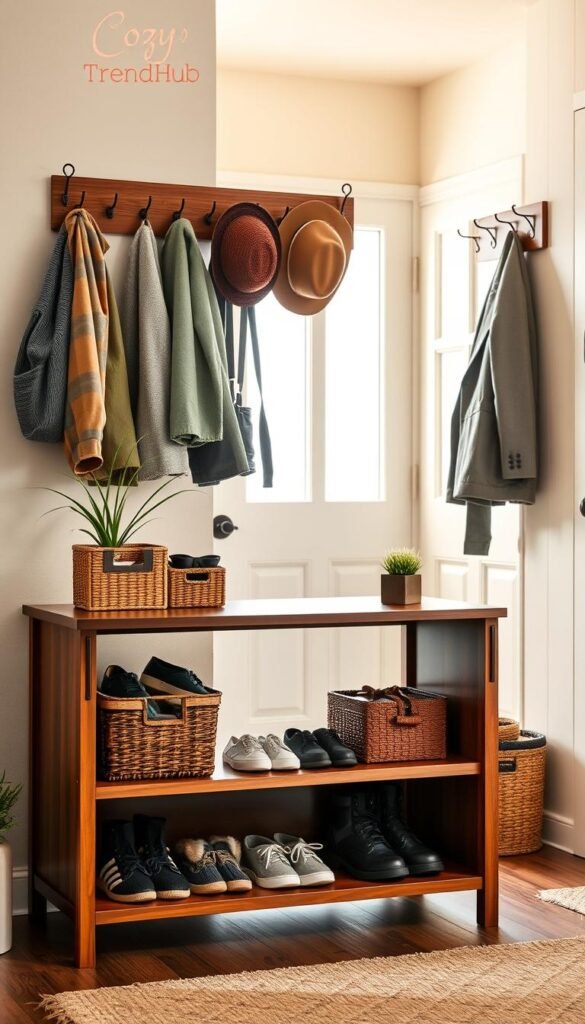
Step 3 — Filter for renters and small spaces. Prefer removable hooks, over-the-door systems, and freestanding pieces that avoid drilling or fit an existing closet.
What to compare in product blocks
| Field | Why it matters | Quick spec |
|---|---|---|
| Capacity | Pairs/coats it holds | e.g., 8 pairs / 4 coats |
| Footprint | Width × depth × height | Measure against walkway |
| Durability | Material & weight rating | Steel, solid wood, or rated hooks |
| Install complexity | Drilling vs. removable | Anchor needed? Adhesive options? |
| Cleanability | Wipeable surfaces & airflow | Removable trays or washable liners |
Behavior fit: open storage speeds drops; closed storage calms the visual line. Pick the solution that matches how the household moves and set simple limits: one hook or one basket per person to keep the system working over time.
Conclusion
Start with one problem—shoe piles, overflowing mail, or missing keys—and fix that first.
Make three clear zones for outerwear, grab-and-go, and seating. Add a row of hooks, a slim shelf or shoe storage, and a small bench so putting things away is faster than dropping them.
Set limits: one hook or one basket per person. Rotate seasonal items into a closet and keep the area tidy with a weekly reset.
Use the comparison checklist to match capacity, footprint, and cleanability to your space. The post contains affiliate links to practical picks; this helps fund testing and keeps recommendations useful for your home.

2 Comments