
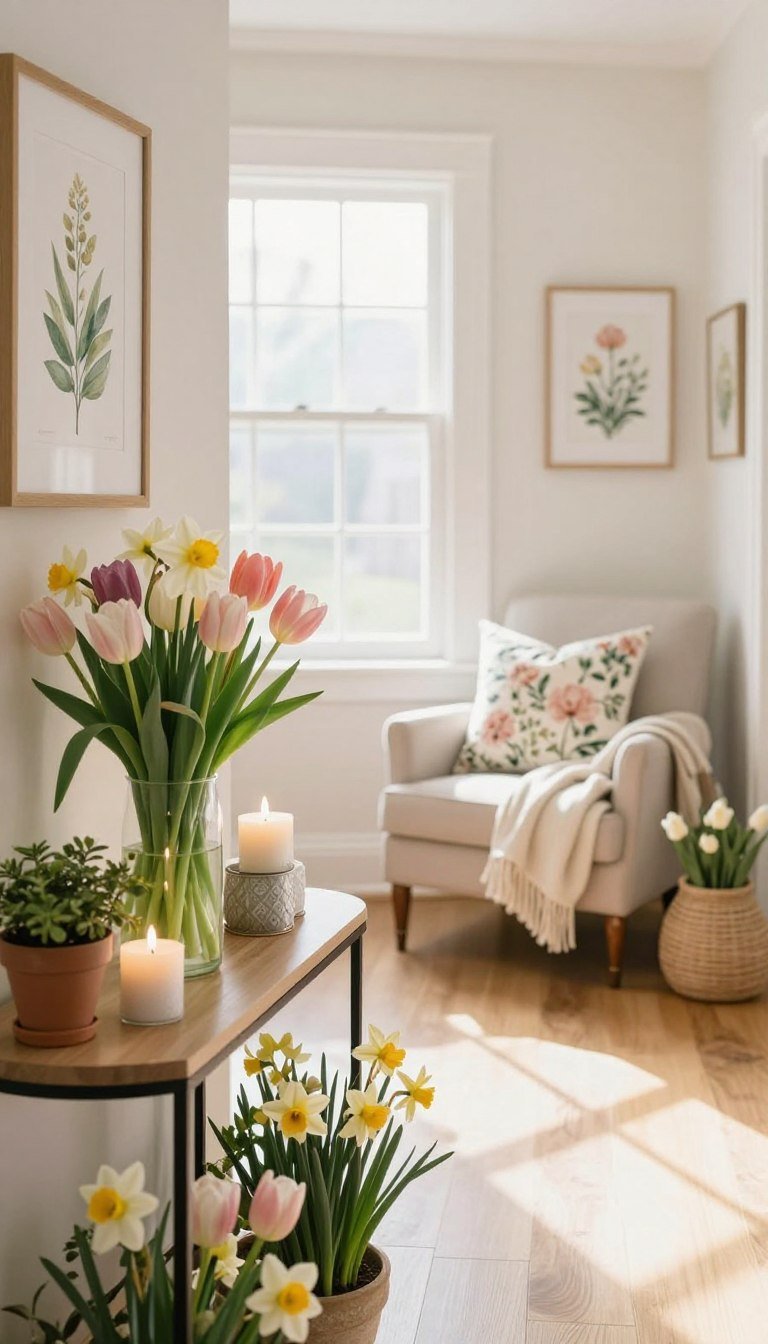
Many rooms feel stuck after winter: mismatched bouquets, floppy stems, and vases that send stems sliding. Small living rooms and narrow entryways make those problems worse. Renters face extra limits on wall and surface changes.
This guide solves that clutter with a simple seasonal reset. Focus on one strong focal arrangement and a few supporting accents. The article then shows what to buy first, palette picks, and clear placement rules for entryway, coffee table, mantel, and table.
Practical tip: use the elbow-height rule — arrangements should sit around elbow height for comfortable sight lines. Tall branches belong on sideboards and entryways, not on dining tables where they block conversation.
Readers will get buyer-first priorities, renter-friendly options, and side-by-side comparisons that explain which vase shapes stop flopping, which faux stems are worth storing, and which tools fix common arranging failures. No vague promises — only repeatable setups for real homes.
Key Takeaways
- Clear problem: seasonal bouquets often look random or high-maintenance in small spaces.
- Seasonal reset: pick one focal piece plus supporting accents to simplify choices.
- Buy-first plan: vases and stems that suit scale, renter-safe mounts, and low-maintenance faux options.
- Placement rule: elbow-height for tables; reserve tall branches for sideboards and entryways.
- Comparison-ready tips: which vase shapes prevent flopping and which tools solve arranging failures.
- Audience fit: renters, pet owners, busy households, and budget-conscious decorators.
What to Buy First for Spring Florals in a Living Room or Entryway
Begin by choosing one reliable vessel and build an arrangement that supports the room’s scale. A clear buying order saves time and prevents the “random blooms” look that makes a space feel cluttered.
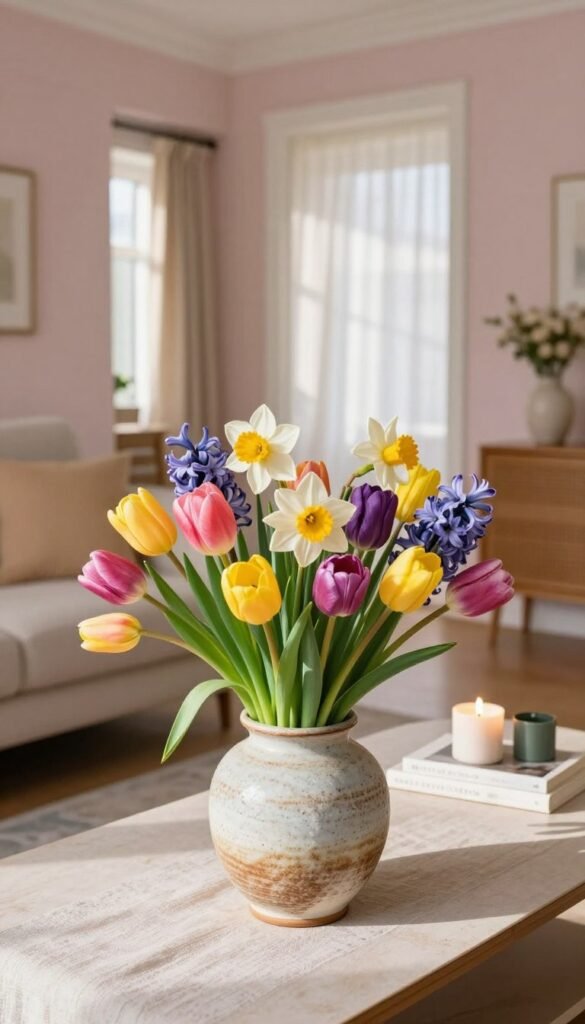
The problem with random blooms and how to fix it
Mixing every pretty stem often creates a busy visual that fights the room. Instead, pick 1–2 anchor flowers and one supporting green. Group like flowers together—clustered blooms look natural and calm.
Buyer-first prioritization
- Vessel: start with a versatile vase sized to the sofa or console.
- Mechanics: add a stem-support tool (frog or tape) to stop flopping.
- Stems: choose repeatable bundles—fresh for weekly swaps or faux for reuse.
Fresh vs. faux: quick decision tree
Time: fresh needs weekly trimming; faux wipes clean. Pets & allergies: faux reduces chew risk and reactions. Cost: fresh has recurring outlays; faux costs more up front but stores away for reuse.
Small-space planning
One larger focal point avoids visual clutter on a small console. Mini moments work well for long surfaces or open shelving. Cohesion rule: repeat one color twice (pillow + flowers) and one material once (glass or porcelain) so the room feels intentional.
Cluster, don’t evenly space—grouping stems creates a natural, relaxed look fast.
Spring Color Palettes That Make Florals Look Intentional (Not Cluttered)
Choose a tight color direction to make any arrangement read as a deliberate choice, not a random bunch. A limited palette cuts decision fatigue and keeps a small room from feeling busy.
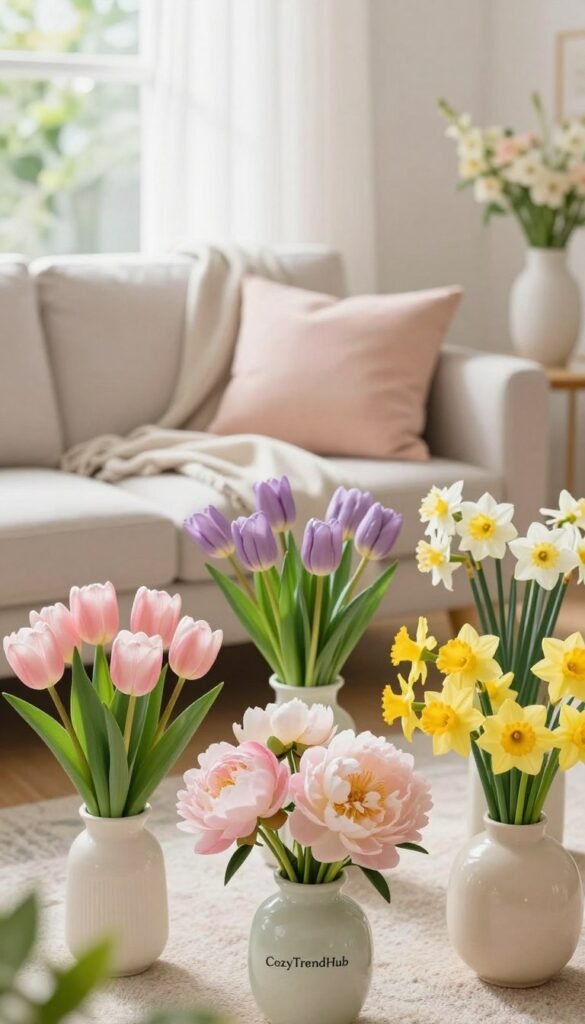
Purple-forward mix
What to shop for: alliums for height, lilacs for scent, tulips for line, and hellebores or foliage to break up purple.
Who it suits: people wanting one strong focal point that reads intentional on a console or sideboard.
Pastel table styling
Use blush, mint, and soft blue plates or linens and pair them with a brighter pink/green bouquet. The muted table pieces let a lively centerpiece sing without chaos.
Crisp neutrals
All-white flowers in a creamy porcelain vase read refined against wood tones. Limit contrast and the arrangement looks curated, not cluttered.
Green-and-white
Greenery plus white blooms gives an airy, spring-clean feel. This is the easiest option for small rooms because it stays calm and flexible.
- Rules of thumb: 2–3 colors max; 2–4 flower types; add greenery as the unifier.
- What to skip: too many hues or more than four stem types—these create a scattered look.
| Palette | Best for | Shop for | Vase note |
|---|---|---|---|
| Purple-forward | Single bold focal point | Alliums, lilac, tulip, hellebore | Tall clear cylinder for height |
| Pastel + brights | Brunch/table centerpiece | Blush plates, mint glass, pink/green stems | Low wide vase to spread color |
| Crisp neutrals | Busy rooms, wood furniture | All-white blooms, creamy porcelain | Opaque ceramic for a clean silhouette |
| Green & white | Small spaces, calming refresh | Mixed greenery, white buds | Clear glass or simple linen wrap |
Best Floral Spring Decor Ideas for Entryway Tables and Consoles
A single vertical statement can make a tight entryway read intentional without stealing space.
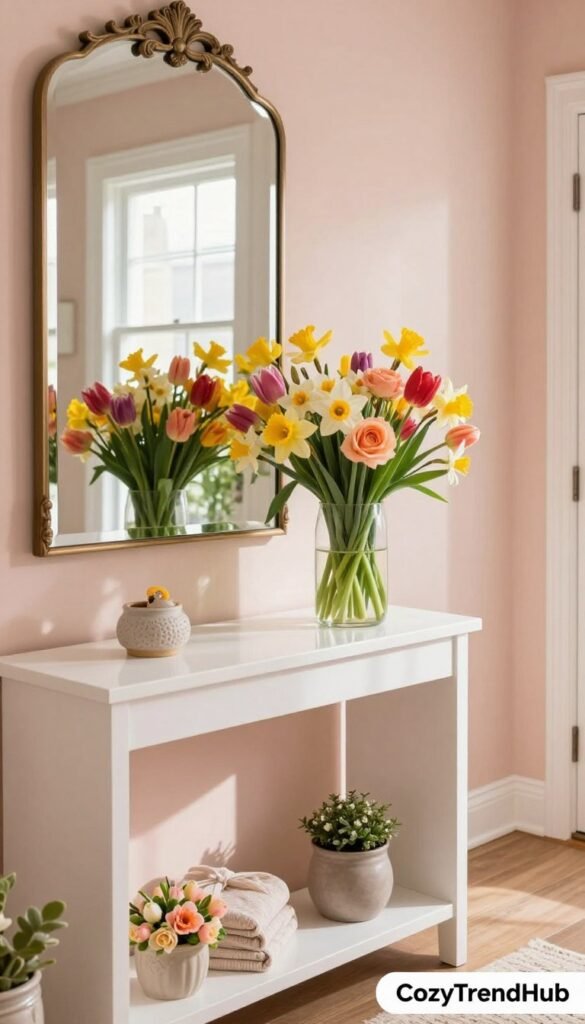
Statement branches for instant height
Place magnolia, forsythia, or cherry blossoms in a tall clear glass cylinder on a console. The vertical display draws the eye up and keeps the table surface free for daily items.
Not for dining tables: tall branches block sightlines and conversation.
Living vase wrap with pussy willow
Wrap a galvanized bucket with French pussy willow stalks and secure with twine. Fill it with tulips or slender branches for texture.
Why renters like it: no hardware, low mess, and easy removal at season end.
Clustered blooms for a foraged look
Group like stems together instead of spacing evenly. Clustered bouquets look natural and read as intentional on narrow tables.
- Low-mess checklist: stable base, spill-resistant tray, avoid shedding branches in walkways.
- Quick accents: a removable tray, a small bowl for keys, and one seasonal stem bundle.
| Vessel | Stability | Footprint | Cleaning |
|---|---|---|---|
| Clear cylinder | High | Small | Easy |
| Stone jug | Medium | Medium | Wipeable |
| Galvanized bucket | High | Large | Rinseable |
Quick note: these setups give a fresh touch without wall changes and keep the entryway functional.
Best Coffee Table Floral Decor for Living Rooms
Low-profile centerpieces keep snacks, screens, and conversations unobstructed in active living areas.
Prioritize function: keep arrangements low so the TV sightlines and guest interactions stay clear. A short mound or shallow bowl reads light and won’t feel like an obstacle on a coffee table.
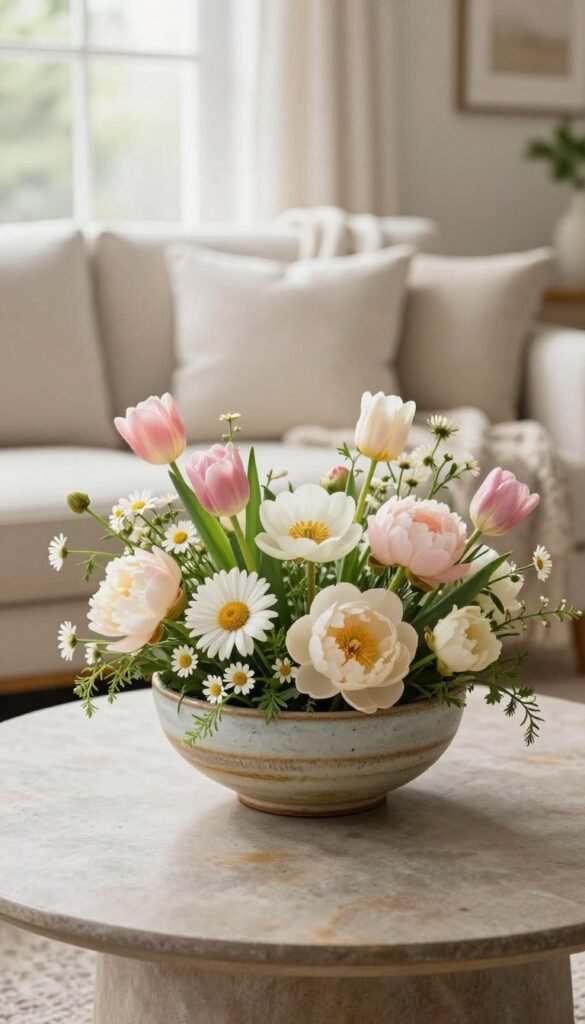
Low bowl arrangements that won’t block the TV or conversation
Why bowls work: they lower visual height, reduce top‑heaviness, and stay stable in high-traffic rooms. Bowls are the smart choice for families, pets, and open-plan seating.
Simple tulips in a clear vase for a bright, minimal focal point
Simple tulips in a clear vase give a clean point of color without overcrowding a small room. Clear glass keeps the look light and shows water levels for easy care.
- Care tip: tulips need frequent water top‑offs; refill daily to keep stems upright.
- Best for: low bowls for families/pets/high‑traffic rooms; taller vases belong on side tables or consoles.
| Option | Pros | Cons |
|---|---|---|
| Low bowl | Stable, low profile, less fussy | Needs stem support mechanics |
| Clear vase | Easy to fill, clean silhouette | Can feel top‑heavy on a coffee table |
Choose pieces that stay out of the way: keep centerpieces low and easy to refresh so the room stays social and functional.
Floral Centerpieces That Actually Work in Real Homes
Centerpieces should invite conversation, not interrupt it—use simple scale rules to keep the table usable. The elbow-height rule is an easy, measurable way to judge height.
Elbow-height rule: keep blooms no higher than the top of a closed fist when placed on the table. This prevents centerpieces from blocking eye contact and keeps the dining table functional.
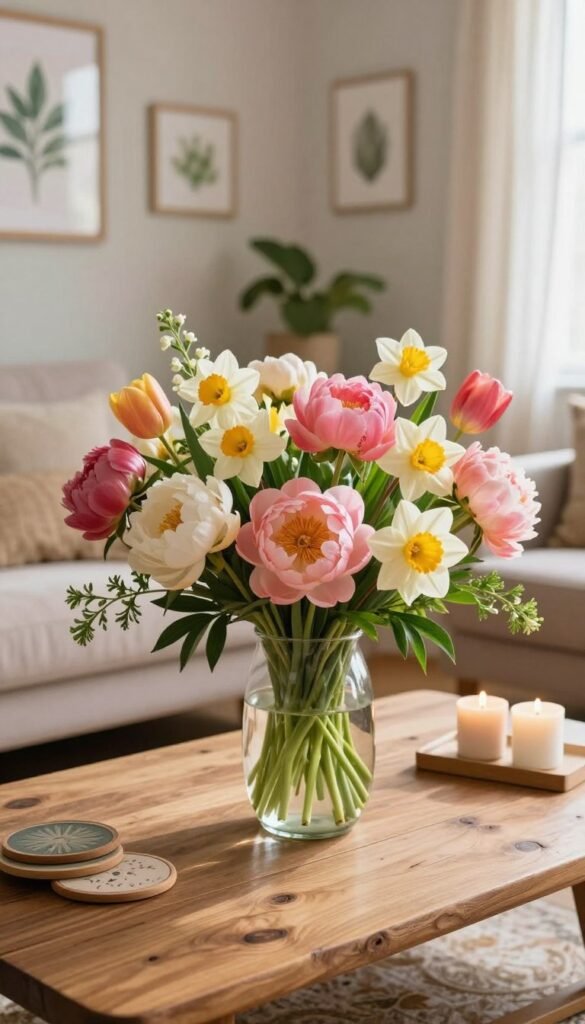
Where tall pieces belong
Tall branches and dramatic stems work on sideboards, buffets, or entry consoles. They add vertical display without interrupting meals.
Everyday vs. hosting criteria
- Everyday: low, stable, easy to move, low-shed—good for quick swaps.
- Hosting: slightly fuller centerpieces tied to place settings; use shallow bowls or clustered vases so guests still converse.
Quick buying and styling tips
- Choose weighty bases for homes with kids or pets.
- Pick stems that don’t shed pollen if cleanup matters.
- For a lively table, surround a shallow vase with dyed eggs or small accents for a festive spring display.
Quick pros/cons: tall drama photographs well but blocks talk; low pieces are practical and reusable.
Vases and Vessels That Make Spring Flowers Look More Expensive
Vessels act like a multiplier—one smart purchase makes simple stems appear curated and stable. Choosing the right container solves common problems: flopping stems, top-heavy groupings, and arrangements that read cheap.
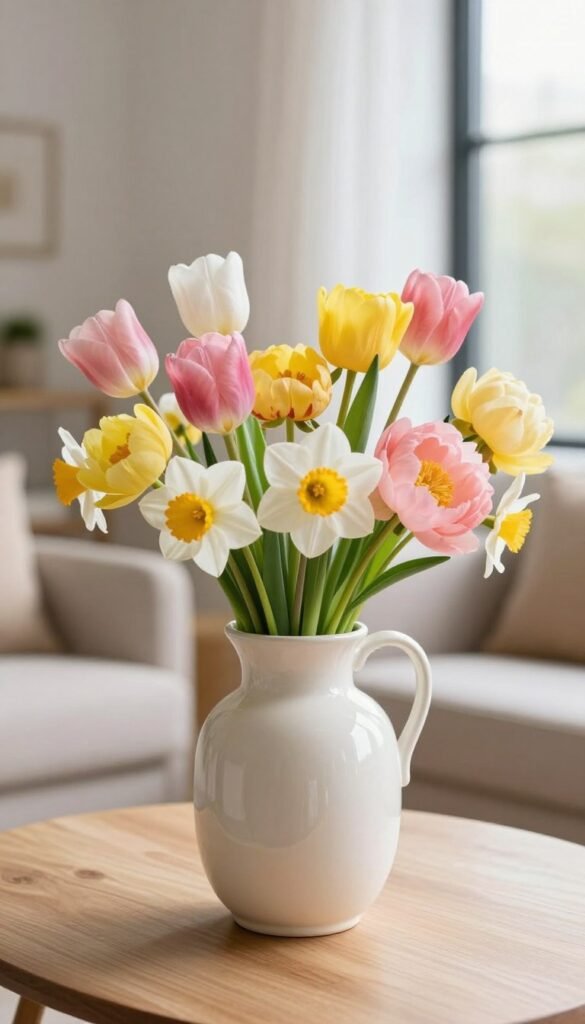
Wide-bottom, narrow-top shapes
Wide bases give room for stems to drink water. A narrow mouth keeps heavy heads gathered and upright. This geometry works especially well for peonies and other heavy blooms.
Pros: stable, reduces flopping. Cons: can feel bulky on small tables. Best for: fuller heads and low centerpieces.
Creamy porcelain vessels
Creamy porcelain simplifies a busy room. All-white groupings read calm and elevated against wood or textured textiles. Porcelain photographs well and masks visual clutter.
Pros: refined look; Cons: chips possible. Best for: minimal rooms and small homes.
Clear glass cylinders for branches
Tall glass cylinders suit magnolia, forsythia, and cherry blossoms. The transparent shaft shows the waterline and keeps the display airy on a console.
Pros: light visual weight; Cons: needs upkeep to hide stems and water marks. Best for: entryway height without adding more pieces.
Galvanized jugs, tin bowls, and rustic options
Metal jugs and tin bowls give a casual, farmhouse look and stand up to outdoor mess. They hide mechanics and clean easily after heavy use.
Pros: durable, low-maintenance; Cons: can read heavy visually. Best for: busy entryways and high-traffic homes.
Wood boxes, trays, and mismatched jars
Split grocery bouquets into small jars inside a tray for a layered, effortless display. This approach removes pressure to build one perfect bouquet.
Pros: budget-friendly, flexible; Cons: needs more pieces to arrange. Best for: beginners and seasonal swaps.
Quick rule: the right vase shape solves posture and proportion before the stems ever do the work.
| Vessel | Pros | Cons | Best for |
|---|---|---|---|
| Wide-bottom vase | Stability, reduces flopping | Large footprint | Peonies, heavy blooms |
| Creamy porcelain | Clean, elevated look | Chips | All-white arrangements |
| Clear glass cylinder | Airy height, shows stems | Requires cleaning | Flowering branches |
| Galvanized jug / tin bowl | Durable, hides mechanics | Can feel heavy | Casual entryways |
| Wood tray + jars | Flexible, budget-friendly | More pieces to manage | Beginners, renters |
Buying note: treat a good vase as a long-term item. It will make simple stems and small bouquets look intentional and hold posture so the arrangement lasts and the room reads pulled together.
Flower-Arranging Tools That Solve the “Flops in the Vase” Problem
A short set of practical tools can stop stems from slipping and make any arrangement hold its shape. The core failure is simple: stems flop, twist, or slide, which makes lovely flowers look messy.
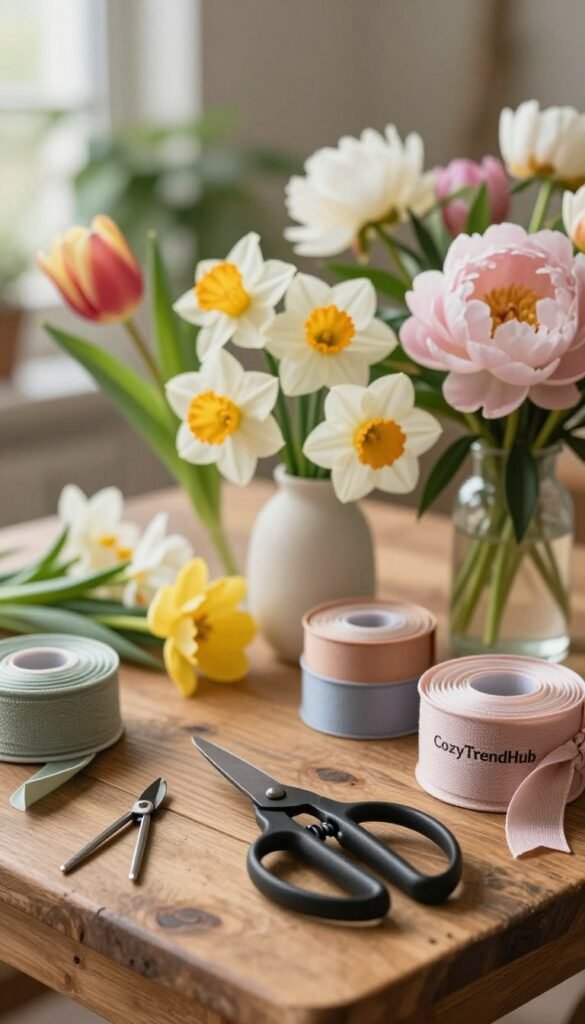
Floral frogs for low vessels
Who it helps: beginners, anyone using heavy branches or shallow bowls. Frogs pin stems in place so a low centerpiece keeps posture without a tall vase.
Tape grids for wide mouths
Who it helps: people arranging airy dried stems. A crisscross tape grid creates slots that hold spacing and prevent drift.
Polished stones to hide mechanics
Who it helps: homes that use clear containers or want hidden support. Stones add weight and conceal frogs or fittings while stabilizing tulip mixes.
| Tool | Best for | Material | Cleaning & Storage |
|---|---|---|---|
| Floral frog | Shallow bowls, heavy branches | Metal or ceramic | Rinse; small storage box |
| Tape grid | Wide‑mouth vases, dried stems | Floral tape | Single use; store spare rolls |
| Polished stones | Clear glass, tulip mixes | Glass or river rock | Washable; store in bag |
Buying note: prefer metal frogs for longevity, plastic for lightness. Check non-slip bases for slick bowls. Keep small stones away from children and pets.
Fresh Spring Flowers That Last Longer and Look Better Indoors
A few selection and care moves at the store make cut stems last and look intentional at home. Many buyers feel disappointed when bouquets droop quickly. Simple choices at purchase and a short at‑home routine change how long blooms keep their life.
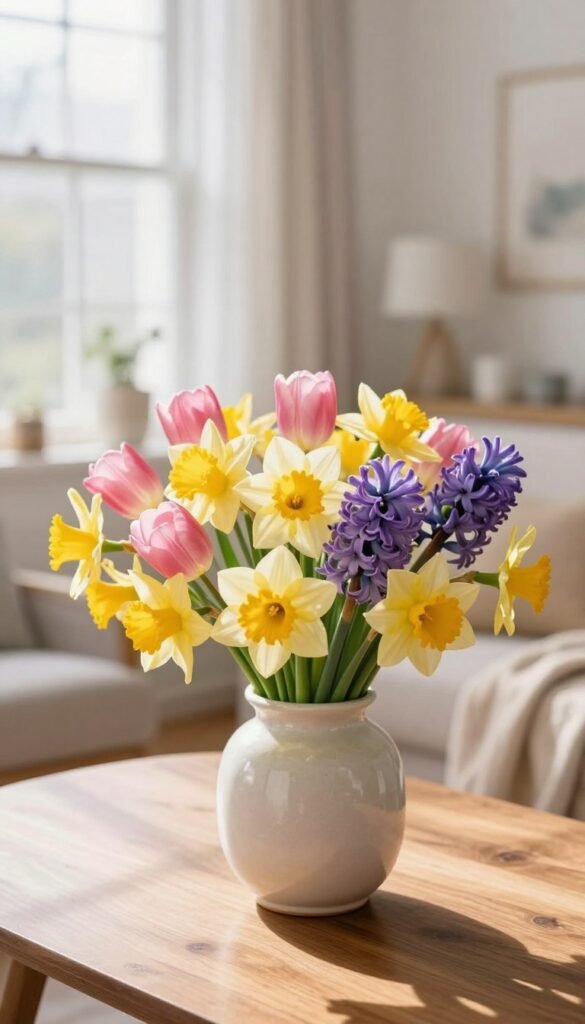
Tulips
Tulips keep growing after cutting and can bend or shift shape over days. Plan for movement: leave stems long for a playful, informal look or trim shorter for a tight arrangement. Refill water daily and recut stems every 2–3 days to extend life. A narrow vase helps keep heads upright.
Daffodils
Choose daffodils with closed-to-just-opening buds and mix varieties for visual interest while staying in one palette. Cutting before buds open adds longevity. Remove any wilted foliage quickly to prevent bacterial spread and keep the water clear.
Irises with potted greenery
Irises offer high impact but about a week of prime color. Pair cut irises with small nursery pots of fern, ivy, or sorrel hidden in a basket. When the irises fade, reuse the potted greenery around the home for lasting value.
Quick cue: at the store look for firm stems, tight buds, and clean water in buckets.
| Flower | Longevity | Care | Best for |
|---|---|---|---|
| Tulips | 5–10 days | Daily top‑offs; recut stems | Minimal vases; weekly refresh |
| Daffodils | 7–12 days | Cut before open; clear water | Kitchens, entryways |
| Irises + potted greenery | 5–9 days (cut) + ongoing life (pots) | Hide pots in basket; move plants after blooms | Low waste, reusable greenery |
These small steps add life and a cared-for touch to any arrangement while reducing waste.
Faux Floral Stems Worth Buying for Seasonal Reuse
Faux stems can give a room a seasonal lift without allergy worries or weekly water chores. They work well for renters and anyone who needs a low-maintenance way to update home decor.
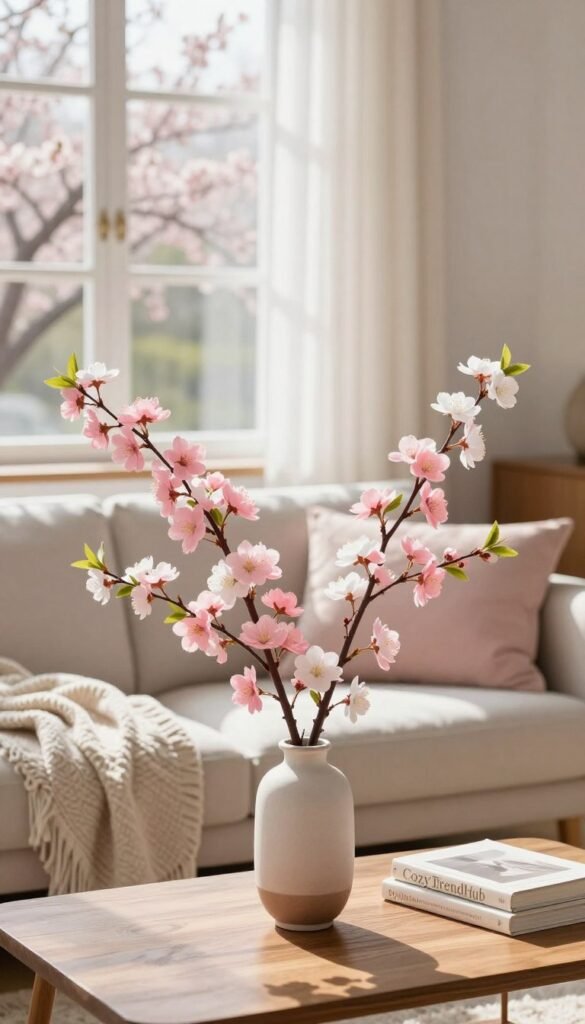
What problem these stems solve
Many faux pieces fold, fade, or crush in storage. That makes a once‑nice arrangement look tired after a season. Choose materials and construction that protect shape and color so stems last year after year.
Allergy-friendly pick
Faux cherry blossom branches offer a light, airy look without pollen or scent. They read delicate in entryways and tall vases and suit people sensitive to allergens or strong fragrances.
Durable options for busy homes
Faux peonies and hydrangeas hold their form through handling, pets, and frequent dusting. Their layered heads hide glue points and look full without daily attention.
Buying criteria for repeatable use
- Stem flexibility — bendable wire cores prevent breakage.
- Petal fabric quality — silk or polyester blends keep color under daylight.
- Color realism — check in natural light to avoid overly bright tones.
- Sold as a set or single pieces — sets speed styling; singles let you mix scale.
Quick tip: prefer stems with wired tips and heavy bases so arrangements read natural and stay upright in small spaces.
Storage and maintenance for renters and small spaces
Store stems in a long under‑bed bin to keep blooms flat and dust‑free. Wrap heads in tissue or bubble wrap to prevent crushing. Label boxes by season for fast swaps.
Maintain faux stems with a gentle dusting and occasional reshaping. Small care keeps the look fresh and extends reuse for years.
| Item | Why choose it | Storage tip |
|---|---|---|
| Cherry blossom branches | Airy, allergy-friendly, tall statement | Lay flat in a long box; wrap blooms |
| Peonies | Full heads, durable for handling | Stand stems upright in a tall bin |
| Hydrangeas | Volume with few stems; hides mechanics | Separate clusters; cushion between layers |
Renter-Friendly Spring Walls: Floral Accents Without Paint Regrets
Renters can refresh walls for the season without paint, nails, or long-term changes. Removable options make a big visual impact and keep deposits safe.
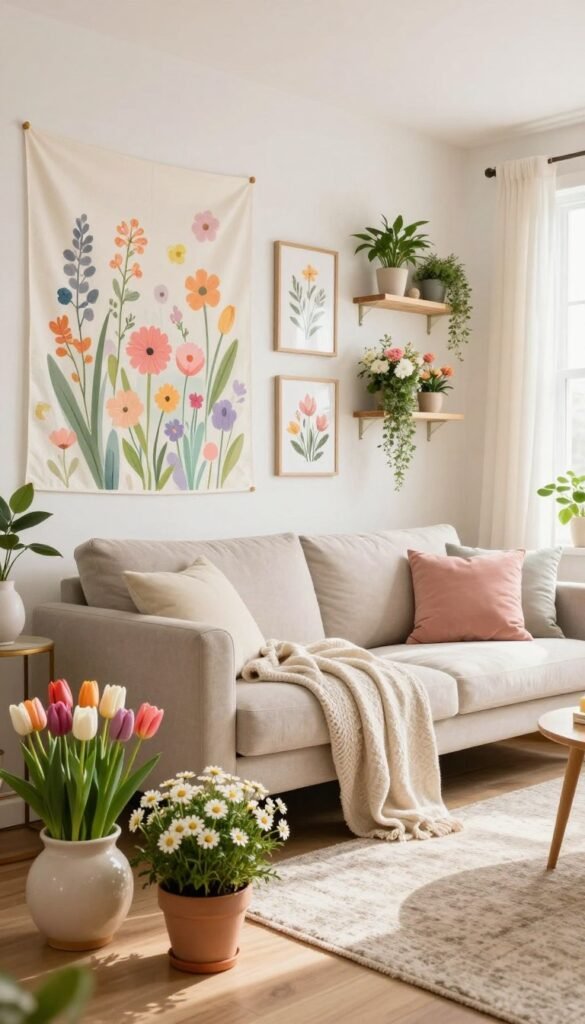
Peel-and-stick wallpaper offers an instant accent wall that removes cleanly. Choose finishes that match the wall surface and test a hidden patch first. Check pattern scale: large repeats can overwhelm a narrow hall; small motifs suit compact rooms.
Who it’s for: commitment-averse renters and anyone wanting a quick, high-impact change.
Quick seasonal swaps with prints
Framed botanical prints or art let you rotate looks without adhesive. Buy one standard frame size, store extra prints flat, and swap pieces when mood or the season changes. This method is budget-friendly and light on storage.
„Wall accents can reduce the need for many tabletop arrangements, keeping small spaces tidy.“
| Option | Who it’s for | Removability | Cost per swap |
|---|---|---|---|
| Peel-and-stick wallpaper | Renters wanting big change | High (test surface first) | Medium (covers large area) |
| Framed prints | Small budgets, frequent changers | Very high (no adhesive) | Low (new print, same frame) |
| Temporary decals | Accent spots, kids‘ rooms | High (small areas) | Low (single items) |
Avoid overly busy patterns in tight entryways and aggressive adhesives on textured paint. Patch-test and keep replacement pieces in a flat box to make future swaps fast and damage-free.
Spring Wreaths and Door Accents That Set the Tone at the Entry
A well-chosen wreath sets an instant tone for guests without crowding a small entry. Wreaths give a seasonal signal while leaving consoles and floors free for practical items.
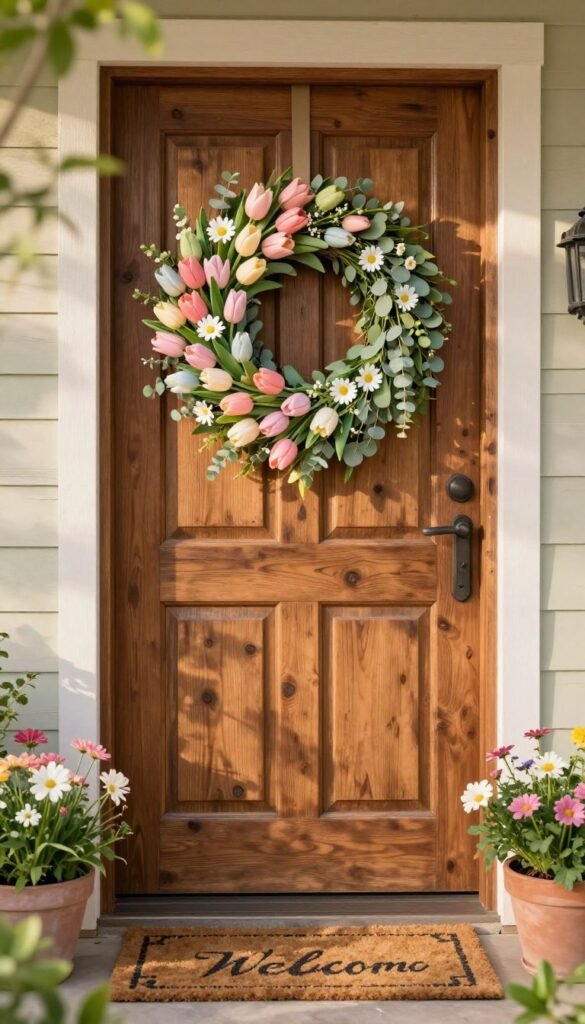
Macramé wreaths with faux greenery for a softer boho look
Macramé + faux greenery pairs texture with low upkeep. A DIY version uses macramé cord, wooden beads, and wired faux greenery. It stays lightweight, stores flat, and suits softer neutral homes.
What to check before you buy
- Measure door clearance: allow space for storm doors and tight frames so the wreath hangs flush.
- Choose renter-safe hardware: over-the-door hangers, adhesive hooks rated for your door weight, or removable magnetic hangers for metal doors.
- Consider sun exposure: direct sun can fade faux materials; pick UV-resistant stems or rotate items seasonally.
Why wreaths solve a common problem: they refresh an entry visually without adding tabletop clutter or trip hazards.
| Wreath Type | Weight | Renter-Safe Hook | Pros / Cons |
|---|---|---|---|
| Macramé + faux greenery | Light | Over-door hanger or adhesive hook | Soft, textural / can collect dust |
| Grapevine with fresh greens | Medium | Over-door or screw hook (test first) | Natural look / bulkier to store |
| Metal frame with faux sprigs | Light–Medium | Magnetic hook for metal doors | Durable, modern / needs UV-resistant stems |
| Fabric wreath (ribbon + beads) | Very light | Adhesive hook | Stores flat / less seasonal realism |
Pairing tip: match the wreath greens to an entryway vase arrangement so the whole entry reads cohesive, not overdone. A small coordinated touch makes the design feel intentional.
Living Room Mantel Styling with Florals (Without Overcrowding)
Treat the mantel like a small stage: one backdrop, two supporting props, and a single seasonal accent. This keeps the surface useful and visually calm.
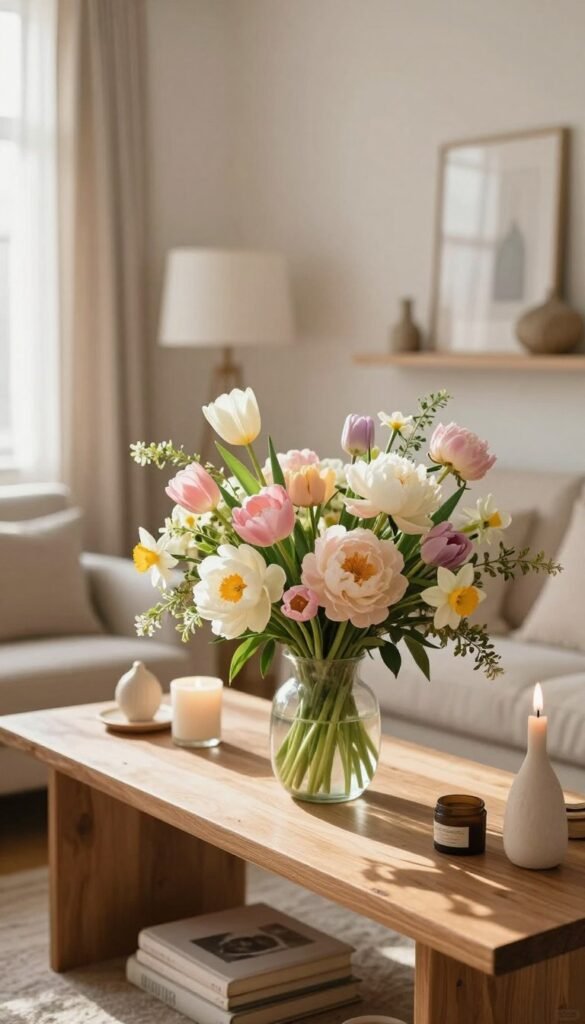
Layering mirrors, candlesticks, and books with seasonal plants
Start with one large backdrop item such as a mirror or art piece centered or slightly off-center. Add two medium-height pieces—candlesticks or a lamp—on either side.
Then place one floral or plant element and one grounding stack of books. This creates depth without many small objects that cause visual noise.
Balancing height, color, and texture so florals look curated
Keep the tallest item off-center and repeat one material twice, such as glass or metal. Use greenery to soften hard edges and tie tones together.
Tip: vary textures—smooth ceramic, aged wood, and a soft bud vase—so the mantel reads intentional.
Small room rule and practical notes
For small room layouts, use one anchor arrangement plus one or two simple accents to avoid competition with the coffee table or entryway.
- Faux stems: flame-safe versions work well near heat sources.
- Fresh blooms: reserve for tables where water is easy to manage.
- Use command-style hooks for lightweight garlands to avoid wall damage.
| Element | Role | Why it works |
|---|---|---|
| Mirror/art | Backdrop | Adds scale and reflects light |
| Candlesticks | Mid-height | Provides rhythm and vertical balance |
| Bud vase / faux stem | Accent | Seasonal touch with small footprint |
| Books | Grounding stack | Gives weight and anchors arrangement |
Easy Spring Tablescapes That Tie Living and Dining Spaces Together
Coordinate small choices for a cohesive look: match runners, plates, or colored glassware to one or two dominant stems so the table reads intentional. This approach makes adjacent living and dining zones feel connected without elaborate arranging.
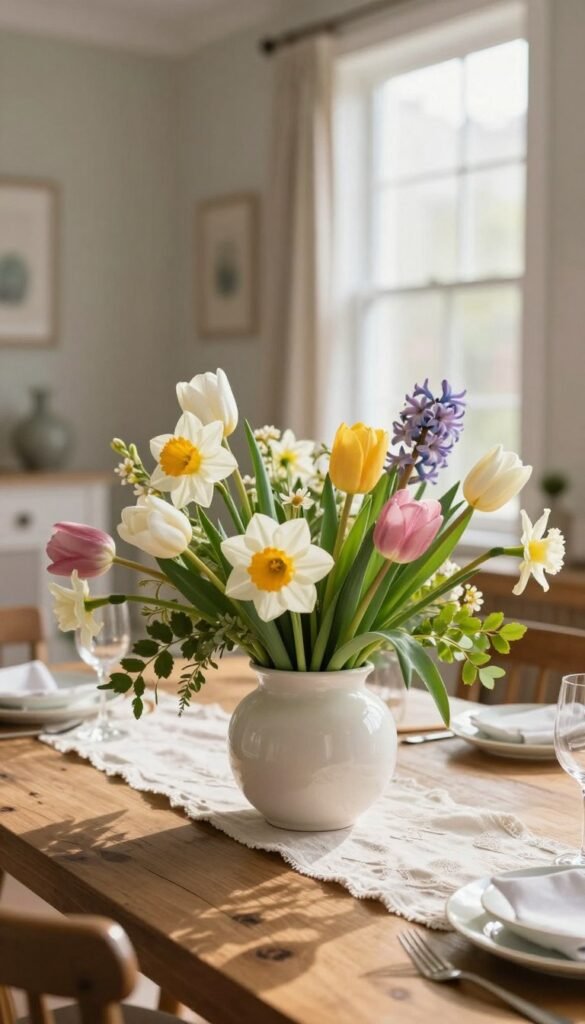
Coordinating centerpieces with plates, runners, and glassware
Pull one or two hues from plates or a runner and echo those in the flowers. Use colored glassware as a repeatable accent to carry the palette across the room.
Practical tip: keep the centerpiece low when the table is for dining so sightlines stay open. For casual meals, a shallow bowl or short vase works well.
Small bud vases vs. one single centerpiece
Bud vases spread flowers along a long table and let guests see each other. They are easier to refresh and store than a single large vessel.
Compare: a bud vase set has a smaller storage footprint and lower cost per use, while a single centerpiece can be quicker to style but takes more room and effort to change.
| Option | Cost per use | Storage footprint | Ease of setup |
|---|---|---|---|
| Bud vase set | Low | Compact (several small items) | Fast swaps; flexible |
| Single centerpiece | Medium–high | Single large item | One-time style effort; less flexible |
Playful seasonal touches: dyed eggs and jar method
For a bright brunch, stack dyed eggs around a glass insert inside a jar and place stems in the inner glass. The eggs add color and keep blooms centered.
Cleanup note: protect linens with a tray or runner and avoid droppy stems over plates. Choose low-shed flowers or use a small mat under water-holding vessels for food-safe surfaces.
Quick solve: coordination and scale beat complexity—one repeated hue and a few well-placed vases make an approachable tablescape that suits entertaining, small tables, and busy households.
Budget-Friendly Floral Spring Decor That Looks Polished
Stretch a small budget into a polished room update by using grocery stems, thrifted vessels, and items already on hand.
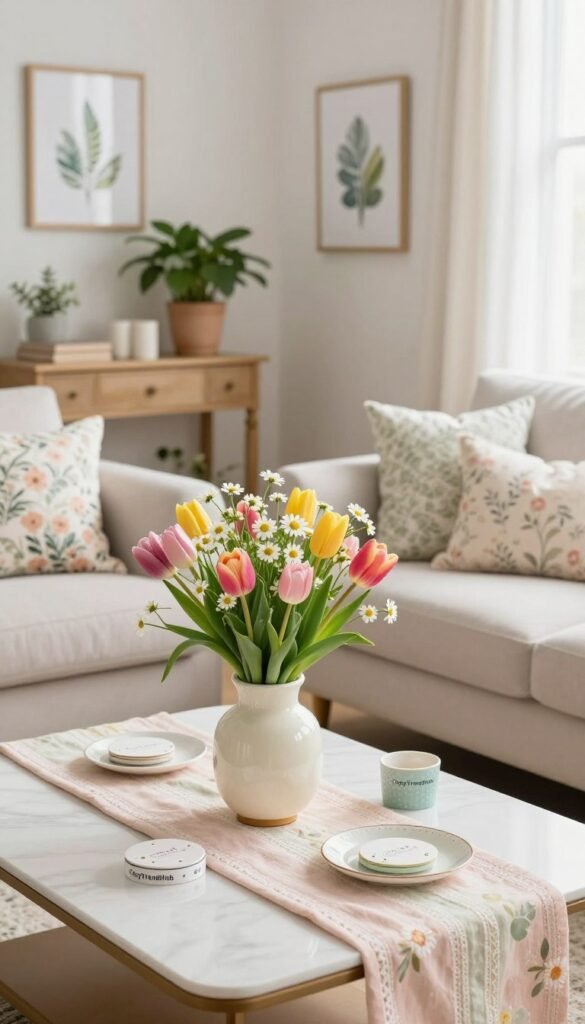
Grocery bouquets vs. farmer’s market stems
Grocery: convenient, predictable price, and great for weekly swaps. Check stems for firm ends and closed buds to extend life.
Farmer’s market: better seasonal variety and unique stems. Expect higher freshness and shorter runs—buy what looks healthy and plan for faster turnover.
Everyday centerpiece: citrus + candles
A shallow bowl of citrus with two simple candles creates a polished kitchen or dining table focal point without flowers. It’s low-cost, edible, and photogenic.
Repurpose-first checklist
- Look for trays, baskets, and a short stack of books to add height.
- Turn leftover winter pieces into anchors, then swap heavy throws for cotton or linen for a lighter look.
- Use thrifted finds for sturdy vessels—clean before use and expect some restoration effort.
Where to shop in the U.S.
Target, HomeGoods, and TJ Maxx carry seasonal sections that stretch dollars. Thrift stores and flea markets are the way to score solid vessels at low cost.
Quick buyer cue: grocery bouquets save time; markets give variety; faux stems save money across a season but need storage.
Quick Buying Guide and Comparison Criteria for Affiliate Picks
Start with measurable criteria: footprint in inches, height relative to the elbow-height rule, and visual weight at the viewing point. Use these numbers to compare options quickly.
Best for small spaces: footprint, height, and visual weight
Scoring rubric: footprint (in), height (below elbow level = good), visual weight (light/medium/heavy). Record scores for each item so comparisons are objective.
Best for renters: removability, wall safety, and storage
Rate removability (hooks, peel-and-stick), wall safety (no drilling), and storage needs (flat wreaths, long bins for faux stems). These criteria protect deposits and make swaps easy.
Best for seasonal reuse: materials, cleanability, durability
Prioritize glass or metal for easy cleaning, porcelain for neutral multi-season use, and wired stems for bendable durability. Include tool options—frog, tape grid, polished stones—in product blocks.
Product-block template & standardized pros/cons
- Template: „Best for,“ „Watch-outs,“ „Works well with.“
- Pros/Cons categories: fresh (maintenance, cost, fragrance), faux (storage, realism, dusting), tools (learning curve, cleaning), vessels (stability, waterline visibility).
Use side-by-side tables: vase shapes, tool options, and placement rules for entryway vs. coffee table vs. dining table to keep affiliate picks transparent and useful.
Conclusion
strong, clear guidance helps the seasonal refresh feel simple and useful. Start with a single action and the room will follow. Choose one versatile vase, pick a tight palette, and make one focal arrangement to set the tone for the season.
Practical rules: keep dining pieces at elbow-height so conversations stay easy. Reserve tall branches for consoles or sideboards to add drama without blocking sightlines. Cluster blooms rather than spacing them evenly and pick vase shapes that support stem posture.
For renters and small homes, favor low-mess pieces, removable wall accents, and items that store flat. Use the comparison criteria in the buying guide to avoid impulse buys. Pick one area to refresh first—entryway or living room—and expand only if it supports daily function and your budget.