
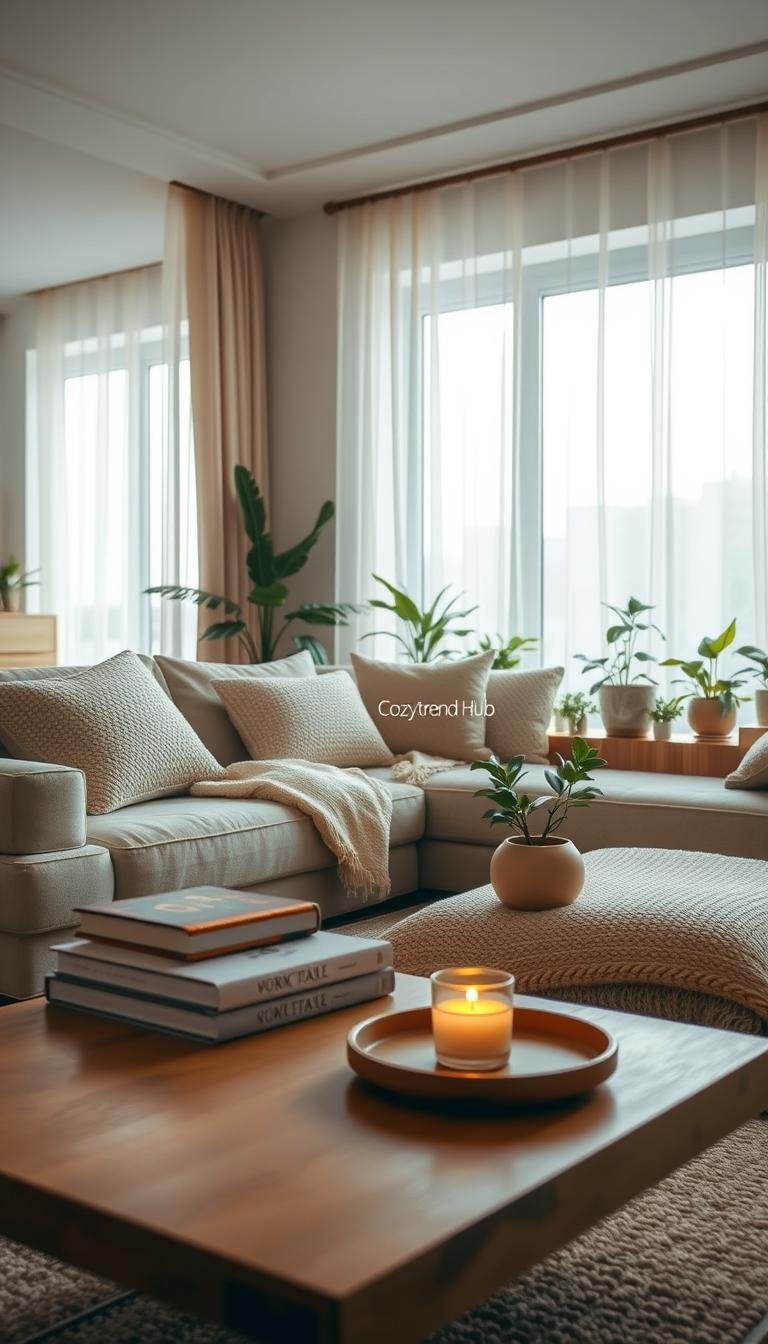
Many people want a calmer home but face stress from harsh light, clutter, and bedrooms that do not support sleep. This short guide shows renter-friendly, small-space options that ease those issues without renovations.
Relaxing decor here means softer light, fewer items in sight, warmer textures, and subtle cues that signal wind-down time.
The list focuses on four high-impact categories: light, organization, textiles, and scent. Each pick explains who it suits, what problem it solves, and quick pros and cons.
Recommendations favor reliability, low upkeep, and value. They work in apartments, kid- and pet-friendly rooms, and limited storage situations.
Readers can start with one category and build a routine. Design choices aim to support calmer evenings and reduce visual stimuli without promising medical results.
Key Takeaways
- Focus on lighting, storage, textiles, and scent for immediate impact.
- Choose renter-friendly options that are easy to swap seasonally.
- Look for low-maintenance, durable picks suitable for kids and pets.
- Start with one category to build a calming routine over time.
- Design supports reduced visual stimuli and better evening cues, not medical claims.
Quick buying framework for a calmer home environment
Begin by noticing whether light, clutter, texture, or scent is the main issue in a room. A short diagnosis makes shopping clearer and prevents purchases that add visual noise.
Diagnosis checklist (scan first):
- Harsh overhead light or glare → lighting
- Constant visual mess → organization
- Uncomfortable fabrics or cold surfaces → texture
- Difficulty winding down at night → bedding or scent
Match each problem to a practical solution and the likely buyer: renters, small-space residents, or busy households. For example, layered lighting suits renters who need plug-in options. Closed storage and lidded baskets work well in small rooms and kid-friendly places.
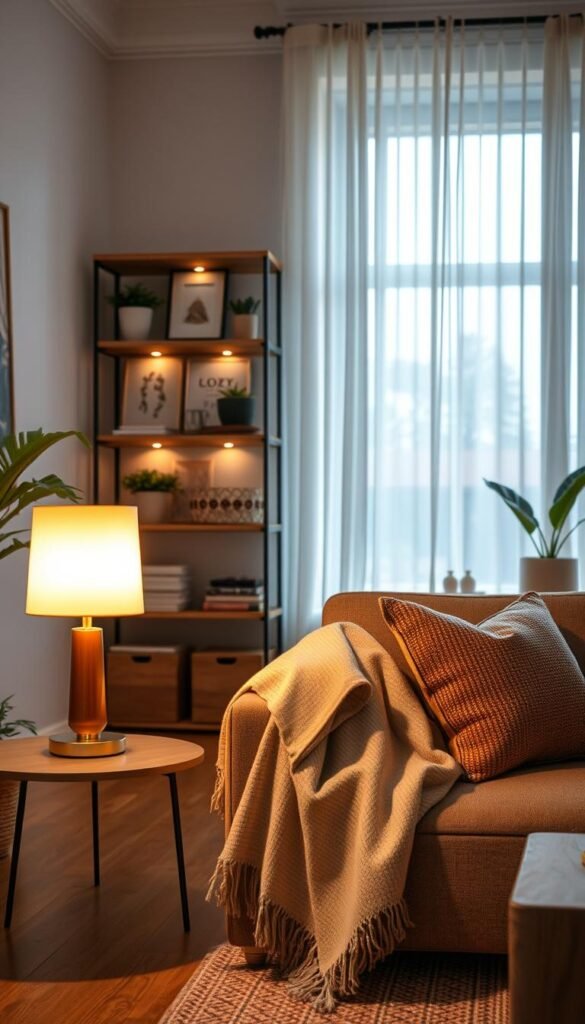
Quick buying considerations: check footprint, choose plug-in or adhesive fixes for rentals, and prioritize multi-use pieces like storage ottomans. Pros and cons should list who benefits most and what maintenance looks like.
| Field | Example | Who it fits |
|---|---|---|
| Best for | Soft ambient lamp | Renters, small space |
| Works in rentals | Plug-in, removable | All |
| Footprint | Small tabletop | Small rooms |
| Maintenance | Low (dust, bulb change) | Busy households |
| Seasonal swap potential | High | All |
Prioritization for fastest mood impact: start with lighting, then organization, then texture, then scent. Lighting gives the most immediate change; storage reduces constant „to-do“ signals; textiles add warmth; scent cues establish routine.
30-minute reset: swap one warm bulb, clear one surface, add one throw, and set one calming scent. Small changes add up. Note: these steps can improve comfort and reduce overstimulation but do not replace medical care.
Best home decor for relaxing spaces in the living room
A few targeted lamps and warm bulbs can change the entire evening mood of a living room.
Top picks — shopping-ready order
- Dimmable floor lamp — ideal for renters and dark apartments; adds vertical light without hard wiring.
- Warm LED bulbs (2700K–3000K) — swap overhead bulbs to mimic sunset tones in the evening.
- Plug-in sconces — place in corners to lift shadows; good for small living areas.
- Soft area rug — anchors seating and adds tactile warmth underfoot.
- Washable throws and pillows — easy seasonal swaps; choose soft knits or cotton blends.
- Oversized lidded basket — fast cleanup near the sofa; hides blankets and toys neatly.
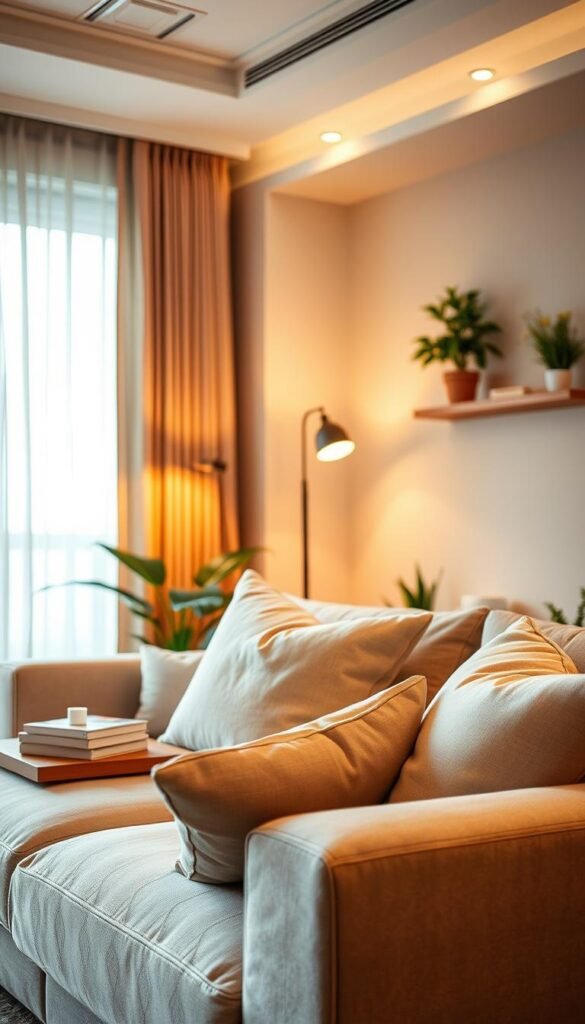
Layered lighting guidance
Pair one ambient lamp with one task lamp, such as a floor lamp plus a desk or reading lamp. This reduces reliance on harsh overhead light and creates zones for reading or screen time.
Bulb and dimming notes
Buy: LEDs 2700K–3000K for evening warmth. Consider: dimmable fixtures and bulbs that match dimmer specs.
Safety: floor lamps need sturdy bases around kids and pets; plug-in sconces require cord planning and outlet access.
Textiles and quick organization
Choose washable pillow covers and throws in wool/cotton blends or soft knits to banish a „cold“ room feel fast. Rugs should anchor furniture without covering small rooms entirely.
„Rotate pillow covers and throws seasonally — lighter fabrics in warm months, heavier textures in winter — to refresh the look with minimal purchases.“
| Pick | Best for | Quick pros/cons |
|---|---|---|
| Dimmable floor lamp | Renters, small rooms | Pro: vertical light; Con: needs stable base |
| Warm LED bulbs | All living rooms | Pro: mimics sunset; Con: check dimmer compatibility |
| Oversized lidded basket | Families, busy households | Pro: hides items fast; Con: measure footprint and lid height |
Natural light tip: keep shades open during the day to let sunlight support mood, then switch to warm lamps at night to cue wind-down.
Buying checklist: measure height and footprint, choose washable fabrics, prefer plug-in fixtures for rentals, and pick stable bases when pets or kids are present.
Bedroom decor picks for deeper sleep and a more restful mood
A few simple swaps in the bedroom can turn nightly routines into clear signals to wind down.
Prioritize items that boost sleep without a full redesign. These choices suit renters and small spaces and are reversible or low-effort to install.
Weighted blankets: who they help and how to choose
Who benefits: light sleepers, people who feel wired at bedtime, and shift workers who need a strong routine cue.
Pick a blanket about 10% of body weight. Check breathability, whether it fits a duvet cover, and how you’ll wash it. Heavier fills can trap heat; choose breathable fabrics if you run warm.
„A weighted blanket can create a grounded sensation that signals time to rest.“
Sheets that invite a hotel-like wind-down
High-thread-count or well-woven sheets make nightly routines feel intentional. Choose percale for cooling and sateen for a softer, warmer feel.
Look for durable weaves and easy-care labels to suit busy households and small laundry machines.
Blackout curtains, shades, and daytime light balance
Blackout solutions suit streetlight exposure and early sunrises. Use tension rods, magnetic liners, or clip-on shades in rentals to avoid drilling.
Open coverings fully during the day to welcome sunlight and natural light into the space. Layered treatments combine room-darkening at night with light-friendly options by day.
| Item | Who it fits | Quick pros | Quick cons |
|---|---|---|---|
| Weighted blanket | Light sleepers, wired nights | Grounded feel, routine cue | Can retain heat, heavy laundry |
| High-quality sheets | All bedrooms | Luxury feel, easy routine | Cost varies by weave |
| Blackout curtains/shades | Shift workers, streetlight areas | Stronger sleep schedule, blocks light | May need renter-friendly install |
Bedroom reset checklist: one weighted blanket or throw, one sheet upgrade, one light-control solution. Keep walls and clutter minimal and pick calming color accents if repainting is possible.
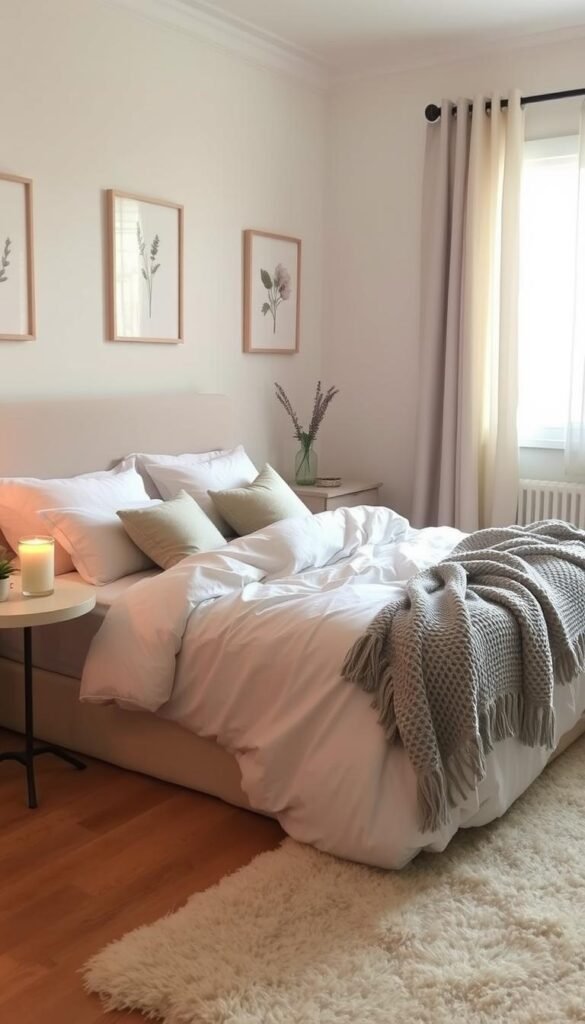
Calming colors, natural materials, and nature-inspired accents that reduce overstimulation
Choose calm color strategies and tactile elements that lower visual noise and make rooms feel quieter.
Wall and palette guidance
Core problem: overstimulation often comes from high-contrast visuals, too many patterns, and shiny synthetic finishes.
Paint is best for homeowners or long-term renters who want lasting change.
Strict renters should consider peel-and-stick wallpaper or temporary panels. Blues and greens are linked to calmer responses, and navy often reads as especially soothing in research, though results vary by person.
Choose your calm palette
Pair one soothing wall tone with warm neutrals like cream or taupe. Limit high-energy colors to small accents to keep the room restful.
Texture layering to avoid a flat look
Muted neutrals can feel calming but risk a clinical look if flat. Mix linen curtains, a wool throw, and textured pillow covers to add depth while keeping colors simple.
Natural materials and care notes
- Wood: adds visual warmth; minor scratches show over time.
- Wool: cozy and insulating; may shed and need gentle washing.
- Linen: breathable and lived-in; wrinkles easily.
- Cotton: soft and easy-care; varies by weave.
Choose textiles labeled washable when possible. For furniture, lighter wood tones read warmer than glossy veneers.
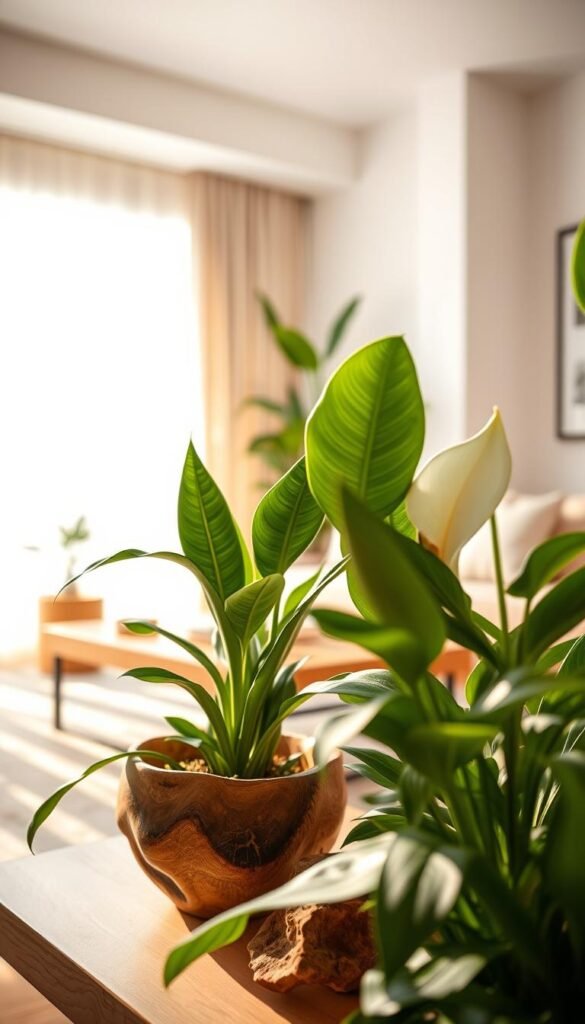
Nature-inspired accents and plants
Use one large nature print or a small gallery of framed photos in matching frames rather than many small pieces. A single vase with branches or dried flowers gives low-maintenance interest.
Suggest hardy plants such as snake plant, pothos, or ZZ plant for low upkeep. Dried arrangements work where watering is impractical. Place a taller plant or large frame vertically to add impact without filling surfaces.
| Item | Who it fits | Quick pros |
|---|---|---|
| Peel-and-stick wall panel | Strict renters | Temporary, low-damage |
| Hardy houseplant (pothos) | Low-maintenance households | Easy care, air-friendly |
| Linen throw | Small rooms | Breathable, layered look |
| Large nature print | All buyers | High impact, less clutter |
Scent, candles, and simple spa cues for instant relaxation at home
Scent and soft lighting offer a fast signal that the day is over and it’s time to unwind.
Candles versus essential oil diffusers
Candles deliver scent plus a warm glow. They suit living areas and brief bathroom rituals. Pros: mood light, simple use. Cons: open flame risk and must be extinguished before leaving or sleep.
Diffusers run without flame and fit pet households if used safely. Pros: steady scent, timers, lower smoke. Cons: require cleaning and refill oils.
Relaxing scent profiles to shop
- Lavender, chamomile — gentle wind-down cues.
- Eucalyptus — spa-like freshness.
- Geranium, jasmine — soft floral calm.
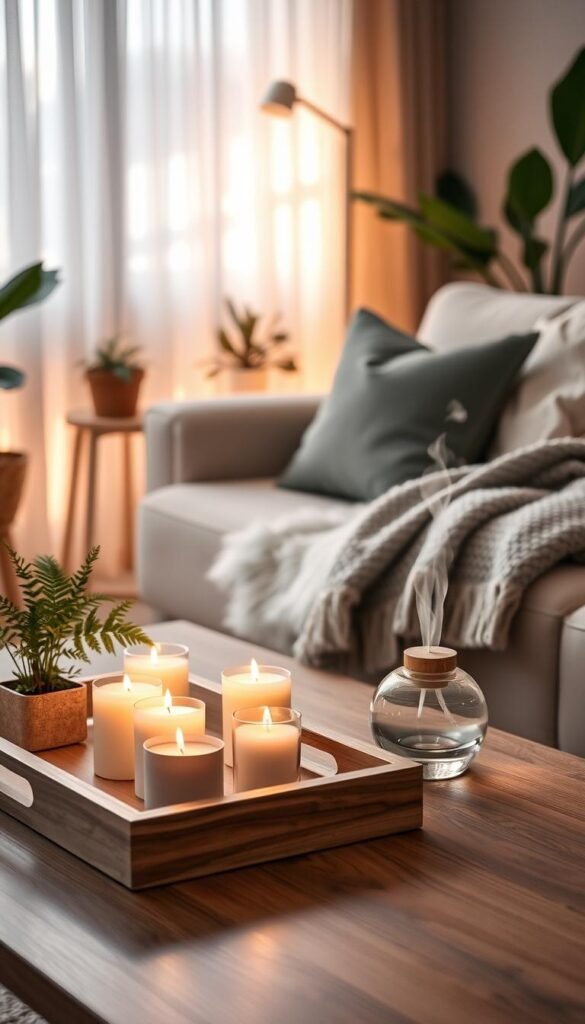
Bathroom micro-spa and seasonal swaps
Keep a stack of fluffy towels, one candle or diffuser, and a small book corner next to tubs. Store extras in a basket to avoid clutter.
Rotate scents by season: fresh/clean in spring, citrus in summer, warm spices in fall, evergreen in winter. Use lighter oils in the kitchen during the day to avoid overpowering other rooms.
| Item | Who it fits | Quick pros | Maintenance |
|---|---|---|---|
| Glass-wick candle | Couples, renters without pets | Light + scent | Trim wick; store upright |
| Ultrasonic diffuser | Pet households, small rooms | No flame; timers | Clean tank monthly |
| Starter kit | New shoppers | Candle or diffuser + refills + towels | Refill oils; launder towels |
„Scent acts as a repeatable cue: a few minutes with a candle or diffuser helps mark the shift from day tasks to evening calm.“
Conclusion
Start small: change one bulb and clear one surface. These moves shift how a room and the wider space feel tonight.
Problem → solution: cut harsh light, hide visual clutter, add warm textiles, and set a scent cue to mark wind-down time. Prioritize lighting and one storage fix first, then add textiles and scent.
Choose your first purchase: one warm bulb + lamp option, one lidded basket, and one bedroom upgrade (sheets, blackout, or a weighted blanket). Plug-in and removable options work in rentals and small rooms.
Keep fewer, higher-impact items. Refresh one textile and one scent each season. See the living room, bedroom, color/material, and scent sections for targeted decor ideas and practical design tips.