
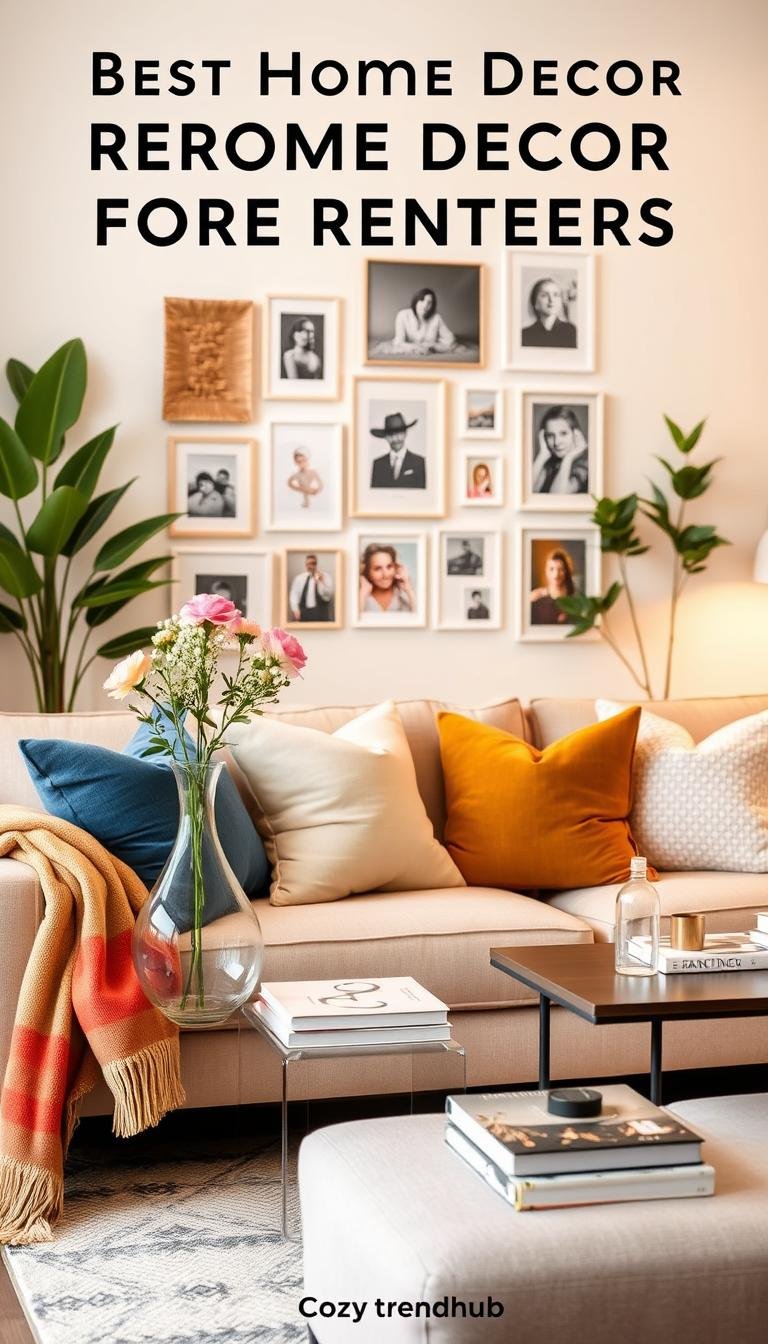
Renters often want a finished, personal space without risking deposits or breaking lease rules. This guide frames the core problem: getting a stylish, functional look while avoiding wall damage, rule violations, and repair costs.
Practical solutions focus on modular seating, multi-use furniture, rugs, performance fabrics, smart storage, window treatments, mirrors, and damage-free art options (Faye, Jul 22, 2025; Loveproperty, Oct 29, 2024).
The list is organized by the buying choices renters make most: seating, rugs, wall upgrades, lighting, storage, bath, kitchen, and privacy. Selection criteria are clear: no-drill installs, removable adhesives that won’t harm paint, portability, and small-space efficiency.
Readers will get a „best for“ logic in comparison tables: size/fit, installation method, removal risk, and value. The guide calls out common use cases like frequent movers, short leases, furnished rentals, pet or kid homes, and seasonal decorators.
Practical outcomes matter here — more light, more privacy, less clutter, and fewer holes. The intro also flags common mistakes: overloading adhesives, skipping surface tests, and buying pieces that won’t fit through doorways.
Key Takeaways
- Focus on renter-safe upgrades that avoid drills and permanent changes.
- Use portable, multi-function pieces to save space and ease moves.
- Prioritize removable adhesives and test surfaces first.
- Compare size, installation method, removal risk, and value before buying.
- Avoid oversized items and plan doorways and layout in advance.
Renter rules that shape what you can buy (and return to move-out ready)
Before shopping, renters should map rules and surfaces that shape safe, removable upgrades. A short plan cuts risk and keeps a security deposit intact.
Focus first on pieces that install without drilling and remove cleanly. This way, small rooms can feel finished without permanent change.
Damage-free priorities: no-drill, removable, portable
Renter-first buying rule: choose items that install without tools, come off without residue, and look intentional when in place.
- Adhesive strips and picture hooks rated for weight.
- Peel-and-stick wallpaper and washi tape for short-term color.
- Freestanding or leaning furniture and mirrors to avoid wall holes.
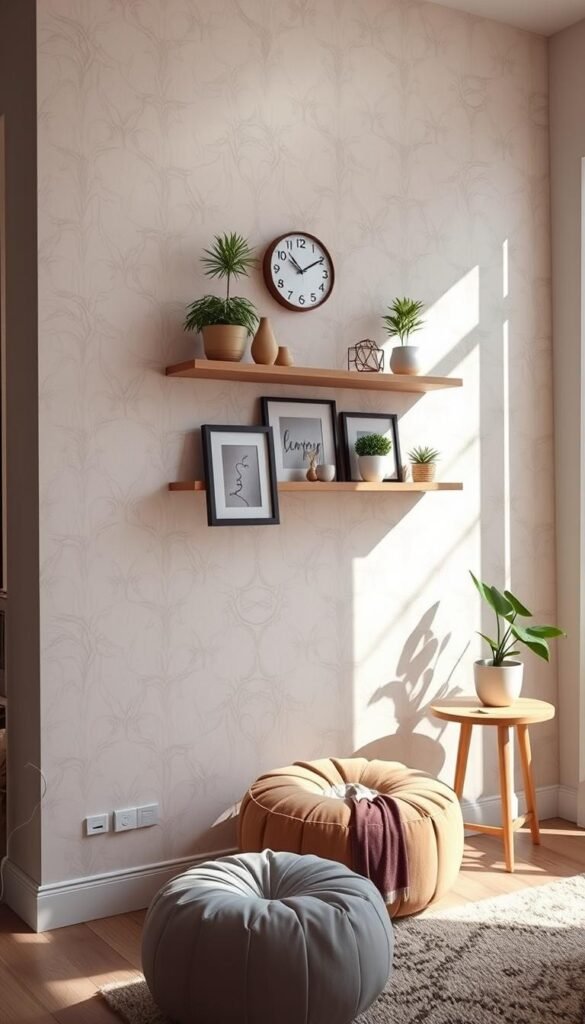
Surfaces that matter: painted walls vs. tile vs. textured ceilings
Not all surfaces behave the same. Matte or flat paint can lift when adhesives come off. Glossy or semi-gloss paint often holds strips better.
Tile accepts suction hooks. Textured ceilings make ceiling-mounted upgrades tricky; the Tulip magnetic ceiling shade can offer a no re-wiring way, though some textured surfaces may need optional screws.
| Surface | Good options | Risk |
|---|---|---|
| Painted walls | Adhesive strips, washi tape, leaning art | Flat paint may peel; test small spot |
| Tile | Suction hooks, over-cabinet racks | Grout and uneven tile reduce suction |
| Textured ceilings | Freestanding lamps, magnetic ceiling shades | Mounts may require screws; check lease |
When to ask the landlord (and when you don’t have to)
Ask permission for anything that changes wiring, uses screws or anchors, or alters tile and fixtures. These actions often require approval on a lease.
No permission is usually needed for rugs, plug-in lamps, freestanding furniture, and removable decor. Keep original hardware and any spare paint info the landlord provided.
- Damage-free checklist before buying: weight rating, removal steps, residue risk, hole risk.
- Move-out readiness: store original parts, document changes, patch only if screws were used.
If unsure, pick portable pieces first; test a small spot before applying any removable upgrade. Later sections will cover wall art, large mirrors, wallpaper, and tile bathroom items that commonly affect deposits.
Quick picks for small spaces and short leases
Small apartments respond best to a single anchor item plus two fast, removable fixes. That simple rule turns limited space into a functional, attractive spot in hours, not weeks.
Choose one anchor (a rug or modular seating), one lighting update, and one storage solution. This trio shifts how a room functions with minimal effort and little to pack when moving.
Best for frequent movers: modular and lightweight pieces
Why it works: modular seating, collapsible tables, and flat-pack storage travel easily through stairs and elevators. These pieces cut packing time and let layouts change without new tools.
Best for tight apartments: double-duty and vertical solutions
Prioritize double-duty furniture like sleepers and storage benches. Then add tall shelving to use height instead of floor space. These choices keep floors clear and make small spaces feel larger.
Best for seasonal refresh: textiles, lighting, and tabletop decor
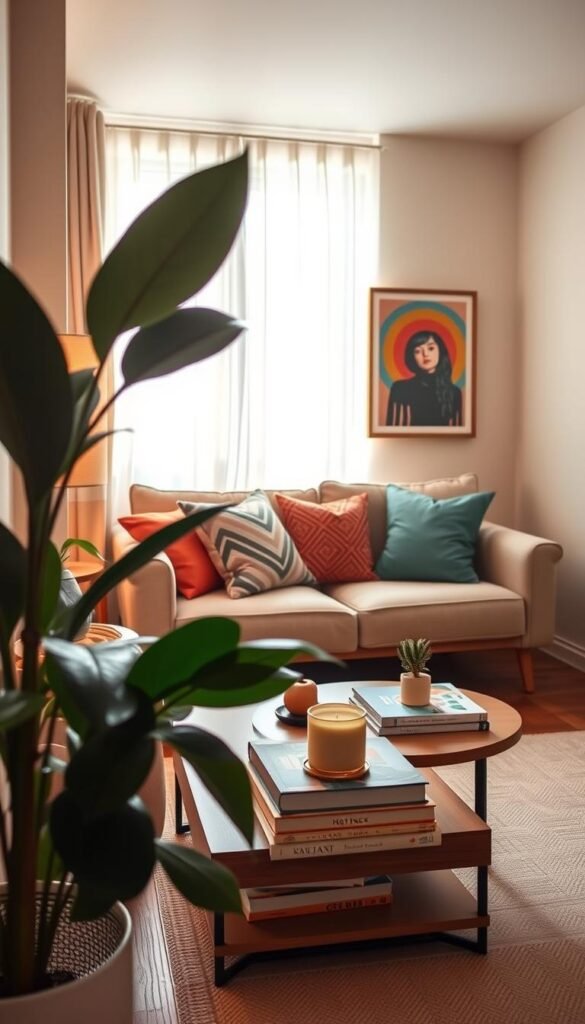
Quick swaps — throws, pillow covers, table linens, string lights, and a few tabletop items like vases — give a seasonal lift. Pack them in one bin and switch styles in an afternoon.
Ways to avoid regret buys: measure doorways and stair clearance, pick a neutral foundation, and use removable color with textiles instead of paint.
| Use case | Top picks | Quick pros | Watchouts |
|---|---|---|---|
| Frequent movers | Modular seating, lightweight tables, collapsible storage | Easy to move, reconfigurable, low packing volume | Check connectors and fabric durability |
| Tight apartments | Sleeper sofas, storage benches, tall shelving | Saves floor space, doubles function, tidy look | Measure height and doorway clearance |
| Seasonal refresh | Throws, pillow covers, string lights, tabletop accents | Fast update, low cost, easy to store | Avoid weak-quality textiles that pill quickly |
Modular seating that adapts to your living room (and your next apartment)
Modular seating solves one simple problem: standard sofas often won’t fit odd layouts or tight doorways. Modules let a living space change without hauling a whole couch. This suits frequent moves and shared leases.
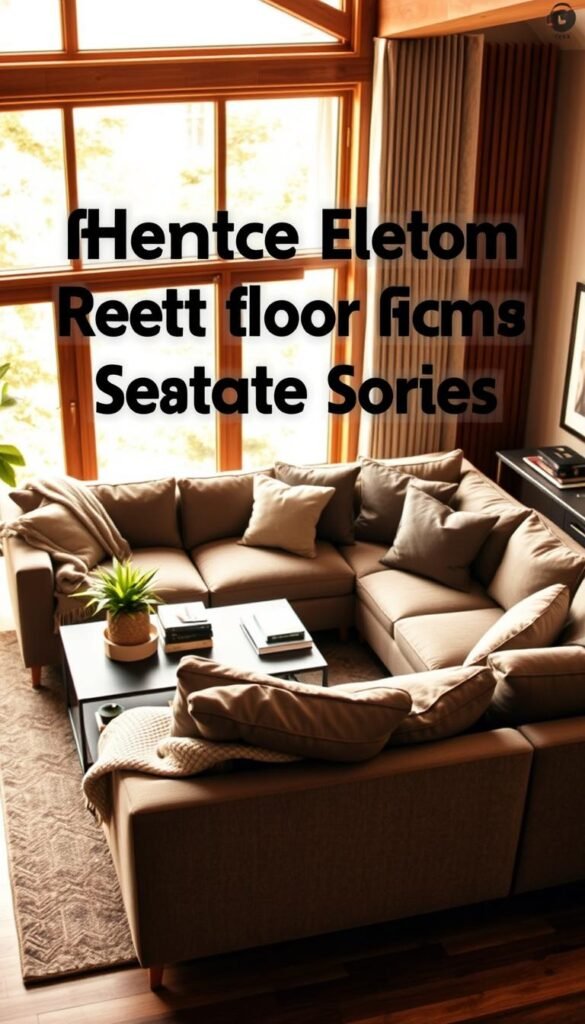
Reconfigurable sectionals for awkward layouts
When rooms are odd-shaped, split modules can form an L, a long sofa, or separate chairs. Use them in open-plan corners, narrow living lanes, or when a chaise needs to swap sides.
Flexible seating that works for roommates
Modules that detach become individual chairs or ottomans. Each person can take a piece at move-out, avoiding disputes over hauling a bulky sofa out of an apartment.
Buying considerations: connectors, fabric, and moveability
- Connector type: clips vs. brackets — clips are quick, brackets hold tighter on rugs.
- Seat depth & weight: check comfort and how heavy each module is to carry up stairs.
- Doorway fit: confirm modules pass through narrow entries.
- Fabric: pick stain-resistant, removable cushion covers for easy washing.
| Feature | What to check | Why it matters | Quick tip |
|---|---|---|---|
| Connectors | Clips, brackets, or magnets | Stability and ease of reconfiguration | Test on your floor surface |
| Seat depth | Measure cushion depth | Comfort and room scale | Match to your primary living use |
| Module weight | Weight per piece | Carryability up stairs | Pick lighter frames if moves are frequent |
| Fabric | Performance textile or removable covers | Stain resistance and longevity | Choose washable covers |
Pros: easier to move, flexible layouts, replace a single module if damaged. Cons: more seams, connectors that slip on slick floors, and often higher cost than a basic loveseat.
Measure before you buy: tape the footprint on the floor, confirm at least 30″ of walkway clearance, and verify each module fits through doors and elevators.
Double-duty furniture to save space, money, and moving effort
In small apartments every piece must pull double duty to justify its footprint. Multi-use items cut the number of things to move and keep each room flexible.
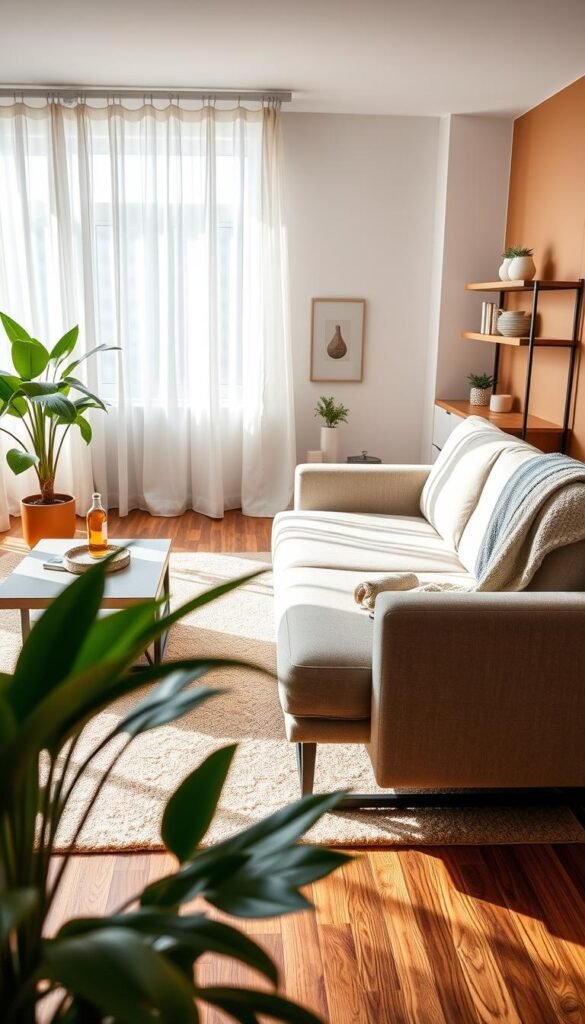
Sofa beds suit: studios, frequent hosts, and anyone who needs a living area that becomes a bed at night. Choose by sleep style: pull-out mattresses offer mattress feel but add weight; click-clack futons are lighter and cheaper; daybed-style seating looks like furniture and sleeps okay for occasional guests.
Storage seating that hides clutter
Ottomans and benches stash shoes, blankets, or linens. They work well in entryways and at the foot of a bed when closets are tight. Lidded pieces free floor space and speed tidy-ups.
- Pros: fewer items to buy, faster moves, better use of corners.
- Cons: mechanisms add weight; lids can block tight walkways; cheap hardware wears faster.
What to measure before buying
Measure door width, stair turns, elevator depth, and deployed bed clearance. Confirm the sofa’s open length so the bed can unfold without hitting a wall.
„Prioritize daily comfort first—seat feel and support—then storage volume.“
| Item | Who needs it | Trade-off |
|---|---|---|
| Sofa bed | Studio tenants, hosts | Comfort vs. weight |
| Storage ottoman | Entryways, small living rooms | Volume vs. lid access in tight layouts |
| Bench with drawers | Bedroom, narrow halls | Function vs. bulk |
Performance fabrics and removable covers for real-life messes
When life gets messy, the right upholstery and zip-off covers let furniture stay useful and presentable. Performance fabrics resist stains and moisture. Removable covers unzip for machine washing and quick refreshes.
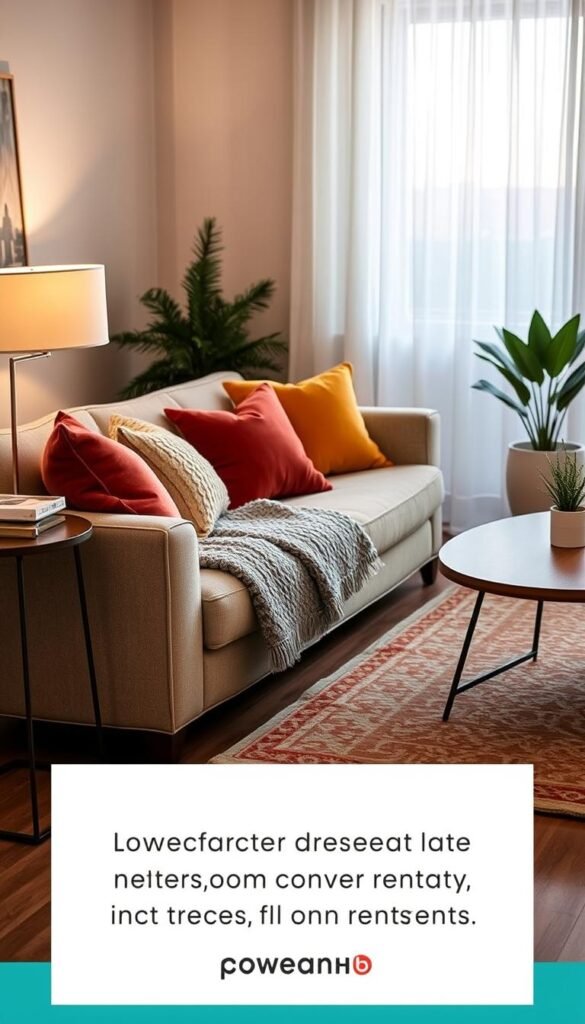
Best for pets and kids
Performance textiles wick spills and wipe clean. They are a practical choice when muddy paws or snack-time accidents are common.
Look for tightly woven weaves and stain treatments that block liquids without feeling plasticky.
Slipcovers for furnished rentals
Slipcovers protect a landlord’s sofa and change the room’s look without altering the original piece. They are portable at move-out and work well when tenants need a neutral base.
Care, feel, and trade-offs
Check product labels: are covers machine washable? Do they shrink? Do cushion cores have separate zip covers? Those answers affect long-term life and upkeep.
Trade-offs include breathability and texture. Some performance weaves feel firmer. Some slipcovers shift and need retucking. Pet hair may show on smooth colorways.
| Option | Durability | Maintenance | Visual finish |
|---|---|---|---|
| Performance upholstery | High—built-in treatments | Wipe clean; occasional deep wash | Tailored, factory fit |
| Aftermarket slipcovers | Medium—depends on fabric | Machine wash; may need refitting | Changeable, covers landlord pieces |
| Throw blankets | Low—layer protection | Easy wash; fast swap | Casual, layered look |
Color strategy: choose mid-tones or heathered weaves to hide daily dust. Mid-tone covers age better in a busy life and cut visual maintenance.
Overall, prioritize washable covers and separate zip cushions. That protects investment, improves daily life, and keeps a small space practical and stylish in a rented setting.
Rugs that fix cold floors, hide damage, and define a room
A well-chosen rug adds warmth, hides wear, and instantly defines a room without a single tool.
Many rentals have cold tile, worn carpet, or scuffed floorboards that can’t be replaced. A rug provides fast coverage and a visual refresh. It also cuts echo and makes a space feel intentional.
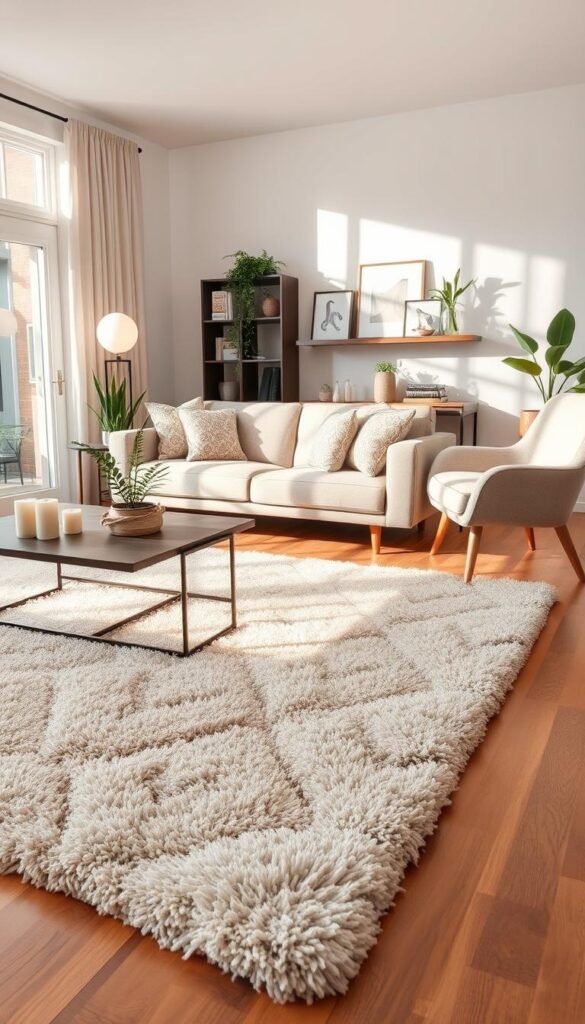
Coverage and camouflage
Choose larger sizes and bold patterns to mask stains and uneven color. Runners protect high-traffic paths. Place rugs where scuffs or worn carpet draw the eye.
Layering to zone open-plan layouts
Use one large base rug for the living area and a smaller accent rug to mark a dining or reading nook. Layering adds texture and separates functions without walls.
Buying considerations
- Material: synthetics clean easily; natural fibers feel richer but may need special care.
- Pile: low-pile slides less and vacuums easier; plush gives cushion but traps allergens.
- Pad: a pad adds cushion, prevents slip, and protects floors from abrasion.
- Edge binding: tight binding resists fray in high-traffic areas.
Pros and cons for pets, allergies, and traffic
Synthetic weaves are practical with pets and heavy use. Natural wool hides dirt but sheds and can irritate allergies.
Tip: pick mid-tones and patterns to hide pet hair and crumbs. For narrow stairs, choose foldable, lightweight constructions to ease moves.
| Problem to solve | Rug type | Realistic trade-offs |
|---|---|---|
| Cold tile or echo | Plush or layered rugs + pad | Warmer feel vs. harder to clean |
| Worn carpet/floorboards | Large pattern rug or runner | Good coverage vs. heavier to move |
| Zoning open plan | Base rug + smaller accent rug | Clear zones vs. careful sizing needed |
| High-traffic or pet areas | Synthetic low-pile with durable pad | Easy clean vs. less luxe texture |
Sizing tip: aim to get at least the front legs of seating on the rug or go full furniture-on-rug when space allows. That ensures a cohesive layout and protects the floor underneath.
Peel-and-stick and removable wall upgrades that won’t risk your deposit
Temporary coverings let a blank wall become a focal point without a paint job or nails. Peel-and-stick wallpaper and vinyl murals give one striking feature wall behind a bed or sofa, adding instant color and scale with minimal commitment.
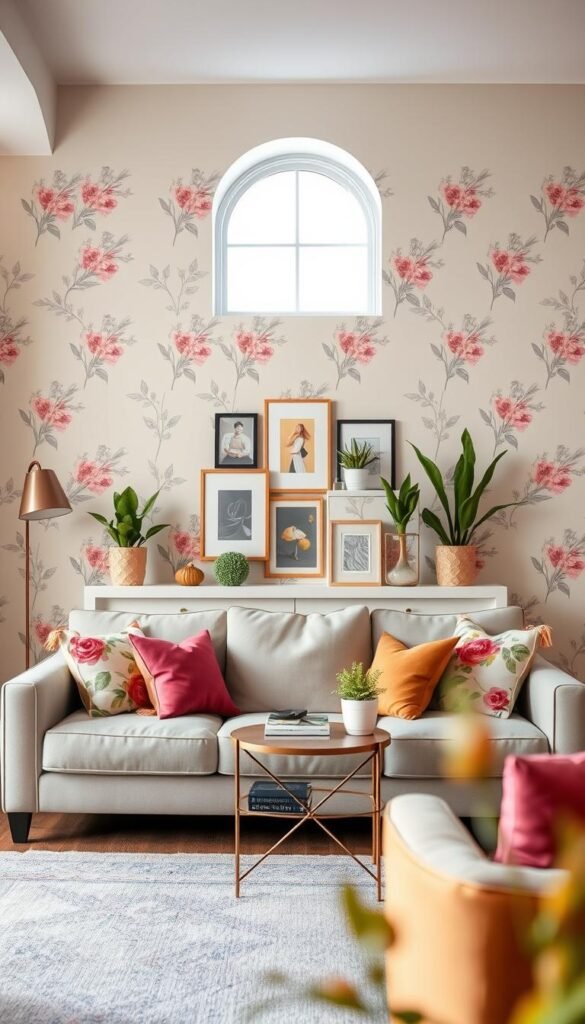
Peel-and-stick wallpaper and vinyl murals
Use: single feature walls and short leases. These sheets cover scuffs and create large-scale patterns with quick install.
Note: vinyl stickers can peel from tile if removed too fast; a plastic scraper and steady heat reduce risk.
Washi tape patterns
Washi tape creates geometric or playful patterns in dorms, entryways, and kids‘ rooms. Tape is low-cost, repositionable, and ideal when seasons or moods change.
What to test first
Apply a small sample to a hidden spot, wait 24–48 hours, remove slowly, and check for paint lift or residue.
Removal depends on paint finish, wall age, humidity, and how long the product stays up. Always check the lease and, when in doubt, ask the landlord.
| Option | Good uses | Trade-offs |
|---|---|---|
| Peel-and-stick | Feature wall, rental refresh | Fast install; edges may lift in humid zones |
| Washi tape | Dorms, kids’ rooms, seasonal patterns | Cheap and flexible; not durable long-term |
| Vinyl murals | Large impact without paint | Requires careful removal; match repeats |
Buyer checklist: roll coverage, repeat matching, repositionability, and cleaning method. These steps help keep walls intact and make seasonal decorating a low-risk swap.
Damage-free art and gallery wall setups (without nails)
Hanging art without nails keeps personality on display and deposits intact. This section helps pick systems that match weight, surface, and style. It focuses on practical steps and safe removal.

Removable adhesive hooks and picture-hanging strips
Use these when frames are light to medium weight and need to sit flat. Match the strip or hook rating to your frame. Test one strip and wait 24 hours before hanging multiple pieces.
Tip: pull adhesive tabs straight down when removing. Don’t yank; heat with a hair dryer if the tab resists.
Tension-rod and wire display ideas
Tension rods with a hanging wire work well for lightweight prints and kids’ art. They let you clip and rotate pieces without repeated tape or holes.
This method is a great way to create a casual, changeable gallery wall over a desk or in a play area.
Leaning frames and picture ledges
Leaning frames and short ledges cut holes and speed rearranging. A single shelf can hold multiple picture frames and small objects.
Picture ledges may need a couple of screws. They still reduce total holes and make swaps fast.
- Pro: adhesive methods reduce holes; ledges ease layered looks.
- Con: adhesives need careful removal; ledges sometimes require landlord approval.
| Method | Weight limit | Best-for |
|---|---|---|
| Adhesive hooks/strips | Up to 10–16 lbs (check pack) | Framed prints that must sit flat |
| Tension rod + wire | Light prints, string art | Rotating kids’ art, seasonal pieces |
| Leaning frames / ledge | Depends on shelf anchors | Layered gallery effect, heavy frames on floor |
| Propped cork board | Any—no wall contact | A great way to show photos without holes |
“Match weight to rating, test a hidden spot, and remove slowly to avoid paint lift.”
Final safety tips: don’t overload hooks, keep cords and frames secure, and store original hardware at move-out. A small cork board on a console table is a great way to add photos without touching the wall at all.
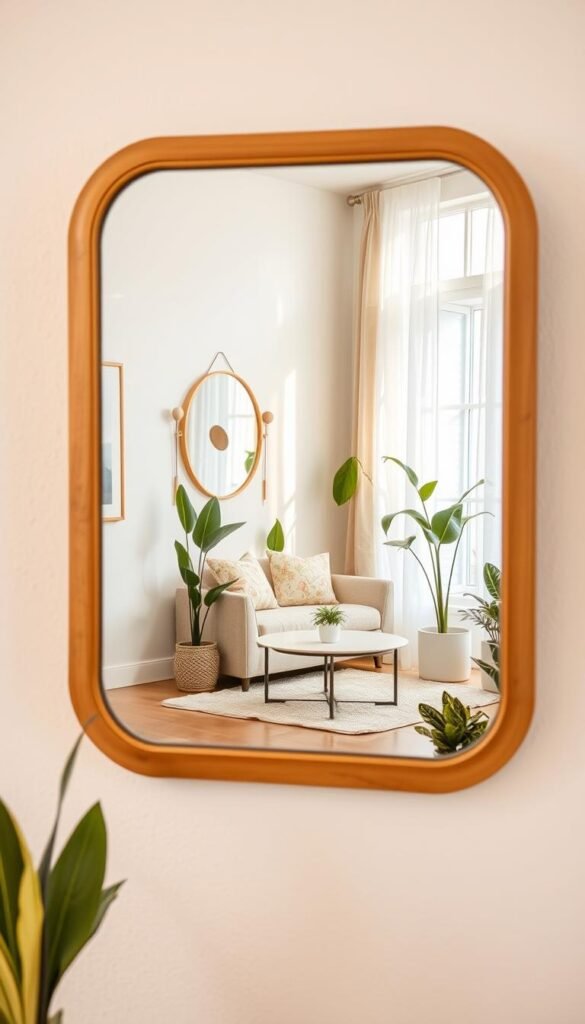
Mirrors that make a small room look bigger—without heavy mounting
A well-placed mirror can change how a small apartment feels in minutes. It brightens, adds depth, and avoids drilling into surfaces that can’t be altered.
Why this matters: compact rooms often feel dark and tight, and large framed pieces usually need anchors. Freestanding or leaning mirrors deliver the same visual gain without permanent fixes.
No-drill options that work
Freestanding mirrors on a base or easel stand firm without touching a wall. Leaning mirrors rest against a baseboard or a protected wall and give a tall, elegant look.
Placement tips
Put a mirror opposite or adjacent to a window to reflect natural light and widen the room visually. Position one near an entry for quick outfit checks and in living spaces to add depth.
Protect the wall and floor
Use thin adhesive pads behind the frame to prevent scuffs. Add a non-slip rug grip or rubber bumper at the base to stop sliding. If children or pets are present, add anti-tip straps even if not drilling.
Buying considerations and trade-offs
| Feature | Why it matters | Quick tip |
|---|---|---|
| Height | Sets the reflected view | Match to full or three-quarter length |
| Frame width | Affects weight and look | Choose narrow frames for lighter pieces |
| Total weight | Safety and moveability | Heavier mirrors need base support |
Pros: instant brightness and a sense of space. Cons: safety concerns in high-traffic areas and extra steps to secure around kids or pets.
Lighting upgrades renters can actually install
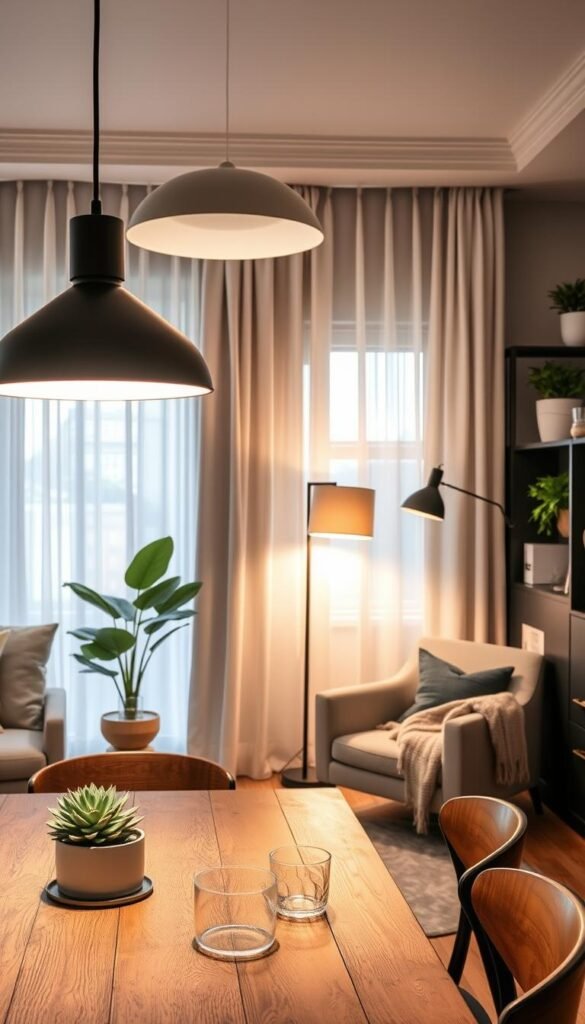
Harsh ceiling fixtures often leave an apartment feeling clinical and tired. Small, renter-safe lighting swaps fix that quickly without touching wiring or landlord approvals.
Plug-in and floor lamps to replace harsh overhead light
Where they work: living rooms and bedrooms that need layered light. Choose floor lamps with 1,000–1,800 lumens for task areas and 400–800 lumens for ambient zones.
Tip: pick bulbs with 2700K–3000K for warm glow or 3000K–3500K for neutral daylight near a window or desk.
String lights for soft, year-round ambience
String lights soften overhead glare and add mood to reading corners and bedrooms. They are easy to hang with removable hooks and use low-watt LED bulbs for long life.
Tulip magnetic ceiling shade: no re-wiring, quick install
Product quick facts: installs in ~10 minutes using Command Strip-style removable tape. Shade attaches via magnet to the included ceiling mount. Kit includes 12 removable tape pieces and 3 screws for textured ceilings. Price: $145.
Buying considerations
- Lumens/brightness — match lumens to room use (task vs. ambient).
- Color temperature — warm vs. neutral to coordinate with window light and curtains.
- Shade diffusion — diffusers soften shadows; clear shades keep brightness.
- Cord length & plug type — ensure reach to outlets or use a rated extension.
- Ceiling texture — textured ceilings may need the Tulip screws; test adhesive first.
| Option | Brightness (lumens) | Best use | Trade-off |
|---|---|---|---|
| Floor/plug-in lamp | 400–1800 | Layered living room or bedroom light | Needs floor space and outlet |
| String lights | 50–300 | Ambient glow, reading nooks | Low task light; decorative |
| Tulip magnetic shade | Varies by bulb (recommend 800–1200) | Replace harsh fixture without rewiring | Adhesive needs testing; $145 cost |
Pros: fast upgrades, portable when moving, and improved mood for a home office or kitchen. Cons: adhesive mounts need surface testing, plug-in lamps take floor space, and some ceilings limit options.
„Match lighting warmth with nearby window light and textiles for a cohesive feel.“
Window treatments that add privacy, softness, and “finished” style
A simple curtain can change light, privacy, and the perceived height of a room in a single step.

Windows often feel exposed and glare can interrupt WFH. Bare glass also makes a room look unfinished.
Hang high to lift the visual ceiling
Hang rods close to the ceiling and let panels fall to the floor. This small trick makes low ceilings read taller and upgrades an apartment without renovation.
Sheers vs. blackout — quick comparison
- Sheers: soft light, daytime privacy, good in living areas and bright work corners.
- Blackout: complete darkness for bedrooms, shift workers, and media rooms.
What to measure and renter-friendly install ways
- Measure window width; multiply by 1.5–2 for fullness.
- Decide length: sill, floor, or puddle style.
- Choose rod type: tension rods for light panels; standard rods for heavier drapes.
Pros: improved privacy, glare control, and a cohesive look when curtain color repeats in rugs or pillows.
Cons: long panels cost more and may need hemming; heavier rods can require stored hardware if screws are used.
„Test existing hardware first and keep originals in a labeled bag at move-out.“
Smart storage that doesn’t steal floor space
Limited closet space makes smart storage the single biggest upgrade to daily comfort. This lets a small apartment feel calmer and work harder without adding bulk.
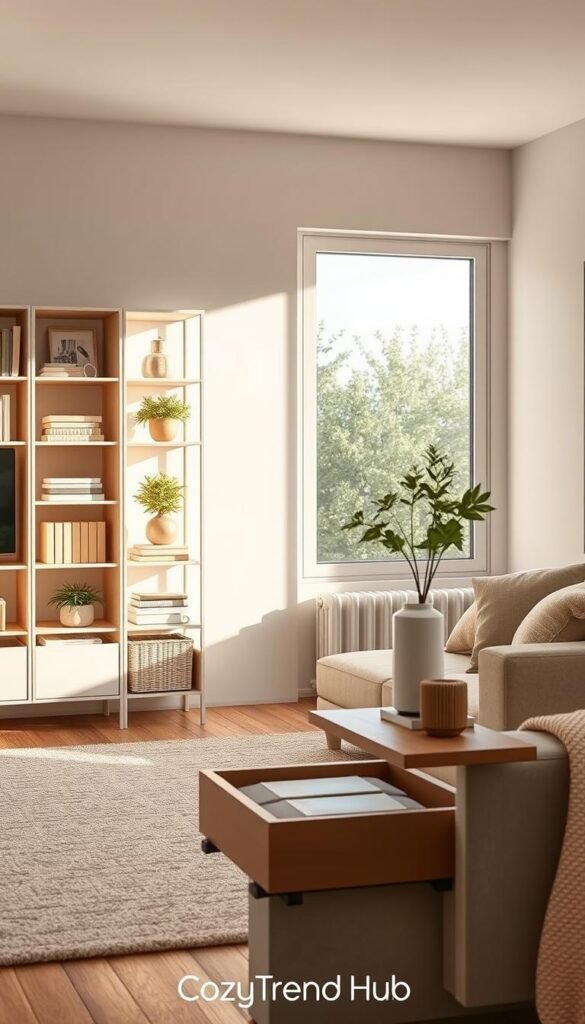
Think vertical: tall bookcases and narrow cabinets use height, not footprint, to create usable shelving. They clear floor area and keep walkways open.
Under-bed solutions: rolling bins or storage beds hide off-season clothes and bulky items. They are ideal when closet depth is shallow.
Over-the-door racks: hang on closet or bathroom doors to keep toiletries and shoes at hand without drilling. They free drawer and shelf space immediately.
Statement baskets hide clutter while adding texture and visual interest. Group two or three near seating to keep blankets, chargers, and odds-and-ends tidy.
Buying checklist: check weight limits per shelf, anti-tip fittings, unit depth so it won’t crowd the room, and door clearance. Place heavy items low and protect floors with felt pads.
| Solution | Best-for | Key limits |
|---|---|---|
| Tall bookcase | Small footprints using vertical space | Shelves 25–50 lbs; anchor to wall or use anti-tip kit |
| Under-bed bins | Off-season clothes, linens | Low profile; wheel weight 10–30 lbs each |
| Over-door rack | Bathroom and closet items | Door clearance; avoid blocking vents |
| Woven baskets | Visible storage and quick tidy | Light items; keep heavy loads lower |
„Match actual items to the solution—measure depth, test stability, and protect floors.“
Bathroom decor and storage that works on tile (no drilling required)
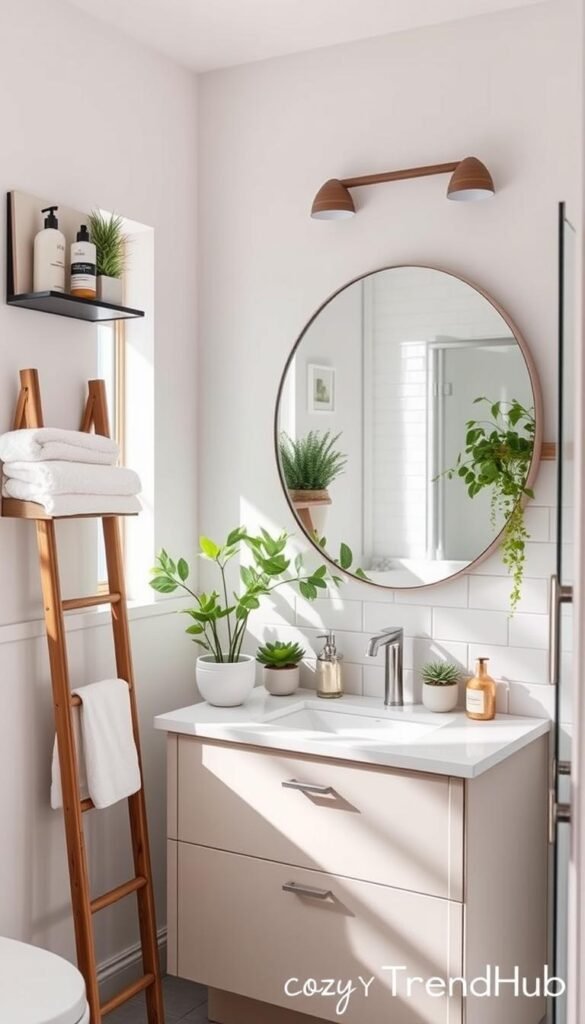
A compact bathroom can gain function quickly with the right no-drill systems.
Suction hooks and shelving for renter-friendly organization
Use smooth, non-porous tile. Suction cups and stick-on shelves hold toiletries without anchors. They suit showers, backsplashes, and tile walls where drilling is off-limits.
Buying notes: check suction diameter and weight rating. Surfaces must be clean and fully dry before fitting. Wide cups (2–3″+) and silicone seals usually grab better.
Shower curtain swaps for a fast visual refresh
Swapping a shower curtain is the quickest change. Pick mildew-resistant polyester or treated cotton blends that dry fast.
Match curtain length to ring placement and choose darker or patterned panels to hide water marks between washes.
Vinyl tile stickers to add pattern without damage
Removable vinyl stickers can refresh plain tile. Apply to clean, flat grout lines and avoid constant direct spray zones.
Pros/cons at a glance:
| Solution | Best on | Pros | Cons |
|---|---|---|---|
| Suction hooks/shelves | Smooth glazed tile | Quick install; no tools; portable | Lose grip on textured tile; weight limits |
| Shower curtain swap | Any shower rod setup | Instant style; mildew options available | Needs regular washing; rings may squeak |
| Vinyl tile stickers | Flat tile, low-spray areas | Adds pattern; removable if cared for | Edges can lift with constant water; careful removal needed |
| Routine care | All above | Re-seat suction monthly; avoid overloading | Requires small upkeep to stay reliable |
Practical routine: re-seat suction items every 2–4 weeks, wipe the tile before reset, and keep shelves under rated weight. This reduces falls and limits clean-up at move-out.
Kitchen upgrades for renters: more counter space, better organization, zero remodel
A small kitchen can gain real function with a few portable upgrades that don’t touch plumbing or cabinets.
Rolling kitchen islands add prep surface and built-in storage without a full remodel. Choose a unit with locking casters, a durable countertop, and a footprint that still allows door and drawer clearance.
Oversized pegboards keep utensils and pans visible and within reach. Pick a lightweight MDF or perforated metal panel and mount with removable anchors or a freestanding frame to limit wall impact.
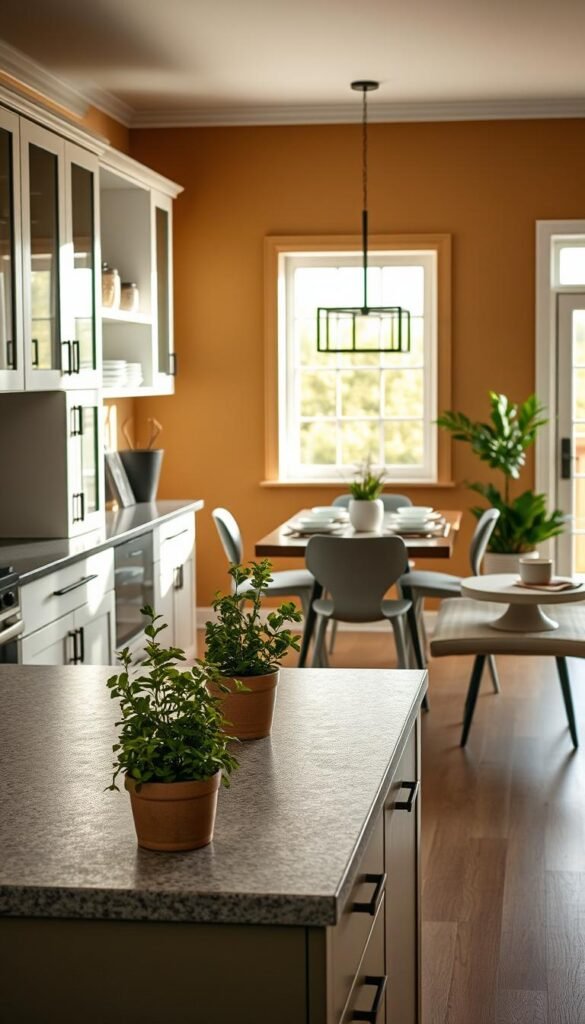
Vinyl splashbacks and coordinated small appliances
Vinyl backsplash stickers add quick color and hide dated tiles. They peel off when it’s time to move and brighten the work area.
A small appliance refresh—coordinated toaster, kettle, and coffee maker—unifies counter clutter. These pieces travel with the tenant and upgrade the look instantly.
Pros: more prep surface, visible storage, and easy visual updates. Cons: islands can crowd narrow walkways; pegboard mounts need careful adhesive choice.
| Upgrade | Primary gain | Buying checklist |
|---|---|---|
| Rolling island | Extra counter + storage | Footprint, locking casters, countertop material, clearance |
| Oversized pegboard | Accessible utensil storage | Panel size, hook types, removable mounts, weight rating |
| Vinyl splashback | Adds color & protects wall | Surface prep, size, heat/moisture rating, removal method |
| Coordinated appliances | Unified look, portable pieces | Match scale, cord length, storage plan |
Quick items checklist: locking casters, S-hooks and peg hooks, small bins, adhesive-safe mounts, and a measuring tape to confirm clearance before purchase.
Room dividers and privacy fixes for studios and open-plan rentals
Zoning an apartment with light-friendly partitions keeps space bright while adding privacy. This approach helps people create a bedroom nook, a WFH area, or a TV zone without permanent changes.
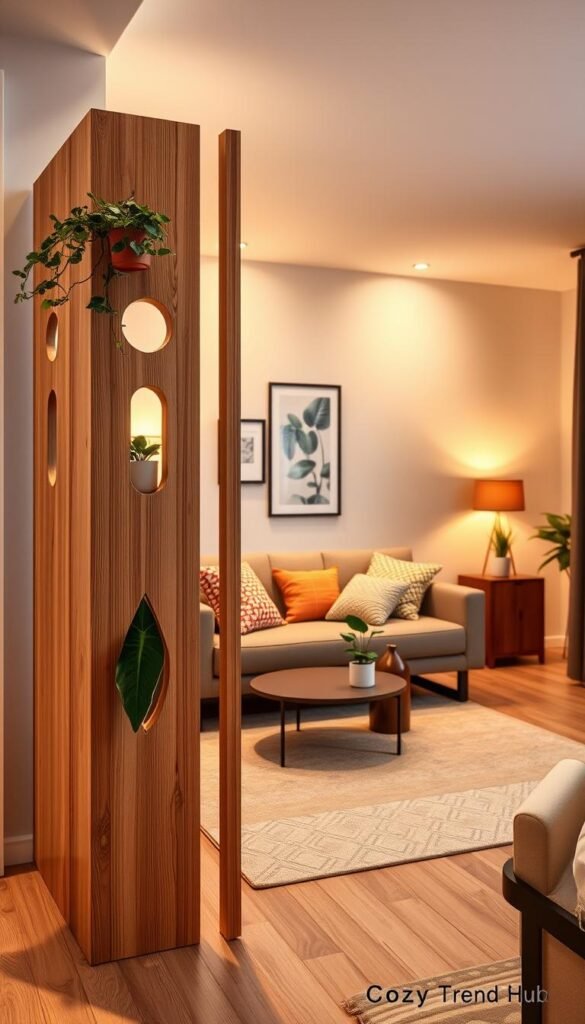
Backless shelving as a light-friendly divider with storage
Why it works: open, backless shelving separates a room but still lets light pass. It doubles as storage and display without blocking windows.
Best for: small studios that need a sleep/work split and extra storage. Place baskets on lower shelves and keep everyday items on the living-side for convenience.
Stylish screens for bedrooms, WFH zones, and shared spaces
Folding screens offer instant privacy and are easy to move. Rattan and woven varieties retail around $100 and add texture and warmth to a space.
Best for: quick divides for video calls, shared flats, or sleeping areas that need a visual barrier at night.
- Pros: instant zoning, portable, and no tools required.
- Cons: lightweight screens can tip; shelving can look cluttered if not styled.
| Divider type | Light flow | Storage | Stability | Move/pack |
|---|---|---|---|---|
| Backless shelving | High — lets light through | Excellent — shelves + baskets | Good — anchor to floor/wall if tall | Moderate — shelves may disassemble |
| Folding screen (rattan) | Medium — some light filters | Low — surface only | Fair — may tip if narrow base | High — folds flat, very portable |
| Tension rod curtain | Variable — fabric choice matters | Low — hooks or pockets possible | Fair — depends on tension fit | High — easy to remove and store |
Buying checklist: height vs. ceiling, footprint vs. walkway, stability (anti-tip options), and whether the item folds flat for moving.
„Use baskets and bins on shelving and keep daily items on the living side to make dividers work harder.“
Plants, flowers, and low-commitment decor for a seasonal refresh
Small, changeable pieces—greenery, bouquets, and linens—let an apartment feel updated in an afternoon.
Real vs. faux greenery: real plants improve air and soften rooms but need light and weekly care. Faux plants work when light is poor or travel is frequent. Faux must be dusted occasionally to stay fresh.
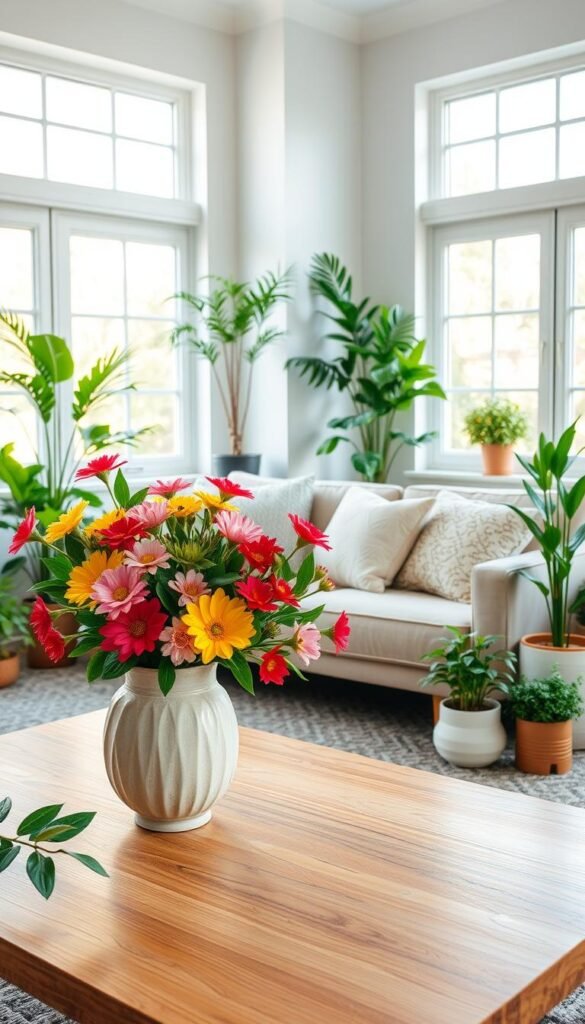
Fresh flowers vs. long-lasting artificial blooms
Fresh bouquets add a short burst of charm and scent. They cost more over time but give immediate seasonal color.
High-quality artificial blooms offer repeat use and consistent look. They’re a smart buy when budget and longevity matter.
Table linens and textiles that protect surfaces
Swap pillow covers, throws, and tablecloths to change palette and add personality. Table runners and washable cloths protect landlord surfaces while adding pattern.
„Prioritize washable textiles and low-maintenance plants.“
- Items like trays and simple vases store easily and travel well.
- Pros/cons: real plants need care; faux collects dust; flowers expire; textiles require washing.
- Buyer tip: buy washable linens and one durable faux stem to mix with seasonal fresh flowers.
Conclusion
Focus on solutions that solve a specific problem—light, storage, privacy, or layout—then layer in style.
Start with portable foundations: rugs, lighting, and curtains. Next, add removable wall art only after testing adhesives on a hidden spot. This way decorating stays low-risk and practical in an apartment.
Buy with intent: pick items that fix what the room lacks before buying accents. Measure the space, map clear pathways, confirm the lease, and check with the landlord when in doubt.
Quick action plan: measure → test surface → prioritize modular seating and double-duty pieces → choose washable covers and vertical storage → repeat a color story to unify the look.
Decorating can be flexible and confident. With these ideas, a tenant can craft a functional, personal home that respects rules and moves easily.



One Comment