

This guide solves a common problem: daily clutter happens when items lack a regular place, cabinets are hard to reach, or storage looks neat but wastes space.
It offers practical, purchase-ready recommendations for renters and small-space dwellers. The list is organized by room so readers can jump to the kitchen, bathroom, closet, entryway, office, seasonal, or garage/basement.
Who benefits: busy families, renters, and anyone wanting faster mornings, fewer duplicate buys, and less food waste. Renter-friendly picks—no-drill, over-the-door, and slim-profile options—are highlighted early.
Readers will see a visibility vs concealment tradeoff: clear bins for inventory, opaque bins for calm. The guide recommends a quick purge, measure the space, then buy what fits routines. Each entry follows a consistent decision format: best-for use case, what to measure, top features, and quick pros/cons to support confident choices.
Key Takeaways
- Clutter stems from „no home for daily items“ and poor-access storage.
- Recommendations focus on renters and small spaces with no-drill options.
- Use clear containers for inventory and opaque bins for visual calm.
- Purge first, measure well, then buy organizers that fit routines.
- Content is room-organized for quick navigation and confident buying.
How to Choose Organization Products That Actually Save Space (and Stay Organized)
Start by measuring the real space you have—this single step prevents most buying mistakes.
Measure first: note the width, depth, and height of cabinets and drawers. Check door clearance and whether a drawer fully opens with an insert inside. For under-sink areas, map plumbing and pipes so you know usable space.
Match the solution to the friction point
Decide if the problem is visibility, access, or habits. Visibility issues cause duplicates and waste. Access problems need pull-outs or risers for deep shelves. Habit problems benefit from designated drop zones placed where routines occur.

Materials that make sense
- Clear plastic: wipe-clean and visible—good for spills.
- Fabric: lightweight and soft—works well in closets.
- Wood: looks nice but stains and is harder to clean.
- Metal: durable and airy; watch for low-quality rust or snags.
Renter-friendly rules and buying considerations
Prioritize no-drill options: over-the-door racks, command hooks, and freestanding stackables. Match set sizes to your shelves. Choose stackability that still allows access. Pick lids for seasonal bins and smooth surfaces for easy cleaning.
| Dimensions | Material | Stackable / Lid | Best room/use |
|---|---|---|---|
| Measured to fit | Plastic / Acrylic | Yes / Optional | Kitchen / Pantry |
| Slim or deep | Fabric | Often no | Closet / Shelves |
| Custom fit | Metal / Wood | Depends | Garage / Display |
Quick pro/con rule: acrylic cleans easier than wood; metal lasts but can rust; fabric saves weight. The #1 failure reason is a product that doesn’t fit the cabinet, drawer, or under-sink footprint.
Buy the minimum needed first. Test the system for a few weeks, then expand the way it actually fits routines and space.
Best home organization products for the kitchen: pantry, drawers, and fridge wins
Kitchens create daily friction when deep shelves hide staples, fridges swallow snacks, and drawers become clutter traps.
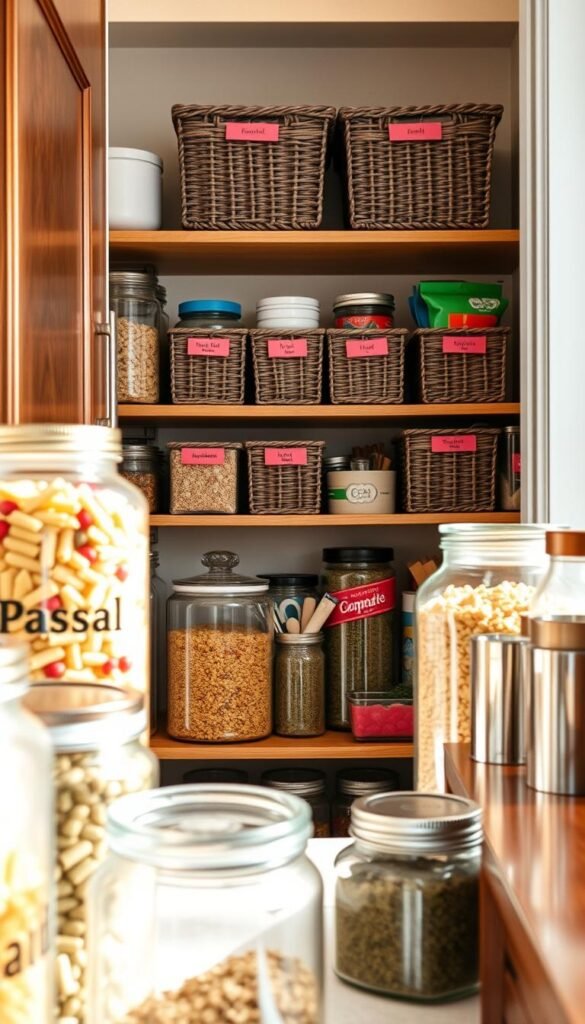
Clear pantry containers vs. baskets
Problem: deep pantry black holes and duplicate buys. Clear plastic containers solve inventory gaps by showing contents at a glance.
Who it’s for: households that forget what they own or have deep shelves.
Specs & tradeoffs: match shelf depth, choose rectangular for space efficiency, check lid tightness. Note: clear containers reveal mess if not maintained.
Spice jars, labels, and drawer organizers
Decanting spices into uniform jars with minimalist labels helps frequent cooks avoid duplicates. Pair with shallow drawer organizers for speed.
Pros: visibility, faster prep. Cons: initial refill time; optional if original bottles work.
Lazy Susans, fridge bins, and small helpers
Lazy Susans give spinning access to oils and sauces on deep shelves. Fridge bins group yogurt, drinks, and snacks for easier restock.
Egg containers (BPA-free) and produce bags reduce soggy cartons and extend freshness.
„Visibility beats pretty when items need to be used before they expire.“
| Use | Material | Key spec | Best for |
|---|---|---|---|
| Pantry containers | Clear plastic | Rectangular, stackable, measured to shelf depth | Long pantry shelves |
| Spice jar set | Glass with labels | Standard mouth, drawer-friendly height | Frequent cooks, small kitchens |
| Fridge bins | Plastic bins | Handles, removable for washing | Families, snack-heavy households |
| In-drawer knife block / riser | Wood / plastic | Fits drawer depth, non-slip base | Utensil overflow, safety |
Bathroom organization products for tight counters and awkward drawers
When counters crowd essentials and plumbing blocks storage, simple fixes reclaim usable space.
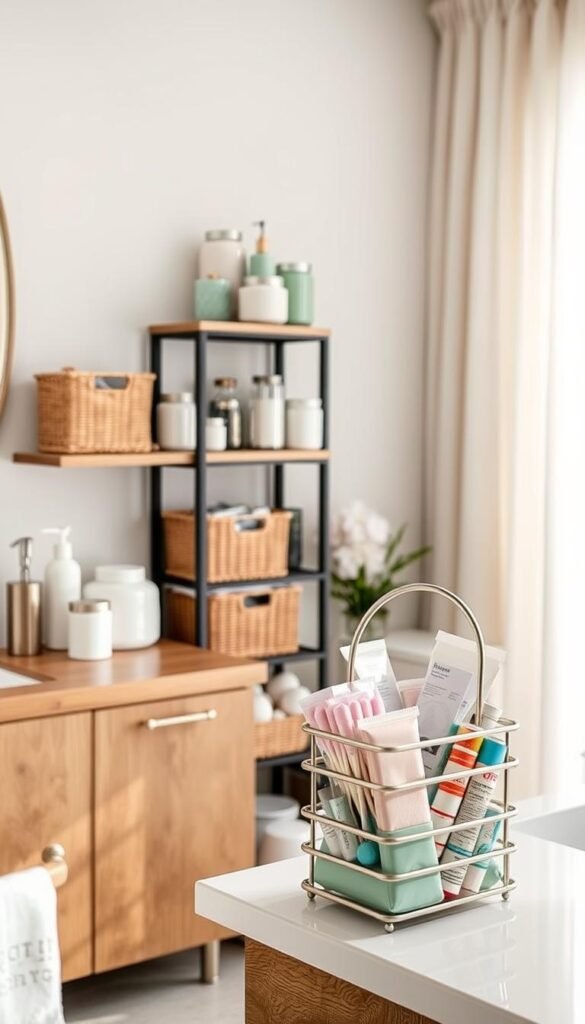
Stackable clear organizers for limited drawer space
Why it helps: stackable clear bins add vertical storage without drilling. They work on counters, inside shallow cabinets, or under the sink.
Buyer note: measure shelf height and depth before buying to ensure a snug fit.
Slide-out shelves made to work around pipes
Under-sink slide-outs bring hard-to-reach areas forward. Measure pipe location, cabinet width, and hinge clearance first.
Pro: fewer forgotten backups. Con: check weight limits and smooth glide quality.
Acrylic dividers and drawer tidies
Acrylic dividers keep makeup, medicine, and small items visible and wipe-clean. They look sleek and stack well.
Tradeoff: they can shift; add a non-slip liner if needed.
No-drill shower shelves and razor holders
Adhesive shelves avoid tile damage and reduce rust on blades. Choose high-strength adhesives rated for humidity.
Trays and apothecary jars for daily essentials
Use one tray per routine (skincare, grooming, travel minis). Jars contain cotton rounds, q-tips, and hair ties for quick access.
| Feature | Adhesive type/strength | Removability | Weight cap | Rust resistance |
|---|---|---|---|---|
| No-drill shelf | Gel pad / high | Clean peel | 10–20 lbs | Coated metal |
| Razor holder | Double-sided tape / medium | Easy peel | 1–2 lbs | Stainless / plastic |
| Slide-out shelf | Hardware-mounted | Permanent | 30–50 lbs | Powder-coated |
„Store daily items at hand level, keep backups higher, and pack travel minis in one bin.“
Closet and bedroom storage products that make mornings easier
Small changes in closet layout cut minutes from every morning routine.
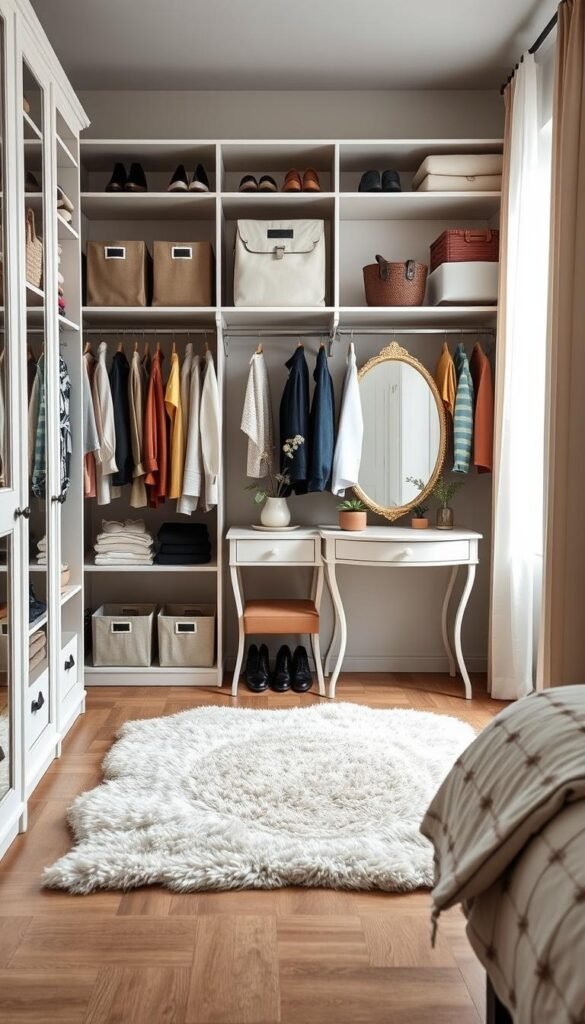
Velvet hangers and clear shelf dividers
Velvet hangers are slim, no-slip, and free up shoulder room for more clothes on the same rod. Pros: thin profile, uniform look, reduced slipping. Cons: can catch delicate knits and may not suit heavy coats if low quality.
Clear shelf dividers keep sweater and jean stacks from collapsing. Buy ones sized to shelf depth and check edge smoothness. Place two dividers per long shelf for reliable support.
Shoe boxes, purse care, and linens
Stackable plastic shoe boxes bring visibility to shoes and protect from dust. They work well in small closets but watch stacking height limits and label fronts for quick finds.
Purse dividers and hanging organizers preserve shape and stop scuffs. Use dividers on shelves and hangers when shelf space is tight.
Bed sheet organizers keep matching sets together. Expandable blanket storage bags handle bulkier throws and compress for off-season storage.
| Use case | Material | Best feature | Renters/small spaces |
|---|---|---|---|
| Velvet hangers | Flocked metal | Slim, no-slip | Yes |
| Clear dividers | Acrylic | Stack stability | Yes |
| Shoe boxes | Clear plastic | Visibility, dust protection | Yes |
| Underbed drawers / bags | Plastic / fabric | Bulk storage | Measure clearance |
Maintenance tip: keep only in-season items at eye level and rotate off-season clothes into labeled underbed storage bins to preserve daily flow.
Entryway and mudroom organizers for shoes, coats, and grab-and-go items
A narrow entry can collapse under daily gear unless there is a clear, designated place to stop the spill. This section fixes that by matching simple solves to common constraints in small spaces and rental units.

Over-the-door racks and extra hooks
Problem-solution: over-the-door racks add hooks without drilling. They work well for renters and narrow entries.
Buying notes: check door thickness, hook depth so the door still closes, and weight capacity for backpacks.
Baskets and bins for daily drop zones
Who it’s for: families and multi-user entries benefit from labeled baskets or one bin per person. This reduces morning searches and lost gloves.
Pros/cons: bins corral items fast; baskets look tidy but need regular emptying.
Hidden shoe cabinets vs open bins
Hidden cabinets give visual calm in spaces visible from the living room. Open bins speed access and allow shoe airflow when weather is wet.
„Keep only current-season coats and shoes at the entry; move the rest to closet or underbed storage.“
| Type | Footprint width | Capacity (# pairs) | Ventilation / No-drill |
|---|---|---|---|
| Over-the-door rack | Small | 0 (hooks for bags) | High ventilation / No-drill |
| Open shoe bin | Medium | 2–6 | Good ventilation / Often no-drill |
| Hidden shoe cabinet | Medium–Large | 6–12 | Limited ventilation / May need assembly |
Desk and home office organization products for clutter-free workdays
Small desk clutter—the loose cords, sticky notes, and scattered pens—steals minutes and focus each day.

Drawer organizers and small trays for pens, cords, and tiny things
Who it helps: anyone with „junk-drawer energy“ at a desk. Use modular trays or fixed inserts sized to drawer depth.
Buying tips: choose non-slip bottoms, adjustable compartments, and pieces that form a set to match changing items.
Pros: faster finds, less desktop spill. Cons: poorly sized trays become new clutter; measure first.
File storage boxes for paper clutter
Who it’s for: apartments and small offices without a filing cabinet. Opt for lidded, stackable boxes with handles.
Pros: portable, contained, and stack-friendly. Cons: they require labeling to avoid becoming a catch-all.
Desktop helpers: spinning holders, desk pads, and catch-all trays
360° spinning pen holders speed access to pens and tools. Desk pads define work zones and make surfaces look tidy.
Keep one catch-all tray for daily essentials. Reset it weekly to avoid accumulation.
Calendars and planning tools
Visible monthly calendars reduce missed appointments and stop paper scraps from becoming the system. Put one near the desk so the household can use it.
- Comparison criteria: capacity, portability (handles/lids), footprint, and shelf-fit.
- Maintenance routine: organize once, then maintain weekly—reset tray contents, recycle paper, and return items to designated drawer sections.
| Item type | Capacity | Portability | Fits shelf / drawer |
|---|---|---|---|
| Drawer tray set | Small compartments | No | Measure depth |
| File storage box | Large document load | Yes (handles) | Stackable on shelf |
| Spinning pen holder | 10–20 pens | No | Desktop footprint |
„Clear zones and small containers turn daily friction into predictable routines.“
Seasonal and holiday storage products that prevent broken decor and last-minute hunts
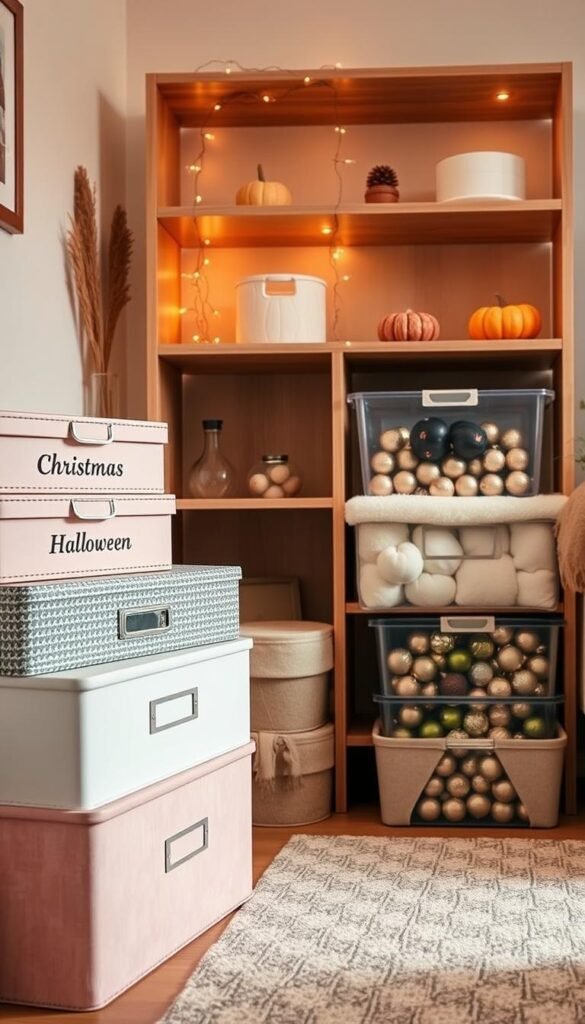
Seasonal decor often survives the season but not poor packing. A few targeted cases and clear rules cut damage and search time.
Wrapping paper storage cases that keep rolls straight
Why it helps: these cases hold rolls upright and keep tape, scissors, and bows together. They stop bent ends and crushed tubes.
What to compare: roll length capacity, internal pockets, zipper strength, and whether the case stores upright or flat. A small set with divided pockets fits apartments and narrow closets.
Color-coded holiday bins for instant identification
Use a color per holiday—red for Christmas, orange for Halloween—to avoid opening boxes in garages or basements. Label sides for stacked access.
Renter-friendly tip: pick slim, latching bins that stack safely on a shelf or garage rack. Lightweight lids with secure snaps cut the risk of crushed corners.
Clear vs. opaque storage totes: rules and checklist
Choose clear storage containers when quick visual ID matters in low-traffic areas. Pick opaque tubs where visual calm matters, like a living-room closet.
- Pros (clear): fast identification, less hunt time.
- Pros (opaque): hides clutter, cleaner look on open shelves.
- Cons: clear shows dust; opaque needs strict labeling.
| Checklist | What to check | Best place to store |
|---|---|---|
| Size | Fits tallest ornament or roll | Closet shelf / attic |
| Stackability | Latching lids, reinforced corners | Garage rack / basement |
| Material | Clear vs opaque plastic, UV-resistant if outdoors | Shelf or floor |
„Small, labeled sets and latching lids turn seasonal packing from chaos into a repeatable routine.“
Garage and basement storage products for bulk items, tools, and floor space
Garages and basements often fill with bulk items and tools that end up scattered across the floor, making simple tasks harder.
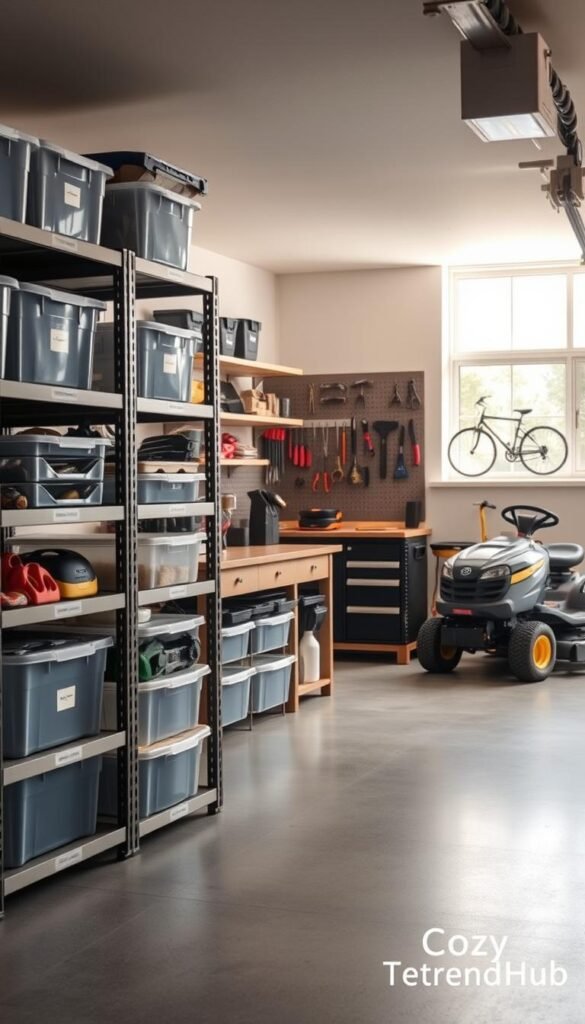
Start with durable totes: heavy-duty latching utility totes are ideal for long-term stacking and seasonal decor. Look for strong latches, rigid lids, and uniform dimensions so stacks stay stable.
Heavy-duty latching utility totes
Who it’s for: seasonal decorators and families that need long-term storage off the floor.
Buying notes: check weight rating, lid rigidity, and whether lids interlock. Pros: stackable, dust resistant. Cons: heavy when full; label fronts for quick ID.
Wall-mounted tool organizers and battery storage
Move tools and batteries off benches to speed projects and improve safety. Wall-mounted racks free bench space and reduce trip hazards.
Who it’s for: DIYers and workshops. Use a dedicated battery box with clear slots to store AA, AAA, and specialty cells for fast access.
Pegboards, hooks, and shelving to build zones
Divide the wall into zones—lawn, sports, toys, and tools. Zones make maintenance easier than a single wall of mixed gear.
Buying notes: choose shelving that fits stud spacing and pegboard panels that accept common hooks. Pros: highly adjustable; cons: needs proper anchors for heavy loads.
Stackable bins and crates for grab-and-go items
Use stackable bins for supplies you grab often, like car wash kits or garden gear. Pros: fast access; cons: can become messy without labels and category discipline.
„Place the most-used zone closest to the door and store rarely used items higher up.“
| Solution | Weight capacity | Hardware needs | Adjustability | Fits stud spacing |
|---|---|---|---|---|
| Heavy-duty latching tote | 50–200 lbs (stack rating) | None (freestanding) | Low (uniform sizes) | N/A |
| Wall-mounted tool organizer | 50–150 lbs per panel | Lag bolts / anchors | Medium (removable hooks) | Yes (standard 16″ or 24″) |
| Pegboard + hooks | 10–75 lbs per hook area | Screws into studs / toggle anchors | High (rearrangeable) | Yes (use toggles if not) |
| Stackable grab-and-go bin | 20–75 lbs per bin | None (shelved or floor) | Medium (modular stacks) | N/A |
Maintenance tip: zones should reflect real routines. Keep the most-used zone nearest the door. Check labels seasonally and move rarely used items higher so the floor stays clear.
Renter-friendly, small-space organization products that add storage without renovations
When drilling is off-limits, simple attachments and vertical upgrades rescue tight storage spots. These fixes increase usable space while protecting walls and doors.

Over-the-door organizers for bathrooms, bedrooms, and pantry overflow
Why they help: over-the-door units add hooks or pockets without hardware. They convert the back of a door into instant storage for towels, pantry odds-and-ends, or accessories.
Buying tips: check door thickness, pocket depth, and whether the unit interferes with closing. Choose models with padded hangers to avoid paint scuffs.
No-drill shower and bathroom organizers that won’t damage tile
Pros: removable, no-tile damage, and quick to install.
Cons: adhesive options need clean, dry surfaces and may lose hold on textured grout. Suction systems work best on smooth tile.
Practical note: test adhesive hold for 24 hours before loading heavy bottles.
Vertical space upgrades: risers, countertop racks, and stackable drawers
Risers and tiered racks create „another level“ inside a single footprint. Stackable drawers turn a shallow shelf into layered storage.
Tradeoff: adding tiers reduces clearance for tall bottles. Measure bottle height before committing.
When to choose slim organizers: narrow cabinets, deep shelves, and tiny closets
Slim bins slide past plumbing and stop items from vanishing at the back of a cabinet. They work well in narrow cabinets and deep shelves where wasted inches matter.
Measure first: width, depth, and hinge clearance. Aim for a 1/4″ of wiggle room so drawers and doors still operate smoothly.
- Quick checklist: footprint width, height, removability, best room use case.
- Prioritize access: pull-outs, turntables, and vertical tiers reduce the time spent fishing for items.
- Then add containment: bins, labels, and shallow trays to keep things stable.
| Solution | Footprint width | Removability | Best room use |
|---|---|---|---|
| Over-the-door pocket rack | Door width | Yes (no hardware) | Pantry / bedroom / bathroom |
| Adhesive shower shelf | 6–12 in | Yes (clean peel) | Shower / bath |
| Riser / tiered rack | Shelf depth | Yes (stackable) | Kitchen counter / cabinet |
| Slim slide drawer | 4–8 in | Yes (freestanding) | Narrow cabinet / closet |
„Improve access first—make items reachable—then add bins and labels so the system lasts.“
Conclusion
Start by fixing the single spot that costs the most time each morning. Purge what isn’t used, measure the space, then pick simple organization products that solve one clear problem at a time.
Use this decision framework in every room: improve visibility if duplicates appear, improve access when depth hides items, and add containment when small things spread.
Quick shopping list: a few clear bins, a couple of drawer organizers, one Lazy Susan or riser for a high-friction cabinet, and one over-the-door organizer for instant extra storage.
For maintenance, choose wipe-clean surfaces, avoid oversized bins, and leave some empty space so the system survives busy weeks. Tackle one room at a time—pick the space that costs the most time and start with the single product that removes the biggest bottleneck.


One Comment