
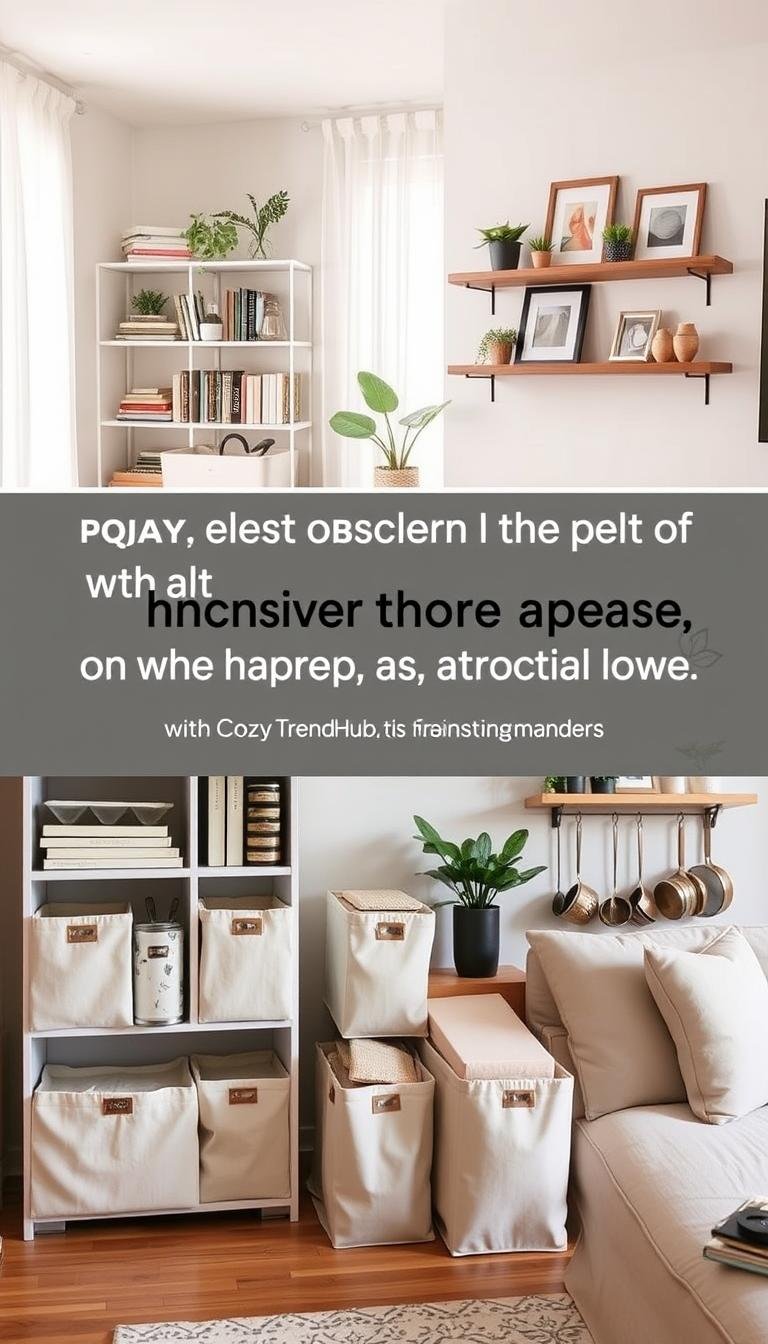
Renting often means great locations but tight space and strict rules. Walls, doors, and cabinets may be off-limits, and landlords can reject drilled anchors. This section outlines a practical, deposit-friendly approach that avoids permanent change while boosting function and style.
Readers will see real product-style recommendations and setups that work in an apartment, studio, or shared layout. Expect tension rods, over-the-door organizers, under-bed bins, adhesive hooks, rolling carts, and magnetic fridge storage.
This guide previews a simple „best for“ shopping format — tiny kitchen, no pantry, one closet, studio living, and seasonal rotation. Each pick lists load limits, surface compatibility, install time, footprint, and budget range.
Permanent change here means drilling, anchors, or paint damage. The alternatives shown protect deposits and speed removal.
Key Takeaways
- Solutions focus on drill-free installs that respect landlord rules and deposits.
- Recommendations suit small rooms, shared layouts, and apartment living.
- Products cover quick installs like tension rods, adhesive hooks, and rolling carts.
- Each entry notes load limits, surface compatibility, and what to avoid.
- Later sections use a clear „best-for“ format for fast comparisons and shopping.
What “Renter-Friendly Storage” Really Means When You Can’t Drill
Renter-friendly solutions prioritize low-impact installs and easy removal without sacrificing utility. This means selecting items that remove cleanly, avoid paint damage, and save a security deposit while adding function.
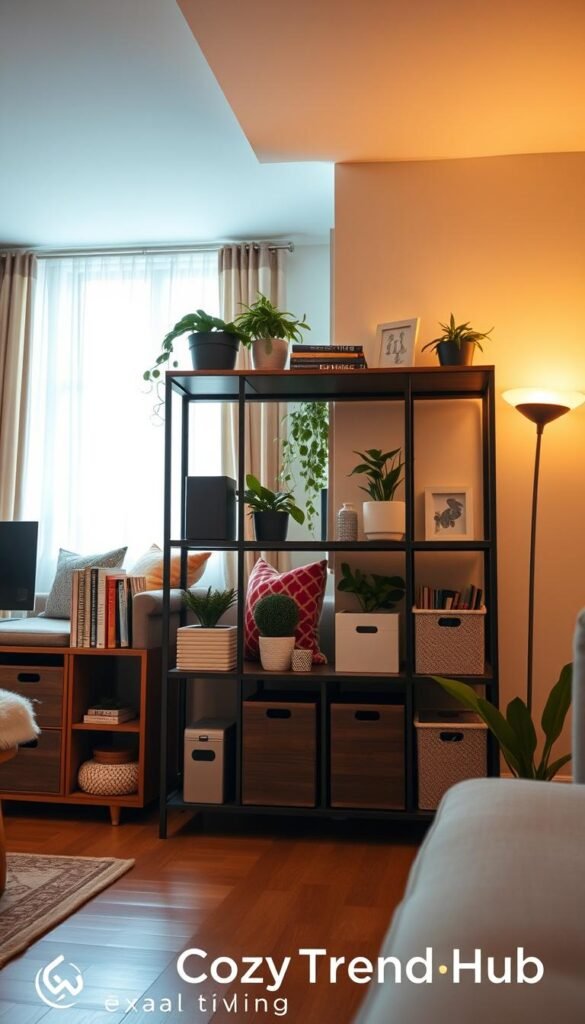
Damage-free basics to protect your deposit
Define renter-friendly as removable, low-damage, and simple to reinstall. That keeps disputes with a landlord unlikely.
Weight limits and surface checkpoints
- Check surface: painted wall, tile, glass, or sealed wood before buying.
- Match load to product: hooks carry a few pounds; racks and floor units hold much more.
- Minimal tools like a tape measure help; many tension rods need zero tools.
- On doors and cabinets, verify clearance and add pads to prevent scuffs.
- For frames and light décor, prefer adhesive hangers rated for low weights.
„Pick the right anchor for the right load; avoid forcing a wall solution on heavy items.“
| Type | Typical Load | Surface Best |
|---|---|---|
| Adhesive hook | 2–10 lbs | Painted wall, glass |
| Tension rod | 5–30 lbs | Door frames, cabinet openings |
| Over-door rack | 10–40 lbs | Solid doors, closet frames |
Measure Your Space First to Avoid Returns and Wasted Time
Take basic measurements first — it’s the most reliable way to buy organizers that fit your space. A quick check prevents returns, missed deliveries, and awkward staging that blocks walkways.
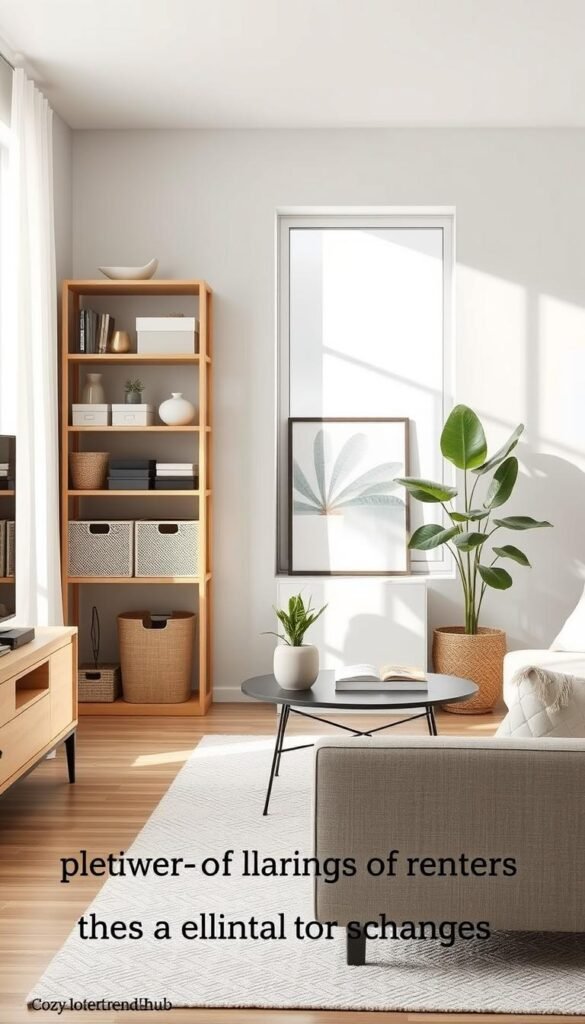
Quick measurements renters can do in minutes
Use a tape and jot these down:
- Door thickness and door-to-frame clearance.
- Closet width and depth; cabinet interior width and height.
- Under-bed clearance and distance to walls or nightstand.
Choosing pieces that match small layouts
Pick shelves and units by footprint first, then capacity. In a studio, favor vertical pieces and multi-use tables that reduce visual clutter. Slim carts work when placed beside counters or beds without blocking doors.
Plan simple zones so essentials stay within reach
Map three zones by routine: entry drop zone, cooking zone, and cleaning zone. Keep daily items in the closest zone so the room flows and you save time.
„Measure twice, buy once — correct sizing beats a pile of returns.“
| Item | Measure | Why it matters |
|---|---|---|
| Over-door rack | Door thickness & clearance | Prevents rubbing and noise |
| Under-bed bin | Bed frame height + handle clearance | Ensures smooth pull-out |
| Cabinet organizer | Interior width & shelf spacing | Fits plates, pans, or folded linens |
Best home storage ideas for renters that work in every room
Start with a simple three-step framework: use vertical space first, add floor-based units next, then tame small items with matching bins and labels. This approach fits every room and protects surfaces.
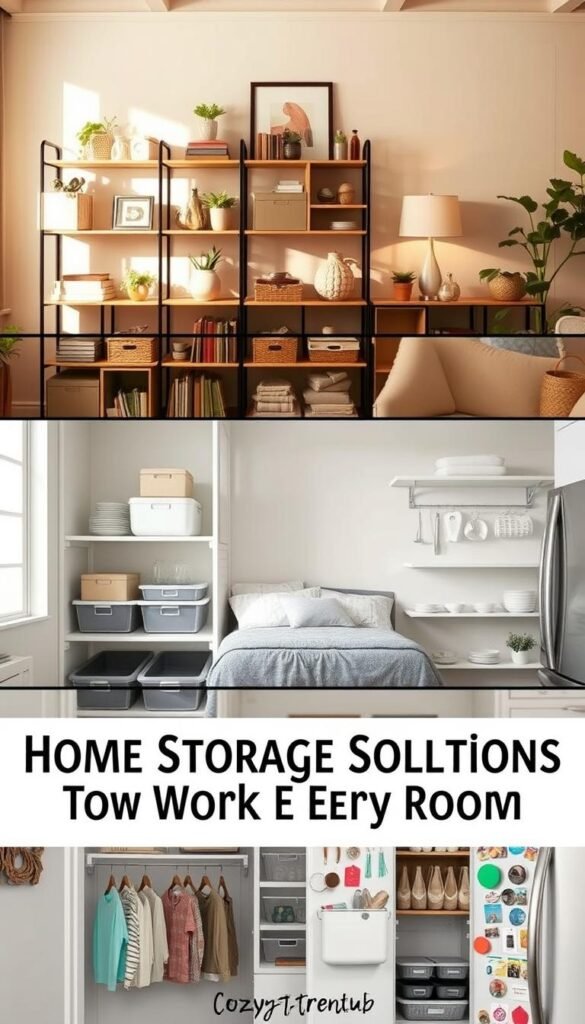
Vertical space wins: walls, doors, and “look up” strategies
Look up to gain quick shelf and rack capacity without touching paint. Walls and doors are powerful hidden surfaces when you respect load limits.
Use tension rods, over-door racks, and stick-on rails where permitted. They free counters and keep items visible and accessible.
Floor-based storage units when walls are off-limits
Choose freestanding bookcases, lean-against shelves, and rolling carts when walls or paint are fragile. These handle heavier loads and frequent access.
Prefers metal or sealed wood in kitchens and bathrooms because they clean well and last longer under daily use.
Small-item control: bins, baskets, drawer organizers, and labels
Match bins and baskets in consistent sizes so items slide easily and stack cleanly. Add drawer organizers to stop small things from shifting.
- Use simple labels and a single category per container.
- Pick low-profile under-bed bins for seasonal rotation.
- Prioritize “reset-friendly” systems that can be tidied in under two minutes.
„A vertical-first plan, backed by floor units and clear bins, makes every room more usable without permanent change.“
| Layer | When to use | Material tip |
|---|---|---|
| Vertical | Limited floor space, light items | Metal racks, rated hooks |
| Floor | Heavy loads, fragile walls | Sealed wood or steel |
| Small-item | Drawers, counters, closets | Plastic bins, fabric baskets |
Tension Rod Storage Hacks for Closets, Cabinets, and Awkward Nooks
Tension rods turn narrow gaps into useful rails with no tools or wall damage. They give quick, removable solutions that protect surfaces and save time when moving.
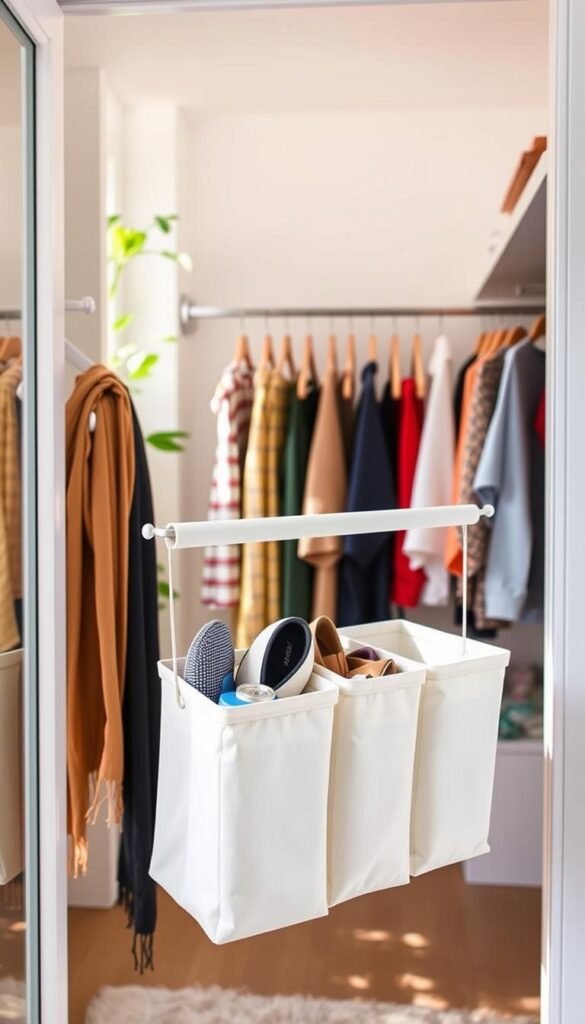
Best for: instant installs with zero tools
Who benefits: anyone who needs fast setup, minimal parts, and easy removal when they move.
Closet upgrade
Add a second rod below the main bar to separate lightweight clothes and accessories. Scarves, belts, and flats hang neatly. This reduces pile-ups and keeps outfits visible.
Kitchen cabinet divider
Place a rod vertically inside a cabinet to create compartments. Cutting boards, baking sheets, and pan lids stand upright. It saves shelf depth and makes items easy to grab.
Under-sink spray bottle hang zone
Hang spray triggers over a rod to free the cabinet floor for bins and backup supplies. It keeps cleaning sprays tidy and prevents spills.
Editor’s pick
KXLIFE 2-Pack Tension Curtain Rods — $9.79. Check the size range and end-cap grip before buying. Best fits medium spans and sealed wood or painted frames.
- Pros: fast install, tool-free, flexible placement.
- Cons: may slip on slick surfaces, limited load, span failure on uneven walls.
- Buying tips: diameter/grip, adjustable range, end-cap material, and moisture under sinks that can reduce hold.
Over-the-Door Racks That Add Storage Without Taking Up Floor Space
Doors are prime real estate in small apartments; a rack can unlock that square footage quickly. Over-the-door units are drill-free and shift heavy or awkward items off counters and closet floors.
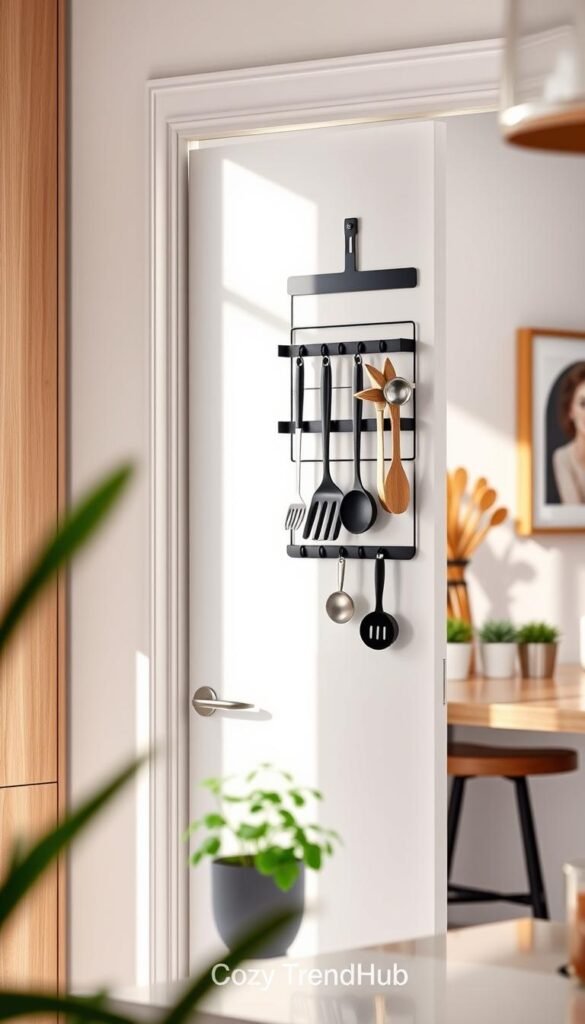
Who benefits and where it works
Best for: small apartment layouts with limited closet and cabinet room. Use a door to hold shoes, bags, or daily items.
Room uses
- Bathroom: hang towels and daily supplies to keep the vanity clear.
- Bedroom/entry: create a grab-and-go zone for shoes and bags.
- Kitchen/pantry: store snacks and lightweight pantry items when no cabinet exists.
Editor’s pick
Over-the-Door Towel & Storage Rack — $26.99. Look for sturdy hooks and a rust-resistant finish.
„Measure door thickness and top clearance; a padded hook cuts noise and prevents scuffs.“
| Feature | Measure | Why it matters |
|---|---|---|
| Door thickness | Standard 1 3/8″–1 3/4″ | Ensures hooks fit without blocking latch |
| Top clearance | Space above door + trim | Allows full close and smooth swing |
| Padded hooks | Yes/No | Reduces rattling and surface wear |
Pros: fast setup, adds capacity without taking floor area. Cons: can scrape, wobble when overloaded, and make noise if unpadded.
Adhesive Hooks and Strips for Lightweight Wall Storage Without Holes
Adhesive hooks and strips turn blank wall space into quick-access zones without a drill or patching. They solve a common renter problem: everyday things piling on counters, tables, or entry surfaces.
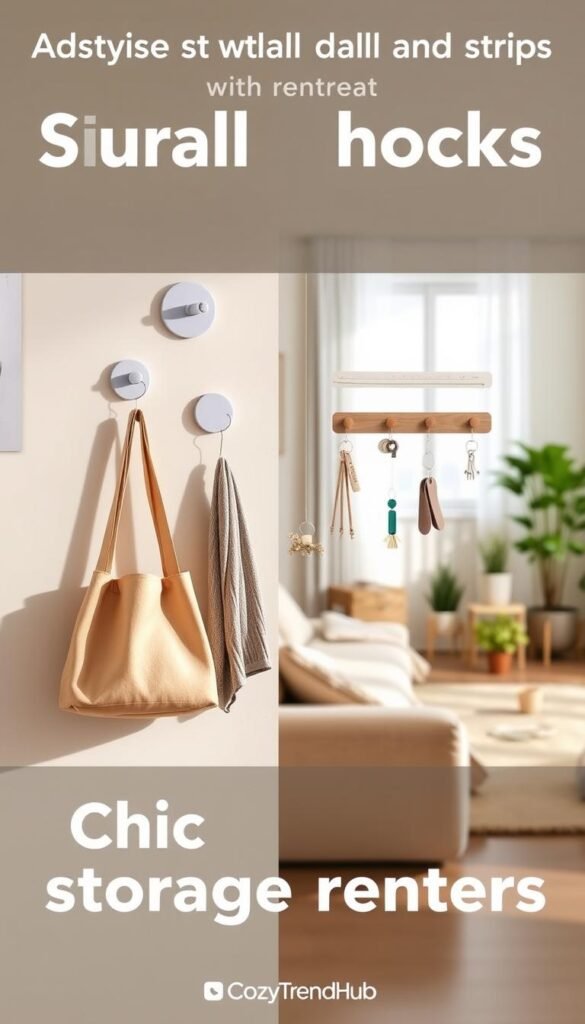
Who this helps: people who need a low-impact way to hang keys, light bags, small frames, and kitchen utensils. These solutions work well in an apartment where drilling is not an option.
Pros and cons
- Pros: clean look, easy install, and many strips remove with no residue.
- Cons: some remove paint on delicate finishes, may fail on textured surfaces, and hold weakens in heat or steam.
Placement and clutter control
Create dedicated drop zones near the entry and other high-traffic places. A single hook by the door or a small row in the kitchen keeps daily items organized and reduces surface clutter.
Surface-prep checklist
- Clean and dry the wall area.
- Press firmly and hold per instructions.
- Allow the adhesive to cure before loading.
| Consideration | What to check | Why it matters |
|---|---|---|
| Rated capacity | Manufacturer pounds | Don’t exceed to avoid falls |
| Surface type | Smooth painted, tile, glass | Adhesive bonds best on smooth surfaces |
| Replacement strips | Availability | Easy refresh after removal |
„Adhesive hooks are a practical, low-risk solution when light, repeatable access beats a permanent fix.“
Stick-On or Suction Shelves for Toiletries and Small Decor
When a vanity lacks cabinets, removable shelves can create tiers of usable space without tools. These units use adhesive pads or suction cups to hold light items on smooth surfaces.
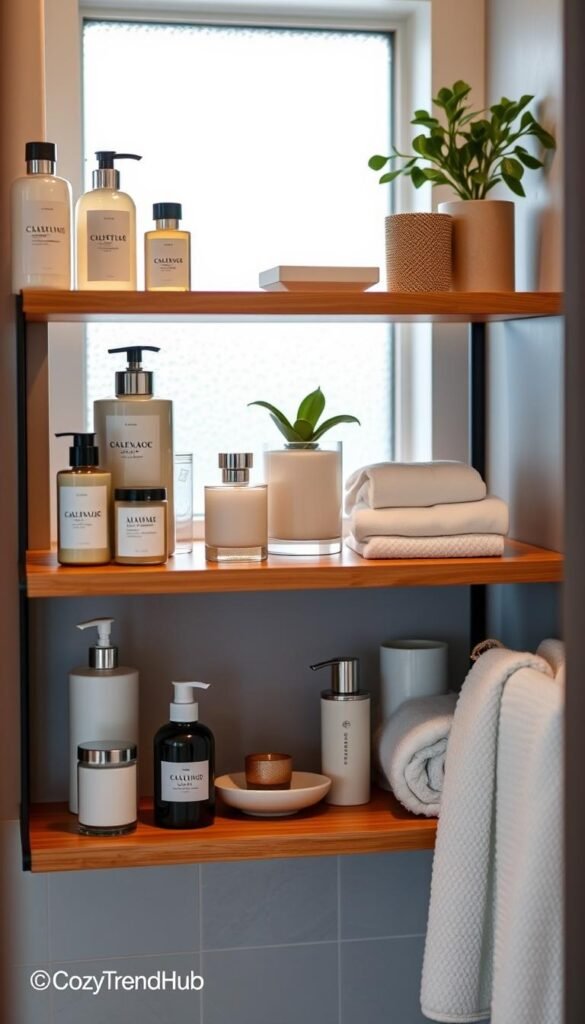
Who benefits
Best fit: anyone needing quick bathroom shelving that avoids new furniture or drilling. Use them to free the sink and keep daily supplies within reach.
Surface and load rules
Work only on smooth tile, glass, or sealed surfaces. Avoid porous or textured wall finishes; adhesion fails there.
Load-limit reality check: keep heavy bottles, large pumps, and bulk refill jugs off adhesive shelves. These systems hold small toiletries and light decor only.
- Store this: travel-size bottles, soap dishes, small decor, and razors.
- Not this: gallon refills, stacked containers, or wet heavy items that collect water.
Buying tips and trade-offs
Pick shelves with drainage holes for shower use. Choose rust-resistant steel finishes if moisture is constant; pick wood-look only if protected from direct splashes. Check removable adhesive quality and manufacturer weight ratings before installing.
„Stick-on shelves clear counters fast, but they require mindful placement and light loads.“
Under-Bed Storage Bins for Clothes, Shoes, and Seasonal Items
Slide flat bins under a bed to reclaim hidden square footage without adding visible furniture. This tactic frees closet and room space while keeping textiles and decor out of sight.
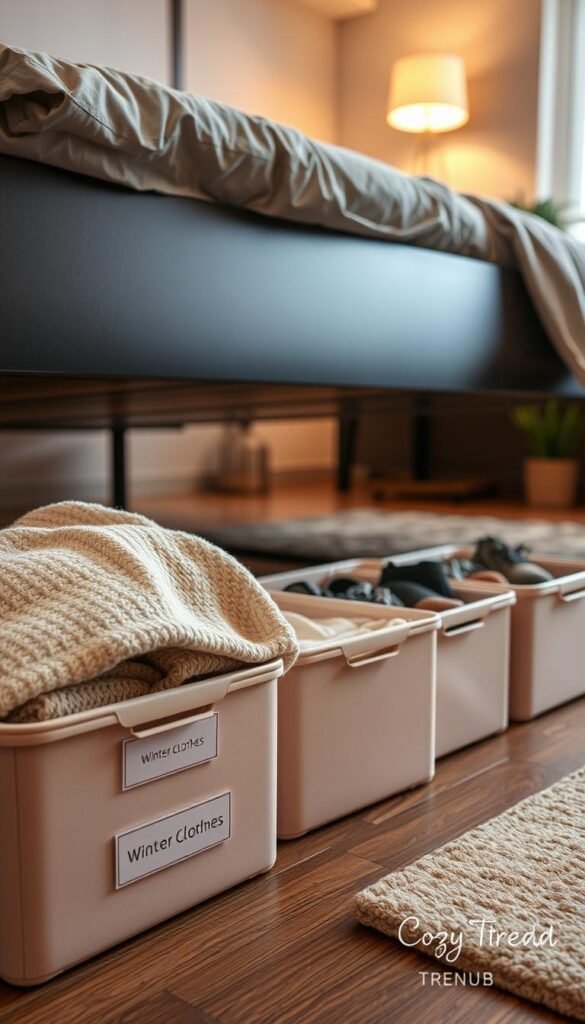
Best fit and quick buyer guidance
Best for: small bedrooms and a studio apartment with minimal closet room. Choose low-profile bins that match the bed clearance so they slide in and out smoothly.
Choosing bins
Look for lids to keep dust off clothes and easy-pull handles for frequent access. Prioritize durable plastics or canvas with firm sides that hold shape when filled with towels or jeans.
Seasonal rotation and organization
Store off-season clothes and holiday decor under the bed, swap monthly, and keep a short inventory in a notes app to avoid lost items. Label each bin and keep one for shoes or magazines so essentials stay reachable.
„Wirecutter-style testing shows real capacity matters—stuff bulky towels and jeans before you buy to confirm usable volume.“
- Pros: uses dead space well, keeps the room calm.
- Cons: limited access on very low frames; lids must seal to prevent dust.
Rolling Carts for Instant Counter Space in Kitchens, Bathrooms, and Laundry Corners
A compact cart on casters can turn an empty corner into a flexible prep or supply station. These units add quick counter and shelf space without drilling or permanent installs.
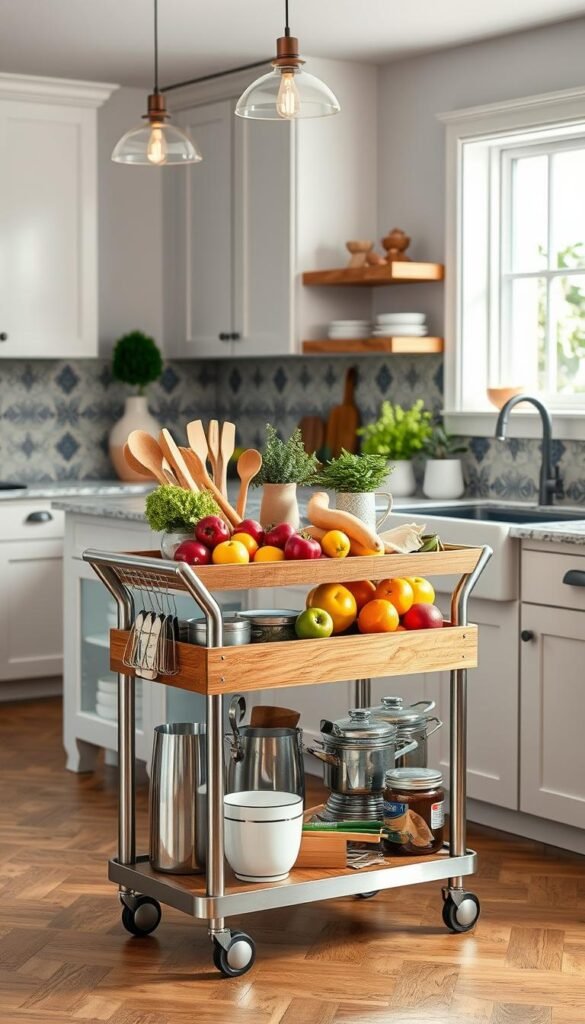
Who benefits
Renters who need flexible help: anyone who moves items between tasks like prep, coffee, or cleaning. A cart keeps tools and supplies nearby and rolls out of the way when not needed.
Room-specific uses
Kitchen: extra pantry shelving, small appliances, and prep tools on a slim cart make tight counters usable.
Bathroom: stack towels, toiletries, and cleaning supplies so the sink area stays clear.
Buying checklist
- Wheel quality — smooth roll and locking casters prevent unwanted drift.
- Shelf spacing — tall bottle clearance matters.
- Footprint — pick narrow units for tight walkways.
| Feature | Choose | Why |
|---|---|---|
| Wheels | Locking casters | Stability on uneven floors |
| Material | Stainless steel / wood | Steel resists moisture; wood adds warm style |
| Shelves | Adjustable spacing | Fits bottles, mixers, and tall jars |
Pros: highly adaptable and deposit-safe. Cons: can wobble on uneven floors and may feel cluttered if overfilled.
Magnetic Storage on the Fridge for Tools, Knives, and Small Essentials
A magnetic rail on the fridge converts unused metal into a tidy zone for knives and small tools. It addresses a common kitchen problem: drawers and cabinet space fill fast, leaving no safe spot for frequently used items.
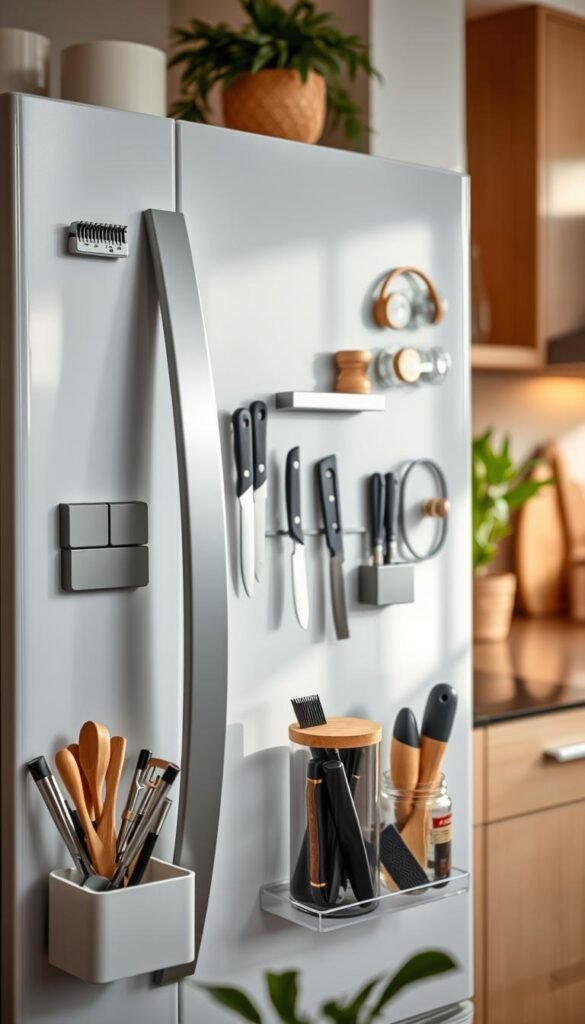
Who benefits
Best for: tiny kitchens where the fridge side or front acts as extra vertical space and drawers are full. This suits cooks who need quick access to a few tools and don’t want to open crowded cabinets repeatedly.
Safety and placement
- Use strong magnetic strips or purpose-built knife rails with full blade coverage.
- Place sharp items above child reach and away from busy walk paths.
- Clean the fridge surface first; avoid blocking seals, vents, or handles.
- Check that magnets don’t slide after repeated removal and return.
| What | Max load | Good surface |
|---|---|---|
| Magnetic knife strip | Light knives (check rating) | Side of fridge, smooth metal |
| Magnetic tool holder | Screwdrivers, small metal tools | Fridge front or side |
| Magnetic hook | 1–5 lbs | Flat fridge panel |
„Magnetic rails save drawer space and speed access—but confirm strength and safety before daily use.“
Lean-Against Shelves and Freestanding Bookcases That Don’t Touch the Wall
A narrow freestanding shelf can add tall, usable storage without touching painted surfaces.
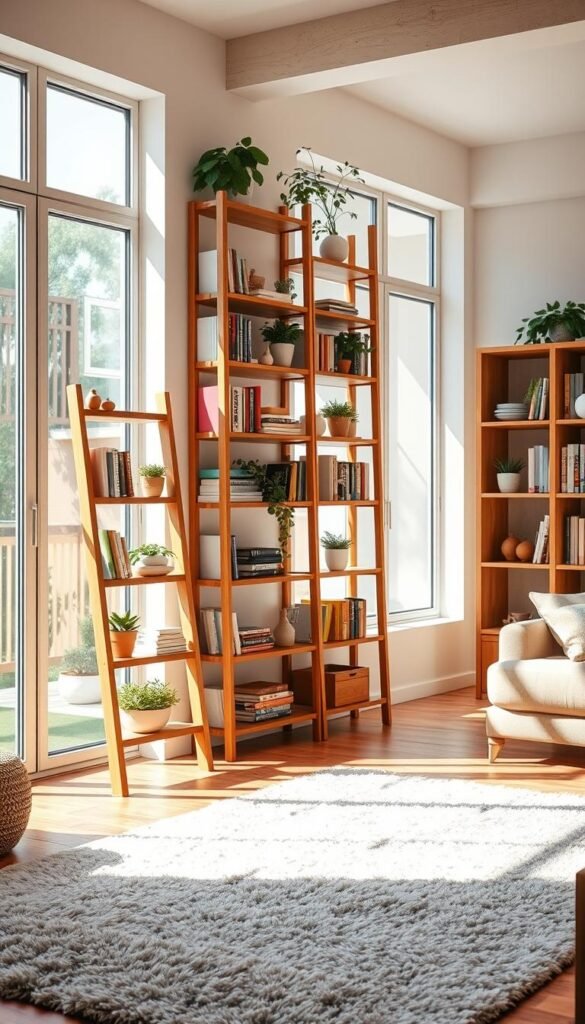
Who this suits
Ideal for: renters who can spare a bit of floor space to gain vertical capacity. These units act like furniture but do not require anchors or holes in the wall.
Stability and floor protection
Leaners and bookcases can shift if overloaded or placed on slick flooring. Use non-slip pads under feet and soft floor protectors to prevent dents.
In earthquake zones, anchor to a stud only if allowed; otherwise place heavy items low and avoid tall, top-heavy setups.
Organization-first styling
Group small things into matching baskets and bins to hide clutter and keep categories clear. Reserve one shelf or bin for magazines and papers to stop piles from spreading.
Buying checklist
| Consideration | What to check | Why it matters |
|---|---|---|
| Footprint width | Narrow (12″–24″) | Suits tight corners and walkways |
| Shelf depth | 10″–14″ | Holds books, bins, and small appliances |
| Weight distribution | Heavier items on bottom | Improves stability and safety |
„Wirecutter-style tests favor sturdy joinery and solid shelves over thin particle board when frequent moves are likely.“
Practical tip: choose open shelving with consistent basket sizes to make daily tidying fast and predictable. This brings useful style into a compact, deposit-safe solution for the home.
Corner Shelves and Slim Storage Units for Dead Space
A slim corner shelf can turn awkward empty angles into tidy, useful places. These narrow units reclaim odd gaps without taking much floor and help keep daily items within reach.
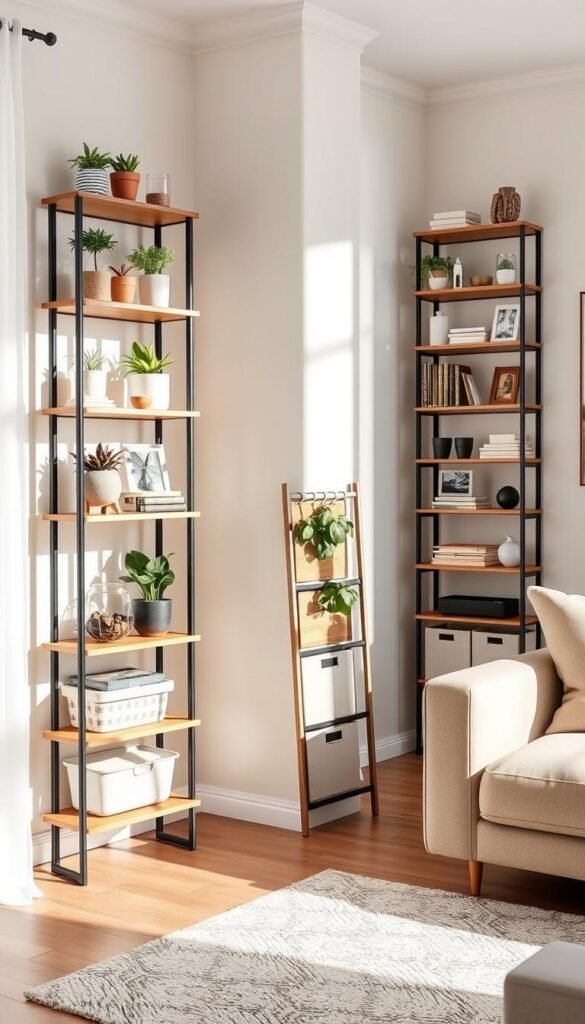
Best placement
Use them in an entry corner, a thin bathroom gap, or the narrow area beside the fridge. Keep the shelf away from vents and outlets and leave clear walkways.
Buying considerations
Prioritize depth and overall footprint first. Pick shelf heights that match what will sit on them and choose easy-clean materials like steel or stainless steel in mess-prone spots.
What to store by location
- Entry: mail, a small bowl for keys, and a daily bag drop.
- Bathroom: extra towels, travel-size backups, and a small bin for toiletries.
- Kitchen near the fridge: snack jars, spice racks, or an extra tray of prep tools.
| Feature | Good range | Why it matters |
|---|---|---|
| Depth | 8″–12″ | Stays slim and avoids bump points |
| Footprint | 12″–18″ wide | Fits corners without crowding a room |
| Material | Steel / stainless steel | Easy to clean and durable |
„Turn leftover corners into small, usable zones without crowding traffic paths.“
Pros: converts wasted area into useful shelving. Cons: can look cluttered when overfilled; use bins to keep the look calm and organized.
Closet Organizers That Double Hanging and Shelf Space Without Remodeling
A single small closet often needs to act like a mini-wardrobe, shoe cupboard, and accessory shelf at once. This section shows practical, no-drill ways to add hanging spots and shelves while keeping the closet intact.
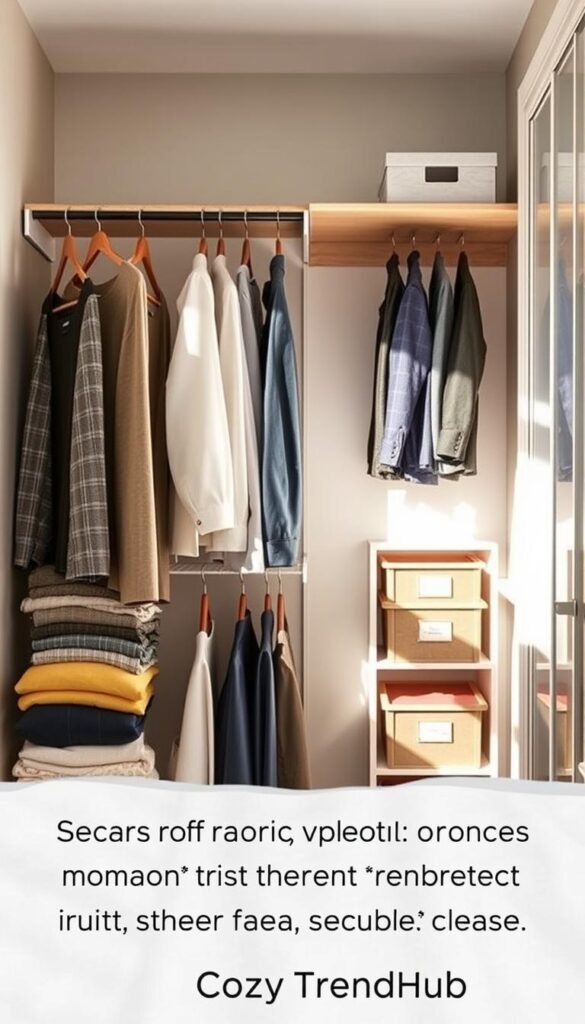
Who benefits and the core problem
Best for: someone with one small closet and too many clothes who cannot alter the framing or paint. These organizers increase usable room without a remodel.
Closet zoning and add-on hanging shelves
Create zones: daily outfits, work clothes, accessories, and seasonal items. Keep hangers grouped and use labeled bins on shelves so categories do not collapse into piles.
Add-on hanging shelves clip to the rod to hold folded shirts, sweaters, and purses. They give vertical shelf space when built-ins are missing or too high.
Floor shoe rack vs. over-the-door organizers
Floor racks sit low and steady and handle bulky shoes better. Over-the-doors save floor space and hold many pairs but need door clearance and padded hooks to avoid scuffs.
- Buying checklist: rod strength, shelf spacing for tall shoes, and a simple jiggle-test to check wobble.
- When to pick which: choose a floor rack if heavy boots are frequent; choose over-the-doors when floor space is precious.
„Double hanging and clear zones keep clothes visible, reduce daily decision time, and protect the closet’s finish.“
| Option | Holds | Where it fits | Pros | Cons |
|---|---|---|---|---|
| Hanging shelves | Folded clothes, bags | Clothes rod | Adds vertical shelves quickly | Limited weight capacity |
| Floor shoe rack | Heavy shoes, boots | Closet floor | Stable, handles bulk | Uses floor space |
| Over-the-door organizer | Shoes, accessories | Doors | Maximizes vertical door area | Needs clearance; can rub trim |
Pros: fast gains in hanging and shelf room. Cons: risk of overcrowding if seasonal items are not edited regularly. A short purge every few months keeps the system working.
Kitchen Cabinet and Drawer Organizers for More Storage With Less Chaos
A narrow organizer can stop lost pans and lids from disappearing into deep cabinets. Many small kitchens bury items in the back of a shelf. That leads to wasted time and duplicate purchases.
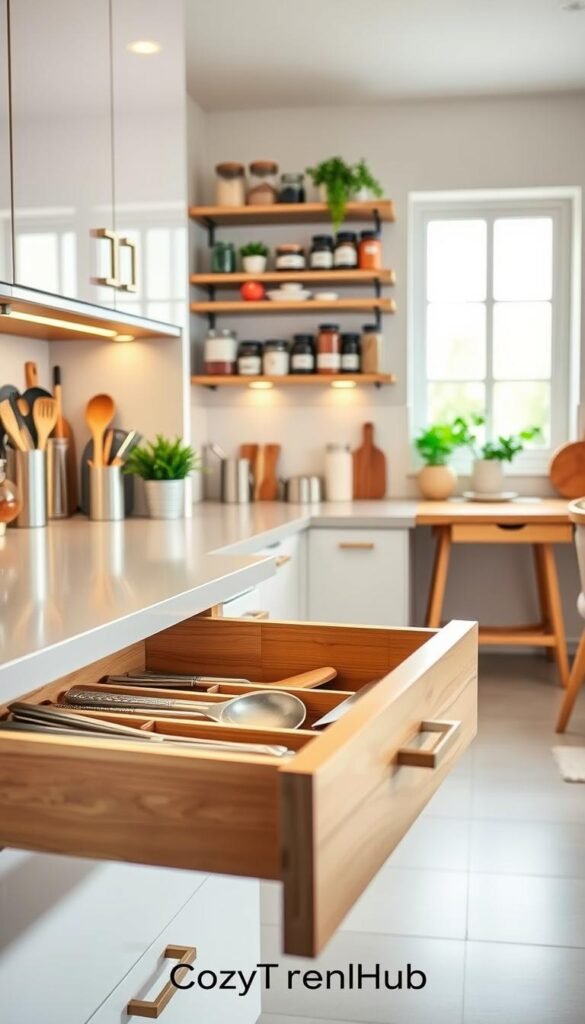
Who benefits
Best for: renters with compact kitchens who want quicker access without changing cabinetry. Drawer inserts and upright dividers help find what is needed in one reach.
Dividers and vertical solutions
Use expandable dividers or fixed slots to keep lids, pans, and cutting boards upright. Tension rods create vertical compartments for baking sheets and lids without drilling.
Why it works: upright placement prevents heavy stacks and lets one item be grabbed without unstacking.
Under-sink plan
Install a short tension rod to hang spray bottles and free the cabinet floor. Add two shallow bins for refill supplies and a small shelf riser to separate cleaners from tools.
Buying checklist and quick rules
- Measure interior width and depth before buying dividers or risers.
- Choose non-slip bases and soft feet so shelves don’t scratch cabinet surfaces.
- Pick expandable dividers if cabinet sizes vary; choose fixed slots for heavy pans.
| Solution | Good use | Notes |
|---|---|---|
| Expandable divider | Mix of lids and pans | Adjusts to fit widths |
| Tension rod | Boards, lids | Drill-free; check grip on finish |
| Shelf riser | Small appliances, plates | Soft feet to avoid scratches |
„If it takes more than two moves to reach an item, the layout needs changing.“
Pros: big usability gains and fewer duplicate purchases. Cons: requires measuring and a simple category commitment to keep things tidy.
Bathroom Storage Without New Cabinets: Towels, Toiletries, and Supplies
A small bathroom often loses usable surface to bottles and towels, leaving counters cluttered and damp.
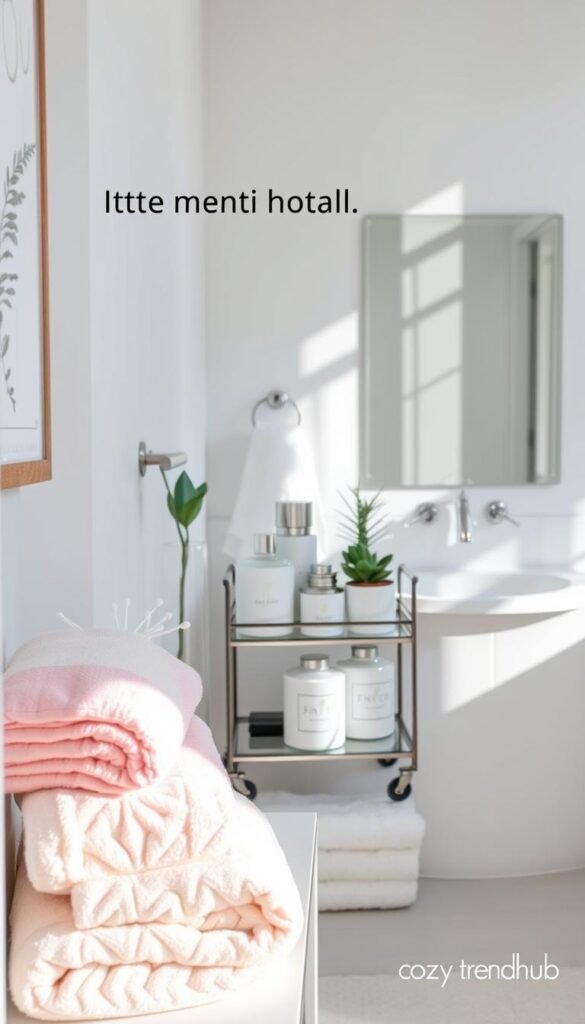
Problem: limited vanity cabinets force users to stack items on the sink. That blocks cleaning and hides what is needed each day.
Who benefits
Best for: someone in a small apartment with one sink and few built-ins.
Practical solutions
Hang waterproof baskets from the shower head to hold shampoo, soap, and a sponge. Use over-the-door towel racks to keep towels aired and accessible.
- Daily items: place at arm’s reach in shower baskets or a low hook.
- Backups and bulk supplies: store higher or on a top shelf to reduce counter clutter.
Buying checklist
- Choose rust-resistant steel or plastic baskets with drainage holes.
- Confirm door clearance and add padding to protect finishes.
- Pick adhesive or over-door hooks rated for moist environments.
„Move everyday items into reachable baskets; keep extras out of sight to speed routines and ease cleaning.“
| Solution | Good use | Notes |
|---|---|---|
| Shower hanging baskets | Shampoo, soap, razors | Drainage, rust-proof finish |
| Over-door towel rack | Daily towels | Padded hooks, measure door thickness |
| High shelf bin | Spare supplies | Keep sealed and labeled |
Maintenance: wipe mounts weekly and re-check grips in high-humidity rooms. Moisture will shorten adhesive life and may need occasional resecuring.
Multi-Use Furniture With Hidden Storage for Small-Space Living
Small living areas often demand pieces that pull double duty: seating that stores and tables that tuck items away. This approach turns furniture into active solutions when closets are scarce and floor space is precious.
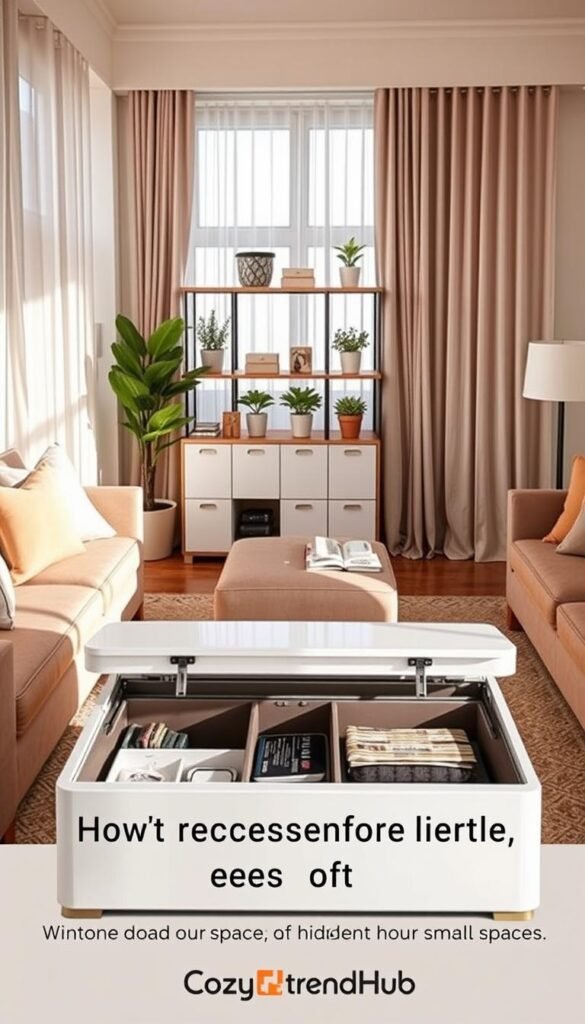
Who should buy this and what problem it solves
Best for: a studio apartment or anyone short on closet room who wants fewer standalone units and a calmer room. Multi-use pieces reduce visible clutter and make daily life simpler.
Storage ottomans and benches
Use an ottoman or bench to store blankets, seasonal items, and rarely used things. Place small bins inside to keep items organized and avoid a messy dump zone.
Coffee tables with compartments
A table with hidden compartments keeps remotes, chargers, and small supplies out of sight but within reach. Look for units with soft-close lids or removable trays that make access easy.
Buying considerations
- Check lid hinges and safety to avoid pinches.
- Verify seating weight capacity and firm construction.
- Measure interior dimensions to match what will be stored.
| Feature | Why it matters | Tip |
|---|---|---|
| Lid mechanism | Prevents accidents | Soft-close or gas strut |
| Interior size | Fits bins and bulky items | Test with a folded blanket |
| Material | Durability and moving ease | Hollow-core is lighter; solid wood lasts |
Pros, cons, and a simple rule to decide
Pros: efficient use of floor area, fewer visible piles, and added seating or a table surface. Cons: higher upfront cost and variable durability when moved often.
„Buy multi-use furniture when one piece can replace another or when it solves a daily clutter problem.“
Conclusion
Focus on one zone, add a single product, and the room will feel more organized fast. Measure first, prefer vertical fixes, choose floor units for heavy loads, and tame small items with labeled bins. This is a simple way to win usable space without damage.
Pick your priority: an entry drop zone, a chaotic kitchen cabinet, or under-bed seasonal boxes. Implement one drill-free product and test how it changes daily flow. Small changes stack into real gains in a tight apartment.
Rotate seasonal items, reassess access points, and tweak zones each few months. Use tested adhesives carefully, avoid overloading, and pad door hooks to protect finishes—these steps protect deposits and reduce surprises.
Choose products that match measured dimensions and real loads, not just looks. That makes any renter’s transition to a calmer, more usable home both reliable and long-lasting.


8 Comments