This short guide frames common storage pain points and offers a practical, renter-friendly set of fixes. It focuses on small-space needs and seasonal shifts without pushing a full renovation.
Drawing on NEAT Method tips—inventory, flow, lids, labels—and product testing practices used by Wirecutter, the list that follows is research-driven. The goal is a compact solution that improves daily access and trims duplicates.
Readers will find a curated mix of products that fit shallow cabinets, deep shelves, narrow counters, and rental rules. Each pick notes what problem it solves, key pros and cons, and what to measure before buying.
Evaluation favors simple measures: dimensions, stability, ease of cleaning, visibility, and containment. The focus is saving time and space so the system adapts to holiday serveware, summer snacks, and back-to-school needs without overflowing.
Key Takeaways
- Practical, renter-friendly picks that avoid major remodels.
- Products chosen to improve flow, visibility, and daily access.
- Each item includes best-for notes, pros/cons, and measurement tips.
- Evaluation uses stability, cleanup, and containment as core criteria.
- Systems are flexible for seasonal swaps and small-space limits.
What a “best kitchen organization mix” actually means for real kitchens
An effective set of storage tools balances three wins: clear visibility so you see supplies, easy access so you reach what you need, and firm containment so things stay where they belong.
Cluttered drawers usually start when categories get mixed. No dividers, lid piles, and loose utensils create a chaotic drawer. A fixed drawer has one purpose and a place for each tool.
Wasted cabinet space is often a height and sightline issue. Risers, turntables, and under-shelf baskets add vertical room and make items visible from the front of the cabinet.
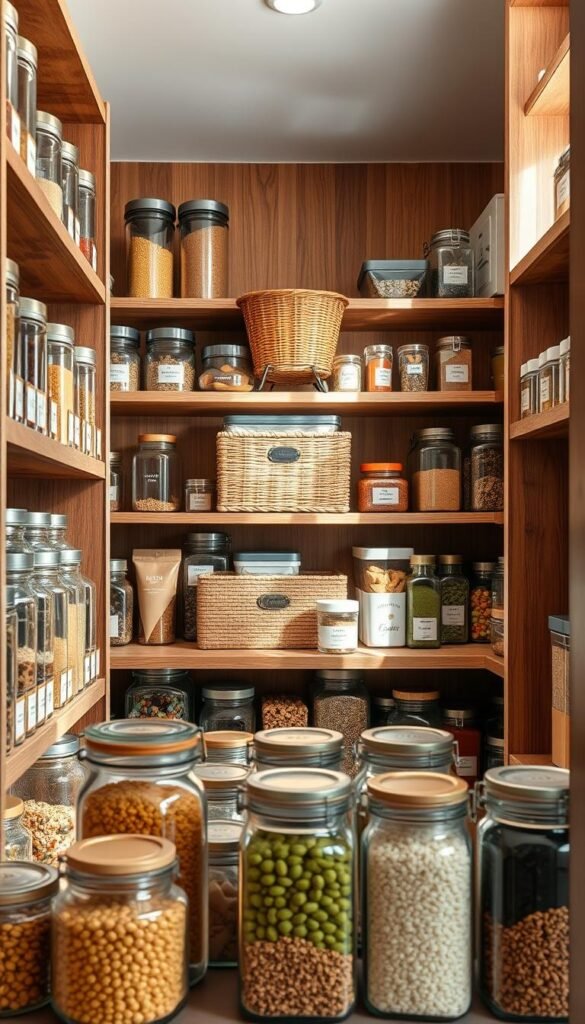
Pantry overflow is a category and restock problem. Use bins and baskets to keep like-with-like and stop duplicate pantry buys. For more pantry ideas, see this small-space pantry guide.
- Renter-friendly: favor no-drill installs, removable adhesives, and compact organizers for galley rooms and apartments.
- Seasonal: reassign a bin for holiday baking, roll a cart for summer drinks, or create a snack zone for school days.
- Modular: choose pieces that move, wipe clean, and reconfigure as needs change.
| Problem | Targeted Fix | Why it helps |
|---|---|---|
| Cluttered drawer | Expandable dividers | Separates categories; restores one-purpose drawers |
| Wasted cabinet | Risers / turntables | Adds usable vertical space and visibility |
| Pantry overflow | Bins & baskets | Groups items, speeds restock checks, reduces duplicates |
How to choose the right products before you buy anything
Begin the process by laying out every item so decisions are based on facts, not guesses. This short, deliberate step saves time and prevents duplicate purchases.
Take inventory and purge
Pull everything out. Toss expired food and group like-with-like: pantry, baking, snacks, spices, canned goods.
Why it helps: seeing categories makes it clear what type of organizer and what size containers are actually needed.
Design for flow
Place cooking tools near the stove. Keep cleaning supplies by the sink. Make prep items easy to reach where chopping happens.

Win the war against tops
Store lids and pot lids vertically by height. File lids so one grab won’t topple a pile.
Label to reduce friction
Labels are functional in shared homes. Use clear front labels and top labels for deep shelves so kids and roommates return items correctly.
| Friction | Solution | What to measure |
|---|---|---|
| Overflowed shelf | Risers / bins | Shelf depth and height |
| Hard-to-reach jars | Turntable | Cabinet diameter and door clearance |
| Lid avalanche | Vertical lid rack | Drawer height and lid heights |
On a budget, skip full decanting unless you use airtight containers. Frame each purchase as a fix for reach, visibility, overflow, or cleanup. For curated, budget-friendly organizer picks, focus on pieces that solve a single, measured problem.
Comparison criteria to keep your storage upgrades from backfiring
Good upgrades start with facts: record precise sizes and realistic weight limits before buying. Small mistakes in measurement lead to blocked doors, wasted vertical room, or organizers that can’t hold tall pans and bottles.

Measure first
Checklist: cabinet width, shelf depth, drawer height, and door clearance. Measure with doors open and measure inside frames for true fit.
Stability and weight limits
Magnet storage needs strong pull and a perimeter lip for spill control. Carts require smooth casters and tested load ratings. Wall baskets must use anchors or strong adhesives for renters.
Cleaning and visibility
Choose wipeable surfaces near grease splash zones. Shallow lips help visibility but might let small items tip; tall sides contain but can hide labels.
- Plan by zones: cooking, coffee, pantry, snack—assign a place for racks, baskets, hooks, and holders.
- Each of the ten picks will be scored on sizes, shelf fit, door clearance, stability, and cleanability.
| Criteria | What to measure | Failure mode | Test note |
|---|---|---|---|
| Fit | Cabinet width, shelf depth | Blocked door or wasted vertical space | Measure inside frame with a tape measure |
| Stability | Weight limit, magnet strength | Slips, tipped carts, fallen baskets | Load-test with intended pans or jars |
| Cleaning | Surface material, texture | Grease build-up, hard-to-wipe corners | Prefer smooth, non-porous finishes near stove |
| Visibility | Lip height, side height | Hidden labels, frequent rummaging | Balance low lips with labeled fronts or tops |
Expandable spice shelf riser for crowded cabinets
A simple tiered riser turns a crowded shelf into a usable spice zone. It solves the common issue where short jars hide behind taller bottles and cause duplicate buys.

Who it helps
This pick is ideal for standard upper cabinets with mixed jar sizes and cooks who want visibility without drilling doors. It creates a consolidated area for spices and small pantry items.
Top pick and key spec
Top pick: The Container Store’s Expand-A-Shelf expands from 14 to 27 inches. That range fits most cupboard widths without cutting or permanent changes.
Pros, cons, and fixes
- Pros: creates a visible, tiered spice zone; quick install; no-drill upgrade for a small kitchen.
- Con: back tiers can hide labels when jars sit close together.
- Fix: add top labels (or single-letter marks) and keep jars alphabetical to cut search time.
| Problem | Organizer | What to measure |
|---|---|---|
| Lost jars and duplicates | Expandable riser | Cabinet width, shelf depth, jar heights |
| Tight back labels | Top labels | Label visibility and jar sizes |
Buying note: measure before you buy and compare jar heights to shelf clearance to decide if a riser or alternate rack is the better solution.
Magnetic spice rack shelves that turn your fridge side into storage
A narrow magnetic shelf can reclaim counter space by turning the fridge side into a tidy spice station. This solution suits renters and small homes that lack extra cabinet room.

Top pick: Hoopoton Store Magnetic Spice Rack (2-pack). Each rack holds two rows of standard spice jars — about eight jars per rack — and has a full-perimeter lip to keep jars stable.
Who this helps
Ideal for renters and anyone with limited cabinet shelf depth. It moves jars off counters and places spices at eye level for quick reach while cooking.
Practical notes and trade-offs
Why it works: impressively strong magnets reduce sliding risk and the lip contains dust or drips. If a fridge isn’t magnetic, adhesive-backed magnetic sheets create a mounting surface.
Trade-off: metal arms can arrive slightly bent from shipping. Gently bend them back to restore level storage; avoid force that might damage the finish.
Buying considerations
- Check fridge-side clearance for door swing and walkways.
- Verify magnet strength and the fridge surface type.
- Plan weight distribution and a simple label system since jars sit at eye level.
| Feature | Detail | Why it matters |
|---|---|---|
| Capacity | 2-pack, ~8 jars per shelf | Consolidates many jars off the counter |
| Mount | Strong magnets; adhesive sheet option | Works on most fridge sides or created surfaces |
| Stability | Full-perimeter lip | Prevents spills and keeps labels visible |
| Shipping issue | Occasional bent metal arms | Simple, careful bending restores level shelf |
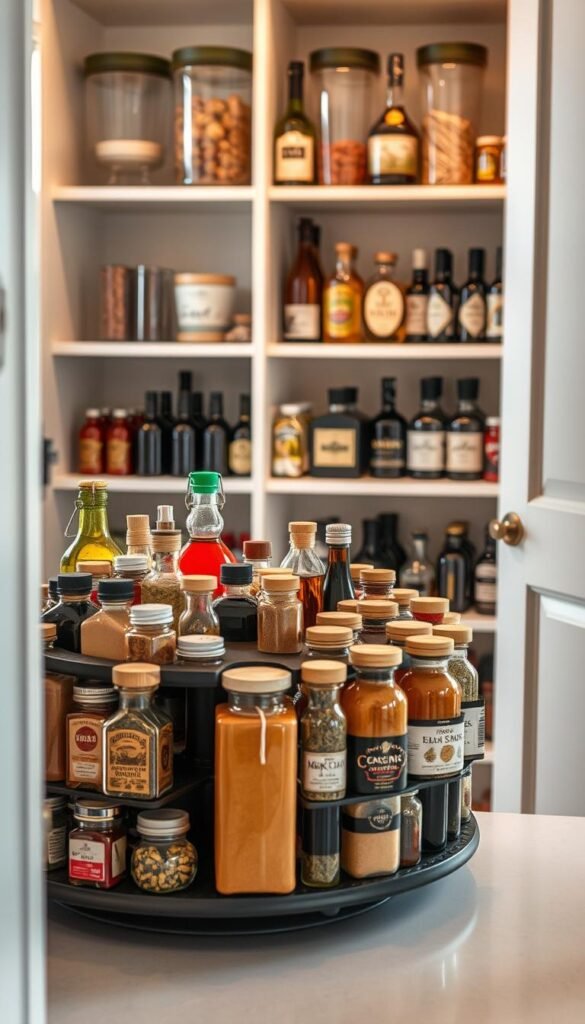
Lazy Susan turntable to stop losing bottles and jars in deep cabinets
Deep shelves often hide bottles and jars until they expire or spill. A simple turntable makes everything visible and cuts the reach-and-grab routine that causes waste.
Who benefits and where to use it
This solution fits deep cupboards, pantry shelves, and fridge corners where reaching back is inconvenient. It works for oils, sauces, and small bottles that otherwise disappear.
Top pick and setup tip
Top pick: OXO Not So Lazy Susan Turntable, available in 11″ and 16″ sizes. Grips on the bottom help prevent sliding when you spin heavier jars.
Pro setup rule: place tall bottles in the center and shorter items around the edge so labels stay readable while twirling.
Pros, cons, and measurement notes
- Problem solved: stops spills, expired food, and duplicate buys by keeping items visible.
- Sizing guidance: 11″ fits smaller shelves and tight corners; 16″ suits deeper cupboards and wider fridge shelves.
- Stability: bottom grips matter for heavier bottles and frequent use.
- Alternative: YouCopia FridgeView turntable (10⅞“) adds taller sides and a mat for extra containment.
Buying considerations
| Factor | What to check | Why it matters |
|---|---|---|
| Depth and diameter | Measure shelf depth and available room | Ensure the turntable fits without blocking doors |
| Height clearance | Measure top-to-shelf for tall bottles | Tall sides can block labels; plan placement by category |
| Use case | Decide if oils, sauces, snacks, or baking items will go on the turntable | Groups of like items spin out more efficiently |
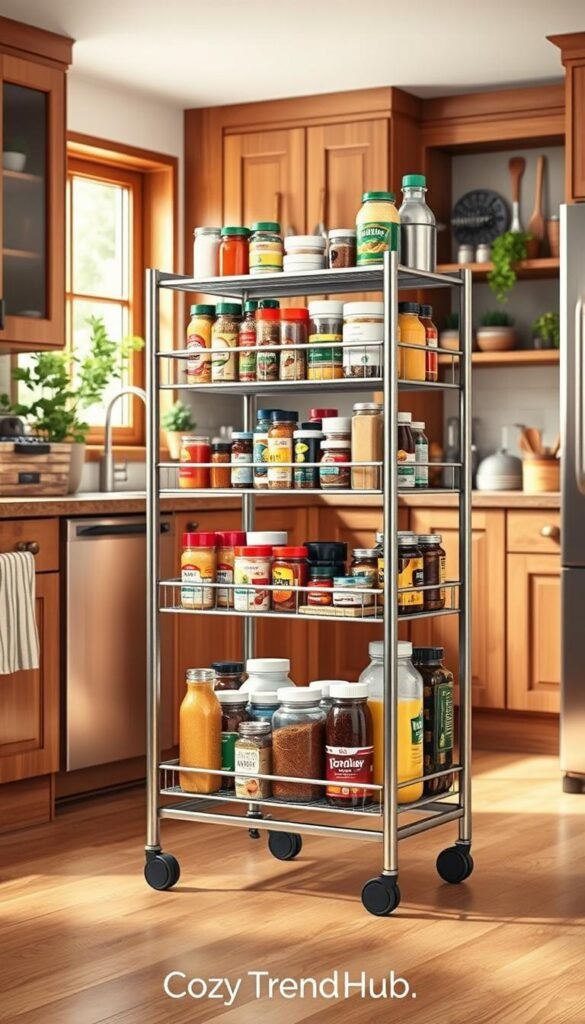
Rolling pantry cart when cabinets can’t handle your food and supplies
For apartments with limited shelves, a mobile cart keeps food and supplies accessible and off counters. It creates vertical room in a small footprint and moves when the room needs change.
Who this helps
Best for: apartments, galley kitchens, and homes with little to no pantry. It works where modular, movable storage matters most.
Top pick and specs
Top pick: IKEA Råskog Utility Cart. The set has three 13-by-17-inch trays that add vertical storage without taking much floor space.
- Three trays fit narrow gaps and provide flexible shelves for supplies.
- Large casters roll smoothly and resist jamming for easy repositioning.
- Bottom shelf fits bottles and jars up to 11 inches high; sides help prevent toppling.
Placement and practical tips
Place taller bottles on the lower shelf for stability. Keep small jars on the top shelf and use top labels because the cart sides can hide front labels.
Trade-offs
| Consideration | Note | Why it matters |
|---|---|---|
| Assembly | ~15 minutes | Quick but requires simple tools |
| Pathway clearance | Measure door swing and drawer access | A cart can block drawers if placed improperly |
| Footprint | Small floor space, big vertical capacity | Good for tight rooms but needs a clear roll path |
„A rolling cart turns overflow into an organized, movable pantry.“
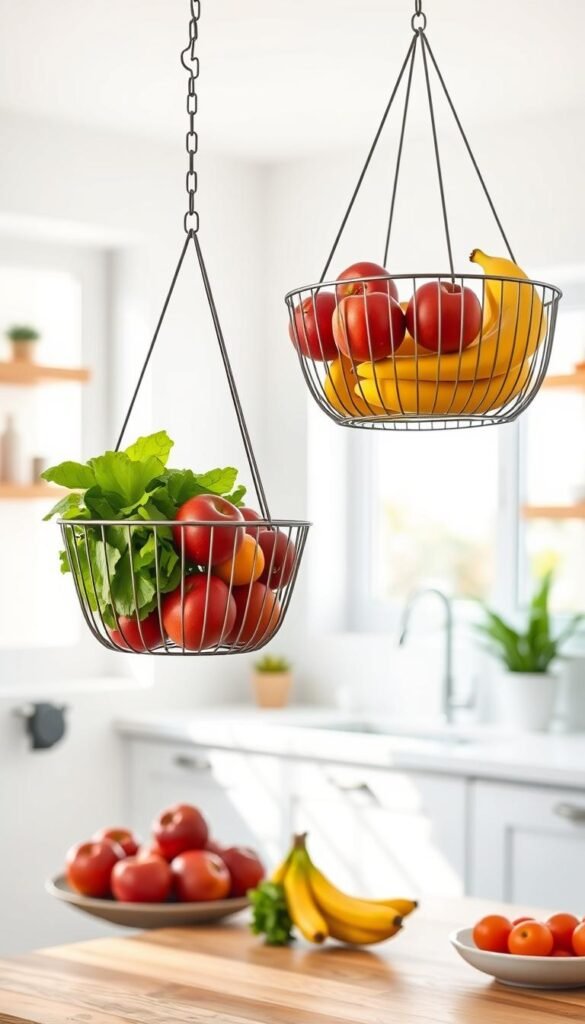
Hanging produce basket that clears counter space fast
A hanging produce basket clears counters fast by creating a vertical home for fruits and veg. It removes loose items from the work surface and gives weekly groceries a clear place to live.
Who it helps
Best for: families who buy produce weekly and homes with limited counter space. Vertical storage pays off immediately in small rooms where every inch matters.
Why the CAXXA 3-Tier works
The Wirecutter top pick, CAXXA 3-Tier Hanging Fruit Basket, hangs evenly and uses clips to adjust tier heights. Three spacious baskets let users separate categories—bananas and citrus, apples, and onions or garlic—so items are easy to find.
Produce care: the rounded baskets reduce pressure points and lower bruising for delicate fruit.
Installation and renter-friendly options
If ceilings are high, add extra chain to lower the drop. Where ceilings are low or crowded, mount under a high shelf only when there’s no obstruction below.
For renters who can’t drill, use a secure ceiling hook rated for the load and confirm the anchor type matches the ceiling material.
Buying considerations and trade-offs
- Confirm the hanging spot won’t block cabinet doors or light switches.
- Measure drop length so the lowest basket stays reachable without bumping heads.
- Keep it away from grease zones near the stove to avoid soil buildup on supplies.
Realistic trade-off: hanging storage improves visibility, but it needs steady restocking so older produce stays visible and gets used first.
| Consideration | What to check | Why it matters |
|---|---|---|
| Placement | Door swing, walkways | Prevents obstruction and accidental bumps |
| Drop length | Measure from ceiling to working height | Ensures baskets are reachable |
| Mount type | Hook with proper anchor or shelf mount | Safety and renter compatibility |
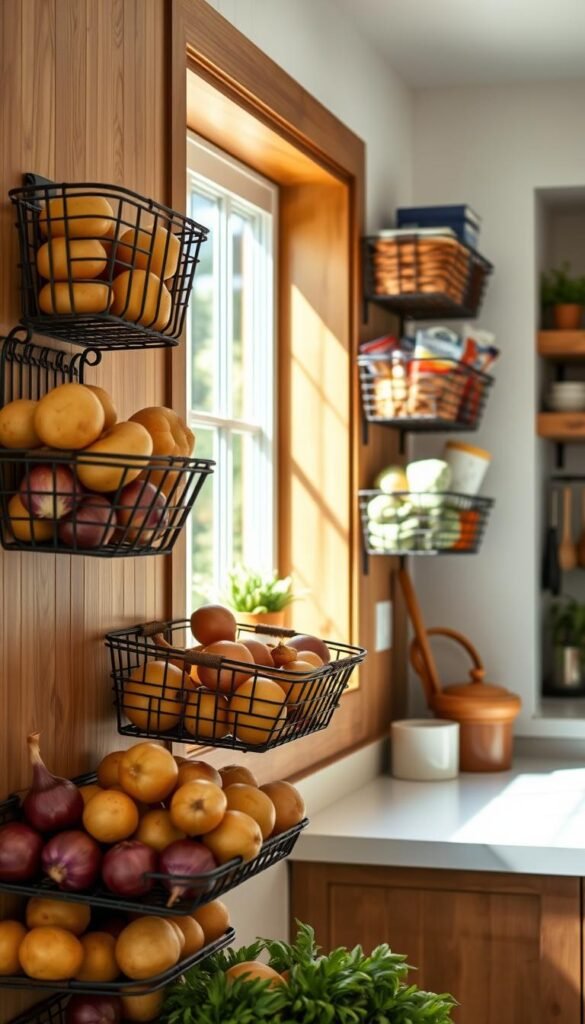
Wall-mounted stackable baskets for potatoes, onions, and grab-and-go snacks
Vertical wall storage restores surface area and keeps everyday ingredients within sight. For many renters, counters and pantry corners become dumping grounds for root veg and snack bags. A compact stack of baskets clears counters and sorts items by use.
Who it helps
This solution fits renters and small-space households that need breathable, visible sorting. The Mefirt Stackable Wall Mounted Fruit Baskets snap together or mount, giving flexible placement without committed furniture.
Key specs and extras
Each basket measures 12 × 7¾ × 8½ inches. Mount on a wall or stack on a counter. Screws and wall anchors are included, plus four plastic hooks for lightweight tools or a small bag of produce.
- Produce care: plastic base inserts reduce bruising compared with bare wire.
- Surface: faux-wood laminate tops wipe clean of dust and grease.
- Options: color choices let the set blend with room tones.
| Consideration | Note | Why it matters |
|---|---|---|
| Mounting | Includes screws/anchors; check wall type | Ensures safe load capacity |
| Load | Keep heavy potatoes low | Prevents sag and reduces strain on fasteners |
| Cleaning | Wipeable laminate tops | Easy maintenance near prep zones |
| Traffic | Place snack basket away from walkways | Avoids constant congestion |
Buying note: where drilling isn’t allowed, consider no-drill alternatives or a freestanding stack to reclaim space safely. For more small-solution ideas, see small kitchen storage ideas.
Countertop appliance base with a hidden drawer to reclaim prep room
A slide-out tray beneath a coffee maker or toaster oven frees up prep space and keeps tools handy.
Problem: small appliances take valuable counter room and their accessories—filters, scoops, tea bags, utensils—scatter across drawers and surfaces.
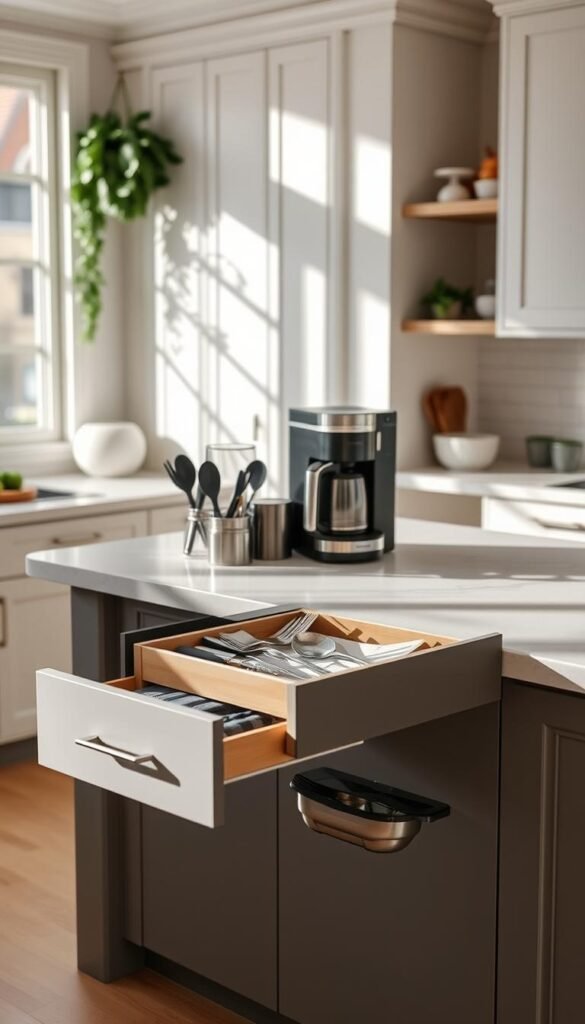
Who this helps
This solution suits coffee and tea stations, toaster-oven setups, and tight counters where a compact holder for daily tools matters most.
Featured solution and specs
Featured: Yamazaki Home Countertop Drawer with Pull-Out Shelf. Unit measures 17¼×15½×5¼ inches overall. The pull-out tray extends to 17½×10¾ inches.
What it replaces and what to measure
It replaces scattered containers and tiny caddies by adding a dedicated drawer for utensils and a slide-out shelf for plates or quarter-sheet pans during prep.
| Check | Why it matters | Tip |
|---|---|---|
| Upper-cabinet height | Prevents collision when stacked | Measure from counter to underside of cabinets |
| Appliance footprint | Ensures stable sit and full tray function | Confirm base fits the unit dimensions |
| Nearby doors/drawers | Pull-out clearance | Test path before buying |
Workflow benefit: keeps daily utensils and small tools near the appliance so main drawers remain for cookware. Trade-off: adds height under the appliance, so clearance and grease exposure are practical concerns.
For simple countertop tips and placement ideas, see a short guide to keeping appliance zones neat here.
Sliding seasoning drawer rack to get oils and vinegars off the counter
A slim sliding rack hides oil and vinegar so counters stay cleaner between cooks. It removes grease-prone bottles from the prep surface while keeping them within reach.
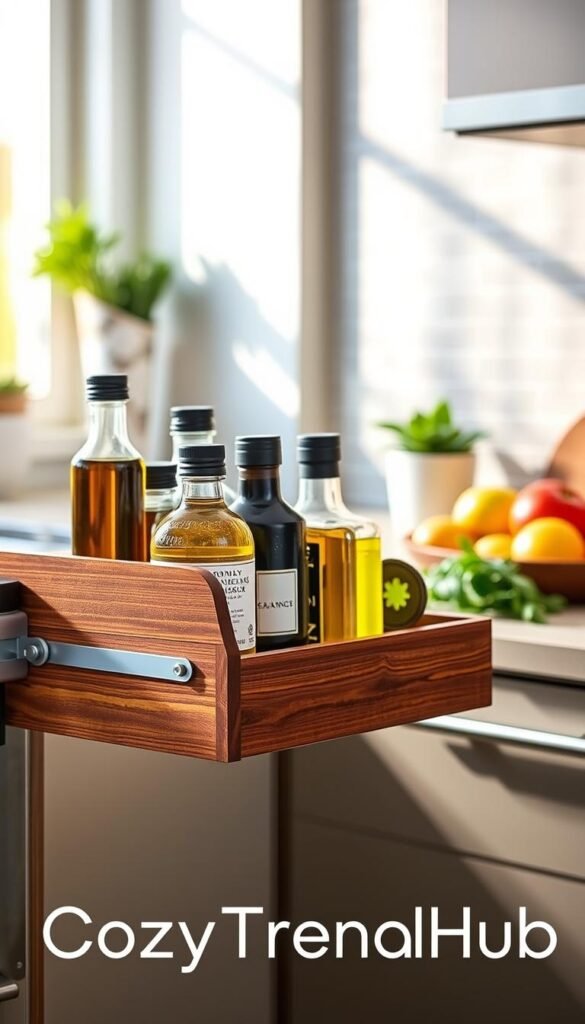
Who this helps
Best for: people who cook daily and dislike greasy buildup on counters. The unit keeps a dedicated seasoning zone near the stove without permanent changes.
Featured solution and key specs
Wirecutter top pick: Yamazaki Home Sliding Drawer Seasoning Rack. Measures 19¾×5×14½ inches — narrow enough for slim counter areas and shallow gaps.
Core benefit: a concealed drawer reduces clutter and makes wipe-downs faster by containing spills and drips.
- Top shelf holds smaller spice jars so spices stay with oils and vinegars.
- Metal body accepts magnetic shelves for added side storage.
Buying considerations
Confirm counter depth and clearance to open the drawer. Place the rack away from heavy splatter zones when possible. Check bottle heights so caps don’t contact the top shelf.
| Issue | Feature | Why it matters |
|---|---|---|
| Greasy counters | Concealed drawer | Keeps bottles off surface and simplifies cleaning |
| Limited space | Narrow footprint (19¾×5×14½ in) | Fits slim gaps and shallow counters |
| Need more shelving | Magnetic add-ons | Attach extra shelf space without drilling |
Drawer dividers that solve lid chaos and the junk-drawer problem
A well-planned drawer divider can shift a chaotic junk space into a quick-access zone. It stops lid avalanches and makes daily prep faster.
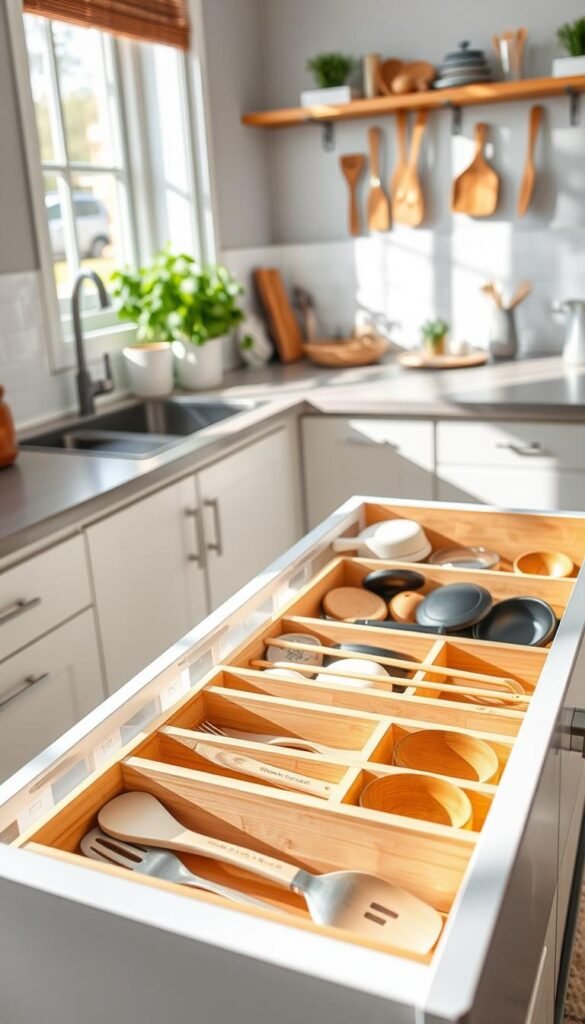
Who this is for
Good for food storage lids, pot lids, utensils, and small tools like scissors or batteries. It also helps keep pans and pots separated so surfaces don’t scratch.
Setup approach
Stack container bottoms on one side and file lids vertically by height on the other. Place utensils in a narrow lane and leave a small “misc” section for essential tools only.
Expandable vs fixed
Expandable dividers adapt to changing items and sizes. They are flexible for renters and evolving needs.
Fixed trays create firm category limits. That works well for shared homes where rules reduce drift and clutter.
„Keep bottoms and lids together when possible; where space is tight, file lids vertically to stop the avalanche.“
Buying considerations
- Confirm drawer height for vertical lid storage and measure internal sizes.
- Choose non-slip bases to prevent shifting during opening and closing.
- Pick a layout that matches daily flow so items are returned to the right lane.
| Problem | Divider type | Why it helps |
|---|---|---|
| Lid pile and search time | Vertical filing + fixed tray | Stops avalanches and keeps lids visible |
| Changing item sizes | Expandable dividers | Flexes to hold different jars, lids, utensils |
| Shared household drift | Fixed compartments | Creates clear lanes and reduces re-sorting |
Maintenance tip: keep one misc lane intentionally small to prevent it becoming a dump. Label sections if multiple people use the drawer and link to a short curated guide for quick product ideas at drawer divider picks.
Under-shelf hanging baskets to add a “secret” storage layer in cabinets
Hidden baskets under existing shelves unlock a second tier of usable shelf space without tools. They turn wasted vertical gaps into practical zones for flat and lightweight items.
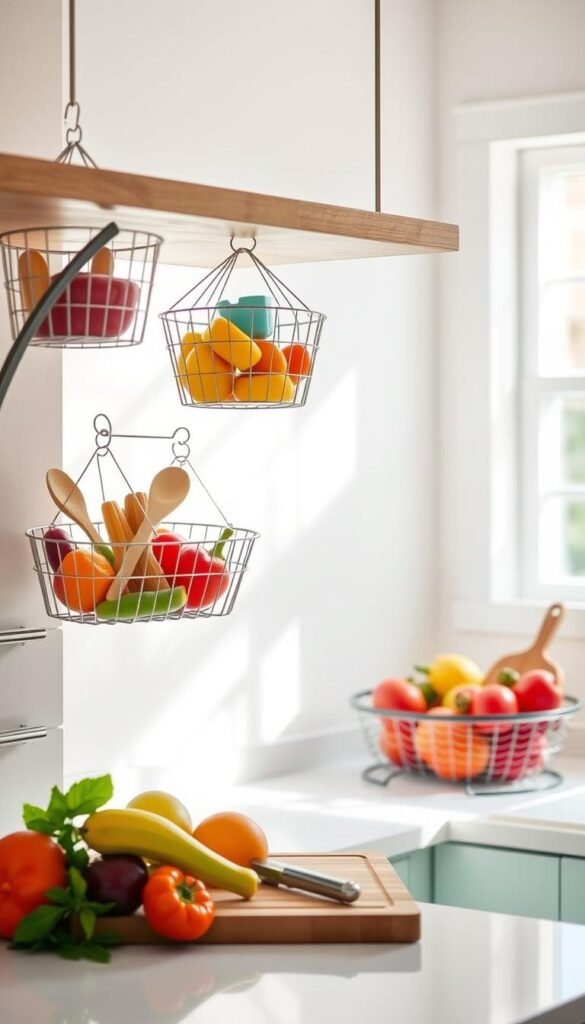
Who this helps: small kitchens and renters who need added shelf room fast. No drilling is required for many slip-on or clamp-style designs, so tenants can add storage without permanent changes.
Great uses
- Cutting boards and baking sheets
- Foil, wrap, and boxed bags of chips or snack bags
- Seasoning packets and other flat pantry items
Buyer and fit notes
Measure shelf thickness and inside height so the basket clears a closed door. Confirm the load limit and avoid overfilling; the existing shelf supports the extra weight.
| Fit | Install type | Cleaning |
|---|---|---|
| Measure shelf depth & clearance | Slip-on, clamp, or adhesive | Wipeable finish; avoid tight corners |
| Check cabinet door swing | Choose low-profile baskets | Plastic or coated metal wipes clean |
| Weight limit | Match to shelf strength | Removable liners speed cleaning |
Maintenance tip: assign the basket to one category—wraps, snacks, or boards—so it does not become a mixed overflow zone.
„A discreet second tier keeps small items visible and frees the main shelf for larger essentials.“
For a quick product look, see an under-shelf storage drawer and a concise cabinet organizer guide to compare styles.
Cabinet-door and wall hooks that create instant storage without new furniture
Frequently used lightweight tools end up on counters because there’s no convenient place near the stove or sink. Cabinet-door and wall hooks reclaim vertical space and make small items easy to reach without adding furniture.
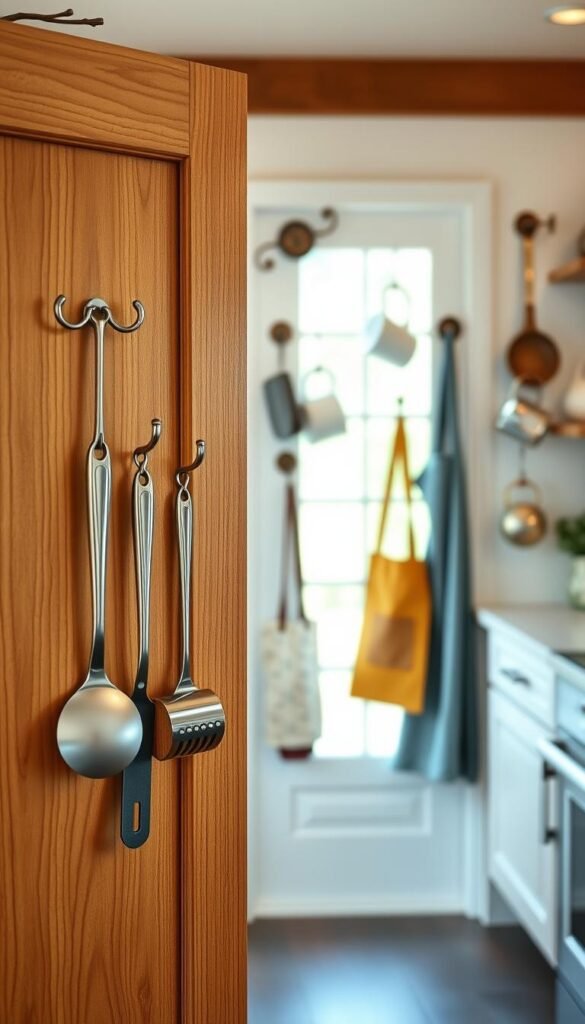
Who this helps
Good for: pot holders, trivets, dish brushes, and small tools that should air-dry and stay within reach. Hooks create micro-zones near work areas so items return to a fixed place.
Renter-friendly guidance
When drilling isn’t allowed, prioritize removable adhesive hooks. Follow the cure-time instructions on the package for a stronger hold. Test one hook before committing to a set.
Safety, stability, and placement
- Match surface: choose adhesive types rated for painted walls, tile, or cabinet laminate.
- Weight limits: keep to the manufacturer’s max—light tools and cleaning supplies only.
- Clearance: confirm door thickness and that hooks won’t prevent the cabinet door from closing.
- Avoid heat/steam: don’t place adhesives where regular steam could weaken the bond.
Practical buying considerations
Pick low-profile hooks for inside cabinet doors so lids and shelves still move freely. For wet tools, mount hooks inside a lower cabinet or on a wall near the sink to keep cleaning supplies off counters and help items dry.
Tip: create one hook lane per item type—brushes, trivets, pot holders—so everyone knows the place to return tools and the system stays tidy. For renter-focused options and more mounting ideas, see a short list at renter-friendly storage or practical fixes from Wirecutter small-space ideas.
How to build a clutter-free pantry and fridge system that stays organized
Treat the pantry and fridge as joined systems: group items so a single glance shows what’s missing. This reduces duplicates and makes weekly put-away quick.
Group like-with-like
Start by purging expired food. Then sort into routine categories: snacks, pasta, canned goods, baking, breakfast, and quick meals.
Why it works: similar items live together, so one pull fetches everything needed for a meal and duplicates are obvious at restock time.
Contain categories with bins and baskets
Use bins and baskets to hold each category. A single basket for snacks or canned goods lets someone grab a full set and return it easily.
Choose breathable baskets for produce and solid containers for baking supplies so things stay tidy and visible.
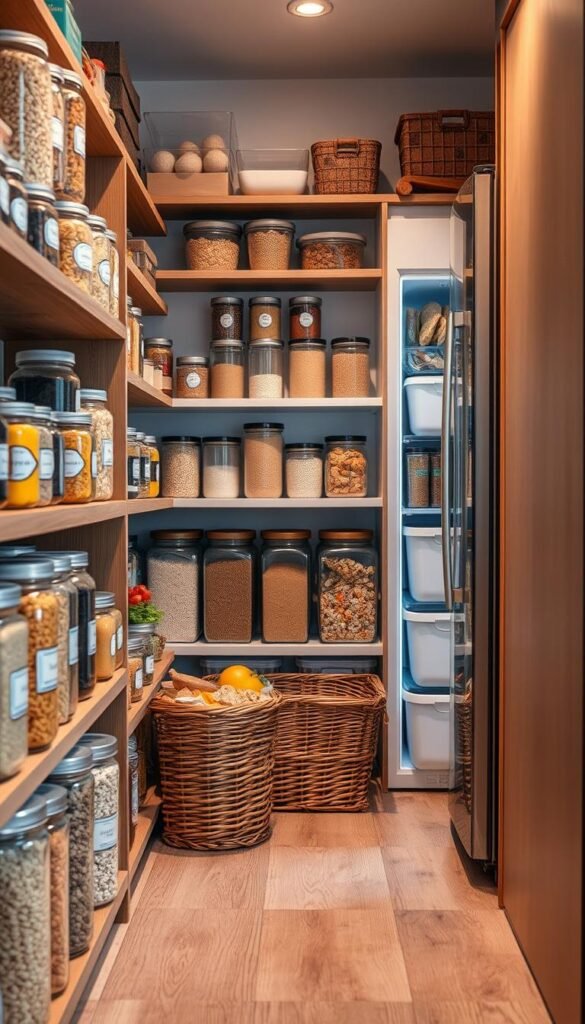
Decanting rules on a budget
Decant high-use staples into airtight containers only when they truly seal. Otherwise, save money and use labeled bags or original packaging inside a basket.
Rule of thumb: invest in containers for frequently opened items; skip decanting for occasional goods.
Labeling for shared homes and deep shelves
Front labels on low bins and top labels for deep shelves or tall-sided bins keep items recognizable from any angle. Labeling reduces category drift in shared spaces.
Fridge carryover and upkeep
Apply the same category logic inside the fridge to prevent forgotten leftovers. Do a quick weekly reset: toss expired items, re-align baskets, and note anything low on stock.
For step-by-step pantry and fridge layouts, see a concise guide to quick real-world fixes here and broader ideas at this resource.
Conclusion
Focus on one drawer, one cabinet, and one shelf to build lasting order.
Match each tool to a clear friction point—visibility, access, overflow, or cleanup—rather than buying many items at once. Measure the space and check stability, cleanability, and sightlines before you commit.
Practical recap: a spice rack keeps jars visible, a sliding drawer tames lids, vertical hooks free counters, and pantry bins group goods for quick checks. Pick a single organizer or product for each problem and test it for two weeks.
Renters should favor removable fixes and modular tools that move easily. For more small-room ideas, see these creative storage ideas.
Next steps: measure, choose one solution, label, and reassess after a fortnight. A few thoughtful changes make daily use smoother and keep your space ready for seasonal shifts.