A practical start beats a packed cupboard. The right setup depends on what someone cooks, how much space they have, and the money they want to spend.
Think tasks, not tools. Focus on searing, simmering, roasting, prepping, and baking. A small, reliable set of items will make everyday cooking easier without wasting storage or cash.
Renters and small-space residents should pick stackable gear, easy-clean surfaces, and multiuse items that work across recipes. Avoid big boxed sets that sit unused while one key pan or knife is missing.
This guide is organized to support buyer decisions. It starts with core essentials, then smart upgrades, and explains who each choice suits, what problem it solves, and what to look for.
Key Takeaways
- Choose tools by task—sear, simmer, roast, prep, bake—rather than by quantity.
- Start small: essential, multiuse items save space and money.
- Renters should prioritize stackable, easy-clean pieces.
- Compare materials and sizes before buying: stainless, cast iron, ceramic.
- Measurements and food-safety tools cut errors and wasted ingredients over time.
How to Build the Best Kitchen Setup for Beginners Without Wasting Money
Start by matching what you need to do with the few tools that actually make those tasks easy. Choose one or two items that solve a task rather than buying a full set that mostly sits unused.
Think tasks, not tools
If the task is „eggs that don’t stick,“ the solution may be a nonstick skillet—not a 12-piece cookware collection. This saves money and cabinet space.
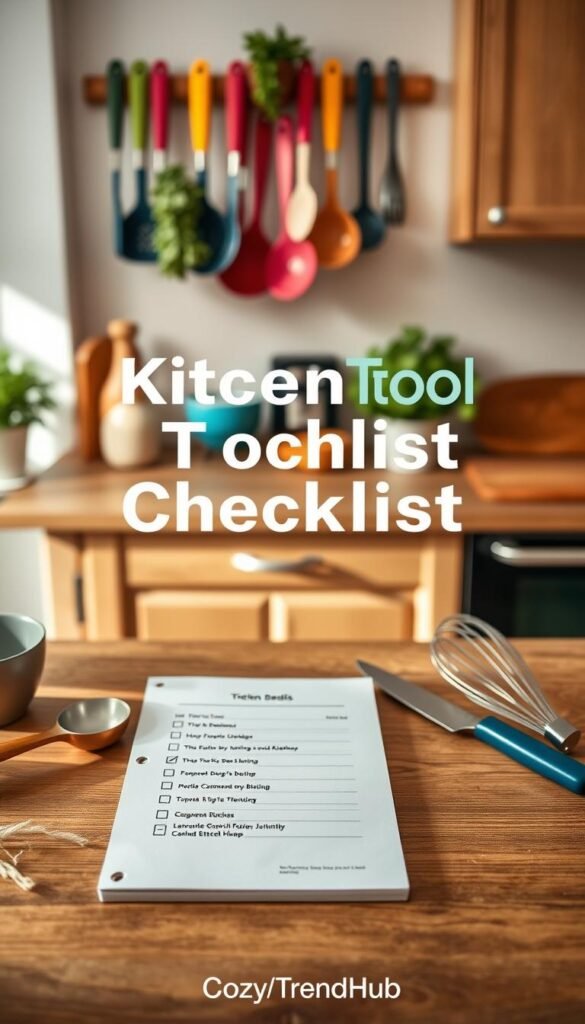
Simple task checklist before buying
- Prep (cutting)
- Sauté/sear
- Simmer
- Roast
- Bake, blend, and measure
Two-phase buying plan
Week 1: essentials to cook and prep. Week 3–4: upgrade for baking or batch cooking after a few uses reveal gaps. This uses time well and reduces impulse purchases.
Invest vs. cheap
Invest in items that affect safety and daily performance (knife, cutting board, reliable skillet). Go cheap but functional for things that just boil water or get roughed up—like a basic pasta pot for sauce and dishwasher reality.
Small-space and renter priorities
Nesting bowls, stackable pans, and multipurpose pieces (a Dutch oven) beat unitaskers. Comparison cues later will list materials, sizes, heat limits, wash method, and storage footprint.
More gear can mean more clutter and more cleanup—buy what solves a problem, not what looks appealing.
When shopping, check specs and well-rated options in affiliate blocks rather than relying on a single brand. For curated Amazon finds, see curated Amazon finds.
The Core Cookware Set Beginners Actually Use
A compact set of pans and pots covers most weekday meals without crowding cabinets.
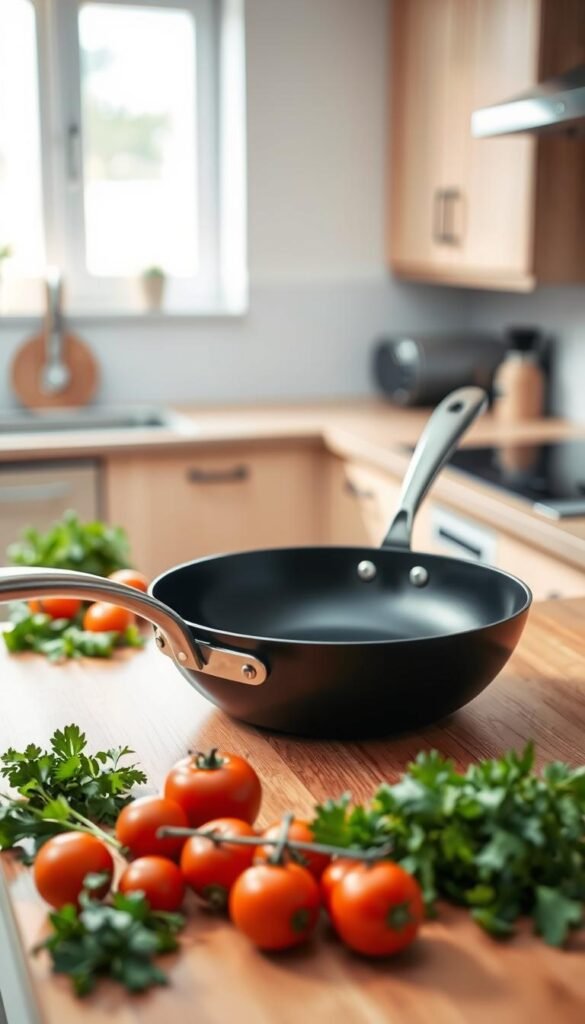
Core five list: one nonstick skillet, one stainless steel skillet, one sheet pan, one stock pot, and one saucepan. These pieces handle breakfast to batch soup with minimal overlap.
What each piece solves
Nonstick skillet: stops eggs from sticking and makes pancakes easy. Low-maintenance and quick to clean.
Stainless steel skillet: gives real browning for meat and vegetables. It tolerates higher heat and deglazes for pan sauces.
Sheet pan: the oven workhorse for roasting, baking, and one-pan dinners.
Stock pot: big enough for pasta, soup, and batch cooking. Cheap but functional often beats oversized sets.
Saucepan: prevents scorched grains, heats sauces, and reheats small portions.
Buying notes and a simple plan
- Size guide: 10–12-inch skillet fits most households; add a smaller pan only if cooking single portions.
- Look for comfortable handles, an oven-safe rating, included lids, and stackable design.
- Renter tip: choose lighter-weight pieces that clean easily without special cleaners.
- Start with one, add one: buy the most-used pan first, then add the next based on what gets cooked most.
Fewer, durable pieces reduce clutter and make everyday cooking faster.
| Task | Best material | Why it helps | Downside | Who it’s for |
|---|---|---|---|---|
| Eggs & delicate foods | Nonstick | Prevents sticking, easy clean | Less heat tolerance | Renters, quick meals |
| Searing meat & veggies | Stainless steel | Good browning, pan sauce | Requires technique | Home cooks wanting flavor |
| Pasta, soup, batch cooking | Steel stock pot | Large capacity, versatile | Can be heavy | Meal preppers, families |
Nonstick Pan Buying Guide (Eggs, Pancakes, Easy Cleanup)
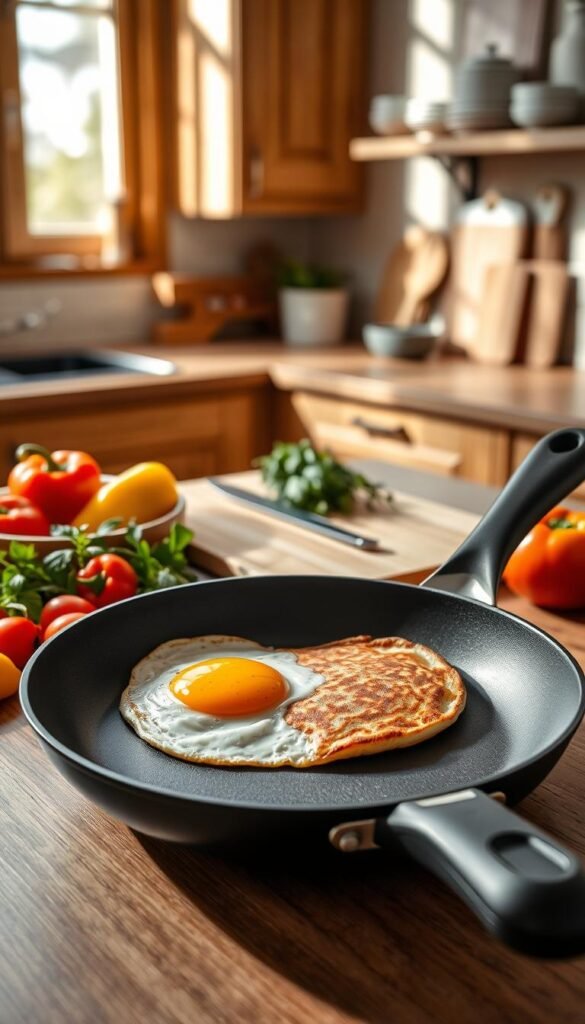
A reliable nonstick pan makes eggs and pancakes feel effortless while you learn heat control.
Who benefits: Home cooks who want low-stress results with eggs and delicate fish. Small apartments and renters often prefer a nonstick pan to avoid frustration and long cleanups.
What to check before you buy
- Maximum oven temperature and coating type.
- Warranty, handle comfort, and included lid.
- Dishwasher-safe label—but plan to hand-wash to extend life.
Pros and cons
Pros: Easier flipping, less oil, faster cleanup, and consistent results with sticky foods like eggs and pancakes.
Cons: Coatings wear over time, high heat shortens lifespan, and nonstick isn’t ideal for serious searing or deglazing.
Care and utensil tips
Use silicone tools and a soft spatula to prevent scratches. Avoid metal utensils and aerosol cooking sprays.
Mixed reviews usually stem from scratched surfaces or overheating, not the concept itself.
Upgrade path: Keep one nonstick for delicate work and add a stainless or cast iron pan later for browning. For curated affordable picks, see compact gadget picks.
Stainless Steel Skillet vs. Cast Iron vs. Ceramic: Which One Pan Should You Add Next?
After a nonstick pan, the next single skillet should add real browning and versatility without crowding cabinets.
Best for searing meat and getting real browning
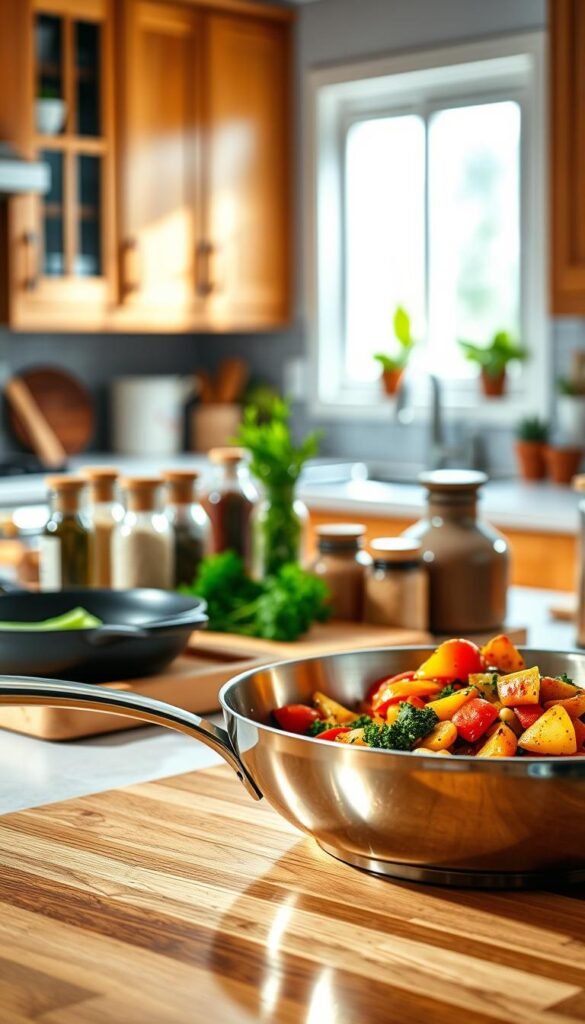
Stainless steel gives the clearest fond and pan sauce. It teaches heat control and makes searing meat easier once the chef learns timing.
Best for low-maintenance weeknight cooking
Ceramic offers easier release than bare steel and needs gentler tools. It works well for quick meals but scratches if abused.
Best for small spaces that can’t store a lot of pans
Cast iron holds heat and can double as an oven dish. It is heavy, reactive with acid, and needs routine care that some renters avoid.
Pros and cons, and a quick cleanup guide
- Preheat properly, add oil, and don’t move food too soon to reduce sticking.
- Deglaze with liquid to lift fond; soak ceramic gently, scrub stainless with a scrub pad when cool.
- Season cast iron by hand and dry fully to prevent rust.
| Material | Best for | Biggest drawback | Maintenance | Who should skip it |
|---|---|---|---|---|
| Stainless steel | Searing meat, pan sauces | Can stick without technique | Low to medium; scrub pads ok | Those who dislike technique |
| Cast iron | High-heat sear, oven use | Heavy, reactive with acid | High; seasoning and drying | Renters with limited storage |
| Ceramic | Gentle, low-fuss weeknights | Can scratch, less heat tolerance | Low; avoid metal tools | Those who need high-heat sear |
Budget note: A well-made stainless steel skillet, such as the Made In stainless skillet, often lasts years and adds the most new capability per dollar.
Dutch Oven or Casserole Dish: The One-Pot Solution for Soup, Braises, and Bread
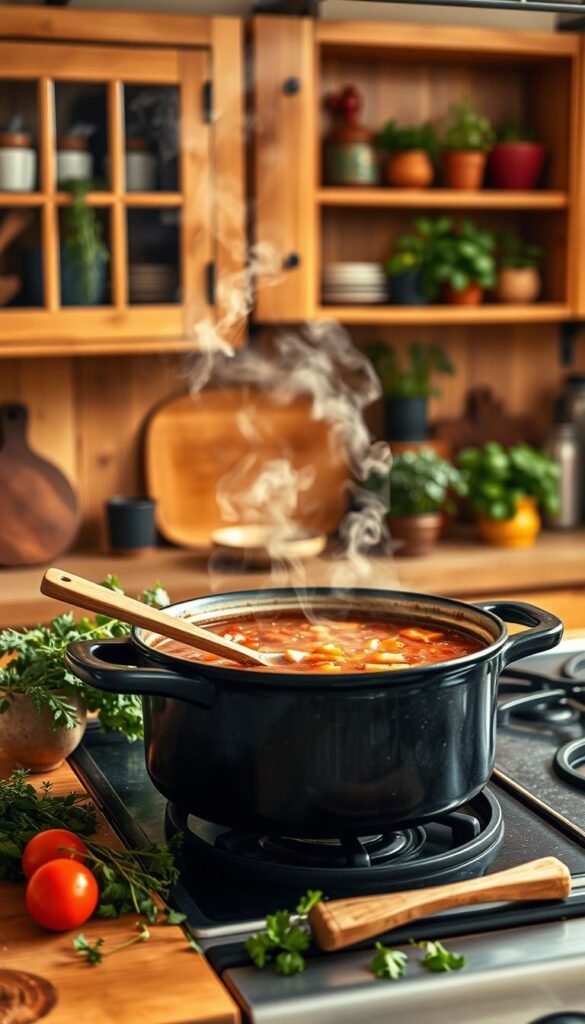
A single heavy pot can replace a shelf of rarely used pans and simplify weekday cooking.
Why it replaces multiple tools
One vessel handles searing, simmering, and baking. Use it for soup, braises, chili, and no-knead bread. That cuts the number of pots and the time spent choosing which pan to use.
Who it suits and a simple size guide
It helps people who meal prep or cook for guests. Choose a 2–3 quart pot for one person or couples. Pick 4–5 quarts for most households. Go 6+ quarts when cooking for families or batch meals.
Pros, cons, and renter-friendly notes
- Pros: even heat, excellent heat retention, easy stovetop-to-oven transfer, and long life (Staub, Le Creuset are proven names).
- Cons: weight, need for storage space, and care when lifting full pans.
- Renter tip: buy a mid-size that can safely live on the stovetop to save cabinet room.
Buying considerations
Compare enamel vs. bare cast iron, lid seal, oven-safe knob rating, handle size, and whether it fits your oven. These things affect daily use and cleanup.
One reliable casserole can remove clutter and replace a small set of single-use pans.
| Use | Recommended capacity | Key benefit | Consideration |
|---|---|---|---|
| Solo or couple meals | 2–3 qt | Easy to store; lighter to lift | Limited batch capacity |
| Most households | 4–5 qt | Versatile for soup and bread | Moderate weight |
| Families & batch cooking | 6–8+ qt | Large batches, roasts, and bread | Heavy when full; needs space |
The Knife Setup Beginners Need (Including a Chef Knife and Bread Knife)
Sharp, well-balanced knives do more to improve home cooking than a crowded drawer of mismatched blades.
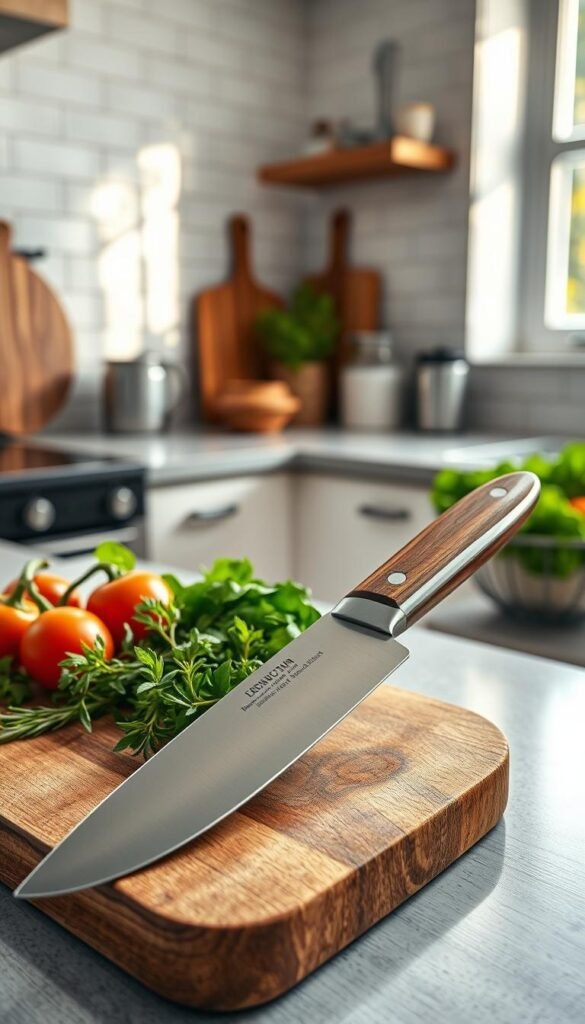
Chef’s blade: the do-most tool
The chef knife handles most vegetables, meat, and herbs. It makes chopping faster and more consistent.
A quality chef knife like a Wüsthof model gives balance and control while learning technique.
Serrated blade: more than bread
A bread knife prevents crushing soft loaves. It also slices tomatoes and other delicate foods cleanly.
Utility knife: tight spaces and small hands
Use a small utility for trimming, small fruits, and quick prep when a chef knife feels oversized.
Buying and care
- Check blade length, handle shape, balance point, and bolster style.
- Test the feel when the hand is slightly wet; comfort matters.
- Sharpening matters more than brand—use a pro service or a simple sharpening system.
Core solution: a compact 2–3 knife kit is safer and faster than a big block of unused blades.
Storage tips: blade guards, a magnetic strip if allowed, or an in-drawer organizer keep edges safe in small home spaces.
Cutting Boards That Make Prep Safer and Faster
Using separate boards cuts cross-contamination and speeds up dinner prep.
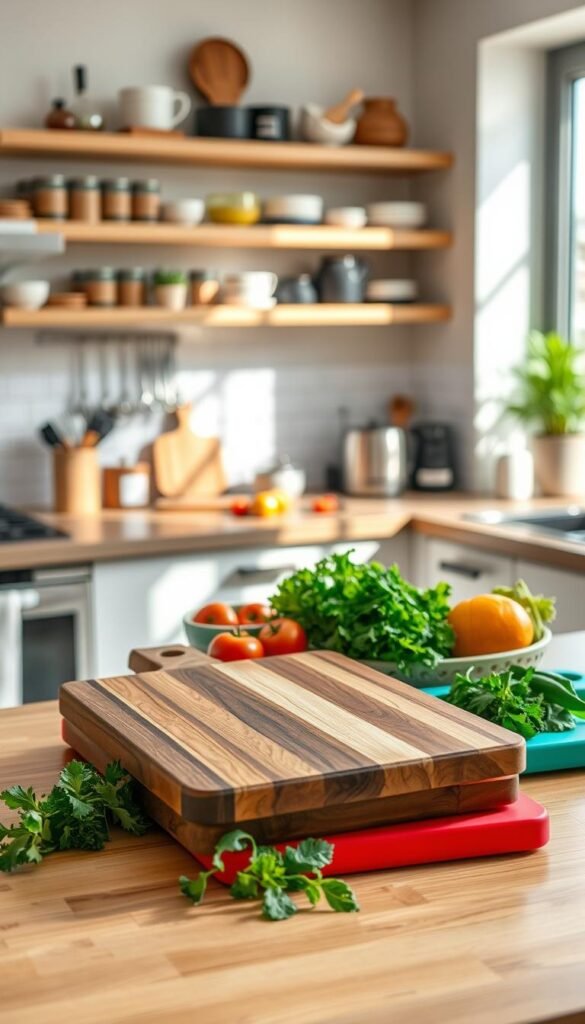
Why two (or three) boards matter. One board for everything raises the risk of bacteria transfer from raw meat or fish to vegetables and ready-to-eat items. A simple system prevents that and keeps cooking moving.
Quick buyer guidance
- Start with at least two boards: one for produce, one for raw protein; add a third for bread or plated items.
- Choose a board size that fits your counter and a slim profile if space is tight.
- Look for non-slip edges or grab a thin mat as a safety tool.
Wood vs. plastic: short comparison
| Feature | Wood | Plastic |
|---|---|---|
| Stability & knife friendliness | High; gentle on edges | Good; can get scratched |
| Cleaning | Hand-wash and oil | Dishwasher-safe; easy sanitizing |
| Odor & staining | Low when oiled | Can retain stains; replace if scored |
Renter tip: pick slim boards and store vertically in a file rack or a narrow cabinet gap to save space.
Upkeep note: wash plastic boards when scarred; oil wood boards monthly to extend life.
The Must-Have Utensils You’ll Use Every Day (Skip the Giant Set)
A small, well-chosen utensil kit saves drawer space and removes the guesswork from weeknight meals.
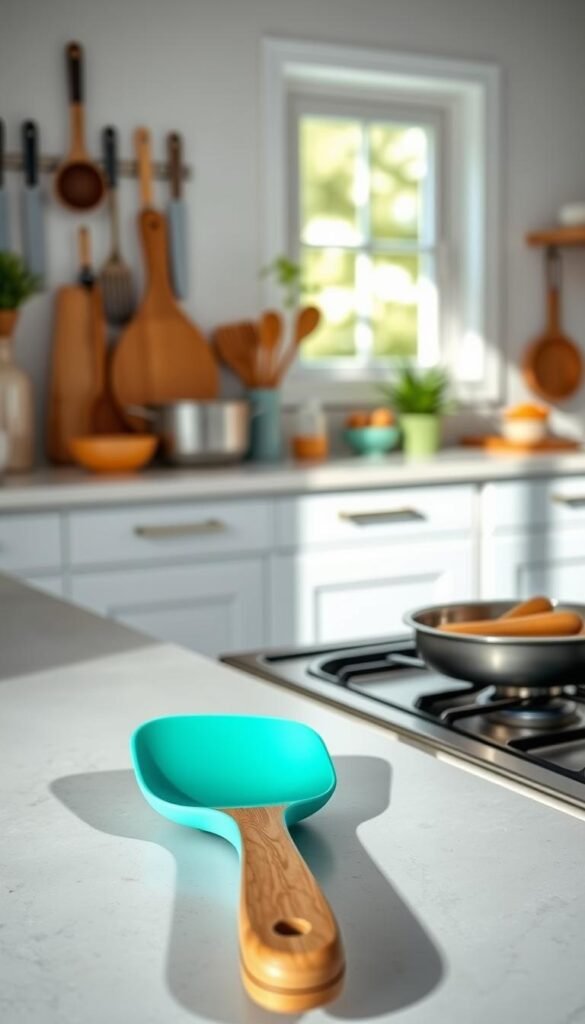
Silicone spoon and spatula
Why: Silicone protects nonstick pans and scrapes batter cleanly.
Who it helps: Renters and anyone with nonstick pans or limited cleanup time.
Fish spatula
Thin and flexible, the fish spatula flips fish, eggs, pancakes, and burgers without tearing. It is a single-purpose upgrade that often replaces two tools.
Tongs, ladle, whisk, and serving spoons
Tongs handle sheet-pan meals and turning meat. A ladle and serving spoons reduce spills with soups and stews. A whisk smooths sauces and batters.
Box grater, hand grater, and scissors
A box grater covers bulk cheese and veg. A hand grater is for garlic and citrus zest. Kitchen scissors speed opening packages and quick trims.
„A few reliable tools make daily cooking faster and keep pans in good shape.“
| Tool type | Best use | Downside |
|---|---|---|
| Silicone | Nonstick pans, batter, saucing | Can stain; less rigid |
| Metal | High-heat searing, durability | May scratch coatings on pans |
| Wood | Gentle on surfaces, classic feel | Needs drying; can harbor odor if not cleaned |
Renter-friendly tip: choose dishwasher-safe versions when possible, but hand-wash silicone and wood to extend life. Build a small, focused kit rather than buying a giant set that hides the few tools actually used every day.
Measuring Tools That Prevent Beginner Mistakes (Cups, Scale, and Jug)
Accurate measuring is the quiet shortcut that turns trial-and-error into repeatable recipes.
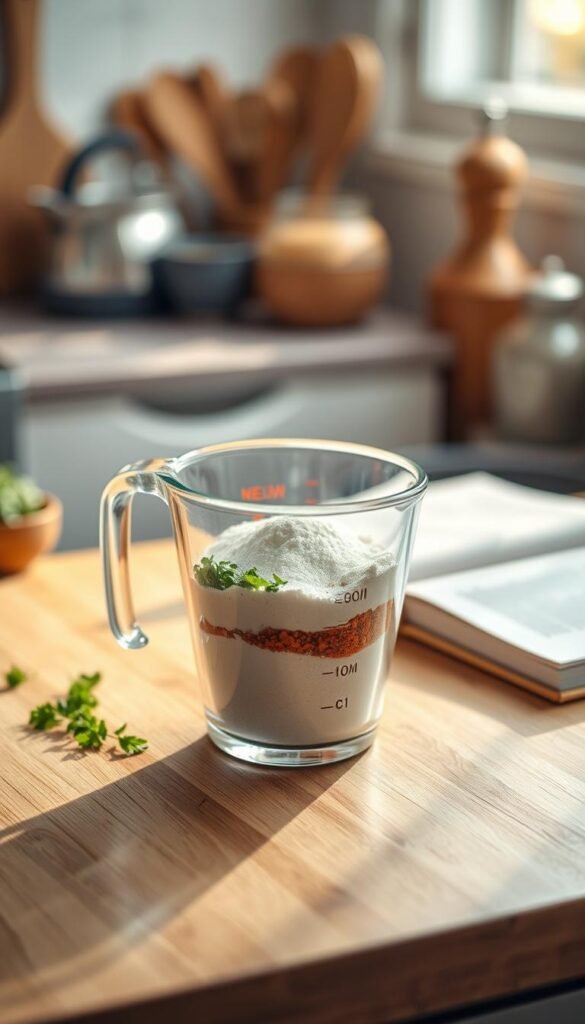
Inconsistent measuring causes dry cakes, salty soups, and wasted ingredients. The right tools save time and reduce guesswork. A few compact items cover most needs and fit small homes.
Digital scale: reliable accuracy
Why it matters: A digital scale gives exact weight for baking and consistent results across batches.
Who needs it: Anyone who bakes even occasionally or wants precise conversions. A scale also cuts washes by using one bowl instead of many cup measures.
Cups and spoons: US-style convenience
Cups and spoons remain common in many recipes. Choose a nesting set that stacks to save drawer space.
Look for clear markings and sturdy handles so measuring stays fast and simple.
Measuring jug: liquids and batters
A measuring jug is essential for pouring batters, stock, and sauces without spills. Pick a jug with a stable base and easy-to-read markings.
Buying considerations: easy-to-read markings, stable base, dishwasher-safe parts, and compact storage are key.
„Accurate measures give confidence in recipes and reduce food waste.“
| Tool | Best for | Prevents | Storage footprint |
|---|---|---|---|
| Digital scale | Precise baking, conversions | Dry or dense cakes, inconsistent batches | Thin, store in drawer |
| Nesting cup & spoon set | US-style recipes, quick meals | Wrong volume measures, extra dishes | Small, stacks together |
| Measuring jug | Liquids, batters, meal prep | Spills and uneven pours | Moderate; hangs or nests |
Small-space note: choose nesting pieces or hang a jug to reduce clutter. If baking is rare, start with a jug plus basic cups and add a scale later.
For a compact reference on options, see the measuring cups guide.
Beginner Bakeware Essentials for Cookies, Cake, and Banana Bread
A small, chosen group of pans and tools lets someone bake reliably without extra clutter.
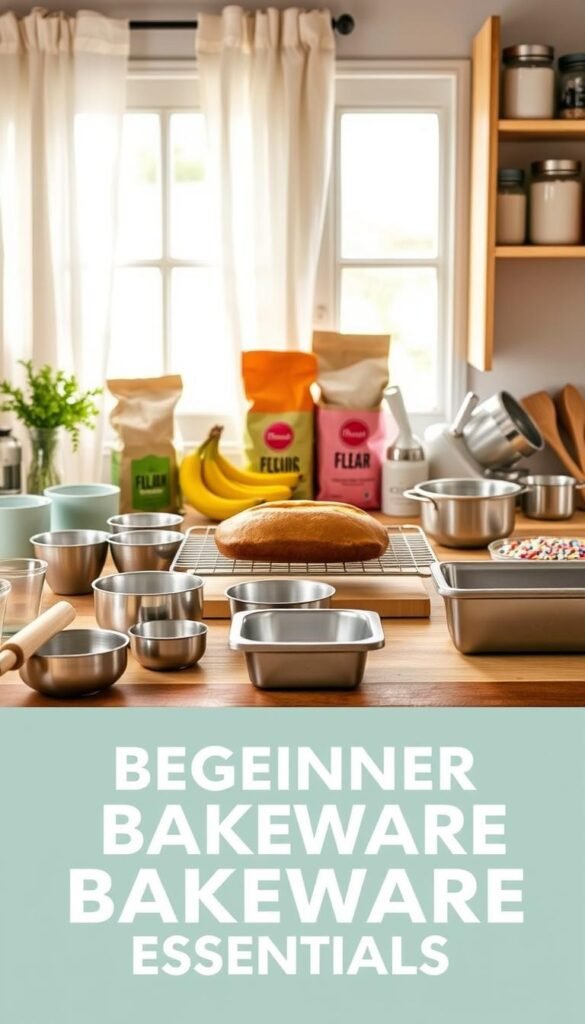
Must-have pieces cover cookies, quick breads, muffins, and simple cakes. Start with a heavy-gauge sheet pan, a loaf tin, a muffin tin, and a 9-inch square or round cake pan.
Core items and why they matter
- Sheet pan: Great for cookies, roasting vegetables, and freezer-to-oven meals. Verify oven interior width before buying so pans fit smoothly.
- Loaf tin: Ideal for banana bread and compact bakes that store and portion easily.
- Muffin tin: Versatile for cupcakes, egg bites, and small batch portions—easier to store than specialty molds.
- Square/ cake pans: One square pan covers brownies; a round cake pan handles layered cakes when needed.
Mixing tools and small-space notes
Include nesting mixing bowls, a fine sieve, a cooling rack, a rolling pin, and a simple digital scale. These tools smooth batter, ensure even crumb, and speed cooling.
Optional upgrades
Springform pans help with tall cheesecakes. A bench scraper aids dough work and cleanup. Add pastry tools only if baking becomes a frequent hobby.
„Choose pans that fit your oven, stack or nest for storage, and prefer warp-resistant, heavy-gauge aluminum if possible.“
| Bakeware | Best for | Need or nice-to-have | Storage note |
|---|---|---|---|
| Sheet pan | Cookies, roasting, sheet bakes | Need | Flat; stacks |
| Loaf tin | Quick breads, small loaves | Need | Vertical or nested |
| Springform | Cheesecakes, tall bakes | Nice-to-have | Extra shelf space |
Buying considerations: choose uncoated or heavy nonstick that resists warping. Prefer pieces that nest or stack to save space. For a concise guide to essential baking tools, see a trusted tool list.
Thermometer and Food Safety: How to Avoid Dry Chicken and Undercooked Meat
A quick temperature check removes the uncertainty that wrecks many weeknight meals.
Guessing doneness often produces dry chicken or unsafe undercooked meat. An instant-read thermometer takes that guesswork away and saves both food and time.
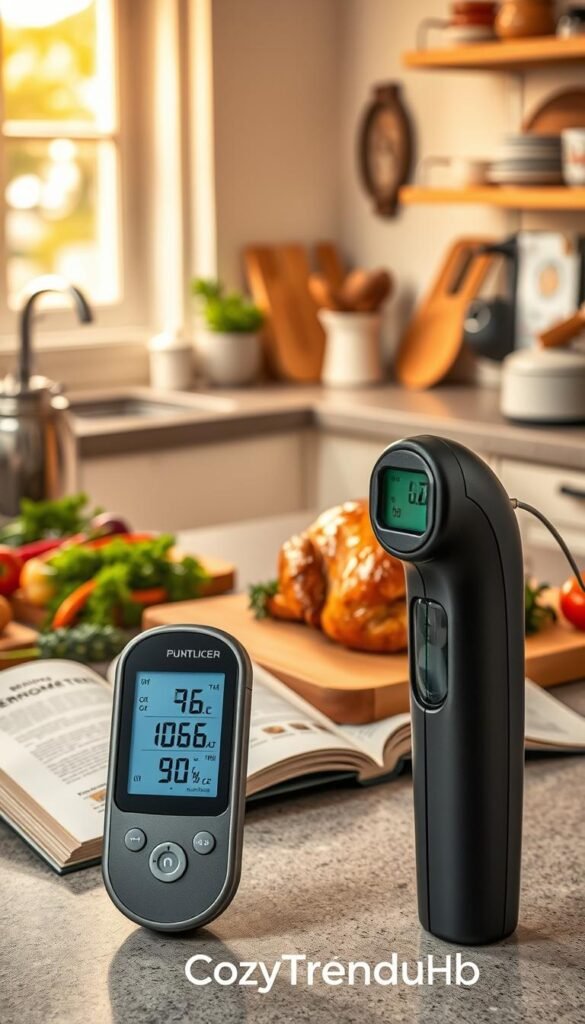
Instant-read thermometer: confidence and consistency
Instant-read models give fast readings so heat loss is minimal. That means pulling proteins at the ideal temperature and letting them rest. The Thermapen ONE reads in about 1–2 seconds, is accurate to roughly ±2°F, and covers −58°F to 572°F.
Who benefits most
Anyone new to cooking meat and fish, those working with thick cuts, and renters with inconsistent ovens gain the most. This small tool reduces waste and anxiety on busy days.
Buying considerations
- Read time: faster is better — 1–3 seconds avoids extra heat loss.
- Accuracy range: ±2°F is ideal; look for a wide temperature span.
- Display readability: large digits and backlight help in low light.
- Waterproofing & cleaning: a sealed probe and dishwasher-safe body speed cleanup and prevent cross-contamination.
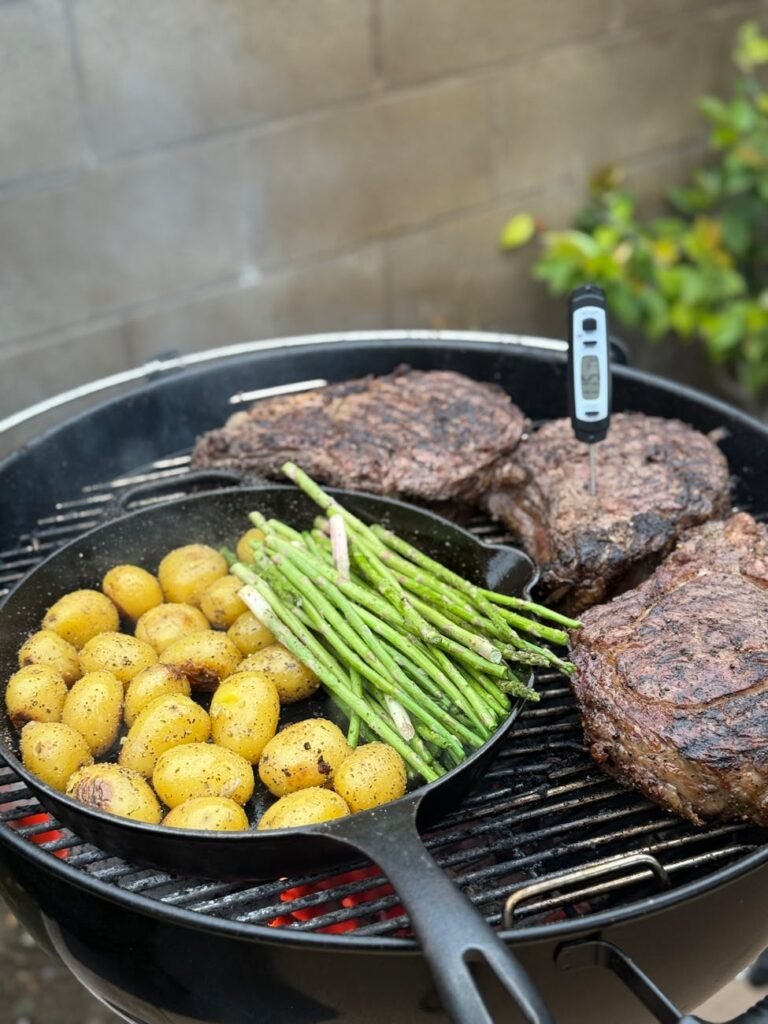
Use the probe in the thickest part of meat and avoid touching bone. Clean the probe between foods to keep food safe. Pull proteins at the USDA-recommended temperatures, then rest to retain juices.
Practical note: an instant reader doubles as a fryer/oil checker, candy thermometer, and freezer/fridge monitor—more uses to justify the purchase.
| Feature | Why it matters | Recommended spec |
|---|---|---|
| Read time | Reduces heat loss during checks | 1–3 seconds (Thermapen ONE: ~1–2s) |
| Accuracy | Ensures safe food and consistent doneness | ±2°F or better |
| Temperature range | Allows testing from freezer to deep-fry | −58°F to 572°F preferred |
| Cleaning & waterproofing | Prevents cross-contamination and eases care | Fully waterproof probe and easy-sanitize surfaces |
For a concise guide to safe chicken temperatures and technique, see this short reference on cooking temperatures and safety.
Blender vs. Immersion Blender: What’s Best for Smoothies, Soup, and Sauces?
Decide whether frozen fruit or hot pots are the priority; that choice usually settles the blender question. One clear decision saves counter space and money.
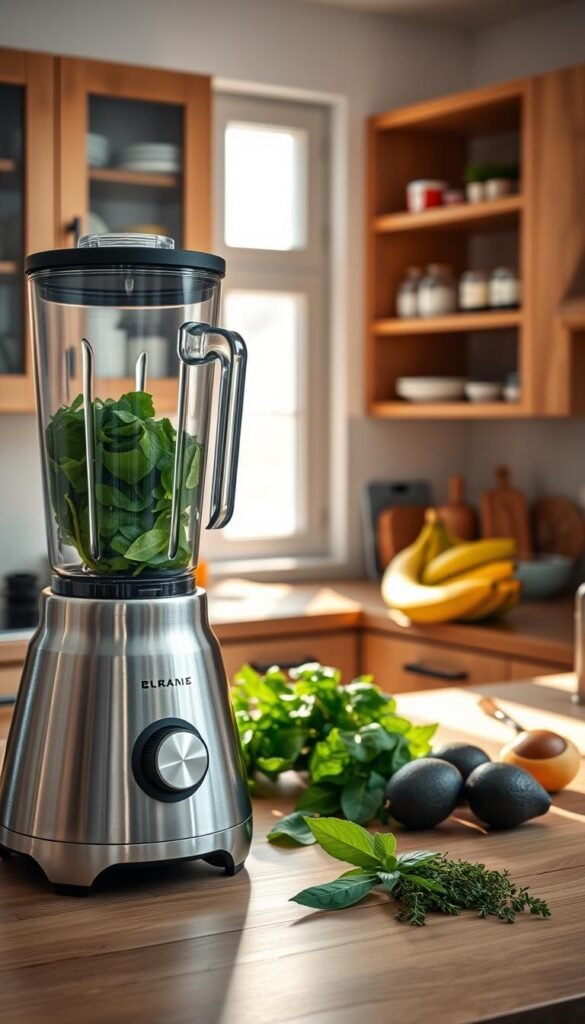
Countertop advantages
Countertop models excel at smoothies, crushed ice, and larger batches. They handle frozen fruit and thick sauces with consistent power.
Immersion advantages
Immersion blenders save storage space and blend hot soup right in the pot. Some tested units, like All-Clad immersion models, can emulsify mayo and finish sauces cleanly.
Pros and cons
- Power & crushing ice: countertop wins; noisy but effective.
- Cleanup & storage: immersion wins; detachable shafts often go in the dishwasher.
- Safety: immersion lets one blend hot soup in-place, but users must watch splash depth.
„Start with the tool that matches your main task; if smoothies are rare, an immersion unit is the smarter first buy.“
| Feature | Countertop | Immersion |
|---|---|---|
| Power & ice | High; crushes ice | Lower; not ideal for ice |
| Storage footprint | Larger jar and base | Thin shaft; stores easily |
| Cleanup | More parts; jar cleaning | Quick; detachable, often dishwasher-safe |
Buying considerations: motor watts and jar size for countertop; detachable shaft, dishwasher-safe pieces, and comfortable grip for immersion. For renters and small-space homes, prioritize the tool that reduces clutter and fits daily habits.
Instant Pot or Slow Cooker: The Set-and-Forget Tool for Budget-Friendly Meals
For people juggling budget and time, a programmable pot makes batch food and soups without constant watching. These appliances solve one main problem: beginners need reliable meals without babysitting the stove.
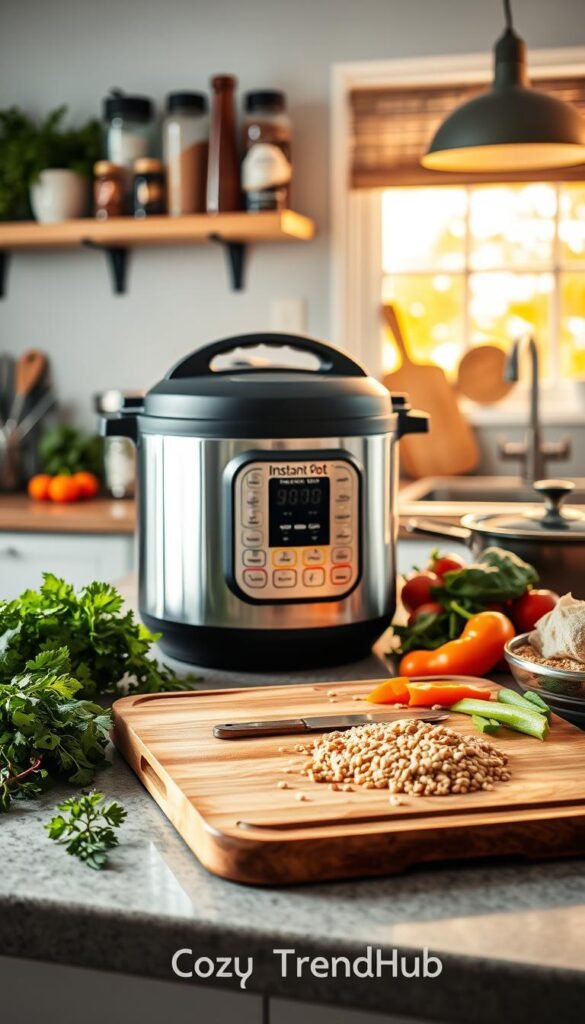
Who benefits and what it handles
Who it’s best for: small households, busy workers, and anyone cooking on a budget. Use it for tough cuts of meat, dried beans, and large pots of soup that feed multiple people.
Speed, simplicity, and flavor
The Instant Pot (pressure cooker) brings speed and tender results. A slow cooker offers simple set-and-forget ease and steady low heat.
Why the sauté step matters: browning aromatics and meat before pressure or slow cooking builds deeper flavor. Many bland slow-cooked recipes improve with a quick sear first.
Renter-friendly considerations
Check storage: pick a size that fits under cabinets. Note steam release needs—pressure models vent quickly and need space above them. Slow cookers are quieter but still require a stable surface and occasional lid venting.
„If a Dutch oven already handles braises well, skip the appliance unless hands-off cooking is a priority.“
Buying considerations
- Capacity: 3–6 quarts suit most people; 6+ quarts help batch cooking.
- Inner pot material: stainless or nonstick—stainless is durable, nonstick cleans easier.
- Replaceable seals and simple controls make long-term ownership easier.
- Ease of cleaning: removable lids and dishwasher-safe parts save time.
| Appliance | Best for | Biggest benefit | Downside | Space needed |
|---|---|---|---|---|
| Instant Pot (pressure) | Tough meat, dried beans, quick batch food | Fast tender results; multiple cooking modes | Steam venting needs clearance; learning curve | Medium; needs counter or cabinet storage |
| Slow cooker | Hands-off stews, soups, long braises | Simple use; long unattended cooks | Less browning unless pre-seared; longer cook time | Small to medium; easy to store |
| Stovetop Dutch oven | Braises and oven-to-table dishes | Excellent flavor development and searing | Requires attention and stove/oven use | Small to medium; heavier to store |
If hands-off convenience is the priority, an electric pot earns its place. For those who value flavor and already use a Dutch oven often, the appliance is optional. For slow-cooker reference and options, see this slow cooker guide.
Air Fryer for Beginners: When It’s Worth the Counter Space
Crisp, fast results without the oven are the main reason people consider an air fryer.
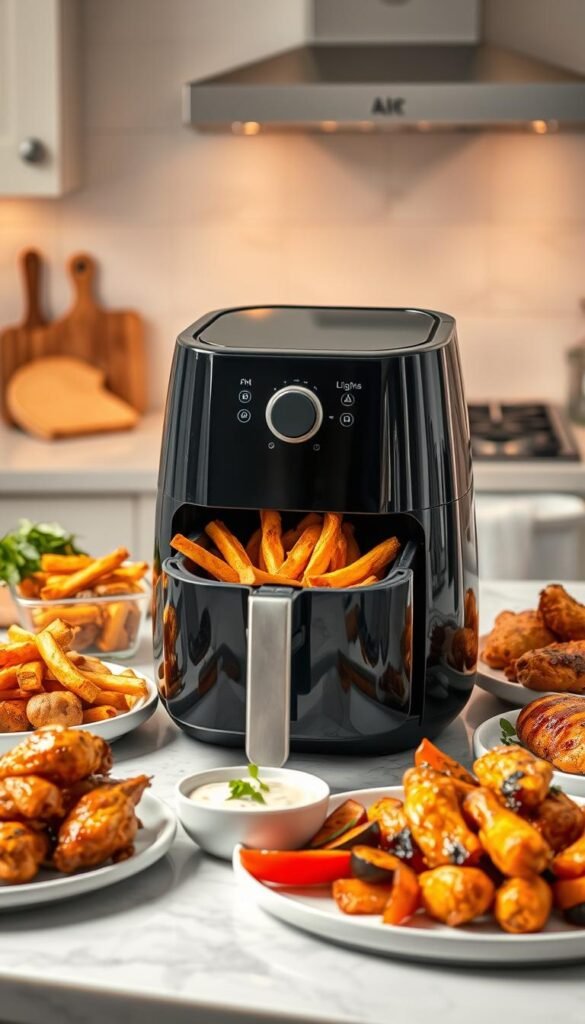
Frame the decision: an air fryer answers the need to get crunchy results without deep frying or running a hot oven. It saves cooking time on small batches of food and keeps weekdays simpler.
Who benefits most? Renters and small households that cook one to four portions and want quick vegetables, wings, salmon, or reheated food that stays crisp. A 6-quart unit, like the Instant Vortex Plus, fits 2–4 people.
Common use cases
- Crisping roasted vegetables and finishing roasted meat pieces.
- Reheating leftovers so food is not soggy.
- Quick wings, salmon fillets, and small batch snacks.
Pros and cons
Pros: speed, crisp texture, and lower oil needs. It can cut cooking time and reduce oven use on hot days.
Cons: takes counter or cabinet room, the fan can be noisy, and the basket and tray need regular cleaning to prevent odors.
„A compact air fryer often changes how people reheat and crisp food without the fuss of frying.“
Buying notes: pick capacity that matches household size, prefer a square basket for efficient space use, and check that baskets are dishwasher-safe and easy to wipe down.
| Size | Best for household | Cleaning effort | Storage difficulty | Worth it if… |
|---|---|---|---|---|
| 3–4 qt | 1 person | Low | Low | Daily reheats and snacks |
| 6 qt | 2–4 people | Medium | Medium | Crisp vegetables and small roasts |
| 8+ qt | Families | High | High | Batch cooking and large trays |
Renter-Friendly and Small-Space Kitchen Setup Tips (Storage, Noise, and Cleanup)
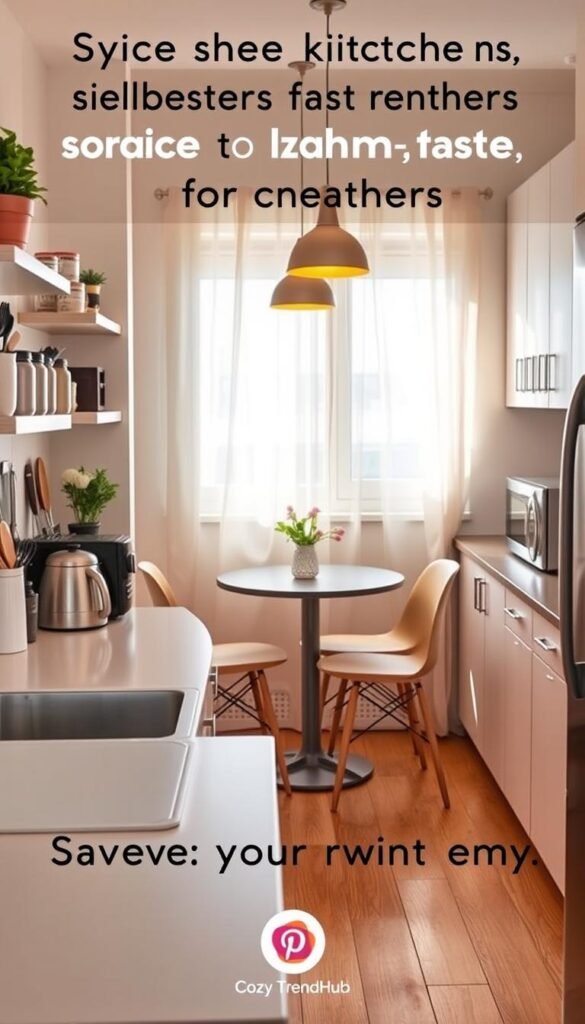
Renters gain the biggest benefit from tools that stack, nest, and tuck away when not in use.
How to choose stackable cookware and nesting bowls
Pick pans and bowls with flat lids and matching diameters. Nesting mixing bowls and stackable pots save a lot of cabinet space.
Look for: removable handles, thin rims, and pan protectors to keep nonstick surfaces safe.
What to skip if cabinet space is tight
Avoid bulky, unitasker items that sit unused. Heavy grill pans that trigger smoke alarms and large roasters take more room than value.
Seasonal strategy
Buy or borrow large entertaining tools only when needed. Store seasonal items off-site or on a top shelf during the off-season.
Dishwasher reality and apartment cleanup workflow
Many plastics and stainless pieces tolerate dishwashers; nonstick and high-carbon knives last longer if hand-washed.
Simple workflow: use one prep board, one pan, and dishwasher-safe utensils to reduce time and dishes.
Checklist: Fits in cabinet | Easy to clean | Multipurpose | Safe for nonstick | Worth the space.
| Constraint | Recommended choice | Why it helps |
|---|---|---|
| Limited cabinet depth | Nesting bowls & flat lids | Saves vertical and horizontal space |
| Poor ventilation | Avoid heavy grill pans; use broiler or outdoor grill | Reduces smoke alarms and smell buildup |
| Dislike washing dishes | Dishwasher-safe plastic or stainless tools | Less time at the sink; affordable replacements |
For more small-space organization tips, see how to organize a small kitchen.
Conclusion
Practical purchases save time, money, and cabinet space—start with what you’ll touch every day.
, The core rule is task-first: pick a reliable pan, a sharp knife, a cutting board, and a small set of utensils. Add bakeware and appliances only when real cooking needs appear.
Decide where to invest by prioritizing safety and daily performance. Choose cheap but functional pieces for things that just boil or get heavily used. Renters should favor stackable, easy-clean items and avoid large single-purpose gear.
- Shopping list: skillet, chef knife, board, measuring scale/jug, instant-read thermometer, sheet pan, nesting bowls.
- Next step: buy 1–2 missing essentials, cook two weeks, then reassess before adding more.
Measure and check temperatures to cut waste and build confidence. The best kitchen setup for beginners supports real food and the way a home actually cooks—no extra things required.