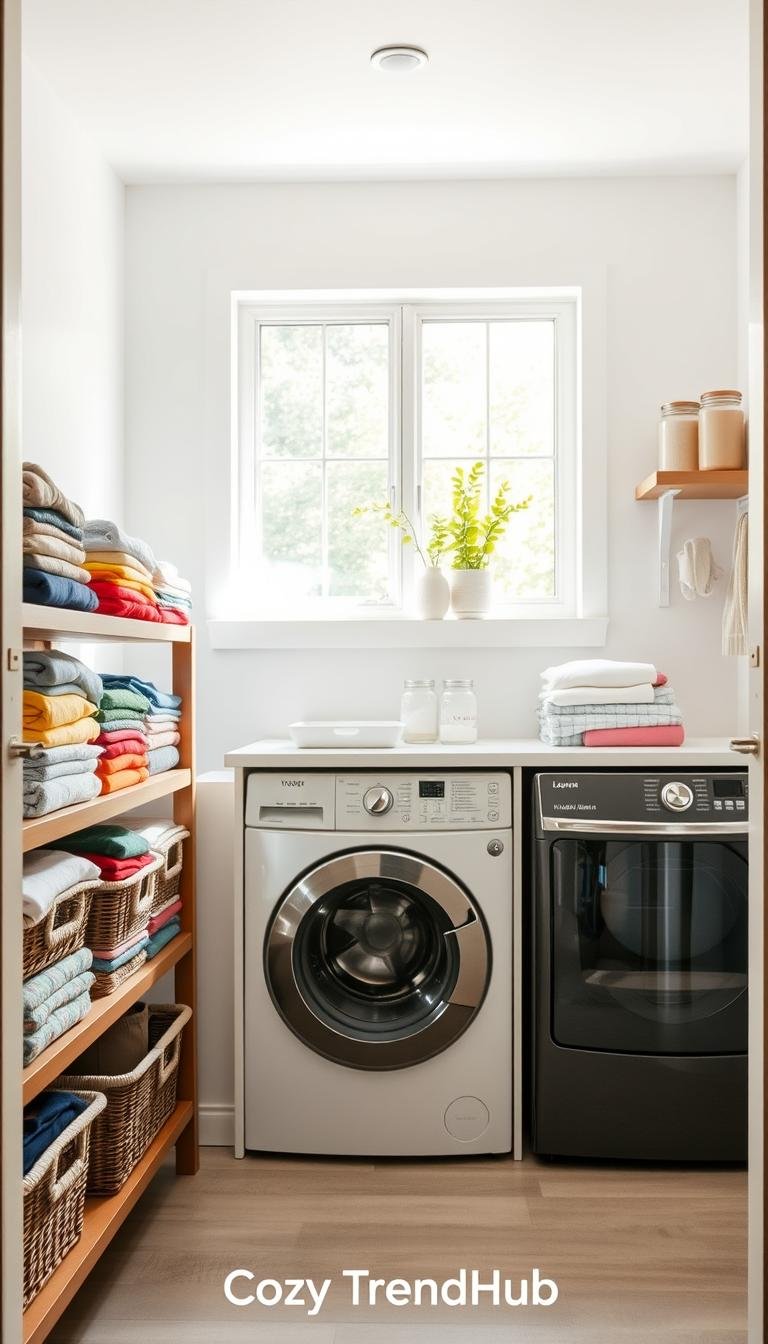
Many laundry areas become a dumping ground, which slows the whole wash–dry–fold cycle. Small spaces and shared facilities make it worse. The guide opens with a simple, renter-friendly plan to fix that.
The plan is clear: reset the space first, add vertical storage, use sorting systems, build work stations, then keep it with a weekly reset. Each step is practical and renter-safe. No heavy drilling is required.
This list is for renters who can’t alter walls, households that share machines, and narrow closets or pass-through areas. Recommendations call out what to buy, who it fits, what to measure, and the tradeoffs to expect.
Practical checks include weight limits, airflow for damp items, and spill-proof containers. Readers will also find comparison tables and affiliate blocks for hampers, shelving vs pegboards, and pressing tools.
Measure first: watch door swings, top-loader lid height, and walkway width so purchases fit real spaces and prevent piles on the floor.
Key Takeaways
- Start by decluttering; reset before adding products.
- Use vertical storage and labeled bins to save space.
- Create stations for stain care, folding, and hang-dry tasks.
- Recommendations favor renter-friendly, breathable, and sturdy options.
- Measure doors, lids, and walkways before buying.
Start With a Reset That Actually Creates Space
Start with a full clear-out to reveal hidden space and what actually gets used. Clearing surfaces and emptying cabinets exposes duplicates, expired supplies, and broken bins that steal room. This step stops impulse buys that make small spaces worse.

Declutter before you buy
Reset checklist:
- Remove empties and expired products.
- Discard broken hampers and damaged containers.
- Consolidate duplicates and single-use trial bottles.
Sort into three practical zones
Sort items into daily-use, weekly-backstock, and rare or seasonal groups. Keep detergent and stain tools within arm’s reach. Move specialty cleaners and guest linens to a hall or garage shelf.
Weekly reset that prevents the pileup
Set a 10–15 minute check: return items to labeled spots, wipe drips, empty lint and trash, and clear the top of the dryer. This simple routine helps keep the area usable and reduces spills.
„A clean baseline makes it easier to maintain airflow and reduce accidental spills.“
Buyer note: After the reset, measure remaining shelf and floor footprints before buying new storage. That prevents the common mistake of buying bins first and finding you can’t open doors or move safely.
Best laundry room organization ideas that maximize wall space
When floor space is tight, the wall becomes the most valuable storage real estate. Vertical solutions reduce clutter and keep walkways clear in narrow areas.
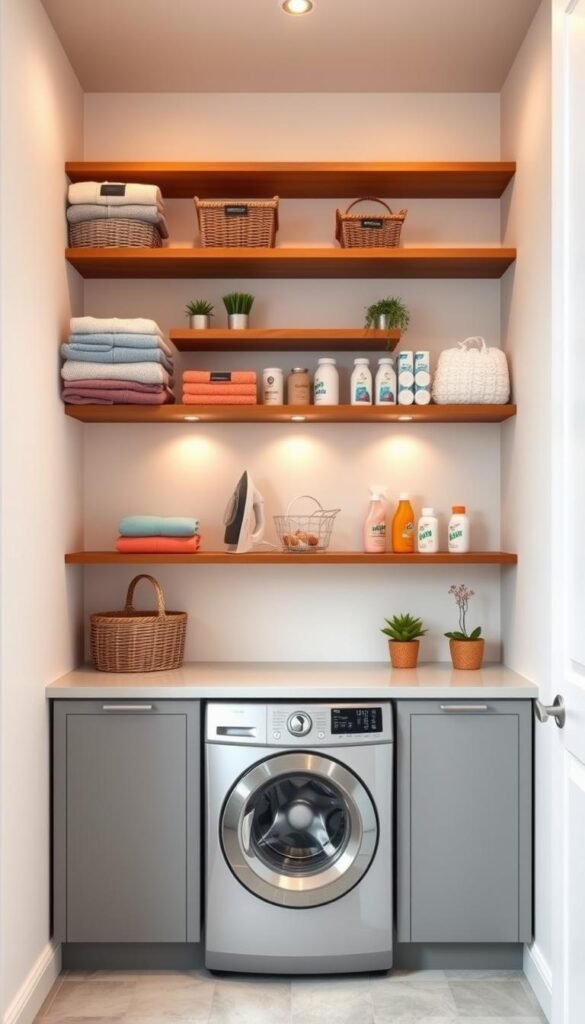
Over-the-washer and dryer shelving
Mounted shelves above the washer and dryer hold detergent, dryer sheets, and cleaning supplies within reach. Wire racks and track systems suit bulk buyers who need tall clearance for large detergent bottles.
Slim cabinets work for minimalists who want hidden storage. Measure top-load lid height and reach distance before mounting to avoid interference.
Pegboards, hooks, and wall-mounted baskets
Pegboards are ideal for scissors, lint brushes, and frequently used tools. Wall-mounted baskets are better for odd-shaped items that won’t hang neatly.
Door and wall hooks for gear
Use over-door hooks or adhesive options to hang foldable ironing boards, step stools, and bags. This keeps the floor open in tight pass-through layouts.
Renter-friendly mounting and weight limits
- Options: adhesive hooks, tension poles, over-door organizers, removable anchors.
- Tip: Always check weight limits; heavier shelves may need stud mounting.
„Create a daily grab zone on the wall for detergent and dryer sheets to stop stacking items on appliances.“
Laundry hampers and baskets that make sorting easier (and floors clearer)
Choosing the right basket changes how a tight hallway or small laundry closet works. For narrow passes, a tall, slim hamper slides into corners without blocking doors.
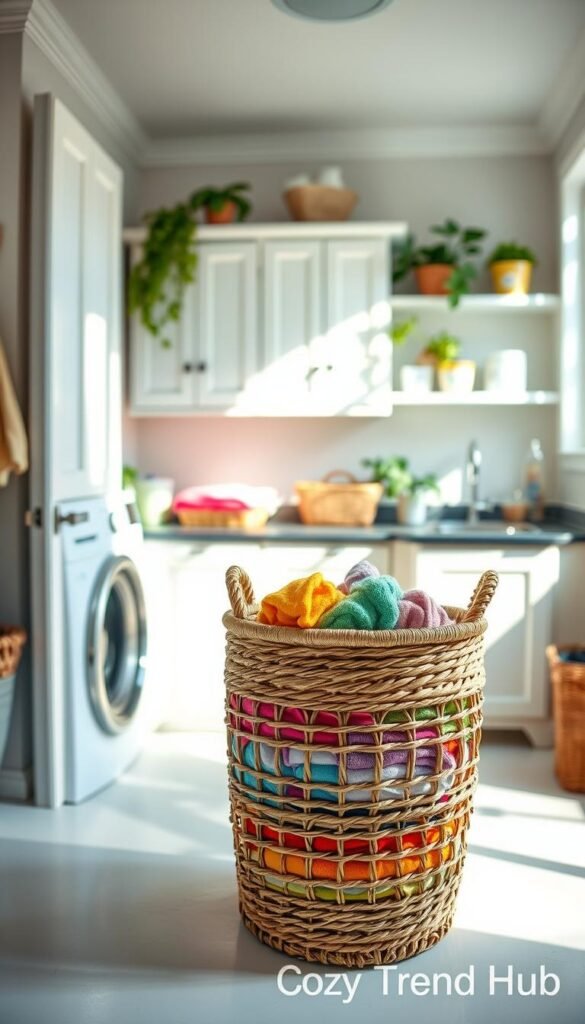
Everyday loads: a rigid basket with one-hand handles holds wet clothes and vents well. For families, a divided sorter speeds washing by separating lights, darks, towels, and sheets at drop-off.
Pass-through spaces: soft fabric totes bend through doorways and avoid scuffing frames. They fold flat when not in use.
When to choose wheels: rolling frames are ideal for long carries or heavy wet loads, but they need a spot to park so they don’t block the dryer or washer swing.
Buyer checklist: strong handles for single-hand carries, airflow to cut odor, removable liners for easy washing, and a stable base if you plan to roll.
„Place sorters so they don’t obstruct appliance doors; clear paths make laundry tasks faster.“
| Scenario | Recommended type | Tradeoff |
|---|---|---|
| Small laundry closets | Tall slim hamper | Saves floor space; holds less volume |
| Families | Divided sorter | Speeds washing; needs floor footprint |
| Shared/dorm spaces | Soft fabric tote | Flexible and light; may slump if overfilled |
Contain the chaos with bins, bottles, and labels for supplies
A few smart containers can stop spills and make restocking fast. Clear bins and handled baskets group like items so products move together and return to the same spot.
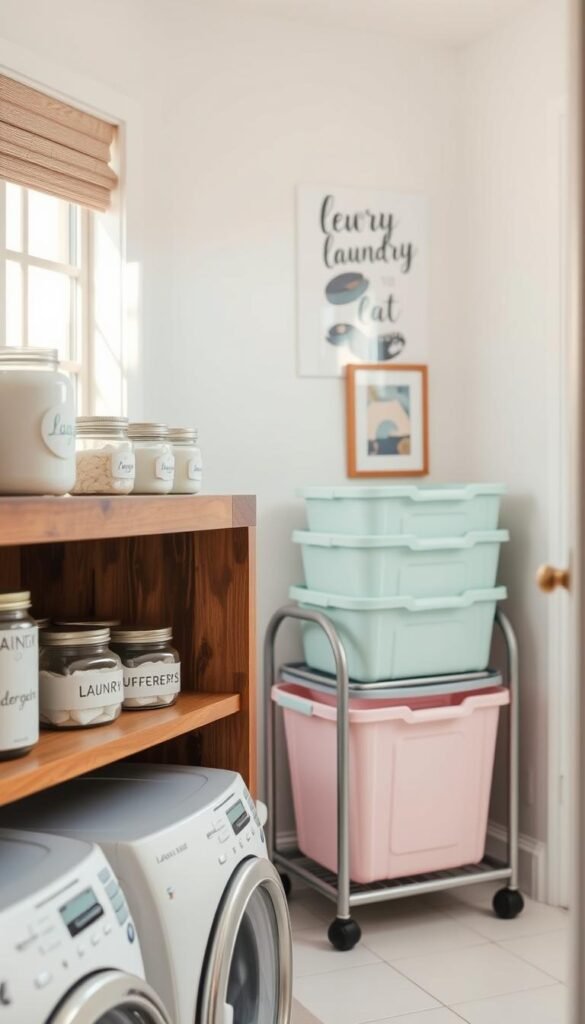
Decant bulky supplies. Pour powders, pods, and vinegar into easy-pour OXO-style containers to cut drips and reclaim shelf depth. This reduces torn boxes and oversized jugs that tip or waste space.
Safety note: Use sturdy plastic containers on upper shelves to avoid breakage from vibration. Glass works for low shelves where instructions must stay visible.
Labeling and shelf access
Label by purpose—“Everyday Detergent,“ „Whites Booster,“ „Stain Removers“—so everyone returns items correctly. In tight pass-through areas, store extras in deeper shelves and keep a handled bin at the front to pull forward for access.
| Use | Recommended container | Who it’s for | Pros / Cons |
|---|---|---|---|
| Powders | OXO pourer canister | Bulk buyers | Pros: neat pour, saves shelf depth. Cons: needs cleaning. |
| Liquids | Clear plastic jug with spout | Shared households | Pros: visible level, spill control. Cons: loses original label. |
| Mixed small items | Handled clear bin | Renters and tight spaces | Pros: easy pull-forward, groups products. Cons: visible clutter if unlabelled. |
„Containment makes restock and daily use simpler for everyone.“
Build a stain-removal station that saves clothes (and time)
A compact stain station keeps pretreatments within reach so spills get handled fast. When sprays, brushes, and cloths are scattered, stains set and become harder to remove. A simple zone fixes that behavior problem.
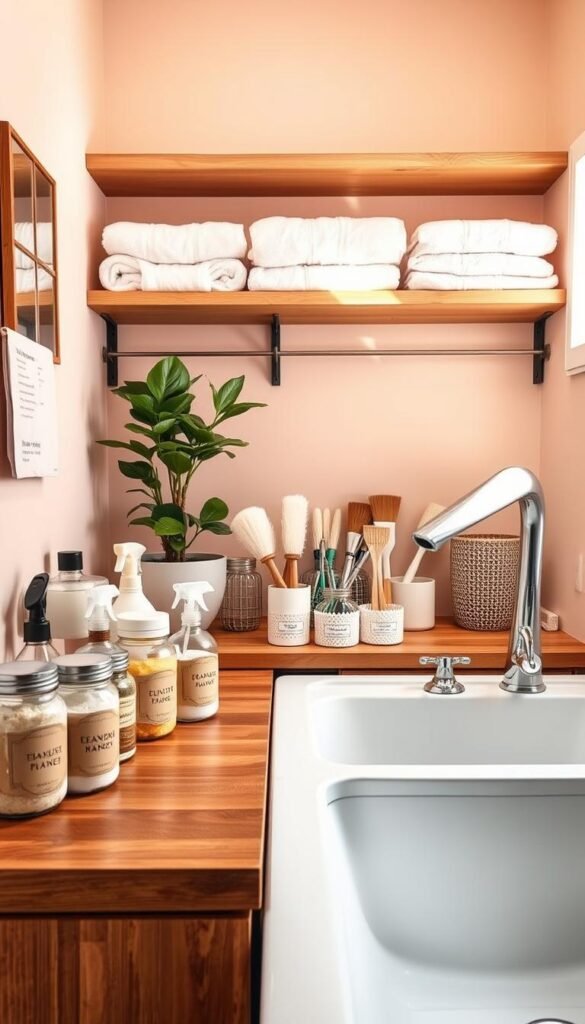
Anchor the kit. Wirecutter testing highlights Amodex Ink & Stain Remover as a versatile choice for fresh and set-in stains. Keep one proven remover at eye level on a shelf so it’s used immediately.
What to include and who benefits
- Minimum kit: stain spray, a small soft brush, clean cloths, and a marked „needs treatment“ basket or hook.
- Good for: parents with food and grass marks, athletes‘ kits, and anyone who wants fewer garment regrets.
Protect surfaces and streamline use
Contain drips: place products in a shallow drip tray or a clear container to catch leaks and protect shelves. Open access in a small basket raises use; a closed bin looks neater but can add friction.
„When sprays and cloths live together, stains get treated immediately instead of later.“
| Item | Who it’s for | Pro / Con |
|---|---|---|
| Spray (gel option) | Parents, cooks | Fast on fresh marks / can drip |
| Soft brush | Sports gear, work wear | Targets set spots / needs cleaning |
| Drip tray & labeled bin | All households | Protects shelves / adds storage steps |
Affiliate note: reserve slots for a go-to all-purpose remover, a quality brush, a shallow tray, and a labeled bin to build a compact stain kit for the laundry room.
Create a folding, ironing, and steaming zone—even in small spaces
A compact surface for folding and steaming changes routines and saves steps. It keeps clean clothes ready to hang or store and reduces trips between the washer and closet.
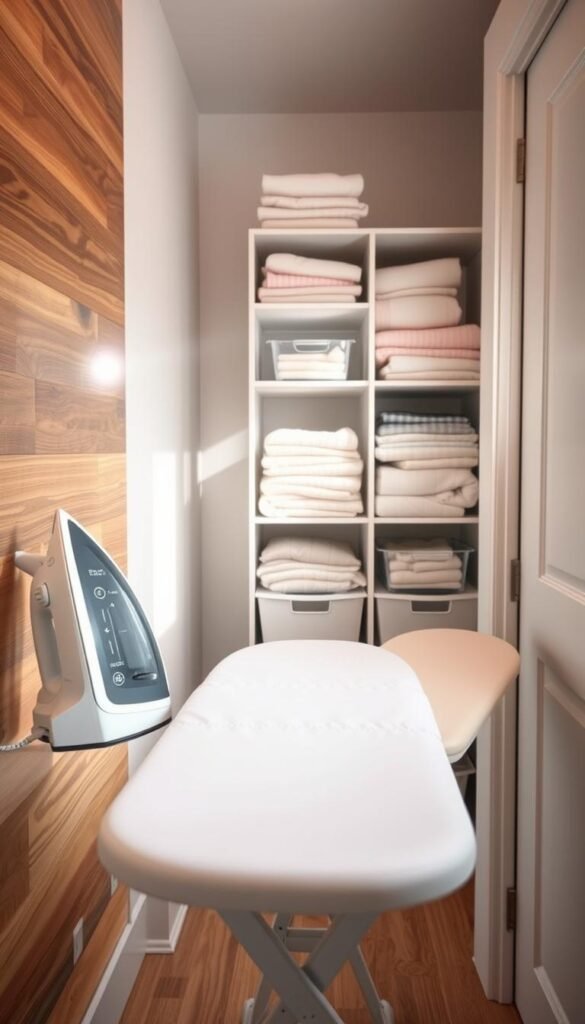
Countertop and fold-down folding stations for closets and pass-throughs
Options: a countertop over front-load machines, a freestanding narrow table, or a wall-mounted fold-down surface such as LoadUp. Fold-down surfaces are renter-friendly and free wall space when not in use.
Choosing an ironing board for stability and storage
Stability matters for frequent ironing; compact models win on storage. Wirecutter favors the Brabantia Ironing Board B for balance of size and sturdiness. Match board footprint to available room and store on a wall hook or over-door hanger.
Iron vs. clothing steamer: which to buy?
Ironing makes crisp creases and handles heavy fabrics well. The Black+Decker Allure Steam Iron D3030 is a reliable household pick for that work.
Steamers work best for quick touch-ups and delicate garments. Wirecutter’s steamer guide lists models across budgets for fast de-wrinkling near the dryer or on hangers.
„Households that need crisp workwear plus quick touch-ups may justify owning both tools when storage allows.“
| Solution | Best for | Tradeoff |
|---|---|---|
| Wall-mounted fold-down | Renters, small laundry | Saves space; limited surface size |
| Countertop over front-load | Frequent folders | Permanent; needs measurement |
| Freestanding narrow table | Flex use in pass-throughs | Easiest to move; needs storage spot |
| Full-size ironing board | Frequent ironers | Stable; larger to store |
| Handheld steamer | Quick touch-ups, delicate clothes | Less crisp finish; very portable |
Small-space upgrades: hangers, drying, and layout fixes for awkward laundry rooms
Fixing awkward layouts starts by mapping how people move from washer to drying, then to folding and storage. Treat the path as the design priority and remove obstacles that add steps.

Use quality hangers for quick hang-dry then store workflows
Why hangers matter: a modest upgrade speeds air-dry workflows and reduces piles on chairs. Wirecutter recommends the Proman Kascade Hanger as a versatile choice for most closet users.
Who benefits: people who air-dry delicates, families with frequent kid clothes, and anyone who wants fewer creases and faster put-away.
Plan around doors, clearances, and top-load lids
Map every door swing and the washer lid height before adding shelves or counters. A top-load washing machine can block a proposed countertop, while a front-loader may allow an over-machine shelf.
Ensure hampers and hooks don’t collide with doors. If you’re using a pass-through room, favor slim, vertical solutions that keep walkways open.
Where to stash towels, sheets, and backstock
Keep daily towels and a small stack of sheets on a reachable shelf. Move bulk backstock to a high shelf or a hallway closet so it won’t block access to the machine or the folding surface.
In a closet setup, pick slim hangers and shallow shelves so items are easy to reach without leaning over a running washing machine.
„Map movement first: the best small upgrades cut steps between the machine and the final storage spot.“
| Fix | Who it’s for | Quick buying notes |
|---|---|---|
| Quality slim hangers | Closet users, small laundry | Choose non-slip, thin-profile hangers (Proman Kascade recommended) |
| Over-machine drying bar | Homes with front-load machines | Check clearance for lid and venting; removable or tension bars suit renters |
| High shelf for bulk towels/sheets | All households | Store overflow up high; keep daily set on lower shelf for access |
| Vertical hanging rod in closet | Laundry closet users | Use slim hangers and shallow shelves to avoid reach issues |
Conclusion
A short, regular routine prevents small problems from becoming big messes. Reset first, add vertical shelves, simplify sorting with the right baskets, contain supplies in clear bins, and set up stain and folding stations. Keep steps short so they stick.
Measure the room and map door swings and washer dryer clearances before buying anything. This avoids ill-fitting shelves or a blocked path.
Renter-friendly priorities: removable anchors, over-door hooks, fold-down surfaces, and portable containers that move with a household.
Quick shopping checklist: What problem am I solving? Who uses this area? How often? Where will it live? What’s the tradeoff?
Do a 10–15 minute weekly reset. Return detergent and stain tools to labeled spots and clear surfaces. Practical, small changes keep the space usable and reduce daily friction.