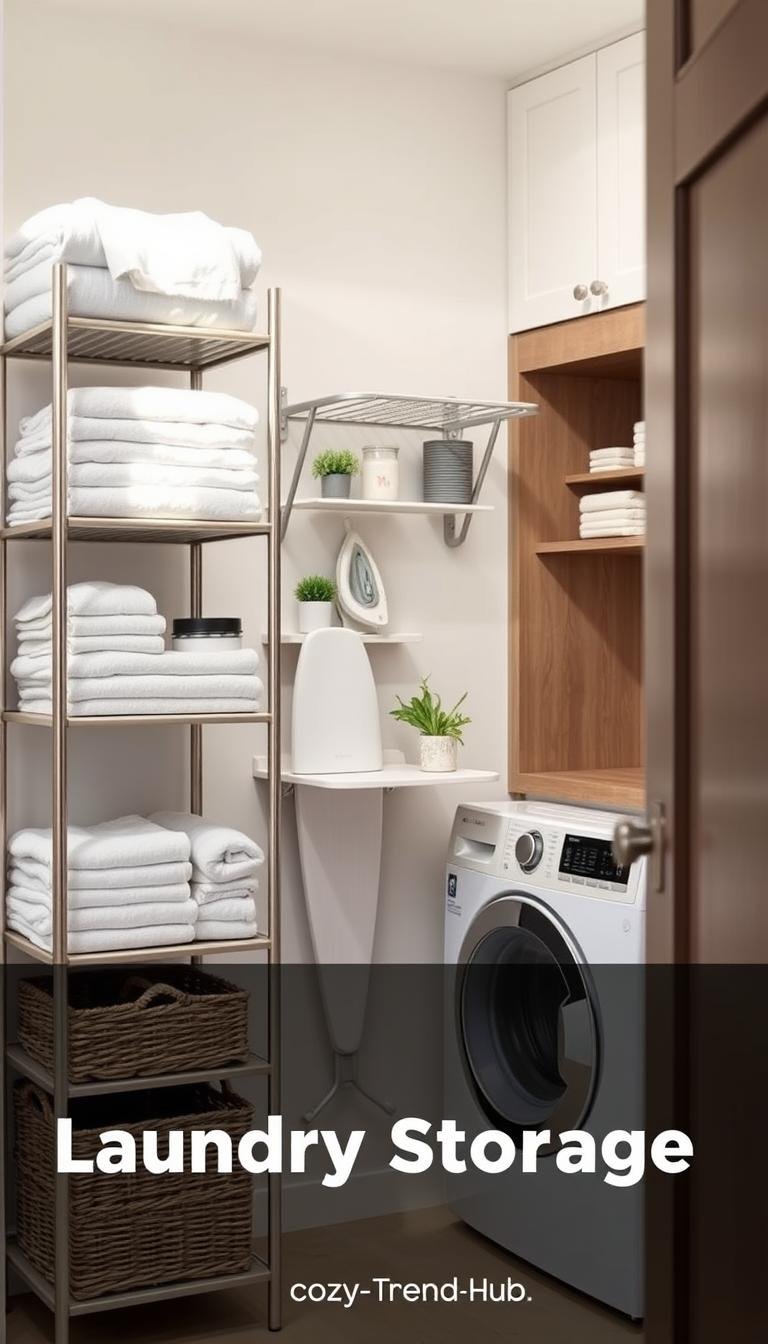
Clutter often starts in the corner of the room no one plans for. Many a compact laundry room or closet becomes a catch-all because it lacks a clear place to fold, stash supplies, and air-dry items. That is the core problem—not a lack of effort.
This guide lays out renter-friendly and permanent options. It will recommend wall shelves, over-the-door racks, slim carts, stacking kits, and fold-down tables, and explain who each is best for. Readers will get practical pros and cons and measurements to avoid returns.
Start by prioritizing vertical solutions, then use doors, then roll-in gap fillers for leftover inches. The article flags which picks are reversible for renters and which need anchors for homeowners. Every recommendation includes clear buying notes like shelf depth, weight limits, and mounting height.
Key Takeaways
- Identify the main challenges: folding, supplies, and drying.
- Prioritize vertical storage, then doors, then rolling carts.
- Choose reversible options for rentals; anchor systems for homes.
- Measure clearances and check weight limits before buying.
- Product blocks will be grouped by problem type to simplify choices.
How to Choose Laundry Storage When You’re Working With a Small Laundry Room
Chart the workflow from dirty clothes to put-away; match storage to each step rather than adding random shelves. This keeps choices practical and prevents wasted purchases.
Common pain points and quick solution categories:
- No floor space: wall and door systems that free the floor.
- Nowhere to fold: over-machine counters and fold-down tables that create a folding surface without permanent bulk.
- Cluttered supplies: baskets, cabinets, and door caddies that hide items but keep them accessible.
Renter vs. homeowner limits
Renters should prioritize over-the-door hooks, freestanding towers, tension rods, and strong adhesive options that are reversible.
Homeowners can anchor wall shelves, mount drying racks into studs, or install fold-down worktops with permanent fasteners.
Fast planning rule
Use wall first, then door, then rolling pieces. Start high, then reclaim the back of the door, then add a slim cart for gaps beside machines.
Deal-breaker checklist: door-swing conflicts, shelves deeper than lid clearance, carts too wide for the gap, and weak anchors under heavy loads.
Each upcoming product section will map directly to one of these pain points with pros, cons, and buying tips.
Measure First: The Buying Checklist That Prevents Returns
Don’t guess — map width, depth, and clearances around your washer and dryer before shopping. A few simple numbers save time and returns.
Measure-first checklist (screenshot this):
- Width: total floor-to-floor width including gap beside the machines.
- Depth: front of machine to wall, plus hose/vent clearance.
- Height: ceiling and any overhead trim for stacking kits or shelves.
- Usable clearance: door swing, top-loader lid arc, and drawer travel.
- Access: power, vent, and hose routing behind the washer and dryer.
Door and shelf fit: An inward-opening door or a top-loading washing machine can block over-machine counters. Leave extra inches so lids and drawers open freely.
Wall safety and stacking checks: Use rated anchors or find studs. Confirm shelf load ratings and dry-rod specs before mounting on a drywall surface. For stacking, verify kit compatibility with the machine footprint and ceiling height.
Buying in the right order: measure → choose category → confirm load rating and compatibility → then pick style and finish. This way returns stay rare and installations stay safe.
Best laundry storage for small spaces: Quick Picks by Problem
Match each common problem—no floor space, drilling limits, no folding surface, or air-drying needs—to a single, reliable product type. Below are focused picks that make choice fast and reduce returns.
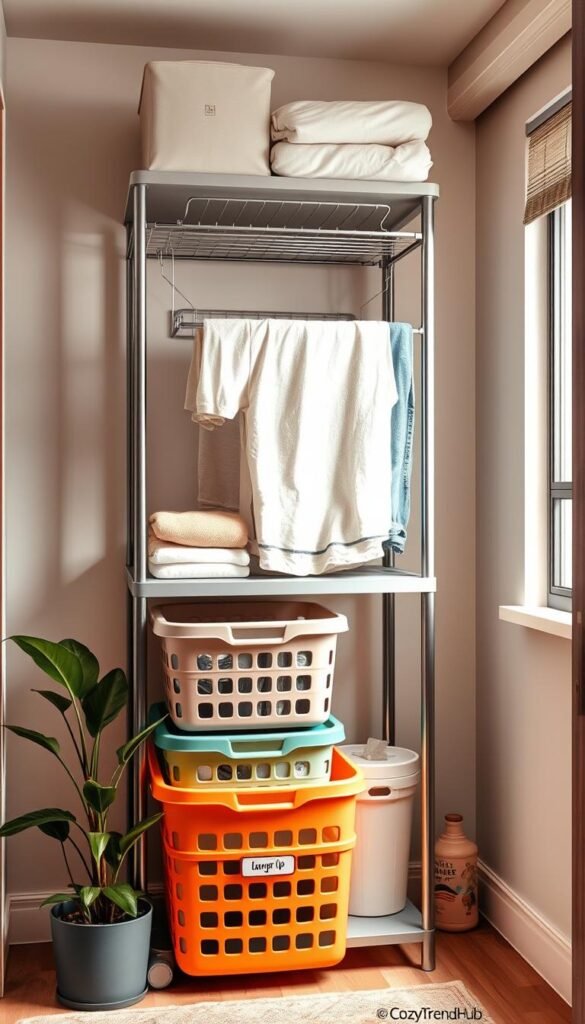
Zero-floor-space storage
Top choice: wall-mounted shelves and corner shelves. Best for homeowners or renters who can anchor into studs.
- Pros: high capacity, keeps floor clear.
- Cons: requires anchors or studs; installation time.
- Check: wall type, stud spacing, shelf depth vs. lid arc.
No-drill renters
Top choice: over-the-door racks and standalone-over-machine cabinets. These are reversible and damage-free.
- Pros: quick install, low cost, portable.
- Cons: limited weight capacity; watch door clearance.
- Check: door thickness, cabinet clearance, hook padding.
Adding a folding station
Top choice: over-the-washer counters, stacking kits with pull-out shelves, or fold-down wall tables.
- Pros: instant folding surface, keeps baskets off machines.
- Cons: may block access if too deep.
- Check: depth vs. lid opening, stacking kit compatibility, hinge quality.
Air-drying without a bulky rack
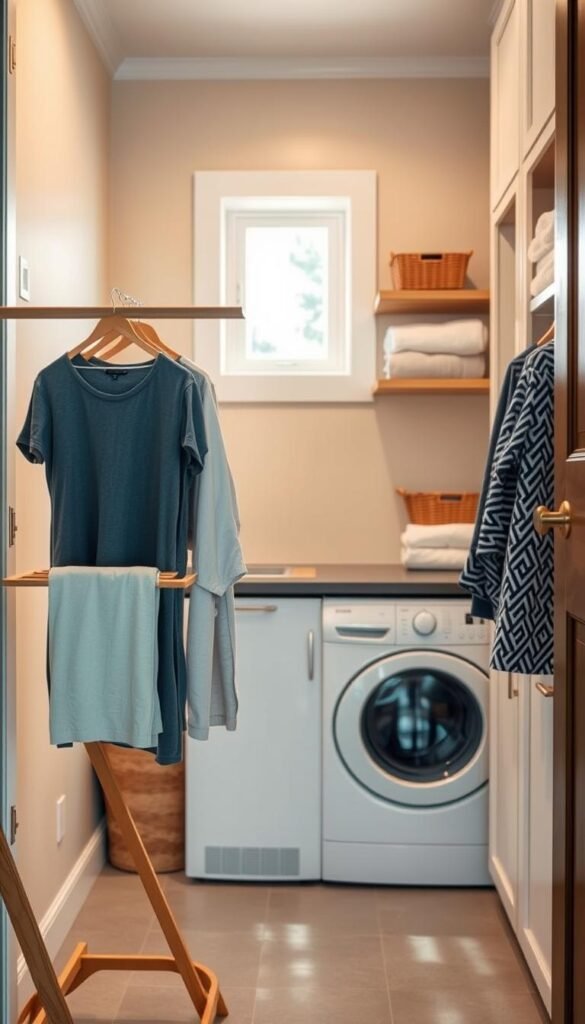
Top choice: wall-mounted fold-flat racks, sliding hidden racks, or a simple rod above machines for hangers.
- Pros: low profile, good airflow, easy hanging.
- Cons: limited capacity if small; needs proper mounting.
- Check: rated load, wall anchors, clearance for doors.
| Problem | Product Category | Who it’s best for | Quick buy checks |
|---|---|---|---|
| No floor space | Wall & corner shelves | Homeowners / renters with stud access | Studs, shelf depth, load rating |
| No drilling | Over-the-door racks | Renters, short-term users | Door thickness, hook fit, weight limit |
| Need folding surface | Over-machine counters & pull-out shelves | Closet users & narrow rooms | Lid arc, kit compatibility, clearance |
| Air-dry items | Fold-flat wall racks & rods | Delicates and athleisure owners | Anchor type, rod height, hanger spacing |
Wall-Mounted Shelving That Actually Works in a Laundry Room
Wall-mounted shelving brings calm to a tight room by lifting daily items off counters and into easy reach. This approach suits homeowners and renters who can drill or get permission to anchor shelves. It keeps a washing machine top clear and gives a tidy place for everyday supplies.
Floating shelves above the washing machine for daily-use supplies
Shallow floating shelves keep detergent, stain remover, and a small basket within arm’s reach without narrowing the room. Plan shelf depth at 8–10 inches near a top-loader and 10–12 inches over a front-load machine to protect lid and door clearance.
Corner shelves to capture “dead” space
Corner units reclaim the odd angles that cabinets or pipe runs block. They work well when one main wall is unavailable and create a small cabinet-like zone for tall bottles or spray bottles.
Baskets on shelves to hide visual clutter while staying grab-and-go
Use woven or wire baskets to group items. One basket for pods, one for stain tools, and one for rags keeps counters clear and makes restocking simple.
„A shallow shelf placed with care saves trips and keeps the top of the washer clear.“
- Load rating: mount into studs or use rated anchors; expect 25–50 lb per shelf depending on materials.
- Materials: sealed wood hides moisture; wire shelves drain better and need rails to stop bottles tipping.
- Buying tip: prefer shelves with a front lip or rail and adjustable spacing if storing taller items.
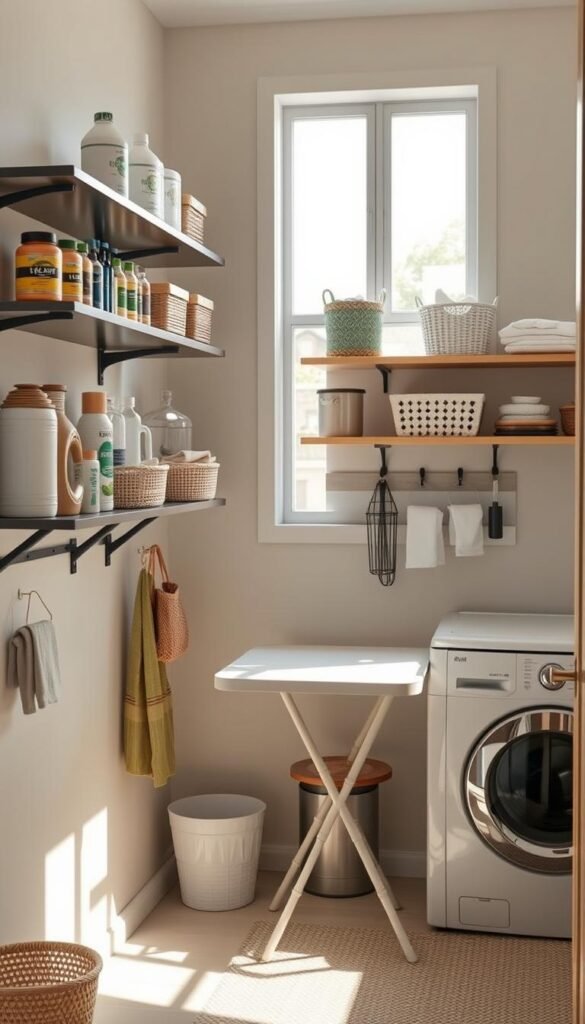
Pros: high storage density, tidy look, quick access. Cons: drilling required, weight limits, careful placement needed to avoid hits to the washing machine lid. These choices make a laundry room more usable and buyer-focused when shopping affiliate options like sealed wood versus wire and adjustable versus fixed shelves.
Over-the-Door Storage Racks for Detergent, Stain Remover, and Tools
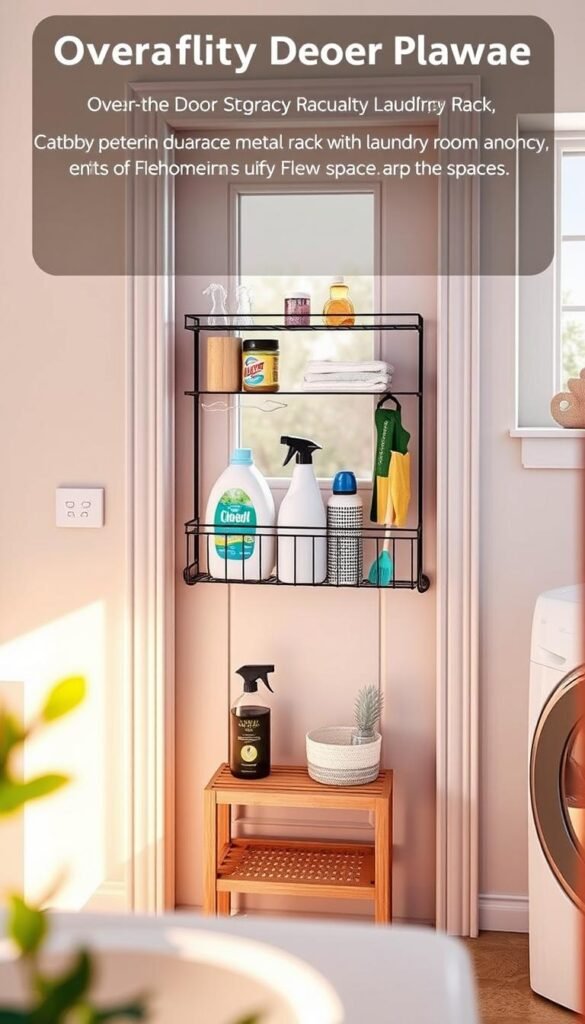
Over-the-door racks turn unused doors into neat vertical panels that keep essentials off counters and in plain sight. They are an ideal no-drill choice for renters, dorms, and anyone avoiding permanent mounts.
What to store: dryer sheets, lint rollers, small spray bottles, dusters, and compact detergent bottles. These items are light, often used, and tend to clutter machine tops.
- Why it helps: Items stay visible and reachable, which speeds stain treatment and mid-week touchups.
- Door-fit checks: measure door thickness, confirm the door closes freely, and choose padded hooks to avoid scuffs.
- Access tradeoffs: bulky jugs may wobble and some racks can restrict door swing in tight laundry room layouts.
Organization tips: group by task (wash-day vs. stain-day), keep heavier liquids on lower tiers, and use child-safe containers if kids or pets can reach the rack.
„A well-chosen over-the-door rack saves counter space and keeps quick-fix items where you need them most.“
| Feature | Why it matters | Ideal items | Buying tip |
|---|---|---|---|
| Padded hooks | Prevents door damage | Detergent pods, dryer sheets | Measure hook depth vs. trim |
| Tiered shelves | Organizes by task | Stain spray, lint roller | Lower shelves for heavier liquids |
| Wire vs. solid shelves | Drainage vs. containment | Dusters, small bottles | Choose solid for small items |
Over-the-Door Hampers to Save Floor Space
An over-the-door hamper frees the floor and keeps piles off hallways while staying within arm’s reach of machines. This solution removes a basket from the floor and makes clothes easier to carry to the washer.
Organized Life recommends over-the-door hampers to reclaim floor space and to stage clean loads that are waiting to be folded. They are durable and budget-friendly when chosen with the right hooks and liners.
Who they suit
- Tight apartments where a standing hamper blocks traffic.
- Laundry closets that need a contained bin without losing walking area.
- Shared family hallways that benefit from an out-of-the-way drop zone.
Pros and cons
Pros: clears the floor, reduces trips when sized well, and keeps items visible.
Cons: large capacity can stress the door and make opening harder. Too-heavy loads may tilt hooks or strain hinges.
Buying tips
- Confirm door thickness and handle placement; some models fit standard interior doors but not thicker or molded doors.
- Choose padded hooks and rounded hardware to avoid gouging paint or veneer.
- Prefer washable liners to control odors and spills; removable liners make sorting easier.
- Pick capacity consciously: bigger means fewer trips, but it increases door stress and closing difficulty.
- Avoid flimsy hooks, unstable frames, and designs that block door handles or pinch fingers in tight clearances.
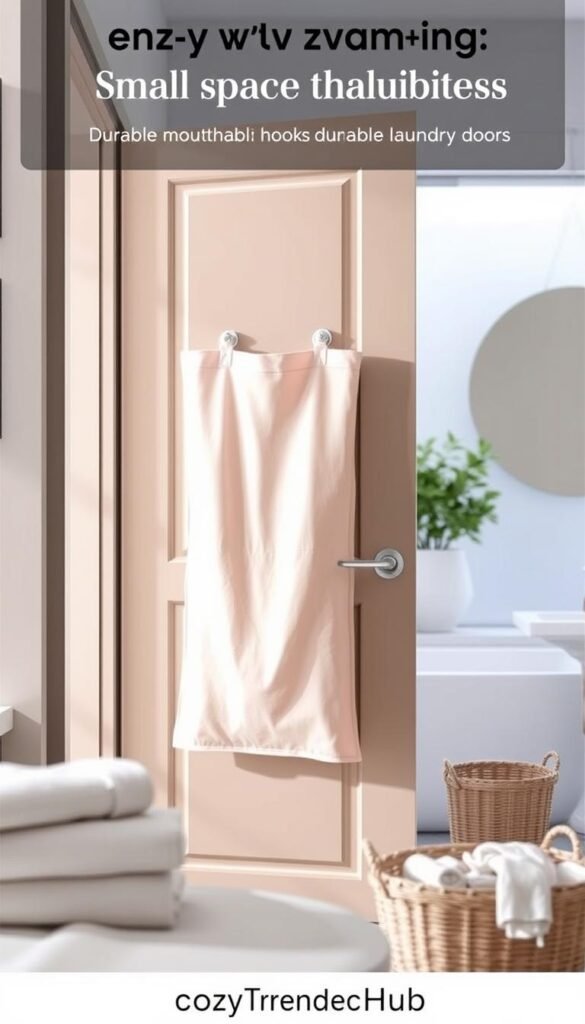
Use one over-the-door bin for dirty items and a second as a staging basket for clean-but-not-folded loads when folding room is limited. This keeps workflow moving in a compact laundry setup.
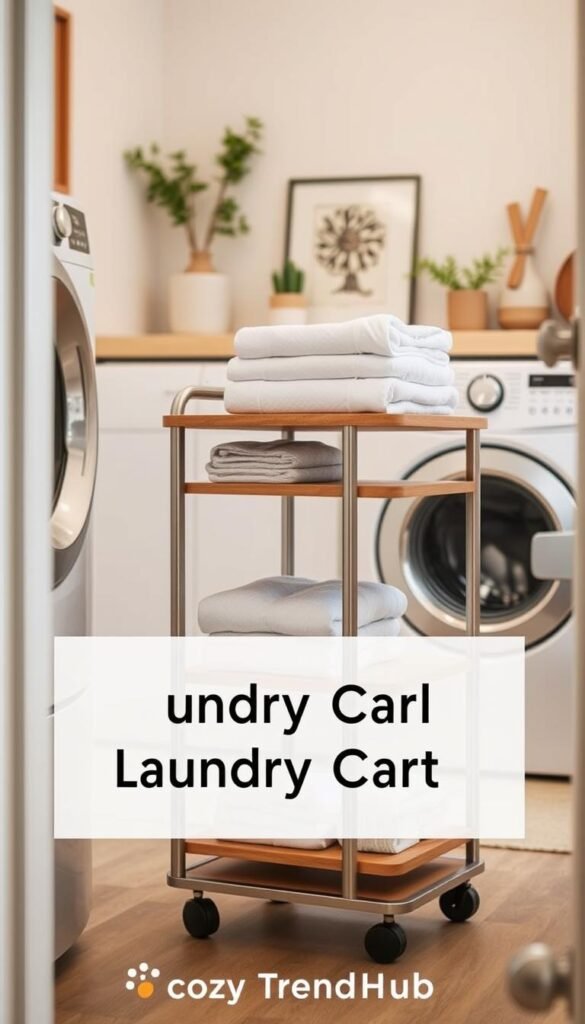
Rolling Laundry Carts and Slim Towers for In-Between Gaps
Gaps beside appliances are wasted real estate—slim towers turn them into reachable shelves.
Who these suit: anyone with a 4–10 inch gap next to a washer, between units, or beside cabinets that now collects dust.
Key measurement rule: measure the narrowest point (behind hoses or near baseboards). Choose a cart slightly slimmer so it slides without snagging.
What to look for: locking wheels for stability, wipeable shelves to handle spills, and a tall narrow footprint to maximize vertical room. Favor handles that don’t stick into walkways.
These slim units hold backup detergent, stain sprays, dryer balls, cleaning cloths, and small bins that clear counters. They work well in a tight laundry room and stay renter-friendly since they roll out without drilling.
Pros vs. cons: rolling carts are flexible and easy to remove. They can tip if top-heavy and may block access to hookups or filter panels if placed too close.
Usability tips: keep heavy items low, label shelves by category, and pick quality wheels that let one-handed pulls while carrying a basket.
| Attribute | Range / Tip | Why it matters |
|---|---|---|
| Width | 4–10 in (buy slightly slimmer) | Prevents snagging and allows roll-out |
| Shelf count | 3–5 | Organizes by task and weight |
| Wheel quality | Locking casters | Stability during use |
| Material | Plastic or metal with wipeable finish | Resists detergent drips |
Stacking Washer/Dryer Setups and Stacking Kits With Sliding Shelves
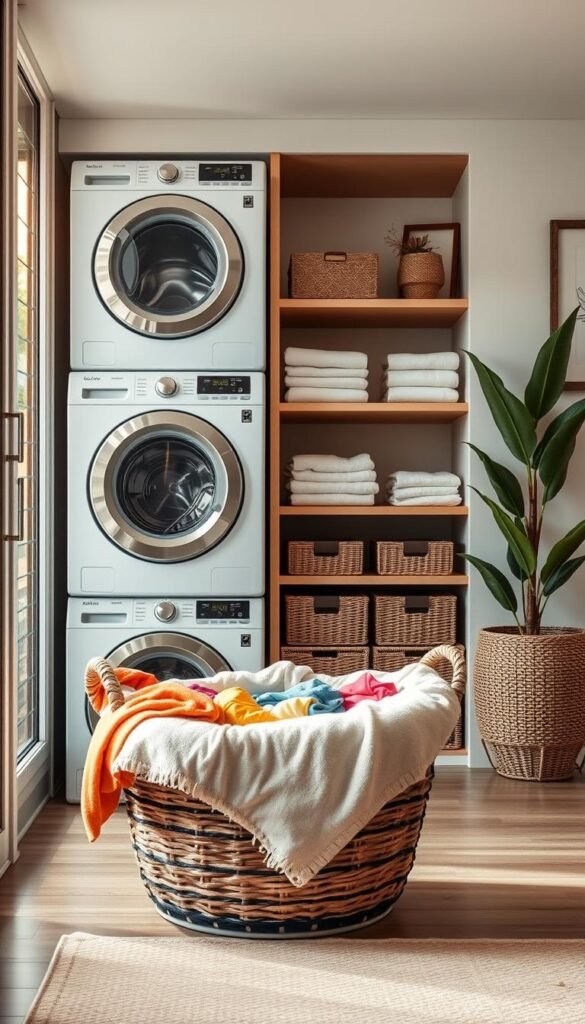
Turning two machines into a vertical unit creates room for a pull-out surface where there was none. This is a practical path when floor width blocks a counter or cart and vertical space is available.
Who this suits: an apartment or closet that needs to free floor area. Stacking is ideal in a small laundry room or tight closet where side-by-side units prevent walking or staging.
Why a pull-out shelf helps
A sliding shelf gives a temporary platform for sorting and loading without adding a permanent counter. Use it as a pre-sorting station for lights and darks or as a transfer spot for socks and delicates.
Safety and compatibility checks
Non-negotiables: confirm kit compatibility with your model footprints, read included weight ratings, and use straps and anti-slip pads exactly as directed.
Also check vent routing so the dryer vent and hoses aren’t kinked once stacked. Verify ceiling clearance and that the floor is level to limit vibration and shifting.
Who should avoid stacking
Do not stack if machines need frequent service access, if the floor is uneven, or if anchoring and clearance requirements can’t be met. Households that move often may prefer roll-out options instead.
| Feature | What to check | Why it matters |
|---|---|---|
| Compatibility claims | Model lists and footprint match | Prevents returns and unsafe fits |
| Shelf load rating | Rated pounds and extension length | Supports sorting and short-term folding |
| Included straps & pads | Yes / No | Stability and vibration control |
| Installation ease | Tools needed and instructions | Renter-friendly vs. permanent |
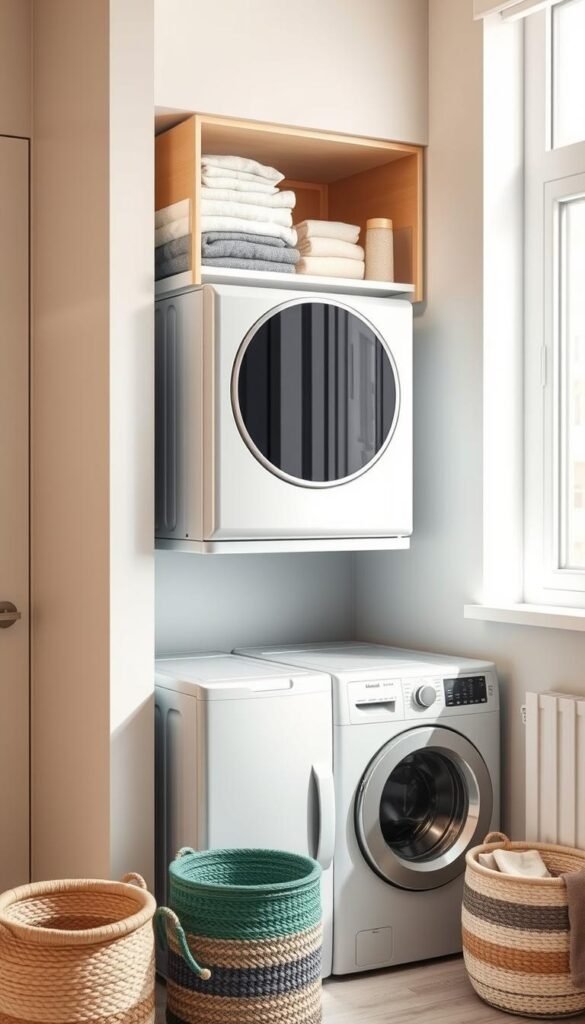
„Mummy of Four recommends the CARE+PROTECT Universal Stacking Kit with Sliding Shelf to safely stack a dryer over a washer and gain a handy pull-out surface.“
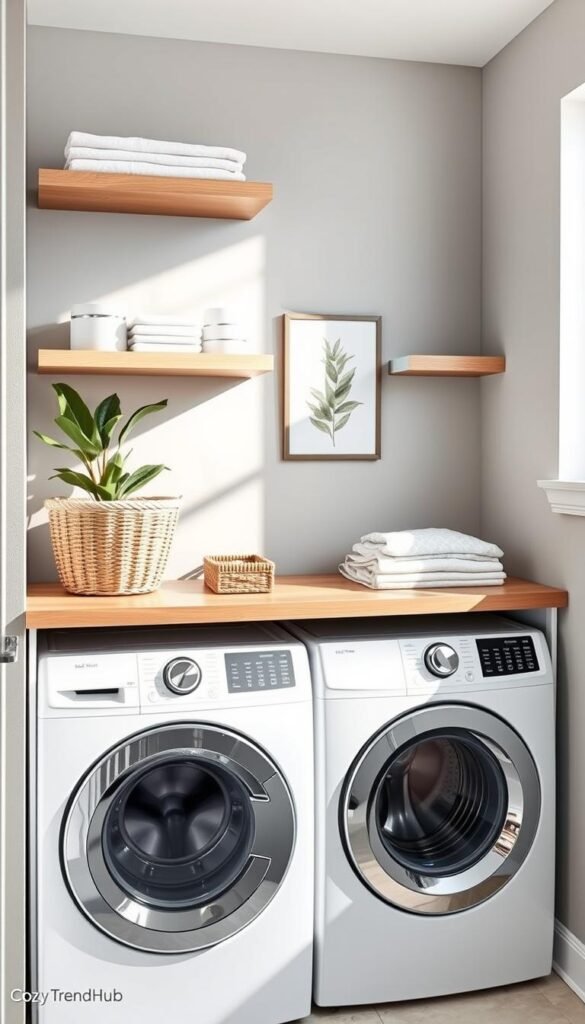
Over-the-Washer Countertops That Create an Instant Folding Station
Placing a flat work surface over machines gives a reliable spot to sort, fold, and stage baskets. This solution turns the washer top into a true workspace so clean items do not migrate to beds or couches.
Butcher-block style surfaces: when they’re worth it
When to choose butcher-block: select sealed, finished wood if the room is humid or machines vibrate. Solid wood resists dings and feels sturdy for folding clothes.
Measure first: confirm machine top width and depth, leave space for vents, and ensure rear controls stay reachable. Check whether the countertop fits side-by-side or over stacked units.
Practical uses: fold immediately, stage baskets by room, and keep supplies off the machines so the area stays usable.
- Who this suits: households that often have “nowhere to fold” and move clean loads to other rooms.
- Pros: adds function without remodeling, creates a flat surface for folding and staging.
- Cons: can block access if wrongly sized; may need anti-slip pads or brackets to control vibration.
| Spec | Why it matters | Buyer check |
|---|---|---|
| Material | Moisture resistance & cleaning | Sealed/finished wood vs. laminate |
| Thickness | Stability under baskets | 3/4″–1″ common; thicker for heavy use |
| Edge profile | Walkway safety | Rounded edges for tight rooms |
| Mounting hardware | Stability with vibration | Included brackets, anti-slip pads, or straps |
Buying tips: prefer sealed butcher-block or finished laminate, check weight capacity if stacking baskets, and choose rounded edges in narrow walkways. Include anti-slip pads and fasteners when machines vibrate.
„A flat countertop over the washer keeps folding close to the task and cuts clutter in half.“
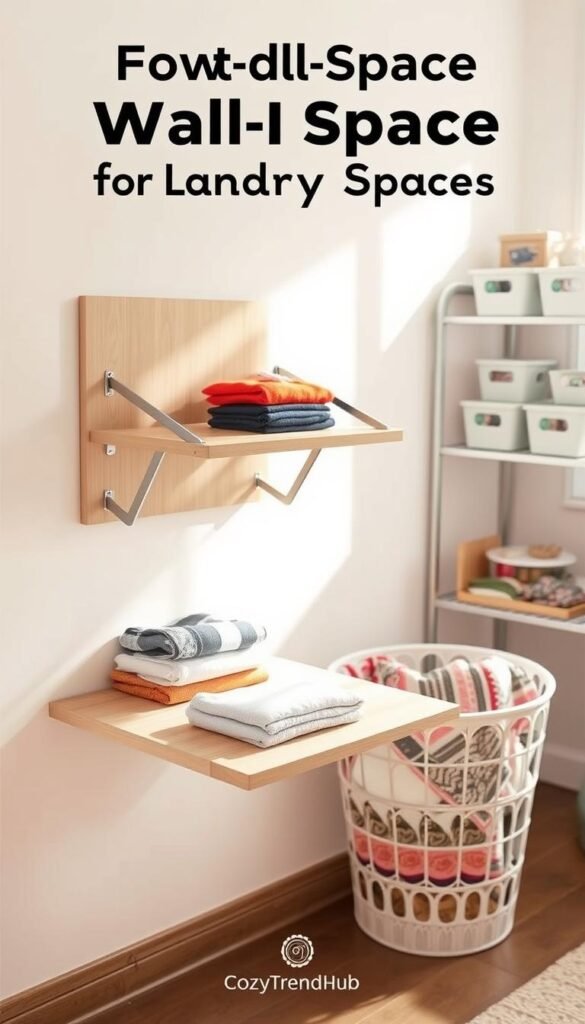
Fold-Down Wall Tables for Folding Clothes Without Losing Walkway Space
When walkways are tight, a folding wall table turns a blank wall into a working counter that tucks away. It creates a quick place to fold and sort, then folds flat so traffic flows freely.
Who this helps
Best for: narrow laundry rooms and pass-through areas where a permanent table would block the aisle. It suits households that need a temporary work surface but limited floor area.
Key buying and safety notes
Hinge quality: prioritize heavy-duty hinges, a reliable latch, and clear load ratings. Look for brackets or gas supports if the table will hold a full basket.
Mounting height: set the top at a comfortable folding level and confirm it won’t hit lids, doors, or cabinet doors when open. Mount into studs when possible; use rated anchors only when studs are unavailable.
Organized Life recommends foldout tables that fold back into the wall when not in use to protect walkways and keep the room functional.
| Attribute | Recommendation | Why it matters |
|---|---|---|
| Tabletop dimensions | 30–36″ wide × 18–24″ deep | Large enough to fold but shallow enough to clear traffic |
| Folded depth | 2–4″ | Must sit flush to avoid snagging |
| Hinge & supports | Steel hinges; optional gas arms | Durability and steady load-bearing |
| Load rating | 50–100 lb | Handles baskets and stacked clothing |
Pros: excellent space efficiency and instant folding surface. Cons: more involved install and the need to keep the top clear so it can close.
Renter note: many units require drilling into studs. Confirm landlord permission or choose a freestanding counter if drilling is not allowed.
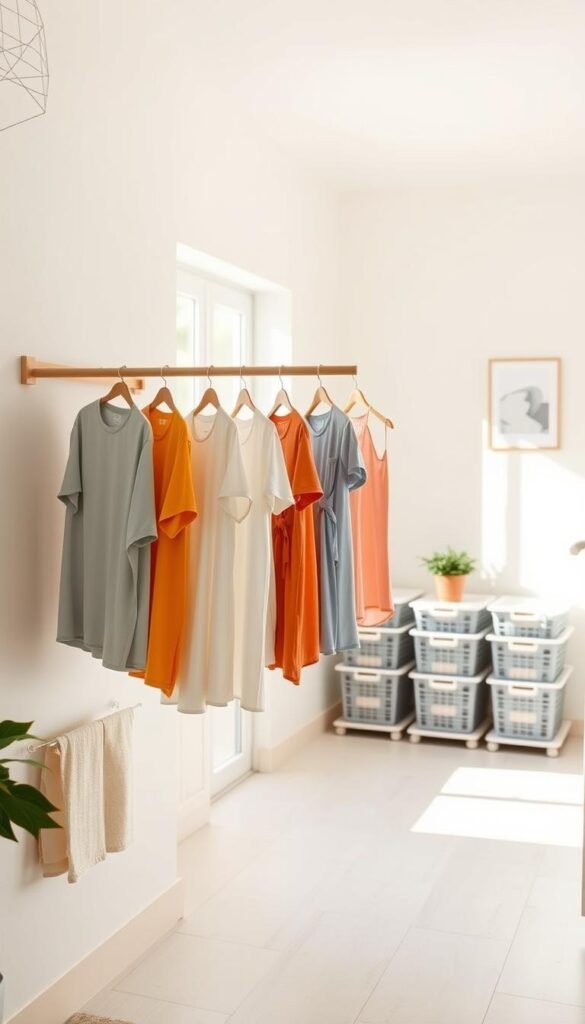
Wall-Mounted Drying Racks and Hanging Rods for Air-Dry Items
A simple rod or folding rail converts wasted wall depth into a reliable hang-dry zone. This approach suits households that must air-dry delicates, athleisure, and any item labeled non-tumble-dryable.
Who it helps: people who need hang-drying but cannot fit a floor rack. Use it to keep wet clothes off counters and out of the way of a dryer and washer.
Fold-flat racks vs. sliding/hidden systems
Fold-flat racks are simple, low-cost, and quick to use. They drop down when needed and fold flush to the wall when not in use.
Sliding or hidden systems tuck into a wall cavity or slide back into a housing. They look cleaner but usually need more complex installation and higher cost.
| Feature | Fold-flat | Sliding/hidden |
|---|---|---|
| Rack length | 24–48 in | 24–60 in |
| Folded depth | 2–4 in | 1–3 in (recessed) |
| Material / rust resistance | Powder-coated steel; rust-resistant | Stainless or coated steel |
| Installation method | Wall anchors or studs | Framing or cabinet mount |
| Rated capacity | 15–40 lb | 20–60 lb |
Adding a rod above machines
Designer Alexandra Kaehler recommends adding a rod above the washer/dryer to use wasted depth. Mount the rod high enough to clear lids and low enough to reach without a step stool.
Mounting & weight guidance: anchor into studs when possible. Spread wet loads across the length and avoid overloading one side. Check rated capacity—wet clothes can double the dry weight.
Hanger strategy and workflow
Matching hangers pack tighter and speed drying. Use thin, non-slip hangers to fit more garments and avoid tangles.
- Hang items straight from the washer to reduce wrinkles.
- Keep spare hangers on the rod for quick turnover.
- Space heavier items toward the ends and lighter items in the middle to balance the load.
„Mummy of Four recommends drying rails with matching hangers to maximize airflow and save time.“
Compact Ironing Storage: Wall-Mounted Boards and Safe Iron Holders
A pared-down ironing station can sit on a wall or slide into a narrow gap so chores stay quick and out of the way.
Who this helps: households that avoid ironing because setting up a full board is a hassle, and those with limited floor area who still need wrinkle-free clothes.
Compact options:
- Wall-mounted fold-out boards — fast access and locks closed when not in use.
- Slim gap boards — slender panels that tuck between a machine and a wall or cabinet.
- Mini tabletop boards — lightweight, stored on a shelf for occasional touch-ups.
Safety upgrade: add a dedicated iron holder. A heat-rated holder gives a safe cooling spot and keeps cords tidy. This reduces burn risks in busy homes and around children.
Pros vs. cons: faster setup, steady platform, and safer cooling versus the need to drill, confirm clearance, and pick durable hinges.
Buying checklist: mounting height, locked-closed security, folded dimensions, left/right swing, included hardware, and heat rating of the iron holder.
Workflow tip: mount the board near the drying or hanging area so items move straight from line to press.
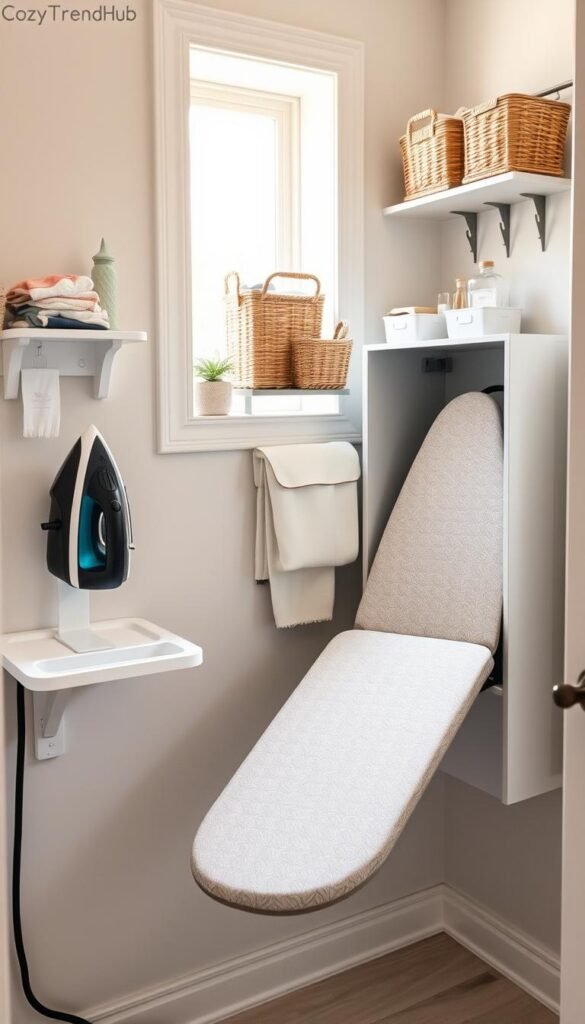
„A wall-mounted board plus a secure iron holder keeps pressing fast, safe, and out of the way.“
Family Sorting Systems That Stop Clean Laundry From Piling Up
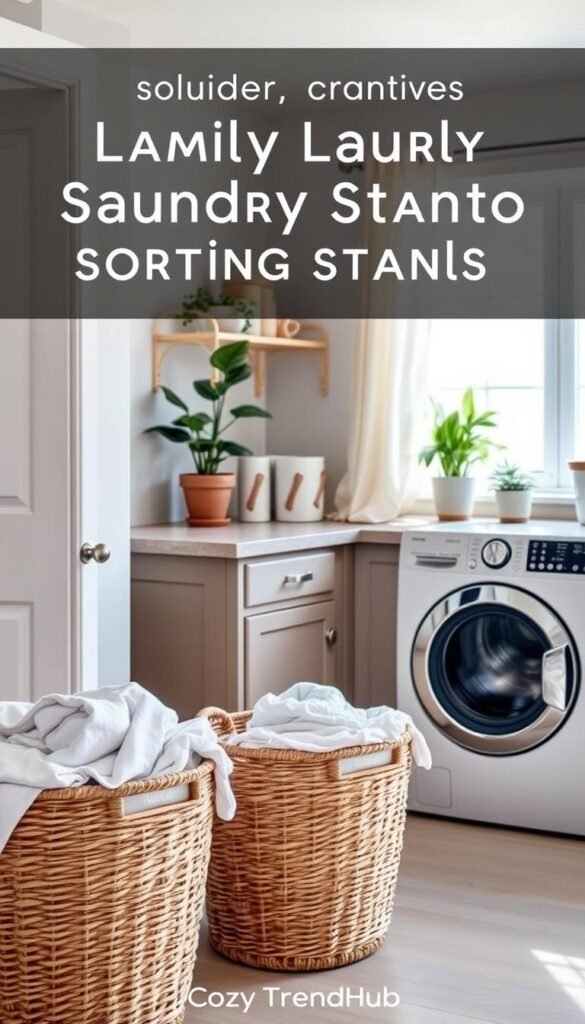
Clean piles form when the final step—putting clothes away—is missing a clear routine. A simple, labeled system moves freshly dried items straight into an owner’s bin. That small habit removes the bottleneck most households face.
Cubby-and-bin method
Use a cubby shelf (IKEA KALLAX works well) with one DRÖNA-style box per person. Label each box and sort clean items immediately after drying. This turns a single family task into a quick, repeatable step.
Who benefits
This approach suits large families, shared homes, or any household doing frequent loads. It helps when the issue is habit, not folding skill.
Stackable baskets as transport
Pair cubbies with stackable Curver baskets to carry loads between rooms. Baskets nest when empty so the laundry room stays uncluttered.
| Problem | Solution | Why it works |
|---|---|---|
| Clean piles in hallways | Cubby shelf + labeled bins | Immediate destination reduces decision time |
| Frequent loads | Stackable baskets | Easy transport; nests to save room |
| Multiple family members | One bin per person | Clear ownership speeds put-away |
Practical tradeoffs
The system clears the laundry room fast. It does require a small footprint and consistent labeling so everyone takes part.
Buying checks
Match bin size to clothing volume, confirm shelf stability, and pick baskets with comfortable handles for stairs.
Closed Cabinets vs. Open Storage: What Keeps a Small Space Looking Clean
Choosing between open shelving and closed cabinets depends on clutter tolerance and daily habits.
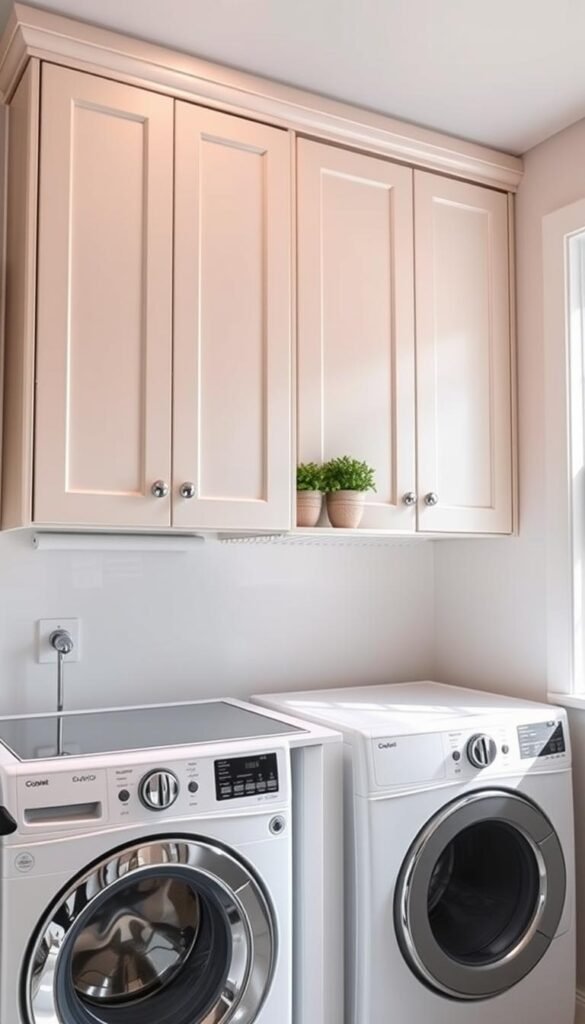
Open shelves make items easy to grab. Closed cabinet doors hide bottles, boxes, and backups so the room reads as calmer.
Upper cabinets to the ceiling
Upper cabinets to the ceiling maximize vertical capacity and stop dust collecting on top. They store seasonal items and bulk supplies out of sight.
Trade-off: they need accurate measuring and firm anchoring to avoid access or clearance problems.
Standalone cabinets placed over machines
Freestanding cabinets that sit above a washer and dryer create a built-in look without drilling. Renters can slide them in and remove them when they leave.
Choose anti-tip hardware and a moisture-resistant finish to protect against humidity.
Who benefits and buying checks
- Best for hiding bulky packages and overflow supplies.
- Check depth so doors don’t hit lids or controls.
- Confirm anti-tip anchoring, door swing, and cabinet finish.
| Option | Cost range | Install complexity | Clutter hiding |
|---|---|---|---|
| Ceiling-height cabinets | $$–$$$ | High (measuring & mounting) | Excellent |
| Freestanding over-machine cabinet | $–$$ | Low (no drilling) | Very good |
| Open shelving | $–$$ | Low | Low (visible) |
Smaller Laundry Products That Free Up Storage Space Instantly
A few targeted swaps in supplies can instantly open shelf inches and speed chores. These moves often free more usable area than adding another fixture.
Detergent sheets vs. jugs
Who should switch and why
People with tight cabinets, laundry closets, or limited counter room benefit most. Sheets remove bulky bottles and cut pouring spills. HeySunday and similar brands work in most HE machines; always check labels.
Decanting pods into jars
Move pods from large boxes into an airtight mason jar to save depth and create tidier rows. Choose a clear, labeled container so refill time is obvious.
Organized Life recommends detergent sheets and decanting pods to reduce bulk while keeping things simple.
Safer cleaning zone
Create one upper shelf or a lidded bin for cleaning supplies and chemicals. Keep that zone out of children’s reach and use locks or a high cabinet when needed.
- Time wins: smaller items are easier to grab and restock.
- Buying checks: HE compatibility, scent strength, and airtight labels.
- Safety tip: never leave attractive jars where kids can reach them.
| Swap | Space saved | Who benefits | Key check |
|---|---|---|---|
| Detergent sheets | High (replaces jugs) | Closet users & renters | HE compatibility |
| Pods in jars | Medium (removes boxes) | Anyone with deep shelves | Airtight, labeled jar |
| Dedicated cleaning zone | Organizational | Homes with kids | Height, lock or lidded bin |
Conclusion
Conclusion
Close with a short plan: one hardware change to reclaim room and one habit to stop pile-ups. Measure width, depth, and lid clearance first. Then choose a single space-maker such as a stacking kit, a wall shelf, or an over-the-door rack.
Next, add one workflow fix: a fold-down surface or a hanging rod so clean clothes move off the top and into bins. Renters often start with over-the-door racks, door hampers, rolling gap carts, or freestanding cabinets because they need no drilling.
Keep it simple: contain supplies, clear the washer-dryer top, and sort into labeled baskets right after drying. Check door thickness, shelf depth, and wall load ratings before you buy.
Final note: pick ideas that match your room and routine. Use the quick picks and the measuring checklist above to make confident choices and save time.