
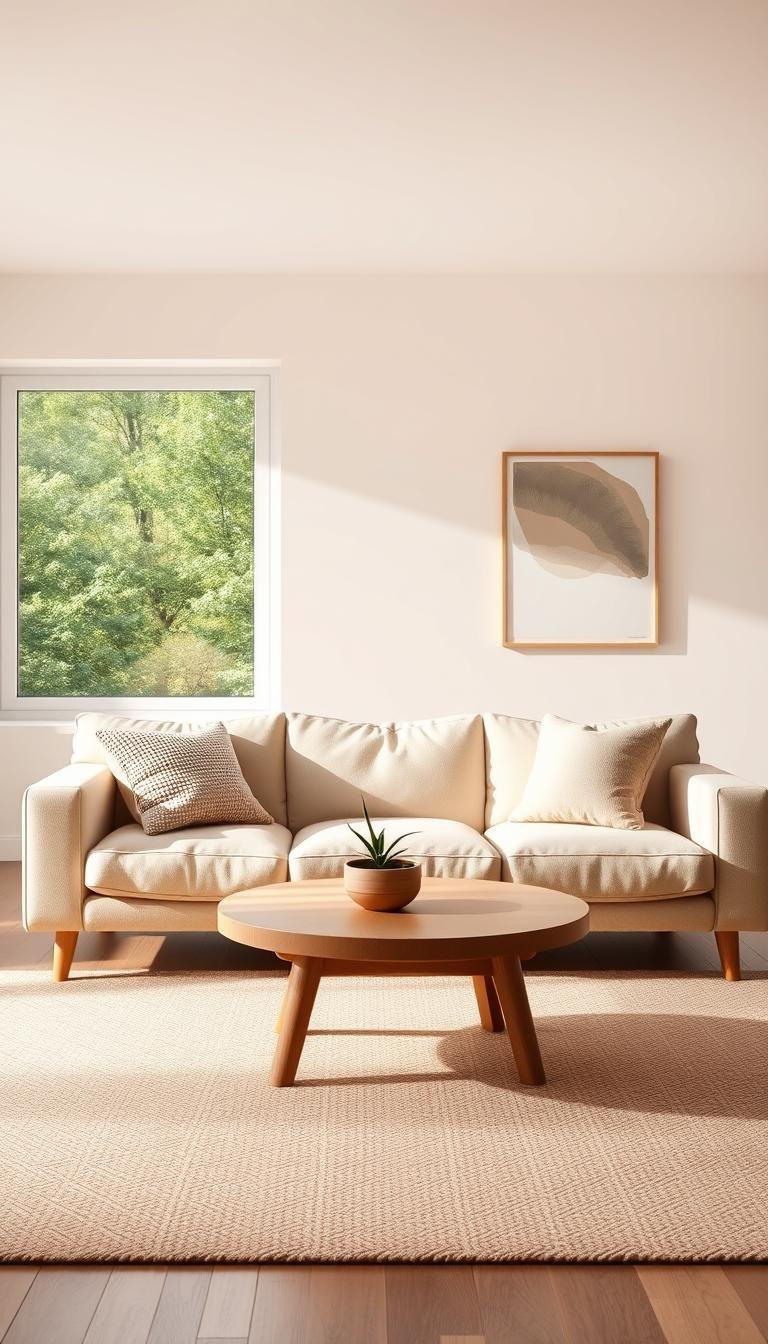
Many photo-ready spaces look stylish but feel cold and impractical. This introduction frames a clear problem: simplified interiors can become echoey, sparse, or hard to use in a small living room or rental.
The guide offers a buyer-focused list of product categories and comparison points. It explains what to compare—materials, size, maintenance, and budget—and who each option suits: renters, families, pet owners, low-light apartments, and open-plan layouts.
The goal is warm minimalism: keep clean lines and calm palettes while adding texture, layered light, and plants for comfort. Recommendations favor fewer pieces that work harder, fit small spaces, and are easy to maintain.
Readers will get practical fixes for scale mistakes, harsh lighting, and “too-empty” layouts. Renter-friendly tips include plug-in lighting, removable hooks, peel-and-stick finishes, and movable dividers.
No hype—just clear pros and cons, sizing tips, and maintenance notes to help confident purchases for real homes.
Key Takeaways
- Problem-solution start: avoid spaces that look good but feel cold.
- Guide compares items by material, size, upkeep, and price.
- Focus on warmth through texture, layered light, and greenery.
- Practical renter options: plug-in lights, removable hardware, peel-and-stick.
- Fewer multipurpose pieces beat clutter in small spaces.
How Minimalist Spaces End Up Feeling Cold (and How to Fix It)
A pared-back space can feel unwelcoming when light, texture, or scale are out of balance. This section links common culprits to simple fixes that also point to purchases that help the room feel lived-in and functional.
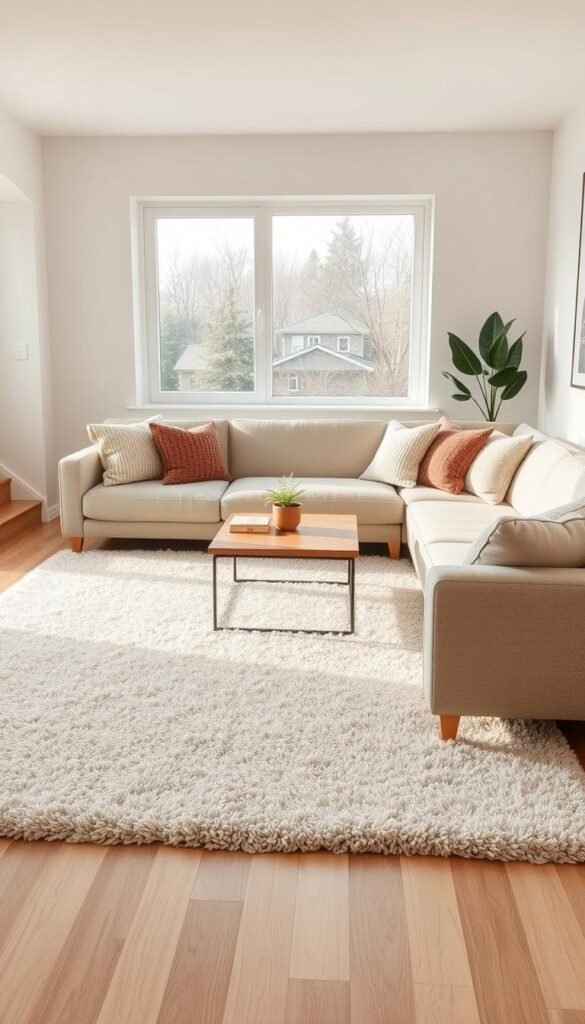
Why a space reads as clinical
Harsh lighting—bright, cool overhead bulbs—creates glare and deep shadows. Fix: switch to warm LEDs and add a dimmer or plug-in lamps for zones of ambient, task, and accent light.
Flat palette and high contrast make depth disappear. Fix: choose warm undertones (cream, beige) and mixed finishes. A wood-toned side table or a soft linen throw adds color and warmth without clutter.
Too-empty layouts feel unfinished. Fix: follow a functional minimum—comfortable seating, a usable surface, and a rug to anchor the seating area. Textured rugs improve acoustics and comfort.
The warm formula
- Clean lines + texture (rugs, bouclé, linen)
- Nature (plants, wood accents)
- Layered light (ambient, task, accent)
Quick diagnostics: „Where does light come from at night?“ „Does sound echo?“ „Is there a comfortable place to sit?“ Each answer points to a practical purchase—dimmers, a textured rug, or a wood finish—to improve the interior design and the room feel.
Quick Buying Framework for Warm Minimalism in Small Spaces
A focused shopping plan keeps a compact space functional and calm without adding clutter.
Measure first. Know exact dimensions, clearances, and main walkways. Prioritize comfort: seating that fits your body and daily habits comes before accent pieces.
Choose fewer, higher-quality pieces that do more than one job
Fewer, better means durable materials, warm neutral finishes, and simple lines that age well. Opt for multi-use items: storage ottomans, nesting side tables, and sideboards that hide cords and remotes.
Prioritize comfort essentials
Order of focus: seating, layered lighting, then window treatments for privacy and temperature control. These three things change how a living area functions and feels.
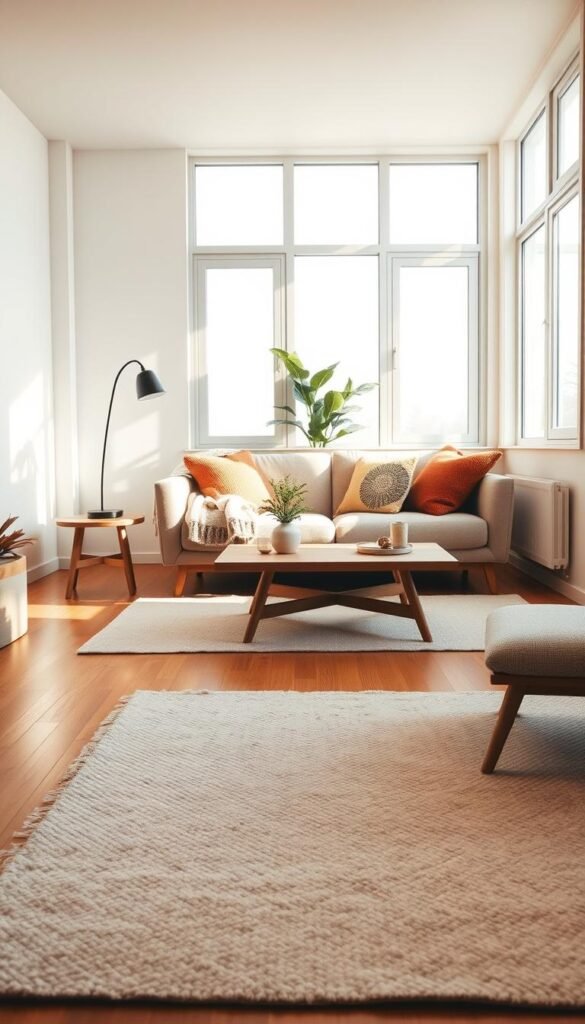
Use scale wisely and plan for maintenance
Low-profile sofa arms, slim legs, and appropriately sized coffee tables keep the room open. Choose performance fabrics and washable rugs to reduce upkeep.
| Compare | Why it matters | What to check |
|---|---|---|
| Dimensions | Ensures pieces fit and walkways stay clear | Overall size, clearance, doorway width |
| Materials | Affects durability and the interior look | Fabric performance, wood tone, finish fingerprints |
| Care requirements | Real-life maintenance determines longevity | Washable covers, stain resistance, vacuuming needs |
| Return & assembly | Reduces risk for renters and small-space buyers | Return window, tools needed, assembly time |
Renter checks: choose plug-in lighting, removable hooks, tension rods, and freestanding storage to avoid drilling.
Use this checklist before buying: measure, prioritize comfort, choose a multi-use piece, then add texture and layered light. This keeps the living area purposeful and calm while limiting unnecessary things.
Best Minimalist Living Room Decor for Warm, Neutral Color Palettes
Start with a single warm base and build texture to avoid a space that reads as cold. This approach guides paint, upholstery, and finish choices so purchases add comfort without clutter.
Beige, cream, and warm white: pick one as the wall base. These tones reflect light softly and make the room feel lived-in. For paint, choose eggshell or satin for walls and matte for ceilings.
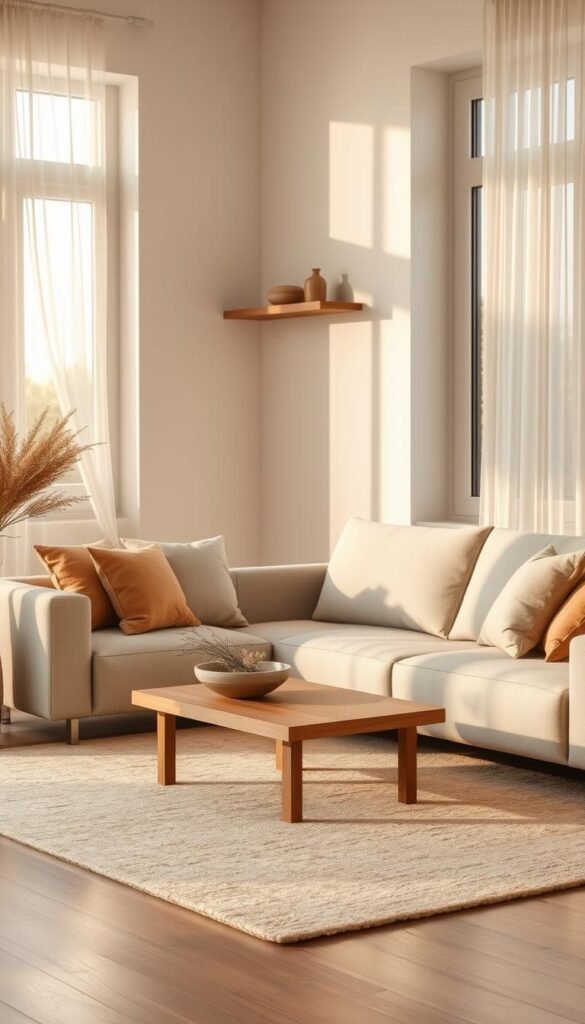
Muted pastels and renter-friendly swaps
Use soft greens or dusty blues for textiles and art. Pillows, throws, and one framed print refresh the palette without repainting.
Monochrome with texture
Keep undertones warm. Mix matte and satin finishes and add tactile fabrics—bouclé, linen blends, low-pile rugs—so a single color reads as layered, not flat.
Where to add a pop
Add color sparingly: a single accent chair, one large artwork, or a bold throw. This gives visual payoff without creating clutter.
| Item | Purchase tip | Considerations |
|---|---|---|
| Wall paint | Warm cream, eggshell finish | How light changes undertone; test swatches |
| Upholstery | Linen-blend in warm beige | Stain resistance and cleanability |
| Accent pieces | One colored chair or single artwork | Scale, fabric durability, matching wood tones |
Palette kit idea: coordinated pillow covers, a textured throw, and a neutral rug make an instant, cohesive update. This gives design inspiration while keeping purchases focused and functional.
Warm Minimalist Sofas and Seating That Don’t Overwhelm the Room
Seating defines how a space feels and how people use it day to day. Choose a sofa that sets the scale and stays cozy without crowding the plan.
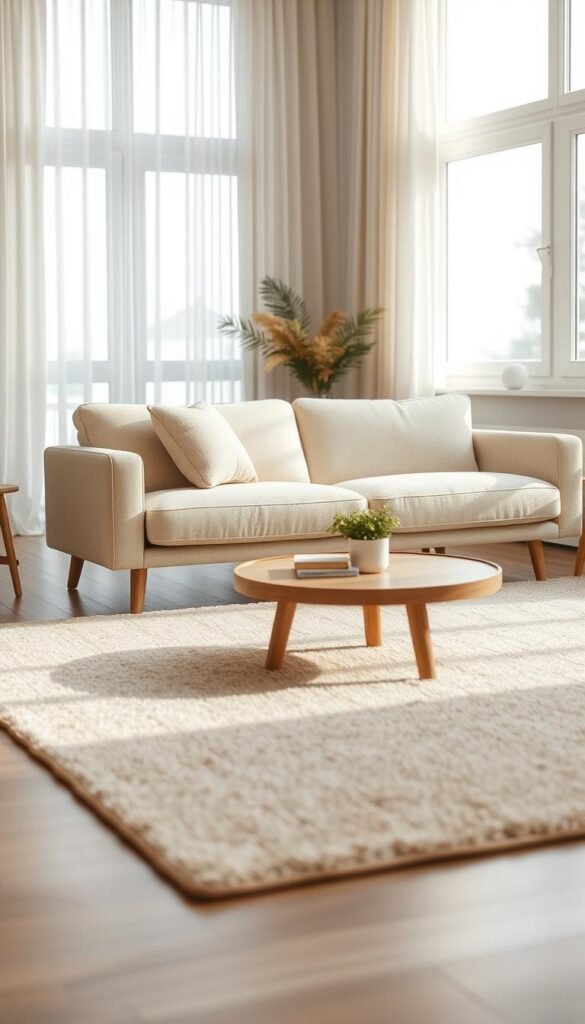
Low-profile sectionals for open flow
Low backs and slim arms keep sightlines open in tight plans. A low-profile sectional invites lounging while preserving visual flow.
Who it’s for: couples and small families who want comfort without blocking pathways.
Apartment-friendly seating layouts
Small apartments work well with a loveseat plus one chair, a compact sectional plus nesting tables, or modular pieces that reconfigure for moves.
Tip: pick armless modules to save visual weight.
Upholstery that adds warmth
Bouclé brings texture and a soft look. Linen blends feel breathable and natural. Textured weaves hide wear and add depth without extra things.
Pros and cons: light fabrics vs performance fabrics
Light upholstery reads airy and bright but shows stains sooner. Performance fabric resists spills and pets but can look flat if not paired with textured throws.
| Spec | Recommendation | Why it matters |
|---|---|---|
| Seat depth | 20–24″ (upright) / 24–30″ (lounging) | Comfort for reading vs. TV lounging |
| Seat height | 16–19″ | Easy sit-to-stand for most users |
| Cushion fill | High-density foam or foam + down alternative | Durable support with soft top layer |
| Removable covers & delivery | Removable for cleaners; check assembly and walk-up limits | Practical for rentals and tight staircases |
Buyer’s notes: renters should favor modular pieces; pet owners need performance fabrics; those who dislike clutter may prefer storage chaise options. Prioritize clean lines, then soften the look with textured fabric instead of extra objects.
Coffee Tables and Side Tables with Clean Lines and Natural Warmth
A well-chosen coffee table anchors the seating area and solves the „too-empty“ gap many compact plans show.
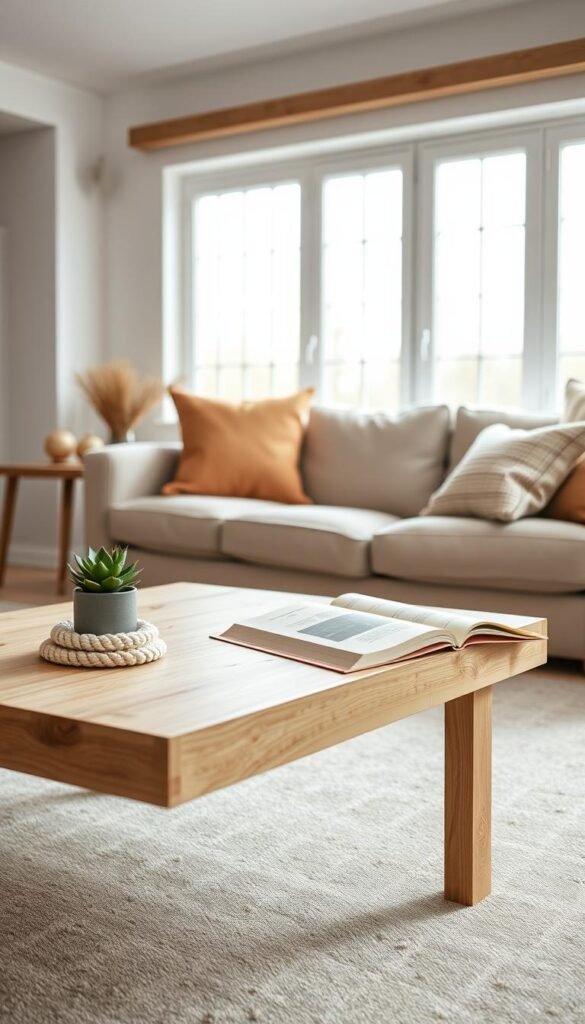
Round wood tops to soften sharp angles
Round wood coffee tables add organic warmth and reduce sharp corners in tight walkways. They suit sofas with clean lines and lower visual weight.
Nested and slim profiles for renter-friendly flexibility
Nested tables and slim side pieces slide away for guests and are light enough to move without tools. They work especially well in a small room or a rental.
Glass vs. wood: airy look or cozy feel
Glass tables read airy and reflect light. They help a cramped living room feel larger but show fingerprints.
Wood hides wear and feels warmer. Choose matte finishes to cut glare and lower upkeep.
| Feature | Diameter / Height | Edge Shape | Storage Shelf |
|---|---|---|---|
| Round wood | 36–42″ / 15–18″ | Rounded | Optional lower shelf |
| Nested / slim | Varied / 18–20″ | Rounded or straight | Usually none |
| Glass top | 30–40″ / 14–18″ | Beveled or rounded | Rare or glass shelf |
Buying notes: match table height to sofa seat height, allow 12–18″ clearance for knees, check weight for moves, and prefer simple assembly.
Minimalist add-on: one tray or a small basket on a lower shelf keeps remotes and magazines neat without cluttering the surface.
Renter-Friendly Rugs That Instantly Make Minimalist Living Rooms Cozy
A well-chosen rug can fix cold floors, tame echo, and make a compact seating area feel finished. This quick change improves comfort and the overall room feel without adding clutter or permanent fixtures.
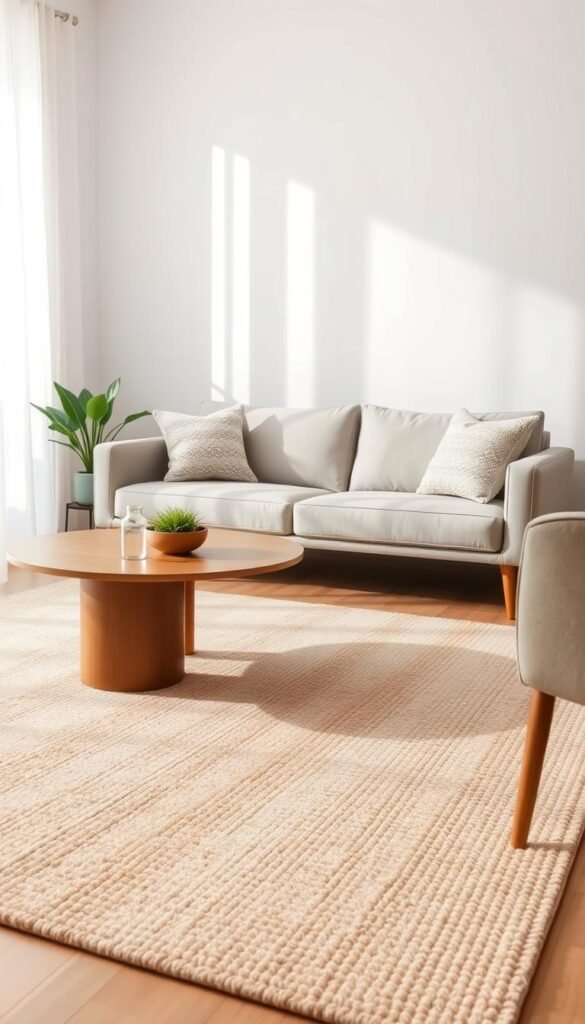
Why rugs matter
Rugs solve three common problems: cold floors, echoing sound, and a space that looks unfinished.
They add softness underfoot, absorb noise, and visually anchor seating so the living area reads complete.
Textures and trade-offs
Wool-look rugs feel plush and warm but can shed and need occasional care.
Jute blends add natural texture and warmth but may shed and feel rough to bare feet.
Low-pile neutrals vacuum easily and suit allergies, though they can read flatter in texture.
Renter-friendly tips and sizing rules
- Use a quality rug pad for grip and cushion—no glue required.
- Place at least the front legs of seating on the rug to make the room feel larger.
- Avoid tiny “postage stamp” rugs; leave consistent borders so the space reads intentional.
| Consideration | What to check | Best for |
|---|---|---|
| Pile height | Door clearance, sweeping | Low pile: pets/kids |
| Material | Shedding, texture, stain resistance | Jute: texture lovers |
| Washability | Machine or spot clean | Washable: high traffic |
Final note: A single neutral rug adds warmth and structure to home design. It solves comfort and acoustic issues without creating surface clutter.
Layered Lighting Ideas for a Softer, Warmer Minimalist Living Room
How light is used determines whether a simple plan reads cozy or clinical.
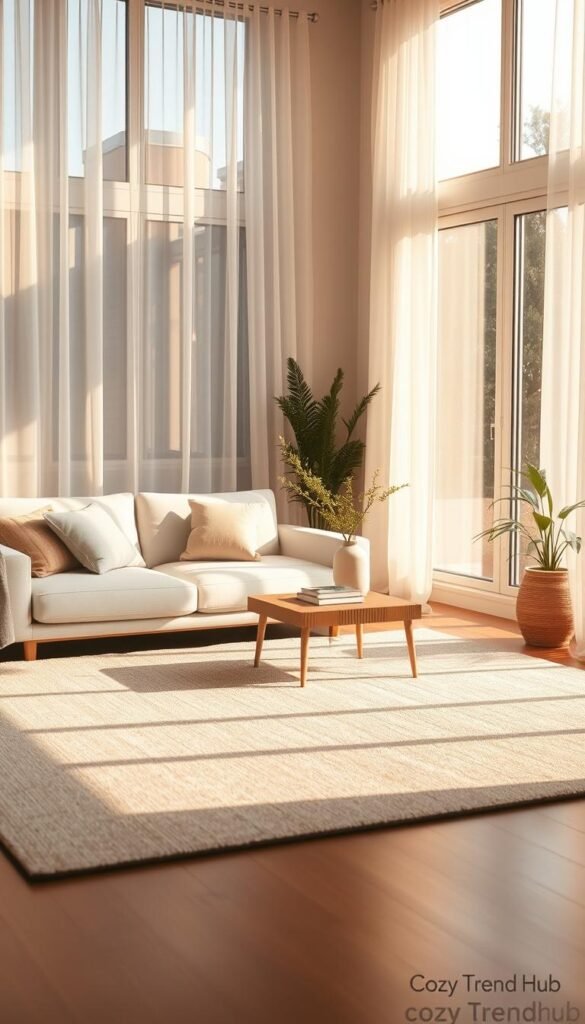
Use natural light as the baseline. Clear windows, keep heavy furniture away from sills, and position reflective surfaces—light wood or a pale mirror—so natural light bounces into the space. Warm paint tones read softer in daylight.
Ambient + task + accent: a three-layer checklist
- Ambient: warm LEDs, 2,700–3,000 K; aim for 1,500–3,000 lumens across the room.
- Task: adjustable table or floor lamps for reading; 2,700–3,500 K and focused beams.
- Accent: small uplight, picture lamp, or plug-in sconce to add depth and reduce flatness.
Statement lighting with a restrained look
A single pendant, an arc floor lamp, or a sculptural table lamp can act as a focal point without clutter. Choose clean shapes and a modest footprint so the fixture reads like a feature, not extra stuff.
Renter-friendly options and bulb guidance
Plug-in wall sconces, smart bulbs, and cord covers avoid hardwiring. Use dimmers or smart dimmable bulbs for flexible scenes; confirm bulbs are dimmer-compatible.
| Criteria | What to check | Why it matters |
|---|---|---|
| Brightness (lumens) | 1,500–3,000 total | Affects perceived warmth and task clarity |
| Color temp (Kelvin) | 2,700–3,000 K preferred | Warmth without orange tint |
| Shade material | Fabric or frosted glass | Diffuses glare for softer light |
| Dimmable? | Yes / bulb and switch compatible | Creates varied moods with one fixture |
Shopping note: pick warm LEDs, confirm dimmability, add one task lamp, and choose a plug-in sconce if renting. Better placement—not more stuff—makes the living area feel inviting at night.
Window Treatments That Keep Minimalism Practical and Comfortable
Window coverings do more than block sight lines—they manage glare, heat, and the overall feel of a compact living area. Bare windows can make a room feel exposed or unfinished. Simple treatments finish the look while protecting privacy and improving comfort.
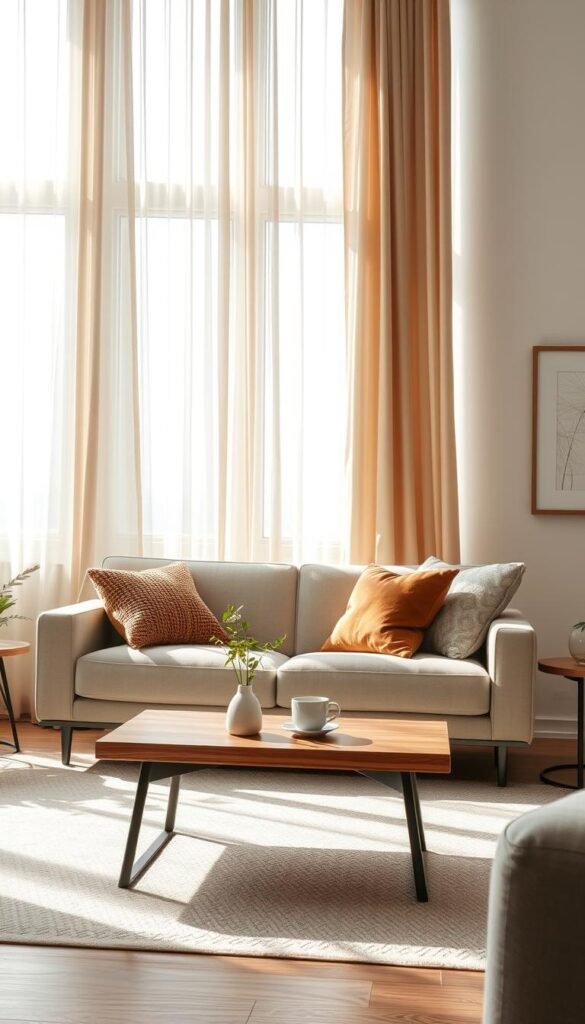
Privacy and temperature control without heavy visuals
Choose simple rods, clean panels, and neutral fabrics that blend with the wall. These options preserve natural light and keep the visual weight low.
Ceiling-hung panels raise the ceiling visually. Slim rails and low-profile hardware keep the look calm.
Sheers + blackout layering for seasonal light changes
Layer a lightweight sheer with a lined blackout panel. Use sheers for daytime softness and glare control.
Blackout panels add privacy and thermal control at night or in very sunny living spaces. Pairing both gives flexible control across seasons.
Renter-friendly mounting and buying checklist
- Tension rods or no-drill brackets for easy installs and patch-free removal.
- Compare panel length, opacity, lining, and washability before buying.
- Pick warm creams if the aim is a cozier look; avoid stark white if the goal is warmth.
| Feature | Pros | Cons |
|---|---|---|
| Sheers | Keeps natural light; softens glare | Less privacy at night |
| Blackout | Improves sleep, temperature control | Can feel heavy if too dark |
| Lightweight panels & hardware | Easy to install and remove | May not suit very large windows |
Who this suits: street-facing apartments should favor blackout for privacy; sunny spaces benefit from a sheer + blackout combo; small living areas gain height with ceiling-mounted panels. Window treatments should support comfort and the warm minimal design of the home without adding clutter.
Minimalist Storage That Hides Clutter Without Adding Bulk
Smart storage keeps everyday things out of sight so a simple plan still feels warm and lived-in.
When the right pieces are chosen, the room stays calm and cleaning takes less time. Closed storage hides cords, chargers, and remotes. Open shelves let a few carefully chosen items show personality without clutter.
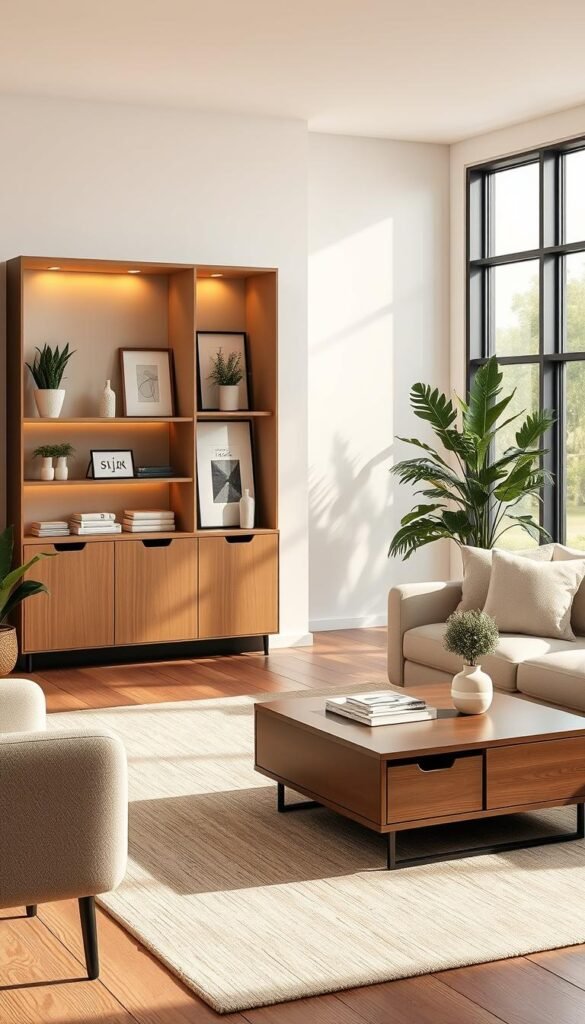
Built-ins and bookshelves for essential display
Built-ins allow curated shelving for books, one artwork, and a plant. Keep displays to a few items to maintain an „essential-only“ look.
Sideboards and closed cabinets for daily mess
Closed cabinets are practical for hiding routers, cables, and small electronics. They reduce visual noise and cut dusting time in the living room.
Floating shelves and baskets as drop zones
Use floating shelves and one basket per function to avoid clutter magnets. Freestanding units and leaning shelves work for renters who cannot drill into walls.
| Feature | Recommendation | Why it matters |
|---|---|---|
| Depth | 12–16″ | Avoids bulky furniture and keeps walkways clear |
| Door style | Slab or shaker | Slab reads clean; shaker hides wear while staying simple |
| Cable management | Back holes or grommets | Keeps cords hidden behind the wall or cabinet |
| Finish matching | Match wood tone to floors or shelves | Unifies the space and ties walls, shelves, and furniture together |
Who this suits: sideboards work as a divider in open-plan living; tall shelving helps tiny apartments; families benefit from closed doors to quickly hide mess.
Wall Decor That Adds Personality Without Breaking the Minimal Look
Walls offer vertical real estate: one well-chosen piece can do the work of many smaller objects.
Problem: many small prints read like clutter, while bare walls feel unfinished and cold. Choose simpler, larger elements that anchor the seating area and give the room personality.
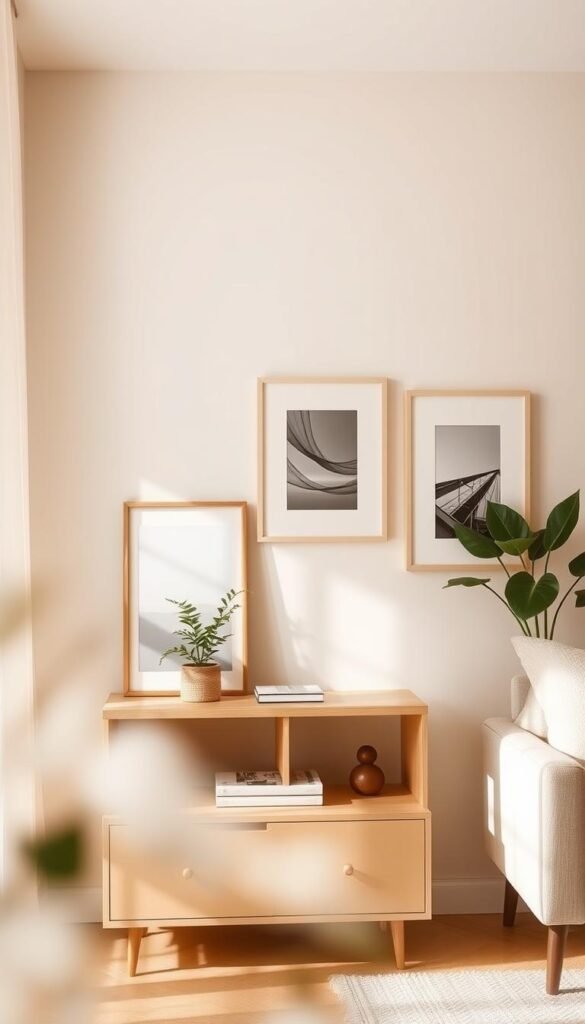
Simple art that anchors the space
Pick art with a limited palette and clean frames so it ties to your sofa and rug. One hero piece above the sofa replaces a gallery wall and keeps the look calm.
Use a single focal piece as a strategy
An oversized canvas or framed photograph creates a clear statement without visual noise. Aim for art about two-thirds the width of a sofa or centered above the main seating to maintain balanced scale.
Mirrors to boost light and sense of space
Place a large mirror opposite a window to bounce natural light and make a small room feel larger. Mirrors add depth without taking floor space and help dim corners read brighter.
Renter-safe hanging and buying checklist
- Use removable picture hooks or heavy-duty strips for lightweight frames.
- Lean larger pieces on a console if drilling is not an option.
- Compare frame material, size options, weight, mounting hardware, and glass vs acrylic for safety.
| Spec | Why it matters | Who it’s for |
|---|---|---|
| Frame finish | Matches wood tones or metal accents | Cozy minimalists |
| Size (inches) | Scale to wall and furniture | Small rooms or open plans |
| Weight & mount | Determines hanging method | Renters (removable mounts) |
| Glass vs acrylic | Safety and glare control | Natural light lovers (less reflection) |
Buy with intent: aim to purchase one or two impactful pieces instead of many small items. Fewer, better choices complete the space and support a calm, functional living area.
Greenery and Natural Elements That Make Minimalist Living Rooms Feel Lived-In
One well-placed green specimen changes how a seating area reads more than many tiny trinkets. Use plants to add warmth, soften edges, and introduce subtle color without clutter.
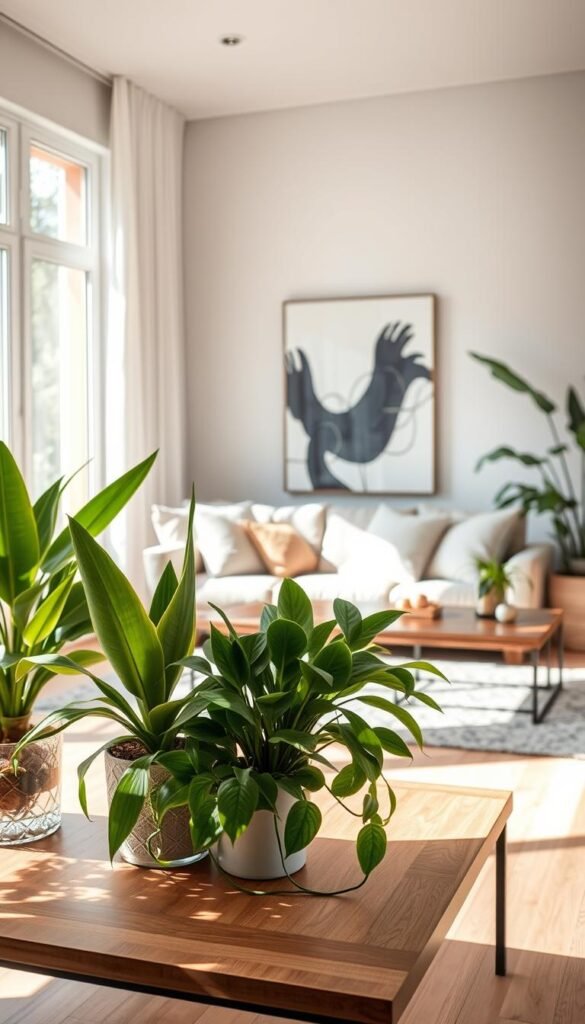
The “swap knick-knacks for plants” approach
Replace several small accessories with a single healthy plant in a simple pot. This creates a cleaner focal point and reduces dusting and visual noise.
Plant styles that suit clean lines
- Tall floor plants in a corner to soften an empty gap.
- Sculptural branches or a fiddle-leaf stem in a slim vase for vertical interest.
- One tabletop plant on a sideboard to balance a monochrome palette.
Low-maintenance picks and buying notes
Choose species that tolerate indirect light and forgiving water schedules: snake plant, ZZ plant, pothos, or cast iron. Check pot drainage vs. cachepot, add a floor tray to protect surfaces, and note mature height before buying.
| Consideration | Why it matters | Who it’s for |
|---|---|---|
| Drainage | Prevents root rot | Busy households |
| Pet safety | Some species are toxic | Homes with animals |
| Portability | Easy to move or re-pot | Renters and seasonal swaps |
Placement tips: soften corners, place a tall plant near a window as a focal point, or use a single tabletop specimen to add life. Plants replace many small pieces and help the room feel calm and lived-in with minimal effort.
Wood Slat Walls and Dividers for Texture Without Clutter
Slat panels turn a blank wall into a warm, architectural backdrop that keeps lines simple and the feel calm.
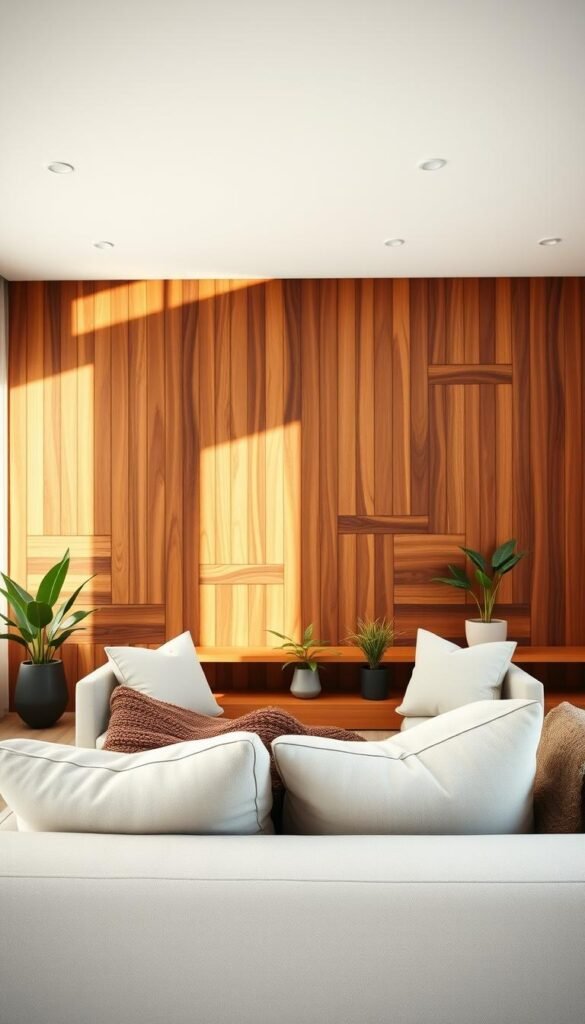
What slats solve: they add texture and warmth across a large surface so the room feels finished without extra objects. A slat feature can sit behind a sofa or media area and create structure while keeping a clean profile.
Slat dividers for open plans
Use a freestanding or fixed slat divider to define living and dining zones without cutting off light or airflow. The result is visual separation with an open feel.
Pros and cons
- DIY / renter options: tension-mounted or freestanding panels are movable but less solid.
- Semi-permanent installs: look built-in and durable but may need landlord OK.
Pairing and buying notes
Match light wood tones to neutral sofas and simple art. Check slat spacing, panel thickness, and finishes so the surface coordinates with floors and other materials. Be cautious of sound-absorption claims; test if acoustic help matters.
| Option | Install | Why choose |
|---|---|---|
| Freestanding divider | No-drill, movable | Good for renters and seasonal zoning |
| Wall panel kit | Screwed or adhesive | Faster look of a built-in feature |
| Peel-and-stick slat | Adhesive | Low-cost, light texture without heavy work |
Best for: renters who want zones, small spaces needing definition, and anyone who wants to warm up white walls without adding clutter.
Feature Walls and Textured Finishes That Stay Minimal
A single textured wall can add depth without introducing extra objects.
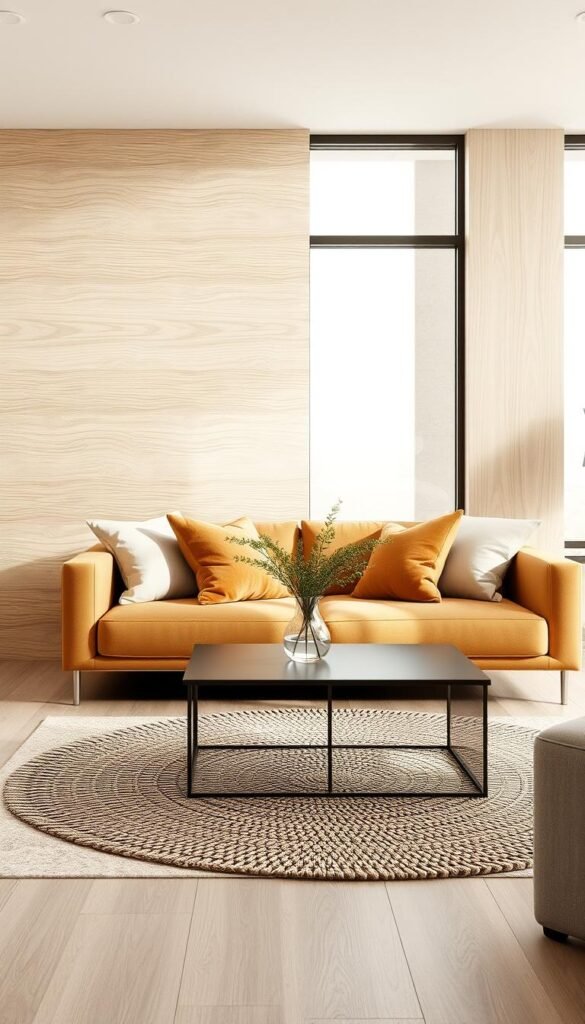
Why a feature wall helps: it prevents a simple palette from reading flat. A well-chosen surface becomes the focal point and reduces the urge to add many accessories.
Textured options that keep it calm
Subtle plaster-like skims, lightly patterned panels, and restrained concrete-style finishes add interest without busy visuals.
Concrete and industrial finishes
Concrete looks can feel cold. Soften with a warm rug, greenery, and layered light. That balance keeps the finish from overtaking the room.
Peel-and-stick vs paint vs panels
- Peel-and-stick: renter-friendly and removable; realism varies.
- Paint techniques: most affordable; needs skill to add true texture.
- Panel systems: high-impact and durable; more permanent.
| Method | Removability | Surface prep | Durability |
|---|---|---|---|
| Peel-and-stick | High | Low | Medium |
| Paint (textured) | Medium | Medium | Medium |
| Panel systems | Low | High | High |
„Texture should replace extra objects, not add another layer of clutter.“
Buying notes: renters often choose peel-and-stick; homeowners may prefer panels; small spaces benefit from treating one wall only. Pick wipeable finishes for high-touch areas and avoid heavy textures where dust builds up.
Seasonal Minimalist Decor Swaps That Add Warmth (Without More Stuff)
Small changes in textiles and light can shift how a living area feels across seasons without adding clutter.
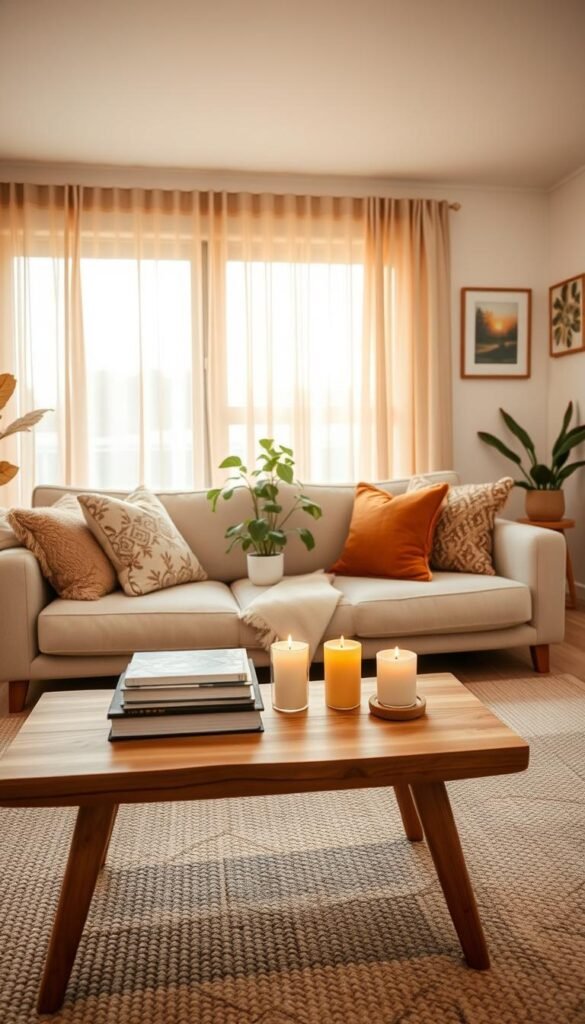
Fall & winter swaps
Swap, don’t add: bring one cozy throw and up to two pillow covers into rotation. Use warmer bulbs or dimmers to counter low light and reduce harsh evening glare.
Comfort fix: heavier textiles block drafts and make seating feel snug without extra furniture or things on surfaces.
Spring & summer swaps
Switch to breathable fabrics, lighter covers, and airy curtains that let daylight in while keeping privacy. Replace heavy throws with a thin linen cover when temperatures rise.
Brighter greenery and a single seasonal color refresh keep the home light and uncluttered.
Storage strategy: the one-bin rule
One labeled bin holds seasonal textiles. When new pieces come out, retire the previous set to the bin immediately. This prevents accumulation and keeps surfaces clear.
| Season | Key swaps | Why it helps |
|---|---|---|
| Fall/Winter | Wool throw, 1–2 pillow covers, warmer bulbs | Blocks drafts, adds warmth, softens light |
| Spring/Summer | Linen covers, sheer curtains, brighter plants | Improves airflow, increases natural light, reduces heat |
| Storage | One compression bin, washable labels | Prevents clutter creep; easy retrieval |
Buying notes: choose washable fabrics and neutral base textiles that work year-round. For renters and small spaces, favor covers over extra pieces to preserve floor space and keep cleaning simple.
Comparison Criteria to Choose the Right Pieces for Your Living Room
Use clear, measurable criteria to compare pieces so purchases suit daily use and the space’s scale.
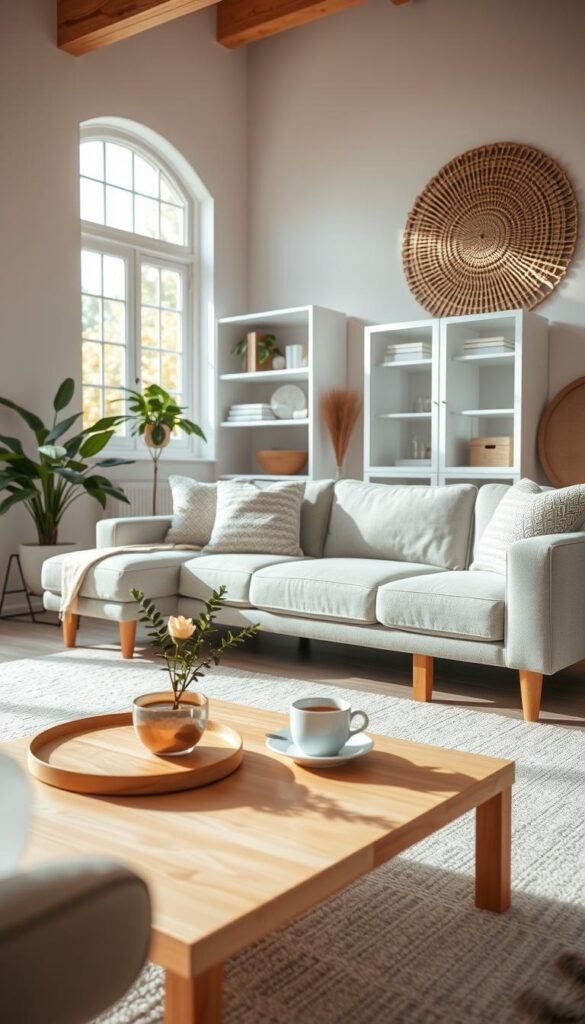
How to use this checklist: pick the persona below, note the 2–3 priorities, then check dimensions and install type before buying.
Best for renters
Criteria: plug-in lighting, removable mounts, tension-rod curtains, and freestanding dividers.
Quick picks: plug-in sconces, peel-and-stick hooks, movable slat divider.
Best for small spaces
Criteria: low-profile seating, nesting tables, storage depth ≤16″, and 30–36″ main walkways.
Quick picks: slim console, nesting side tables, shallow media cabinet.
Best for natural light lovers
Criteria: reflective surfaces, light woods, minimal window bulk, and warm whites to keep the look soft.
Quick picks: large mirror, glass-topped table, pale oak sideboard.
Best for cozy minimalists
Criteria: texture-first rug, layered light, warm neutrals, and one controlled accent.
Quick picks: low-pile wool-look rug, dimmable floor lamp, one textured throw.
| Persona | Top measurable checks | Fit guidance |
|---|---|---|
| Renters | Non-drill mounts; plug-in fixtures; movable divider | Allow 2″ clearance at doors; no permanent holes |
| Small spaces | Seat height 16–19″; storage depth ≤16″ | Keep 30–36″ walkways; front legs on rug |
| Natural light lovers | Mirror area ≥ wall art; light wood finish; low-profile curtains | Leave window sills clear; avoid heavy top treatments |
| Cozy minimalists | Rug anchors seating; 3 light layers; warm 2,700–3,000K bulbs | One accent piece; limit surface items to 1–3 |
What to Avoid When Shopping for Minimalist Living Room Decor
Well-intended buys can make a simple palette read as cold if warmth and function are missing.
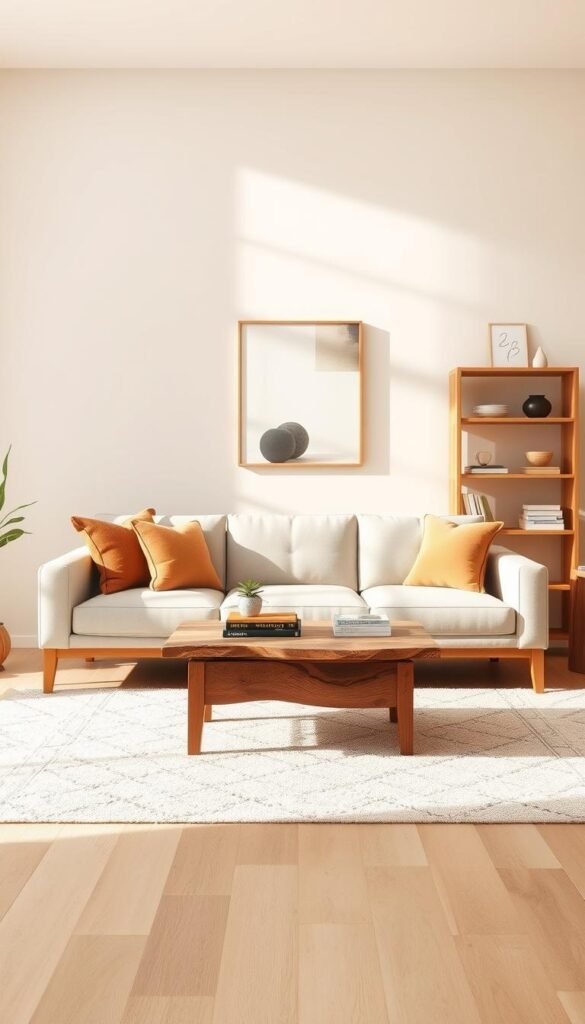
Overdoing black-and-white without texture or wood
Why it feels cold: high contrast can read stark and impersonal, especially in low light.
Practical fix: choose warmer neutral color accents, one wooden side table, or a textured throw to soften the palette.
Too many small decor pieces that read as clutter
Lots of tiny objects create visual noise and more cleaning. That defeats the point of simple design.
Buy one larger statement piece instead: a single artwork, a well-sized rug, or a sculptural plant. These pieces anchor the look and reduce surface clutter.
Furniture that’s the wrong scale for the room
Oversized sectionals, deep tables, or tall cabinets block flow and make a space feel cramped.
Test before buying: tape outlines on the floor, measure seat depth, and confirm the delivery path through doorways. Choose shallow storage and a rug that fits the seating footprint.
| Mistake | Cold outcome | Alternative purchase |
|---|---|---|
| High-contrast black & white | Harsh, impersonal look | Warm neutrals, wood accents |
| Many small items | Visual clutter, hard to clean | One large statement piece |
| Wrong scale furniture | Choked walkways, smaller feel | Low-profile sofa, shallow storage |
Simple rule: if an item can’t justify its space with daily use or strong function, it doesn’t belong. These mistakes are common and fixable. The goal is a room that looks pared-back but feels warm, comfortable, and easy to live in.
Conclusion
Close with a clear checklist so purchases solve daily needs and the room reads intentional, not empty.
Warm minimalism is simple: clean lines plus texture, layered lighting, and natural elements—not more stuff. Focus purchases on essentials that change how the living room functions and feels.
Top priorities: comfortable seating, a correctly sized rug, layered light, and practical window treatments for privacy and temperature control.
Use the comparison criteria to match choices to your situation—renter, small-space, natural-light lover, or cozy-focused. Then follow these next steps: measure the space, pick a warm neutral base, add 1–2 texture upgrades, and place one plant or wood accent.
Keep clutter low with closed storage and the one-bin seasonal rule. Fewer, better pieces create a calmer interior and easier daily care.



3 Comments