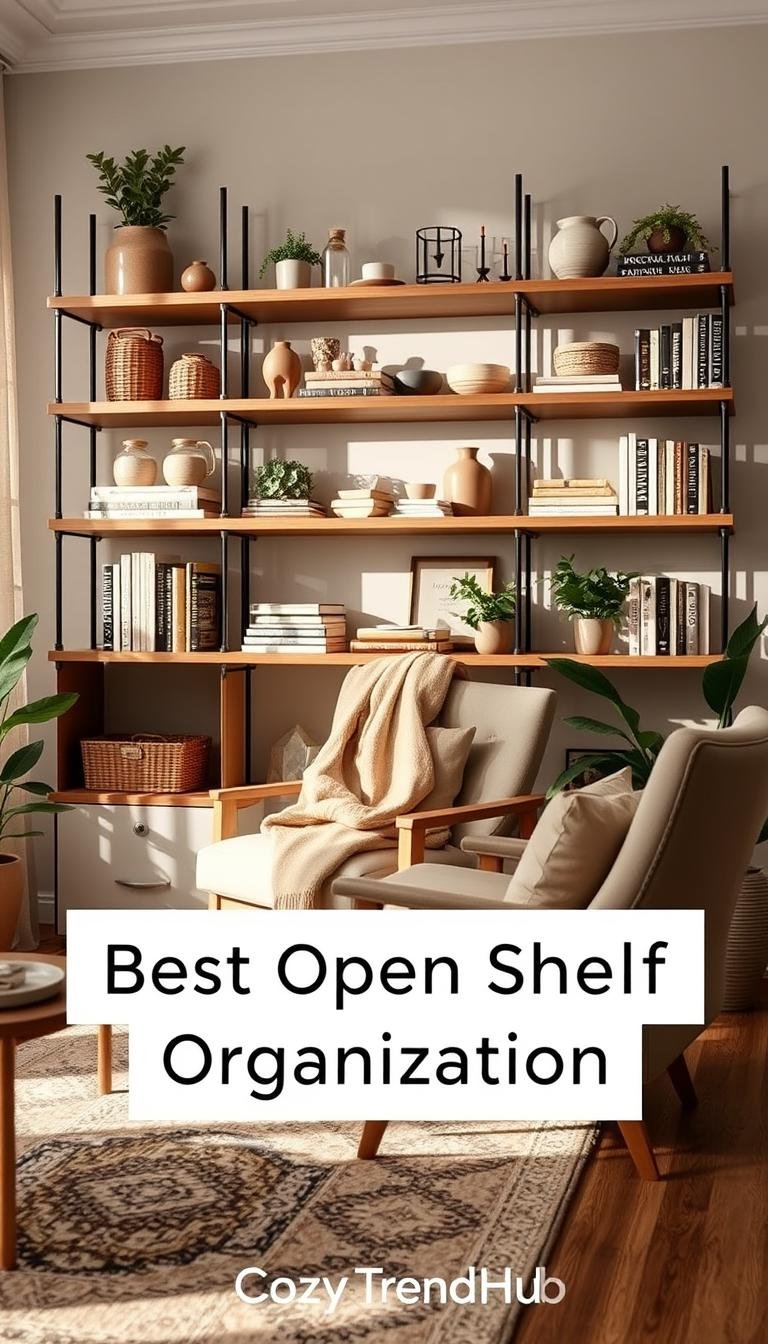
Open shelving can make a small space feel airy and useful, but it also shows clutter fast. Without a plan, a neat look becomes visual noise the next day.
This introduction promises a clear path: measure, declutter, zone, contain, label, then style. The steps aim to create a repeatable setup that supports daily routines, not just staged photos.
The guide previews helpful product categories—shelves, containers, labels, hooks—and notes what each is best for. It also highlights renter-friendly fixes and seasonal swaps so changes stay practical.
Readers who live in rentals, tight apartments, or busy households will find the most value. The focus is on storage that blends with design and keeps items accessible while maintaining a calm home look.
Key Takeaways
- Visible shelving needs intention to stay tidy.
- Follow a six-step routine: measure, declutter, zone, contain, label, style.
- Products are chosen for real use, rental rules, and small spaces.
- Examples start in the kitchen, then expand room-by-room.
- Goal: a maintainable setup that supports daily life, not a one-day reset.
Why Open Shelving Works and When It Backfires in a Busy Home
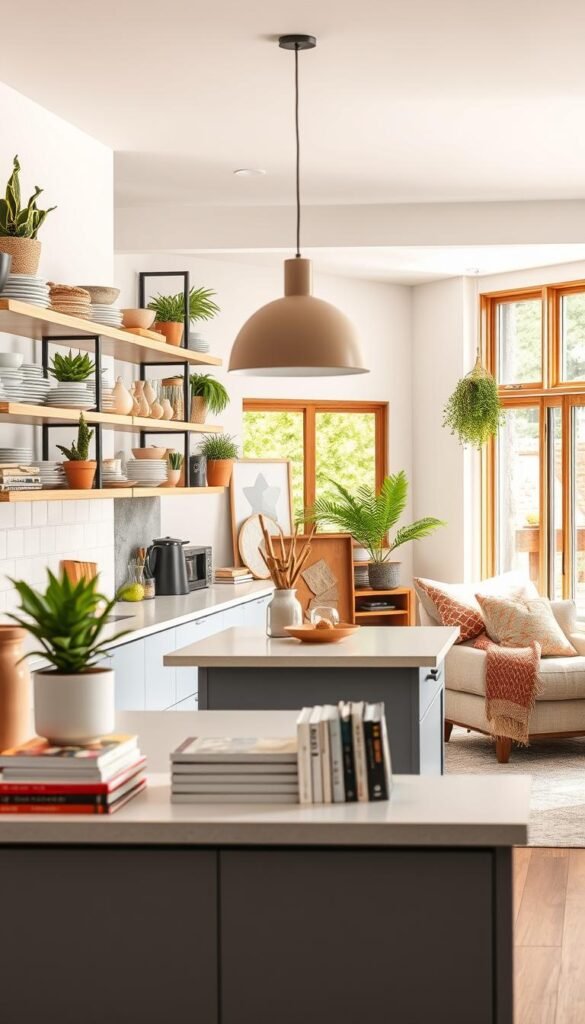
Choosing visible storage is less about style and more about how a household actually uses space. Open shelving can make a small kitchen feel airier and speed up easy access to daily items.
What to expect
Benefits: Fewer visual blocks than upper cabinets, faster reachability, and a lighter overall feel.
Common problems
Clutter creep happens when items lack a home. Visible mess appears during cooking, and dust collects faster on exposed surfaces.
Who should be cautious
Homes with small children, pets, or high traffic should limit exposed zones. Privacy and safety concerns are valid reasons to use closed cabinets for many items.
- Use open shelving for pretty or frequently used pieces.
- Reserve cabinets for bulk items, backstock, and anything that creates visual noise.
- If quick daily resets are unlikely, keep exposed areas small and controlled.
| Situation | Why it helps | When to skip |
|---|---|---|
| Small kitchen | Makes the space feel larger and improves reach | When cleanup time is rare |
| Frequent cooking | Easy access to everyday tools | If clutter shows during meals |
| Homes with kids/pets | Can display safe items high up | Avoid low exposed zones for fragile items |
Next: This guide links these risks to practical fixes—dust tools, safer brackets, and mixing closed storage—so readers can make an informed choice. For related storage tools and ideas, see kitchen cabinet organizers.
Measure First: Shelf Height, Spacing, and Weight Limits for Everyday Items
Start with measurements so plates, bowls, glasses, and small appliances fit without fuss or risk.
Measure the full opening height and depth before buying any shelving. That prevents two common problems: wasted vertical space and not enough clearance for daily items. Measure tall pieces like a stand mixer or pitcher so they have room when needed.
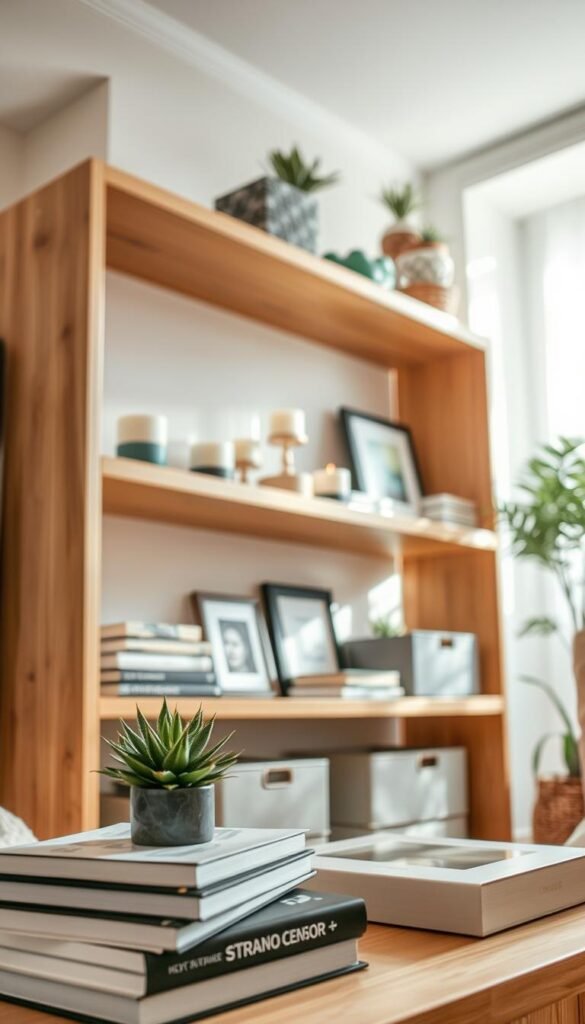
Practical spacing targets
Use these spacing targets as a quick guide so stacked pieces and glasses fit neatly:
- Plates (stacked): 4–6″ clearance above the stack.
- Bowls or mugs (stacked or lined): 6–8″ clearance.
- Glasses (upright): 4–6″ clearance between rim and shelf above.
- Small appliances (mixers, blenders): 12–15″ clearance and deeper shelves.
Why adjustable shelving matters
Adjustable systems let the homeowner swap heights seasonally. Holiday platters or extra serving pieces can move down for short-term use. This avoids reinstalling hardware and keeps frequently used items reachable.
Weight limits are vital for safety and longevity. Heavy stacks of dishes need sturdier supports and better anchors. Floating units often carry less weight than bracketed or adjustable systems.
| System | Typical Depth | Weight Capacity (per linear ft) | Best For |
|---|---|---|---|
| Floating | 8–12″ | 15–30 lbs | Light pieces, decorative glassware |
| Bracketed | 10–14″ | 40–100 lbs | Everyday dishes and small appliances |
| Adjustable track | 10–16″ | 50–150 lbs | Flexible layouts, seasonal swaps, heavy loads |
Best Open Shelf Organization: Build a Simple System Before You Style
A quick system beats a pretty setup when shelves must survive real life. Start by removing anything that isn’t used weekly or loved enough to display. Relocate duplicates, mismatched packaging, and small random things to closed storage.
Create clear zones by task so items have a logical home. Typical zones: coffee, baking, weeknight cooking, and a dedicated barware area for cocktail tools and glasses.
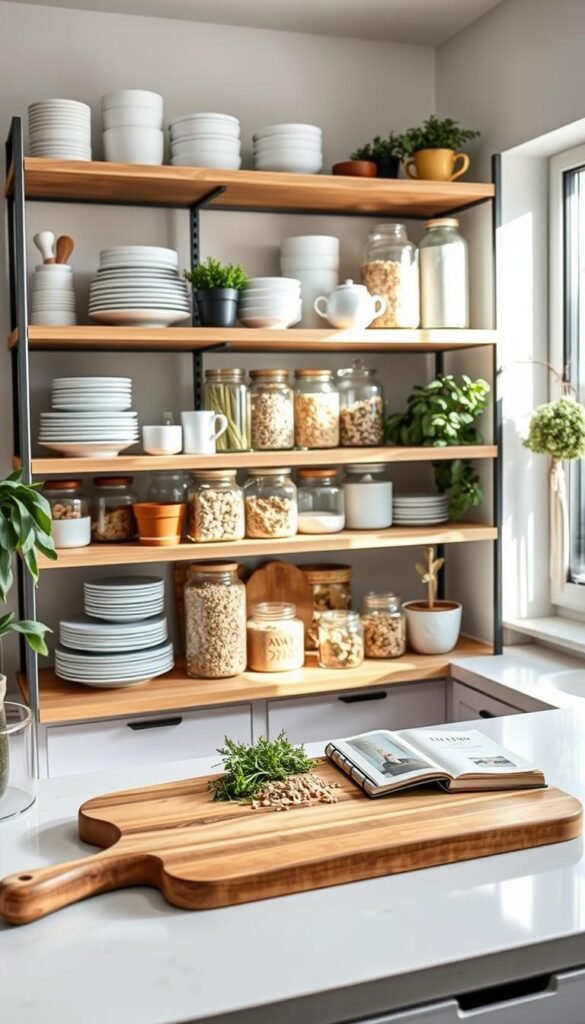
Fast rules that make maintenance easy
- Frequency layer: lowest shelves for daily items, upper shelves for occasional pieces.
- Group like with like: plates with plates, glassware with glassware, jars with jars to speed putting things away.
- Fragile placement: keep delicate pieces where they’re least likely to be bumped.
System before style prevents a one-day look that collapses the first busy week. Once zones are set, add uniform containers, bins, and labels to lock the habit in place. For pairing containers with pantry needs, see this guide to a smart pantry storage mix: pantry storage mix.
Containers That Make Open Shelves Look Organized (and Stay That Way)
Containers are the fastest way to turn a busy shelf into a calm, usable display. They tame mixed packaging and make regular resets simple. For renters and small spaces, the right sizes matter more than style.
Uniform jars and canisters
Use matching jars for flour, sugar, rice, pasta, and coffee. Look for an airtight seal, a wide opening for scooping, and stackable or uniform heights.
Material choice affects cleaning and weight—glass looks clean but costs more; plastic is lighter and often dishwasher-safe.
Baskets and bins
Baskets hide snack bags, odd packets, and backup supplies. Choose woven or fabric bins that fit shelf depth to avoid wasted space. Coordinated baskets with labels also work well in laundry and pantry backstock.
Labels for quick resets
Clear labeling reduces confusion for family or roommates and speeds tidy-ups. Use consistent fonts or simple printed tags for a neat, functional display.
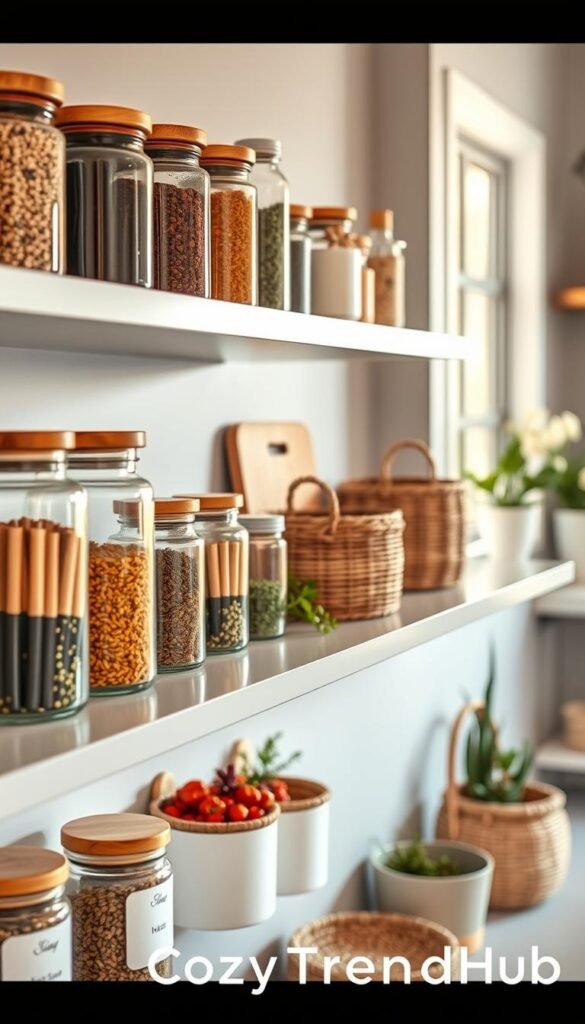
| Container Type | Best For | What to Check |
|---|---|---|
| Glass jars | Dry pantry staples, coffee | Airtight lid, wide mouth, uniform size |
| Plastic canisters | Lightweight storage, kids‘ snacks | Dishwasher-safe, clear walls, stackable |
| Woven baskets | Random packets, backstock | Fit shelf depth, removable liner, label holder |
Renter-Friendly Open Shelving Upgrades That Don’t Risk Your Security Deposit
Small, reversible changes can transform a plain wall of cabinets into a purposeful display. This approach keeps the focus on function and style while protecting the renter’s deposit.
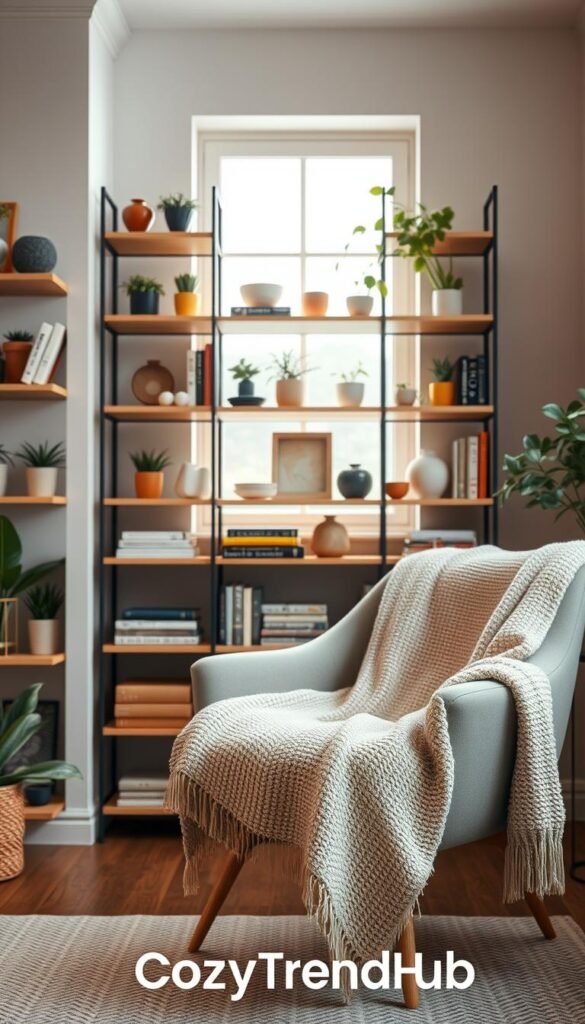
Removable wallpaper for depth and cohesion
Peel-and-stick wallpaper adds contrast behind shelves and inside cabinet backs when doors are removed. It makes the area feel intentional without paint or tile.
Use it in tight spaces where a patterned or darker background hides uneven item shapes and creates a built-in look.
No-drill mounting and weight limits
No-drill brackets and adhesive rails work for very light shelving only. They are best for display pieces, not heavy cookware or full jars.
Always check weight ratings, test on a scrap area, and use manufacturer-approved anchors for the wall type. Safety comes first; do not exceed limits.
Buying considerations for renters
- Adhesive quality: choose high-tack, removable brands that promise clean removal.
- Removability: confirm the product is rated for painted drywall and won’t lift finish.
- Wall texture compatibility: textured plaster or orange-peel paint may not bond well.
- Patching plan: keep basic spackling and touch-up paint on hand for minor repairs.
| Upgrade | When to use | Limitations |
|---|---|---|
| Peel-and-stick wallpaper | Back panels, cabinet interiors, small alcoves | May not stick to heavy texture; test first |
| No-drill shelf kits | Light decor, single mugs, small plants | Low weight capacity; avoid liquids or heavy jars |
| Removable adhesive hooks & rails | Hang utensils, small rails under cabinets | Use only for light loads; follow weight specs |
Practical tip: If converting cabinets by removing doors, line the back panel with removable paper for a cohesive look that reads like a built-in rather than an afterthought.
Kitchen Open Shelves: Set Up for Easy Access Without Looking Cluttered
Arrange kitchen zones so daily tasks flow from prep to serve without hunting for tools. A short, repeatable layout keeps frequently used items visible and helpful.
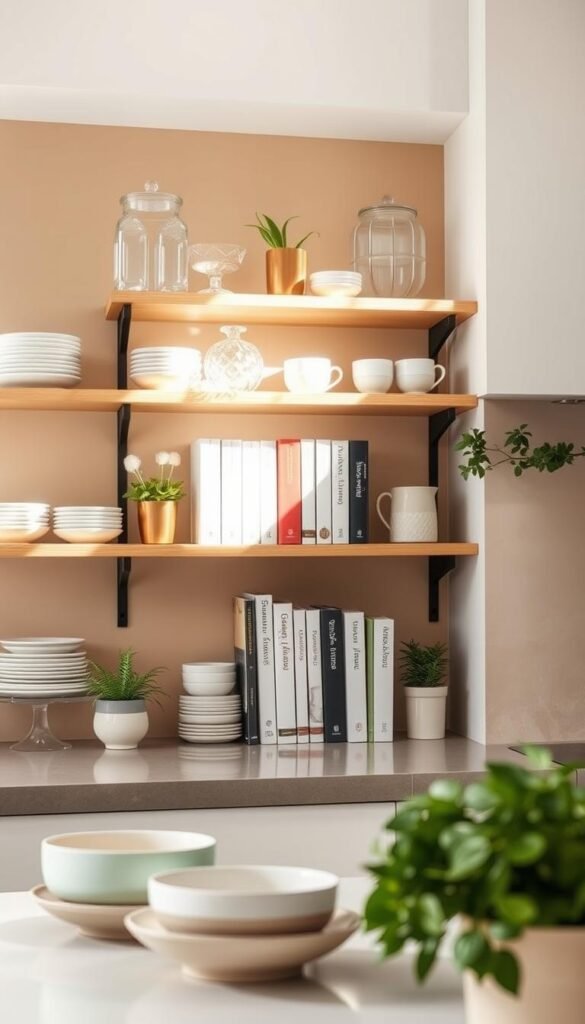
Everyday dishware display
Plates and bowls sit on lower open shelves where hands naturally reach. Stack with a little breathing room so the display stays tidy and is truly easy access.
Spice and oil organization
Use matching jars and group by cooking style: everyday, baking, and heat. Add a small dowel or rail at the shelf front to stop bottles from tipping forward.
Barware zone
Floating shelves create a compact bar area for delicate glassware, shakers, and tools. This frees up cabinets for cookware and reduces cabinet overload.
Cooking workflow
Keep frequently used ingredients and dishware on open shelving. Store bulky appliances, pots, and messy packaging in cabinets out of sight.
Corner and niche solutions
Between-stud shelving and narrow table islands turn awkward corners into extra space without heavy installs. A repurposed table adds open storage and a small work surface.
„A functional layout beats a pretty one every day — small choices save time and stress.“
| Product | Use | Weight/Size |
|---|---|---|
| Spice jars | Uniform pantry spice storage | Small, airtight |
| Dowel/rail | Keep bottles upright | Thin, shelf-mounted |
| Floating shelf kit | Barware & display | Light to medium loads |
| Between-stud shelf | Hidden niche storage | Shallow, dense storage |
| Narrow island/table | Extra open storage + surface | Mobile or fixed |
For matching containers and pantry ideas that pair well with this setup, see pantry organizers.
Small-Space Shelf Styling Rules That Still Feel Functional
Style that serves routine helps a small space stay tidy between busy days. Keep choices practical so the display supports daily use and quick resets.
The “rule of three”
Group two functional items with one decorative piece. For example, pair a stack of plates and a jar with a single piece of art or a plant.
This mix keeps shelves usable while avoiding a sterile or cluttered look. It also limits the number of objects to dust and move during cleaning.
Layer without crowding
Place taller items behind shorter ones only when every piece stays reachable. Leave negative space between groups so the eye can rest.
Practical tip: use containers to form tidy blocks that can be lifted without disturbing nearby items.
Background and contrast
Tile, beadboard, or removable wallpaper frames items and makes everyday objects read as intentional elements. Glass shelving and bold paper can keep a tight nook bright while adding depth.
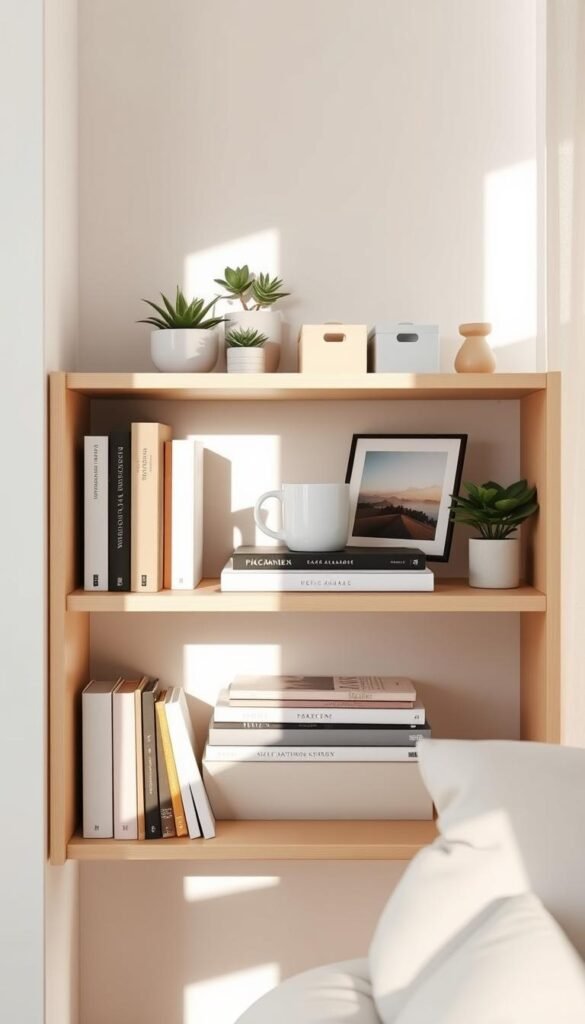
Renters: choose peel-and-stick backsplashes or temporary beadboard to change the feel without permanent work. For styling guides that suit small rooms, see a concise how-to on styling shelves and a curated list for aesthetic decor in tiny homes: how to style shelves and aesthetic decor for small spaces.
| Choice | Why it helps | Rental-friendly? |
|---|---|---|
| Peel-and-stick wallpaper | Defines the look without paint | Yes |
| Glass shelving | Keeps light flowing in tight nooks | Maybe (check weight) |
| Uniform containers | Makes resets fast and neat | Yes |
„Styling is a subtle art: repetition, restraint, and spacing keep shelves useful, not untouchable.“
Products Worth Buying for Open Shelving (Best For + Pros/Cons)
Decide what each shelf will hold before buying parts or hardware. Match product choices to weight, wall type, rental rules, and daily use.
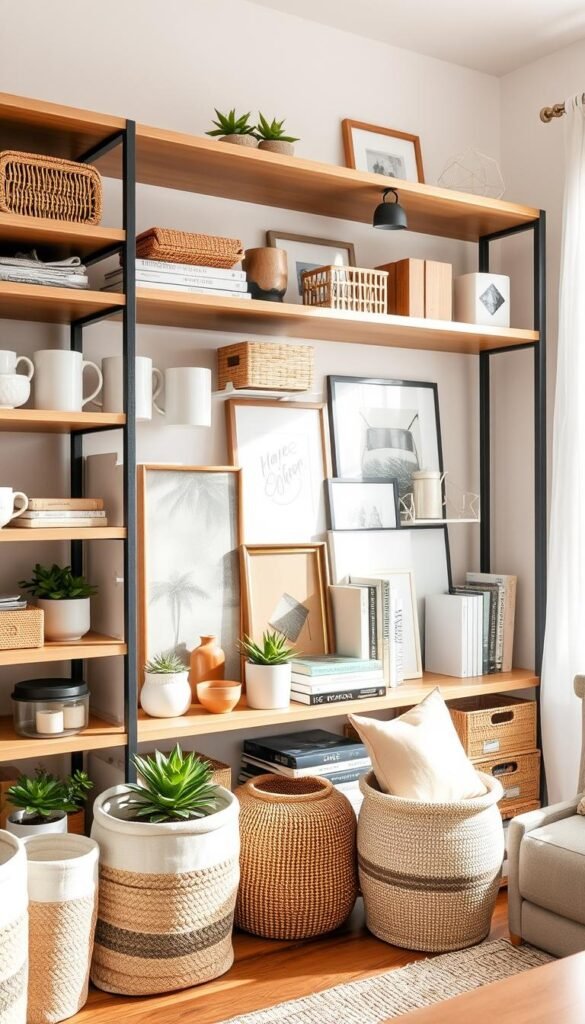
Floating vs. bracketed: Floating units give a clean look and suit light decor, barware, or small plates. Bracketed systems hold heavier dishes and small appliances and are more forgiving on uneven walls.
Glass shelving: Ideal for tiny nooks where light matters. It keeps spaces bright but shows dust and needs careful weight planning and strong anchors.
Metal units: Work well for overflow storage in kitchens with limited cabinets. They carry heavier loads, stack well, and resist wear, though they read more utilitarian than furniture pieces.
Under-shelf hooks & rails: Multiply vertical space for mugs and utensils. Check clearance, mounting method, and daily reach to avoid awkward placement.
| Product | Best For | Pros | Cons | Weight / Install Notes |
|---|---|---|---|---|
| Floating shelves | Display glassware & vases | Clean look, renter-friendly | Lower weight capacity, precise install | Light loads; studs or heavy anchors |
| Bracketed shelves | Everyday dishes, small appliances | High capacity, forgiving alignment | More visible hardware | Supports heavier stacks; stud-mounted best |
| Glass shelving | Tiny, light-filled nooks | Lets light pass; minimal visual bulk | Shows fingerprints; fragile edge care | Use tempered glass; follow weight limits |
| Metal shelving units | Kitchen overflow & pantry backstock | Durable, high capacity, modular | Industrial look; may need floor space | Bolt to wall for tall units; heavy load rated |
| Under-shelf hooks/rails | Mugs, utensils, small tools | Maximizes vertical space, inexpensive | Limits shelf surface use; watch clearance | Simple install; check shelf thickness |
Merchandising tip: Mix functional storage with a small collection display—matching glasses or a couple of vases—to keep a purposeful look without overcrowding.
For a wider discussion of pros and cons for visible shelving, see this practical guide: open shelving pros and cons.
Seasonal and Swap-Out Storage: Keep Open Shelves Useful Year-Round
Rotate what lives on display each season so shelves reflect current needs, not months-old overflow.
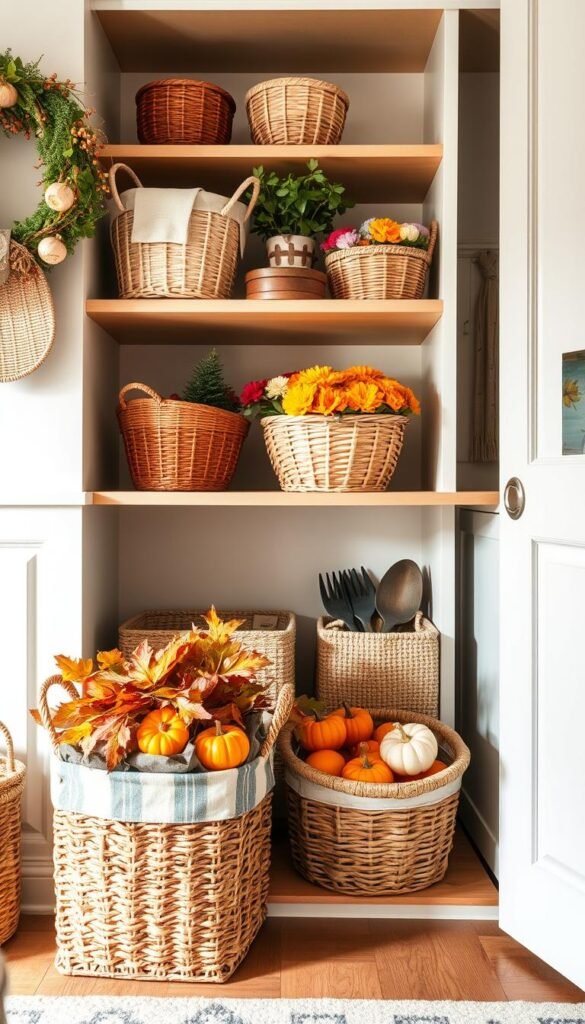
A planned rotation prevents visible areas from becoming a catchall. Matching baskets hold off-season items so the active display stays tidy and functional.
How to build a simple swap system
Use uniform baskets with sturdy handles and label-friendly fronts. Choose two sizes: a shallow bin (12–14″ wide) for hats and scarves, and a deeper bin (16–18″) for bulk gear.
Store the “off” bins in a closet, under-bed, or a labeled tote in the garage. Keep the swap fast—one box in, one box out.
Refresh cadence and dust control
Set a calendar reminder to refresh monthly or quarterly. Regular swaps stop visual fatigue and reduce dust buildup by moving things and allowing quick wipes.
Practical tips: use wipeable materials, printed labels, and liftable containers so families can touch and move items without disturbing nearby pieces.
For more styling ideas and seasonal displays, see creative storage ideas.
Room-by-Room Shelving Ideas Beyond the Kitchen (with Real Use Cases)
Practical shelving turns drop zones and clutter hotspots into predictable, usable places.
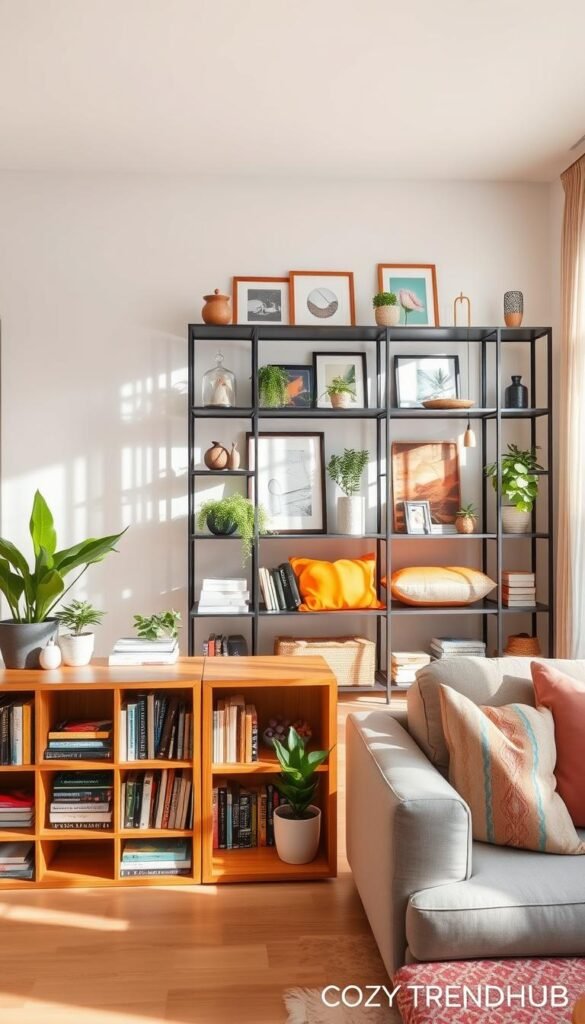
Entryway and mudroom
Use open cubbies at shoe height to stop piles on the floor. Pair cubbies with matching baskets for mitts, masks, and grab-and-go items.
Mount a small ledge for keys and mail to keep daily paper clutter off surfaces.
Bedroom and living spaces
Install built-in bookshelves to the ceiling to maximize vertical space.
Mix a few display areas for art or vases with closed bins for extra bedding or seasonal clothes. This reduces extra furniture in a small room.
Home office
A full wall of wall shelves keeps books visible and a basket system hides cords and chargers.
Label each bin for easy access to adapters, drives, and small items so cords don’t creep into piles.
Laundry area
Add a shelf above the machine for detergents and coordinating labeled baskets.
Stack a narrow unit for backstock so restocks are predictable and counters stay clear.
Garage
Assign each shelf a category: tools, car care, yard, and sports. Use clear bins for tiny parts so small items remain findable.
Anchor heavy units and keep frequently used gear at waist height for safer reach.
| Room | Problem Solved | Recommended Fit |
|---|---|---|
| Entryway | Shoe piles, lost keys | Cubbies + baskets, wall ledge for mail |
| Bedroom/Living | Too much furniture, poor vertical use | Built-in shelves to ceiling, mixed display + bins |
| Home Office | Tangled cords, scattered accessories | Full-wall shelving, labeled baskets for electronics |
| Laundry | Detergent clutter, unpredictable restocks | Coordinating labeled baskets, slim shelving unit |
| Garage | Hard-to-find small parts | Category shelves, clear containers for small items |
Quick tip: Keep one small art moment—like a plant or two vases—per run of shelves to keep displays intentional while staying functional. For matching baskets that work across rooms, see closet baskets.
Specialty Open Storage That Solves Awkward Problems
Small, odd corners and unused vertical areas can become practical assets with the right solutions. This section points to targeted fixes that turn dead zones into useful, safe displays without overhauling a house.
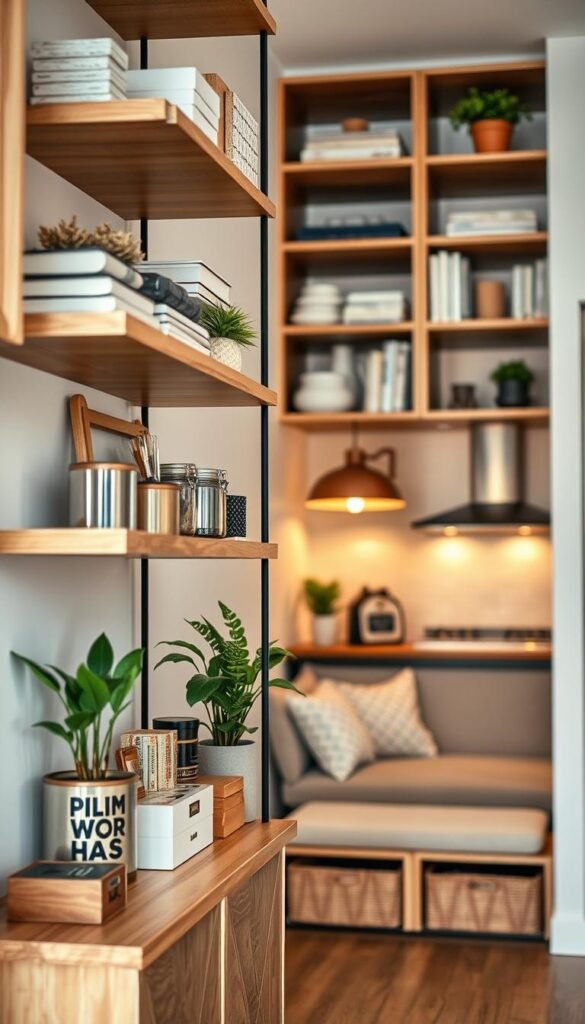
DIY plate racks for shallow displays
Problem: Plates and thin pieces slide or topple on deep runs.
Solution: Use a shallow shelf plus a dowel rod set a few inches from the front edge. The dowel stops plates from shifting and keeps stacks visible for quick reach.
Buying notes: choose a sturdy shelf board, run the dowel through predrilled holes, and anchor into studs if the run will hold heavier ceramic. For renters, a freestanding plate holder on a narrow shelf gives the same look without wall anchors.
Above-fridge wine racks to reclaim vertical gaps
Problem: The top of the fridge becomes a clutter catch for bottles and boxes.
Solution: Install a shallow wine rack or a slim freestanding rack. It secures bottles and reduces the risk of items sliding down—especially important in homes with kids.
Safety tips: verify top clearance, keep heavier bottles toward the back, and avoid storing breakables on high, open edges.
Wall-mounted firewood racks as a design element
Problem: Logs left on the floor make a mudroom or patio feel messy.
Solution: A wall-mounted firewood rack creates a tidy stack that’s easy to reach and visually cohesive with rustic or modern design elements.
Install advice: pick corrosion-resistant hardware for outdoor use and anchor racks to studs for heavy loads. Renters can use a freestanding log holder or a portable crate to get the same function without permanent mounts.
- Awkward problems solved: narrow gaps, dead zones above appliances, and items that resist stacking.
- Install checks: weight limits, secure anchoring, and clearances for safe traffic flow.
- Renter-friendly choices: freestanding racks and removable supports when drilling isn’t allowed.
For more compact-space strategies and creative fixes, see a practical guide to small-room solutions at creative storage ideas for small spaces.
Maintenance Plan: How to Prevent Dust and Keep Open Shelves Looking “Done”
A quick set of habits cuts dust and clutter so shelving stays useful, not just decorative. Visibility means problems show fast, so a small, repeatable plan protects the effort behind a smart layout.
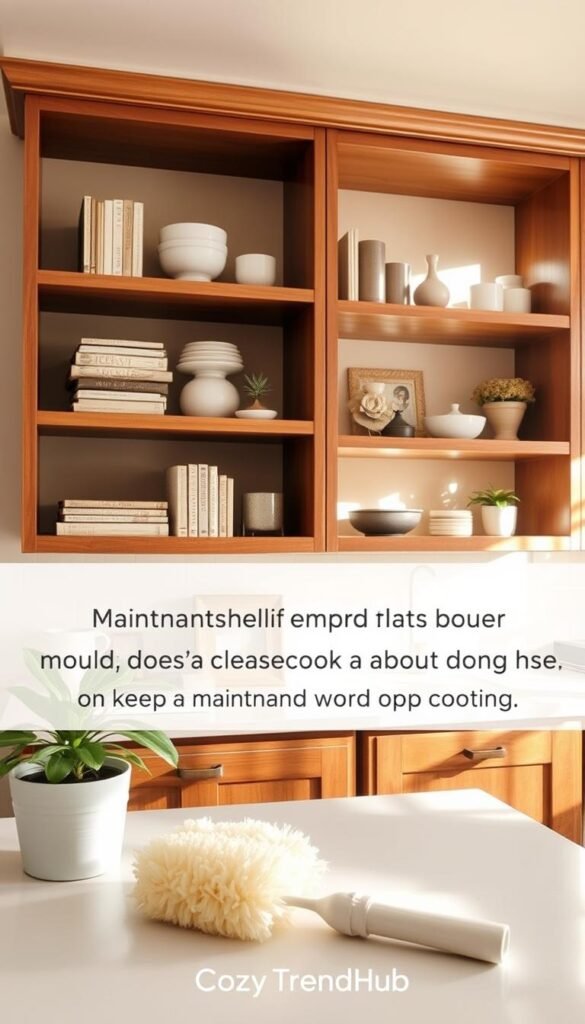
Weekly quick reset
Minutes per session: 5–10.
Do a fast walk-by: return frequently used items to their zones, tuck stray things into a bin, and wipe high-touch surfaces with a microfiber cloth.
- Scan for stray items and place them in a temporary „put-away“ basket.
- Wipe visible surfaces where dust gathers most.
- Check access paths so commonly used pieces stay reachable and safe.
Monthly re-edit
Purpose: remove items that migrated onto shelves without a proper home.
Empty one shelf at a time and decide: keep on display, move to a bin, hide in a cabinet, or remove from the room.
- Reduce rarely used display pieces to lower dust and handling.
- Swap seasonal bins so active items remain handy.
Dust-minimizing habits and product helpers
Choose wipeable surfaces and containers to speed cleaning. Labels and baskets make resets fast for everyone in the household.
- Labels: speed decision-making and keep shared spaces orderly.
- Bins: corral small items so dusting is a quick pass.
- Limit display items: fewer pieces means less dust and fewer moves.
„A little routine each week and a short edit each month prevent major overhauls later.“
For more tips on dust control and practical containment, see this helpful guide on maintenance helpers: shelving maintenance tools.
Conclusion
A clear plan turns visible shelving from a liability into daily help.
Start by measuring and choosing mounts that match wall type. Declutter, create task zones, and add uniform jars, baskets, or bins for quick resets. Treat function as the primary goal, then layer in a few decorative items like vases or art.
Mix closed cabinets with open shelving in a busy kitchen so heavy or messy things stay hidden. Choose bracketed shelving for heavy dishes, glass shelving for tight, bright nooks, and metal units for overflow.
Expect dust and drift; commit to a five-minute weekly reset and a monthly re-edit. For pantry-specific ideas that inspire small-space layouts, see pantry shelving ideas.