

Shared living often means clutter returns fast. More users and different habits make it hard to keep a tidy home. A system must be simple enough that everyone can follow it.
The guide focuses on visible storage, broad categories, and clear limits. Visual systems like clear bins, trays, and vertical racks help people reset a space in minutes. Labels and defined zones reduce guesswork.
Practical expectations: the aim is a usable space that resets quickly, not a showroom. Solutions are renter-friendly: damage-free hanging, removable labels, and tall storage that avoids drilling.
This article lays out boundaries first, then storage systems, then routines and communication. It previews specific product types — hooks, bins, trays, over-the-door organizers and drawer units — with use cases and pros and cons.
When space is tight, limiting duplicates and overflow matters as much as extra storage. The tips suit real living patterns, including families and busy schedules. For compact bath ideas see bathroom storage ideas.
Key Takeaways
- Simple, visible systems make reset easy.
- Use clear bins, trays, vertical racks, and labels.
- Prioritize renter-safe, damage-free solutions.
- Limit duplicates in small spaces before adding storage.
- Focus on routines and clear boundaries, not perfection.
Set Boundaries and Limits Before You Buy Storage
Start by agreeing what stays in common areas and what belongs behind a bedroom door. A short, clear rule prevents boxes from turning into mystery clutter where random things pile up.
Define communal vs. personal
Decide that the shared space holds daily-use communal items only. Personal things stay in a bedroom, closet, or a labeled personal bin. This simple rule helps everyone know where to return an item fast.
Prevent duplicates with a quick check
Before buying a new appliance or piece of furniture, make a short list or group chat note of who already owns what—vacuum, pots, air fryer, tool kit. This chat stops duplicates that steal precious cabinet and counter space in small rooms.
Set easy, enforceable limits
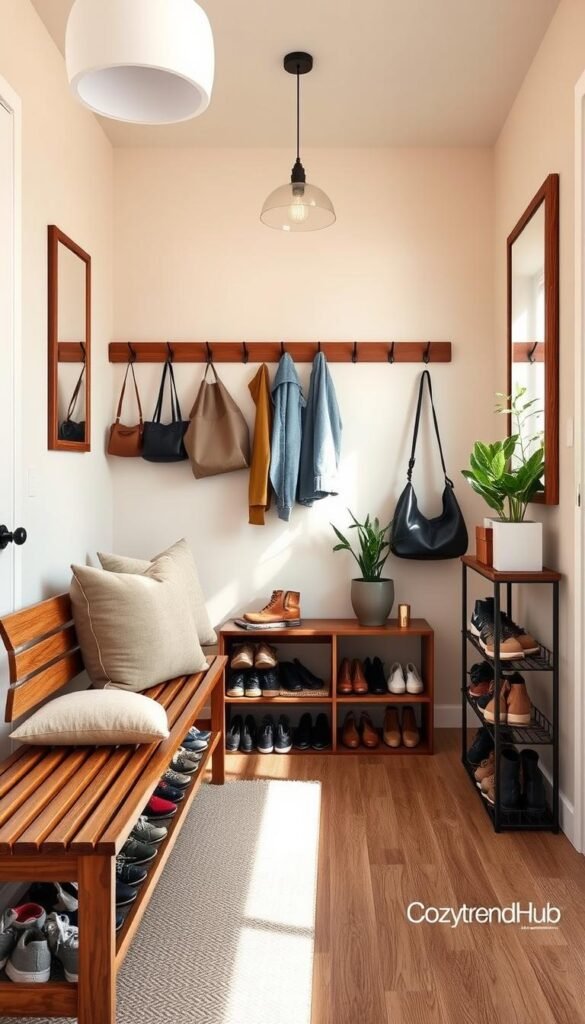
Agree on practical caps for high-traffic zones: 1–2 pairs of shoes at the door, one bag per person on hooks, and a small tray as a landing strip for keys and mail. These limits act as a renter-friendly storage tool that costs nothing and prevents overflow.
Maintenance tip: Try a one-in-one-out rule—donate one item when a new one arrives. Quick donation runs and fair flexibility for family members keep the system working long term.
- Shared examples: basic kitchen tools, cleaning supplies, and commonly used appliances.
- Quick process: make a short ownership list before purchase.
- Entryway pairing: pair these limits with hooks or cubbies—see entryway ideas here.
Best organizing for shared homes: Visual, macro systems that work for different people
Choose broad, easy-to-remember categories so anyone can put things away without overthinking.
Macro organizing means fewer, larger groups—think „medicines“ not five tiny medicine piles. This reduces decision fatigue and helps kids and busy adults return items correctly.
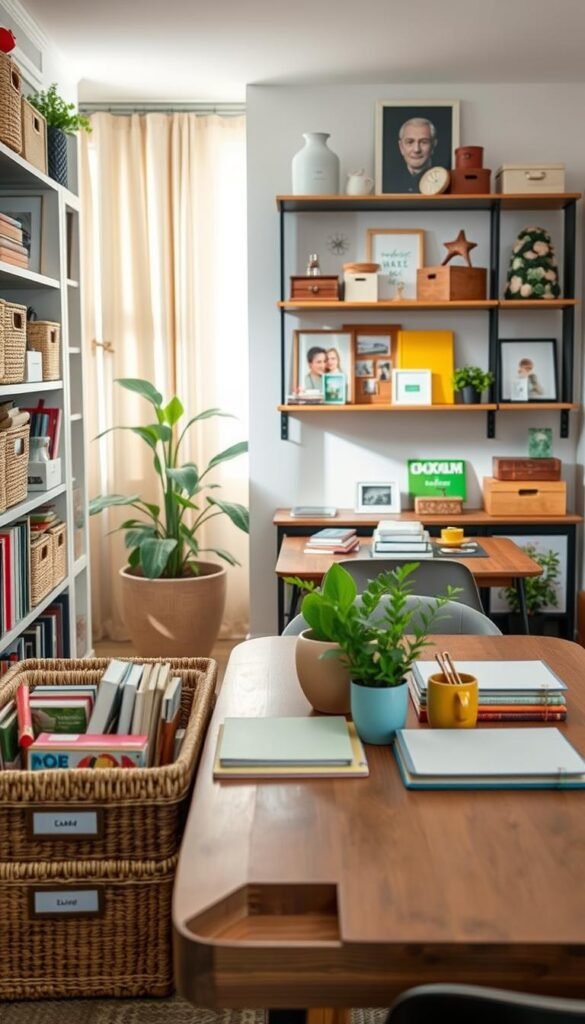
Use clear bins, handled trays, and vertical racks to keep items visible and easy to return. Trays corral loose things on counters. Clear bins stop items from vanishing on a shelf or in a closet.
Label smartly
Clip-on labels suit baskets and trays when surfaces are temporary. Use adhesive labels on stable bins or drawer fronts after surfaces are wiped clean.
Renter-friendly daily-drop zones
Command-style hooks and over-the-door racks keep coats and bags off chairs. Place a small tray for keys and a charging basket near the entry to reduce counters becoming catch-alls.
Seasonal and overflow plan
Give each person one lidded tote for overflow. Store these on a closet top shelf or under a bed. If space is tight, consider a low-cost storage unit.
Product fit guide
- Clear bins: best for visibility; pros—stackable, easy to clean; cons—need proper sizing; buy with ventilation in mind.
- Handled trays: best for corral zones; pros—portable; cons—limited capacity; check dimensions.
- Vertical racks: best for slim shelves; pros—use vertical space; cons—may tip if overloaded.
| Option | Install | Renter-friendly | Best room | Visibility |
|---|---|---|---|---|
| Hooks | Adhesive or screw | High (Command-style) | Entry, bedroom, bath | Low |
| Over-the-door organizers | Hangs on door | High | Closet, door, bathroom | Medium |
| Bins & trays | No install | High | Pantry, fridge, closet | High |
| Drawer units | Freestanding | High | Closet, room, under-desk | Medium |
For wallet-friendly picks and renter-specific ideas, see a short guide to budget organization products and options tailored to renters at home storage ideas for renters.
Keep shared spaces from backsliding with routines, apps, and communication
Keep daily use from turning into disorder with small, repeatable habits that everyone can follow. Even the clearest storage needs upkeep. Shared space gets used often, so a light routine prevents clutter from compounding.
Create a chore system that feels fair and is easy to follow
Make tasks visible and rotating. Assign chores weekly, post them where members can see them, and write a one-sentence definition of „done“ for each task. This reduces arguments and sets clear standards.
Weekly refreshes and quick edits to keep clutter from rebuilding
Use a short checklist: empty the catch-all tray, return stray items to zones, wipe bins and trays, and remove what exceeds agreed limits. A weekly edit catches items that sneak in between resets.
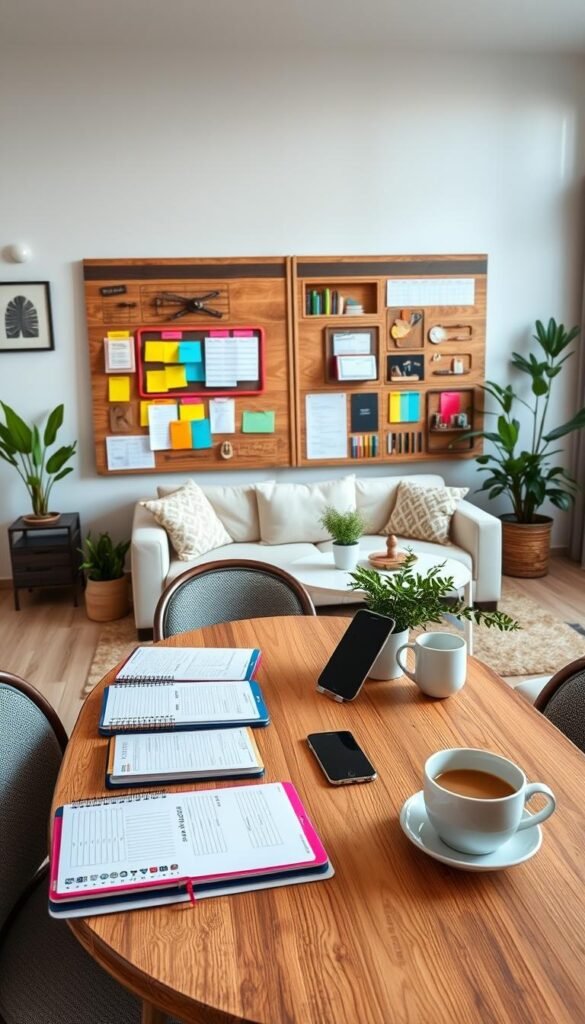
Use simple tools to stay aligned: shared schedules, task apps, and a kitchen communication board
Tools reduce friction. Try Tody for cleaning reminders, Cozi for shared calendars and notes, and Splitwise to track shared purchases. Pair apps with a visible kitchen board:
- Reminders section
- Incoming mail and shopping list
- Guest notes and schedule changes
Quick check-ins—five minutes weekly—keep agreements current and calm. When routines are small and predictable, labels, trays, and hooks actually get used.
For daily practice and short declutter routines see a guide to daily decluttering habits, a practical bedroom edit at minimalist bedroom guide, and product picks at home organization products.
Conclusion
A clear sequence—agree what stays, skip duplicates, set limits, then buy storage—keeps purchases useful and spaces tidy.
Make systems macro and visual: broad categories, clear bins, handled trays, and simple labels help anyone return items quickly. This approach reduces decision fatigue and keeps each room usable.
Quick weekend checklist: measure key areas, pick 3–5 categories per space, add one tray or bin per category, and label what can be labeled. For pantry layout ideas see a practical pantry guide.
Buyer shortcuts: hooks and over-the-door options for drop zones; clear bins and trays for kitchens and baths; compact drawer units when small things scatter. If overflow grows, limit one tote per person on a top shelf or consider a small storage unit.
Tip: Keep a brief guest-ready routine to clear entry counters and welcome visitors without stress. Simple systems beat perfection.