Clutter, tight rooms, and rental rules create daily friction in many homes. Renters often cannot add permanent fixtures and small spaces quickly feel full.
The practical path is clear: reset the area, repurpose what’s on hand, then buy only a few targeted, renter-friendly pieces. Think paperboard, wire, canvas, rattan, solid wood, and fabric for purchases that travel with you.
Most store goods are plastic, so this guide starts by decluttering and reusing existing items to cut waste. That said, plastic totes still make sense for garage or holiday storage in damp climates.
This approach defines fewer purchases, more reuse, and systems that avoid drilling or bulky bins. The article previews products, lists pros and cons, and flags where no-buy methods work best.
Readers will get quick decision tools and renter-focused priorities: portability, flexibility, and cleanability. For related practical tips, see home storage ideas for renters.
Key Takeaways
- Start by clearing and sorting; reuse what you already own.
- Buy only a few high-impact items (paperboard, wire, fabric, rattan, wood).
- Use plastic only where moisture or seasonal needs demand it.
- Prioritize portability, flexibility, and easy cleaning for rentals.
- The guide offers pros/cons and room-by-room suggestions to avoid wasted purchases.
Why organizing without plastic containers matters for a healthier home
Many rooms look neat but keep stress and dust out of sight, not out of the house. A system that stacks more things on shelves can create tight piles and hard-to-reach corners. Those areas collect dust, microplastics, mold spores, and pesticide residue. That makes cleaning harder and can worsen allergy and air-quality concerns.
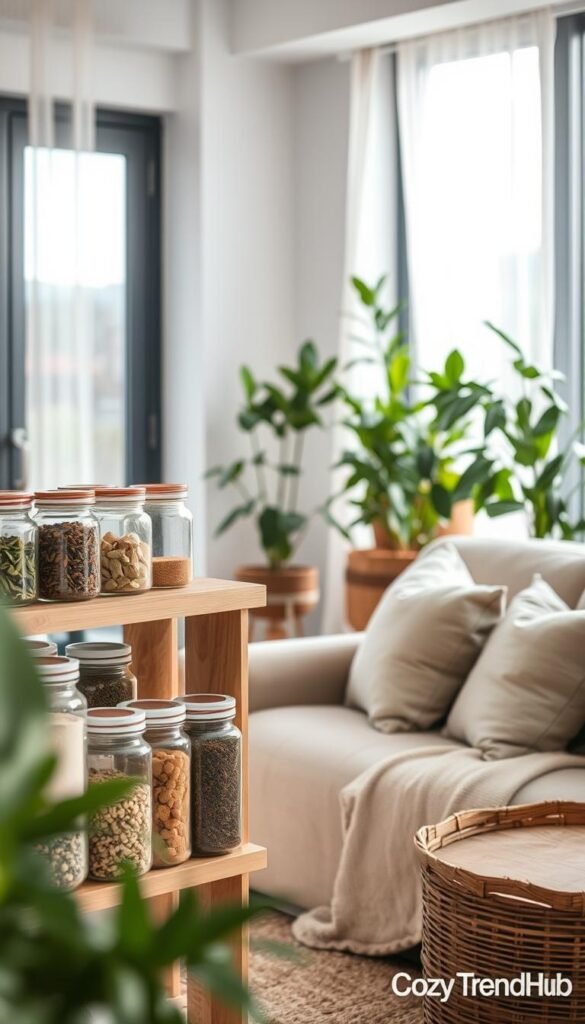
Households often limit plastic for food-contact zones and kids’ areas because of common concerns about certain chemical groups. Phthalates, PVC, and bisphenols (BPA/BPS) are frequently discussed in healthier-home conversations. These substances are reasons many people choose alternatives, though choices should avoid exaggerated health claims.
Practical decision rule
- Prioritize non-plastic for pantry, kitchen, open shelving, and children’s spaces where items touch food or skin.
- Keep durable plastic for holiday décor, basements, and garages—areas that need moisture resistance and long-term seasonal storage.
Use what exists first. Repurposing jars, baskets, and boxes cuts waste and helps renters move easily. Later sections preview wire, paperboard, canvas, rattan, and solid wood and explain where each material trades durability for appearance or breathability.
For low-cost product ideas that match these priorities, see budget organization products.
Reset your space before you organize: declutter, clean shelves, and make a keep list
Start by clearing a single zone so progress is fast and decisions stay simple. A short reset reveals what is expired, duplicate, or stuck at the back of a shelf.

Quick checklist
- Compost or discard expired food, then recycle empty packaging.
- Set aside unopened duplicates for donation or sharing.
- Empty one shelf or cabinet, wipe down surfaces, and air items briefly.
- Measure shelf depth before placing anything back to avoid wrong-size buys.
Small-space rule and keep list
Rule: If an item can’t be reached, cleaned around, or used weekly, it loses prime space.
Create a short keep list of staples and tools the household truly needs. Match storage to that list rather than to an ideal photo.
| Common failure | Why it happens | Quick fix |
|---|---|---|
| Expired goods at the back | Out-of-sight, out-of-mind | Rotate stock forward; date-first habit |
| Half-used bags | No resealable solution | Transfer to jars or clip and label |
| Mismatched lids | Poorly paired storage | Group like-with-like before buying new items |
| Overflowing cabinets | Too many rarely used items | Donate extras; keep only what fits reachable space |
For a time-saving routine, tackle the pantry or under-sink in one focused session, then set a 10-minute weekly reset to keep shelves tidy. When ready to shop, see practical kitchen organizers that suit renter-friendly needs.
Best organizing without containers: use what you already own before you buy anything
A few reused items can transform cramped shelves in a single afternoon. This approach helps renters, students, and small-kitchen households who face odd shelf sizes, tight budgets, and frequent moves.
Why it works: repurposed pieces are lightweight, portable, and easy to swap when layouts change. Use reuse first; buy later if moisture, pests, or visibility demand it.
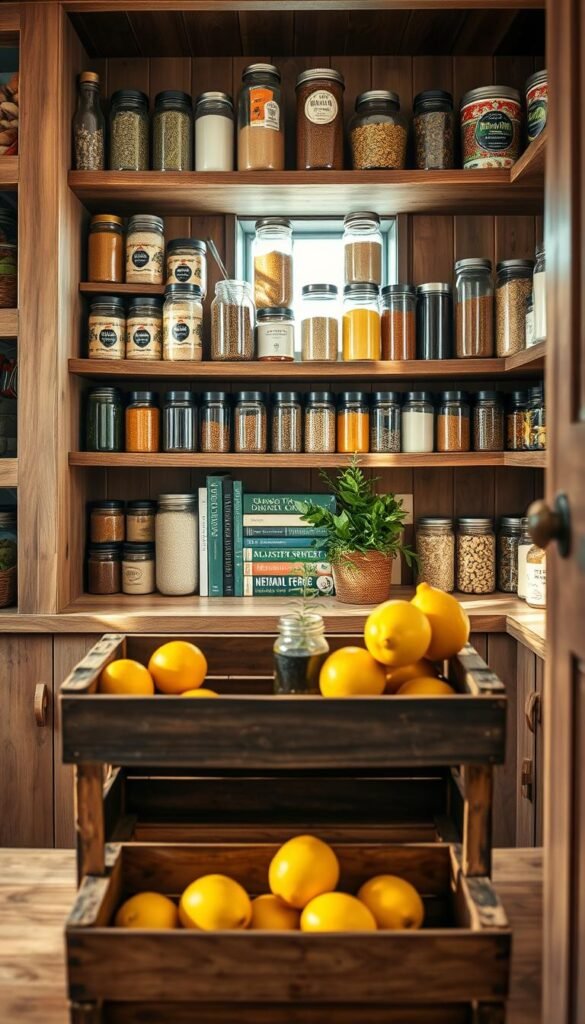
Repurpose accidental containers
Common saved items make quick pantry helpers. Match each to a task for fast results.
| Accidental item | Pantry task | Notes |
|---|---|---|
| Glass jars | Grains, nuts, spice packets | Save larger food jars; de-label by soaking in warm soapy water with baking soda and a little cooking oil. |
| Bowls & tins | Snacks, baking items | Use bowls for bulk scoops; tins work for tea bags or packets. |
| Shoeboxes | Snack pouches, small boxes | Wrap in paper for a tidy look and stack on shallow shelves. |
| Sturdy paper bags | Bread, chips, quick access items | Fold tops and label; paper breathes for bread and roots. |
Label clearly, but simply
Keep paper labels minimal. Use large legible text and add an expiration or “opened on” date. This small habit makes rotation automatic.
Date-first step: place newer items behind older ones and label jars so the household uses what it already owns before opening duplicates.
Soft storage that flexes
Reusable cotton produce bags, cotton bread bags, and cloth wraps compress into narrow gaps where rigid pieces waste space. They wash on regular cycles and tuck into shelves or drawers.
Swap single-use film for vegan wax wraps, tea towels, or cotton bowl covers to cut plastic while staying renter-friendly.
When to buy: repurposing is enough for dry, short-term storage. If moisture, pests, or the need for clear visibility becomes routine, a targeted purchase makes sense.
For related fridge-friendly ideas, see fridge storage.
Pantry without plastic containers: food storage swaps that prevent waste and save space
A crowded pantry often hides half-used bags and forgotten jars that turn into food waste. This section shows simple swaps to cut waste and free shelf depth.
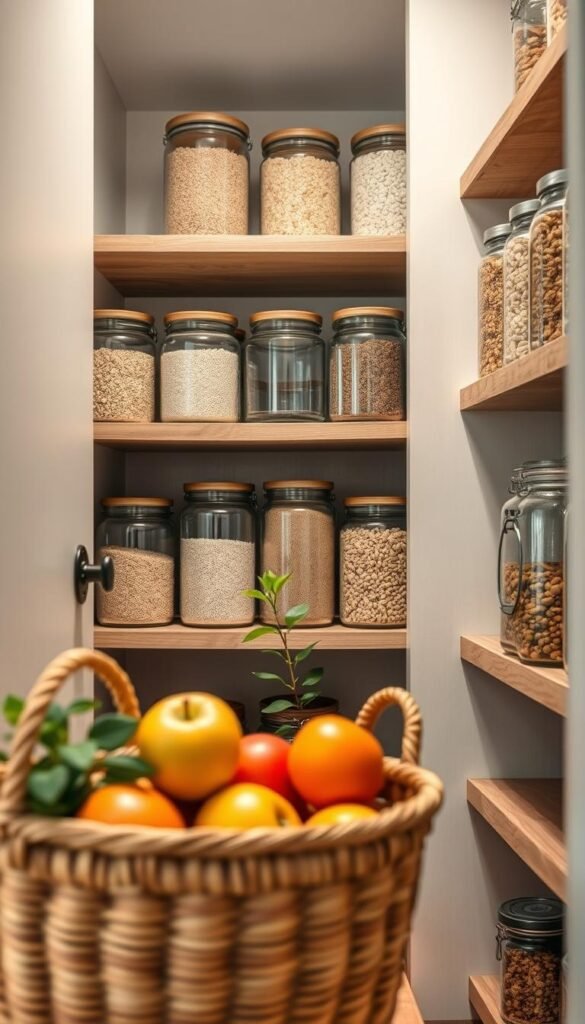
Bulk buying, without overwhelm: buy only staples the household uses weekly. Focus on grains, legumes, baking supplies, nuts, seeds, and spices. Store extras in clear glass jars for visibility and longer shelf life.
Glass jars and secondhand prep
Source jars from thrift shops or reuse food jars. To de-label, soak in warm soapy water, scrub, then rub sticky spots with baking soda and a little cooking oil. Rinse well and dry fully.
Ventilated produce and wrap swaps
Use reusable cotton produce bags for potatoes, onions, and carrots so air circulates and roots stay firmer. Wash them on normal cycles.
Vegan wax wraps and cotton bowl covers replace cling film for bowls and snacks. Budget fallbacks: tea towels or a plate over a bowl for short-term cover.
Realistic compromise
Keep existing plastic for non-food tasks—tools, craft gear, and cleaning supplies—to reduce new purchases while protecting food. For more zero-waste kitchen tips see zero-waste kitchen storage.
| Food type | Recommended storage | Notes |
|---|---|---|
| Rice, oats, beans | Glass jars | Clear visibility helps rotation |
| Potatoes, onions, carrots | Cotton bags | Breathable, keeps produce dry |
| Flour, baking mixes | Glass jars or original packaging | Use jars if open long-term |
For a practical mix of pantry ideas and small purchases, see a curated pantry storage mix that fits renter needs.
Renter-friendly, plastic-free storage products worth buying
Buy only after a reset and repurposing step. Aim for products that are light to carry, easy to clean, and flexible for shelves or under the sink.

Paperboard and cardboard bins
Who they help: renters on a budget who need tidy shelves in dry bedrooms.
Pros: low cost, recyclable, uniform look. Cons: moisture risk, crushes under heavy loads.
Wire metal baskets
Who they help: anyone storing cleaning supplies or toiletries near the sink or in a bathroom.
Pros: visible contents, drains moisture, durable. Cons: can snag fabrics and shows clutter if ungrouped.
Canvas zip bags and bins
Who they help: seasonal clothing in small closets. Zips cut dust and reduce pest access.
Pros: breathable, foldable, dust protection. Cons: mold risk in damp spots; needs a dry shelf.
Rattan, wood, and fabric options
Rattan works well on open shelving for a warm look but can catch delicate fabrics.
Solid wood crates are durable and stackable; avoid MDF/particleboard for VOC concerns.
Soft fabric bins with handles suit kids’ play areas for safe, quick cleanups; they lose structure with heavy items.
| Consideration | Paper/cardboard | Wire | Canvas | Rattan/Wood |
|---|---|---|---|---|
| Moisture | Low tolerance | High | Low | Moderate |
| Pest risk | Moderate | Low | Low | Low |
| Cleaning | Wipe or replace | Rinse/soap | Spot wash | Dust/clear coat |
Quick buying checklist: consider moisture exposure, pest risk, cleaning method, visibility, and weight for moving.
For under-sink ideas and apartment tool options, see a practical under-shelf storage guide and apartment tool storage options.
Conclusion
One quick sort, a wipe, and a simple label can change daily routines for the better.
Start today by clearing a single shelf. Sort into keep, donate, and toss. Wipe surfaces and label jars or bags with dates to make pantry food rotation automatic.
Use what is on hand and delay new purchases until a real need appears. Keep durable plastic where it truly helps seasonal storage, and shift kitchen and daily-use items to glass, cotton, or paper over time.
Quick plan: pick one small zone for 30 minutes, set two categories, and adopt a one-in, one-out rule for pantries and closets. For extra guidance, see clear pantry tips and practical space-saving hacks.
Final note: choose small, targeted upgrades—wire baskets for damp zones or canvas for seasonal clothes—so the system fits your home, time, and food habits.