
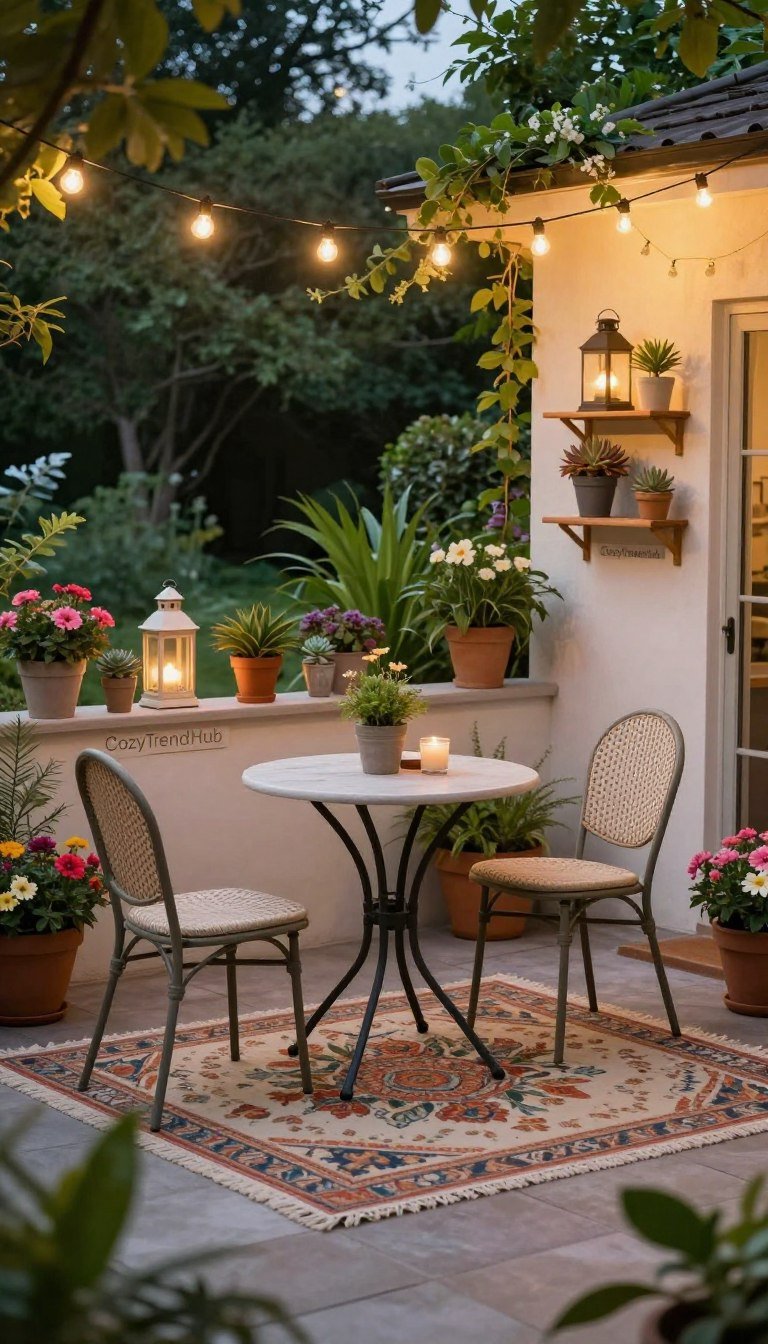
Small patios often feel cramped, but a clear plan fixes that. The core problem is simple: create comfort and style without blocking the walkway or crowding the area.
Solution: pick right-sized furniture, use vertical surfaces, and keep a neutral color plan so the patio reads as a single, calm space.
The guide targets renters and those with narrow balconies or tight backyard corners. It recommends what to buy, what to skip, and how to choose pieces that add seating, light, privacy, or seasonal use.
This introduction previews a practical approach: each category lists „best for“ use cases, quick pros and cons, and buying criteria such as footprint, storage needs, weather resistance, and frequency of use.
Key Takeaways
- Define the problem: balance comfort with clear walkways.
- Choose compact furniture and vertical storage to save space.
- Use a simple color plan to avoid visual clutter.
- Look for renter-friendly, weather-resistant options.
- Compare footprint, storage, and seasonal use before buying.
- Prioritize pieces that add function: seating, light, or privacy.
How to Choose Outdoor Decor for a Small Patio Without Making It Feel Crowded
Measure the walkable area first; usable square footage tells the true story. Measure clear zones with doors open and note any fixed elements like railings or vents. Use that usable footprint, not the overall dimensions, when shopping.
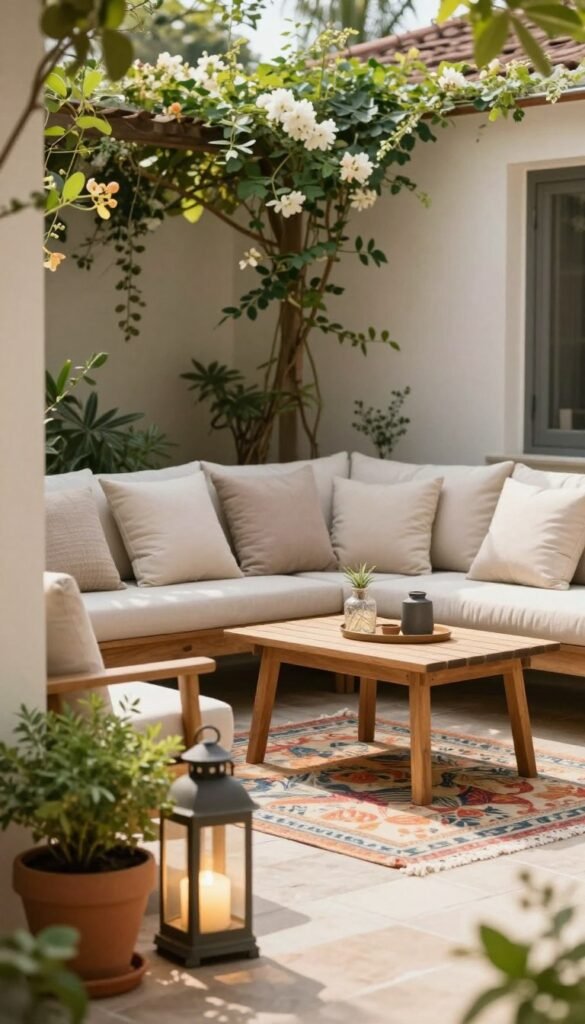
Measure the usable footprint and keep a clear walkway from the door
Mark a 30–36 inch path from the door to the yard or gate. That keeps traffic flowing and prevents a cramped look.
Use vertical space to free up floor space in tight outdoor areas
Shift plants, lights, and storage up. Wall planters, hanging shelves, and railing hooks free floor area and make the space feel larger.
Pick multi-purpose pieces and simple palettes
Choose items that act as seating, table, and storage. Benches with lids, poufs that double as tables, and nesting stools do double duty.
Keep the color plan minimal. Light neutrals or controlled black-and-white contrast calm the view and help the small patio look cohesive.
- Shopper’s checklist: flush-to-wall pieces, fold/stack options, corner-ready items, quick-dry fabrics, landlord approval where needed.
| Item | Dimensions | Stackable | Weight | Weather Resistance |
|---|---|---|---|---|
| Folding chair | 18″ x 20″ | Yes | Light | Metal/sling |
| Bench w/ storage | 40″ x 18″ | No | Medium | Polywood/treated wood |
| Wall planter | 12″ depth | N/A | Light | Plastic/metal |
| Pouf / low table | 18″ dia | Some | Light | Quick-dry fabric |
Seasonal note: check sun exposure for fading and pick folding frames if winter storage is needed in a rented home.
Best Outdoor Decor for Small Patios: Space-Savvy Seating That Actually Fits
Choose seating first. It determines whether the patio supports dining, lounging, or flexible entertaining. Pick pieces that keep the center open and allow a clear path from the door.
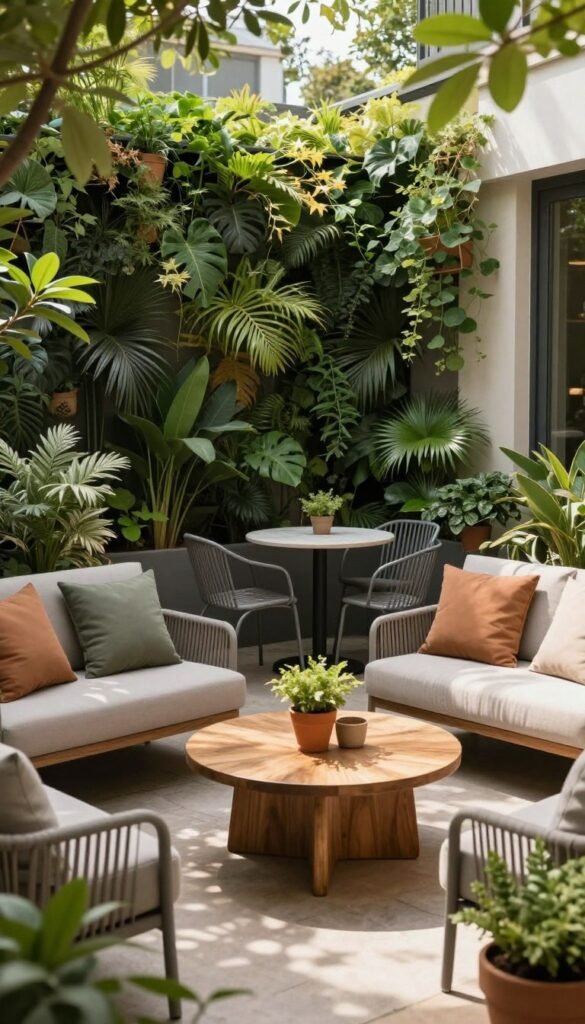
Compact bistro sets — best for couples
Who it suits: two people who want a dining spot without blocking traffic.
What it fixes: provides a table and two seats while preserving the walkable zone.
Compare: chair tuck-in depth, table diameter, and whether the set stacks or folds.
- Pros: clear dining function, small footprint.
- Cons: limited seating when guests visit; tabletop size may restrict plates.
- Renter tip: choose lightweight frames that move easily into a closet.
Folding sling chairs — best for renters
Who it suits: renters who need seasonal storage.
What it fixes: stores flat against a wall or inside a hall closet, freeing floor space.
- Pros: highly portable, stackable, dries fast after rain.
- Cons: less padded comfort; can be unstable on uneven surfaces.
Corner benches & L-shaped seating — best for dead corners
Who it suits: layouts with unused corners that clutter the middle of the patio.
What it fixes: tucks seating against perimeter walls to open the center like a small room.
- Pros: maximizes capacity, creates a defined seating area.
- Cons: bulkier footprint along walls; cushions need storage or weatherproofing.
Loveseat vs. multiple chairs — comfort without excess
A modest loveseat can read cleaner than several tiny chairs. One silhouette reduces visual clutter and can be easier to cover or store.
Compare: seat depth for comfort, frame weight to move, and cushion care when rain is likely.
Buying considerations
| Feature | Why it matters | Quick check |
|---|---|---|
| Seat depth | Comfort for long sits | 16–20″ for dining; 20–24″ for lounging |
| Weight | Ease of moving and storage | Light frames for renters |
| Stackability | Seasonal storage | Fold or stack to save room |
| Cushion care | Longevity in sun and rain | Removable covers; quick-dry fill |
Quick rule: buy seating that matches the intended use—dining pieces near a table, lounge options where you want to relax. That single choice shapes the whole space.
Right-Size Tables for Tight Spaces: Bistro, Round, and Slim Coffee Tables
Tables do more than hold drinks—they define how an outdoor room functions and flows. Choose a shape and size that keeps walkways clear and matches the patio footprint.
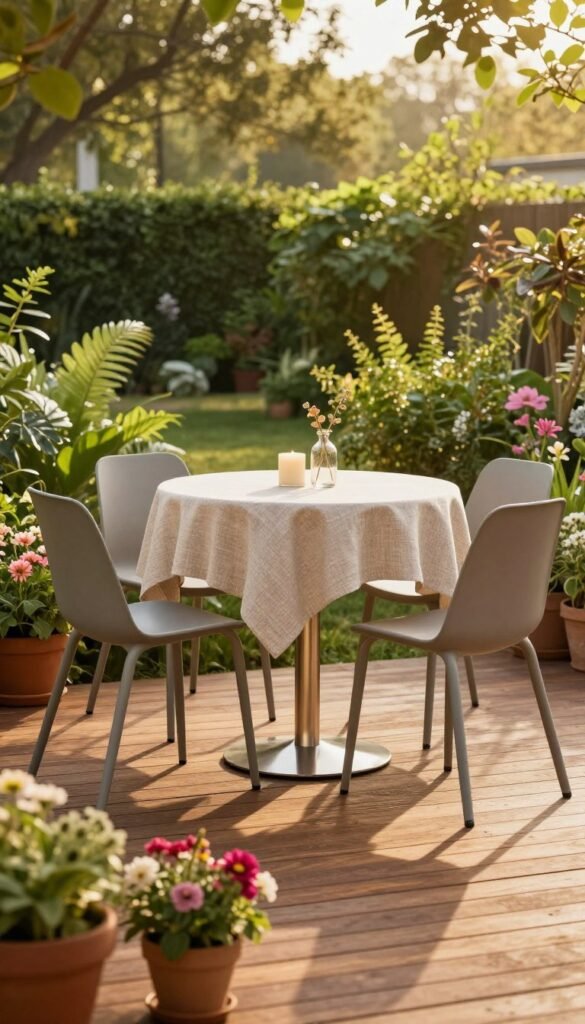
Why round shapes help circulation
Round tops remove sharp corners. That makes it easier to move between seats without bumping elbows.
Tip: match a round table to a curved or compact area to keep sight lines open.
When a slim coffee table defines a seating room
A low, narrow coffee table creates a clear seating zone without a dining setup. Center it on a rug to anchor the group.
Keep it low enough to reach drinks and stay out of sight lines when guests move around.
Flexible alternatives: poufs and stools
Poufs and stools work as extra seats and impromptu tables. They are easy to stash and ideal for renters who need shiftable pieces.
| Shape | Footprint | Clearance Needed | Quick pros/cons |
|---|---|---|---|
| Round (pedestal) | 30–36″ dia | 18″ around chairs | Circulation-friendly; seats 2–4, limits corner surface |
| Square / four-leg | 24–36″ side | 20–24″ pull space | Efficient edge use; corners can block path |
| Slim coffee (rectangular) | 36–48″ x 12–16″ | 12–18″ walkway | Defines room; can feel tall if mismatched |
| Pouf / stool | 16–20″ dia/box | Minimal — moveable | Multi-use; stores easily but less surface stability |
Materials guide: pick rust-resistant metal in rainy climates, sealed wood under cover, and lightweight frames if seasonal storage is likely.
Compare tabletop diameter/length, base style (pedestal vs. legs), and chair clearance before buying. The right table keeps the space usable and improves the overall look.
Outdoor Rugs That Make Small Patios Look Bigger (and Feel Softer Underfoot)
A well-chosen rug can define a seating zone and make a tight patio feel intentionally laid out.
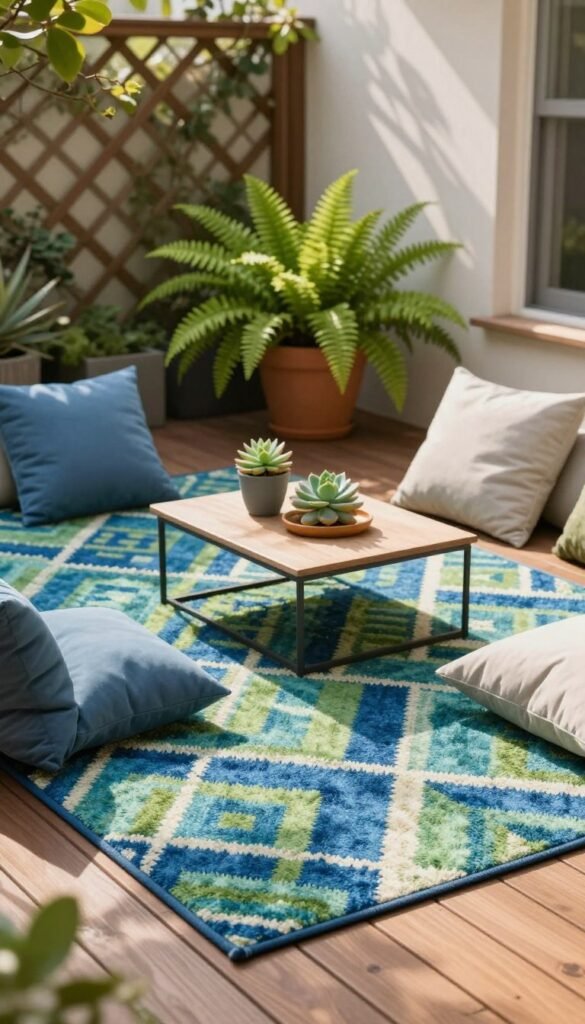
Rectangular rugs to zone a seating area
Why it works: a rectangular rug creates a clear area between seating and the backyard. It visually separates the room without reducing usable space.
Bold patterns to hide wear
Use pattern to disguise stains and limited square footage. Busy motifs make a compact space look curated rather than sparse.
Pros and cons
- Pros: softens concrete or stone, anchors furniture, and adds instant style.
- Cons: some weaves trap debris; edges can curl and create trip hazards.
- Care: choose hose-off materials, quick-dry weaves, and stain-resistant finishes.
Buying considerations
Pick a size that extends under the front legs of seating to keep the layout cohesive. On smooth concrete, slip resistance matters—look for backing or a rug pad.
| Feature | How it helps | Quick check |
|---|---|---|
| Rectangular shape | Zoning | Matches seating footprint |
| Bold pattern | Hides wear | Masks stains and small tears |
| Weather-resistant weave | Durability | Hose-off and quick-dry |
Design tip: let the rug carry the palette so pillows and planters remain simple. That keeps the space cohesive and lifts the overall decor elements and style of a small patio.
Lighting That Extends Your Patio Into the Evening Without Taking Up Space
Even a compact terrace can stay useful after dusk with the right layers of light. Floor lamps and tall fixtures steal room and create trip hazards. This section focuses on low-impact options that free floor area and add function.
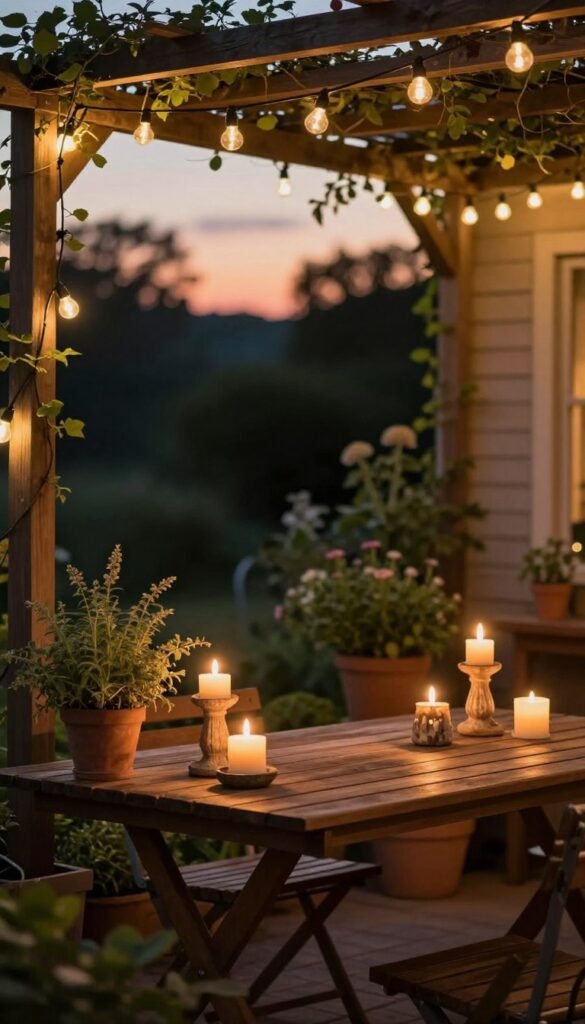
String lights on fences, pergolas, and railings
Why choose them: string lights create instant ambiance and mount without drilling. They work on fences, pergolas, and rails to keep the floor clear.
Pendants above a table to define a dining zone
Use case: hang a pendant over a dining table to mark an outdoor dining spot. Aim 30–36 inches above the tabletop for even ambient glow.
Flameless LED pillar candles for renter-friendly glow
Feature: flameless LED pillars add warm tabletop light without open flame or permanent installs. Group several sizes for layered comfort.
Buying considerations
Compare plug-in versus solar: plug-in is brighter; solar is cable-free but dim in shade. Check lumens for task needs and the wet-rating for exposure.
| Type | Typical Lumens | Power Source | Wet Rating | Best Use |
|---|---|---|---|---|
| String lights | 200–800 | Solar / Plug-in | IP44 | Perimeter ambiance |
| Pendant light | 400–1200 | Hardwired / Plug-in | IP65 (covered) | Above dining table |
| LED pillar candles | 50–150 | Battery | IP20 (protected) | Tabletop glow |
Quick plan: layer overhead pendants for function, run string lights around the perimeter for mood, and add flameless candles at close range. That mix keeps the patio useful and safe after dark.
Renter-Friendly Privacy Solutions for Small Outdoor Spaces
When a fence feels imposing, renter-friendly screens and trellises soften the sightline without repairs. These options give quick coverage while keeping the space flexible at move-out.
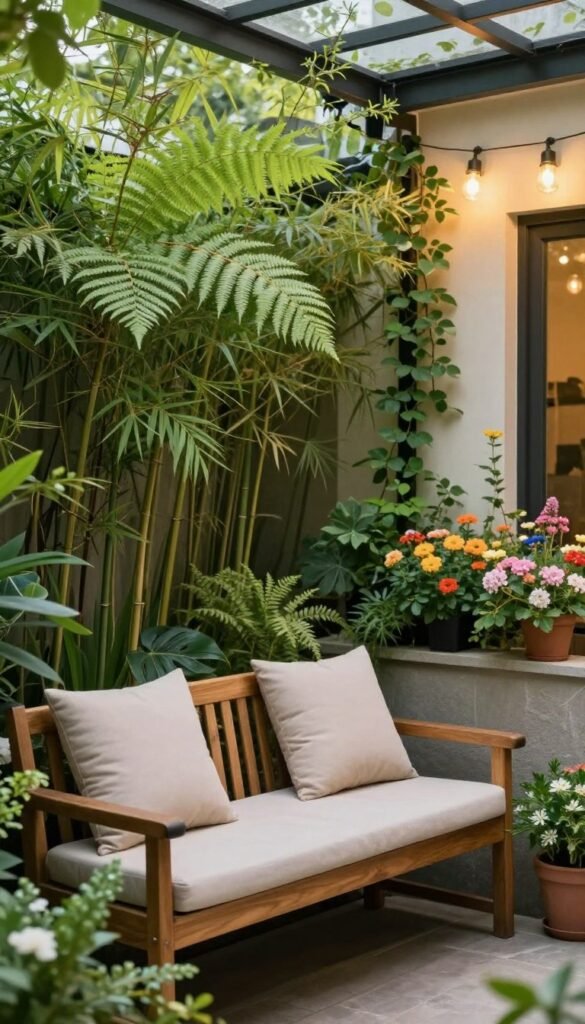
Bamboo privacy screens — quick warmth and low effort
Who it suits: renters who want a warm, natural look with minimal tools.
Pros: sustainable, affordable, and easy to attach with zip ties.
Cons: can weather unevenly and may need replacement sooner in sun or rain.
Wood trellis panels — layer onto railings
Who it suits: apartment dwellers who can clip panels to existing railings.
Pros: adds structure and anchors climbing plants; looks finished when paired with planters.
Cons: may require brackets for wind-prone spots and planters to hide bases.
Style and install tips that double as function
Soften screens with trailing plants and string bulbs to create evening privacy and ambiance. Leave gaps or choose lighter tones to avoid a boxed-in feel.
| Option | Attachment | Move-out |
|---|---|---|
| Bamboo screen | Zip ties or clamps | Removes cleanly |
| Wood trellis | Clips/brackets | Requires more care |
| Plant pockets/liners | Hangs or ties | Easy to take down |
- Buyer checks: wind load, attachment method, and landlord rules.
- Design note: use vertical greenery to keep the floor clear while improving the wall and overall garden feel.
Vertical Gardens and Living Walls That Add Greenery Without Eating Floor Space
Use height, not footprint, to get color and texture without crowding walkways. Floor planters often pile up and shrink usable space, yet plants are essential to soften a terrace and add life.
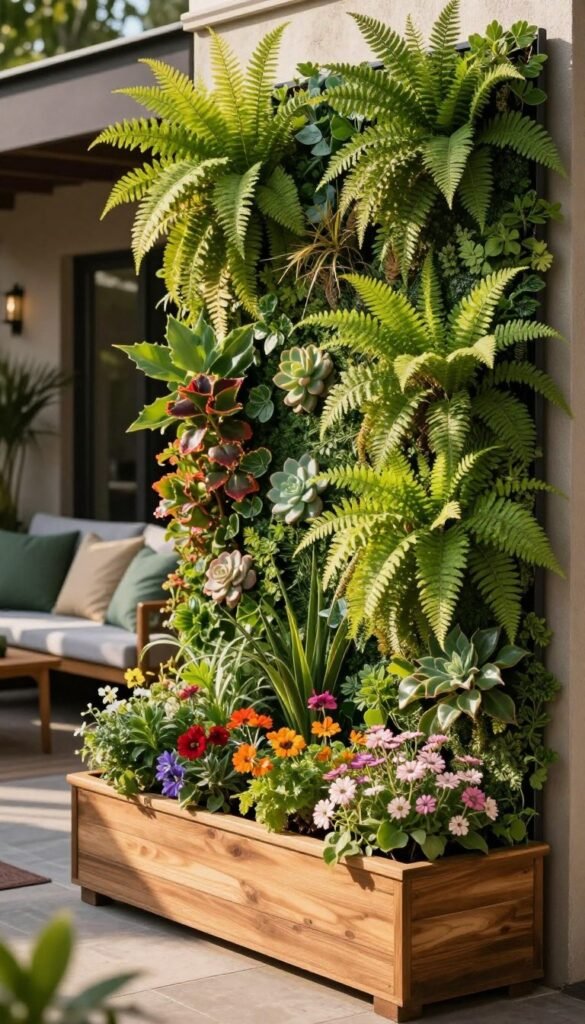
When to choose a living wall: install a modular vertical plant wall system on a blank wall or fence to create an architectural garden that frees the floor. These systems create instant privacy and a strong visual focal point while leaving the center clear.
Layering to build depth
Place taller pots or plant pockets at the back and smaller pots in front. This layered approach tricks the eye into seeing a larger space and adds dimensional style without extra floor coverage.
Buying considerations
- Irrigation: self-watering panels reduce daily fuss; choose manual trays when you want simpler maintenance.
- Drainage & wall protection: pick systems with a moisture barrier or use sealant to prevent staining or rot on a fence or wall.
- Sun exposure: living walls struggle in deep shade and need hardier, drought-tolerant plants in full sun.
- Renter-friendly options: freestanding racks or rail-mounted pockets avoid drilling and remove cleanly at move-out.
„Vertical gardens free up floor space while adding privacy and a true garden feeling.“
Quick pros: big visual impact, privacy, and more usable walking area. Quick cons: higher watering attention and possible wall staining if not installed with protection.
Potted Plants That Add Color and Style Without Cluttering a Small Patio
Choose a few well-placed planters and the space will feel curated rather than cluttered.
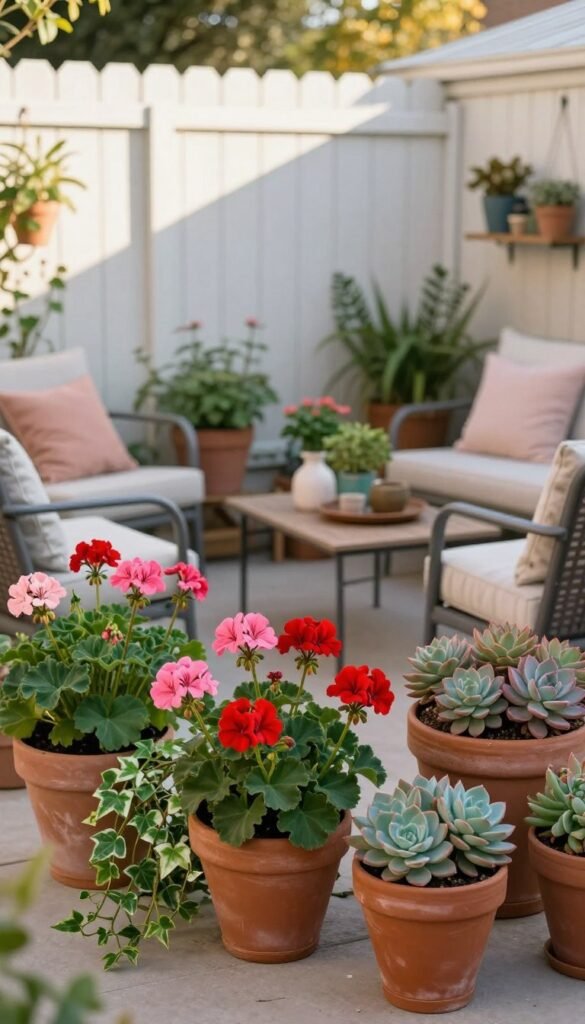
Vary sizes and heights to build interest
Mix tall planters with low pots to create a layered look. Varying height gives depth and makes the area read as intentional.
Go bigger with fewer planters
Too many little pots can make a patio feel busy. One or two larger planters simplify watering and maintenance.
Seasonal strategy and color planning
Rotate hardy green specimens with spring blooms and late-summer annuals. Use planters to introduce a pop of color while keeping furniture and textiles neutral.
- Clutter trap: many tiny pots = visual noise and more chores.
- Buyer’s checks: choose lightweight resin for ease, heavy ceramic for stability, and test drainage and saucers to protect rental floors.
- Placement rule: cluster planters in corners or along the perimeter to keep the central walking zone clear.
Tip: buyers who want low upkeep should pick fewer, larger planters with established shrubs or ornamental grasses. That approach keeps the patio usable and makes a neat, cared-for look.
Outdoor Cushions and Throw Pillows That Make Small Patio Seating Comfortable
Adding textiles is the simplest upgrade to turn firm chairs into cozy seating. A few well-made pieces can solve daily comfort problems and refresh the overall look without changing furniture.
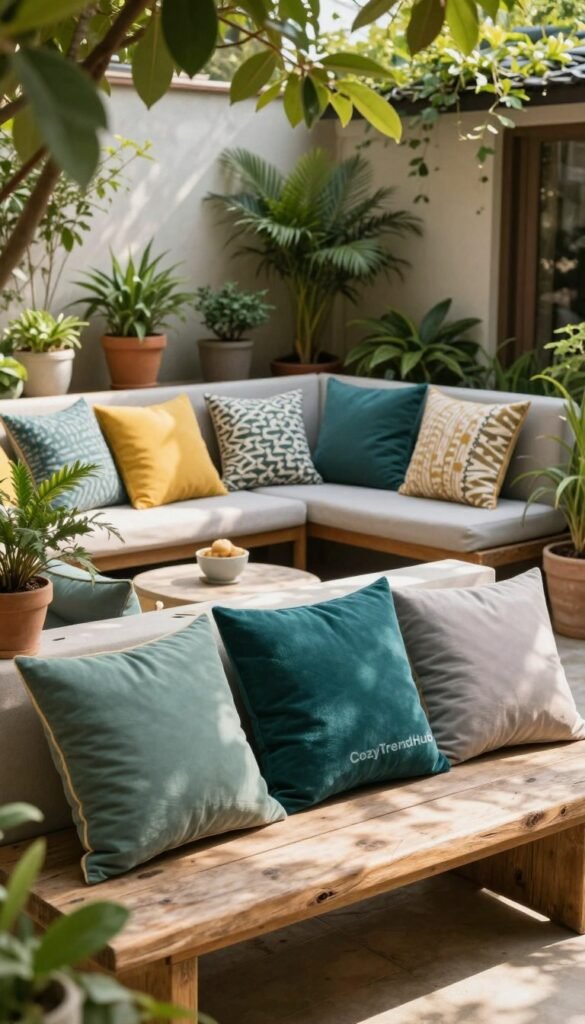
Inexpensive seat cushions for hard seating
What to choose: seat cushions in durable, quick-dry fabric make metal or wood chairs usable for longer visits. Look for removable covers and quick-dry fill to speed drying after rain.
Quick style updates with pillows
Why it works: throw pillows swap in seconds and change the palette each season. Bright accent pillows add pops of colors in spring or summer, then switch to warmer tones for fall.
Pros, cons, and buying checks
Pros: added comfort and instant style uplift. Cons: cushions need storage during storms and will fade in strong sun.
Buying considerations: ties versus non-slip backs, removable covers, quick-dry fill, and whether cushions fit standard chair depths. Keep pillow counts small so seating stays functional and uncluttered.
Small-Patio Fire Pit Decor for Cooler Nights and Year-Round Use
A portable flame transforms an unused corner into a social spot as temperatures drop. A compact heat source lets a small patio work later into the season and creates a natural focal point around seating.
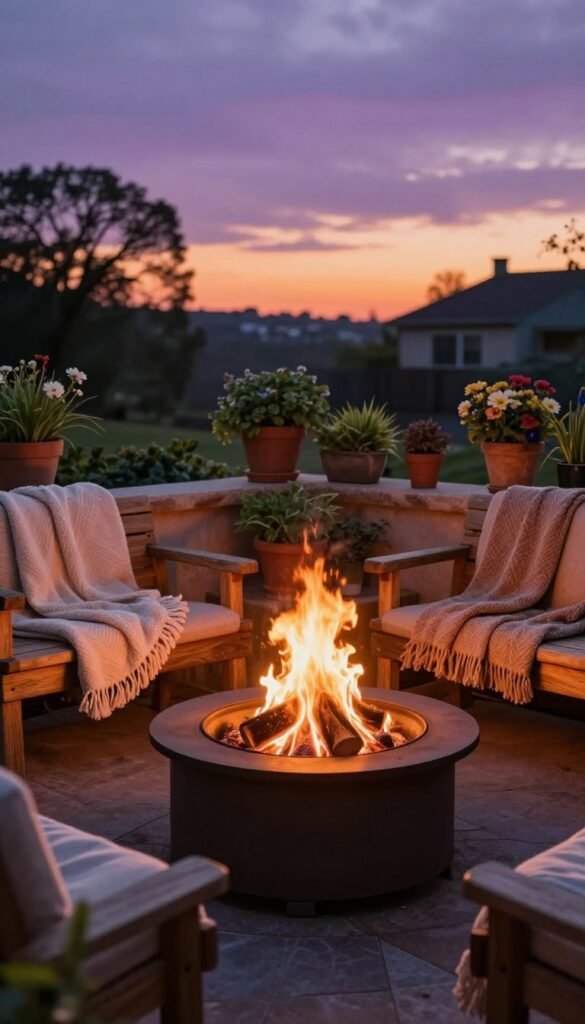
Why a round pit works well in tight spaces
Round shapes save room. A circular fire pit removes sharp corners and eases circulation. Chairs can nestle around the curve, creating an intimate layout without blocking walkways.
Use the surface as a coffee table when the fire is out
Look for models with a removable lid or flat cover. That turns the pit into a low coffee surface and adds daily function. Dual-purpose design helps the unit justify its footprint on a small patio.
Portable, renter‑friendly options
Choose lightweight steel or propane bowl models that store in a closet. Many budget-friendly units use propane or ethanol and require no permanent install. These are ideal when building is not permitted.
Buying and safety checklist
- Fuel: propane is cleaner and easier to control; wood gives more ambiance but needs spark protection.
- Clearance: keep recommended distance from walls, railings, and ceilings—usually 3–6 feet.
- Surface rating: confirm the unit is safe for composite decking or concrete; use a heat mat where needed.
- Regulations: check local codes, HOA rules, and balcony restrictions before buying or lighting a fire.
| Feature | Typical Options | Why it matters |
|---|---|---|
| Fuel type | Propane / Wood / Ethanol | Controls heat, smoke, and storage needs |
| Portability | Light steel bowl / Wheeled base | Allows off‑season storage for renters |
| Dual-use top | Removable lid / Flat cover | Converts to coffee table or serving surface |
| Safety features | Spark screen / Lid / Heat mat | Reduces ember risk and protects surfaces |
„A compact fire element extends use of the space while serving as a focal point and gathering spot.“
Pros: adds warmth, ambiance, and a focal spot. Cons: fuel costs, storage needs, and required clearances in tight layouts. When chosen and sited carefully, a fire pit offers season‑stretching value and practical function for renters and homeowners alike.
Small Patio Flooring Decor Upgrades That Feel Like a Renovation (Without One)
A tired floor can make even thoughtful furniture feel unfinished. A fresh surface is one of the largest visual elements in a tiny patio and can change the whole design mood.
Gravel offers a budget-friendly, Euro-style refresh. Lay landscape fabric, add edging to keep stone contained, and rake a thin layer of pea gravel for a relaxed look. Gravel drains well but can track indoors. It works best on level ground and under furniture with wide feet.
Peel-and-stick vinyl tiles suit covered patios. They give a tile or plank look with minimal tools and are removable. Avoid them on uneven or frequently wet floors; adhesive can lift or leave residue and may need landlord approval to install.
- Buyer checks: drainage after rain, comfort underfoot, and whether chair legs sit level.
- Renter logistics: expect some residue on removal, keep records of pre-install condition, and ask permission when adhesive or edging is used.
„Flooring is a big visual element—get it right and the rest of the decor needs less work.“
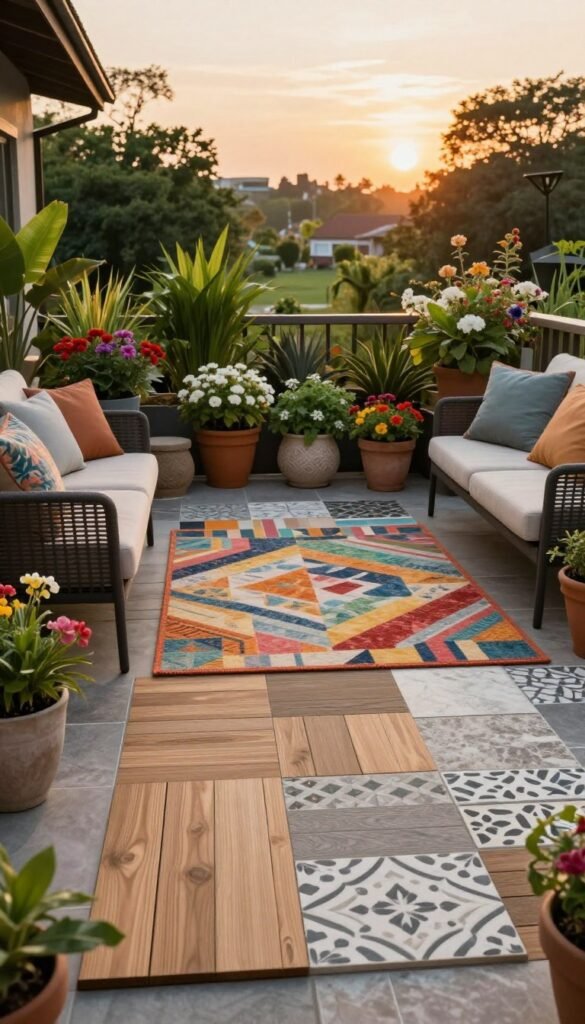
Budget Outdoor Decor for Small Patios That Still Looks Pulled Together
Start with function, then add style: that order saves money and prevents a cluttered result.
When funds are tight, prioritize one use—dining or lounging—and buy a single, reliable piece first. This approach prevents impulse buys that eat space and budget.
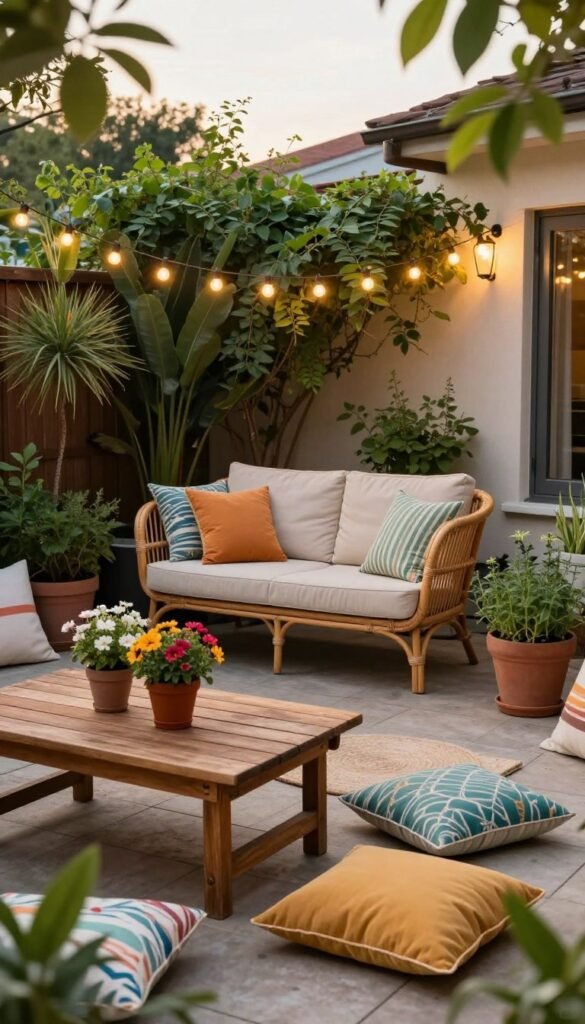
Thrifted or pre-owned sets for a polished look
Who it suits: buyers wanting an instant, cohesive set without retail prices.
Look for matched sets at thrift stores or marketplaces. A complete set avoids the visual mismatch that makes a small patio feel cluttered.
Makeover strategy: paint + new cushions
If a current set is sound but dated, refresh it with exterior paint and outdoor-rated cushions.
Tip: use rust-resistant spray paint on metal or an exterior primer and two coats for wood. Add quick-dry cushions with removable covers to speed care.
Minimalist approach: focus on one essential zone
Choose one zone to support daily use and delay other purchases. This keeps the space functional at every stage.
Resist duplicate side tables and many small accessories. Instead pick one anchor item—a rug or seating set—and build gradually.
- Avoid wasted spending: test a used set’s stability before buying; don’t replace structurally sound pieces.
- Buyer checks: cost per seat, storage needs, and whether pieces fold or stack to save room.
- Roadmap: stage 1: seating/table; stage 2: cushions/rug; stage 3: lighting/plants.
| Option | Cost per seat | Storage needs | Space friendliness |
|---|---|---|---|
| Thrifted matched set | $20–$80 | Low — often stackable | High — cohesive look |
| Makeover (paint + cushions) | $15–$60 (materials) | Low — keeps original form | Medium — refreshed appearance |
| Minimal one-piece buy | $50–$200 | Depends on piece (folds best) | High — fewer items, less clutter |
„Start with one strong element and add slowly. That mix of thrift, refresh, and restraint keeps a small patio useful and stylish.“
Decor Tricks That Visually Expand a Small Patio Fast
Even when furniture fits, a compact patio can feel tight if the eye has nowhere to rest. Simple visual moves create depth and calm. These are practical, purchase-ready tips that help a room feel larger without changing the footprint.
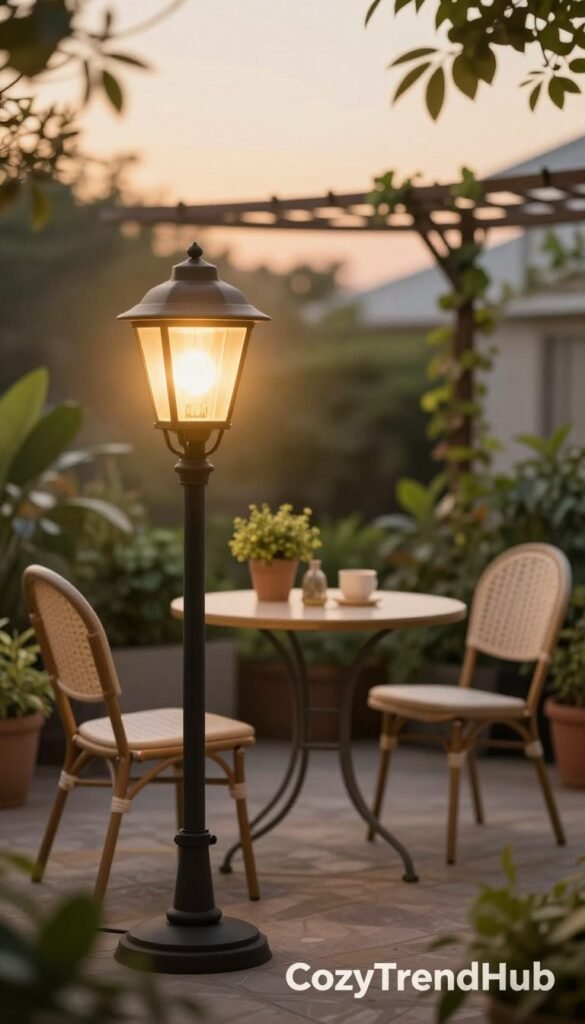
Mirrors that reflect light and create depth
Why they work: mirrors bounce natural and artificial light, which opens sight lines and makes an enclosed area read like a larger room.
Choose: weather-rated glass or acrylic mirrors with rustproof aluminum or sealed resin frames. Mount with marine-grade hardware or heavy-duty adhesive designed for exterior use.
- Pros: immediate sense of space and increased light.
- Cons: must be secured against wind and angled to avoid harsh glare.
Light, neutral color strategy
Keep walls, large textiles, and main furniture in pale neutrals to give the eye a place to rest. A calm backdrop reduces visual noise and helps the area look cohesive.
Quick tip: match cushion or frame trims to the neutral base to tie mixed materials together and prevent a busy look.
Using bold color as a controlled statement
A single bright rug or a set of vivid pillows can add personality without overwhelming the space. Balance that statement by keeping the rest of the palette white or neutral.
- Pros: adds focal interest and personality.
- Cons: too many bright pieces compete and shrink the perceived room.
„A single reflective surface plus a neutral backdrop gives a compact patio room-like proportions.“
Buyer checklist before purchasing:
- Mirror frame material: sealed resin, stainless, or anodized aluminum.
- Mounting: wind-rated anchors or removable heavy-duty adhesives for renters.
- Placement: opposite a light source or on the longest wall to maximize depth.
- Color plan: pick one bold element, keep two neutrals, and limit small accessories.
Shade and Shelter for Small Patios When You Can’t Install a Pergola
When shade is limited, simple shifts in placement or temporary canopies make a big comfort difference. Direct sun can make a patio unusable at peak hours and fade cushions and textiles.
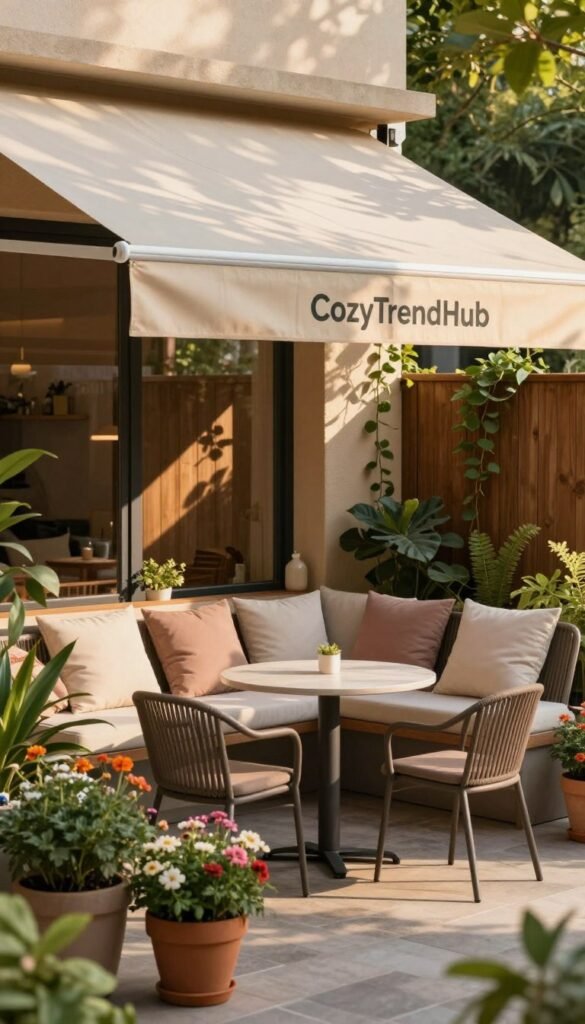
Pop-up tents: renter-friendly summer shade
Who it suits: renters and seasonal users who need removable cover that won’t affect lease terms.
Pros: fast setup, portable, and shields a seating spot or table without drilling. Cons: needs storage, must be secured in wind, and removed for storms or inspections.
- Size tip: pick a canopy that covers the seating area but leaves walkways clear.
- Buying checks: wind stability, weighted bases, storage bag size, and whether two people are needed for setup.
Use natural shade and smart placement
Place furniture under eaves, trees, or building shadow to save money and preserve usable space. Natural shade is free and protects textiles, but it can limit layout choices and sunlight for plants.
| Option | Move‑out friendly | Wind concern |
|---|---|---|
| Pop-up tent | Yes | High — needs anchors/weights |
| Umbrella (stand) | Yes | Medium — base weight helps |
| Natural shade (trees/overhang) | Yes | Low — no gear needed |
„Shade choices protect furniture, extend daily use, and keep a backyard or balcony comfortable.“
Entertaining-Friendly Decor for Tight Patios (Without Adding Bulk)
A successful small-space gathering relies on movable service zones and stackable seating. Guests need surfaces and seats, but permanent bulky pieces can block the flow and make the patio hard to use every day.
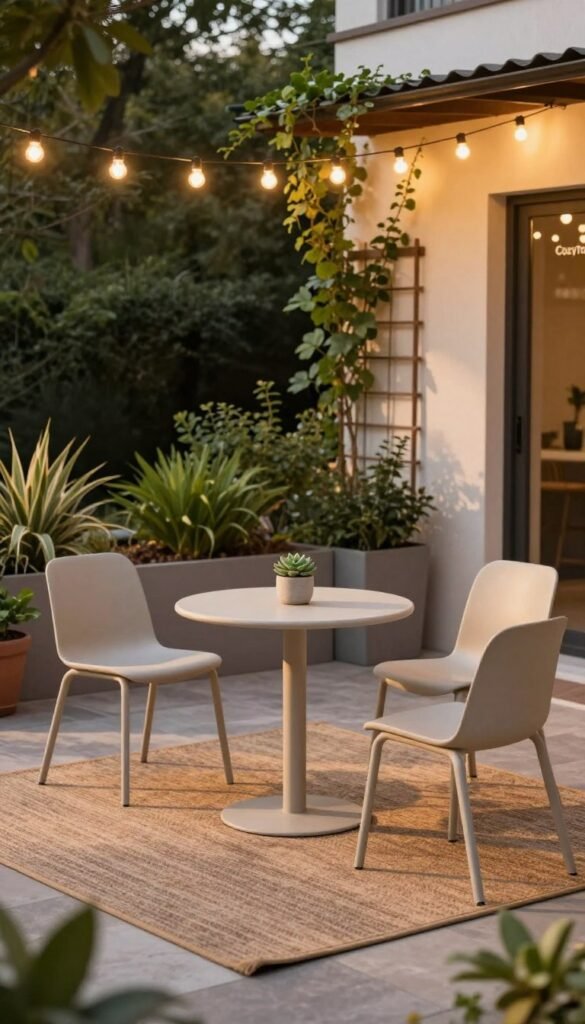
Bar carts that roll out for guests and tuck away after
Why choose one: a cart keeps drinks and supplies within reach and rolls out when company arrives. Wheels and a slim profile keep it from feeling permanent.
Buyer checks: outdoor-safe wheels, rustproof frame, and a locking option so the cart stays put during use.
Dining table styling that stays functional
Keep centerpieces low and removable. Fresh flowers in Mason jars add charm without taking serving space or blocking sight lines.
Tip: use a narrow runner or a few small vases so the table works for plates and passing dishes.
Extra seating hacks that preserve sight lines
Backless ottomans, stools, and a slim wooden bench add seats without creating visual barriers. Nesting stools store compactly when not needed.
Pros: flexible pieces expand seating quickly. Cons: they need an off-day storage plan to protect them from weather.
| Piece | Mobility | Storage | Use case |
|---|---|---|---|
| Bar cart | High — wheels | Fold or tuck to corner | Serving station |
| Nesting stools | Medium — light | Stack inside | Extra seating |
| Backless ottoman | High — lightweight | Slide under bench or table | Casual seat/table |
„Keep one clear path when hosting. That prevents the patio from feeling like a blocked room and keeps guests comfortable.“
Conclusion
A clear plan keeps usable floor area and makes each purchase earn its place. Measure the door swing and walking lane, then choose one main use—dining or lounging—to guide decisions on scale and layout.
The goal on a patio and in a small patio or similar outdoor space is to protect walking room while adding comfort, privacy, and evening use with minimal fuss.
Focus on right-sized seating and a rug to zone the area. Use vertical lighting and plants to free the floor. Keep a simple palette so the design reads calm and cohesive in the space.
Next steps — quick checklist to shop with confidence:
• Measure usable footprint and mark a 30–36″ path. (ideas)
• Pick one primary use; add multi‑purpose layers next.
• Prioritize lighting that hangs or clips, wall planters, and freestanding screens for privacy near a backyard wall.
• Choose fold/stack pieces, removable screens, and freestanding racks if renting.
• Store cushions and pillows seasonally; pick weather‑rated textiles like quick‑dry cushions.