
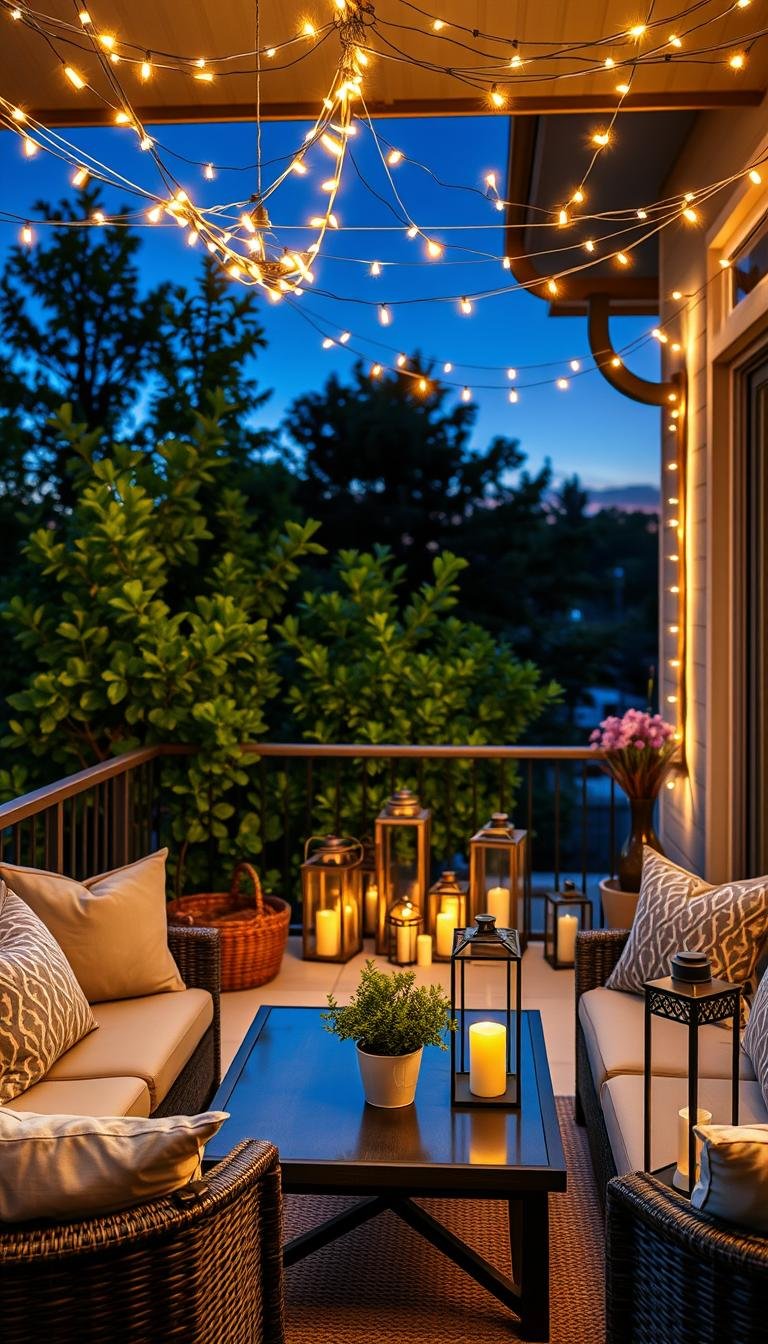
The small balcony or patio often has one weak fixture or none at all. That leaves the space unusable after dusk and limits how it can be enjoyed.
This guide helps readers pick renter-friendly, small-space solutions that are simple to install and remove. It focuses on real needs: reading, grilling, and relaxed evenings without drilling or overbright glare.
Recommendations are organized by scenario and by category so a reader can jump to the right option fast. Selections favor reliable performance, appropriate brightness, weather resistance, and easy setup.
The article previews string lights, solar-panel options, rechargeable table lamps, hanging lanterns, and path/stake lights. Each pick includes practical pros and cons and quick comparisons of lumens, IP ratings, runtime, and bulb type.
Expect product notes that reflect current availability, realistic runtimes, and renter-safe mounts. This is for renters, apartment dwellers, and anyone who wants a cozy look with enough light for tasks.
Key Takeaways
- Small spaces need layered solutions: task and ambient lights work best.
- Prioritize no-drill mounts, solar or rechargeable power, and clear runtime specs.
- Compare lumens, IP ratings, bulb type, and replacement-part availability.
- View picks by scenario (reading, cooking, ambience) and by category.
- Find practical collections and seasonal ideas at light collections and summer setups at summer lighting guides.
What balcony and patio lighting needs to solve in small outdoor spaces
A single unlit corner can turn a pleasant porch into a place people avoid after dusk. Even small spaces feel smaller when light is uneven. One shadowed area can stop a seat or table from being used.
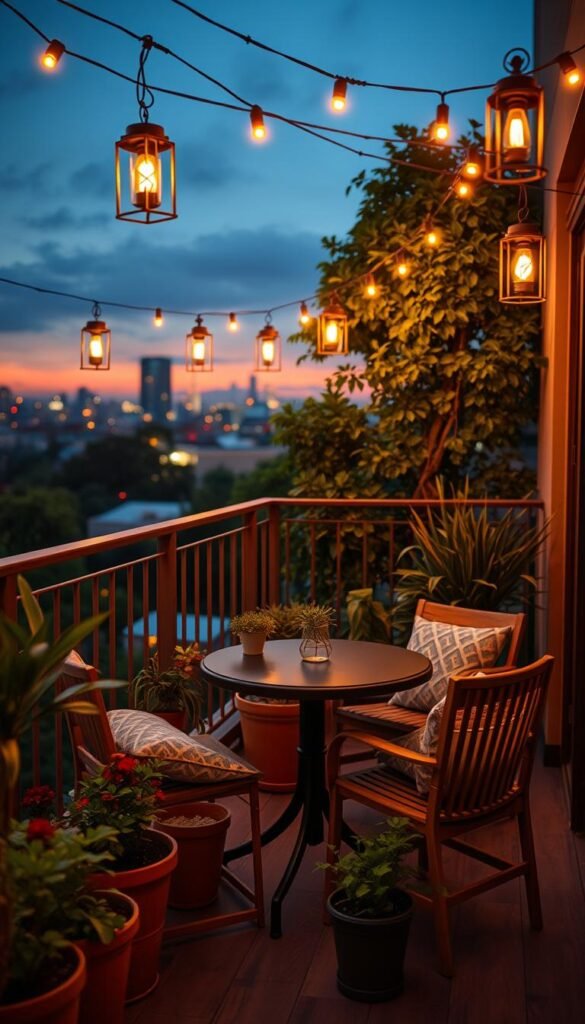
Solutions should balance ambience and task needs while respecting renter limits. Simple, removable options work best: string lights for general glow, a rechargeable table lamp for faces and food, or a hanging lantern to fill vertical space.
Keep neighbours happy and avoid glare
Glare usually comes from cool color temperature, bare bright bulbs at eye height, or high-lumen fixtures aimed outward. Choose warm white tones and shielded fittings to keep light contained. Aim lights inward and use dimmers or remotes where possible.
Light that actually lets you see
Decorative strings add vibe but may not be enough for grilling or reading. Add a higher-lumen portable task light when work is needed. If the goal is mood → strings. If the goal is see-and-do → add a lamp or lantern. If safe edges matter → add small path lights.
| Need | Recommended option | Key feature |
|---|---|---|
| General ambience | String lights | Soft, even glow; removable |
| Seating/dining | Rechargeable table lamp | Face-level brightness; portable power |
| Dark corners | Hanging lantern | Vertical fill; minimizes glare to neighbours |
| Safe pathways | Low-profile path lights | Edge definition; low power draw |
Usable light means even coverage at the table, enough brightness for the task, and control (dimmers, timers, or remotes). Prioritize removable mounts and plug/recharge options to keep solutions renter-friendly.
Quick buying checklist for outdoor lights that actually work
Picking the right fixture starts with a few clear measures: brightness, durability, and how you’ll power it. Use this checklist to compare sets and make a confident choice.
Brightness basics: lumens, coverage, and per-bulb output
Lumens tell total light output. Pay attention to lumens per bulb rather than strand length. One higher-output bulb often lights a patio better than many low-output bulbs spread thin.
Coverage tip: small patios do well with fewer, brighter bulbs; tight balconies benefit from softer, distributed glow.
Warm white vs color: choosing the right look
Warm white reads comfortable in close quarters and reduces glare for neighbors. Use color sparingly to set mood during short periods.
Weather resistance and durability
Look for sealed connections and sturdy materials. Aim for an IP65-rated product when exposure to rain and spray is likely.
IP65 means resistance to water jets, not submersion. Expect spray protection, not waterproofing.
Power source fit
Plug-in offers the brightest, simplest solution. Battery or USB-rechargeable options add portability. Solar panel sets need real sun—Hampton Bay typically needs ~6 hours of sunlight to reach ~8 hours runtime; results vary by placement.
Renter-friendly mounting and ownership realities
Choose hooks, loops, or adhesive mounts to avoid drilling. Consider long-term costs: bulb replacement availability, battery lifespan, and whether the system is serviceable or sealed.
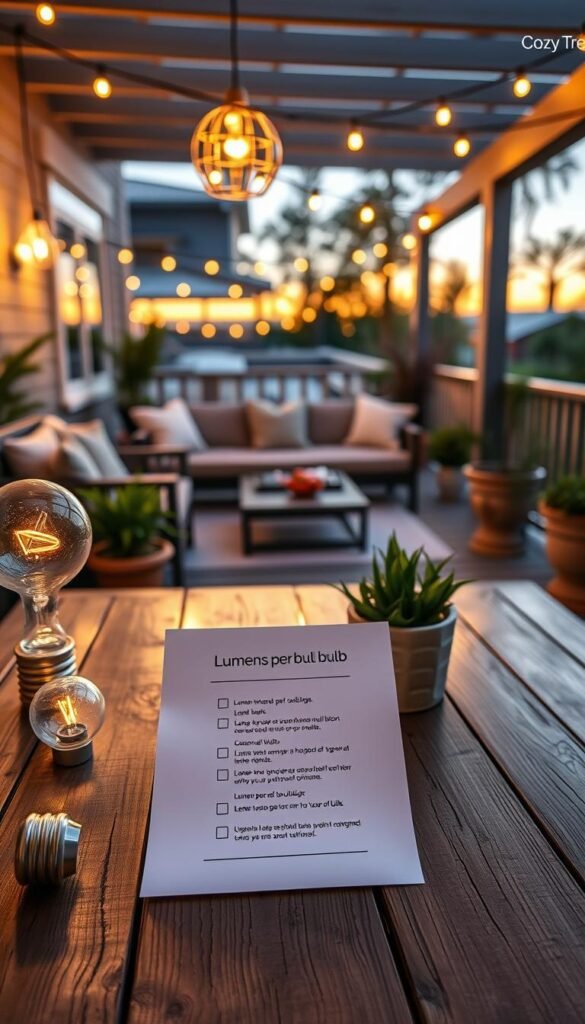
| Item | Lumens per bulb | Total sockets | IP rating | Power type |
|---|---|---|---|---|
| String set (café style) | 200–400 | 6–12 | IP65-rated | Plug-in / LED |
| Rechargeable table lamp | 300–800 | 1 | IP44 | Battery / USB |
| Solar string with panel | 50–150 | 8–20 | IP54–IP65 | Solar panel / battery |
| Hanging lantern | 150–500 | 1 | IP65 | Battery / LED |
Quick action: use the table to shortlist 2–3 product options, then check bulb replacements and warranty time before buying.
Best outdoor lighting for balcony: top picks by real-life renter scenarios
Match your setup to the reality of your porch: power access, privacy, and runtime. The list below helps renters pick a practical option fast.
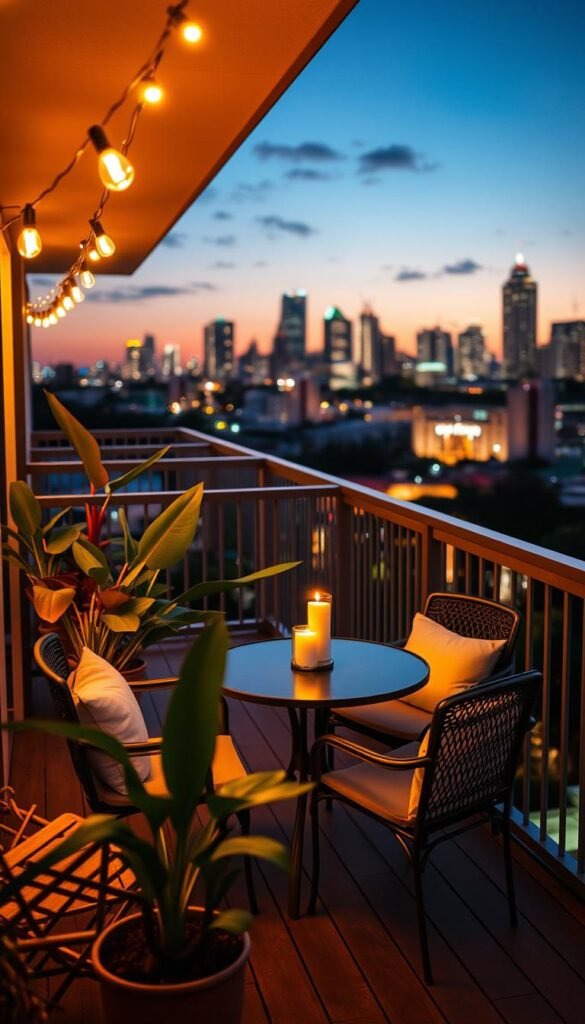
Outlet available — classic café ambience
Pick: Plug-in café string lights (Enbrighten recommended).
- Why: Bright, simple to install, lowest fuss for nightly use.
- Pros: High lumen output, steady power, wide coverage.
- Cons: Needs access to an outlet and safe routing.
No outlet — true solar option
Pick: Solar panel + battery systems (Hampton Bay).
- Why: Runs ~8 hours after a full sun charge; ideal when wiring isn’t possible.
- Pros: Fully wireless, renter-friendly; no cords to hide.
- Cons: Runtime tied to sun and panel placement; higher cost per bulb.
Portable light — move it inside as needed
Pick: Rechargeable table lamps and lanterns.
- Why: Versatile: use outdoors then bring inside to protect from theft or weather.
- Pros: USB recharge, variable brightness, doubles as indoor lamp.
- Cons: Limited hours compared with plug-in units.
Smart control — schedule and dim without rewiring
Pick: Smart string systems (Nanoleaf/Govee) or a standard set on a smart plug.
- Why: Schedules, color scenes, and remote dimming improve neighbor-friendly use.
- Pros: Automation and energy savings.
- Cons: Smart strands cost more; a smart plug is often the better value.
What to measure before buying: balcony length, railing type, outlet location, and how many hours you expect to run lights each night.
| Scenario | Solution | Key benefit | Typical runtime / power |
|---|---|---|---|
| Outlet + café ambience | Plug-in string lights (Enbrighten) | Bright, even glow with easy install | Unlimited while plugged in / mains power |
| No outlet | Solar panel + battery (Hampton Bay) | Wireless, renter-friendly; ~8 hours after sun | ~8 hours after full sun / solar panel |
| Portable use | Rechargeable lamps | Move indoors; protects value and battery | 4–12 hours depending on model / battery |
| Smart scheduling | Smart strings or standard set + smart plug | Remote dimming, timers, and scenes | Depends on device; plug-in or battery |
Need a deeper comparison of solar vs corded units? See the concise guide on solar vs corded options.
Outdoor string lights: best overall for balconies and patios
String strands often give the biggest visual return with very little work. They hang high, create soft overhead glow, and suit renter-friendly mounts.
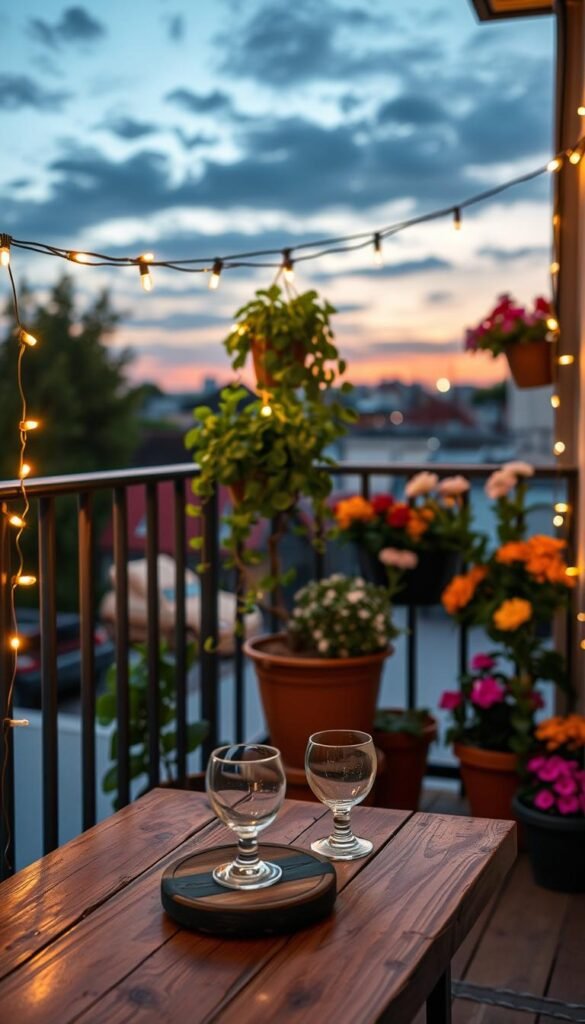
Quick comparison—per-bulb lumens, total length, bulb material, dimming support, and replacement-bulb availability are the key specs to compare before buying.
Enbrighten Classic LED café lights — best tested value and durability
Best for: renters who want a classic café look with low fuss.
- Pros: robust bulb feel, attractive glass-style bulbs, reliable build.
- Cons: larger bulbs give a café look, not a tiny twinkle effect.
- Renter note: mounts are simple and replacement bulbs are easy to source.
Magictec long-run LED strands — best budget coverage
Pros: IP65 seal, shatterproof LED, ~165 lumens per bulb; two-pack covers large patios.
Cons: higher upfront length versus per-bulb price tradeoffs.
Feit Electric LED filament sets — cheapest-per-bulb option
Low price per bulb and cozy tone. Consider a dimmer near neighbours or on small porches.
Brightech — brightest option to light a larger area
Highest lumen output (~200 lm/bulb). Bulbs may be glass and not shatterproof—place carefully.
Brightown — renter durability and replaceable bulbs
Proven multi-year outdoor use. Occasional wire or bulb swaps extend real value over years.
| Model | Per-bulb lm | Material | Dimmable | Replaceable bulbs |
|---|---|---|---|---|
| Enbrighten | 150–180 | Plastic/glass-style | Yes | Yes |
| Magictec | ~165 | Shatterproof plastic | Yes | Yes |
| Feit Electric | 100–150 | Plastic/filament look | Yes | Yes |
| Brightech | ~200 | Glass | Yes | Limited |
| Brightown | 120–160 | Plastic/replaceable | Varies | Yes |
How to choose: check outlet access, desired brightness, impact risk, and willingness to swap bulbs over time.
Smart outdoor string lights for easy scheduling and mood lighting
Smart strands make it simple to schedule mood scenes without climbing a ladder each evening.
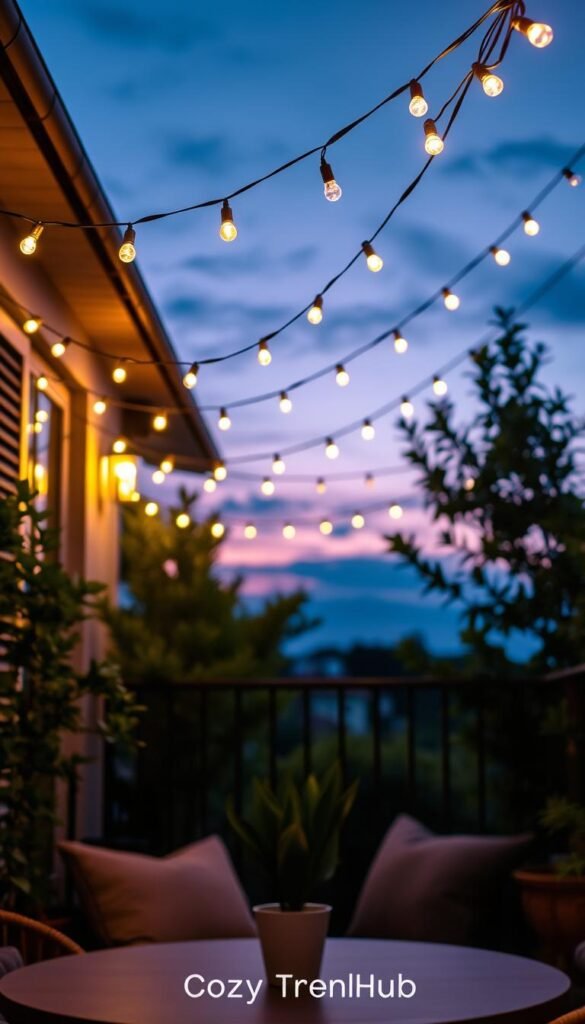
What smart solves: renters who want automatic on/off, dimming, and quick scene changes without rewiring. It saves time and keeps controls within an app or inline box.
Nanoleaf — premium smart pick
Why choose it: Wi‑Fi, Bluetooth, and Matter support add broad home integration. Very bright, dimmable, and vivid color control. The inline control box helps when the app disconnects.
Limitations: occasional network drops and higher price.
Govee — budget color option
Why choose it: Bluetooth control with 47 scenes and music sync. Great for parties and color effects without a smart hub.
Limitations: no Wi‑Fi or voice platform support; requires proximity for control.
When a smart plug is smarter
If schedules and basic dimming are the primary needs, pairing a quality string with an outdoor-rated smart plug often gives the best value. It adds timers and remote power control without replacing the whole product.
| Item | Connectivity | Scenes | Brightness |
|---|---|---|---|
| Nanoleaf | Wi‑Fi / Bluetooth / Matter | Full | High |
| Govee | Bluetooth | 47 presets | Medium |
| Smart plug + string | Wi‑Fi (plug) | Timers/dimming | Depends on string |
Renter tips: pick hub‑free systems, verify reset steps, and prefer inline controls. Smart control also helps neighbor comfort—dim late-night output without rehanging fixtures.
Solar outdoor lighting for balconies without outlets
When an outlet is out of reach, a sun-charged system is often the only truly wireless answer. Solar solutions turn daytime sun into usable evening hours without running cords through a doorway.
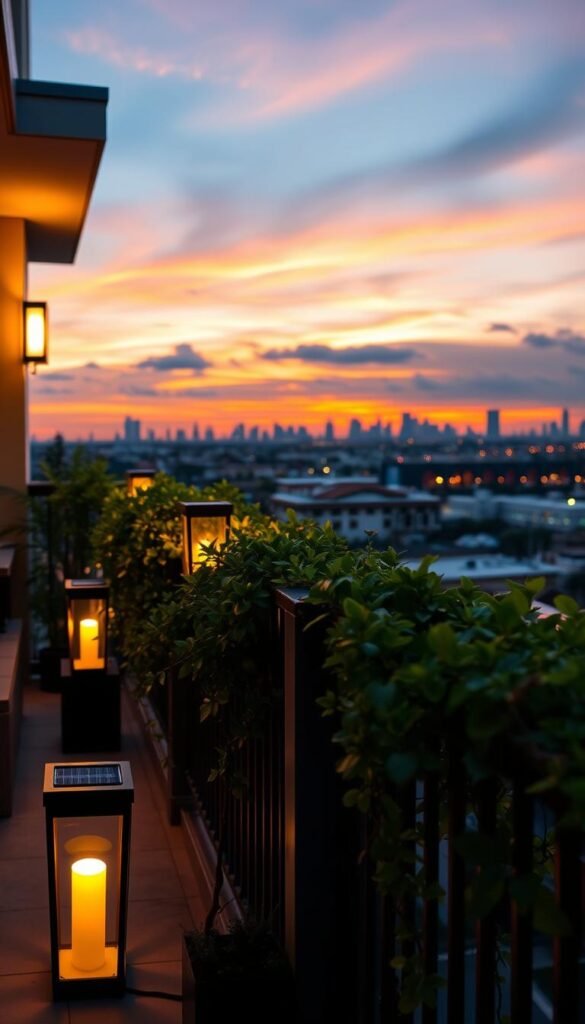
Hampton Bay: true solar with panel and battery backup
Who it suits: patios or porches that get consistent sun and need automatic dusk‑to‑dawn operation.
Hampton Bay uses a small solar panel to charge an internal battery. Expect roughly 6 hours of sun to reach a full charge and about 8 hours of runtime under good conditions.
It costs more per bulb and needs careful panel placement. The panel position is the make‑or‑break factor for reliable nightly power.
BioLite MPOWERD Solar String: compact, warm white option
This 18′ set is camping‑inspired and works well in tight spaces. It offers three brightness levels and a cozy warm white tone.
The housing with the small solar cell must sit on a surface so plan where that box will live. It’s a practical pick when compact size matters.
Solar reality check: charge time, runtime, and placement
„Solar works only when the panel can actually see sun—shade or poor angles cut hours dramatically.“
Assess sun path, railing shade, and whether the panel can be angled. Track average sun hours during the day and compare that to how many hours you need lights each night.
| Model | Panel / battery | Charge time (sun) | Typical runtime (hours) |
|---|---|---|---|
| Hampton Bay | Separate panel + battery | ~6 hours | ~8 hours |
| BioLite MPOWERD string | Integrated panel + housing | Varies (portable) | 3–8 hours (depending on level) |
| Solar string + rechargeable lamp combo | Panel + spare USB lamp battery | Depends on panel | Extendable by using lamp at low power |
Avoid wasting money: don’t buy a solar set without a panel placement plan. Map sun windows and match expected hours of use to likely charge time.
Practical pairing: use a solar string for general glow and add one rechargeable table lamp for task power when solar output dips. For more seasonal ideas and wiring-free options, see a related summer guide at summer lighting ideas.
Battery and USB-rechargeable table lamps for dinners, drinks, and reading
A rechargeable table lamp makes a dinner table usable after dusk without running cords. Table lamps give focused light on faces and plates — something string lights often miss.
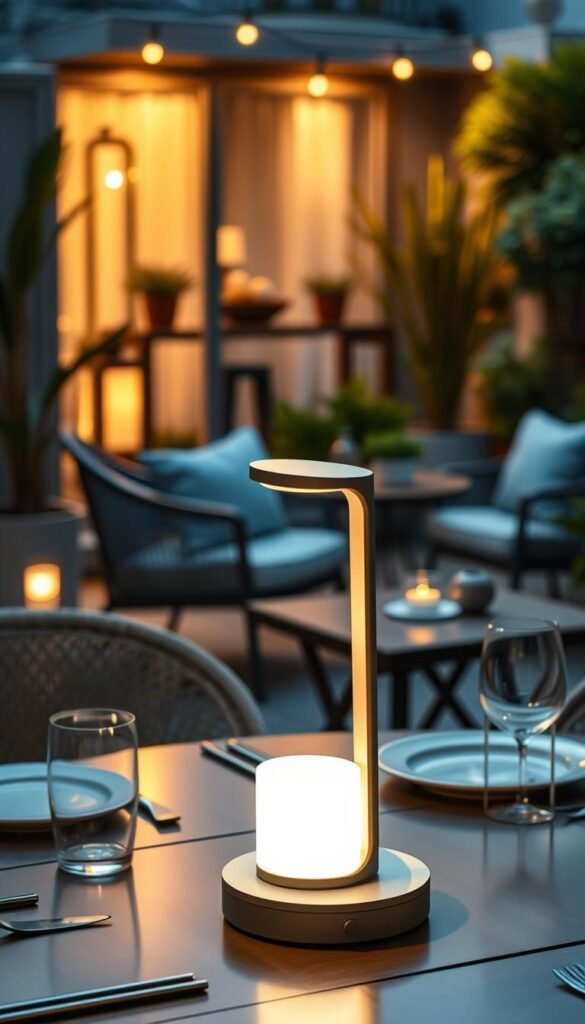
Zafferano Pina Pro — premium portable option
Problem solved: bright, warm light for reading and meals.
- Pros: very bright for its size, warm white tone, dimmable with press control, sturdy base.
- Cons: not meant to be left outside permanently; bring it inside between uses.
- Runtime: ~13 hours per full charge.
Pooky Scoon — traditional-shade look
Problem solved: a classic lamp look that suits table dinners.
- Pros: shaded aesthetic, stable heavy base, simple dimming.
- Cons: a bit less bright and warm than the Pina Pro; ~8 hours per charge.
Newsee two-pack — affordable table set
Problem solved: two small lamps for bistro tables or paired bedside tasks.
- Pros: three color temps (warmest most flattering), good value, sturdy build.
- Cons: visible studs can look cheaper; ~8 hours on warm setting.
Quick comparison: dimming method, warmth, stability in light winds, and charging convenience matter most when choosing a product. One practical pairing is to use a table lamp as task light while keeping string lights dimmed for ambience. For renter-friendly decor ideas that pair well with these lamps see patio decor for renters.
| Model | Dimming | Warmth | Typical hours |
|---|---|---|---|
| Zafferano Pina Pro | Press dim | Warm white | ~13 |
| Pooky Scoon | Press dim | Warm | ~8 |
| Newsee (two-pack) | Button dim | Warm/neutral/cool | ~8 |
Hanging lights and portable lanterns for dark balcony corners
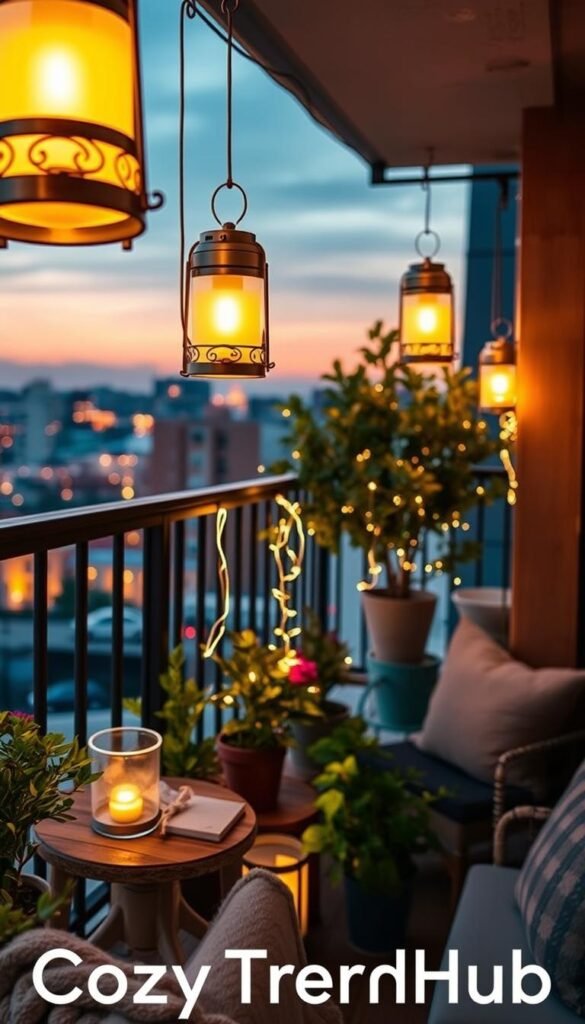
A compact hanging globe or portable lantern can rescue a dark side area and make it usable after dusk. Corners behind furniture or plants are common dead zones that strings often miss.
Fatboy Bolleke — hang-anywhere statement light
Who it suits: renters who want a single, sturdy fixture to brighten a corner.
The Bolleke offers three output levels and a modern globe look. Its rope handle lets users hang it from umbrellas, railings, or hooks and adjust height to avoid glare.
Practical note: rain tolerant and runs ~24 hours on a full charge. It can be a bit awkward to charge because of the rounded shape.
Uuffoo portable lamp — party mood color option
Who it suits: shoppers after inexpensive, colorful mood lights for gatherings.
Uuffoo uses a remote to change color scenes. It has limited brightness and ~6 hours per charge, so it should supplement other lights rather than act as the sole source.
IKEA Länsport — budget glow for side tables
Who it suits: people who want a gentle glow on a side table in an already-lit area.
It’s battery-operated and easy to move. The Länsport creates welcoming atmosphere but isn’t bright enough for reading or detailed tasks.
| Product | Charge / hours | Portability | Use case |
|---|---|---|---|
| Fatboy Bolleke | ~24 hours | High (rope) | Corner task + ambient |
| Uuffoo | ~6 hours | High (remote) | Color mood supplement |
| IKEA Länsport | Battery (varies) | High (side table) | Subtle side glow |
Recommendation: use one hanging lantern to fill a dark corner, keep strings dimmed overhead, and add a rechargeable table lamp for tasks. That layered approach gives a flexible, renter-friendly solution with minimal fuss.
Path and stake lights for patios, planters, and walkways
Low-mounted stake lights quietly mark edges and steps so people can move safely after dark.
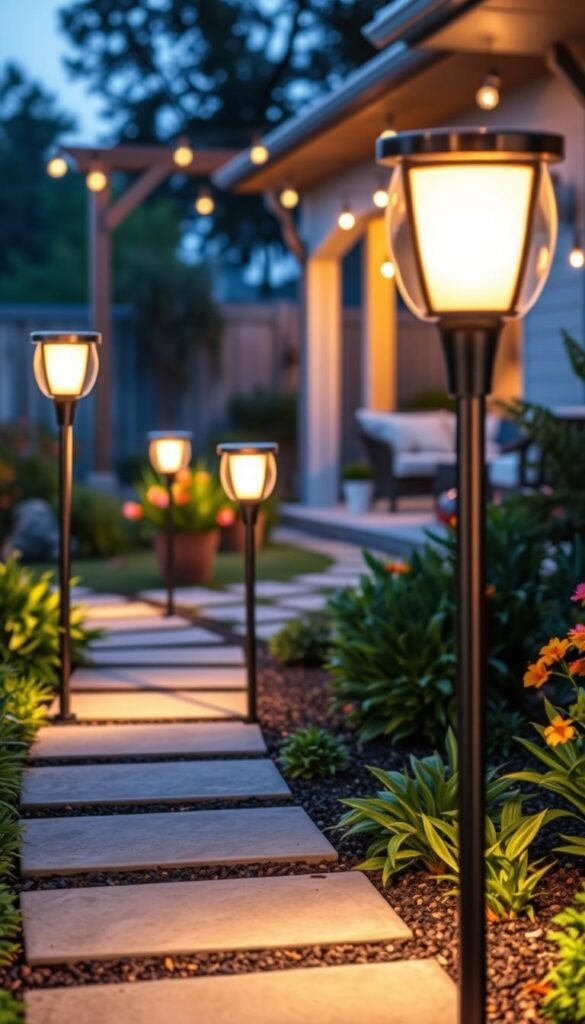
Why these lights matter: they reduce trips by defining steps, planters, and walking lines. They do this without blasting neighbors with overhead glare. In tight spaces, path lights make movement feel intentional and safer.
Best budget pathway set: Alepod solar pathway lights
Alepod set is durable in heat and rain, auto-charges by day and turns on at dusk. The low-to-ground placement guides feet rather than lighting faces or tabletops. It is a solid low-effort option at a modest price.
- Auto dusk-to-dawn operation and day recharge via built-in solar panel.
- Decently bright for edge-marking, not bright enough as a task light.
- Sturdy in wet conditions and holds up in hot sun over weeks of use.
Placement and realistic expectations
Tuck a row along planter edges, steps, or the busiest traffic line. Space stakes evenly to create a visible guide without cluttering the area.
Note: these solar stake lights need panel exposure. If a unit sits in constant shade it will dim or run shorter hours.
When to skip path stakes
If the main goal is dining or reading, prioritize string or table lamps first. Then add a small path set to define edges and improve safety.
| Item | Use | Power | Output |
|---|---|---|---|
| Alepod set | Edge marking, steps | Built-in solar panel | Guide-level brightness |
| Rechargeable lamp | Task light | USB battery | Table-level brightness |
| String lights | Ambience | Plug-in / battery | Overhead glow |
For low-cost decor ideas that pair well with path stakes, see budget outdoor decor ideas.
Choosing LED vs incandescent bulbs for outdoor string lights
When seats and railings sit inches from a bulb, heat and durability become central concerns.
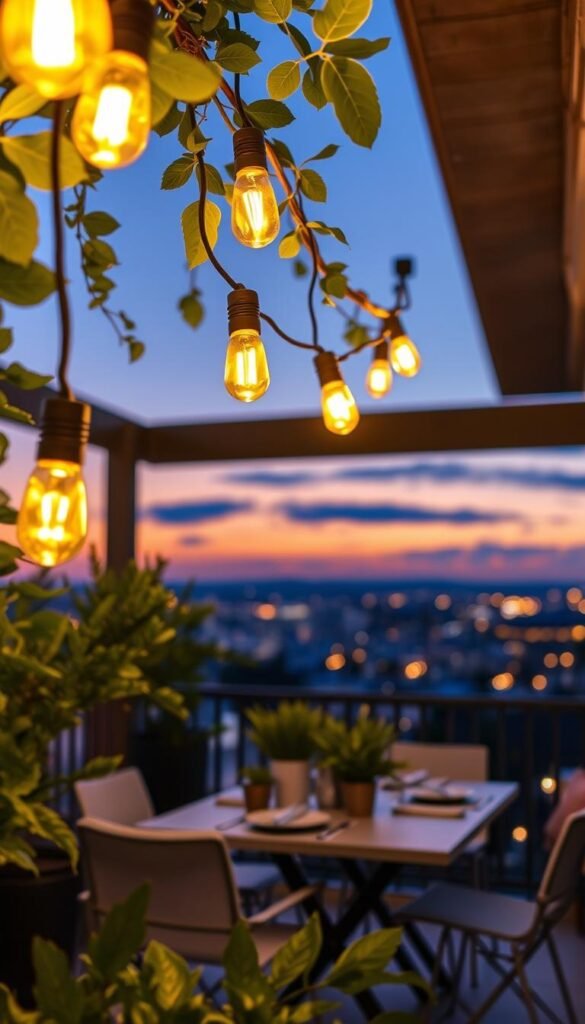
Heat, safety, and longevity tradeoffs
Incandescent bulbs give a familiar glow but run hotter and burn out faster. That heat matters in tight areas near fabrics and railings.
LED bulbs run cool, use less power, and commonly last many years. They cut replacement frequency and reduce fire risk.
Replacing bulbs versus sealed smart systems
Traditional café string lights usually let users swap individual bulbs when one fails. That keeps ongoing cost low and extends the set’s life.
Some sealed smart product lines do not allow bulb replacement. If a segment fails, the whole strand may need replacement.
- Choose LED for frequent use and low maintenance.
- Pick incandescent only if the classic look is essential and replacement is acceptable.
- Check bulb materials—plastic bulbs tolerate wind and impact better than glass.
Quick tip: pay slightly higher upfront price for LEDs to save on bulbs and upkeep over several years.
How to hang outdoor string lights safely on balconies and patios
A reliable support cable takes the weight so the electrical cord can stay stress-free. Start by planning the run and marking anchor points. That makes install faster and reduces damage to walls and railings.
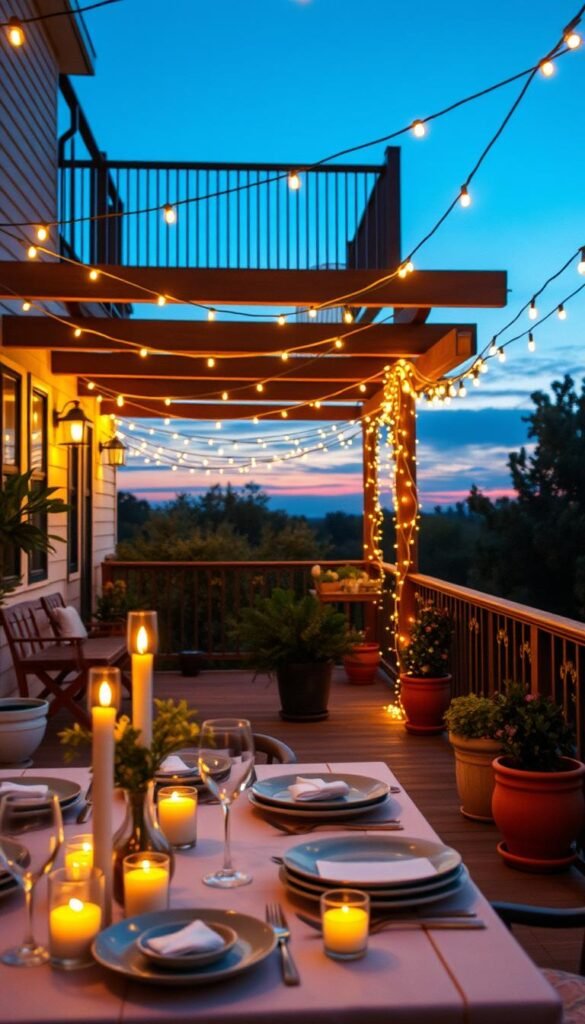
Use a hanging kit to protect the powered cable
Do this first: install a stainless steel or braided support wire. Clip the string to that wire with the built-in eyes or S‑hooks. Never use the powered cord as the load-bearing line.
Renter-friendly attachment options
- Railings: loop soft straps or removable clamps that won’t scratch paint.
- Poles/stands: freestanding posts avoid drilling into building surfaces.
- Adhesive hooks: choose outdoor-rated strips and clean surfaces first.
Plan the layout and power source
Measure total length and count bulbs to confirm spacing. Pick an outlet-near start and leave a drip loop at the plug. Shelter connectors under a small canopy or behind a plant when possible.
Troubleshooting and seasonal tips
Common issues: sagging runs, cords that end too short, or bulbs aimed at neighbors. Tighten the support wire to remove sag. Label cord sections and use fewer anchors to speed takedown each season.
how to hang outdoor string lights has a step-by-step guide if extra detail is needed.
| Problem | Quick fix | Renter-safe option |
|---|---|---|
| Powered cord under tension | Add a support cable and reclip | Hanging kit with S‑hooks |
| Sagging run | Tighten wire and shorten span | Extra removable anchors |
| Short cord to outlet | Reposition start or use outdoor extension | Weatherproof extension with drip loop |
How to pick the right brightness for your space and neighbors
A simple lumen plan makes choosing lights less guesswork and more control. Start by naming the main uses of the area and the times you plan to use it.
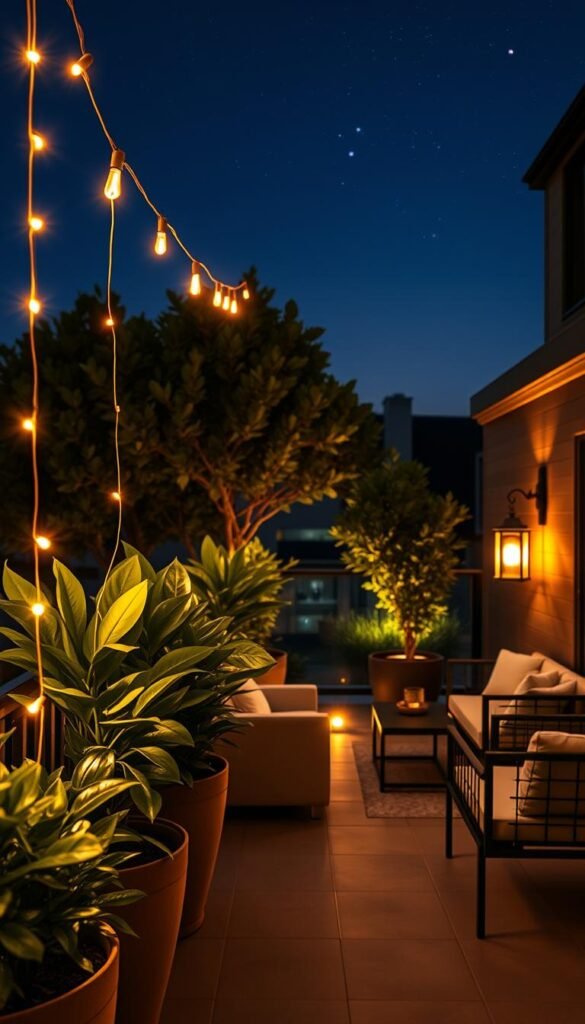
Soft ambience for a balcony vs brighter task light
Think in two buckets: seeing and feeling. Balconies often benefit from a low-glow ambience that flatters faces.
Patios used for grilling or games need higher lumens near the table or grill. Start with a dimmable baseline and add focused task light only where needed.
Dimmers, remotes, and smart control
Controls solve „a bit too bright“ problems without returns. A smart plug, inline dimmer, or remote makes it easy to fine-tune output by scene or schedule.
- Warm white tones reduce harshness and work best for close seating.
- Reserve bold color options for parties — they don’t replace practical illumination.
- Choose dimmable sets when possible; they give flexible power and mood choices.
Neighbor-friendly tactics: aim light downward, avoid eye-level bulbs, and set timers to shut off late-night glow. These small steps keep shared walls calm and help the whole building sleep better.
Weather, materials, and what to leave outside year-round
Weather can be the silent factor that shortens a light’s life more than any design choice. This section clarifies what „weather resistant“ means and which products should be stored between uses.
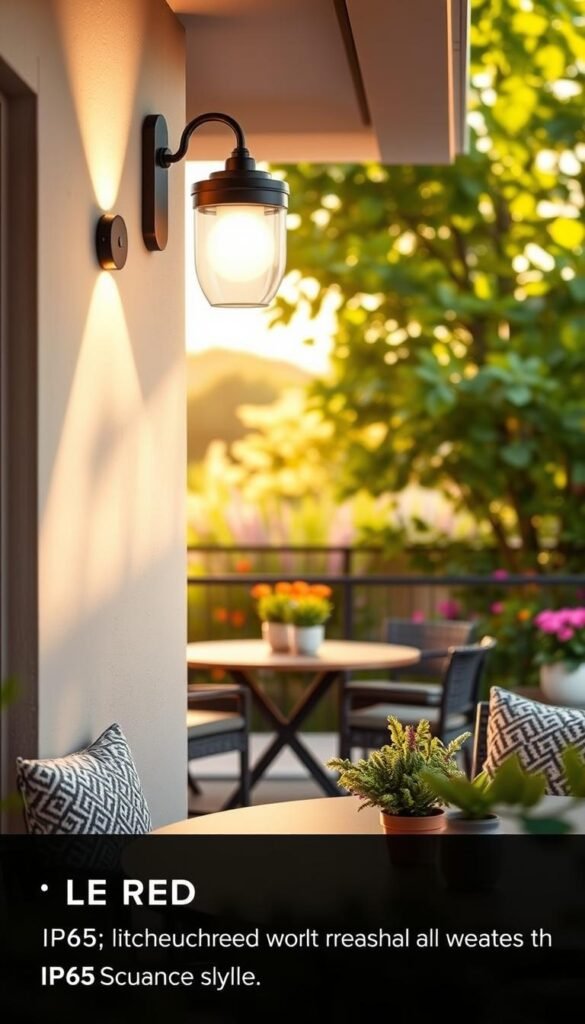
What “weather resistant” really covers
Weather resistant means a product tolerates rain, wind, and moderate sun exposure but not constant abuse. Wind can loosen mounts; UV fades finishes. Salt air accelerates corrosion.
IP ratings are useful shorthand. IP65-rated indicates protection from dust and water jets, not submersion. Even with IP65, keep connectors and plugs sheltered and use weatherproof covers.
Materials and durability: practical choices
Choose materials to match exposure. Plastic, shatterproof bulbs resist impact and last longer in windy spots. Glass bulbs look nicer but break more easily and may not survive years near railings.
Metal housings with powder coat stand up to UV and rust better than thin painted metals. Check seals and gasket quality around sockets and connectors.
What to leave up, and what to bring in
Many sturdy plug‑in string sets and hardwired fixtures can stay installed seasonally if mounted correctly and inspected yearly. Brands such as Brightown have strands that last years outdoors when cared for.
Bring battery and rechargeable lamps inside between uses. Storing them reduces theft, moisture damage, and keeps the battery healthy. Fatboy-style lanterns tolerate rain occasionally, but they still benefit from indoor storage.
| Item | Durability notes | Store inside? |
|---|---|---|
| IP65-rated string set | Resists jets; protect connectors and outlet | No (seasonal install) / Inspect yearly |
| Plastic shatterproof bulbs | Low break risk; good in wind | No |
| Glass bulbs | Nice look; fragile in busy spots | Yes (if high wind or kids/pets present) |
| Rechargeable table lamp | Battery life improves when stored and charged inside | Yes (bring in after use) |
Quick maintenance prompts: check seals each season, wipe dirt from solar panels, and replace cracked bulbs before peak use. Charge batteries on a stable surface and avoid leaving a drained battery exposed overnight.
Comparing costs the right way: price per bulb, runtime, and replacement parts
Cost is more than the sticker price. A clear cost framework helps compare how much light a set will actually give over months and years.
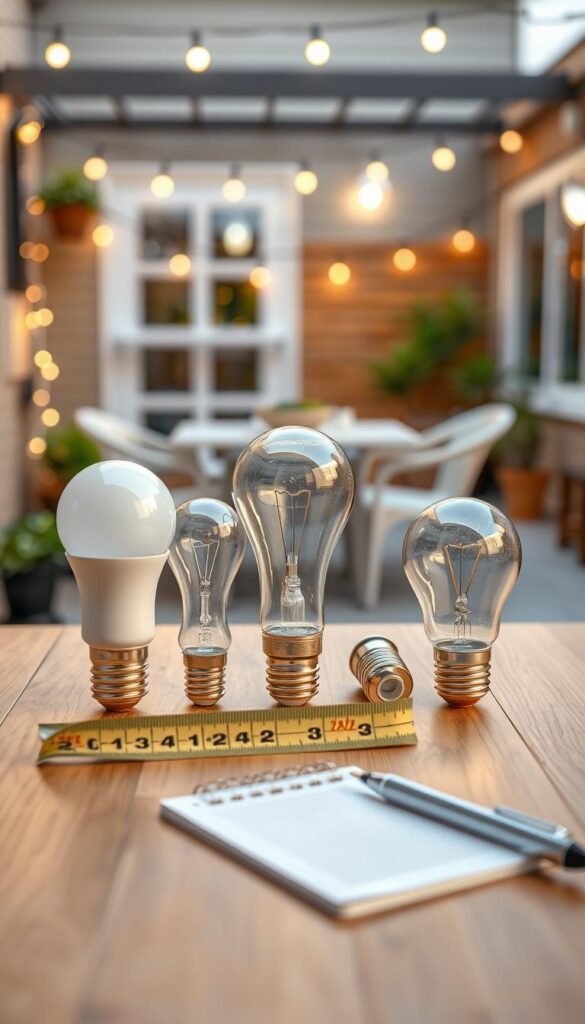
Why value per bulb matters: count sockets and total lumens, not just strand length. A Magictec set, for example, often shows strong value per bulb with high total lumens. Hampton Bay tends to be pricier per bulb but includes dedicated panels or batteries that some buyers need.
Practical cost factors to track
- Price per bulb + number of sockets = upfront coverage cost.
- Runtime hours per charge or per night determines how often you’ll need to recharge or run mains power.
- Replacement parts: replaceable bulbs (Brightown) lower long-term costs versus sealed smart sets.
- Battery health: expect gradual capacity loss; plan lower runtimes after a few years.
Simple example framework
Use this to compare two options:
| Metric | Magictec set | Hampton Bay set |
|---|---|---|
| Price per bulb | $4 | $12 |
| Sockets (per set) | 12 | 8 |
| Total lumens | ~1,980 lm | ~960 lm |
| Typical runtime / charge | Plug-in / unlimited | ~8 hours (after full sun) |
| Replacement bulbs available? | Yes | Limited / higher cost |
„Compare price per bulb alongside total lumens and likely nightly hours. That avoids buying a pretty set that leaves you in the dark when you need to see.“
Key ownership notes: sealed smart products can be convenient but may cost more when a segment fails. Rechargeable and solar options save wiring but expect battery degradation over years. Check warranty and part availability before buying to avoid surprises.
Seasonal and small-space storage tips for renters
Small-space storage can extend the life of strings, batteries, and panels with minimal effort. A short routine prevents tangles, broken bulbs, and lost hooks. These steps fit a closet, hall bin, or under‑bed tote.
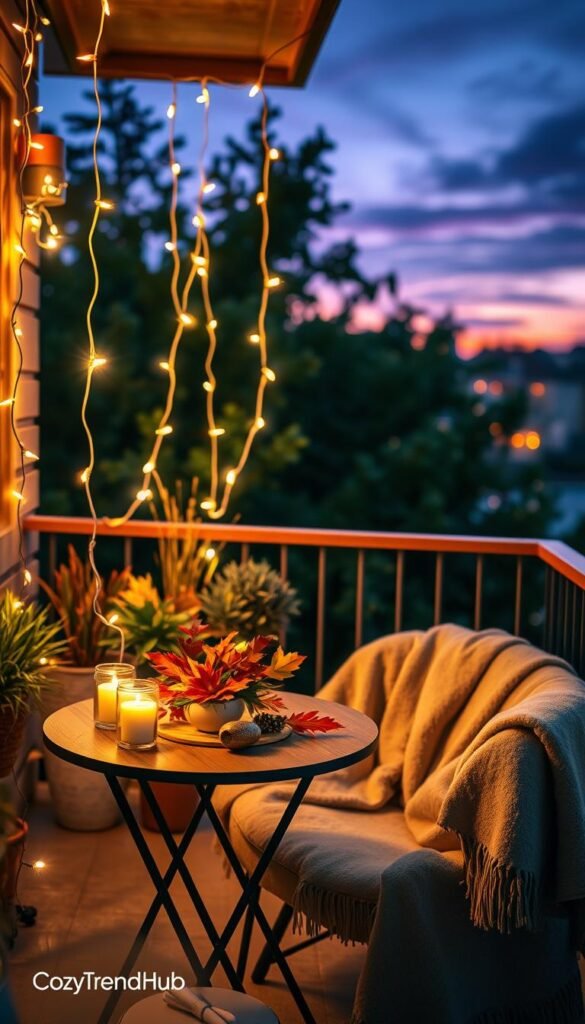
Coiling and packing string lights
Step-by-step:
- Gently coil each string without bending near sockets.
- Secure coils with soft ties or Velcro straps.
- Place replaceable bulbs in a small pouch to avoid breakage.
- Store strands in the original box or a shallow tote to prevent crushing.
„Labeling saves time next season—tag each coil with its length and plug side.“
Storing panels, batteries, and rechargeable lamps
Keep a solar panel clean and scratch‑free. Store it face-up in a padded sleeve. Avoid stacking heavy items on top.
Follow battery care: store rechargeable lamps about 40–60% charged and avoid extreme temperatures. Tape a small bag of mounting hooks to the bin so nothing goes missing at move‑out.
| Item | Storage tip | Renter-friendly note |
|---|---|---|
| String / strand | Coil loosely, tie, box upright | Label length and plug side |
| Replaceable bulbs | Wrap in bubble or soft cloth | Keep in marked pouch |
| Solar panel | Clean, store padded face-up | Avoid heavy stacking |
| Rechargeable lamp / battery | Store partially charged, moderate temp | Bring indoors between seasons |
Quick tip: pair storage with a short checklist and a link to seasonal decor ideas like balcony decor ideas to keep setup fast and renter-friendly.
Common balcony lighting mistakes that waste money
A few avoidable errors turn a promising patio plan into wasted money. This short list points out the top traps and gives simple, renter-friendly fixes.
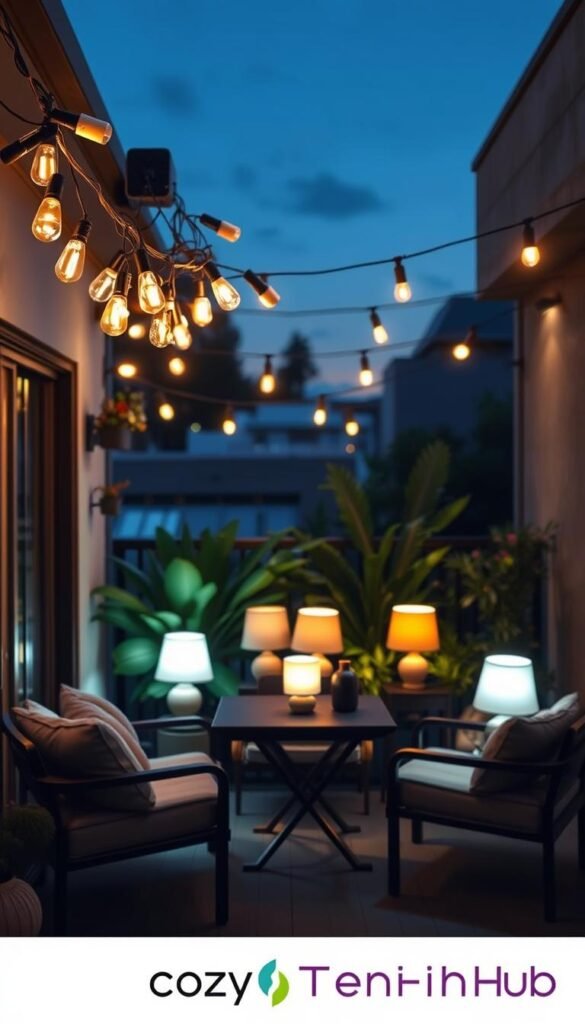
Buying solar without a plan for sunlight and panel positioning
Buying a solar set without checking sun exposure is a frequent error. Shade from overhangs or neighboring walls can prevent a full charge and shorten nightly run time, especially with systems like Hampton Bay.
Fix: identify a clear spot for the solar panel before you buy — a rail top, sunny window ledge, or a mounted stake area. Confirm the location gets direct sun for several hours each day.
Over-lighting a tiny space and creating harsh glare
Putting high-lumen bulbs into a narrow space can make it feel clinical and annoy nearby units. Too much brightness can create glare and reduce comfort.
Fix: choose dimmable sets or add a smart control so the output can be tuned to the moment. Aim for lower lumens overall and reserve bright task light only where needed.
Choosing fragile bulbs where wind, toys, or foot traffic can hit them
Glass bulbs and delicate fittings break in tight, active areas. Brightech-style glass looks nice but may not survive regular bumps or gusts.
Fix: pick shatter-resistant bulbs or use sturdier materials in exposed spots. Place fragile options higher and away from walkways, or protect them behind planters and rail guards.
„Plan panel placement, control brightness, and match materials to use — those three steps save time and money.“
Before you buy: check power access, pick a realistic brightness target, and plan mounts and storage so the set lasts through the season.
| What to check | Quick action | Why it matters |
|---|---|---|
| Solar panel location | Map sun windows and mark a mount spot | Ensures reliable night runtime |
| Brightness (lumens) | Set a max lumen goal and prefer dimmable | Prevents glare and neighbor complaints |
| Bulb materials | Choose shatterproof or position away from traffic | Reduces breakage and replacement cost |
For practical hanging and layout tips that reduce mistakes, see a short how-to at how to light a balcony.
Conclusion
Good patio results come from layering modest glow with one reliable task lamp and a clear safety edge. Match each source to the need: ambient string lights, a portable lamp for tasks, a hanging lantern to fill corners, and low stakes to mark paths.
Top picks: Enbrighten (top overall), Magictec (value/high output), Hampton Bay (solar with careful panel placement), Nanoleaf/Govee (smart control), Brightown (durability), Alepod (path lights), plus a USB table lamp for task work.
Before buying, measure the space, pick a power source, and favor dimmable, renter-friendly mounts. For quick next steps and pairing ideas, see a short guide on cozy home options at cozy lighting for home.

One Comment